User Testing for
Product Managers
Jon White – Product Manager @
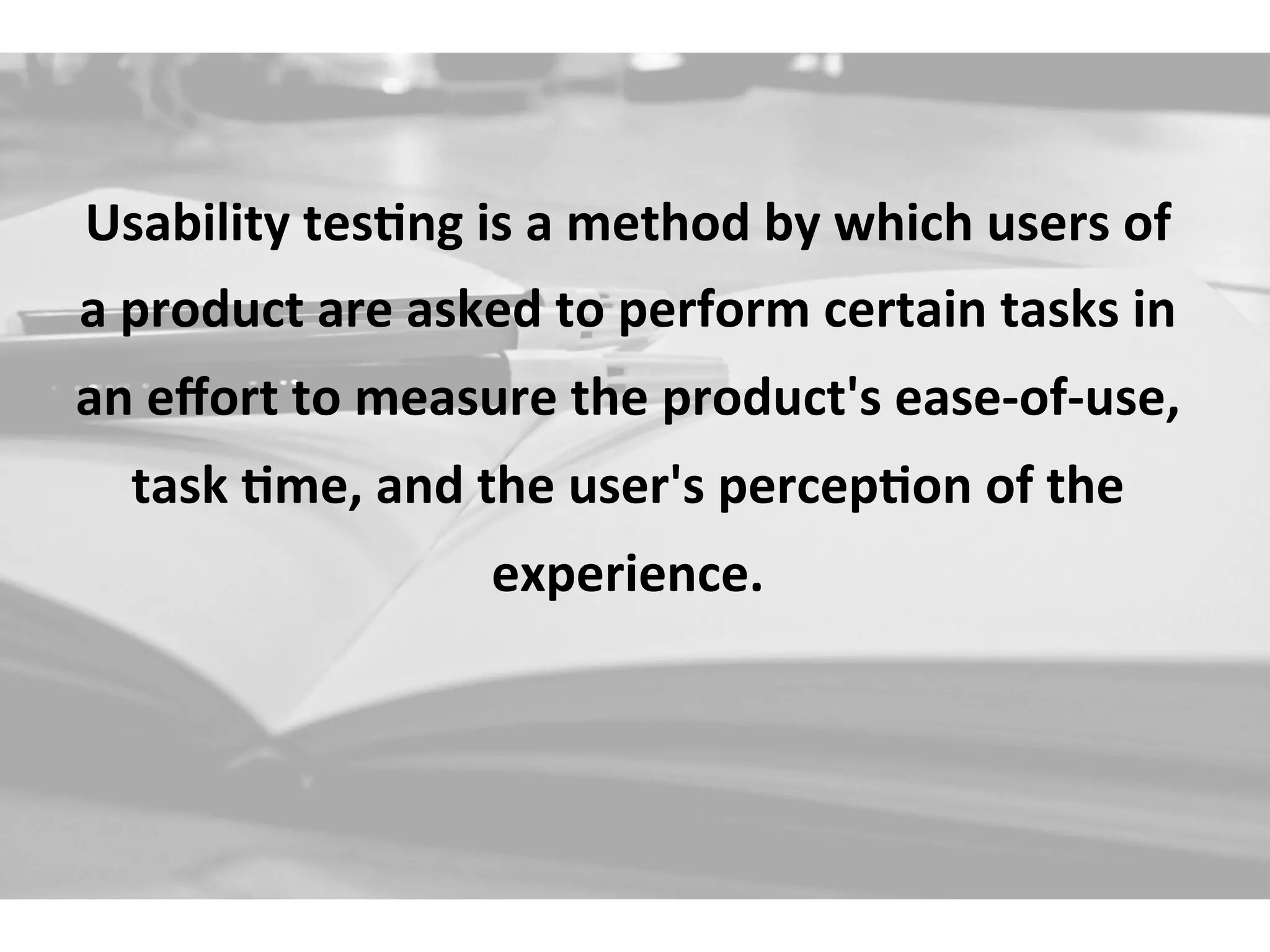
Usability	
  tes+ng	
  is	
  a	
  method	
  by	
  which	
  users	
  of	
  
a	
  product	
  are	
  asked	
  to	
  perform	
  certain	
  tasks	
  in	
  
an	
  effort	
  to	
  measure	
  the	
  product's	
  ease-­‐of-­‐use,	
  
task	
  +me,	
  and	
  the	
  user's	
  percep+on	
  of	
  the	
  
experience.	
  
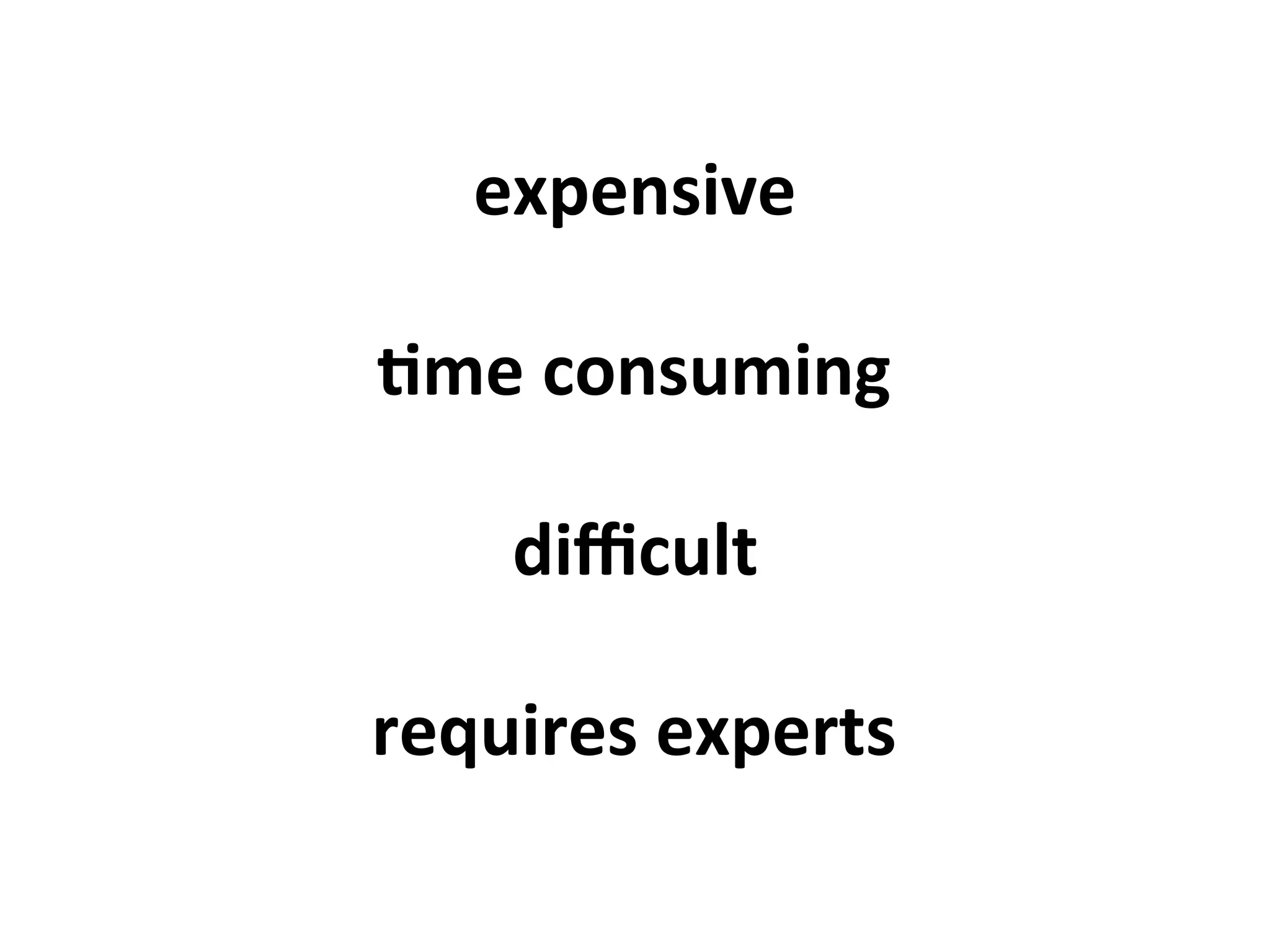
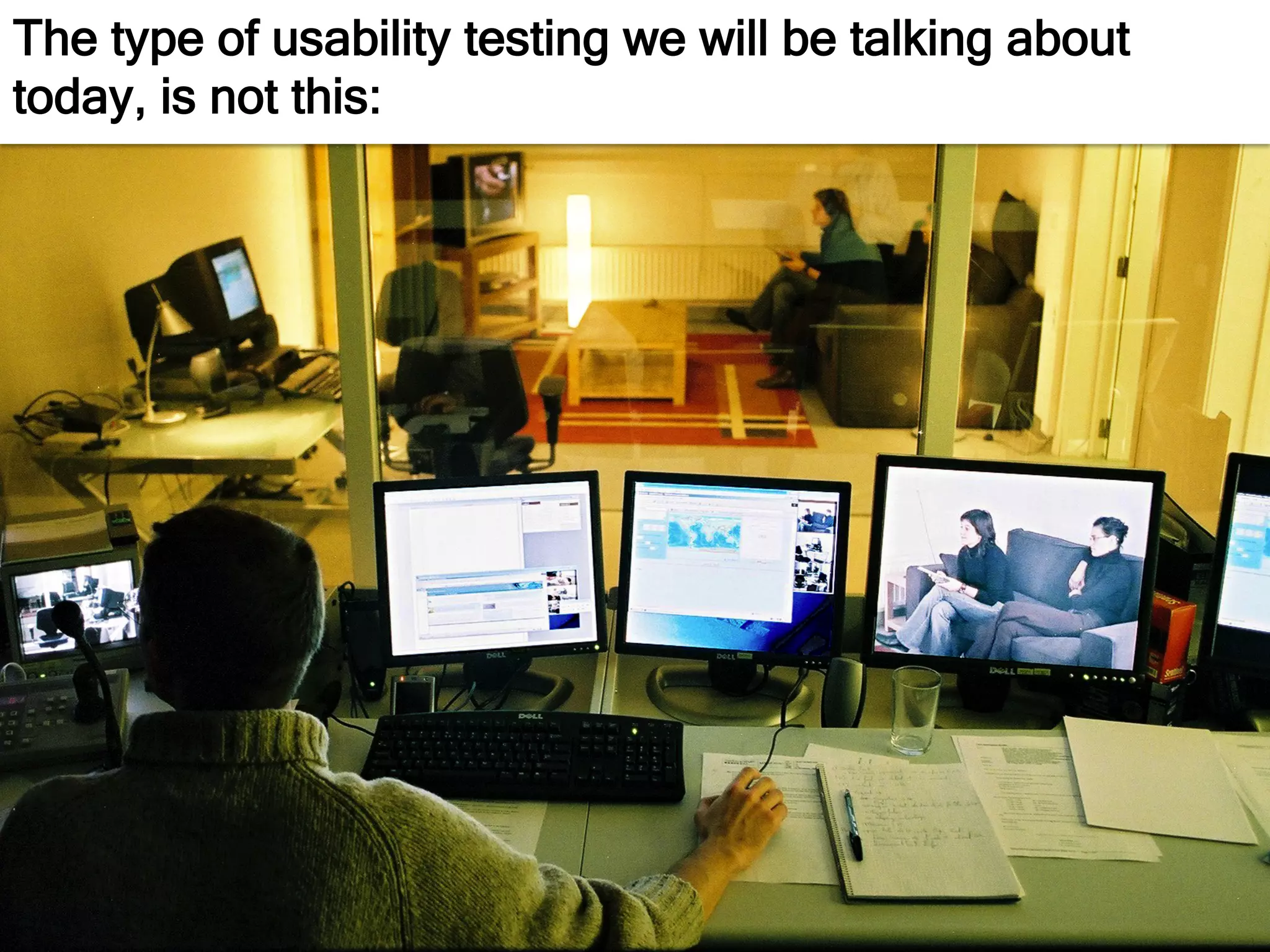
expensive	
  
+me	
  consuming	
  
difficult	
  
requires	
  experts	
  
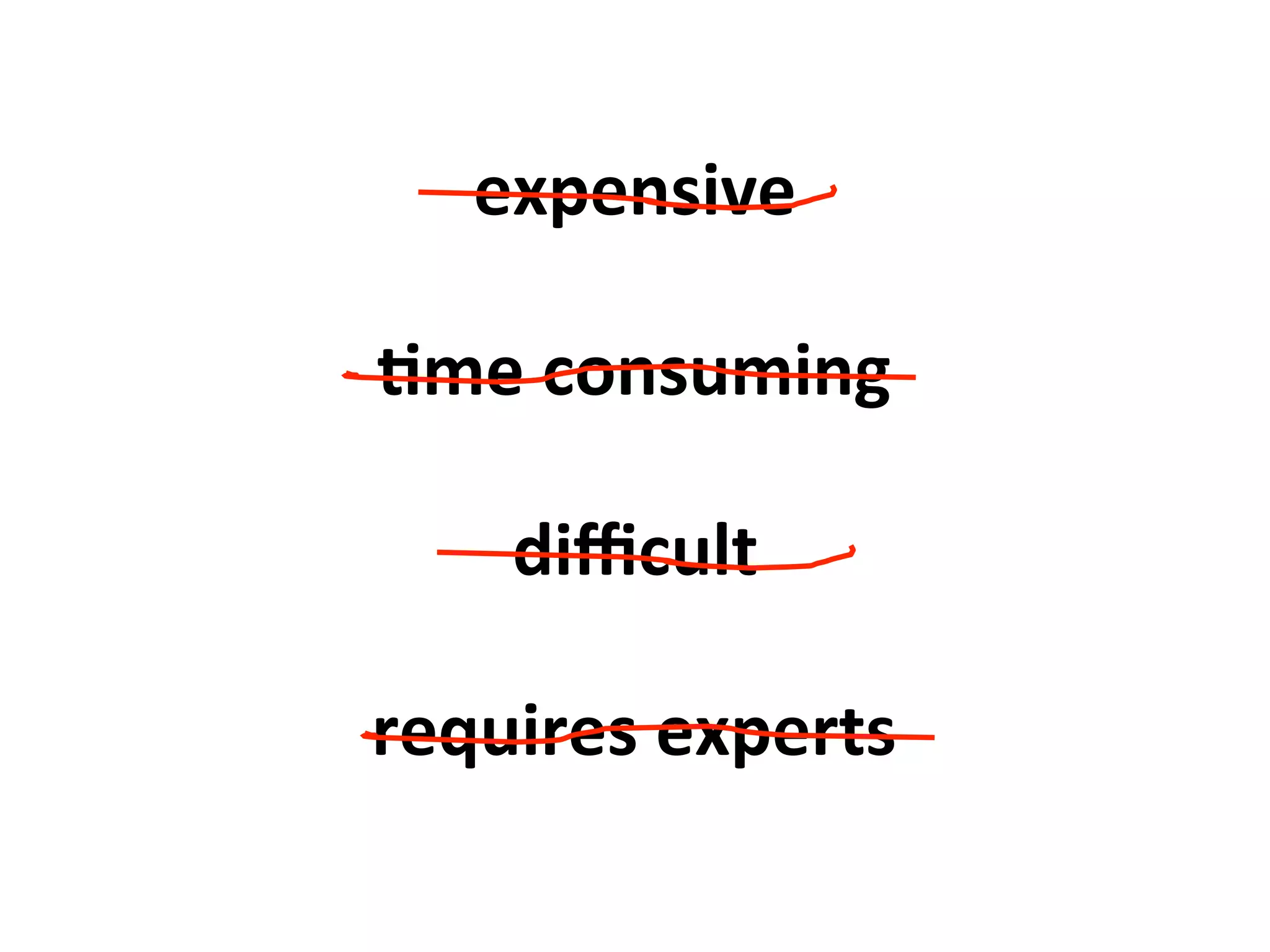
expensive	
  
+me	
  consuming	
  
difficult	
  
requires	
  experts	
  
The type of usability testing we will be talking about
today, is not this:
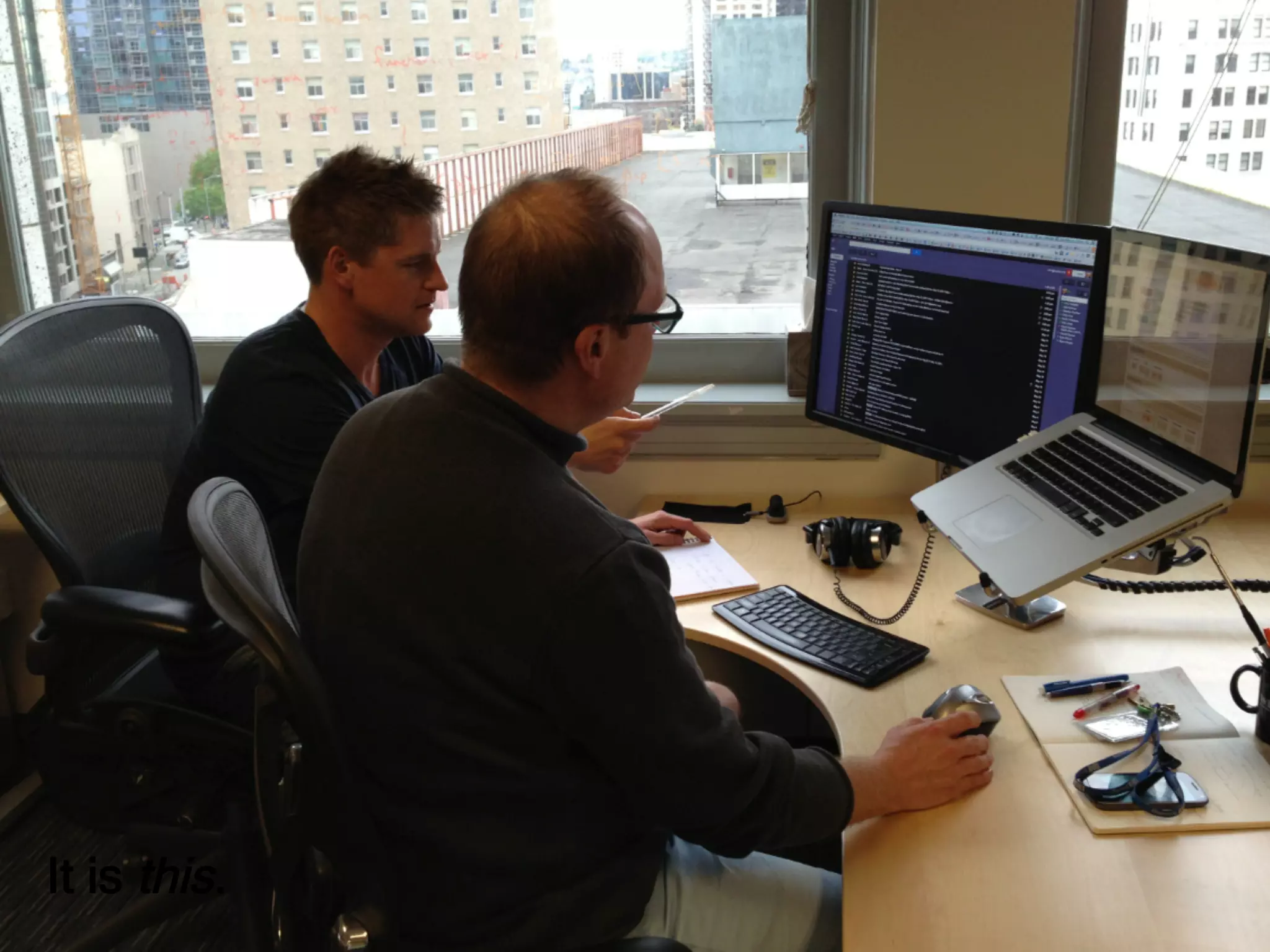
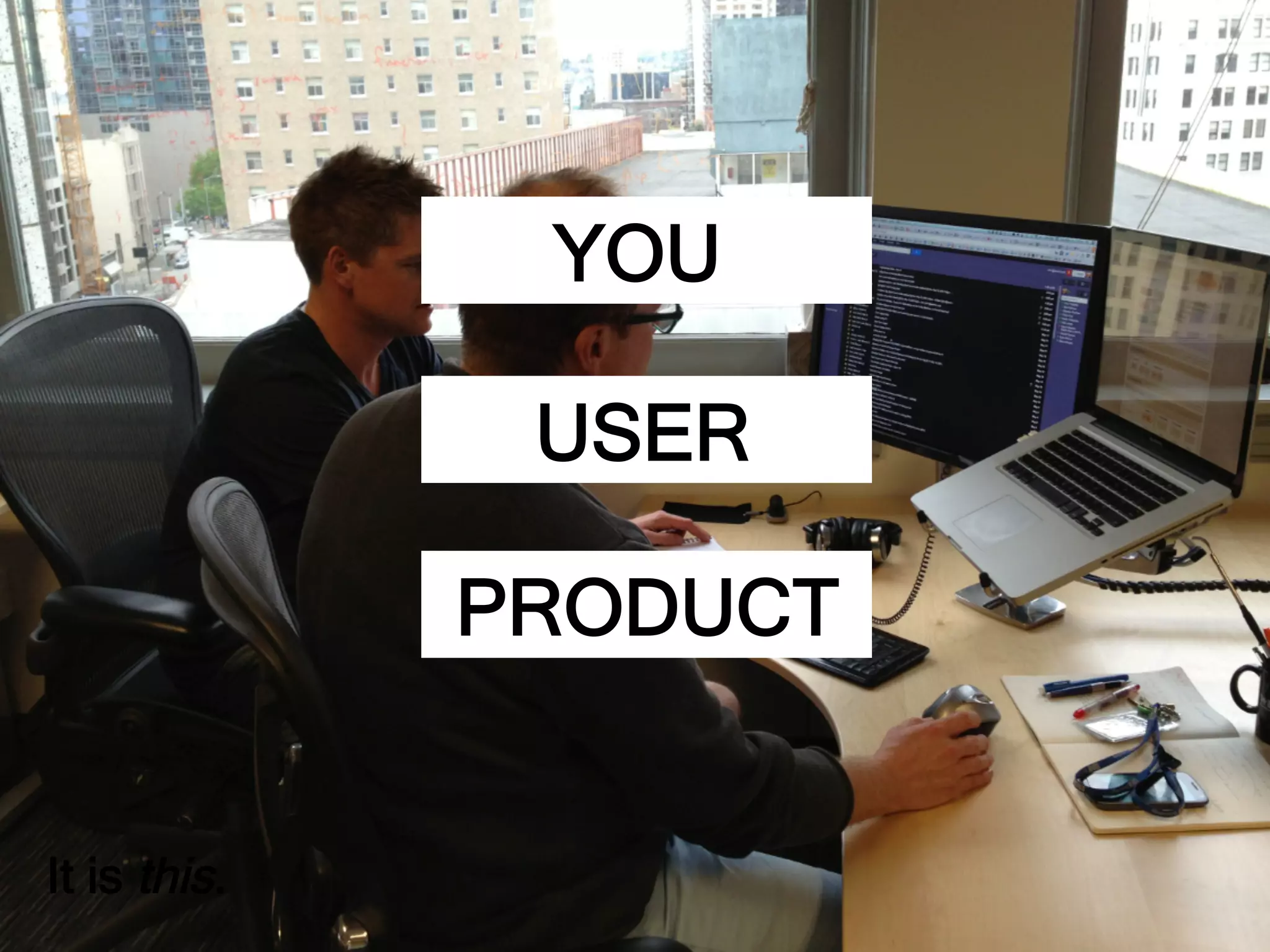
It is this.
It is this.
YOU
USER
PRODUCT
Workshop Format
1. Some quick techniques and caveats
2. Test (2 participants)
3. De-Brief
4. wrap-up
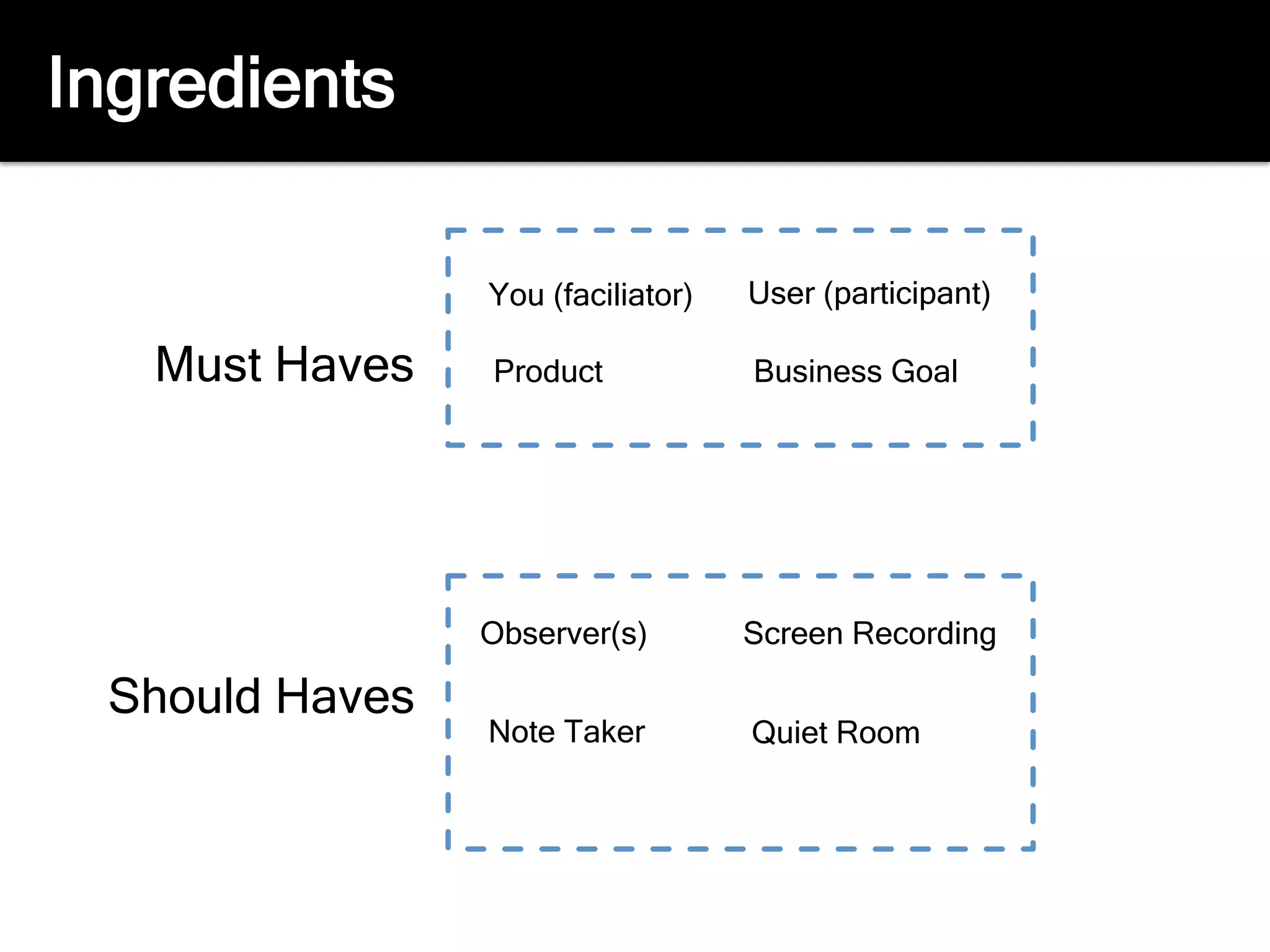
Must Haves
Should Haves
User (participant)You (faciliator)
Product
Observer(s) Screen Recording
Note Taker Quiet Room
Ingredients
Business Goal
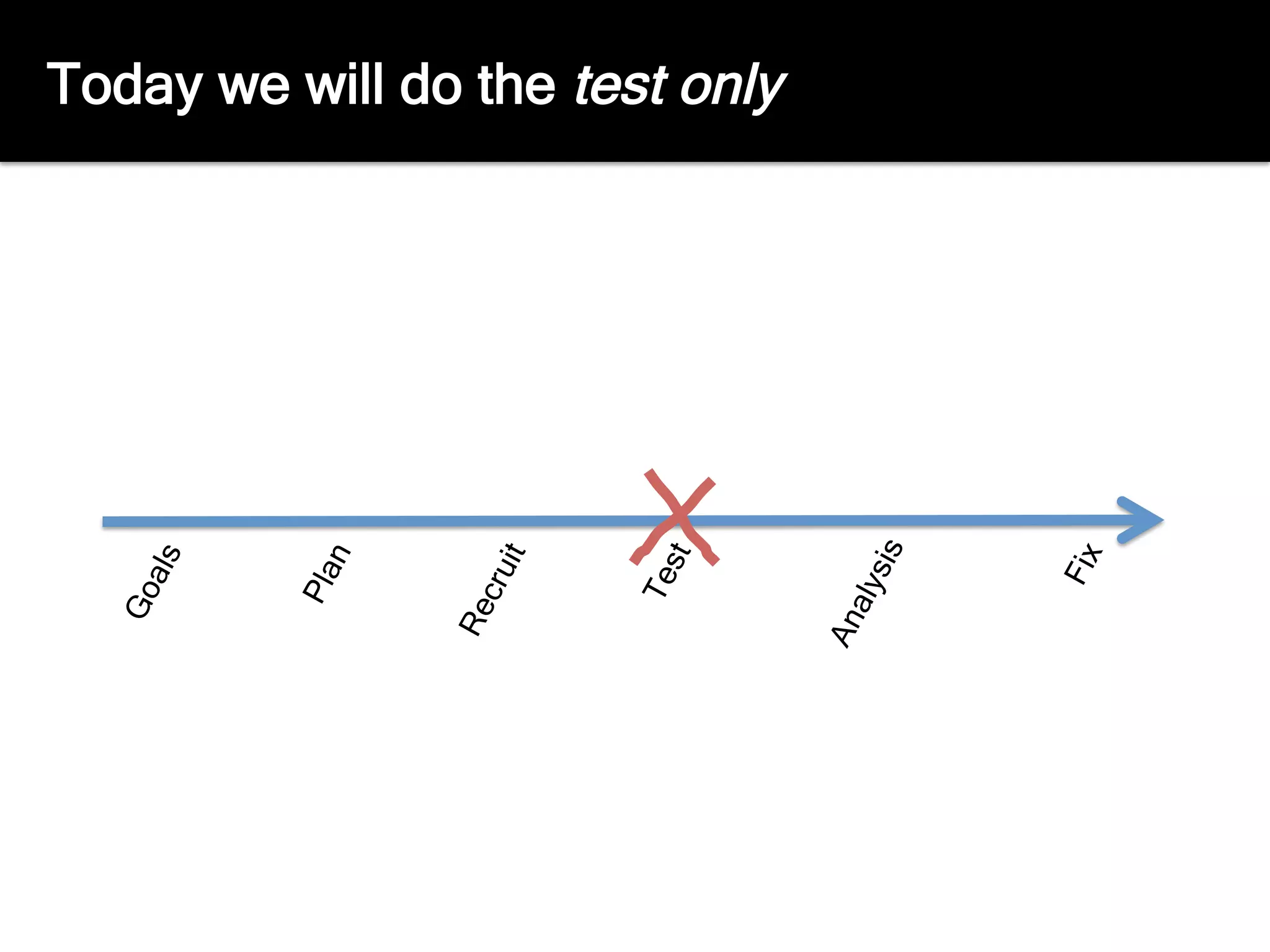
Today we will do the test only
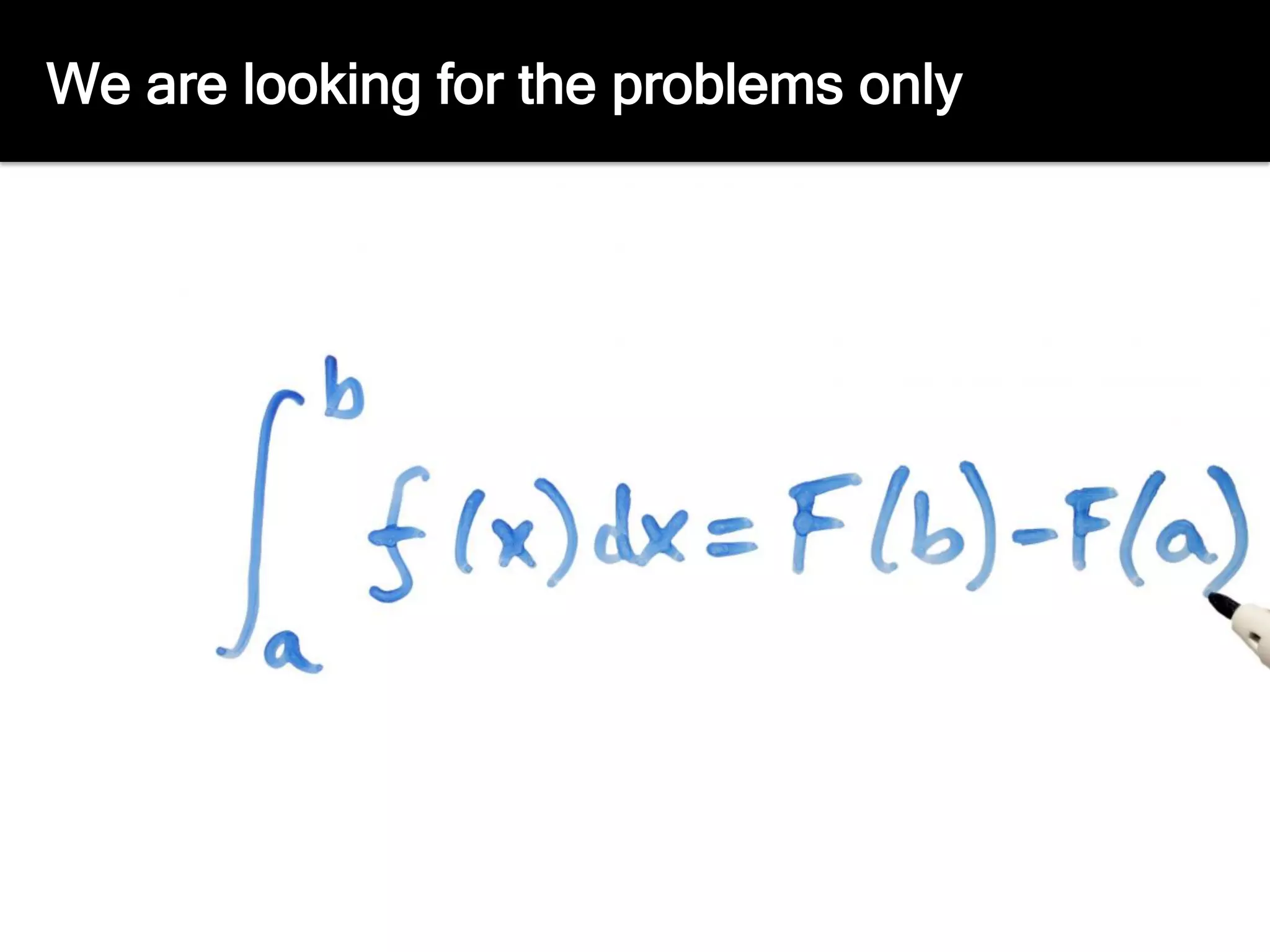
We are looking for the problems only
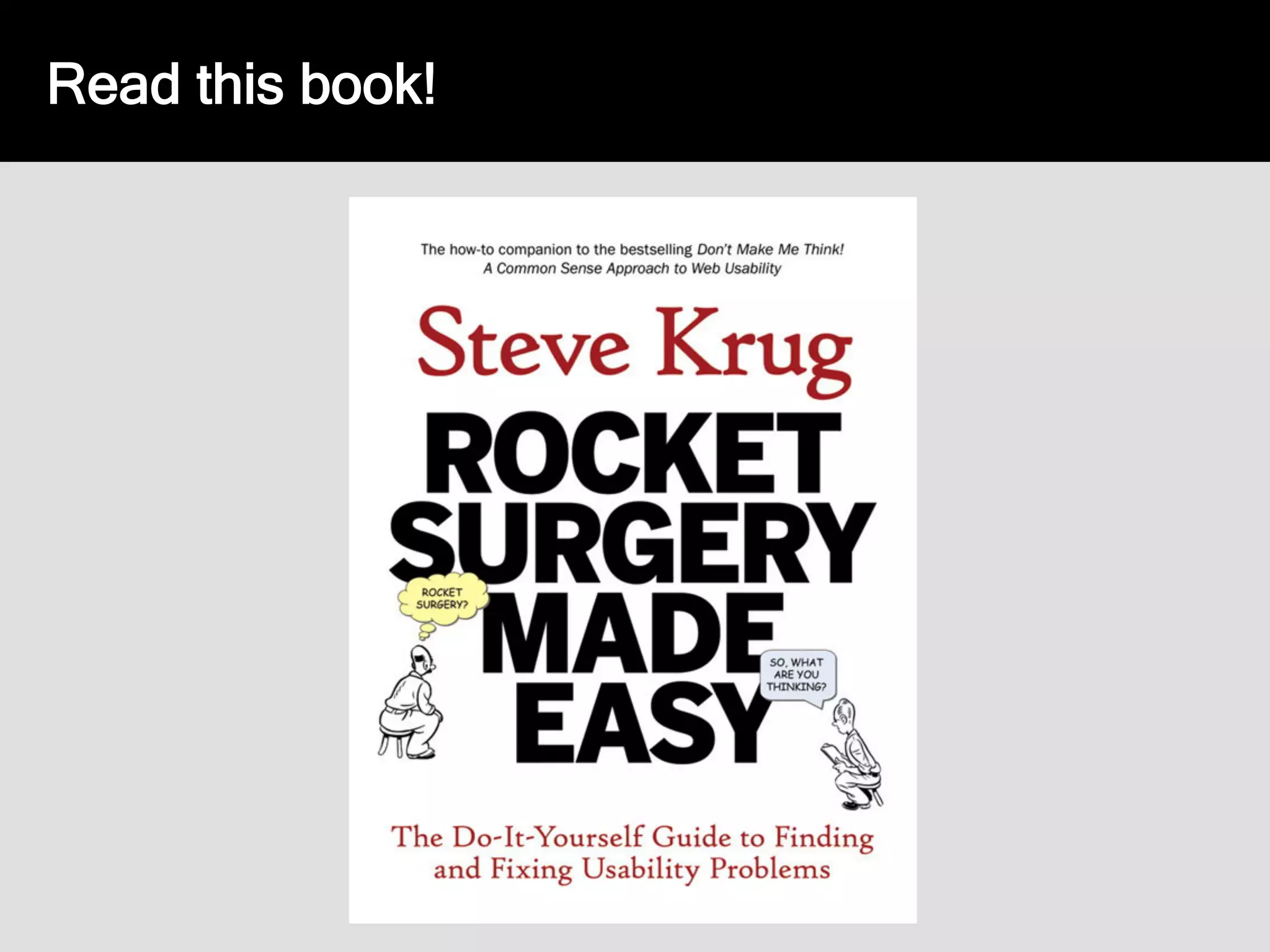
Read this book!
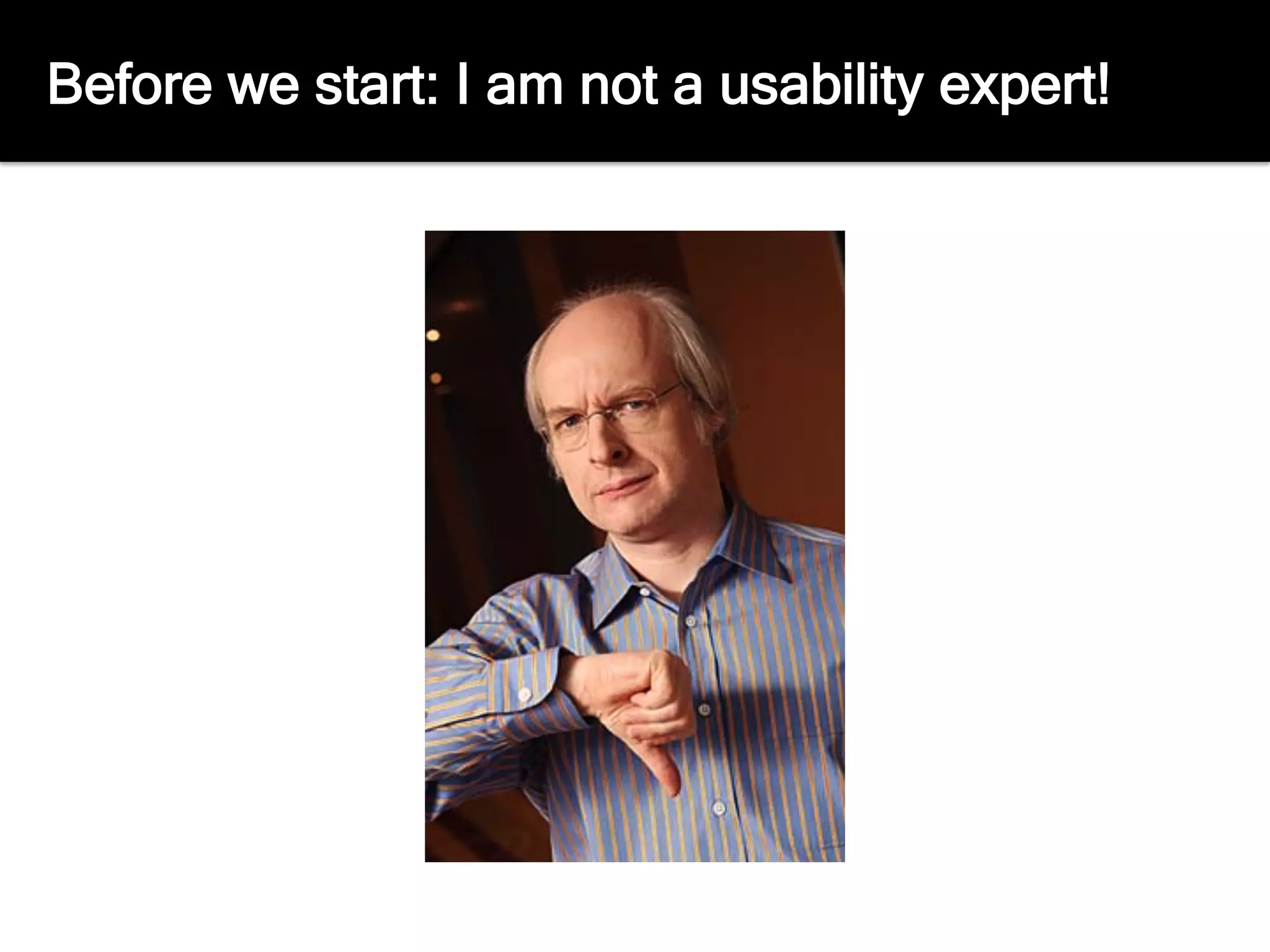
Before we start: I am not a usability expert!
Lets do it!!
The	
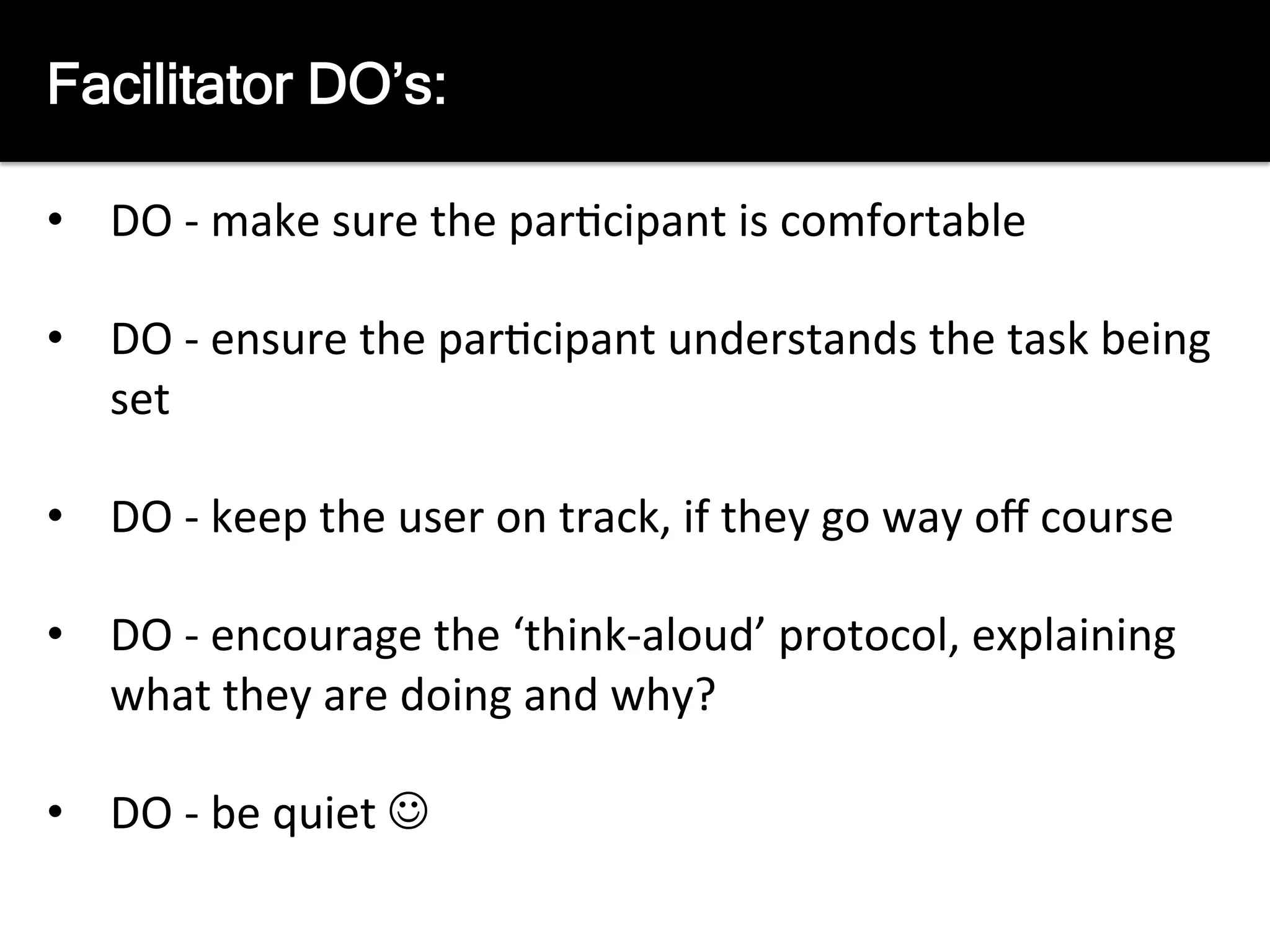
  Facilitators	
  job	
  is	
  to:	


•  DO	
  -­‐	
  make	
  sure	
  the	
  par8cipant	
  is	
  comfortable	
  
•  DO	
  -­‐	
  ensure	
  the	
  par8cipant	
  understands	
  the	
  task	
  being	
  
set	
  
•  DO	
  -­‐	
  keep	
  the	
  user	
  on	
  track,	
  if	
  they	
  go	
  way	
  off	
  course	
  
•  DO	
  -­‐	
  encourage	
  the	
  ‘think-­‐aloud’	
  protocol,	
  explaining	
  
what	
  they	
  are	
  doing	
  and	
  why?	
  
•  DO	
  -­‐	
  be	
  quiet	
  J	
  
Facilitator DO’s:
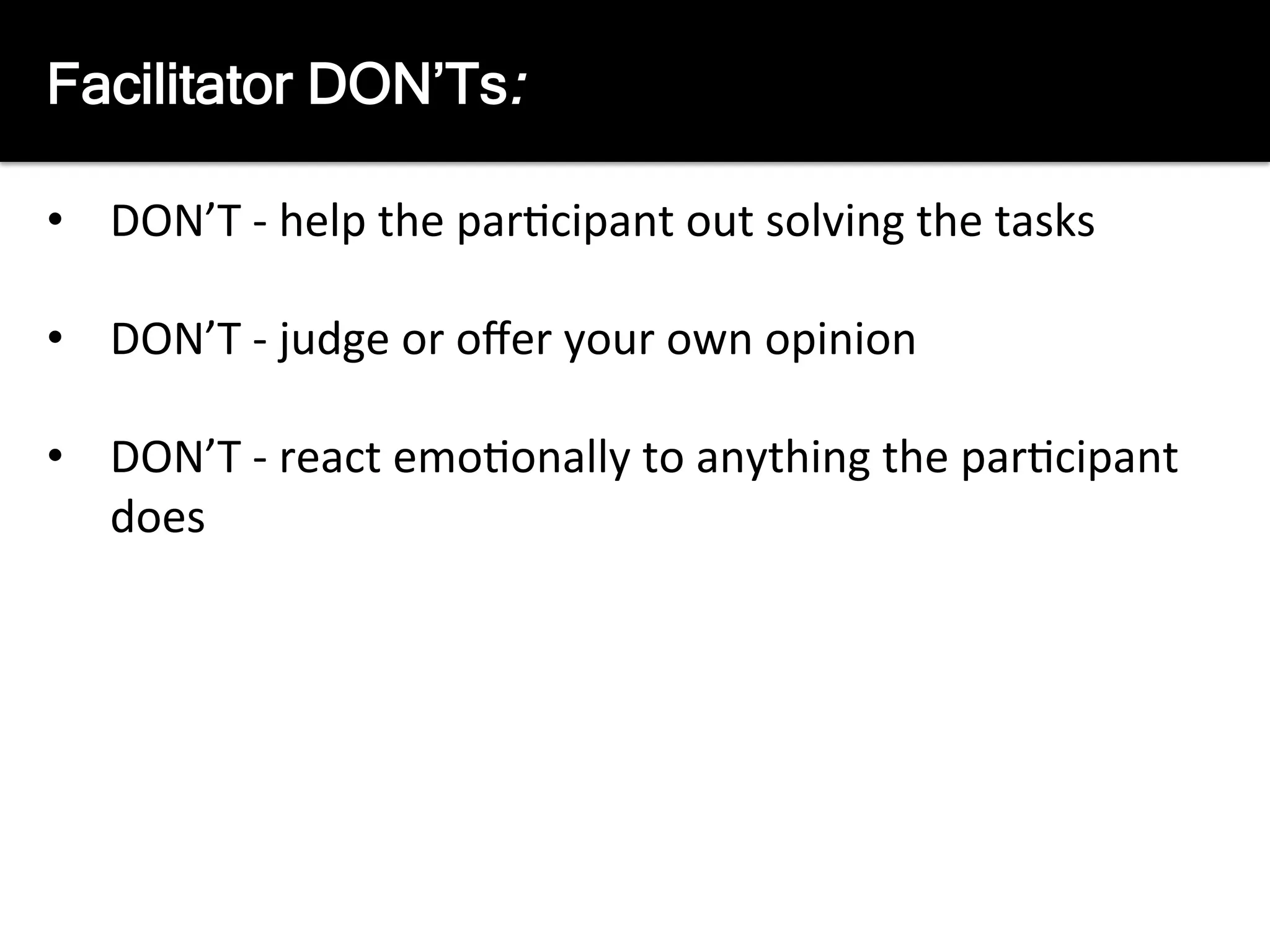
The	
  Facilitators	
  job	
  is	
  not:	


•  DON’T	
  -­‐	
  help	
  the	
  par8cipant	
  out	
  solving	
  the	
  tasks	
  
•  DON’T	
  -­‐	
  judge	
  or	
  offer	
  your	
  own	
  opinion	
  
•  DON’T	
  -­‐	
  react	
  emo8onally	
  to	
  anything	
  the	
  par8cipant	
  
does	
  
Facilitator DON’Ts:
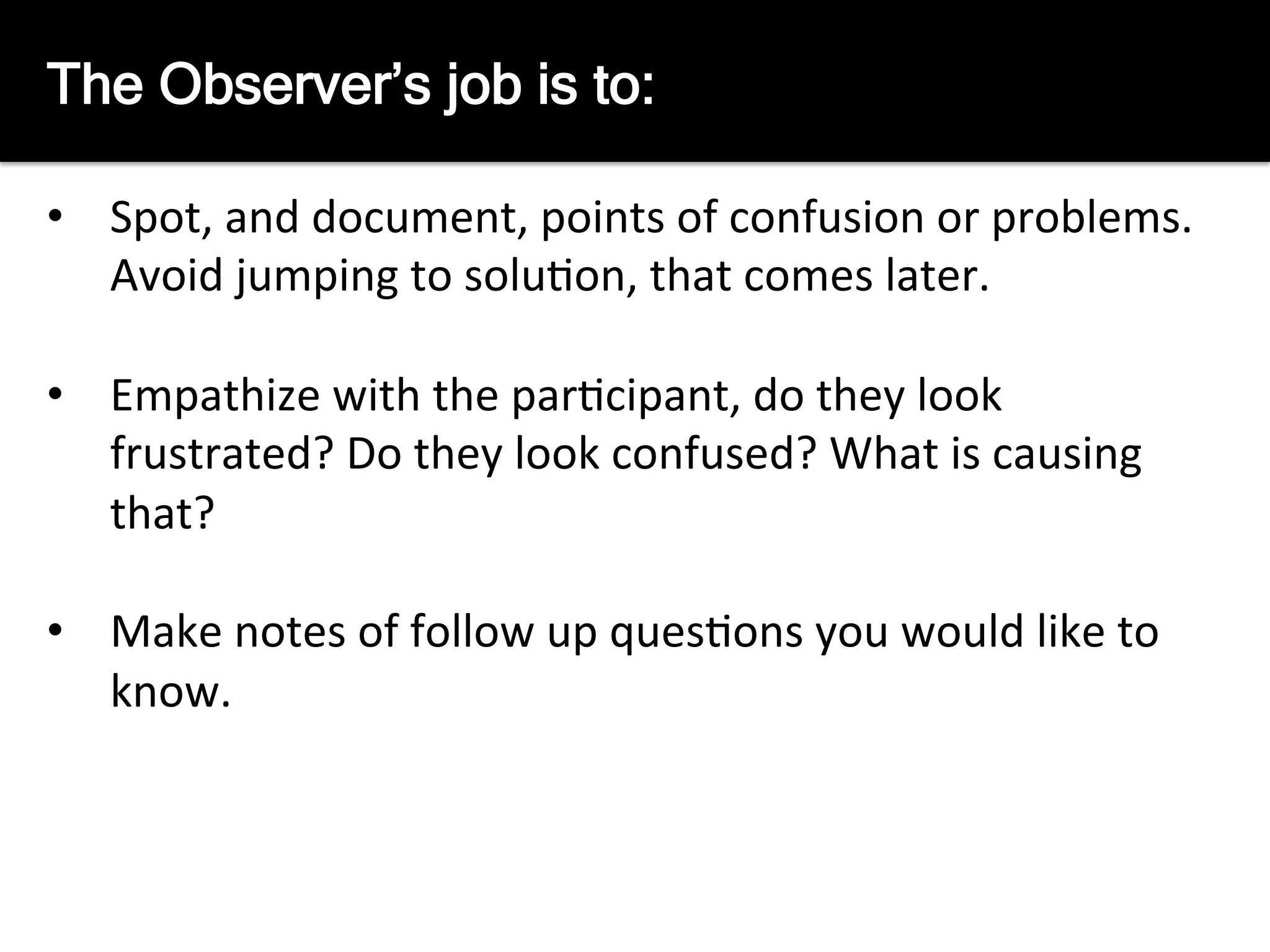
The	
  observers	
  job	
  is	
  to	


•  Spot,	
  and	
  document,	
  points	
  of	
  confusion	
  or	
  problems.	
  	
  
Avoid	
  jumping	
  to	
  solu8on,	
  that	
  comes	
  later.	
  
•  Empathize	
  with	
  the	
  par8cipant,	
  do	
  they	
  look	
  
frustrated?	
  Do	
  they	
  look	
  confused?	
  What	
  is	
  causing	
  
that?	
  
•  Make	
  notes	
  of	
  follow	
  up	
  ques8ons	
  you	
  would	
  like	
  to	
  
know.	
  
The Observer’s job is to:
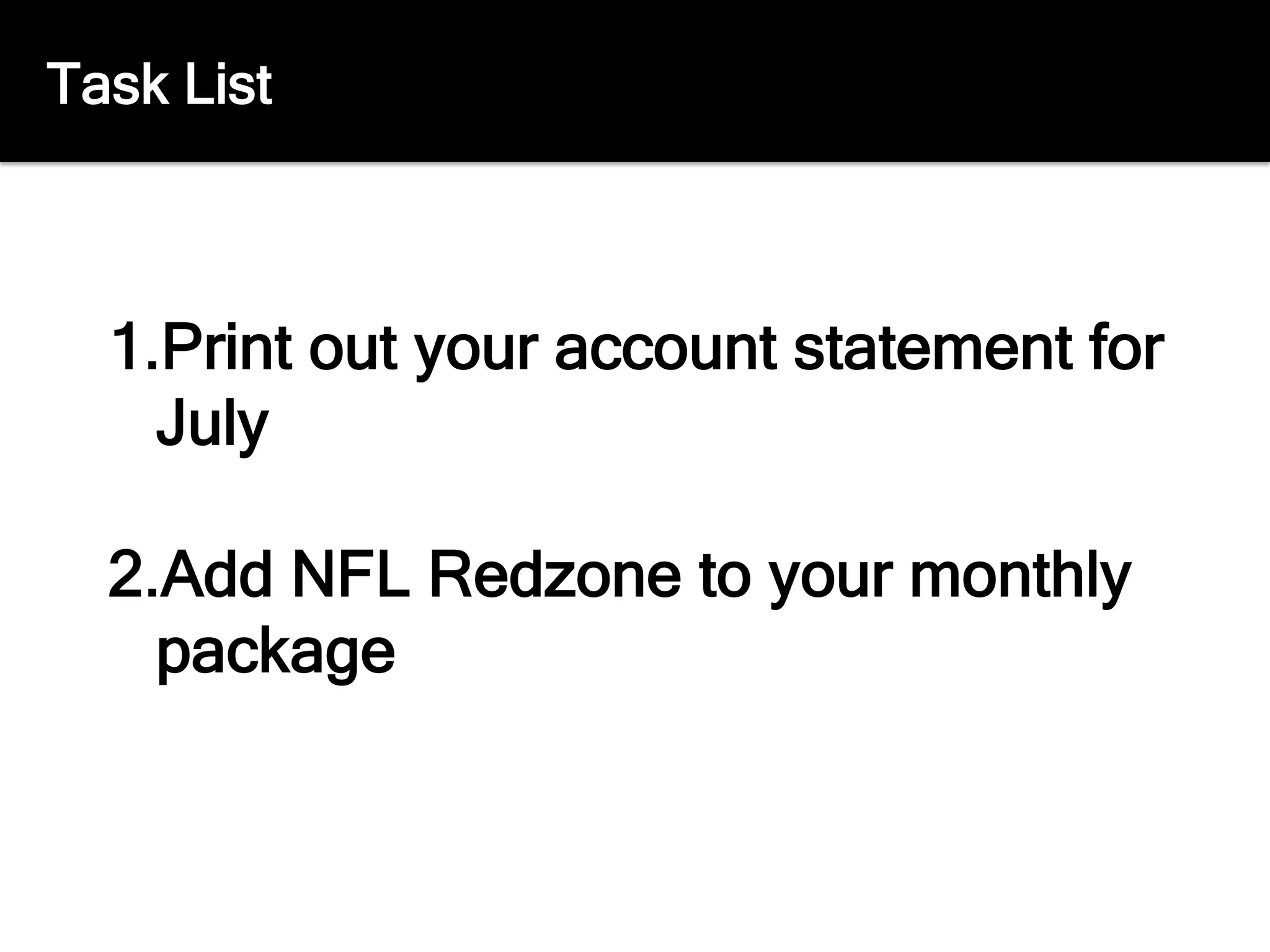
Task List
1. Print out your account statement for
July
2. Add NFL Redzone to your monthly
package
De-Brief
What problems did we notice?
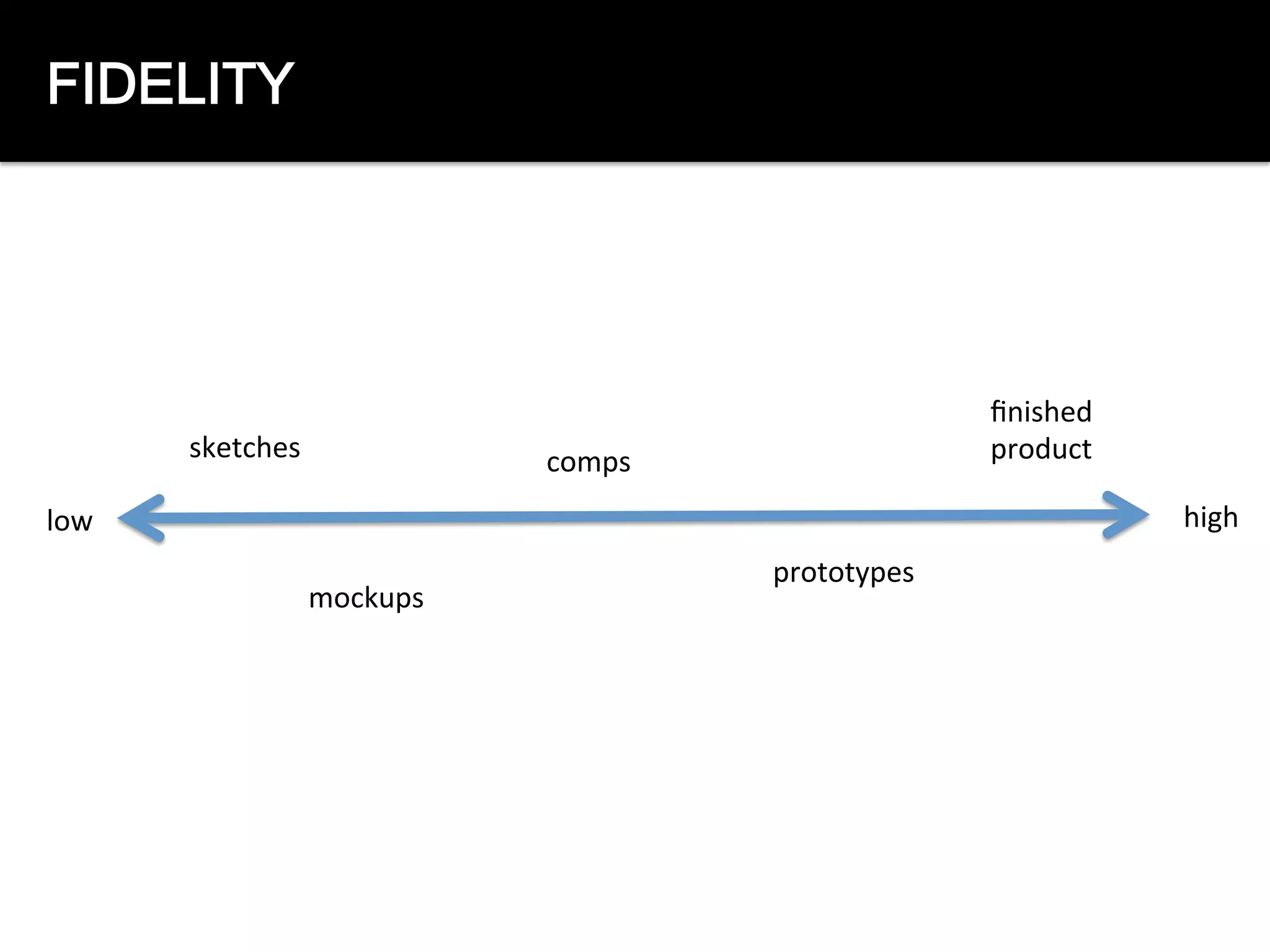
FIDELITY
FIDELITY
low	
   high	
  
mockups	
  
sketches	
  
finished	
  
product	
  comps	
  
prototypes	
  
Discuss!!
Downloads
•  This deck – bit.ly/UserTestingForPMs
•  An example of a research summary
•  https://docs.google.com/presentation/d/1EPo0jTRTv-ygvGVZZ6ecIVxn_GpSFECWUMmFDJ9uRS8/pub?
start=false&loop=false&delayms=3000#slide=id.g10c39f6e8_0148
•  Handout
•  https://www.dropbox.com/s/jpajmvi7nc882md/user-testing-cheat-sheet.pdf
•  @jontheexiled
Jon White – Product Manager @

User Testing for Product Managers - LIVE

  • 1.
    User Testing for ProductManagers Jon White – Product Manager @
  • 2.
    Usability  tes+ng  is  a  method  by  which  users  of   a  product  are  asked  to  perform  certain  tasks  in   an  effort  to  measure  the  product's  ease-­‐of-­‐use,   task  +me,  and  the  user's  percep+on  of  the   experience.  
  • 3.
    expensive   +me  consuming   difficult   requires  experts  
  • 4.
    expensive   +me  consuming   difficult   requires  experts  
  • 5.
    The type ofusability testing we will be talking about today, is not this:
  • 6.
  • 7.
  • 8.
    Workshop Format 1. Some quicktechniques and caveats 2. Test (2 participants) 3. De-Brief 4. wrap-up
  • 9.
    Must Haves Should Haves User(participant)You (faciliator) Product Observer(s) Screen Recording Note Taker Quiet Room Ingredients Business Goal
  • 10.
    Today we willdo the test only
  • 11.
    We are lookingfor the problems only
  • 12.
  • 13.
    Before we start:I am not a usability expert!
  • 14.
  • 15.
    The  Facilitators  job  is  to:     •  DO  -­‐  make  sure  the  par8cipant  is  comfortable   •  DO  -­‐  ensure  the  par8cipant  understands  the  task  being   set   •  DO  -­‐  keep  the  user  on  track,  if  they  go  way  off  course   •  DO  -­‐  encourage  the  ‘think-­‐aloud’  protocol,  explaining   what  they  are  doing  and  why?   •  DO  -­‐  be  quiet  J   Facilitator DO’s:
  • 16.
    The  Facilitators  job  is  not:     •  DON’T  -­‐  help  the  par8cipant  out  solving  the  tasks   •  DON’T  -­‐  judge  or  offer  your  own  opinion   •  DON’T  -­‐  react  emo8onally  to  anything  the  par8cipant   does   Facilitator DON’Ts:
  • 17.
    The  observers  job  is  to     •  Spot,  and  document,  points  of  confusion  or  problems.     Avoid  jumping  to  solu8on,  that  comes  later.   •  Empathize  with  the  par8cipant,  do  they  look   frustrated?  Do  they  look  confused?  What  is  causing   that?   •  Make  notes  of  follow  up  ques8ons  you  would  like  to   know.   The Observer’s job is to:
  • 19.
    Task List 1. Print outyour account statement for July 2. Add NFL Redzone to your monthly package
  • 20.
  • 21.
  • 22.
    FIDELITY low   high   mockups   sketches   finished   product  comps   prototypes  
  • 23.
  • 24.
    Downloads •  This deck– bit.ly/UserTestingForPMs •  An example of a research summary •  https://docs.google.com/presentation/d/1EPo0jTRTv-ygvGVZZ6ecIVxn_GpSFECWUMmFDJ9uRS8/pub? start=false&loop=false&delayms=3000#slide=id.g10c39f6e8_0148 •  Handout •  https://www.dropbox.com/s/jpajmvi7nc882md/user-testing-cheat-sheet.pdf •  @jontheexiled Jon White – Product Manager @