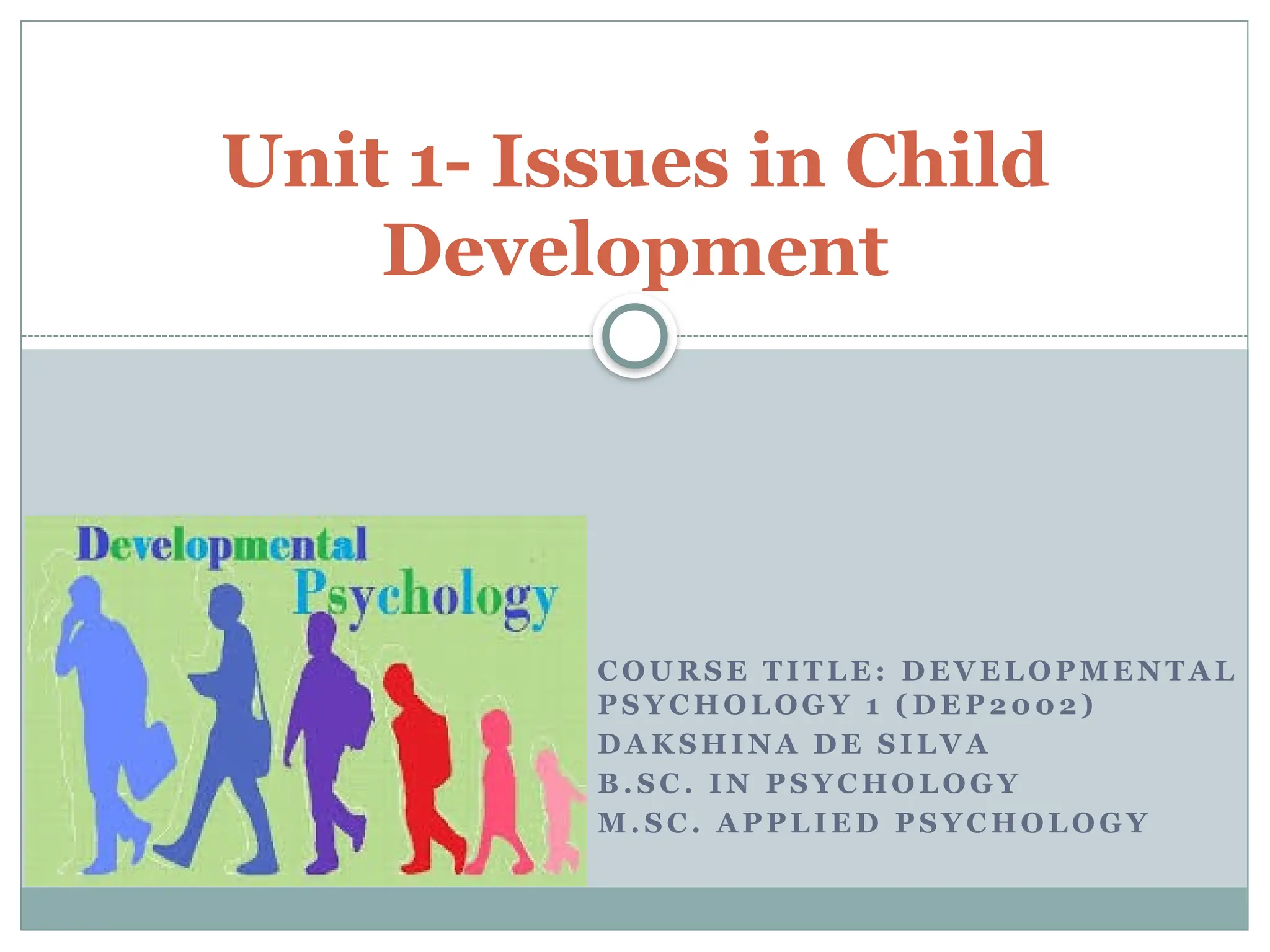
C OU RS E T I T L E : D E VE L O P M E N T A L
PS Y C HOL OG Y 1 ( D E P 20 02 )
D A K S HI N A D E S I L VA
B . S C . I N P S YC HO L O GY
M . S C . A P PL IE D P S YC HO L O G Y
Unit 1- Issues in Child
Development
2.
Developmental Psychology
Developmentalpsychology is a scientific
approach which aims to explain growth, change and
consistency though the lifespan.
Developmental psychology looks at how
thinking, feeling, and behavior change throughout a
person's life.
A significant proportion of theories within this
discipline focus upon development during childhood,
as this is the period during an individual's lifespan
when the most change occurs.
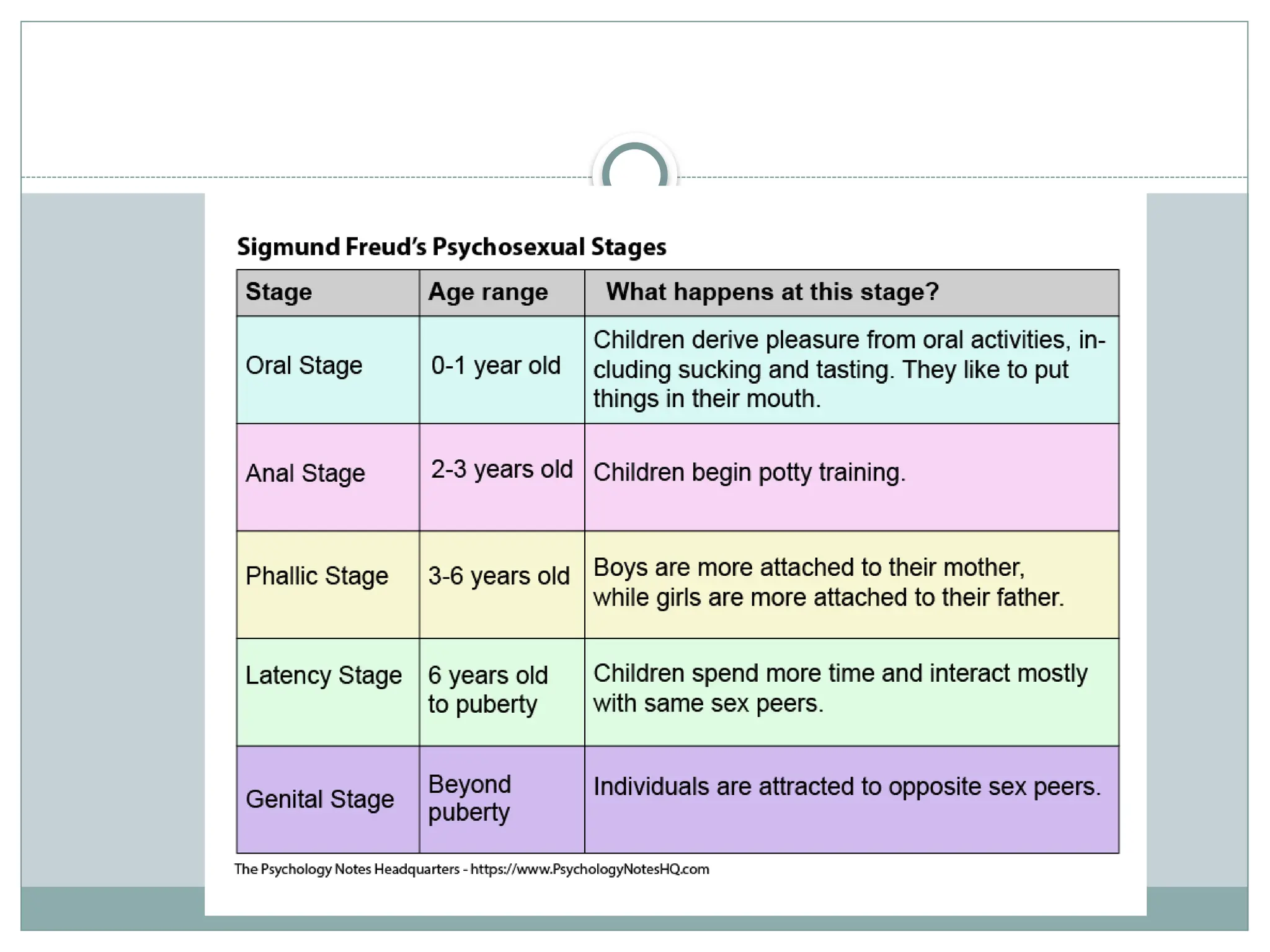
3.
A significantproportion of theories within this discipline
focus upon development during childhood, as this is the
period during an individual's lifespan when the most
change occurs.
Developmental psychologists study a wide range of
theoretical areas, such as biological, social, emotion, and
cognitive processes.
Empirical research in this area tends to be dominated by
psychologists from Western cultures such as North
American and Europe, although during the 1980s Japanese
researchers began making a valid contribution to the field.
4.
The threegoals of developmental psychology are to
describe, explain, and to optimize development.
To describe development it is necessary to focus both
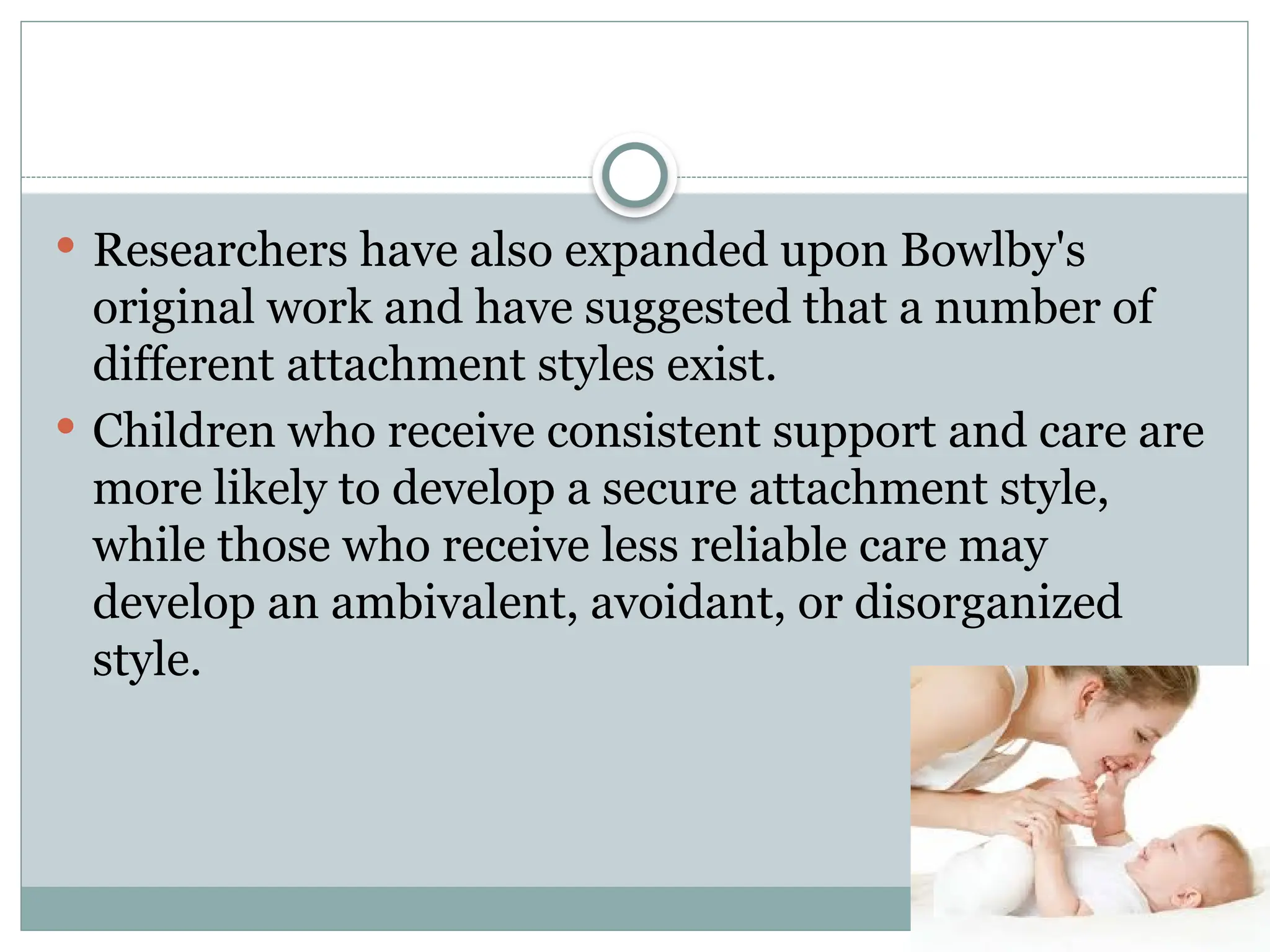
on typical patterns of change (normative
development) and individual variations in patterns
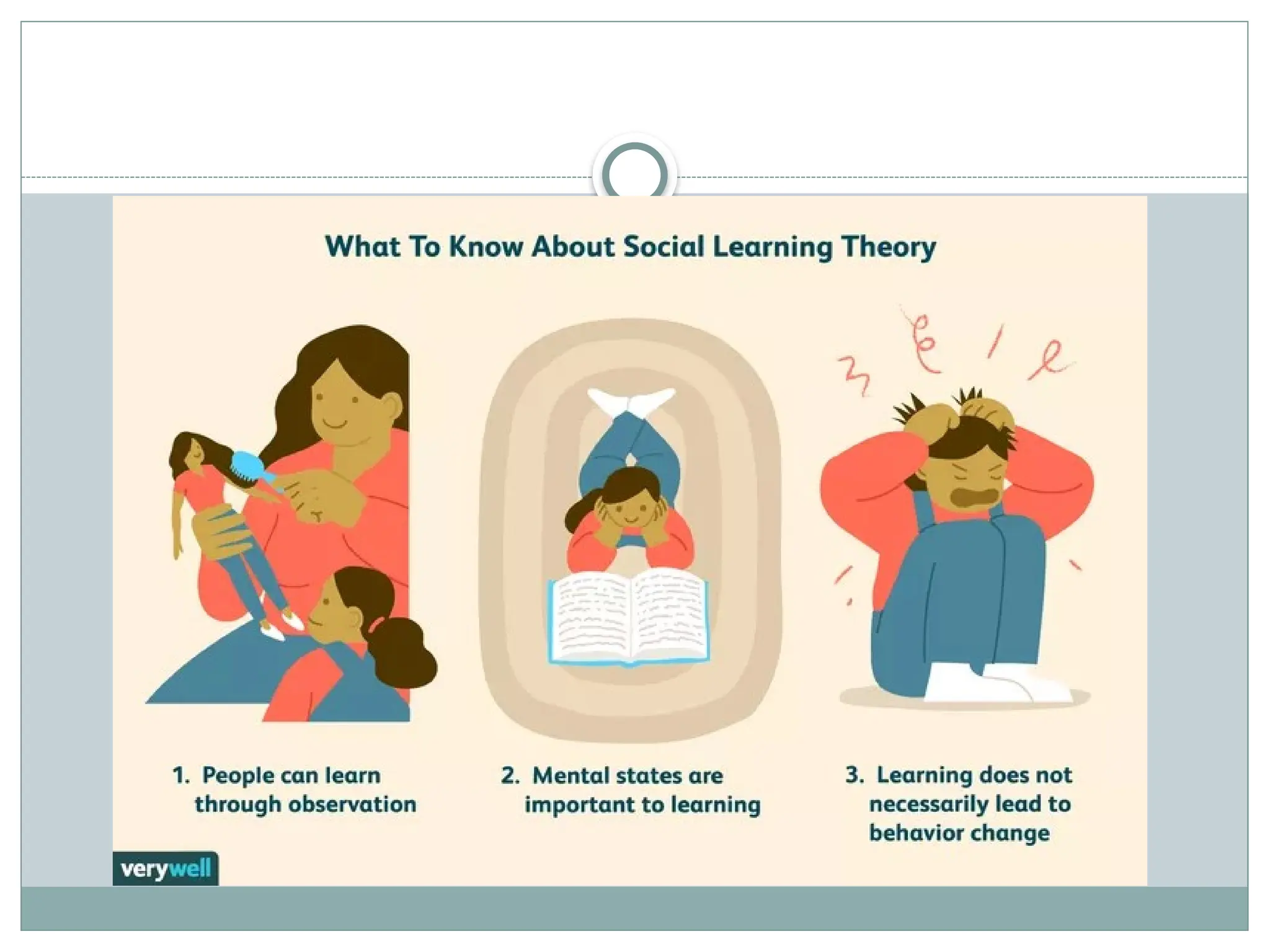
of change (i.e. idiographic development).
Although there are typical pathways of development
that most people will follow, no two persons are
exactly alike.
5.
Developmental psychologistsmust also seek to
explain the changes they have observed in relation to
normative processes and individual differences.
Although, it is often easier to describe development
than to explain how it occurs.
Finally, developmental psychologists hope to
optimize development, and apply their theories to
help people in practical situations (e.g. help parents
develop secure attachments with their children).
6.
Issues of Psychology
Continuityvs. Discontinuity
Think about how children become adults. Is there a
predictable pattern they follow regarding thought and
language and social development? Do children go
through gradual changes or are they abrupt changes?
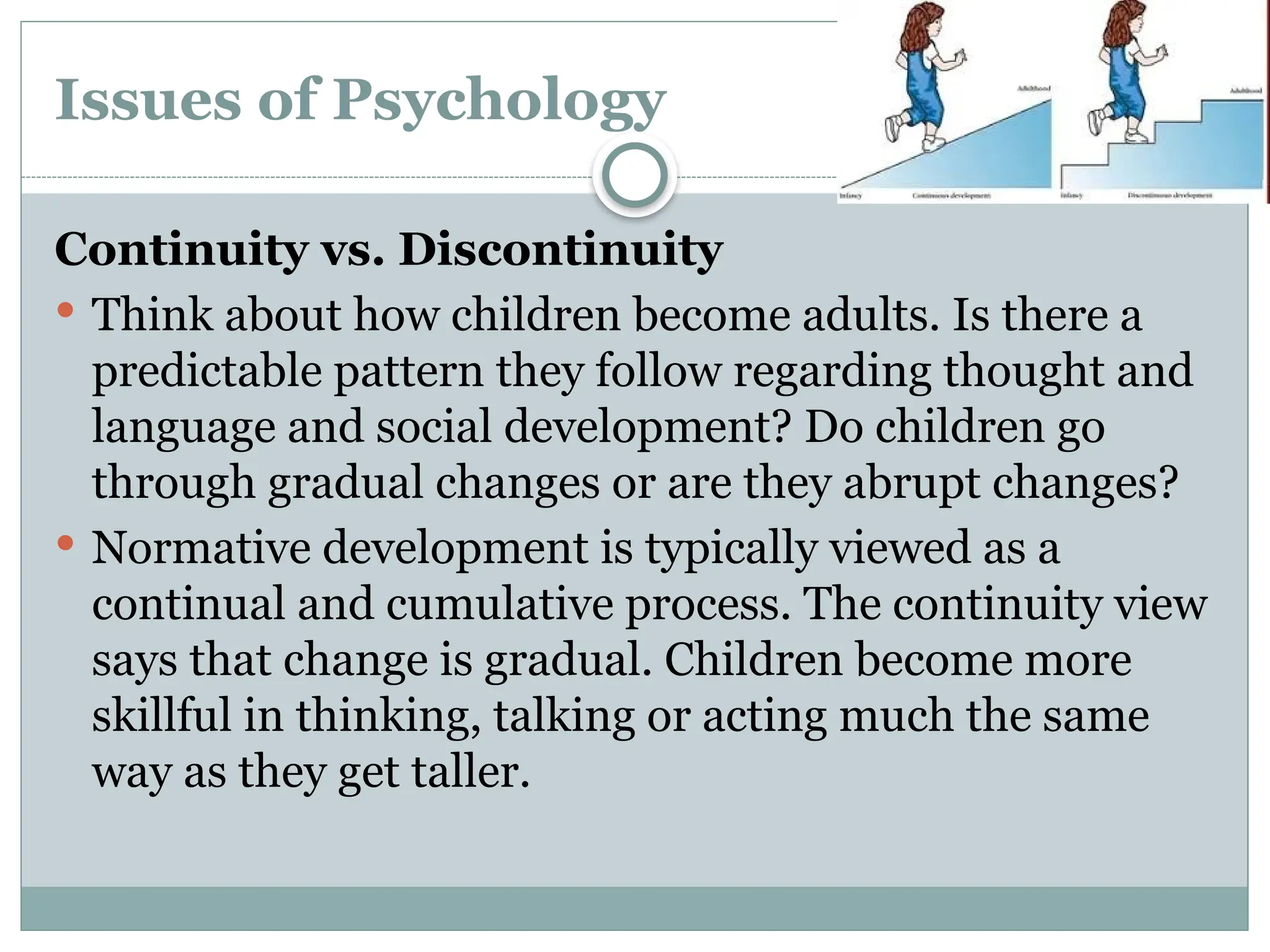
Normative development is typically viewed as a
continual and cumulative process. The continuity view
says that change is gradual. Children become more
skillful in thinking, talking or acting much the same
way as they get taller.
7.
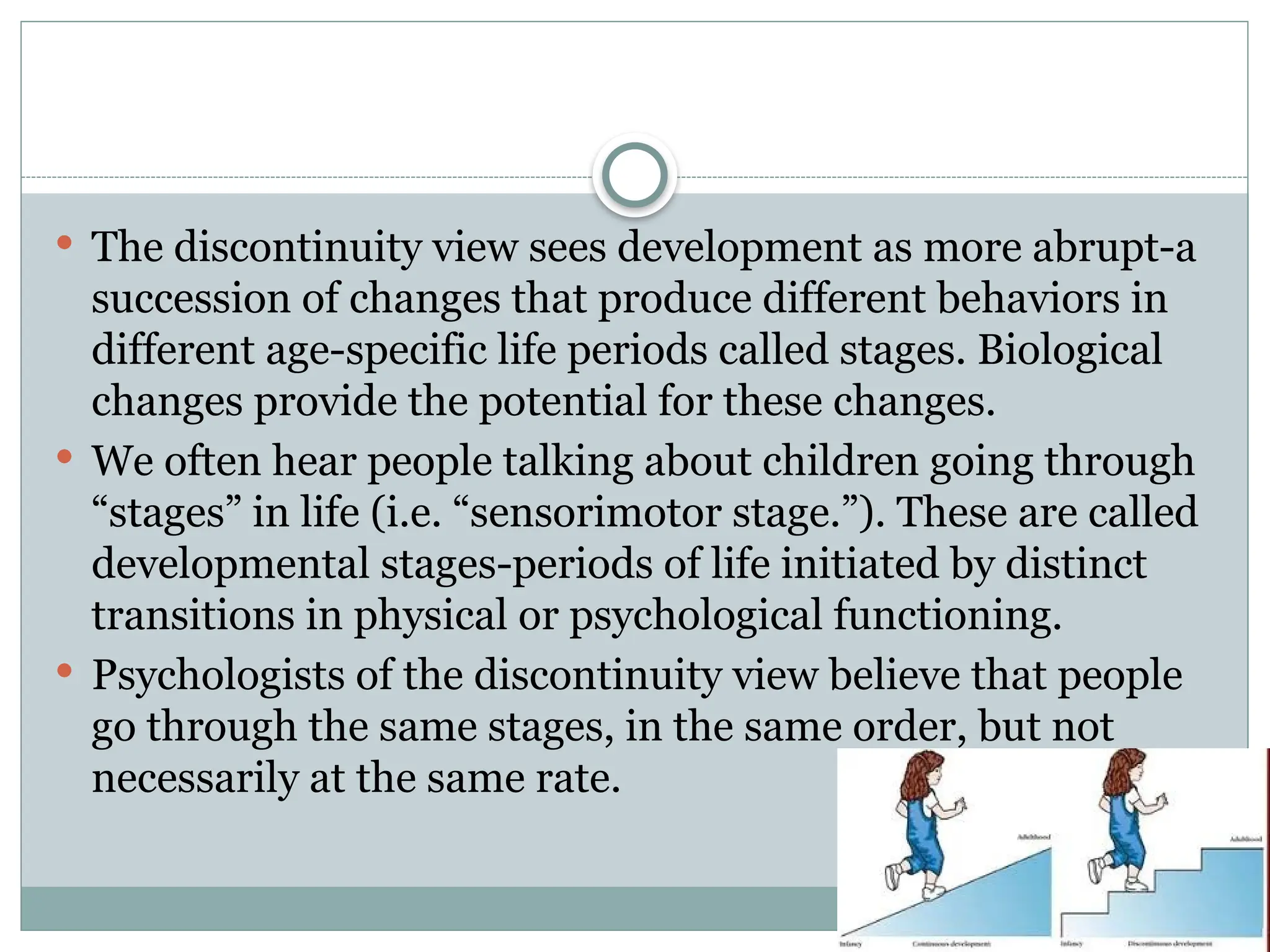
The discontinuityview sees development as more abrupt-a
succession of changes that produce different behaviors in
different age-specific life periods called stages. Biological
changes provide the potential for these changes.
We often hear people talking about children going through
“stages” in life (i.e. “sensorimotor stage.”). These are called
developmental stages-periods of life initiated by distinct
transitions in physical or psychological functioning.
Psychologists of the discontinuity view believe that people
go through the same stages, in the same order, but not
necessarily at the same rate.
8.
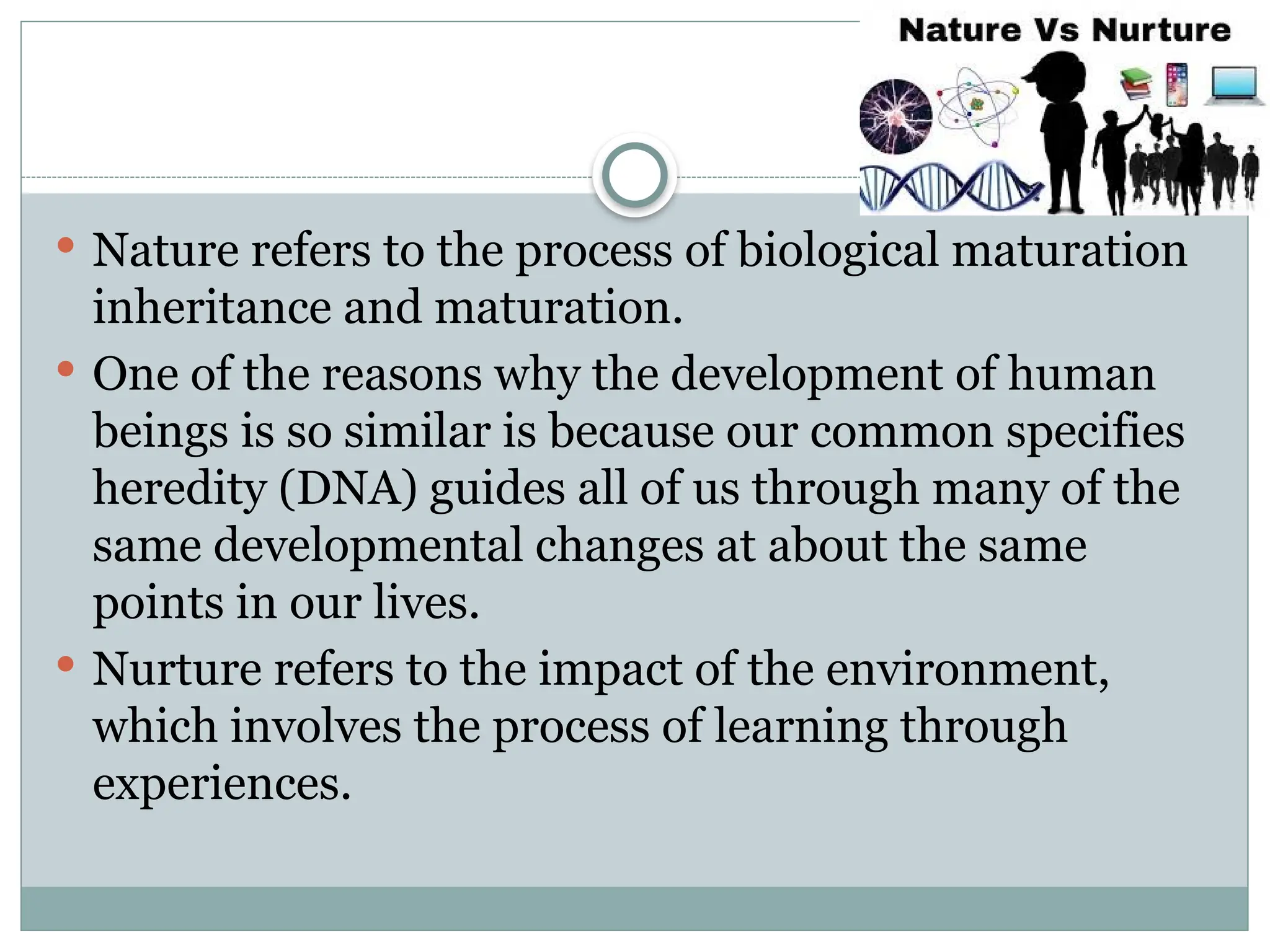
Nature vs. Nurture
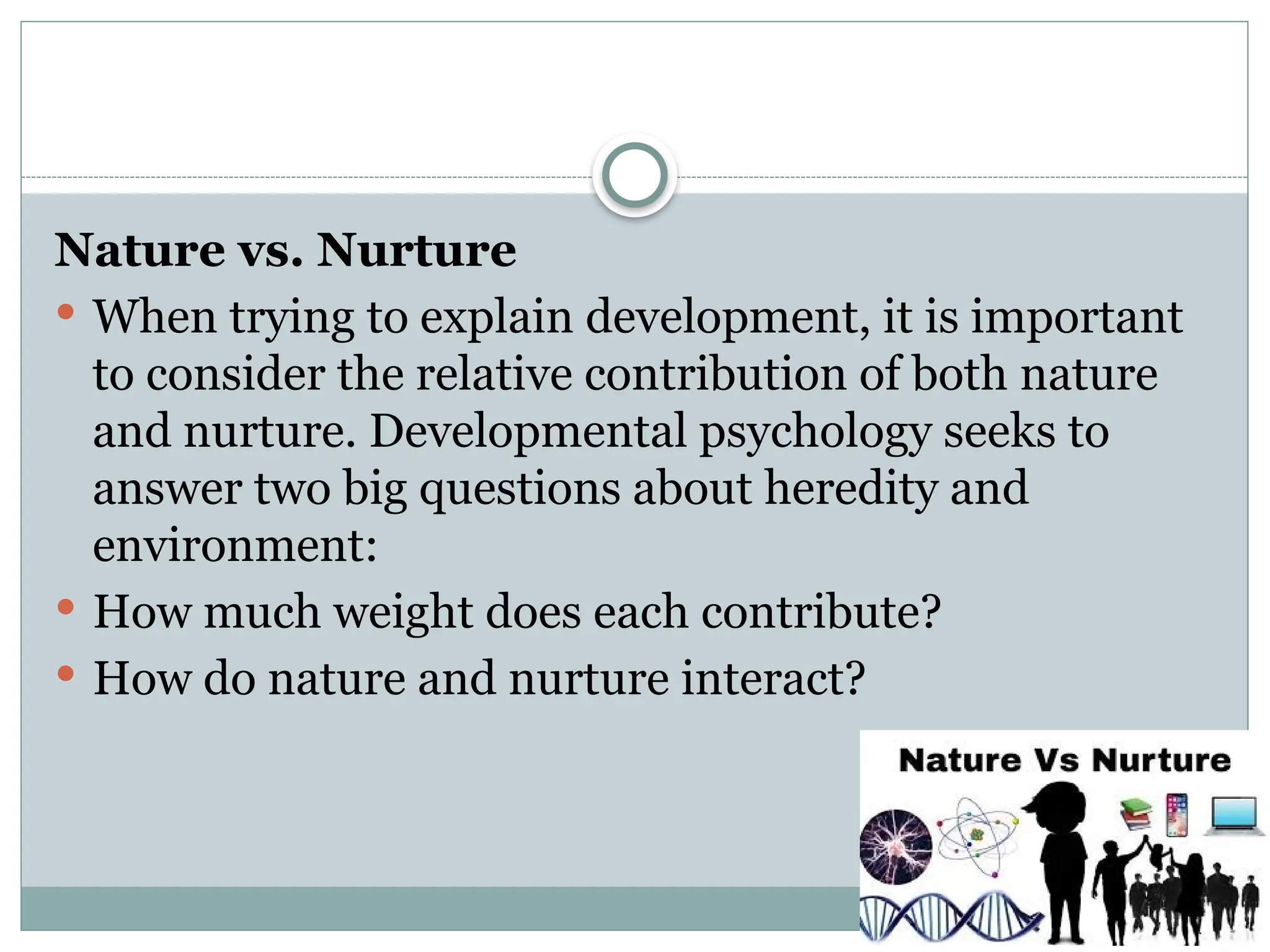
When trying to explain development, it is important
to consider the relative contribution of both nature
and nurture. Developmental psychology seeks to
answer two big questions about heredity and
environment:
How much weight does each contribute?
How do nature and nurture interact?
9.
Nature refersto the process of biological maturation
inheritance and maturation.
One of the reasons why the development of human
beings is so similar is because our common specifies
heredity (DNA) guides all of us through many of the
same developmental changes at about the same
points in our lives.
Nurture refers to the impact of the environment,
which involves the process of learning through
experiences.
10.
There aretwo effective ways to study nature-nurture.
1) Twin studies: Identical twins have the same
genotype, and fraternal twins have an average of
50% of their genes in common.
2) Adoption studies: Similarities with the biological
family support nature, while similarities with the
adoptive family support nurture.
11.
Stability vs. Change
Stability implies personality traits present during
infancy endure throughout the lifespan. In contrast,
change theorists argue that personalities are modified
by interactions with family, experiences at school, and
acculturation.
This capacity for change is called plasticity. For
example, Rutter (1981) discovered than somber babies
living in understaffed orphanages often become
cheerful and affectionate when placed in socially
stimulating adoptive homes.
12.
Historical Origins
Developmentalpsychology as a discipline did not exist until
after the industrial revolution when the need for an educated
workforce led to the social construction of childhood as a
distinct stage in a person's life.
The notion of childhood originates in the Western world and
this is why the early research derives from this location.
Initially, developmental psychologists were interested in
studying the mind of the child so that education and learning
could be more effective.
Developmental changes during adulthood is an even more
recent area of study. This is mainly due to advances in
medical science, enabling people to live to old age.
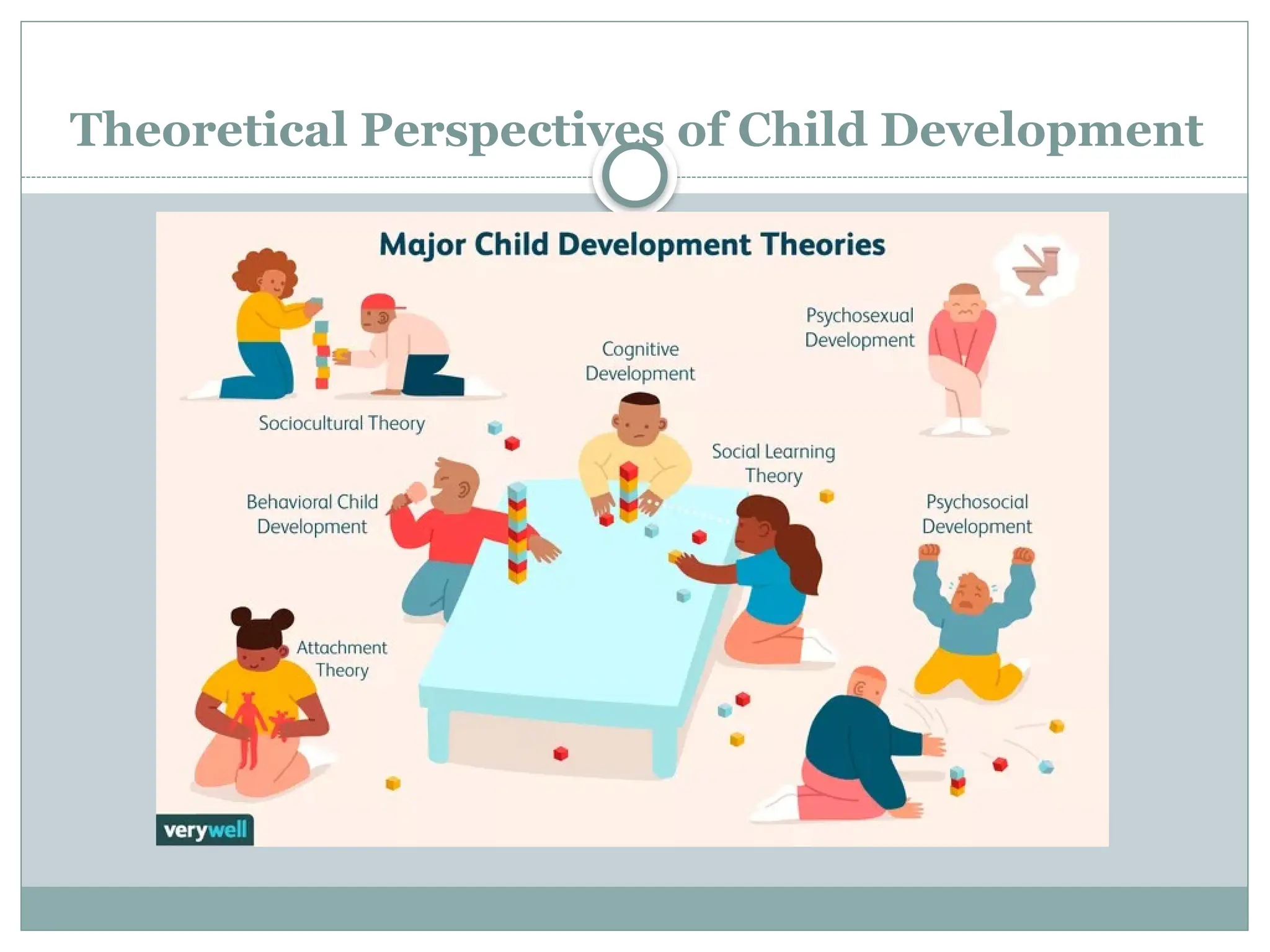
Child developmenttheories focus on explaining how
children change and grow over the course of
childhood. Such theories center on various aspects of
development including social, emotional, and
cognitive growth.
The study of human development is a rich and varied
subject. We all have personal experience with
development, but it is sometimes difficult to
understand how and why people grow, learn, and act
as they do.
15.
Why dochildren behave in certain ways? Is their
behavior related to their age, family relationships, or
individual temperaments? Developmental
psychologists strive to answer such questions as well
as to understand, explain, and predict behaviors that
occur throughout the lifespan.
In order to understand human development, a
number of different theories of child development
have arisen to explain various aspects of human
growth.
16.
Background
Theoriesof development provide a framework for
thinking about human growth and learning. But why
do we study development? What can we learn from
psychological theories of development? If you have
ever wondered about what motivates human thought
and behavior, understanding these theories can
provide useful insight into individuals and society.
17.
How OurUnderstanding Has Changed
Child development that occurs from birth to adulthood was
largely ignored throughout much of human history. Children
were often viewed simply as small versions of adults and
little attention was paid to the many advances in cognitive
abilities, language usage, and physical growth that occur
during childhood and adolescence.
Interest in the field of child development finally began to
emerge early in the 20th century, but it tended to focus on
abnormal behavior. Eventually, researchers became
increasingly interested in other topics including typical child
development as well as the influences on development.
18.
How WeCome to Understand Changes
Why is it important to study how children grow, learn and
change? An understanding of child development is essential
because it allows us to fully appreciate the cognitive,
emotional, physical, social, and educational growth that
children go through from birth and into early adulthood.
There are many child development theories that have been
proposed by theorists and researchers. More recent theories
outline the developmental stages of children and identify
the typical ages at which these growth milestones occur.
19.
Freud's Psychosexual DevelopmentalTheory
Psychoanalytic theory originated with the work of Sigmund
Freud. Through his clinical work with patients suffering from
mental illness, Freud came to believe that childhood
experiences and unconscious desires influenced behavior.
According to Freud, conflicts that occur during each of these
stages can have a lifelong influence on personality and
behavior. Freud proposed one of the best-known grand
theories of child development.
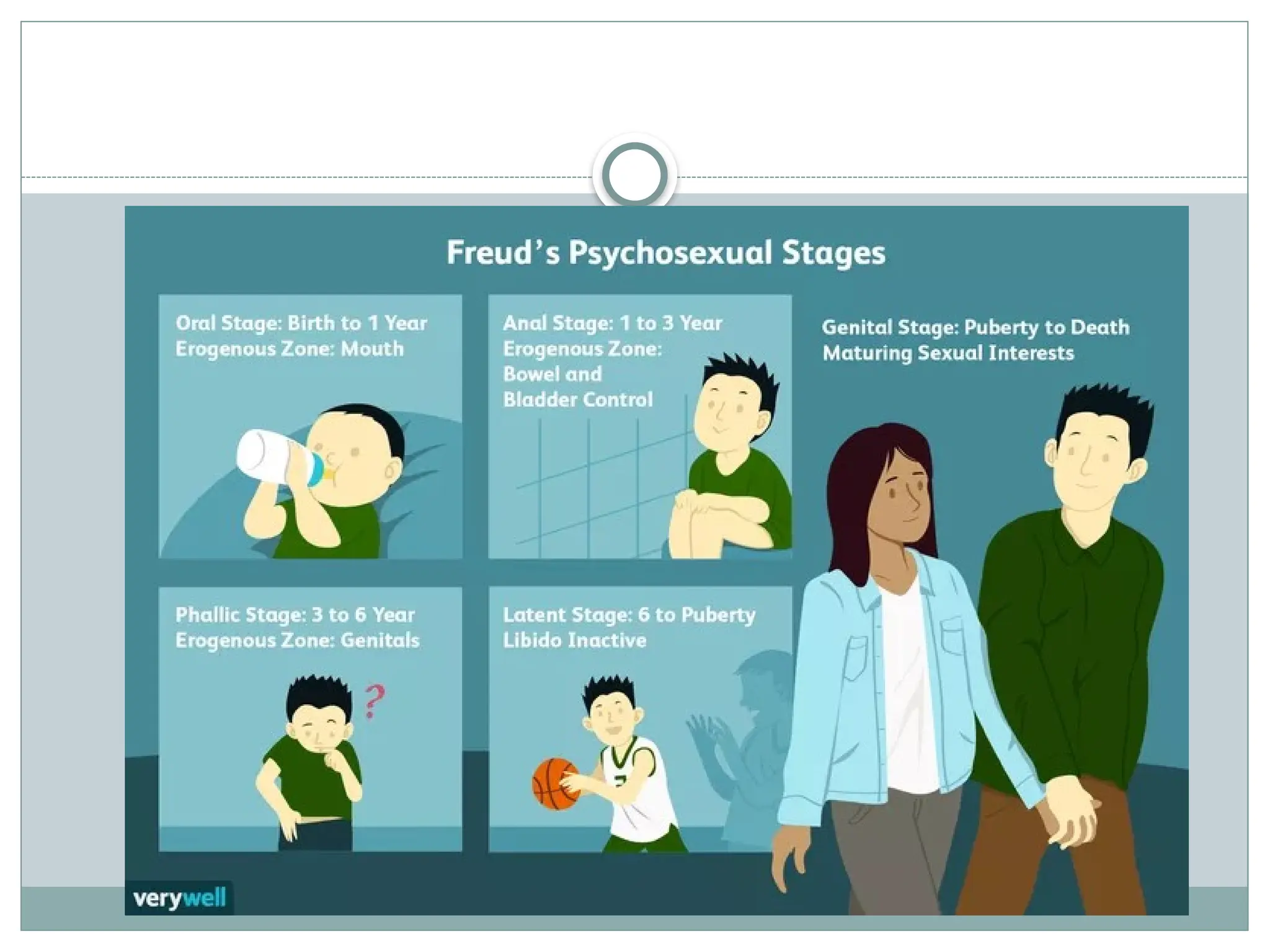
According to Freud’s psychosexual theory, child development
occurs in a series of stages focused on different pleasure areas
of the body. During each stage, the child encounters conflicts
that play a significant role in the course of development.
20.
His theorysuggested that the energy of the libido was focused on
different erogenous zones at specific stages. Failure to progress
through a stage can result in fixation at that point in development,
which Freud believed could have an influence on adult behavior.
So what happens as children complete each stage? And what
might result if a child does poorly during a particular point in
development? Successfully completing each stage leads to the
development of a healthy adult personality.
While some other child development theories suggest that
personality continues to change and grow over the entire lifetime,
Freud believed that it was early experiences that played the
greatest role in shaping development. According to Freud,
personality is largely set in stone by the age of five.
23.
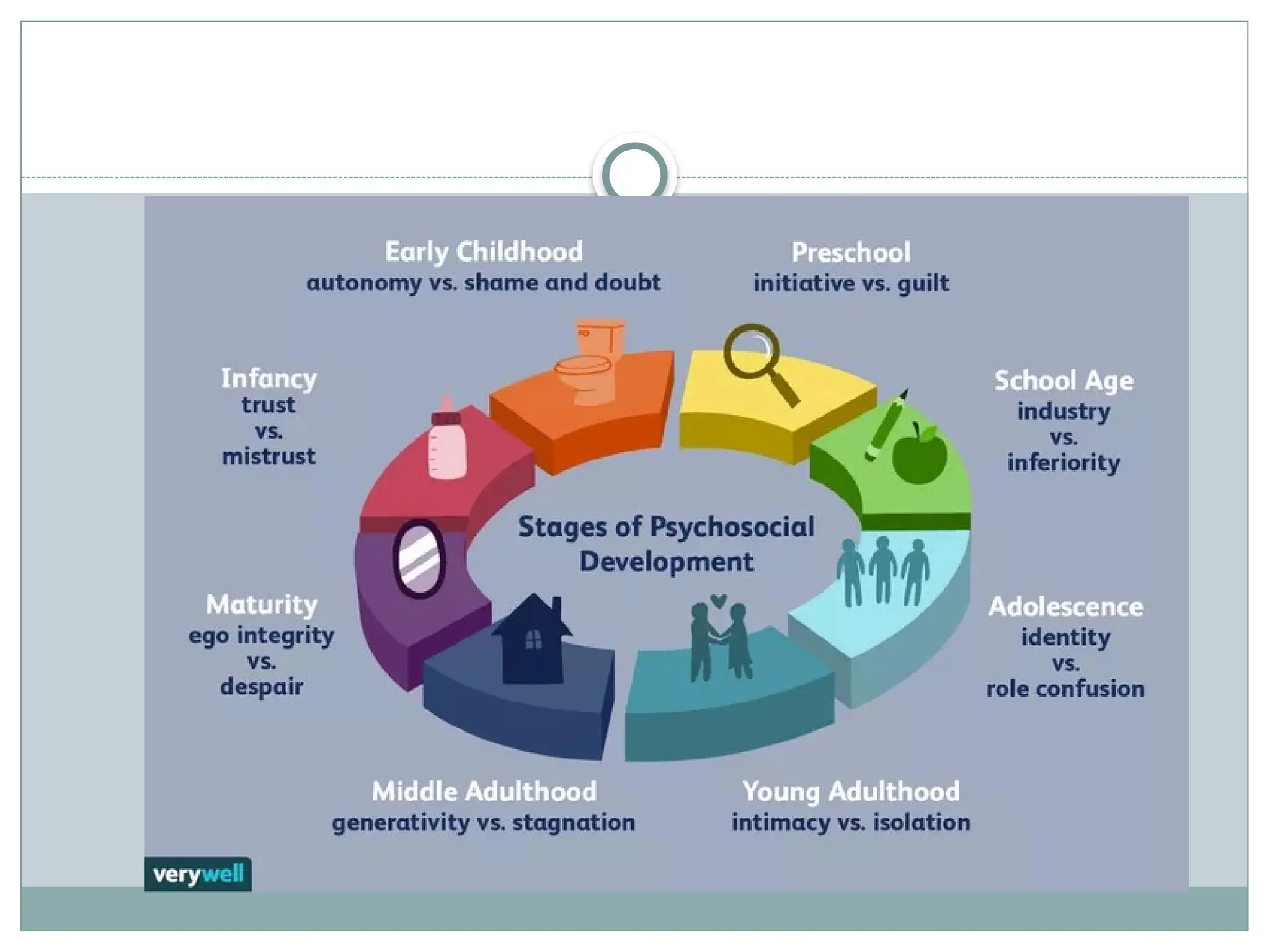
Erikson's Psychosocial DevelopmentalTheory
Psychoanalytic theory was an enormously influential
force during the first half of the twentieth century.
Those inspired and influenced by Freud went on to
expand upon Freud's ideas and develop theories of their
own. Of these neo-Freudians, Erik Erikson's ideas have
become perhaps the best known.
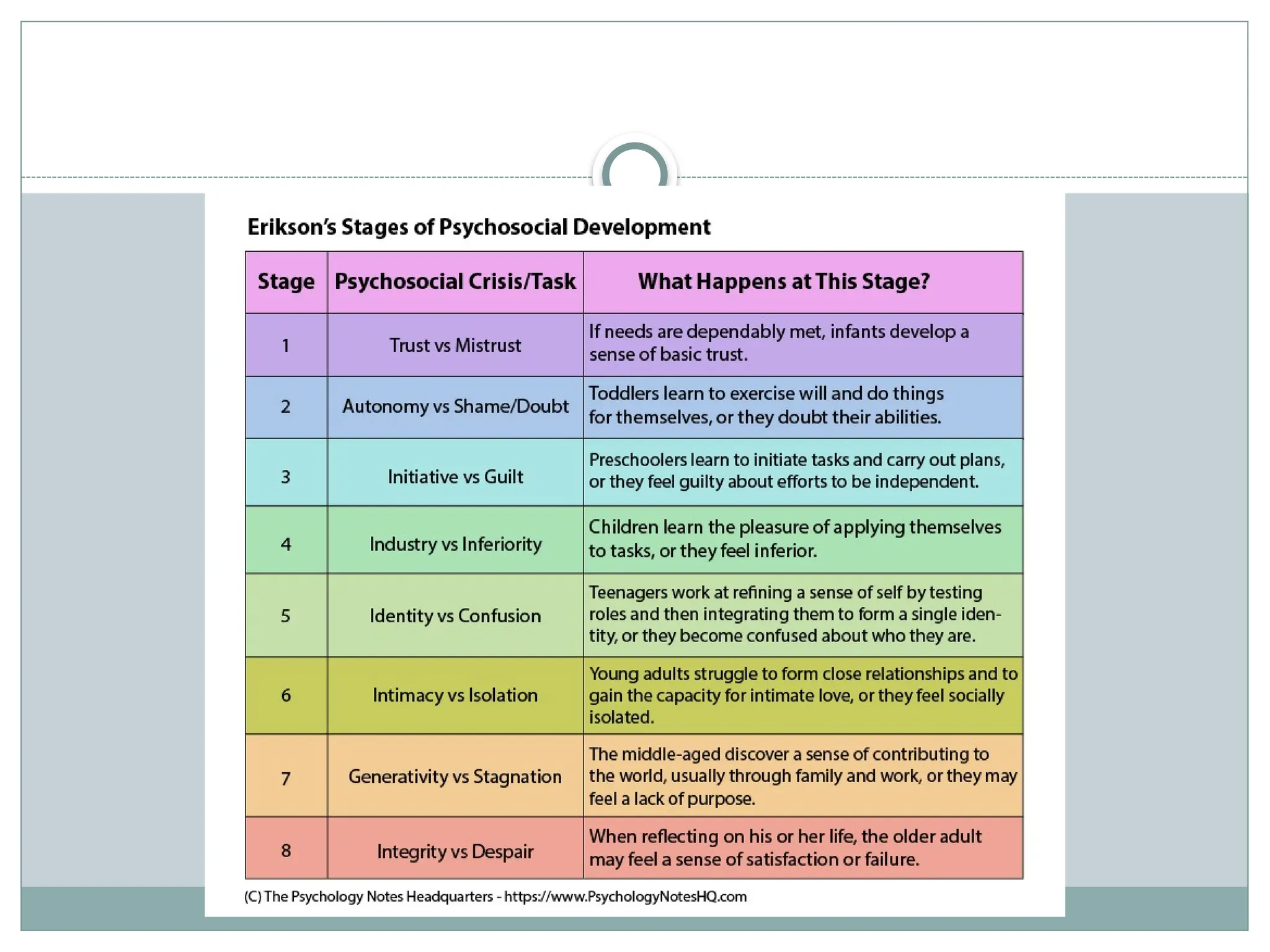
Erikson's eight-stage theory of psychosocial
development describes growth and change throughout
life, focusing on social interaction and conflicts that
arise during different stages of development.
24.
While Erikson’stheory of psychosocial development shared some
similarities with Freud's, it is dramatically different in many
ways. Rather than focusing on sexual interest as a driving force in
development, Erikson believed that social interaction and
experience played decisive roles.
His eight-stage theory of human development described this
process from infancy through death. During each stage, people
are faced with a developmental conflict that impacts later
functioning and further growth.
Unlike many other developmental theories, Erik
Erikson's psychosocial theory focuses on development across the
entire lifespan. At each stage, children and adults face a
developmental crisis that serves as a major turning point.
27.
Behavioral Child DevelopmentTheories
During the first half of the twentieth century, a new school
of thought known as behaviourism rose to become a
dominant force within psychology. Behaviourists believed
that psychology needed to focus only on observable and
quantifiable behaviors in order to become a more scientific
discipline.
According to the behavioral perspective, all human
behavior can be described in terms of environmental
influences. Some behaviourists, such as John B.
Watson and B.F. Skinner, insisted that learning occurs
purely through processes of association and reinforcement.
28.
Behavioral theoriesof child development focus on how
environmental interaction influences behavior and is based
on the theories of theorists such as John B. Watson, Ivan
Pavlov, and B. F. Skinner. These theories deal only with
observable behaviors. Development is considered a reaction
to rewards, punishments, stimuli, and reinforcement.
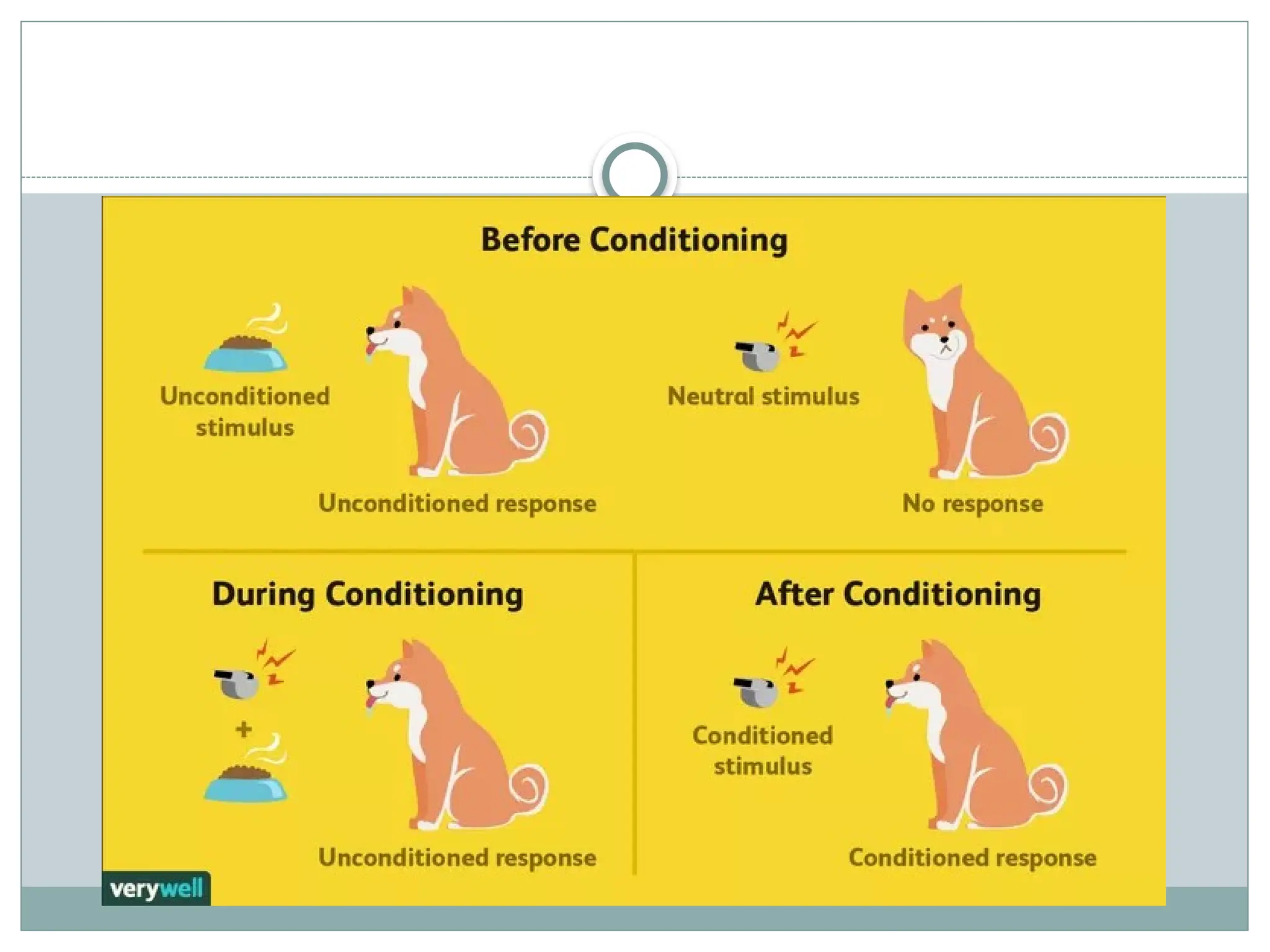
Two important types of learning that emerged from this
approach to development are classical
conditioning and operant conditioning. Classical conditioning
involves learning by pairing a naturally occurring stimulus
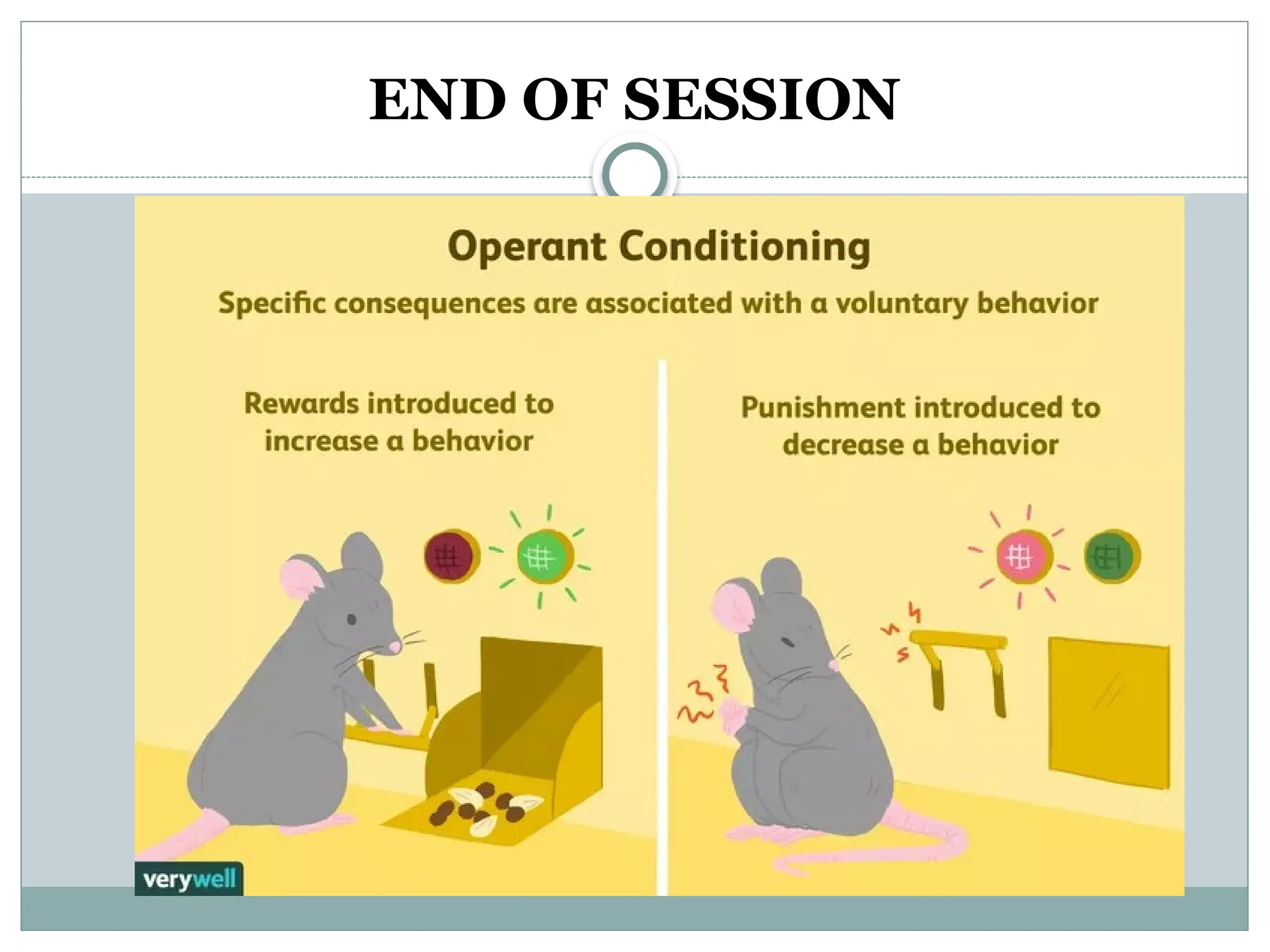
with a previously neutral stimulus. Operant conditioning
utilizes reinforcement and punishment to modify behaviors.
Piaget's Cognitive DevelopmentalTheory
Cognitive theory is concerned with the development of a person's
thought processes. It also looks at how these thought processes
influence how we understand and interact with the world.
Theorist Jean Piaget proposed one of the most
influential theories of cognitive development.
His cognitive theory seeks to describe and explain the
development of thought processes and mental states. It also
looks at how these thought processes influence the way we
understand and interact with the world.
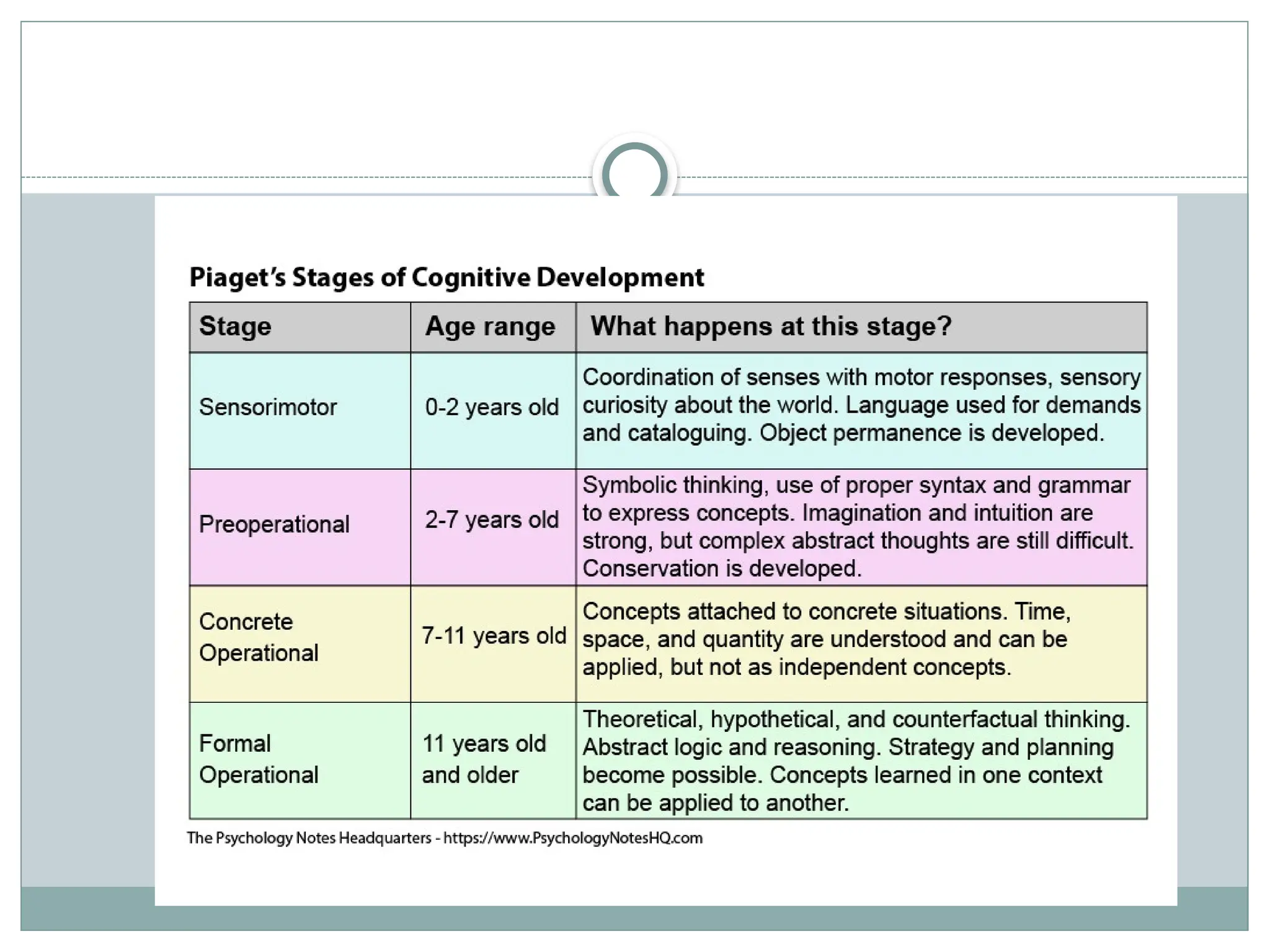
Piaget then proposed a theory of cognitive development to
account for the steps and sequence of children's intellectual
development.
34.
Bowlby's Attachment Theory
There is a great deal of research on the social development
of children. John Bowlby proposed one of the earliest
theories of social development. Bowlby believed that early
relationships with caregivers play a major role in child
development and continue to influence social relationships
throughout life.3
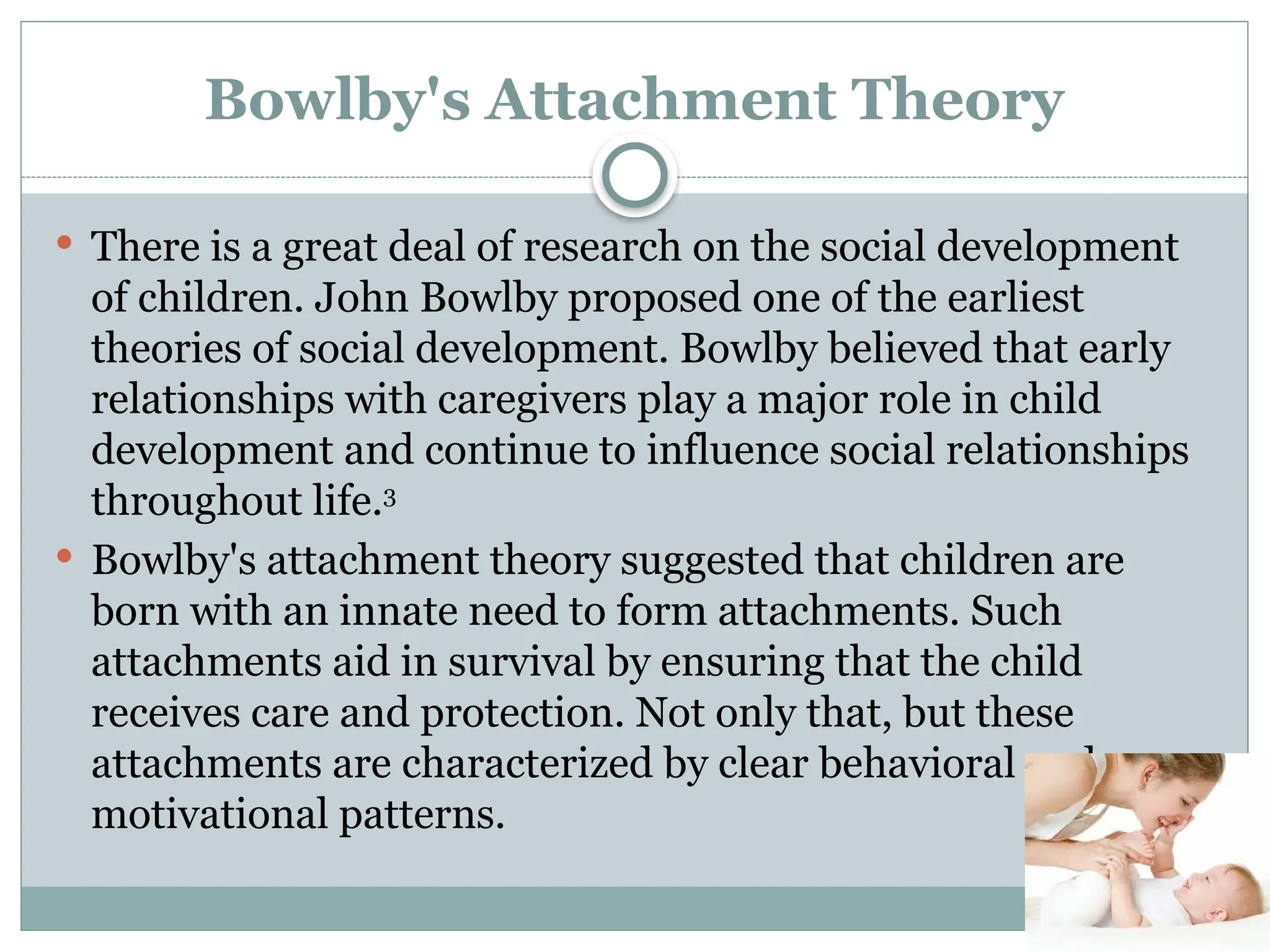
Bowlby's attachment theory suggested that children are
born with an innate need to form attachments. Such
attachments aid in survival by ensuring that the child
receives care and protection. Not only that, but these
attachments are characterized by clear behavioral and
motivational patterns.
35.
Researchers havealso expanded upon Bowlby's
original work and have suggested that a number of
different attachment styles exist.
Children who receive consistent support and care are
more likely to develop a secure attachment style,
while those who receive less reliable care may
develop an ambivalent, avoidant, or disorganized
style.
37.
Bandura's Social LearningTheory
Social learning theory is based on the work of
psychologist Albert Bandura. Bandura believed that
the conditioning and reinforcement process could
not sufficiently explain all of human learning.
For example, how can the conditioning process
account for learned behaviors that have not been
reinforced through classical conditioning or operant
conditioning According to social learning theory,
behaviors can also be learned through observation
and modelling.
38.
Bandura's childdevelopment theory suggests that
observation plays a critical role in learning, but this
observation does not necessarily need to take the
form of watching a live model.
Instead, people can also learn by listening to verbal
instructions about how to perform a behavior as well
as through observing either real or fictional
characters displaying behaviors in books or films.
40.
Vygotsky's Sociocultural Theory
Another psychologist named Lev Vygotsky proposed a
seminal learning theory that has gone on to become very
influential, especially in the field of education. Like Piaget,
Vygotsky believed that children learn actively and through
hands-on experiences.5
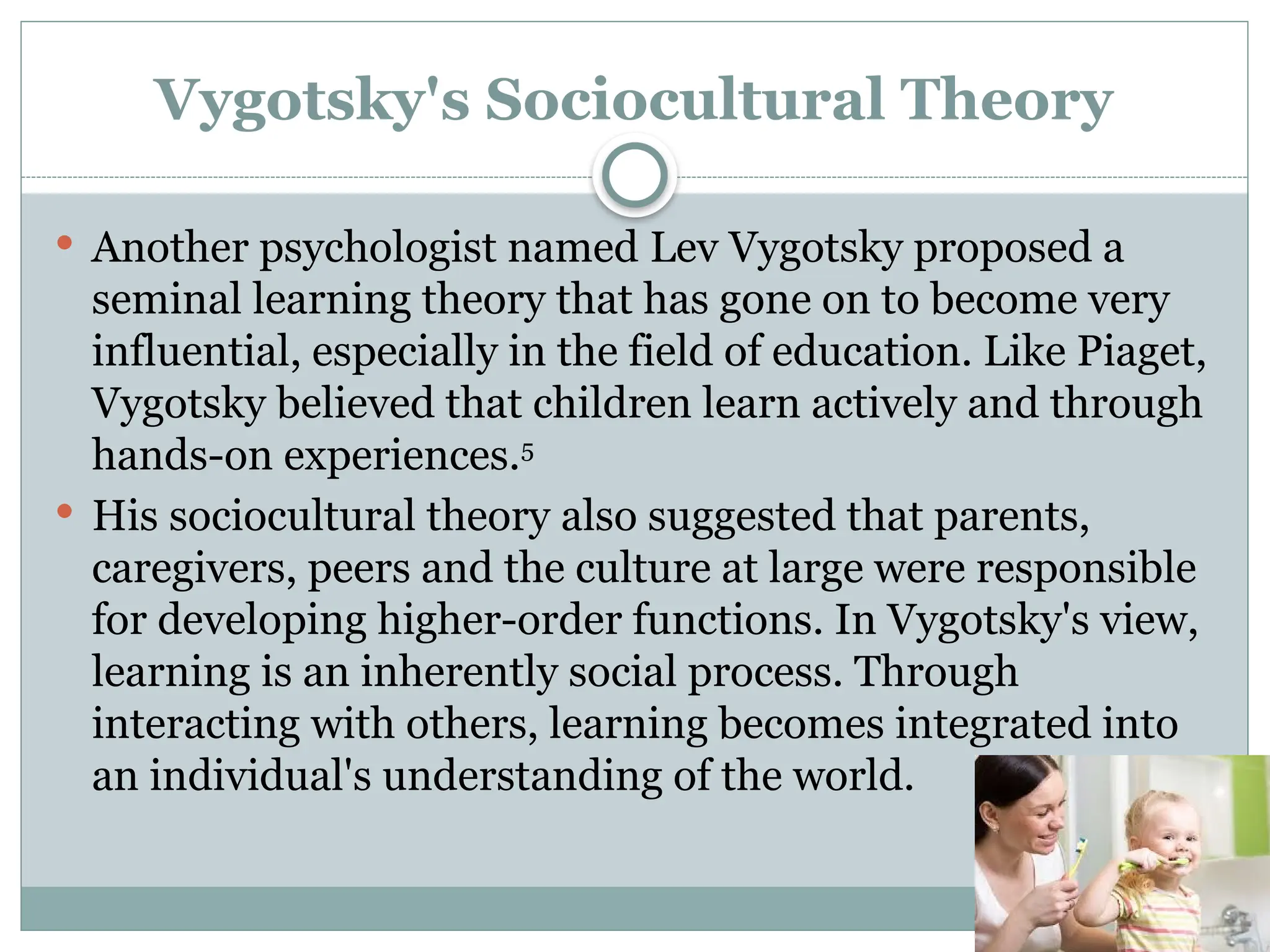
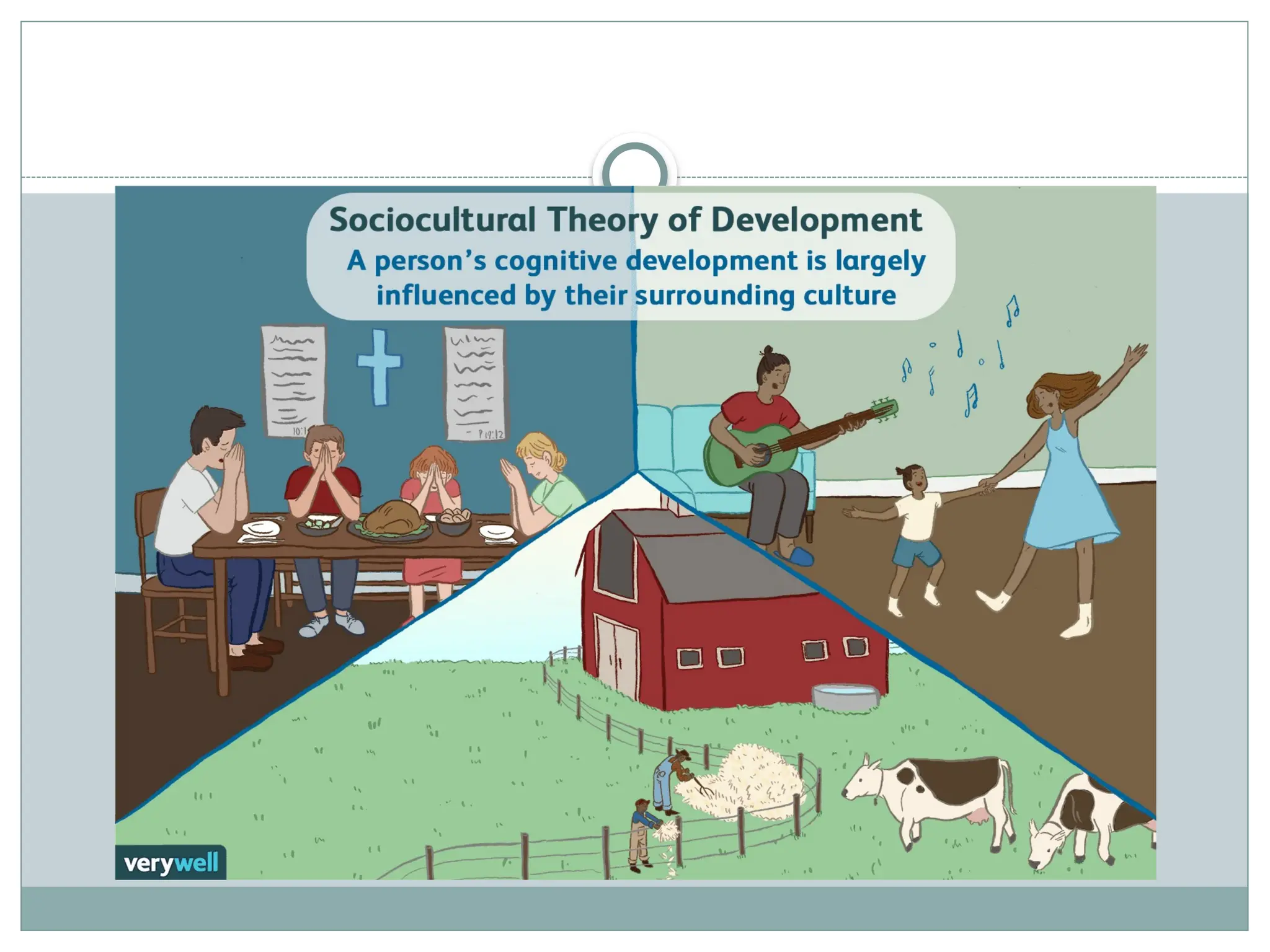
His sociocultural theory also suggested that parents,
caregivers, peers and the culture at large were responsible
for developing higher-order functions. In Vygotsky's view,
learning is an inherently social process. Through
interacting with others, learning becomes integrated into
an individual's understanding of the world.
41.
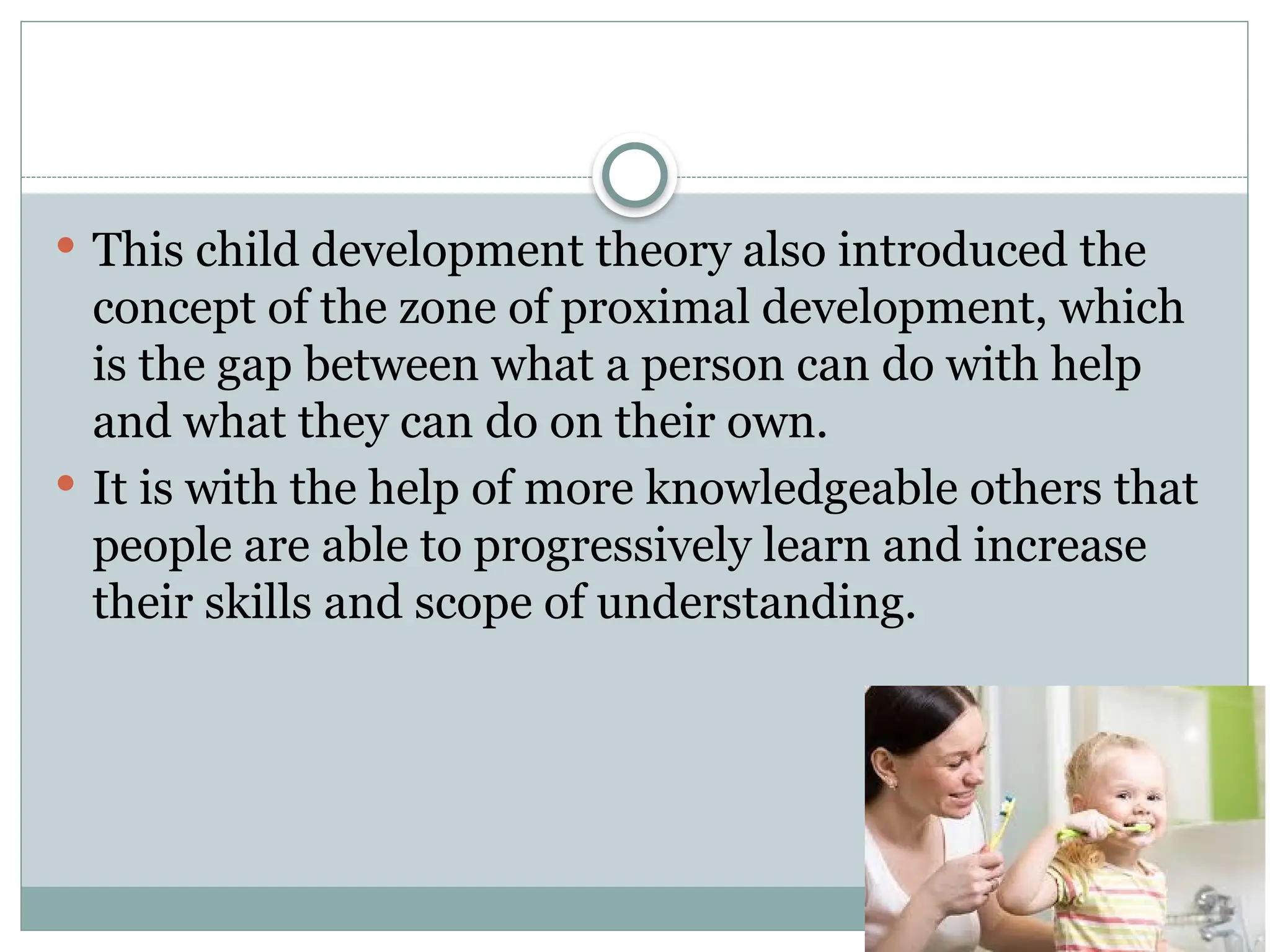
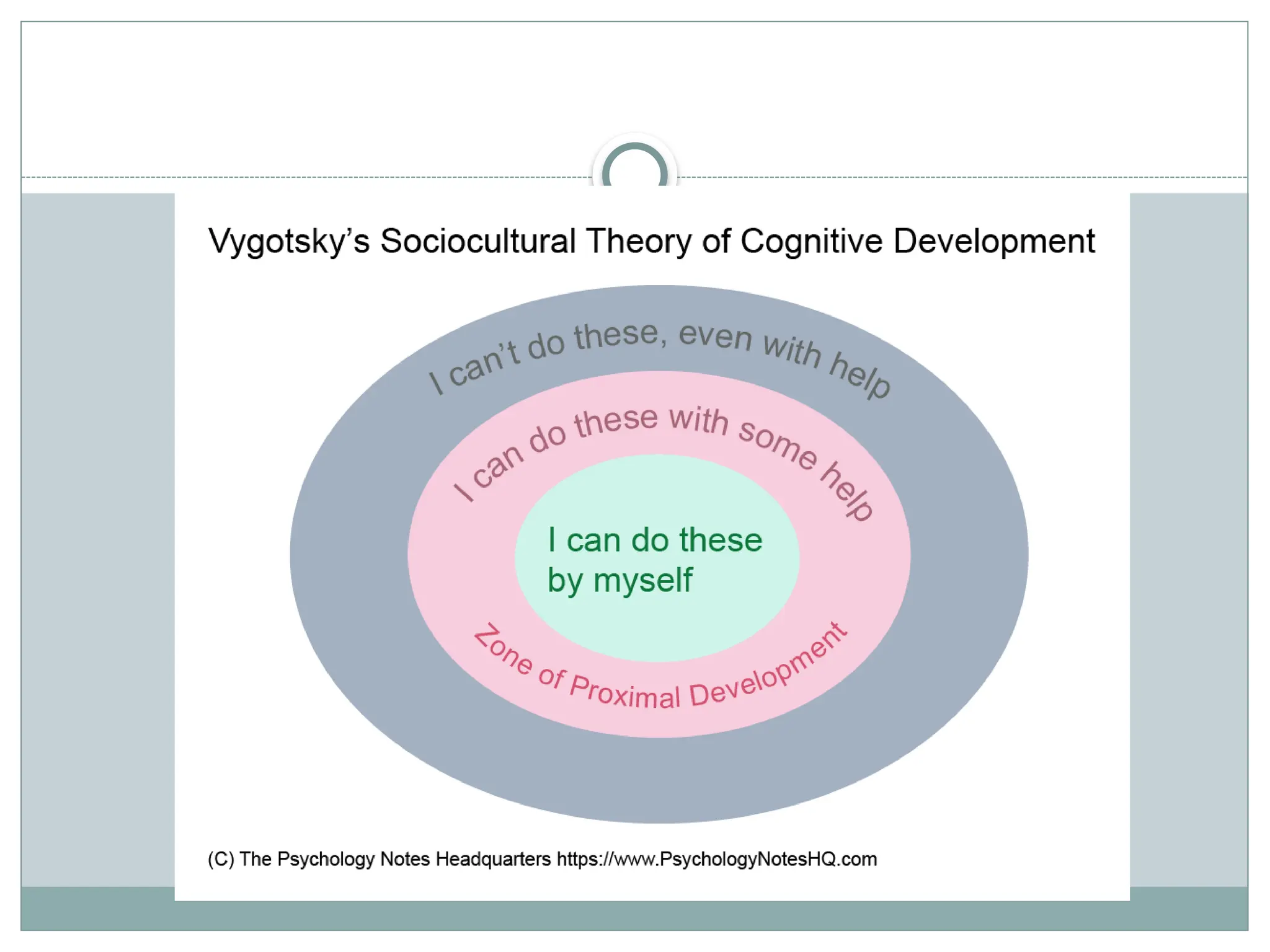
This childdevelopment theory also introduced the
concept of the zone of proximal development, which
is the gap between what a person can do with help
and what they can do on their own.
It is with the help of more knowledgeable others that
people are able to progressively learn and increase
their skills and scope of understanding.
44.
Research Methods inDevelopmental Psychology
There are various methods of research, each with its specific
advantages and disadvantages. The one that a scientist
chooses depends largely on the aim of the study and the
nature of the phenomenon being studied.
Research design provides a standardized framework by
which to test a hypothesis and evaluate whether the
hypothesis was correct, incorrect, or inconclusive. Even if the
hypothesis is untrue, the research can often provide insights
that may prove valuable or move research in an entirely new
direction.
There are a number of different ways to conduct research.
Here are the most common.
45.
Cross-Sectional Research
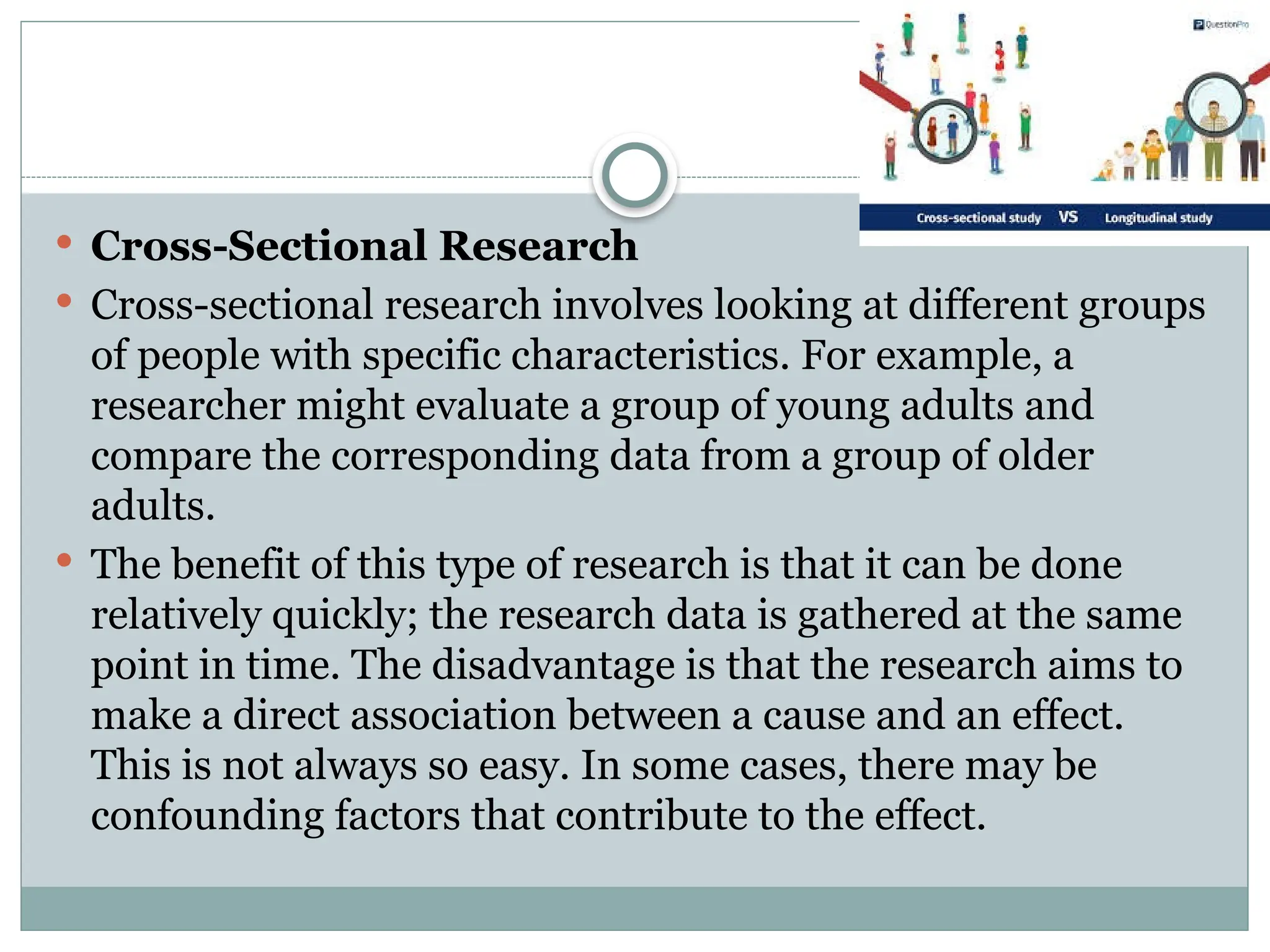
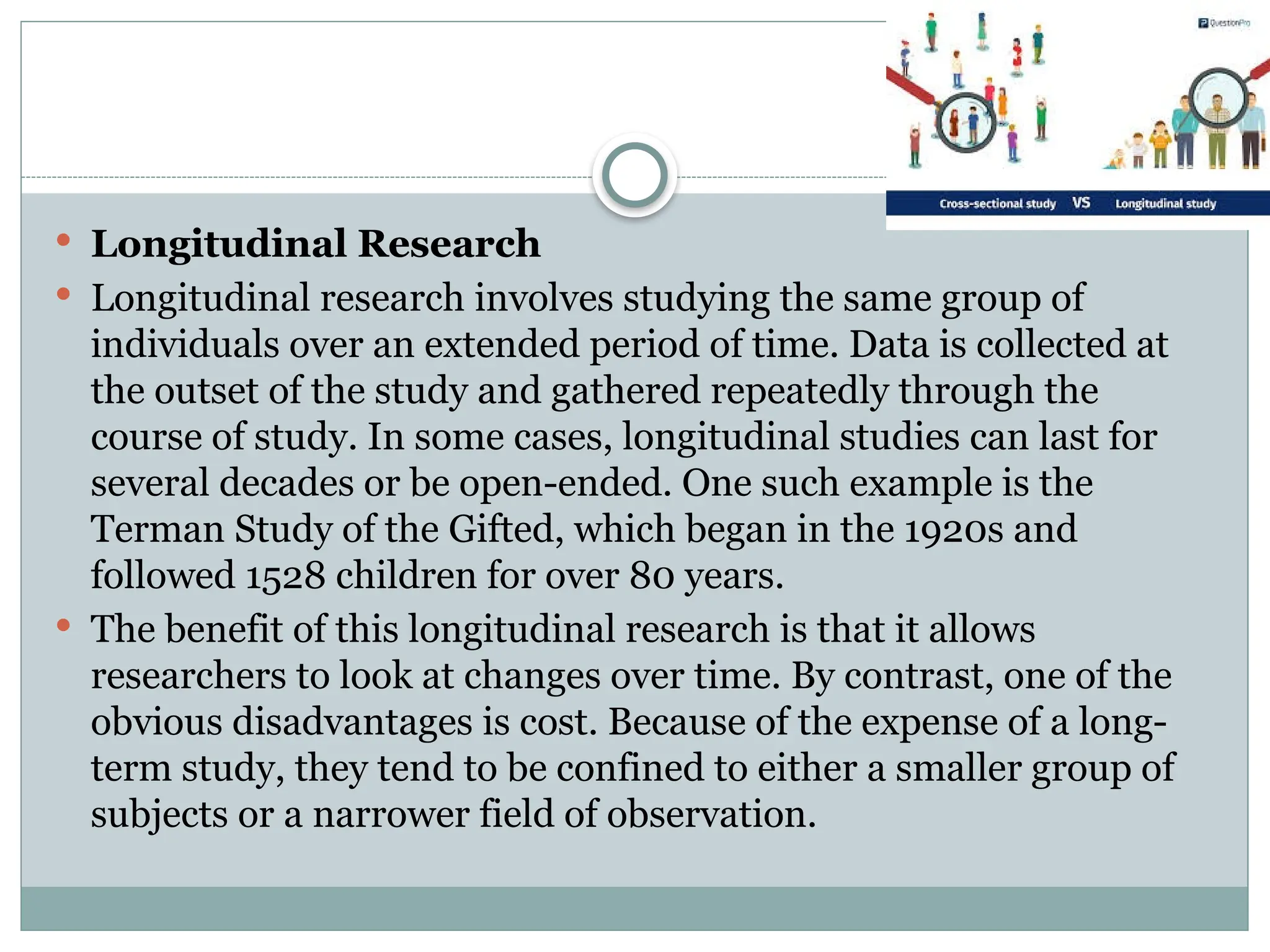
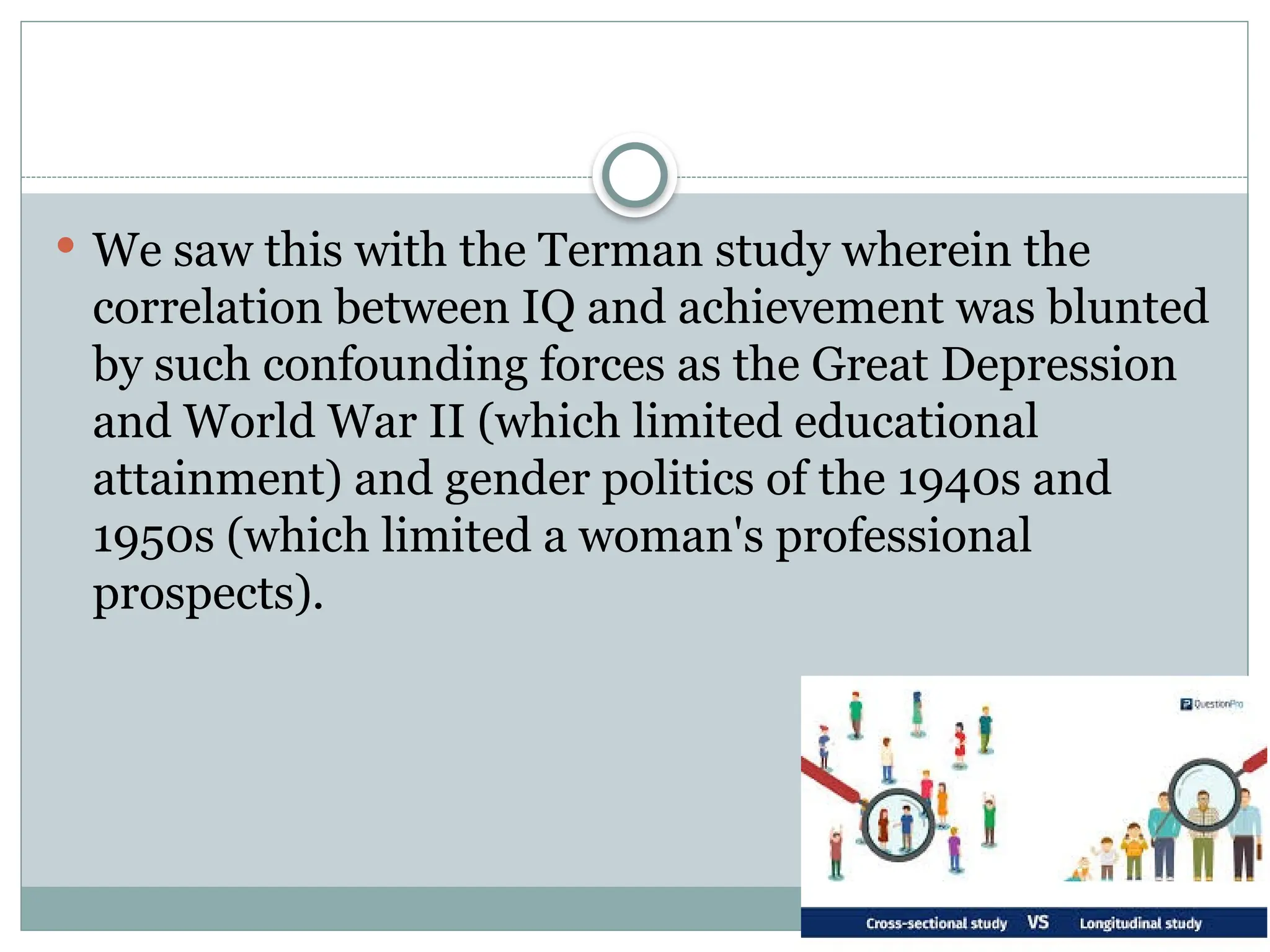
Cross-sectional research involves looking at different groups
of people with specific characteristics. For example, a
researcher might evaluate a group of young adults and
compare the corresponding data from a group of older
adults.
The benefit of this type of research is that it can be done
relatively quickly; the research data is gathered at the same
point in time. The disadvantage is that the research aims to
make a direct association between a cause and an effect.
This is not always so easy. In some cases, there may be
confounding factors that contribute to the effect.
46.
Longitudinal Research
Longitudinal research involves studying the same group of
individuals over an extended period of time. Data is collected at
the outset of the study and gathered repeatedly through the
course of study. In some cases, longitudinal studies can last for
several decades or be open-ended. One such example is the
Terman Study of the Gifted, which began in the 1920s and
followed 1528 children for over 80 years.
The benefit of this longitudinal research is that it allows
researchers to look at changes over time. By contrast, one of the
obvious disadvantages is cost. Because of the expense of a long-
term study, they tend to be confined to either a smaller group of
subjects or a narrower field of observation.
47.
We sawthis with the Terman study wherein the
correlation between IQ and achievement was blunted
by such confounding forces as the Great Depression
and World War II (which limited educational
attainment) and gender politics of the 1940s and
1950s (which limited a woman's professional
prospects).
48.
Correlational Research
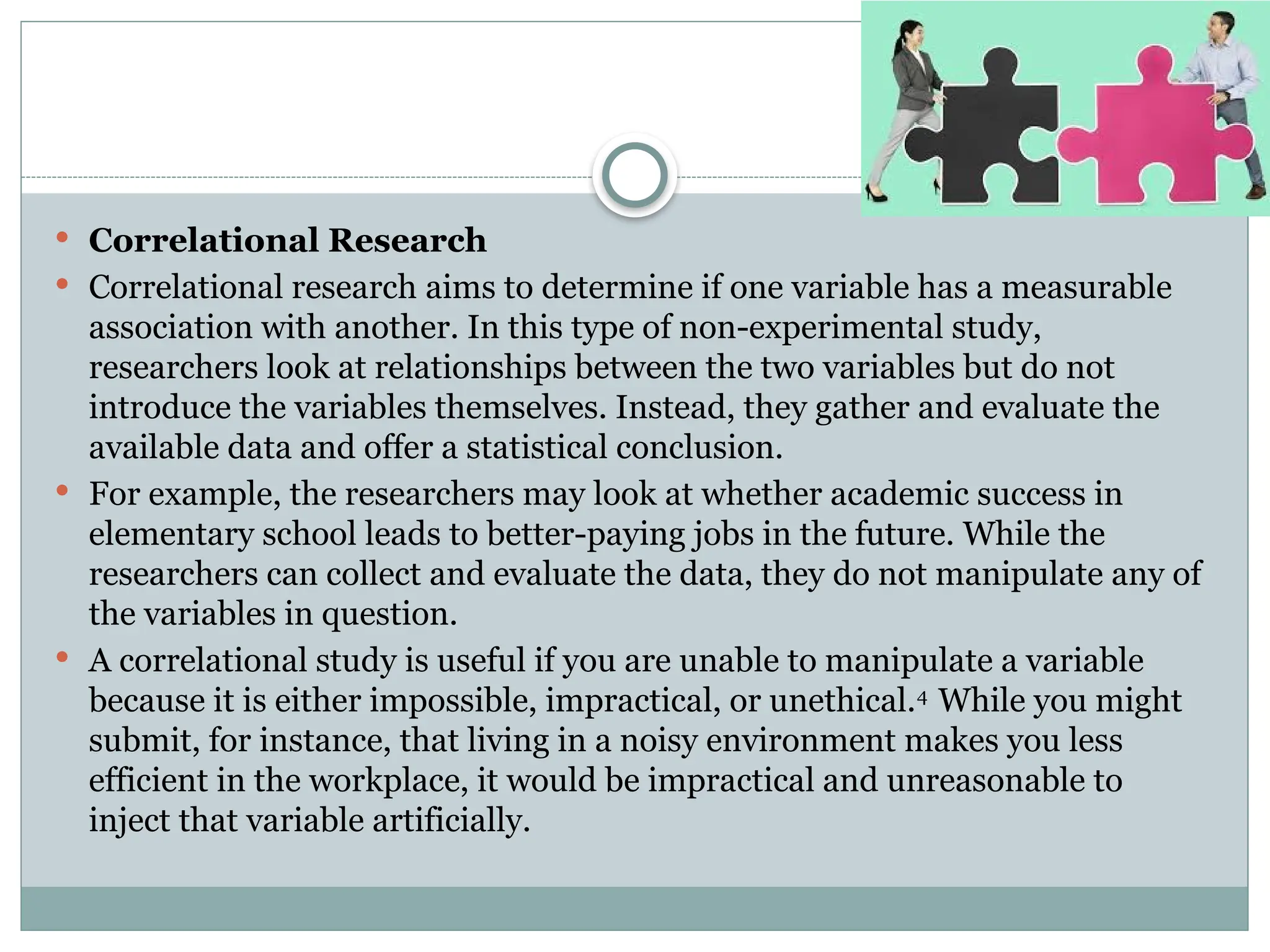
Correlational research aims to determine if one variable has a measurable
association with another. In this type of non-experimental study,
researchers look at relationships between the two variables but do not
introduce the variables themselves. Instead, they gather and evaluate the
available data and offer a statistical conclusion.
For example, the researchers may look at whether academic success in
elementary school leads to better-paying jobs in the future. While the
researchers can collect and evaluate the data, they do not manipulate any of
the variables in question.
A correlational study is useful if you are unable to manipulate a variable
because it is either impossible, impractical, or unethical.4
While you might
submit, for instance, that living in a noisy environment makes you less
efficient in the workplace, it would be impractical and unreasonable to
inject that variable artificially.
49.
Experimentation
Unlikecorrelational research, experimentation involves both the
manipulation and measurement of variables. This model of
research is the most scientifically conclusive and commonly used
in medicine, chemistry, psychology, biology, and sociology.
Experimental research uses manipulation to understand cause
and effect in a sampling of subjects. The sample is comprised of
two groups: an experimental group in whom the variable (such as
a drug or treatment) is introduced and a control group in whom
the variable is not introduced. Deciding the sample groups can be
done in a number of ways:
Population sampling, in which the subjects represent a specific
population
50.
Randomization, inwhich subjects are chosen randomly to
see if the effects of the variable are consistently achieved
While the statistical value of an experimental study is robust,
it's one major shortcoming may be confirmation bias. This is
when the investigator's desire to publish or achieve an
unambiguous result can skew the interpretations, leading to
a false-positive conclusion.
One way to avoid this is to conduct a double-blind study in
which neither the participants nor researchers are aware of
which group is the control. A double-blind randomized
controlled trial (RCT) is considered the gold standard of
research.
51.
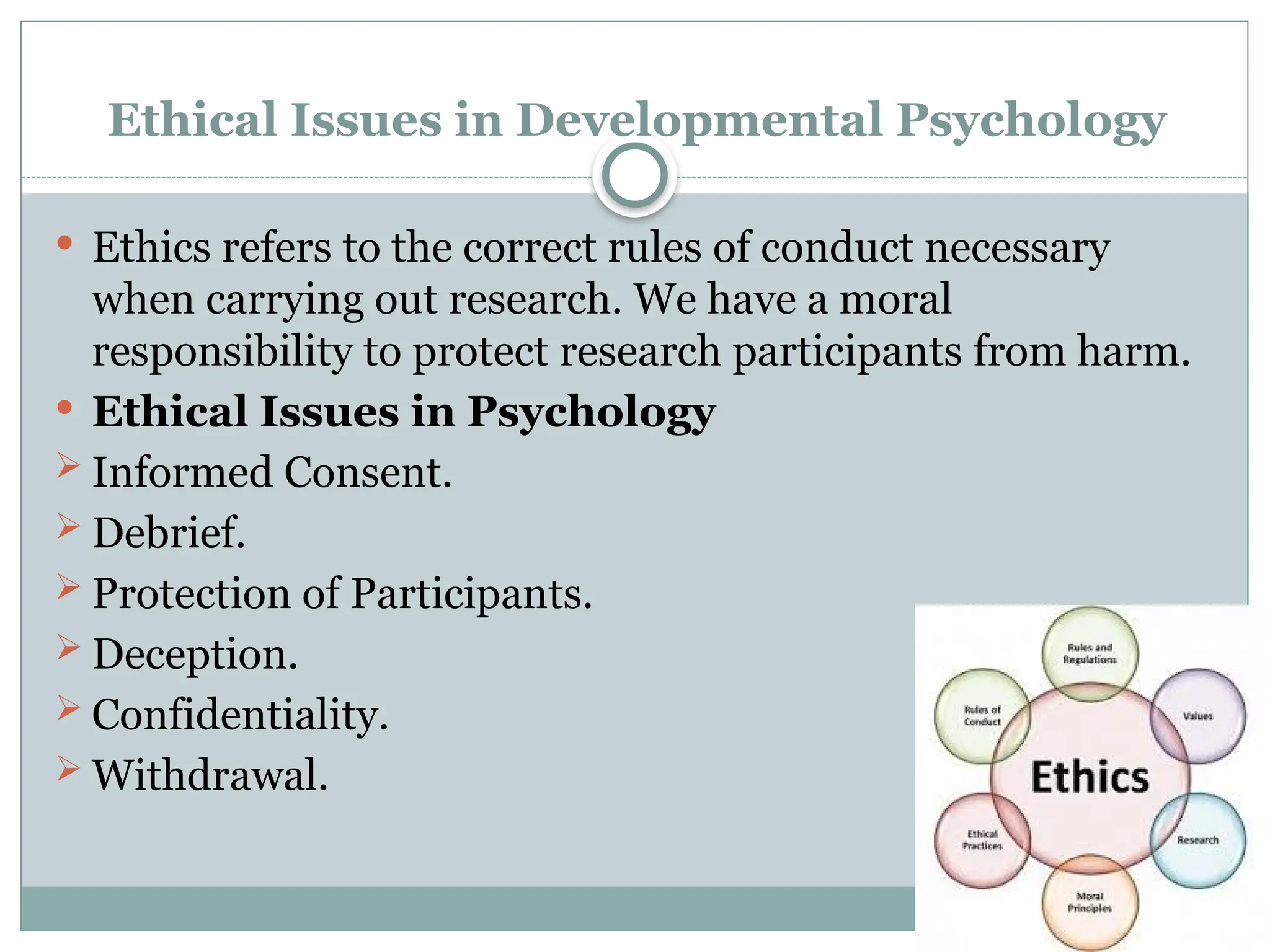
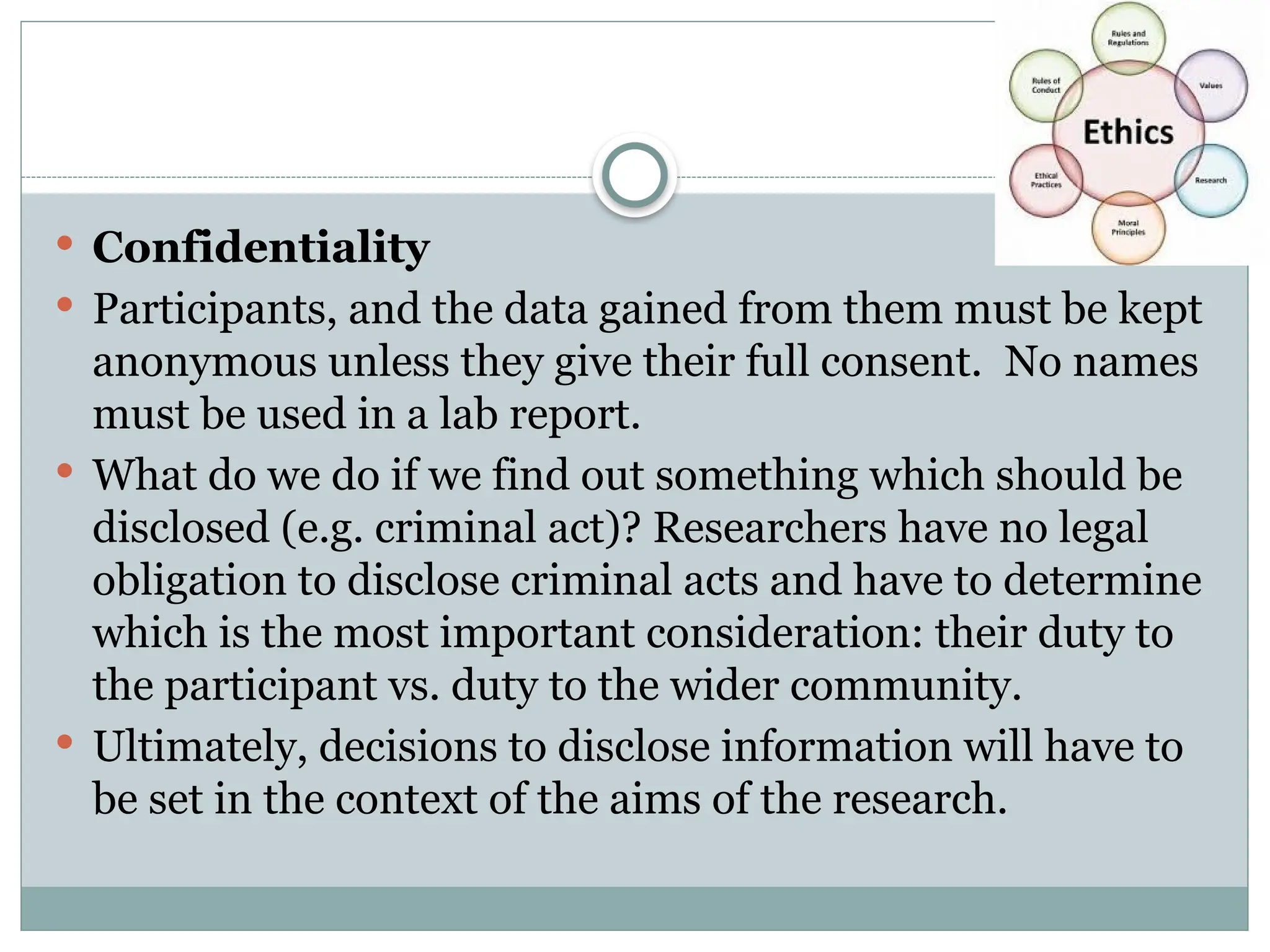
Ethical Issues inDevelopmental Psychology
Ethics refers to the correct rules of conduct necessary
when carrying out research. We have a moral
responsibility to protect research participants from harm.
Ethical Issues in Psychology
Informed Consent.
Debrief.
Protection of Participants.
Deception.
Confidentiality.
Withdrawal.
52.
Informed Consent
Whenever possible investigators should obtain the
consent of participants. In practice, this means it is not
sufficient to simply get potential participants to say
“Yes”.
They also need to know what it is that they are agreeing
to. In other words, the psychologist should, so far as is
practicable explain what is involved in advance and
obtain the informed consent of participants.
53.
Debrief
Afterthe research is over the participant should be
able to discuss the procedure and the findings with
the psychologist. They must be given a general idea
of what the researcher was investigating and why,
and their part in the research should be explained.
Participants must be told if they have been deceived
and given reasons why. They must be asked if they
have any questions and those questions should be
answered honestly and as fully as possible.
54.
Protection ofParticipants
Researchers must ensure that those taking part in
research will not be caused distress. They must be
protected from physical and mental harm. This
means you must not embarrass, frighten, offend or
harm participants.
Normally, the risk of harm must be no greater than
in ordinary life, i.e. participants should not be
exposed to risks greater than or additional to those
encountered in their normal lifestyles.
55.
Deception
Thisis where participants are misled or wrongly
informed about the aims of the research.
The researcher should avoid deceiving participants
about the nature of the research unless there is no
alternative – and even then this would need to be
judged acceptable by an independent expert.
However, there are some types of research that
cannot be carried out without at least some element
of deception.
56.
Confidentiality
Participants,and the data gained from them must be kept
anonymous unless they give their full consent. No names
must be used in a lab report.
What do we do if we find out something which should be
disclosed (e.g. criminal act)? Researchers have no legal
obligation to disclose criminal acts and have to determine
which is the most important consideration: their duty to
the participant vs. duty to the wider community.
Ultimately, decisions to disclose information will have to
be set in the context of the aims of the research.
57.
Withdrawal froman Investigation
Participants should be able to leave a study at any time if they
feel uncomfortable. They should also be allowed to withdraw
their data. They should be told at the start of the study that
they have the right to withdraw.
They should not have pressure placed upon them to continue
if they do not want to. Participants may feel they shouldn’t
withdraw as this may ‘spoil’ the study.
Many participants are paid or receive course credits, they may
worry they won’t get this if they withdraw Even at the end of
the study the participant has a final opportunity to withdraw
the data they have provided for the research.
58.
Current Trends inChild Psychology
Today, psychologists recognize that child psychology
is unique and complex, but many differ in terms of
the unique perspective they take when approaching
development.
Child psychology encompasses a wide range of
topics, from the genetic influences on behavior to the
social pressures on development. The following are
just some of the major subjects that are essential to
the study of child psychology:
Child psychologists,for example, might look at
which child care settings and practices lead to the
best psychological outcomes or they might work with
kids to help them develop growth mind sets.
Understanding what makes kids tick is an enormous
task, so the study of child psychology is both wide
and deep.
61.
The goalis to study the many influences that
combine and interact to help make kids who they are
and to use that information to improve parenting,
education, child care, psychotherapy, and other areas
focused on benefiting children.
By having a solid understanding of how children
grow, think and behave, parents and professionals
working with children can be better prepared to help
the kids in their care.
62.
Portfolio Question1
Why are the theories of development important in
the field of psychology?