Course Objectives
1. Tounderstand the fundamental characteristics of signals
and systems.
2. To analyze the spectral characteristics of signal using
Fourier series and Fourier transforms.
3. To analyze continuous time signals and systems using
Laplace transforms.
4. To Characterize LTI systems in time and frequency
domain.
5. To solve problems involving convolution, correlation,
filtering and sampling techniques.
3.
Unit-1: Introduction tosignals
and systems
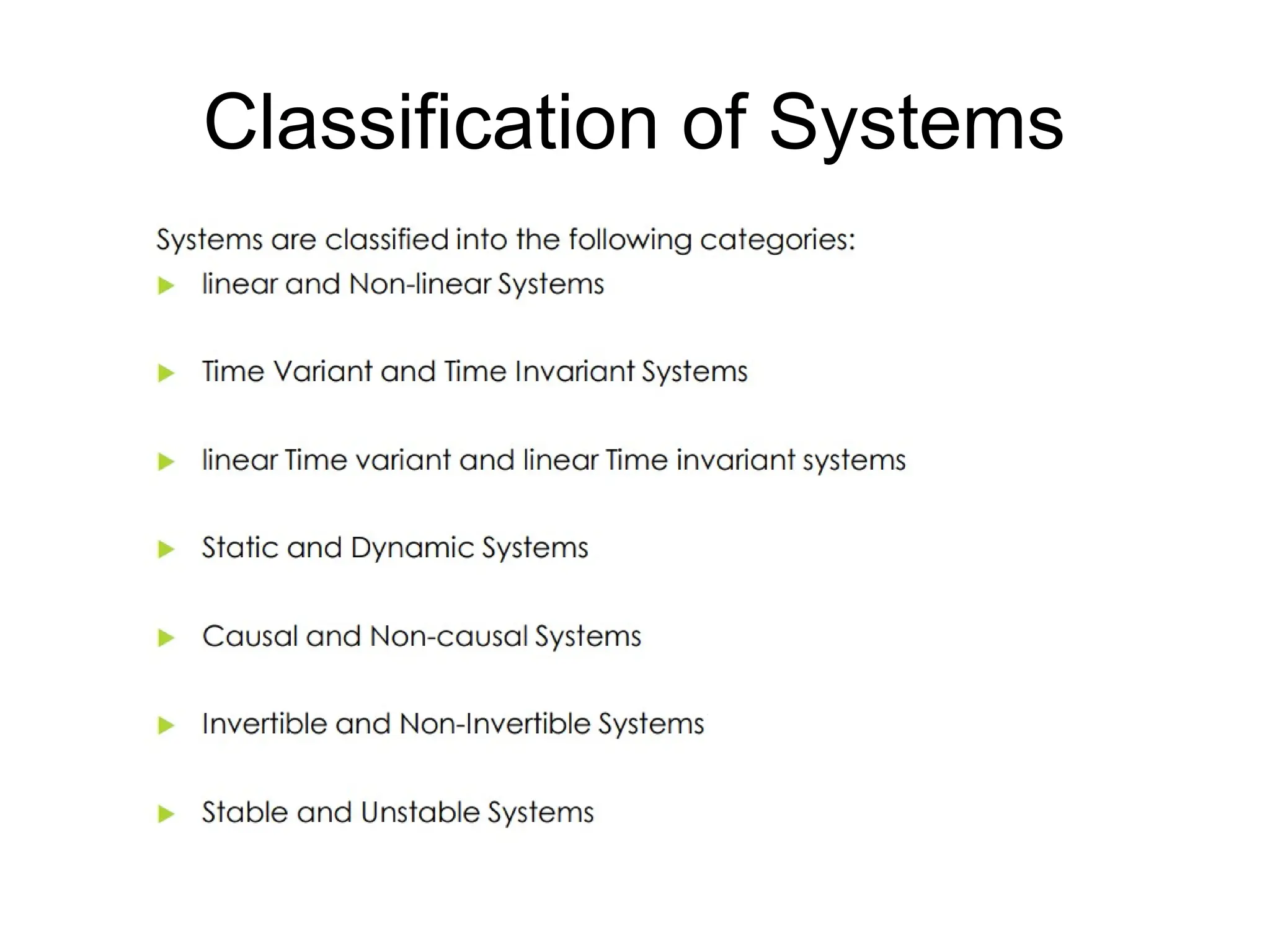
• Definition of Signals and Systems, Classification of Signals,
Classification of Systems, Operations on signals: time-
shifting, time-scaling, amplitude-shifting, amplitude-scaling.
Problems on classification and characteristics of Signals
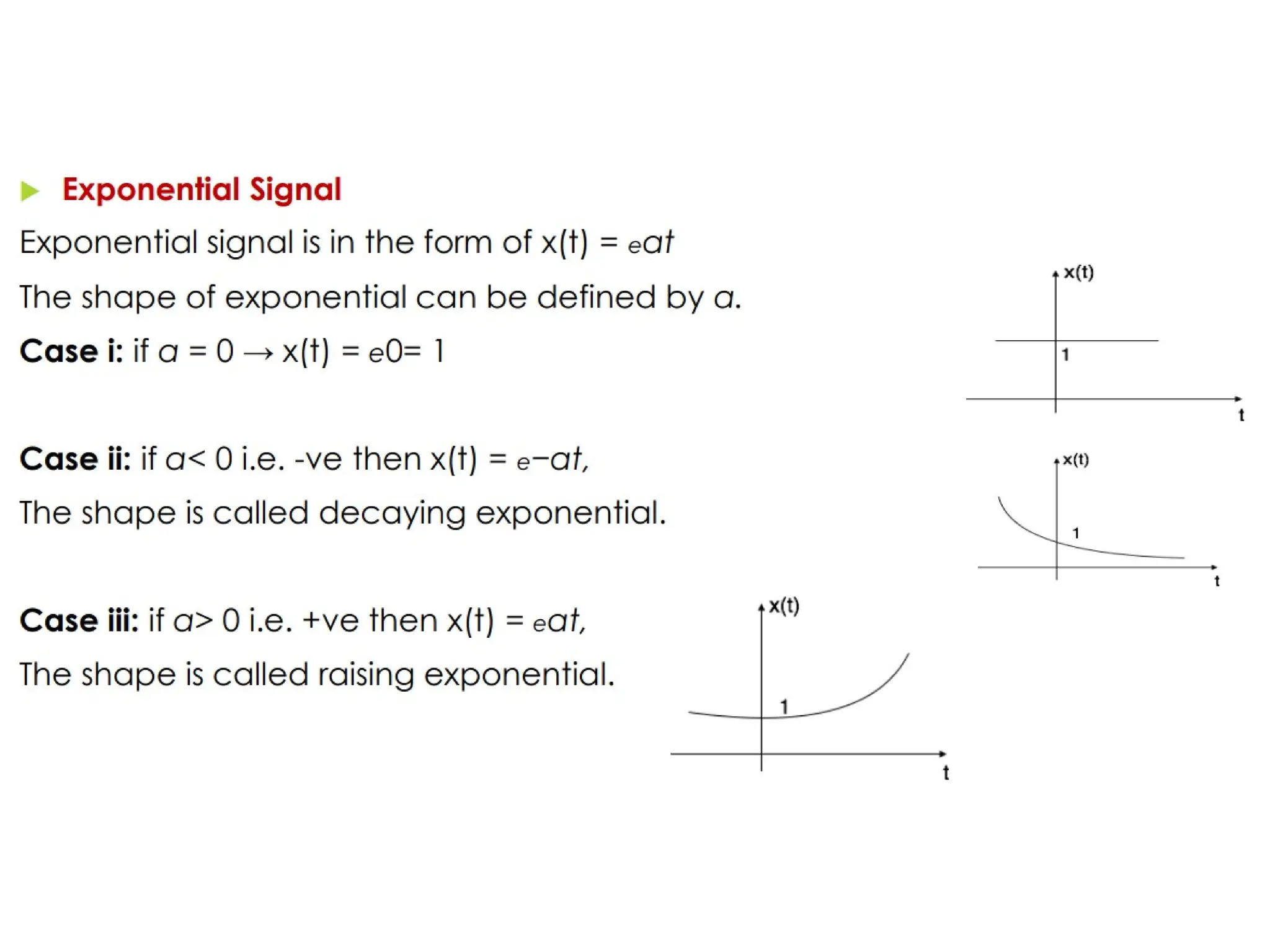
and Systems. Complex exponential and sinusoidal signals,
Singularity functions and related functions: impulse
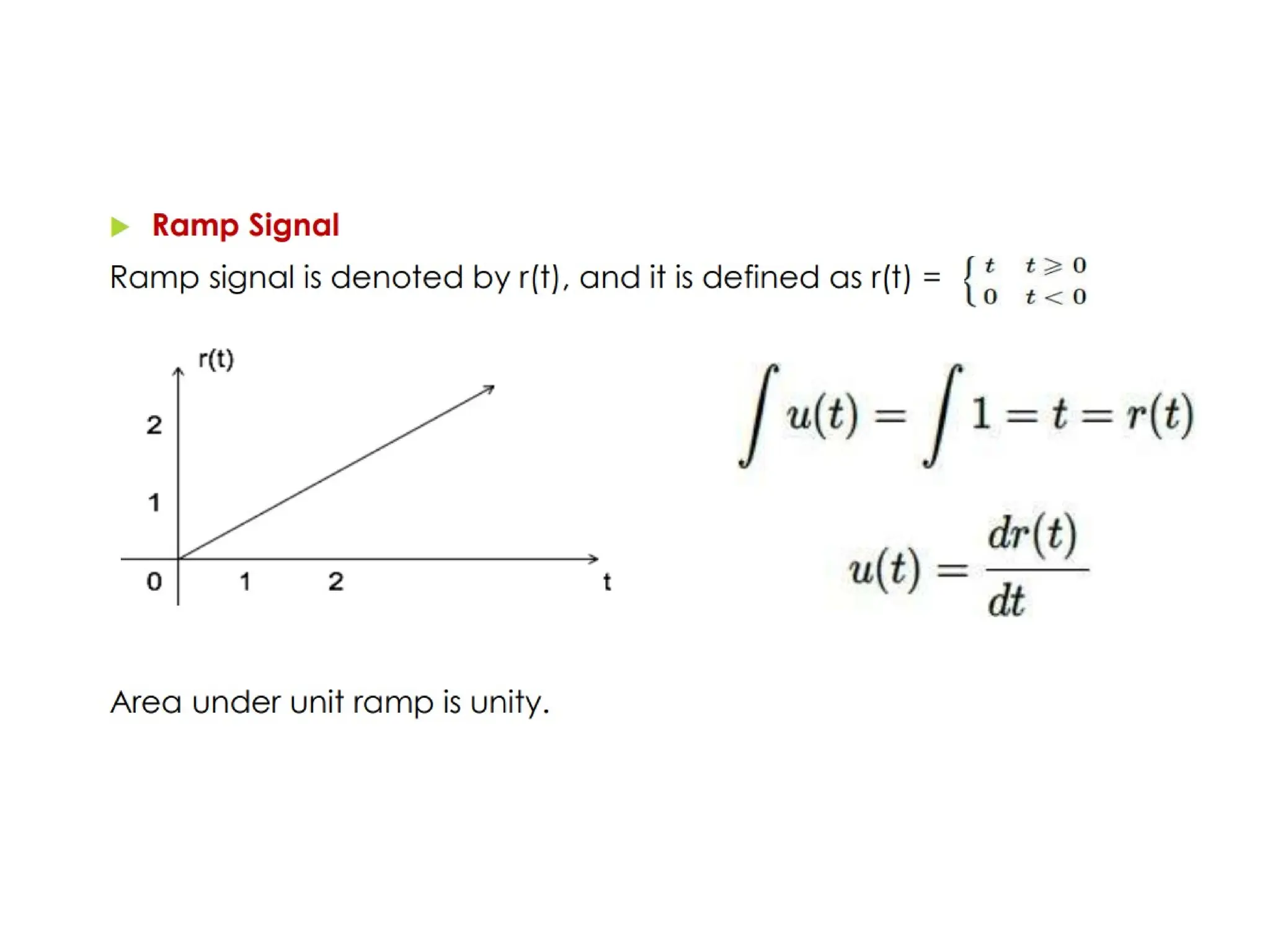
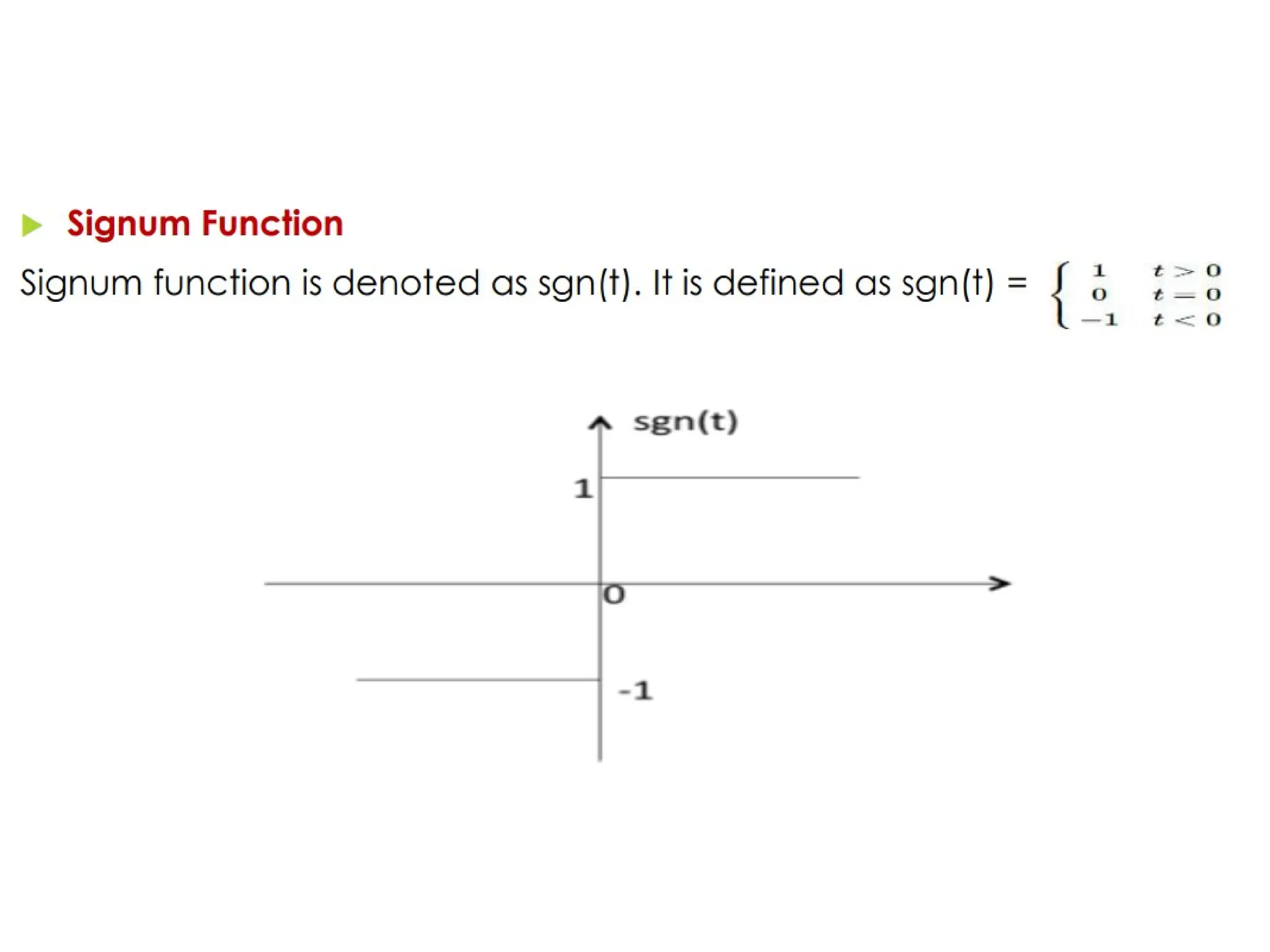
function, step function, signum function and ramp function.
• Signal Analysis: Analogy between vectors and signals,
orthogonal signal space, Signal approximation using
orthogonal functions, Mean square error, closed or
complete set of orthogonal functions, Orthogonality in
complex functions
4.
Unit-2: Fourier seriesand
Fourier transforms
• Fourier series: Representation of Fourier
series, Dirichlet’s conditions, Trigonometric
Fourier Series, Exponential Fourier Series,
Fourier spectrum, Properties of Fourier
series.
• Fourier transforms: Introduction, Fourier
transform of standard signals, Fourier
transform of arbitrary signals, Properties of
Fourier transform, Inverse Fourier transform.
5.
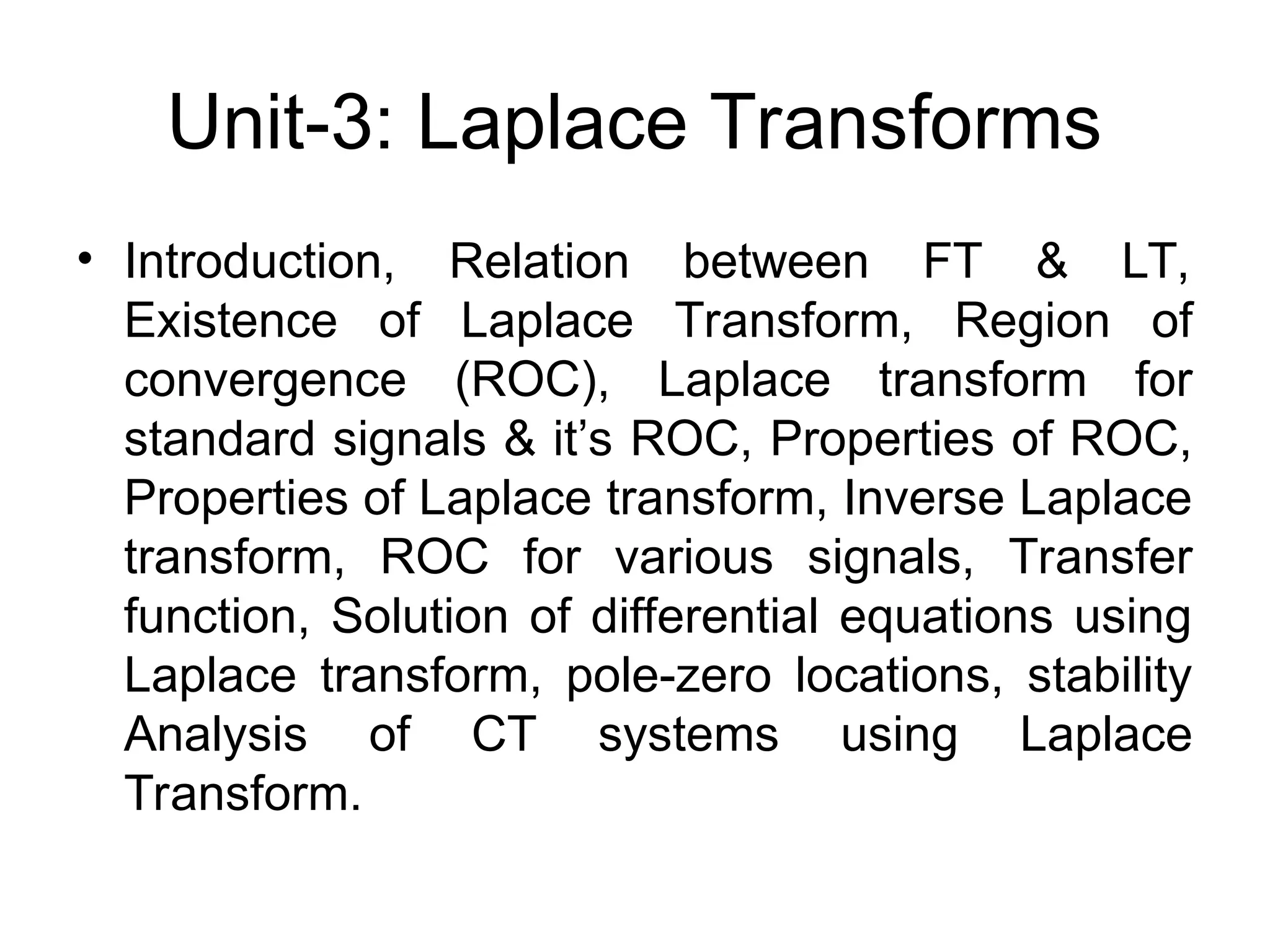
Unit-3: Laplace Transforms
•Introduction, Relation between FT & LT,
Existence of Laplace Transform, Region of
convergence (ROC), Laplace transform for
standard signals & it’s ROC, Properties of ROC,
Properties of Laplace transform, Inverse Laplace
transform, ROC for various signals, Transfer
function, Solution of differential equations using
Laplace transform, pole-zero locations, stability
Analysis of CT systems using Laplace
Transform.
6.
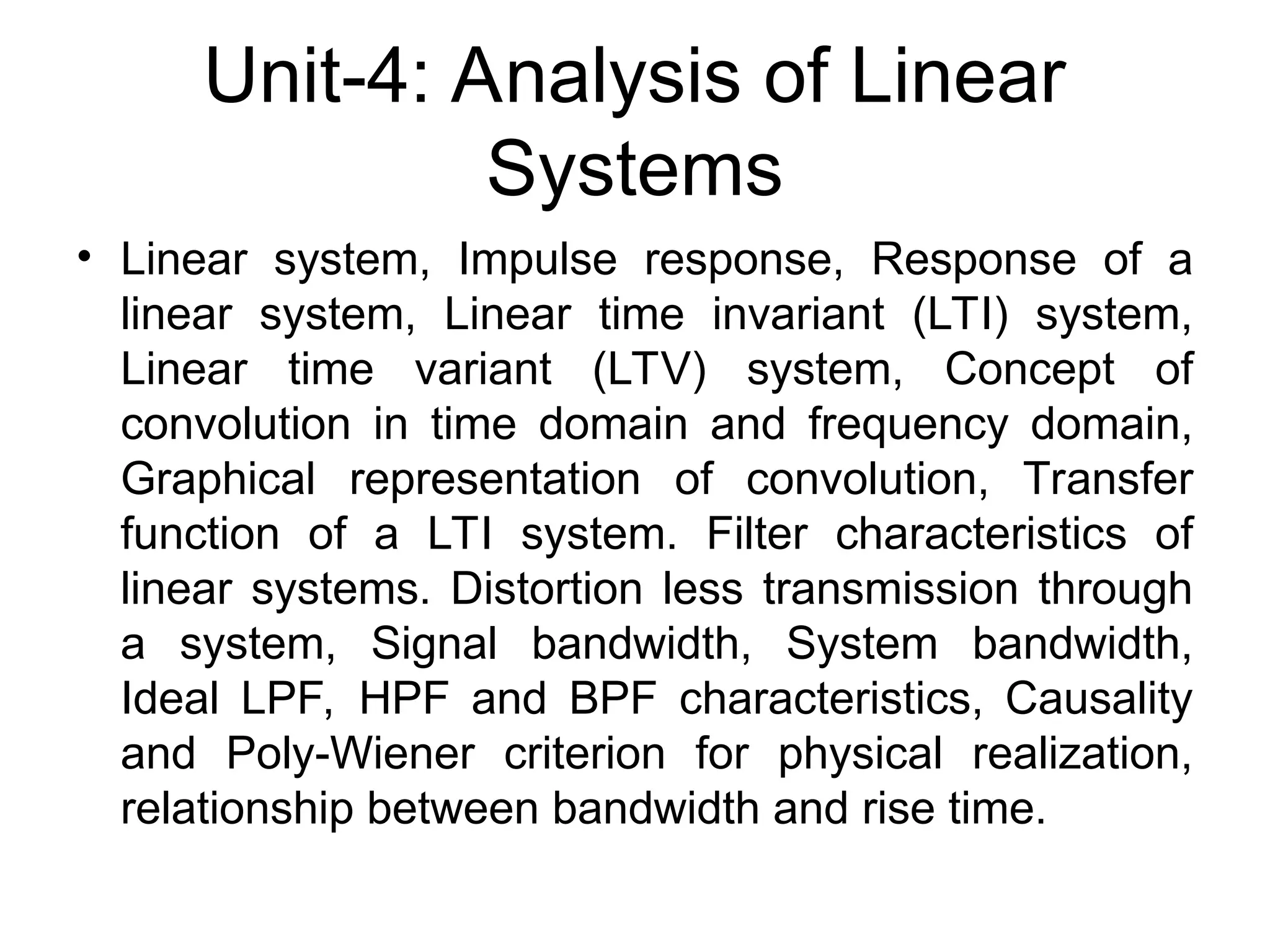
Unit-4: Analysis ofLinear
Systems
• Linear system, Impulse response, Response of a
linear system, Linear time invariant (LTI) system,
Linear time variant (LTV) system, Concept of
convolution in time domain and frequency domain,
Graphical representation of convolution, Transfer
function of a LTI system. Filter characteristics of
linear systems. Distortion less transmission through
a system, Signal bandwidth, System bandwidth,
Ideal LPF, HPF and BPF characteristics, Causality
and Poly-Wiener criterion for physical realization,
relationship between bandwidth and rise time.
7.
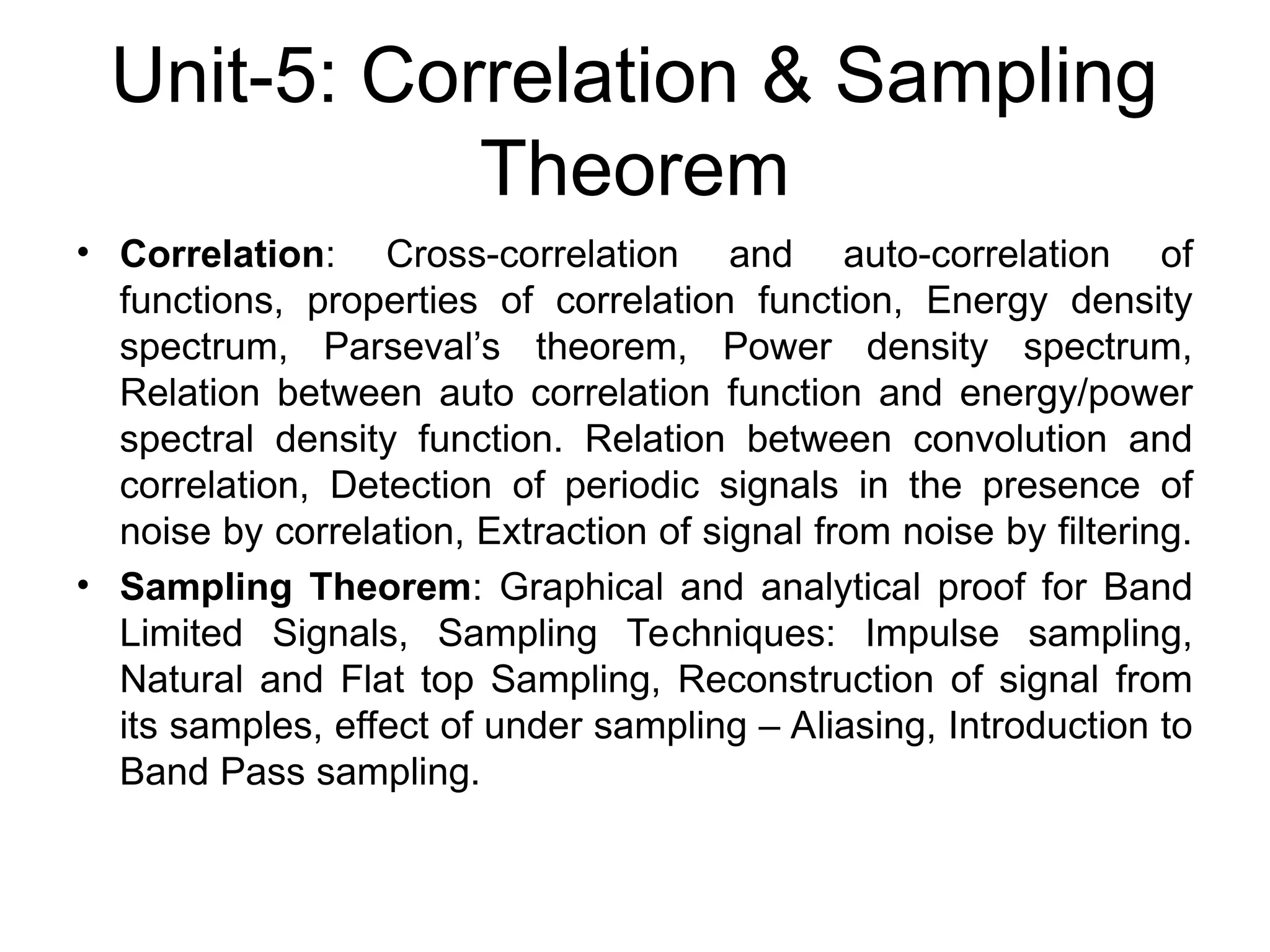
Unit-5: Correlation &Sampling
Theorem
• Correlation: Cross-correlation and auto-correlation of
functions, properties of correlation function, Energy density
spectrum, Parseval’s theorem, Power density spectrum,
Relation between auto correlation function and energy/power
spectral density function. Relation between convolution and
correlation, Detection of periodic signals in the presence of
noise by correlation, Extraction of signal from noise by filtering.
• Sampling Theorem: Graphical and analytical proof for Band
Limited Signals, Sampling Techniques: Impulse sampling,
Natural and Flat top Sampling, Reconstruction of signal from
its samples, effect of under sampling – Aliasing, Introduction to
Band Pass sampling.
8.
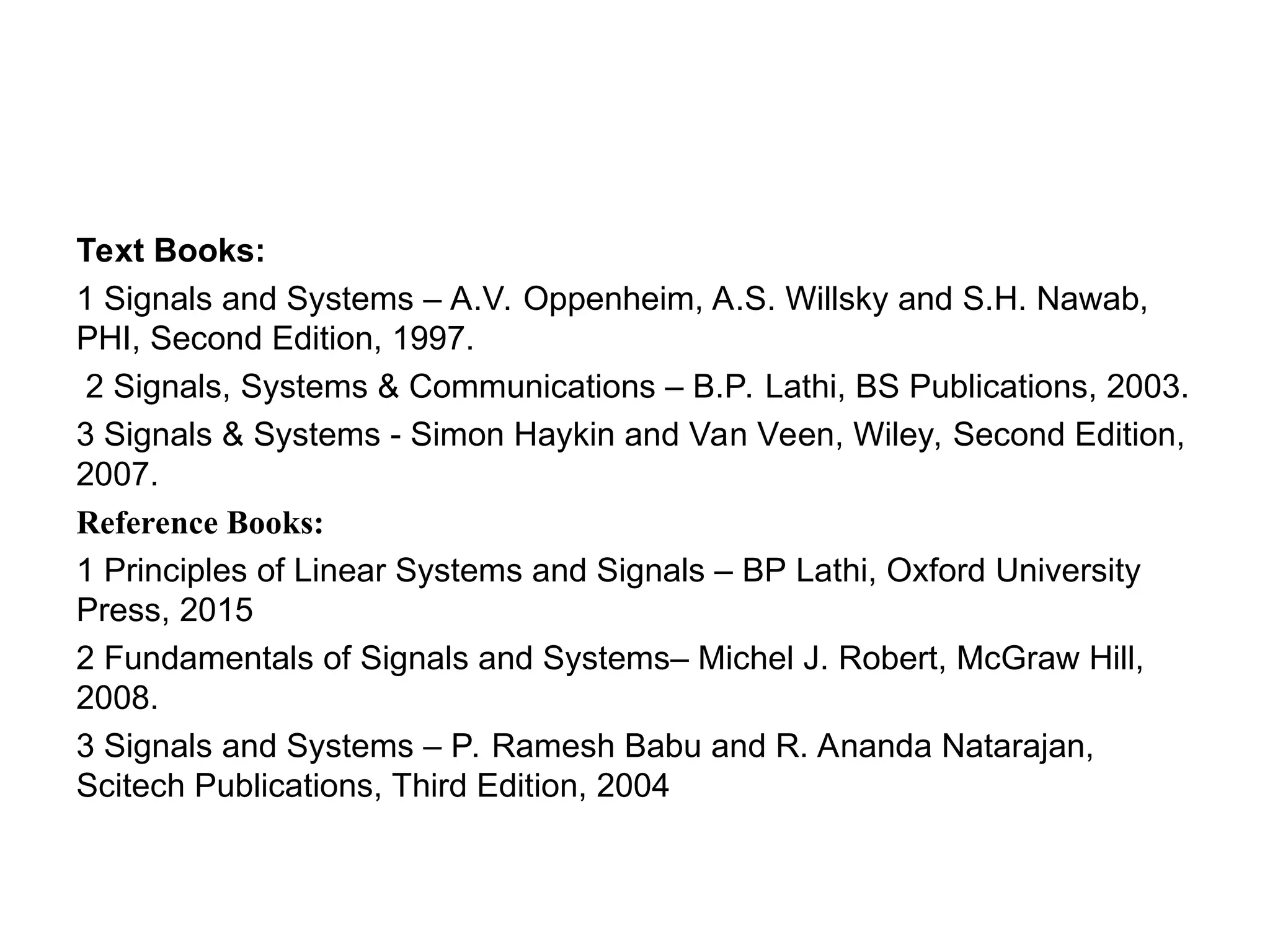
Text Books:
1 Signalsand Systems – A.V. Oppenheim, A.S. Willsky and S.H. Nawab,
PHI, Second Edition, 1997.
2 Signals, Systems & Communications – B.P. Lathi, BS Publications, 2003.
3 Signals & Systems - Simon Haykin and Van Veen, Wiley, Second Edition,
2007.
Reference Books:
1 Principles of Linear Systems and Signals – BP Lathi, Oxford University
Press, 2015
2 Fundamentals of Signals and Systems– Michel J. Robert, McGraw Hill,
2008.
3 Signals and Systems – P. Ramesh Babu and R. Ananda Natarajan,
Scitech Publications, Third Edition, 2004




![Structures_and_Files[1] - Read-Only.pptx](https://cdn.slidesharecdn.com/ss_thumbnails/structuresandfiles1-read-only-250228040208-49ef0751-thumbnail.jpg?width=640&height=640&fit=bounds)


