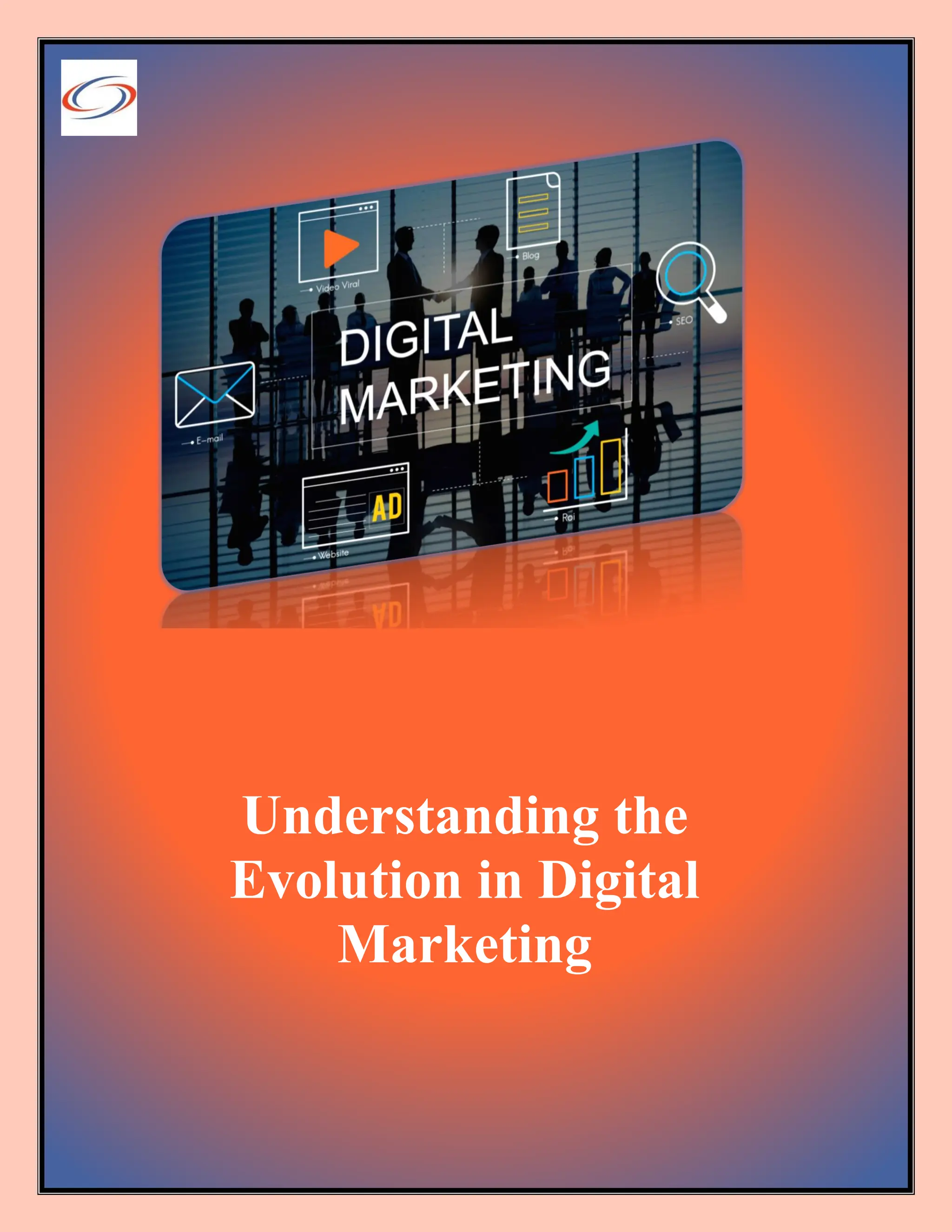
Understanding the
Evolution in Digital
Marketing
3 June 2024
| Betatest Solutions | 1
Digital marketing has undergone a significant evolution over the years, adapting to changing
technologies and consumer behaviors. In this blog, we'll explore the evolution in digital
marketing from Betatest Solutions' perspective, highlighting key milestones and innovations.
The Early Days of Digital Marketing
Digital marketing has come a long way since its inception. Let's take a look at how it all began:
• Introduction of the Internet: The advent of the internet in the late 20th century laid the
foundation for digital marketing.
• Emergence of Search Engines: Search engines like Yahoo and AltaVista
revolutionized how users accessed information online, paving the way for search engine
optimization (SEO).
• Birth of Email Marketing: Email marketing emerged as one of the earliest forms of
digital marketing, allowing businesses to reach their audience directly through their
inbox.
• Rise of Banner Ads: The introduction of banner ads in the 1990s marked the beginning
of online advertising, with businesses using clickable banners to drive traffic to their
websites.
• Social Media Revolution: The rise of social media platforms like Facebook and Twitter
in the 2000s provided new opportunities for businesses to connect with their audience
and engage in two-way communication.
The Shift Towards Data-Driven Marketing
As digital marketing evolved, there was a noticeable shift towards data-driven strategies. Here's
how data has transformed the digital marketing landscape:
• The Rise of Analytics: Advances in data analytics tools have enabled marketers to
track and measure the performance of their campaigns more effectively.
• Personalization: With access to vast amounts of data, marketers can now personalize
their marketing efforts to target specific audience segments with tailored messages.
3 June 2024
| Betatest Solutions | 2
• Predictive Analytics: Predictive analytics algorithms use historical data to forecast
future trends and behaviors, helping marketers anticipate consumer needs and
preferences.
• Machine Learning and AI: Machine learning algorithms analyze large datasets to
identify patterns and make predictions, allowing marketers to optimize campaigns in
real-time for maximum effectiveness.
• Automation: Marketing automation platforms streamline repetitive tasks and workflows,
freeing up marketers to focus on strategy and creativity.
• Behavioral Targeting: By analyzing user behavior and online interactions, marketers
can deliver targeted ads and content to users based on their interests and preferences.
The Role of Technology in Shaping Digital Marketing
Technology has played a pivotal role in shaping the evolution of digital marketing. Let's delve
into how technological advancements have influenced the digital marketing landscape:
• Mobile Optimization: The proliferation of smartphones has transformed how
consumers access the internet, leading to a greater emphasis on mobile optimization in
digital marketing strategies.
• Responsive Design: Responsive web design ensures that websites adapt seamlessly
to various screen sizes and devices, providing users with a consistent and user-friendly
experience.
• App Development: Mobile apps have become a key channel for businesses to engage
with their audience, offering personalized experiences and convenient access to
products and services.
• Location-Based Marketing: Location-based technologies like GPS and beacons
enable businesses to deliver targeted messages and promotions to users based on their
geographic location.
• Voice Search and AI Assistants: Voice search technology and AI-powered virtual
assistants like Siri and Alexa have changed how users search for information online,
prompting marketers to optimize their content for voice search queries.
• Augmented Reality (AR) and Virtual Reality (VR): AR and VR technologies offer
immersive experiences that blur the lines between the physical and digital worlds,
3 June 2024
| Betatest Solutions | 3
opening up new opportunities for marketers to engage with consumers in innovative
ways.
• Blockchain Technology: Blockchain technology has the potential to revolutionize
digital marketing by enhancing transparency, security, and trust in online transactions
and advertising.
• Internet of Things (IoT): The IoT ecosystem, comprised of interconnected devices and
sensors, creates vast amounts of data that can be leveraged by marketers to gain
insights into consumer behavior and preferences.
The Future of Digital Marketing: Trends to Watch
Looking ahead, the future of digital marketing is brimming with exciting possibilities. Here are
some emerging trends that marketers should keep an eye on:
• AI-Powered Personalization: AI algorithms will continue to drive personalized
marketing experiences, delivering tailored content and recommendations to users based
on their individual preferences and behavior.
• Interactive Content Formats: Interactive content formats like quizzes, polls, and live
streaming will become increasingly popular, offering engaging experiences that captivate
and entertain audiences.
• Visual Search: Visual search technology allows users to search for products and
information using images rather than text, presenting new opportunities for e-commerce
and visual-centric brands.
• Inclusive and Diversity-Focused Marketing: Brands will prioritize inclusivity and
diversity in their marketing efforts, reflecting the values and diversity of their audience.
• Privacy-Focused Marketing: With growing concerns over data privacy and security,
marketers will need to adopt transparent and ethical practices to build trust with
consumers.
• Cross-Channel Integration: Marketers will integrate their marketing efforts across
multiple channels and platforms, providing a seamless and cohesive experience for
users throughout their customer journey.
3 June 2024
| Betatest Solutions | 4
• Sustainability and Social Responsibility: Brands will increasingly focus on
sustainability and social responsibility in their marketing campaigns, aligning with
consumer preferences for environmentally and socially conscious brands.
The Importance of Adaptability in Digital Marketing
In the rapidly changing digital landscape, adaptability is key to success in digital marketing. Let's
explore why adaptability is essential and how Betatest Solutions embraces it:
• Keeping Pace with Technology: Technology evolves at a rapid pace, and digital
marketers must stay abreast of the latest trends and tools to remain competitive.
Betatest Solutions prioritizes continuous learning and adaptation to ensure its strategies
are always cutting-edge.
• Responding to Consumer Behavior: Consumer behavior and preferences are
constantly evolving, influenced by factors like societal trends, technological
advancements, and economic changes. Betatest Solutions closely monitors consumer
behavior and adapts its marketing strategies accordingly to meet evolving needs.
• Navigating Industry Shifts: The digital marketing industry is dynamic, with new
platforms, algorithms, and regulations constantly emerging. Betatest Solutions remains
agile and flexible, quickly pivoting its strategies to navigate industry shifts and capitalize
on new opportunities.
• Optimizing Performance: Digital marketing campaigns require ongoing optimization to
achieve optimal performance. Betatest Solutions employs a data-driven approach,
continuously analyzing campaign metrics and making adjustments to improve results.
• Embracing Change: Change is inevitable in the digital world, and marketers must be
willing to embrace it. Betatest Solutions fosters a culture of innovation and
experimentation, encouraging its team members to embrace change and explore new
ideas and approaches.
• Meeting Client Needs: Clients' goals and objectives may change over time, requiring
marketers to adapt their strategies accordingly. Betatest Solutions prioritizes client
collaboration and communication, ensuring its strategies are aligned with client
objectives and responsive to changing needs.
3 June 2024
| Betatest Solutions | 5
Conclusion
In conclusion, the evolution of digital marketing has been shaped by technological
advancements, changing consumer behaviors, and industry shifts. Betatest Solutions has
played a pivotal role in this evolution, driving innovation and embracing adaptability to deliver
exceptional results for its clients. As we look to the future, adaptability will remain a cornerstone
of successful digital marketing strategies, enabling marketers to navigate uncertainty, capitalize
on opportunities, and drive business growth. Stay tuned for more insights and updates from
Betatest Solutions as we continue to explore the ever-changing landscape of digital marketing.
3 June 2024
| Betatest Solutions | 6
Contact Us For Further
Inquiries
• Visit: https://betatestsolutions.com/
• Mail: info@betatestsolutions.com
• Phone Number: +9180 2504 3196

Understanding the Evolution in Digital Marketing.pdf

  • 1.
  • 2.
    3 June 2024 |Betatest Solutions | 1 Digital marketing has undergone a significant evolution over the years, adapting to changing technologies and consumer behaviors. In this blog, we'll explore the evolution in digital marketing from Betatest Solutions' perspective, highlighting key milestones and innovations. The Early Days of Digital Marketing Digital marketing has come a long way since its inception. Let's take a look at how it all began: • Introduction of the Internet: The advent of the internet in the late 20th century laid the foundation for digital marketing. • Emergence of Search Engines: Search engines like Yahoo and AltaVista revolutionized how users accessed information online, paving the way for search engine optimization (SEO). • Birth of Email Marketing: Email marketing emerged as one of the earliest forms of digital marketing, allowing businesses to reach their audience directly through their inbox. • Rise of Banner Ads: The introduction of banner ads in the 1990s marked the beginning of online advertising, with businesses using clickable banners to drive traffic to their websites. • Social Media Revolution: The rise of social media platforms like Facebook and Twitter in the 2000s provided new opportunities for businesses to connect with their audience and engage in two-way communication. The Shift Towards Data-Driven Marketing As digital marketing evolved, there was a noticeable shift towards data-driven strategies. Here's how data has transformed the digital marketing landscape: • The Rise of Analytics: Advances in data analytics tools have enabled marketers to track and measure the performance of their campaigns more effectively. • Personalization: With access to vast amounts of data, marketers can now personalize their marketing efforts to target specific audience segments with tailored messages.
  • 3.
    3 June 2024 |Betatest Solutions | 2 • Predictive Analytics: Predictive analytics algorithms use historical data to forecast future trends and behaviors, helping marketers anticipate consumer needs and preferences. • Machine Learning and AI: Machine learning algorithms analyze large datasets to identify patterns and make predictions, allowing marketers to optimize campaigns in real-time for maximum effectiveness. • Automation: Marketing automation platforms streamline repetitive tasks and workflows, freeing up marketers to focus on strategy and creativity. • Behavioral Targeting: By analyzing user behavior and online interactions, marketers can deliver targeted ads and content to users based on their interests and preferences. The Role of Technology in Shaping Digital Marketing Technology has played a pivotal role in shaping the evolution of digital marketing. Let's delve into how technological advancements have influenced the digital marketing landscape: • Mobile Optimization: The proliferation of smartphones has transformed how consumers access the internet, leading to a greater emphasis on mobile optimization in digital marketing strategies. • Responsive Design: Responsive web design ensures that websites adapt seamlessly to various screen sizes and devices, providing users with a consistent and user-friendly experience. • App Development: Mobile apps have become a key channel for businesses to engage with their audience, offering personalized experiences and convenient access to products and services. • Location-Based Marketing: Location-based technologies like GPS and beacons enable businesses to deliver targeted messages and promotions to users based on their geographic location. • Voice Search and AI Assistants: Voice search technology and AI-powered virtual assistants like Siri and Alexa have changed how users search for information online, prompting marketers to optimize their content for voice search queries. • Augmented Reality (AR) and Virtual Reality (VR): AR and VR technologies offer immersive experiences that blur the lines between the physical and digital worlds,
  • 4.
    3 June 2024 |Betatest Solutions | 3 opening up new opportunities for marketers to engage with consumers in innovative ways. • Blockchain Technology: Blockchain technology has the potential to revolutionize digital marketing by enhancing transparency, security, and trust in online transactions and advertising. • Internet of Things (IoT): The IoT ecosystem, comprised of interconnected devices and sensors, creates vast amounts of data that can be leveraged by marketers to gain insights into consumer behavior and preferences. The Future of Digital Marketing: Trends to Watch Looking ahead, the future of digital marketing is brimming with exciting possibilities. Here are some emerging trends that marketers should keep an eye on: • AI-Powered Personalization: AI algorithms will continue to drive personalized marketing experiences, delivering tailored content and recommendations to users based on their individual preferences and behavior. • Interactive Content Formats: Interactive content formats like quizzes, polls, and live streaming will become increasingly popular, offering engaging experiences that captivate and entertain audiences. • Visual Search: Visual search technology allows users to search for products and information using images rather than text, presenting new opportunities for e-commerce and visual-centric brands. • Inclusive and Diversity-Focused Marketing: Brands will prioritize inclusivity and diversity in their marketing efforts, reflecting the values and diversity of their audience. • Privacy-Focused Marketing: With growing concerns over data privacy and security, marketers will need to adopt transparent and ethical practices to build trust with consumers. • Cross-Channel Integration: Marketers will integrate their marketing efforts across multiple channels and platforms, providing a seamless and cohesive experience for users throughout their customer journey.
  • 5.
    3 June 2024 |Betatest Solutions | 4 • Sustainability and Social Responsibility: Brands will increasingly focus on sustainability and social responsibility in their marketing campaigns, aligning with consumer preferences for environmentally and socially conscious brands. The Importance of Adaptability in Digital Marketing In the rapidly changing digital landscape, adaptability is key to success in digital marketing. Let's explore why adaptability is essential and how Betatest Solutions embraces it: • Keeping Pace with Technology: Technology evolves at a rapid pace, and digital marketers must stay abreast of the latest trends and tools to remain competitive. Betatest Solutions prioritizes continuous learning and adaptation to ensure its strategies are always cutting-edge. • Responding to Consumer Behavior: Consumer behavior and preferences are constantly evolving, influenced by factors like societal trends, technological advancements, and economic changes. Betatest Solutions closely monitors consumer behavior and adapts its marketing strategies accordingly to meet evolving needs. • Navigating Industry Shifts: The digital marketing industry is dynamic, with new platforms, algorithms, and regulations constantly emerging. Betatest Solutions remains agile and flexible, quickly pivoting its strategies to navigate industry shifts and capitalize on new opportunities. • Optimizing Performance: Digital marketing campaigns require ongoing optimization to achieve optimal performance. Betatest Solutions employs a data-driven approach, continuously analyzing campaign metrics and making adjustments to improve results. • Embracing Change: Change is inevitable in the digital world, and marketers must be willing to embrace it. Betatest Solutions fosters a culture of innovation and experimentation, encouraging its team members to embrace change and explore new ideas and approaches. • Meeting Client Needs: Clients' goals and objectives may change over time, requiring marketers to adapt their strategies accordingly. Betatest Solutions prioritizes client collaboration and communication, ensuring its strategies are aligned with client objectives and responsive to changing needs.
  • 6.
    3 June 2024 |Betatest Solutions | 5 Conclusion In conclusion, the evolution of digital marketing has been shaped by technological advancements, changing consumer behaviors, and industry shifts. Betatest Solutions has played a pivotal role in this evolution, driving innovation and embracing adaptability to deliver exceptional results for its clients. As we look to the future, adaptability will remain a cornerstone of successful digital marketing strategies, enabling marketers to navigate uncertainty, capitalize on opportunities, and drive business growth. Stay tuned for more insights and updates from Betatest Solutions as we continue to explore the ever-changing landscape of digital marketing.
  • 7.
    3 June 2024 |Betatest Solutions | 6 Contact Us For Further Inquiries • Visit: https://betatestsolutions.com/ • Mail: info@betatestsolutions.com • Phone Number: +9180 2504 3196