Understanding the Different Types of
AUDIT REPORTS
AUDIT REPORTS
Audit reports are essential documents in
the financial world, providing transparency,
ensuring accuracy, and enhancing
accountability. The types of audit reports
vary depending on the auditor’s findings
and understanding them is vital for both
businesses and their stakeholders.
This detailed blog will walk you through the
4 types of audit reports, categories of
audit reports, and four types of audit
opinions, all while shedding light on the
significance of audit reports, opinions, and
best practices.
What is an
AUDIT REPORTS
AUDIT REPORTS
An audit report is an official document that reflects an auditor’s
assessment of a company’s financial statements. It provides an
independent and objective opinion on whether the financial
statements present an accurate and fair view of the company’s
financial health under established accounting standards and
regulations. The auditor’s findings determine the categories of
audit reports, which can be favourable or unfavourable.
Audit reports serve multiple purposes, including informing
investors, creditors, regulatory authorities, and other stakeholders
about the company’s financial condition. An audit report offers
transparency and helps establish credibility, ensuring the
company adheres to established accounting principles and legal
standards.
What is an
AUDIT OPINION
AUDIT OPINION
An audit opinion is the conclusion the auditor draws after
conducting the audit. It reflects the auditor’s view on
whether the company’s financial statements are free from
material misstatements, are in compliance with the
applicable accounting standards, and whether they reflect
the financial position fairly and accurately.
The four types of audit opinions are crucial in
understanding the auditor’s stance. These opinions—
unqualified, qualified, adverse, and disclaimer—help
convey the level of accuracy and reliability of the financial
statements. Each opinion offers a different insight, from
full approval to highlighting significant concerns.
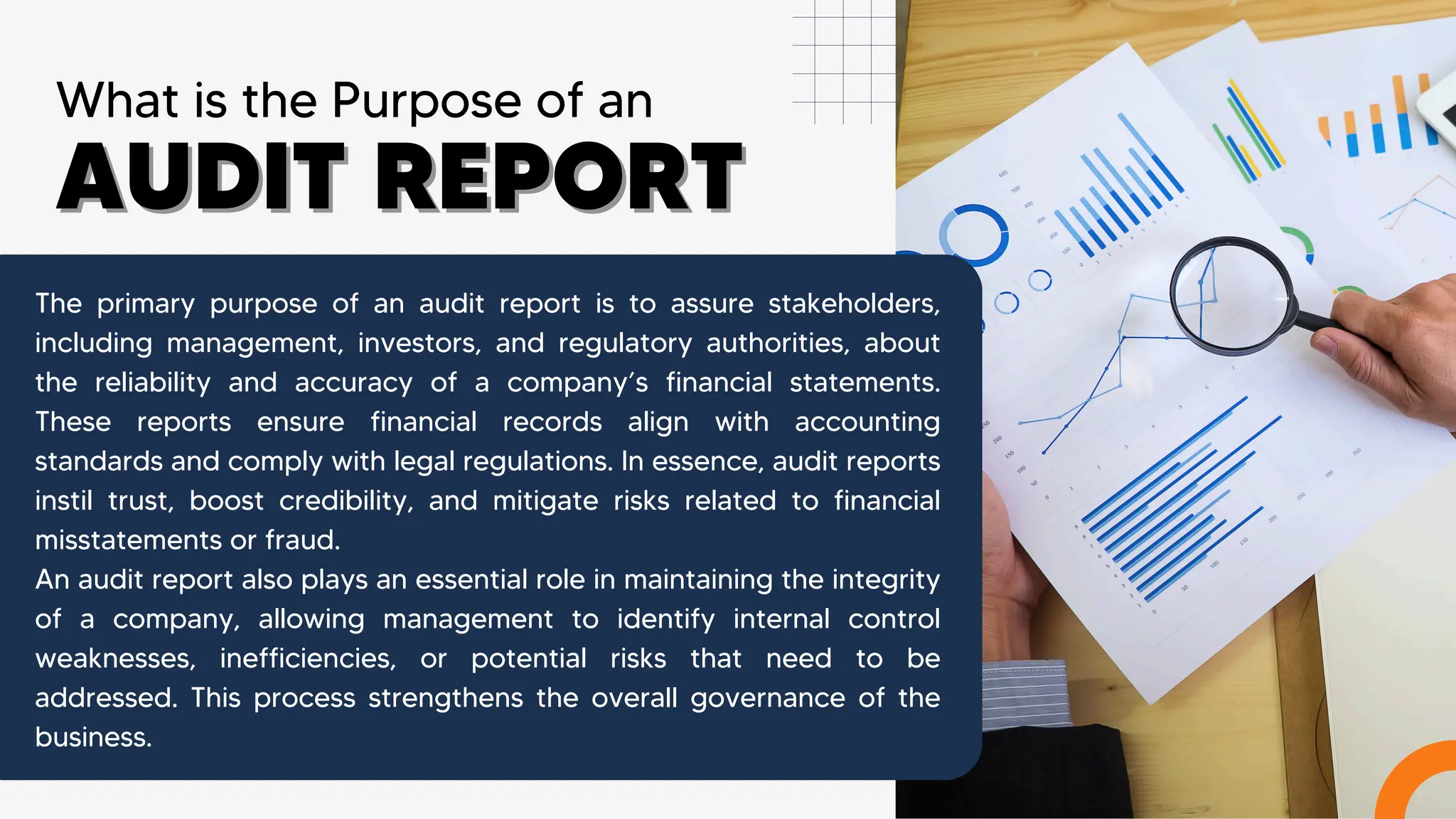
What is the Purpose of an
AUDIT REPORT
AUDIT REPORT
The primary purpose of an audit report is to assure stakeholders,
including management, investors, and regulatory authorities, about
the reliability and accuracy of a company’s financial statements.
These reports ensure financial records align with accounting
standards and comply with legal regulations. In essence, audit reports
instil trust, boost credibility, and mitigate risks related to financial
misstatements or fraud.
An audit report also plays an essential role in maintaining the integrity
of a company, allowing management to identify internal control
weaknesses, inefficiencies, or potential risks that need to be
addressed. This process strengthens the overall governance of the
business.
5 C’s of
AUDIT REPORTING
AUDIT REPORTING
In audit reporting, auditors adhere to the 5 C’s of audit reporting,
which guide the structure and depth of the findings. These
elements are essential for understanding the root causes of any
issues and how they can be resolved. The 5 C’s are as follows:
1. Condition
2. Cause
3. Corrective Action
4. Criteria
5. Consequence
1. Qualified Report or Qualified
Opinion
This type of report indicates that the auditor has
identified some limitations or discrepancies in the
financial records but believes these issues are not
pervasive enough to invalidate the overall accuracy of
the statements. A qualified opinion may be issued
when there are restrictions in the scope of the audit,
such as incomplete financial data or insufficient
documentation.
4 Types of
AUDIT REPORT
AUDIT REPORT
There are 4 types of audit reports, each offering different conclusions based on the auditor’s findings.
These reports are essential in conveying the reliability and accuracy of a company’s financial statements.
2. Disclaimer Report or Disclaimer
of Opinion
A disclaimer report occurs when the auditor cannot
form an opinion on the financial statements.
This can happen when there are significant
limitations in the audit scope, such as a lack of
access to essential records or the company’s refusal
to provide necessary documents. In such cases, the
auditor ca
3. Adverse Audit Report or
Adverse Opinion
An adverse audit report is the most severe type of
opinion an auditor can give. It means that the
auditor has found substantial errors or
misstatements in the financial statements that are
not in line with accounting standards. An adverse
opinion indicates that the financial statements are
misleading and cannot be relied upon by
stakeholders.
4. Unqualified Audit Opinion or
Clean Report
An unqualified audit opinion signifies no
material misstatements were found. This
opinion means that the financial statements
accurately reflect the company’s financial
position and are compliant with all relevant
accounting standards.
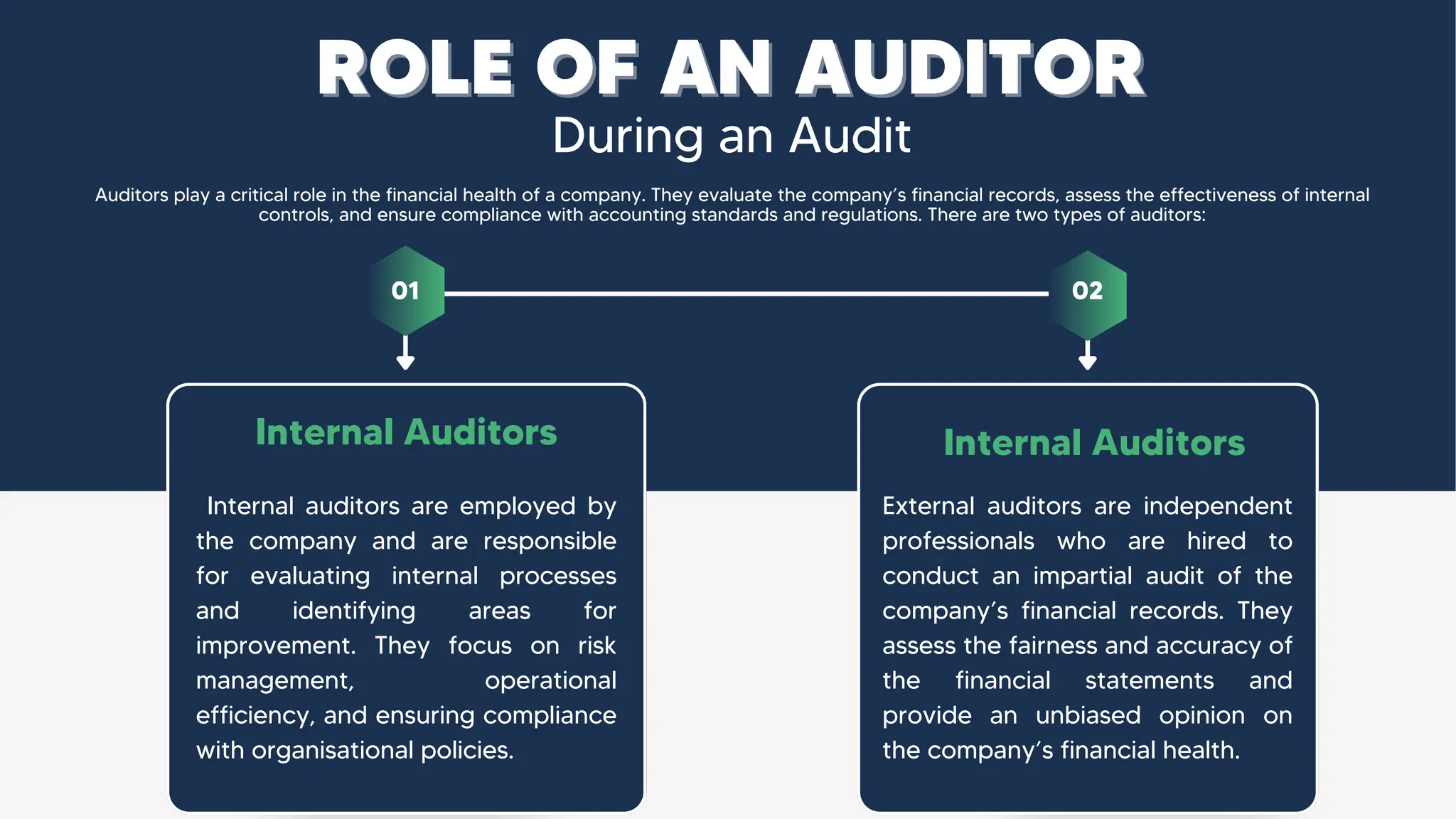
Internal auditors are employed by
the company and are responsible
for evaluating internal processes
and identifying areas for
improvement. They focus on risk
management, operational
efficiency, and ensuring compliance
with organisational policies.
Internal Auditors
01 02
During an Audit
ROLE OF AN AUDITOR
ROLE OF AN AUDITOR
Auditors play a critical role in the financial health of a company. They evaluate the company’s financial records, assess the effectiveness of internal
controls, and ensure compliance with accounting standards and regulations. There are two types of auditors:
External auditors are independent
professionals who are hired to
conduct an impartial audit of the
company’s financial records. They
assess the fairness and accuracy of
the financial statements and
provide an unbiased opinion on
the company’s financial health.
Internal Auditors
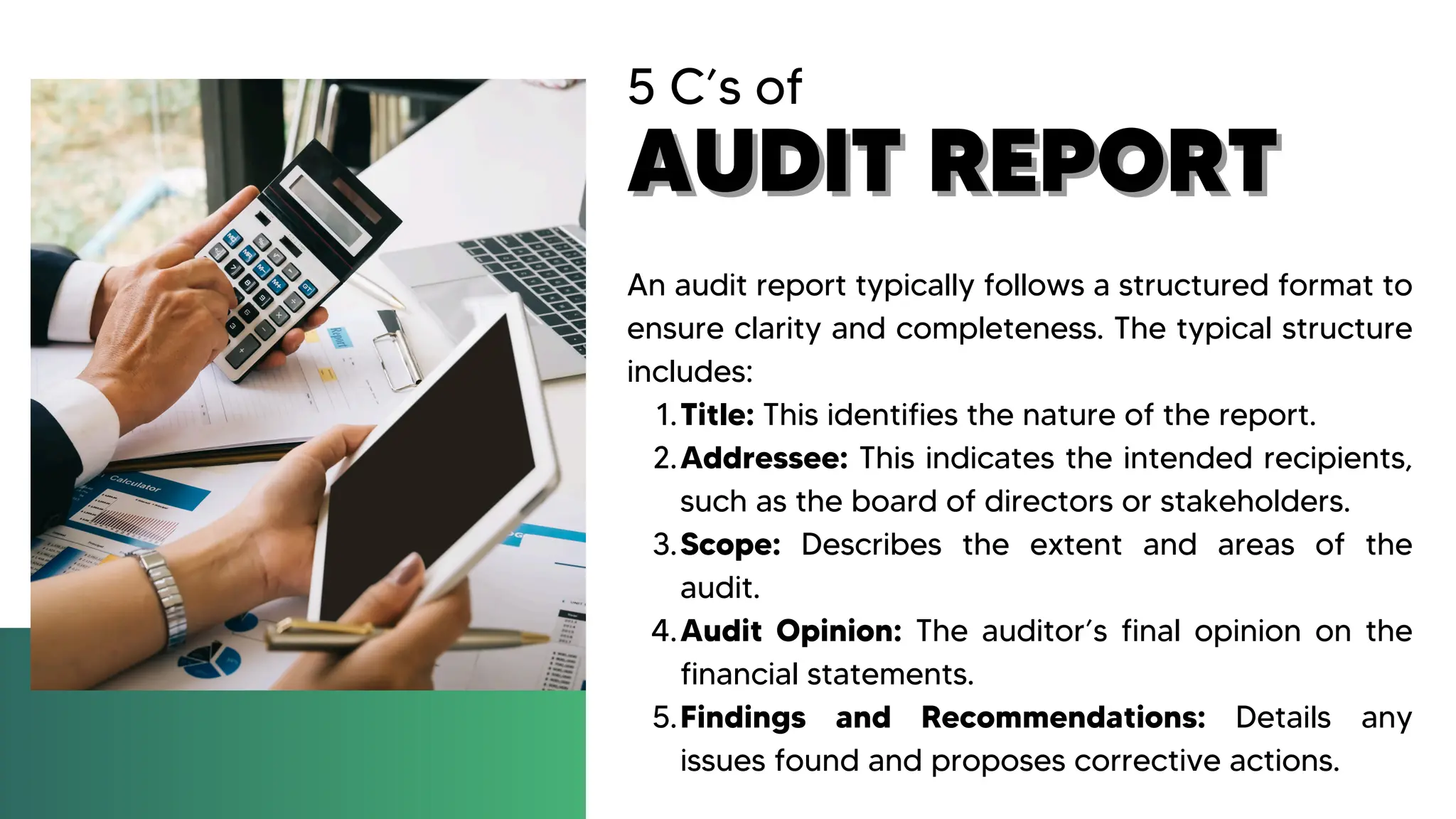
5 C’s of
AUDIT REPORT
AUDIT REPORT
An audit report typically follows a structured format to
ensure clarity and completeness. The typical structure
includes:
Title: This identifies the nature of the report.
1.
Addressee: This indicates the intended recipients,
such as the board of directors or stakeholders.
2.
Scope: Describes the extent and areas of the
audit.
3.
Audit Opinion: The auditor’s final opinion on the
financial statements.
4.
Findings and Recommendations: Details any
issues found and proposes corrective actions.
5.
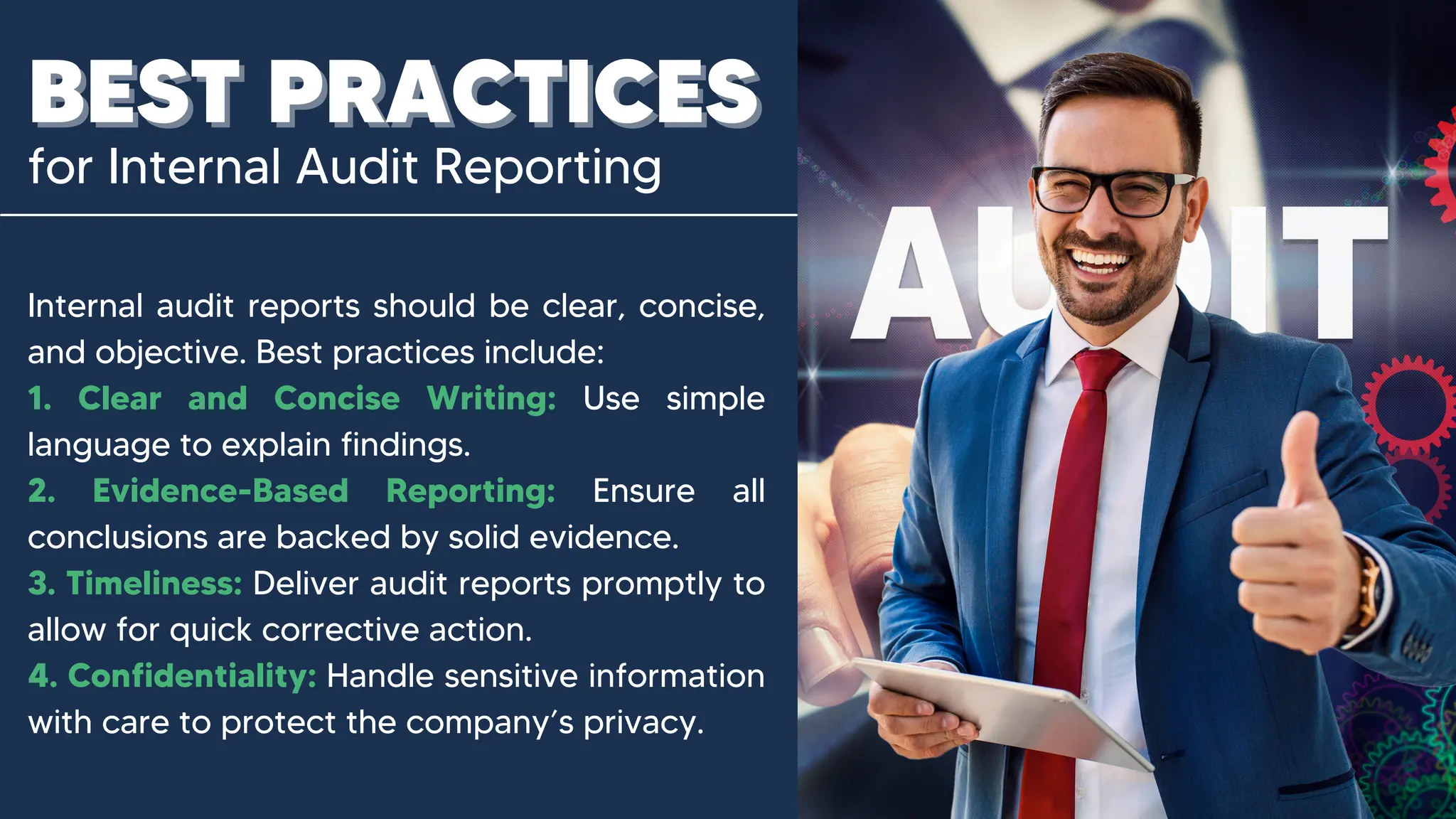
for Internal Audit Reporting
BEST PRACTICES
BEST PRACTICES
Internal audit reports should be clear, concise,
and objective. Best practices include:
1. Clear and Concise Writing: Use simple
language to explain findings.
2. Evidence-Based Reporting: Ensure all
conclusions are backed by solid evidence.
3. Timeliness: Deliver audit reports promptly to
allow for quick corrective action.
4. Confidentiality: Handle sensitive information
with care to protect the company’s privacy.
Implications of
AUDIT OPINIONS
AUDIT OPINIONS
The implications of audit opinions are
significant for the company and its
stakeholders. For example, an adverse opinion
could result in a loss of investor confidence,
while a clean report can enhance the
company’s credibility. A qualified or disclaimer
opinion signals that the financial records might
have underlying issues that need immediate
attention.
Understanding Audit Reports:
Expert Insights and Support from
SHURAA TAX
SHURAA TAX
In conclusion, understanding the different
types of audit reports and opinions is crucial
for any business. The 4 types of audit reports—
qualified, disclaimer, adverse, and unqualified—
provide vital insights into a company’s financial
health. Whether you are a business owner,
investor, or stakeholder, knowing how to
interpret these reports helps you make
informed decisions.
Phone
+(971) 44081900
Email
info@shuraatax.com
shuraaatax.com
Website
106 Sheikh Zayed Road, 6th Floor, Aspin Commercial
Tower – Dubai
Location
CONTACT US

Understanding the Different Types of Audit reports.pdf

  • 1.
    Understanding the DifferentTypes of AUDIT REPORTS AUDIT REPORTS
  • 2.
    Audit reports areessential documents in the financial world, providing transparency, ensuring accuracy, and enhancing accountability. The types of audit reports vary depending on the auditor’s findings and understanding them is vital for both businesses and their stakeholders. This detailed blog will walk you through the 4 types of audit reports, categories of audit reports, and four types of audit opinions, all while shedding light on the significance of audit reports, opinions, and best practices.
  • 3.
    What is an AUDITREPORTS AUDIT REPORTS An audit report is an official document that reflects an auditor’s assessment of a company’s financial statements. It provides an independent and objective opinion on whether the financial statements present an accurate and fair view of the company’s financial health under established accounting standards and regulations. The auditor’s findings determine the categories of audit reports, which can be favourable or unfavourable. Audit reports serve multiple purposes, including informing investors, creditors, regulatory authorities, and other stakeholders about the company’s financial condition. An audit report offers transparency and helps establish credibility, ensuring the company adheres to established accounting principles and legal standards.
  • 4.
    What is an AUDITOPINION AUDIT OPINION An audit opinion is the conclusion the auditor draws after conducting the audit. It reflects the auditor’s view on whether the company’s financial statements are free from material misstatements, are in compliance with the applicable accounting standards, and whether they reflect the financial position fairly and accurately. The four types of audit opinions are crucial in understanding the auditor’s stance. These opinions— unqualified, qualified, adverse, and disclaimer—help convey the level of accuracy and reliability of the financial statements. Each opinion offers a different insight, from full approval to highlighting significant concerns.
  • 5.
    What is thePurpose of an AUDIT REPORT AUDIT REPORT The primary purpose of an audit report is to assure stakeholders, including management, investors, and regulatory authorities, about the reliability and accuracy of a company’s financial statements. These reports ensure financial records align with accounting standards and comply with legal regulations. In essence, audit reports instil trust, boost credibility, and mitigate risks related to financial misstatements or fraud. An audit report also plays an essential role in maintaining the integrity of a company, allowing management to identify internal control weaknesses, inefficiencies, or potential risks that need to be addressed. This process strengthens the overall governance of the business.
  • 6.
    5 C’s of AUDITREPORTING AUDIT REPORTING In audit reporting, auditors adhere to the 5 C’s of audit reporting, which guide the structure and depth of the findings. These elements are essential for understanding the root causes of any issues and how they can be resolved. The 5 C’s are as follows: 1. Condition 2. Cause 3. Corrective Action 4. Criteria 5. Consequence
  • 7.
    1. Qualified Reportor Qualified Opinion This type of report indicates that the auditor has identified some limitations or discrepancies in the financial records but believes these issues are not pervasive enough to invalidate the overall accuracy of the statements. A qualified opinion may be issued when there are restrictions in the scope of the audit, such as incomplete financial data or insufficient documentation. 4 Types of AUDIT REPORT AUDIT REPORT There are 4 types of audit reports, each offering different conclusions based on the auditor’s findings. These reports are essential in conveying the reliability and accuracy of a company’s financial statements. 2. Disclaimer Report or Disclaimer of Opinion A disclaimer report occurs when the auditor cannot form an opinion on the financial statements. This can happen when there are significant limitations in the audit scope, such as a lack of access to essential records or the company’s refusal to provide necessary documents. In such cases, the auditor ca
  • 8.
    3. Adverse AuditReport or Adverse Opinion An adverse audit report is the most severe type of opinion an auditor can give. It means that the auditor has found substantial errors or misstatements in the financial statements that are not in line with accounting standards. An adverse opinion indicates that the financial statements are misleading and cannot be relied upon by stakeholders. 4. Unqualified Audit Opinion or Clean Report An unqualified audit opinion signifies no material misstatements were found. This opinion means that the financial statements accurately reflect the company’s financial position and are compliant with all relevant accounting standards.
  • 9.
    Internal auditors areemployed by the company and are responsible for evaluating internal processes and identifying areas for improvement. They focus on risk management, operational efficiency, and ensuring compliance with organisational policies. Internal Auditors 01 02 During an Audit ROLE OF AN AUDITOR ROLE OF AN AUDITOR Auditors play a critical role in the financial health of a company. They evaluate the company’s financial records, assess the effectiveness of internal controls, and ensure compliance with accounting standards and regulations. There are two types of auditors: External auditors are independent professionals who are hired to conduct an impartial audit of the company’s financial records. They assess the fairness and accuracy of the financial statements and provide an unbiased opinion on the company’s financial health. Internal Auditors
  • 10.
    5 C’s of AUDITREPORT AUDIT REPORT An audit report typically follows a structured format to ensure clarity and completeness. The typical structure includes: Title: This identifies the nature of the report. 1. Addressee: This indicates the intended recipients, such as the board of directors or stakeholders. 2. Scope: Describes the extent and areas of the audit. 3. Audit Opinion: The auditor’s final opinion on the financial statements. 4. Findings and Recommendations: Details any issues found and proposes corrective actions. 5.
  • 11.
    for Internal AuditReporting BEST PRACTICES BEST PRACTICES Internal audit reports should be clear, concise, and objective. Best practices include: 1. Clear and Concise Writing: Use simple language to explain findings. 2. Evidence-Based Reporting: Ensure all conclusions are backed by solid evidence. 3. Timeliness: Deliver audit reports promptly to allow for quick corrective action. 4. Confidentiality: Handle sensitive information with care to protect the company’s privacy.
  • 12.
    Implications of AUDIT OPINIONS AUDITOPINIONS The implications of audit opinions are significant for the company and its stakeholders. For example, an adverse opinion could result in a loss of investor confidence, while a clean report can enhance the company’s credibility. A qualified or disclaimer opinion signals that the financial records might have underlying issues that need immediate attention.
  • 13.
    Understanding Audit Reports: ExpertInsights and Support from SHURAA TAX SHURAA TAX In conclusion, understanding the different types of audit reports and opinions is crucial for any business. The 4 types of audit reports— qualified, disclaimer, adverse, and unqualified— provide vital insights into a company’s financial health. Whether you are a business owner, investor, or stakeholder, knowing how to interpret these reports helps you make informed decisions.
  • 14.
    Phone +(971) 44081900 Email info@shuraatax.com shuraaatax.com Website 106 SheikhZayed Road, 6th Floor, Aspin Commercial Tower – Dubai Location CONTACT US