Determinants of
Capital Structure
Presented By
Rahul Malik
Factors Influencing Financing Decisions
Capital Structure
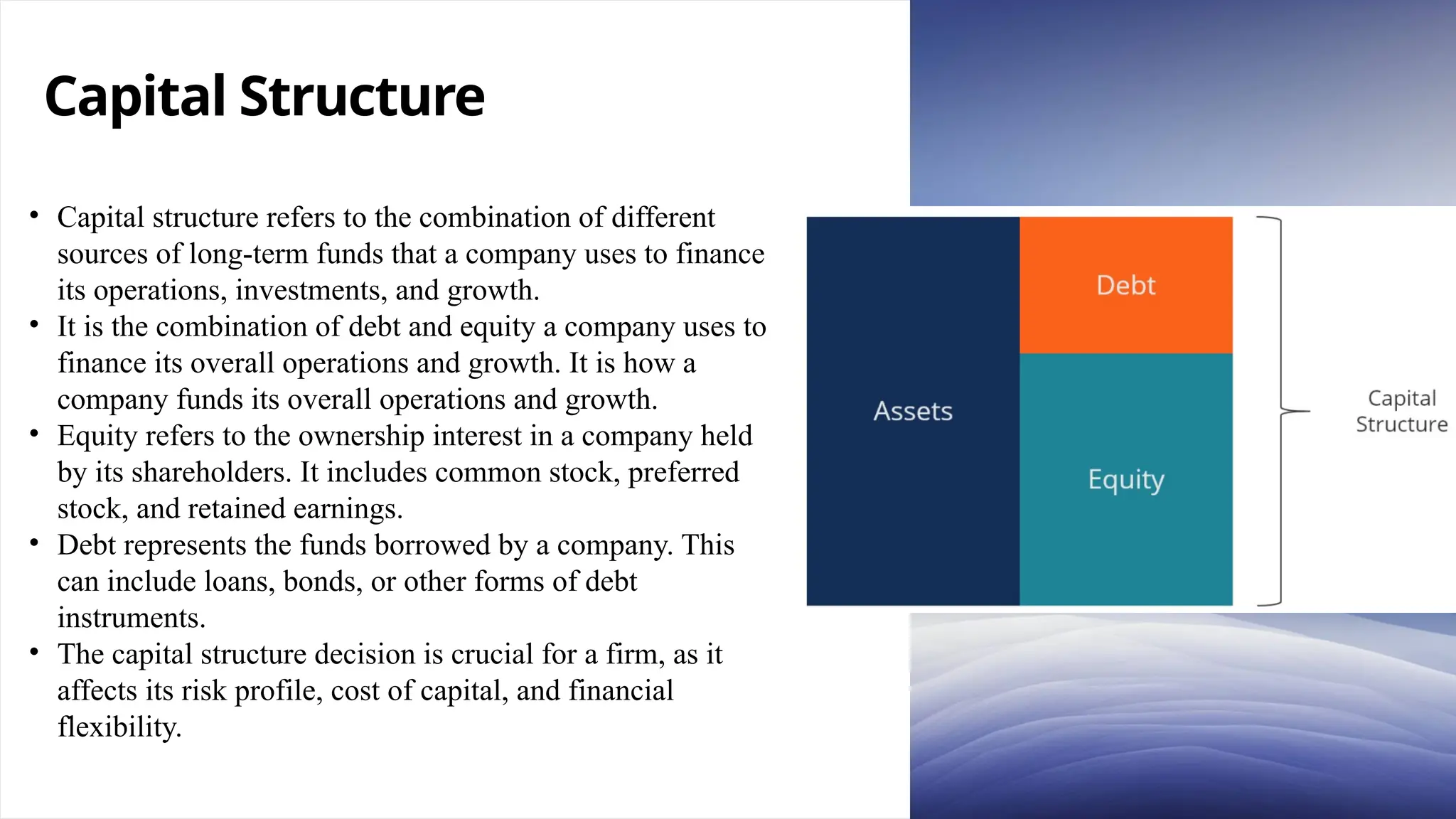
• Capital structure refers to the combination of different
sources of long-term funds that a company uses to finance
its operations, investments, and growth.
• It is the combination of debt and equity a company uses to
finance its overall operations and growth. It is how a
company funds its overall operations and growth.
• Equity refers to the ownership interest in a company held
by its shareholders. It includes common stock, preferred
stock, and retained earnings.
• Debt represents the funds borrowed by a company. This
can include loans, bonds, or other forms of debt
instruments.
• The capital structure decision is crucial for a firm, as it
affects its risk profile, cost of capital, and financial
flexibility.
Types of Capital Structure
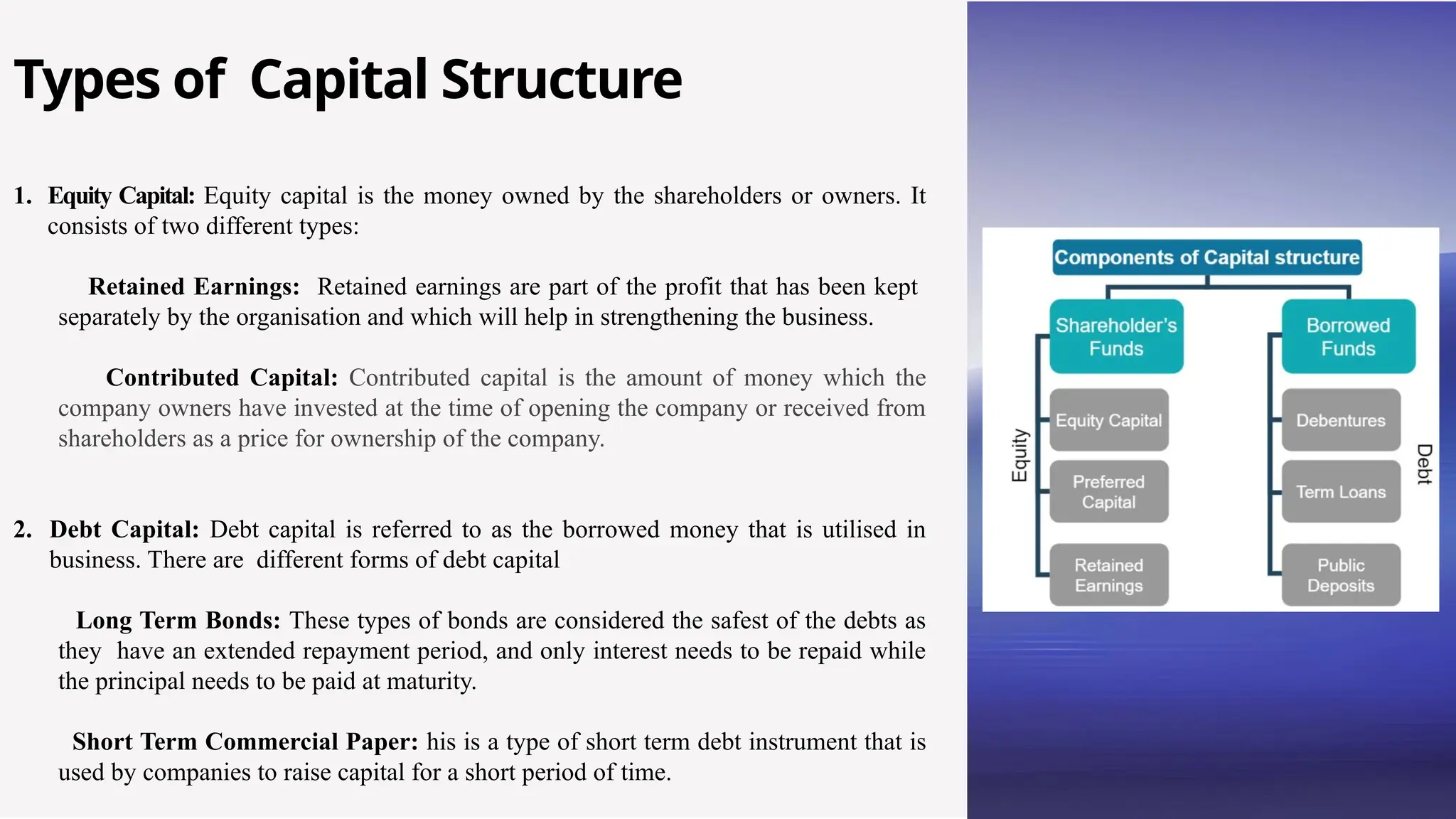
1. Equity Capital: Equity capital is the money owned by the shareholders or owners. It
consists of two different types:
Retained Earnings: Retained earnings are part of the profit that has been kept
separately by the organisation and which will help in strengthening the business.
Contributed Capital: Contributed capital is the amount of money which the
company owners have invested at the time of opening the company or received from
shareholders as a price for ownership of the company.
2. Debt Capital: Debt capital is referred to as the borrowed money that is utilised in
business. There are different forms of debt capital
Long Term Bonds: These types of bonds are considered the safest of the debts as
they have an extended repayment period, and only interest needs to be repaid while
the principal needs to be paid at maturity.
Short Term Commercial Paper: his is a type of short term debt instrument that is
used by companies to raise capital for a short period of time.
Business Risk: Companies operating in riskier industries may prefer a
conservative capital structure with lower debt to reduce financial risk.
Industries with stable cash flows and lower business risk might be more
inclined to use higher levels of debt.
Financial Risk Tolerance: The risk tolerance of management and
shareholders plays a crucial role. Some companies and investors are more risk-
averse and prefer a capital structure with a lower proportion of debt to avoid
financial distress.
Cost of Capital: The cost of debt is usually lower than the cost of equity due
to tax deductibility of interest. Companies may use debt to take advantage of
this cost differential and reduce their overall cost of capital.
Tax Considerations: Interest on debt is tax-deductible, which makes debt
financing more attractive from a tax perspective. This tax shield encourages
companies to use debt in their capital structure.
.
Factors Affecting the Capital Structure
of a Company
Market Conditions: The prevailing economic and market conditions, such as
interest rates and inflation, can impact the cost and availability of debt. During
periods of low-interest rates, companies may be more inclined to take on debt.
Company Size and Life Cycle: Smaller companies and startups may rely more
on equity financing due to limited access to debt markets. As companies
mature, they may introduce more debt into their capital structure.
Growing companies might use equity to finance expansion, while established
firms with stable cash flows may use debt to fund operations.
Asset Structure: Companies with significant tangible assets may find it easier
to secure debt financing, as lenders can use these assets as collateral. Service-
oriented or technology companies with fewer tangible assets may rely more on
equity.
Lender and Investor Confidence: A company's creditworthiness and the level
of confidence investors have in its ability to meet financial obligations can
impact its ability to raise debt capital. Strong financial performance enhances
confidence.
.
Regulatory Environment: Regulatory restrictions and limitations on debt
levels may affect a company's capital structure decisions. Certain industries
may have specific regulations governing their leverage ratios.
Management Philosophy: The management's philosophy and attitude towards
risk and leverage influence capital structure decisions. Some managers may be
conservative and prefer a lower debt ratio, while others may be more
aggressive.
Market Perception: The perception of a company's capital structure by
investors and analysts can influence its stock price and cost of capital. Negative
perceptions may result in a higher cost of equity.
Flexibility and Adaptability: Companies need to have a capital structure that
allows for flexibility and adaptability to changing business conditions. The
ability to adjust the mix of debt and equity in response to market dynamics is
crucial.
.
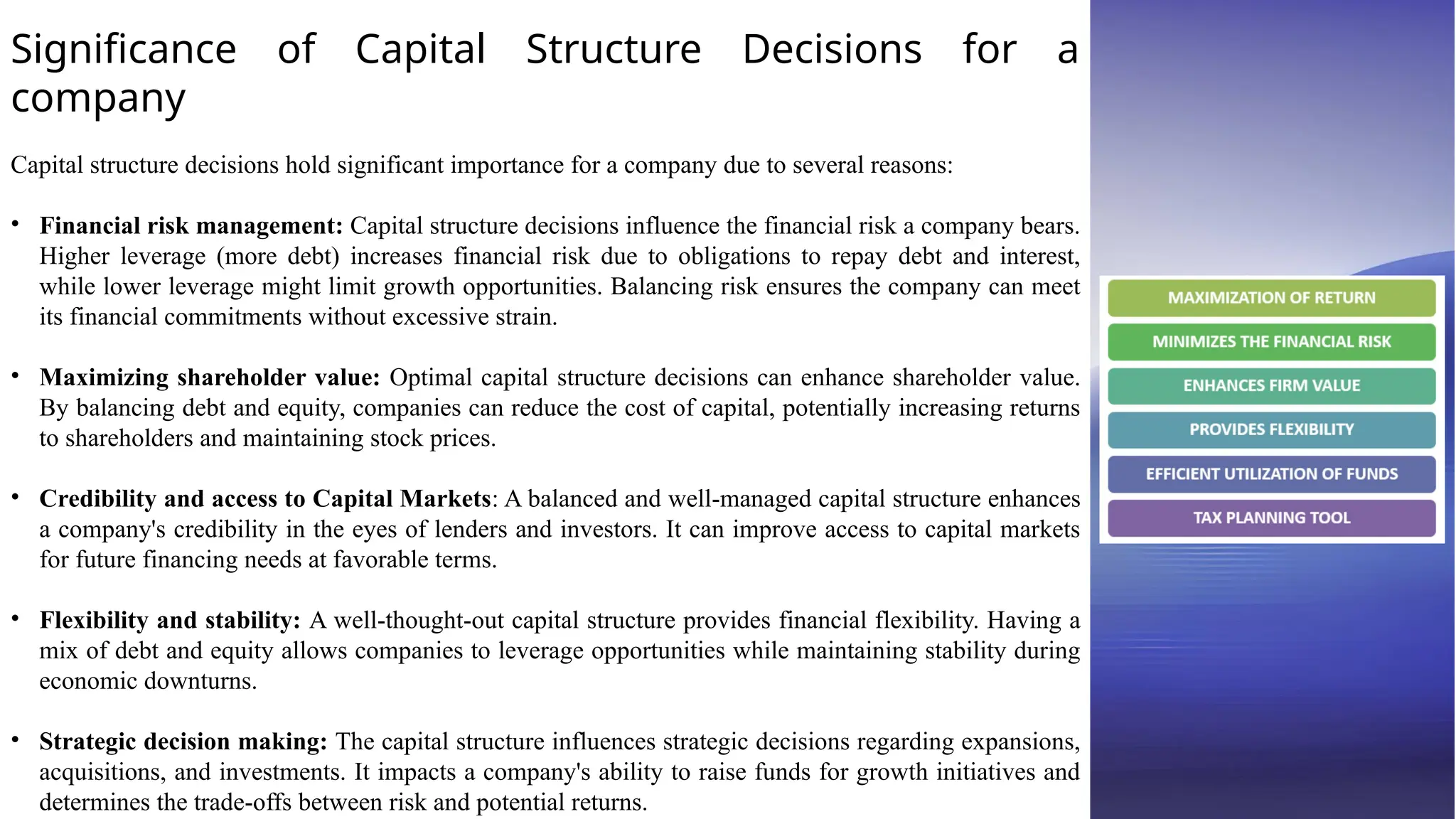
Significance of Capital Structure Decisions for a
company
Capital structure decisions hold significant importance for a company due to several reasons:
• Financial risk management: Capital structure decisions influence the financial risk a company bears.
Higher leverage (more debt) increases financial risk due to obligations to repay debt and interest,
while lower leverage might limit growth opportunities. Balancing risk ensures the company can meet
its financial commitments without excessive strain.
• Maximizing shareholder value: Optimal capital structure decisions can enhance shareholder value.
By balancing debt and equity, companies can reduce the cost of capital, potentially increasing returns
to shareholders and maintaining stock prices.
• Credibility and access to Capital Markets: A balanced and well-managed capital structure enhances
a company's credibility in the eyes of lenders and investors. It can improve access to capital markets
for future financing needs at favorable terms.
• Flexibility and stability: A well-thought-out capital structure provides financial flexibility. Having a
mix of debt and equity allows companies to leverage opportunities while maintaining stability during
economic downturns.
• Strategic decision making: The capital structure influences strategic decisions regarding expansions,
acquisitions, and investments. It impacts a company's ability to raise funds for growth initiatives and
determines the trade-offs between risk and potential returns.
Key Takeaways
• A well-informed capital structure is essential for financial
stability and sustainable growth.
• Factors such as business risks, tax implications, and market
conditions influence capital structure decisions.
• Strategic planning, risk management, and regular monitoring are
crucial to maintaining an effective capital structure.
Understanding Capital Structure: Key Determinants and Their Impact on Financial Performance

Understanding Capital Structure: Key Determinants and Their Impact on Financial Performance

  • 1.
    Determinants of Capital Structure PresentedBy Rahul Malik Factors Influencing Financing Decisions
  • 2.
    Capital Structure • Capitalstructure refers to the combination of different sources of long-term funds that a company uses to finance its operations, investments, and growth. • It is the combination of debt and equity a company uses to finance its overall operations and growth. It is how a company funds its overall operations and growth. • Equity refers to the ownership interest in a company held by its shareholders. It includes common stock, preferred stock, and retained earnings. • Debt represents the funds borrowed by a company. This can include loans, bonds, or other forms of debt instruments. • The capital structure decision is crucial for a firm, as it affects its risk profile, cost of capital, and financial flexibility.
  • 3.
    Types of CapitalStructure 1. Equity Capital: Equity capital is the money owned by the shareholders or owners. It consists of two different types: Retained Earnings: Retained earnings are part of the profit that has been kept separately by the organisation and which will help in strengthening the business. Contributed Capital: Contributed capital is the amount of money which the company owners have invested at the time of opening the company or received from shareholders as a price for ownership of the company. 2. Debt Capital: Debt capital is referred to as the borrowed money that is utilised in business. There are different forms of debt capital Long Term Bonds: These types of bonds are considered the safest of the debts as they have an extended repayment period, and only interest needs to be repaid while the principal needs to be paid at maturity. Short Term Commercial Paper: his is a type of short term debt instrument that is used by companies to raise capital for a short period of time.
  • 4.
    Business Risk: Companiesoperating in riskier industries may prefer a conservative capital structure with lower debt to reduce financial risk. Industries with stable cash flows and lower business risk might be more inclined to use higher levels of debt. Financial Risk Tolerance: The risk tolerance of management and shareholders plays a crucial role. Some companies and investors are more risk- averse and prefer a capital structure with a lower proportion of debt to avoid financial distress. Cost of Capital: The cost of debt is usually lower than the cost of equity due to tax deductibility of interest. Companies may use debt to take advantage of this cost differential and reduce their overall cost of capital. Tax Considerations: Interest on debt is tax-deductible, which makes debt financing more attractive from a tax perspective. This tax shield encourages companies to use debt in their capital structure. . Factors Affecting the Capital Structure of a Company
  • 5.
    Market Conditions: Theprevailing economic and market conditions, such as interest rates and inflation, can impact the cost and availability of debt. During periods of low-interest rates, companies may be more inclined to take on debt. Company Size and Life Cycle: Smaller companies and startups may rely more on equity financing due to limited access to debt markets. As companies mature, they may introduce more debt into their capital structure. Growing companies might use equity to finance expansion, while established firms with stable cash flows may use debt to fund operations. Asset Structure: Companies with significant tangible assets may find it easier to secure debt financing, as lenders can use these assets as collateral. Service- oriented or technology companies with fewer tangible assets may rely more on equity. Lender and Investor Confidence: A company's creditworthiness and the level of confidence investors have in its ability to meet financial obligations can impact its ability to raise debt capital. Strong financial performance enhances confidence. .
  • 6.
    Regulatory Environment: Regulatoryrestrictions and limitations on debt levels may affect a company's capital structure decisions. Certain industries may have specific regulations governing their leverage ratios. Management Philosophy: The management's philosophy and attitude towards risk and leverage influence capital structure decisions. Some managers may be conservative and prefer a lower debt ratio, while others may be more aggressive. Market Perception: The perception of a company's capital structure by investors and analysts can influence its stock price and cost of capital. Negative perceptions may result in a higher cost of equity. Flexibility and Adaptability: Companies need to have a capital structure that allows for flexibility and adaptability to changing business conditions. The ability to adjust the mix of debt and equity in response to market dynamics is crucial. .
  • 7.
    Significance of CapitalStructure Decisions for a company Capital structure decisions hold significant importance for a company due to several reasons: • Financial risk management: Capital structure decisions influence the financial risk a company bears. Higher leverage (more debt) increases financial risk due to obligations to repay debt and interest, while lower leverage might limit growth opportunities. Balancing risk ensures the company can meet its financial commitments without excessive strain. • Maximizing shareholder value: Optimal capital structure decisions can enhance shareholder value. By balancing debt and equity, companies can reduce the cost of capital, potentially increasing returns to shareholders and maintaining stock prices. • Credibility and access to Capital Markets: A balanced and well-managed capital structure enhances a company's credibility in the eyes of lenders and investors. It can improve access to capital markets for future financing needs at favorable terms. • Flexibility and stability: A well-thought-out capital structure provides financial flexibility. Having a mix of debt and equity allows companies to leverage opportunities while maintaining stability during economic downturns. • Strategic decision making: The capital structure influences strategic decisions regarding expansions, acquisitions, and investments. It impacts a company's ability to raise funds for growth initiatives and determines the trade-offs between risk and potential returns.
  • 8.
    Key Takeaways • Awell-informed capital structure is essential for financial stability and sustainable growth. • Factors such as business risks, tax implications, and market conditions influence capital structure decisions. • Strategic planning, risk management, and regular monitoring are crucial to maintaining an effective capital structure.