UCAS personal statement worksheet
Personal statement worksheet
This worksheet is designed to help you think about information you could include in your personal statement. We’ve included
space for you to write down any thoughts you have as you go along. More detailed advice and guidance about writing your
personal statement, including our UCAStv video guide, is available at www.ucas.com/personalstatement.
Writing about the course
	 Why are you applying for your chosen course(s)?
	 Why does this subject interest you? Include evidence that you understand what’s required to study
the course, e.g. if applying for psychology courses, show that you know how scientific the subject is.
	 Why do you think you’re suitable for the course(s)? Do you have any particular skills
and experience that will help you to succeed on the course(s)?
UCAS personal statement worksheet
Personal statement worksheet
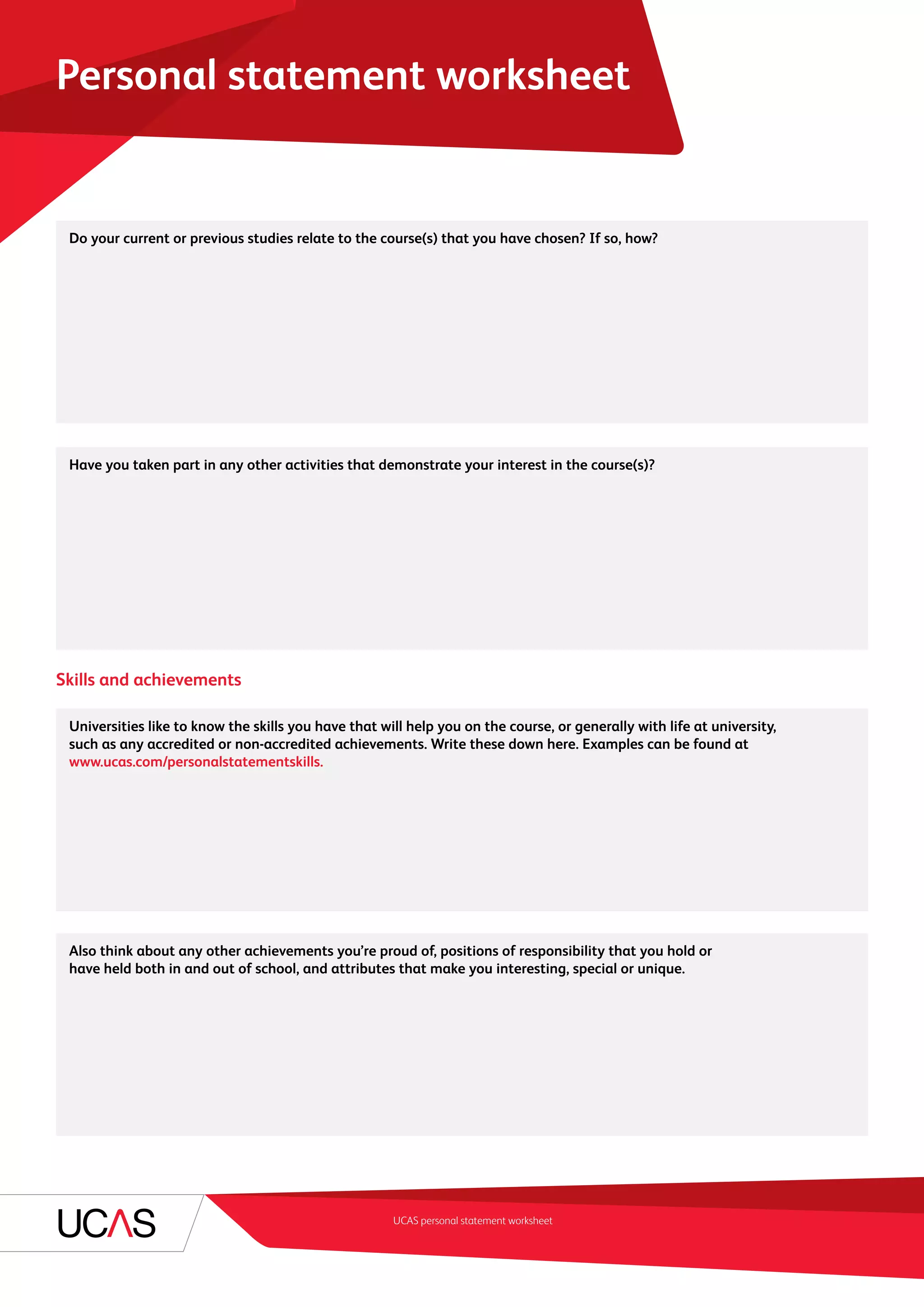
	 Do your current or previous studies relate to the course(s) that you have chosen? If so, how?
	 Have you taken part in any other activities that demonstrate your interest in the course(s)?
	 Also think about any other achievements you’re proud of, positions of responsibility that you hold or
have held both in and out of school, and attributes that make you interesting, special or unique.
Skills and achievements
	 Universities like to know the skills you have that will help you on the course, or generally with life at university,
such as any accredited or non-accredited achievements. Write these down here. Examples can be found at
	 www.ucas.com/personalstatementskills.
UCAS personal statement worksheet
Personal statement worksheet
Hobbies and interests
	 Make a list of your hobbies, interests and social activities. Then think about how they demonstrate your
personality, skills and abilities. Try to link them to the skills and experience required for your course(s).
Work experience
	 Include details of jobs, placements, work experience or voluntary work, particularly if it’s relevant to your chosen
course(s). Try to link any experience to skills or qualities related to the course.
Mature students
	 Explain what you’ve been doing since leaving education, and provide additional evidence to support your application. If
you’re not in full-time education, you should give details of any relevant work experience, paid or unpaid, and information
about your current or previous employment.
UCAS personal statement worksheet
Personal statement worksheet
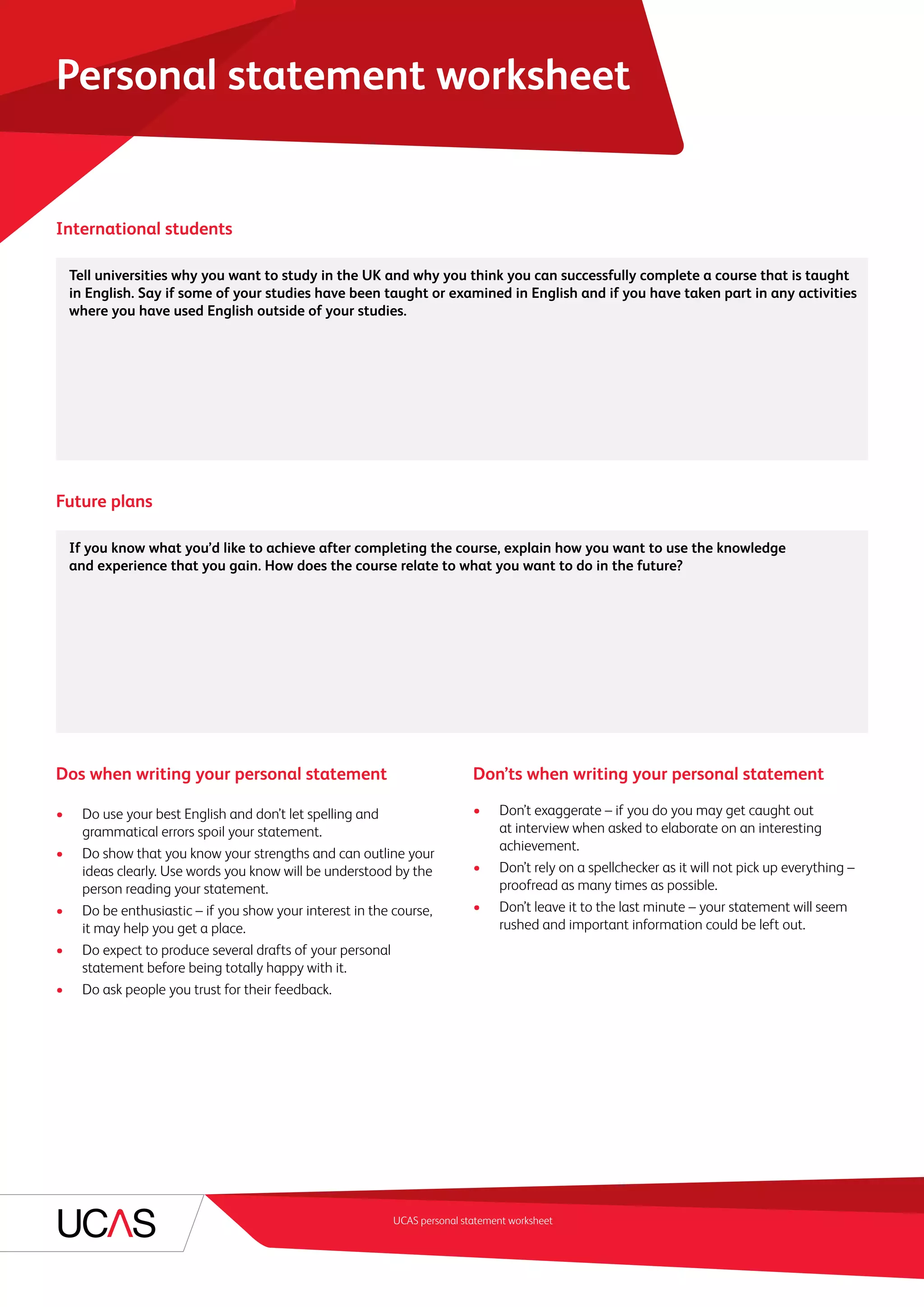
International students
	 Tell universities why you want to study in the UK and why you think you can successfully complete a course that is taught
in English. Say if some of your studies have been taught or examined in English and if you have taken part in any activities
where you have used English outside of your studies.
Future plans
	 If you know what you’d like to achieve after completing the course, explain how you want to use the knowledge
and experience that you gain. How does the course relate to what you want to do in the future?
Dos when writing your personal statement
•	 Do use your best English and don’t let spelling and
grammatical errors spoil your statement.
•	 Do show that you know your strengths and can outline your
ideas clearly. Use words you know will be understood by the
person reading your statement.
•	 Do be enthusiastic – if you show your interest in the course,
it may help you get a place.
•	 Do expect to produce several drafts of your personal
statement before being totally happy with it.
•	 Do ask people you trust for their feedback.
Don’ts when writing your personal statement
•	 Don’t exaggerate – if you do you may get caught out
at interview when asked to elaborate on an interesting
achievement.
•	 Don’t rely on a spellchecker as it will not pick up everything –
proofread as many times as possible.
•	 Don’t leave it to the last minute – your statement will seem
rushed and important information could be left out.

Ucas personal-statement-worksheet

  • 1.
    UCAS personal statementworksheet Personal statement worksheet This worksheet is designed to help you think about information you could include in your personal statement. We’ve included space for you to write down any thoughts you have as you go along. More detailed advice and guidance about writing your personal statement, including our UCAStv video guide, is available at www.ucas.com/personalstatement. Writing about the course Why are you applying for your chosen course(s)? Why does this subject interest you? Include evidence that you understand what’s required to study the course, e.g. if applying for psychology courses, show that you know how scientific the subject is. Why do you think you’re suitable for the course(s)? Do you have any particular skills and experience that will help you to succeed on the course(s)?
  • 2.
    UCAS personal statementworksheet Personal statement worksheet Do your current or previous studies relate to the course(s) that you have chosen? If so, how? Have you taken part in any other activities that demonstrate your interest in the course(s)? Also think about any other achievements you’re proud of, positions of responsibility that you hold or have held both in and out of school, and attributes that make you interesting, special or unique. Skills and achievements Universities like to know the skills you have that will help you on the course, or generally with life at university, such as any accredited or non-accredited achievements. Write these down here. Examples can be found at www.ucas.com/personalstatementskills.
  • 3.
    UCAS personal statementworksheet Personal statement worksheet Hobbies and interests Make a list of your hobbies, interests and social activities. Then think about how they demonstrate your personality, skills and abilities. Try to link them to the skills and experience required for your course(s). Work experience Include details of jobs, placements, work experience or voluntary work, particularly if it’s relevant to your chosen course(s). Try to link any experience to skills or qualities related to the course. Mature students Explain what you’ve been doing since leaving education, and provide additional evidence to support your application. If you’re not in full-time education, you should give details of any relevant work experience, paid or unpaid, and information about your current or previous employment.
  • 4.
    UCAS personal statementworksheet Personal statement worksheet International students Tell universities why you want to study in the UK and why you think you can successfully complete a course that is taught in English. Say if some of your studies have been taught or examined in English and if you have taken part in any activities where you have used English outside of your studies. Future plans If you know what you’d like to achieve after completing the course, explain how you want to use the knowledge and experience that you gain. How does the course relate to what you want to do in the future? Dos when writing your personal statement • Do use your best English and don’t let spelling and grammatical errors spoil your statement. • Do show that you know your strengths and can outline your ideas clearly. Use words you know will be understood by the person reading your statement. • Do be enthusiastic – if you show your interest in the course, it may help you get a place. • Do expect to produce several drafts of your personal statement before being totally happy with it. • Do ask people you trust for their feedback. Don’ts when writing your personal statement • Don’t exaggerate – if you do you may get caught out at interview when asked to elaborate on an interesting achievement. • Don’t rely on a spellchecker as it will not pick up everything – proofread as many times as possible. • Don’t leave it to the last minute – your statement will seem rushed and important information could be left out.