• Is a point in a star’s
evolution during which
it maintains a stable
nuclear reaction.
• Stage during which a
star will spend most of
its life.
• Example:
• Sun
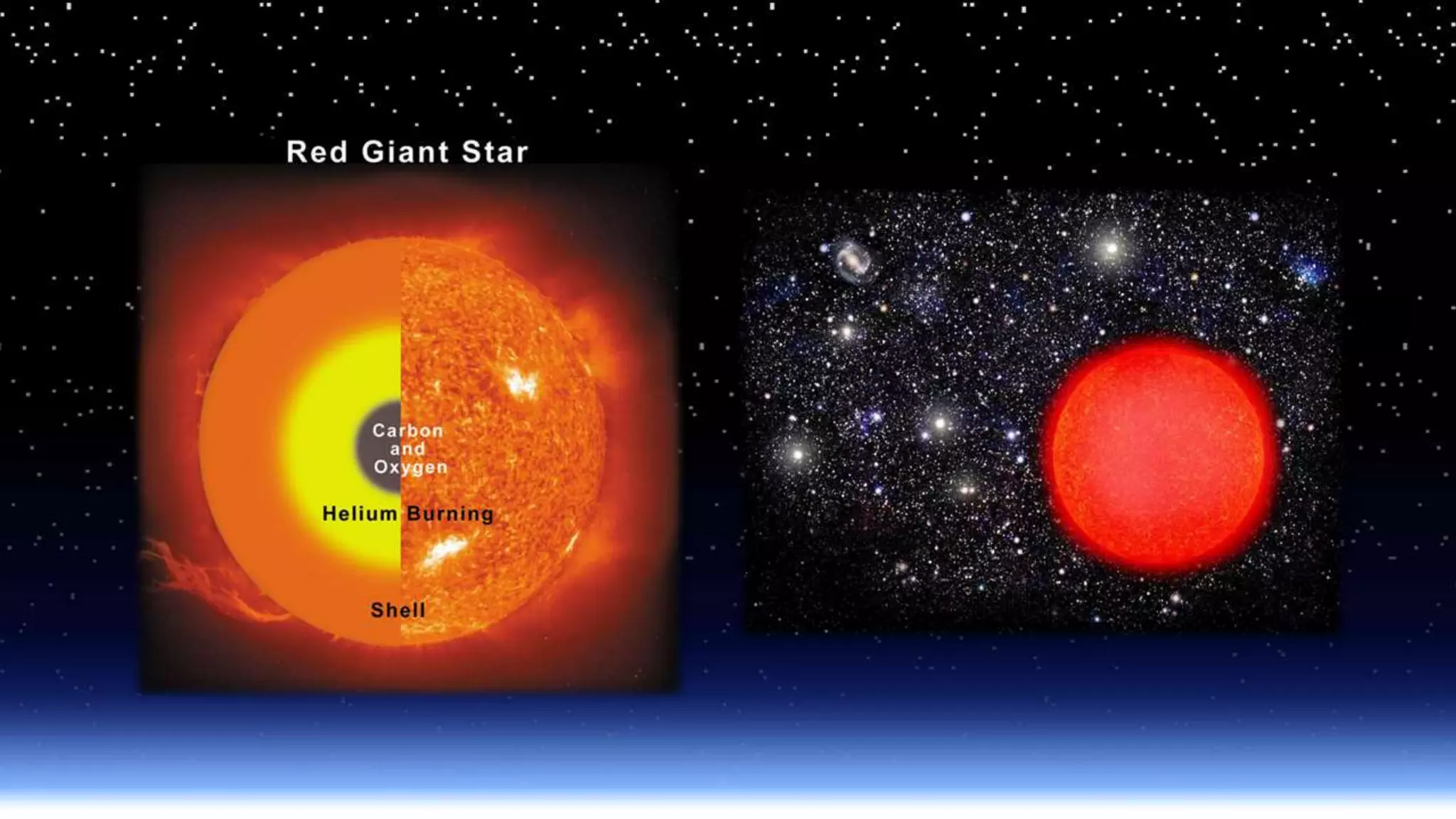
• Is a large star that is reddish or
orange in color
• Represents the late phase of
development in a star’s life
• When supplied Hydrogen has
been exhausted and Helium is
being fused.
• Causes the star to collapse,
raising temperature in the core.
• The outer surface of the star
expands and cools, giving it a
reddish color.
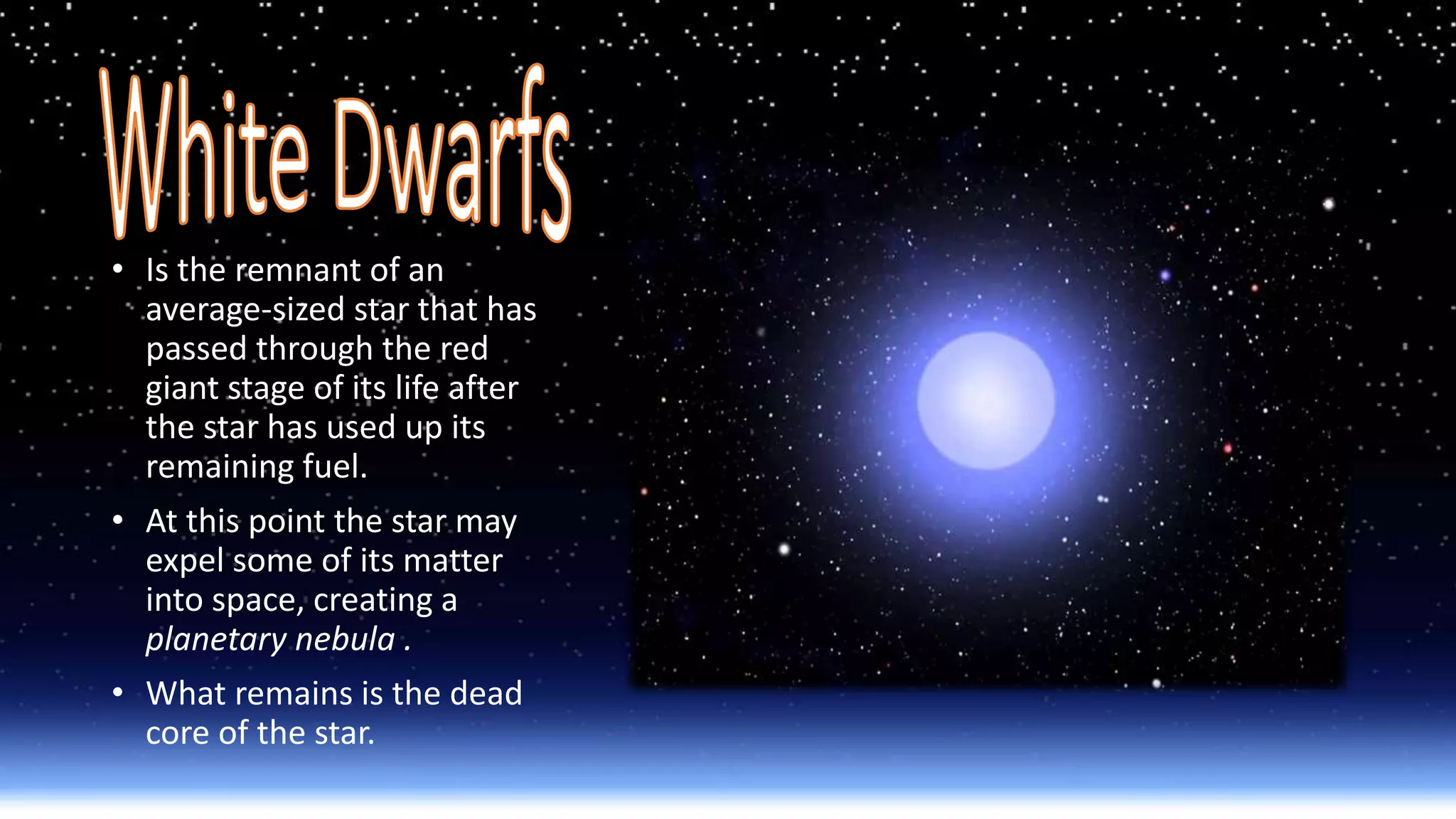
• Is the remnant of an
average-sized star that has
passed through the red
giant stage of its life after
the star has used up its
remaining fuel.
• At this point the star may
expel some of its matter
into space, creating a
planetary nebula .
• What remains is the dead
core of the star.
• Could also be called a failed
star
• Some protostars never
reach the critical mass
required to ignite the fires
of nuclear fusion
• If the protostar’s mass is
only about 1/10 that of the
sun, it will glow only briefly
until it energy dies out.
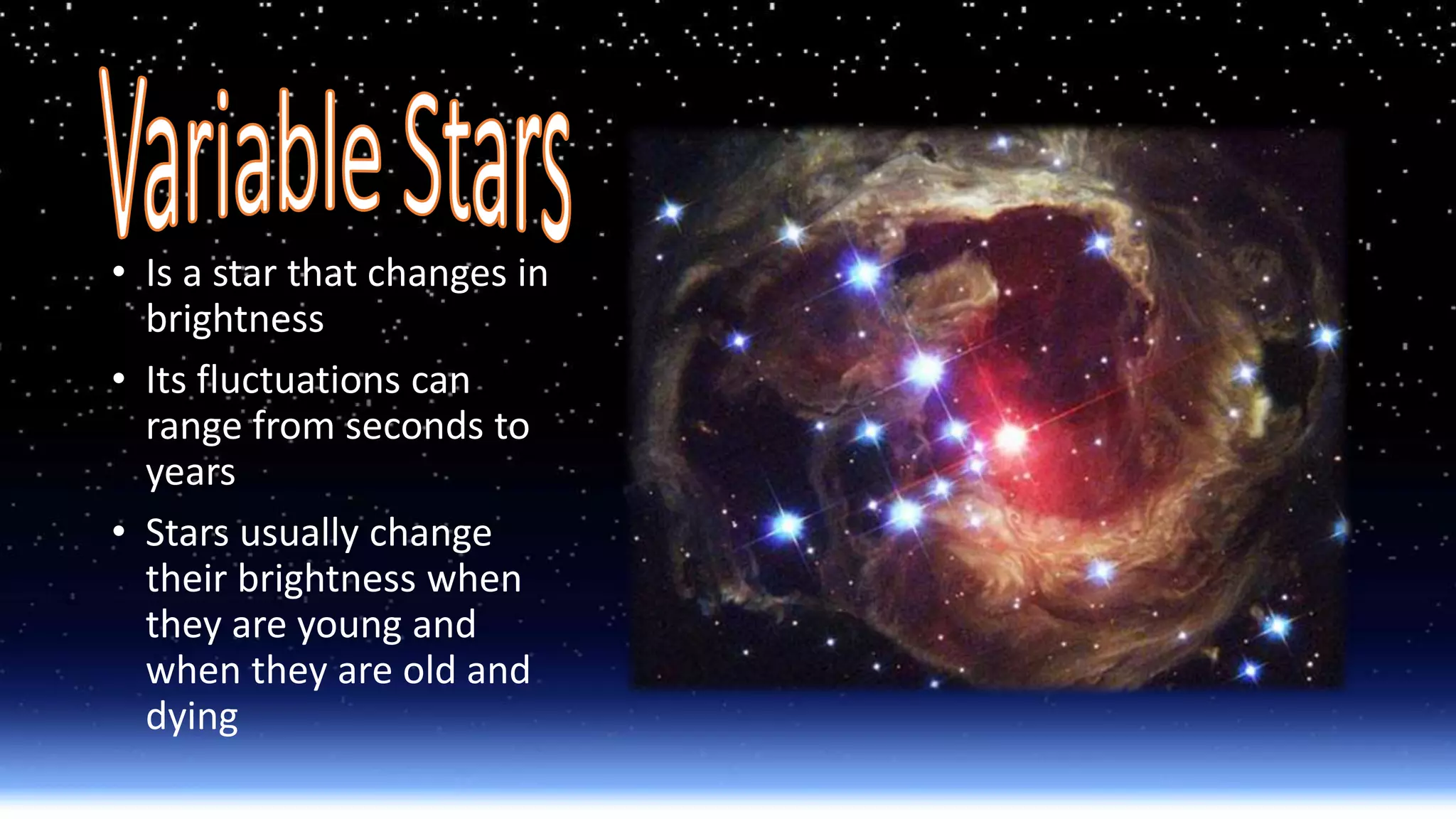
• Is a star that changes in
brightness
• Its fluctuations can
range from seconds to
years
• Stars usually change
their brightness when
they are young and
when they are old and
dying
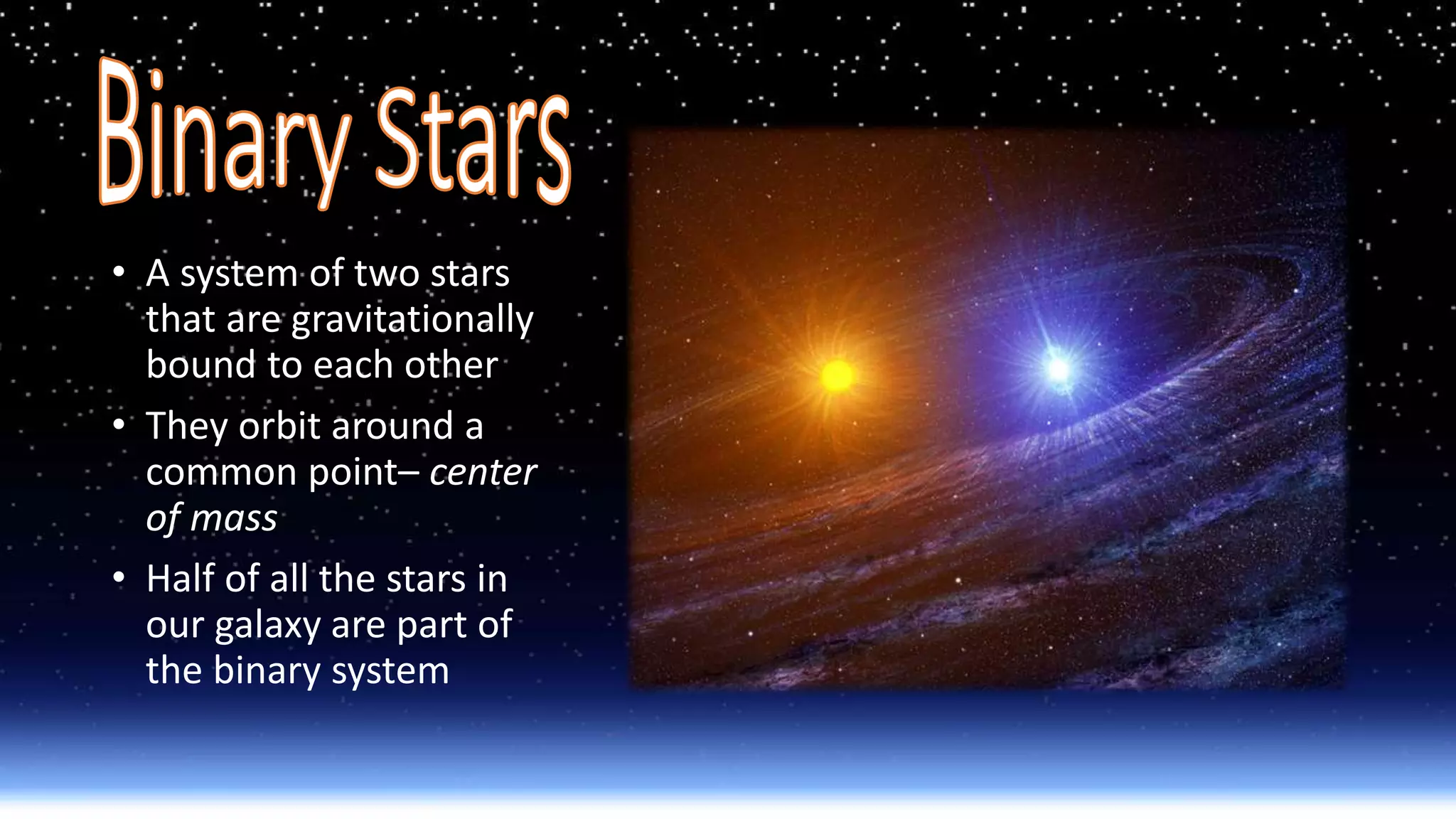
• A system of two stars
that are gravitationally
bound to each other
• They orbit around a
common point– center
of mass
• Half of all the stars in
our galaxy are part of
the binary system
Types of stars

Types of stars

  • 2.
    • Is apoint in a star’s evolution during which it maintains a stable nuclear reaction. • Stage during which a star will spend most of its life. • Example: • Sun
  • 3.
    • Is alarge star that is reddish or orange in color • Represents the late phase of development in a star’s life • When supplied Hydrogen has been exhausted and Helium is being fused. • Causes the star to collapse, raising temperature in the core. • The outer surface of the star expands and cools, giving it a reddish color.
  • 5.
    • Is theremnant of an average-sized star that has passed through the red giant stage of its life after the star has used up its remaining fuel. • At this point the star may expel some of its matter into space, creating a planetary nebula . • What remains is the dead core of the star.
  • 7.
    • Could alsobe called a failed star • Some protostars never reach the critical mass required to ignite the fires of nuclear fusion • If the protostar’s mass is only about 1/10 that of the sun, it will glow only briefly until it energy dies out.
  • 8.
    • Is astar that changes in brightness • Its fluctuations can range from seconds to years • Stars usually change their brightness when they are young and when they are old and dying
  • 9.
    • A systemof two stars that are gravitationally bound to each other • They orbit around a common point– center of mass • Half of all the stars in our galaxy are part of the binary system