Type of Data
A collection of tools and techniques that are used to
convert data into meaningful information.
 Descriptive Biostatics
 Inferential Biostatics
Statistics:
BIOSTATISTICS
-Branch of statistics
-Deals with the application of statistic methods
to the information related to Health sciences.
Biostatistics:
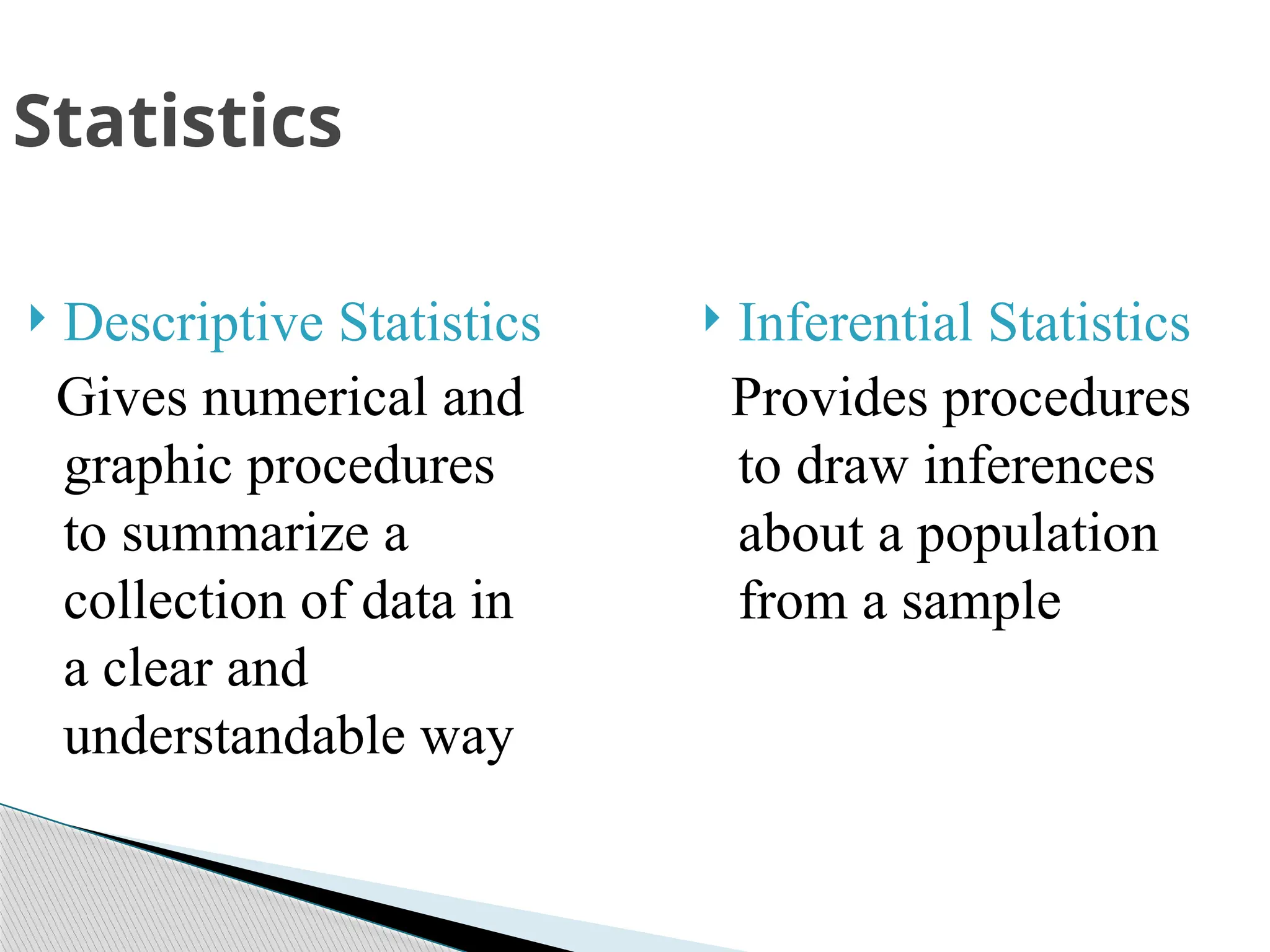
 Descriptive Statistics
Gives numerical and
graphic procedures
to summarize a
collection of data in
a clear and
understandable way
 Inferential Statistics
Provides procedures
to draw inferences
about a population
from a sample
Statistics
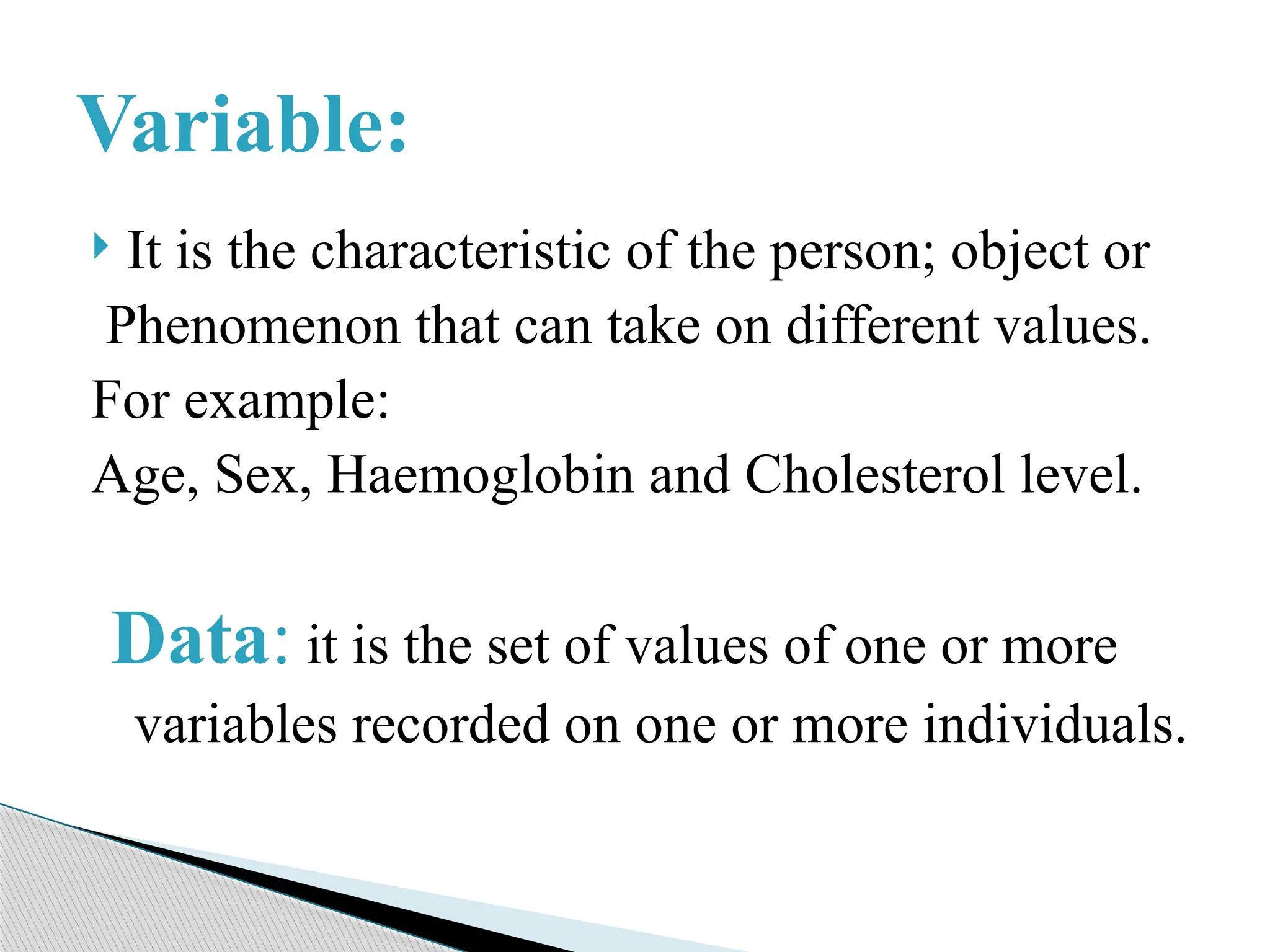
 It is the characteristic of the person; object or
Phenomenon that can take on different values.
For example:
Age, Sex, Haemoglobin and Cholesterol level.
Data: it is the set of values of one or more
variables recorded on one or more individuals.
Variable:
 According to the resources; stastical data
may be classified into two types namely:
 Primary Data
 Secondary Data
Collection of Statistical Data:
Types of Data
 Primary Data
 Secondary Data
 QualitativeData
 quantitativeData
 Primary Data:
Data which are collected for the first time
for a specific purpose and are original in
nature are known as primary data.
 Secondary Data:
secondary data are those which are used in
an investigation but which have been
originally collected by some one else.
 Primary data Your own questionnaire, survey,
information
 Data from a book newspaper magazine, or
internet
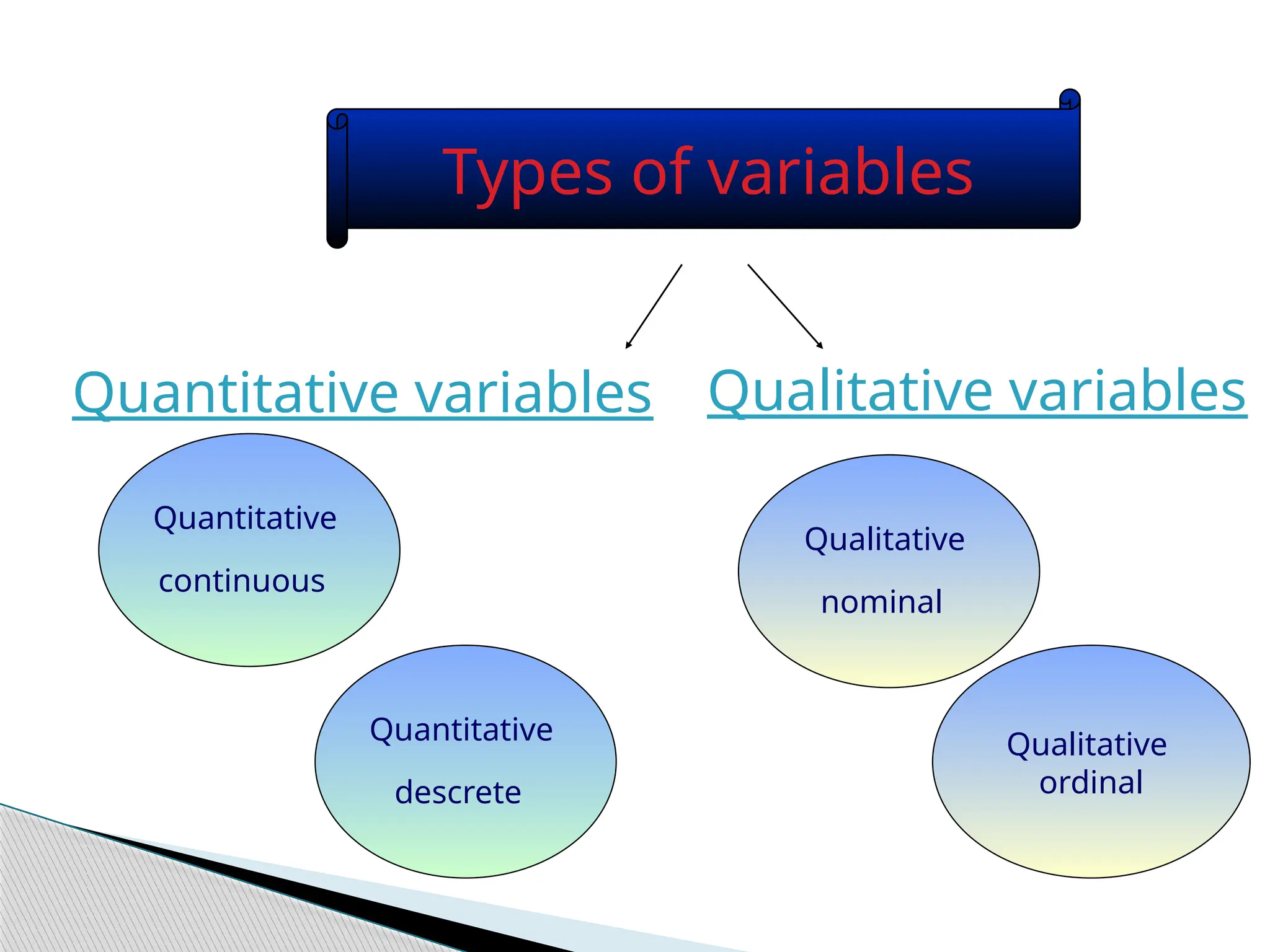
Quantitative
continuous
Types of variables
Quantitative variables Qualitative variables
Quantitative
descrete
Qualitative
nominal
Qualitative
ordinal
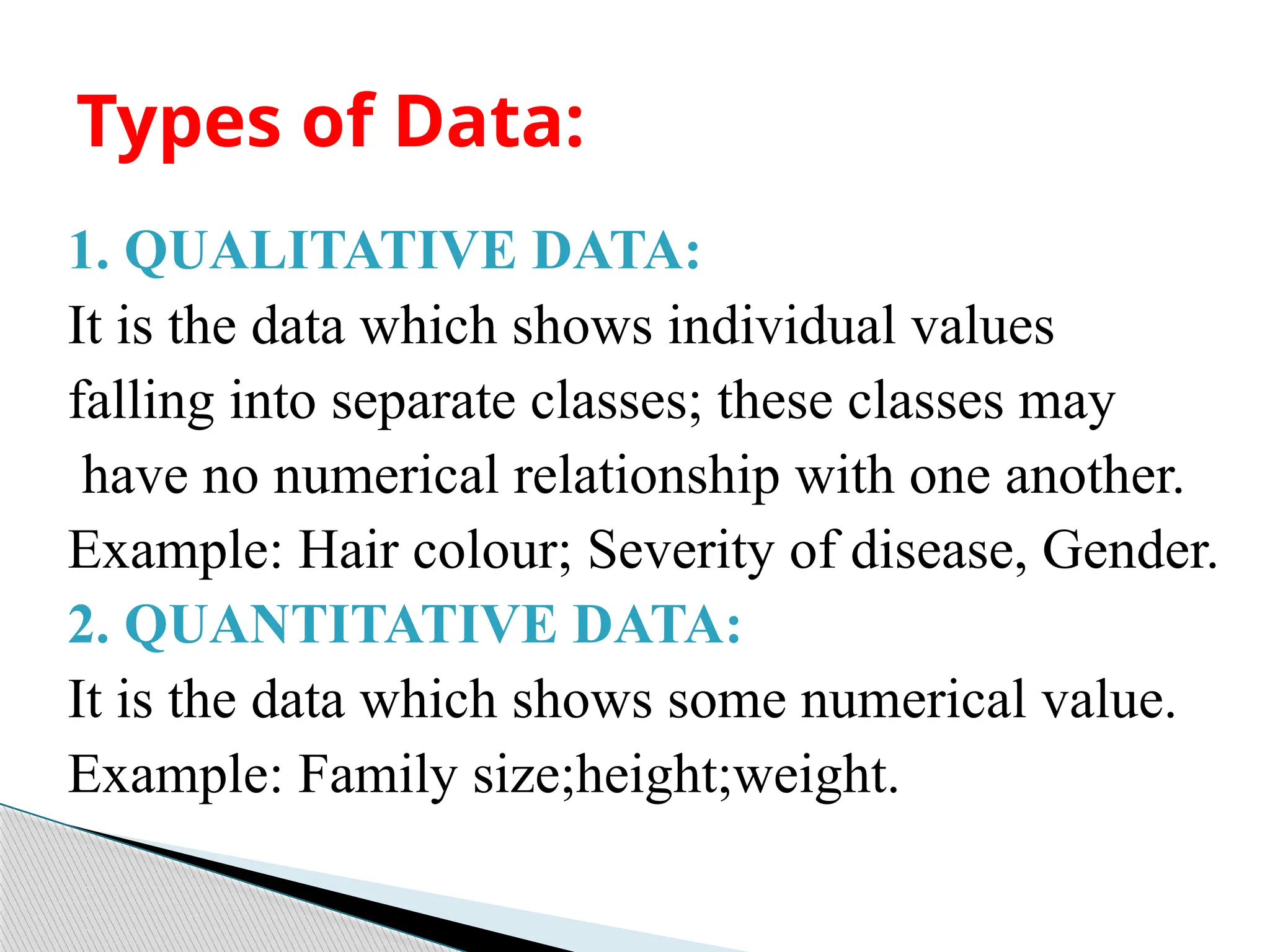
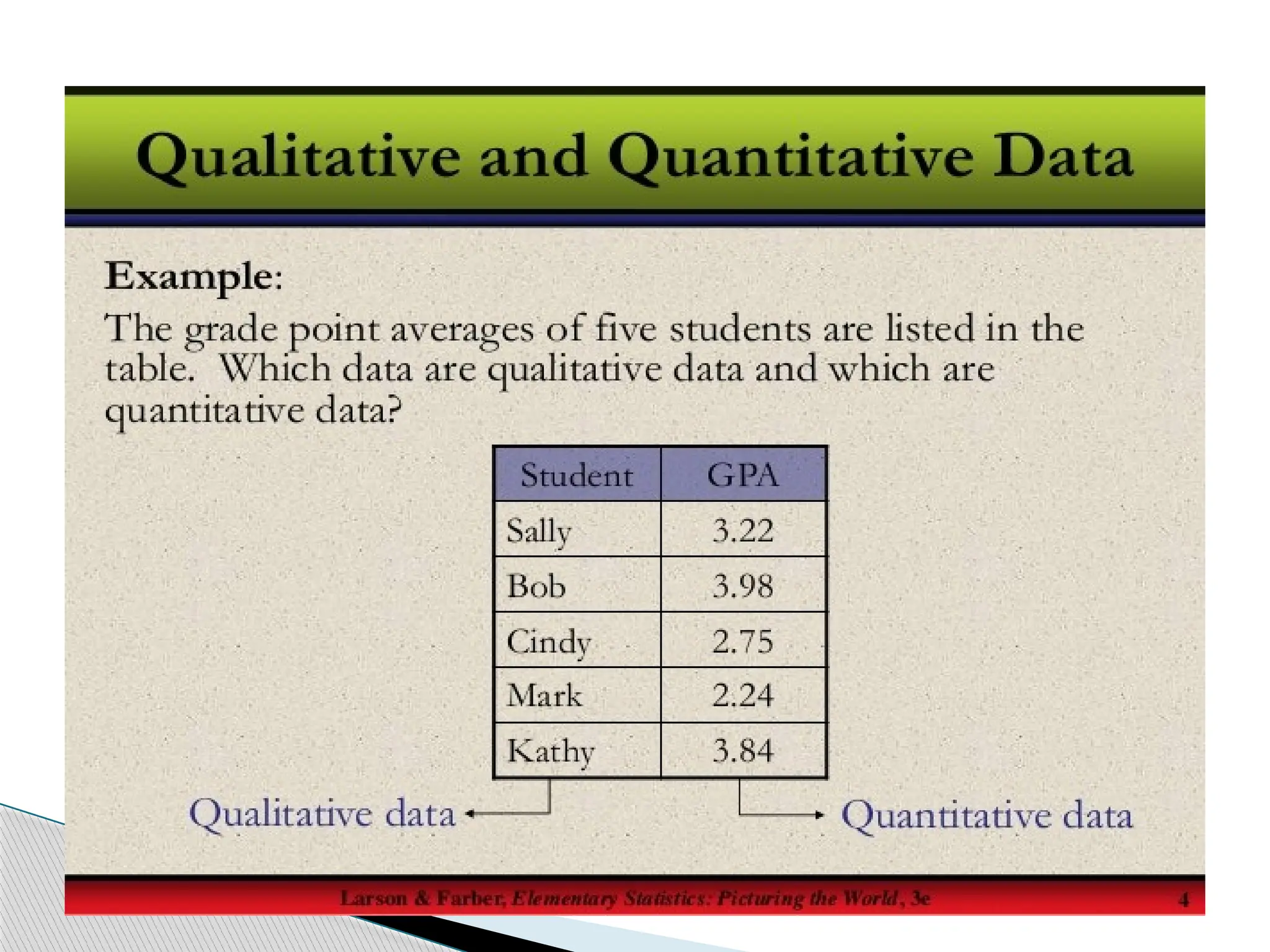
1. QUALITATIVE DATA:
It is the data which shows individual values
falling into separate classes; these classes may
have no numerical relationship with one another.
Example: Hair colour; Severity of disease, Gender.
2. QUANTITATIVE DATA:
It is the data which shows some numerical value.
Example: Family size;height;weight.
Types of Data:
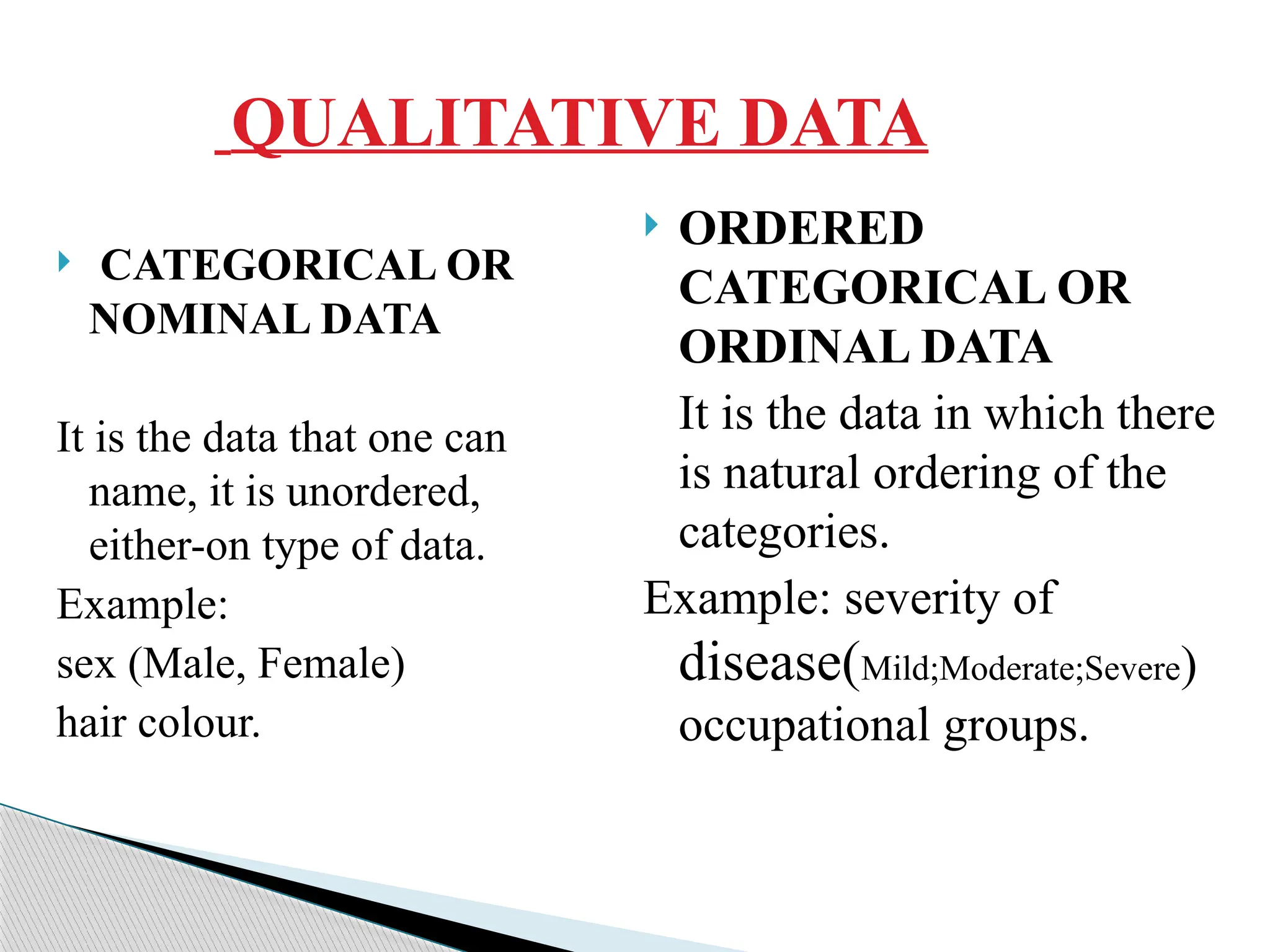
QUALITATIVE DATA
 CATEGORICAL OR
NOMINAL DATA
It is the data that one can
name, it is unordered,
either-on type of data.
Example:
sex (Male, Female)
hair colour.
 ORDERED
CATEGORICAL OR
ORDINAL DATA
It is the data in which there
is natural ordering of the
categories.
Example: severity of
disease(Mild;Moderate;Severe)
occupational groups.
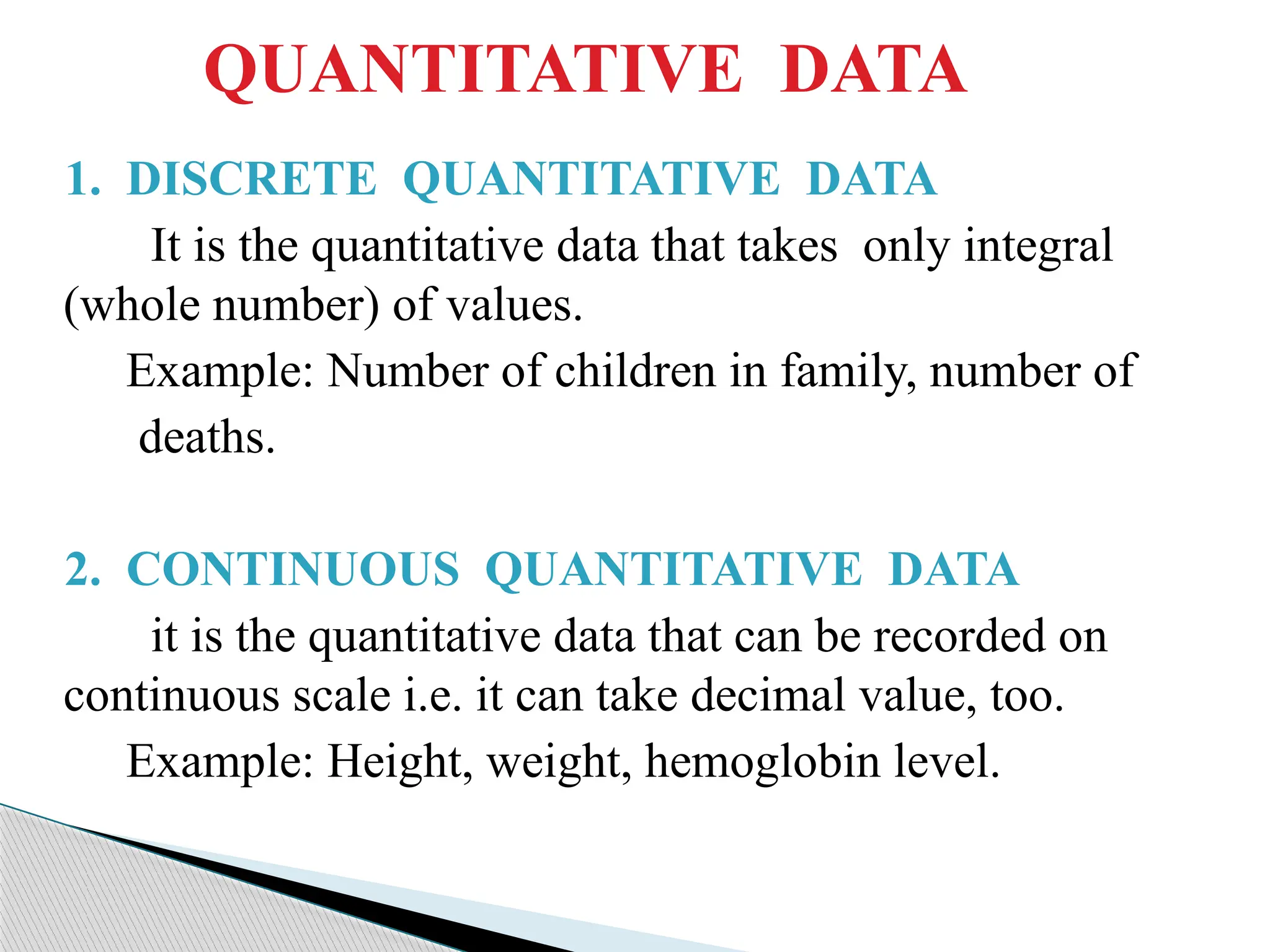
QUANTITATIVE DATA
1. DISCRETE QUANTITATIVE DATA
It is the quantitative data that takes only integral
(whole number) of values.
Example: Number of children in family, number of
deaths.
2. CONTINUOUS QUANTITATIVE DATA
it is the quantitative data that can be recorded on
continuous scale i.e. it can take decimal value, too.
Example: Height, weight, hemoglobin level.
 Frequency Distribution Tables:
o Simple Tables.
o Complex Tables.
o 2x2 Tables.
oCharts And Graphs.
Presentation of Data:
 Data after collection can be presented in the
following forms:
 Tables
 Charts
 Diagrams
 Graphs
 Pictures
 Special curves
Presentation of Data:
FREQUENCY DISTRIBUTION TABLES ARE USED TO
DISPLAY THE QUALITATIVE DATAAS WELLAS
QUANTITATIVE DATA.
FOR DISPLAYING QUANTITATIVE DATA,,WE NEED TO
DIVIDE THE DATA INTO :
 1. CLASS INTERVALS
 2. FREQUENCIES.
METHODS OF DISPLAYING FREQUENCY
DISTRIBUTION TABLES:
1. MARK & TALLY METHOD
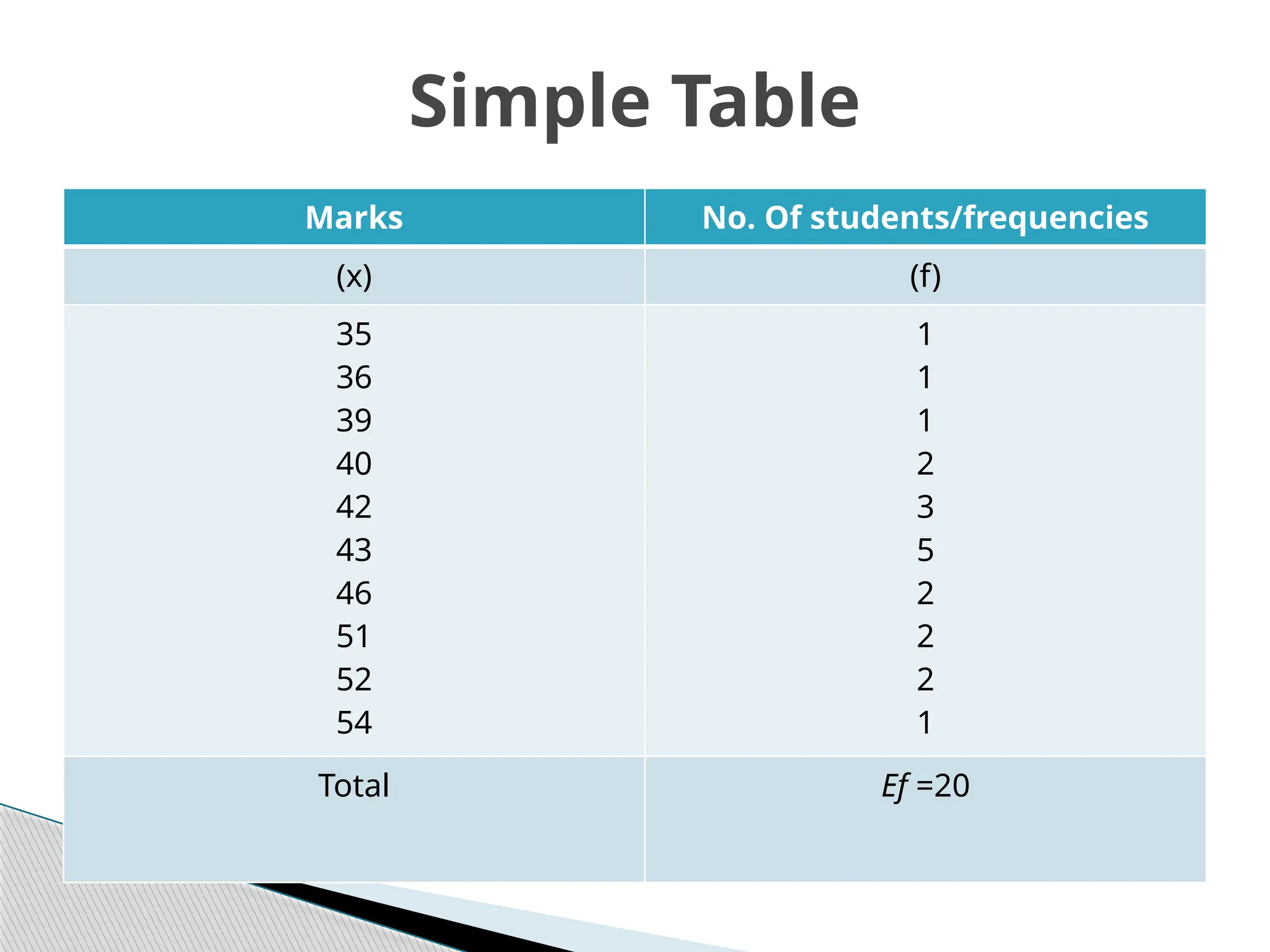
Marks No. Of students/frequencies
(x) (f)
35
36
39
40
42
43
46
51
52
54
1
1
1
2
3
5
2
2
2
1
Total Ef =20
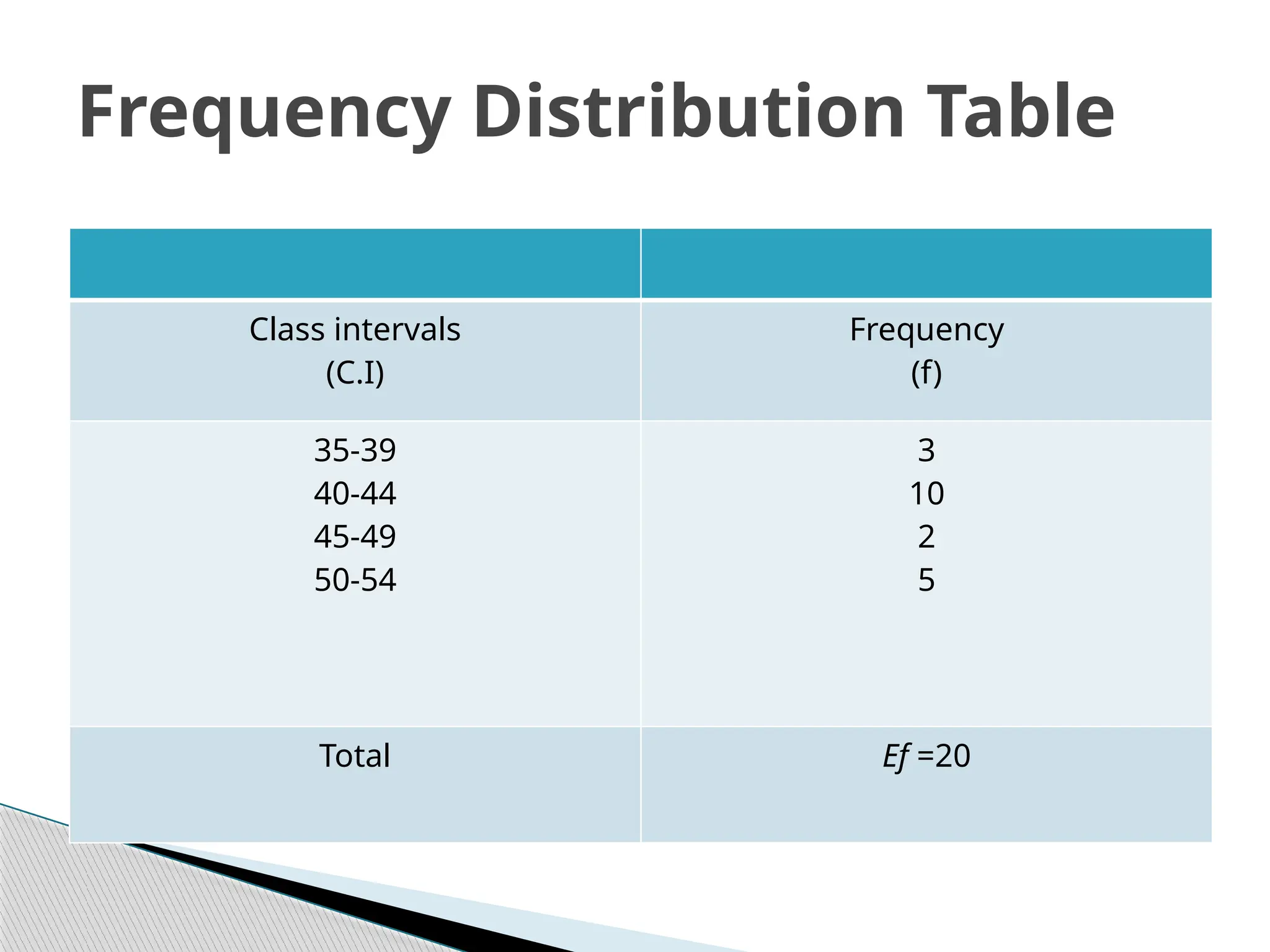
Simple Table
Class intervals
(C.I)
Frequency
(f)
35-39
40-44
45-49
50-54
3
10
2
5
Total Ef =20
Frequency Distribution Table
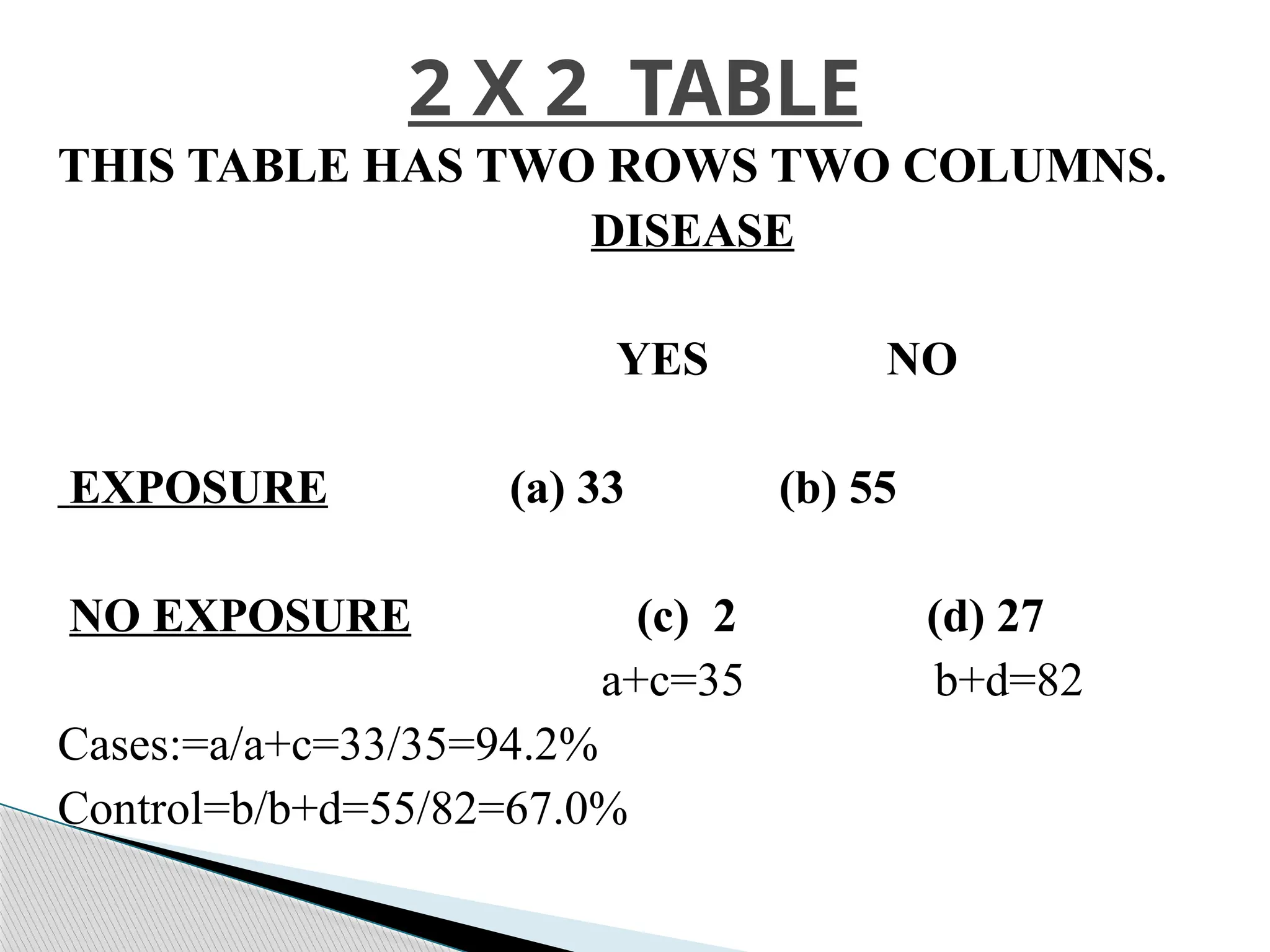
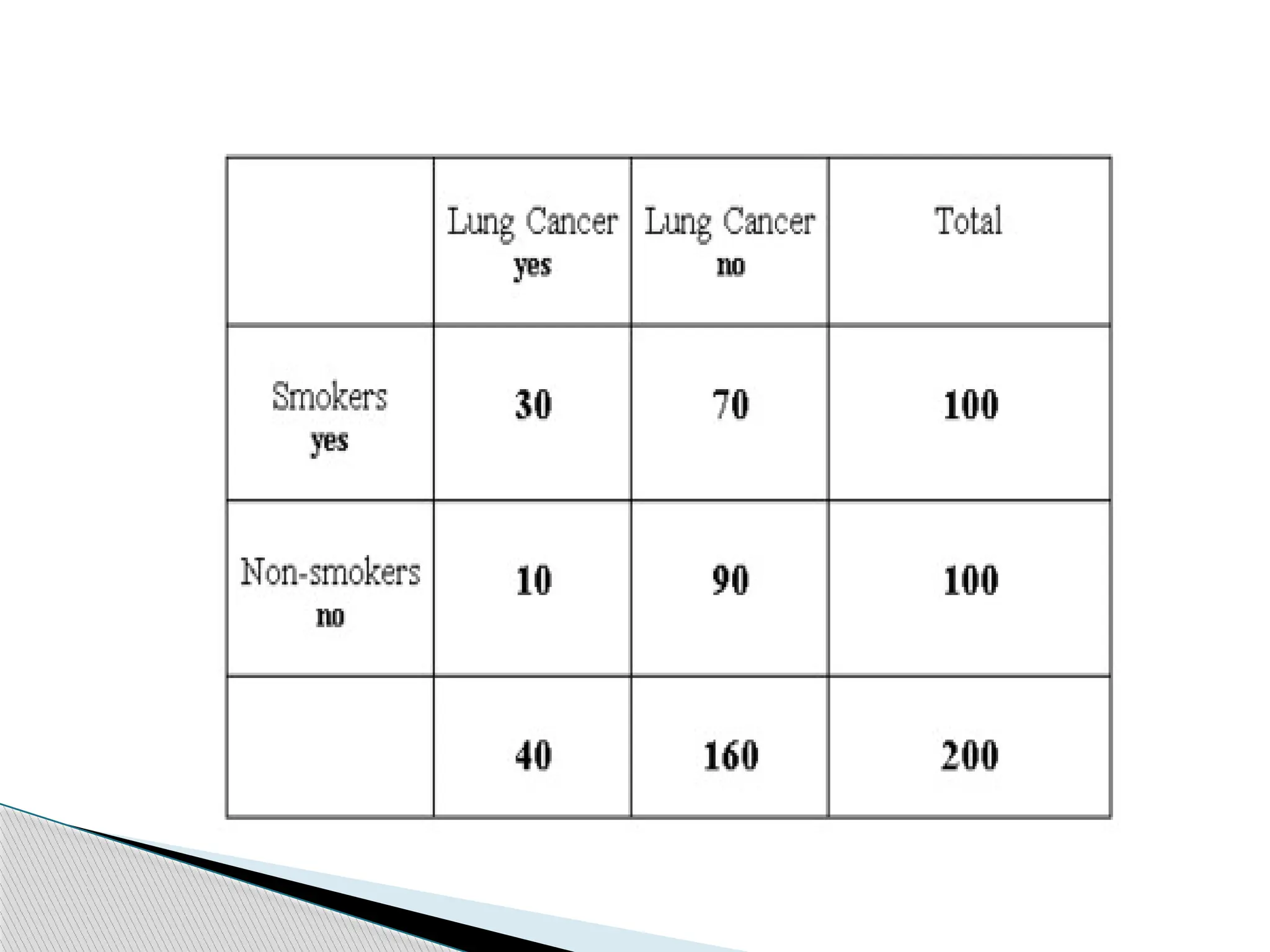
THIS TABLE HAS TWO ROWS TWO COLUMNS.
DISEASE
YES NO
EXPOSURE (a) 33 (b) 55
NO EXPOSURE (c) 2 (d) 27
a+c=35 b+d=82
Cases:=a/a+c=33/35=94.2%
Control=b/b+d=55/82=67.0%
2 X 2 TABLE
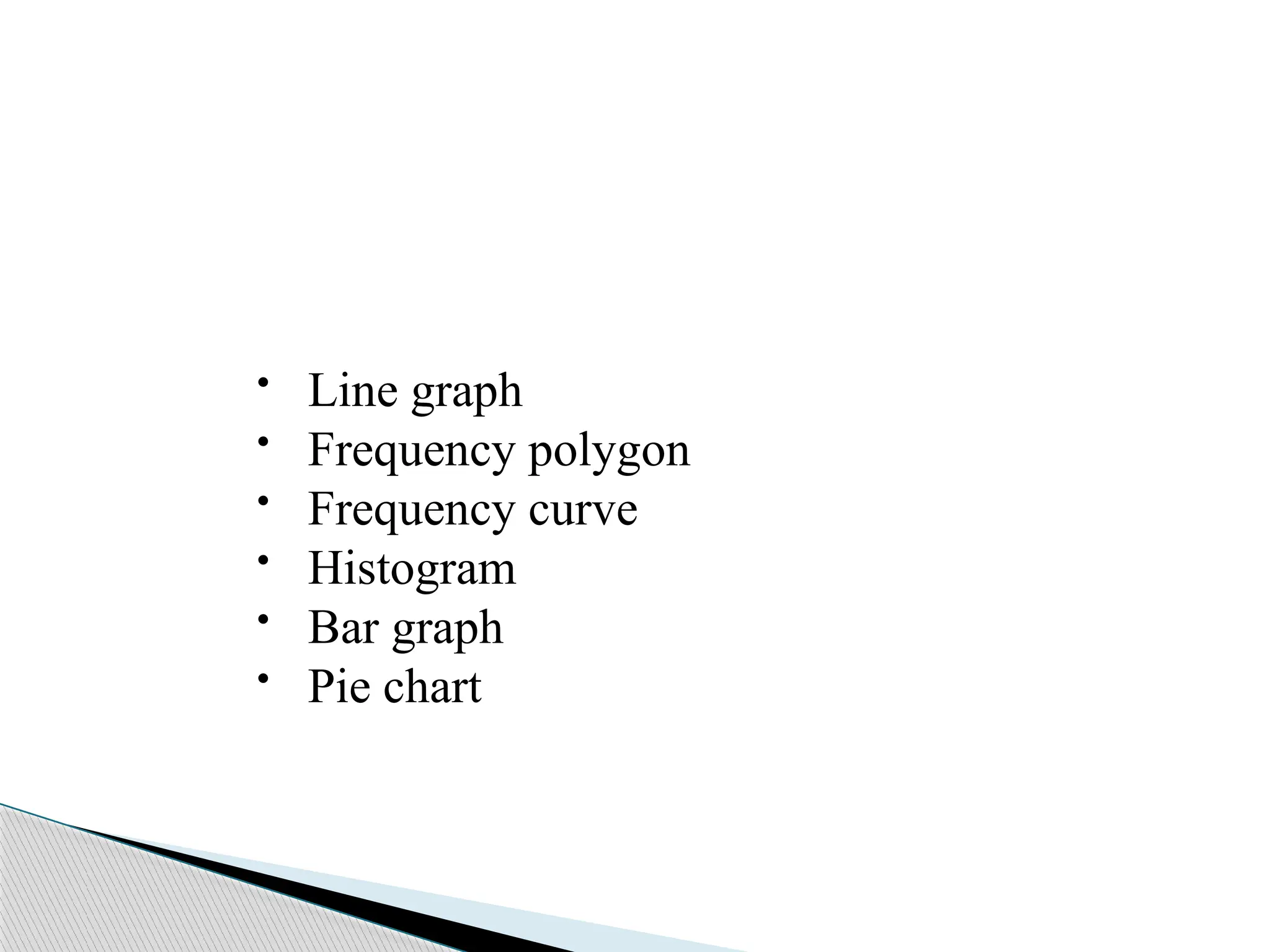
• Line graph
• Frequency polygon
• Frequency curve
• Histogram
• Bar graph
• Pie chart
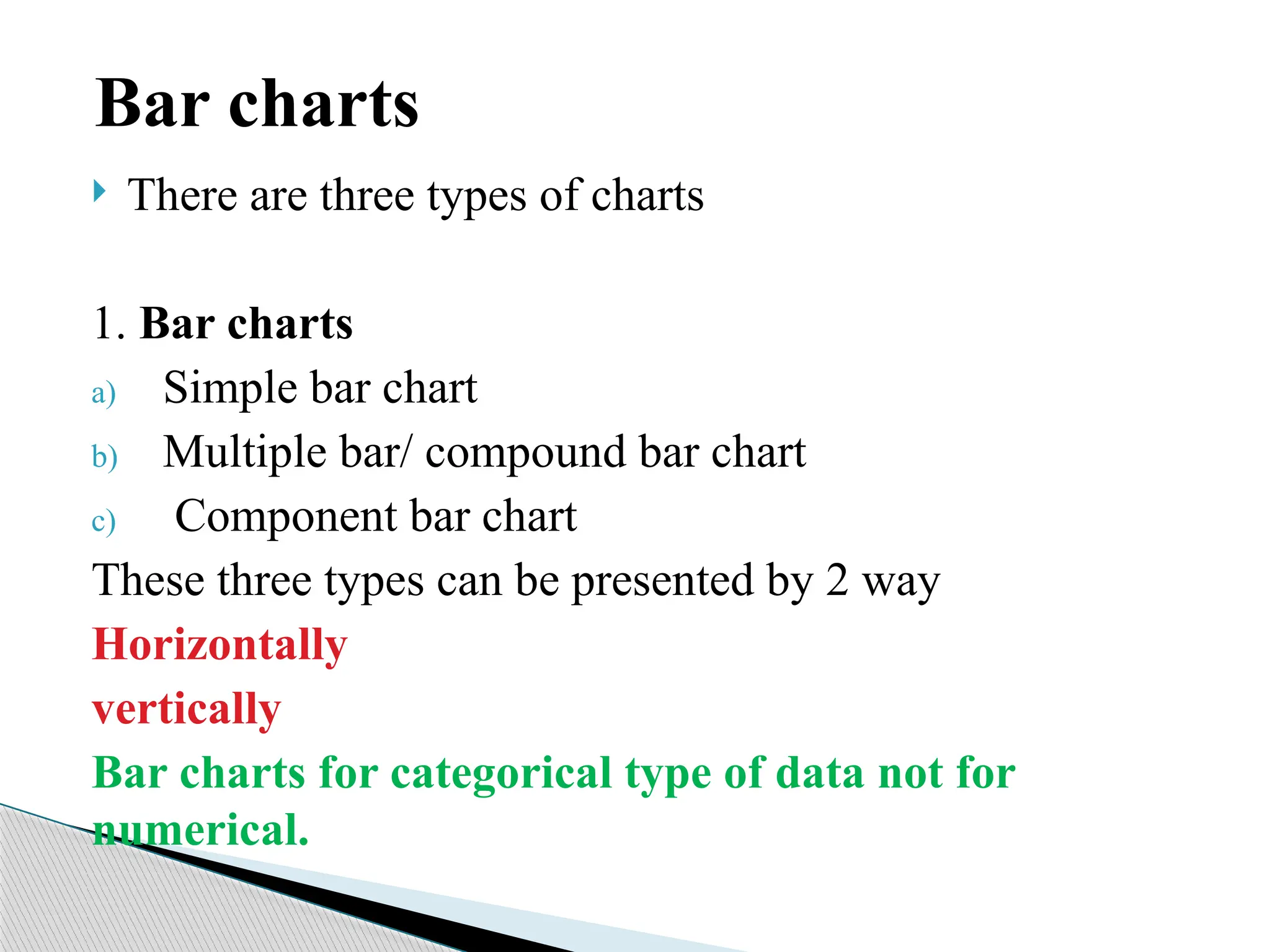
 There are three types of charts
1. Bar charts
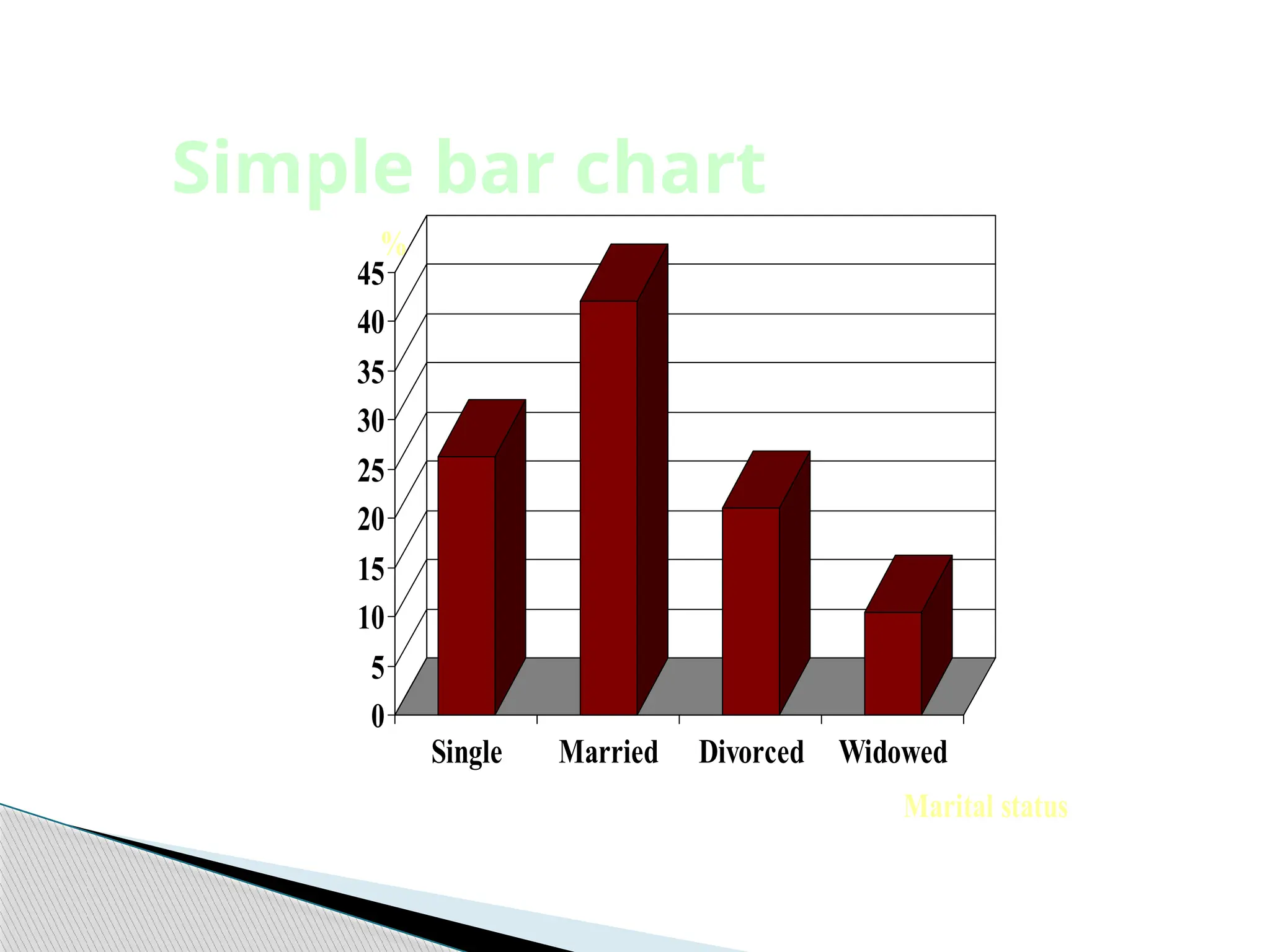
a) Simple bar chart
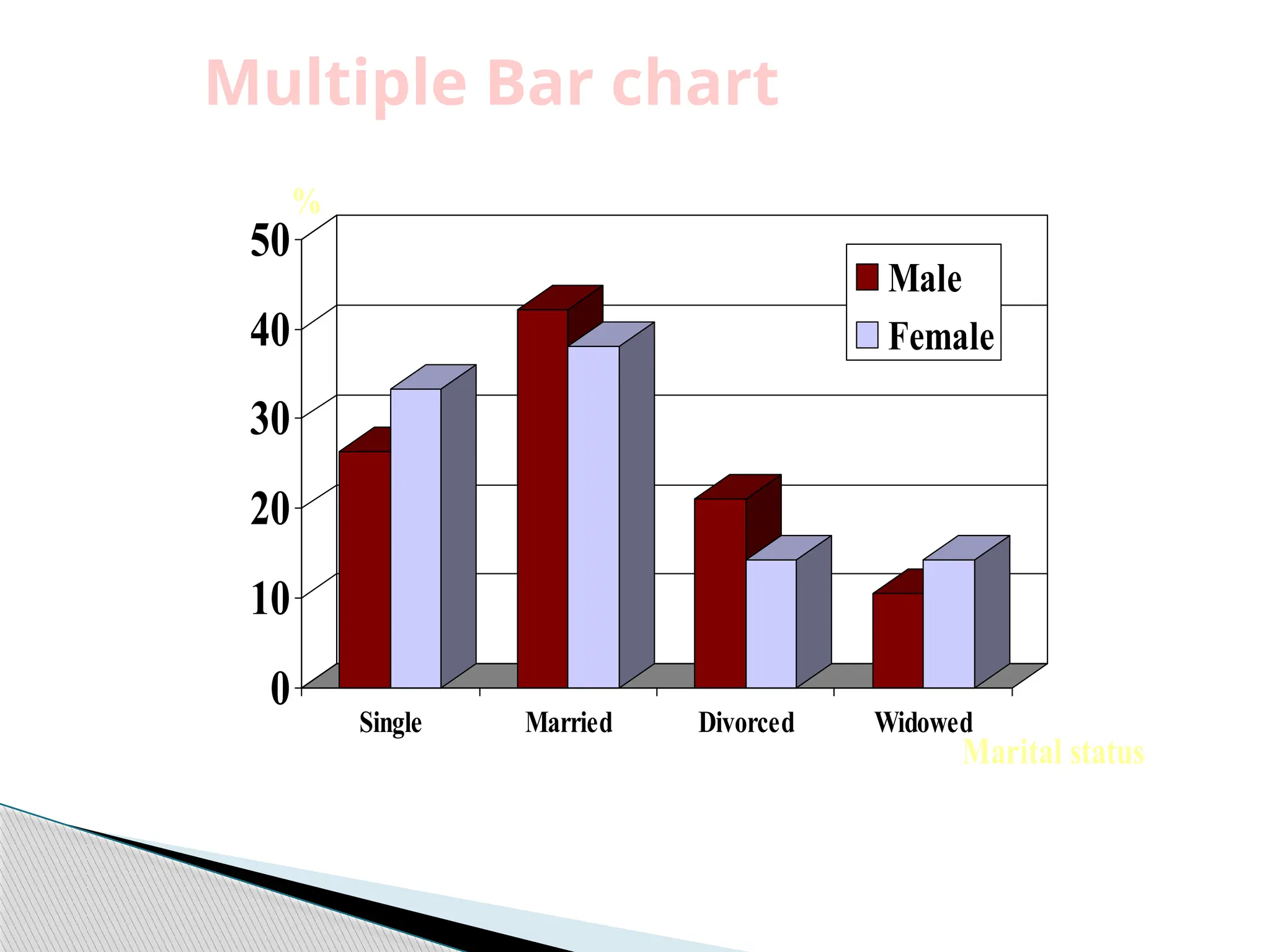
b) Multiple bar/ compound bar chart
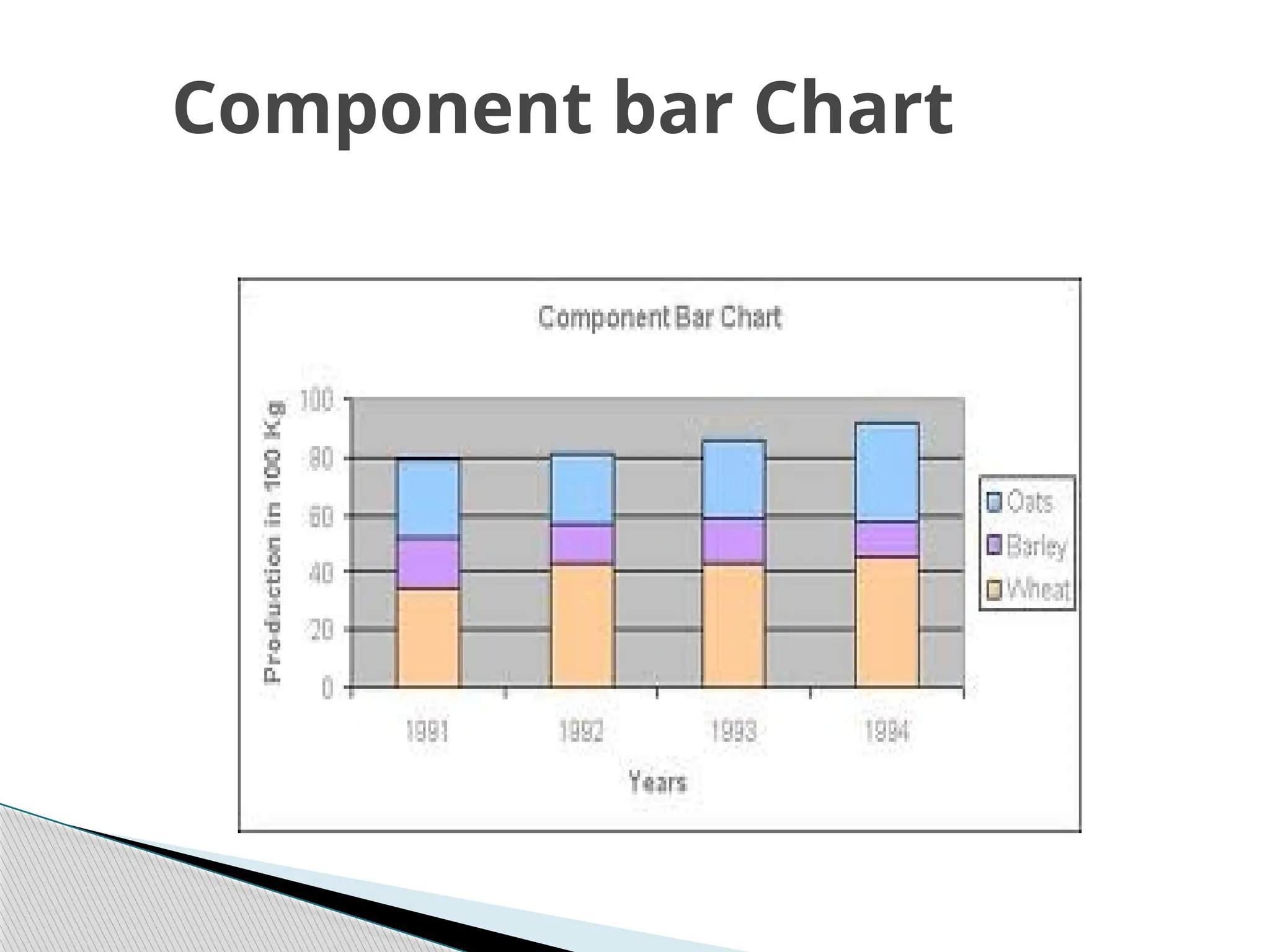
c) Component bar chart
These three types can be presented by 2 way
Horizontally
vertically
Bar charts for categorical type of data not for
numerical.
Bar charts
Simple bar chart
0
5
10
15
20
25
30
35
40
45
%
Single Married Divorced Widowed
Marital status
Multiple Bar chart
0
10
20
30
40
50
%
Single Married Divorced Widowed
Marital status
Male
Female
Component bar Chart
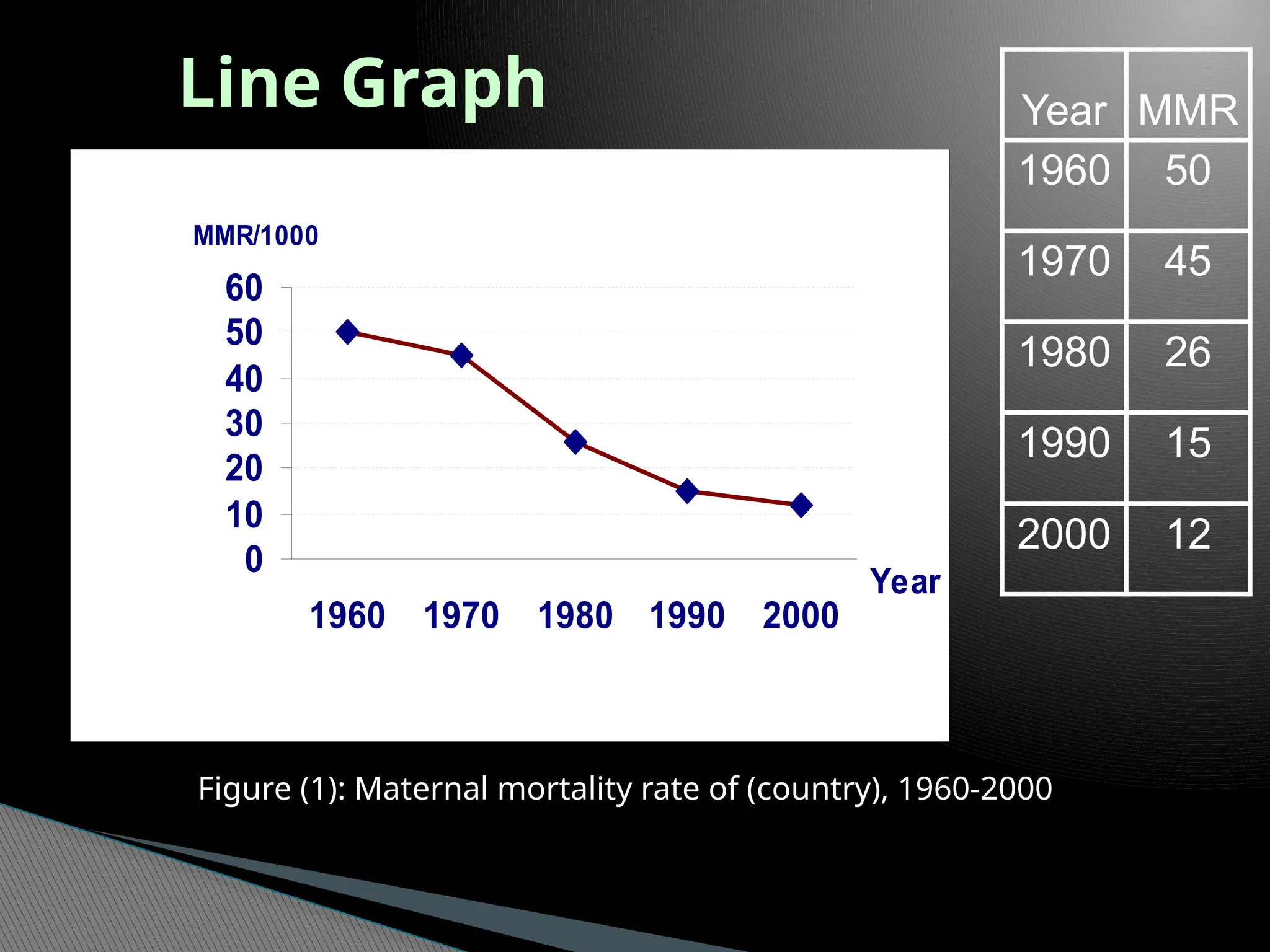
Line Graph
0
10
20
30
40
50
60
1960 1970 1980 1990 2000
Year
MMR/1000
Year MMR
1960 50
1970 45
1980 26
1990 15
2000 12
Figure (1): Maternal mortality rate of (country), 1960-2000
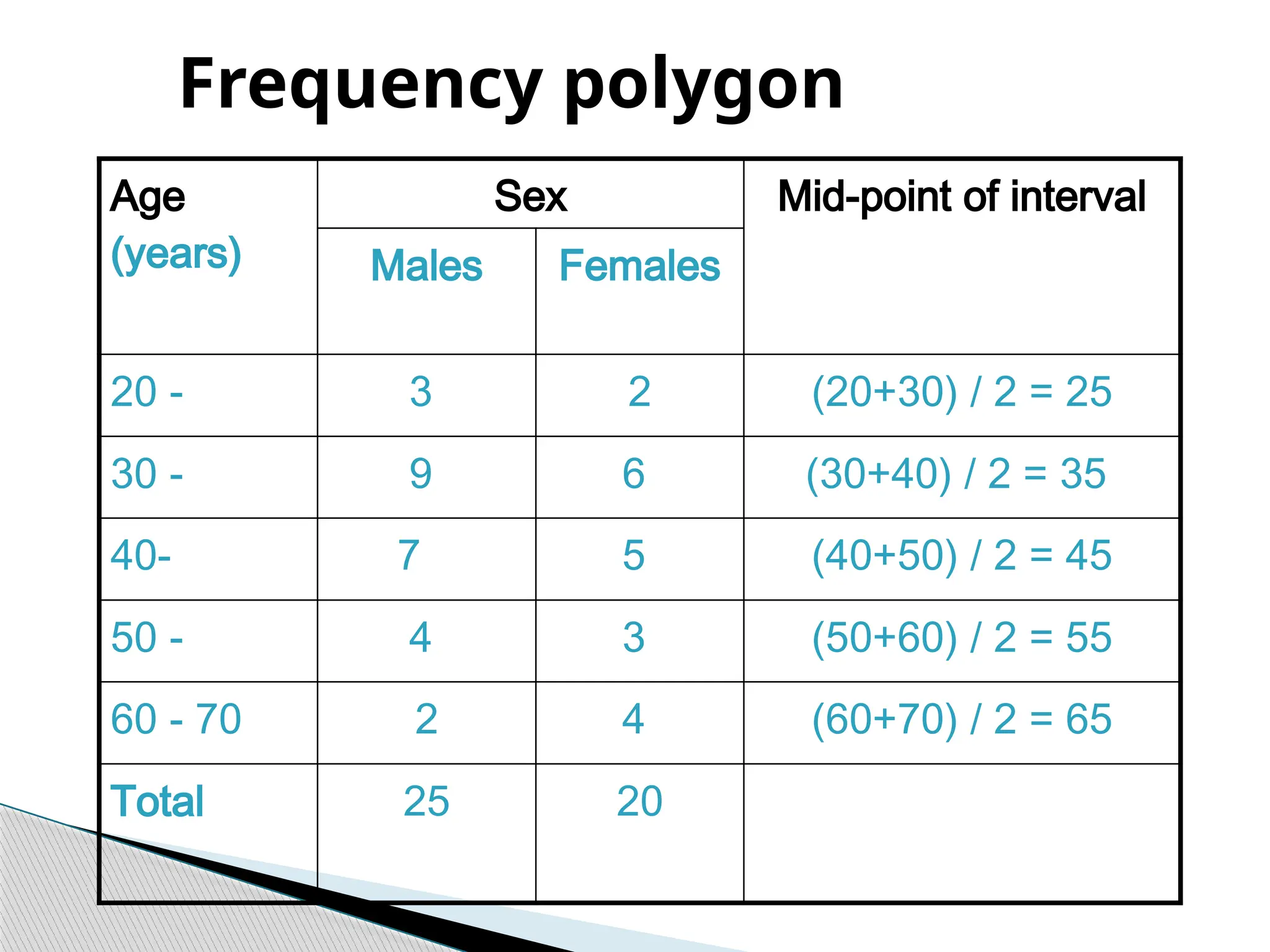
Frequency polygon
Age
(years)
Sex Mid-point of interval
Males Females
20 - 3 2 (20+30) / 2 = 25
30 - 9 6 (30+40) / 2 = 35
40- 7 5 (40+50) / 2 = 45
50 - 4 3 (50+60) / 2 = 55
60 - 70 2 4 (60+70) / 2 = 65
Total 25 20
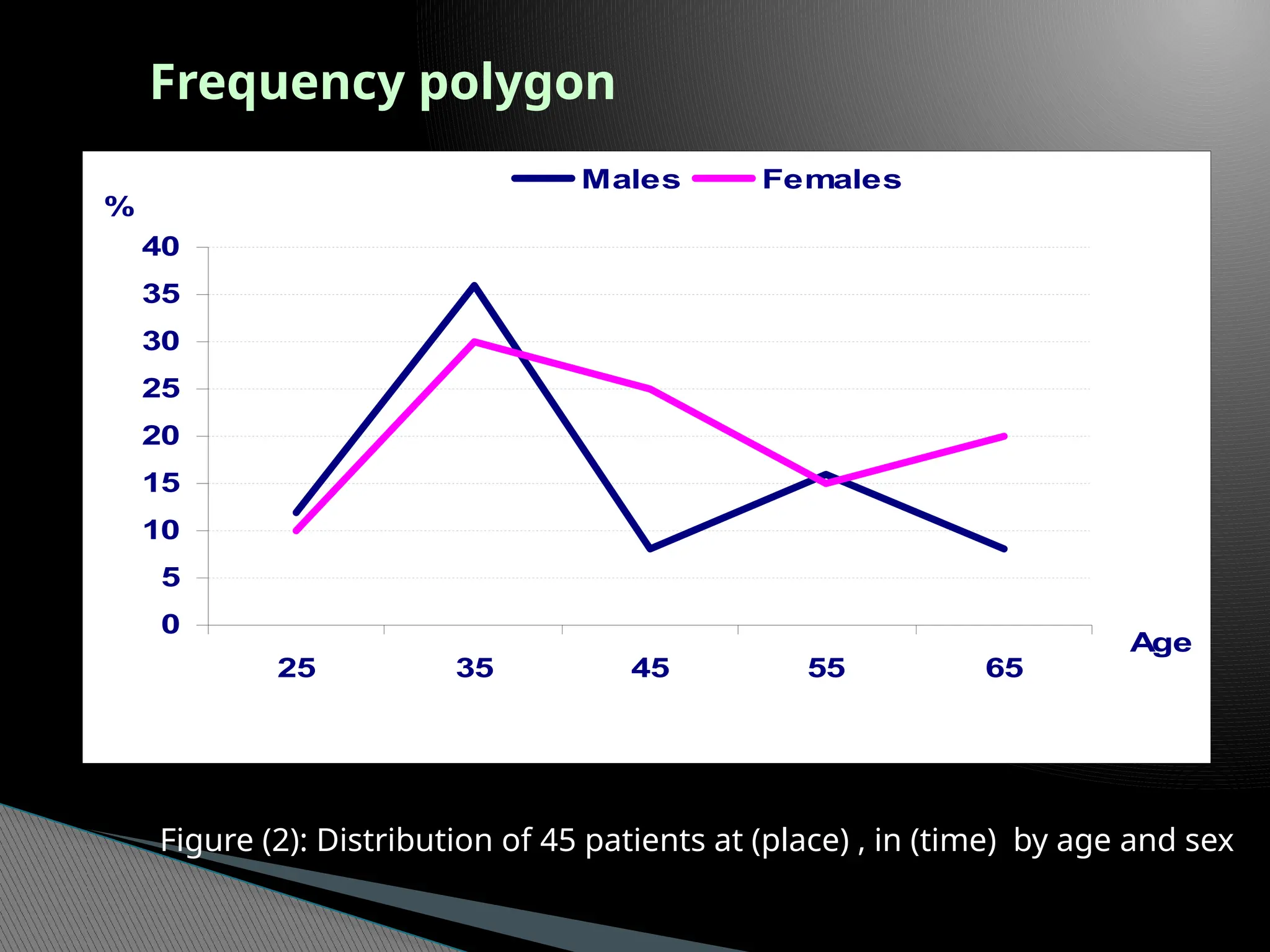
Frequency polygon
0
5
10
15
20
25
30
35
40
25 35 45 55 65
Age
%
Males Females
Figure (2): Distribution of 45 patients at (place) , in (time) by age and sex
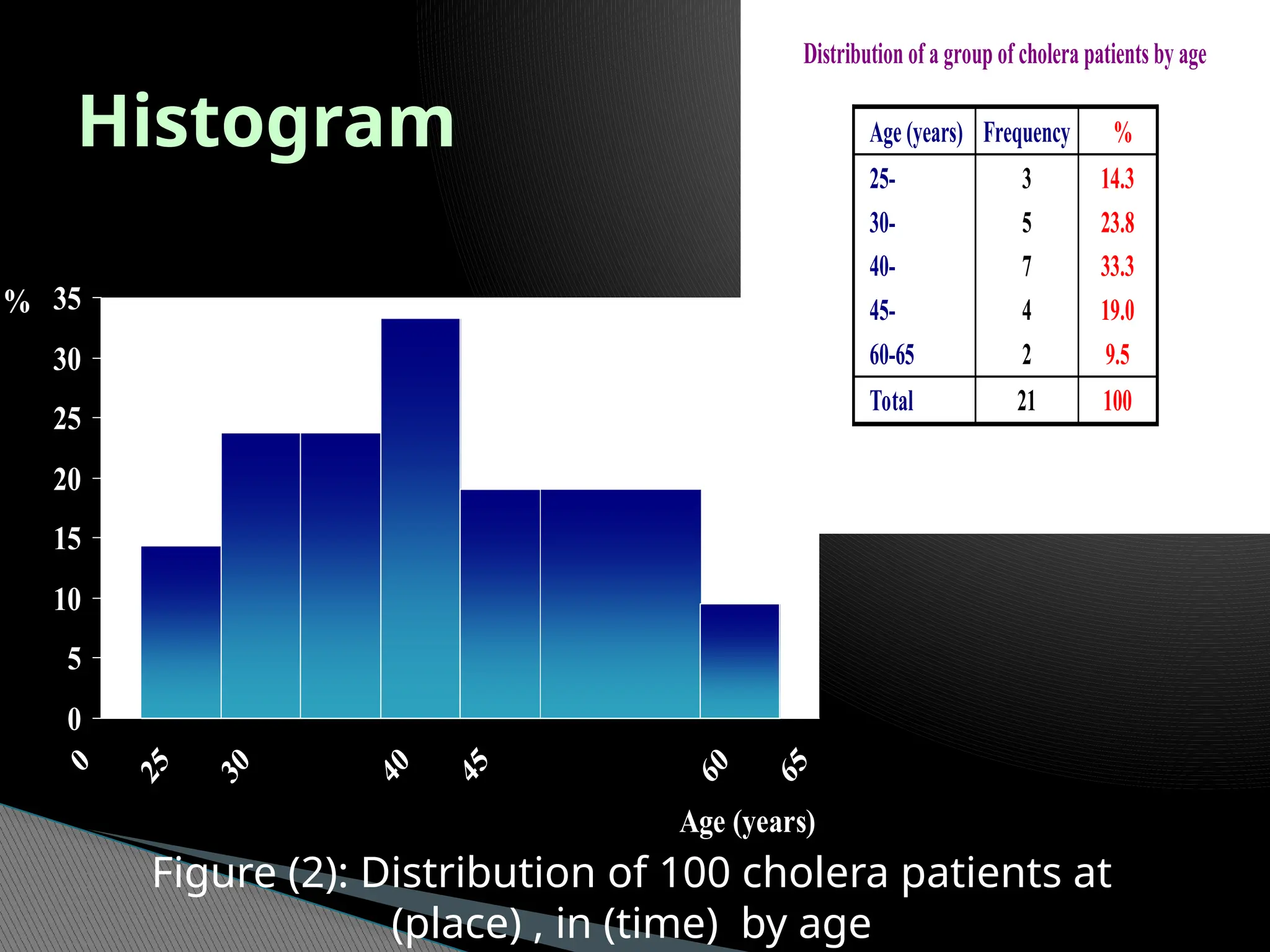
Histogram
Distribution of a group of cholera patients by age
Age (years) Frequency %
25-
30-
40-
45-
60-65
3
5
7
4
2
14.3
23.8
33.3
19.0
9.5
Total 21 100
0
5
10
15
20
25
30
35
Age (years)
%
Figure (2): Distribution of 100 cholera patients at
(place) , in (time) by age
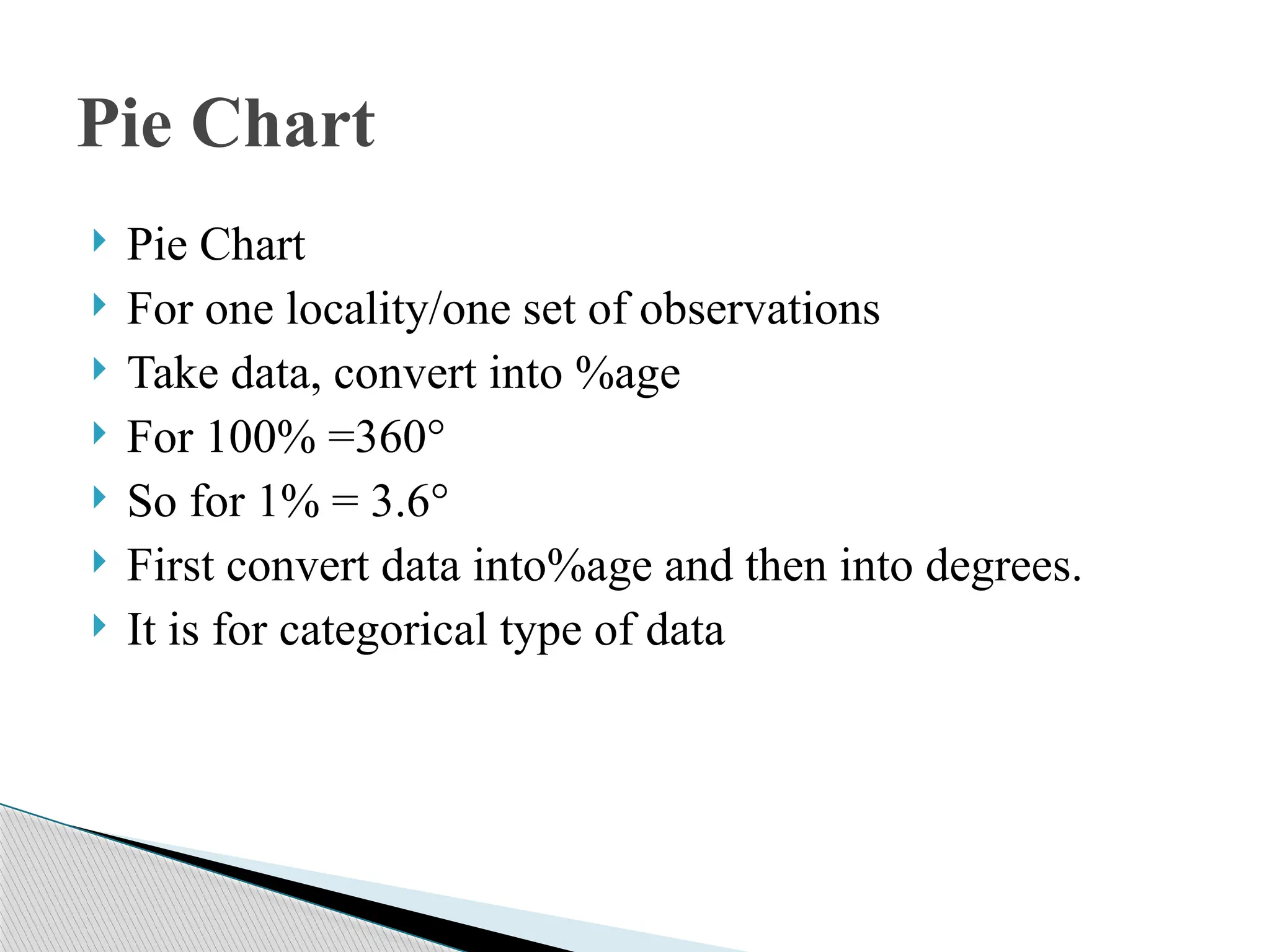
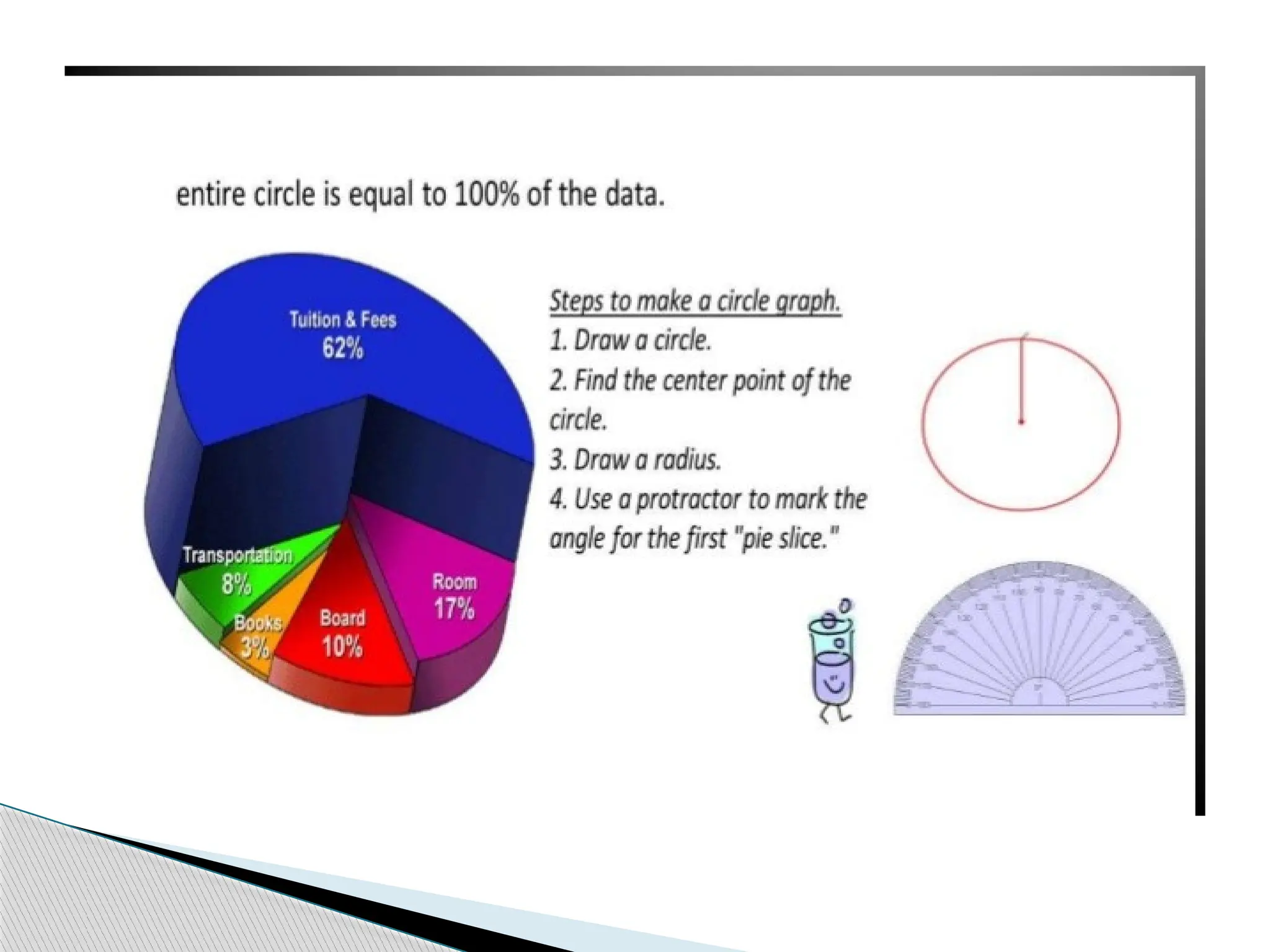
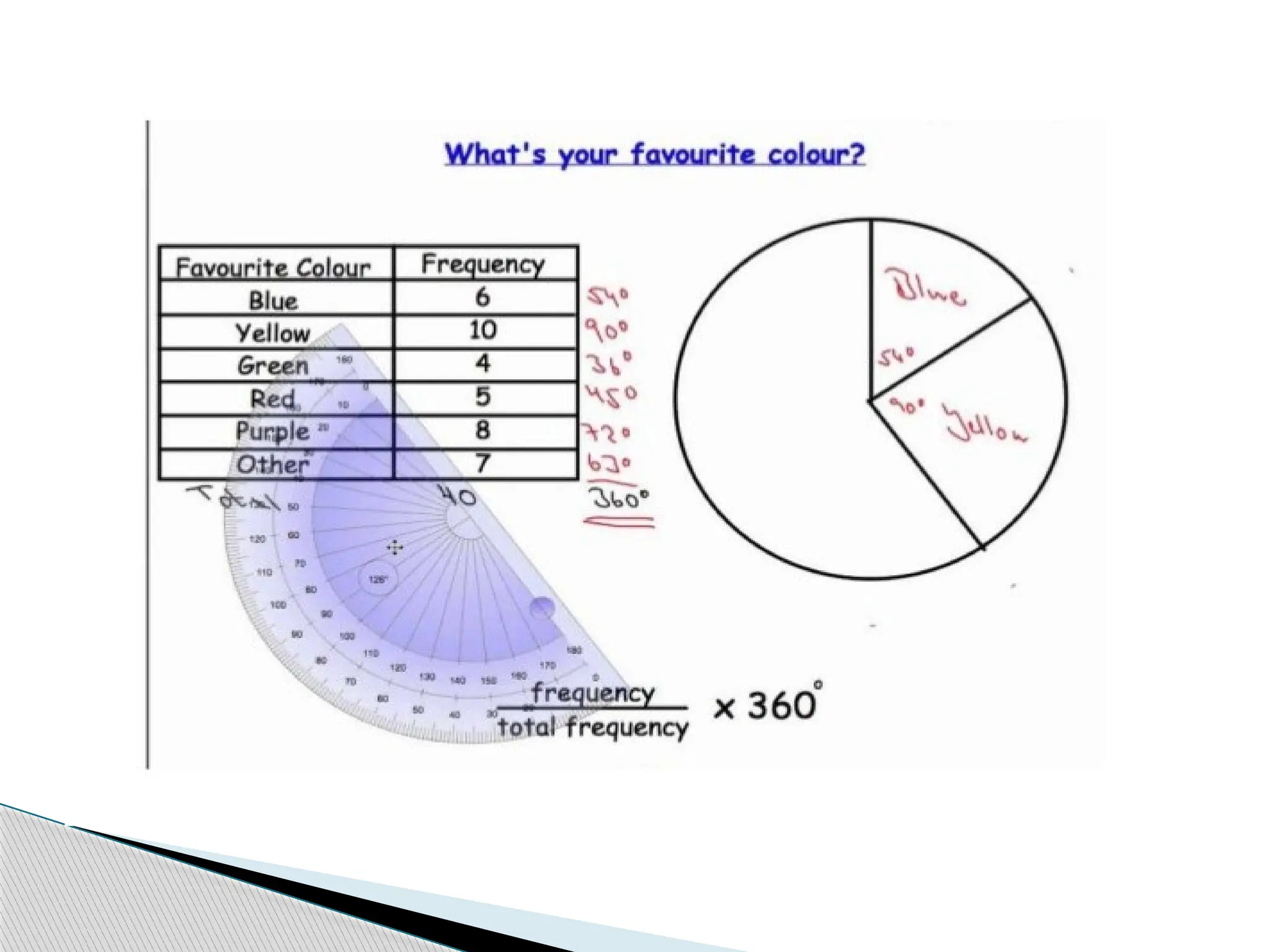
 Pie Chart
 For one locality/one set of observations
 Take data, convert into %age
 For 100% =360°
 So for 1% = 3.6°
 First convert data into%age and then into degrees.
 It is for categorical type of data
Pie Chart
Types  of Data variables and objectivess

Types of Data variables and objectivess

  • 1.
  • 2.
    A collection oftools and techniques that are used to convert data into meaningful information.  Descriptive Biostatics  Inferential Biostatics Statistics:
  • 3.
    BIOSTATISTICS -Branch of statistics -Dealswith the application of statistic methods to the information related to Health sciences. Biostatistics:
  • 4.
     Descriptive Statistics Givesnumerical and graphic procedures to summarize a collection of data in a clear and understandable way  Inferential Statistics Provides procedures to draw inferences about a population from a sample Statistics
  • 5.
     It isthe characteristic of the person; object or Phenomenon that can take on different values. For example: Age, Sex, Haemoglobin and Cholesterol level. Data: it is the set of values of one or more variables recorded on one or more individuals. Variable:
  • 6.
     According tothe resources; stastical data may be classified into two types namely:  Primary Data  Secondary Data Collection of Statistical Data:
  • 7.
    Types of Data Primary Data  Secondary Data  QualitativeData  quantitativeData
  • 8.
     Primary Data: Datawhich are collected for the first time for a specific purpose and are original in nature are known as primary data.  Secondary Data: secondary data are those which are used in an investigation but which have been originally collected by some one else.
  • 9.
     Primary dataYour own questionnaire, survey, information  Data from a book newspaper magazine, or internet
  • 10.
    Quantitative continuous Types of variables Quantitativevariables Qualitative variables Quantitative descrete Qualitative nominal Qualitative ordinal
  • 11.
    1. QUALITATIVE DATA: Itis the data which shows individual values falling into separate classes; these classes may have no numerical relationship with one another. Example: Hair colour; Severity of disease, Gender. 2. QUANTITATIVE DATA: It is the data which shows some numerical value. Example: Family size;height;weight. Types of Data:
  • 12.
    QUALITATIVE DATA  CATEGORICALOR NOMINAL DATA It is the data that one can name, it is unordered, either-on type of data. Example: sex (Male, Female) hair colour.  ORDERED CATEGORICAL OR ORDINAL DATA It is the data in which there is natural ordering of the categories. Example: severity of disease(Mild;Moderate;Severe) occupational groups.
  • 13.
    QUANTITATIVE DATA 1. DISCRETEQUANTITATIVE DATA It is the quantitative data that takes only integral (whole number) of values. Example: Number of children in family, number of deaths. 2. CONTINUOUS QUANTITATIVE DATA it is the quantitative data that can be recorded on continuous scale i.e. it can take decimal value, too. Example: Height, weight, hemoglobin level.
  • 15.
     Frequency DistributionTables: o Simple Tables. o Complex Tables. o 2x2 Tables. oCharts And Graphs. Presentation of Data:
  • 16.
     Data aftercollection can be presented in the following forms:  Tables  Charts  Diagrams  Graphs  Pictures  Special curves Presentation of Data:
  • 17.
    FREQUENCY DISTRIBUTION TABLESARE USED TO DISPLAY THE QUALITATIVE DATAAS WELLAS QUANTITATIVE DATA. FOR DISPLAYING QUANTITATIVE DATA,,WE NEED TO DIVIDE THE DATA INTO :  1. CLASS INTERVALS  2. FREQUENCIES. METHODS OF DISPLAYING FREQUENCY DISTRIBUTION TABLES: 1. MARK & TALLY METHOD
  • 18.
    Marks No. Ofstudents/frequencies (x) (f) 35 36 39 40 42 43 46 51 52 54 1 1 1 2 3 5 2 2 2 1 Total Ef =20 Simple Table
  • 19.
  • 20.
    THIS TABLE HASTWO ROWS TWO COLUMNS. DISEASE YES NO EXPOSURE (a) 33 (b) 55 NO EXPOSURE (c) 2 (d) 27 a+c=35 b+d=82 Cases:=a/a+c=33/35=94.2% Control=b/b+d=55/82=67.0% 2 X 2 TABLE
  • 22.
    • Line graph •Frequency polygon • Frequency curve • Histogram • Bar graph • Pie chart
  • 23.
     There arethree types of charts 1. Bar charts a) Simple bar chart b) Multiple bar/ compound bar chart c) Component bar chart These three types can be presented by 2 way Horizontally vertically Bar charts for categorical type of data not for numerical. Bar charts
  • 24.
    Simple bar chart 0 5 10 15 20 25 30 35 40 45 % SingleMarried Divorced Widowed Marital status
  • 25.
    Multiple Bar chart 0 10 20 30 40 50 % SingleMarried Divorced Widowed Marital status Male Female
  • 26.
  • 27.
    Line Graph 0 10 20 30 40 50 60 1960 19701980 1990 2000 Year MMR/1000 Year MMR 1960 50 1970 45 1980 26 1990 15 2000 12 Figure (1): Maternal mortality rate of (country), 1960-2000
  • 28.
    Frequency polygon Age (years) Sex Mid-pointof interval Males Females 20 - 3 2 (20+30) / 2 = 25 30 - 9 6 (30+40) / 2 = 35 40- 7 5 (40+50) / 2 = 45 50 - 4 3 (50+60) / 2 = 55 60 - 70 2 4 (60+70) / 2 = 65 Total 25 20
  • 29.
    Frequency polygon 0 5 10 15 20 25 30 35 40 25 3545 55 65 Age % Males Females Figure (2): Distribution of 45 patients at (place) , in (time) by age and sex
  • 30.
    Histogram Distribution of agroup of cholera patients by age Age (years) Frequency % 25- 30- 40- 45- 60-65 3 5 7 4 2 14.3 23.8 33.3 19.0 9.5 Total 21 100 0 5 10 15 20 25 30 35 Age (years) % Figure (2): Distribution of 100 cholera patients at (place) , in (time) by age
  • 31.
     Pie Chart For one locality/one set of observations  Take data, convert into %age  For 100% =360°  So for 1% = 3.6°  First convert data into%age and then into degrees.  It is for categorical type of data Pie Chart