Types of Colour Schemes
Colours are everywhere, in you, your dreams, nature, food, earth,
above you, below you. It’s present wherever you can feel them!
What are colour schemes?
Choices of colours which are used in numerous creative and artistic
representations are called Color schemes. These choicest colours are
used to produce elegance and charm. When colours are brought
together and they give an artistic appeal while blending in perfect
harmony. A simple colour scheme would be a combination of two
colours which looks attractive when pooled in and when you look at
more complex and progressive schemes then it includes various other
colours which are connected to appear perfect
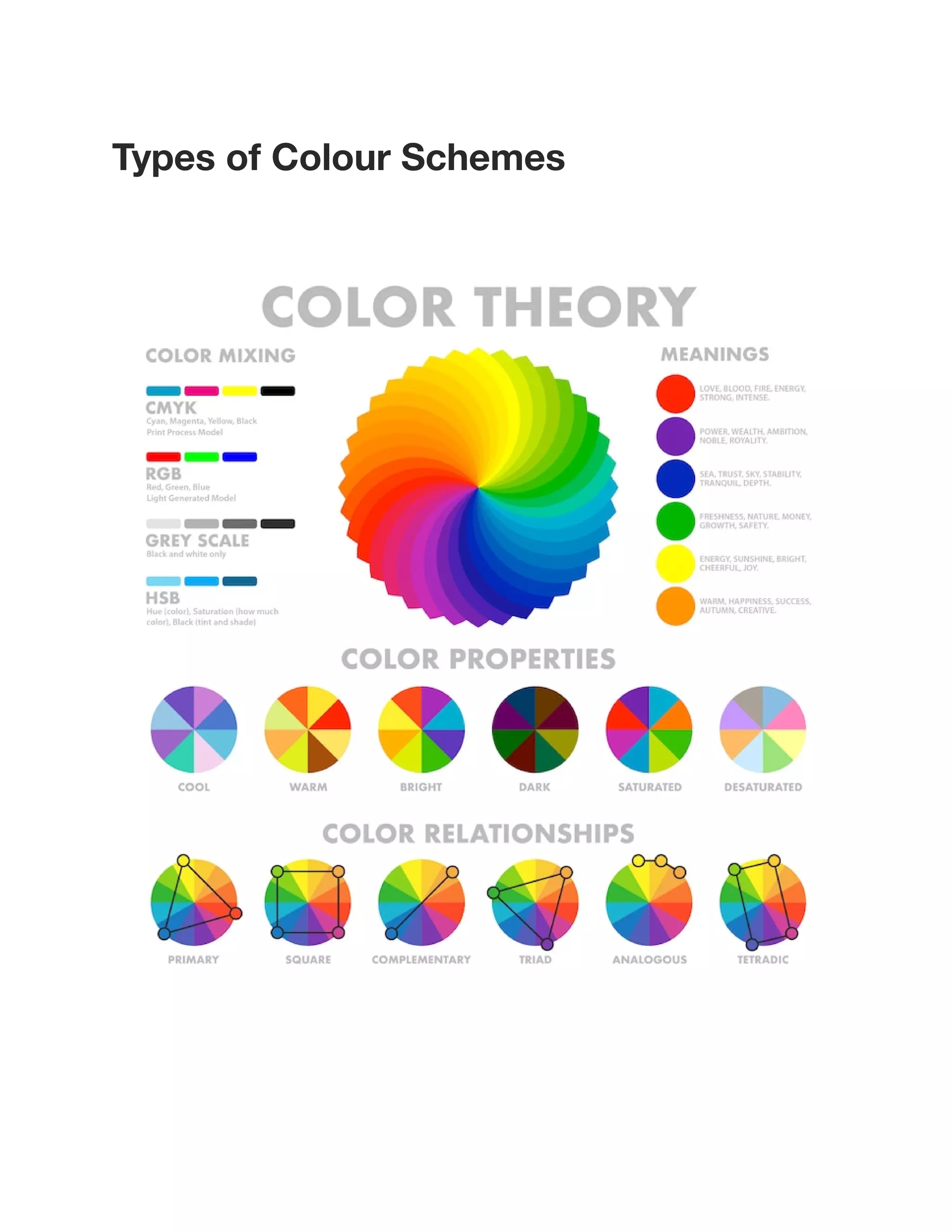
Types of colour schemes
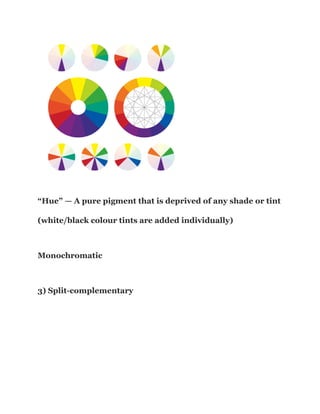
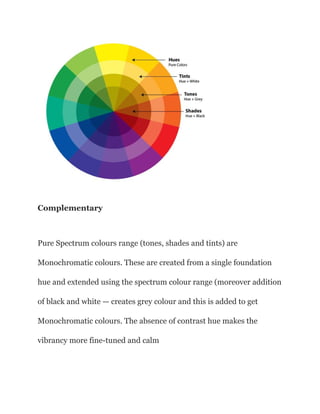
“Hue” — A pure pigment that is deprived of any shade or tint
(white/black colour tints are added individually)
Monochromatic
3) Split-complementary
Complementary
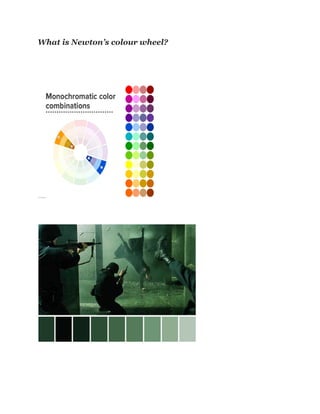
Pure Spectrum colours range (tones, shades and tints) are
Monochromatic colours. These are created from a single foundation
hue and extended using the spectrum colour range (moreover addition
of black and white — creates grey colour and this is added to get
Monochromatic colours. The absence of contrast hue makes the
vibrancy more fine-tuned and calm
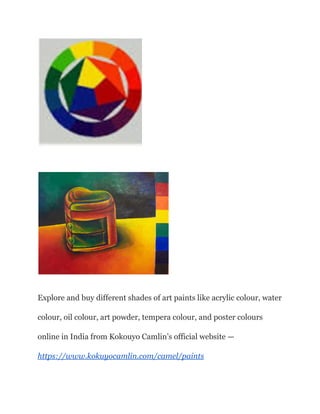
What is Newton’s colour wheel?
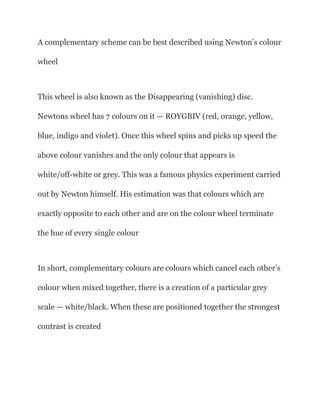
A complementary scheme can be best described using Newton’s colour
wheel
This wheel is also known as the Disappearing (vanishing) disc.
Newtons wheel has 7 colours on it — ROYGBIV (red, orange, yellow,
blue, indigo and violet). Once this wheel spins and picks up speed the
above colour vanishes and the only colour that appears is
white/off-white or grey. This was a famous physics experiment carried
out by Newton himself. His estimation was that colours which are
exactly opposite to each other and are on the colour wheel terminate
the hue of every single colour
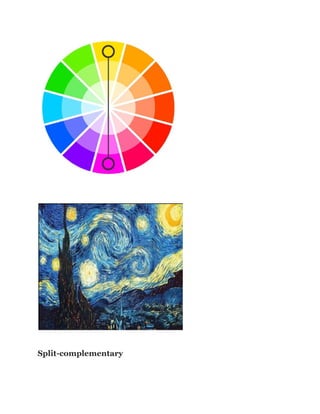
In short, complementary colours are colours which cancel each other’s
colour when mixed together, there is a creation of a particular grey
scale — white/black. When these are positioned together the strongest
contrast is created
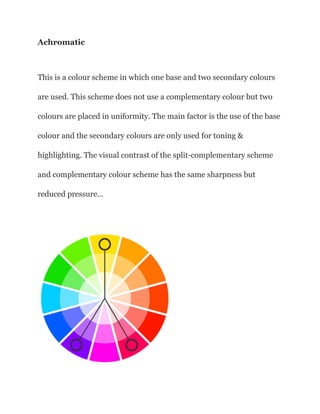
Split-complementary
Achromatic
This is a colour scheme in which one base and two secondary colours
are used. This scheme does not use a complementary colour but two
colours are placed in uniformity. The main factor is the use of the base
colour and the secondary colours are only used for toning &
highlighting. The visual contrast of the split-complementary scheme
and complementary colour scheme has the same sharpness but
reduced pressure…
Analogous
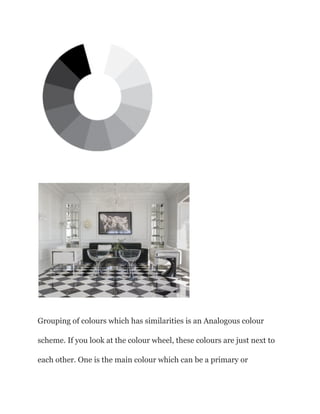
A Colour scheme which is only made up of black, white and grey
colours with no hue in it is called an achromatic colour scheme. It’s
been known for a long time that black and white colour can blend in
well with any colour. While the use of white displays the hues to
equivalent effect and the use of black reduces the actual shade or
luminance.
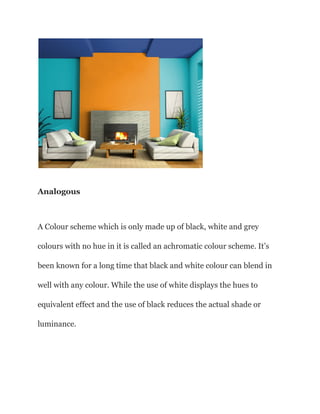
Grouping of colours which has similarities is an Analogous colour
scheme. If you look at the colour wheel, these colours are just next to
each other. One is the main colour which can be a primary or
secondary colour and the other two which complement either of the
sides are tertiary. Examples — Blue-violet, Violet, red-violet, Yellow,
Yellow-green, and Green.
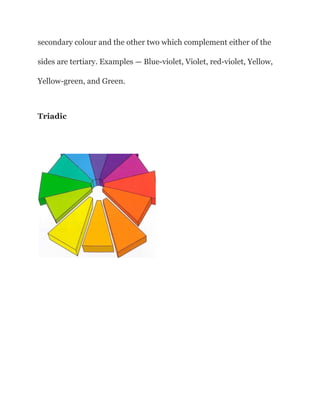
Triadic
Compared to the complementary colour scheme, the analogous colour
scheme is less vibrant with no contrast.
Tetradic
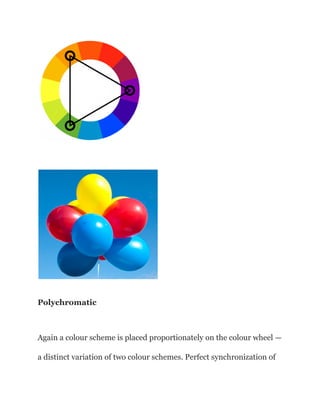
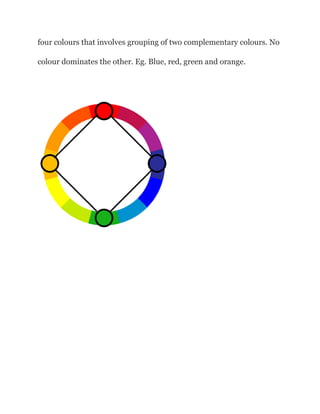
Between all the colours, the triadic colour scheme has been spaced at
an equal distance. As these colours are distributed in uniformity, you
won’t see any single colour dominance. Even if one makes use of
undiluted or paste hues, this scheme still gives an advanced contrast
level without compromising on colour coordination. Triadic schemes
are pretty vibrant
Polychromatic
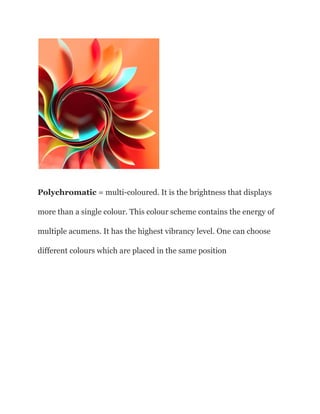
Again a colour scheme is placed proportionately on the colour wheel —
a distinct variation of two colour schemes. Perfect synchronization of
four colours that involves grouping of two complementary colours. No
colour dominates the other. Eg. Blue, red, green and orange.
Polychromatic = multi-coloured. It is the brightness that displays
more than a single colour. This colour scheme contains the energy of
multiple acumens. It has the highest vibrancy level. One can choose
different colours which are placed in the same position
Explore and buy different shades of art paints like acrylic colour, water
colour, oil colour, art powder, tempera colour, and poster colours
online in India from Kokouyo Camlin’s official website —
https://www.kokuyocamlin.com/camel/paints
Originally published at http://kokuyocamlin.wordpress.com on
September 28, 2022.

Types of Colour Schemes

  • 1.
  • 2.
    Colours are everywhere,in you, your dreams, nature, food, earth, above you, below you. It’s present wherever you can feel them! What are colour schemes? Choices of colours which are used in numerous creative and artistic representations are called Color schemes. These choicest colours are used to produce elegance and charm. When colours are brought together and they give an artistic appeal while blending in perfect harmony. A simple colour scheme would be a combination of two colours which looks attractive when pooled in and when you look at more complex and progressive schemes then it includes various other colours which are connected to appear perfect Types of colour schemes
  • 3.
    “Hue” — Apure pigment that is deprived of any shade or tint (white/black colour tints are added individually) Monochromatic 3) Split-complementary
  • 4.
    Complementary Pure Spectrum coloursrange (tones, shades and tints) are Monochromatic colours. These are created from a single foundation hue and extended using the spectrum colour range (moreover addition of black and white — creates grey colour and this is added to get Monochromatic colours. The absence of contrast hue makes the vibrancy more fine-tuned and calm
  • 5.
    What is Newton’scolour wheel?
  • 6.
    A complementary schemecan be best described using Newton’s colour wheel This wheel is also known as the Disappearing (vanishing) disc. Newtons wheel has 7 colours on it — ROYGBIV (red, orange, yellow, blue, indigo and violet). Once this wheel spins and picks up speed the above colour vanishes and the only colour that appears is white/off-white or grey. This was a famous physics experiment carried out by Newton himself. His estimation was that colours which are exactly opposite to each other and are on the colour wheel terminate the hue of every single colour In short, complementary colours are colours which cancel each other’s colour when mixed together, there is a creation of a particular grey scale — white/black. When these are positioned together the strongest contrast is created
  • 7.
  • 8.
    Achromatic This is acolour scheme in which one base and two secondary colours are used. This scheme does not use a complementary colour but two colours are placed in uniformity. The main factor is the use of the base colour and the secondary colours are only used for toning & highlighting. The visual contrast of the split-complementary scheme and complementary colour scheme has the same sharpness but reduced pressure…
  • 9.
    Analogous A Colour schemewhich is only made up of black, white and grey colours with no hue in it is called an achromatic colour scheme. It’s been known for a long time that black and white colour can blend in well with any colour. While the use of white displays the hues to equivalent effect and the use of black reduces the actual shade or luminance.
  • 10.
    Grouping of colourswhich has similarities is an Analogous colour scheme. If you look at the colour wheel, these colours are just next to each other. One is the main colour which can be a primary or
  • 11.
    secondary colour andthe other two which complement either of the sides are tertiary. Examples — Blue-violet, Violet, red-violet, Yellow, Yellow-green, and Green. Triadic
  • 12.
    Compared to thecomplementary colour scheme, the analogous colour scheme is less vibrant with no contrast. Tetradic Between all the colours, the triadic colour scheme has been spaced at an equal distance. As these colours are distributed in uniformity, you won’t see any single colour dominance. Even if one makes use of undiluted or paste hues, this scheme still gives an advanced contrast level without compromising on colour coordination. Triadic schemes are pretty vibrant
  • 13.
    Polychromatic Again a colourscheme is placed proportionately on the colour wheel — a distinct variation of two colour schemes. Perfect synchronization of
  • 14.
    four colours thatinvolves grouping of two complementary colours. No colour dominates the other. Eg. Blue, red, green and orange.
  • 15.
    Polychromatic = multi-coloured.It is the brightness that displays more than a single colour. This colour scheme contains the energy of multiple acumens. It has the highest vibrancy level. One can choose different colours which are placed in the same position
  • 16.
    Explore and buydifferent shades of art paints like acrylic colour, water colour, oil colour, art powder, tempera colour, and poster colours online in India from Kokouyo Camlin’s official website — https://www.kokuyocamlin.com/camel/paints
  • 17.
    Originally published athttp://kokuyocamlin.wordpress.com on September 28, 2022.