
Frontpage Legal Research and Online Resources
Training Workshop on Strengthening Legal Research and Writing Skills in the Area of International Trade Law (TW 363E) Pretoria, South Africa August 13-16, 2007
1st Module  Techniques of Legal Research Stefano Mastrocicco Library Assistant
Topics of Legal Research Strategies of  Legal Research: The Cartwheel  Approach Foreign  Jurisdictions International Trade Law WTO Dispute Settlement System
Strategies of Legal Research Strategies of  Legal Research: The Cartwheel  Approach Foreign  Jurisdictions International Trade Law WTO Dispute Settlement System
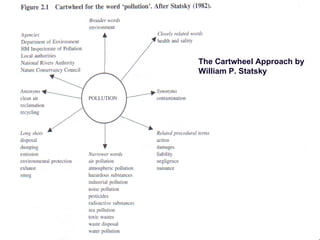
“ Cartwheel ”  Approach Developed by P rofessor William  P.  Statsky. Aims to identify the number of terms  associated to a given research problem to improve the overall perception of the issues involved.
Case Study: Pollution The Cartwheel Approach by  William P. Statsky
“ Cartwheel ”  Approach   Legal Thesauri identify terms and relationships exisiting among them: Printed: West’s Legal Thesaurus/Dictionary by  William Statsky (West/Wadsworth) Legal Terminology  by Gordon W. Brown Online: GLIN Thesaurus
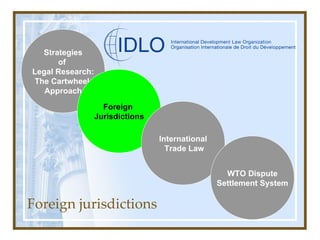
Foreign jurisdictions Strategies of  Legal Research: The Cartwheel  Approach Foreign  Jurisdictions International Trade Law WTO Dispute Settlement System
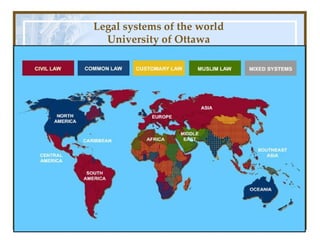
Legal systems of the world University of Ottawa Brief introduction to legal resources on line. Information services, and academic websites
Legal Systems of Civil Law Derive from Roman  Law , and more specifically, the  Corpus Juris Civilis  (Emper or Justinian  ca. 529AD) . Legislation is the primary source of law. Courts base their judgments on the provisions of codes and statutes, from which solutions in particular cases are to be derived. Courts reason extensively on the basis of general legal rules and principles (often drawing analogies from statutory provisions to fill lacunae and to achieve coherence) .
Legal Systems of Common Law Originally developed in England during the 12th and 13th centuries . C ases are the primary source of law . The  law is created and modified by courts, on a case-by-case basis.  The principle of  stare decisis  (binding precedent) is a cornerstone of common law jurisdictions.
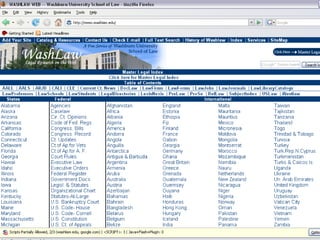
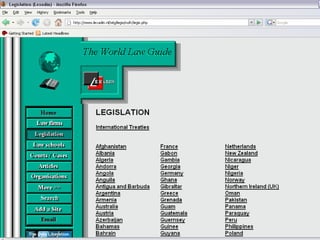
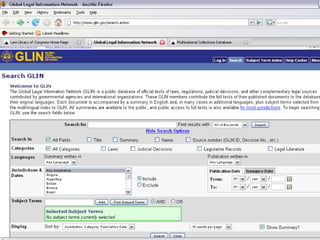
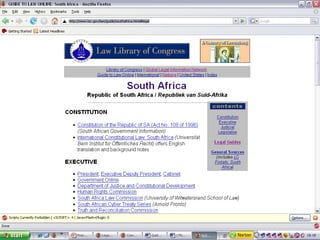
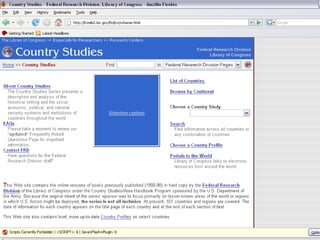
Online Gateways   WashLaw  Web   School of Law of Washburn University ( Topeka, KS , USA). Lexadin   The world law guide. More than 30.000 links to legal sites in more than 160 countries. Global Legal Information Network (GLIN) Laws, regulations and judicial decisions - Law Library of Congress. Law   Library  of  Congress  –  Legal   guides Guides of legal resources by countries - Law Library of Congress. Federal   Research   Division  –  Library  of  Congress Historical, social, political and economic information on countries worldwide.
Washlaw
Lexadin
GLIN W
Law Library of Congress
FRD – Library of Congress Country Studies Contains full-text and summary databases. Full text is available for UK legislation and EU legislation and case law. Recent issues of UK law journals.   Comprehensive information on other jurisdiction also included. http://www.westlaw.co.uk/
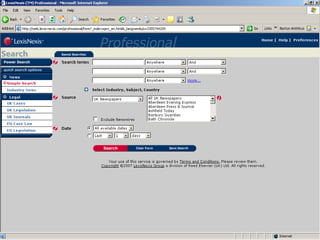
Online Information Services Contains full-text cases, legislation and articles. In particular, cases from the United Kingdom and the European Union,  the collection of UK legislation and a range of regional and national newspapers (the Times, Guardian, Herald and Independent, etc.). http:// web.lexis-nexis.com / professional / athens /
Lexis Nexis Professional
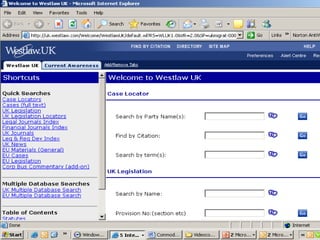
On-line Information Services Contains full-text and summary databases. Full text is available for UK legislation and EU legislation and case law. Recent issues of UK law journals.   Comprehensive information on other jurisdiction also included. http://www.westlaw.co.uk/
 
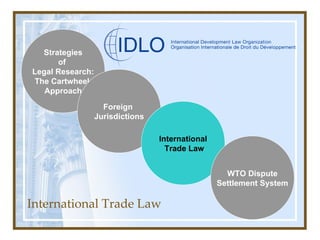
International Trade Law Strategies of  Legal Research: The Cartwheel  Approach Foreign  Jurisdictions International Trade Law WTO Dispute Settlement System
International Trade Law International trade law is a very complex   and an ever expanding area. There are basically four levels of international trade relationships:  * U nilateral instruments (national law s )  B i - lateral  agreements P lurilateral agreements M ultilateral arrangements (GATT/WTO) * John Wolff International and Comparative Law Library at the Georgetown University Law Center
International  Trade Law Main Sources Public international law governs relationships between national governments and intergovernmental organizations. WTO is the only international body dealing with rules of trade between nations. Rules on private law commercial relationships involving different countries. Conventions, model laws, legal guides adopted by international organizations ( UNCITRAL ,  UNIDROIT ,  UNCTAD ) and the Hague Conventions on Private International Law related to contracts, recognition of judgments, commercial arbitration and sales of goods.
International  Trade  Law International  organizations and institutions involved in international trade and international economic law : World Trade Organization  United Nations Conference on Trade and Development (UNCTAD)   International Trade Centre United Nations Commission on International Trade Law (UNCITRAL)   World Bank   International Monetary Fund   International Chamber of Commerce   APEC   MERCOSUR   ANDEAN Community ASEAN
International sale of goods Contract drafting Agency arrangements Exclusive sale arrangements Negotiable instruments and banker’s commercial credits Business activities pertaining to international trade Insurance Transportation Carriage of goods by sea, air, road and rail, inland waterways Industrial properties and copyright Commercial arbitration Examples of International Trade Law topics:
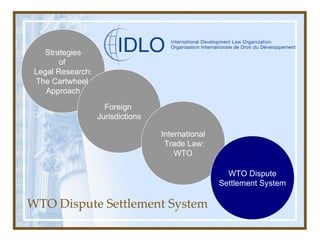
WTO Dispute Settlement System Strategies of  Legal Research: The Cartwheel  Approach Foreign  Jurisdictions International Trade Law: WTO WTO Dispute Settlement System
WTO Dispute Settlement System In 1994 almost all governments of the world set up new procedures to resolve trade disputes among them by mutual agreement backed by international law and legal sanctions. Unlike business deals where each side usually seeks an advantage over the other in price, a trade deal to open markets and mantain fair regulation and competition works because it creates winners on both sides. Purpose of the  Dispute Settlement System (DSS)  of the WTO is to help governments find the balance between helping firms and consumers in their own economies and ensuring that this support doesn’t reduce the gains from trade to economy as a whole.
WTO Dispute Settlement System A WTO dispute starts when a Member informs the WTO Secretariat with a  Notification  that the actions, regulations or policies of another Member are damaging it and in contrast with the provisions of one or more of the WTO Agreements. Consultations , confidential talks between the parties to the dispute, are normally held in Geneva. They can lead to a ruling on the dispute by the  Dispute Settlement Board (DSB)  of the WTO, unless the countries concerned reach an agreement. A process of  Conciliation  is also available at the time of the consultation through the good offices of the Director General of WTO.
WTO Dispute Settlement System The  Dispute Settlement Board (DSB ) is involved when Members cannot agree on the solution of the dispute. The  DSB  establishes a  Panel  of three experts to assess the facts in light of the provisions of the Agreements. It makes recommendations for the  decision of the  DSB  and suggests measures that should be taken to put the situation right. The Parties to the dispute may ask the  Appellate Body  to review the Report and recommendations of the Panel. The  DSB  makes the final decision, normally adopting the recommendations of the Panel and the Appellate Body.
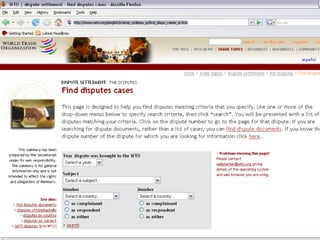
wto.org
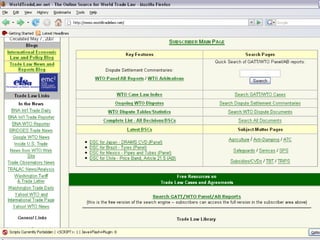
worldtradelaw.net
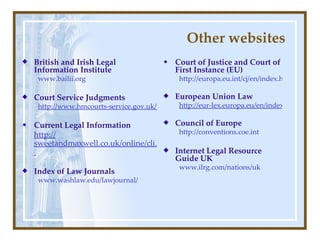
Other websites British and Irish Legal Information Institute www.bailii.org Court Service Judgments http://www.hmcourts-service.gov.uk/judgments.htm Current Legal Information http:// sweetandmaxwell.co.uk/online/cli.html   Index of Law Journals www.washlaw.edu/ lawjournal / Court of   Justice and Court of First Instance (EU) http://europa.eu.int/cj/en/index.htm European Union Law http://eur-lex.europa.eu/en/index.htm Council of Europe http://conventions.coe.int Internet Legal Resource Guide UK www.ilrg.com/ nations / uk

legal research international trade law databases websites knowledge repositories directories jurisdiction legislation

  • 1.
    Frontpage Legal Researchand Online Resources
  • 2.
    Training Workshop onStrengthening Legal Research and Writing Skills in the Area of International Trade Law (TW 363E) Pretoria, South Africa August 13-16, 2007
  • 3.
    1st Module Techniques of Legal Research Stefano Mastrocicco Library Assistant
  • 4.
    Topics of LegalResearch Strategies of Legal Research: The Cartwheel Approach Foreign Jurisdictions International Trade Law WTO Dispute Settlement System
  • 5.
    Strategies of LegalResearch Strategies of Legal Research: The Cartwheel Approach Foreign Jurisdictions International Trade Law WTO Dispute Settlement System
  • 6.
    “ Cartwheel ” Approach Developed by P rofessor William P. Statsky. Aims to identify the number of terms associated to a given research problem to improve the overall perception of the issues involved.
  • 7.
    Case Study: PollutionThe Cartwheel Approach by William P. Statsky
  • 8.
    “ Cartwheel ” Approach Legal Thesauri identify terms and relationships exisiting among them: Printed: West’s Legal Thesaurus/Dictionary by William Statsky (West/Wadsworth) Legal Terminology by Gordon W. Brown Online: GLIN Thesaurus
  • 9.
    Foreign jurisdictions Strategiesof Legal Research: The Cartwheel Approach Foreign Jurisdictions International Trade Law WTO Dispute Settlement System
  • 10.
    Legal systems ofthe world University of Ottawa Brief introduction to legal resources on line. Information services, and academic websites
  • 11.
    Legal Systems ofCivil Law Derive from Roman Law , and more specifically, the Corpus Juris Civilis (Emper or Justinian ca. 529AD) . Legislation is the primary source of law. Courts base their judgments on the provisions of codes and statutes, from which solutions in particular cases are to be derived. Courts reason extensively on the basis of general legal rules and principles (often drawing analogies from statutory provisions to fill lacunae and to achieve coherence) .
  • 12.
    Legal Systems ofCommon Law Originally developed in England during the 12th and 13th centuries . C ases are the primary source of law . The law is created and modified by courts, on a case-by-case basis. The principle of stare decisis (binding precedent) is a cornerstone of common law jurisdictions.
  • 13.
    Online Gateways WashLaw Web School of Law of Washburn University ( Topeka, KS , USA). Lexadin The world law guide. More than 30.000 links to legal sites in more than 160 countries. Global Legal Information Network (GLIN) Laws, regulations and judicial decisions - Law Library of Congress. Law Library of Congress – Legal guides Guides of legal resources by countries - Law Library of Congress. Federal Research Division – Library of Congress Historical, social, political and economic information on countries worldwide.
  • 14.
  • 15.
  • 16.
  • 17.
  • 18.
    FRD – Libraryof Congress Country Studies Contains full-text and summary databases. Full text is available for UK legislation and EU legislation and case law. Recent issues of UK law journals. Comprehensive information on other jurisdiction also included. http://www.westlaw.co.uk/
  • 19.
    Online Information ServicesContains full-text cases, legislation and articles. In particular, cases from the United Kingdom and the European Union, the collection of UK legislation and a range of regional and national newspapers (the Times, Guardian, Herald and Independent, etc.). http:// web.lexis-nexis.com / professional / athens /
  • 20.
  • 21.
    On-line Information ServicesContains full-text and summary databases. Full text is available for UK legislation and EU legislation and case law. Recent issues of UK law journals. Comprehensive information on other jurisdiction also included. http://www.westlaw.co.uk/
  • 22.
  • 23.
    International Trade LawStrategies of Legal Research: The Cartwheel Approach Foreign Jurisdictions International Trade Law WTO Dispute Settlement System
  • 24.
    International Trade LawInternational trade law is a very complex and an ever expanding area. There are basically four levels of international trade relationships: * U nilateral instruments (national law s ) B i - lateral agreements P lurilateral agreements M ultilateral arrangements (GATT/WTO) * John Wolff International and Comparative Law Library at the Georgetown University Law Center
  • 25.
    International TradeLaw Main Sources Public international law governs relationships between national governments and intergovernmental organizations. WTO is the only international body dealing with rules of trade between nations. Rules on private law commercial relationships involving different countries. Conventions, model laws, legal guides adopted by international organizations ( UNCITRAL , UNIDROIT , UNCTAD ) and the Hague Conventions on Private International Law related to contracts, recognition of judgments, commercial arbitration and sales of goods.
  • 26.
    International Trade Law International organizations and institutions involved in international trade and international economic law : World Trade Organization United Nations Conference on Trade and Development (UNCTAD) International Trade Centre United Nations Commission on International Trade Law (UNCITRAL) World Bank International Monetary Fund International Chamber of Commerce APEC MERCOSUR ANDEAN Community ASEAN
  • 27.
    International sale ofgoods Contract drafting Agency arrangements Exclusive sale arrangements Negotiable instruments and banker’s commercial credits Business activities pertaining to international trade Insurance Transportation Carriage of goods by sea, air, road and rail, inland waterways Industrial properties and copyright Commercial arbitration Examples of International Trade Law topics:
  • 28.
    WTO Dispute SettlementSystem Strategies of Legal Research: The Cartwheel Approach Foreign Jurisdictions International Trade Law: WTO WTO Dispute Settlement System
  • 29.
    WTO Dispute SettlementSystem In 1994 almost all governments of the world set up new procedures to resolve trade disputes among them by mutual agreement backed by international law and legal sanctions. Unlike business deals where each side usually seeks an advantage over the other in price, a trade deal to open markets and mantain fair regulation and competition works because it creates winners on both sides. Purpose of the Dispute Settlement System (DSS) of the WTO is to help governments find the balance between helping firms and consumers in their own economies and ensuring that this support doesn’t reduce the gains from trade to economy as a whole.
  • 30.
    WTO Dispute SettlementSystem A WTO dispute starts when a Member informs the WTO Secretariat with a Notification that the actions, regulations or policies of another Member are damaging it and in contrast with the provisions of one or more of the WTO Agreements. Consultations , confidential talks between the parties to the dispute, are normally held in Geneva. They can lead to a ruling on the dispute by the Dispute Settlement Board (DSB) of the WTO, unless the countries concerned reach an agreement. A process of Conciliation is also available at the time of the consultation through the good offices of the Director General of WTO.
  • 31.
    WTO Dispute SettlementSystem The Dispute Settlement Board (DSB ) is involved when Members cannot agree on the solution of the dispute. The DSB establishes a Panel of three experts to assess the facts in light of the provisions of the Agreements. It makes recommendations for the decision of the DSB and suggests measures that should be taken to put the situation right. The Parties to the dispute may ask the Appellate Body to review the Report and recommendations of the Panel. The DSB makes the final decision, normally adopting the recommendations of the Panel and the Appellate Body.
  • 32.
  • 33.
  • 34.
    Other websites Britishand Irish Legal Information Institute www.bailii.org Court Service Judgments http://www.hmcourts-service.gov.uk/judgments.htm Current Legal Information http:// sweetandmaxwell.co.uk/online/cli.html Index of Law Journals www.washlaw.edu/ lawjournal / Court of Justice and Court of First Instance (EU) http://europa.eu.int/cj/en/index.htm European Union Law http://eur-lex.europa.eu/en/index.htm Council of Europe http://conventions.coe.int Internet Legal Resource Guide UK www.ilrg.com/ nations / uk