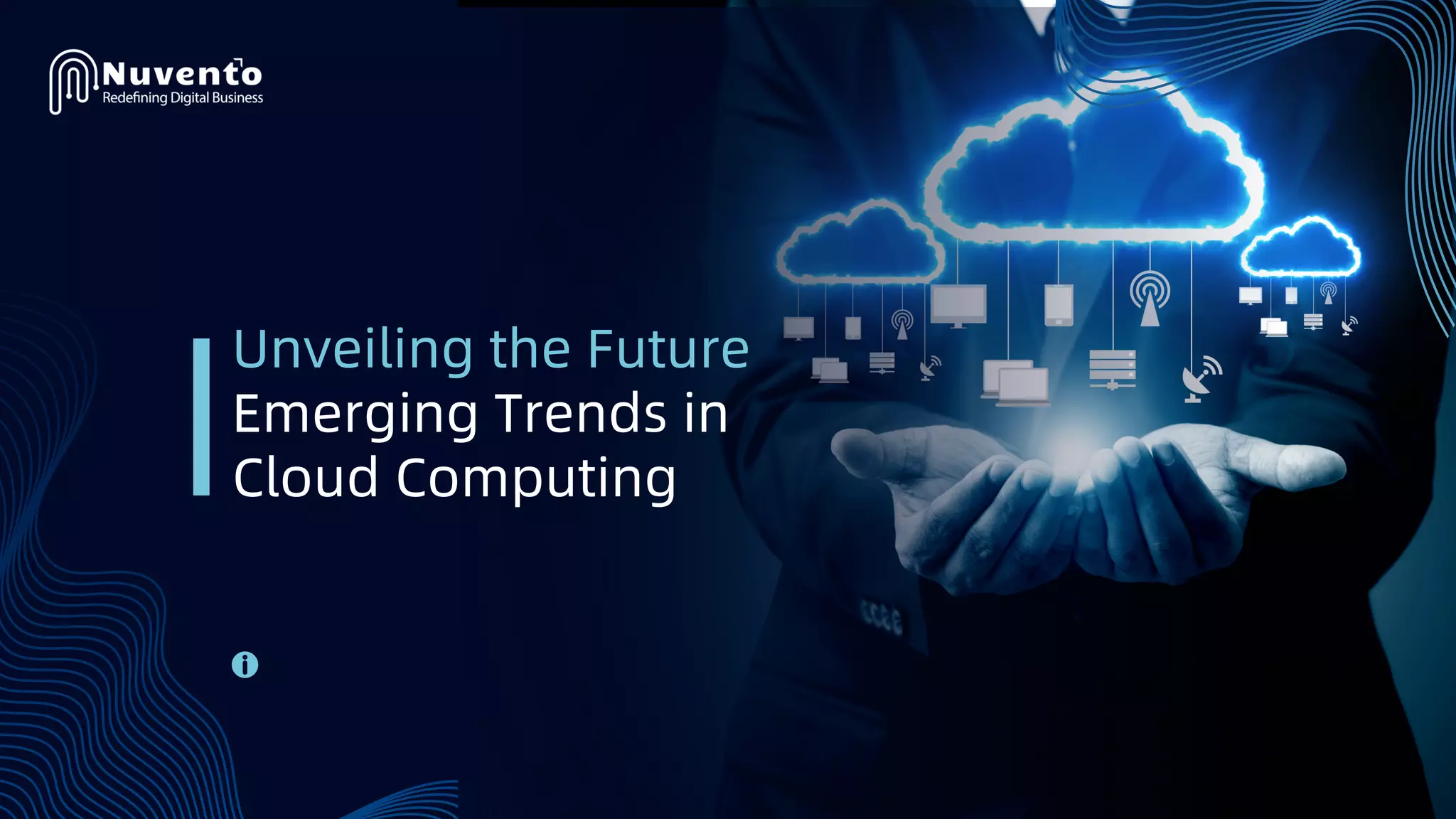
Unveiling the Future
Emerging Trends in
Cloud Computing
Multi-cloud and Hybrid
Cloud Adoption
Organizations are increasingly adopting multi-cloud and
hybrid cloud strategies to leverage the benefits of different
cloud managed service providers and deployment models.
This trend allows organizations to distribute workloads
across multiple clouds, optimize cloud costs, improve
resilience, and avoid vendor lock-in. It also enables
seamless integration between on-premises infrastructure
and public or private cloud environments, providing
flexibility and scalability.
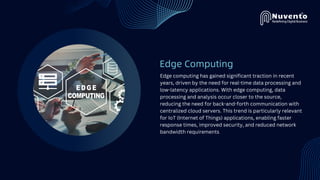
Edge Computing
Edge computing has gained significant traction in recent
years, driven by the need for real-time data processing and
low-latency applications. With edge computing, data
processing and analysis occur closer to the source,
reducing the need for back-and-forth communication with
centralized cloud servers. This trend is particularly relevant
for IoT (Internet of Things) applications, enabling faster
response times, improved security, and reduced network
bandwidth requirements
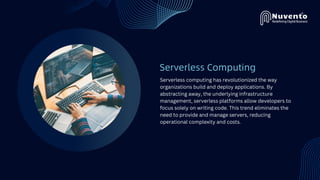
Serverless Computing
Serverless computing has revolutionized the way
organizations build and deploy applications. By
abstracting away, the underlying infrastructure
management, serverless platforms allow developers to
focus solely on writing code. This trend eliminates the
need to provide and manage servers, reducing
operational complexity and costs.
Artificial Intelligence
and Machine Learning
(AI/ML) Integration
Cloud computing continues to integrate and enhance
AI/ML capabilities, enabling organizations to leverage
advanced analytics, natural language processing, and
computer vision. Cloud providers offer AI/ML services
that facilitate the development and deployment of
intelligent applications, such as recommendation
systems, predictive analytics, and image recognition.
Containerization and
Kubernetes
Containerization and container orchestration platforms
like Kubernetes have gained immense popularity for
deploying and managing cloud-native applications.
Containers provide lightweight, isolated environments
that enable consistent deployment across different cloud
environments. Kubernetes, in particular, simplifies
container management, automates scaling, and ensures
high availability. This trend promotes application
portability, scalability, and efficient resource utilization.
Data Governance and
Security
As organizations increasingly rely on cloud computing,
data governance and security have become paramount
concerns. Cloud consulting service providers offer robust
security features and compliance frameworks, but
organizations must implement additional measures to
protect sensitive data. This trend includes the adoption
of encryption, identity and access management, threat
detection, and monitoring tools. Data privacy regulations,
such as GDPR and CCPA, also drive the need for
enhanced data governance and compliance practices.
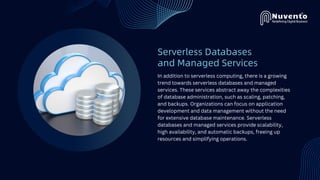
Serverless Databases
and Managed Services
In addition to serverless computing, there is a growing
trend towards serverless databases and managed
services. These services abstract away the complexities
of database administration, such as scaling, patching,
and backups. Organizations can focus on application
development and data management without the need
for extensive database maintenance. Serverless
databases and managed services provide scalability,
high availability, and automatic backups, freeing up
resources and simplifying operations.
https://nuvento.com/blog/emerging-trends-in-cloud-computing/

Trends in Cloud Computing Services | Nuvento USA

  • 1.
    Unveiling the Future EmergingTrends in Cloud Computing
  • 2.
    Multi-cloud and Hybrid CloudAdoption Organizations are increasingly adopting multi-cloud and hybrid cloud strategies to leverage the benefits of different cloud managed service providers and deployment models. This trend allows organizations to distribute workloads across multiple clouds, optimize cloud costs, improve resilience, and avoid vendor lock-in. It also enables seamless integration between on-premises infrastructure and public or private cloud environments, providing flexibility and scalability.
  • 3.
    Edge Computing Edge computinghas gained significant traction in recent years, driven by the need for real-time data processing and low-latency applications. With edge computing, data processing and analysis occur closer to the source, reducing the need for back-and-forth communication with centralized cloud servers. This trend is particularly relevant for IoT (Internet of Things) applications, enabling faster response times, improved security, and reduced network bandwidth requirements
  • 4.
    Serverless Computing Serverless computinghas revolutionized the way organizations build and deploy applications. By abstracting away, the underlying infrastructure management, serverless platforms allow developers to focus solely on writing code. This trend eliminates the need to provide and manage servers, reducing operational complexity and costs.
  • 5.
    Artificial Intelligence and MachineLearning (AI/ML) Integration Cloud computing continues to integrate and enhance AI/ML capabilities, enabling organizations to leverage advanced analytics, natural language processing, and computer vision. Cloud providers offer AI/ML services that facilitate the development and deployment of intelligent applications, such as recommendation systems, predictive analytics, and image recognition.
  • 6.
    Containerization and Kubernetes Containerization andcontainer orchestration platforms like Kubernetes have gained immense popularity for deploying and managing cloud-native applications. Containers provide lightweight, isolated environments that enable consistent deployment across different cloud environments. Kubernetes, in particular, simplifies container management, automates scaling, and ensures high availability. This trend promotes application portability, scalability, and efficient resource utilization.
  • 7.
    Data Governance and Security Asorganizations increasingly rely on cloud computing, data governance and security have become paramount concerns. Cloud consulting service providers offer robust security features and compliance frameworks, but organizations must implement additional measures to protect sensitive data. This trend includes the adoption of encryption, identity and access management, threat detection, and monitoring tools. Data privacy regulations, such as GDPR and CCPA, also drive the need for enhanced data governance and compliance practices.
  • 8.
    Serverless Databases and ManagedServices In addition to serverless computing, there is a growing trend towards serverless databases and managed services. These services abstract away the complexities of database administration, such as scaling, patching, and backups. Organizations can focus on application development and data management without the need for extensive database maintenance. Serverless databases and managed services provide scalability, high availability, and automatic backups, freeing up resources and simplifying operations.
  • 9.