training needs analysis example - general competencies © alan chapman 2001-06 - www.businessballs.com
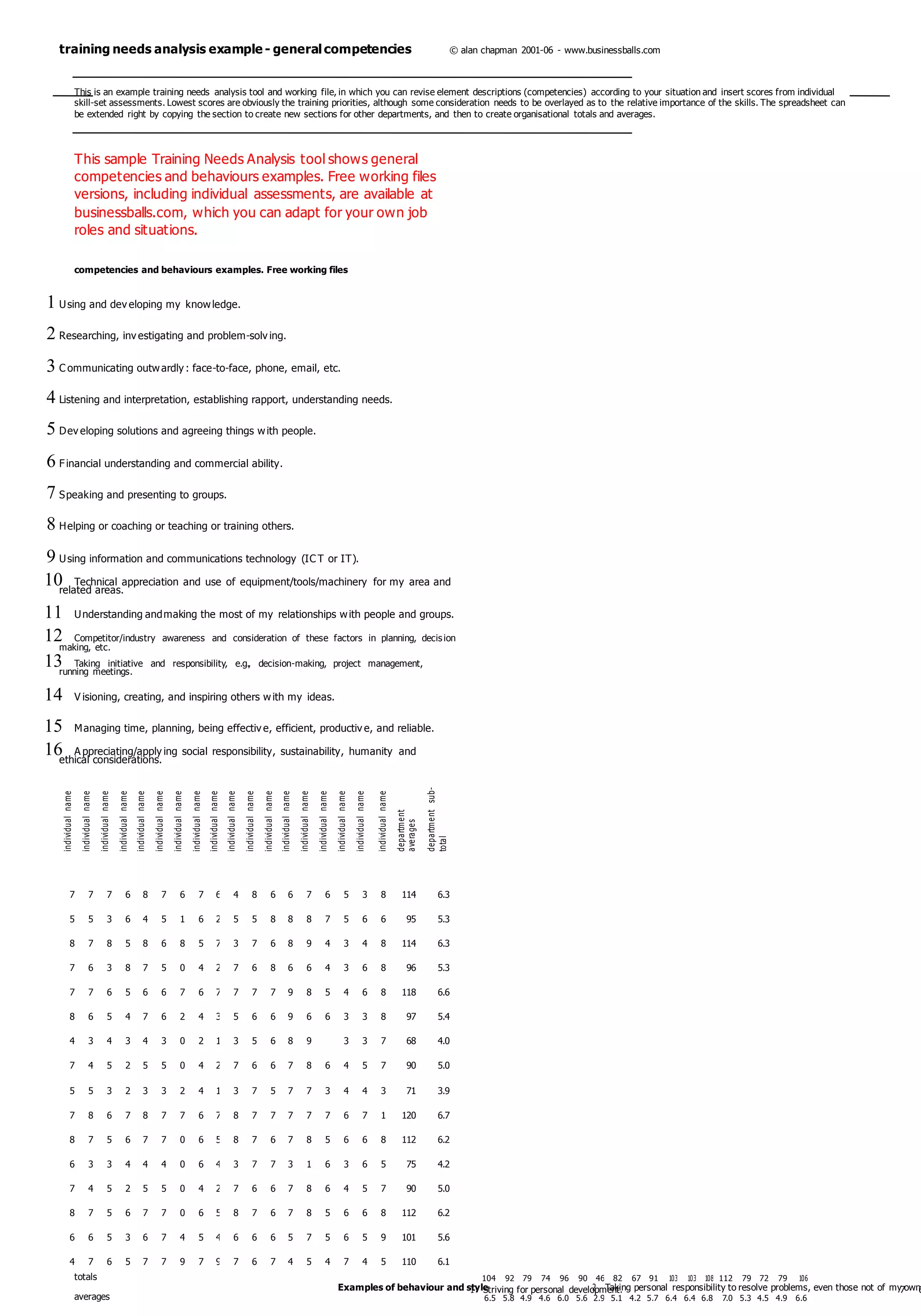
This is an example training needs analysis tool and working file, in which you can revise element descriptions (competencies) according to your situation and insert scores from individual
skill-set assessments. Lowest scores are obviously the training priorities, although some consideration needs to be overlayed as to the relative importance of the skills. The spreadsheet can
be extended right by copying the section to create new sections for other departments, and then to create organisational totals and averages.
This sample Training Needs Analysis tool shows general
competencies and behaviours examples. Free working files
versions, including individual assessments, are available at
businessballs.com, which you can adapt for your own job
roles and situations.
competencies and behaviours examples. Free working files
1 Using and dev eloping my knowledge.
2 Researching, inv estigating and problem-solv ing.
3 C ommunicating outwardly : face-to-face, phone, email, etc.
4 Listening and interpretation, establishing rapport, understanding needs.
5 Dev eloping solutions and agreeing things with people.
6 Financial understanding and commercial ability.
7 Speaking and presenting to groups.
8 Helping or coaching or teaching or training others.
9 Using information and communications technology (IC T or IT).
10 Technical appreciation and use of equipment/tools/machinery for my area and
related areas.
11 Understanding andmaking the most of my relationships with people and groups.
12 Competitor/industry awareness and consideration of these factors in planning, decis ion
making, etc.
13 Taking initiative and responsibility, e.g., decision-making, project management,
running meetings.
14 V isioning, creating, and inspiring others with my ideas.
15 Managing time, planning, being effectiv e, efficient, productiv e, and reliable.
16 A ppreciating/apply ing social responsibility, sustainability, humanity and
ethical considerations.
individualname
individualname
individualname
individualname
individualname
individualname
individualname
individualname
individualname
individualname
individualname
individualname
individualname
individualname
individualname
individualname
individualname
individualname
department
averages
departmentsub-
total
7 7 7 6 8 7 6 7 6 4 8 6 6 7 6 5 3 8 114 6.3
5 5 3 6 4 5 1 6 2 5 5 8 8 8 7 5 6 6 95 5.3
8 7 8 5 8 6 8 5 7 3 7 6 8 9 4 3 4 8 114 6.3
7 6 3 8 7 5 0 4 2 7 6 8 6 6 4 3 6 8 96 5.3
7 7 6 5 6 6 7 6 7 7 7 7 9 8 5 4 6 8 118 6.6
8 6 5 4 7 6 2 4 3 5 6 6 9 6 6 3 3 8 97 5.4
4 3 4 3 4 3 0 2 1 3 5 6 8 9 3 3 7 68 4.0
7 4 5 2 5 5 0 4 2 7 6 6 7 8 6 4 5 7 90 5.0
5 5 3 2 3 3 2 4 1 3 7 5 7 7 3 4 4 3 71 3.9
7 8 6 7 8 7 7 6 7 8 7 7 7 7 7 6 7 1 120 6.7
8 7 5 6 7 7 0 6 5 8 7 6 7 8 5 6 6 8 112 6.2
6 3 3 4 4 4 0 6 4 3 7 7 3 1 6 3 6 5 75 4.2
7 4 5 2 5 5 0 4 2 7 6 6 7 8 6 4 5 7 90 5.0
8 7 5 6 7 7 0 6 5 8 7 6 7 8 5 6 6 8 112 6.2
6 6 5 3 6 7 4 5 4 6 6 6 5 7 5 6 5 9 101 5.6
4 7 6 5 7 7 9 7 9 7 6 7 4 5 4 7 4 5 110 6.1
totals 104 92 79 74 96 90 46 82 67 91 103 103 108 112 79 72 79 106
averages 6.5 5.8 4.9 4.6 6.0 5.6 2.9 5.1 4.2 5.7 6.4 6.4 6.8 7.0 5.3 4.5 4.9 6.6
Examples of behaviour and style1 Striving for personal development. 7 62 Taking personal responsibility to resolve problems, even those not of my own
3 Understanding the way people really feel. 8 7 7 5 7 5 7 5 6 7 6 6 9 10 5 9 6 6 121 6.7
4 Developing positive relationships. 8 8 5 7 8 6 6 5 7 8 6 8 8 9 3 7 8 5 122 6.8
5 Keeping focused and productive, reliable and dependable. 8 6 7 6 7 8 8 7 8 8 6 8 6 7 6 7 7 8 128 7.1
6 Planning how to achieve my work and personal goals. 5 5 5 6 5 5 8 4 7 9 7 7 5 5 5 7 6 6 107 5.9
7 Managing stress and conflict. 4 7 5 5 5 5 7 5 8 4 6 5 3 8 6 7 5 5 100 5.6
8 Managing upwards and sideways (my managerial superiors and my peers). 4 7 6 6 8 5 7 4 6 4 7 5 3 8 6 7 8 7 108 6.0
9 Contributing positively to team/company morale and spirit. 8 8 5 8 6 7 4 6 8 9
10 Seeking and picking up responsibility that I see waiting to be filled. 6 5 5 6 6 5 8 5 6 8
11 Team-working. 7 5 6 6 6 5 5 6 6 3
12 Having compassion and care for others. 5 7 7 7 5 6 8 6 9 5
13 Using integrity and ethics in my judgement about work and organisational issues. 8 6 6 7 8 7 8 6 8 9
totals 84 84 75 84 86 78 90 72 93 90
averages 6.5 6.5 5.8 6.5 6.6 6.0 6.9 5.5 7.2 6.9
This analysis is
designed to show
collective training
needs and priorities
and also the relative
training needs of
individuals. This
assessment tool was
developed by alan
chapman and you
may use it freely
provided copyright
and
www.businessballs.com are acknowledged. Free online
information and guidance at www.businessballs.com.
© alan chapman 2001-06, from www.businessballs.com, not
to be sold or published. Alan Chapman accepts no liability.
f ree personal andorganizational resources from
www.businessballs.com
alan chapman
www.businessballs.com
06/10/2006

Training needs analysis

  • 1.
    training needs analysisexample - general competencies © alan chapman 2001-06 - www.businessballs.com This is an example training needs analysis tool and working file, in which you can revise element descriptions (competencies) according to your situation and insert scores from individual skill-set assessments. Lowest scores are obviously the training priorities, although some consideration needs to be overlayed as to the relative importance of the skills. The spreadsheet can be extended right by copying the section to create new sections for other departments, and then to create organisational totals and averages. This sample Training Needs Analysis tool shows general competencies and behaviours examples. Free working files versions, including individual assessments, are available at businessballs.com, which you can adapt for your own job roles and situations. competencies and behaviours examples. Free working files 1 Using and dev eloping my knowledge. 2 Researching, inv estigating and problem-solv ing. 3 C ommunicating outwardly : face-to-face, phone, email, etc. 4 Listening and interpretation, establishing rapport, understanding needs. 5 Dev eloping solutions and agreeing things with people. 6 Financial understanding and commercial ability. 7 Speaking and presenting to groups. 8 Helping or coaching or teaching or training others. 9 Using information and communications technology (IC T or IT). 10 Technical appreciation and use of equipment/tools/machinery for my area and related areas. 11 Understanding andmaking the most of my relationships with people and groups. 12 Competitor/industry awareness and consideration of these factors in planning, decis ion making, etc. 13 Taking initiative and responsibility, e.g., decision-making, project management, running meetings. 14 V isioning, creating, and inspiring others with my ideas. 15 Managing time, planning, being effectiv e, efficient, productiv e, and reliable. 16 A ppreciating/apply ing social responsibility, sustainability, humanity and ethical considerations. individualname individualname individualname individualname individualname individualname individualname individualname individualname individualname individualname individualname individualname individualname individualname individualname individualname individualname department averages departmentsub- total 7 7 7 6 8 7 6 7 6 4 8 6 6 7 6 5 3 8 114 6.3 5 5 3 6 4 5 1 6 2 5 5 8 8 8 7 5 6 6 95 5.3 8 7 8 5 8 6 8 5 7 3 7 6 8 9 4 3 4 8 114 6.3 7 6 3 8 7 5 0 4 2 7 6 8 6 6 4 3 6 8 96 5.3 7 7 6 5 6 6 7 6 7 7 7 7 9 8 5 4 6 8 118 6.6 8 6 5 4 7 6 2 4 3 5 6 6 9 6 6 3 3 8 97 5.4 4 3 4 3 4 3 0 2 1 3 5 6 8 9 3 3 7 68 4.0 7 4 5 2 5 5 0 4 2 7 6 6 7 8 6 4 5 7 90 5.0 5 5 3 2 3 3 2 4 1 3 7 5 7 7 3 4 4 3 71 3.9 7 8 6 7 8 7 7 6 7 8 7 7 7 7 7 6 7 1 120 6.7 8 7 5 6 7 7 0 6 5 8 7 6 7 8 5 6 6 8 112 6.2 6 3 3 4 4 4 0 6 4 3 7 7 3 1 6 3 6 5 75 4.2 7 4 5 2 5 5 0 4 2 7 6 6 7 8 6 4 5 7 90 5.0 8 7 5 6 7 7 0 6 5 8 7 6 7 8 5 6 6 8 112 6.2 6 6 5 3 6 7 4 5 4 6 6 6 5 7 5 6 5 9 101 5.6 4 7 6 5 7 7 9 7 9 7 6 7 4 5 4 7 4 5 110 6.1 totals 104 92 79 74 96 90 46 82 67 91 103 103 108 112 79 72 79 106 averages 6.5 5.8 4.9 4.6 6.0 5.6 2.9 5.1 4.2 5.7 6.4 6.4 6.8 7.0 5.3 4.5 4.9 6.6 Examples of behaviour and style1 Striving for personal development. 7 62 Taking personal responsibility to resolve problems, even those not of my own
  • 2.
    3 Understanding theway people really feel. 8 7 7 5 7 5 7 5 6 7 6 6 9 10 5 9 6 6 121 6.7 4 Developing positive relationships. 8 8 5 7 8 6 6 5 7 8 6 8 8 9 3 7 8 5 122 6.8 5 Keeping focused and productive, reliable and dependable. 8 6 7 6 7 8 8 7 8 8 6 8 6 7 6 7 7 8 128 7.1 6 Planning how to achieve my work and personal goals. 5 5 5 6 5 5 8 4 7 9 7 7 5 5 5 7 6 6 107 5.9 7 Managing stress and conflict. 4 7 5 5 5 5 7 5 8 4 6 5 3 8 6 7 5 5 100 5.6 8 Managing upwards and sideways (my managerial superiors and my peers). 4 7 6 6 8 5 7 4 6 4 7 5 3 8 6 7 8 7 108 6.0 9 Contributing positively to team/company morale and spirit. 8 8 5 8 6 7 4 6 8 9 10 Seeking and picking up responsibility that I see waiting to be filled. 6 5 5 6 6 5 8 5 6 8 11 Team-working. 7 5 6 6 6 5 5 6 6 3 12 Having compassion and care for others. 5 7 7 7 5 6 8 6 9 5 13 Using integrity and ethics in my judgement about work and organisational issues. 8 6 6 7 8 7 8 6 8 9 totals 84 84 75 84 86 78 90 72 93 90 averages 6.5 6.5 5.8 6.5 6.6 6.0 6.9 5.5 7.2 6.9 This analysis is designed to show collective training needs and priorities and also the relative training needs of individuals. This assessment tool was developed by alan chapman and you may use it freely provided copyright and www.businessballs.com are acknowledged. Free online information and guidance at www.businessballs.com. © alan chapman 2001-06, from www.businessballs.com, not to be sold or published. Alan Chapman accepts no liability. f ree personal andorganizational resources from www.businessballs.com alan chapman www.businessballs.com 06/10/2006