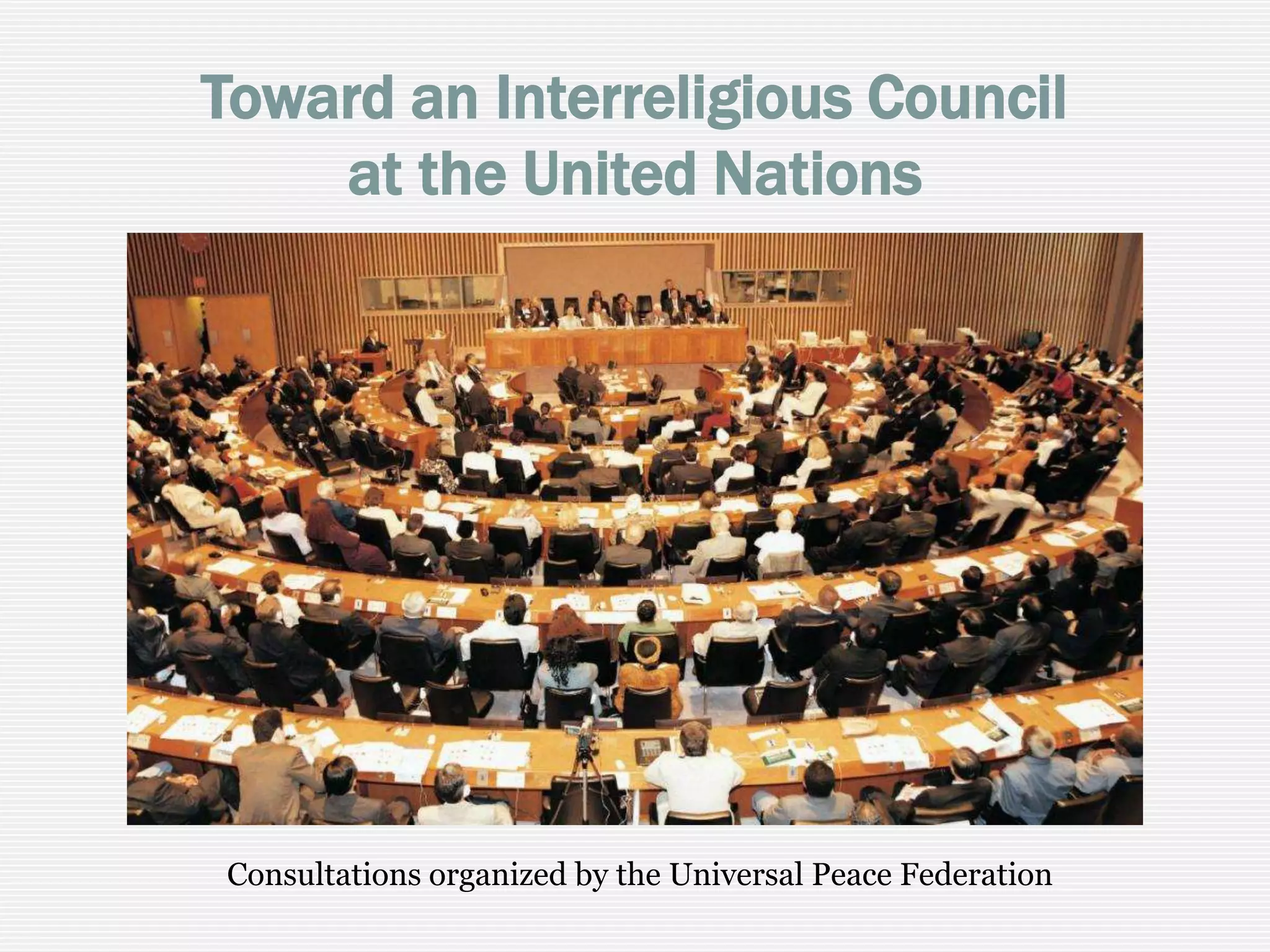
Toward an Interreligious Council
at the United Nations
Consultations organized by the Universal Peace Federation
Vision for an Interreligious Council
 The existing United Nations structure, composed of
national representatives, may be regarded as a congress
where the interests of each member nation are
represented. However, I submit that serious
consideration should be given to forming a religious
assembly, or council of religious representatives within
the structure of the United Nations. This assembly or
council would consist of respected spiritual leaders in
fields such as religion, culture, and education.
Dr. Sun Myung Moon
Remarks at the United Nations, August 18, 2000
Mission of an Interreligious Council
 Promote interreligious dialogue, understanding, and
cooperation for peace
 Draw on spiritual and religious wisdom to address
global issues of conflict, war, poverty, hunger, and
disease
 Address conflicts with religious and ethnic bases
Guiding Principle
 Affirmation of the sacred value and rights of all
human beings, regardless of religion, nationality,
ethnicity, and race
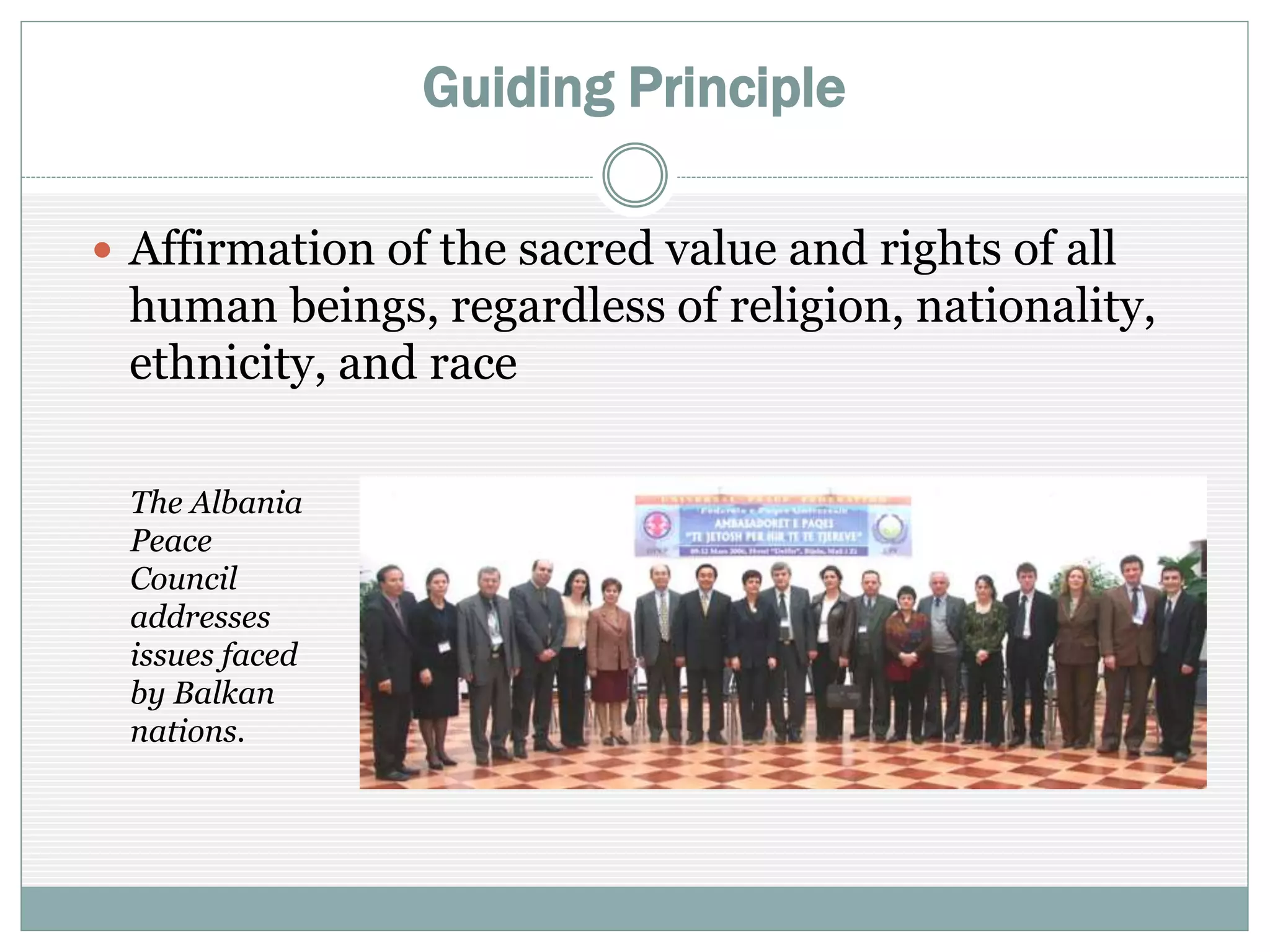
The Albania
Peace
Council
addresses
issues faced
by Balkan
nations.
Benefits to the UN
 Complement the UN’s work with additional
dimensions for assessing and resolving global
problems
 Give insights on moral and spiritual issues
 Help counter religious extremism
 Help prevent religious differences from being
exploited to stir up conflict
 Ensure that development aid is culturally and
religiously sensitive
 Serve as a recourse for minority communities
Benefits to Religions
 Help build bridges between liberals and
fundamentalists in the same faith
 Challenge the misuse of religion as a cover for
politically or economically-motivated violence
 Expand the potential of religion to change people’s
hearts and deepen relationships
 Provide a model of how spiritual and religious
groups can rise above differences and work together
for the common good
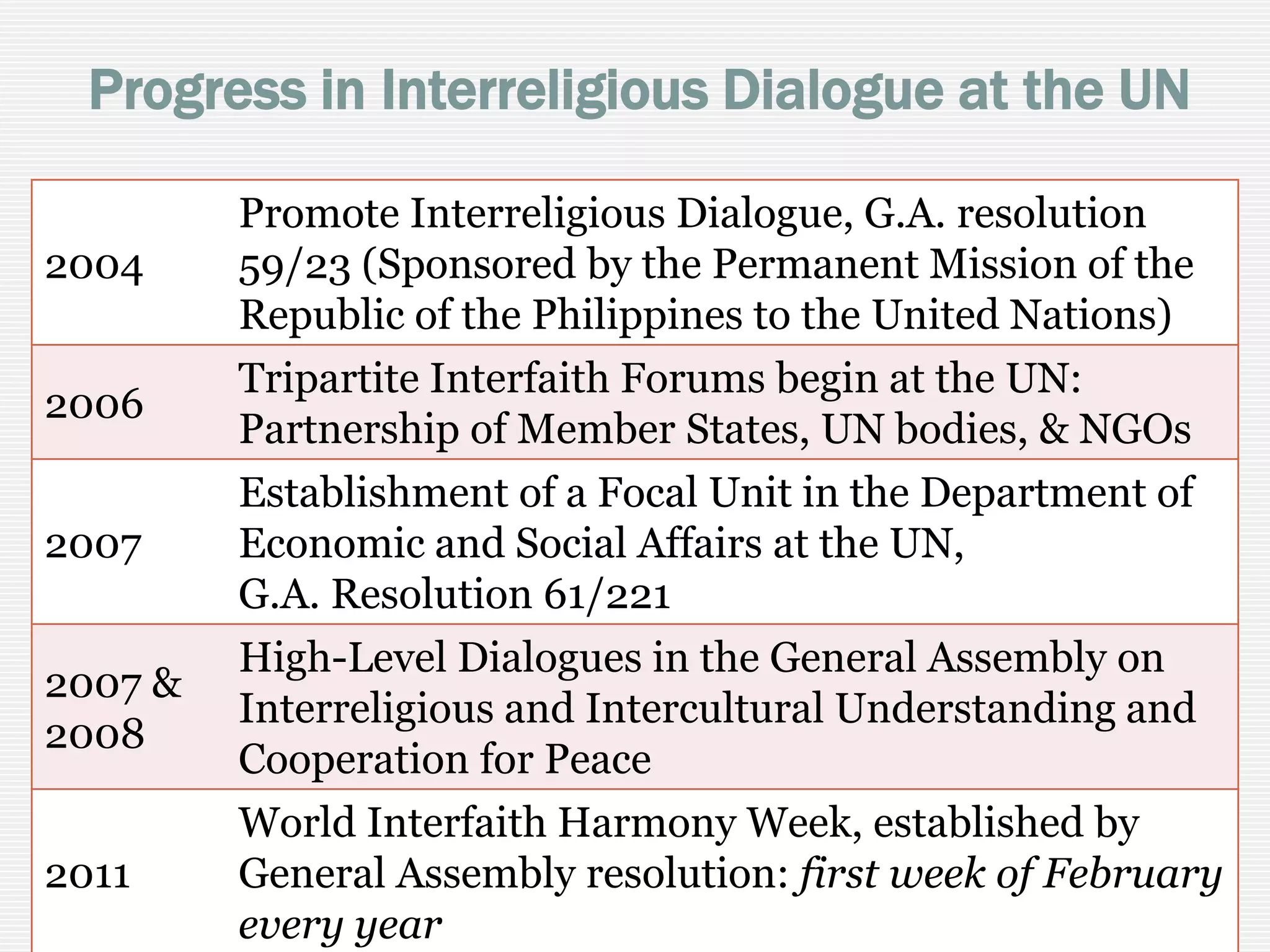
Progress in Interreligious Dialogue at the UN
2004
Promote Interreligious Dialogue, G.A. resolution
59/23 (Sponsored by the Permanent Mission of the
Republic of the Philippines to the United Nations)
2006
Tripartite Interfaith Forums begin at the UN:
Partnership of Member States, UN bodies, & NGOs
2007
Establishment of a Focal Unit in the Department of
Economic and Social Affairs at the UN,
G.A. Resolution 61/221
2007 &
2008
High-Level Dialogues in the General Assembly on
Interreligious and Intercultural Understanding and
Cooperation for Peace
2011
World Interfaith Harmony Week, draft G.A.
resolution: first week of February every year
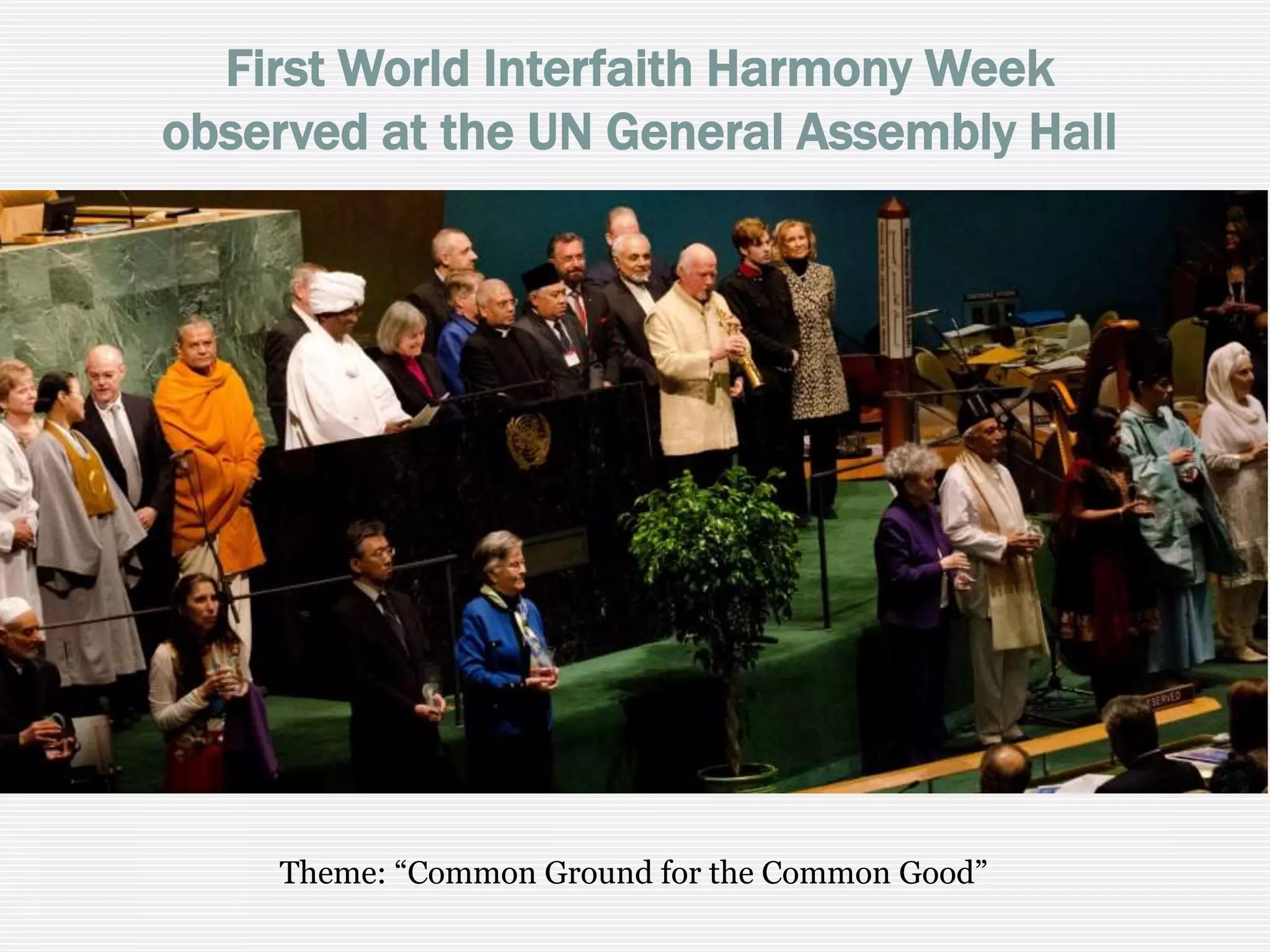
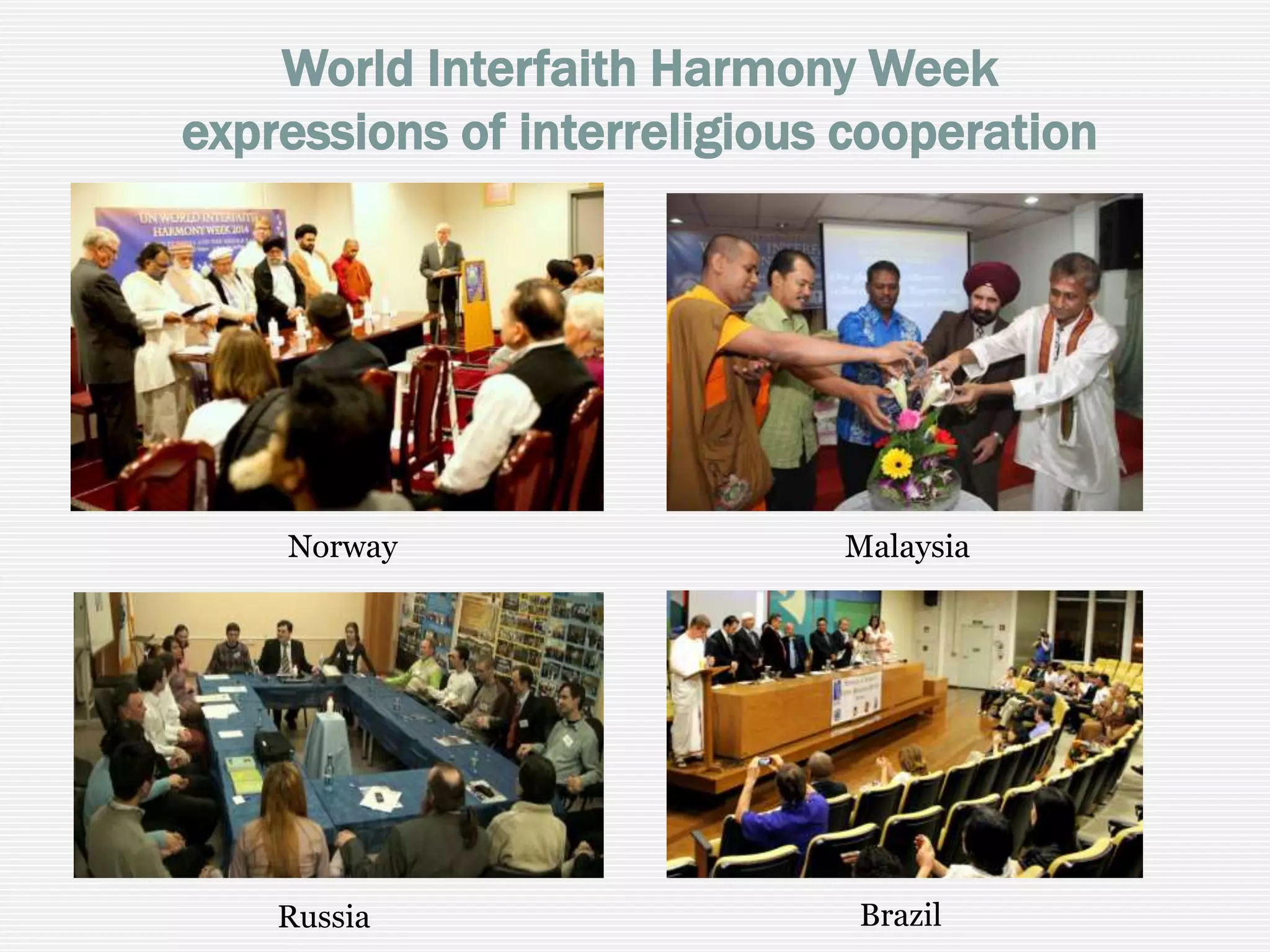
World Interfaith Harmony Week Observed
at the UN General Assembly Hall
Theme: “Common Ground for the Common Good”
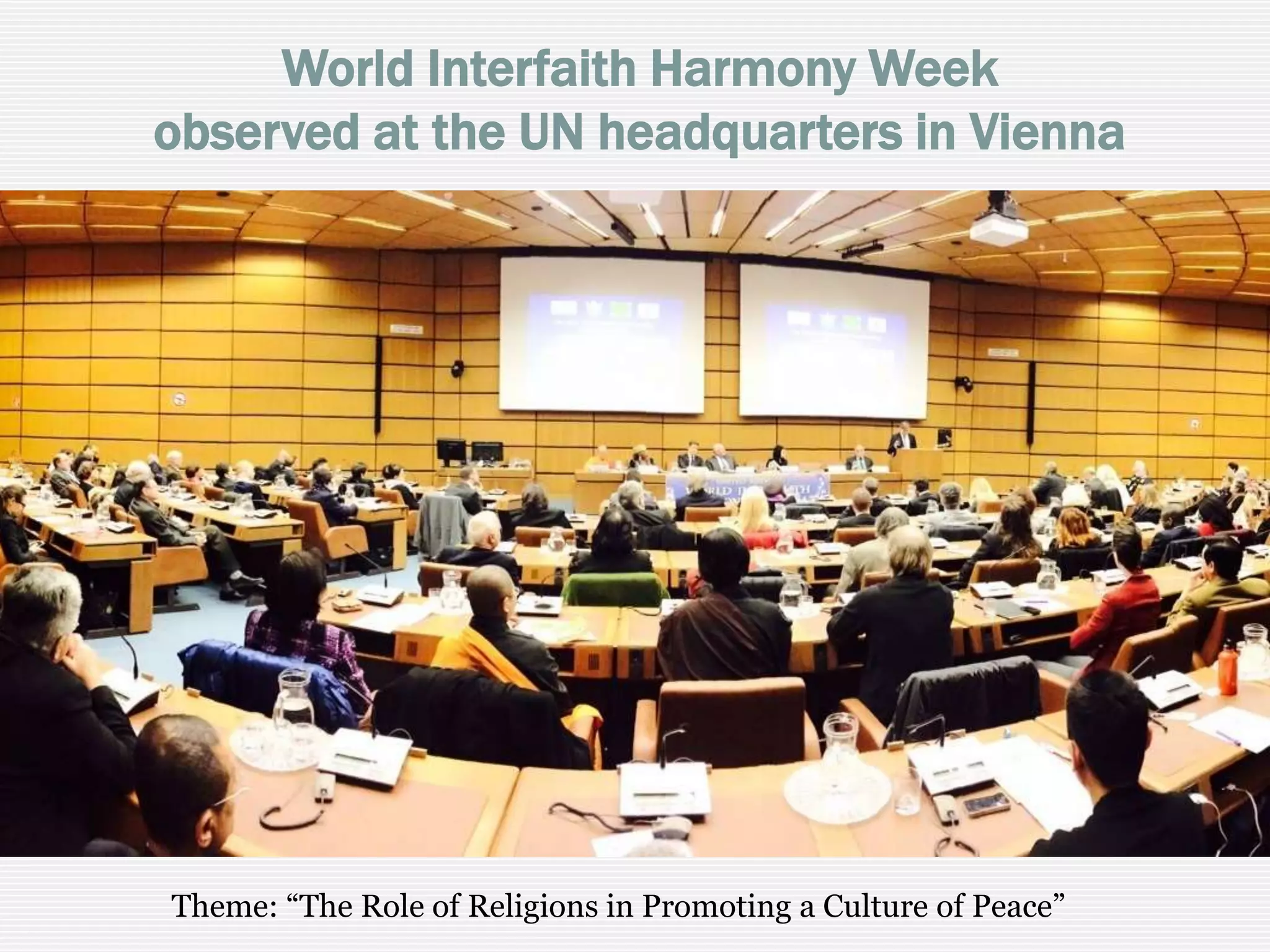
World Interfaith Harmony Week Observed
at the UN Headquarters in Vienna
Theme: “The Role of Religions in Promoting a Culture of Peace”
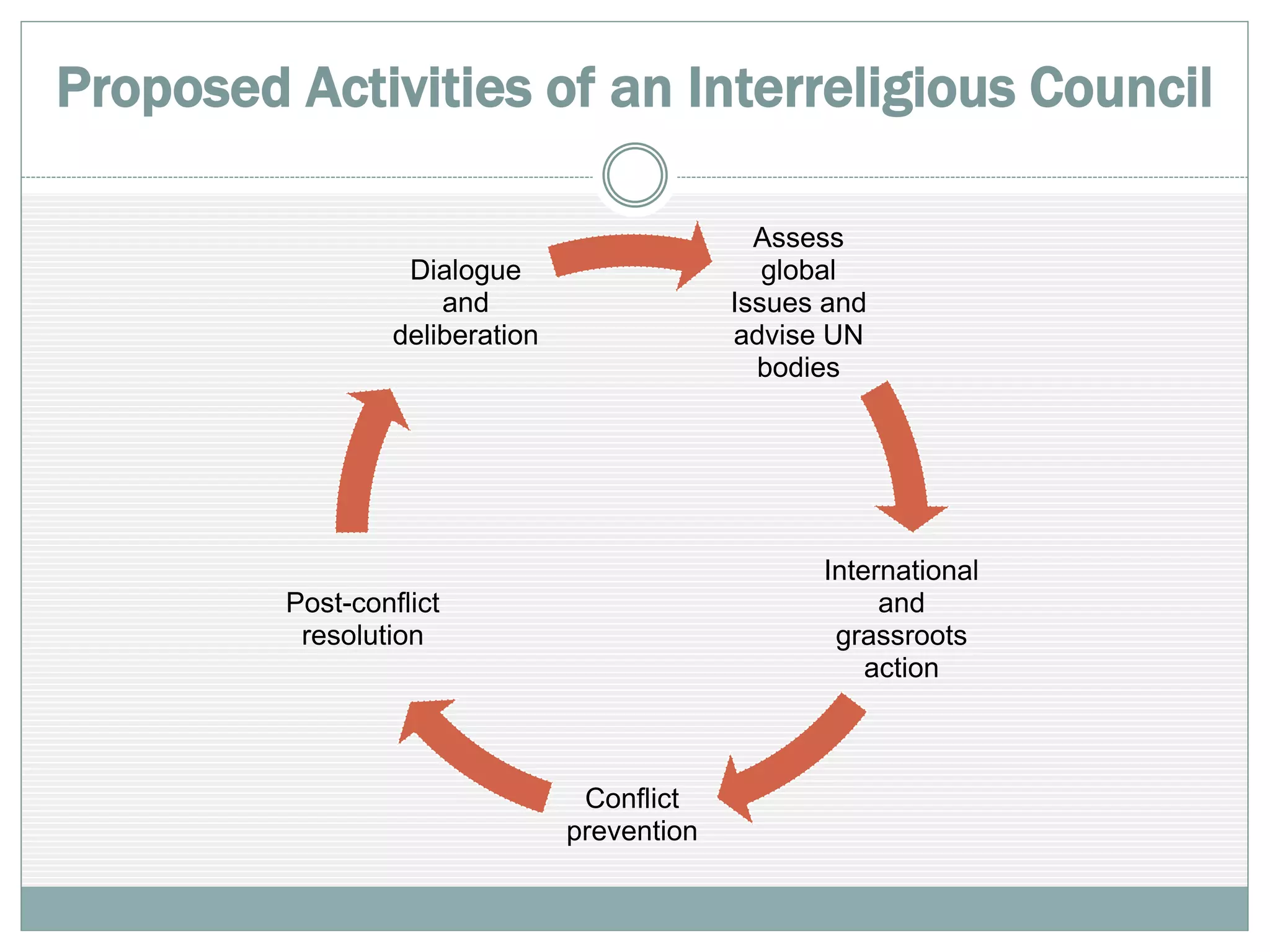
Proposed Activities of the Council
Assess
global
Issues and
advise UN
bodies
International
and
grassroots
action
Conflict
prevention
Post-conflict
resolution
Dialogue
and
deliberation
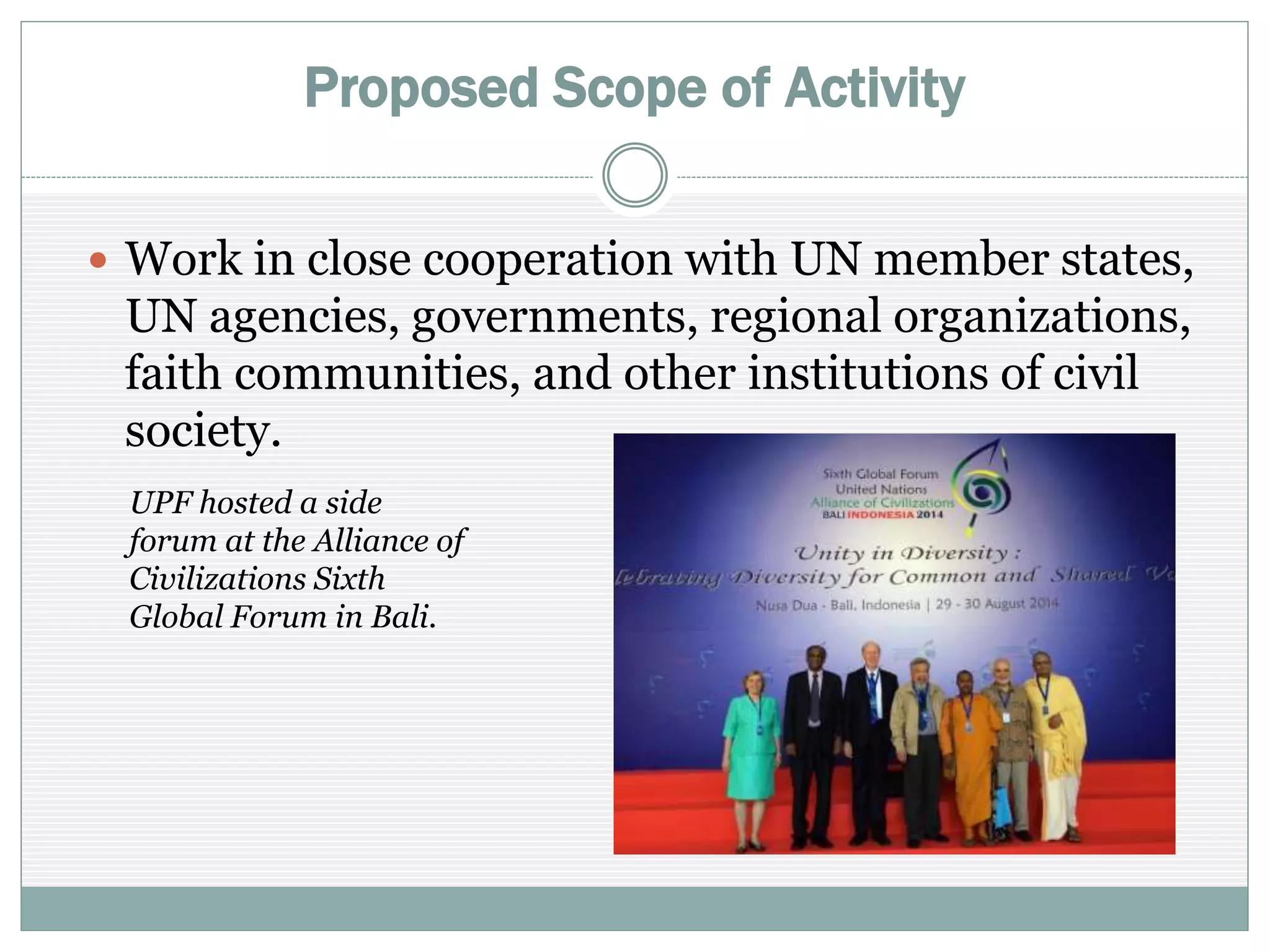
Proposed Scope of Activity
 Work in close cooperation with UN member states,
UN agencies, governments, regional organizations,
faith communities, and other institutions of civil
society
A consultation with
the Alliance of
Civilizations at the
UN in New York on
“The Relevance of
Interreligious and
Inter-Civilizational
Dialogue to the Post-
2015 Sustainable
Development Goals”
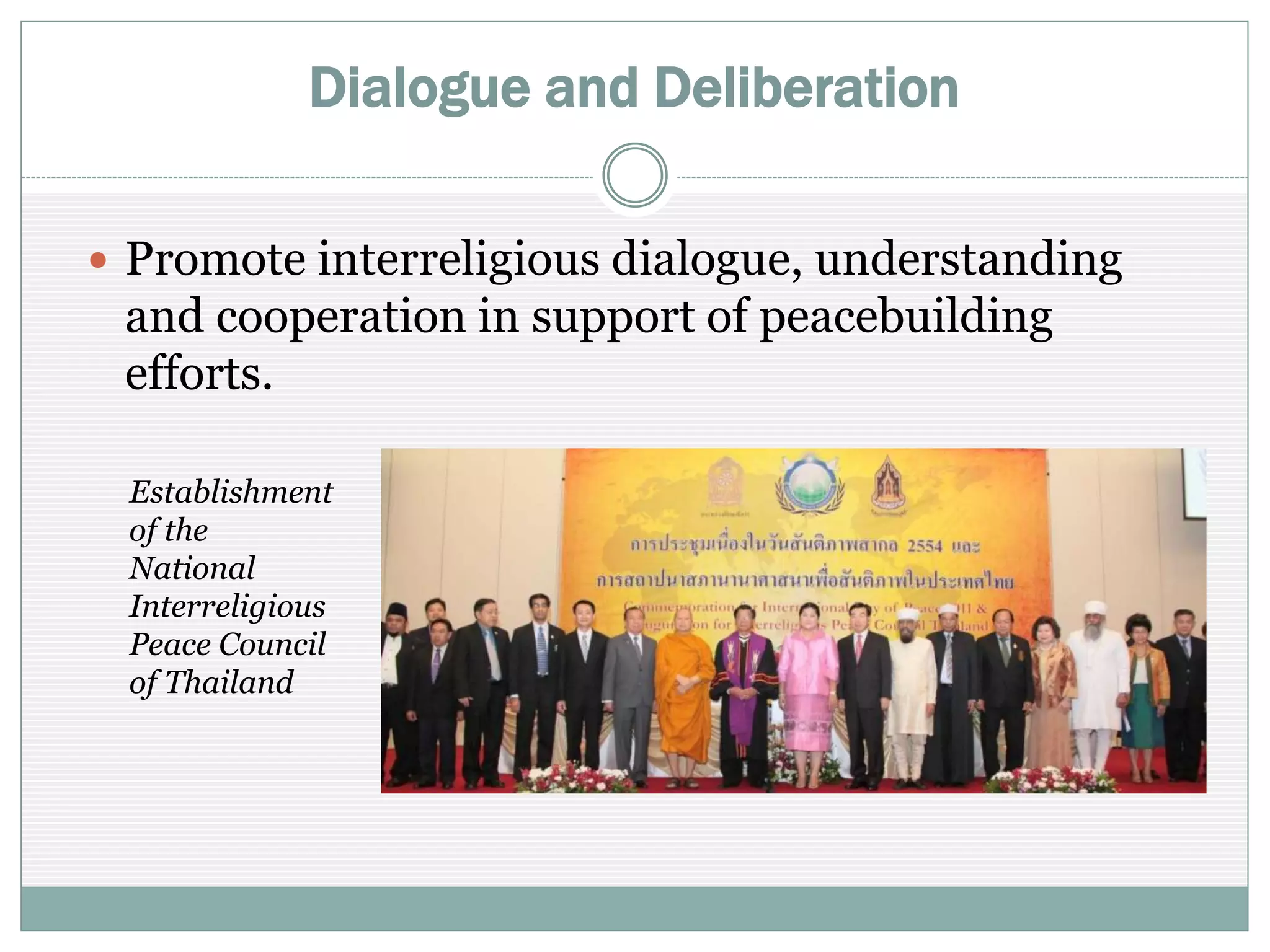
Dialogue and Deliberation
 Promote interreligious dialogue, understanding
and cooperation in support of peacebuilding efforts
Establishment
of the
National
Interreligious
Peace Council
of Thailand
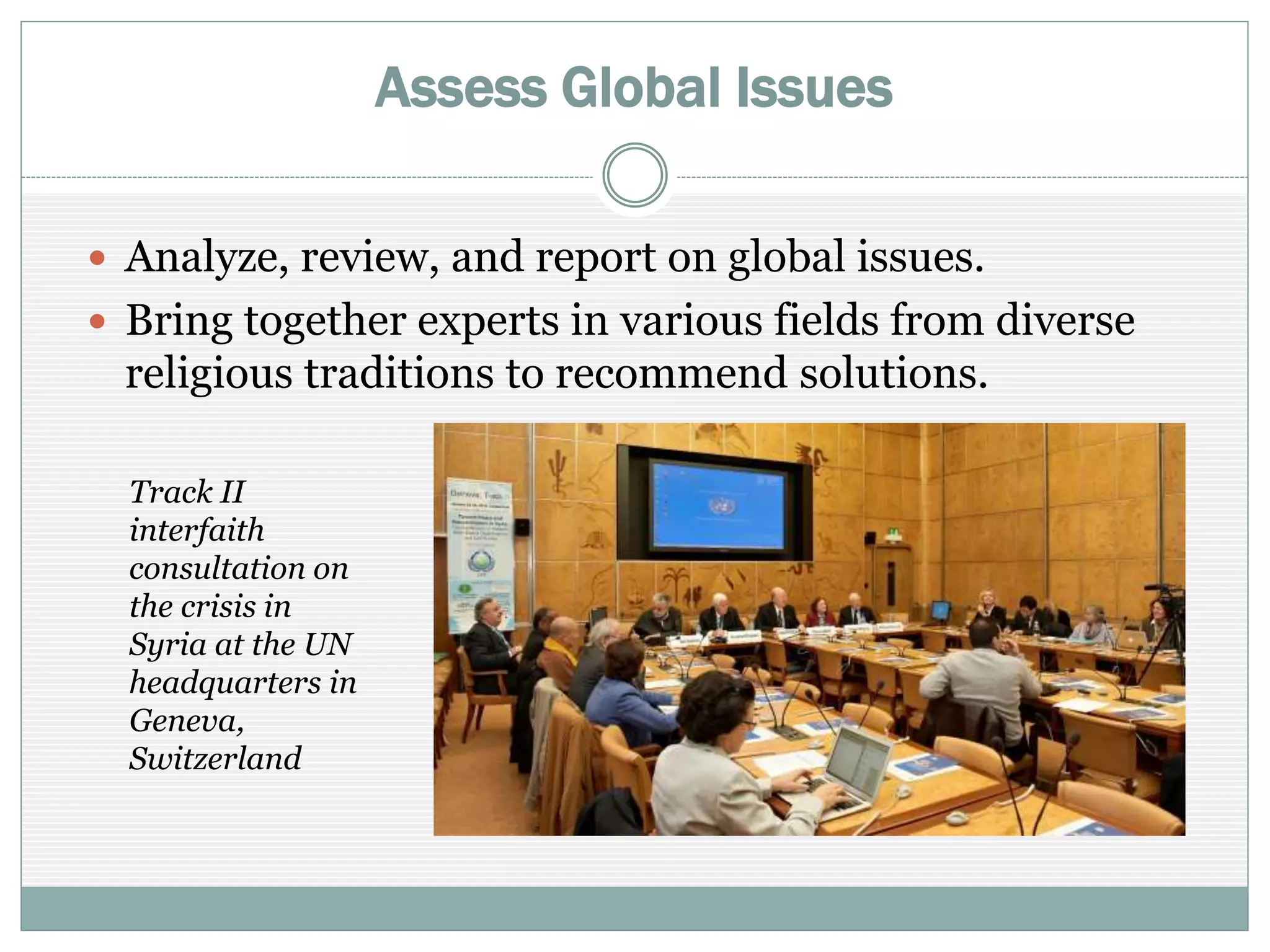
Assess Global Issues
 Analyze, review, and report on global issues
 Bring together experts in various fields from diverse
religious traditions to recommend solutions
Track II
interfaith
consultation on
the crisis in
Syria at the UN
headquarters in
Geneva,
Switzerland
Counter Extremism
 Promote tolerance and reconciliation
 Foster peaceful, inclusive societies
 Counter violent extremism
UN Secretary-General
Ban Ki-moon urges
religious leaders to unite
against extremism at a
General Assembly
Thematic Debate on
Promoting Tolerance,
Reconciliation, April
2015
UN Photo
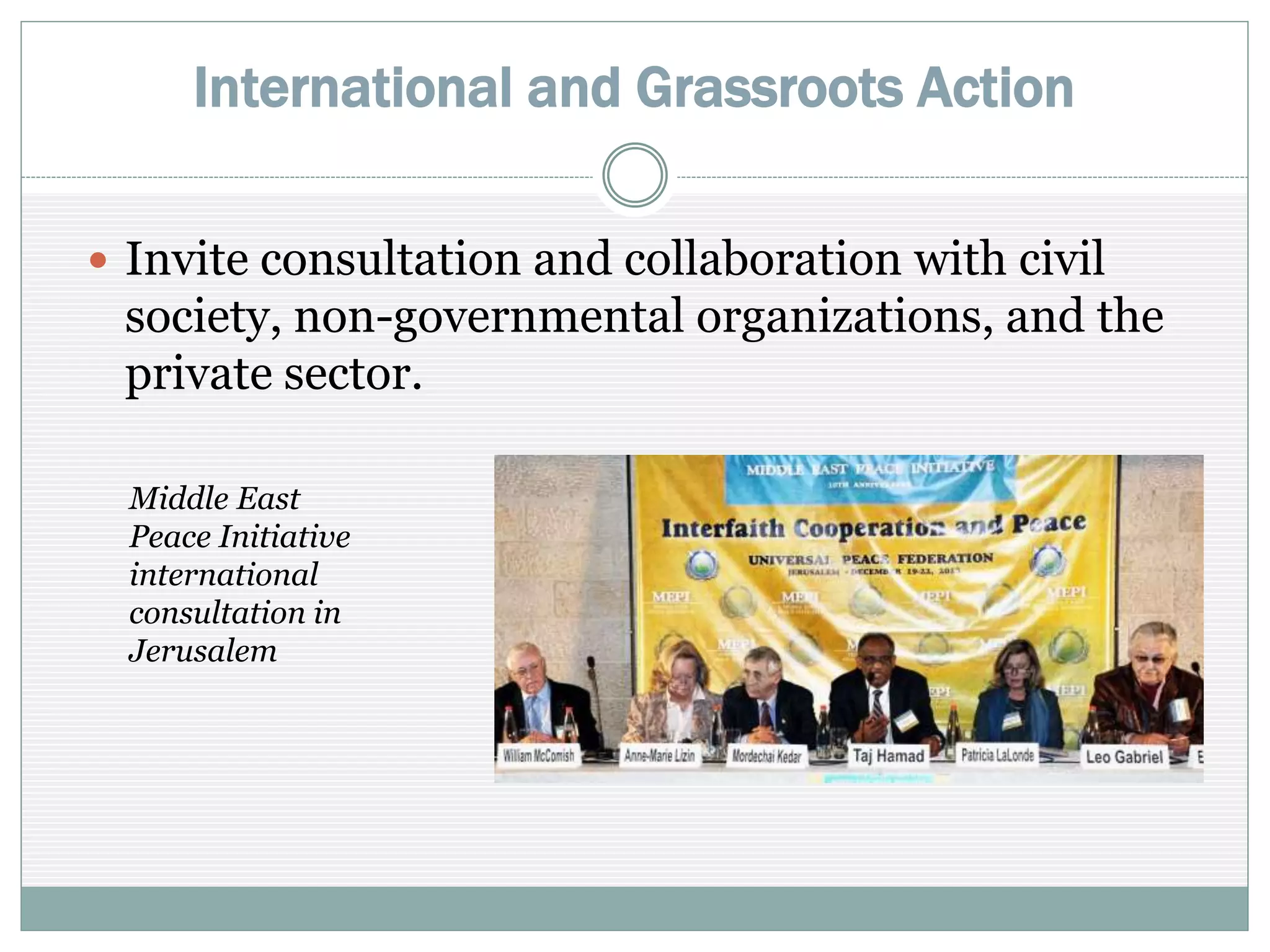
International and Grassroots Action
 Invite consultation and collaboration with civil
society, non-governmental organizations, and the
private sector
Middle East
Peace Initiative
international
consultation in
Jerusalem
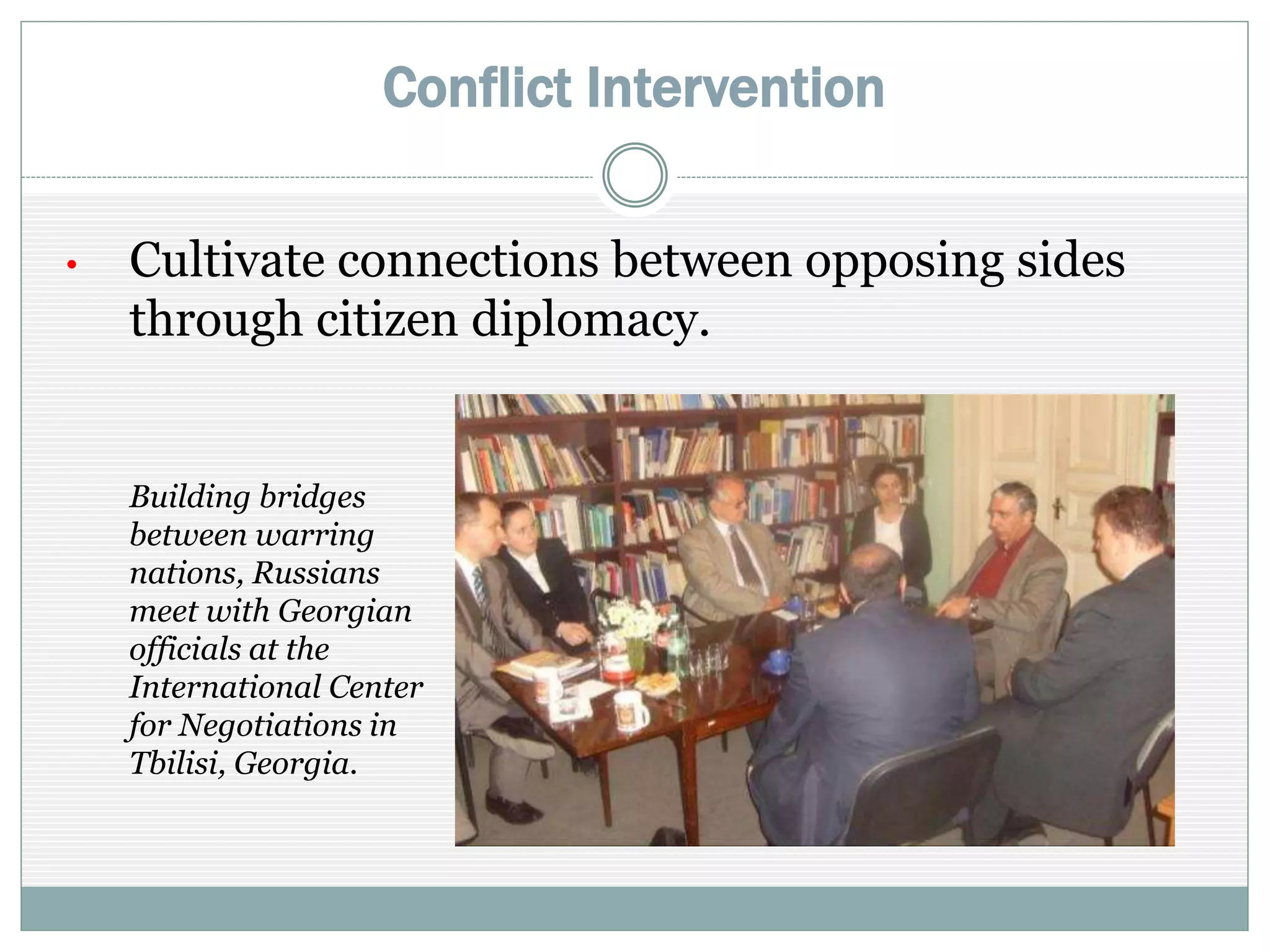
Conflict Intervention
• Cultivate connections between opposing sides
through citizen diplomacy
Building bridges
between warring
nations, Russians
meet with Georgian
officials at the
International Center
for Negotiations in
Tbilisi.
Post-Conflict Resolution
 Draw on additional perspectives and
resources to address social issues
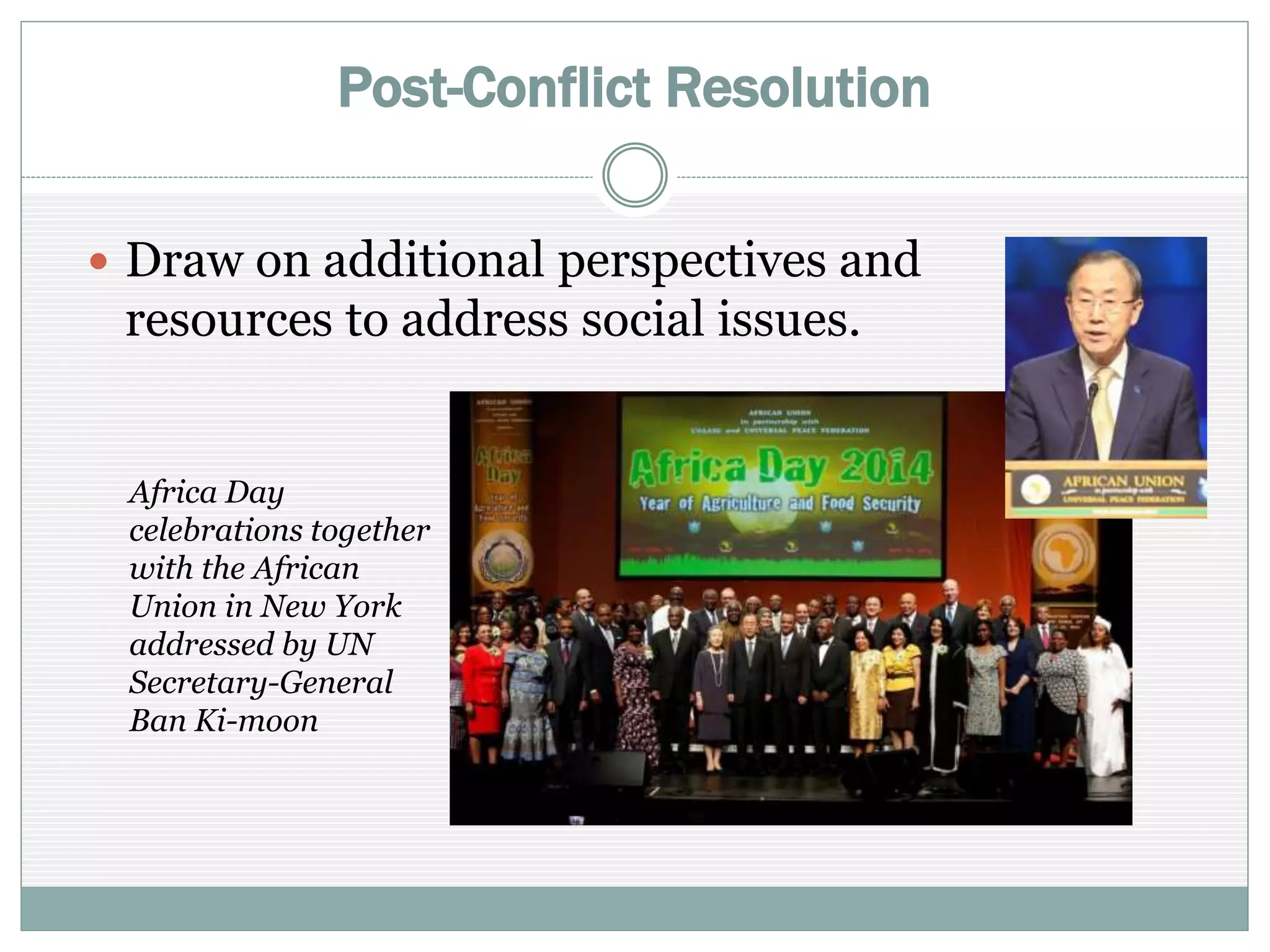
Africa Day
celebrations together
with the African
Union in New York
addressed by UN
Secretary-General
Ban Ki-moon
Challenges to Consider
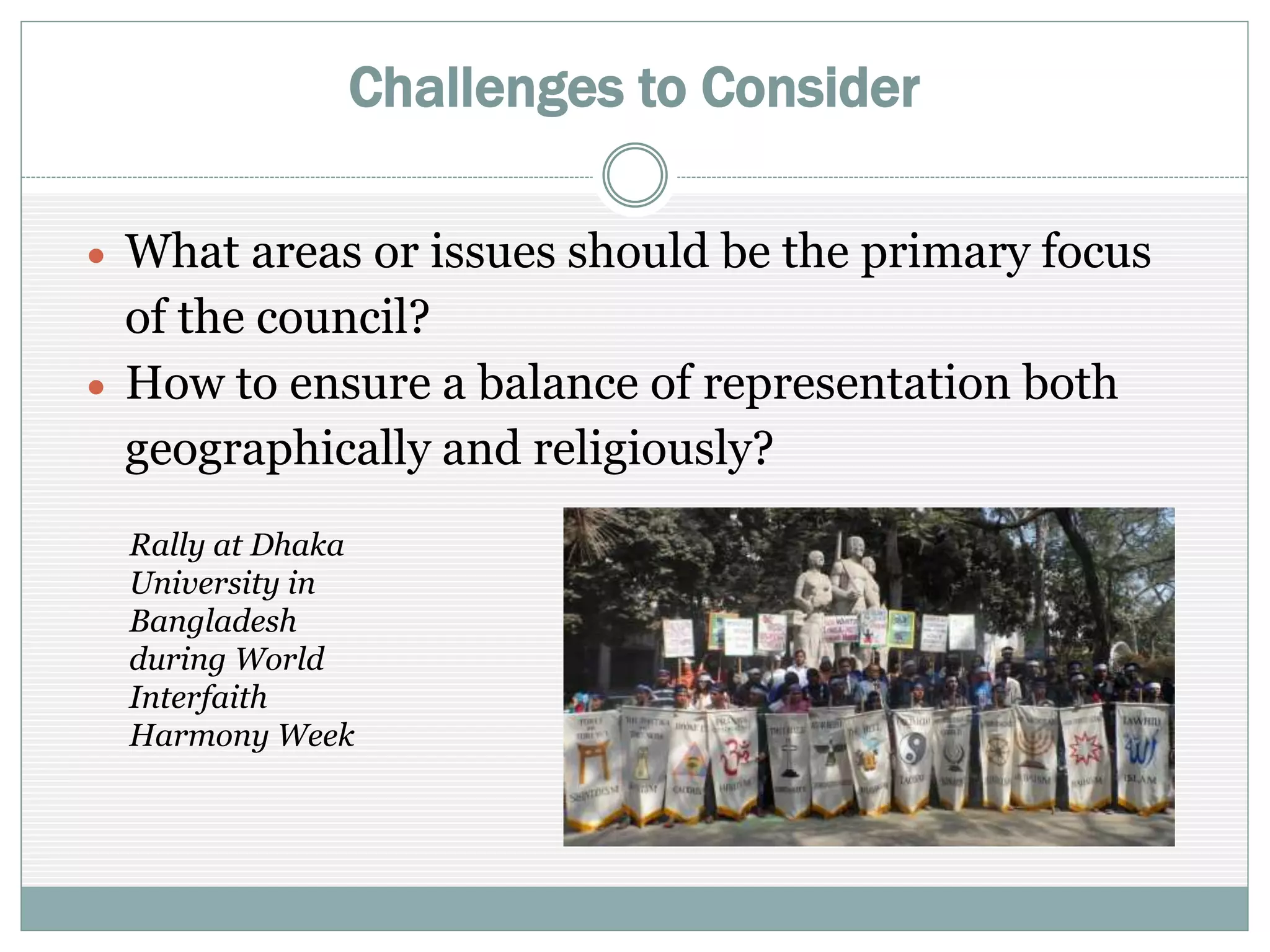
 What areas or issues should be the primary focus of
the council?
 How to ensure a balance of representation both
geographically and religiously?
A consultation
at the House
of Commons
in London
Challenges to Consider
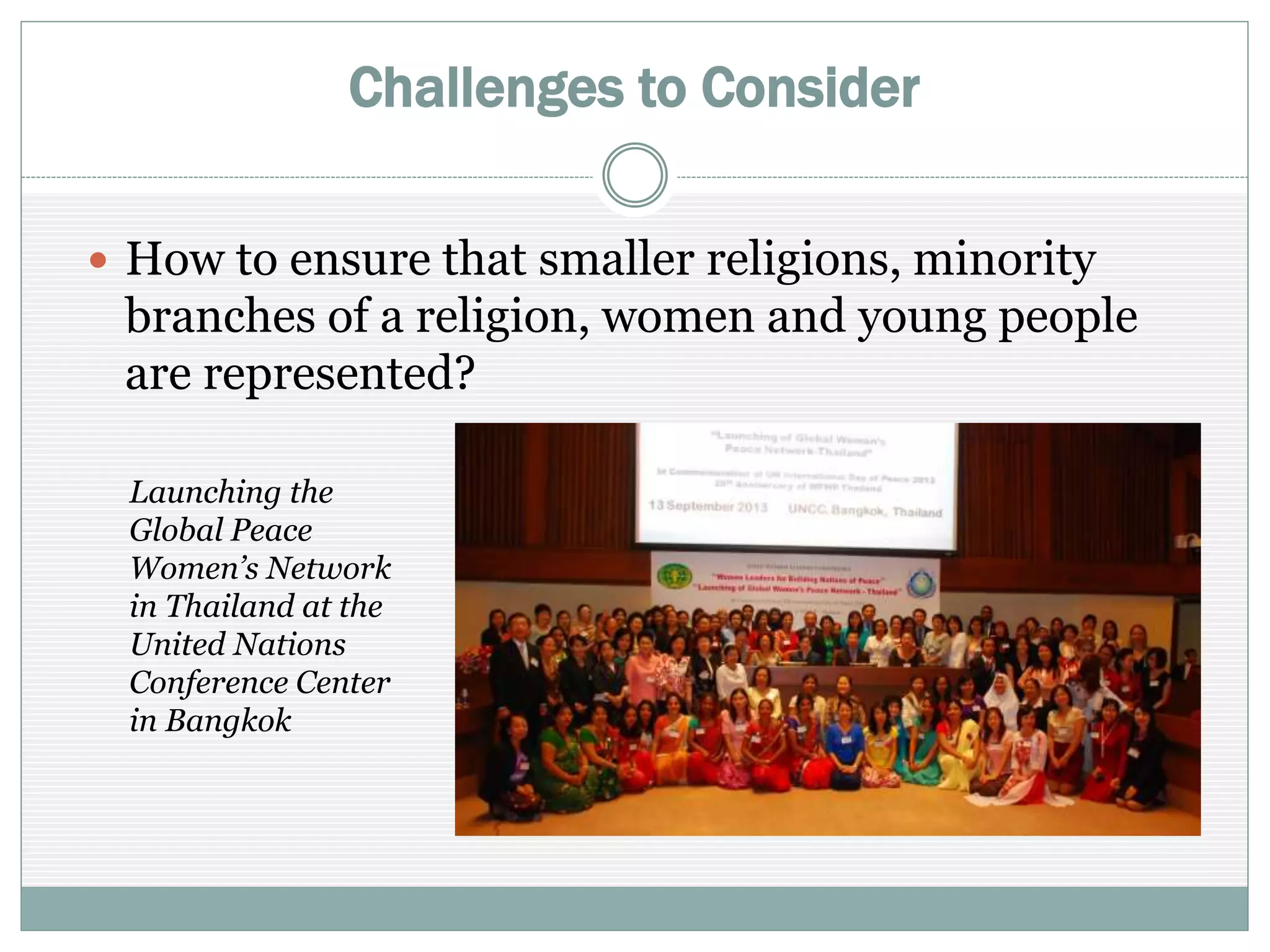
 How to ensure that smaller religions, minority
branches of a religion, women, young people are
represented?
Launching the
Global Peace
Women’s Network
in Thailand at the
United Nations
Conference Center
in Bangkok
Challenges to Consider
 How to ensure that religious leaders do not try to
usurp government roles?
 How to prevent nations from using religion to give a
cloak of respectability to questionable policies?
Challenges to Consider
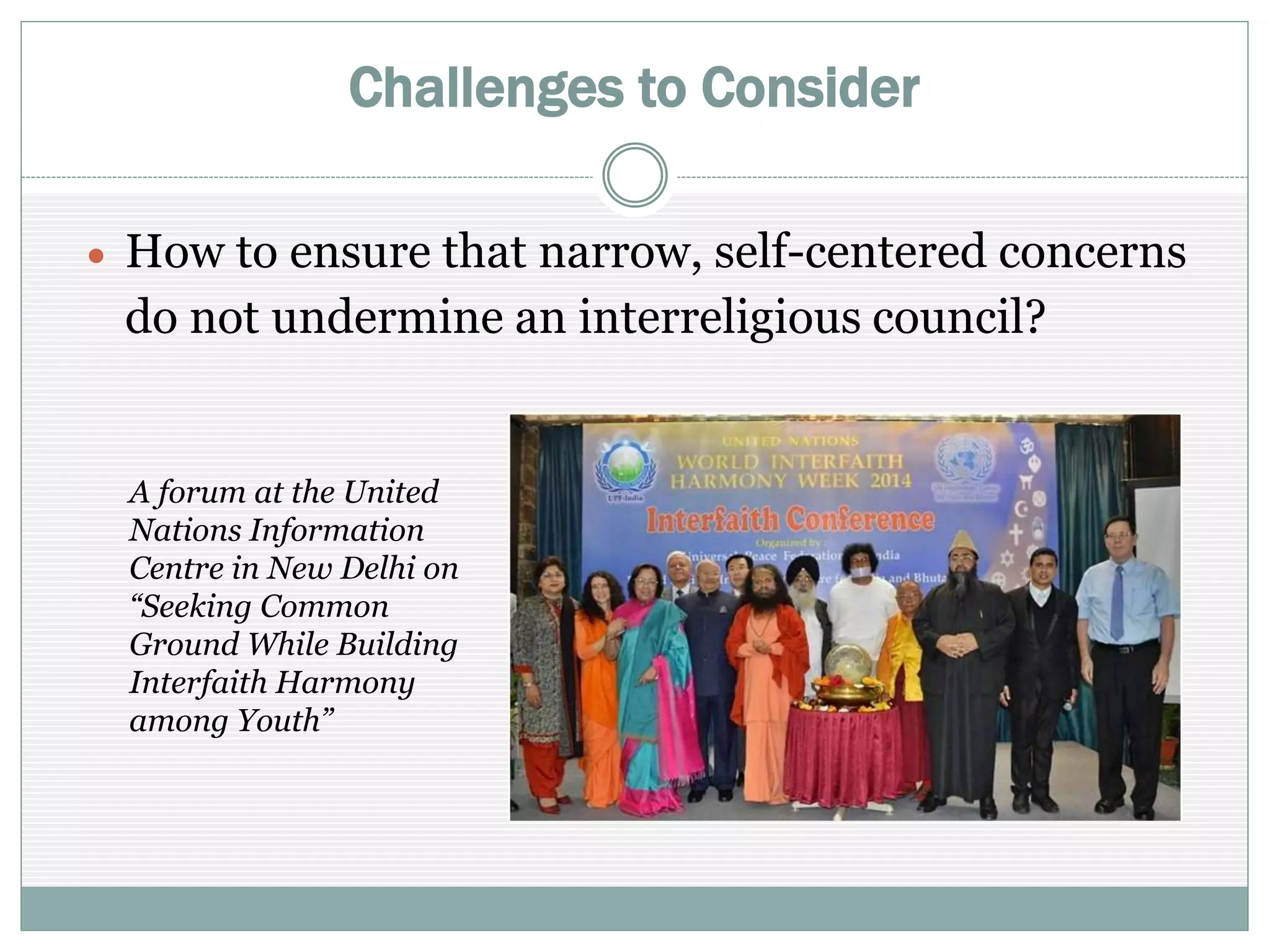
 How to ensure that narrow, self-centered concerns
do not undermine an interreligious council?
A forum at the United
Nations Information
Centre in New Delhi on
“Seeking Common
Ground While Building
Interfaith Harmony
among Youth”
Challenges to Consider
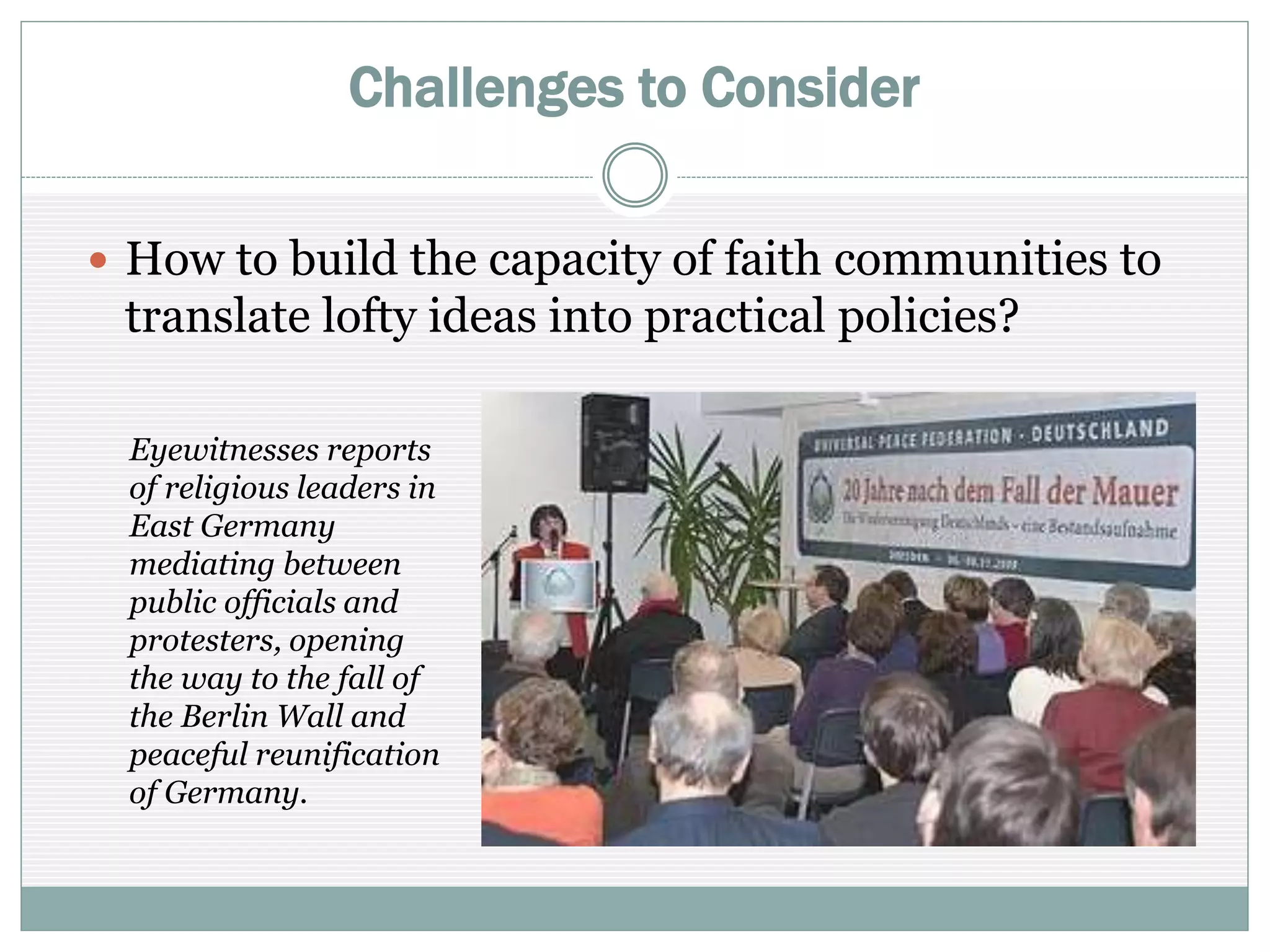
 How to build the capacity of faith communities to
translate lofty ideas into practical policies?
Eyewitnesses report
how religious leaders
in East Germany
mediated between
public officials and
protesters, opening
the way to the fall of
the Berlin Wall and
peaceful reunification
of Germany.
Next Steps
 Ongoing consultations
 Work with experts to prepare a draft resolution
establishing such a council.
 Present a draft resolution to the General Assembly.
 Garner support.
How to Get Involved
• Reach out to garner support from government
leaders, religious leaders, NGOs, etc.
• Participate in a consultation or submit input
and recommendations.
For more information see
http://www.upf.org/united-nations/interfaith-council-proposal
Email info@upf.org

Towards an Interreligious Council at the UN

  • 1.
    Toward an InterreligiousCouncil at the United Nations Consultations organized by the Universal Peace Federation
  • 2.
    Vision for anInterreligious Council  The existing United Nations structure, composed of national representatives, may be regarded as a congress where the interests of each member nation are represented. However, I submit that serious consideration should be given to forming a religious assembly, or council of religious representatives within the structure of the United Nations. This assembly or council would consist of respected spiritual leaders in fields such as religion, culture, and education. Dr. Sun Myung Moon Remarks at the United Nations, August 18, 2000
  • 3.
    Mission of anInterreligious Council  Promote interreligious dialogue, understanding, and cooperation for peace  Draw on spiritual and religious wisdom to address global issues of conflict, war, poverty, hunger, and disease  Address conflicts with religious and ethnic bases
  • 4.
    Guiding Principle  Affirmationof the sacred value and rights of all human beings, regardless of religion, nationality, ethnicity, and race The Albania Peace Council addresses issues faced by Balkan nations.
  • 5.
    Benefits to theUN  Complement the UN’s work with additional dimensions for assessing and resolving global problems  Give insights on moral and spiritual issues  Help counter religious extremism  Help prevent religious differences from being exploited to stir up conflict  Ensure that development aid is culturally and religiously sensitive  Serve as a recourse for minority communities
  • 6.
    Benefits to Religions Help build bridges between liberals and fundamentalists in the same faith  Challenge the misuse of religion as a cover for politically or economically-motivated violence  Expand the potential of religion to change people’s hearts and deepen relationships  Provide a model of how spiritual and religious groups can rise above differences and work together for the common good
  • 7.
    Progress in InterreligiousDialogue at the UN 2004 Promote Interreligious Dialogue, G.A. resolution 59/23 (Sponsored by the Permanent Mission of the Republic of the Philippines to the United Nations) 2006 Tripartite Interfaith Forums begin at the UN: Partnership of Member States, UN bodies, & NGOs 2007 Establishment of a Focal Unit in the Department of Economic and Social Affairs at the UN, G.A. Resolution 61/221 2007 & 2008 High-Level Dialogues in the General Assembly on Interreligious and Intercultural Understanding and Cooperation for Peace 2011 World Interfaith Harmony Week, draft G.A. resolution: first week of February every year
  • 8.
    World Interfaith HarmonyWeek Observed at the UN General Assembly Hall Theme: “Common Ground for the Common Good”
  • 9.
    World Interfaith HarmonyWeek Observed at the UN Headquarters in Vienna Theme: “The Role of Religions in Promoting a Culture of Peace”
  • 10.
    Proposed Activities ofthe Council Assess global Issues and advise UN bodies International and grassroots action Conflict prevention Post-conflict resolution Dialogue and deliberation
  • 11.
    Proposed Scope ofActivity  Work in close cooperation with UN member states, UN agencies, governments, regional organizations, faith communities, and other institutions of civil society A consultation with the Alliance of Civilizations at the UN in New York on “The Relevance of Interreligious and Inter-Civilizational Dialogue to the Post- 2015 Sustainable Development Goals”
  • 12.
    Dialogue and Deliberation Promote interreligious dialogue, understanding and cooperation in support of peacebuilding efforts Establishment of the National Interreligious Peace Council of Thailand
  • 13.
    Assess Global Issues Analyze, review, and report on global issues  Bring together experts in various fields from diverse religious traditions to recommend solutions Track II interfaith consultation on the crisis in Syria at the UN headquarters in Geneva, Switzerland
  • 14.
    Counter Extremism  Promotetolerance and reconciliation  Foster peaceful, inclusive societies  Counter violent extremism UN Secretary-General Ban Ki-moon urges religious leaders to unite against extremism at a General Assembly Thematic Debate on Promoting Tolerance, Reconciliation, April 2015 UN Photo
  • 15.
    International and GrassrootsAction  Invite consultation and collaboration with civil society, non-governmental organizations, and the private sector Middle East Peace Initiative international consultation in Jerusalem
  • 16.
    Conflict Intervention • Cultivateconnections between opposing sides through citizen diplomacy Building bridges between warring nations, Russians meet with Georgian officials at the International Center for Negotiations in Tbilisi.
  • 17.
    Post-Conflict Resolution  Drawon additional perspectives and resources to address social issues Africa Day celebrations together with the African Union in New York addressed by UN Secretary-General Ban Ki-moon
  • 18.
    Challenges to Consider What areas or issues should be the primary focus of the council?  How to ensure a balance of representation both geographically and religiously? A consultation at the House of Commons in London
  • 19.
    Challenges to Consider How to ensure that smaller religions, minority branches of a religion, women, young people are represented? Launching the Global Peace Women’s Network in Thailand at the United Nations Conference Center in Bangkok
  • 20.
    Challenges to Consider How to ensure that religious leaders do not try to usurp government roles?  How to prevent nations from using religion to give a cloak of respectability to questionable policies?
  • 21.
    Challenges to Consider How to ensure that narrow, self-centered concerns do not undermine an interreligious council? A forum at the United Nations Information Centre in New Delhi on “Seeking Common Ground While Building Interfaith Harmony among Youth”
  • 22.
    Challenges to Consider How to build the capacity of faith communities to translate lofty ideas into practical policies? Eyewitnesses report how religious leaders in East Germany mediated between public officials and protesters, opening the way to the fall of the Berlin Wall and peaceful reunification of Germany.
  • 23.
    Next Steps  Ongoingconsultations  Work with experts to prepare a draft resolution establishing such a council.  Present a draft resolution to the General Assembly.  Garner support.
  • 24.
    How to GetInvolved • Reach out to garner support from government leaders, religious leaders, NGOs, etc. • Participate in a consultation or submit input and recommendations. For more information see http://www.upf.org/united-nations/interfaith-council-proposal Email info@upf.org