Chapter 10 Qualitative Field Research
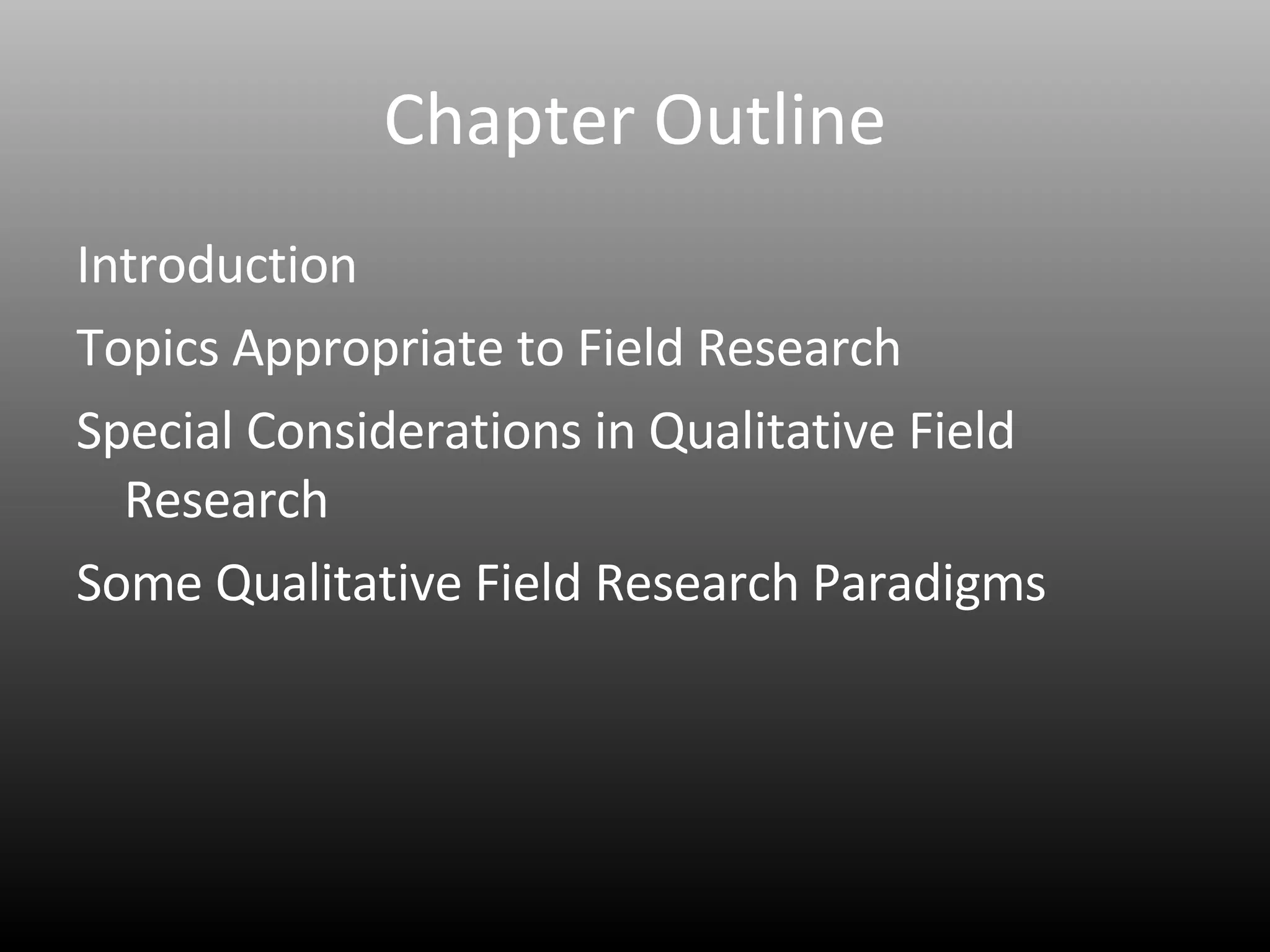
Chapter Outline Introduction Topics Appropriate to Field Research Special Considerations in Qualitative Field Research Some Qualitative Field Research Paradigms
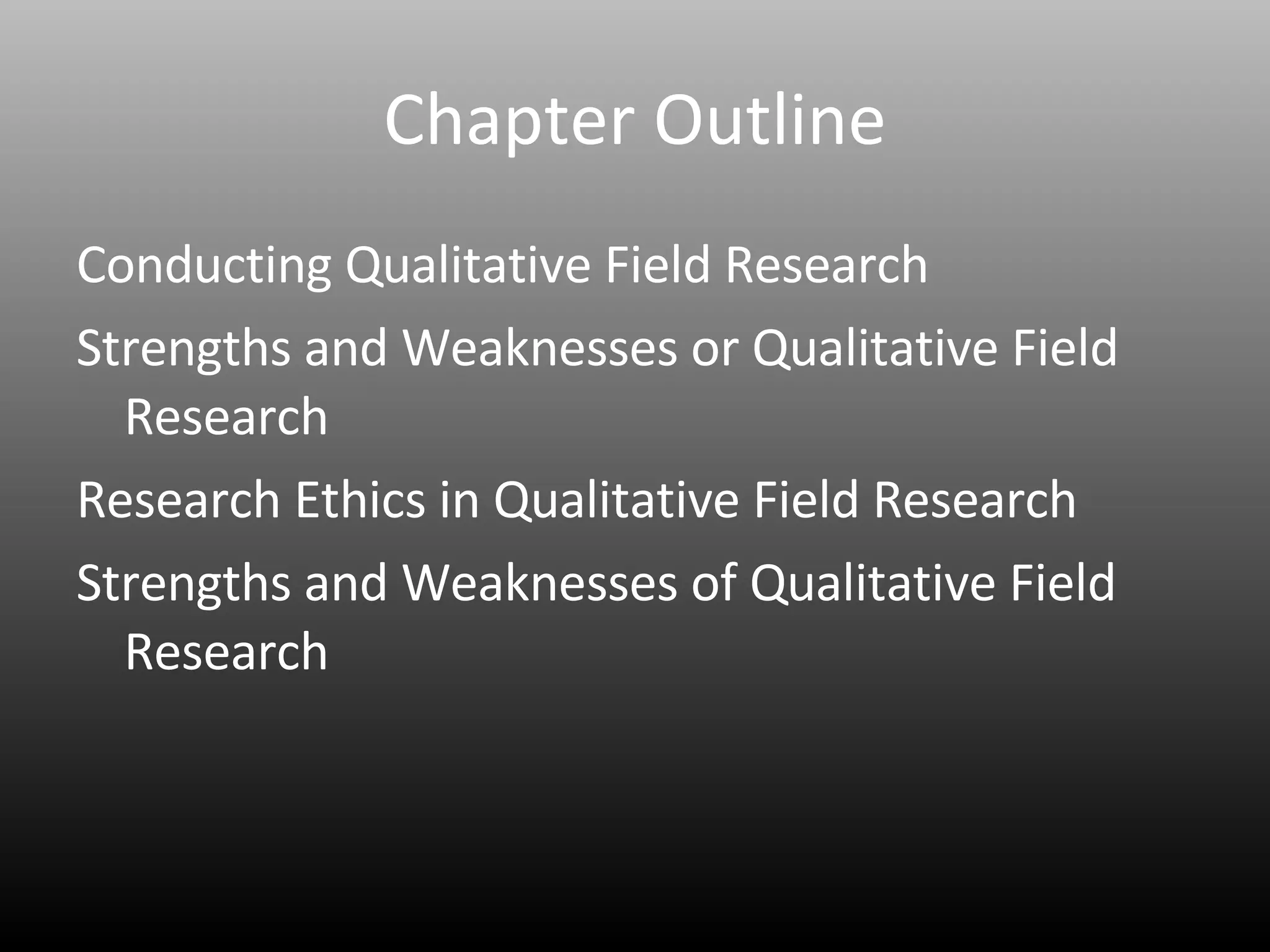
Chapter Outline Conducting Qualitative Field Research Strengths and Weaknesses or Qualitative Field Research  Research Ethics in Qualitative Field Research Strengths and Weaknesses of Qualitative Field Research
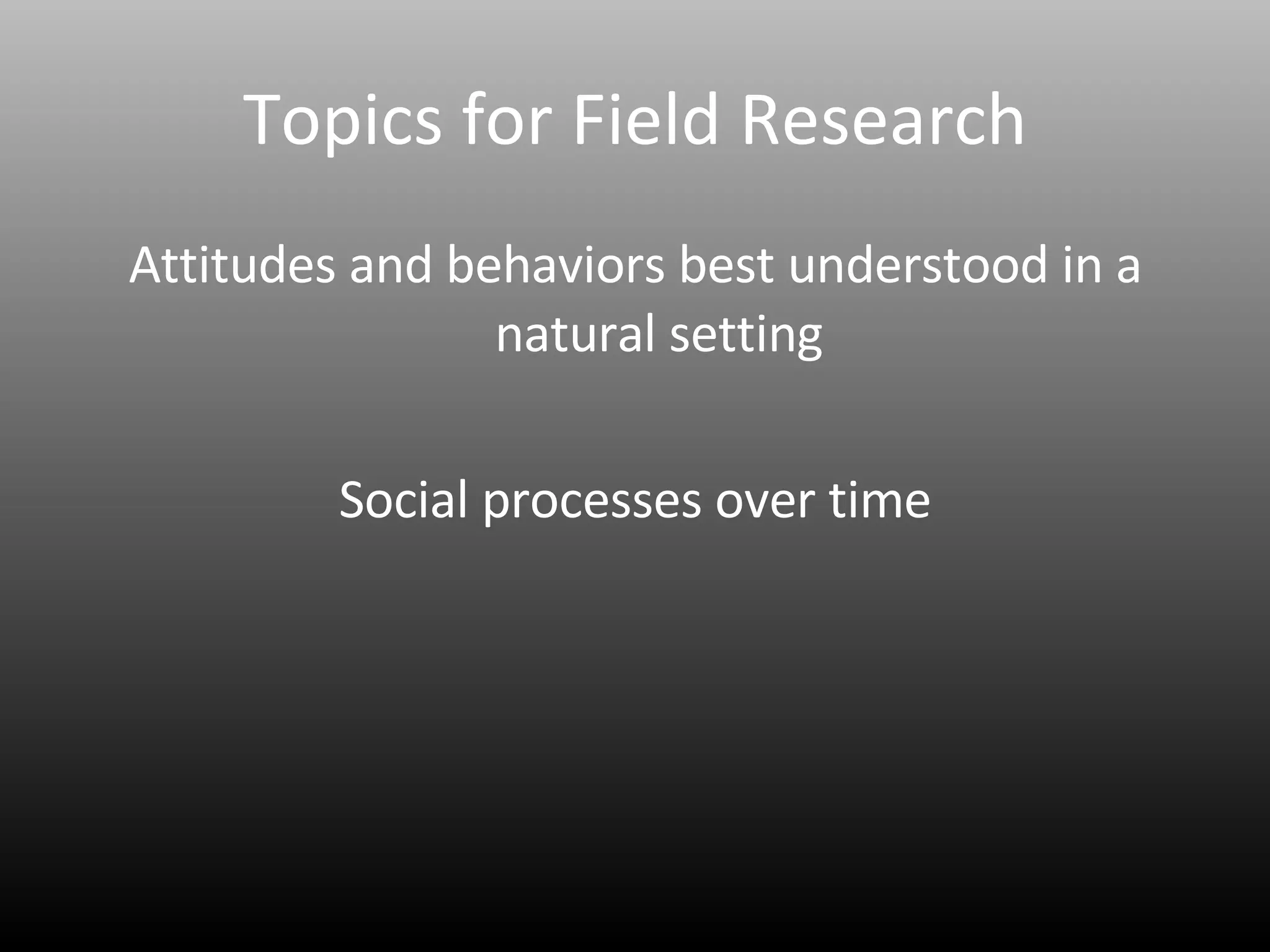
Topics for Field Research Attitudes and behaviors best understood in a natural setting Social processes over time
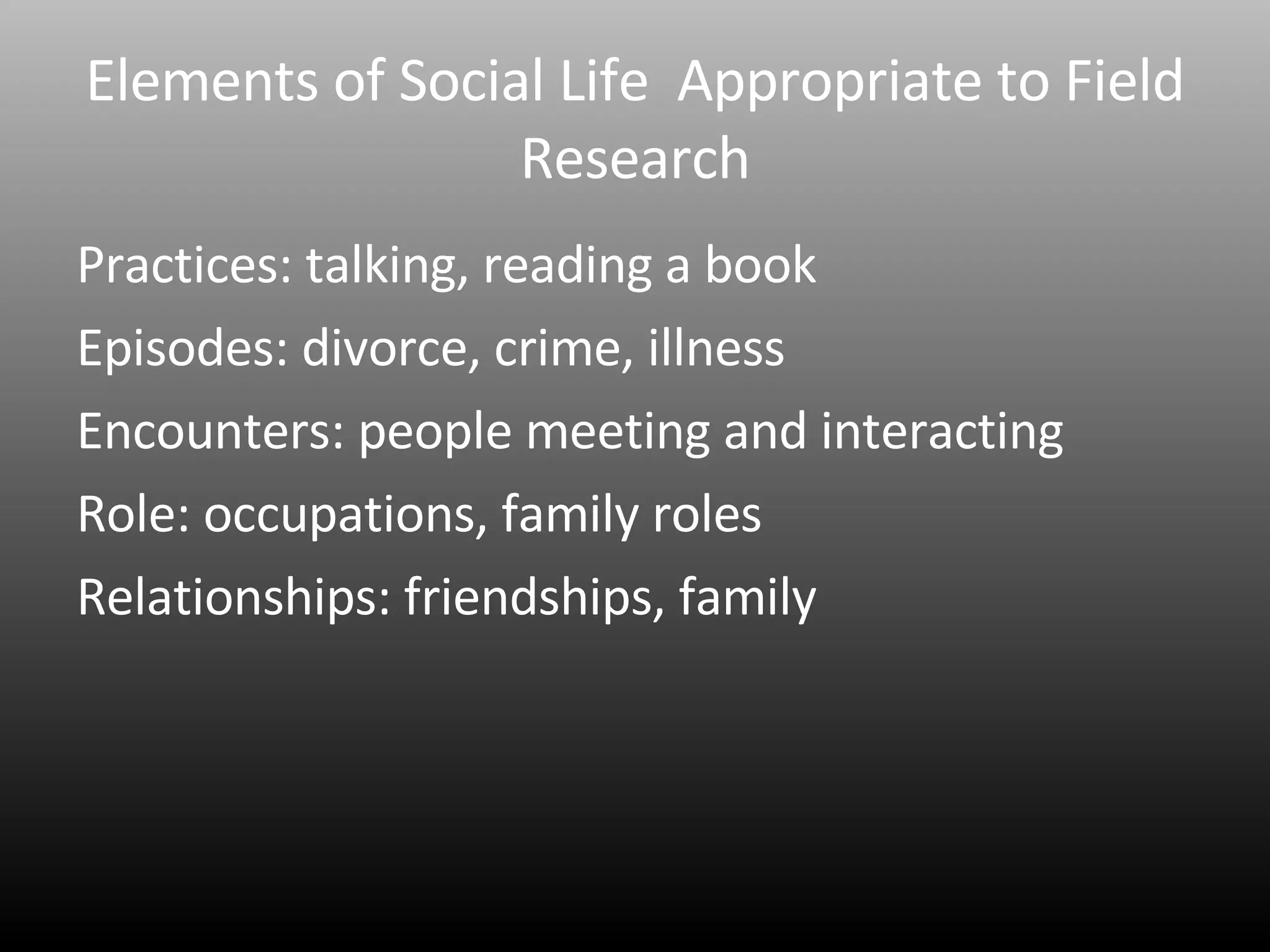
Elements of Social Life  Appropriate to Field Research Practices: talking, reading a book Episodes: divorce, crime, illness Encounters: people meeting and interacting Role: occupations, family roles Relationships: friendships, family
Elements of Social Life  Appropriate to Field Research Groups: cliques, teams, work groups Organizations: hospitals, schools Settlements: neighborhoods, ghettoes Social worlds: "wall street", "the sports world“ Lifestyles (subcultures): urban, homeless
Field Research Paradigms Naturalism Ethnomethodology Grounded theory Case studies and the extended case method Institutional ethnography Participatory action research
Preparing for Field Work Fill in your knowledge of the subject. Discuss the group you plan to research with an informant. Develop an identity with the people to be studied. Realize that your initial contact with the group can influence your observations.
Question When you use field research, you’re confronted with: decisions about the role you’ll play as an observer your relations with the people you’re observing both a and b none of these choices
When you use field research, you’re confronted with  decisions about the role you’ll play as an observer , and  your relations with the people you’re observing .
Analyzing Existing Statistics Can be the main source of data or a supplemental source of data. Often existing data doesn't cover the exact question. Reliability is dependent on the quality of the statistics.
Durkheim’s Study Why do people kill themselves? Failure Love Disgrace Durkheim found that suicide rates, with proportion taken into consideration, were stable across nations.  However, he found that individuals committed suicide based on political upheaval and religion.
Durkheim’s Study Units don’t have to be people.  Dogs Cats Countries Planets
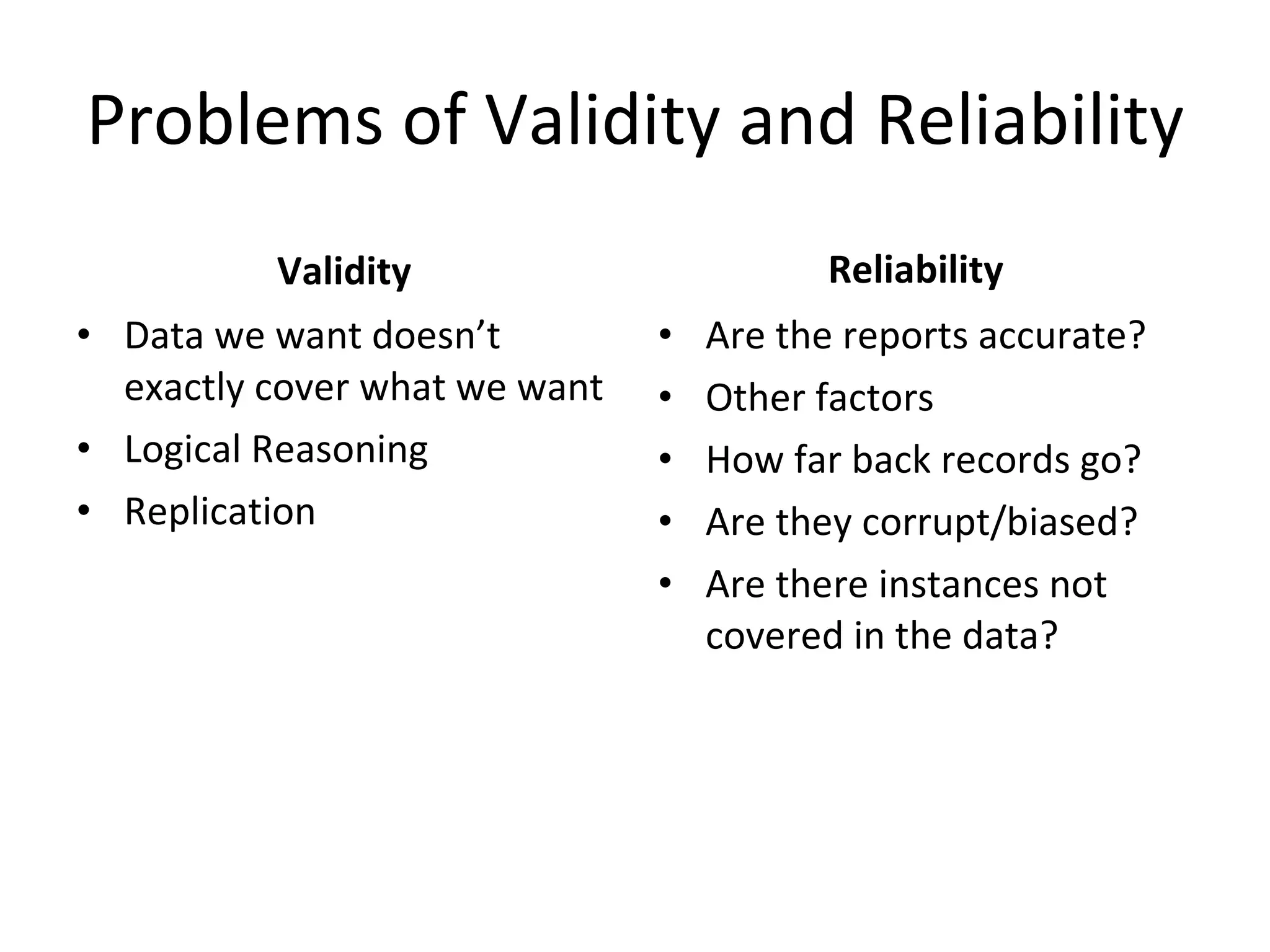
Problems of Validity and Reliability Validity Data we want doesn’t exactly cover what we want Logical Reasoning Replication Reliability Are the reports accurate? Other factors How far back records go? Are they corrupt/biased? Are there instances not covered in the data?
Comparative and Historical Research Involves the use of historical methods by sociologists, political scientists and other social scientists.
Comparative and Historical Analysis Cautions: Can't trust the accuracy of records - official or unofficial, primary or secondary. Must be wary of bias in data sources.
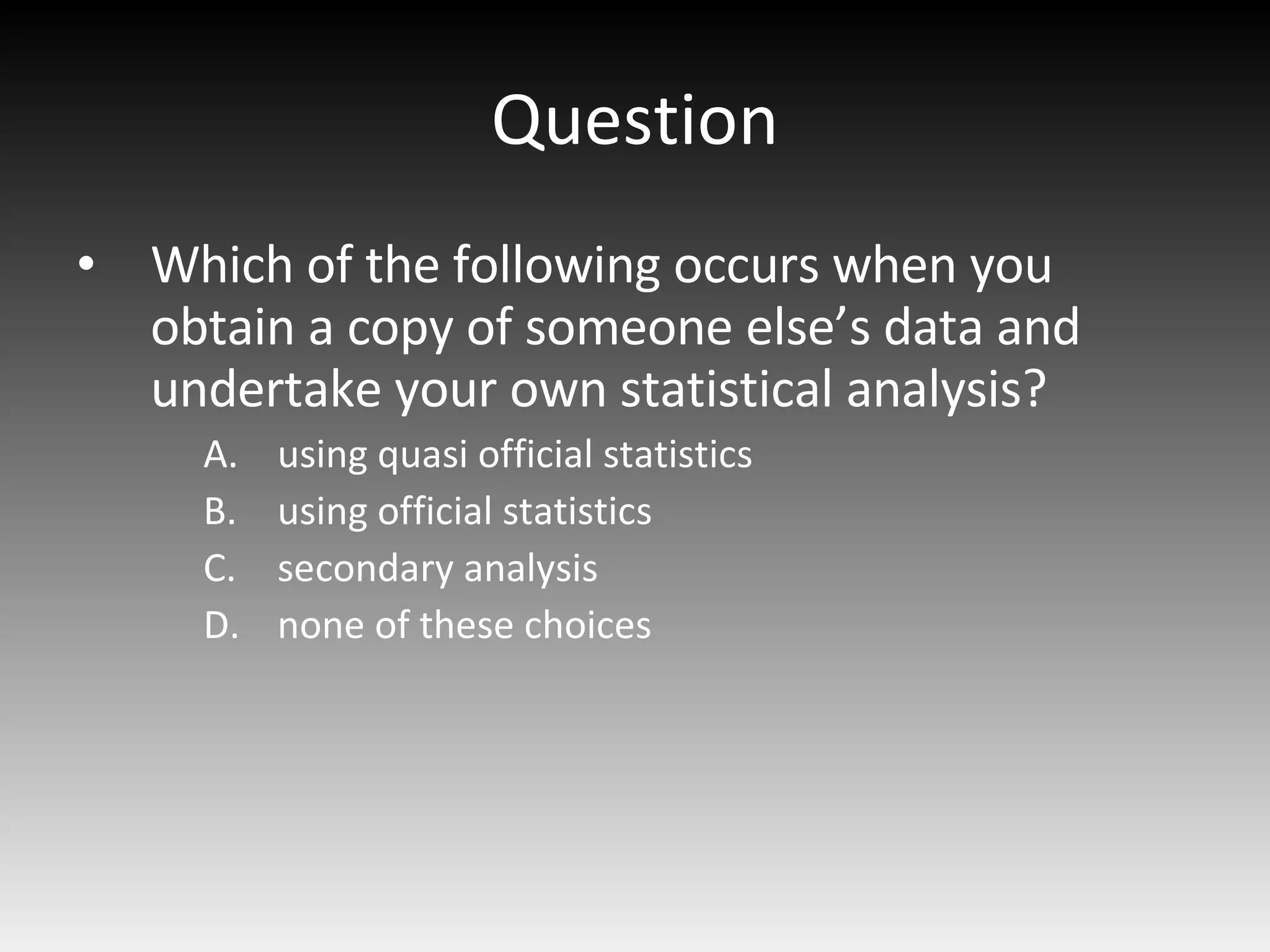
Question Which of the following occurs when you obtain a copy of someone else’s data and undertake your own statistical analysis? using quasi official statistics using official statistics secondary analysis none of these choices
Secondary analysis  occurs when you obtain a copy of someone else’s data and undertake your own statistical analysis.
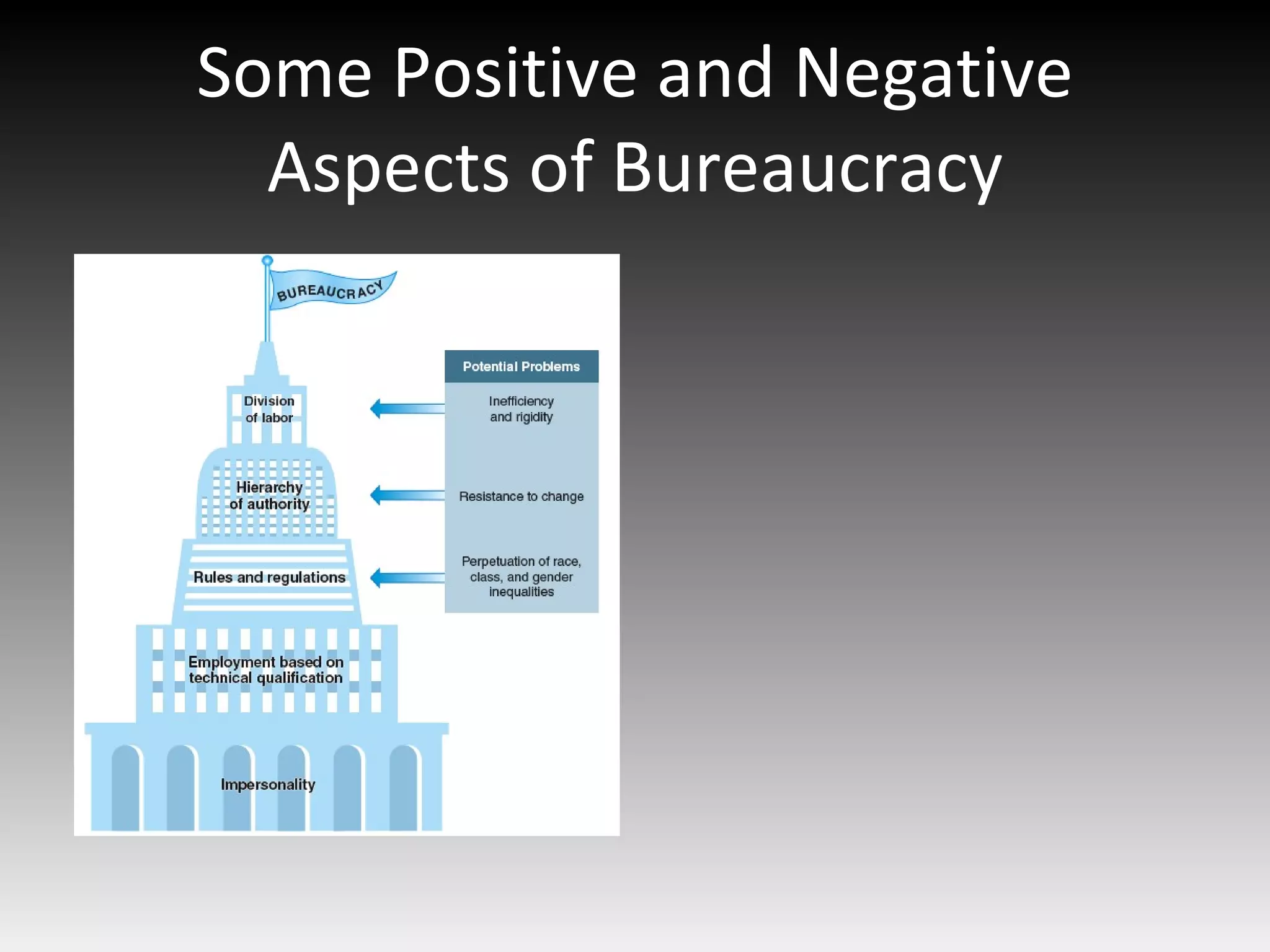
Some Positive and Negative Aspects of Bureaucracy

Topics for Field Research

  • 1.
    Chapter 10 QualitativeField Research
  • 2.
    Chapter Outline IntroductionTopics Appropriate to Field Research Special Considerations in Qualitative Field Research Some Qualitative Field Research Paradigms
  • 3.
    Chapter Outline ConductingQualitative Field Research Strengths and Weaknesses or Qualitative Field Research Research Ethics in Qualitative Field Research Strengths and Weaknesses of Qualitative Field Research
  • 4.
    Topics for FieldResearch Attitudes and behaviors best understood in a natural setting Social processes over time
  • 5.
    Elements of SocialLife Appropriate to Field Research Practices: talking, reading a book Episodes: divorce, crime, illness Encounters: people meeting and interacting Role: occupations, family roles Relationships: friendships, family
  • 6.
    Elements of SocialLife Appropriate to Field Research Groups: cliques, teams, work groups Organizations: hospitals, schools Settlements: neighborhoods, ghettoes Social worlds: "wall street", "the sports world“ Lifestyles (subcultures): urban, homeless
  • 7.
    Field Research ParadigmsNaturalism Ethnomethodology Grounded theory Case studies and the extended case method Institutional ethnography Participatory action research
  • 8.
    Preparing for FieldWork Fill in your knowledge of the subject. Discuss the group you plan to research with an informant. Develop an identity with the people to be studied. Realize that your initial contact with the group can influence your observations.
  • 9.
    Question When youuse field research, you’re confronted with: decisions about the role you’ll play as an observer your relations with the people you’re observing both a and b none of these choices
  • 10.
    When you usefield research, you’re confronted with decisions about the role you’ll play as an observer , and your relations with the people you’re observing .
  • 11.
    Analyzing Existing StatisticsCan be the main source of data or a supplemental source of data. Often existing data doesn't cover the exact question. Reliability is dependent on the quality of the statistics.
  • 12.
    Durkheim’s Study Whydo people kill themselves? Failure Love Disgrace Durkheim found that suicide rates, with proportion taken into consideration, were stable across nations. However, he found that individuals committed suicide based on political upheaval and religion.
  • 13.
    Durkheim’s Study Unitsdon’t have to be people. Dogs Cats Countries Planets
  • 14.
    Problems of Validityand Reliability Validity Data we want doesn’t exactly cover what we want Logical Reasoning Replication Reliability Are the reports accurate? Other factors How far back records go? Are they corrupt/biased? Are there instances not covered in the data?
  • 15.
    Comparative and HistoricalResearch Involves the use of historical methods by sociologists, political scientists and other social scientists.
  • 16.
    Comparative and HistoricalAnalysis Cautions: Can't trust the accuracy of records - official or unofficial, primary or secondary. Must be wary of bias in data sources.
  • 17.
    Question Which ofthe following occurs when you obtain a copy of someone else’s data and undertake your own statistical analysis? using quasi official statistics using official statistics secondary analysis none of these choices
  • 18.
    Secondary analysis occurs when you obtain a copy of someone else’s data and undertake your own statistical analysis.
  • 19.
    Some Positive andNegative Aspects of Bureaucracy