Top 10 User Interface Design
Principles in 2024
In 2024, user interface (UI) design continues to evolve, embracing new
technologies and user expectations. As digital experiences become
more integral to daily life, the demand for intuitive, accessible, and
aesthetically pleasing interfaces is higher than ever. For any UI UX
design agency, staying ahead of these trends is crucial. Here are the top
10 UI design principles that are shaping the digital landscape this year.
1. User-Centered Design
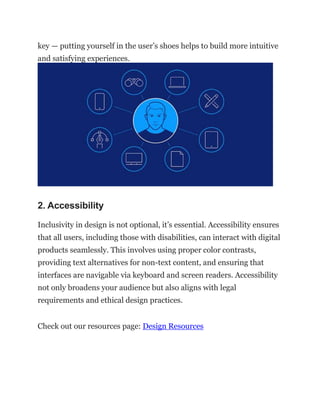
At the core of UI design is the user. Understanding the user’s needs,
preferences, and behavior is crucial. Designers must conduct thorough
research, including user personas, journey maps, and usability testing,
to create interfaces that truly resonate with their audience. Empathy is
key — putting yourself in the user’s shoes helps to build more intuitive
and satisfying experiences.
2. Accessibility
Inclusivity in design is not optional, it’s essential. Accessibility ensures
that all users, including those with disabilities, can interact with digital
products seamlessly. This involves using proper color contrasts,
providing text alternatives for non-text content, and ensuring that
interfaces are navigable via keyboard and screen readers. Accessibility
not only broadens your audience but also aligns with legal
requirements and ethical design practices.
Check out our resources page: Design Resources
3. Simplicity and Minimalism
In 2024, less is more. Clean, uncluttered interfaces that focus on
essential elements improve usability and reduce cognitive load.
Minimalism helps users to navigate and find information quickly,
leading to a more pleasant experience. This principle emphasizes the
importance of whitespace, clear typography, and a limited color
palette.
4. Consistency
Consistency in user interface design creates a sense of familiarity and
reliability. This means maintaining uniformity in visual elements,
language, and behavior across different screens and devices. Consistent
design patterns help users learn and predict how to interact with the
interface, improving overall usability.
5. Responsive Design
With the proliferation of devices and screen sizes, responsive design is
non-negotiable. Interfaces must adapt smoothly to various screen
dimensions, providing an optimal experience on desktops, tablets, and
smartphones. Fluid grids, flexible images, and media queries are
fundamental techniques in ensuring a responsive design.
6. Microinteractions
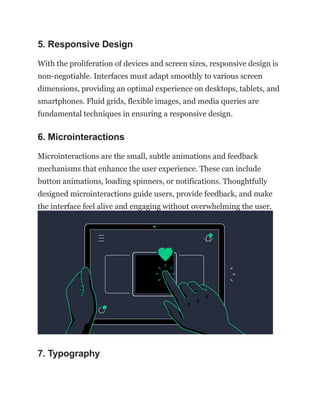
Microinteractions are the small, subtle animations and feedback
mechanisms that enhance the user experience. These can include
button animations, loading spinners, or notifications. Thoughtfully
designed microinteractions guide users, provide feedback, and make
the interface feel alive and engaging without overwhelming the user.
7. Typography
Typography plays a critical role in UI design, impacting readability,
hierarchy, and overall aesthetics. Choosing the right fonts, sizes, and
spacing can make a significant difference in how users perceive and
interact with the interface. In 2024, variable fonts are gaining
popularity, offering flexibility and improved performance.
Read More: Choose Right Typography for Your Project
8. Personalization
Users expect personalized experiences tailored to their preferences and
behavior. Personalization can range from adaptive content and
recommendations to customizable interface settings. By leveraging
data and AI, designers can create more relevant and engaging
experiences that cater to individual user needs.
9. Motion Design
Motion design is more than just eye candy; it enhances usability and
guides user interactions. Thoughtful animations can direct attention,
indicate progress, and provide context, making interfaces more
intuitive. However, it’s essential to use motion judiciously to avoid
distraction or overwhelm.
10. Sustainability
As environmental consciousness grows, sustainability in design is
becoming a significant consideration. This includes optimizing
interfaces to reduce energy consumption, minimizing data usage, and
promoting long-lasting, durable design practices. Sustainable design
not only benefits the environment but also improves performance and
user satisfaction.
Conclusion
In 2024, UI design is all about creating meaningful, accessible, and
delightful experiences. By adhering to these top 10 principles,
designers can craft interfaces that not only meet the functional needs
of users but also resonate with them on a deeper level. As technology
and user expectations continue to evolve, staying abreast of these
principles will ensure that your designs remain relevant and impactful.
Leveraging professional UI UX design services can help you stay ahead
in delivering exceptional digital experiences.
👋 Let’s Connect!
We help businesses capture the right audience with creative user
interfaces of websites and apps, providing complete designing and
front-end development services.
https://www.uidesignz.com/

Top 10 User Interface Design Principles in 2024.pdf

  • 1.
    Top 10 UserInterface Design Principles in 2024 In 2024, user interface (UI) design continues to evolve, embracing new technologies and user expectations. As digital experiences become more integral to daily life, the demand for intuitive, accessible, and aesthetically pleasing interfaces is higher than ever. For any UI UX design agency, staying ahead of these trends is crucial. Here are the top 10 UI design principles that are shaping the digital landscape this year. 1. User-Centered Design At the core of UI design is the user. Understanding the user’s needs, preferences, and behavior is crucial. Designers must conduct thorough research, including user personas, journey maps, and usability testing, to create interfaces that truly resonate with their audience. Empathy is
  • 2.
    key — puttingyourself in the user’s shoes helps to build more intuitive and satisfying experiences. 2. Accessibility Inclusivity in design is not optional, it’s essential. Accessibility ensures that all users, including those with disabilities, can interact with digital products seamlessly. This involves using proper color contrasts, providing text alternatives for non-text content, and ensuring that interfaces are navigable via keyboard and screen readers. Accessibility not only broadens your audience but also aligns with legal requirements and ethical design practices. Check out our resources page: Design Resources
  • 3.
    3. Simplicity andMinimalism In 2024, less is more. Clean, uncluttered interfaces that focus on essential elements improve usability and reduce cognitive load. Minimalism helps users to navigate and find information quickly, leading to a more pleasant experience. This principle emphasizes the importance of whitespace, clear typography, and a limited color palette. 4. Consistency Consistency in user interface design creates a sense of familiarity and reliability. This means maintaining uniformity in visual elements, language, and behavior across different screens and devices. Consistent design patterns help users learn and predict how to interact with the interface, improving overall usability.
  • 4.
    5. Responsive Design Withthe proliferation of devices and screen sizes, responsive design is non-negotiable. Interfaces must adapt smoothly to various screen dimensions, providing an optimal experience on desktops, tablets, and smartphones. Fluid grids, flexible images, and media queries are fundamental techniques in ensuring a responsive design. 6. Microinteractions Microinteractions are the small, subtle animations and feedback mechanisms that enhance the user experience. These can include button animations, loading spinners, or notifications. Thoughtfully designed microinteractions guide users, provide feedback, and make the interface feel alive and engaging without overwhelming the user. 7. Typography
  • 5.
    Typography plays acritical role in UI design, impacting readability, hierarchy, and overall aesthetics. Choosing the right fonts, sizes, and spacing can make a significant difference in how users perceive and interact with the interface. In 2024, variable fonts are gaining popularity, offering flexibility and improved performance. Read More: Choose Right Typography for Your Project 8. Personalization Users expect personalized experiences tailored to their preferences and behavior. Personalization can range from adaptive content and recommendations to customizable interface settings. By leveraging data and AI, designers can create more relevant and engaging experiences that cater to individual user needs. 9. Motion Design Motion design is more than just eye candy; it enhances usability and guides user interactions. Thoughtful animations can direct attention, indicate progress, and provide context, making interfaces more intuitive. However, it’s essential to use motion judiciously to avoid distraction or overwhelm.
  • 6.
    10. Sustainability As environmentalconsciousness grows, sustainability in design is becoming a significant consideration. This includes optimizing interfaces to reduce energy consumption, minimizing data usage, and promoting long-lasting, durable design practices. Sustainable design not only benefits the environment but also improves performance and user satisfaction. Conclusion In 2024, UI design is all about creating meaningful, accessible, and delightful experiences. By adhering to these top 10 principles, designers can craft interfaces that not only meet the functional needs of users but also resonate with them on a deeper level. As technology and user expectations continue to evolve, staying abreast of these principles will ensure that your designs remain relevant and impactful.
  • 7.
    Leveraging professional UIUX design services can help you stay ahead in delivering exceptional digital experiences. 👋 Let’s Connect! We help businesses capture the right audience with creative user interfaces of websites and apps, providing complete designing and front-end development services. https://www.uidesignz.com/