FoodPreservation
Food preservation can be defined as
the process of treating and handling
food in such a way as to stop or
greatly slow down spoilage and
prevent foodborne illness while
maintaining nutritional value, texture
and flavour.
WhatisFood
Preservation?
Prevent food spoilage
Prevent polluted food
Maintaining food
safety and quality
Stops the growth of
microorganisms
By preserving food, food waste can be
reduced, which is an important way to
decrease production costs and
increase the efficiency of food
systems, improve food security and
nutrition
Whyisitnecessaryto
preservefood?
Reduce food waste
Extend food's shelf life
Reduce rotten food gas
Reduce dietary
deficiencies
Thebenefitof
food
preservation
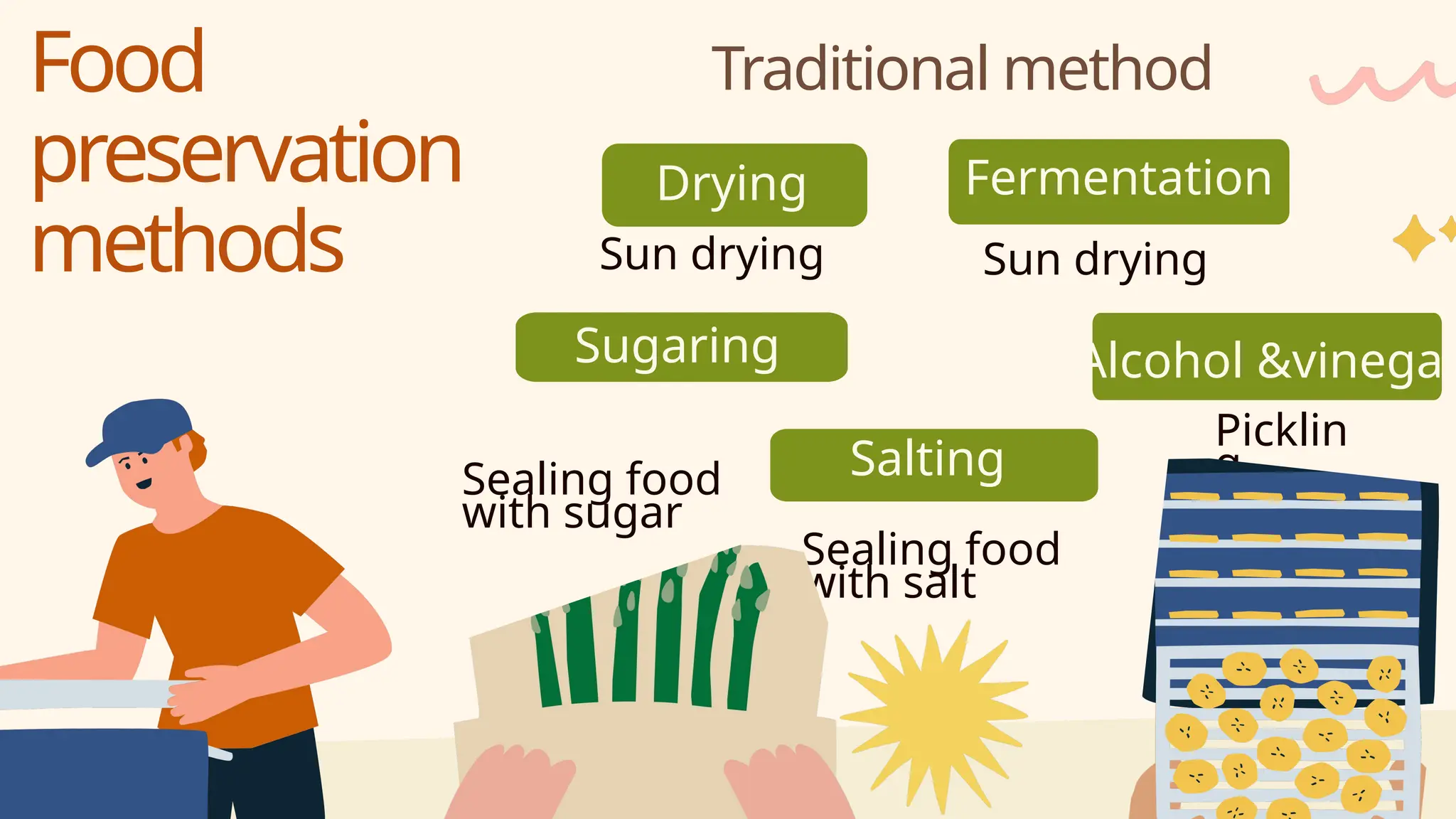
Drying
Sugaring
Fermentation
Salting
Alcohol &vinegar
Sun drying
Sealing food
with sugar
Sun drying
Sealing food
with salt
Picklin
g
Food
preservation
methods
Traditional method
Vacuum packing Freezing Refrigeration
Pasteurization Canning
Foodpreservation
methods
Vacuum-sealed bag Food freezing Cold storage
Heating food at a set
temperature
Pressure canning
Modernmethod
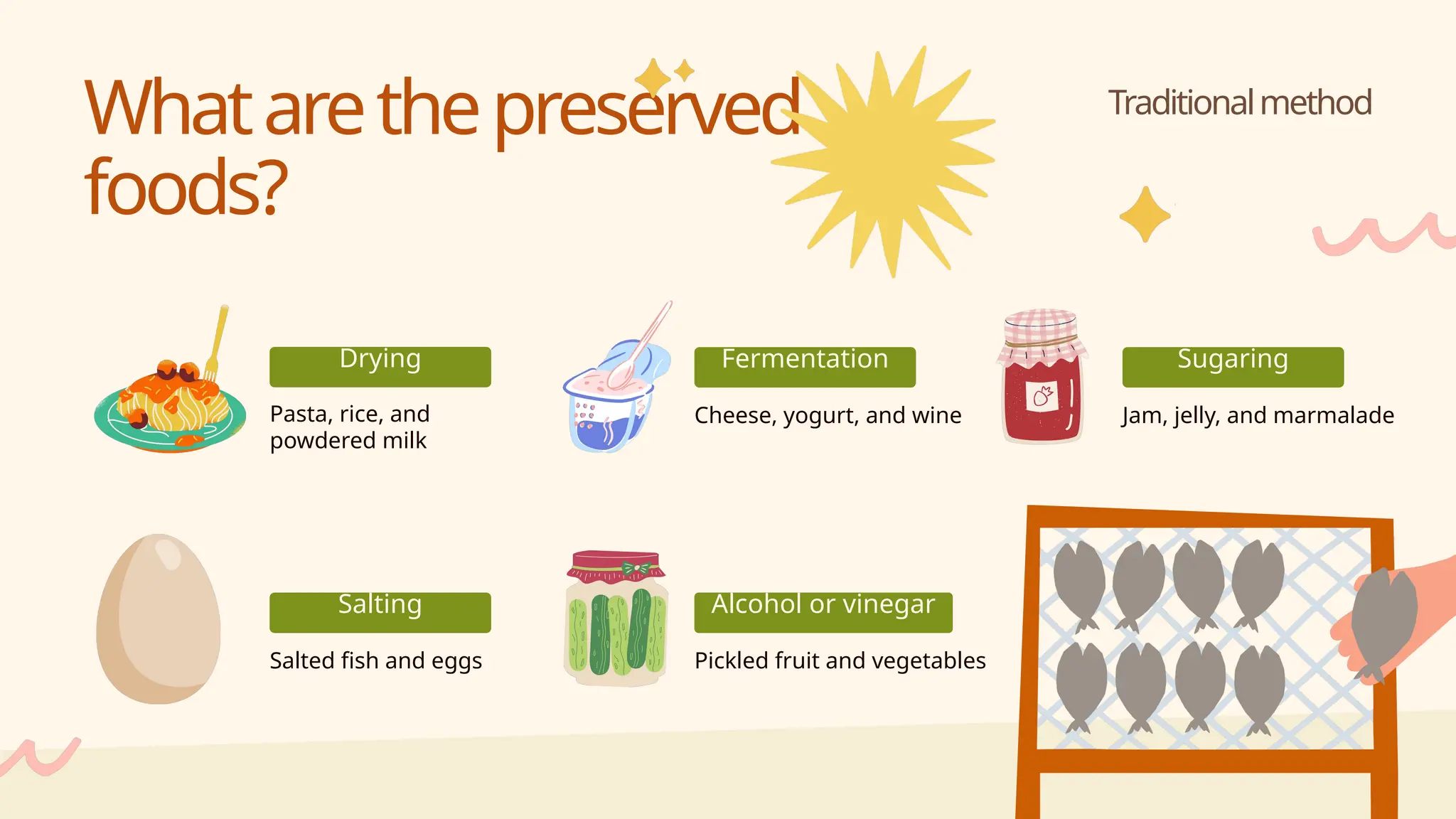
Drying
Salting
Fermentation Sugaring
Alcohol or vinegar
Pasta, rice, and
powdered milk
Salted fish and eggs
Cheese, yogurt, and wine Jam, jelly, and marmalade
Pickled fruit and vegetables
Whatarethepreserved
foods?
Traditionalmethod
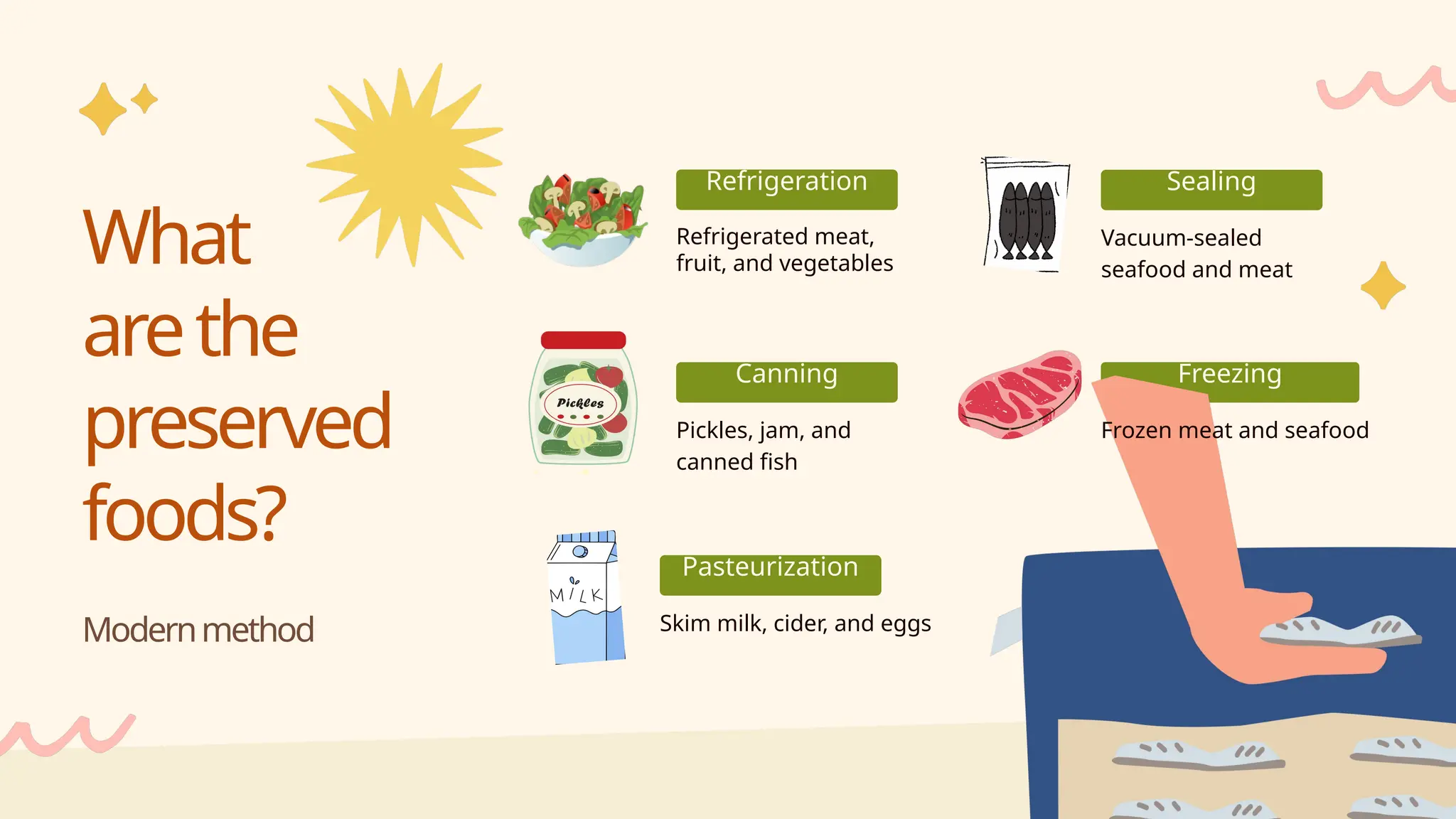
Refrigeration
Canning
Sealing
Pasteurization
Freezing
Refrigerated meat,
fruit, and vegetables
Pickles, jam, and
canned fish
Vacuum-sealed
seafood and meat
Skim milk, cider, and eggs
Frozen meat and seafood
What
arethe
preserved
foods?
Modernmethod
• Clean the foods that are going to be preserved
• Make sure there is no mold, bad bacteria, or any
other substances that could interfere with the
preservation process
• Preserve the food using your desired method
• Keep it in sealed packaging before storing it
Preparationforfood
preservation
ThankYoufor
Listening

TLE Food Preservation Presentation.pptxa

  • 1.
  • 2.
    Food preservation canbe defined as the process of treating and handling food in such a way as to stop or greatly slow down spoilage and prevent foodborne illness while maintaining nutritional value, texture and flavour. WhatisFood Preservation?
  • 3.
    Prevent food spoilage Preventpolluted food Maintaining food safety and quality Stops the growth of microorganisms By preserving food, food waste can be reduced, which is an important way to decrease production costs and increase the efficiency of food systems, improve food security and nutrition Whyisitnecessaryto preservefood?
  • 4.
    Reduce food waste Extendfood's shelf life Reduce rotten food gas Reduce dietary deficiencies Thebenefitof food preservation
  • 5.
    Drying Sugaring Fermentation Salting Alcohol &vinegar Sun drying Sealingfood with sugar Sun drying Sealing food with salt Picklin g Food preservation methods Traditional method
  • 6.
    Vacuum packing FreezingRefrigeration Pasteurization Canning Foodpreservation methods Vacuum-sealed bag Food freezing Cold storage Heating food at a set temperature Pressure canning Modernmethod
  • 7.
    Drying Salting Fermentation Sugaring Alcohol orvinegar Pasta, rice, and powdered milk Salted fish and eggs Cheese, yogurt, and wine Jam, jelly, and marmalade Pickled fruit and vegetables Whatarethepreserved foods? Traditionalmethod
  • 8.
    Refrigeration Canning Sealing Pasteurization Freezing Refrigerated meat, fruit, andvegetables Pickles, jam, and canned fish Vacuum-sealed seafood and meat Skim milk, cider, and eggs Frozen meat and seafood What arethe preserved foods? Modernmethod
  • 9.
    • Clean thefoods that are going to be preserved • Make sure there is no mold, bad bacteria, or any other substances that could interfere with the preservation process • Preserve the food using your desired method • Keep it in sealed packaging before storing it Preparationforfood preservation
  • 10.