The Role of Language
Analysis in Translation
Language analysis is fundamental in achieving accurate and culturally
appropriate translations. It serves as the bridge in promoting cross-
cultural understanding, making communication effective and meaningful.
by Ebru
Definition of Language Analysis
Components
Language analysis involves the examination of
the structure, syntax, semantics, and cultural
nuances of a given text in its original language.
Importance
It is crucial to ensure an accurate understanding
and interpretation of the source material, which
is integral to the translation process.
Importance of Accurate Translations
1 Preserving
Meaning
Accurate translations
preserve the intended
meaning of the original
text, allowing for
effective communication
across language
barriers.
2 Cultural
Representation
They ensure that cultural
contexts and nuances
are faithfully
represented, promoting
mutual respect and
understanding.
3 Legal and
Business
Implications
They are crucial in legal
and business contexts,
where precision and
fidelity to the original text
are paramount.
Cultural Considerations in
Translations
1 Diversity Awareness
Translators must be sensitive to various cultural perspectives and societal
norms, ensuring translations are inclusive and respectful.
2 Adaptation of Idioms
Rendering idiomatic expressions accurately enhances the cultural relevance
of translations, maintaining the originality of the content.
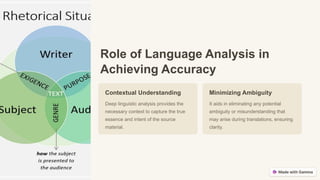
Role of Language Analysis in
Achieving Accuracy
Contextual Understanding
Deep linguistic analysis provides the
necessary context to capture the true
essence and intent of the source
material.
Minimizing Ambiguity
It aids in eliminating any potential
ambiguity or misunderstanding that
may arise during translations, ensuring
clarity.
Benefits of Culturally Appropriate
Translations
Fosters Understanding
Culturally appropriate translations foster
mutual understanding and respect between
diverse linguistic communities.
Preserves Heritage
They contribute to the preservation of cultural
heritage and traditions, enriching the global
tapestry of human expression.
Challenges in Language Analysis
1
Multilinguistic Complexity
2
Cultural Sensitivities
3
Linguistic Nuances
The Symbiotic Relationship
1 Bridging Linguistic Gaps
Together, language analysis and
translation bridge linguistic gaps, enabling
effective communication across diverse
communities.
2 Cultural Understanding
They promote a deeper cultural
understanding, fostering connections and
empathy between people of different
languages.
Exploration of Text Analysis
Structural Attributes
The examination of sentence
structure, paragraphs, and
overall organization plays a
crucial role in accurate
translations.
Syntactic E lements
Analysis of sentence
formations and grammatical
structures facilitates precise
and grammatically sound
translations.
Semantic
Understanding
Understanding the true
meaning and underlying
nuances of the text is vital in
maintaining the integrity of
translations.
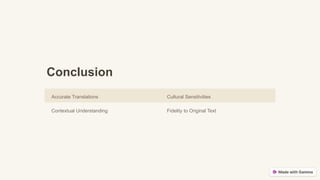
Conclusion
Accurate Translations Cultural Sensitivities
Contextual Understanding Fidelity to Original Text

The-Role-of-Language-Analysis-in-Translation.pptx

  • 1.
    The Role ofLanguage Analysis in Translation Language analysis is fundamental in achieving accurate and culturally appropriate translations. It serves as the bridge in promoting cross- cultural understanding, making communication effective and meaningful. by Ebru
  • 2.
    Definition of LanguageAnalysis Components Language analysis involves the examination of the structure, syntax, semantics, and cultural nuances of a given text in its original language. Importance It is crucial to ensure an accurate understanding and interpretation of the source material, which is integral to the translation process.
  • 3.
    Importance of AccurateTranslations 1 Preserving Meaning Accurate translations preserve the intended meaning of the original text, allowing for effective communication across language barriers. 2 Cultural Representation They ensure that cultural contexts and nuances are faithfully represented, promoting mutual respect and understanding. 3 Legal and Business Implications They are crucial in legal and business contexts, where precision and fidelity to the original text are paramount.
  • 4.
    Cultural Considerations in Translations 1Diversity Awareness Translators must be sensitive to various cultural perspectives and societal norms, ensuring translations are inclusive and respectful. 2 Adaptation of Idioms Rendering idiomatic expressions accurately enhances the cultural relevance of translations, maintaining the originality of the content.
  • 5.
    Role of LanguageAnalysis in Achieving Accuracy Contextual Understanding Deep linguistic analysis provides the necessary context to capture the true essence and intent of the source material. Minimizing Ambiguity It aids in eliminating any potential ambiguity or misunderstanding that may arise during translations, ensuring clarity.
  • 6.
    Benefits of CulturallyAppropriate Translations Fosters Understanding Culturally appropriate translations foster mutual understanding and respect between diverse linguistic communities. Preserves Heritage They contribute to the preservation of cultural heritage and traditions, enriching the global tapestry of human expression.
  • 7.
    Challenges in LanguageAnalysis 1 Multilinguistic Complexity 2 Cultural Sensitivities 3 Linguistic Nuances
  • 8.
    The Symbiotic Relationship 1Bridging Linguistic Gaps Together, language analysis and translation bridge linguistic gaps, enabling effective communication across diverse communities. 2 Cultural Understanding They promote a deeper cultural understanding, fostering connections and empathy between people of different languages.
  • 9.
    Exploration of TextAnalysis Structural Attributes The examination of sentence structure, paragraphs, and overall organization plays a crucial role in accurate translations. Syntactic E lements Analysis of sentence formations and grammatical structures facilitates precise and grammatically sound translations. Semantic Understanding Understanding the true meaning and underlying nuances of the text is vital in maintaining the integrity of translations.
  • 10.
    Conclusion Accurate Translations CulturalSensitivities Contextual Understanding Fidelity to Original Text