Chapter 1
The Study of Body Function
Human Physiology
Human Physiology
• Study of how the human body
functions.
• Pathophysiology:
▫ How physiological processes are altered
in disease or injury.
Scientific Method
• Confidence in rational ability,
honesty and humility.
• Formulate hypothesis.
• Testing the hypothesis.
• Analyze results.
• Draw conclusion.
Homeostasis
• Maintaining constancy of internal
environment.
• Dynamic consistency.
• Maintained by negative feedback
loops.
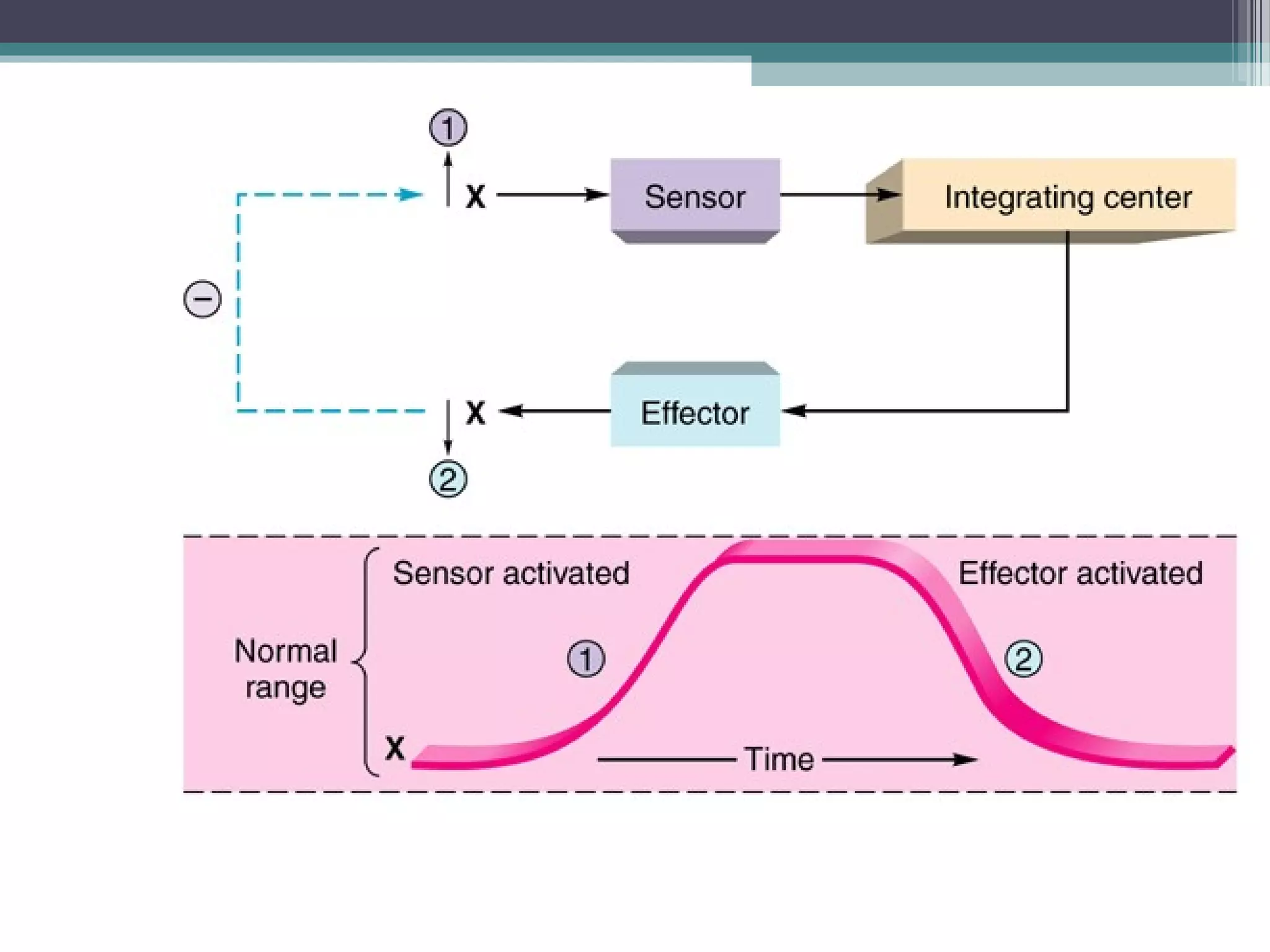
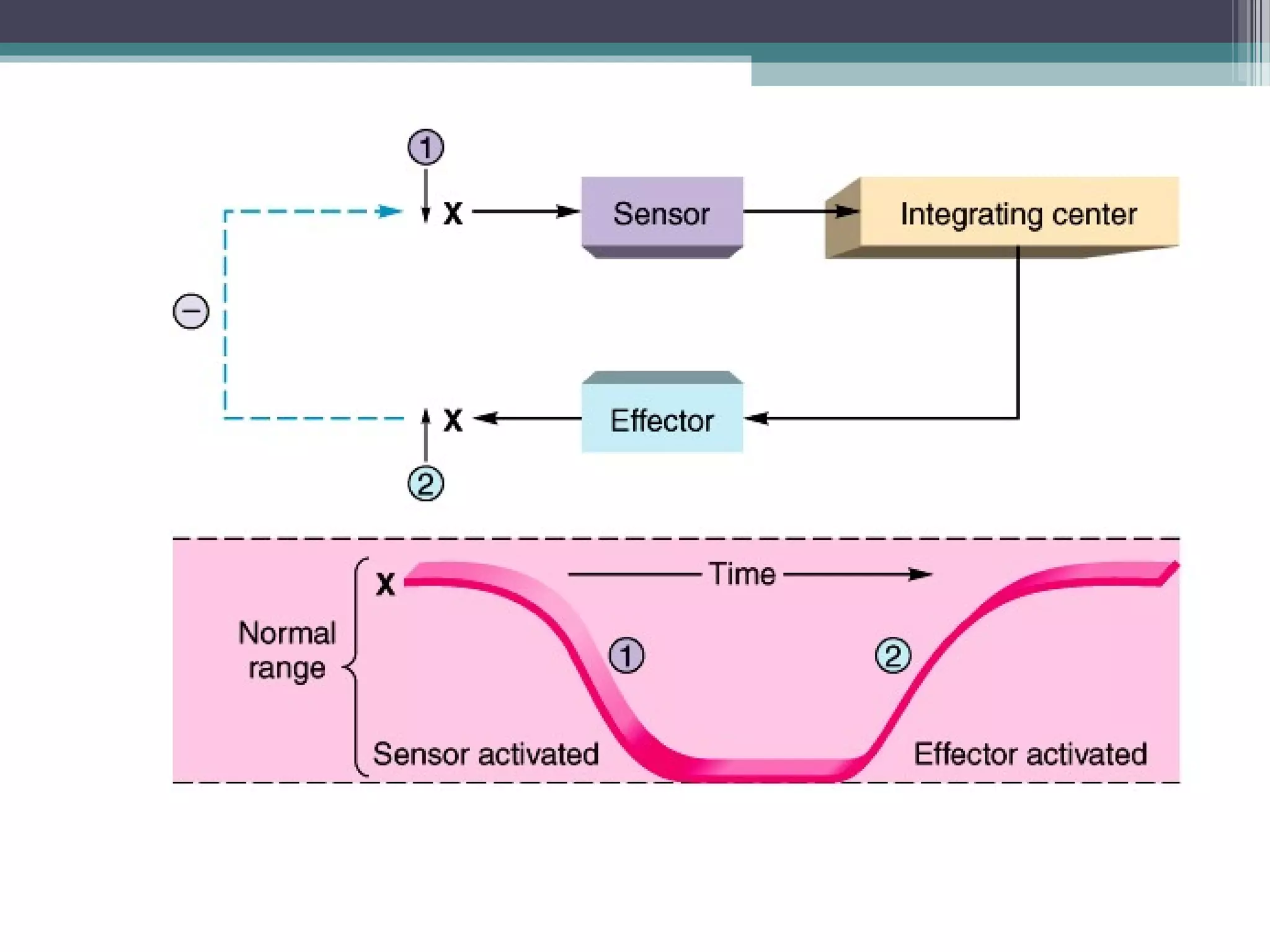
Feedback Loops
• Sensor:
▫ Detects deviation from set point.
• Integrating center:
▫ Determines the response.
• Effector:
▫ Produces the response.
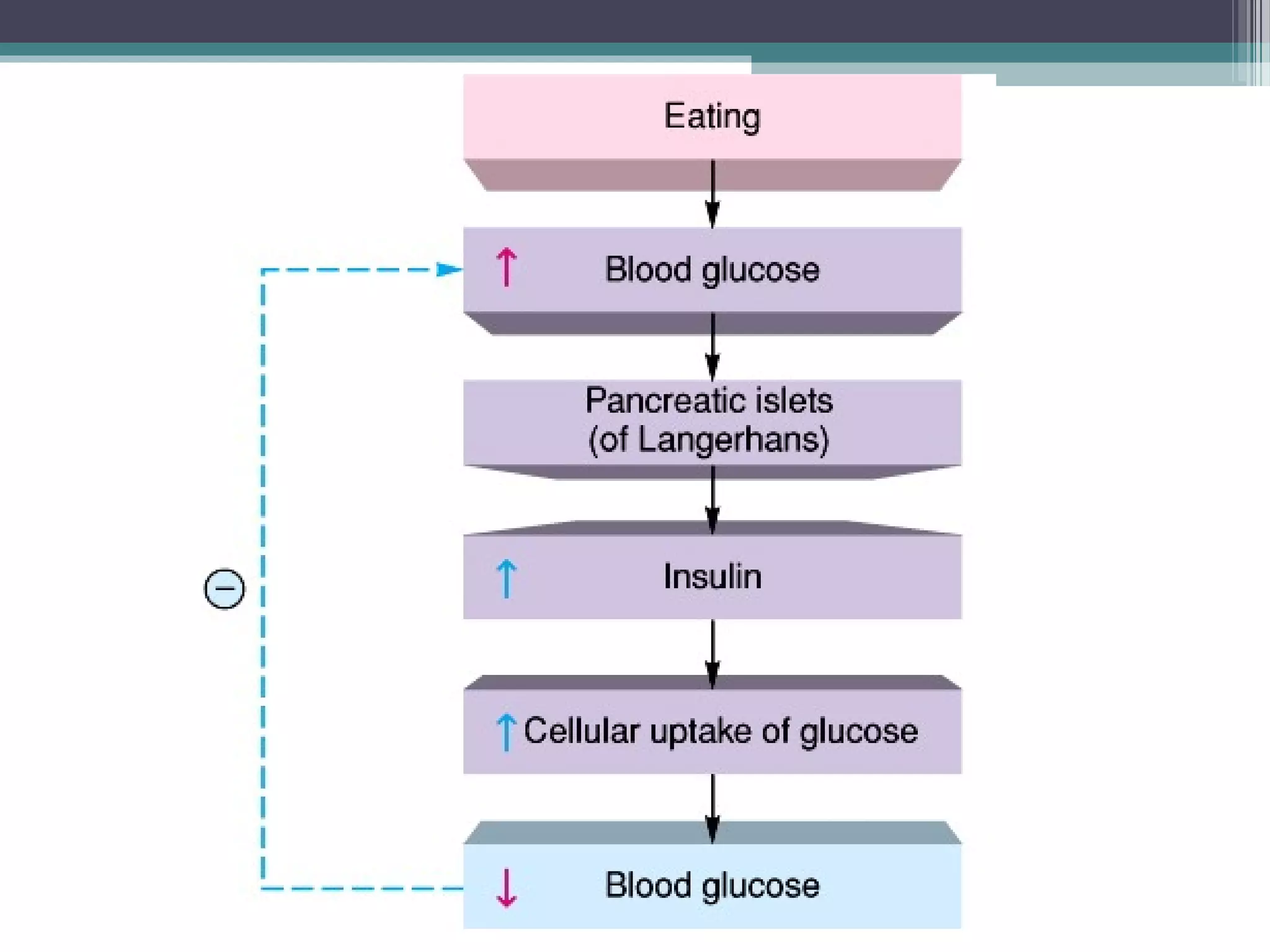
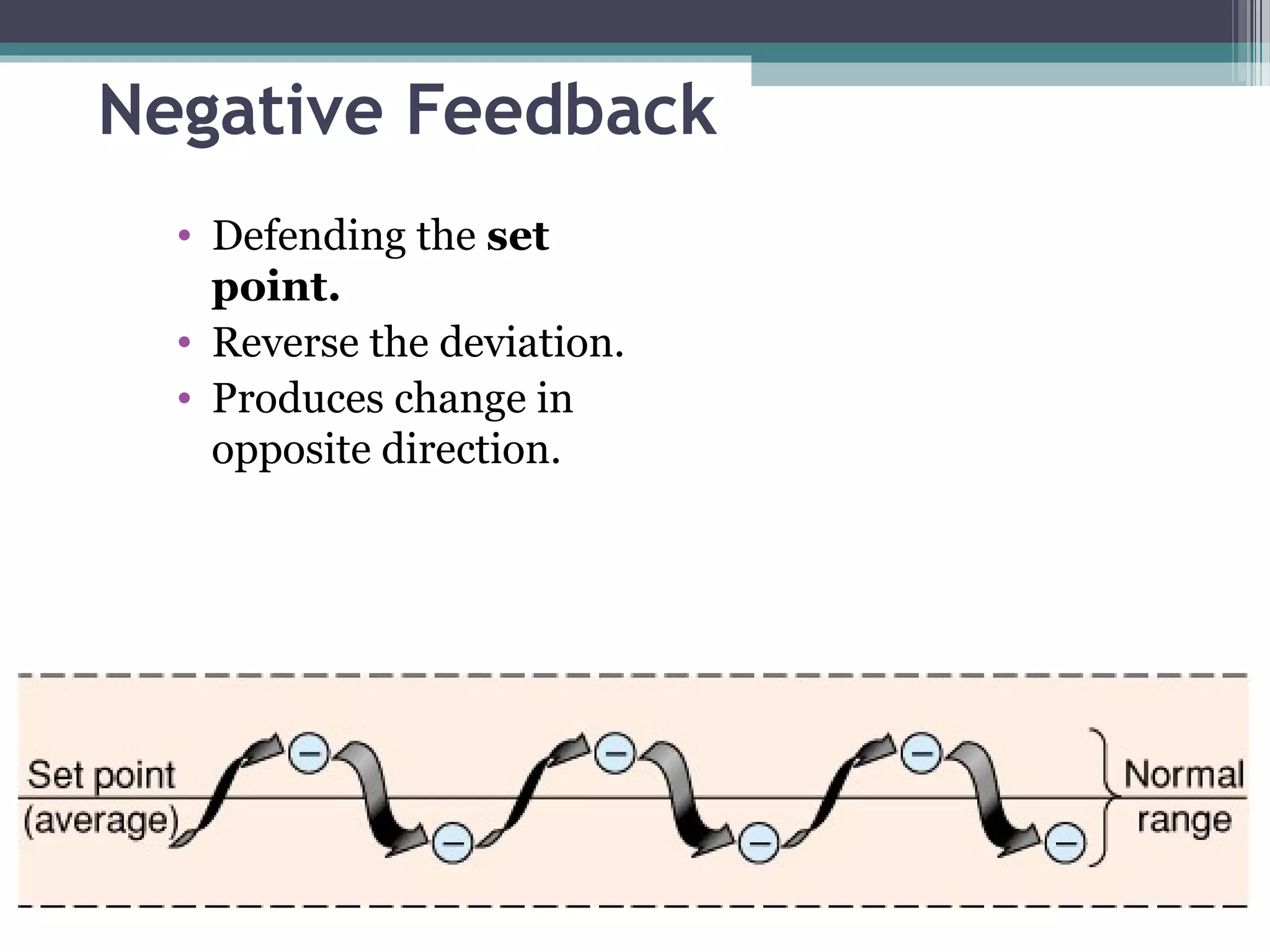
Negative Feedback
• Defending the set
point.
• Reverse the deviation.
• Produces change in
opposite direction.
Hormone insulin restores plasma [glucose].
Positive Feedback
• Action of effectors amplifies the
change.
• Is in same direction as change.
• Examples:
▫ Oxytocin (parturition)
▫ Voltage gated Na+
channels
(depolarization)
Primary Tissues
• 4 Different Primary Tissues:
▫ Muscle
▫ Nervous
▫ Epithelial
▫ Connective
Muscle Tissue
• Specialized for contraction.
• 3 Types of Muscle Tissue:
▫ Skeletal
▫ Cardiac
▫ Smooth
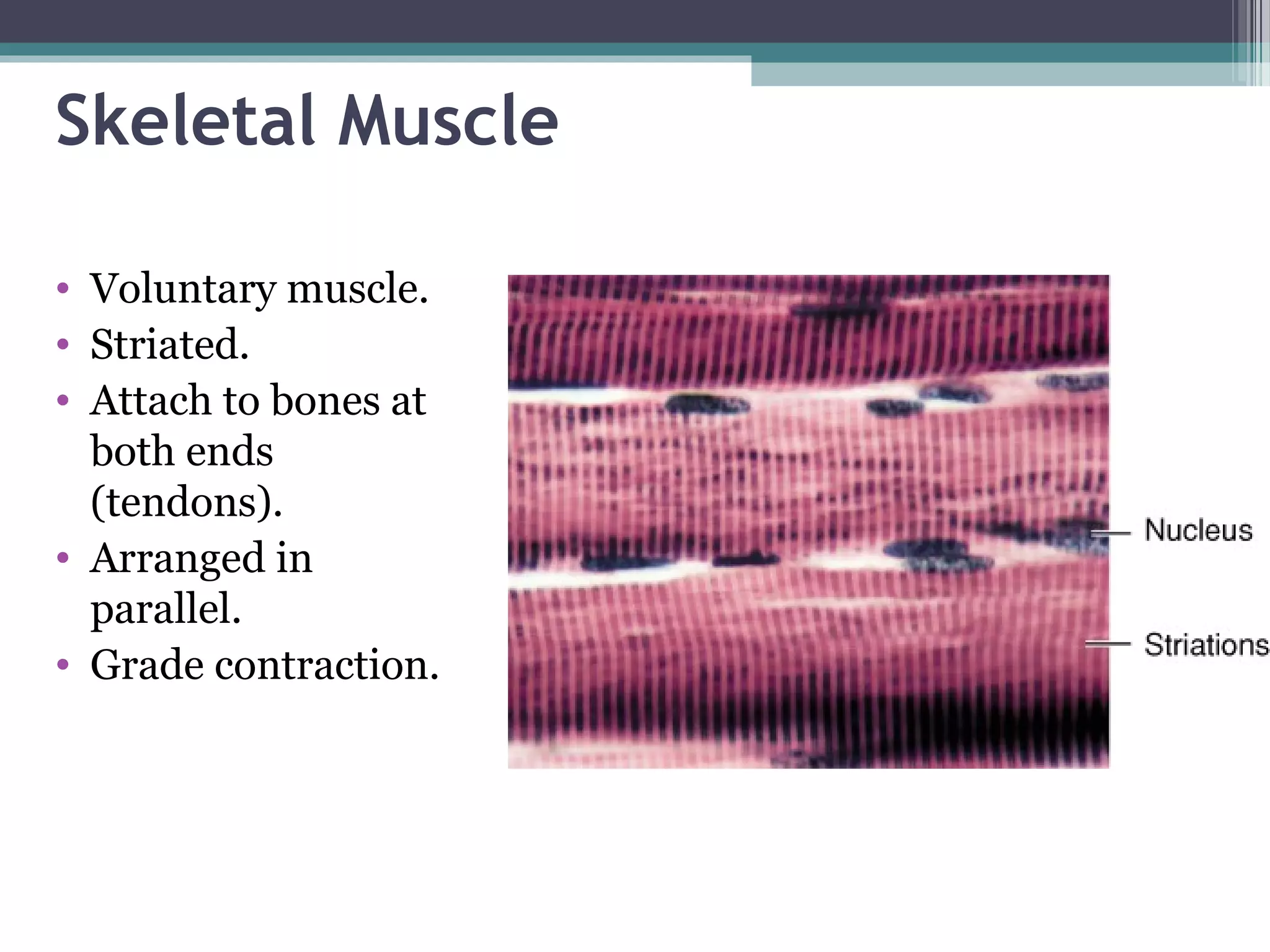
Skeletal Muscle
• Voluntary muscle.
• Striated.
• Attach to bones at
both ends
(tendons).
• Arranged in
parallel.
• Grade contraction.
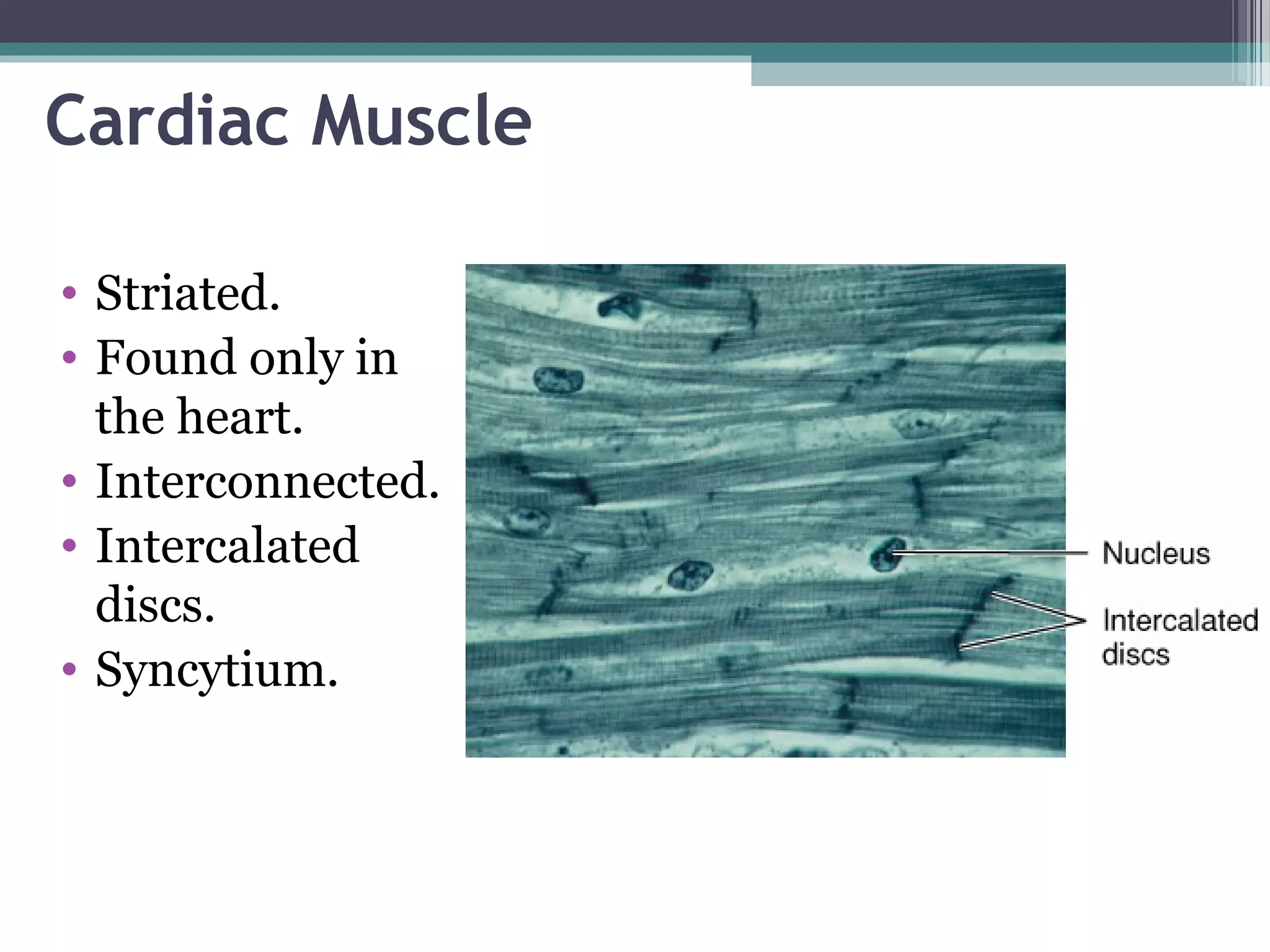
Cardiac Muscle
• Striated.
• Found only in
the heart.
• Interconnected.
• Intercalated
discs.
• Syncytium.
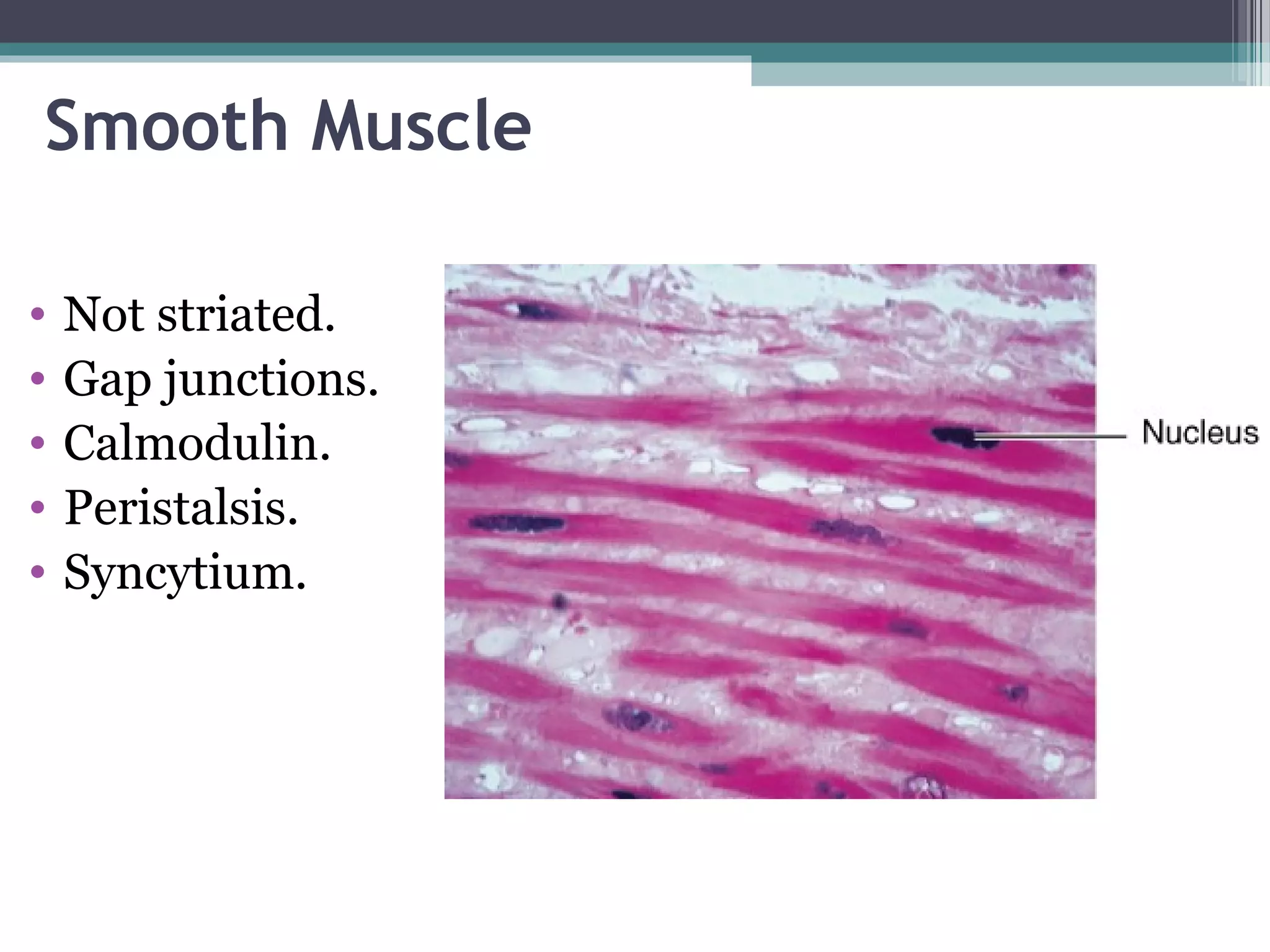
Smooth Muscle
• Not striated.
• Gap junctions.
• Calmodulin.
• Peristalsis.
• Syncytium.
Nervous Tissue
• Neurons (nerve cells):
▫ Specialized for conduction of action
potentials.
• Supporting cells:
▫ Provide anatomical and functional
support.
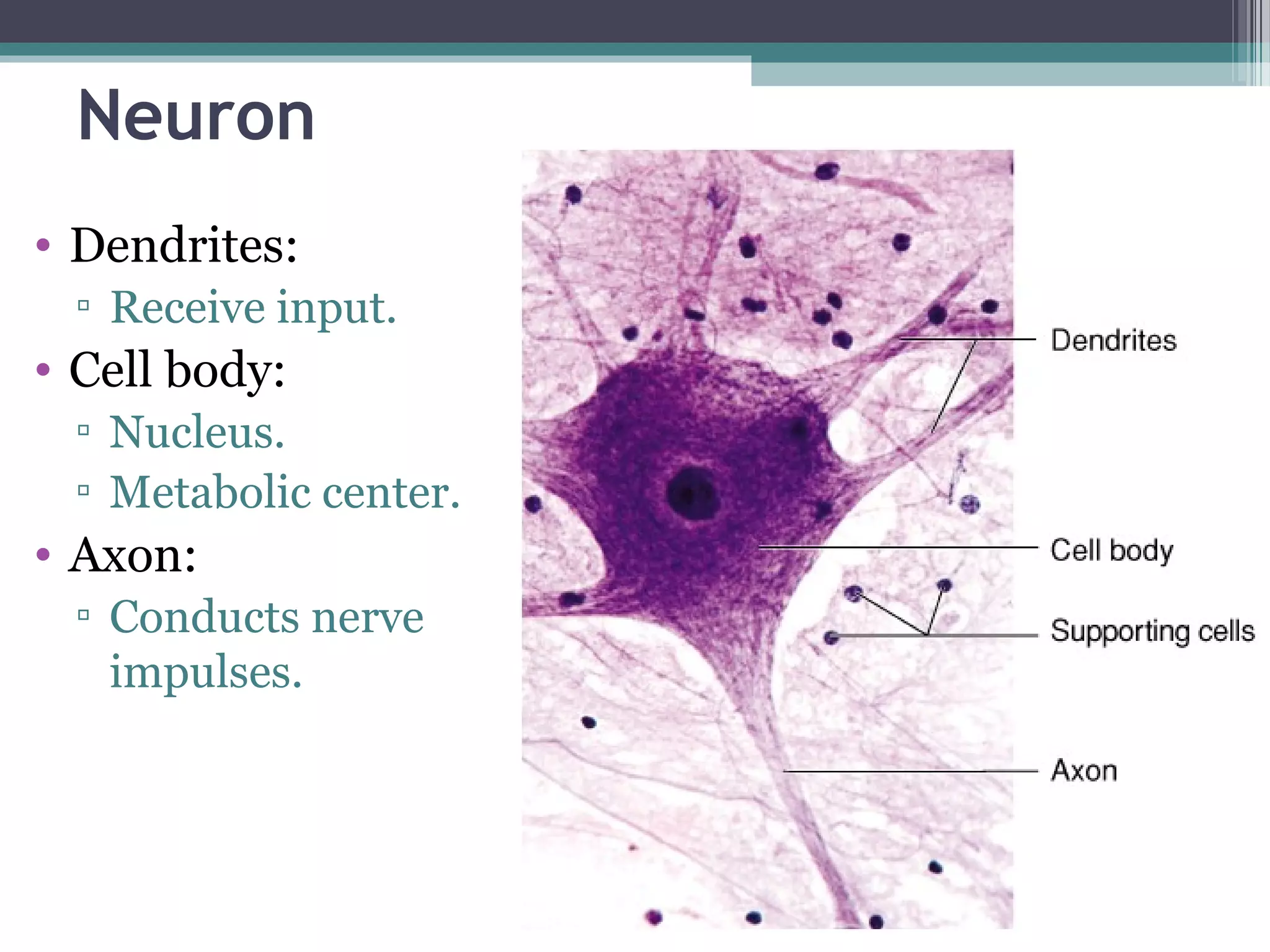
Neuron
• Dendrites:
▫ Receive input.
• Cell body:
▫ Nucleus.
▫ Metabolic center.
• Axon:
▫ Conducts nerve
impulses.
Epithelial Tissue
• Types of Epithelial Tissue:
▫ Cells that form membranes:
 Squamous
 Columnar
 Cuboidal
▫ Exocrine glands
▫ Endocrine glands
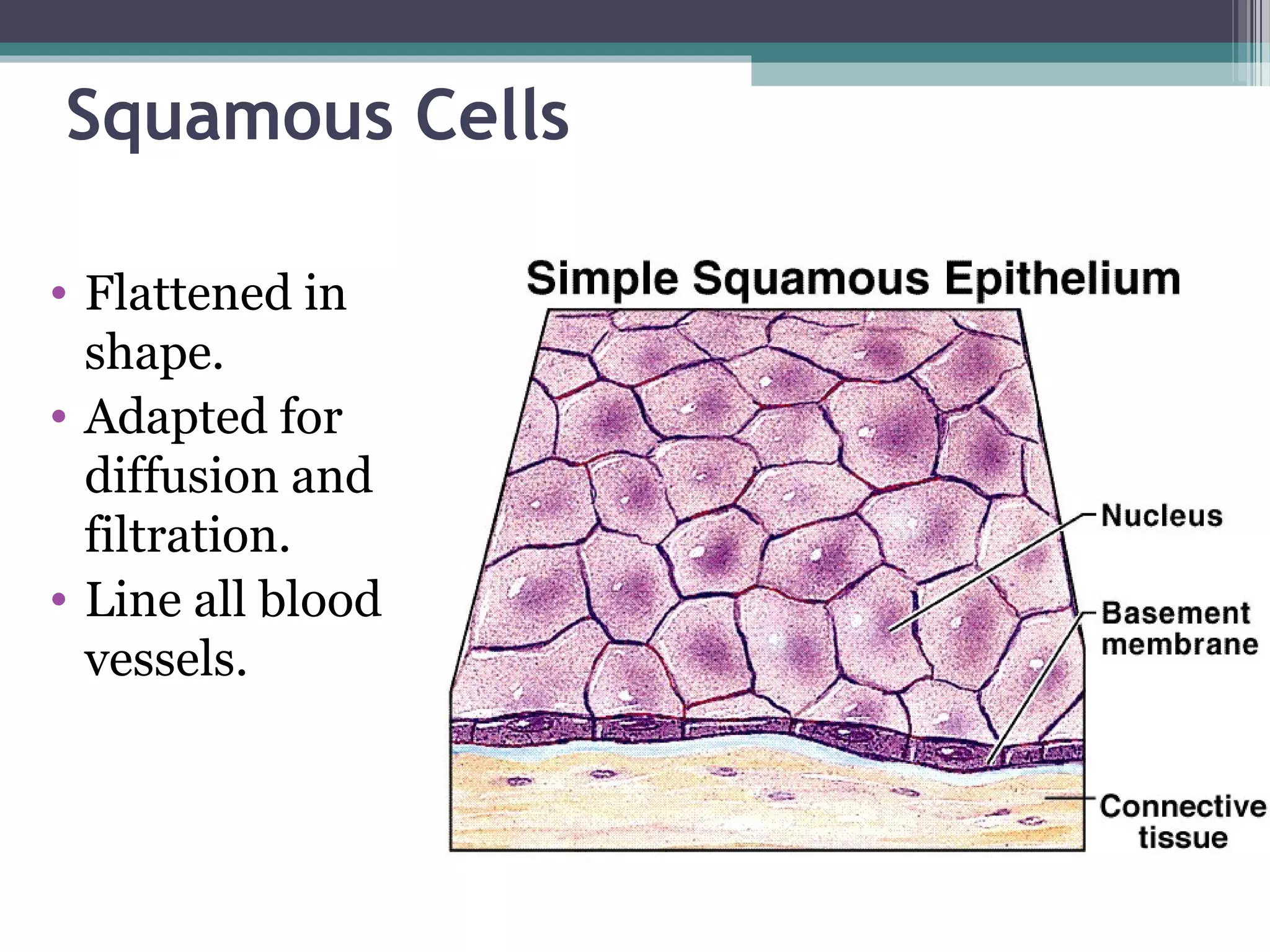
Squamous Cells
• Flattened in
shape.
• Adapted for
diffusion and
filtration.
• Line all blood
vessels.
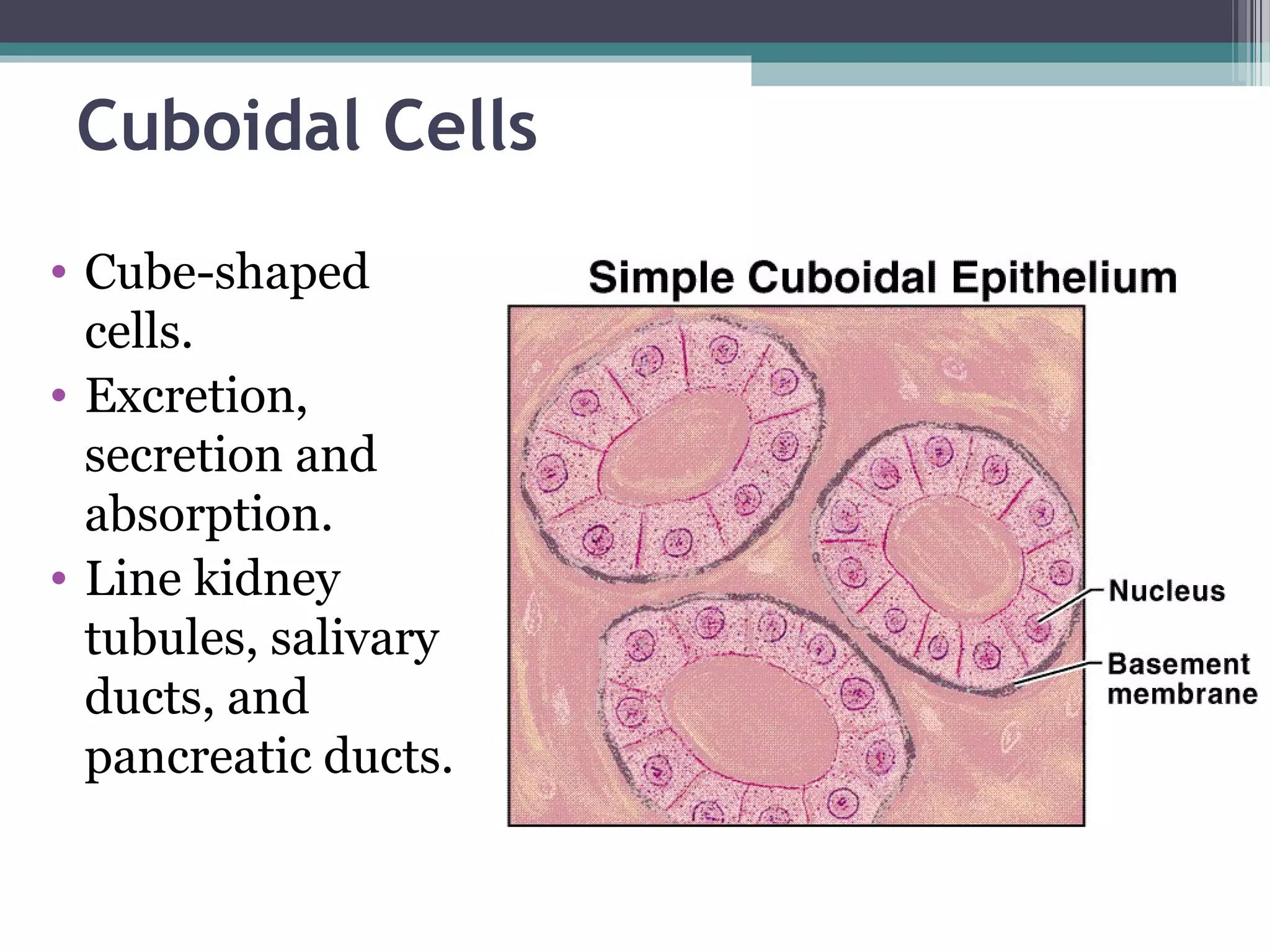
Cuboidal Cells
• Cube-shaped
cells.
• Excretion,
secretion and
absorption.
• Line kidney
tubules, salivary
ducts, and
pancreatic ducts.
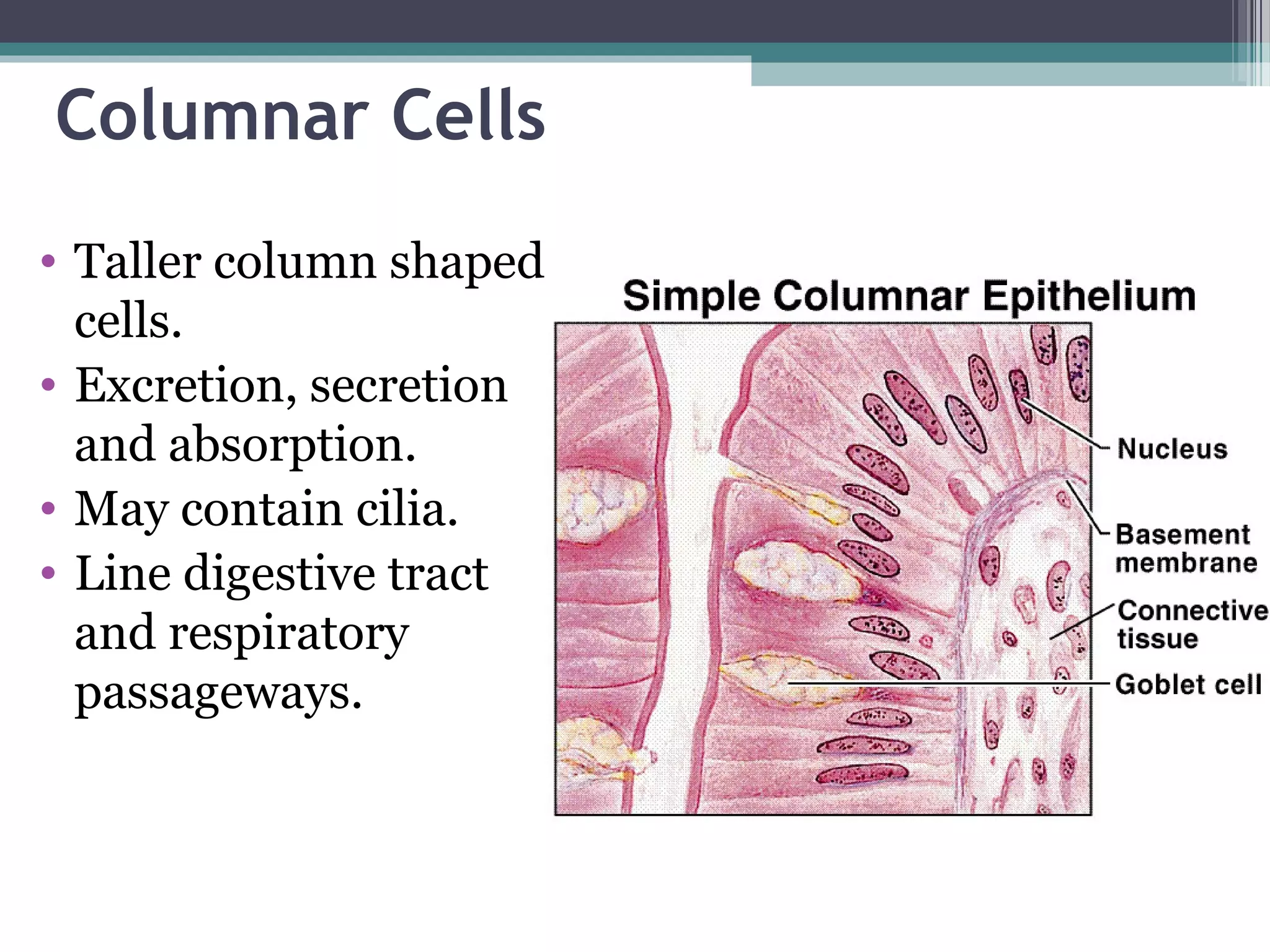
Columnar Cells
• Taller column shaped
cells.
• Excretion, secretion
and absorption.
• May contain cilia.
• Line digestive tract
and respiratory
passageways.
Exocrine Glands
• Derived from cells of epithelial membranes.
• Secretions are released through ducts.
• Simple tubes or modified as acini.
• Examples:
▫ Tear glands
▫ Sweat glands
▫ Prostate glands
Endocrine Glands
• Lack ducts.
• Secrete hormones into capillaries
within the body.
• May be discrete organs:
▫ Primary functions are the production
and secretion of hormones.
Connective Tissue
• Large amounts of extracellular (ECF)
material in the spaces between connective
tissue cells.
• 4 Types of Connective Tissue:
▫ Connective tissue proper
▫ Cartilage
▫ Bone
▫ Blood
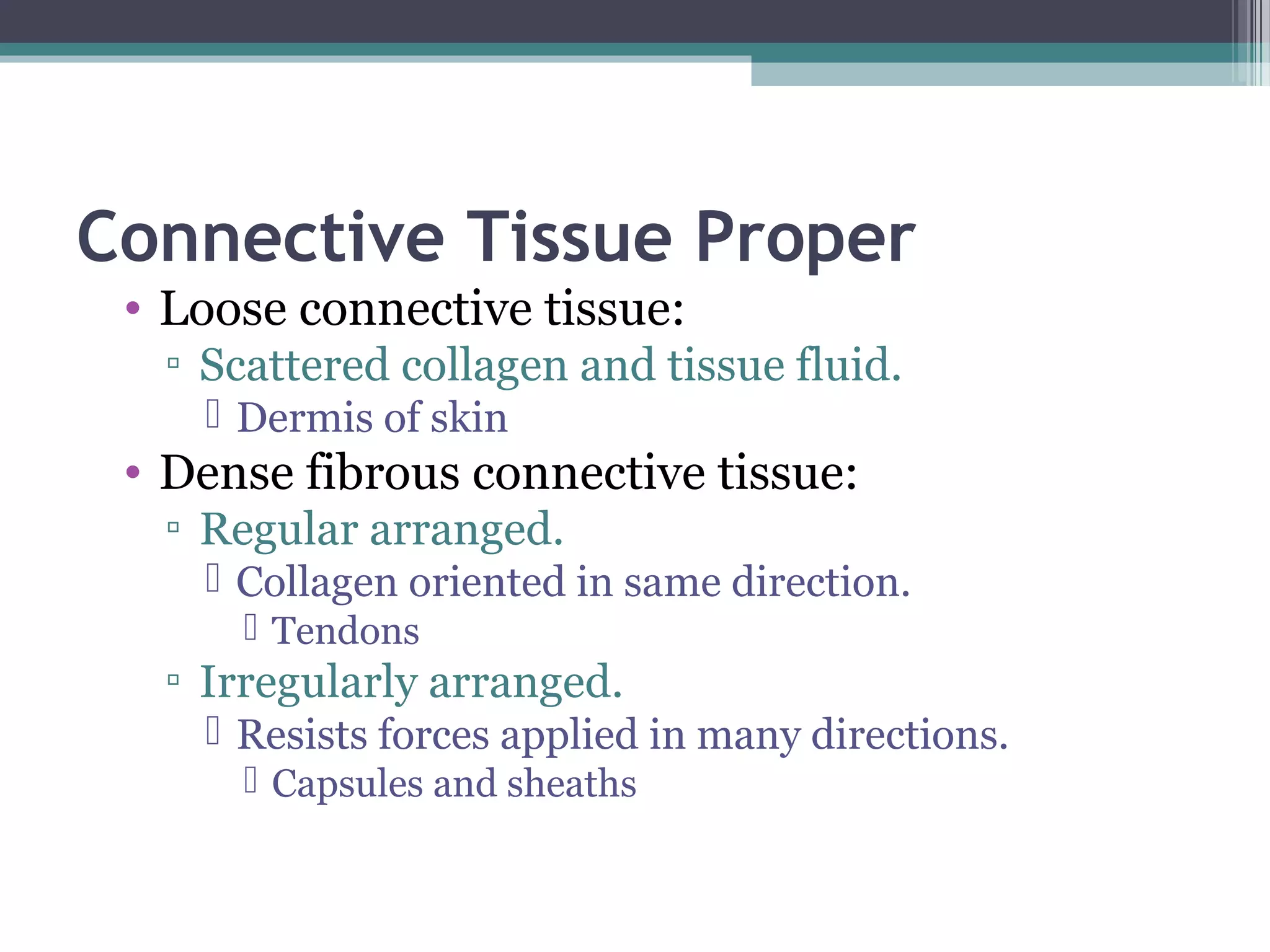
Connective Tissue Proper
• Loose connective tissue:
▫ Scattered collagen and tissue fluid.
 Dermis of skin
• Dense fibrous connective tissue:
▫ Regular arranged.
 Collagen oriented in same direction.
 Tendons
▫ Irregularly arranged.
 Resists forces applied in many directions.
 Capsules and sheaths
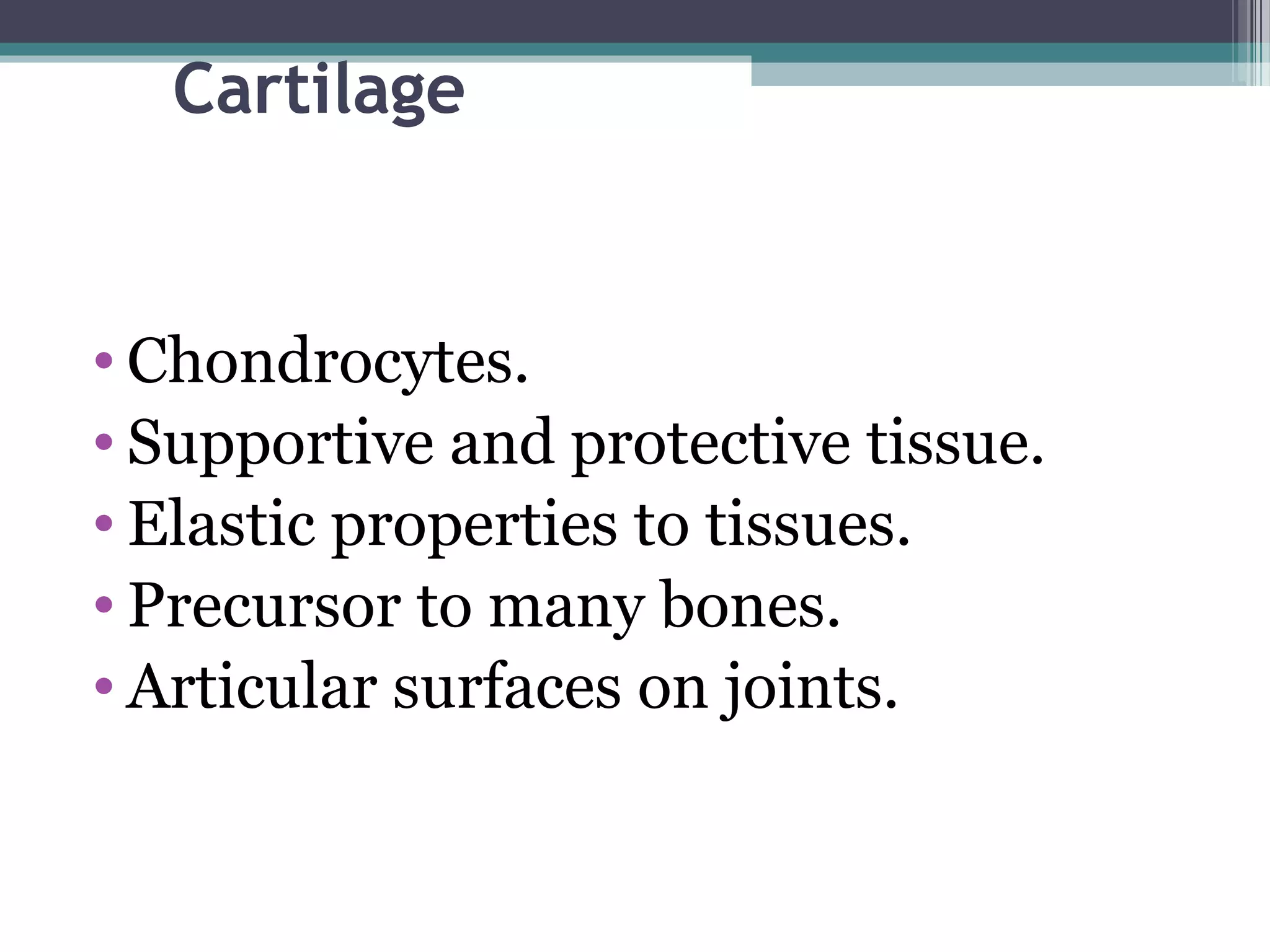
Cartilage
• Chondrocytes.
• Supportive and protective tissue.
• Elastic properties to tissues.
• Precursor to many bones.
• Articular surfaces on joints.
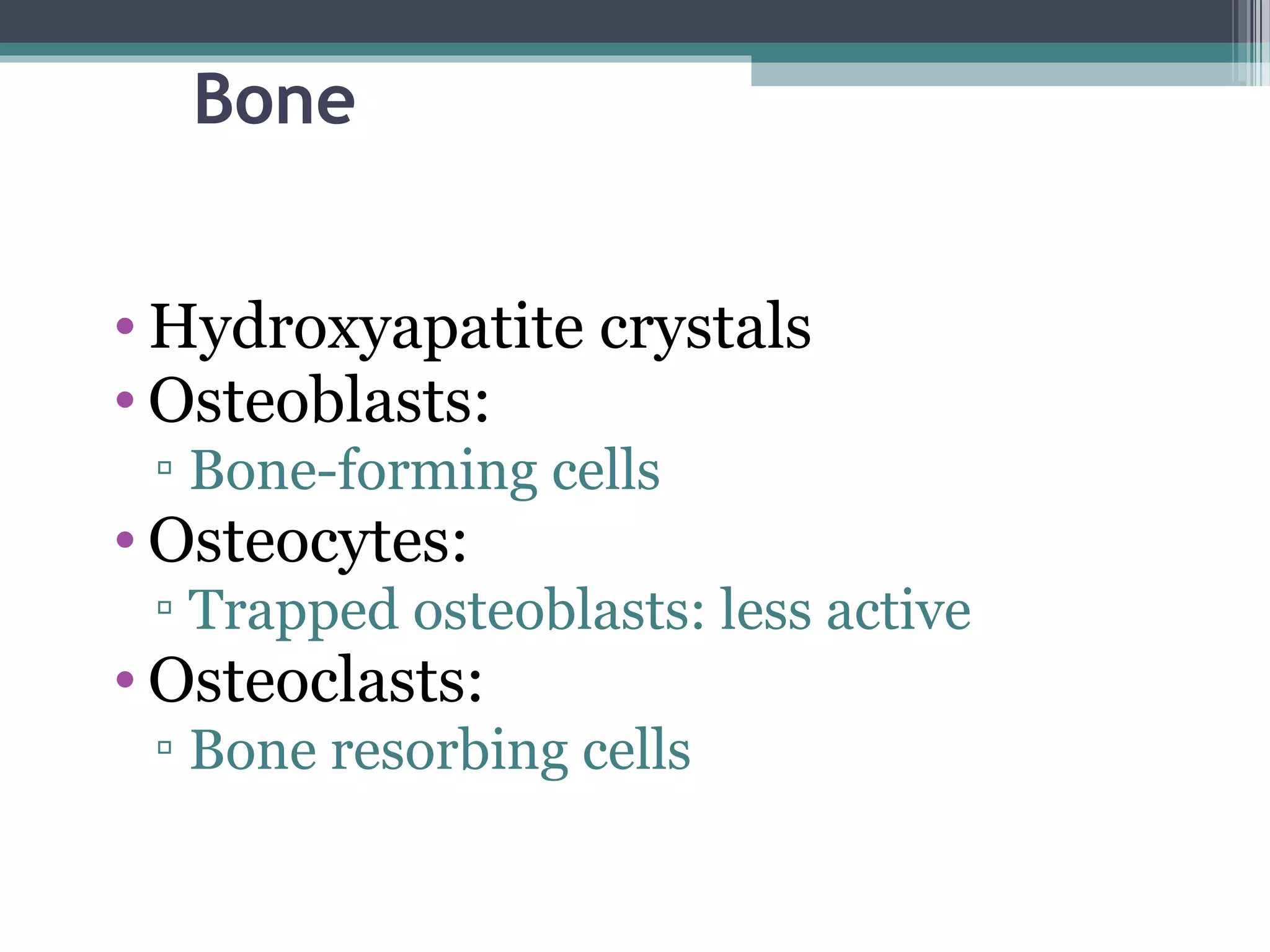
Bone
• Hydroxyapatite crystals
• Osteoblasts:
▫ Bone-forming cells
• Osteocytes:
▫ Trapped osteoblasts: less active
• Osteoclasts:
▫ Bone resorbing cells
Blood
• Classified as connective tissue.
• Half its volume is plasma.
Organs
• Organs:
▫ Composed of at least two primary
tissues.
▫ Serve different functions of the organ.
Systems
• Organs that are located in different
regions of the body and perform
related functions.
• Examples:
▫ Skeletal system
▫ Cardiovascular system
▫ GI system
Body-Fluid Compartments
• 65-75% of total body weight H20.
• Intracellular compartment:
▫ Fluid inside the cell.
▫ 2/3 of H20
• Extracellular compartment:
▫ 1/3 H20
▫ 2 Subdivisions:
 Blood plasma
 Interstitial fluid
THANKS YOU!

The study of body function

  • 1.
    Chapter 1 The Studyof Body Function Human Physiology
  • 2.
    Human Physiology • Studyof how the human body functions. • Pathophysiology: ▫ How physiological processes are altered in disease or injury.
  • 3.
    Scientific Method • Confidencein rational ability, honesty and humility. • Formulate hypothesis. • Testing the hypothesis. • Analyze results. • Draw conclusion.
  • 4.
    Homeostasis • Maintaining constancyof internal environment. • Dynamic consistency. • Maintained by negative feedback loops.
  • 5.
    Feedback Loops • Sensor: ▫Detects deviation from set point. • Integrating center: ▫ Determines the response. • Effector: ▫ Produces the response.
  • 8.
    Negative Feedback • Defendingthe set point. • Reverse the deviation. • Produces change in opposite direction.
  • 9.
    Hormone insulin restoresplasma [glucose].
  • 11.
    Positive Feedback • Actionof effectors amplifies the change. • Is in same direction as change. • Examples: ▫ Oxytocin (parturition) ▫ Voltage gated Na+ channels (depolarization)
  • 12.
    Primary Tissues • 4Different Primary Tissues: ▫ Muscle ▫ Nervous ▫ Epithelial ▫ Connective
  • 13.
    Muscle Tissue • Specializedfor contraction. • 3 Types of Muscle Tissue: ▫ Skeletal ▫ Cardiac ▫ Smooth
  • 14.
    Skeletal Muscle • Voluntarymuscle. • Striated. • Attach to bones at both ends (tendons). • Arranged in parallel. • Grade contraction.
  • 15.
    Cardiac Muscle • Striated. •Found only in the heart. • Interconnected. • Intercalated discs. • Syncytium.
  • 16.
    Smooth Muscle • Notstriated. • Gap junctions. • Calmodulin. • Peristalsis. • Syncytium.
  • 17.
    Nervous Tissue • Neurons(nerve cells): ▫ Specialized for conduction of action potentials. • Supporting cells: ▫ Provide anatomical and functional support.
  • 18.
    Neuron • Dendrites: ▫ Receiveinput. • Cell body: ▫ Nucleus. ▫ Metabolic center. • Axon: ▫ Conducts nerve impulses.
  • 19.
    Epithelial Tissue • Typesof Epithelial Tissue: ▫ Cells that form membranes:  Squamous  Columnar  Cuboidal ▫ Exocrine glands ▫ Endocrine glands
  • 20.
    Squamous Cells • Flattenedin shape. • Adapted for diffusion and filtration. • Line all blood vessels.
  • 21.
    Cuboidal Cells • Cube-shaped cells. •Excretion, secretion and absorption. • Line kidney tubules, salivary ducts, and pancreatic ducts.
  • 22.
    Columnar Cells • Tallercolumn shaped cells. • Excretion, secretion and absorption. • May contain cilia. • Line digestive tract and respiratory passageways.
  • 23.
    Exocrine Glands • Derivedfrom cells of epithelial membranes. • Secretions are released through ducts. • Simple tubes or modified as acini. • Examples: ▫ Tear glands ▫ Sweat glands ▫ Prostate glands
  • 24.
    Endocrine Glands • Lackducts. • Secrete hormones into capillaries within the body. • May be discrete organs: ▫ Primary functions are the production and secretion of hormones.
  • 25.
    Connective Tissue • Largeamounts of extracellular (ECF) material in the spaces between connective tissue cells. • 4 Types of Connective Tissue: ▫ Connective tissue proper ▫ Cartilage ▫ Bone ▫ Blood
  • 26.
    Connective Tissue Proper •Loose connective tissue: ▫ Scattered collagen and tissue fluid.  Dermis of skin • Dense fibrous connective tissue: ▫ Regular arranged.  Collagen oriented in same direction.  Tendons ▫ Irregularly arranged.  Resists forces applied in many directions.  Capsules and sheaths
  • 27.
    Cartilage • Chondrocytes. • Supportiveand protective tissue. • Elastic properties to tissues. • Precursor to many bones. • Articular surfaces on joints.
  • 28.
    Bone • Hydroxyapatite crystals •Osteoblasts: ▫ Bone-forming cells • Osteocytes: ▫ Trapped osteoblasts: less active • Osteoclasts: ▫ Bone resorbing cells
  • 29.
    Blood • Classified asconnective tissue. • Half its volume is plasma.
  • 30.
    Organs • Organs: ▫ Composedof at least two primary tissues. ▫ Serve different functions of the organ.
  • 31.
    Systems • Organs thatare located in different regions of the body and perform related functions. • Examples: ▫ Skeletal system ▫ Cardiovascular system ▫ GI system
  • 32.
    Body-Fluid Compartments • 65-75%of total body weight H20. • Intracellular compartment: ▫ Fluid inside the cell. ▫ 2/3 of H20 • Extracellular compartment: ▫ 1/3 H20 ▫ 2 Subdivisions:  Blood plasma  Interstitial fluid
  • 33.