Software Engineering
Mrs. R.K.Santhia /Assistant Professor-CSE
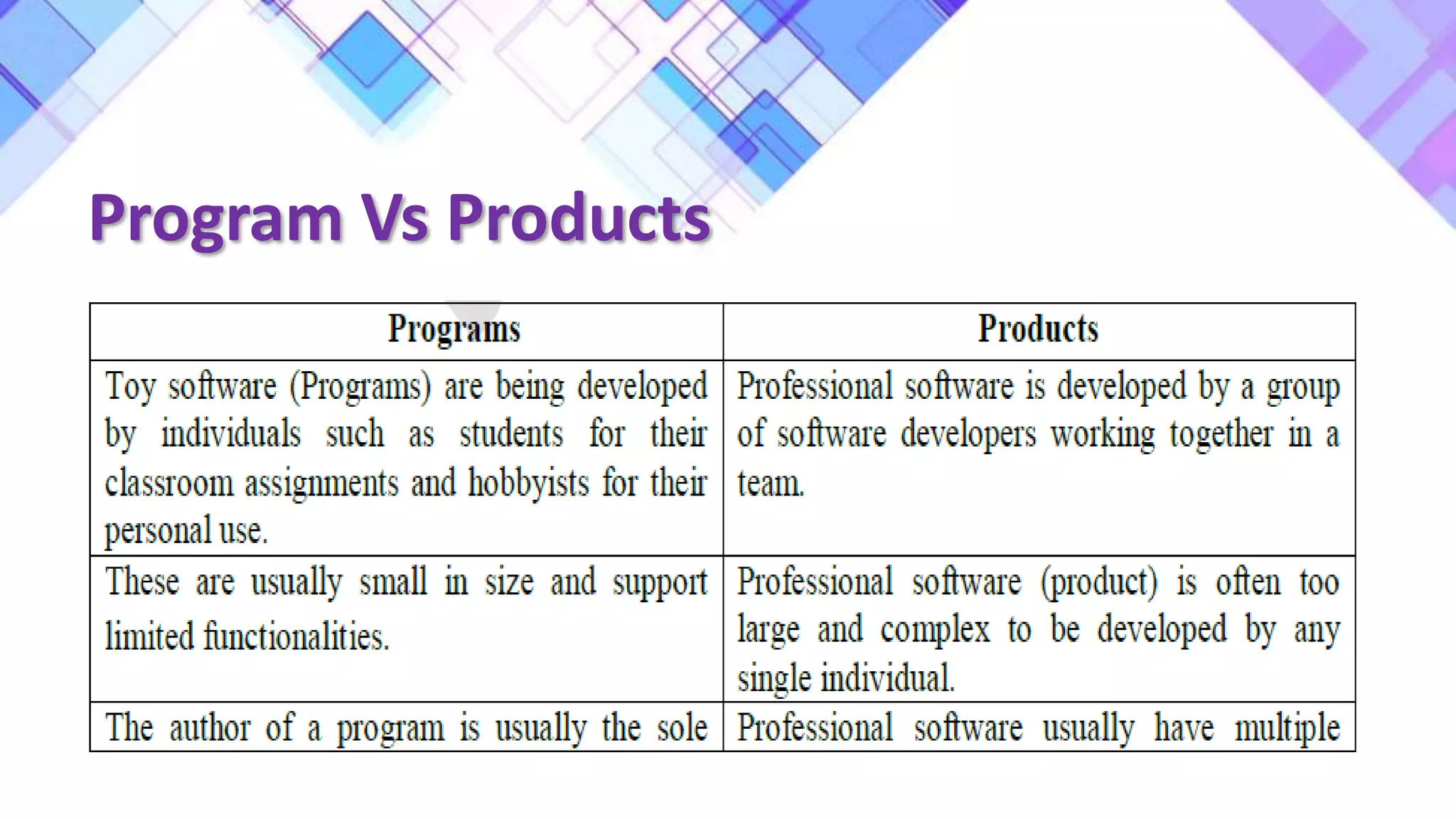
Program Vs Products
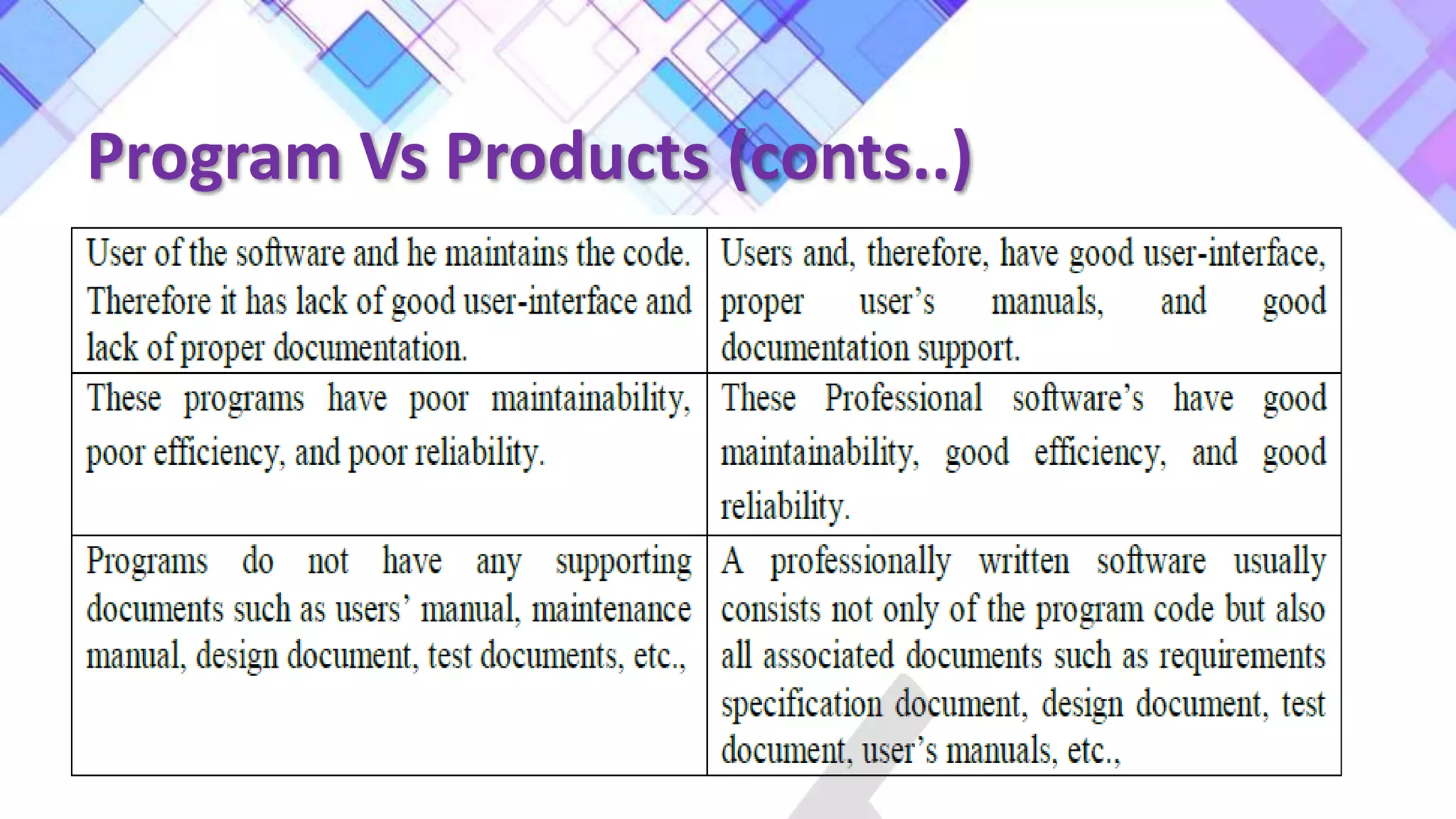
Program Vs Products (conts..)
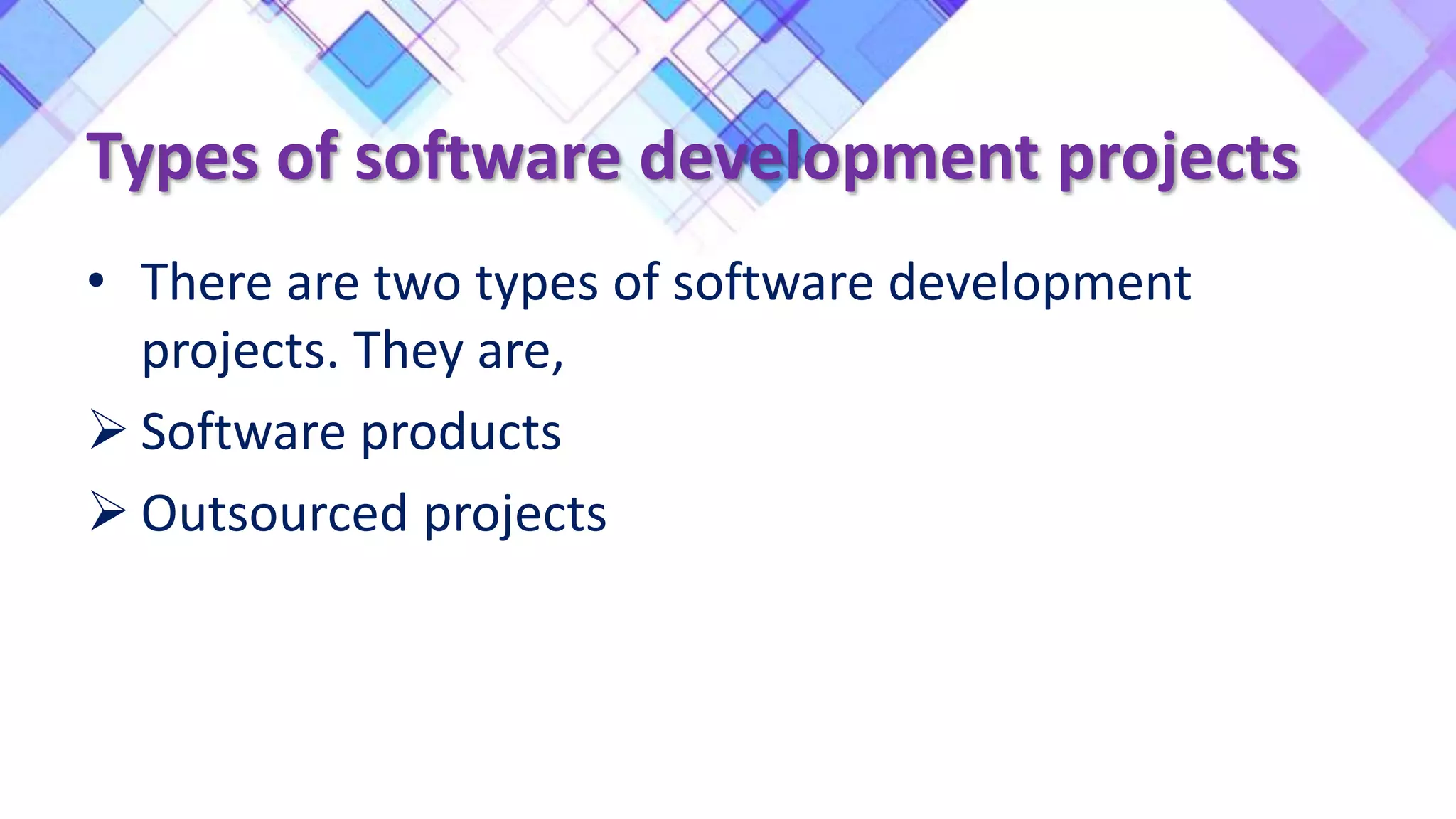
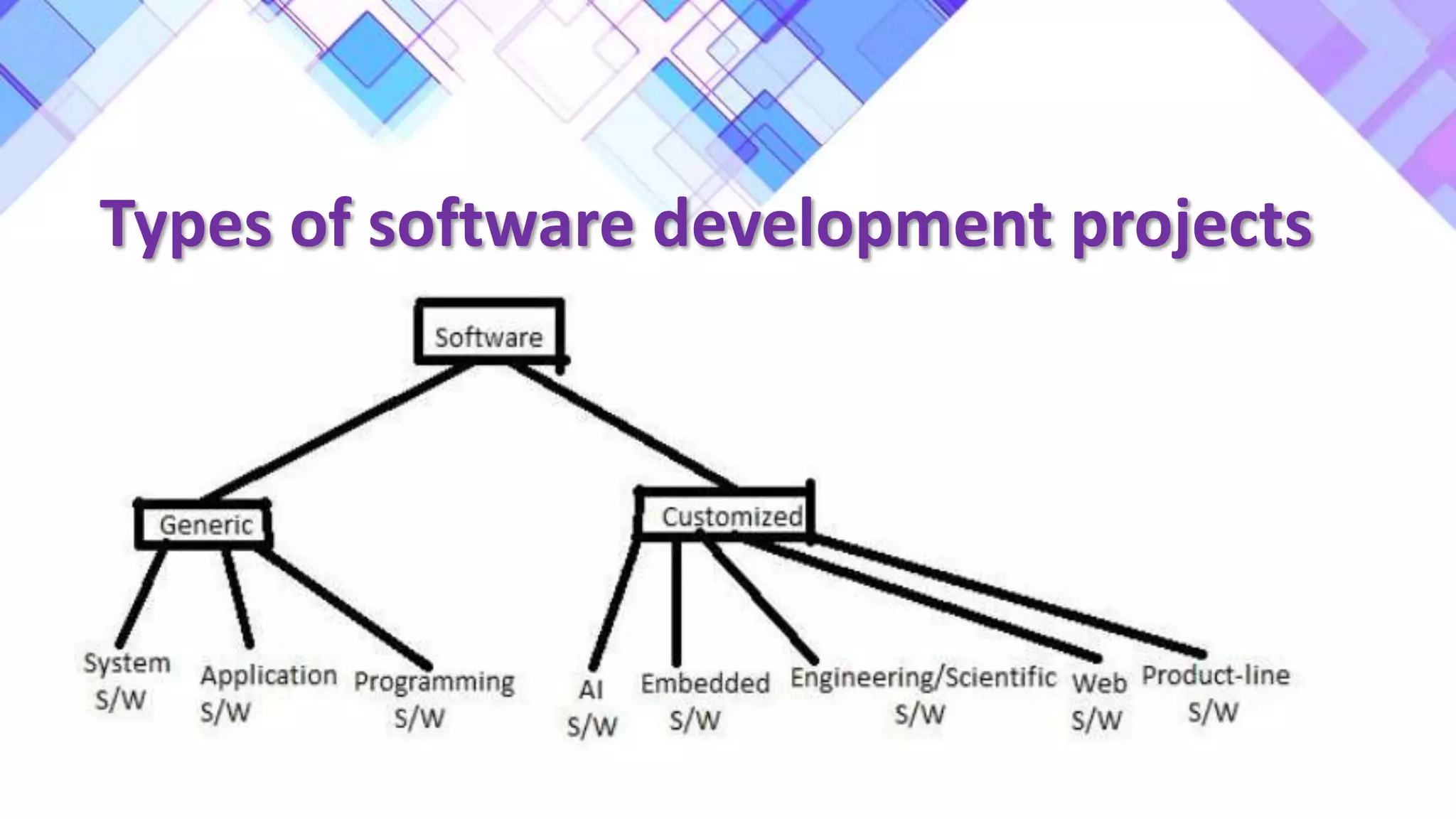
Types of software development projects
• There are two types of software development
projects. They are,
 Software products
 Outsourced projects
Software Products
Software such as Microsoft’s Windows and the Office
suite, Oracle DBMS, or a laser printer, etc. These are
called generic software products since many users
essentially use the same software.
Outsourced projects
A software service usually involves either
development of a customized software or
development of some specific part of software in an
outsourced mode.
Types of software development projects
Evolution of S/W Engineering Methodologies
1. Early Computer Programming
2. High-level Language Programming
3. Control Flow-based Design
4. Data Structure-oriented Design
5. Data Flow-oriented Design
6. Object-oriented Design
Early Computer Programming
• Early commercial computers were very slow and too
elementary as compared to today’s standards.
• Even simple processing tasks took considerable
computation time on those computers.
• Programs at that time were very small in size
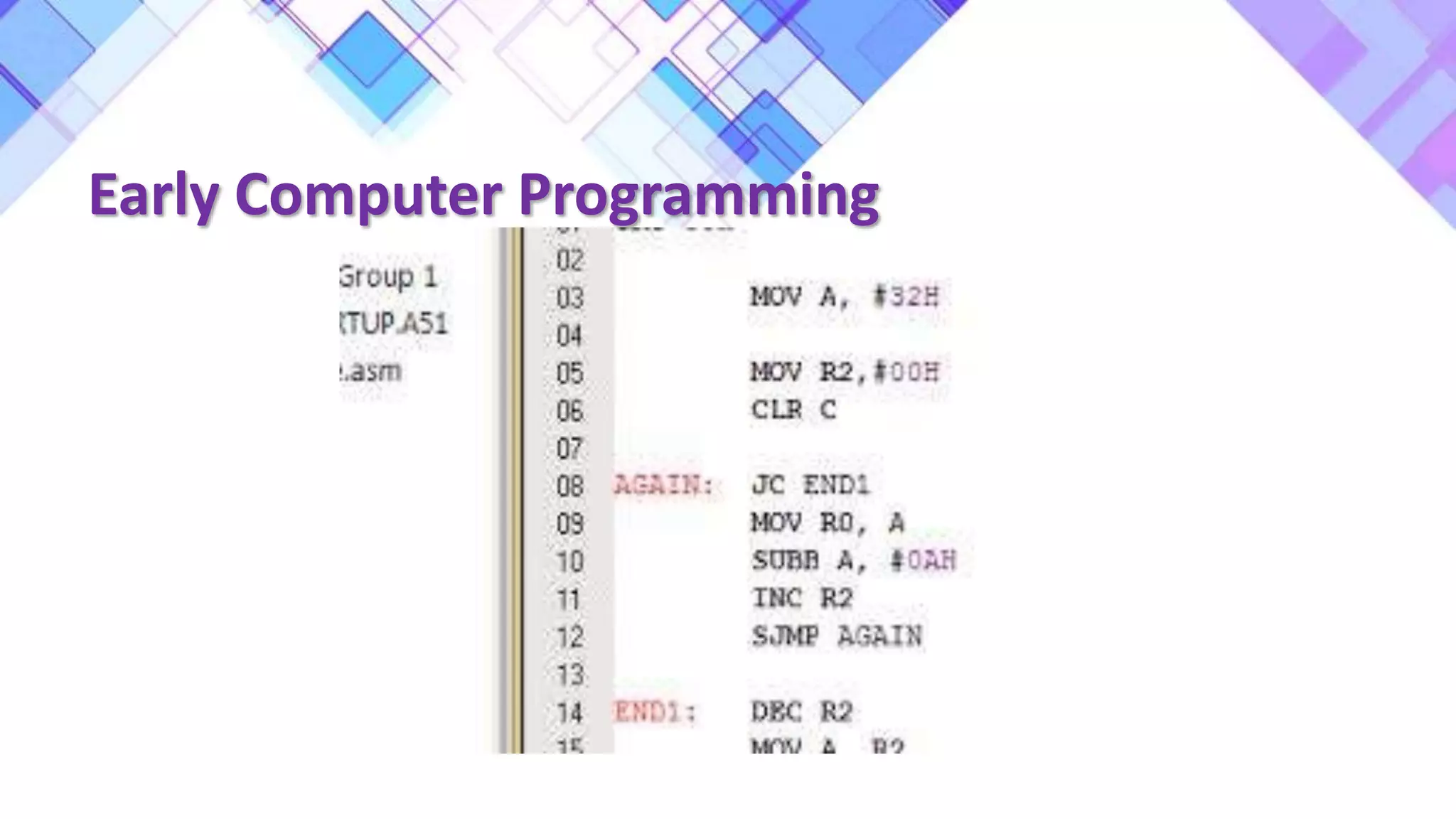
• Those programs were usually written in assembly
languages
• Programmers wrote programs without formulating
any proper solution strategy, plan, or design and
jump to the terminal and start coding immediately
on hearing out the problem.
• This style of programming is called as the build and
fix (or the exploratory programming) style.
Early Computer Programming
High-level Language Programming
• Computers became faster with the introduction of the
semiconductor technology in the early 1960s.
• Faster semiconductor transistors replaced the prevalent
vacuum tube-based circuits in a computer.
• With the availability of more powerful computers, it
became possible to solve larger and more complex
problems.
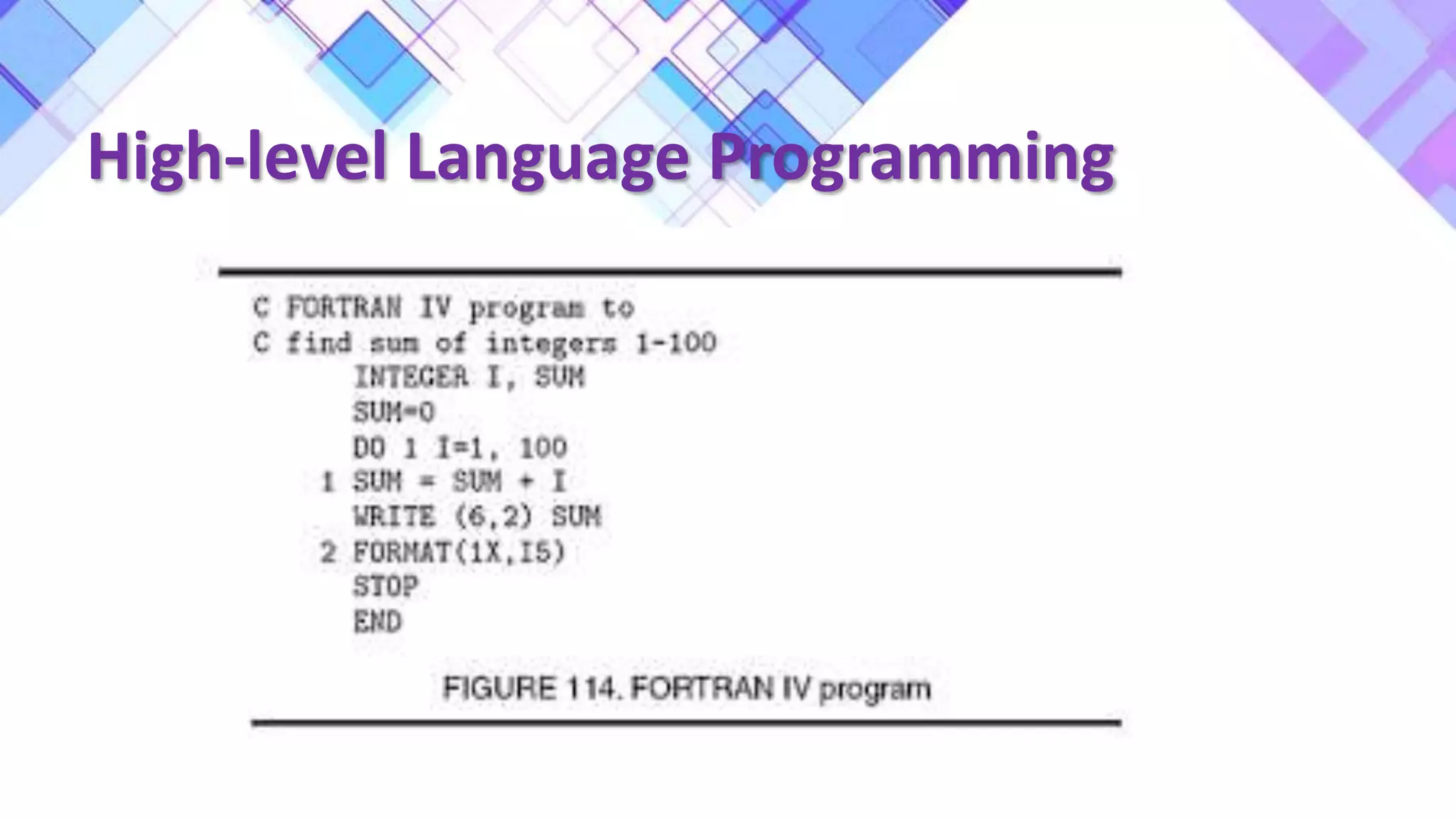
• At this time, high-level languages such as FORTRAN,
ALGOL, and COBOL were introduced.
High-level Language Programming
• Writing each high-level programming construct in effect
enables the programmer to write several machine
instructions.
• Also, the machine details (registers, flags, etc.) are
abstracted from the programmer.
• However, programmers were still using the exploratory
style of software development. Typical programs were
limited to sizes of around a few thousands of lines of
source code.
High-level Language Programming
Control Flow-based Design
• A program’s control flow structure indicates the
sequence in which the program’s instructions are
executed.
• To develop programs having good control flow
structures, the flow charting technique was
developed. The flow charting technique is being
used to represent and design algorithms.
Control Flow-based Design
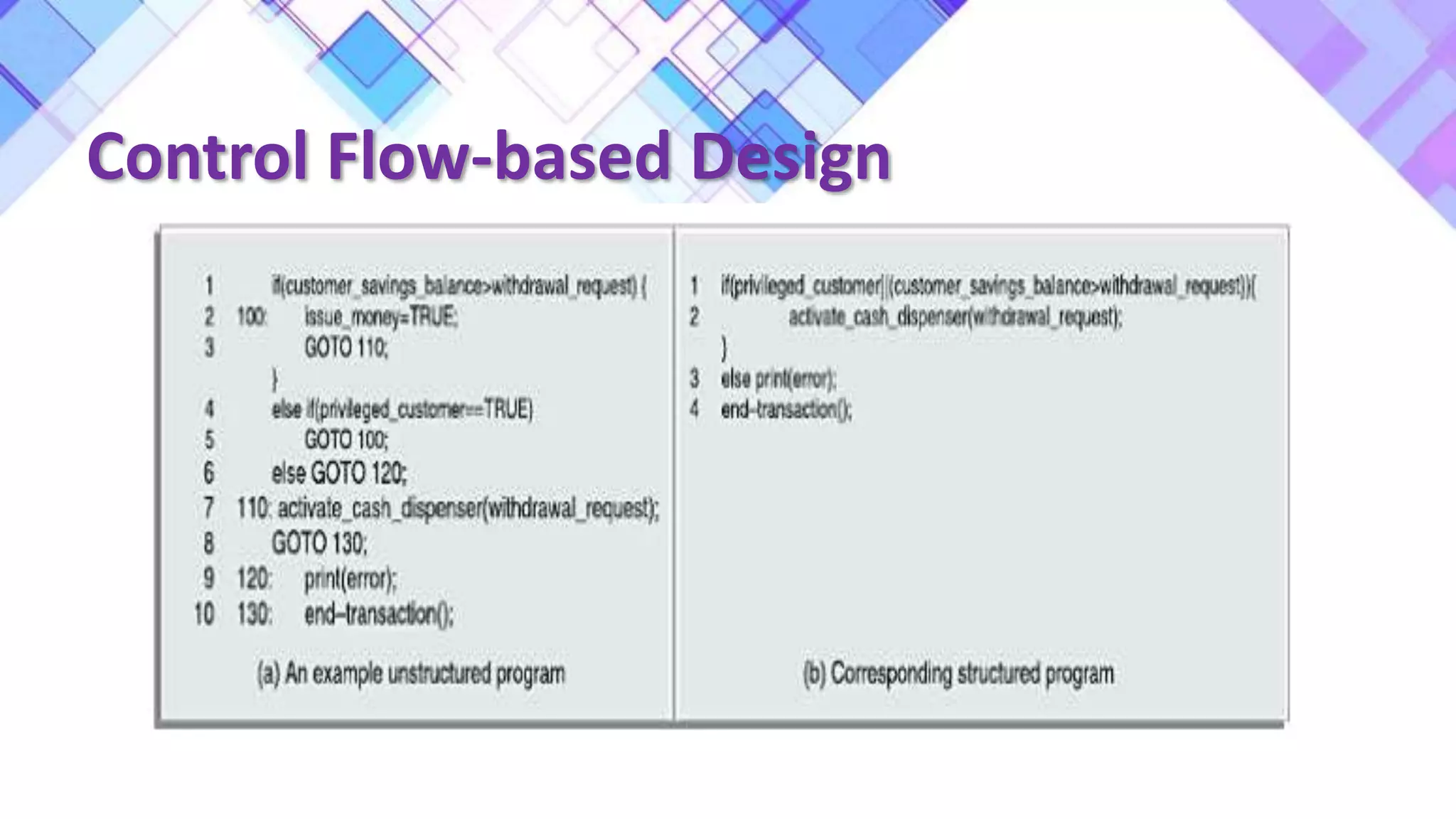
• Unstructured program consists of number of GOTO
statements, but structured programs are very simple to look.
• A program is called structured when it uses only the
sequence, selection, and iteration types of constructs and is
modular.
• Several languages such as PASCAL, MODULA, C, etc., became
available which were specifically designed to support
structured programming.
Control Flow-based Design
Data Structure-oriented Design
• Computers became even more powerful with the
advent o f integrated circuits (ICs) in the early
seventies.
• These could now be used to solve more complex
problems. Software developers were tasked to
develop larger and more complicated software
Data Structure-oriented Design
• It often required writing in excess of several tens of
thousands of lines of source code.
• The control flow-based program development
techniques could not be used satisfactorily any more
to write those programs, and more effective program
development techniques were needed.
• It is much more important to pay attention to the
design the important data structures of the program
than to the design of its control structure.
• Design techniques based on this principle are called
data structure- oriented design techniques.
Data Structure-oriented Design
Data Flow-oriented Design
• As computers became still faster and more powerful
with the introduction of very large scale integrated
(VLSI) Circuits and some new architectural concepts,
more complex and sophisticated software were
needed to solve further challenging problems
Data Flow-oriented Design
• Therefore, software developers looked out for more
effective techniques for designing software and soon
data flow-oriented techniques were proposed
• The functions (also called as processes) and the data
items that are exchanged between the different functions
are represented in a diagram known as a data flow
diagram (DFD).
• Data flow-oriented techniques evolved into object-
oriented design (OOD) techniques in the late seventies.
• Object-oriented design technique is naturally an
attractive approach, where the natural objects (such as
employees, pay-roll-register, etc.) relevant to a problem
are first identified and then the relationships among the
objects such as composition, reference, and inheritance
are determined.
Object-oriented Design
• Each object essentially acts as a data hiding (also known as
data abstraction ) entity.
• Object-oriented techniques have gained wide spread
acceptance because of their simplicity, the scope for code and
design reuse, lower development time, lower development
cost, more robust code, and easier maintenance.
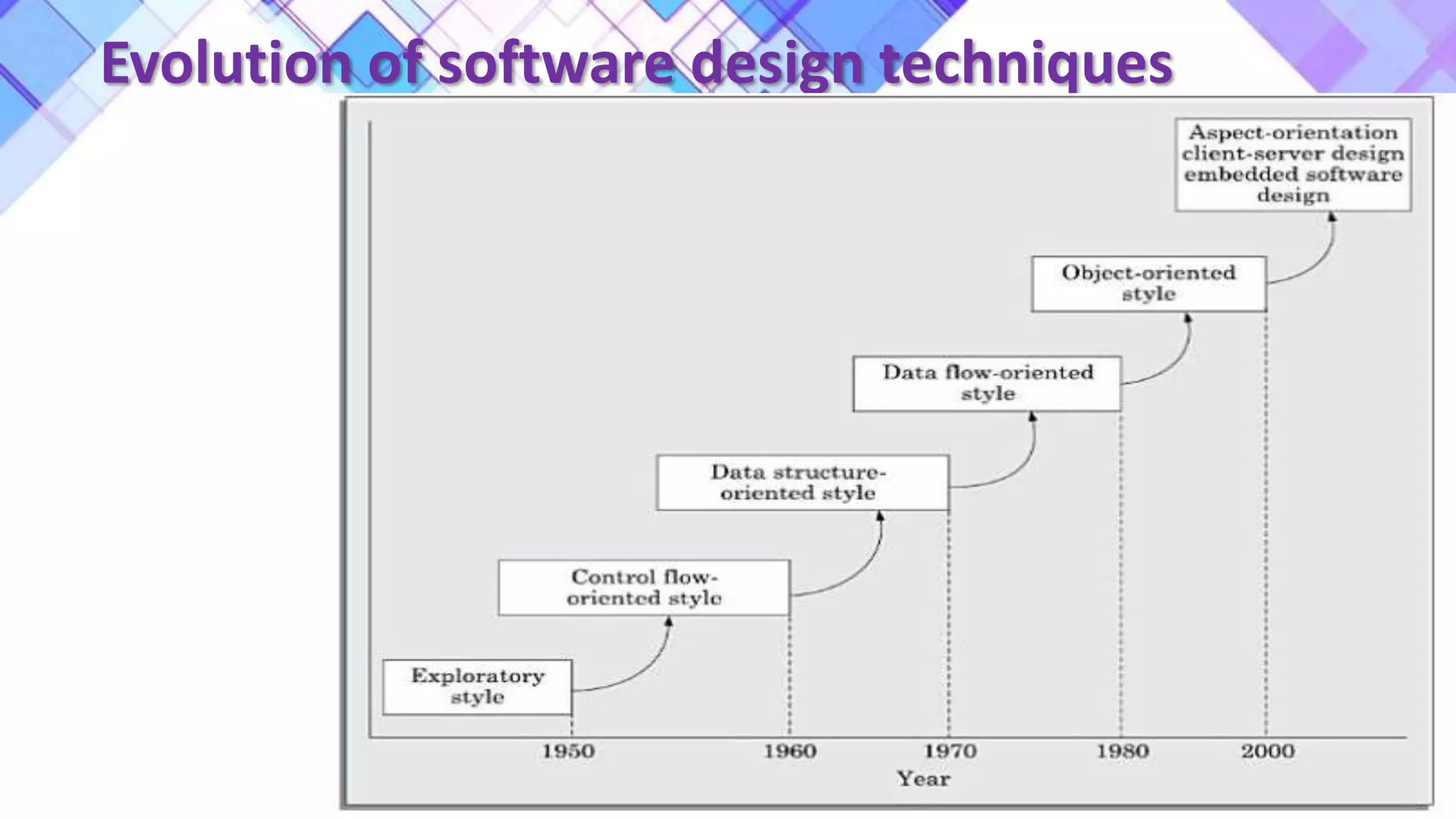
Evolution of software design techniques

The Software Engineering Discipline and Evolution of S/W Engineering Methodologies

  • 1.
    Software Engineering Mrs. R.K.Santhia/Assistant Professor-CSE
  • 2.
  • 3.
  • 4.
    Types of softwaredevelopment projects • There are two types of software development projects. They are,  Software products  Outsourced projects
  • 5.
    Software Products Software suchas Microsoft’s Windows and the Office suite, Oracle DBMS, or a laser printer, etc. These are called generic software products since many users essentially use the same software.
  • 6.
    Outsourced projects A softwareservice usually involves either development of a customized software or development of some specific part of software in an outsourced mode.
  • 7.
    Types of softwaredevelopment projects
  • 8.
    Evolution of S/WEngineering Methodologies 1. Early Computer Programming 2. High-level Language Programming 3. Control Flow-based Design 4. Data Structure-oriented Design 5. Data Flow-oriented Design 6. Object-oriented Design
  • 9.
    Early Computer Programming •Early commercial computers were very slow and too elementary as compared to today’s standards. • Even simple processing tasks took considerable computation time on those computers. • Programs at that time were very small in size • Those programs were usually written in assembly languages
  • 10.
    • Programmers wroteprograms without formulating any proper solution strategy, plan, or design and jump to the terminal and start coding immediately on hearing out the problem. • This style of programming is called as the build and fix (or the exploratory programming) style. Early Computer Programming
  • 11.
  • 12.
    High-level Language Programming •Computers became faster with the introduction of the semiconductor technology in the early 1960s. • Faster semiconductor transistors replaced the prevalent vacuum tube-based circuits in a computer. • With the availability of more powerful computers, it became possible to solve larger and more complex problems. • At this time, high-level languages such as FORTRAN, ALGOL, and COBOL were introduced.
  • 13.
    High-level Language Programming •Writing each high-level programming construct in effect enables the programmer to write several machine instructions. • Also, the machine details (registers, flags, etc.) are abstracted from the programmer. • However, programmers were still using the exploratory style of software development. Typical programs were limited to sizes of around a few thousands of lines of source code.
  • 14.
  • 15.
    Control Flow-based Design •A program’s control flow structure indicates the sequence in which the program’s instructions are executed. • To develop programs having good control flow structures, the flow charting technique was developed. The flow charting technique is being used to represent and design algorithms.
  • 16.
  • 17.
    • Unstructured programconsists of number of GOTO statements, but structured programs are very simple to look. • A program is called structured when it uses only the sequence, selection, and iteration types of constructs and is modular. • Several languages such as PASCAL, MODULA, C, etc., became available which were specifically designed to support structured programming. Control Flow-based Design
  • 18.
    Data Structure-oriented Design •Computers became even more powerful with the advent o f integrated circuits (ICs) in the early seventies. • These could now be used to solve more complex problems. Software developers were tasked to develop larger and more complicated software
  • 19.
    Data Structure-oriented Design •It often required writing in excess of several tens of thousands of lines of source code. • The control flow-based program development techniques could not be used satisfactorily any more to write those programs, and more effective program development techniques were needed.
  • 20.
    • It ismuch more important to pay attention to the design the important data structures of the program than to the design of its control structure. • Design techniques based on this principle are called data structure- oriented design techniques. Data Structure-oriented Design
  • 21.
    Data Flow-oriented Design •As computers became still faster and more powerful with the introduction of very large scale integrated (VLSI) Circuits and some new architectural concepts, more complex and sophisticated software were needed to solve further challenging problems
  • 22.
    Data Flow-oriented Design •Therefore, software developers looked out for more effective techniques for designing software and soon data flow-oriented techniques were proposed • The functions (also called as processes) and the data items that are exchanged between the different functions are represented in a diagram known as a data flow diagram (DFD).
  • 25.
    • Data flow-orientedtechniques evolved into object- oriented design (OOD) techniques in the late seventies. • Object-oriented design technique is naturally an attractive approach, where the natural objects (such as employees, pay-roll-register, etc.) relevant to a problem are first identified and then the relationships among the objects such as composition, reference, and inheritance are determined. Object-oriented Design
  • 26.
    Object-oriented Design • Eachobject essentially acts as a data hiding (also known as data abstraction ) entity. • Object-oriented techniques have gained wide spread acceptance because of their simplicity, the scope for code and design reuse, lower development time, lower development cost, more robust code, and easier maintenance.
  • 27.
    Evolution of softwaredesign techniques