The Power of Data Science Building a
Smarter Future
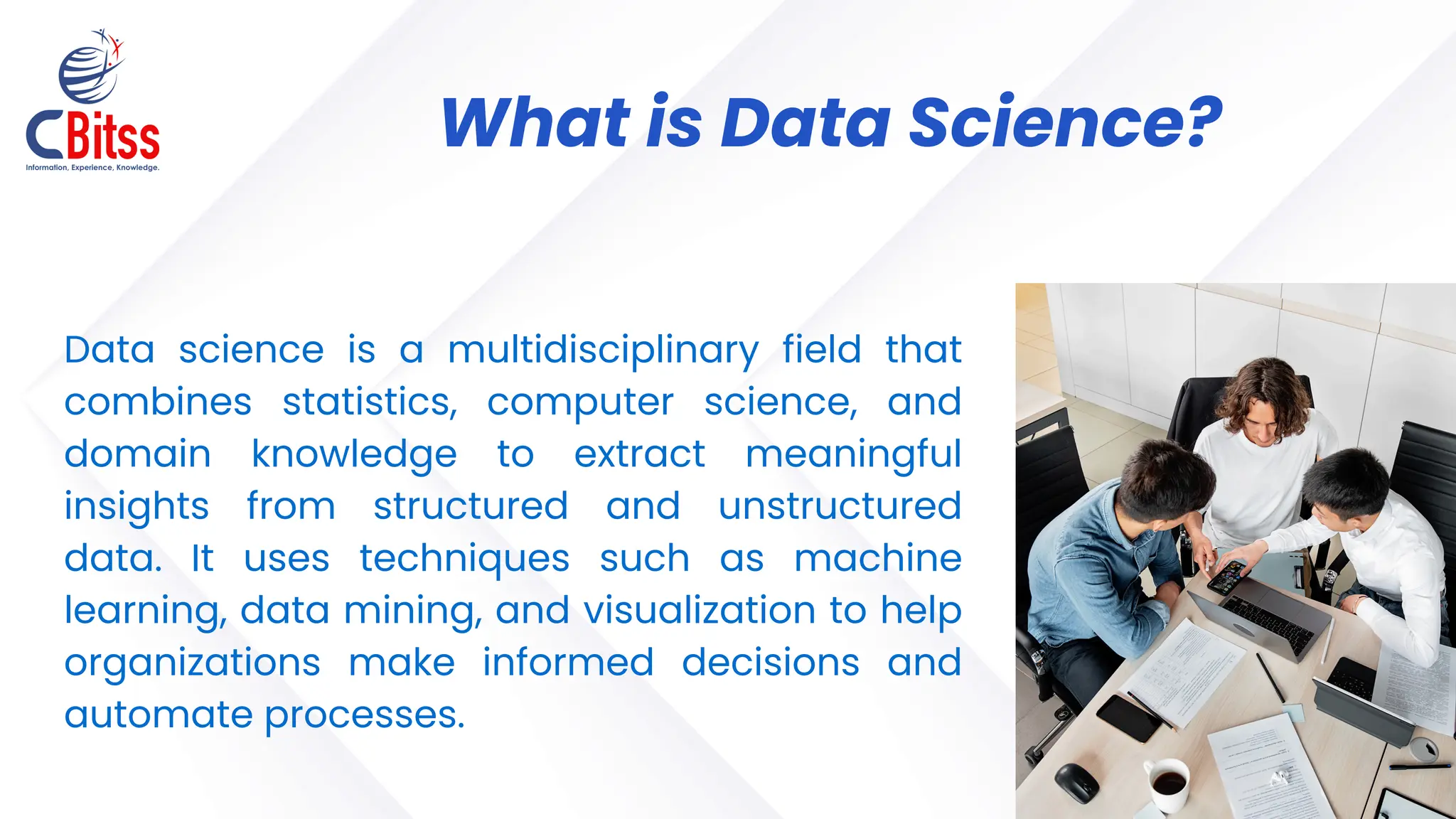
Data science is a multidisciplinary field that
combines statistics, computer science, and
domain knowledge to extract meaningful
insights from structured and unstructured
data. It uses techniques such as machine
learning, data mining, and visualization to help
organizations make informed decisions and
automate processes.
What is Data Science?
Why Data Science Matters
Helps businesses make smarter, data-
driven decisions
Predicts trends and behaviors for strategic
planning
Enables automation and operational
efficiency
Drives innovation in every industry
Enhances customer experiences through
personalization
04
Real-World Applications of
Data Science
Data science powers many services we use
daily. Netflix recommends shows based on your
viewing habits. Google Maps predicts traffic
and suggests optimal routes. Healthcare
providers use data science to diagnose
diseases earlier and personalize treatment
plans. These are just a few examples of how
data science makes our lives smarter and
more efficient.
1.Data Collection & Cleaning Gathering raw data from various sources and
preparing it by removing errors and inconsistencies for accurate analysis.
2.Data Analysis & Visualization
Exploring datasets and creating visual representations (charts, graphs) to
uncover trends and patterns.
3.Statistical Modeling
Applying mathematical models and statistical techniques to draw
conclusions and make predictions from data.
4.Machine Learning Algorithms
Using algorithms that allow systems to learn from data and improve
decision-making without explicit programming.
5.Big Data Tools & Technologies Utilizing advanced tools like Hadoop and
Spark to process and manage large-scale data efficiently.
6.Deployment & Monitoring of Models
Implementing predictive models into real-world systems and continuously
tracking their performance for accuracy and improvement.
Core Components of Data Science
Modern data science is rapidly evolving. Key trends
include the rise of AutoML (automated machine
learning), real-time analytics using streaming data, and
increased focus on data ethics and privacy. AI-driven
insights and low-code tools are making data science
more accessible across industries, democratizing
innovation.
Key Trends in Data Science
B
Data Science in Industry – A Case
Example
In agriculture, companies like John Deere use data
science and IoT devices to predict crop yields,
optimize irrigation, and reduce waste. This data-
driven approach improves food production while
reducing environmental impact—demonstrating how
data science contributes to a smarter, more
sustainable future.
Challenges in Data Science
1.Data Privacy and Ethical Concerns
Ensuring data is collected, stored, and used responsibly without violating users' rights or
trust.
2.Incomplete or Poor-Quality Data
Dealing with missing, inconsistent, or inaccurate data that can lead to unreliable insights.
3.Shortage of Skilled Professionals
Facing a growing demand for data experts with expertise in statistics, programming, and
domain knowledge.
4.Model Bias and Fairness Issues
Preventing algorithms from producing unfair or discriminatory results due to biased
training data.
5.Keeping Up with Rapidly Evolving Tools and Techniques
Constantly learning and adapting to new technologies, frameworks, and best practices in
a fast-moving field.
Conclusion: The Future is
Data-Driven
Data science is transforming how we understand and
shape the world. From personalized healthcare to
sustainable development and smarter cities, its impact is
profound. As technology advances, the ability to harness
and analyze data responsibly will be critical to building a
smarter, more equitable future for all.
Website:- https://www.cbitss.in
Email :- admin@cbitss.org
Adderess:- Sukrala IT Services Pvt.Ltd
SCO 23-24-25,Level 3rd’
SEC-34,Chandigarh
Phone:- 9988741983,
0172-503-1983
CONTACT US

The Power of Data Science Building a Smarter Future

  • 1.
    The Power ofData Science Building a Smarter Future
  • 2.
    Data science isa multidisciplinary field that combines statistics, computer science, and domain knowledge to extract meaningful insights from structured and unstructured data. It uses techniques such as machine learning, data mining, and visualization to help organizations make informed decisions and automate processes. What is Data Science?
  • 3.
    Why Data ScienceMatters Helps businesses make smarter, data- driven decisions Predicts trends and behaviors for strategic planning Enables automation and operational efficiency Drives innovation in every industry Enhances customer experiences through personalization
  • 4.
    04 Real-World Applications of DataScience Data science powers many services we use daily. Netflix recommends shows based on your viewing habits. Google Maps predicts traffic and suggests optimal routes. Healthcare providers use data science to diagnose diseases earlier and personalize treatment plans. These are just a few examples of how data science makes our lives smarter and more efficient.
  • 5.
    1.Data Collection &Cleaning Gathering raw data from various sources and preparing it by removing errors and inconsistencies for accurate analysis. 2.Data Analysis & Visualization Exploring datasets and creating visual representations (charts, graphs) to uncover trends and patterns. 3.Statistical Modeling Applying mathematical models and statistical techniques to draw conclusions and make predictions from data. 4.Machine Learning Algorithms Using algorithms that allow systems to learn from data and improve decision-making without explicit programming. 5.Big Data Tools & Technologies Utilizing advanced tools like Hadoop and Spark to process and manage large-scale data efficiently. 6.Deployment & Monitoring of Models Implementing predictive models into real-world systems and continuously tracking their performance for accuracy and improvement. Core Components of Data Science
  • 6.
    Modern data scienceis rapidly evolving. Key trends include the rise of AutoML (automated machine learning), real-time analytics using streaming data, and increased focus on data ethics and privacy. AI-driven insights and low-code tools are making data science more accessible across industries, democratizing innovation. Key Trends in Data Science
  • 7.
    B Data Science inIndustry – A Case Example In agriculture, companies like John Deere use data science and IoT devices to predict crop yields, optimize irrigation, and reduce waste. This data- driven approach improves food production while reducing environmental impact—demonstrating how data science contributes to a smarter, more sustainable future.
  • 8.
    Challenges in DataScience 1.Data Privacy and Ethical Concerns Ensuring data is collected, stored, and used responsibly without violating users' rights or trust. 2.Incomplete or Poor-Quality Data Dealing with missing, inconsistent, or inaccurate data that can lead to unreliable insights. 3.Shortage of Skilled Professionals Facing a growing demand for data experts with expertise in statistics, programming, and domain knowledge. 4.Model Bias and Fairness Issues Preventing algorithms from producing unfair or discriminatory results due to biased training data. 5.Keeping Up with Rapidly Evolving Tools and Techniques Constantly learning and adapting to new technologies, frameworks, and best practices in a fast-moving field.
  • 9.
    Conclusion: The Futureis Data-Driven Data science is transforming how we understand and shape the world. From personalized healthcare to sustainable development and smarter cities, its impact is profound. As technology advances, the ability to harness and analyze data responsibly will be critical to building a smarter, more equitable future for all.
  • 10.
    Website:- https://www.cbitss.in Email :-admin@cbitss.org Adderess:- Sukrala IT Services Pvt.Ltd SCO 23-24-25,Level 3rd’ SEC-34,Chandigarh Phone:- 9988741983, 0172-503-1983 CONTACT US