Krashen’s Monitor Model
           1
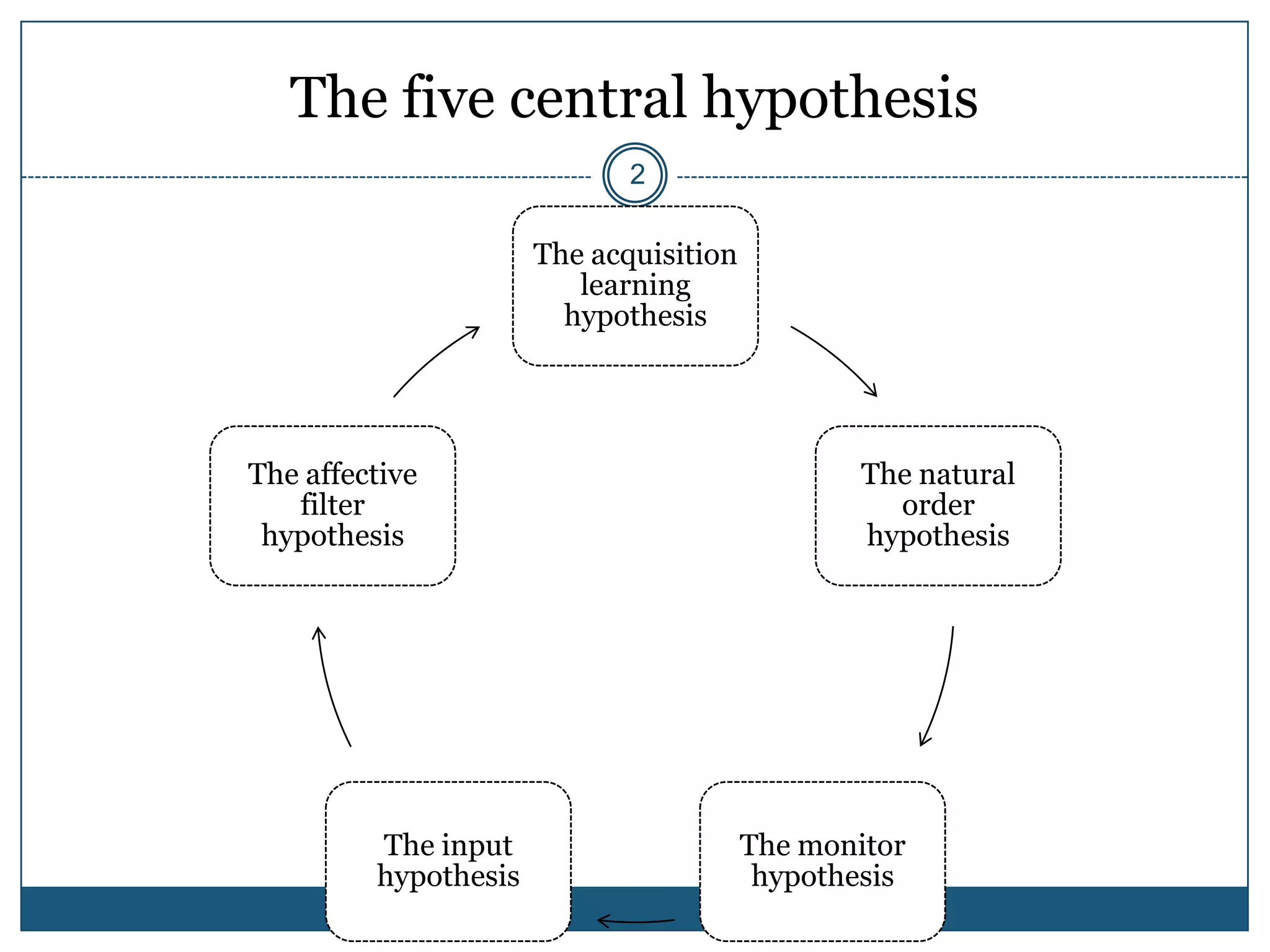
The five central hypothesis
                             2

                      The acquisition
                         learning
                        hypothesis


The affective                                   The natural
   filter                                         order
 hypothesis                                     hypothesis


         The input                      The monitor
         hypothesis                      hypothesis
1. The acquisition learning hypothesis
                           3


 The process of internalizing new L2 knowledge, to
 storing this knowledge, and to use it in actual
 performance.
The acquisition learning distinctions
                          4

 “Acquisition” occurs subconsciously as a result of
  participating in natural communication focused on
  meaning.
 “Learning” occurs as a result of conscious study of
  the formal properties of the language.
 “Acquired” is for automatic processing, and for
  initiating comprehension and production of
  utterances.
 “Learnt” is only for controlled processing and only
  by the Monitor.
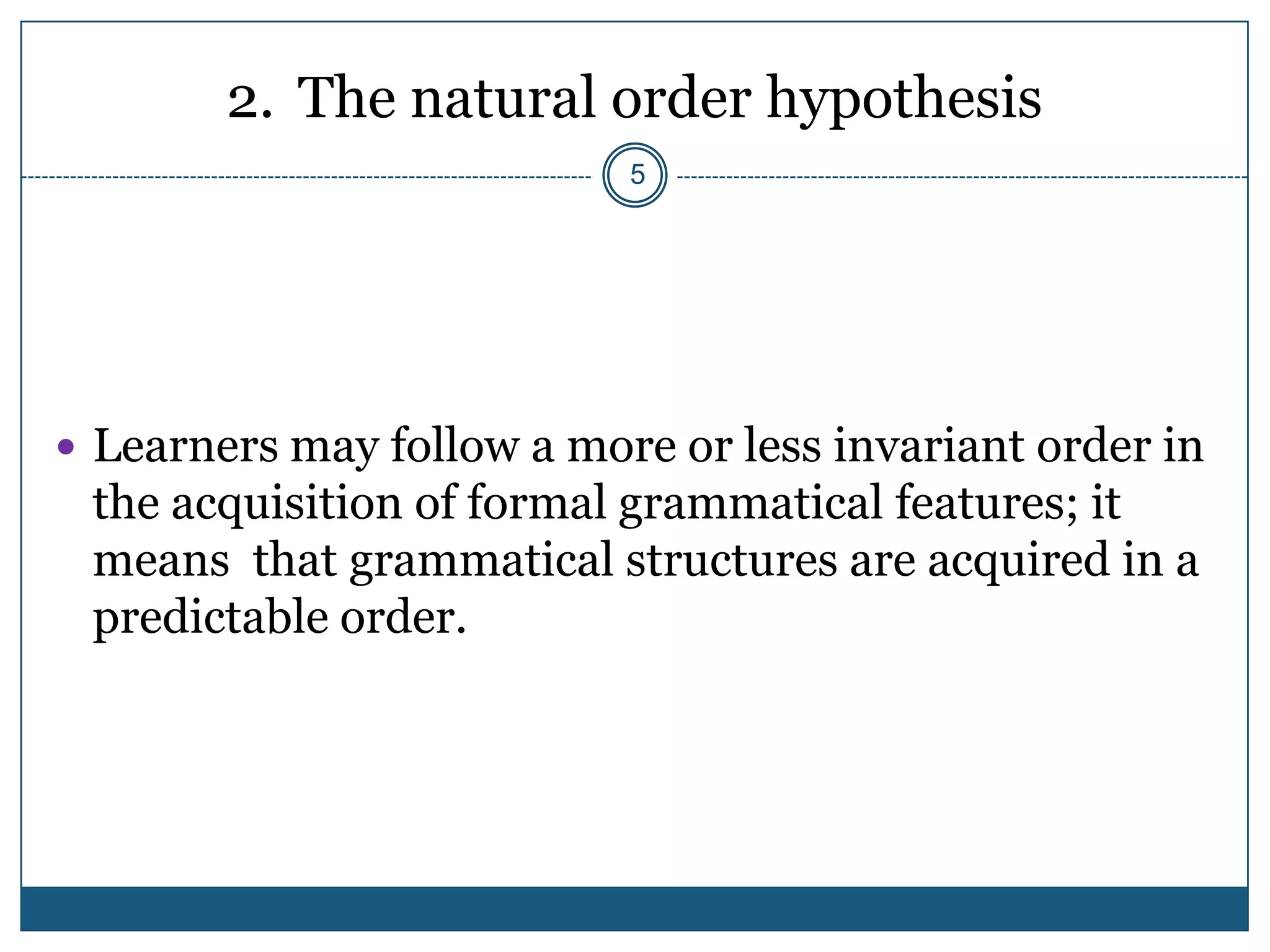
2. The natural order hypothesis
                           5


 Learners may follow a more or less invariant order in
 the acquisition of formal grammatical features; it
 means that grammatical structures are acquired in a
 predictable order.
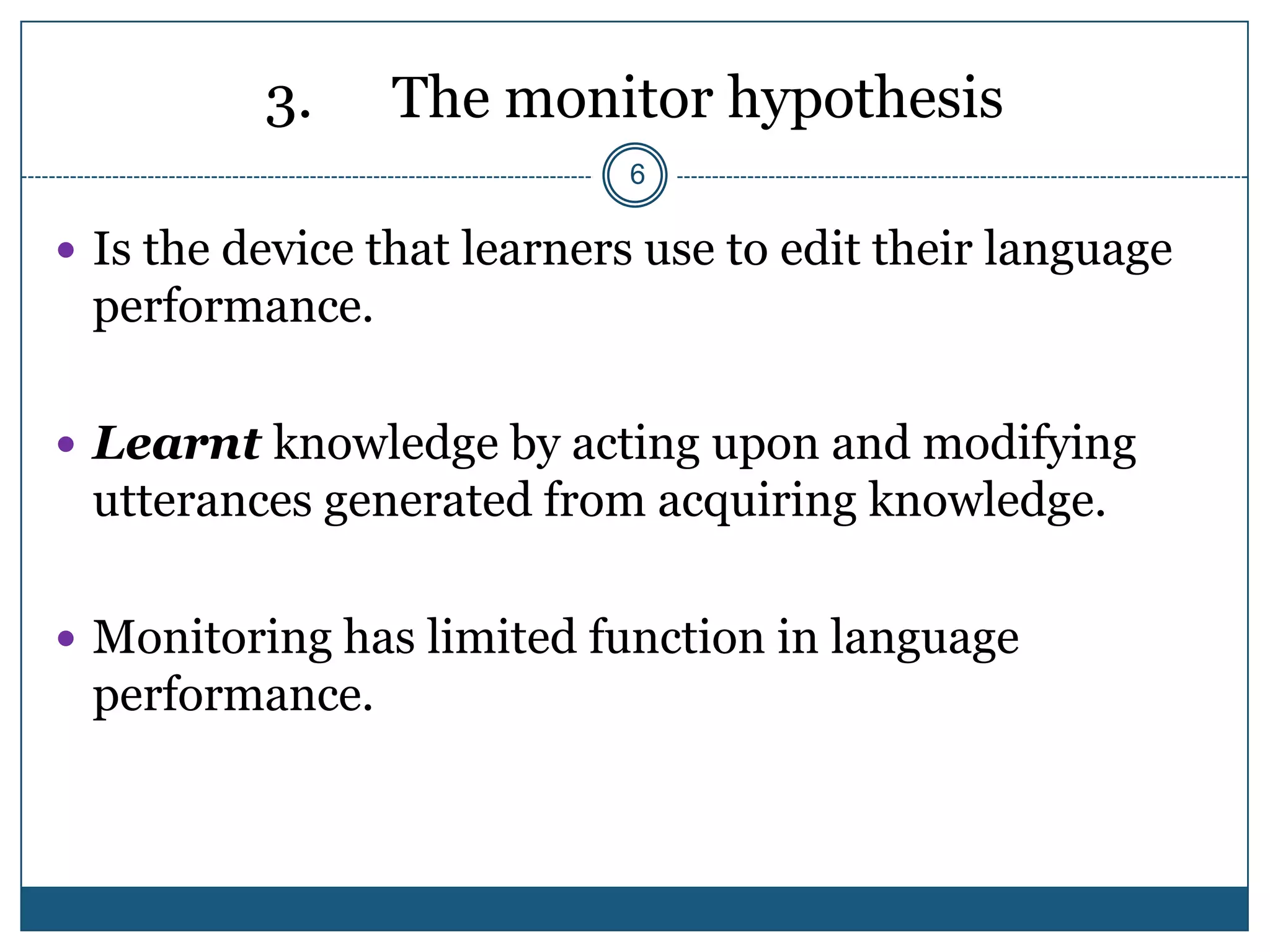
3.    The monitor hypothesis
                            6

 Is the device that learners use to edit their language
 performance.

 Learnt knowledge by acting upon and modifying
 utterances generated from acquiring knowledge.

 Monitoring has limited function in language
 performance.
3.    The monitor hypothesis
                            7


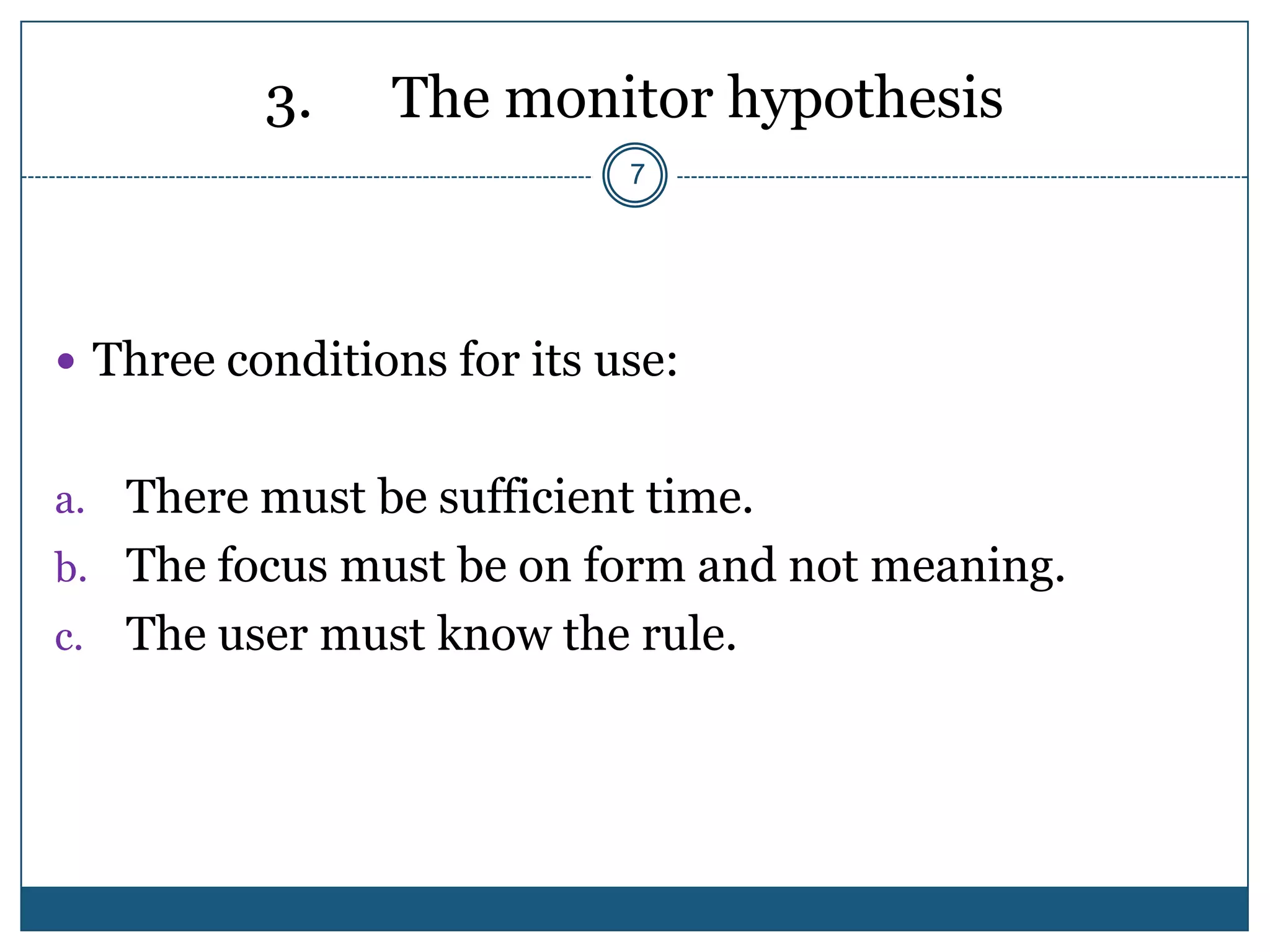
 Three conditions for its use:


a. There must be sufficient time.
b. The focus must be on form and not meaning.
c.   The user must know the rule.
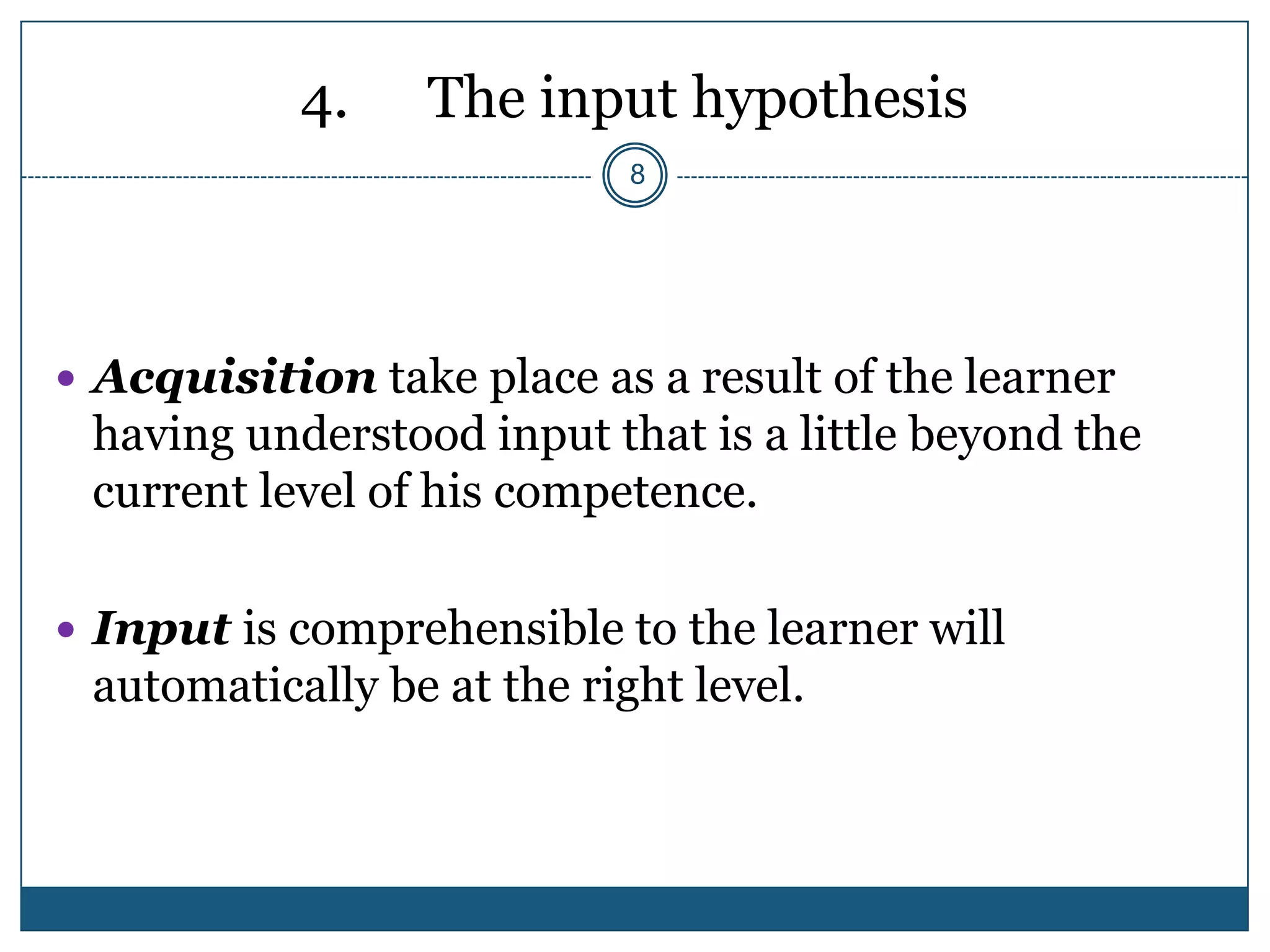
4.    The input hypothesis
                            8


 Acquisition take place as a result of the learner
 having understood input that is a little beyond the
 current level of his competence.

 Input is comprehensible to the learner will
 automatically be at the right level.
5.    The affective filter hypothesis
                           9


 The filter controls how much input the learner comes
 into contact with, and how much input is converted
 into intake.

 Is affective because the factors which determine its
 strength have to do with the learner’s motivation,
 self-confidence, or anxiety state.
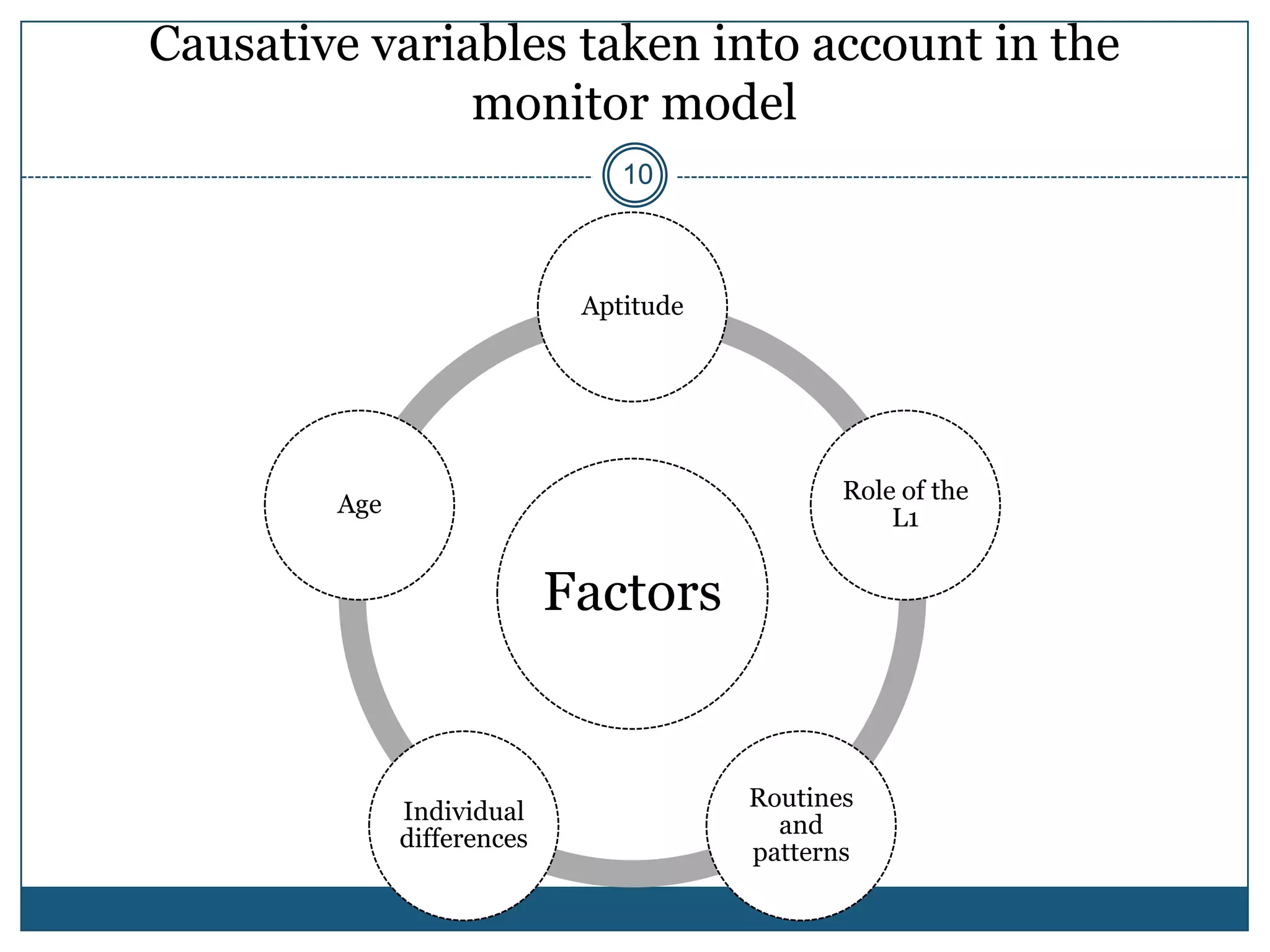
Causative variables taken into account in the
               monitor model
                                10


                             Aptitude


                                               Role of the
        Age
                                                   L1


                            Factors


                                        Routines
              Individual
                                          and
              differences
                                        patterns
I.     Aptitude
                           11


 The learner’s aptitude predicts how well he will
 perform on grammar-type tests that provide the
 right conditions for the operation of the Monitor.
II.    Role of the L1
                           12


 The use of the L1 as a performance strategy.


 Learner falls back on his L1 when he lacks a rule in
 the L2.

 He initiates an utterance using his L1 and then
 substitutes L2 lexical items.
III. Routines and patterns
                          13


 The formulas play a performance role only by
 helping the learner to outperform his competence.

 Acquisition catches up with the routines and
 patterns; that is, the structural knowledge contained
 in the formulas is developed separately.
IV.    Individual differences
                             14

 There is a variation in the rate and the extent of
     acquisition as a result of the amount of
     comprehensible input received, and the strength of
     the affective filter.

 Three types of monitor users:
1. Over-users.
2. Under-users.
3. Optimal-users.
V.        Age
                           15


 It affects the amount of comprehensible input that is
 obtained; younger learners may get more than older
 learners.
Evaluation+ Critism
                   16


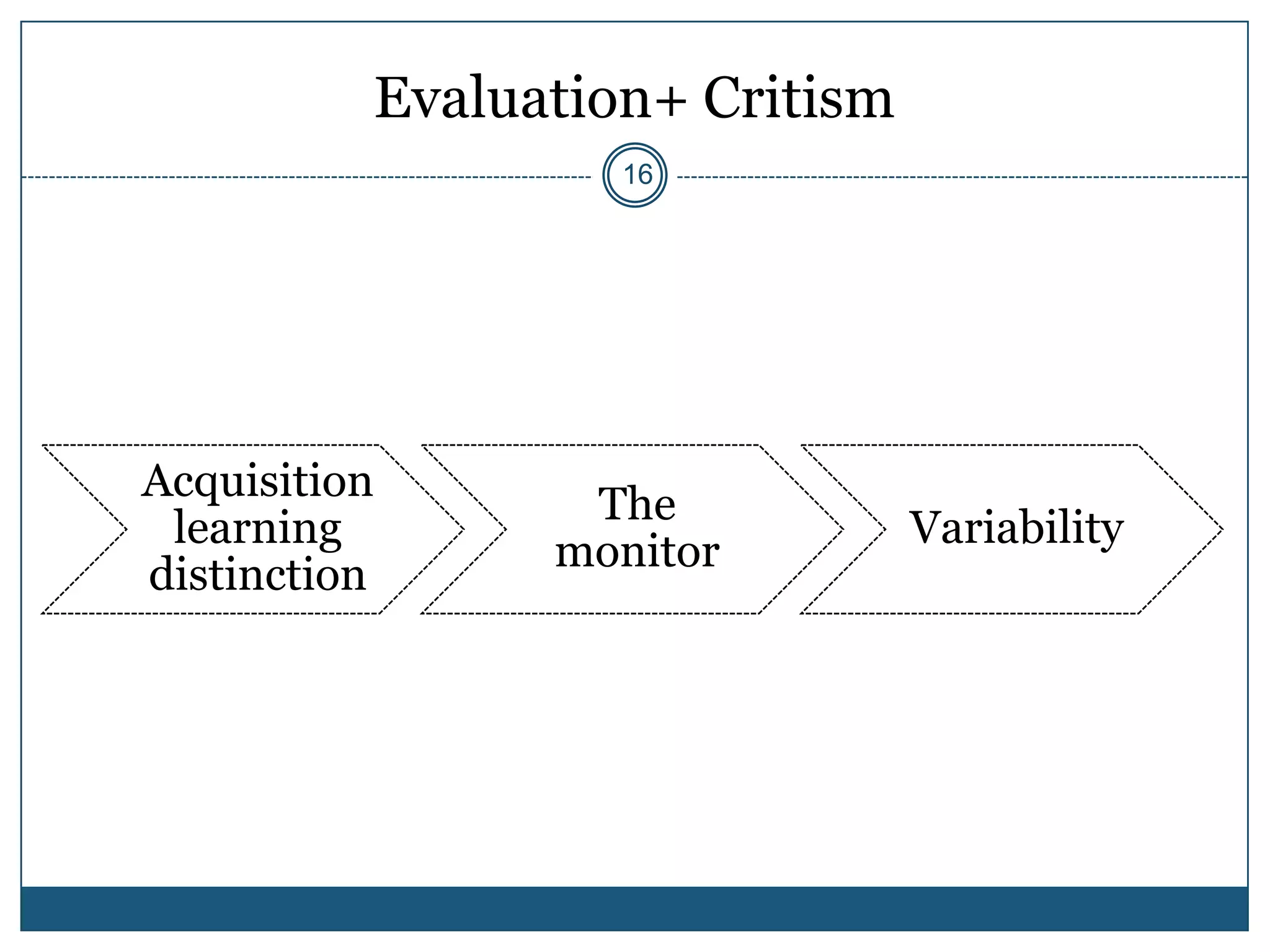
Acquisition
                 The
 learning                       Variability
                monitor
distinction
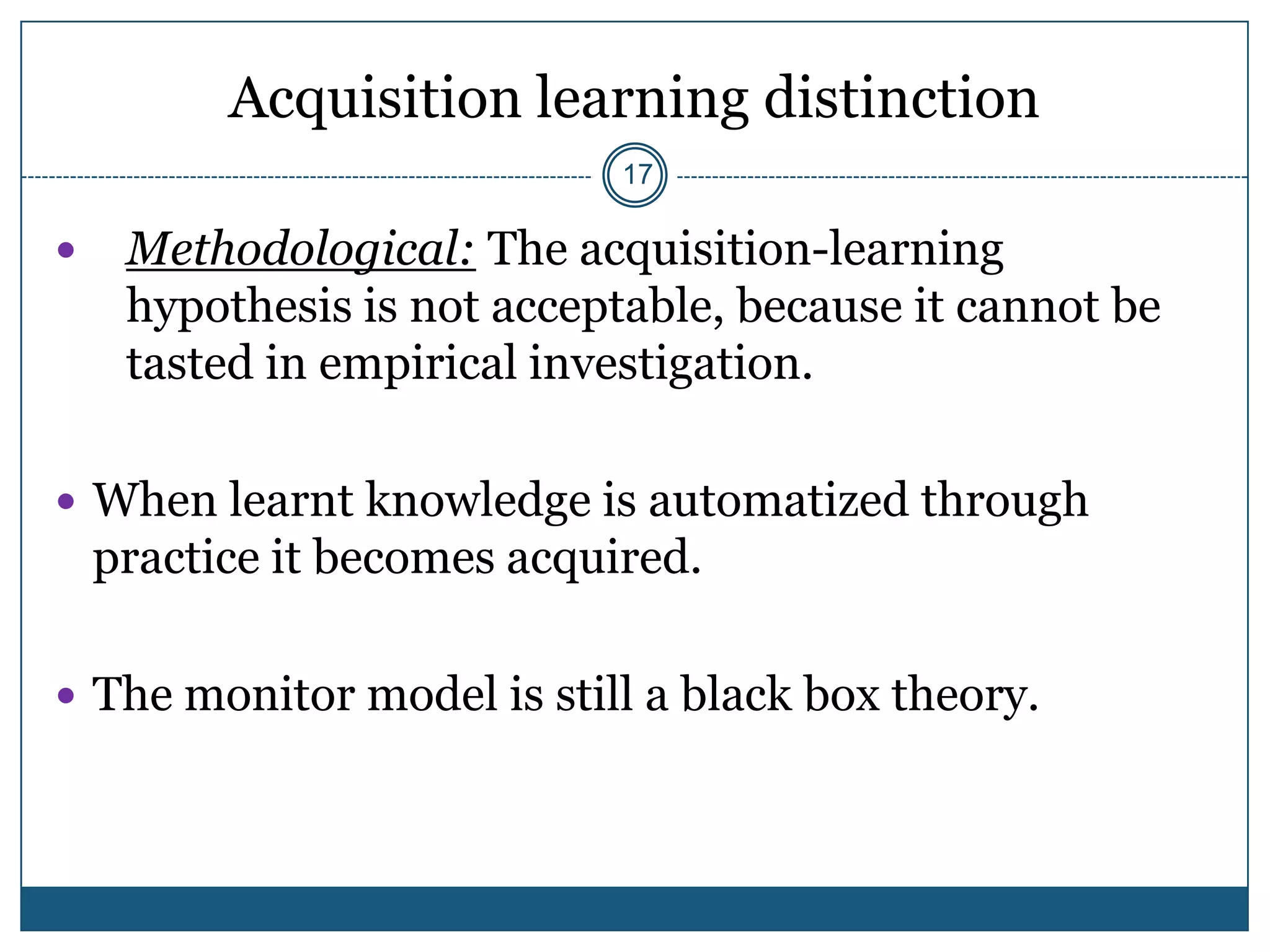
Acquisition learning distinction
                             17

    Methodological: The acquisition-learning
     hypothesis is not acceptable, because it cannot be
     tasted in empirical investigation.

 When learnt knowledge is automatized through
    practice it becomes acquired.

 The monitor model is still a black box theory.
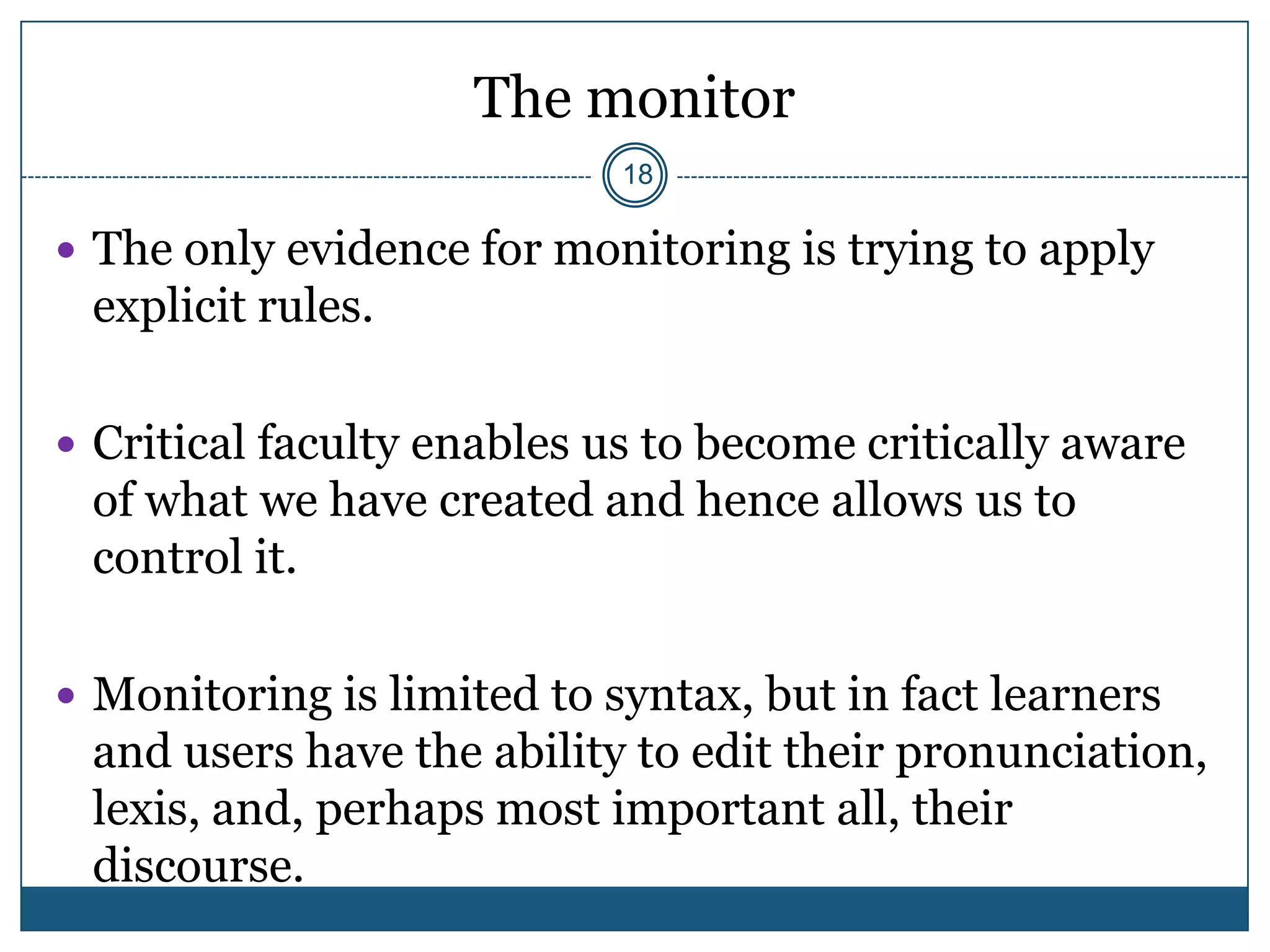
The monitor
                            18

 The only evidence for monitoring is trying to apply
 explicit rules.

 Critical faculty enables us to become critically aware
 of what we have created and hence allows us to
 control it.

 Monitoring is limited to syntax, but in fact learners
 and users have the ability to edit their pronunciation,
 lexis, and, perhaps most important all, their
 discourse.
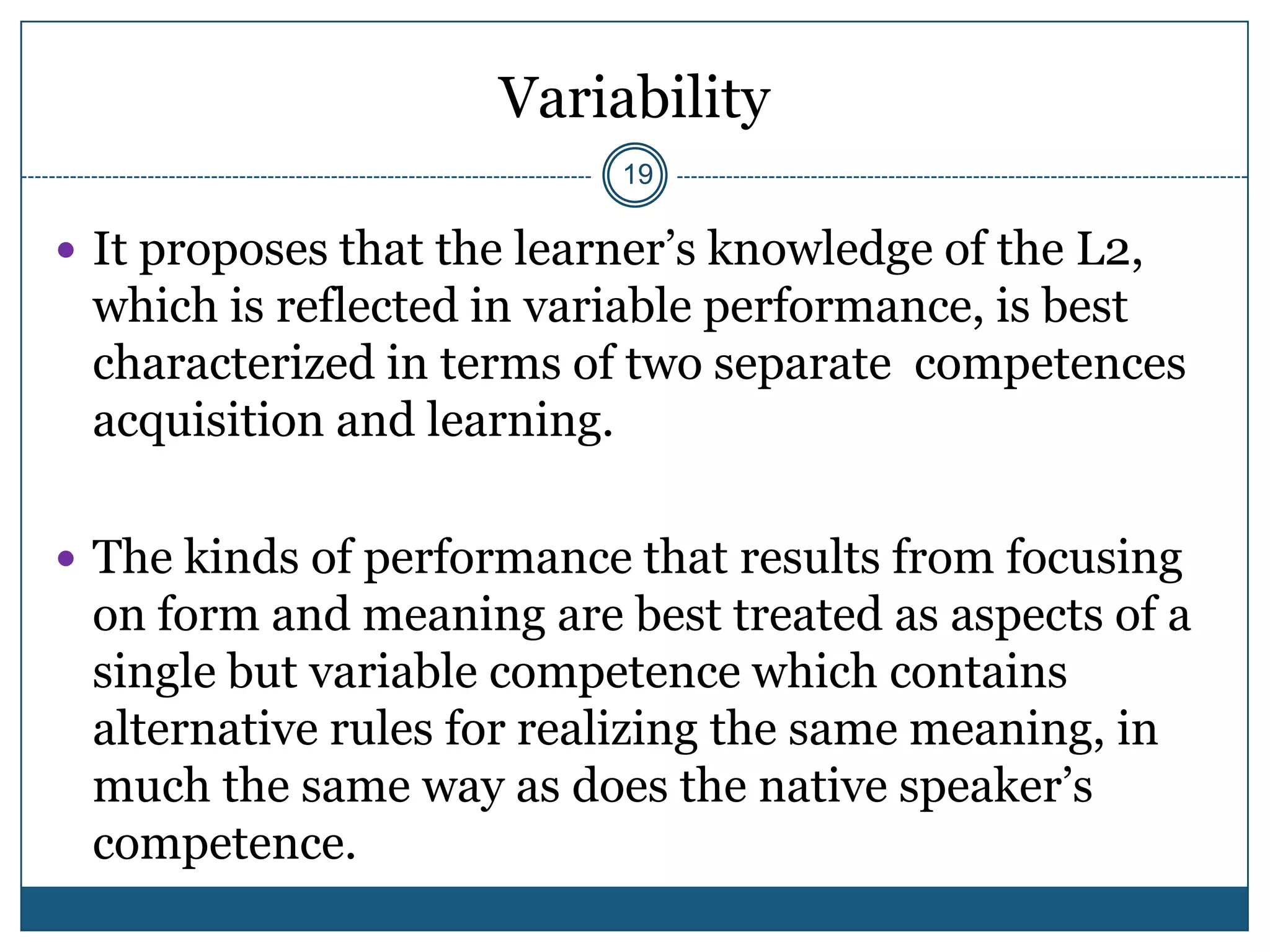
Variability
                           19

 It proposes that the learner’s knowledge of the L2,
 which is reflected in variable performance, is best
 characterized in terms of two separate competences
 acquisition and learning.

 The kinds of performance that results from focusing
 on form and meaning are best treated as aspects of a
 single but variable competence which contains
 alternative rules for realizing the same meaning, in
 much the same way as does the native speaker’s
 competence.
Krashen’s Monitor Model
           20

The monitor model

  • 1.
  • 2.
    The five centralhypothesis 2 The acquisition learning hypothesis The affective The natural filter order hypothesis hypothesis The input The monitor hypothesis hypothesis
  • 3.
    1. The acquisitionlearning hypothesis 3  The process of internalizing new L2 knowledge, to storing this knowledge, and to use it in actual performance.
  • 4.
    The acquisition learningdistinctions 4  “Acquisition” occurs subconsciously as a result of participating in natural communication focused on meaning.  “Learning” occurs as a result of conscious study of the formal properties of the language.  “Acquired” is for automatic processing, and for initiating comprehension and production of utterances.  “Learnt” is only for controlled processing and only by the Monitor.
  • 5.
    2. The naturalorder hypothesis 5  Learners may follow a more or less invariant order in the acquisition of formal grammatical features; it means that grammatical structures are acquired in a predictable order.
  • 6.
    3. The monitor hypothesis 6  Is the device that learners use to edit their language performance.  Learnt knowledge by acting upon and modifying utterances generated from acquiring knowledge.  Monitoring has limited function in language performance.
  • 7.
    3. The monitor hypothesis 7  Three conditions for its use: a. There must be sufficient time. b. The focus must be on form and not meaning. c. The user must know the rule.
  • 8.
    4. The input hypothesis 8  Acquisition take place as a result of the learner having understood input that is a little beyond the current level of his competence.  Input is comprehensible to the learner will automatically be at the right level.
  • 9.
    5. The affective filter hypothesis 9  The filter controls how much input the learner comes into contact with, and how much input is converted into intake.  Is affective because the factors which determine its strength have to do with the learner’s motivation, self-confidence, or anxiety state.
  • 10.
    Causative variables takeninto account in the monitor model 10 Aptitude Role of the Age L1 Factors Routines Individual and differences patterns
  • 11.
    I. Aptitude 11  The learner’s aptitude predicts how well he will perform on grammar-type tests that provide the right conditions for the operation of the Monitor.
  • 12.
    II. Role of the L1 12  The use of the L1 as a performance strategy.  Learner falls back on his L1 when he lacks a rule in the L2.  He initiates an utterance using his L1 and then substitutes L2 lexical items.
  • 13.
    III. Routines andpatterns 13  The formulas play a performance role only by helping the learner to outperform his competence.  Acquisition catches up with the routines and patterns; that is, the structural knowledge contained in the formulas is developed separately.
  • 14.
    IV. Individual differences 14  There is a variation in the rate and the extent of acquisition as a result of the amount of comprehensible input received, and the strength of the affective filter.  Three types of monitor users: 1. Over-users. 2. Under-users. 3. Optimal-users.
  • 15.
    V. Age 15  It affects the amount of comprehensible input that is obtained; younger learners may get more than older learners.
  • 16.
    Evaluation+ Critism 16 Acquisition The learning Variability monitor distinction
  • 17.
    Acquisition learning distinction 17  Methodological: The acquisition-learning hypothesis is not acceptable, because it cannot be tasted in empirical investigation.  When learnt knowledge is automatized through practice it becomes acquired.  The monitor model is still a black box theory.
  • 18.
    The monitor 18  The only evidence for monitoring is trying to apply explicit rules.  Critical faculty enables us to become critically aware of what we have created and hence allows us to control it.  Monitoring is limited to syntax, but in fact learners and users have the ability to edit their pronunciation, lexis, and, perhaps most important all, their discourse.
  • 19.
    Variability 19  It proposes that the learner’s knowledge of the L2, which is reflected in variable performance, is best characterized in terms of two separate competences acquisition and learning.  The kinds of performance that results from focusing on form and meaning are best treated as aspects of a single but variable competence which contains alternative rules for realizing the same meaning, in much the same way as does the native speaker’s competence.
  • 20.