The J2EE Tutorial 1st edition Edition Stephanie Bodoff
1.
The J2EE Tutorial1st edition Edition Stephanie
Bodoff download
https://ebookname.com/product/the-j2ee-tutorial-1st-edition-
edition-stephanie-bodoff/
Get Instant Ebook Downloads – Browse at https://ebookname.com
2.
Instant digital products(PDF, ePub, MOBI) available
Download now and explore formats that suit you...
J2EE The Complete Reference 1st Edition Jim Keogh
https://ebookname.com/product/j2ee-the-complete-reference-1st-
edition-jim-keogh/
Practical J2EE Application Architecture 1st Edition
Nadir Gulzar
https://ebookname.com/product/practical-j2ee-application-
architecture-1st-edition-nadir-gulzar/
QuickBooks for the Restaurant 1st Edition Stephanie
Murphy
https://ebookname.com/product/quickbooks-for-the-restaurant-1st-
edition-stephanie-murphy/
Law and Society in the South A History of North
Carolina Court Cases New Directions in Southern History
1st Edition John W. Wertheimer
https://ebookname.com/product/law-and-society-in-the-south-a-
history-of-north-carolina-court-cases-new-directions-in-southern-
history-1st-edition-john-w-wertheimer/
3.
Word Smart Howto Build a More Educated Vocabulary 5th
Edition Adam Robinson
https://ebookname.com/product/word-smart-how-to-build-a-more-
educated-vocabulary-5th-edition-adam-robinson/
Elite Dangerous Role Playing Game Military 1st Edition
Oliver Hulme
https://ebookname.com/product/elite-dangerous-role-playing-game-
military-1st-edition-oliver-hulme/
When Roosevelt Planned to Govern France 1st Edition
Charles L. Robertson
https://ebookname.com/product/when-roosevelt-planned-to-govern-
france-1st-edition-charles-l-robertson/
Waller Williams criminal law text and cases Thirteenth
Edition. Edition Bronwyn Glynis Naylor
https://ebookname.com/product/waller-williams-criminal-law-text-
and-cases-thirteenth-edition-edition-bronwyn-glynis-naylor/
Holzbau Taschenbuch Bemessungsbeispiele Nach Eurocode 5
11th Edition Scheer
https://ebookname.com/product/holzbau-taschenbuch-
bemessungsbeispiele-nach-eurocode-5-11th-edition-scheer/
4.
Multiple Intelligences andInstructional Technology
Second Edition Walter Mckenzie
https://ebookname.com/product/multiple-intelligences-and-
instructional-technology-second-edition-walter-mckenzie/
vi CONTENTS
Chapter 2:Getting Started . . . . . . . . . . . . . . . . . . . . . . . . . . . . .21
Setting Up 22
Getting the Example Code 22
Getting the Build Tool (ant) 22
Checking the Environment Variables 23
Starting the J2EE™ Server 23
Starting the deploytool 23
Creating the J2EE™ Application 24
Creating the Enterprise Bean 24
Coding the Enterprise Bean 24
Compiling the Source Files 26
Packaging the Enterprise Bean 26
Creating the J2EE™ Application Client 28
Coding the J2EE Application Client 28
Compiling the Application Client 31
Packaging the J2EE Application Client 31
Specifying the Application Client’s Enterprise Bean Reference 32
Creating the Web Client 32
Coding the Web Client 32
Compiling the Web Client 34
Packaging the Web Client 34
Specifying the Web Client’s Enterprise Bean Reference 35
Specifying the JNDI Names 35
Deploying the J2EE™ Application 37
Running the J2EE™ Application Client 37
Running the Web Client 38
Modifying the J2EE™ Application 39
Modifying a Class File 39
Adding a File 40
Modifying the Web Client 40
Modifying a Deployment Setting 40
Common Problems and Their Solutions 41
Cannot Start the J2EE Server 41
Compilation Errors 42
Deployment Errors 43
J2EE Application Client Runtime Errors 43
Web Client Runtime Errors 45
Detecting Problems With the Verifier Tool 45
Comparing Your EAR Files with Ours 46
When All Else Fails 46
9.
CONTENTS vii
Chapter 3:Enterprise Beans . . . . . . . . . . . . . . . . . . . . . . . . . . . . 47
What Is an Enterprise Bean? 48
Benefits of Enterprise Beans 48
When to Use Enterprise Beans 49
Types of Enterprise Beans 49
What Is a Session Bean? 49
State Management Modes 50
When to Use Session Beans 51
What Is an Entity Bean? 51
What Makes Entity Beans Different from Session Beans? 52
Container-Managed Persistence 53
When to Use Entity Beans 56
What Is a Message-Driven Bean? 56
What Makes Message-Driven Beans Different from Session and Entity
Beans? 57
When to Use Message-Driven Beans 57
Defining Client Access with Interfaces 58
Remote Access 58
Local Access 59
Local Interfaces and Container-Managed Relationships 59
Deciding on Remote or Local Access 60
Performance and Access 61
Method Parameters and Access 61
The Contents of an Enterprise Bean 62
Naming Conventions for Enterprise Beans 63
The Life Cycles of Enterprise Beans 63
The Life Cycle of a Stateful Session Bean 64
The Life Cycle of a Stateless Session Bean 65
The Life Cycle of an Entity Bean 65
The Life Cycle of a Message-Driven Bean 67
Chapter 4: A Session Bean Example . . . . . . . . . . . . . . . . . . . . . 69
The CartEJB Example 70
Session Bean Class 70
Home Interface 75
Remote Interface 76
Helper Classes 76
Running the CartEJB Example 76
Other Enterprise Bean Features 78
Accessing Environment Entries 78
Comparing Enterprise Beans 80
Passing an Enterprise Bean’s Object Reference 80
10.
viii CONTENTS
Chapter 5:Bean-Managed Persistence Examples. . . . . . . . . .83
The SavingsAccountEJB Example 84
Entity Bean Class 85
Home Interface 94
Remote Interface 96
Running the SavingsAccountEJB Example 97
deploytool Tips for Entity Beans With Bean-Managed Persistence 99
Mapping Table Relationships for Bean-Managed Persistence 99
One-to-One Relationships 99
One-to-Many Relationships 103
Many-to-Many Relationships 110
Primary Keys for Bean-Managed Persistence 113
The Primary Key Class 113
Primary Keys in the Entity Bean Class 114
Getting the Primary Key 115
Handling Exceptions 116
Chapter 6: Container-Managed Persistence Examples. . . . .119
Overview of the RosterApp Application 120
The PlayerEJB Code 121
Entity Bean Class 122
Local Home Interface 126
Local Interface 128
A Guided Tour of the RosterApp Settings 128
RosterApp 128
RosterClient 130
RosterJAR 130
TeamJAR 131
Method Invocations in RosterApp 137
Creating a Player 137
Adding a Player to a Team 138
Removing a Player 140
Dropping a Player from a Team 140
Getting the Players of a Team 141
Getting a Copy of a Team’s Players 143
Finding the Players by Position 145
Getting the Sports of a Player 146
Running the RosterApp Example 147
Setting Up 147
Deploying the Application 148
Running the Client 148
deploytool Tips for Entity Beans With Container-Managed Persistence
11.
CONTENTS ix
148
Specifying theBean’s Type 149
Selecting the Persistent Fields and Abstract Schema Name 149
Defining EJB QL Queries for Finder and Select Methods 149
Generating SQL and Specifying Table Creation 150
Specifying the Database JNDI Name, User Name, and Password 150
Defining Relationships 151
Primary Keys for Container-Managed Persistence 151
The Primary Key Class 151
Primary Keys in the Entity Bean Class 152
Generating Primary Key Values 153
Chapter 7: A Message-Driven Bean Example . . . . . . . . . . . . 155
Example Application Overview 156
The J2EE™ Application Client 157
The Message-Driven Bean Class 158
The onMessage Method 158
The ejbCreate and ejbRemove Methods 159
Running the SimpleMessageEJB Example 159
Starting the J2EE Server 159
Creating the Queue 159
Deploying the Application 159
Running the Client 160
deploytool Tips for Message-Driven Beans 160
Specifying the Bean’s Type and Transaction Management 161
Setting the Message-Driven Bean’s Characteristics 161
deploytool Tips for JMS Clients 162
Setting the Resource References 163
Setting the Resource Environment References 163
Specifying the JNDI Names 163
Chapter 8: Enterprise JavaBeans™
Query Language165
Terminology 166
Simplified Syntax 167
Example Queries 167
Simple Finder Queries 167
Finder Queries That Navigate to Related Beans 169
Finder Queries with Other Conditional Expressions 170
Select Queries 172
12.
x CONTENTS
Full Syntax173
BNF Grammar of EJB QL 173
BNF Symbols 176
FROM Clause 176
Path Expressions 179
WHERE Clause 182
SELECT Clause 190
EJB QL Restrictions 191
Chapter 9: Web Clients and Components. . . . . . . . . . . . . . . .193
Web Client Life Cycle 194
Web Application Archives 196
Creating a WAR File 197
Adding a WAR File to an EAR File 198
Adding a Web Component to a WAR File 198
Configuring Web Clients 200
Application-Level Configuration 200
WAR-Level Configuration 200
Component-Level Configuration 202
Deploying Web Clients 203
Running Web Clients 204
Updating Web Clients 204
Internationalizing Web Clients 206
Chapter 10: Java Servlet Technology . . . . . . . . . . . . . . . . . . . .209
What Is a Servlet? 210
The Example Servlets 211
Troubleshooting 215
Servlet Life Cycle 216
Handling Servlet Life-Cycle Events 216
Handling Errors 218
Sharing Information 218
Using Scope Objects 219
Controlling Concurrent Access to Shared Resources 220
Accessing Databases 221
Initializing a Servlet 222
Writing Service Methods 223
Getting Information from Requests 223
Constructing Responses 225
13.
CONTENTS xi
Filtering Requestsand Responses 228
Programming Filters 229
Programming Customized Requests and Responses 231
Specifying Filter Mappings 233
Invoking Other Web Resources 235
Including Other Resources in the Response 235
Transferring Control to Another Web Component 237
Accessing the Web Context 238
Maintaining Client State 239
Accessing a Session 239
Associating Attributes with a Session 239
Session Management 240
Session Tracking 241
Finalizing a Servlet 242
Tracking Service Requests 242
Notifying Methods to Shut Down 243
Creating Polite Long-Running Methods 244
Chapter 11: JavaServer Pages™ Technology . . . . . . . . . . . . . 245
What Is a JSP Page? 246
The Example JSP Pages 249
The Life Cycle of a JSP Page 253
Translation and Compilation 253
Execution 254
Initializing and Finalizing a JSP Page 256
Creating Static Content 257
Creating Dynamic Content 257
Using Objects within JSP Pages 257
JSP Scripting Elements 260
Including Content in a JSP Page 263
Transferring Control to Another Web Component 264
Param Element 265
Including an Applet 265
Extending the JSP Language 267
Chapter 12: JavaBeans™ Components in JSP™ Pages . . . . . 269
JavaBeans Component Design Conventions 270
Why Use a JavaBeans Component? 271
Creating and Using a JavaBeans Component 272
Setting JavaBeans Component Properties 273
Retrieving JavaBeans Component Properties 275
14.
xii CONTENTS
Chapter 13:Custom Tags in JSP™ Pages. . . . . . . . . . . . . . . . . .279
What is a Custom Tag? 280
The Example JSP Pages 281
Using Tags 285
Declaring Tag Libraries 285
Types of Tags 286
Defining Tags 289
Tag Handlers 289
Tag Library Descriptors 290
Simple Tags 293
Tags with Attributes 294
Tags With Bodies 296
Tags That Define Scripting Variables 298
Cooperating Tags 302
Examples 304
An Iteration Tag 304
A Template Tag Library 308
How Is a Tag Handler Invoked? 313
Chapter 14: Transactions . . . . . . . . . . . . . . . . . . . . . . . . . . . . . . .315
What Is a Transaction? 316
Container-Managed Transactions 316
Transaction Attributes 317
Rolling Back a Container-Managed Transaction 321
Synchronizing a Session Bean’s Instance Variables 322
Methods Not Allowed in Container-Managed Transactions 323
Bean-Managed Transactions 323
JDBC Transactions 324
JTA Transactions 325
Returning without Committing 326
Methods Not Allowed in Bean-Managed Transactions 327
Summary of Transaction Options for Enterprise Beans 327
Transaction Timeouts 328
Isolation Levels 329
Updating Multiple Databases 329
Transactions in Web Components 331
Chapter 15: Security. . . . . . . . . . . . . . . . . . . . . . . . . . . . . . . . . . .333
Overview 334
15.
CONTENTS xiii
Security Roles335
Declaring and Linking Role References 335
Mapping Roles to J2EE Users and Groups 337
Web-Tier Security 337
Protecting Web Resources 337
Controlling Access to Web Resources 338
Authenticating Users of Web Resources 338
Using Programmatic Security in the Web Tier 340
Unprotected Web Resources 340
EJB-Tier Security 341
Declaring Method Permissions 341
Using Programmatic Security in the EJB Tier 341
Unprotected EJB-Tier Resources 342
Application Client-Tier Security 342
Specifying the Application Client’s Callback Handler 343
EIS-Tier Security 343
Configuring Sign-On 344
Container-Managed Sign-On 344
Component-Managed Sign-On 344
Configuring Resource Adapter Security 345
Propagating Security Identity 346
Configuring a Component’s Propagated Security Identity 347
Configuring Client Authentication 347
J2EE Users, Realms, and Groups 348
Managing J2EE Users and Groups 349
Setting Up a Server Certificate 350
Chapter 16: Resource Connections. . . . . . . . . . . . . . . . . . . . . . 353
JNDI Names and Resource References 353
deploytool Tips for Resource References 354
Database Connections for Enterprise Beans 356
Coded Connections 357
Connection Pooling 359
Mail Session Connections 359
Running the ConfirmerEJB Example 361
URL Connections 362
Running the HTMLReaderEJB Example 363
16.
xiv CONTENTS
Chapter 17:J2EE™ Connector Architecture . . . . . . . . . . . . . . .365
About Resource Adapters 366
Resource Adapter Contracts 366
Administering Resource Adapters 368
The Black Box Resource Adapters 369
Transaction Levels 369
Properties 370
Configuring JDBC™ Drivers 371
Resource Adapter Tutorial 372
Setting Up 372
Deploying the Resource Adapter 372
Testing the Resource Adapter 373
Common Client Interface 375
Overview of the CCI 375
Programming with the CCI 377
Writing a CCI Client 386
CCI Tutorial 386
Chapter 18: The Duke’s Bank Application . . . . . . . . . . . . . . . . .391
Enterprise Beans 393
Session Beans 394
CustomerControllerEJB 396
TxControllerEJB 396
Entity Beans 397
Helper Classes 397
Database Tables 398
Protecting the Enterprise Beans 400
Application Client 400
The Classes and Their Relationships 402
BankAdmin Class 403
EventHandle Class 404
DataModel Class 406
Web Client 409
Design Strategies 410
Web Client Life Cycle 411
Protecting the Web Resources 415
Internationalization 415
17.
CONTENTS xv
Building, Packaging,Deploying, and Running the Application 417
Adding Groups and Users to the Realm 417
Starting the J2EE Server, deploytool, and Database 418
Compiling the Enterprise Beans 419
Packaging the Enterprise Beans 419
Compiling the Web Client 420
Packaging the Web Client 420
Compiling the J2EE Application Client 420
Packaging the J2EE Application Client 421
Packaging the Enterprise Archive File 421
Opening the Enterprise Archive File 421
Reviewing JNDI Names 423
Mapping the Security Roles to Groups 425
Deploying the Duke’s Bank Application 426
Creating the Bank Database 426
Running the J2EE Application Client 427
Running the Web Client 428
Appendix A: HTTP Overview. . . . . . . . . . . . . . . . . . . . . . . . . . . . . 431
HTTP Requests 432
HTTP Responses 432
Appendix B: J2EE™
SDK Tools . . . . . . . . . . . . . . . . . . . . . . . . . . . 433
J2EE Administration Tool 434
Cleanup Tool 435
Cloudscape Server 435
Starting Cloudscape 436
Stopping Cloudscape 436
Running the Interactive SQL Tool 436
Cloudscape Server Configuration 437
Deployment Tool 438
J2EE Server 439
Key Tool 439
Packager Tool 440
EJB JAR File 440
Web Application WAR File 441
Application Client JAR File 441
J2EE Application EAR File 442
Specifying the Runtime Deployment Descriptor 442
Resource Adapter RAR File 443
xvii
Foreword
I joined Sun—actually,a small Sun spin-off called FirstPerson—in August
1993. I knew about the company because a few of my favorite coworkers had
left NeXT to work at FirstPerson. But my main reason for joining was that I
loved the cartoony user interfaces FirstPerson was developing interfaces that
featured a character nicknamed Duke.1
Figure 1 Duke, the Unofficial Mascot of the Java Platform
FirstPerson’s first demo, called Star 7, was a household remote control with a
small touchscreen. By the time I arrived, they were working on a demo for video
on demand.
The wonderfully loony animation for the video-on-demand demo was created by
a San Francisco studio called Colossal Pictures (where, incidentally, my husband
had gotten his start in the animation industry). Both demos were written using a
programming language that was then called Oak.
My first task was to help the creator of the Oak language, James Gosling, write
the language specification. What I really wanted to do, though, was to write task-
oriented documentation aimed at ordinary programmers.
1 You can get more information about Duke in the article “It’s Duke’s Birthday, Too!”:
http://java.sun.com/features/1999/05/duke.html.
20.
xviii FOREWORD
By July1994, FirstPerson was in turmoil, having failed to convince cable com-
panies that their video-on-demand solution was what customers needed. I stayed
at the company only because I was about to go on maternity leave.
Programming for the Internet
When I returned to work in the fall of 1994, the company’s dynamic and vision
had completely changed. They had decided that the Oak language—with its abil-
ity to produce platform-independent, secure, easily transported code—was ideal
for the Internet. And they were creating a Web browser called WebRunner that
showcased the ability to deliver Oak code, packaged in a form they called
applets, over the Internet.
I set to work writing a guide to help people write and use applets. When the
WebRunner browser was first released in early 1995, the guide was part of the
small set of documentation included with the browser. That guide was the grand-
daddy of The J2EE™ Tutorial.
The guide was the first documentation to include applets. It looked somewhat
similar to The Java™ Tutorial, and in fact The Java Tutorial probably still has
some of the text originally published in the guide. Because we had no HTML
tools, however, I had to generate the guide completely by hand. Let me tell you,
hand coding navigation links for a document in progress is not fun, even for a
small document. Much less painful was making name changes: The language
name changed from Oak to Java, and the name of the browser from WebRunner
to HotJava.
Mary Enters the Picture
In early 1995, we hired a contract writer named Mary Campione. She and I knew
of each other from her time in NeXT developer support. Mary’s job was to help
programmers use platform features such as threads. We soon realized that our
work was too similar for us to do it separately, and we started working together
on a programmer’s guide for the Java platform.
On May 18, 1995, Mary Campione and I released the first version of our guide,
which we called The Java Programmer’s Guide. It was an incomplete first
draft—nothing pretty—but it provided people with the information they needed
to get started programming for the Java platform.
21.
FOREWORD xix
The nextweek, Sun officially announced the Java platform at a show called Sun-
World. The best part of the show for us was the announcement that Netscape had
agreed (just hours before) to support applets in their Web browser.
In the following months, Mary and I continued to add to and refine our program-
mer’s guide. 1
We worked together closely, sharing the same office and even the
same train commute from San Francisco to Palo Alto. By coincidence, we even
got pregnant within days of each other.
By late 1995, the first wave of books in The Java Series was being developed.
The Java Series was a group of books published by Addison-Wesley and written
mainly by employees of what used to be FirstPerson. By that time, FirstPerson
had been absorbed back into Sun, in the form of a division called JavaSoft. The
Series Editor was JavaSoft technical publications manager Lisa Friendly.2
Our programmer’s guide was slated to be one of the books in The Java Series,
but the publisher wanted it to have a less intimidating name. So we changed its
name to The Java Tutorial. There we were, two increasingly large women work-
ing insanely long hours to finish the book before the babies arrived in mid-1996.
We managed—just barely—to get the book to our publisher in time. We couldn’t
have done it without the help of yet another ex-NeXTer, Randy Nelson, who
took care of all the final details of the book and Web site.
The Tutorial Team Grows
When Mary and I returned from maternity leave, we felt completely over-
whelmed. Our book and Web site covered the 1.0 version of the Java platform
(JDK 1.0), but JDK 1.1 was scheduled to be released soon and work had already
started on JDK 1.2 (which would be renamed to the Java 2 Platform, Standard
Edition, Version 1.2—J2SE v 1.2, for short). We would be able to update our
existing documentation to 1.1, but for 1.2 we’d need help.
Help arrived in the form of guest authors and Alison Huml. The guest authors
were writers and engineers on the teams developing the new 1.2 features. Alison
was a postgraduate student with experience in both software and publishing. She
did whatever was necessary to make the Tutorial succeed, ranging from produc-
ing camera-ready copy for books to writing text and examples.
1
By looking at http://java.sun.com/docs/books/tutorial/information/his
tory.html, you can see what was in each of our updates.
2 Lisa has some great anecdotes about the early days of FirstPerson. You can read some of
them at http://java.sun.com/features/1998/05/birthday.html.
22.
xx FOREWORD
Between 1998and 2000, the Tutorial team updated the Web site many times and
produced two completely new books, as well as two major revisions of the origi-
nal book. In mid-2000, Mary retired from paid work. Alison and I still work on
The Java Tutorial, in both its Web and book forms. Although we rely on guest
authors from time to time, the rate of change has become less frantic as the J2SE
platform matures.
The J2EE Tutorial
Now there’s a new platform—and a new tutorial—in town. The success of the
Java 2 Platform, Enterprise Edition has been phenomenal. Developers are clam-
oring for information about how to write applications using this new Java plat-
form for the server. And this book helps, continuing the tradition of The Java
Tutorial, but this time for the J2EE platform. Like the original Tutorial, this is an
example-filled, easy-to-use entry point and quick reference for programming
with the J2EE platform. And I’m sure, like the original tutorial team, Stephanie,
Dale, Eric, Kim, and Beth all have stories to tell about the time they’ve spent
working on the J2EE platform and bringing you this book.
Just a note—Because the J2EE platform sits on top of the J2SE platform, you
need to be comfortable writing programs for the J2SE platform before you can
make full use of this book. If you’re not comfortable with the J2SE platform, go
to The Java Tutorial1 and learn!
Then come back here, so you can find out all about developing and deploying
applications for the J2EE platform.
Kathy Walrath
Sun Microsystems
San Francisco, CA
December 21, 2001
1 On the Web at http://java.sun.com/docs/books/tutorial/, or in book form as
The Java Tutorial: A Short Course on the Basics.
23.
Preface
THE Java Tutorialhas been an indispensable resource for many programmers
learning the Java programming language. This tutorial hopes to serve the same
role for developers encountering the Java™ 2 Platform, Enterprise Edition
(J2EE™) for the first time. It follows an example-oriented focus similar to the
Java Tutorial.
Who Should Use This Tutorial
This tutorial is intended for programmers interested in developing and deploying
J2EE applications. It covers the main component technologies comprising the
J2EE platform and describes how to develop J2EE components and deploy them
on the J2EE Software Development Kit (SDK).
This tutorial is not intended for J2EE server or tool vendors. It does not explain
how to implement the J2EE architecture, nor does it explain the internals of the
J2EE SDK. The J2EE specifications describe the J2EE architecture and can be
downloaded from
http://java.sun.com/j2ee/docs.html#specs
About the Examples
This tutorial includes many complete, working examples. See
Examples, page (449) for a list of the examples and the chapters where they
appear.
24.
xxii PREFACE
Prerequisites forthe Examples
To understand the examples, you will need a good knowledge of the Java pro-
gramming language, SQL, and relational database concepts. The topics in the
Java Tutorial listed in Table 1 are particularly relevant:
Downloading the Examples
If you are viewing this online and you want to build and run the examples, you
need to download the tutorial bundle from
http://java.sun.com/j2ee/download.html#tutorial
Once you have installed the bundle, the example source code is in the
j2eetutorial/examples/src directory, with subdirectories ejb for enterprise
bean technology examples, web for Web technology examples, and connector
for connector technology examples. For most of the examples, the bundle also
includes J2EE application Enterprise Archive EAR files, which are located in the
j2eetutorial/examples/ears directory.
How to Build and Run the Examples
This tutorial documents the J2EE SDK version 1.3. To build, deploy, and run the
examples you need a copy of the J2EE SDK 1.3 and the Java 2 Platform, Stan-
dard Edition (J2SE™) SDK 1.3.1 (earlier versions were called JDK). You can
download the J2EE SDK from
http://java.sun.com/j2ee/download.html#sdk
Table 1 Prerequisite Topics
Topic Java Tutorial
JDBC™ http://java.sun.com/docs/books/tutorial/jdbc
Threads http://java.sun.com/docs/books/tutorial/essential/threads
JavaBeans™ http://java.sun.com/docs/books/tutorial/javabeans
Security http://java.sun.com/docs/books/tutorial/security1.2
25.
PREFACE xxiii
and theJ2SE 1.3.1 from:
http://java.sun.com/j2se/1.3/
The examples are distributed with a configuration file for version 1.3 of ant a
portable make tool. The ant utility is hosted by the Jakarta project at the Apache
Software Foundation. You can download ant from
http://jakarta.apache.org/builds/jakartaant/release/v1.3/bin
To build the tutorial examples:
1. Download and install the J2SE SDK 1.3.1, J2EE SDK 1.3, and ant.
2. The installation instructions for the J2SE SDK, J2EE SDK, and ant
explain how to set the required environment variables. Verify that the
environment variables have been set to the values noted in the Table 1.
3. Go to the j2eetutorial/examples directory.
4. Execute ant target. For example, to build all the examples, execute ant
all; to build the Web layer examples, execute ant web. The build process
deposits the output into the directory j2eetutorial/examples/build.
Table 1 Settings for Environment Variables
Environment Variable Value
JAVA_HOME The location of the J2SE SDK installation.
J2EE_HOME The location of the J2EE SDK installation.
ANT_HOME The location of the ant installation.
PATH
Should include the bin directories of the J2EE SDK, J2SE SDK,
and ant installations.
26.
xxiv PREFACE
Related Information
Thistutorial provides a concise overview of how to use the central component
technologies in the J2EE platform. For more information about these technolo-
gies, see the Web sites listed in Table 2
The J2EE platform includes a wide variety of APIs that this tutorial only briefly
touches on. Some of these technologies have their own tutorials, which are listed
in Table 3.
Table 2 Information Sources
Component Technology Web Site
Enterprise JavaBeans™ (EJB™) http://java.sun.com/products/ejb
Java Servlet http://java.sun.com/products/servlets
JavaServer Pages™ (JSP™) http://java.sun.com/products/jsp
Table 3 Other Tutorials
API Tutorial
Java Message Service (JMS) http://java.sun.com/products/jms/tutorial/
Java Naming and Directory
Interface™ (JNDI)
http://java.sun.com/products/jndi/tutorial/
Java API for XML Processing
(JAXP)
http://java.sun.com/xml/jaxp/dist/1.1/docs/
tutorial/index.html
27.
PREFACE xxv
For completeinformation on these topics, see the Web sites listed in Table 4.
Once you have become familiar with the J2EE technologies described in this
tutorial, you may be interested in guidelines for architecting J2EE applications.
The J2EE BluePrints illustrate best practices for developing and deploying J2EE
applications. You can obtain the J2EE BluePrints from
http://java.sun.com/blueprints
How to Print This Tutorial
To print this tutorial, follow these steps:
1. Ensure that Adobe Acrobat Reader is installed on your system.
2. Download the PDF version of this book from
http://java.sun.com/j2ee/download.html#tutorial.
3. Click the printer icon in Adobe Acrobat Reader.
Table 4 Other Web sites
API Web Site
J2EE Connector http://java.sun.com/j2ee/connector
JAXP http://java.sun.com/products/jaxp
JavaMail™ http://java.sun.com/products/javamail
JMS http://java.sun.com/products/jms
JNDI http://java.sun.com/products/jndi
JDBC™ http://java.sun.com/products/jdbc
28.
xxvi PREFACE
Typographical Conventions
Table5 lists the typographical conventions used in this tutorial.
Menu selections indicated with the right-arrow character →, for example,
First→Second, should be interpreted as: select the First menu, then choose Sec-
ond from the First submenu.
Acknowledgments
The J2EE tutorial team would like to thank the J2EE SDK team for their techni-
cal advice.
We are extremely grateful to the many internal and external reviewers who pro-
vided feedback on the tutorial. This helped us to improve the presentation, cor-
rect errors, and eliminate bugs.
We would also like to thank our manager, Jim Inscore, for his support and
steadying influence.
The chapters on Web components use an example and some material that first
appeared in the servlet trail of the Java Tutorial. The chapters on custom tags and
the Duke’s Bank application use a template tag library that first appeared in the
J2EE BluePrints.
Table 5 Typographical Conventions
Font Style Uses
Italic Emphasis, titles, first occurrence of terms
Monospace URLs, code examples, file names, command
names, programming language keywords
Italic monospace Programming variables, variable file names
29.
1
Overview
Monica Pawlan
TODAY, moreand more developers want to write distributed transactional
applications for the enterprise and leverage the speed, security, and reliability of
server-side technology. If you are already working in this area, you know that in
today’s fast-moving and demanding world of e-commerce and information tech-
nology, enterprise applications have to be designed, built, and produced for less
money, with greater speed, and with fewer resources than ever before.
To reduce costs and fast-track enterprise application design and development,
the Java™ 2 Platform, Enterprise Edition (J2EE™) technology provides a com-
ponent-based approach to the design, development, assembly, and deployment of
enterprise applications. The J2EE platform offers a multitiered distributed appli-
cation model, the ability to reuse components, integrated Extensible Markup
Language (XML)-based data interchange, a unified security model, and flexible
transaction control. Not only can you deliver innovative customer solutions to
market faster than ever, but your platform-independent J2EE component-based
solutions are not tied to the products and application programming interfaces
(APIs) of any one vendor. Vendors and customers enjoy the freedom to choose
the products and components that best meet their business and technological
requirements.
This tutorial takes an examples-based approach to describing the features and
functionalities available in J2EE Software Development Kit (SDK) version 1.3.
Whether you are a new or an experienced enterprise developer, you should find
the examples and accompanying text a valuable and accessible knowledge base
for creating your own enterprise solutions.
1
be granted atthe request of so-and-so,[344] very likely the patron of
the parish, who thus confirms the reasons which the incumbent has
alleged, and signifies his consent to his parson’s absence. The
patron had sometimes a personal reason for his action in the matter.
[345] For example, Gerard Myghell (or Mychell), Rector of Theydon
Garnon, Essex, in 1507 put his rectory to farm for three years to Sir
William Hyll, chaplain, and Francis Hamden, esquire, in order to
become tutor to John Hamden during his travels on the Continent of
Europe. It appears that Francis Hamden was the squire of the
parish, and John was his son, and probably Sir William Hyll,
chaplain, was the priest who was to take charge of the parish during
the rector’s absence, which seems a very good choice of trustees.
The rector lets to farm, all his church and parsonage with all manor
of tithes, fruits, profits, rights, commodities, and emoluments,
whatsoever, with all the lands, pastures, leases, for £8 a year; but he
reserves all the whole “lochynge” [lodging] at the gate (of the
churchyard), viz. a parlour with a chimney and a larder at the end of
the said parlour, and two chambers over a study, and a wyddraughte
[? drain], perhaps to lodge his old housekeeper in during his
absence. There is still an ancient house in the churchyard which may
possibly be the lodging here mentioned. There is a letter from the
rector, from Rouen, relating how he and his pupil are getting on, and
very naturally asking for supplies of money and clothing.
We had occasion to deal with the subject of slavery in the Saxon
period, concluding with the estimate of Sharon Turner,[346] that, of
the population of England at the end of that time, as calculated from
Domesday Book, three-quarters of the population of two millions
were in a state of slavery.
We may introduce here the statement that, although the Church all
along the ages used its influence in favour of the just treatment of
the serf population, in the spirit of St. Paul; and encouraged
32.
manumission, and setthe example; and freely gave dispensations to
sons of serfs to enter into Holy Orders and hold church benefices;
yet the status of serfage was suffered to continue among the
tenants of the Church after it had almost disappeared elsewhere.[347]
We add a few notes on the subject in mediæval times. Here is one
which tells us the value of a serf. Gregory, Abbot of Whalley, in 1309,
sells his nativus, cum tota sequela sua, et omnibus rebus suis habitis
et habendis, for 100s. sterling.[348]
In the Register of Walter Stapledon, Bishop of Exeter, is an entry
under date 1315—
Be it known to all present and future, that we, Walter, etc., have
given and granted “Magistro de la Gale, clerico, Richardum de la
Gale, filium Edwardi de la Gale, nativum nostrum, cum tota sequela
sua et omnibus catallis suis,” so that neither we nor our successors
may be able to make any claim for service from the said Richard.
It seems to be the case of granting to a clerk the freedom of a
relative who was a nativus (serf).
So late as 1536, the Registers of Chichester supply an example of
manumission by Bishop Sherburne. The deed of manumission
begins, as is usual in deeds of manumission of that time, with a
quotation from the Institutes of Justinian, “Whereas at the beginning
nature brought forth all men free, and afterwards the law of nations
placed certain of them under the yoke of servitude; we believe that
it is pious and meritorious towards God to manumit them, and
restore them to the benefit of pristine liberty;” therefore the bishop
emancipates Nicholas Holden, a “native and serf,” who for many
years had served him on his manor of Woodmancote and elsewhere,
from every chain, servitude, and servile condition by which he was
bound to the bishop and his cathedral, and, so far as he can, to
make him a free man.
34.
CHAPTER XXIII.
THE CATHEDRAL.
norder to give a complete view of the position and work
of the parochial clergy in town and country, it is
necessary to indicate, however briefly, both their
connection with the cathedral and their relations with the
monasteries. In this chapter we attempt the former subject; the
latter in a following chapter.
We must glance back at our history and recall the time when the
cathedral was the mother church of the diocese, and the bishop and
his clergy lived together as one family. Some of them remained
always at head-quarters to keep up the Divine service with as full a
choir as their circumstances permitted, and to carry on the schools,
which formed so important a branch of their work of Christian
civilization; while others were itinerating hither and thither through
the diocese preaching the gospel to the people. Then, we remember,
came the gradual organization of the parochial system, by which the
great majority of the clergy were scattered over the diocese, each
residing permanently in his own rectory-house, and ministering
constantly to his own people.
35.
CONFESSION IN LENT.
LATEXV. CENT. MS., 25698, f. 9.
The bishop, however, still retained a strong staff about him at the
cathedral, for the honour of the Divine service and for general
diocesan work; and the old tradition of an ascetic common life would
naturally be maintained there, when it was no longer practicable in
the scattered rectories. This staff would need organization. One man
would be put in general command during the absences of the bishop
on his visitations of the diocese; another would be in permanent
charge of the schools; another would have special charge of the
services; another would be the treasurer of the bishop’s common
fund; and thus naturally arose the four dignities of all the old
36.
cathedrals—the dean, thechancellor, the precentor, and the
treasurer. Chrodegang, Bishop of Metz, the great chancellor of
Charles Martel, organized the clergy of his cathedral into a
community, adapting the rule of St. Benedict (which was then being
pressed upon all the monasteries) to the circumstances of a body of
secular clergy. After the Norman Conquest some of our bishops
attempted to introduce the same organization into England, at
Exeter, and Wells, and, with some modifications, at York; but the
innovation did not flourish here.
The development of a more settled constitution of our English
cathedral bodies of secular canons took the course of giving the
cathedral clergy a more independent corporate life. The first great
step towards it was the division of the common property into two
portions, one at the disposal of the bishop, the other the endowment
of the chapter. The property allotted to the canons was then
subdivided, estates being attached to the four great dignities; and,
lastly, distinct endowments, called prebends, were assigned to the
individual members of the general corporate body; still retaining a
common dean and chapter fund divisible annually among the
canons, or some of them. The concession to the chapter of the
privilege of electing its own dean, completed the work, and made
the dean and chapter an independent ecclesiastical corporation. The
chapter thus definitely constituted soon acquired new rights and
privileges. Already in the eighth century they had obtained the right
of being the bishop’s council; then they gained the right, to the
exclusion of the rest of the clergy, of electing the bishop; then, that
of representing the bishop’s authority during a vacancy. Lastly, the
dean, originally intended to represent the bishop during his absence,
asserted his independence of the bishop as ruler of the chapter; and
it cost Grostete, Bishop of Lincoln, a long and bitter contest to
establish his right to “visit” the chapter of his cathedral, a contest in
which he said that he was contending for the dropped rights of all
the bishops of England.
37.
We have beenspeaking of the cathedrals which were served by
bodies of secular clergy. But some of the cathedral bodies had
adopted the Benedictine rule, and were monasteries in which the
bishop occupied in some respects, the place of abbot, but the prior
was the actual ruler. These were Canterbury, Durham, Norwich,
Rochester, Winchester, and Worcester, and the two post-Norman
sees, one placed in the great Benedictine House of Ely, the other in
the House of Austin Canons at Carlisle.
The bishops soon found it desirable to secure the services of one or
more archdeacons to help them in maintaining an oversight of their
scattered clergy; soon after the Conquest, the archdeacons had their
courts of jurisdiction, in which most of the minor cases of
ecclesiastical discipline were dealt with.
The practical oversight of the parochial clergy was maintained partly
by synods, partly by visitations. The bishop held an annual synod, to
which all the clergy of the diocese were bound to come in person or
by proxy. The bishop also went the round of his diocese at intervals,
usually of three years. He could not visit every parish, but the clergy
met him at several convenient centres, with some of their chief
parishioners, and the synodsmen gave in written replies to a set of
questions—with which we have already dealt—which constituted a
very searching—not to say inquisitorial—scrutiny into the life and
conduct not only of the clergy, but of the laity also.
A Constitution of Archbishop Boniface, 1260, directed every bishop
to have in his diocese one or two prisons for confining clerics
flagitious in crime, or convicted by canonical censure, and “we
decree that any cleric who shall be incorrigible in his wickedness and
habituated to committing crime to such a degree that if he were a
layman he would, according to the secular law, suffer the extreme
penalty, such cleric shall be adjudged to perpetual imprisonment.”
The archdeacons held their visitations, making inquiry specially into
the state of the fabrics and furniture of the churches and parsonage
38.
houses; the ruraldeans also played a minor part in extending this
oversight into every corner of the land.
After this general introduction, it will best serve our purpose of
giving a popular idea of the part which a cathedral took in the
religious life of the clergy and people, to select an individual
example, and treat it a little more in detail.
When Remigius, anticipating the policy of the Council of London,
transferred his see from Sidnacester (Stowe) to Lincoln, he found
the king’s new castle already occupying the south-west quarter of
the area within the Roman walls of the old Colonia; and purchased
the south-east quarter for the site of his new cathedral; a wide open
space only separated the castle-gate from the humbler gate of the
cathedral close. The old inhabitants, reinforced by the new military
and ecclesiastical populations, found the northern half of the city too
strait for them, and a new walled town sprang up at the foot of the
hill, and soon stretched out a long, narrow suburb southward, along
the high-road, defended by parallel dykes. The situation was a fine
one. The long tableland to the north here falls steeply to the level of
the river Witham, and overlooks another long level stretching
southward. From the north, the castle keep and the minster towers
(when they were built) could be seen from every yard of the twelve
miles of perfectly straight Roman road which ran northwards towards
the Humber. Seen from the south, the view of the city was a glorious
one. The new buildings of the castle and minster extended in a long
line on the brow of the hill; an irregular line of steep street
connected the old city with the new town at its feet; the river,
enlarged and made navigable by the Romans, protected the
approach from the south, and wound through low ground past the
monastery of Bardney, and, in later days, the castle and collegiate
church of Tatteshall, to the port of Boston at its embouchere.
Durham only of English cathedrals occupies so advantageous a site,
39.
and, together withits palatine castle, presents as noble an
architectural effect. The church grew century after century, after the
manner of cathedrals. A portion of the west front of Remigius still
remains surrounded by the later work of Alexander; St. Hugh of
Avalon added the magnificent choir; Grostete added the central
tower and the parts adjacent; and so at last the Church attained the
magnificent proportions which still excite our admiration. The
bishop’s palace was built on a levelled space of the hillside south of
the cathedral; the ruins of the “early English” halls and towers
founded by St. Hugh, finished by Hugh of Wells, and the chapel
added by Alnwick, still remain; and the pleasant hanging gardens
above and below the buildings. The cathedral close was inclosed[349]
by a wall, and its entrances at the north-east, south-east, and west
were defended by gates; the “exchequer gate” at the west had a
gate-house with a large chamber in the upper story. The principal
residentiary buildings of a monastery were grouped in a customary
order round the cloister court; but the houses of the dignitaries of a
cathedral were arranged as convenience suggested. The
deanery[350] stands north, and the sub-deanery south of the church;
on the east side of the close still remain two old stone houses with
picturesque oriels, which were—and are—the official residences of
the chancellor and the precentor; the chancery has a private chapel
in it.
40.
Lincoln, from theFens.
In the fourteenth century it became the custom, for their greater
convenience and better discipline, to incorporate the[351] vicars
choral, and to place them in a court of their own. The vicar’s court
remains at Wells, Hereford, Chichester, and York. That at Wells, for
fourteen priests, is a long inclosure with a row of seven small stone
houses on each side, a chapel, with a library over it at the further
end, and a hall over the entrance gate, from which there is a
picturesque covered way over the public road into the north transept
of the church, by which the vicars could go in comfort to their daily
duties—like the pope’s covered way from the Vatican to the Castle of
St. Angelo. There are only some remains of the vicar’s court at
41.
Lincoln, on theeast side of the palace grounds, the old Roman wall
dividing them. Every cathedral had a number of chantries, one of the
very earliest was that to Bishop Hugh of Wells, in this cathedral. The
Burghersh chantry, founded by Bartholomew Burghersh, had five
priests, who, with the six choristers and their schoolmaster, formed a
corporate body, and all lived together in the chantry-house, which
still remains in very perfect condition on the south side of the close.
Among the interesting features of Lincoln, the treasurer had charge
of a dispensary, which contained his stock of medicines; walls of an
apartment in the cathedral are still surrounded by the niches.[352]
The chapter-house of a cathedral, served by seculars, was a very
important feature. In monasteries it was always quadrangular, but in
secular cathedrals, for some unknown reason, it was always
polygonal.[353] It had always a central pillar, from which the groining
spread on all sides, like the leaves of a palm-tree; externally it was
covered with a tall conical roof. Here the dean and chapter met for
the transaction of their capitular affairs, and here the bishop held his
synods.
The camera communis (common room) of the canons intervened
between the north transept and the chapter-house; over the
vestibule was the office of the master of the works. Near by, north-
east of the chapter-house, is a well, covered with a little stone
octagonal building with conical roof. When we call to mind that there
are wells within several cathedral churches—at York, in which King
Edwin was baptized by Paulinus, at Winchester, and elsewhere—we
are led to conjecture that the water of these wells may have been
used for various ritual purposes.
The date of the incorporation of the Dean and Chapter of Lincoln is
1086, and the bishop gave it statutes which seem to have been
derived from Rouen.[354] The historian, Henry of Huntingdon, gives a
charming description of the members of the original chapter, who
were personally known to him, for he was the son of one of them.
[355]
42.
“Ralph the Dean,a venerable priest. Rayner the Treasurer, full of
religion, had prepared a tomb against the day of his death, and oft
sate by it singing of psalms and praying long whiles, to use himself
to his eternal home. Hugh the Chancellor, worthy of all memory, the
mainstay and, as it were, the foundation of the Church. Osbert,
Archdeacon of Bedford, afterward Chancellor, a man wholly sweet
and loveable. William, a young Canon of great genius. Albin (my
own tutor) and Albin’s brothers, most honourable men, my dearest
friends, men of profoundest science, brightest purity, utter
innocence, and yet by God’s inscrutable judgement they were
smitten with leprosy; but death hath made them clean. Nicolas,
Archdeacon of Cambridge, Huntingdon, and Hertford—none more
beautiful in person, in character beautiful no less, ‘Stella Cleri,’ so
styled in his Epitaph [Henry’s father]. Walter, prince of orators.
Gislebert, elegant in prose, in verse, in dress. With many other
honoured names with which I may not tax your patience.”[356]
One of the reasons which Bishop Alnwick gave for assigning large
salaries to the holders of stalls was the way in which they “devote
themselves to the public service, in self-imposed tasks over and
above their daily expositions and constant toils and numerous
burdens.”[357]
With the help of the “Valor Ecclesiasticus” of Henry VIII., we are able
to people the cathedral, and palace, and residentiary houses, and
vicar’s court, and chantries, with the men who lived and served
there at the time of the Reformation, and even to pry into their
account-books and tell their several incomes, to the third part of a
farthing.
The Right Rev. John Longland,[358] who was the bishop in those
troublous times, lived in St. Hugh’s stately halls and towers on the
sunny slope under the shelter of the minster; and to maintain his
dignity, and household, and hospitalities, and various expenses, the
43.
annual value of“all the domains, manors, castles, parks, rectories,
lands, tenements, and other temporal possessions,” of this see was
£Mccclxxviij, viij, vq’, i.e. to say, £1378 8s. 5¼d.; and “all the
spiritualities of the said Lord John” amounted, one year with another,
to Diiijxx
iiij, viij, xjq’, i.e. £584 8s. 11¼d.; making together an
income of mdcccclxij, xvij, iiijob, or £1962 17s. 4½d., equivalent in
our money to about £23,554 8s. 6d.[359]
If the reader does not know what the “spiritualities” here mentioned
are, he is not more ignorant than some great statesmen have been.
For, on one occasion, the late Earl Russell asserted that the bishops
received their spiritual authority from the Crown, on the ground that
by one of the documents issued from a Crown office to a newly-
elected bishop, restored the “spiritualities” as well as the
“temporalities” to the new occupant of the see. The “Valor” tells us
of what these spiritualities consisted: Portions and pensions from
benefices, fees for procurations and synodals, institutions and
inductions, faculties, probate of wills, and such-like. Temporalities, in
short, are real property, and spiritualities are fees and perquisites.
The dean and chapter had, as a common fund, the profits of twenty
appropriate rectories; and from these and other sources they derived
an annual income; for part of which they were only trustees, and
had to pay out of it for the maintenance of the choristers, and the
stipends of various chantry priests and others; leaving a balance of
£Dvj xiij iiij ob’q di q’, which means £506 13s. 4½d. ¼ and half ¼.
This balance was divided among the six residentiary canons, making
£83 11s. 1d. to each, with a remainder of ij ob’ di’q’, or 2½d. and
half a farthing. The residentiary canons in question were the
dignitaries, Mr. George Hennage, the Dean; James Mallet, the
precentor; Christopher Massingberd, the chancellor; John Pryn, the
sub-dean; and the others were, John Talbot[360] and Simon Green,
alias Foderby.
The dean and chapter were also trustees of a fabric fund derived
from land and rents; out of which they had first to pay the stipends
of several chantry priests, three and a chapel clerk serving the altar
44.
of the BlessedVirgin Mary, and one each at the Welburn and Crosby
Chantries; then they had to pay certain workmen constantly
retained, a carpenter, “lathonius,”[361] plumber, glazier, smith, cleaner
of brass vessels and candelabra, surveyor of the fabric, organist[362]
at the mass of the Blessed Virgin Mary, and lastly the bailiff of lands
and tenements. The balance after these payments was £575 7s.
2½d. ¼ and half ¼; and this balance was divided among the six
residentiary canons aforesaid, giving £95 17s. 10½d. to each; it
must be borne in mind that they were liable for occasional heavy
expenditure on the repairs of fabric, which had to come out of their
purses. Each dignity had its own special endowments; the separate
estates of the deanery[363] produced an income of £196 10s. 8d.; of
the precentory £8 2s. 4d., of the chancery £54 1s. 5d., of the
treasury £10 13s. 4d.; of the sub-deanery £35 8s.
Then, again, every dignitary held a prebend of more or less value,
which shall be set forth presently in a general statement.
A little research reveals the fact that each of the dignitaries also held
one or more parochial benefices; for example, Mr. George
Hennage[364] was Master of the Collegiate Church of Tatteshall; he
was also Rector of Gedney, Washingburghe, Howby, Benningworth,
and Flyxburgh.
The precentor also held the Rectory of Longleddenham. The
chancellor was also Vicar of Byker, Rector of Highkame, and Rector
of Foletby. Mr. Pryn, the sub-dean, seems to have held nothing
besides his dignity and his prebendal stall, except the Singing
Schools (under the precentor). There were Prebendal Schools under
the oversight of the prebendaries themselves, and others “which are
maintained by local managers for the instruction of their parishioners
in faith and letters.”
It may seem a little invidious, perhaps, to add these several sums
together and bring out the totals; but it is a part of the work which
we have undertaken, and we do not feel at liberty to decline it; it
will, at least, remind us that we have in modern times made some
45.
economic changes inthe administration of cathedral affairs; not
altogether satisfactory ones, for, with the usual want of moderation
in the minds of reformers, instead of judicious pruning, the cruel
knife has left little beyond a bare stem.
To sum up, then—
46.
Mr. George Hennage,the dean, had £196 10s. 8d. of his deanery; £83 11s. 1d. of
the Dean and Chapter Fund; £95 17s. 10d. of the Fabric Fund; £42 7s. 4d. of his
Prebend of Biggleswade;[365] £20 as Master of Tatteshall College;[366] £23 11s. as
Rector of Gedney;[367] £27 3s. 4d. as Rector of Washingborough;[368] £22 8s. 5¼d.
as Rector of Howby;[369] £23 8s. 6d. as Rector of Benningworth;[370] and £13 10s.
as Rector of Flyxboro’;[371] making a total of £548 8s. 3d.
Mr. James Mallett, the precentor, had only £8 2s. 4d. of his precentory; £83 11s.
1d. his share of the Dean and Chapter Fund; £95 17s. 10d. of the Fabric Fund; he
was Prebendary of Empyngham,[372] which brought him £35 6s. 5d., and Rector of
Longleddenham,[373] £29 12s. 8d. Total, £252 10s. 4d.
Mr. Christopher Massingberd, the chancellor, had £54 1s. 5d. of his chancellorship;
£83 11s. 1d. of the Dean and Chapter Fund; and £95 17s. 10d. of the Fabric Fund;
as Vicar of Byker,[374] £15; as Rector of High Kame,[375] £19 16s. 2d.; as Rector of
Foletby,[376] £21 2s. 8d. Total, £289 9s. 2d.
The treasurership, vacant at that moment, was worth £10 13s. 4d.; with £83 11s.
1d. of the Dean and Chapter Fund, and £95 17s. 10d. of the Fabric Fund. Total,
£190 2s. 3d.
Mr. John Pryn, the sub-dean, had £35 8s. of his dignity; £83 11s. 1d. of the Dean
and Chapter Fund; £95 17s. 10d. of the Fabric Fund; and of his Prebend of Keton,
[377] £29 10s. 2d. Total, £244 7s. 1d.
It must be borne in mind that these were great dignitaries of one of the greatest
and wealthiest dioceses, and had to maintain a certain degree of state in their
household and expenditure. Each dignitary had also to find at his own cost
everything which belonged to his office; the precentor everything which belonged
to Divine services, vestments, service books, etc. The chancellor had to maintain
the divinity school of the cathedral—at one time a very famous one, the cathedral
grammar school, and was responsible for all the schools in the city and county.
Should any reader have recognized among these dignitaries of Lincoln Cathedral
the names of well-known families of the diocese, he must not be satisfied with a
passing thought on the effect of family influence in the distribution of Church
patronage, which may be true enough; he must add the reflection that in those
times it was thought fitting not only to give the grandest architecture, the most
costly material, and the best art to the material church, but also to dedicate the
best blood of the people to its ministry; much as in old times the greatest and
proudest nobles held domestic offices—dapifer and the like—at the court of the
king, and no one who was not of gentle birth was thought worthy to attend him.
We shall entirely fail to understand the whole spirit and meaning of a mediæval
cathedral if we have not fully grasped the idea that it was not intended to be
47.
merely a centreof busy diocesan work; the magnificent building and its sumptuous
furniture, the numerous and complex organization of its staff of ministers richly
endowed, were all directed to the honour and worship of Almighty God. It was the
embodiment in this dispensation of the ideal of worship which God Himself
sanctioned in the old dispensation, when His Temple at Jerusalem was “exceeding
magnifical,”[378] and the high priest wore jewels of untold price on his mystic
breastplate, and a whole tribe—a twelfth of the people—were set apart for the
ministry, and the well-endowed priests came up in the turn of their twenty-four
courses to the honour of officiating for a fortnight in a year before the Presence in
the Holy of Holies.
There were fifty-two prebendaries, whose canopied oak stalls form the most
striking feature of the choir of the cathedral. A prebend was sometimes a manor,
more frequently a rectory, rarely a sum of money, which formed an endowment for
a canon.[379] For the most part the prebendaries were supposed to reside upon
their prebends, to maintain Divine service, and a school, and hospitality there.
Every prebendary was required to maintain a vicar choral at the cathedral; he
himself came into residence for one week in the year, and during that week took
the principal position in the cathedral services. On his Sunday of duty he was
expected to entertain nineteen of the under officers at dinner, and to receive
others at different meals during the week. The dean was required about thirty
times a year to give an “honorificus pastus” to all the choir and vicars, “to make life
and work more pleasant to them.”[380] One fact is enough to show that the
prebendaries of Lincoln were a very distinguished body of men:—of the fifty-two
stalls, all but one—some of them more than once—has given a bishop to Lincoln,
and from among them every English see has been filled, and many of them twice.
One of the statutory duties of the prebendaries is very little known, and is so
curious and interesting as to deserve mention here, even though it requires a few
words of preface to make the spirit of it quite intelligible. Among other remarkable
designs which entered into pious minds in those mediæval communities was that
of maintaining a ceaseless service of praise—laus perennis—or a daily recitation of
the whole Psalter. The former was a conventual devotion, and was done in this
way: there were always two priests before the altar, night and day, relieved at
regular intervals, singing the Psalms. The latter was a cathedral devotion, where it
was a rule that the dean and prebendaries as a body should say the whole Psalter
every day to the glory of God. The same devotion was maintained at Salisbury,
Wells, and St. Paul’s. The task was not a hard one, for the Psalter was divided
among them; one prebend said the first, second, third, fourth Psalms, another the
fifth, sixth, seventh, and so on; the 119th Psalm was divided between several of
them; each made it a matter of conscience to say the Psalms allotted to him; and
thus, from the time of Bishop St. Hugh, the prebendaries of Lincoln, wherever they
were scattered, were brought together in spirit by this interesting observance, and
48.
said the wholePsalter daily to the glory of God. It will perhaps surprise some of
our readers to learn that they keep up the observance to this day.[381]
We shall not trouble the reader with more than a few notes on the value of the
fifty-two prebends. Some of them were very valuable, e.g. Leighton Manor,
Leighton Buzzard, Cropredy, and Sutton, each brought in to their fortunate holders
£40, but the majority were between £5 and £10. There are several noticeable ones
—the Prebend Sexaginta Solidorum, and the Prebend Centum Solidorum, and the
Prebend Decem Librarum, i.e. the prebends of Sixty Shillings, a Hundred Shillings,
and Ten Pounds. The custos of St. Peter’s altar received for commons and wine[382]
as a canon £20 a year.
Some of these prebends, as we have seen, were held by the dignitaries; some, as
we shall presently see, by the archdeacons. Some of them afforded a comfortable
maintenance alone. It is to be hoped that the holders of others—especially of one
whose value is returned as “nihil”—had other benefices to help out their incomes.
They were not by any means all given to priests in the diocese. A prebend was a
very comfortable benefice, which might be held by anybody, and they were given
to all sorts of people; e.g. two of them seem to have been held by the Dean and
Precentor of Chichester.[383]
To assist the bishop in the spiritual oversight of this vast diocese, which embraced
8 counties, and extended from the Humber to the Thames, the bishop had 8
archdeacons, whose incomes and the sources of them are reported in the
“Valor.”[384]
The Archdeacon of Lincoln received for procurations, £171 17s. 10d., for synodals
at Pentecost, £29 14s. 3d., and at Michaelmas, £16 14s. 3d., and pensions, £5
17s., making a total of £234 2s. 4d. But out of that he had to pay the Prebendary
of Ten Pounds £10, and 50s. to the Prebendary of Carleton, to his Receiver-General
£8 13s. 4d., and 58s. to the three vergers of the Cathedral, leaving him a net
income from this source of £179 19s. Archdeacon Richard Pate was also
Prebendary of Sutton and Buckingham, from which he received £110 3s. 6d.; he
was also Rector of Kybworth, which was worth £39 14s. 11d.; so that his total
income was £329 17s. 5d.
The Archdeaconry of Stow was worth £24 2s. 8½d., and Archdeacon Darley does
not appear to have held other preferment, at least in Lincoln Diocese.
The Archdeaconry of Huntingdon was worth £57 4s. 2d., and Archdeacon Knight
was also Prebendary of Farundon, worth £30 11s. 2d.
49.
The Archdeaconry ofBedford was worth £57 2s. 3d., and Dr. Chamber the
Archdeacon was Prebendary of Leighton Buzzard, worth £40, Rector of Leighton,
worth £6 17s. 7¼d., and of Bowden Magna, worth £53 8s. 10½d.
The Archdeaconry of Leicester was worth £80 12s. 4d. Dr. Foxe[385] was the
archdeacon.
The Archdeaconry of Northampton was worth £107 7s. Gilbert Smith, the
Archdeacon, was Prebendary of Leighton Bromeswold, worth £57 15s. 1d.[386]
The Archdeaconry of Buckingham was worth £82 14s. 5d., and Richard Leighton
the archdeacon seems to have had no other preferment in the Diocese of Lincoln.
The Archdeaconry of Oxford was worth £71 6s. Richard Coren, the archdeacon,
held also the Prebendary of Welton Paynshall, worth £5 11s. 11d.
There were—or should have been—twenty-five Vicars Choral, who were paid a
stipend, each by his own Prebendary, of £2. The Corporate Body of Vicars also had
property which yielded a net annual income of £145 11s. 2d., which divided
between the twenty-five vicars gave to each £5 16s. 5d., “leaving a remainder of
9d. to be divided into twenty-five parts;” and fifteen of them had chantries
assigned to them.
At the time of the “Taxatio” there appears to have been only one chantry in the
cathedral, for the soul of Bishop Hugh of Wells; by the time of the “Valor” the
chantries had grown in number to thirty-six.
One vicar was cantarist of the Chantry of William Winchcome, which, after giving
20s. to the poor and other payments, was worth £6 5s. 4d. The same vicar
received £2 for playing the organ at the Mass of the Blessed Virgin Mary, and also
£1 6s. 8d. for playing at the Jesus Mass. Other vicars served the following
chantries: of Hervey de Luda, worth 9s. 4d.; of Simon Barton, 9s.; of William
Thornake, £4. 2s. 4d.; of Henry Benyngworth, 8s. 8d.; of Robert and John Lacy,
8s.; of William Hemyngburge and others, 8s.; of William FitzFulke, £4; of King
Edward II., 12s., and the same clerk filled the office of succentor, for which he
received from the precentor 50s., and 6s. 6d. for wines at the Feast of the
Assumption of the Blessed Virgin Mary, and from the Chapter, 7s. 6d.; for wines at
the end of the year p’pastu chori, 18s. 9d.; making £4 12s. 9d. The cantarist of
Roger Benetson received £5 12s.; of Walter Stanreth, £4; of Oliver Sutton, 8s.; of
Geoffrey Pollard and others, 9s. 4d.; of Gilbert Umfraville, £4 6s. 8d., the same
clerk occupied the office called Clerk of the Hospital, for which he received from
the Prior and Convent of St. Katharine juxta Lincoln, 24s. 2d.; and from the
Chapter for a gown, 9s., and other sums amounting to £1 14s. 10d.; of Hugh of
50.
Wells, after payingfor 2 vicar chaplains, and to the vicars of the second form, and
to the servants of the Church, and in alms at the obit of the founder, received £6,
the same clerk filled the office of sacrist, for which he received from the Treasurer
and in perquisites, £6 17s. 6d. The 6 clerks who said the daily mass at the altar of
the Blessed Virgin Mary received each 13s. 5d. There were 4 vacancies in the body
of vicars choral, and the 4 shares were divided among the remaining 21 vicars.
Besides the chantries in the presentation of the dean and chapter, and divided by
them among the vicars choral, there were other chantries, of which a separate
account is given. Some of them with more than one chaplain. The chantry of
Nicholas de Cantelupe had 2 cantarists, who received £19 10s. 2d. between them;
that of Bishop Henry Lexington had 2 cantarists, each of whom received 8s. 8d.;
14 other chantries were worth various sums, from 8s. 4d. to £13. The chantry of
Bartholomew Burghersh had 5 chaplains, who received £7 9s. 0½¼d. each, it also
maintained 6 poor boys and their master at a cost of £12 7s. 4d.
The choristers had a special fund in the trusteeship of the dean and chapter, out of
which were entirely maintained twelve boys and the master who instructed them in
singing, playing the organ, and grammar, at an annual cost of £34 13s. 5½d.
To these ministers of the church must be added a number of officials of another
kind, the bailiffs, receivers, and auditors of the various properties; the inferior
servants of the church; the constable of the close; the porters of the gates of the
close; the searchers of the church or night watch, who had a timber chamber in
the choir transept; and the domestic servants of the residents.
Let the reader, who has perhaps wandered through the empty cathedral to admire
its wonderful proportions and beautiful architecture, and who has, while so doing,
felt the moral chill of its emptiness, try to refurnish it with the shrines, chapels, and
tombs, the loft for the nightly watchers of the shrine, the cell of the recluse priest,
all inclosed within the vast ground plan and towering height of the main building,
reminding us of the many mansions in the House of the Heavenly Father. Or let
him place himself in imagination in the choir on the day on which the mediæval
bishop was holding his synod. The stalls at the west end are occupied by the dean
and the four dignitaries in their copes, who face eastward and overlook the whole
assembly. The canopied stalls on the sides are filled by their prebendaries in
surplice and furred cope; the vicars choral and the choristers are in their places in
the subsellæ on each side; the long rows of benches in front of the stalls are filled
by the clergy of the diocese, so many as can find room; the bishop in cope and
51.
mitre occupies hislofty canopied throne at the east end of the south line of stalls;
the great nave beyond is crowded with the rest of the clergy and their synodsmen,
and the citizens, and the people from the country round, attracted to the imposing
spectacle. It is the whole people of a diocese stretching from the Humber to the
Thames, which by representation has assembled in the mother church to listen to
their bishop’s fatherly exhortations, and to join with him in a united service of
worship of Almighty God.
Let us adjourn to the chapter-house, which seems so empty and so useless to the
modern visitor. See it filled now, with the bishop on the stone throne opposite the
entrance, and the dignitaries of the cathedral and the archdeacons seated to right
and left of him, and the whole area crowded with the clergy and synodsmen; it is
the people of his diocese—the clergy in person, the laity by their representatives—
come to report themselves to their bishop, to submit themselves to his jurisdiction,
to receive his admonitions and counsels. The House of Lords is a rather depressing
spectacle to the visitor who gazes on its empty grandeur; but see it filled on some
great day, e.g. when the Sovereign opens Parliament in person, and it is not too
grand for the meeting-place of the Sovereign and Peers of Britain and for the
transaction of the business of an Empire. In the chapter-house it was the spiritual
business of the King of kings which was transacted—business which concerned the
eternal interests of those present; so the grand and beautiful building, with its
soaring central pillar and its overshadowing groining, was not too grand for the
spiritual significance of the multitude which its walls encircled.
So the broad lawns which surround the building were not left only to enable the
spectator to obtain a good view of the building. Their use was seen on St. Hugh’s
Day, when the people of the town and villages came trooping in at every gate, with
crosses and banners and painted wands, and needed space in which to arrange
the long procession which wound slowly round the close and entered by the
western door.
The magnitude and importance of the dioceses differed greatly, and so did the
emoluments of the bishops and of the cathedral establishments. We have given
Lincoln as an example of the greater dioceses; we may take the Diocese of the
South Saxons, with its See at Chichester, as an example of the smaller.
When the bishop-stool of the South Saxons was removed after the Norman
Conquest from Selsey to Chichester, Earl Roger of Montgomery gave the south-
west quarter of the city, including a portion of the old Roman walls which protected
it, for a site for the cathedral. A nunnery with a church dedicated to St. Peter
already existed on the site; the nuns were transferred elsewhere, and the church
52.
used as thegerm of the cathedral church.[387] Bishop Stigand built a new church of
timber, which was soon replaced. The able and energetic Bishop Ralph Luffa was
the real founder of the present cathedral. His church was of the normal Norman
plan, a cross church with a low central tower and two west towers, all of massive
construction, plain almost to sternness. It was in the thirteenth century that,
among other great additions to the church, the central tower was raised by the
addition of another story; and not till the fifteenth century that the lofty and
graceful spire was added which was the peculiar glory of Chichester.
The constitution of the cathedral was in the main the same as at Lincoln, the
bishop, dean, precentor, chancellor, and treasurer, with twenty-eight prebendaries,
twelve vicars choral, etc., and two archdeacons.
The information given us in the “Taxatio” of the finances of the diocese in 1291 is
scanty:—
The temporalities[388] of the bishop were valued at £462 4s. 6¾d.
The dean and chapter had estates, appropriate rectories, portions, pensions, etc.,
which brought in a clear income of £310 14s. 6½d.
The dignities of the cathedral are given as follows:—
The deanery with a prebend, £53 6s. 8d.
The chantry, £53 6s. 8d.
The chancellor with the Rectory of Chiddingly, £53 6s. 8d.
The treasurer, per se £46 13s. 4d.
Then came twenty-eight other prebends, ranging from £4 13s. 4d. to £40, making
up the total income of the dignitaries and prebendaries to £706 13s. 4d.
When we turn to the “Valor” (vol. i. p. 293), we find fuller details of the condition
of things at the end of the fifteenth century. “The annual value of all and singular,
the houses, castles, domains, manors, lands, and tenements, and other temporal
possessions whatsoever, and also of the tithes, oblations, pensions, portions, and
other spiritual profits whatsoever, of the Reverend Father in Christ, Robert, Bishop
of Chichester,” amounted to spiritualities, £138 17s. 9d.; temporalities,[389] £589
10s. 2d.; or, after certain allowed deductions, to a clear total of £677 1s. 3d.
The income of the dean and chapter has grown to £310 14s. 6½d.; we have no
note of the way in which it was disposed of.
The income of the dean, William Fleshmonger, was £58 9s. 4d. We have no reason
to doubt that he was identical with the William Fleshmonger who was Rector of
Selsey,[390] worth £11 3s. 4d.; with the Dr. William Fleshmonger who was Rector of
53.
Storyngton,[391] £18; andwith the William Fleshmonger who was Rector of
Hertfield,[392] £7. No doubt it was the dean who was the tenant by indenture for a
term of years from Battle Abbey, at a rent of £15 6s. 8d., of the Manor of
Apultram[393] near Chichester, and in all probability he is identical with the William
Fleshmonger who held the Prebend of Carlton cum Dalby[394] of the Church of
Lincoln.
The Dignity of the Precentory had endowment to the amount of £35 0s. 5½d., and
Charles William Horsey seems to have had no other preferment in Chichester
Diocese. But among the Prebendaries of Lincoln there is also a William Horsey,
Prebendary of Scamelsby,[395] who may very possibly have been identical with our
Precentor.
The Dignity of Chancellor was endowed with a clear £27 7s., and we find that Mr.
George Croft was also Prebendary of Middleton,[396] worth £2 3s. 4d. There was
also a George Croft, Rector of Wynford,[397] £21 12s. 10d., in the diocese of Bath
and Wells, who may have been our chancellor.
The treasurer, Hugho Rolfe, after paying two servants and other dues, had a clear
£62 6s. 8d. from the dignity, and held besides the Prebend of Braklesham,[398] £11
17s. 3½d., and apparently the vicarage of Henfield,[399] £16 9s. 9½d.
The dignity of the Archdeaconry of Chichester was worth £38 3s. 4d., and the
Archdeacon John Worthial also held the Prebend of Huve Town,[400] £10; he seems
also to have held the benefice of Sutton, £15 0s. 6d.;[401] but we hesitate to
identify the venerable archdeacon with the William Worthiall who held the two
Chantries of Eastangmering and Fyrring,[402] though no doubt his friends would
often jestingly assure him that if he had half a dozen more sinecures he would still
have been “worthy all.” The Archdeaconry of Lewes was worth £39 14s. 10d., and
Archdeacon More was also Prebendary of Coleworth,[403] £18 13s. 4d., and is
probably identical with the Edward More who was Vicar of Bexhill,[404] worth £23
10s. 2d. There were altogether thirty-one prebends ranging in value from £10 to
£20; four of these were added by Bishop Sherborne a little before the Reformation,
restricted to men of Winchester and New Colleges, who were required to serve in
their own persons without deputies.
Residentiaries on first appointment to office were bound to attend every service
without a single omission for a year, and in case of an omission to recommence
their course.
There were twelve vicars choral who received £2 12s. 8d. each, and fourteen
chantries which were served by the vicars choral, the profits of each ranging
54.
between £3 and£13. There were also eight choristers and four thuribulers.[405]
“Bishop Sherborne, just before the Reformation, having ruled magnificently, laid
down his staff and mitre weary with the weight of ninety years and more, and left
his statutes chained to his throne; begging the kindly thoughts of all sorts and
conditions of men; with a bequest of crown soleil, and bread and good wine to be
offered to the bishop at his ‘jocund coming’ on a visitation; ypocras and choice
fruits for the crowned king and primate; wine to be drunk round the city cross for
the young; ample doles for the aged; marriage portions out of the annual residue
for poor girls; egg flip with milk and sugar, coloured with saffron, for the choristers;
and a dinner to the chapter on his anniversary.”[406]
There are some examples in England of that annexation of temporal rule to certain
episcopal sees, of which the independent prince bishops of Germany are instances
still more illustrious, and the Bishop of Rome the most remarkable. The Bishops of
Durham were the temporal rulers of the district of country between the Tees and
the Tyne, and almost independent of the king; while the men of “the bishopric,” as
it was called in a special sense, were the servants of St. Cuthbert, and subject to
none but Cuthbert’s successor. This privilege arose from a gift of the district to St.
Cuthbert and his successors by King Guthred in the year 883. The Bishops of
Winchester were anciently reputed to be Earls of Southampton, and possessed a
certain temporal authority, the origin of which is not known to the writer. The
Bishop of Ely was in ancient times supreme in the Isle, which was, if not a county
palatine, at least a royal franchise, with courts and exclusive jurisdiction of its own;
of which traces remain in the existing arrangements, in that it has no Lord-
Lieutenant, and is in every way distinct from the rest of the county in which it is
situated. It is reasonable to suppose that the bishop (created in 1108) derived this
authority as the successor of the abbots, who received it as the representatives of
Queen Etheldreda, the founder, in continuance of privileges conferred on the queen
when King Tondbert gave the Isle to her in dower.
56.
CHAPTER XXIV.
MONKS ANDFRIARS.
e have only to deal here with the relations of the religious houses with
the clergy, and their influence upon the general religious life of clergy
and people.
First of all, the monasteries kept before the minds both of parish priests and of
their people the ideal of an unambitious, self-denying, studious, meditative,
religious life. No doubt many of the monks and nuns fell short of their own ideal,
and there were occasional scandals; we find notices in the registers of the bishops
of their intervention in such cases. But the lives of the majority were sufficiently
respectable to maintain the credit of the institution, and there were always some
whose lives were exemplary. We may produce an evidence of the general feeling
on the subject from the report of the commissioners of Henry VIII., who were sent
to inquire into the state of the smaller monasteries, with a view to their
suppression. The report stated that there were all sorts of abuses and scandals in
the smaller houses, and recommended that they should be suppressed, and that
their inhabitants should be transferred to “the great solemn monasteries of this
realm, wherein—thanks be to God—religion is right well kept and observed.” As to
their report against the smaller houses; they had been employed on purpose to
make out a case against them, and the world has long since come to the
conclusion that their adverse testimony is not to be believed.
If we are right in these enlightened days in thinking that fine public buildings for
the housing of parliaments, municipal corporations, and the like civil institutions of
the nation tend to give dignity to the national life; and that galleries of sculpture
and painting, and museums of art, exercise an elevating influence on the popular
mind; it can hardly be denied that the religious houses, with their stately groups of
buildings, their sublime churches, and the numerous beautiful works of sculpture,
painting, embroidery, and goldsmiths’ work which they contained, must have had a
similar influence upon the religious sentiment and the æsthetic education of the
people. A mediæval town was greatly the richer, religiously and intellectually, for
having a great monastery in its suburb. The half-dozen religious houses—great and
small—in a rural county had a religious, civilizing, elevating influence over the
whole country-side. Even their empty ruins have not lost all their influence. The
stately relics of the Yorkshire abbeys give added interest and dignity to the great
57.
northern county. Whatwould the Isle of Ely be without the solemn grandeur of its
cathedral church?
There is not enough left of any one of our own monasteries to enable the visitor to
its mournful ruins to realize how each was a little town, protected by its walls and
gate towers; with the roofs and chimneys of its numerous domestic buildings, and
the trees of its gardens and orchards appearing over the walls; and the towers of
its great church forming the centre of the architectural group, as it was the centre
of the life of the inhabitants. We have, therefore, borrowed an illustration from
Clugny, the parent and prototype of the houses of the Reformed Benedictine
Orders.
The “Religious” and the upper classes of society were more in touch than at first
sight appears. The great families kept up friendly relations[407] with the houses
which their ancestors had founded, of which they were still the patrons, and from
time to time benefactors. People of the upper classes, in travelling, usually sought
hospitality at the religious houses, and were entertained by the abbot, while their
people were cared for in the guest house. The monks and nuns were largely taken
from these classes.
Abbey of Cluny, as it was.
58.
Throughout the MiddleAges the monks—especially the Benedictines—continued to
cultivate learning, both secular and religious. The chroniclers of the greater
monasteries were the only historians of the time, and their collections of books
were the libraries of the nation. Some of the great monasteries served the purpose
of the great public schools of modern times, and the nunneries especially were—as
they are still in Continental countries—the schools of the daughters of the gentry.
Long after they had ceased to be the pioneers leading the way in reducing the
waste lands under cultivation, the monks continued to set an example to the lay
gentry and landowners in enterprising scientific agriculture and horticulture; and in
the refinement of domestic economy they were ages ahead of the rest of the
community; they utilized streams for water power, for irrigation, and for sanitation;
they sought out pure water for domestic use, and brought it long distances by
conduits. The Church, regular and secular, was a liberal landlord. Not a few of its
tenants, seated generation after generation on its manors, grew into knightly and
noble families.
The monasteries exercised a most important direct influence upon the parochial
clergy and their people owing to the fact that they were the patrons of a large
proportion of the parishes; and nominated the vicars who were to teach and
minister to the people of those parishes. In many cases where a monastery
adjoined a town, the convent had the patronage of all the vicarages in the town in
its hands; and their bias would lead them to appoint men of a “religious” tone of
character.
That the monks were not unpopular is proved by two facts. First, that the House of
Commons only passed the first Act of Suppression of the smaller houses under the
coercion of the king’s personal threats; and, secondly, that the suppression was so
resented by the people that in several parts of the country the people rose in
armed rebellion against it.
But we must be content to indicate thus briefly that the monastic institution in
many ways exercised a powerful influence upon the national life and religion.
The Mendicant Orders require a more lengthened consideration, for they were
founded as an auxiliary to the ancient diocesan and parochial institution, in direct
pastoral ministrations to the people, and played an important part in the religious
life of the nation.
In the thirteenth century—as again in our day—the increasing population had
grown too great for the agricultural needs of the country, and the surplus
population had flocked into the towns. The result then, as now, was overcrowding,
59.
the building ofunhealthy houses in the suburbs, poverty, dirt, and disease; and, as
a consequence, ignorance and irreligion. Leprosy, brought probably from the East
by the returning Crusaders, had become permanent and widely spread among all
ranks and classes.[408] At the same time a wave of wild opinions, political and
religious, was sweeping across Europe which reached this island almost a century
later under the name of Lollardism, and created disaffection in Church and State.
The intellectual disorder excited the zeal of the Spanish canon, Dominic, who
organized an order of preaching friars, to go about teaching the truth and
contending against dangerous error. About the same time the heart of Francis, a
citizen of Amalfi, was fired with compassion for the misery of the poor and sick,
and he organized an order of brothers, whose duty it was to minister to suffering
humanity. Both orders speedily became very popular, and spread over Europe. The
Dominicans introduced themselves into England at Oxford, in 1221, and were
patronized by Archbishop Stephen Langton. The first Franciscans came three years
afterwards to Canterbury; and both orders spread as rapidly here as in the other
countries of Europe.
A Semi-choir of Franciscan Friars.
(Fourteenth century MS. in British Museum. Domitian, A. 17.)
60.
The organization ofboth orders ran on the same lines. Each was an ecclesiastical
army. Each had a general of the order residing in Rome, under the special
protection and correction of one of the cardinals. Under the general was a
provincial in each country into which the order extended. The houses of the order
in each country were gathered into groups, called by the Dominicans, “Visitations,”
and by the Franciscans, “Custodies.” The English province of the Franciscans was
divided into seven custodies or wardenships, each including eight or nine convents,
[409] and comprising most of the great towns. The Dominicans had fifty-eight
convents here; the Franciscans 75. The officers were all elected at a chapter, were
required to resign at the ensuing chapter, and might be removed at any time for
insufficiency or misconduct.
The Carmelite Friars had their origin in the East, and were introduced into England
by Sir John de Vesey, on his return from the Crusade in the early part of the
thirteenth century. It had ultimately about five houses in England. The Austin
Friars, founded about the middle of the century, had about forty-five houses here.
These make up the four orders, Black, Grey, White, and Austin. All smaller
foundations were suppressed or included in the Austins, by the Council of Lyons, in
1370.
The great difference between the monks and the friars was that the ideal of the
monastic life was seclusion from the world for prayer and meditation with a view to
the cultivation of one’s own soul; that of the friar’s life was devotion to active work.
The great economical difference was that the monks were individually vowed to
poverty, but as communities they were wealthy, while the friars were vowed to
have no property individually or collectively, and to live of the alms of the people.
At first the friars were very successful in England, as elsewhere. Bishops like
Stephen Langton and Grostete patronized them. Before long members of the
mendicant orders became themselves bishops and archbishops. They sent their
young men to the universities, and cultivated learning so successfully that they
soon became the most famous teachers in the universities of Europe. Among the
people generally they effected a great revival of religion, which Sir J. Stephen
compares with the revival in more modern times effected by the preaching of
Wesley and Whitefield.
The friaries were always founded in, or in the suburbs of, the larger towns, for
their mission was to the masses of the people. But they had a system of
itineration, which seems to have divided the country into districts, and sent the
friars two and two, visiting not only the villages but the houses of the gentry and
farmers. This brought the friars into rivalry with the parish priests. In the towns the
Dominicans often built a large church, planned so as to form an auditorium, and
attracted large congregations by their popular preaching. The friars laid themselves
out also for special services, which would attract the sluggish and popularize
61.
religion, such asmiracle plays and the observance of special festivals. In the
villages the itinerant friar preached in the church or churchyard, and heard the
confessions of those who chose to come to him; and there were many who
preferred to confess their misdoings to a comparative stranger, who did not live
among them, rather than to their parish priest.
So says Chaucer—
He had power of confession,
As said himself, more than a curate,
For of his order he was licentiate.
Full sweetly heard he confession,
And pleasant was his absolution.
He was an easy man to give penance
There as he wist to have a good pittance,
For unto a poor order for to give
Is sign that a man is well yshrive.
“Prologue to the Canterbury Tales.”
Both in town and country they offered the fraternity of their convent to
benefactors, with its prayers for their good estate while living, and sought to have
masses for the dead entrusted to them on the ground that a convent of friars
would pray them out of purgatory ten times as soon as a single parish priest.
“Thomas, Thomas, so might I ride or go,
And by that lord that cleped is St. Ive,
N’ere[410] thou our brother shouldest thou not thrive.
In our chapter pray we day and night
To Christ that he here send hele and might[411]
Thy body for to welden hastilee.”
The rustic roughly answers—
“God wot, quoth he, I nothing thereof feel,
So help me Christ as I in fewe years
Have spended upon divers manner freres
Full many a pound, yet fare I never the bet.”
“Ye sayn me thus how that I am your brother.
Ye, certes, quod the friar, trusteth wee,
I took our dame the letter under our sel.”[412]
Chaucer, “The Sompnour’s Tale.”
So “Piers Plowman” says—
“I am Wrath, quod he, I was sum tyme a frere
And the convent’s gardyner for to graff impes
62.
On limitours andlesyngs I imped
Till they bere leaves of low speech lordes to please,
And sithen they blossomed abrode in bower to hear shrifts.
And now is fallen thereof a fruite, that folk have well liever
Shewen ther shriftes to hem than shryve them to their parsons.
And now parsons have percyved that freres part with them,
These possessioners preache and deprave freres,
And freres find them in default, as folk beareth witness.”
Bonaventure, when General of the Franciscans, in a letter to one of his provincials,
expresses great dissatisfaction with those of the brethren who, contrary to the rule
of Francis, assault the clergy in their sermons before the laity, and only sow
scandal, strife, and hatred, and with those who injure the parish priests by
monopolizing to themselves the burial of the dead and the drawing up of wills,
thereby making the whole Order detested by the clergy. But he complains of the
injustice done by accusing the whole of what was the fault only of a few—“the
scum floats on the surface, and is noticed by every one.”[413] It was rather hard,
perhaps, on the parish priest, that he should not only be obliged to submit to the
intrusion of the friar, but should be expected to offer hospitality to the intruder, and
make much of him, as a constitution of Archbishop Peckham desires him to do.[414]
It is the popular belief that the friars, after having in the first burst of their
enthusiasm effected a great revival of religion, very soon departed from the
principles of their founders, became useless, if not mischievous, and fell into
universal disfavour. There is no denying that the splendid enthusiasm of their first
institution cooled down, and the wonderful revival of popular religion which it
brought about seemed to die out; it is the inevitable course of all such revivals; but
it left good perennial results behind.
The burgesses of the towns in which the friaries were situated seem to have
regarded them as useful workers among the poor. In many of the towns the civic
authorities consented to hold the site and buildings of the friaries in trust, in order
to evade the rule which forbade the orders themselves to hold property. The friars
continued to live, and their continuance depended upon the daily voluntary alms of
the townspeople. The churches of the friars were favourite places for civic
functions and miracle plays; the people sought burial in their precincts; and down
to the very eve of their dissolution a great number of wills, both of clergy and laity,
contain small bequests to the friars. Perhaps the most striking evidence in their
favour at the very end of their existence in England is that Edward IV. was a great
patron of the Observants (the strictest section of the Franciscans); Henry VII.
founded six convents of them; and Henry VIII. took one of them as his confessor.
It is a fact which tells in their favour that they had not grown wealthy. When the
dissolution came, the jackals of Henry VIII. found nothing but the houses and their
precincts, usually in a poor neighbourhood, and their churches. Their income is
63.
commonly returned at20s. to 40s., and the total value of the property, when the
prior’s house and the garden and orchard and the whole convent was let out on
rent, was seldom over £10 a year.[415]
The truth seems to be that the friars continued to be the most popular preachers,
and to carry on a steady work among the poor of the towns. But, strongly papal in
sentiment, their constitution made them an organized propaganda of any ideas
which the cardinal protectors and generals of the orders residing in Rome
suggested to the provincials in the several nations, they to the wardens of the
districts, they to the priors of the houses, they to their individual friars, and they
through the streets of the city and the length and breadth of the land. It was,
perhaps, their political opposition to Henry VIII. more than any other cause of
offence or dereliction of duty, which provoked their overthrow.
The two chief faults of the system were the principle of mendicancy and the
exemption from episcopal control. It is worth while to study the institution
carefully, for something of the same kind—brotherhoods of educated and trained
men, who are content to abandon the world’s ambitions, to live among the poor, to
preach the gospel in a popular way, and to minister to the temporal sufferings of
the people—is exactly what is wanted to produce a new revival among the masses
of the people; and we need to ascertain the secrets of the friars’ strength and of
their weakness.
65.
CHAPTER XXV.
THE “TAXATIO”OF POPE NICHOLAS IV.
n the thirteenth century the popes assumed the right, as feudal lords
over the Church, to demand from every church benefice a fine of its
first year’s income from every new incumbent, and an annual tax of
one-tenth of its income. The Saxon kings had made the Church lands
exempt from state imposts;[416] but now kings very naturally began to think that
the necessities of the State had as good a claim as those of the pope; and there
ensued a certain amount of friction. The popes, with very astute policy, reconciled
the kings to the tax by sometimes ceding the proceeds of it to them. Thus in 1253,
Pope Innocent IV. gave the tenths to King Henry III. for three years, which
occasioned a taxation or valuation to be made in the following year, sometimes
called the Norwich Taxation, sometimes Pope Innocent’s Valor.
Again, in 1288, Pope Nicholas IV. gave the tenths to King Edward I. for six years,
towards an expedition to the Holy Land; that they might be fully collected a new
taxation was made by the king’s precept, which was begun in that year and
finished in the province of Canterbury in 1291, and in the province of York in 1292.
[417] This taxation continued to be the basis of all assessments upon the Church
down to the time of the Reformation.
The survey takes each diocese by itself, each archdeaconry of the diocese, each
rural deanery, and, finally, each benefice. Here is a specimen, selected because it is
a deanery of which the writer has some personal knowledge.
Spiritualia Archidiaconatus Essexiæ. Decanatus de Berdestaple.
£ s. d.
Ecclīā de Thurrok pva 5 6 8
Porc̄ ō Rectoris de Westurrok ibidem 0 6 6
Ecclīā de Oresith 16 0 0
Porcio Cancellarii Sc̄ ī Pauli Lond’ ibidem 6 0 0
Porcio Magr̄ ī Johis de Sc̄ ō Claro ibidem 2 0 0
Porcio Prioris de Pritelwell in North Beniflete 1 6 8
Porcio Abbīs̄ Westm. ibidem 0 13 4
66.
Welcome to ourwebsite – the ideal destination for book lovers and
knowledge seekers. With a mission to inspire endlessly, we offer a
vast collection of books, ranging from classic literary works to
specialized publications, self-development books, and children's
literature. Each book is a new journey of discovery, expanding
knowledge and enriching the soul of the reade
Our website is not just a platform for buying books, but a bridge
connecting readers to the timeless values of culture and wisdom. With
an elegant, user-friendly interface and an intelligent search system,
we are committed to providing a quick and convenient shopping
experience. Additionally, our special promotions and home delivery
services ensure that you save time and fully enjoy the joy of reading.
Let us accompany you on the journey of exploring knowledge and
personal growth!
ebookname.com







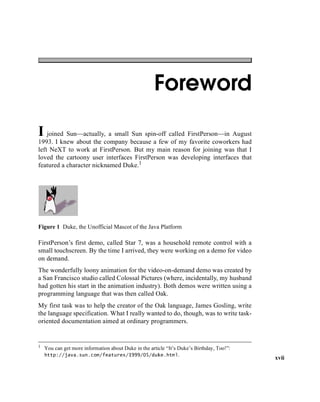
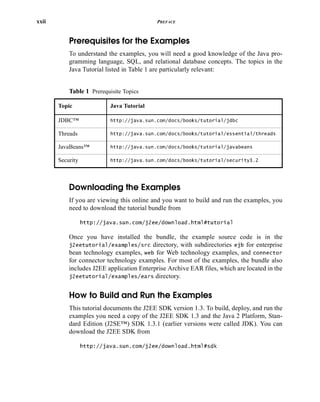
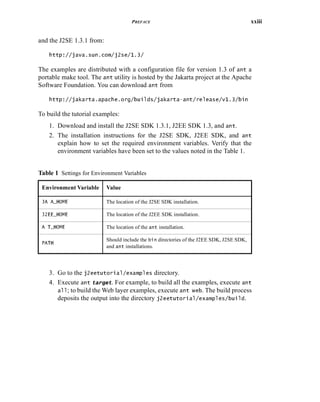
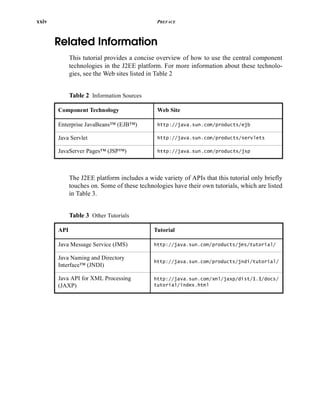
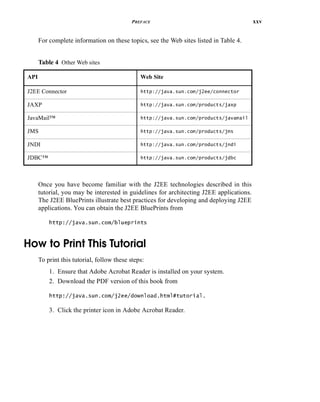
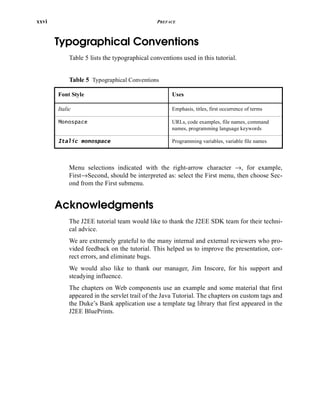

![be granted at the request of so-and-so,[344] very likely the patron of
the parish, who thus confirms the reasons which the incumbent has
alleged, and signifies his consent to his parson’s absence. The
patron had sometimes a personal reason for his action in the matter.
[345] For example, Gerard Myghell (or Mychell), Rector of Theydon
Garnon, Essex, in 1507 put his rectory to farm for three years to Sir
William Hyll, chaplain, and Francis Hamden, esquire, in order to
become tutor to John Hamden during his travels on the Continent of
Europe. It appears that Francis Hamden was the squire of the
parish, and John was his son, and probably Sir William Hyll,
chaplain, was the priest who was to take charge of the parish during
the rector’s absence, which seems a very good choice of trustees.
The rector lets to farm, all his church and parsonage with all manor
of tithes, fruits, profits, rights, commodities, and emoluments,
whatsoever, with all the lands, pastures, leases, for £8 a year; but he
reserves all the whole “lochynge” [lodging] at the gate (of the
churchyard), viz. a parlour with a chimney and a larder at the end of
the said parlour, and two chambers over a study, and a wyddraughte
[? drain], perhaps to lodge his old housekeeper in during his
absence. There is still an ancient house in the churchyard which may
possibly be the lodging here mentioned. There is a letter from the
rector, from Rouen, relating how he and his pupil are getting on, and
very naturally asking for supplies of money and clothing.
We had occasion to deal with the subject of slavery in the Saxon
period, concluding with the estimate of Sharon Turner,[346] that, of
the population of England at the end of that time, as calculated from
Domesday Book, three-quarters of the population of two millions
were in a state of slavery.
We may introduce here the statement that, although the Church all
along the ages used its influence in favour of the just treatment of
the serf population, in the spirit of St. Paul; and encouraged](https://image.slidesharecdn.com/65403-250519194750-f6f63a23/85/The-J2EE-Tutorial-1st-edition-Edition-Stephanie-Bodoff-31-320.jpg)
![manumission, and set the example; and freely gave dispensations to
sons of serfs to enter into Holy Orders and hold church benefices;
yet the status of serfage was suffered to continue among the
tenants of the Church after it had almost disappeared elsewhere.[347]
We add a few notes on the subject in mediæval times. Here is one
which tells us the value of a serf. Gregory, Abbot of Whalley, in 1309,
sells his nativus, cum tota sequela sua, et omnibus rebus suis habitis
et habendis, for 100s. sterling.[348]
In the Register of Walter Stapledon, Bishop of Exeter, is an entry
under date 1315—
Be it known to all present and future, that we, Walter, etc., have
given and granted “Magistro de la Gale, clerico, Richardum de la
Gale, filium Edwardi de la Gale, nativum nostrum, cum tota sequela
sua et omnibus catallis suis,” so that neither we nor our successors
may be able to make any claim for service from the said Richard.
It seems to be the case of granting to a clerk the freedom of a
relative who was a nativus (serf).
So late as 1536, the Registers of Chichester supply an example of
manumission by Bishop Sherburne. The deed of manumission
begins, as is usual in deeds of manumission of that time, with a
quotation from the Institutes of Justinian, “Whereas at the beginning
nature brought forth all men free, and afterwards the law of nations
placed certain of them under the yoke of servitude; we believe that
it is pious and meritorious towards God to manumit them, and
restore them to the benefit of pristine liberty;” therefore the bishop
emancipates Nicholas Holden, a “native and serf,” who for many
years had served him on his manor of Woodmancote and elsewhere,
from every chain, servitude, and servile condition by which he was
bound to the bishop and his cathedral, and, so far as he can, to
make him a free man.](https://image.slidesharecdn.com/65403-250519194750-f6f63a23/85/The-J2EE-Tutorial-1st-edition-Edition-Stephanie-Bodoff-32-320.jpg)

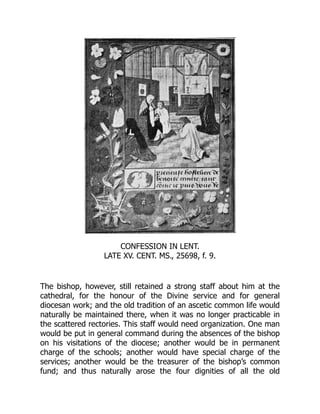
![and, together with its palatine castle, presents as noble an
architectural effect. The church grew century after century, after the
manner of cathedrals. A portion of the west front of Remigius still
remains surrounded by the later work of Alexander; St. Hugh of
Avalon added the magnificent choir; Grostete added the central
tower and the parts adjacent; and so at last the Church attained the
magnificent proportions which still excite our admiration. The
bishop’s palace was built on a levelled space of the hillside south of
the cathedral; the ruins of the “early English” halls and towers
founded by St. Hugh, finished by Hugh of Wells, and the chapel
added by Alnwick, still remain; and the pleasant hanging gardens
above and below the buildings. The cathedral close was inclosed[349]
by a wall, and its entrances at the north-east, south-east, and west
were defended by gates; the “exchequer gate” at the west had a
gate-house with a large chamber in the upper story. The principal
residentiary buildings of a monastery were grouped in a customary
order round the cloister court; but the houses of the dignitaries of a
cathedral were arranged as convenience suggested. The
deanery[350] stands north, and the sub-deanery south of the church;
on the east side of the close still remain two old stone houses with
picturesque oriels, which were—and are—the official residences of
the chancellor and the precentor; the chancery has a private chapel
in it.](https://image.slidesharecdn.com/65403-250519194750-f6f63a23/85/The-J2EE-Tutorial-1st-edition-Edition-Stephanie-Bodoff-39-320.jpg)
![Lincoln, from the Fens.
In the fourteenth century it became the custom, for their greater
convenience and better discipline, to incorporate the[351] vicars
choral, and to place them in a court of their own. The vicar’s court
remains at Wells, Hereford, Chichester, and York. That at Wells, for
fourteen priests, is a long inclosure with a row of seven small stone
houses on each side, a chapel, with a library over it at the further
end, and a hall over the entrance gate, from which there is a
picturesque covered way over the public road into the north transept
of the church, by which the vicars could go in comfort to their daily
duties—like the pope’s covered way from the Vatican to the Castle of
St. Angelo. There are only some remains of the vicar’s court at](https://image.slidesharecdn.com/65403-250519194750-f6f63a23/85/The-J2EE-Tutorial-1st-edition-Edition-Stephanie-Bodoff-40-320.jpg)
![Lincoln, on the east side of the palace grounds, the old Roman wall
dividing them. Every cathedral had a number of chantries, one of the
very earliest was that to Bishop Hugh of Wells, in this cathedral. The
Burghersh chantry, founded by Bartholomew Burghersh, had five
priests, who, with the six choristers and their schoolmaster, formed a
corporate body, and all lived together in the chantry-house, which
still remains in very perfect condition on the south side of the close.
Among the interesting features of Lincoln, the treasurer had charge
of a dispensary, which contained his stock of medicines; walls of an
apartment in the cathedral are still surrounded by the niches.[352]
The chapter-house of a cathedral, served by seculars, was a very
important feature. In monasteries it was always quadrangular, but in
secular cathedrals, for some unknown reason, it was always
polygonal.[353] It had always a central pillar, from which the groining
spread on all sides, like the leaves of a palm-tree; externally it was
covered with a tall conical roof. Here the dean and chapter met for
the transaction of their capitular affairs, and here the bishop held his
synods.
The camera communis (common room) of the canons intervened
between the north transept and the chapter-house; over the
vestibule was the office of the master of the works. Near by, north-
east of the chapter-house, is a well, covered with a little stone
octagonal building with conical roof. When we call to mind that there
are wells within several cathedral churches—at York, in which King
Edwin was baptized by Paulinus, at Winchester, and elsewhere—we
are led to conjecture that the water of these wells may have been
used for various ritual purposes.
The date of the incorporation of the Dean and Chapter of Lincoln is
1086, and the bishop gave it statutes which seem to have been
derived from Rouen.[354] The historian, Henry of Huntingdon, gives a
charming description of the members of the original chapter, who
were personally known to him, for he was the son of one of them.
[355]](https://image.slidesharecdn.com/65403-250519194750-f6f63a23/85/The-J2EE-Tutorial-1st-edition-Edition-Stephanie-Bodoff-41-320.jpg)
![“Ralph the Dean, a venerable priest. Rayner the Treasurer, full of
religion, had prepared a tomb against the day of his death, and oft
sate by it singing of psalms and praying long whiles, to use himself
to his eternal home. Hugh the Chancellor, worthy of all memory, the
mainstay and, as it were, the foundation of the Church. Osbert,
Archdeacon of Bedford, afterward Chancellor, a man wholly sweet
and loveable. William, a young Canon of great genius. Albin (my
own tutor) and Albin’s brothers, most honourable men, my dearest
friends, men of profoundest science, brightest purity, utter
innocence, and yet by God’s inscrutable judgement they were
smitten with leprosy; but death hath made them clean. Nicolas,
Archdeacon of Cambridge, Huntingdon, and Hertford—none more
beautiful in person, in character beautiful no less, ‘Stella Cleri,’ so
styled in his Epitaph [Henry’s father]. Walter, prince of orators.
Gislebert, elegant in prose, in verse, in dress. With many other
honoured names with which I may not tax your patience.”[356]
One of the reasons which Bishop Alnwick gave for assigning large
salaries to the holders of stalls was the way in which they “devote
themselves to the public service, in self-imposed tasks over and
above their daily expositions and constant toils and numerous
burdens.”[357]
With the help of the “Valor Ecclesiasticus” of Henry VIII., we are able
to people the cathedral, and palace, and residentiary houses, and
vicar’s court, and chantries, with the men who lived and served
there at the time of the Reformation, and even to pry into their
account-books and tell their several incomes, to the third part of a
farthing.
The Right Rev. John Longland,[358] who was the bishop in those
troublous times, lived in St. Hugh’s stately halls and towers on the
sunny slope under the shelter of the minster; and to maintain his
dignity, and household, and hospitalities, and various expenses, the](https://image.slidesharecdn.com/65403-250519194750-f6f63a23/85/The-J2EE-Tutorial-1st-edition-Edition-Stephanie-Bodoff-42-320.jpg)
![annual value of “all the domains, manors, castles, parks, rectories,
lands, tenements, and other temporal possessions,” of this see was
£Mccclxxviij, viij, vq’, i.e. to say, £1378 8s. 5¼d.; and “all the
spiritualities of the said Lord John” amounted, one year with another,
to Diiijxx
iiij, viij, xjq’, i.e. £584 8s. 11¼d.; making together an
income of mdcccclxij, xvij, iiijob, or £1962 17s. 4½d., equivalent in
our money to about £23,554 8s. 6d.[359]
If the reader does not know what the “spiritualities” here mentioned
are, he is not more ignorant than some great statesmen have been.
For, on one occasion, the late Earl Russell asserted that the bishops
received their spiritual authority from the Crown, on the ground that
by one of the documents issued from a Crown office to a newly-
elected bishop, restored the “spiritualities” as well as the
“temporalities” to the new occupant of the see. The “Valor” tells us
of what these spiritualities consisted: Portions and pensions from
benefices, fees for procurations and synodals, institutions and
inductions, faculties, probate of wills, and such-like. Temporalities, in
short, are real property, and spiritualities are fees and perquisites.
The dean and chapter had, as a common fund, the profits of twenty
appropriate rectories; and from these and other sources they derived
an annual income; for part of which they were only trustees, and
had to pay out of it for the maintenance of the choristers, and the
stipends of various chantry priests and others; leaving a balance of
£Dvj xiij iiij ob’q di q’, which means £506 13s. 4½d. ¼ and half ¼.
This balance was divided among the six residentiary canons, making
£83 11s. 1d. to each, with a remainder of ij ob’ di’q’, or 2½d. and
half a farthing. The residentiary canons in question were the
dignitaries, Mr. George Hennage, the Dean; James Mallet, the
precentor; Christopher Massingberd, the chancellor; John Pryn, the
sub-dean; and the others were, John Talbot[360] and Simon Green,
alias Foderby.
The dean and chapter were also trustees of a fabric fund derived
from land and rents; out of which they had first to pay the stipends
of several chantry priests, three and a chapel clerk serving the altar](https://image.slidesharecdn.com/65403-250519194750-f6f63a23/85/The-J2EE-Tutorial-1st-edition-Edition-Stephanie-Bodoff-43-320.jpg)
![of the Blessed Virgin Mary, and one each at the Welburn and Crosby
Chantries; then they had to pay certain workmen constantly
retained, a carpenter, “lathonius,”[361] plumber, glazier, smith, cleaner
of brass vessels and candelabra, surveyor of the fabric, organist[362]
at the mass of the Blessed Virgin Mary, and lastly the bailiff of lands
and tenements. The balance after these payments was £575 7s.
2½d. ¼ and half ¼; and this balance was divided among the six
residentiary canons aforesaid, giving £95 17s. 10½d. to each; it
must be borne in mind that they were liable for occasional heavy
expenditure on the repairs of fabric, which had to come out of their
purses. Each dignity had its own special endowments; the separate
estates of the deanery[363] produced an income of £196 10s. 8d.; of
the precentory £8 2s. 4d., of the chancery £54 1s. 5d., of the
treasury £10 13s. 4d.; of the sub-deanery £35 8s.
Then, again, every dignitary held a prebend of more or less value,
which shall be set forth presently in a general statement.
A little research reveals the fact that each of the dignitaries also held
one or more parochial benefices; for example, Mr. George
Hennage[364] was Master of the Collegiate Church of Tatteshall; he
was also Rector of Gedney, Washingburghe, Howby, Benningworth,
and Flyxburgh.
The precentor also held the Rectory of Longleddenham. The
chancellor was also Vicar of Byker, Rector of Highkame, and Rector
of Foletby. Mr. Pryn, the sub-dean, seems to have held nothing
besides his dignity and his prebendal stall, except the Singing
Schools (under the precentor). There were Prebendal Schools under
the oversight of the prebendaries themselves, and others “which are
maintained by local managers for the instruction of their parishioners
in faith and letters.”
It may seem a little invidious, perhaps, to add these several sums
together and bring out the totals; but it is a part of the work which
we have undertaken, and we do not feel at liberty to decline it; it
will, at least, remind us that we have in modern times made some](https://image.slidesharecdn.com/65403-250519194750-f6f63a23/85/The-J2EE-Tutorial-1st-edition-Edition-Stephanie-Bodoff-44-320.jpg)

![Mr. George Hennage, the dean, had £196 10s. 8d. of his deanery; £83 11s. 1d. of
the Dean and Chapter Fund; £95 17s. 10d. of the Fabric Fund; £42 7s. 4d. of his
Prebend of Biggleswade;[365] £20 as Master of Tatteshall College;[366] £23 11s. as
Rector of Gedney;[367] £27 3s. 4d. as Rector of Washingborough;[368] £22 8s. 5¼d.
as Rector of Howby;[369] £23 8s. 6d. as Rector of Benningworth;[370] and £13 10s.
as Rector of Flyxboro’;[371] making a total of £548 8s. 3d.
Mr. James Mallett, the precentor, had only £8 2s. 4d. of his precentory; £83 11s.
1d. his share of the Dean and Chapter Fund; £95 17s. 10d. of the Fabric Fund; he
was Prebendary of Empyngham,[372] which brought him £35 6s. 5d., and Rector of
Longleddenham,[373] £29 12s. 8d. Total, £252 10s. 4d.
Mr. Christopher Massingberd, the chancellor, had £54 1s. 5d. of his chancellorship;
£83 11s. 1d. of the Dean and Chapter Fund; and £95 17s. 10d. of the Fabric Fund;
as Vicar of Byker,[374] £15; as Rector of High Kame,[375] £19 16s. 2d.; as Rector of
Foletby,[376] £21 2s. 8d. Total, £289 9s. 2d.
The treasurership, vacant at that moment, was worth £10 13s. 4d.; with £83 11s.
1d. of the Dean and Chapter Fund, and £95 17s. 10d. of the Fabric Fund. Total,
£190 2s. 3d.
Mr. John Pryn, the sub-dean, had £35 8s. of his dignity; £83 11s. 1d. of the Dean
and Chapter Fund; £95 17s. 10d. of the Fabric Fund; and of his Prebend of Keton,
[377] £29 10s. 2d. Total, £244 7s. 1d.
It must be borne in mind that these were great dignitaries of one of the greatest
and wealthiest dioceses, and had to maintain a certain degree of state in their
household and expenditure. Each dignitary had also to find at his own cost
everything which belonged to his office; the precentor everything which belonged
to Divine services, vestments, service books, etc. The chancellor had to maintain
the divinity school of the cathedral—at one time a very famous one, the cathedral
grammar school, and was responsible for all the schools in the city and county.
Should any reader have recognized among these dignitaries of Lincoln Cathedral
the names of well-known families of the diocese, he must not be satisfied with a
passing thought on the effect of family influence in the distribution of Church
patronage, which may be true enough; he must add the reflection that in those
times it was thought fitting not only to give the grandest architecture, the most
costly material, and the best art to the material church, but also to dedicate the
best blood of the people to its ministry; much as in old times the greatest and
proudest nobles held domestic offices—dapifer and the like—at the court of the
king, and no one who was not of gentle birth was thought worthy to attend him.
We shall entirely fail to understand the whole spirit and meaning of a mediæval
cathedral if we have not fully grasped the idea that it was not intended to be](https://image.slidesharecdn.com/65403-250519194750-f6f63a23/85/The-J2EE-Tutorial-1st-edition-Edition-Stephanie-Bodoff-46-320.jpg)
![merely a centre of busy diocesan work; the magnificent building and its sumptuous
furniture, the numerous and complex organization of its staff of ministers richly
endowed, were all directed to the honour and worship of Almighty God. It was the
embodiment in this dispensation of the ideal of worship which God Himself
sanctioned in the old dispensation, when His Temple at Jerusalem was “exceeding
magnifical,”[378] and the high priest wore jewels of untold price on his mystic
breastplate, and a whole tribe—a twelfth of the people—were set apart for the
ministry, and the well-endowed priests came up in the turn of their twenty-four
courses to the honour of officiating for a fortnight in a year before the Presence in
the Holy of Holies.
There were fifty-two prebendaries, whose canopied oak stalls form the most
striking feature of the choir of the cathedral. A prebend was sometimes a manor,
more frequently a rectory, rarely a sum of money, which formed an endowment for
a canon.[379] For the most part the prebendaries were supposed to reside upon
their prebends, to maintain Divine service, and a school, and hospitality there.
Every prebendary was required to maintain a vicar choral at the cathedral; he
himself came into residence for one week in the year, and during that week took
the principal position in the cathedral services. On his Sunday of duty he was
expected to entertain nineteen of the under officers at dinner, and to receive
others at different meals during the week. The dean was required about thirty
times a year to give an “honorificus pastus” to all the choir and vicars, “to make life
and work more pleasant to them.”[380] One fact is enough to show that the
prebendaries of Lincoln were a very distinguished body of men:—of the fifty-two
stalls, all but one—some of them more than once—has given a bishop to Lincoln,
and from among them every English see has been filled, and many of them twice.
One of the statutory duties of the prebendaries is very little known, and is so
curious and interesting as to deserve mention here, even though it requires a few
words of preface to make the spirit of it quite intelligible. Among other remarkable
designs which entered into pious minds in those mediæval communities was that
of maintaining a ceaseless service of praise—laus perennis—or a daily recitation of
the whole Psalter. The former was a conventual devotion, and was done in this
way: there were always two priests before the altar, night and day, relieved at
regular intervals, singing the Psalms. The latter was a cathedral devotion, where it
was a rule that the dean and prebendaries as a body should say the whole Psalter
every day to the glory of God. The same devotion was maintained at Salisbury,
Wells, and St. Paul’s. The task was not a hard one, for the Psalter was divided
among them; one prebend said the first, second, third, fourth Psalms, another the
fifth, sixth, seventh, and so on; the 119th Psalm was divided between several of
them; each made it a matter of conscience to say the Psalms allotted to him; and
thus, from the time of Bishop St. Hugh, the prebendaries of Lincoln, wherever they
were scattered, were brought together in spirit by this interesting observance, and](https://image.slidesharecdn.com/65403-250519194750-f6f63a23/85/The-J2EE-Tutorial-1st-edition-Edition-Stephanie-Bodoff-47-320.jpg)
![said the whole Psalter daily to the glory of God. It will perhaps surprise some of
our readers to learn that they keep up the observance to this day.[381]
We shall not trouble the reader with more than a few notes on the value of the
fifty-two prebends. Some of them were very valuable, e.g. Leighton Manor,
Leighton Buzzard, Cropredy, and Sutton, each brought in to their fortunate holders
£40, but the majority were between £5 and £10. There are several noticeable ones
—the Prebend Sexaginta Solidorum, and the Prebend Centum Solidorum, and the
Prebend Decem Librarum, i.e. the prebends of Sixty Shillings, a Hundred Shillings,
and Ten Pounds. The custos of St. Peter’s altar received for commons and wine[382]
as a canon £20 a year.
Some of these prebends, as we have seen, were held by the dignitaries; some, as
we shall presently see, by the archdeacons. Some of them afforded a comfortable
maintenance alone. It is to be hoped that the holders of others—especially of one
whose value is returned as “nihil”—had other benefices to help out their incomes.
They were not by any means all given to priests in the diocese. A prebend was a
very comfortable benefice, which might be held by anybody, and they were given
to all sorts of people; e.g. two of them seem to have been held by the Dean and
Precentor of Chichester.[383]
To assist the bishop in the spiritual oversight of this vast diocese, which embraced
8 counties, and extended from the Humber to the Thames, the bishop had 8
archdeacons, whose incomes and the sources of them are reported in the
“Valor.”[384]
The Archdeacon of Lincoln received for procurations, £171 17s. 10d., for synodals
at Pentecost, £29 14s. 3d., and at Michaelmas, £16 14s. 3d., and pensions, £5
17s., making a total of £234 2s. 4d. But out of that he had to pay the Prebendary
of Ten Pounds £10, and 50s. to the Prebendary of Carleton, to his Receiver-General
£8 13s. 4d., and 58s. to the three vergers of the Cathedral, leaving him a net
income from this source of £179 19s. Archdeacon Richard Pate was also
Prebendary of Sutton and Buckingham, from which he received £110 3s. 6d.; he
was also Rector of Kybworth, which was worth £39 14s. 11d.; so that his total
income was £329 17s. 5d.
The Archdeaconry of Stow was worth £24 2s. 8½d., and Archdeacon Darley does
not appear to have held other preferment, at least in Lincoln Diocese.
The Archdeaconry of Huntingdon was worth £57 4s. 2d., and Archdeacon Knight
was also Prebendary of Farundon, worth £30 11s. 2d.](https://image.slidesharecdn.com/65403-250519194750-f6f63a23/85/The-J2EE-Tutorial-1st-edition-Edition-Stephanie-Bodoff-48-320.jpg)
![The Archdeaconry of Bedford was worth £57 2s. 3d., and Dr. Chamber the
Archdeacon was Prebendary of Leighton Buzzard, worth £40, Rector of Leighton,
worth £6 17s. 7¼d., and of Bowden Magna, worth £53 8s. 10½d.
The Archdeaconry of Leicester was worth £80 12s. 4d. Dr. Foxe[385] was the
archdeacon.
The Archdeaconry of Northampton was worth £107 7s. Gilbert Smith, the
Archdeacon, was Prebendary of Leighton Bromeswold, worth £57 15s. 1d.[386]
The Archdeaconry of Buckingham was worth £82 14s. 5d., and Richard Leighton
the archdeacon seems to have had no other preferment in the Diocese of Lincoln.
The Archdeaconry of Oxford was worth £71 6s. Richard Coren, the archdeacon,
held also the Prebendary of Welton Paynshall, worth £5 11s. 11d.
There were—or should have been—twenty-five Vicars Choral, who were paid a
stipend, each by his own Prebendary, of £2. The Corporate Body of Vicars also had
property which yielded a net annual income of £145 11s. 2d., which divided
between the twenty-five vicars gave to each £5 16s. 5d., “leaving a remainder of
9d. to be divided into twenty-five parts;” and fifteen of them had chantries
assigned to them.
At the time of the “Taxatio” there appears to have been only one chantry in the
cathedral, for the soul of Bishop Hugh of Wells; by the time of the “Valor” the
chantries had grown in number to thirty-six.
One vicar was cantarist of the Chantry of William Winchcome, which, after giving
20s. to the poor and other payments, was worth £6 5s. 4d. The same vicar
received £2 for playing the organ at the Mass of the Blessed Virgin Mary, and also
£1 6s. 8d. for playing at the Jesus Mass. Other vicars served the following
chantries: of Hervey de Luda, worth 9s. 4d.; of Simon Barton, 9s.; of William
Thornake, £4. 2s. 4d.; of Henry Benyngworth, 8s. 8d.; of Robert and John Lacy,
8s.; of William Hemyngburge and others, 8s.; of William FitzFulke, £4; of King
Edward II., 12s., and the same clerk filled the office of succentor, for which he
received from the precentor 50s., and 6s. 6d. for wines at the Feast of the
Assumption of the Blessed Virgin Mary, and from the Chapter, 7s. 6d.; for wines at
the end of the year p’pastu chori, 18s. 9d.; making £4 12s. 9d. The cantarist of
Roger Benetson received £5 12s.; of Walter Stanreth, £4; of Oliver Sutton, 8s.; of
Geoffrey Pollard and others, 9s. 4d.; of Gilbert Umfraville, £4 6s. 8d., the same
clerk occupied the office called Clerk of the Hospital, for which he received from
the Prior and Convent of St. Katharine juxta Lincoln, 24s. 2d.; and from the
Chapter for a gown, 9s., and other sums amounting to £1 14s. 10d.; of Hugh of](https://image.slidesharecdn.com/65403-250519194750-f6f63a23/85/The-J2EE-Tutorial-1st-edition-Edition-Stephanie-Bodoff-49-320.jpg)
![used as the germ of the cathedral church.[387] Bishop Stigand built a new church of
timber, which was soon replaced. The able and energetic Bishop Ralph Luffa was
the real founder of the present cathedral. His church was of the normal Norman
plan, a cross church with a low central tower and two west towers, all of massive
construction, plain almost to sternness. It was in the thirteenth century that,
among other great additions to the church, the central tower was raised by the
addition of another story; and not till the fifteenth century that the lofty and
graceful spire was added which was the peculiar glory of Chichester.
The constitution of the cathedral was in the main the same as at Lincoln, the
bishop, dean, precentor, chancellor, and treasurer, with twenty-eight prebendaries,
twelve vicars choral, etc., and two archdeacons.
The information given us in the “Taxatio” of the finances of the diocese in 1291 is
scanty:—
The temporalities[388] of the bishop were valued at £462 4s. 6¾d.
The dean and chapter had estates, appropriate rectories, portions, pensions, etc.,
which brought in a clear income of £310 14s. 6½d.
The dignities of the cathedral are given as follows:—
The deanery with a prebend, £53 6s. 8d.
The chantry, £53 6s. 8d.
The chancellor with the Rectory of Chiddingly, £53 6s. 8d.
The treasurer, per se £46 13s. 4d.
Then came twenty-eight other prebends, ranging from £4 13s. 4d. to £40, making
up the total income of the dignitaries and prebendaries to £706 13s. 4d.
When we turn to the “Valor” (vol. i. p. 293), we find fuller details of the condition
of things at the end of the fifteenth century. “The annual value of all and singular,
the houses, castles, domains, manors, lands, and tenements, and other temporal
possessions whatsoever, and also of the tithes, oblations, pensions, portions, and
other spiritual profits whatsoever, of the Reverend Father in Christ, Robert, Bishop
of Chichester,” amounted to spiritualities, £138 17s. 9d.; temporalities,[389] £589
10s. 2d.; or, after certain allowed deductions, to a clear total of £677 1s. 3d.
The income of the dean and chapter has grown to £310 14s. 6½d.; we have no
note of the way in which it was disposed of.
The income of the dean, William Fleshmonger, was £58 9s. 4d. We have no reason
to doubt that he was identical with the William Fleshmonger who was Rector of
Selsey,[390] worth £11 3s. 4d.; with the Dr. William Fleshmonger who was Rector of](https://image.slidesharecdn.com/65403-250519194750-f6f63a23/85/The-J2EE-Tutorial-1st-edition-Edition-Stephanie-Bodoff-52-320.jpg)
![Storyngton,[391] £18; and with the William Fleshmonger who was Rector of
Hertfield,[392] £7. No doubt it was the dean who was the tenant by indenture for a
term of years from Battle Abbey, at a rent of £15 6s. 8d., of the Manor of
Apultram[393] near Chichester, and in all probability he is identical with the William
Fleshmonger who held the Prebend of Carlton cum Dalby[394] of the Church of
Lincoln.
The Dignity of the Precentory had endowment to the amount of £35 0s. 5½d., and
Charles William Horsey seems to have had no other preferment in Chichester
Diocese. But among the Prebendaries of Lincoln there is also a William Horsey,
Prebendary of Scamelsby,[395] who may very possibly have been identical with our
Precentor.
The Dignity of Chancellor was endowed with a clear £27 7s., and we find that Mr.
George Croft was also Prebendary of Middleton,[396] worth £2 3s. 4d. There was
also a George Croft, Rector of Wynford,[397] £21 12s. 10d., in the diocese of Bath
and Wells, who may have been our chancellor.
The treasurer, Hugho Rolfe, after paying two servants and other dues, had a clear
£62 6s. 8d. from the dignity, and held besides the Prebend of Braklesham,[398] £11
17s. 3½d., and apparently the vicarage of Henfield,[399] £16 9s. 9½d.
The dignity of the Archdeaconry of Chichester was worth £38 3s. 4d., and the
Archdeacon John Worthial also held the Prebend of Huve Town,[400] £10; he seems
also to have held the benefice of Sutton, £15 0s. 6d.;[401] but we hesitate to
identify the venerable archdeacon with the William Worthiall who held the two
Chantries of Eastangmering and Fyrring,[402] though no doubt his friends would
often jestingly assure him that if he had half a dozen more sinecures he would still
have been “worthy all.” The Archdeaconry of Lewes was worth £39 14s. 10d., and
Archdeacon More was also Prebendary of Coleworth,[403] £18 13s. 4d., and is
probably identical with the Edward More who was Vicar of Bexhill,[404] worth £23
10s. 2d. There were altogether thirty-one prebends ranging in value from £10 to
£20; four of these were added by Bishop Sherborne a little before the Reformation,
restricted to men of Winchester and New Colleges, who were required to serve in
their own persons without deputies.
Residentiaries on first appointment to office were bound to attend every service
without a single omission for a year, and in case of an omission to recommence
their course.
There were twelve vicars choral who received £2 12s. 8d. each, and fourteen
chantries which were served by the vicars choral, the profits of each ranging](https://image.slidesharecdn.com/65403-250519194750-f6f63a23/85/The-J2EE-Tutorial-1st-edition-Edition-Stephanie-Bodoff-53-320.jpg)
![between £3 and £13. There were also eight choristers and four thuribulers.[405]
“Bishop Sherborne, just before the Reformation, having ruled magnificently, laid
down his staff and mitre weary with the weight of ninety years and more, and left
his statutes chained to his throne; begging the kindly thoughts of all sorts and
conditions of men; with a bequest of crown soleil, and bread and good wine to be
offered to the bishop at his ‘jocund coming’ on a visitation; ypocras and choice
fruits for the crowned king and primate; wine to be drunk round the city cross for
the young; ample doles for the aged; marriage portions out of the annual residue
for poor girls; egg flip with milk and sugar, coloured with saffron, for the choristers;
and a dinner to the chapter on his anniversary.”[406]
There are some examples in England of that annexation of temporal rule to certain
episcopal sees, of which the independent prince bishops of Germany are instances
still more illustrious, and the Bishop of Rome the most remarkable. The Bishops of
Durham were the temporal rulers of the district of country between the Tees and
the Tyne, and almost independent of the king; while the men of “the bishopric,” as
it was called in a special sense, were the servants of St. Cuthbert, and subject to
none but Cuthbert’s successor. This privilege arose from a gift of the district to St.
Cuthbert and his successors by King Guthred in the year 883. The Bishops of
Winchester were anciently reputed to be Earls of Southampton, and possessed a
certain temporal authority, the origin of which is not known to the writer. The
Bishop of Ely was in ancient times supreme in the Isle, which was, if not a county
palatine, at least a royal franchise, with courts and exclusive jurisdiction of its own;
of which traces remain in the existing arrangements, in that it has no Lord-
Lieutenant, and is in every way distinct from the rest of the county in which it is
situated. It is reasonable to suppose that the bishop (created in 1108) derived this
authority as the successor of the abbots, who received it as the representatives of
Queen Etheldreda, the founder, in continuance of privileges conferred on the queen
when King Tondbert gave the Isle to her in dower.](https://image.slidesharecdn.com/65403-250519194750-f6f63a23/85/The-J2EE-Tutorial-1st-edition-Edition-Stephanie-Bodoff-54-320.jpg)

![northern county. What would the Isle of Ely be without the solemn grandeur of its
cathedral church?
There is not enough left of any one of our own monasteries to enable the visitor to
its mournful ruins to realize how each was a little town, protected by its walls and
gate towers; with the roofs and chimneys of its numerous domestic buildings, and
the trees of its gardens and orchards appearing over the walls; and the towers of
its great church forming the centre of the architectural group, as it was the centre
of the life of the inhabitants. We have, therefore, borrowed an illustration from
Clugny, the parent and prototype of the houses of the Reformed Benedictine
Orders.
The “Religious” and the upper classes of society were more in touch than at first
sight appears. The great families kept up friendly relations[407] with the houses
which their ancestors had founded, of which they were still the patrons, and from
time to time benefactors. People of the upper classes, in travelling, usually sought
hospitality at the religious houses, and were entertained by the abbot, while their
people were cared for in the guest house. The monks and nuns were largely taken
from these classes.
Abbey of Cluny, as it was.](https://image.slidesharecdn.com/65403-250519194750-f6f63a23/85/The-J2EE-Tutorial-1st-edition-Edition-Stephanie-Bodoff-57-320.jpg)
![the building of unhealthy houses in the suburbs, poverty, dirt, and disease; and, as
a consequence, ignorance and irreligion. Leprosy, brought probably from the East
by the returning Crusaders, had become permanent and widely spread among all
ranks and classes.[408] At the same time a wave of wild opinions, political and
religious, was sweeping across Europe which reached this island almost a century
later under the name of Lollardism, and created disaffection in Church and State.
The intellectual disorder excited the zeal of the Spanish canon, Dominic, who
organized an order of preaching friars, to go about teaching the truth and
contending against dangerous error. About the same time the heart of Francis, a
citizen of Amalfi, was fired with compassion for the misery of the poor and sick,
and he organized an order of brothers, whose duty it was to minister to suffering
humanity. Both orders speedily became very popular, and spread over Europe. The
Dominicans introduced themselves into England at Oxford, in 1221, and were
patronized by Archbishop Stephen Langton. The first Franciscans came three years
afterwards to Canterbury; and both orders spread as rapidly here as in the other
countries of Europe.
A Semi-choir of Franciscan Friars.
(Fourteenth century MS. in British Museum. Domitian, A. 17.)](https://image.slidesharecdn.com/65403-250519194750-f6f63a23/85/The-J2EE-Tutorial-1st-edition-Edition-Stephanie-Bodoff-59-320.jpg)
![The organization of both orders ran on the same lines. Each was an ecclesiastical
army. Each had a general of the order residing in Rome, under the special
protection and correction of one of the cardinals. Under the general was a
provincial in each country into which the order extended. The houses of the order
in each country were gathered into groups, called by the Dominicans, “Visitations,”
and by the Franciscans, “Custodies.” The English province of the Franciscans was
divided into seven custodies or wardenships, each including eight or nine convents,
[409] and comprising most of the great towns. The Dominicans had fifty-eight
convents here; the Franciscans 75. The officers were all elected at a chapter, were
required to resign at the ensuing chapter, and might be removed at any time for
insufficiency or misconduct.
The Carmelite Friars had their origin in the East, and were introduced into England
by Sir John de Vesey, on his return from the Crusade in the early part of the
thirteenth century. It had ultimately about five houses in England. The Austin
Friars, founded about the middle of the century, had about forty-five houses here.
These make up the four orders, Black, Grey, White, and Austin. All smaller
foundations were suppressed or included in the Austins, by the Council of Lyons, in
1370.
The great difference between the monks and the friars was that the ideal of the
monastic life was seclusion from the world for prayer and meditation with a view to
the cultivation of one’s own soul; that of the friar’s life was devotion to active work.
The great economical difference was that the monks were individually vowed to
poverty, but as communities they were wealthy, while the friars were vowed to
have no property individually or collectively, and to live of the alms of the people.
At first the friars were very successful in England, as elsewhere. Bishops like
Stephen Langton and Grostete patronized them. Before long members of the
mendicant orders became themselves bishops and archbishops. They sent their
young men to the universities, and cultivated learning so successfully that they
soon became the most famous teachers in the universities of Europe. Among the
people generally they effected a great revival of religion, which Sir J. Stephen
compares with the revival in more modern times effected by the preaching of
Wesley and Whitefield.
The friaries were always founded in, or in the suburbs of, the larger towns, for
their mission was to the masses of the people. But they had a system of
itineration, which seems to have divided the country into districts, and sent the
friars two and two, visiting not only the villages but the houses of the gentry and
farmers. This brought the friars into rivalry with the parish priests. In the towns the
Dominicans often built a large church, planned so as to form an auditorium, and
attracted large congregations by their popular preaching. The friars laid themselves
out also for special services, which would attract the sluggish and popularize](https://image.slidesharecdn.com/65403-250519194750-f6f63a23/85/The-J2EE-Tutorial-1st-edition-Edition-Stephanie-Bodoff-60-320.jpg)
![religion, such as miracle plays and the observance of special festivals. In the
villages the itinerant friar preached in the church or churchyard, and heard the
confessions of those who chose to come to him; and there were many who
preferred to confess their misdoings to a comparative stranger, who did not live
among them, rather than to their parish priest.
So says Chaucer—
He had power of confession,
As said himself, more than a curate,
For of his order he was licentiate.
Full sweetly heard he confession,
And pleasant was his absolution.
He was an easy man to give penance
There as he wist to have a good pittance,
For unto a poor order for to give
Is sign that a man is well yshrive.
“Prologue to the Canterbury Tales.”
Both in town and country they offered the fraternity of their convent to
benefactors, with its prayers for their good estate while living, and sought to have
masses for the dead entrusted to them on the ground that a convent of friars
would pray them out of purgatory ten times as soon as a single parish priest.
“Thomas, Thomas, so might I ride or go,
And by that lord that cleped is St. Ive,
N’ere[410] thou our brother shouldest thou not thrive.
In our chapter pray we day and night
To Christ that he here send hele and might[411]
Thy body for to welden hastilee.”
The rustic roughly answers—
“God wot, quoth he, I nothing thereof feel,
So help me Christ as I in fewe years
Have spended upon divers manner freres
Full many a pound, yet fare I never the bet.”
“Ye sayn me thus how that I am your brother.
Ye, certes, quod the friar, trusteth wee,
I took our dame the letter under our sel.”[412]
Chaucer, “The Sompnour’s Tale.”
So “Piers Plowman” says—
“I am Wrath, quod he, I was sum tyme a frere
And the convent’s gardyner for to graff impes](https://image.slidesharecdn.com/65403-250519194750-f6f63a23/85/The-J2EE-Tutorial-1st-edition-Edition-Stephanie-Bodoff-61-320.jpg)
![On limitours and lesyngs I imped
Till they bere leaves of low speech lordes to please,
And sithen they blossomed abrode in bower to hear shrifts.
And now is fallen thereof a fruite, that folk have well liever
Shewen ther shriftes to hem than shryve them to their parsons.
And now parsons have percyved that freres part with them,
These possessioners preache and deprave freres,
And freres find them in default, as folk beareth witness.”
Bonaventure, when General of the Franciscans, in a letter to one of his provincials,
expresses great dissatisfaction with those of the brethren who, contrary to the rule
of Francis, assault the clergy in their sermons before the laity, and only sow
scandal, strife, and hatred, and with those who injure the parish priests by
monopolizing to themselves the burial of the dead and the drawing up of wills,
thereby making the whole Order detested by the clergy. But he complains of the
injustice done by accusing the whole of what was the fault only of a few—“the
scum floats on the surface, and is noticed by every one.”[413] It was rather hard,
perhaps, on the parish priest, that he should not only be obliged to submit to the
intrusion of the friar, but should be expected to offer hospitality to the intruder, and
make much of him, as a constitution of Archbishop Peckham desires him to do.[414]
It is the popular belief that the friars, after having in the first burst of their
enthusiasm effected a great revival of religion, very soon departed from the
principles of their founders, became useless, if not mischievous, and fell into
universal disfavour. There is no denying that the splendid enthusiasm of their first
institution cooled down, and the wonderful revival of popular religion which it
brought about seemed to die out; it is the inevitable course of all such revivals; but
it left good perennial results behind.
The burgesses of the towns in which the friaries were situated seem to have
regarded them as useful workers among the poor. In many of the towns the civic
authorities consented to hold the site and buildings of the friaries in trust, in order
to evade the rule which forbade the orders themselves to hold property. The friars
continued to live, and their continuance depended upon the daily voluntary alms of
the townspeople. The churches of the friars were favourite places for civic
functions and miracle plays; the people sought burial in their precincts; and down
to the very eve of their dissolution a great number of wills, both of clergy and laity,
contain small bequests to the friars. Perhaps the most striking evidence in their
favour at the very end of their existence in England is that Edward IV. was a great
patron of the Observants (the strictest section of the Franciscans); Henry VII.
founded six convents of them; and Henry VIII. took one of them as his confessor.
It is a fact which tells in their favour that they had not grown wealthy. When the
dissolution came, the jackals of Henry VIII. found nothing but the houses and their
precincts, usually in a poor neighbourhood, and their churches. Their income is](https://image.slidesharecdn.com/65403-250519194750-f6f63a23/85/The-J2EE-Tutorial-1st-edition-Edition-Stephanie-Bodoff-62-320.jpg)
![commonly returned at 20s. to 40s., and the total value of the property, when the
prior’s house and the garden and orchard and the whole convent was let out on
rent, was seldom over £10 a year.[415]
The truth seems to be that the friars continued to be the most popular preachers,
and to carry on a steady work among the poor of the towns. But, strongly papal in
sentiment, their constitution made them an organized propaganda of any ideas
which the cardinal protectors and generals of the orders residing in Rome
suggested to the provincials in the several nations, they to the wardens of the
districts, they to the priors of the houses, they to their individual friars, and they
through the streets of the city and the length and breadth of the land. It was,
perhaps, their political opposition to Henry VIII. more than any other cause of
offence or dereliction of duty, which provoked their overthrow.
The two chief faults of the system were the principle of mendicancy and the
exemption from episcopal control. It is worth while to study the institution
carefully, for something of the same kind—brotherhoods of educated and trained
men, who are content to abandon the world’s ambitions, to live among the poor, to
preach the gospel in a popular way, and to minister to the temporal sufferings of
the people—is exactly what is wanted to produce a new revival among the masses
of the people; and we need to ascertain the secrets of the friars’ strength and of
their weakness.](https://image.slidesharecdn.com/65403-250519194750-f6f63a23/85/The-J2EE-Tutorial-1st-edition-Edition-Stephanie-Bodoff-63-320.jpg)

![CHAPTER XXV.
THE “TAXATIO” OF POPE NICHOLAS IV.
n the thirteenth century the popes assumed the right, as feudal lords
over the Church, to demand from every church benefice a fine of its
first year’s income from every new incumbent, and an annual tax of
one-tenth of its income. The Saxon kings had made the Church lands
exempt from state imposts;[416] but now kings very naturally began to think that
the necessities of the State had as good a claim as those of the pope; and there
ensued a certain amount of friction. The popes, with very astute policy, reconciled
the kings to the tax by sometimes ceding the proceeds of it to them. Thus in 1253,
Pope Innocent IV. gave the tenths to King Henry III. for three years, which
occasioned a taxation or valuation to be made in the following year, sometimes
called the Norwich Taxation, sometimes Pope Innocent’s Valor.
Again, in 1288, Pope Nicholas IV. gave the tenths to King Edward I. for six years,
towards an expedition to the Holy Land; that they might be fully collected a new
taxation was made by the king’s precept, which was begun in that year and
finished in the province of Canterbury in 1291, and in the province of York in 1292.
[417] This taxation continued to be the basis of all assessments upon the Church
down to the time of the Reformation.
The survey takes each diocese by itself, each archdeaconry of the diocese, each
rural deanery, and, finally, each benefice. Here is a specimen, selected because it is
a deanery of which the writer has some personal knowledge.
Spiritualia Archidiaconatus Essexiæ. Decanatus de Berdestaple.
£ s. d.
Ecclīā de Thurrok pva 5 6 8
Porc̄ ō Rectoris de Westurrok ibidem 0 6 6
Ecclīā de Oresith 16 0 0
Porcio Cancellarii Sc̄ ī Pauli Lond’ ibidem 6 0 0
Porcio Magr̄ ī Johis de Sc̄ ō Claro ibidem 2 0 0
Porcio Prioris de Pritelwell in North Beniflete 1 6 8
Porcio Abbīs̄ Westm. ibidem 0 13 4](https://image.slidesharecdn.com/65403-250519194750-f6f63a23/85/The-J2EE-Tutorial-1st-edition-Edition-Stephanie-Bodoff-65-320.jpg)