“THE IMPACT OF LONG-TERM
SPACE TRAVEL ON HUMAN BODY”
Submitted by :-
Name:- Soumyajit Dutta
University Roll No. :- 210331000068
Subject :- Physiology
College name- Suri Vidyasagar College
Sem:- 5
C O N T E N T S
 Introduction
 Microgravity
 Effect on Cardiovascular System
 Effect on blood
 Effect on musculoskeletal System
 Effect on respiratory System
 Space motion sickness
 Medicine for astronauts
 Adaptation When astronaut return to earth
 Conclusion
INTRODUCTION
A voyage outside the earth’s atmosphere
 Space travel became a reality in 1961.
 Since then more than 200 people have been to space and the duration of
stays have been increased from 2hours to more than 200 years.
 For more than 50 years NASA’s Human Research Programme (HRP) has
studied what happens to the human body in space .
 Researchers are using strategies to keep astronauts safe and healthy
throughout their mission
 62 miles (1000 kilometres) is to space from earth’s surface.
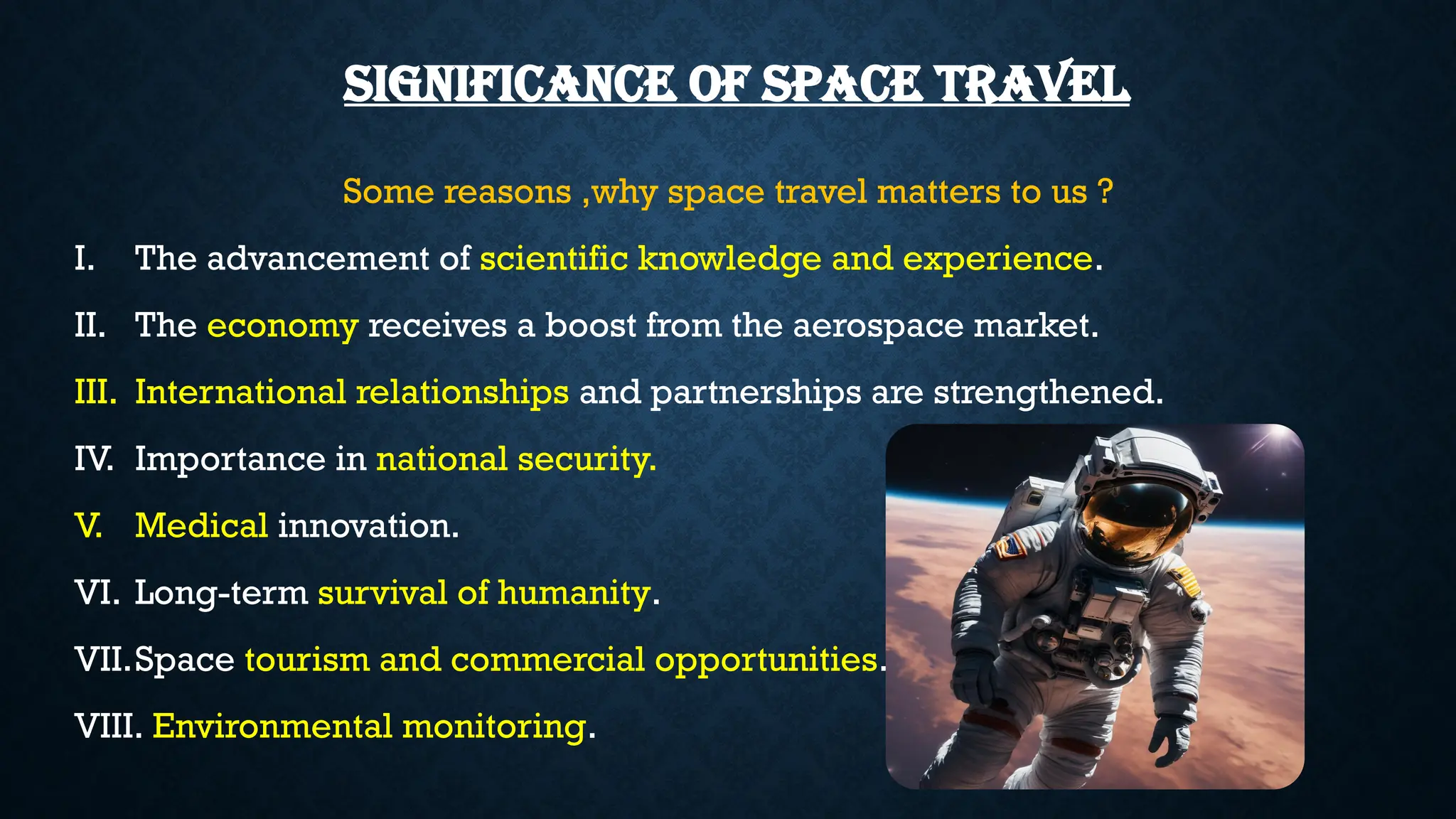
SIGNIFICANCE OF SPACE TRAVEL
Some reasons ,why space travel matters to us ?
I. The advancement of scientific knowledge and experience.
II. The economy receives a boost from the aerospace market.
III. International relationships and partnerships are strengthened.
IV. Importance in national security.
V. Medical innovation.
VI. Long-term survival of humanity.
VII.Space tourism and commercial opportunities.
VIII. Environmental monitoring.
PHYSIOLOGICAL DISTURBANCE DURING SPACE
TRAVEL
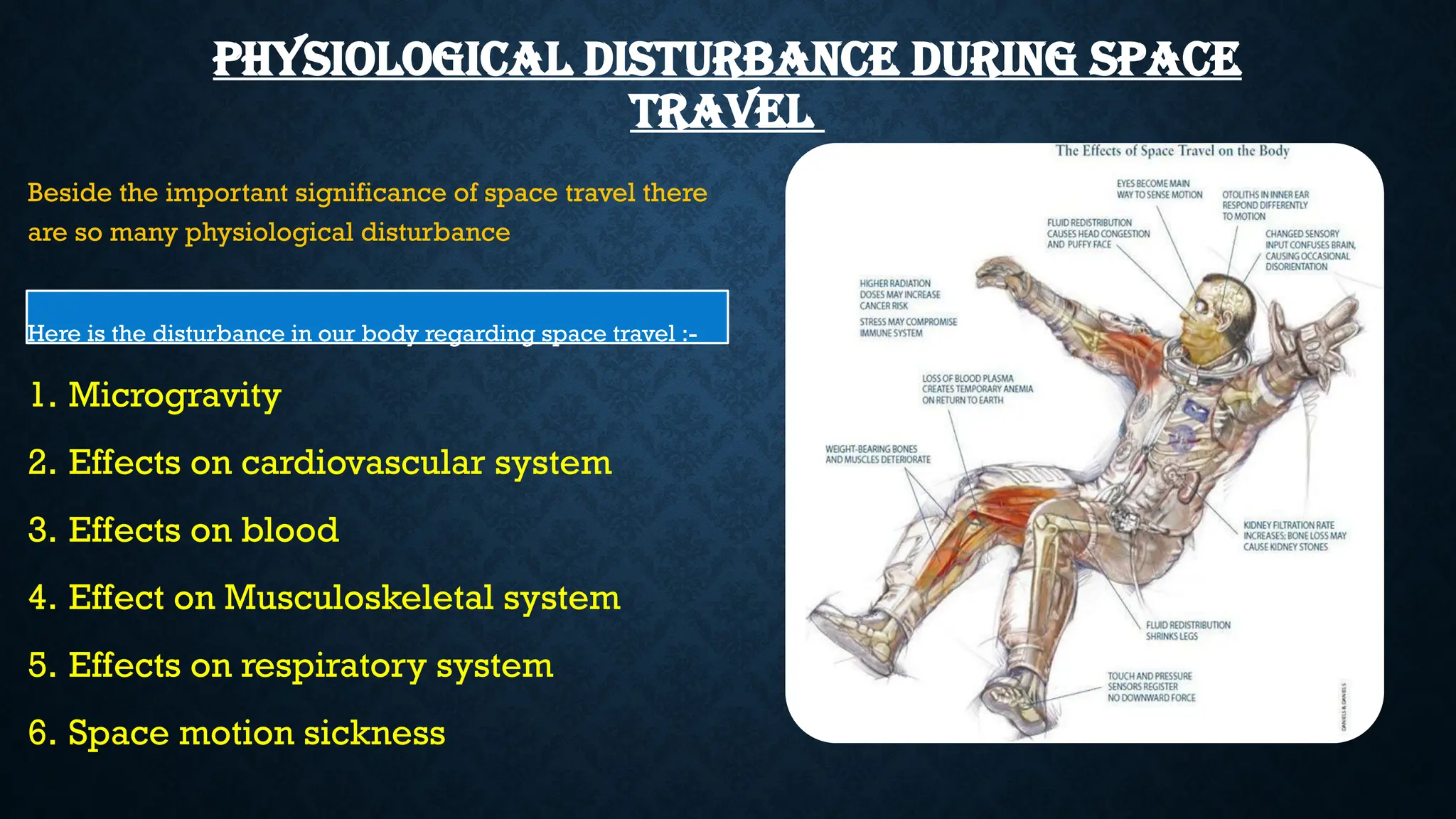
Beside the important significance of space travel there
are so many physiological disturbance
Here is the disturbance in our body regarding space travel :-
1. Microgravity
2. Effects on cardiovascular system
3. Effects on blood
4. Effect on Musculoskeletal system
5. Effects on respiratory system
6. Space motion sickness
1. MICROGRAVITY
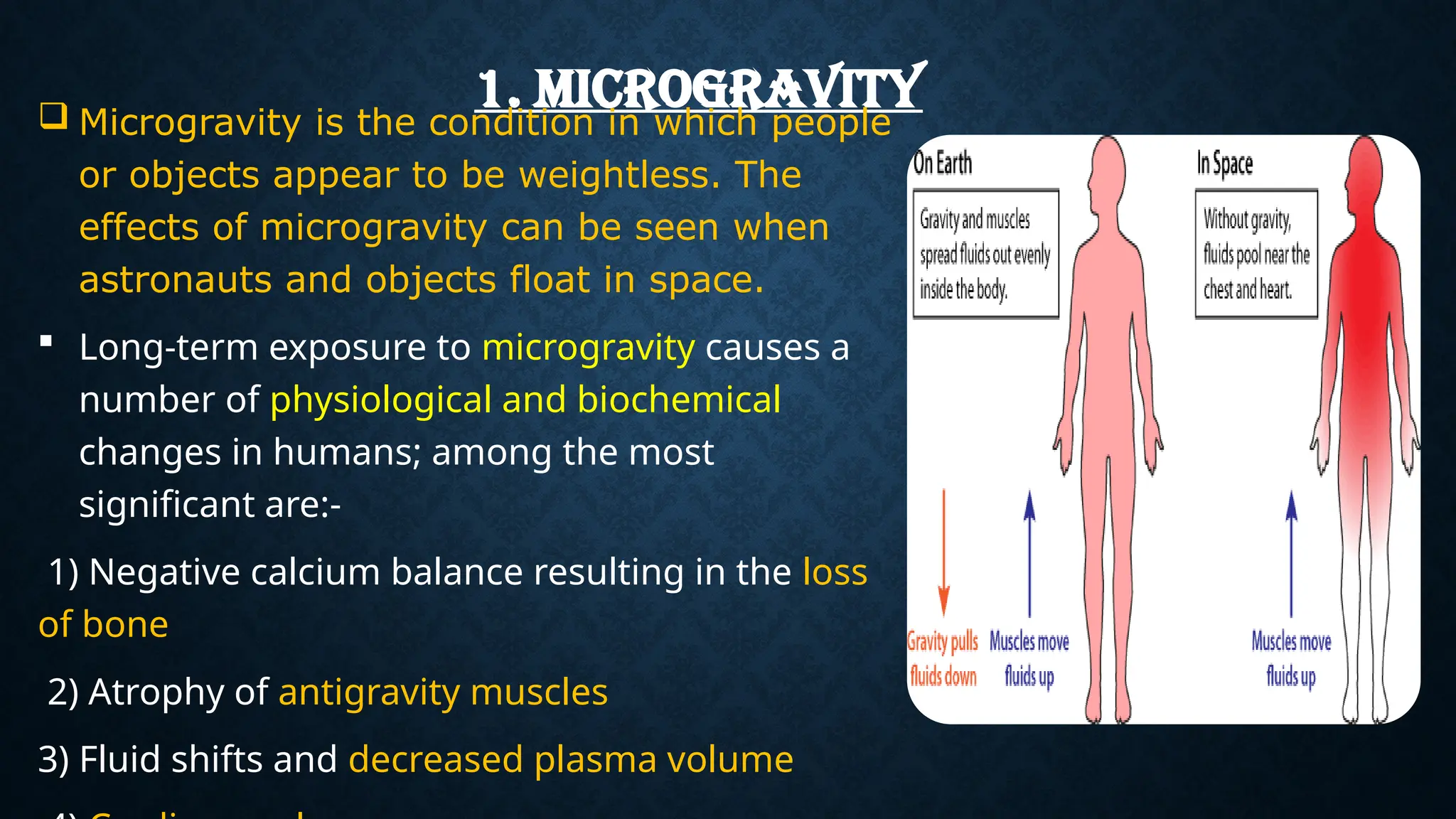
 Microgravity is the condition in which people
or objects appear to be weightless. The
effects of microgravity can be seen when
astronauts and objects float in space.
 Long-term exposure to microgravity causes a
number of physiological and biochemical
changes in humans; among the most
significant are:-
1) Negative calcium balance resulting in the loss
of bone
2) Atrophy of antigravity muscles
3) Fluid shifts and decreased plasma volume
WHAT HAPPENS IN MICROGRAVITY
• Total body water is unchanged
although the extracellular fluid
and plasma volume are
decreased
EFFECT ON CARDIOVASCULAR SYSTEM
 Cardiovascular changes are due to
the fluid shift.
 Due to absence of gravity, blood
moves from lower part to upper part
of the body (upper trunk and head).
 It causes enlargement of heart to
cope up with increased blood flow.
 The heart need not pump the blood
against gravity in space
SYMPTOMS OF CARDIOVASCULAR HEART DISEASE
Chest Pain
Breathlessness
Dizziness
Fatigue
Swollen Limbs
EFFECT ON BLOOD
Plasma volume decreases due to
excretion of fluid through urine.
 Space anemia.
 Osmotic Imbalance
 Hypovolemia
EFFECT ON MUSCULOSKELETAL SYSTEM
 Endurance of the muscles
also decreases.
 Bones become weak.
 Osteoclastic activity
increases.
 Calcium removed from
bone .
EFFECTS ON RESPIRATORY SYSTEM
 Fluid Redistribution.
 Reduced Lung
Capacity.
 Space Dust and
Particles.
 Exercise Counter
measures.
 Psychological Stress.
 Oxygen Consumption
SPACE MOTION SICKNESS
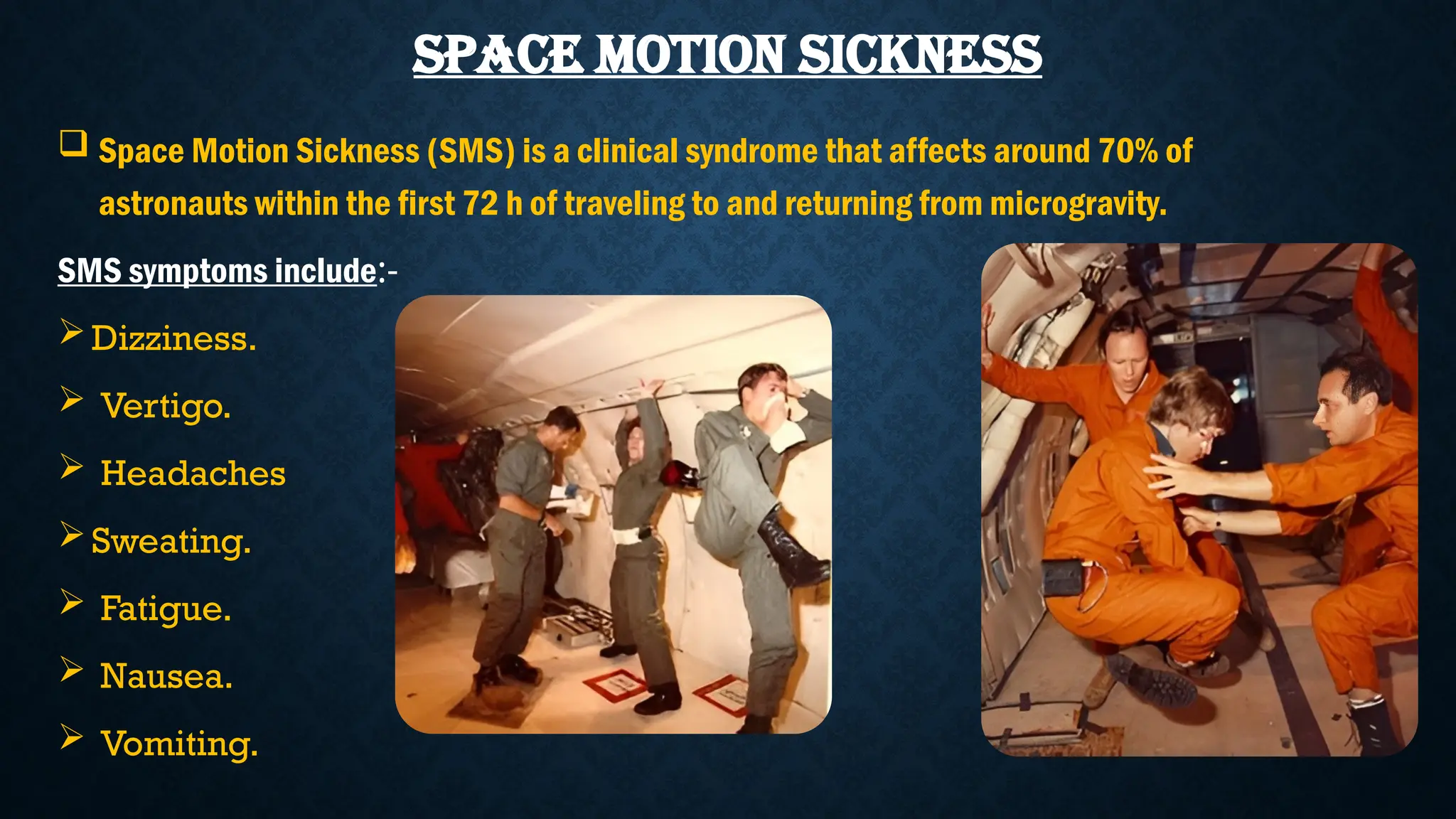
 Space Motion Sickness (SMS) is a clinical syndrome that affects around 70% of
astronauts within the first 72 h of traveling to and returning from microgravity.
SMS symptoms include:-
Dizziness.
 Vertigo.
 Headaches
Sweating.
 Fatigue.
 Nausea.
 Vomiting.
MEDICINE FOR ASTRONAUTS
 Microgravity Challenges.
 Trauma Response.
 Telemedicine Solutions.
 Pharmacological Considerations.
 Space-Specific Equipment.
 Preventive Measures.
 Research and Innovation.
ADAPTATION WHEN ASTRONAUT RETURN TO EARTH
 The heart is smaller and weaker .
 The vestibular, or balance , system has
become used to a new set of signals.
 Body fluids are diminished.
 Muscles have atrophied.
 Bones have weakened.
 Bone recovery is very problematic
CONCLUSION
 Long-term space travel poses significant challenges to the
human body.
 Astronauts will have to have a high level of fitness.
 Impacting various physiological systems.
 From bone density loss to muscle atrophy and radiation
exposure.
 Research, innovation, and adaptive technologies are essential
to mitigate these effects .
 Ensure the well-being of astronauts during extended missions .
 Paving the way for the next frontier in human space
exploration.
THANK YOU

The Impact of Long-term space travel .pptx

  • 1.
    “THE IMPACT OFLONG-TERM SPACE TRAVEL ON HUMAN BODY” Submitted by :- Name:- Soumyajit Dutta University Roll No. :- 210331000068 Subject :- Physiology College name- Suri Vidyasagar College Sem:- 5
  • 2.
    C O NT E N T S  Introduction  Microgravity  Effect on Cardiovascular System  Effect on blood  Effect on musculoskeletal System  Effect on respiratory System  Space motion sickness  Medicine for astronauts  Adaptation When astronaut return to earth  Conclusion
  • 3.
    INTRODUCTION A voyage outsidethe earth’s atmosphere  Space travel became a reality in 1961.  Since then more than 200 people have been to space and the duration of stays have been increased from 2hours to more than 200 years.  For more than 50 years NASA’s Human Research Programme (HRP) has studied what happens to the human body in space .  Researchers are using strategies to keep astronauts safe and healthy throughout their mission  62 miles (1000 kilometres) is to space from earth’s surface.
  • 4.
    SIGNIFICANCE OF SPACETRAVEL Some reasons ,why space travel matters to us ? I. The advancement of scientific knowledge and experience. II. The economy receives a boost from the aerospace market. III. International relationships and partnerships are strengthened. IV. Importance in national security. V. Medical innovation. VI. Long-term survival of humanity. VII.Space tourism and commercial opportunities. VIII. Environmental monitoring.
  • 5.
    PHYSIOLOGICAL DISTURBANCE DURINGSPACE TRAVEL Beside the important significance of space travel there are so many physiological disturbance Here is the disturbance in our body regarding space travel :- 1. Microgravity 2. Effects on cardiovascular system 3. Effects on blood 4. Effect on Musculoskeletal system 5. Effects on respiratory system 6. Space motion sickness
  • 6.
    1. MICROGRAVITY  Microgravityis the condition in which people or objects appear to be weightless. The effects of microgravity can be seen when astronauts and objects float in space.  Long-term exposure to microgravity causes a number of physiological and biochemical changes in humans; among the most significant are:- 1) Negative calcium balance resulting in the loss of bone 2) Atrophy of antigravity muscles 3) Fluid shifts and decreased plasma volume
  • 7.
    WHAT HAPPENS INMICROGRAVITY • Total body water is unchanged although the extracellular fluid and plasma volume are decreased
  • 8.
    EFFECT ON CARDIOVASCULARSYSTEM  Cardiovascular changes are due to the fluid shift.  Due to absence of gravity, blood moves from lower part to upper part of the body (upper trunk and head).  It causes enlargement of heart to cope up with increased blood flow.  The heart need not pump the blood against gravity in space
  • 9.
    SYMPTOMS OF CARDIOVASCULARHEART DISEASE Chest Pain Breathlessness Dizziness Fatigue Swollen Limbs
  • 10.
    EFFECT ON BLOOD Plasmavolume decreases due to excretion of fluid through urine.  Space anemia.  Osmotic Imbalance  Hypovolemia
  • 11.
    EFFECT ON MUSCULOSKELETALSYSTEM  Endurance of the muscles also decreases.  Bones become weak.  Osteoclastic activity increases.  Calcium removed from bone .
  • 12.
    EFFECTS ON RESPIRATORYSYSTEM  Fluid Redistribution.  Reduced Lung Capacity.  Space Dust and Particles.  Exercise Counter measures.  Psychological Stress.  Oxygen Consumption
  • 13.
    SPACE MOTION SICKNESS Space Motion Sickness (SMS) is a clinical syndrome that affects around 70% of astronauts within the first 72 h of traveling to and returning from microgravity. SMS symptoms include:- Dizziness.  Vertigo.  Headaches Sweating.  Fatigue.  Nausea.  Vomiting.
  • 14.
    MEDICINE FOR ASTRONAUTS Microgravity Challenges.  Trauma Response.  Telemedicine Solutions.  Pharmacological Considerations.  Space-Specific Equipment.  Preventive Measures.  Research and Innovation.
  • 15.
    ADAPTATION WHEN ASTRONAUTRETURN TO EARTH  The heart is smaller and weaker .  The vestibular, or balance , system has become used to a new set of signals.  Body fluids are diminished.  Muscles have atrophied.  Bones have weakened.  Bone recovery is very problematic
  • 16.
    CONCLUSION  Long-term spacetravel poses significant challenges to the human body.  Astronauts will have to have a high level of fitness.  Impacting various physiological systems.  From bone density loss to muscle atrophy and radiation exposure.  Research, innovation, and adaptive technologies are essential to mitigate these effects .  Ensure the well-being of astronauts during extended missions .  Paving the way for the next frontier in human space exploration.
  • 17.