The Global Risks
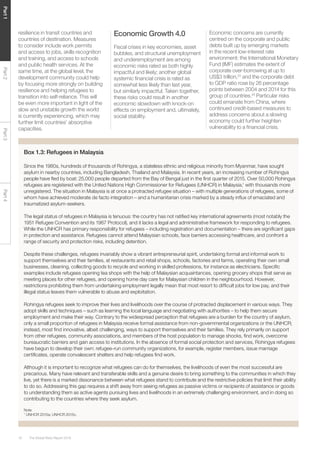
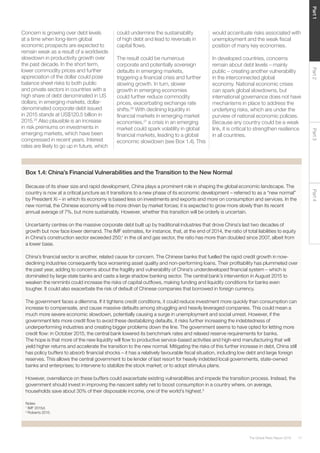
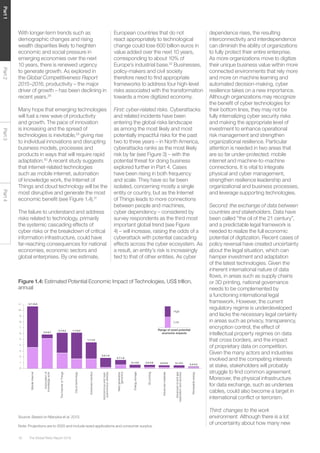
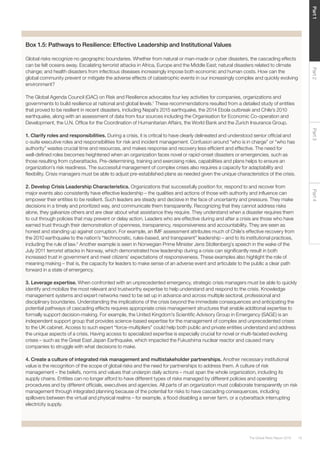
Report 2016
11th Edition
Insight Report
Strategic Partner of the Report
World Economic Forum
91-93 route de la Capite
CH-1223 Cologny/Geneva
Switzerland
Tel.:	 +41 (0) 22 869 1212
Fax:	 +41 (0) 22 786 2744
contact@weforum.org
www.weforum.org
The Global Risks Report 2016, 11th Edition is
published by the World Economic Forum within
the framework of The Global Competitiveness
and Risks Team.
The information in this report, or on which
this report is based, has been obtained from
sources that the authors believe to be reliable
and accurate. However, it has not been
independently verified and no representation or
warranty, express or implied, is made as to the
accuracy or completeness of any information
obtained from third parties. In addition, the
statements in this report may provide current
expectations of future events based on certain
assumptions and include any statement that
does not directly relate to a historical fact
or a current fact. These statements involve
known and unknown risks, uncertainties and
other factors which are not exhaustive. The
companies contributing to this report operate
in a continually changing environment and
new risks emerge continually. Readers are
cautioned not to place undue reliance on these
statements. The companies contributing to this
report undertake no obligation to publicly revise
or update any statements, whether as a result
of new information, future events or otherwise
and they shall in no event be liable for any loss or
damage arising in connection with the use of the
information in this report.
World Economic Forum
Geneva
World Economic Forum®
© 2016 – All rights reserved.
All rights reserved. No part of this publication
may be reproduced, stored in a retrieval system,
or transmitted, in any form or by any means,
electronic, mechanical, photocopying, or
otherwise without the prior permission of the
World Economic Forum.
REF: 080116
The report and an interactive data platform are
available at http://wef.ch/risks2016
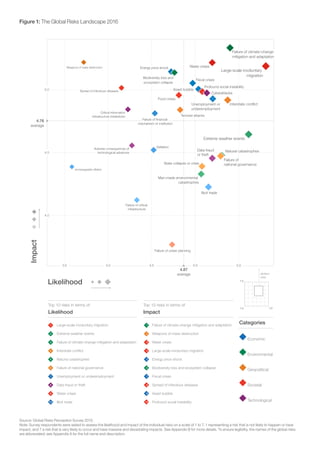
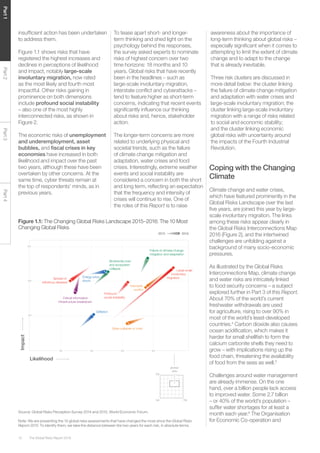
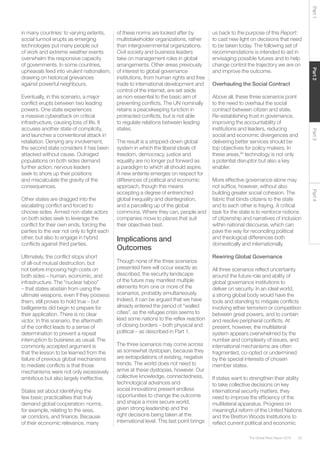
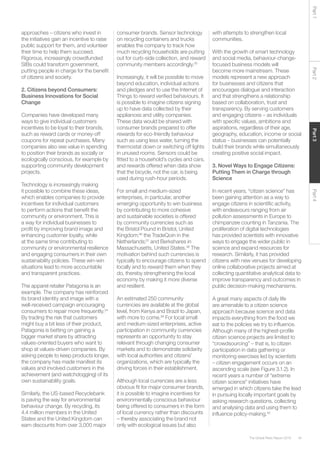
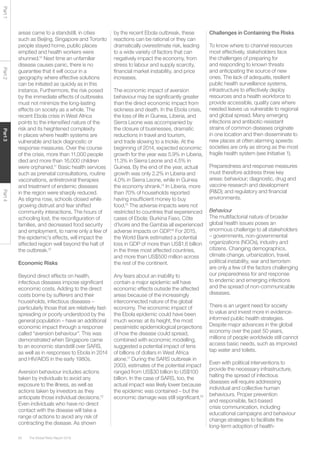
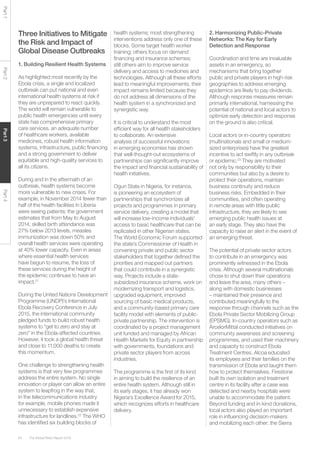
Figure 1: The Global Risks Landscape 2016
3.5 4.0 4.5 5.0 5.5
4.0
4.5
5.0
4.87
average
4.76
average
Data fraud
or theft
Asset bubble
Deflation
Failure of financial
mechanism or institution
Failure of critical
infrastructure
Fiscal crises
Unemployment or
underemployment
Illicit trade
Energy price shock
Unmanageable inflation
Extreme weather events
Biodiversity loss and
ecosystem collapse
Natural catastrophes
Man-made environmental
catastrophes
Failure of
national governance
Interstate conflict
Terrorist attacks
State collapse or crisis
Weapons of mass destruction
Failure of urban planning
Food crises
Large-scale involuntary
migration
Profound social instability
Spread of infectious diseases
Water crises
Adverse consequences of
technological advances
Critical information
infrastructure breakdown
Cyberattacks
Failure of climate-change
mitigation and adaptation
Source: Global Risks Perception Survey 2015.
Note: Survey respondents were asked to assess the likelihood and impact of the individual risks on a scale of 1 to 7, 1 representing a risk that is not likely to happen or have
impact, and 7 a risk that is very likely to occur and have massive and devastating impacts. See Appendix B for more details. To ensure legibility, the names of the global risks
are abbreviated; see Appendix A for the full name and description.
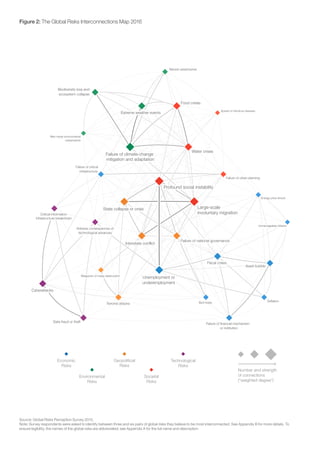
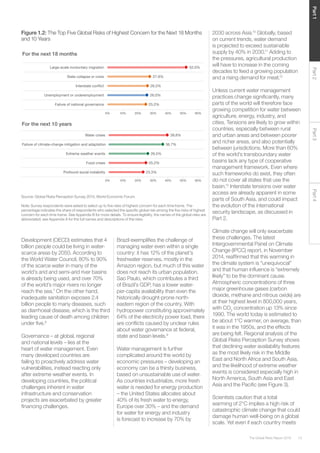
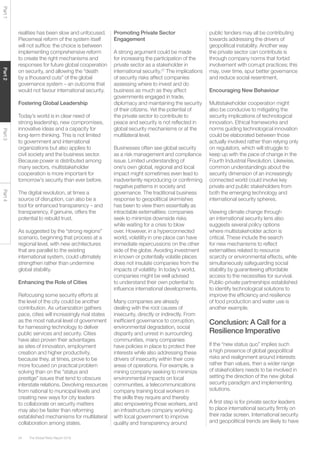
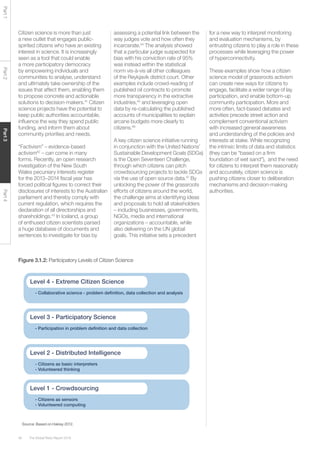
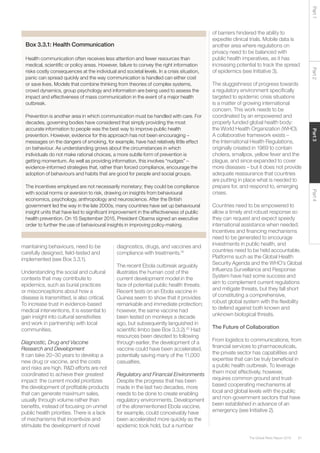
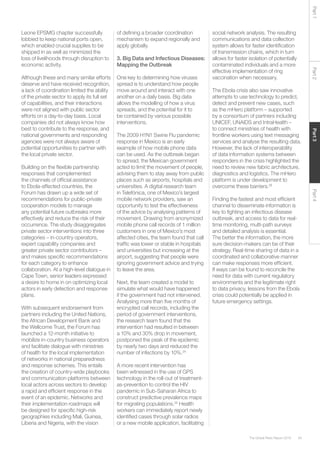
Figure 2: The Global Risks Interconnections Map 2016
State collapse or crisis
Unemployment or
underemployment
Asset bubble
Deflation
Failure of financial mechanism
or institution
Failure of critical
infrastructure
Fiscal crises
Illicit trade
Energy price shock
Unmanageable inflation
Extreme weather events
Failure of climate-change
Biodiversity loss and
ecosystem collapse
Natural catastrophes
Man-made environmental
catastrophes
Failure of national governance
Interstate conflict
Terrorist attacks
Weapons of mass destruction
Failure of urban planning
Food crises
Large-scale
involuntary migration
Profound social instability
Spread of infectious diseases
Water crises
Adverse consequences of
technological advances
Critical information
infrastructure breakdown
Cyberattacks
mitigation and adaptation
Data fraud or theft
Source: Global Risks Perception Survey 2015.
Note: Survey respondents were asked to identify between three and six pairs of global risks they believe to be most interconnected. See Appendix B for more details. To
ensure legibility, the names of the global risks are abbreviated; see Appendix A for the full name and description.
1st
2nd
Data fraud
or theft
Fiscal crisis
Failure of critical
infrastructure
Failure of national
governance
Failure of national
governance
Energy
price
shock
Failure of
national
governance
Cyber attacks
Large-scale
involuntary
migration
Water crises
Unemployment
or under-
employment
Profound
social
instability
Unemployment or
underemployment
Natural
catastrophes
Extreme
weather
events
Sub-Saharan
Africa
South Asia
North America
Latin America
and the Caribbean
Europe
Central Asia
including Russia
Middle East
and North Africa
East Asia
and the Pacific
Ranking position
in each region
3rd
Risk category
Economic
Geopolitical
Environmental
Societal
Technological
Profound
social
instability
Unemployment or
underemployment
Failure of
national
governance
Unemployment or
underemployment
Water crises
Unemployment or
underemployment
Extreme
weather
events
Failure of
national
governance
Failure of
national
governance
Extreme
weather
events
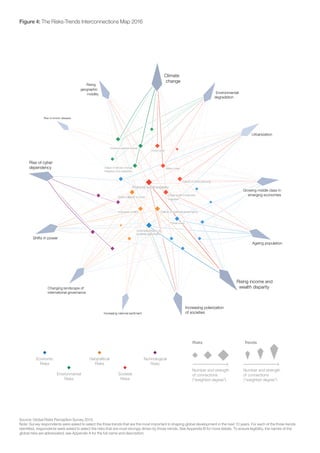
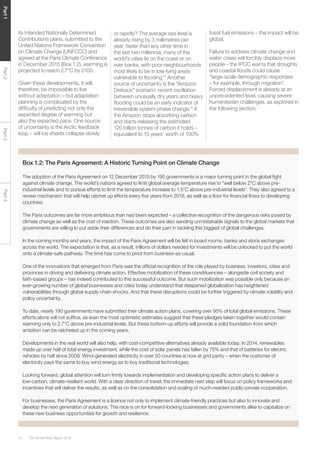
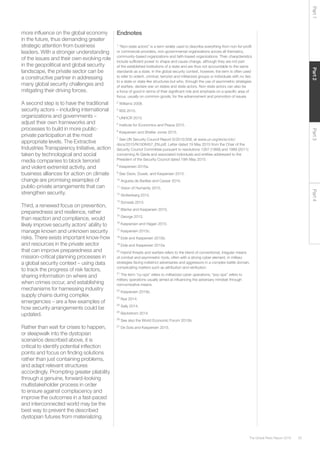
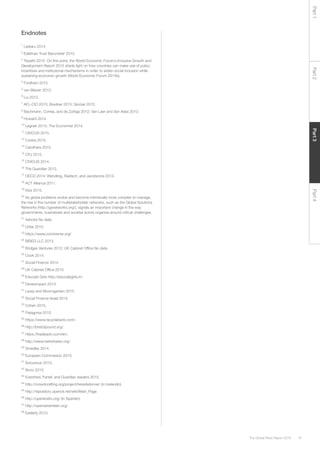
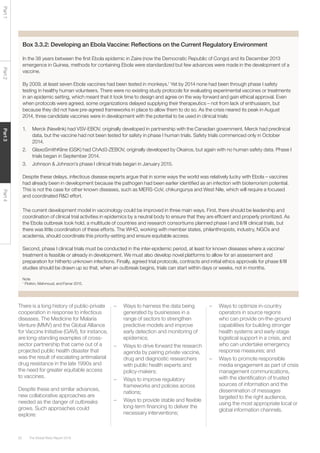
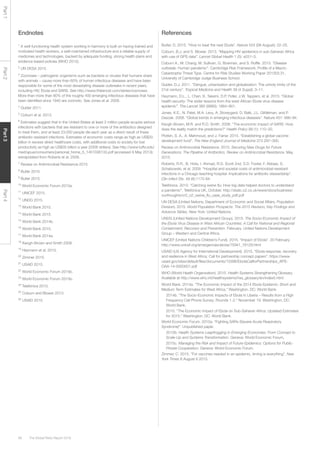
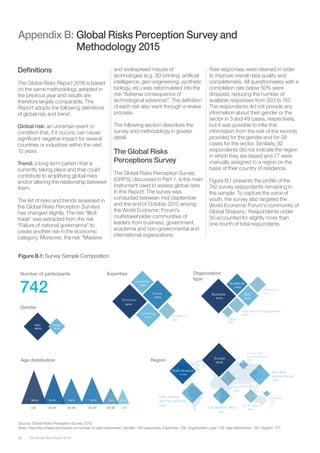
The Most Likely Global Risks to Occur in Your Region
Interstate
conflict
3rd
Figure 3: The Most Likely Global Risks 2016: A Regional Perspective
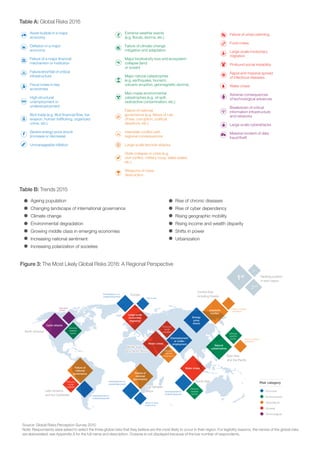
Table A: Global Risks 2016
Table B: Trends 2015
Source: Global Risks Perception Survey 2015.
Note: Respondents were asked to select the three global risks that they believe are the most likely to occur in their region. For legibility reasons, the names of the global risks
are abbreviated; see Appendix A for the full name and description. Oceania is not displayed because of the low number of respondents.
Technological
Ageing population
Changing landscape of international governance
Climate change
Environmental degradation
Growing middle class in emerging economies
Increasing national sentiment
Increasing polarization of societies
World Economic Forum Global Risk Report Graphics
1.1
Risk: Asset bubble in a major
economy
Unsustainably overpriced assets such as
commodities, housing, shares, etc. in a
major economy or region.
IDEA
• House icons, which could also be interpreted as an
upwards arrow. The house represents the asset,
whilst the arrow signifies the inflated price
1.2
Risk: Deflation in a major
economy
Prolonged ultra-low inflation or deflation
in a major economy or region.
IDEA
• Graph displaying a decrease, to signify deflation
1.3.
Risk: Failure of a major financial
mechanism or institution
Collapse of a financial institution and/
or malfunctioning of a financial system
impacts the global economy.
IDEA
• Bank icon with broken pillars, to suggest collapse
of financial institution
1.4.
Risk: Failure/shortfall of critical
infrastructure
Failure to adequately invest in, upgrade
and secure infrastructure networks
(e.g. energy, transportation and
communications) leads to pressure or a
breakdown with system-wide implications.
IDEA
• Broken train track to suggest breakdown
of transportation networks
1.Economic
World Economic Forum Global Risk Report Graphics
3.3.
Risk: Large-scale terrorist attacks
Individuals or non-state groups with
political or religious goals successfully
inflict large-scale human or material
damage.
IDEA
• Building in target sight
3.4.
Risk: State collapse or crisis (e.g.
civil conflict, military coup, failed
states, etc.)
State collapse of geopolitical importance
due to internal violence, regional or global
instability, military coup, civil conflict, failed
states, etc.
IDEA
• Burning flag
3.5.
Risk: Weapons of mass
destruction
Nuclear, chemical, biological and
radiological technologies and materials
are deployed creating international crises
and potential for significant destruction.
IDEA
• Mushroom cloud, to represent nuclear/chemical
weapons
4.1.
Risk: Failure of urban planning
Poorly planned cities, urban sprawl and
associated infrastructure create social,
environmental and health challenges.
IDEA
• Collection of urban buildings to represent an
urban area
3. GeoPolitical 4. Societal
World Economic Forum Global Risk Report Graphics
1.9.
Risk: Unmanageable inflation
Unmanageable increase in the general
price level of goods and services in
key economies.
IDEA
• Price tag featuring multiple dollar symbols to
represent high prices
2.1.
Risk: Extreme weather events
(e.g. floods, storms, etc.)
Major property, infrastructure and
environmental damage as well as human
loss caused by extreme weather events.
IDEA
• Tornado
2.2.
Risk: Failure of climate-change
mitigation and adaptation
Governments and businesses fail to
to mitigate climate change, protect
populations and help businesses
impacted by climate change to adapt.
IDEA
• Globe with thermometer, representing the
world climate
2.3.
Risk: Major biodiversity loss
and ecosystem collapse (land
or ocean)
Irreversible consequences for the
environment, resulting in severely
depleted resources for humankind as
well as industries.
IDEA
• Upside-down fish with crosses for eyes,
representing environmental consequences
1.Economic 2. Environmental
World Economic Forum Global Risk Report Graphics
4.6.
Risk: Water crises
A significant decline in the available
quality and quantity of fresh water
health and/or economic activity.
IDEA
• Water droplet
5.1.
Risk: Adverse consequences
of technological advances
Intended or unintended adverse
consequences of technological
advances such as artificial intelligence,
geo-engineering and synthetic biology
causing human, environmental and
economic damage.
IDEA
• Android-style robot to represent technology,
and artificial intelligence
5.2.
Risk: Breakdown of critical
information infrastructure
and networks
Cyber dependency increases vulnerability
to outage of critical information
infrastructure (e.g. internet, satellites,
etc.) and networks causing widespread
disruption.
IDEA
• Wi-fi symbol to represent the internet
and networks
5.3.
Risk: Large-scale cyberattacks
Large-scale cyberattacks or malware
causing large economic damages,
geopolitical tensions or widespread loss
of trust in the Internet.
IDEA
• Bug, to represent a cyber-bug
4. Societal 5. Technological
World Economic Forum Global Risk Report Graphics
1.5.
Risk: Fiscal crises in key
economies
Excessive debt burdens generate
sovereign debt crises and/or
liquidity crises.
IDEA
• Bag of money with hole, money falling out
1.6.
Risk: High structural
unemployment or
underemployment
A sustained high level of unemployment
or underutilization of the productive
capacity of the employed population
prevents the economy from attaining high
levels of employment.
IDEA
• Figures (people), with a downwards arrow
between them to signify underutilization
of people
1.7.
Risk: Illicit trade (e.g. illicit
financial flow, tax evasion, human
Large-scale activities outside the legal
framework such as illicit financial flow, tax
and organized crime undermine social
interactions, regional or international
collaboration and global growth.
IDEA
• Prisoner icon, to represent illicit behaviour
1.8.
Risk: Severe energy price shock
(increase or decrease)
Energy price increases or decreases
significantly and places further economic
pressures on highly energy-dependent
industries and consumers.
IDEA
• Lightning bolt, to signify energy and shock
1.Economic
World Economic Forum Global Risk Report Graphics
4.2.
Risk: Food crises
Access to appropriate quantities and
quality of food and nutrition becomes
a major scale.
IDEA
• Wilted crop, to represent food crises
4.3.
Risk: Large-scale involuntary
migration
Large-scale involuntary migration induced
by conflict, disasters, environmental or
economic reasons.
IDEA
• Passport/passport control icon to represent
migration and the crossing of borders
4.4.
Risk: Profound social instability
Major social movements or protests (e.g.
street riots, social unrest, etc.) disrupt
political or social stability, negatively
impacting populations and economic
activity.
IDEA
• Police figures with shields, to indicate dispute,
riots and social unrest
4.5.
Risk: Rapid and massive spread
of infectious diseases
Bacteria, viruses, parasites or fungi
cause uncontrolled spread of infectious
diseases (for instance due to resistance to
antibiotics, antivirals and other treatments)
leading to widespread fatalities and
economic disruption.
IDEA
• Virus
4. Societal
World Economic Forum Global Risk Report Graphics
2.4.
Risk: Major natural catastrophes
(e.g. earthquake, tsunami,
volcanic eruption, geomagnetic
storms)
Major property, infrastructure and
environmental damage as well as
human loss caused by geophysical
disasters such as earthquakes,
volcanic activity, landslides, tsunamis
or geomagnetic storms.
IDEA
• Erupting volcano
2.5.
Risk: Man-made environmental
catastrophes (e.g. oil spill,
radioactive contamination, etc.)
Failure to prevent major man-made
catastrophes, causing harm to lives,
human health, infrastructure, property,
economic activity and the environment.
IDEA
• Radioactivity symbol
3.1.
Risk: Failure of national
governance (e.g. failure of rule
of law, corruption, political
deadlock, etc.)
Inability to govern a nation of geopolitical
importance due to weak rule of law,
corruption or political deadlock.
IDEA
• Broken scale, to signify the failure of the
rule of law
3.2.
Risk: Interstate conflict with
regional consequences
A bilateral or multilateral dispute between
states escalates into economic (e.g. trade/
currency wars, resource nationalization),
military, cyber, societal or other conflict.
IDEA
• Crossed swords to represent conflict
2. Environmental 3. GeoPolitical
World Economic Forum Global Risk Report Graphics
5.4.
Risk: Massive incident of data
fraud/theft
Wrongful exploitation of private or
unprecedented scale.
IDEA
• Cloud with a padlock in the middle, to represent
data and privacy/security
5. Technological
Forum Global Risk Report Graphics
bubble in a major
overpriced assets such as
housing, shares, etc. in a
my or region.
ich could also be interpreted as an
The house represents the asset,
signifies the inflated price
1.2
Risk: Deflation in a major
economy
Prolonged ultra-low inflation or deflation
in a major economy or region.
IDEA
• Graph displaying a decrease, to signify deflation
1.3.
Risk: Failure of a major financial
mechanism or institution
Collapse of a financial institution and/
or malfunctioning of a financial system
impacts the global economy.
IDEA
• Bank icon with broken pillars, to suggest collapse
of financial institution
1.4.
Risk: Failure/shortfall of critical
infrastructure
Failure to adequately invest in, upgrade
and secure infrastructure networks
(e.g. energy, transportation and
communications) leads to pressure or a
breakdown with system-wide implications.
IDEA
• Broken train track to suggest breakdown
of transportation networks
ic
World Economic Forum Global Risk Report Graphics
3.3.
Risk: Large-scale terrorist attacks
Individuals or non-state groups with
political or religious goals successfully
inflict large-scale human or material
damage.
IDEA
• Building in target sight
3.4.
Risk: State collapse or crisis (e.g.
civil conflict, military coup, failed
states, etc.)
State collapse of geopolitical importance
due to internal violence, regional or global
instability, military coup, civil conflict, failed
states, etc.
IDEA
• Burning flag
3.5.
Risk: Weapons of mass
destruction
Nuclear, chemical, biological and
radiological technologies and materials
are deployed creating international crises
and potential for significant destruction.
IDEA
• Mushroom cloud, to represent nuclear/chemical
weapons
4.1.
Risk: Failure of urban planning
Poorly planned cities, urban sprawl and
associated infrastructure create social,
environmental and health challenges.
IDEA
• Collection of urban buildings to represent an
urban area
3. GeoPolitical 4. Societal
World Economic Forum Global Risk Report Graphics
1.9.
Risk: Unmanageable inflation
Unmanageable increase in the general
price level of goods and services in
key economies.
IDEA
• Price tag featuring multiple dollar symbols to
represent high prices
2.1.
Risk: Extreme weather events
(e.g. floods, storms, etc.)
Major property, infrastructure and
environmental damage as well as human
loss caused by extreme weather events.
IDEA
• Tornado
2.2.
Risk: Failure of climate-change
mitigation and adaptation
Governments and businesses fail to
to mitigate climate change, protect
populations and help businesses
impacted by climate change to adapt.
IDEA
• Globe with thermometer, representing the
world climate
2.3.
Risk: Major biodiversity loss
and ecosystem collapse (land
or ocean)
Irreversible consequences for the
environment, resulting in severely
depleted resources for humankind as
well as industries.
IDEA
• Upside-down fish with crosses for eyes,
representing environmental consequences
1.Economic 2. Environmental
World Economic Forum Global Risk Report Graphics
4.6.
Risk: Water crises
A significant decline in the available
quality and quantity of fresh water
health and/or economic activity.
IDEA
• Water droplet
5.1.
Risk: Adverse consequences
of technological advances
Intended or unintended adverse
consequences of technological
advances such as artificial intelligence,
geo-engineering and synthetic biology
causing human, environmental and
economic damage.
IDEA
• Android-style robot to represent technology,
and artificial intelligence
5.2.
Risk: Breakdown of critical
information infrastructure
and networks
Cyber dependency increases vulnerability
to outage of critical information
infrastructure (e.g. internet, satellites,
etc.) and networks causing widespread
disruption.
IDEA
• Wi-fi symbol to represent the internet
and networks
5.3.
Risk: Large-scale cyberattacks
Large-scale cyberattacks or malware
causing large economic damages,
geopolitical tensions or widespread loss
of trust in the Internet.
IDEA
• Bug, to represent a cyber-bug
4. Societal 5. Technological
Forum Global Risk Report Graphics
rises in key
t burdens generate
t crises and/or
.
ith hole, money falling out
1.6.
Risk: High structural
unemployment or
underemployment
A sustained high level of unemployment
or underutilization of the productive
capacity of the employed population
prevents the economy from attaining high
levels of employment.
IDEA
• Figures (people), with a downwards arrow
between them to signify underutilization
of people
1.7.
Risk: Illicit trade (e.g. illicit
financial flow, tax evasion, human
Large-scale activities outside the legal
framework such as illicit financial flow, tax
and organized crime undermine social
interactions, regional or international
collaboration and global growth.
IDEA
• Prisoner icon, to represent illicit behaviour
1.8.
Risk: Severe energy price shock
(increase or decrease)
Energy price increases or decreases
significantly and places further economic
pressures on highly energy-dependent
industries and consumers.
IDEA
• Lightning bolt, to signify energy and shock
ic
World Economic Forum Global Risk Report Graphics
4.2.
Risk: Food crises
Access to appropriate quantities and
quality of food and nutrition becomes
a major scale.
IDEA
• Wilted crop, to represent food crises
4.3.
Risk: Large-scale involuntary
migration
Large-scale involuntary migration induced
by conflict, disasters, environmental or
economic reasons.
IDEA
• Passport/passport control icon to represent
migration and the crossing of borders
4.4.
Risk: Profound social instability
Major social movements or protests (e.g.
street riots, social unrest, etc.) disrupt
political or social stability, negatively
impacting populations and economic
activity.
IDEA
• Police figures with shields, to indicate dispute,
riots and social unrest
4.5.
Risk: Rapid and massive spread
of infectious diseases
Bacteria, viruses, parasites or fungi
cause uncontrolled spread of infectious
diseases (for instance due to resistance to
antibiotics, antivirals and other treatments)
leading to widespread fatalities and
economic disruption.
IDEA
• Virus
4. Societal
World Economic Forum Global Risk Report Graphics
2.4.
Risk: Major natural catastrophes
(e.g. earthquake, tsunami,
volcanic eruption, geomagnetic
storms)
Major property, infrastructure and
environmental damage as well as
human loss caused by geophysical
disasters such as earthquakes,
volcanic activity, landslides, tsunamis
or geomagnetic storms.
IDEA
• Erupting volcano
2.5.
Risk: Man-made environmental
catastrophes (e.g. oil spill,
radioactive contamination, etc.)
Failure to prevent major man-made
catastrophes, causing harm to lives,
human health, infrastructure, property,
economic activity and the environment.
IDEA
• Radioactivity symbol
3.1.
Risk: Failure of national
governance (e.g. failure of rule
of law, corruption, political
deadlock, etc.)
Inability to govern a nation of geopolitical
importance due to weak rule of law,
corruption or political deadlock.
IDEA
• Broken scale, to signify the failure of the
rule of law
3.2.
Risk: Interstate conflict with
regional consequences
A bilateral or multilateral dispute between
states escalates into economic (e.g. trade/
currency wars, resource nationalization),
military, cyber, societal or other conflict.
IDEA
• Crossed swords to represent conflict
2. Environmental 3. GeoPolitical
World Economic Forum Global Risk Report Graphics
1.1
Risk: Asset bubble in a major
economy
Unsustainably overpriced assets such as
commodities, housing, shares, etc. in a
major economy or region.
IDEA
• House icons, which could also be interpreted as an
upwards arrow. The house represents the asset,
whilst the arrow signifies the inflated price
1.2
Risk: Deflation in a major
economy
Prolonged ultra-low inflation or deflation
in a major economy or region.
IDEA
• Graph displaying a decrease, to signify deflation
1.3.
Risk: Failure of a major financial
mechanism or institution
Collapse of a financial institution and/
or malfunctioning of a financial system
impacts the global economy.
IDEA
• Bank icon with broken pillars, to suggest collapse
of financial institution
1.4.
Risk: Failure/shortfall of critical
infrastructure
Failure to adequately invest in, upgrade
and secure infrastructure networks
(e.g. energy, transportation and
communications) leads to pressure or a
breakdown with system-wide implications.
IDEA
• Broken train track to suggest breakdown
of transportation networks
1.Economic
World Economic Forum Global Risk Report Graphics
3.3.
Risk: Large-scale terrorist attacks
Individuals or non-state groups with
political or religious goals successfully
inflict large-scale human or material
damage.
IDEA
• Building in target sight
3.4.
Risk: State collapse or crisis (e.g.
civil conflict, military coup, failed
states, etc.)
State collapse of geopolitical importance
due to internal violence, regional or global
instability, military coup, civil conflict, failed
states, etc.
IDEA
• Burning flag
3.5.
Risk: Weapons of mass
destruction
Nuclear, chemical, biological and
radiological technologies and materials
are deployed creating international crises
and potential for significant destruction.
IDEA
• Mushroom cloud, to represent nuclear/chemical
weapons
4.1.
Risk: Failure of urban planning
Poorly planned cities, urban sprawl and
associated infrastructure create social,
environmental and health challenges.
IDEA
• Collection of urban buildings to represent an
urban area
3. GeoPolitical 4. Societal
World Economic Forum Global Risk Report Graphics
1.9.
Risk: Unmanageable inflation
Unmanageable increase in the general
price level of goods and services in
key economies.
IDEA
• Price tag featuring multiple dollar symbols to
represent high prices
2.1.
Risk: Extreme weather events
(e.g. floods, storms, etc.)
Major property, infrastructure and
environmental damage as well as human
loss caused by extreme weather events.
IDEA
• Tornado
2.2.
Risk: Failure of climate-change
mitigation and adaptation
Governments and businesses fail to
to mitigate climate change, protect
populations and help businesses
impacted by climate change to adapt.
IDEA
• Globe with thermometer, representing the
world climate
2.3.
Risk: Major biodiversity loss
and ecosystem collapse (land
or ocean)
Irreversible consequences for the
environment, resulting in severely
depleted resources for humankind as
well as industries.
IDEA
• Upside-down fish with crosses for eyes,
representing environmental consequences
1.Economic 2. Environmental
World Economic Forum Global Risk Report Graphics
4.6.
Risk: Water crises
A significant decline in the available
quality and quantity of fresh water
health and/or economic activity.
IDEA
• Water droplet
5.1.
Risk: Adverse consequences
of technological advances
Intended or unintended adverse
consequences of technological
advances such as artificial intelligence,
geo-engineering and synthetic biology
causing human, environmental and
economic damage.
IDEA
• Android-style robot to represent technology,
and artificial intelligence
5.2.
Risk: Breakdown of critical
information infrastructure
and networks
Cyber dependency increases vulnerability
to outage of critical information
infrastructure (e.g. internet, satellites,
etc.) and networks causing widespread
disruption.
IDEA
• Wi-fi symbol to represent the internet
and networks
5.3.
Risk: Large-scale cyberattacks
Large-scale cyberattacks or malware
causing large economic damages,
geopolitical tensions or widespread loss
of trust in the Internet.
IDEA
• Bug, to represent a cyber-bug
4. Societal 5. Technological
World Economic Forum Global Risk Report Graphics
1.5.
Risk: Fiscal crises in key
economies
Excessive debt burdens generate
sovereign debt crises and/or
liquidity crises.
IDEA
• Bag of money with hole, money falling out
1.6.
Risk: High structural
unemployment or
underemployment
A sustained high level of unemployment
or underutilization of the productive
capacity of the employed population
prevents the economy from attaining high
levels of employment.
IDEA
• Figures (people), with a downwards arrow
between them to signify underutilization
of people
1.7.
Risk: Illicit trade (e.g. illicit
financial flow, tax evasion, human
Large-scale activities outside the legal
framework such as illicit financial flow, tax
and organized crime undermine social
interactions, regional or international
collaboration and global growth.
IDEA
• Prisoner icon, to represent illicit behaviour
1.8.
Risk: Severe energy price shock
(increase or decrease)
Energy price increases or decreases
significantly and places further economic
pressures on highly energy-dependent
industries and consumers.
IDEA
• Lightning bolt, to signify energy and shock
1.Economic
World Economic Forum Global Risk Report Graphics
4.2.
Risk: Food crises
Access to appropriate quantities and
quality of food and nutrition becomes
a major scale.
IDEA
• Wilted crop, to represent food crises
4.3.
Risk: Large-scale involuntary
migration
Large-scale involuntary migration induced
by conflict, disasters, environmental or
economic reasons.
IDEA
• Passport/passport control icon to represent
migration and the crossing of borders
4.4.
Risk: Profound social instability
Major social movements or protests (e.g.
street riots, social unrest, etc.) disrupt
political or social stability, negatively
impacting populations and economic
activity.
IDEA
• Police figures with shields, to indicate dispute,
riots and social unrest
4.5.
Risk: Rapid and massive spread
of infectious diseases
Bacteria, viruses, parasites or fungi
cause uncontrolled spread of infectious
diseases (for instance due to resistance to
antibiotics, antivirals and other treatments)
leading to widespread fatalities and
economic disruption.
IDEA
• Virus
4. Societal
World Economic Forum Global Risk Report Graphics
2.4.
Risk: Major natural catastrophes
(e.g. earthquake, tsunami,
volcanic eruption, geomagnetic
storms)
Major property, infrastructure and
environmental damage as well as
human loss caused by geophysical
disasters such as earthquakes,
volcanic activity, landslides, tsunamis
or geomagnetic storms.
IDEA
• Erupting volcano
2.5.
Risk: Man-made environmental
catastrophes (e.g. oil spill,
radioactive contamination, etc.)
Failure to prevent major man-made
catastrophes, causing harm to lives,
human health, infrastructure, property,
economic activity and the environment.
IDEA
• Radioactivity symbol
3.1.
Risk: Failure of national
governance (e.g. failure of rule
of law, corruption, political
deadlock, etc.)
Inability to govern a nation of geopolitical
importance due to weak rule of law,
corruption or political deadlock.
IDEA
• Broken scale, to signify the failure of the
rule of law
3.2.
Risk: Interstate conflict with
regional consequences
A bilateral or multilateral dispute between
states escalates into economic (e.g. trade/
currency wars, resource nationalization),
military, cyber, societal or other conflict.
IDEA
• Crossed swords to represent conflict
2. Environmental 3. GeoPolitical
on in a major
ra-low inflation or deflation
nomy or region.
g a decrease, to signify deflation
1.3.
Risk: Failure of a major financial
mechanism or institution
Collapse of a financial institution and/
or malfunctioning of a financial system
impacts the global economy.
IDEA
• Bank icon with broken pillars, to suggest collapse
of financial institution
1.4.
Risk: Failure/shortfall of critical
infrastructure
Failure to adequately invest in, upgrade
and secure infrastructure networks
(e.g. energy, transportation and
communications) leads to pressure or a
breakdown with system-wide implications.
IDEA
• Broken train track to suggest breakdown
of transportation networks
World Economic Forum Global Risk Report Graphics
3.3.
Risk: Large-scale terrorist attacks
Individuals or non-state groups with
political or religious goals successfully
inflict large-scale human or material
damage.
IDEA
• Building in target sight
3.4.
Risk: State collapse or crisis (e.g.
civil conflict, military coup, failed
states, etc.)
State collapse of geopolitical importance
due to internal violence, regional or global
instability, military coup, civil conflict, failed
states, etc.
IDEA
• Burning flag
3.5.
Risk: Weapons of mass
destruction
Nuclear, chemical, biological and
radiological technologies and materials
are deployed creating international crises
and potential for significant destruction.
IDEA
• Mushroom cloud, to represent nuclear/chemical
weapons
4.1.
Risk: Failure of urban planning
Poorly planned cities, urban sprawl and
associated infrastructure create social,
environmental and health challenges.
IDEA
• Collection of urban buildings to represent an
urban area
3. GeoPolitical 4. Societal
World Economic Forum Global Risk Report Graphics
1.9.
Risk: Unmanageable inflation
Unmanageable increase in the general
price level of goods and services in
key economies.
IDEA
• Price tag featuring multiple dollar symbols to
represent high prices
2.1.
Risk: Extreme weather events
(e.g. floods, storms, etc.)
Major property, infrastructure and
environmental damage as well as human
loss caused by extreme weather events.
IDEA
• Tornado
2.2.
Risk: Failure of climate-change
mitigation and adaptation
Governments and businesses fail to
to mitigate climate change, protect
populations and help businesses
impacted by climate change to adapt.
IDEA
• Globe with thermometer, representing the
world climate
2.3.
Risk: Major biodiversity loss
and ecosystem collapse (land
or ocean)
Irreversible consequences for the
environment, resulting in severely
depleted resources for humankind as
well as industries.
IDEA
• Upside-down fish with crosses for eyes,
representing environmental consequences
1.Economic 2. Environmental
World Economic Forum Global Risk Report Graphics
4.6.
Risk: Water crises
A significant decline in the available
quality and quantity of fresh water
health and/or economic activity.
IDEA
• Water droplet
5.1.
Risk: Adverse consequences
of technological advances
Intended or unintended adverse
consequences of technological
advances such as artificial intelligence,
geo-engineering and synthetic biology
causing human, environmental and
economic damage.
IDEA
• Android-style robot to represent technology,
and artificial intelligence
5.2.
Risk: Breakdown of critical
information infrastructure
and networks
Cyber dependency increases vulnerability
to outage of critical information
infrastructure (e.g. internet, satellites,
etc.) and networks causing widespread
disruption.
IDEA
• Wi-fi symbol to represent the internet
and networks
5.3.
Risk: Large-scale cyberattacks
Large-scale cyberattacks or malware
causing large economic damages,
geopolitical tensions or widespread loss
of trust in the Internet.
IDEA
• Bug, to represent a cyber-bug
4. Societal 5. Technological
ructural
ment or
oyment
gh level of unemployment
ation of the productive
e employed population
conomy from attaining high
oyment.
), with a downwards arrow
to signify underutilization
1.7.
Risk: Illicit trade (e.g. illicit
financial flow, tax evasion, human
Large-scale activities outside the legal
framework such as illicit financial flow, tax
and organized crime undermine social
interactions, regional or international
collaboration and global growth.
IDEA
• Prisoner icon, to represent illicit behaviour
1.8.
Risk: Severe energy price shock
(increase or decrease)
Energy price increases or decreases
significantly and places further economic
pressures on highly energy-dependent
industries and consumers.
IDEA
• Lightning bolt, to signify energy and shock
World Economic Forum Global Risk Report Graphics
4.2.
Risk: Food crises
Access to appropriate quantities and
quality of food and nutrition becomes
a major scale.
IDEA
• Wilted crop, to represent food crises
4.3.
Risk: Large-scale involuntary
migration
Large-scale involuntary migration induced
by conflict, disasters, environmental or
economic reasons.
IDEA
• Passport/passport control icon to represent
migration and the crossing of borders
4.4.
Risk: Profound social instability
Major social movements or protests (e.g.
street riots, social unrest, etc.) disrupt
political or social stability, negatively
impacting populations and economic
activity.
IDEA
• Police figures with shields, to indicate dispute,
riots and social unrest
4.5.
Risk: Rapid and massive spread
of infectious diseases
Bacteria, viruses, parasites or fungi
cause uncontrolled spread of infectious
diseases (for instance due to resistance to
antibiotics, antivirals and other treatments)
leading to widespread fatalities and
economic disruption.
IDEA
• Virus
4. Societal
World Economic Forum Global Risk Report Graphics
2.4.
Risk: Major natural catastrophes
(e.g. earthquake, tsunami,
volcanic eruption, geomagnetic
storms)
Major property, infrastructure and
environmental damage as well as
human loss caused by geophysical
disasters such as earthquakes,
volcanic activity, landslides, tsunamis
or geomagnetic storms.
IDEA
• Erupting volcano
2.5.
Risk: Man-made environmental
catastrophes (e.g. oil spill,
radioactive contamination, etc.)
Failure to prevent major man-made
catastrophes, causing harm to lives,
human health, infrastructure, property,
economic activity and the environment.
IDEA
• Radioactivity symbol
3.1.
Risk: Failure of national
governance (e.g. failure of rule
of law, corruption, political
deadlock, etc.)
Inability to govern a nation of geopolitical
importance due to weak rule of law,
corruption or political deadlock.
IDEA
• Broken scale, to signify the failure of the
rule of law
3.2.
Risk: Interstate conflict with
regional consequences
A bilateral or multilateral dispute between
states escalates into economic (e.g. trade/
currency wars, resource nationalization),
military, cyber, societal or other conflict.
IDEA
• Crossed swords to represent conflict
2. Environmental 3. GeoPolitical
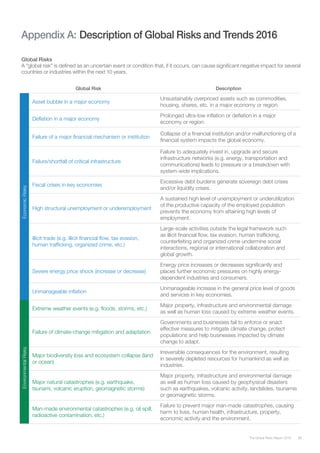
Asset bubble in a major
economy
Deflation in a major
economy
Failure of a major financial
mechanism or institution
Failure/shortfall of critical
infrastructure
Fiscal crises in key
economies
High structural
unemployment or
underemployment
Illicit trade (e.g. illicit financial flow, tax
evasion, human trafficking, organized
crime, etc.)
Severe energy price shock
(increase or decrease)
Unmanageable inflation
Extreme weather events
(e.g. floods, storms, etc.)
Failure of climate-change
mitigation and adaptation
Major biodiversity loss and ecosystem
collapse (land
or ocean)
Major natural catastrophes
(e.g. earthquake, tsunami,
volcanic eruption, geomagnetic storms)
Man-made environmental
catastrophes (e.g. oil spill,
radioactive contamination, etc.)
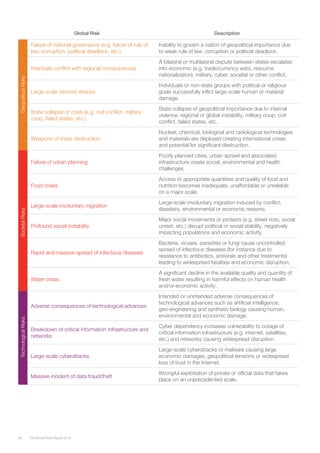
Failure of national
governance (e.g. failure of rule
of law, corruption, political
deadlock, etc.)
Interstate conflict with
regional consequences
Large-scale terrorist attacks
State collapse or crisis (e.g.
civil conflict, military coup, failed states,
etc.)
Weapons of mass
destruction
Failure of urban planning
Food crises
Large-scale involuntary
migration
Profound social instability
Rapid and massive spread
of infectious diseases
Water crises
Adverse consequences
of technological advances
Breakdown of critical
information infrastructure
and networks
Large-scale cyberattacks
Massive incident of data
fraud/theft
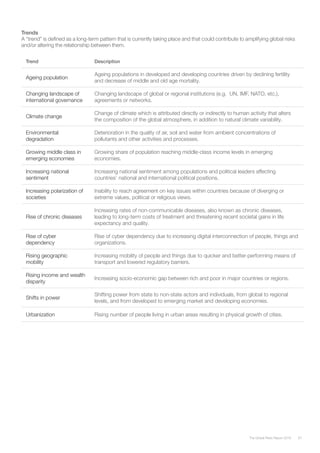
Rise of chronic diseases
Rise of cyber dependency
Rising geographic mobility
Rising income and wealth disparity
Shifts in power
Urbanization
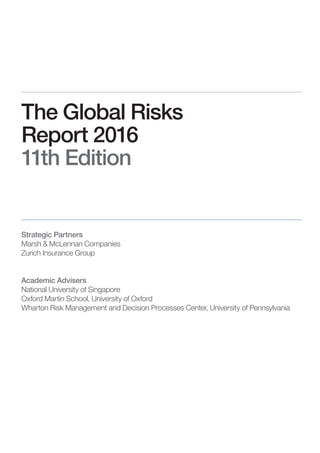
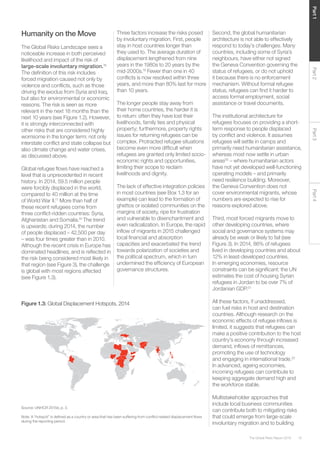
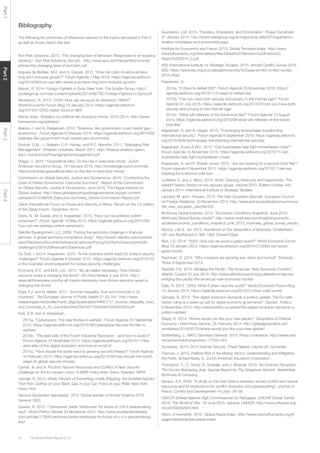
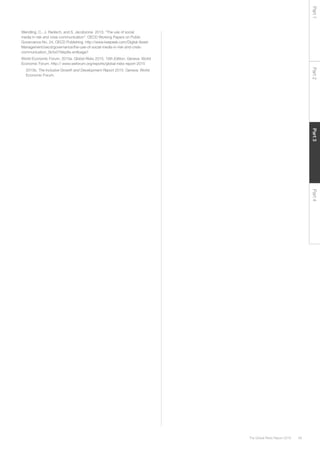
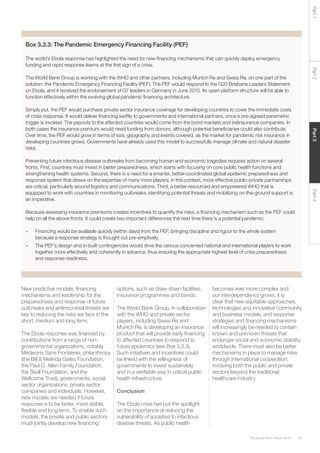
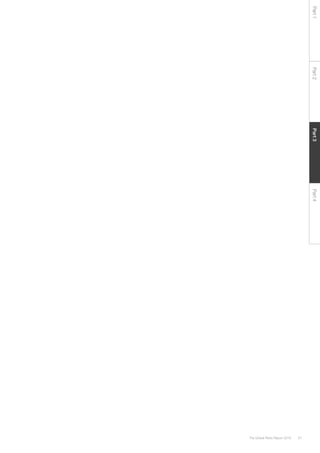
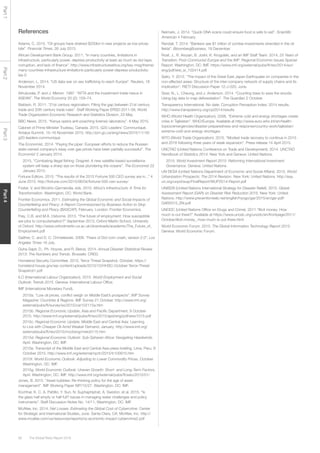
Figure 4: The Risks-Trends Interconnections Map 2016
Source: Global Risks Perception Survey 2015.
Note: Survey respondents were asked to select the three trends that are the most important in shaping global development in the next 10 years. For each of the three trends
identified, respondents were asked to select the risks that are most strongly driven by those trends. See Appendix B for more details. To ensure legibility, the names of the
global risks are abbreviated; see Appendix A for the full name and description.
The Global Risks
Report 2016
11th Edition
Strategic Partners
Marsh & McLennan Companies
Zurich Insurance Group
Academic Advisers
National University of Singapore
Oxford Martin School, University of Oxford
Wharton Risk Management and Decision Processes Center, University of Pennsylvania
Contents
4 	 Preface
By Klaus Schwab
6 	 Executive Summary
8 	 Introduction
10	 Part 1: Global Risks 2016
11	 Box 1.1: Methodology of The Global Risks Report
14	 Box 1.2: The Paris Agreement: A Historic Turning
Point on Climate Change
16	 Box 1.3: Refugees in Malaysia
17	 Box 1.4: China’s Financial Vulnerabilities and the
Transition to the New Normal
19	 Box 1.5: Pathways to Resilience: Effective
Leadership and Institutional Values
24	 Part 2: The Security Outlook 2030
24	 Box 2.1: International Security Defined
25	 Box 2.2: A Deep-Dive into International Security
27	 Box 2.3: Public-Private Collaboration in Complex
Crises
29	 Box 2.4: The Seven Driving Forces of International
Security
30	 Box 2.5: Scenarios Methodology
38	 Part 3: Risks in Focus
39	 3.1 (Dis)Empowered Citizen
40	 Box 3.1.1: The (Dis)Empowered Citizen:
A Definition
42	 Box 3.1.2: Digital Government Technologies:
The (Persisting) Challenges of Inclusiveness and
Engagement
50	 3.2 Climate Change and Risks to Food Security
52	 Box 3.2.1: Adaptation and Its Limits
53	 Box 3.2.2: Reducing Food Waste
59	 3.3 Global Disease Outbreaks
61	 Box 3.3.1: Health Communication
62	 Box 3.3.2: Developing an Ebola Vaccine:
Reflections on the Current Regulatory
Environment
63	 Box 3.3.3: The Pandemic Emergency Financing
Facility (PEF)
68	 Part 4: Risks for Doing Business at a Glance
69	 Box 4.1: The World Economic Forum’s Executive
Opinion Survey
82 	 Conclusions
84 	 Appendices
85 	 Appendix A: Description of Global Risks and Trends
2016
88 	 Appendix B: Global Risks Perception Survey and
Methodology 2015
90 	 Appendix C: The Executive and Opinion Survey 2015:
Views of the Business Community on the Global Risks
of Highest Concern for Doing Business
92 	 Acknowledgements
The Global Risks Report 20164
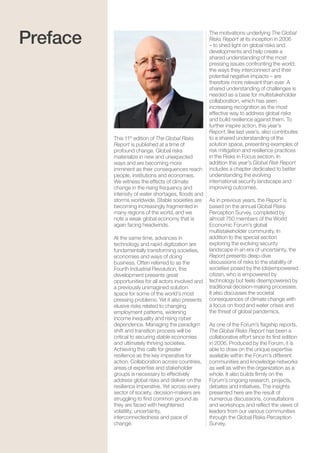
This 11th
edition of The Global Risks
Report is published at a time of
profound change. Global risks
materialize in new and unexpected
ways and are becoming more
imminent as their consequences reach
people, institutions and economies.
We witness the effects of climate
change in the rising frequency and
intensity of water shortages, floods and
storms worldwide. Stable societies are
becoming increasingly fragmented in
many regions of the world, and we
note a weak global economy that is
again facing headwinds.
At the same time, advances in
technology and rapid digitization are
fundamentally transforming societies,
economies and ways of doing
business. Often referred to as the
Fourth Industrial Revolution, this
development presents great
opportunities for all actors involved and
a previously unimagined solution
space for some of the world’s most
pressing problems. Yet it also presents
elusive risks related to changing
employment patterns, widening
income inequality and rising cyber
dependence. Managing the paradigm
shift and transition process will be
critical to securing stable economies
and ultimately thriving societies.
Achieving this calls for greater
resilience as the key imperative for
action. Collaboration across countries,
areas of expertise and stakeholder
groups is necessary to effectively
address global risks and deliver on the
resilience imperative. Yet across every
sector of society, decision-makers are
struggling to find common ground as
they are faced with heightened
volatility, uncertainty,
interconnectedness and pace of
change.
The motivations underlying The Global
Risks Report at its inception in 2006
– to shed light on global risks and
developments and help create a
shared understanding of the most
pressing issues confronting the world,
the ways they interconnect and their
potential negative impacts – are
therefore more relevant than ever. A
shared understanding of challenges is
needed as a base for multistakeholder
collaboration, which has seen
increasing recognition as the most
effective way to address global risks
and build resilience against them. To
further inspire action, this year’s
Report, like last year’s, also contributes
to a shared understanding of the
solution space, presenting examples of
risk mitigation and resilience practices
in the Risks in Focus section. In
addition this year’s Global Risk Report
includes a chapter dedicated to better
understanding the evolving
international security landscape and
improving outcomes.
As in previous years, the Report is
based on the annual Global Risks
Perception Survey, completed by
almost 750 members of the World
Economic Forum’s global
multistakeholder community. In
addition to the special section
exploring the evolving security
landscape in an era of uncertainty, the
Report presents deep-dive
discussions of risks to the stability of
societies posed by the (dis)empowered
citizen, who is empowered by
technology but feels disempowered by
traditional decision-making processes.
It also discusses the societal
consequences of climate change with
a focus on food and water crises and
the threat of global pandemics.
As one of the Forum’s flagship reports,
The Global Risks Report has been a
collaborative effort since its first edition
in 2006. Produced by the Forum, it is
able to draw on the unique expertise
available within the Forum’s different
communities and knowledge networks
as well as within the organization as a
whole. It also builds firmly on the
Forum’s ongoing research, projects,
debates and initiatives. The insights
presented here are the result of
numerous discussions, consultations
and workshops and reflect the views of
leaders from our various communities
through the Global Risks Perception
Survey.
Preface
With this in mind, I would like to thank
our Strategic Partners, Marsh &
McLennan Companies and the Zurich
Insurance Group, represented on the
Steering Board by John Drzik,
President, Global Risk and Specialties,
Marsh & McLennan; and Cecilia Reyes,
Group Chief Risk Officer, Zurich
Insurance Group. Furthermore, I am
grateful to our academic advisers the
National University of Singapore, the
Oxford Martin School at the University
of Oxford and the Wharton Risk
Management and Decision Processes
Center at the University of
Pennsylvania.
The Report has also greatly benefited
from the dedication and valuable
guidance of the members of the Global
Risks 2016 Advisory Board. Members
are Rolf Alter, Organisation for
Economic Co-operation and
Development (OECD); Mario Blejer,
Banco Hipotecario SA; Winnie
Byanyima, Oxfam International;
Marie-Valentine Florin, International
Risk Governance Council (IRGC);
Steven Kou, National University of
Singapore; Julian Laird, Oxford Martin
School; Pascal Lamy, Notre Europe -
Jacques Delors Institute; Ursula von
der Leyen, Federal Minister of Defence
of Germany; Maleeha Lodhi
Ambassador and Permanent
Representative of Pakistan to the
United Nations; Erwann Michel-Kerjan,
The Wharton School, University of
Pennsylvania; Nicolas Mueller, Federal
Chancellery of Switzerland; Moisés
Naím, Carnegie Endowment for
International Peace; Jonathan Ostry,
International Monetary Fund; Manuel
Pulgar-Vidal Otalora, Minister of
Environment of Peru; Nouriel Roubini,
New York University; Anders
Sandberg, University of Oxford;
Richard Smith-Bingham, Marsh &
McLennan Companies; Michelle
Tuveson, Centre for Risk Studies,
University of Cambridge; Steve Wilson,
Zurich Insurance Group; and Sandra
Wu Wen-Hsiu, Japan Asia Group
Limited.
I am grateful to Espen Barth Eide,
Managing Director and Anja
Kaspersen, Head of International
Security as well as Isabel de Sola,
Andrej Kirn and Alex Williams for their
contributions on international security,
and to the International Security
community and ecosystem of the
Klaus Schwab
Founder and Executive Chairman
World Economic Forum
Forum for their invaluable contributions
to the Report.
I would also like to thank Richard
Samans, Managing Director; Jennifer
Blanke, Chief Economist; and
Margareta Drzeniek Hanouz, Head of
Global Competitiveness and Risks for
their leadership on this effort as well as
The Global Risks Report 2016 project
team members Ciara Browne, Attilio Di
Battista, Caroline Galvan, Gaëlle Marti,
and Stephanie Vérin for their
contributions.
Last but not least, this Report would
not have been possible without the
time and commitment of the
respondents who completed the
Global Risks Perception Survey and
the participants in the Changing
International Security Landscapes
project.
5The Global Risks Report 2016
Global Risks 20156
Executive
Summary
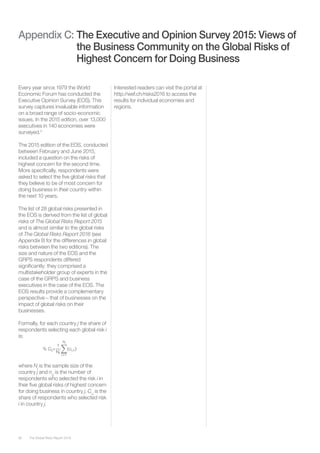
Box 1: Definition of Global
Risks and Trends
A global risk is an uncertain event
or condition that, if it occurs, can
cause significant negative impact
for several countries or industries
within the next 10 years.
A global trend is a long-term
pattern that is currently taking place
and that could contribute to
amplifying global risks and/or
altering the relationship between
them.
Now in its 11th
edition, The Global Risks
Report 2016 draws attention to ways
that global risks could evolve and
interact in the next decade. The year
2016 marks a forceful departure from
past findings, as the risks about which
the Report has been warning over the
past decade are starting to manifest
themselves in new, sometimes
unexpected ways and harm people,
institutions and economies. Warming
climate is likely to raise this year’s
temperature to 1° Celsius above the
pre-industrial era, 60 million people,
equivalent to the world’s 24th
largest
country and largest number in recent
history, are forcibly displaced, and
crimes in cyberspace cost the global
economy an estimated US$445 billion,1
higher than many economies’ national
incomes. In this context, the Report
calls for action to build resilience – the
“resilience imperative” – and identifies
practical examples of how it could be
done.
The Report also steps back and
explores how emerging global risks
and major trends (see Box 1), such as
climate change, the rise of cyber
dependence and income and wealth
disparity are impacting already-strained
societies by highlighting three clusters
of risks as Risks in Focus. As resilience
building is helped by the ability to
analyse global risks from the
perspective of specific stakeholders,
the Report also analyses the
significance of global risks to the
business community at a regional and
country-level.
The Global Risks
Perception Survey
Almost 750 experts and decision-
makers in the World Economic Forum’s
multistakeholder communities
responded to this year’s Global Risks
Perception Survey. Respondents are
drawn from business, academia, civil
society and the public sector and span
different areas of expertise,
geographies and age groups.
The survey asked respondents to
consider 29 global risks – categorized
as societal, technological, economic,
environmental or geopolitical – over a
10-year time horizon, and rate each
according to their perceived likelihood
of it occurring and impact if it does.
After its presence in the top five most
impactful risks for the past three years,
the failure of climate change
mitigation and adaptation has risen
to the top and is perceived in 2016 as
the most impactful risk for the years to
come, ahead of weapons of mass
destruction, ranking 2nd
, and water
crises, ranking 3rd
. Large-scale
involuntary migration was also rated
among the top five for impact, as was
severe energy price shock (increase
or decrease).
The risk rated most likely was large-
scale involuntary migration, with last
year’s top scorer – interstate conflict
with regional consequences – giving
way to the environmental risks of
extreme weather events and the
failure of climate change mitigation
and adaptation and followed by major
natural catastrophes.
Geopolitical concerns remain
prominent in the minds of respondents
to the Global Risks Perception Survey
for the second year in a row. The
Report therefore delves into the
international security landscape and
explores what drives this evolution and,
in particular, how it could be affected
by the Fourth Industrial Revolution and
climate change. The three scenarios
for possible futures developed in this
context inform new ways of building
resilience to security threats through
public-private collaboration.
7The Global Risks Report 2016
Global risks that remain serious
because of their combined impact and
likelihood involve some economic risks,
including fiscal crises in key
economies and high structural
unemployment and
underemployment. These are
complemented by cyberattacks and
profound social instability. Their
assessment reflects the potentially
profound impact of the Fourth Industrial
Revolution on the economy and society
and emphasizes the need for
safeguarding future benefits.
Respondents were also asked which
risks were related and could give rise to
cascading risks. Three emerged
strongly: the potential for climate
change to exacerbate water crises,
with impacts including conflicts and
more forced migration, calling for
improved water governance to adapt to
climate change and accommodate a
growing population and economic
development; the need to address the
global refugee crisis, adding
emphasis to policies that can build
resilience in addition to responding to
the immediate crisis; and the risks of
failing to fully understand the risks
around the Fourth Industrial Revolution
and how this transition will impact
countries, economies and people at a
time of persistently sluggish growth.
Risks in Focus
Key to building resilience is the stability
of societies. The first Risk in Focus
therefore looks at the complex
dynamics of societies in the age of
digitization and discusses the
phenomenon of the (dis)empowered
citizen, which is a result of the interplay
of varying dynamics: as technology
empowers citizens to find information,
connect with others and organize,
those citizens feel disenfranchised by
distant elites. It explores the risk of
social instability if both governments
and business embark on either
repressive actions or non-action out of
uncertainty about how to deal with a
more informed, connected and
demanding citizenry, which could lead
to an escalating downward spiral of
broken trust and harsher response on
either side. The chapter also, however,
explores the benefits governments and
business stand to gain by proactively
looking for ways to engage with
concerned citizens.
Food security risk in the context of
climate change is the second Risk in
Focus. Building upon the climate-water
nexus discussed in Part 1, the chapter
looks at how changing climate and
weather patterns could jeopardize food
security and agricultural production
across geographies. The most climate-
vulnerable countries often heavily
depend on agricultural productivity to
sustain economic growth and
development. But the recent years
have also shown the climate
vulnerability of G-20 countries such as
India, Russia and the United States
– the breadbasket of the world – and
other large industrial producers of
agricultural commodities. The chapter
discusses how climate change–resilient
crops and supply chain networks, as
well as financing and insurance
schemes, can help mitigate the social,
economic and environmental aspects
of food security risks related to climate
change.
Drawing lessons from the Ebola crisis,
the third Risk in Focus discusses
global disease outbreaks. It warns
that population growth, rapid
urbanization and increasing
transnational flows of commodities,
people and animals intensify the risk of
infectious transmission across
geographies while equally diminishing
the ability to respond – all at a time of
growing resistance of microorganisms
to today’s most effective medicines.
Preparedness and response measures
range from the behavioural, such as
fact-based communication and
education campaigns, to the need to
invest in diagnostic, drug and vaccine
R&D and in its enabling environment,
especially advancing a regulatory
framework. It raises the imperative for
public-private sector collaboration
across areas such as data availability
and analysis, a joint research agenda,
regulatory frameworks, long-term
financing and ways to promote
responsible media engagement as part
of effective crisis management
communication.
For each Risk in Focus, examples are
given of three practical mechanisms
that can build resilience against the
identified threats.
Risks to Doing Business
Private sector respondents to the World
Economic Forum’s Executive Opinion
Survey were asked to identify their risks
of highest concern for doing business in
the next 10 years. The responses, from
140 economies, reveal patterns of
concern at country and regional levels
that can usefully inform initiatives to
engage the private sector in building
resilience to global risks.
On a global scale, two economic risks
– unemployment and
underemployment and energy price
shocks – are mentioned as the top risks
of highest concern for doing business in
half of the 140 economies. These are
followed by the failure of national
governance, fiscal crises, asset bubbles
and cyberattacks.
Economic risks predominate in
responses from Europe, including fiscal
crises, unemployment, asset bubbles
and energy prices – the latter also being
the top concern in Canada – while
executives in the United States are most
concerned about cyber-related risks and
attacks. Respondents from Central Asia
and Russia worry about fiscal crises and
unemployment, along with the risks of
unmanageable inflation and interstate
conflict. Environmental risks worry
business leaders in East Asia and the
Pacific, alongside energy prices, asset
bubbles, and cyber attacks.
In South Asia concerns also include
energy prices, together with fiscal crises,
unemployment and failure of national
governance – which is the top concern in
Latin America and the Caribbean
– followed by energy prices shock and
unemployment. Executives in the Middle
East and North Africa likewise worry
about energy prices, together with
unemployment, terrorist attacks and
interstate conflict. In Sub-Saharan
Africa, the business community’s top
concerns include unemployment, energy
prices, the failure of national governance
and the failure of critical infrastructure.
The Global Risks Report 20168
Over the past decade, The Global
Risks Report has expanded its scope
from analysing the interconnected
and rapidly evolving nature of global
risks to also putting forward actionable
solutions and calling for public-
private collaboration in strengthening
resilience. Now in its 11th
edition, the
Report describes a world in which
risks are becoming more imminent and
have wide-ranging impact: tensions
between countries affect businesses;
unresolved, protracted crises have
resulted in the largest number of
refugees globally since World War II;
terrorist attacks take an increasing toll
on human lives and stifle economies;
droughts occur in California and floods
in South Asia; and rapid advances in
technologies are coupled with ever-
growing cyber fragilities and persistent
unemployment and underemployment.
Implications of sweeping digitization
(also termed the “Fourth Industrial
Revolution”), ranging from
transformations that are the result of
rising cyber connectivity to the potential
effects of innovations on socio-
economic equality and global security,
remain far from fully understood. At
the same time, climate change is
unequivocally happening, and there is
no turning back time.
The increasing volatility, complexity
and ambiguity of the world not only
heightens uncertainty around the
“which”, “when”, “where” and “who”
of addressing global risks, but also
clouds the solutions space. We need
clear thinking about new levers that will
enable a wide range of stakeholders
to jointly address global risks, which
cannot be dealt with in a centralized
way.
Taken together, this calls for a resilience
imperative – an urgent necessity to find
new avenues and more opportunities
to mitigate, adapt to and build resilience
against global risks and threats
through collaboration among different
stakeholders.
By putting the resilience imperative at
its core, this year’s Global Risks Report
combines four parts to present an
analysis of different aspects of global
risks – across both global risks and
stakeholders – focused as much on the
search for solutions as on the analysis
of the risks themselves.
Introduction
9The Global Risks Report 2016
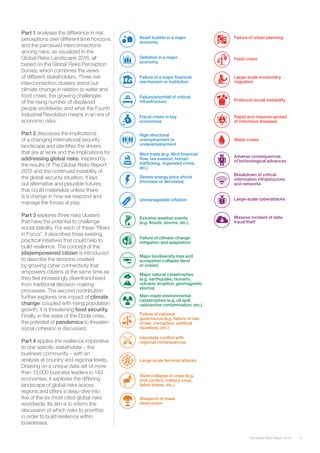
Part 1 analyses the difference in risk
perceptions over different time horizons
and the perceived interconnections
among risks, as visualized in the
Global Risks Landscape 2016, all
based on the Global Risks Perception
Survey, which combines the views
of different stakeholders. Three risk
interconnection clusters stand out:
climate change in relation to water and
food crises; the growing challenges
of the rising number of displaced
people worldwide; and what the Fourth
Industrial Revolution means in an era of
economic risks.
Part 2 discusses the implications
of a changing international security
landscape and identifies the drivers
that are at work and the implications for
addressing global risks. Inspired by
the results of The Global Risks Report
2015 and the continued instability of
the global security situation, it lays
out alternative and plausible futures
that could materialize unless there
is a change in how we respond and
manage the forces at play.
Part 3 explores three risks clusters
that have the potential to challenge
social stability. For each of these “Risks
in Focus”, it describes three existing,
practical initiatives that could help to
build resilience. The concept of the
(dis)empowered citizen is introduced
to describe the tensions created
by growing cyber connectivity that
empowers citizens at the same time as
they feel increasingly disenfranchised
from traditional decision-making
processes. The second contribution
further explores one impact of climate
change: coupled with rising population
growth, it is threatening food security.
Finally, in the wake of the Ebola crisis,
the potential of pandemics to threaten
social cohesion is discussed.
Part 4 applies the resilience imperative
to one specific stakeholder – the
business community – with an
analysis at country and regional levels.
Drawing on a unique data set of more
than 13,000 business leaders in 140
economies, it explores the differing
landscape of global risks across
regions and offers a deep-dive into
five of the six most cited global risks
worldwide. Its aim is to inform the
discussion of which risks to prioritize
in order to build resilience within
businesses.
World Economic Forum Global Risk Report Graphics
1.1
Risk: Asset bubble in a major
economy
Unsustainably overpriced assets such as
commodities, housing, shares, etc. in a
major economy or region.
IDEA
• House icons, which could also be interpreted as an
upwards arrow. The house represents the asset,
whilst the arrow signifies the inflated price
1.2
Risk: Deflation in a major
economy
Prolonged ultra-low inflation or deflation
in a major economy or region.
IDEA
• Graph displaying a decrease, to signify deflation
1.3.
Risk: Failure of a major financial
mechanism or institution
Collapse of a financial institution and/
or malfunctioning of a financial system
impacts the global economy.
IDEA
• Bank icon with broken pillars, to suggest collapse
of financial institution
1.4.
Risk: Failure/shortfall of critical
infrastructure
Failure to adequately invest in, upgrade
and secure infrastructure networks
(e.g. energy, transportation and
communications) leads to pressure or a
breakdown with system-wide implications.
IDEA
• Broken train track to suggest breakdown
of transportation networks
1.Economic
World Economic Forum Global Risk Report Graphics
3.3.
Risk: Large-scale terrorist attacks
Individuals or non-state groups with
political or religious goals successfully
inflict large-scale human or material
damage.
IDEA
• Building in target sight
3.4.
Risk: State collapse or crisis (e.g.
civil conflict, military coup, failed
states, etc.)
State collapse of geopolitical importance
due to internal violence, regional or global
instability, military coup, civil conflict, failed
states, etc.
IDEA
• Burning flag
3.5.
Risk: Weapons of mass
destruction
Nuclear, chemical, biological and
radiological technologies and materials
are deployed creating international crises
and potential for significant destruction.
IDEA
• Mushroom cloud, to represent nuclear/chemical
weapons
4.1.
Risk: Failure of urban planning
Poorly planned cities, urban sprawl and
associated infrastructure create social,
environmental and health challenges.
IDEA
• Collection of urban buildings to represent an
urban area
3. GeoPolitical 4. Societal
World Economic Forum Global Risk Report Graphics
1.9.
Risk: Unmanageable inflation
Unmanageable increase in the general
price level of goods and services in
key economies.
IDEA
• Price tag featuring multiple dollar symbols to
represent high prices
2.1.
Risk: Extreme weather events
(e.g. floods, storms, etc.)
Major property, infrastructure and
environmental damage as well as human
loss caused by extreme weather events.
IDEA
• Tornado
2.2.
Risk: Failure of climate-change
mitigation and adaptation
Governments and businesses fail to
to mitigate climate change, protect
populations and help businesses
impacted by climate change to adapt.
IDEA
• Globe with thermometer, representing the
world climate
2.3.
Risk: Major biodiversity loss
and ecosystem collapse (land
or ocean)
Irreversible consequences for the
environment, resulting in severely
depleted resources for humankind as
well as industries.
IDEA
• Upside-down fish with crosses for eyes,
representing environmental consequences
1.Economic 2. Environmental
World Economic Forum Global Risk Report Graphics
4.6.
Risk: Water crises
A significant decline in the available
quality and quantity of fresh water
health and/or economic activity.
IDEA
• Water droplet
5.1.
Risk: Adverse consequences
of technological advances
Intended or unintended adverse
consequences of technological
advances such as artificial intelligence,
geo-engineering and synthetic biology
causing human, environmental and
economic damage.
IDEA
• Android-style robot to represent technology,
and artificial intelligence
5.2.
Risk: Breakdown of critical
information infrastructure
and networks
Cyber dependency increases vulnerability
to outage of critical information
infrastructure (e.g. internet, satellites,
etc.) and networks causing widespread
disruption.
IDEA
• Wi-fi symbol to represent the internet
and networks
5.3.
Risk: Large-scale cyberattacks
Large-scale cyberattacks or malware
causing large economic damages,
geopolitical tensions or widespread loss
of trust in the Internet.
IDEA
• Bug, to represent a cyber-bug
4. Societal 5. Technological
World Economic Forum Global Risk Report Graphics
1.5.
Risk: Fiscal crises in key
economies
Excessive debt burdens generate
sovereign debt crises and/or
liquidity crises.
IDEA
• Bag of money with hole, money falling out
1.6.
Risk: High structural
unemployment or
underemployment
A sustained high level of unemployment
or underutilization of the productive
capacity of the employed population
prevents the economy from attaining high
levels of employment.
IDEA
• Figures (people), with a downwards arrow
between them to signify underutilization
of people
1.7.
Risk: Illicit trade (e.g. illicit
financial flow, tax evasion, human
Large-scale activities outside the legal
framework such as illicit financial flow, tax
and organized crime undermine social
interactions, regional or international
collaboration and global growth.
IDEA
• Prisoner icon, to represent illicit behaviour
1.8.
Risk: Severe energy price shock
(increase or decrease)
Energy price increases or decreases
significantly and places further economic
pressures on highly energy-dependent
industries and consumers.
IDEA
• Lightning bolt, to signify energy and shock
1.Economic
World Economic Forum Global Risk Report Graphics
4.2.
Risk: Food crises
Access to appropriate quantities and
quality of food and nutrition becomes
a major scale.
IDEA
• Wilted crop, to represent food crises
4.3.
Risk: Large-scale involuntary
migration
Large-scale involuntary migration induced
by conflict, disasters, environmental or
economic reasons.
IDEA
• Passport/passport control icon to represent
migration and the crossing of borders
4.4.
Risk: Profound social instability
Major social movements or protests (e.g.
street riots, social unrest, etc.) disrupt
political or social stability, negatively
impacting populations and economic
activity.
IDEA
• Police figures with shields, to indicate dispute,
riots and social unrest
4.5.
Risk: Rapid and massive spread
of infectious diseases
Bacteria, viruses, parasites or fungi
cause uncontrolled spread of infectious
diseases (for instance due to resistance t
antibiotics, antivirals and other treatme
leading to widespread fatalities and
economic disruption.
IDEA
• Virus
4. Societal
World Economic Forum Global Risk Report Graphics
2.4.
Risk: Major natural catastrophes
(e.g. earthquake, tsunami,
volcanic eruption, geomagnetic
storms)
Major property, infrastructure and
environmental damage as well as
human loss caused by geophysical
disasters such as earthquakes,
volcanic activity, landslides, tsunamis
or geomagnetic storms.
IDEA
• Erupting volcano
2.5.
Risk: Man-made environmental
catastrophes (e.g. oil spill,
radioactive contamination, etc.)
Failure to prevent major man-made
catastrophes, causing harm to lives,
human health, infrastructure, property,
economic activity and the environment.
IDEA
• Radioactivity symbol
3.1.
Risk: Failure of national
governance (e.g. failure of rule
of law, corruption, political
deadlock, etc.)
Inability to govern a nation of geopolitical
importance due to weak rule of law,
corruption or political deadlock.
IDEA
• Broken scale, to signify the failure of the
rule of law
3.2.
Risk: Interstate conflict with
regional consequences
A bilateral or multilateral dispute between
states escalates into economic (e.g. trade/
currency wars, resource nationalization),
military, cyber, societal or other conflict.
IDEA
• Crossed swords to represent conflict
2. Environmental 3. GeoPolitical
World Economic Forum Global Risk Report Graphics
5.4.
Risk: Massive incident of data
fraud/theft
Wrongful exploitation of private or
unprecedented scale.
IDEA
• Cloud with a padlock in the middle, to represent
data and privacy/security
5. Technological
World Economic Forum Global Risk Report Graphics
1.1
Risk: Asset bubble in a major
economy
Unsustainably overpriced assets such as
commodities, housing, shares, etc. in a
major economy or region.
IDEA
• House icons, which could also be interpreted as an
upwards arrow. The house represents the asset,
whilst the arrow signifies the inflated price
1.2
Risk: Deflation in a major
economy
Prolonged ultra-low inflation or deflation
in a major economy or region.
IDEA
• Graph displaying a decrease, to signify deflation
1.3.
Risk: Failure of a major financial
mechanism or institution
Collapse of a financial institution and/
or malfunctioning of a financial system
impacts the global economy.
IDEA
• Bank icon with broken pillars, to suggest collapse
of financial institution
1.4.
Risk: Failure/shortfall of critical
infrastructure
Failure to adequately invest in, upgrade
and secure infrastructure networks
(e.g. energy, transportation and
communications) leads to pressure or a
breakdown with system-wide implications.
IDEA
• Broken train track to suggest breakdown
of transportation networks
1.Economic
World Economic Forum Global Risk Report Graphics
3.3.
Risk: Large-scale terrorist attacks
Individuals or non-state groups with
political or religious goals successfully
inflict large-scale human or material
damage.
IDEA
• Building in target sight
3.4.
Risk: State collapse or crisis (e.g.
civil conflict, military coup, failed
states, etc.)
State collapse of geopolitical importance
due to internal violence, regional or global
instability, military coup, civil conflict, failed
states, etc.
IDEA
• Burning flag
3.5.
Risk: Weapons of mass
destruction
Nuclear, chemical, biological and
radiological technologies and materials
are deployed creating international crises
and potential for significant destruction.
IDEA
• Mushroom cloud, to represent nuclear/chemical
weapons
4.1.
Risk: Failure of urban planning
Poorly planned cities, urban sprawl and
associated infrastructure create social,
environmental and health challenges.
IDEA
• Collection of urban buildings to represent an
urban area
3. GeoPolitical 4. Societal
World Economic Forum Global Risk Report Graphics
1.9.
Risk: Unmanageable inflation
Unmanageable increase in the general
price level of goods and services in
key economies.
IDEA
• Price tag featuring multiple dollar symbols to
represent high prices
2.1.
Risk: Extreme weather events
(e.g. floods, storms, etc.)
Major property, infrastructure and
environmental damage as well as human
loss caused by extreme weather events.
IDEA
• Tornado
2.2.
Risk: Failure of climate-change
mitigation and adaptation
Governments and businesses fail to
to mitigate climate change, protect
populations and help businesses
impacted by climate change to adapt.
IDEA
• Globe with thermometer, representing the
world climate
2.3.
Risk: Major biodiversity loss
and ecosystem collapse (land
or ocean)
Irreversible consequences for the
environment, resulting in severely
depleted resources for humankind as
well as industries.
IDEA
• Upside-down fish with crosses for eyes,
representing environmental consequences
1.Economic 2. Environmental
World Economic Forum Global Risk Report Graphics
4.6.
Risk: Water crises
A significant decline in the available
quality and quantity of fresh water
health and/or economic activity.
IDEA
• Water droplet
5.1.
Risk: Adverse consequences
of technological advances
Intended or unintended adverse
consequences of technological
advances such as artificial intelligence,
geo-engineering and synthetic biology
causing human, environmental and
economic damage.
IDEA
• Android-style robot to represent technology,
and artificial intelligence
5.2.
Risk: Breakdown of critical
information infrastructure
and networks
Cyber dependency increases vulnerability
to outage of critical information
infrastructure (e.g. internet, satellites,
etc.) and networks causing widespread
disruption.
IDEA
• Wi-fi symbol to represent the internet
and networks
5.3.
Risk: Large-scale cyberattacks
Large-scale cyberattacks or malware
causing large economic damages,
geopolitical tensions or widespread loss
of trust in the Internet.
IDEA
• Bug, to represent a cyber-bug
4. Societal 5. Technological
World Economic Forum Global Risk Report Graphics
1.5.
Risk: Fiscal crises in key
economies
Excessive debt burdens generate
sovereign debt crises and/or
liquidity crises.
IDEA
• Bag of money with hole, money falling out
1.6.
Risk: High structural
unemployment or
underemployment
A sustained high level of unemployment
or underutilization of the productive
capacity of the employed population
prevents the economy from attaining high
levels of employment.
IDEA
• Figures (people), with a downwards arrow
between them to signify underutilization
of people
1.7.
Risk: Illicit trade (e.g. illicit
financial flow, tax evasion, human
Large-scale activities outside the legal
framework such as illicit financial flow, tax
and organized crime undermine social
interactions, regional or international
collaboration and global growth.
IDEA
• Prisoner icon, to represent illicit behaviour
1.8.
Risk: Severe energy price shock
(increase or decrease)
Energy price increases or decreases
significantly and places further economic
pressures on highly energy-dependent
industries and consumers.
IDEA
• Lightning bolt, to signify energy and shock
1.Economic
World Economic Forum Global Risk Report Graphics
4.2.
Risk: Food crises
Access to appropriate quantities and
quality of food and nutrition becomes
a major scale.
IDEA
• Wilted crop, to represent food crises
4.3.
Risk: Large-scale involuntary
migration
Large-scale involuntary migration induced
by conflict, disasters, environmental or
economic reasons.
IDEA
• Passport/passport control icon to represent
migration and the crossing of borders
4.4.
Risk: Profound social instability
Major social movements or protests (e.g.
street riots, social unrest, etc.) disrupt
political or social stability, negatively
impacting populations and economic
activity.
IDEA
• Police figures with shields, to indicate dispute,
riots and social unrest
4.5.
Risk: Rapid and massive spread
of infectious diseases
Bacteria, viruses, parasites or fungi
cause uncontrolled spread of infectious
diseases (for instance due to resistance to
antibiotics, antivirals and other treatments)
leading to widespread fatalities and
economic disruption.
IDEA
• Virus
4. Societal
World Economic Forum Global Risk Report Graphics
2.4.
Risk: Major natural catastrophes
(e.g. earthquake, tsunami,
volcanic eruption, geomagnetic
storms)
Major property, infrastructure and
environmental damage as well as
human loss caused by geophysical
disasters such as earthquakes,
volcanic activity, landslides, tsunamis
or geomagnetic storms.
IDEA
• Erupting volcano
2.5.
Risk: Man-made environmental
catastrophes (e.g. oil spill,
radioactive contamination, etc.)
Failure to prevent major man-made
catastrophes, causing harm to lives,
human health, infrastructure, property,
economic activity and the environment.
IDEA
• Radioactivity symbol
3.1.
Risk: Failure of national
governance (e.g. failure of rule
of law, corruption, political
deadlock, etc.)
Inability to govern a nation of geopolitical
importance due to weak rule of law,
corruption or political deadlock.
IDEA
• Broken scale, to signify the failure of the
rule of law
3.2.
Risk: Interstate conflict with
regional consequences
A bilateral or multilateral dispute between
states escalates into economic (e.g. trade/
currency wars, resource nationalization),
military, cyber, societal or other conflict.
IDEA
• Crossed swords to represent conflict
2. Environmental 3. GeoPolitical
World Economic Forum Global Risk Report Graphics
1.1
Risk: Asset bubble in a major
economy
Unsustainably overpriced assets such as
commodities, housing, shares, etc. in a
major economy or region.
IDEA
• House icons, which could also be interpreted as an
upwards arrow. The house represents the asset,
whilst the arrow signifies the inflated price
1.2
Risk: Deflation in a major
economy
Prolonged ultra-low inflation or deflation
in a major economy or region.
IDEA
• Graph displaying a decrease, to signify deflation
1.3.
Risk: Failure of a major financial
mechanism or institution
Collapse of a financial institution and/
or malfunctioning of a financial system
impacts the global economy.
IDEA
• Bank icon with broken pillars, to suggest collapse
of financial institution
1.4.
Risk: Failure/shortfall of critical
infrastructure
Failure to adequately invest in, upgrade
and secure infrastructure networks
(e.g. energy, transportation and
communications) leads to pressure or a
breakdown with system-wide implications.
IDEA
• Broken train track to suggest breakdown
of transportation networks
1.Economic
World Economic Forum Global Risk Report Graphics
3.3.
Risk: Large-scale terrorist attacks
Individuals or non-state groups with
political or religious goals successfully
inflict large-scale human or material
damage.
IDEA
• Building in target sight
3.4.
Risk: State collapse or crisis (e.g.
civil conflict, military coup, failed
states, etc.)
State collapse of geopolitical importance
due to internal violence, regional or global
instability, military coup, civil conflict, failed
states, etc.
IDEA
• Burning flag
3.5.
Risk: Weapons of mass
destruction
Nuclear, chemical, biological and
radiological technologies and materials
are deployed creating international crises
and potential for significant destruction.
IDEA
• Mushroom cloud, to represent nuclear/chemical
weapons
4.1.
Risk: Failure of urban planning
Poorly planned cities, urban sprawl and
associated infrastructure create social,
environmental and health challenges.
IDEA
• Collection of urban buildings to represent an
urban area
3. GeoPolitical 4. Societal
World Economic Forum Global Risk Report Graphics
1.9.
Risk: Unmanageable inflation
Unmanageable increase in the general
price level of goods and services in
key economies.
IDEA
• Price tag featuring multiple dollar symbols to
represent high prices
2.1.
Risk: Extreme weather events
(e.g. floods, storms, etc.)
Major property, infrastructure and
environmental damage as well as human
loss caused by extreme weather events.
IDEA
• Tornado
2.2.
Risk: Failure of climate-change
mitigation and adaptation
Governments and businesses fail to
to mitigate climate change, protect
populations and help businesses
impacted by climate change to adapt.
IDEA
• Globe with thermometer, representing the
world climate
2.3.
Risk: Major biodiversity loss
and ecosystem collapse (land
or ocean)
Irreversible consequences for the
environment, resulting in severely
depleted resources for humankind as
well as industries.
IDEA
• Upside-down fish with crosses for eyes,
representing environmental consequences
1.Economic 2. Environmental
World Economic Forum Global Risk Report Graphics
4.6.
Risk: Water crises
A significant decline in the available
quality and quantity of fresh water
health and/or economic activity.
IDEA
• Water droplet
5.1.
Risk: Adverse consequences
of technological advances
Intended or unintended adverse
consequences of technological
advances such as artificial intelligence,
geo-engineering and synthetic biology
causing human, environmental and
economic damage.
IDEA
• Android-style robot to represent technology,
and artificial intelligence
5.2.
Risk: Breakdown of critical
information infrastructure
and networks
Cyber dependency increases vulnerability
to outage of critical information
infrastructure (e.g. internet, satellites,
etc.) and networks causing widespread
disruption.
IDEA
• Wi-fi symbol to represent the internet
and networks
5.3.
Risk: Large-scale cyberattacks
Large-scale cyberattacks or malware
causing large economic damages,
geopolitical tensions or widespread loss
of trust in the Internet.
IDEA
• Bug, to represent a cyber-bug
4. Societal 5. Technological
World Economic Forum Global Risk Report Graphics
1.5.
Risk: Fiscal crises in key
economies
Excessive debt burdens generate
sovereign debt crises and/or
liquidity crises.
IDEA
• Bag of money with hole, money falling out
1.6.
Risk: High structural
unemployment or
underemployment
A sustained high level of unemployment
or underutilization of the productive
capacity of the employed population
prevents the economy from attaining high
levels of employment.
IDEA
• Figures (people), with a downwards arrow
between them to signify underutilization
of people
1.7.
Risk: Illicit trade (e.g. illicit
financial flow, tax evasion, human
Large-scale activities outside the legal
framework such as illicit financial flow, tax
and organized crime undermine social
interactions, regional or international
collaboration and global growth.
IDEA
• Prisoner icon, to represent illicit behaviour
1.8.
Risk: Severe energy price shock
(increase or decrease)
Energy price increases or decreases
significantly and places further economic
pressures on highly energy-dependent
industries and consumers.
IDEA
• Lightning bolt, to signify energy and shock
1.Economic
World Economic Forum Global Risk Report Graphics
4.2.
Risk: Food crises
Access to appropriate quantities and
quality of food and nutrition becomes
a major scale.
IDEA
• Wilted crop, to represent food crises
4.3.
Risk: Large-scale involuntary
migration
Large-scale involuntary migration induced
by conflict, disasters, environmental or
economic reasons.
IDEA
• Passport/passport control icon to represent
migration and the crossing of borders
4.4.
Risk: Profound social instability
Major social movements or protests (e.g.
street riots, social unrest, etc.) disrupt
political or social stability, negatively
impacting populations and economic
activity.
IDEA
• Police figures with shields, to indicate dispute,
riots and social unrest
4.5.
Risk: Rapid and massive spread
of infectious diseases
Bacteria, viruses, parasites or fungi
cause uncontrolled spread of infectious
diseases (for instance due to resistance to
antibiotics, antivirals and other treatments)
leading to widespread fatalities and
economic disruption.
IDEA
• Virus
4. Societal
World Economic Forum Global Risk Report Graphics
2.4.
Risk: Major natural catastrophes
(e.g. earthquake, tsunami,
volcanic eruption, geomagnetic
storms)
Major property, infrastructure and
environmental damage as well as
human loss caused by geophysical
disasters such as earthquakes,
volcanic activity, landslides, tsunamis
or geomagnetic storms.
IDEA
• Erupting volcano
2.5.
Risk: Man-made environmental
catastrophes (e.g. oil spill,
radioactive contamination, etc.)
Failure to prevent major man-made
catastrophes, causing harm to lives,
human health, infrastructure, property,
economic activity and the environment.
IDEA
• Radioactivity symbol
3.1.
Risk: Failure of national
governance (e.g. failure of rule
of law, corruption, political
deadlock, etc.)
Inability to govern a nation of geopolitical
importance due to weak rule of law,
corruption or political deadlock.
IDEA
• Broken scale, to signify the failure of the
rule of law
3.2.
Risk: Interstate conflict with
regional consequences
A bilateral or multilateral dispute between
states escalates into economic (e.g. trade/
currency wars, resource nationalization),
military, cyber, societal or other conflict.
IDEA
• Crossed swords to represent conflict
2. Environmental 3. GeoPolitical
World Economic Forum Global Risk Report Graphics
1.1
Risk: Asset bubble in a major
economy
Unsustainably overpriced assets such as
commodities, housing, shares, etc. in a
major economy or region.
IDEA
• House icons, which could also be interpreted as an
upwards arrow. The house represents the asset,
whilst the arrow signifies the inflated price
1.2
Risk: Deflation in a major
economy
Prolonged ultra-low inflation or deflation
in a major economy or region.
IDEA
• Graph displaying a decrease, to signify deflation
1.3.
Risk: Failure of a major financial
mechanism or institution
Collapse of a financial institution and/
or malfunctioning of a financial system
impacts the global economy.
IDEA
• Bank icon with broken pillars, to suggest collapse
of financial institution
1.4.
Risk: Failure/shortfall of critical
infrastructure
Failure to adequately invest in, upgrade
and secure infrastructure networks
(e.g. energy, transportation and
communications) leads to pressure or a
breakdown with system-wide implications.
IDEA
• Broken train track to suggest breakdown
of transportation networks
1.Economic
World Economic Forum Global Risk Report Graphics
3.3.
Risk: Large-scale terrorist attacks
Individuals or non-state groups with
political or religious goals successfully
inflict large-scale human or material
damage.
IDEA
• Building in target sight
3.4.
Risk: State collapse or crisis (e.g.
civil conflict, military coup, failed
states, etc.)
State collapse of geopolitical importance
due to internal violence, regional or global
instability, military coup, civil conflict, failed
states, etc.
IDEA
• Burning flag
3.5.
Risk: Weapons of mass
destruction
Nuclear, chemical, biological and
radiological technologies and materials
are deployed creating international crises
and potential for significant destruction.
IDEA
• Mushroom cloud, to represent nuclear/chemical
weapons
4.1.
Risk: Failure of urban planning
Poorly planned cities, urban sprawl and
associated infrastructure create social,
environmental and health challenges.
IDEA
• Collection of urban buildings to represent an
urban area
3. GeoPolitical 4. Societal
World Economic Forum Global Risk Report Graphics
1.9.
Risk: Unmanageable inflation
Unmanageable increase in the general
price level of goods and services in
key economies.
IDEA
• Price tag featuring multiple dollar symbols to
represent high prices
2.1.
Risk: Extreme weather events
(e.g. floods, storms, etc.)
Major property, infrastructure and
environmental damage as well as human
loss caused by extreme weather events.
IDEA
• Tornado
2.2.
Risk: Failure of climate-change
mitigation and adaptation
Governments and businesses fail to
to mitigate climate change, protect
populations and help businesses
impacted by climate change to adapt.
IDEA
• Globe with thermometer, representing the
world climate
2.3.
Risk: Major biodiversity loss
and ecosystem collapse (land
or ocean)
Irreversible consequences for the
environment, resulting in severely
depleted resources for humankind as
well as industries.
IDEA
• Upside-down fish with crosses for eyes,
representing environmental consequences
1.Economic 2. Environmental
World Economic Forum Global Risk Report Graphics
4.6.
Risk: Water crises
A significant decline in the available
quality and quantity of fresh water
health and/or economic activity.
IDEA
• Water droplet
5.1.
Risk: Adverse consequences
of technological advances
Intended or unintended adverse
consequences of technological
advances such as artificial intelligence,
geo-engineering and synthetic biology
causing human, environmental and
economic damage.
IDEA
• Android-style robot to represent technology,
and artificial intelligence
5.2.
Risk: Breakdown of critical
information infrastructure
and networks
Cyber dependency increases vulnerability
to outage of critical information
infrastructure (e.g. internet, satellites,
etc.) and networks causing widespread
disruption.
IDEA
• Wi-fi symbol to represent the internet
and networks
5.3.
Risk: Large-scale cyberattacks
Large-scale cyberattacks or malware
causing large economic damages,
geopolitical tensions or widespread loss
of trust in the Internet.
IDEA
• Bug, to represent a cyber-bug
4. Societal 5. Technological
World Economic Forum Global Risk Report Graphics
1.5.
Risk: Fiscal crises in key
economies
Excessive debt burdens generate
sovereign debt crises and/or
liquidity crises.
IDEA
• Bag of money with hole, money falling out
1.6.
Risk: High structural
unemployment or
underemployment
A sustained high level of unemployment
or underutilization of the productive
capacity of the employed population
prevents the economy from attaining high
levels of employment.
IDEA
• Figures (people), with a downwards arrow
between them to signify underutilization
of people
1.7.
Risk: Illicit trade (e.g. illicit
financial flow, tax evasion, human
Large-scale activities outside the legal
framework such as illicit financial flow, tax
and organized crime undermine social
interactions, regional or international
collaboration and global growth.
IDEA
• Prisoner icon, to represent illicit behaviour
1.8.
Risk: Severe energy price shock
(increase or decrease)
Energy price increases or decreases
significantly and places further economic
pressures on highly energy-dependent
industries and consumers.
IDEA
• Lightning bolt, to signify energy and shock
1.Economic
World Economic Forum Global Risk Report Graphics
4.2.
Risk: Food crises
Access to appropriate quantities and
quality of food and nutrition becomes
a major scale.
IDEA
• Wilted crop, to represent food crises
4.3.
Risk: Large-scale involuntary
migration
Large-scale involuntary migration induced
by conflict, disasters, environmental or
economic reasons.
IDEA
• Passport/passport control icon to represent
migration and the crossing of borders
4.4.
Risk: Profound social instability
Major social movements or protests (e.g.
street riots, social unrest, etc.) disrupt
political or social stability, negatively
impacting populations and economic
activity.
IDEA
• Police figures with shields, to indicate dispute,
riots and social unrest
4.5.
Risk: Rapid and massive spread
of infectious diseases
Bacteria, viruses, parasites or fungi
cause uncontrolled spread of infectious
diseases (for instance due to resistance to
antibiotics, antivirals and other treatments)
leading to widespread fatalities and
economic disruption.
IDEA
• Virus
4. Societal
World Economic Forum Global Risk Report Graphics
2.4.
Risk: Major natural catastrophes
(e.g. earthquake, tsunami,
volcanic eruption, geomagnetic
storms)
Major property, infrastructure and
environmental damage as well as
human loss caused by geophysical
disasters such as earthquakes,
volcanic activity, landslides, tsunamis
or geomagnetic storms.
IDEA
• Erupting volcano
2.5.
Risk: Man-made environmental
catastrophes (e.g. oil spill,
radioactive contamination, etc.)
Failure to prevent major man-made
catastrophes, causing harm to lives,
human health, infrastructure, property,
economic activity and the environment.
IDEA
• Radioactivity symbol
3.1.
Risk: Failure of national
governance (e.g. failure of rule
of law, corruption, political
deadlock, etc.)
Inability to govern a nation of geopolitical
importance due to weak rule of law,
corruption or political deadlock.
IDEA
• Broken scale, to signify the failure of the
rule of law
3.2.
Risk: Interstate conflict with
regional consequences
A bilateral or multilateral dispute between
states escalates into economic (e.g. trade/
currency wars, resource nationalization),
military, cyber, societal or other conflict.
IDEA
• Crossed swords to represent conflict
2. Environmental 3. GeoPolitical
Asset bubble in a major
economy
Deflation in a major
economy
Failure of a major financial
mechanism or institution
Failure/shortfall of critical
infrastructure
Fiscal crises in key
economies
High structural
unemployment or
underemployment
Illicit trade (e.g. illicit financial
flow, tax evasion, human
trafficking, organized crime,
etc.)
Severe energy price shock
(increase or decrease)
Unmanageable inflation
Extreme weather events
(e.g. floods, storms, etc.)
Failure of climate-change
mitigation and adaptation
Major biodiversity loss and
ecosystem collapse (land
or ocean)
Major natural catastrophes
(e.g. earthquake, tsunami,
volcanic eruption, geomagnetic
storms)
Man-made environmental
catastrophes (e.g. oil spill,
radioactive contamination, etc.)
Failure of national
governance (e.g. failure of rule
of law, corruption, political
deadlock, etc.)
Interstate conflict with
regional consequences
Large-scale terrorist attacks
State collapse or crisis (e.g.
civil conflict, military coup,
failed states, etc.)
Weapons of mass
destruction
Failure of urban planning
Food crises
Large-scale involuntary
migration
Profound social instability
Rapid and massive spread
of infectious diseases
Water crises
Adverse consequences
of technological advances
Breakdown of critical
information infrastructure
and networks
Large-scale cyberattacks
Massive incident of data
fraud/theft
The Global Risks Report 201610
Part1Part2Part3Part4
Part 1:
Global Risks 2016
From the refugee crisis to economic
slowdowns in emerging markets,
from ever-rising numbers of terrorist
and cyberattacks to water shortages,
global risks have been in the headlines
in the last year. Yet so have initiatives
to address them, such as the COP21
meeting on reducing greenhouse gas
emissions or European Union (EU)
summits to address the refugee crisis.1
The Global Risks Report exists to raise
awareness about global risks and
their potential interconnections, and
to provide a platform for discussion
and action to mitigate, adapt and
strengthen resilience.
There is remarkable stability in this
year’s Global Risks Landscape (Box
1.1): many risks that are assessed as
above average in terms of likelihood
and impact were similarly assessed last
year. This suggests the emergence of a
new status quo, with geopolitical risks –
such as interstate conflict or terrorist
attacks2
– being at the forefront.
Other risks rated as highly impactful
or likely, such as involuntary migration
and social instability, are partly a result
of spillover effects of insecurity and
conflict. Some geopolitical risks – such
as the failure of national governance,
which is pervasive across Latin
America and Sub-Saharan Africa (see
Figure 3) and considered to be among
the top three most likely risks in the
Middle East and North Africa, East Asia
and the Pacific, and Central Asia – are
considered to be important in some
regions but not globally impactful.
Consistent with the past, weapons
of mass destruction is ranked as the
second least likely risk to occur, but
the second most impactful if it were
to. Part 2 of this Report explores the
international security landscape and
how it could evolve in future.
Also prominent in the Global Risks
Landscape 2016 are environmental
risks such as failure of climate-
change mitigation and adaptation,
which is considered the most
potentially impactful risk and the
third most likely, with water crises,3
biodiversity loss and ecosystem
collapse rising up the list of concerns.
Environmental worries have been at
the forefront in recent years (Figure
1.1.1), reflecting a sense that climate
change–related risks have moved
from hypothetical to certain because
11The Global Risks Report 2016
Part2Part4Part3Part1
Box 1.1: Methodology of The Global Risks Report
This Report defines a “global risk” as an uncertain event or condition that, if it occurs, can cause significant negative impact for
several countries or industries within the next 10 years. Based on this refined definition, this year 29 global risks were identified
and grouped into the five customary categories: economic, environmental, geopolitical, societal and technological. A
description of the risks and the methodology employed can be found in Appendices A and B.
The Report also identifies 13 global trends that can potentially drive global risks. A “trend” is defined as a long-term pattern that
is currently taking place and that could contribute to amplifying global risks and/or altering the relationship between them.
Unlike risks, trends are occurring with certainty and can have both positive and negative consequences. Trends can alter how
risks evolve and interrelate, and they inform efforts at risk mitigation.
Figure 1.1.1: The Evolving Risks Landscape, 2007–2016
Source: World Economic Forum 2007–2016, Global Risks Reports.
Note: Global risks may not be strictly comparable across years, as definitions and the set of global risks have evolved with new issues emerging on the 10-year horizon.
For example, cyberattacks, income disparity and unemployment entered the set of global risks in 2012. Some global risks were reclassified: water crises and rising
income disparity were re-categorized first as societal risks and then as a trend in the 2015 and 2016 Global Risks Reports, respectively. The 2006 edition of the Global
Risks Report did not have a risks landscape.
Breakdown of
critical information
infrastructure
Breakdown of critical information infrastructure
2008 2009 2010 2011 2012 2013
1st
Asset price collapse Asset price collapse Asset price collapse Fiscal crises Major systemic Major systemic
2nd
Retrenchment
from globalization
(developed)
Retrenchment
from globalization
(developed)
Retrenchment
from globalization
(developed)
Climate change Water supply
crises
Water supply
crises
3rd
Slowing Chinese
economy (<6%)
Oil and gas
price spike
Oil price spikes Geopolitical Food shortage
crises imbalances
4th
Oil and gas
price spike
Chronic disease Chronic disease Asset price collapse
imbalances
5th
Pandemics Fiscal crises Fiscal crises Extreme energy
price volatility
Extreme volatility in
energy and
agriculture prices
weapons of mass
destruction
Economic Environmental Geopolitical Societal Technological
Failure of climate-
change mitigation
and adaptation
Breakdown of
critical information
infrastructure
Breakdown of critical information infrastructure
2008 2009 2010 2011 2012 2013
1st
Asset price collapse Asset price collapse Asset price collapse Storms and
cyclones
Severe income
disparity
Severe income
disparity
2nd
Middle East
instability
Slowing Chinese
economy (<6%)
Slowing Chinese
economy (<6%)
Flooding
imbalances imbalances
3rd
Failed and failing
states
Chronic disease Chronic disease Corruption Rising greenhouse
gas emissions
Rising greenhouse
gas emissions
4th
Oil and gas price
spike
Global governance
gaps
Fiscal crises Biodiversity loss Cyber attacks Water supply crises
5th
Chronic disease,
developed world
Retrenchment
from globalization
(emerging)
Global governance
gaps
Climate change Water supply crises Mismanagement
of population
ageing
2014
Fiscal crises
Climate change
and
underemployment
Critical information
infrastructure
2014
Income disparity
events
Unemployment
and
underemployment
Climate change
Cyber attacks
Extreme weather
Water crises
Unemployment
breakdown
2015
Water crises
Rapid and massive
spread of infectious
diseases
Failure of climate-
change mitigation
and adaptation
2015
Interstate conflict
with regional
consequences
Failure of national
governance
State collapse or
crisis
High structural
unemployment or
underemployment
Extreme weather
events
Weapons of mass
destruction
Interstate conflict
with regional
consequences
2016
Failure of climate-
change mitigation
and adaptation
Weapons of mass
destruction
Severe energy
price shock
2016
Large-scale
involuntary
migration
Failure of climate-
change mitigation
and adaptation
Interstate conflict
with regional
consequences
Major natural
catastrophes
Extreme weather
events
Water crises
Large-scale
involuntary
migration
2007
Breakdown of
critical information
infrastructure
Chronic disease
in developed
countries
Oil price shock
China economic
hard landing
Asset price collapse
Top 5 Global Risks in Terms of Likelihood
Top 5 Global Risks in Terms of Impact
2007
Asset price collapse
Retrenchment
from globalization
Interstate and
civil wars
Pandemics
Oil price shock
As in previous years, assessments of risks in this year’s Report are based on the Global Risks Perception Survey. The survey
captures the perceptions of almost 750 experts and decision-makers in the World Economic Forum’s multistakeholder
communities and was conducted in Fall 2015. Respondents are drawn from business, academia, civil society and the public
sector and span different areas of expertise, geographies and age groups.
The analysis takes into account three complementary angles on global risks: an assessment of their likelihood and impact
(Figure 1), and how these have evolved over the years (Figure 1.1.1); a regional breakdown of the perceived likelihood of risks
(Figure 3); a mapping of interconnections among risks (Figure 2) and among risks and trends (Figure 4); and the difference of
the level of concern in the short and long term (Figure 1.2).
The Global Risks Report 201612
Part1Part2Part3Part4
Figure 1.1: The Changing Global Risks Landscape 2015–2016: The 10 Most
Changing Global Risks
Source: Global Risks Perception Survey 2014 and 2015, World Economic Forum.
Note: We are presenting the 10 global risks assessments that have changed the most since the Global Risks
Report 2015. To identify them, we take the distance between the two years for each risk, in absolute terms.
To tease apart short- and longer-
term thinking and shed light on the
psychology behind the responses,
the survey asked experts to nominate
risks of highest concern over two
time horizons: 18 months and 10
years. Global risks that have recently
been in the headlines – such as
large-scale involuntary migration,
interstate conflict and cyberattacks –
tend to feature higher as short-term
concerns, indicating that recent events
significantly influence our thinking
about risks and, hence, stakeholder
action.
The longer-term concerns are more
related to underlying physical and
societal trends, such as the failure
of climate change mitigation and
adaptation, water crises and food
crises. Interestingly, extreme weather
events and social instability are
considered a concern in both the short
and long term, reflecting an expectation
that the frequency and intensity of
crises will continue to rise. One of
the roles of this Report is to raise
awareness about the importance of
long-term thinking about global risks –
especially significant when it comes to
attempting to limit the extent of climate
change and to adapt to the change
that is already inevitable.
Three risk clusters are discussed in
more detail below: the cluster linking
the failure of climate change mitigation
and adaptation with water crises and
large-scale involuntary migration; the
cluster linking large-scale involuntary
migration with a range of risks related
to social and economic stability;
and the cluster linking economic
global risks with uncertainty around
the impacts of the Fourth Industrial
Revolution.
Coping with the Changing
Climate
Climate change and water crises,
which have featured prominently in the
Global Risks Landscape over the last
five years, are joined this year by large-
scale involuntary migration. The links
among these risks appear clearly in
the Global Risks Interconnections Map
2016 (Figure 2), and the intertwined
challenges are unfolding against a
background of many socio-economic
pressures.
As illustrated by the Global Risks
Interconnections Map, climate change
and water risks are intricately linked
to food security concerns – a subject
explored further in Part 3 of this Report.
About 70% of the world’s current
freshwater withdrawals are used
for agriculture, rising to over 90% in
most of the world’s least-developed
countries.4
Carbon dioxide also causes
ocean acidification, which makes it
harder for small shellfish to form the
calcium carbonite shells they need to
grow – with implications rising up the
food chain, threatening the availability
of food from the seas as well.5
Challenges around water management
are already immense. On the one
hand, over a billion people lack access
to improved water. Some 2.7 billion
– or 40% of the world’s population –
suffer water shortages for at least a
month each year.6
The Organisation
for Economic Co-operation and
insufficient action has been undertaken
to address them.
Figure 1.1 shows risks that have
registered the highest increases and
declines in perceptions of likelihood
and impact, notably large-scale
involuntary migration, now rated
as the most likely and fourth most
impactful. Other risks gaining in
prominence on both dimensions
include profound social instability
– also one of the most highly
interconnected risks, as shown in
Figure 2.
The economic risks of unemployment
and underemployment, asset
bubbles, and fiscal crises in key
economies have increased in both
likelihood and impact over the past
two years, although these have been
overtaken by other concerns. At the
same time, cyber threats remain at
the top of respondents’ minds, as in
previous years.
13The Global Risks Report 2016
Part2Part4Part3Part1
Figure 1.2: The Top Five Global Risks of Highest Concern for the Next 18 Months
and 10 Years
Source: Global Risks Perception Survey 2015, World Economic Forum.
Note: Survey respondents were asked to select up to five risks of highest concern for each time frame. The
percentage indicates the share of respondents who selected the specific global risk among the five risks of highest
concern for each time frame. See Appendix B for more details. To ensure legibility, the names of the global risks are
abbreviated; see Appendix A for the full names and descriptions of the risks.
Brazil exemplifies the challenge of
managing water even within a single
country: it has 12% of the planet’s
freshwater reserves, mostly in the
Amazon region, but much of this water
does not reach its urban population.
Sao Paulo, which contributes a third
of Brazil’s GDP, has a lower water-
per-capita availability than even the
historically drought-prone north-
eastern region of the country. With
hydropower constituting approximately
64% of the electricity power load, there
are conflicts caused by unclear rules
about water governance at federal,
state and basin levels.9
Water management is further
complicated around the world by
economic pressures – developing an
economy can be a thirsty business,
based on unsustainable use of water.
As countries industrialize, more fresh
water is needed for energy production
– the United States allocates about
40% of its fresh water to energy,
Europe over 30% – and the demand
for water for energy and industry
is forecast to increase by 70% by
2030 across Asia.10
Globally, based
on current trends, water demand
is projected to exceed sustainable
supply by 40% in 2030.11
Adding to
the pressures, agricultural production
will have to increase in the coming
decades to feed a growing population
and a rising demand for meat.12
Unless current water management
practices change significantly, many
parts of the world will therefore face
growing competition for water between
agriculture, energy, industry, and
cities. Tensions are likely to grow within
countries, especially between rural
and urban areas and between poorer
and richer areas, and also potentially
between jurisdictions. More than 60%
of the world’s transboundary water
basins lack any type of cooperative
management framework. Even where
such frameworks do exist, they often
do not cover all states that use the
basin.13
Interstate tensions over water
access are already apparent in some
parts of South Asia, and could impact
the evolution of the international
security landscape, as discussed in
Part 2.
Climate change will only exacerbate
these challenges. The latest
Intergovernmental Panel on Climate
Change (IPCC) report, in November
2014, reaffirmed that this warming in
the climate system is “unequivocal”
and that human influence is “extremely
likely” to be the dominant cause.
Atmospheric concentrations of three
major greenhouse gases (carbon
dioxide, methane and nitrous oxide) are
at their highest level in 800,000 years,
with CO2
concentration up 13% since
1990. The world today is estimated to
be about 1°C warmer, on average, than
it was in the 1950s, and the effects
are being felt. Regional analysis of the
Global Risks Perception Survey shows
that declining water availability features
as the most likely risk in the Middle
East and North Africa and South Asia,
and the likelihood of extreme weather
events is considered especially high in
North America, South Asia and East
Asia and the Pacific (see Figure 3).
Scientists caution that a total
warming of 2°C implies a high risk of
catastrophic climate change that could
damage human well-being on a global
scale. Yet even if each country meets
Development (OECD) estimates that 4
billion people could be living in water-
scarce areas by 2050. According to
the World Water Council, 80% to 90%
of the scarce water in many of the
world’s arid and semi-arid river basins
is already being used, and over 70%
of the world’s major rivers no longer
reach the sea.7
On the other hand,
inadequate sanitation exposes 2.4
billion people to many diseases, such
as diarrhoeal disease, which is the third
leading cause of death among children
under five.8
Governance – at global, regional
and national levels – lies at the
heart of water management. Even
many developed countries are
failing to proactively address water
vulnerabilities, instead reacting only
after extreme weather events. In
developing countries, the political
challenges inherent in water
infrastructure and conservation
projects are exacerbated by greater
financing challenges.
The Global Risks Report 201614
Part1Part2Part3Part4
its Intended Nationally Determined
Contributions plans, submitted to the
United Nations Framework Convention
on Climate Change (UNFCCC) and
agreed at the Paris Climate Conference
in December 2015 (Box 1.2), warming is
projected to reach 2.7°C by 2100.
Given these developments, it will,
therefore, be impossible to live
without adaptation – but adaptation
planning is complicated by the
difficulty of predicting not only the
expected degree of warming but
also the expected pace. One source
of uncertainty is the Arctic feedback
loop – will ice sheets collapse slowly
or rapidly? The average sea level is
already rising by 3 millimetres per
year, faster than any other time in
the last two millennia; many of the
world’s cities lie on the coast or on
river banks, with poor neighbourhoods
most likely to be in low-lying areas
vulnerable to flooding.14
Another
source of uncertainty is the “Amazon
Dieback” scenario: recent oscillation
between unusually dry years and heavy
flooding could be an early indicator of
irreversible system phase change.15
If
the Amazon stops absorbing carbon
and starts releasing the estimated
120 billion tonnes of carbon it holds –
equivalent to 15 years’ worth of 100%
Box 1.2: The Paris Agreement: A Historic Turning Point on Climate Change
The adoption of the Paris Agreement on 12 December 2015 by 195 governments is a major turning point in the global fight
against climate change. The world’s nations agreed to limit global average temperature rise to “well below 2°C above pre-
industrial levels and to pursue efforts to limit the temperature increase to 1.5°C above pre-industrial levels”. They also agreed to a
review mechanism that will help ratchet up efforts every five years from 2018, as well as a floor for financial flows to developing
countries.
The Paris outcomes are far more ambitious than had been expected – a collective recognition of the dangerous risks posed by
climate change as well as the cost of inaction. These outcomes are also sending unmistakable signals to the global markets that
governments are willing to put aside their differences and do their part in tackling this biggest of global challenges.
In the coming months and years, the impact of the Paris Agreement will be felt in board rooms, banks and stock exchanges
across the world. The expectation is that, as a result, trillions of dollars needed for investments will be unlocked to put the world
onto a climate-safe pathway. The time has come to pivot from business-as-usual.
One of the innovations that emerged from Paris was the official recognition of the role played by business, investors, cities and
provinces in driving and delivering climate action. Effective mobilization of these constituencies – alongside civil society and
faith-based groups – has indeed contributed to this successful outcome. But such mobilization was possible only because an
ever-growing number of global businesses and cities today understand that deepened globalization has heightened
vulnerabilities through global supply chain shocks. And that these disruptions could be further triggered by climate volatility and
policy uncertainty.
To date, nearly 190 governments have submitted their climate action plans, covering over 95% of total global emissions. These
efforts alone will not suffice, as even the most optimistic estimates suggest that these pledges taken together would contain
warming only to 2.7°C above pre-industrial levels. But these bottom-up efforts will provide a solid foundation from which
ambition can be ratcheted up in the coming years.
Developments in the real world will also help, with cost-competitive alternatives already available today. In 2014, renewables
made up over half of total energy investment, while the cost of solar panels has fallen by 75% and that of batteries for electric
vehicles by half since 2009. Wind-generated electricity in over 50 countries is now at grid parity – when the customer of
electricity pays the same to buy wind energy as to buy traditional technologies.
Looking forward, global attention will turn firmly towards implementation and developing specific action plans to deliver a
low-carbon, climate-resilient world. With a clear direction of travel, the immediate next step will focus on policy frameworks and
incentives that will deliver the results, as well as on the consolidation and scaling of much-needed public-private cooperation.
For businesses, the Paris Agreement is a licence not only to implement climate-friendly practices but also to innovate and
develop the next generation of solutions. The race is on for forward-looking businesses and governments alike to capitalize on
these new business opportunities for growth and resilience.
fossil fuel emissions – the impact will be
global.
Failure to address climate change and
water crises will forcibly displace more
people – the IPCC warns that droughts
and coastal floods could cause
“large-scale demographic responses
– for example, through migration”.
Forced displacement is already at an
unprecedented level, causing severe
humanitarian challenges, as explored in
the following section.
15The Global Risks Report 2016
Part2Part4Part3Part1
Humanity on the Move
The Global Risks Landscape sees a
noticeable increase in both perceived
likelihood and impact of the risk of
large-scale involuntary migration.16
The definition of this risk includes
forced migration caused not only by
violence and conflicts, such as those
driving the exodus from Syria and Iraq,
but also for environmental or economic
reasons. The risk is seen as more
relevant in the next 18 months than the
next 10 years (see Figure 1.2). However,
it is strongly interconnected with
other risks that are considered highly
worrisome in the longer term: not only
interstate conflict and state collapse but
also climate change and water crises,
as discussed above.
Global refugee flows have reached a
level that is unprecedented in recent
history. In 2014, 59.5 million people
were forcibly displaced in the world,
compared to 40 million at the time
of World War II.17
More than half of
these recent refugees come from
three conflict-ridden countries: Syria,
Afghanistan and Somalia.18
The trend
is upwards: during 2014, the number
of people displaced – 42,500 per day
– was four times greater than in 2010.
Although the recent crisis in Europe has
dominated headlines, and is reflected in
the risk being considered most likely in
that region (see Figure 3), the challenge
is global with most regions affected
(see Figure 1.3).
Three factors increase the risks posed
by involuntary migration. First, people
stay in host countries longer than
they used to. The average duration of
displacement lengthened from nine
years in the 1980s to 20 years by the
mid-2000s.19
Fewer than one in 40
conflicts is now resolved within three
years, and more than 80% last for more
than 10 years.
The longer people stay away from
their home countries, the harder it is
to return: often they have lost their
livelihoods, family ties and physical
property; furthermore, property rights
issues for returning refugees can be
complex. Protracted refugee situations
become even more difficult when
refugees are granted only limited socio-
economic rights and opportunities,
limiting their scope to reclaim
livelihoods and dignity.
The lack of effective integration policies
in most countries (see Box 1.3 for an
example) can lead to the formation of
ghettos or isolated communities on the
margins of society, ripe for frustration
and vulnerable to disenchantment and
even radicalization. In Europe, the rapid
inflow of migrants in 2015 challenged
local financial and absorption
capacities and exacerbated the trend
towards polarization of societies and
the political spectrum, which in turn
undermined the efficiency of European
governance structures.
Figure 1.3: Global Displacement Hotspots, 2014
Source: UNHCR 2015b, p. 3.
Note: A “hotspot” is defined as a country or area that has been suffering from conflict-related displacement flows
during the reporting period.
Second, the global humanitarian
architecture is not able to effectively
respond to today’s challenges. Many
countries, including some of Syria’s
neighbours, have either not signed
the Geneva Convention governing the
status of refugees, or do not uphold
it because there is no enforcement
mechanism. Without formal refugee
status, refugees can find it harder to
access formal employment, social
assistance or travel documents.
The institutional architecture for
refugees focuses on providing a short-
term response to people displaced
by conflict and violence. It assumes
refugees will settle in camps and
primarily need humanitarian assistance,
whereas most now settle in urban
areas20
– where humanitarian actors
have not yet developed well-functioning
operating models – and primarily
need resilience building. Moreover,
the Geneva Convention does not
cover environmental migrants, whose
numbers are expected to rise for
reasons explored above.
Third, most forced migrants move to
other developing countries, where
social and governance systems may
already be weak or likely to fail (see
Figure 3). In 2014, 86% of refugees
lived in developing countries and about
12% in least-developed countries.
In emerging economies, resource
constraints can be significant: the UN
estimates the cost of housing Syrian
refugees in Jordan to be over 7% of
Jordanian GDP.21
All these factors, if unaddressed,
can fuel risks in host and destination
countries. Although research on the
economic effects of refugee inflows is
limited, it suggests that refugees can
make a positive contribution to the host
country’s economy through increased
demand, inflows of remittances,
promoting the use of technology
and engaging in international trade.22
In advanced, ageing economies,
incoming refugees can contribute to
keeping aggregate demand high and
the workforce stable.
Multistakeholder approaches that
include local business communities
can contribute both to mitigating risks
that could emerge from large-scale
involuntary migration and to building
The Global Risks Report 201616
Part1Part2Part3Part4
resilience in transit countries and
countries of destination. Measures
to consider include work permits
and access to jobs, skills recognition
and training, and access to schools
and public health services. At the
same time, at the global level, the
development community could help
by focusing more strongly on building
resilience and helping refugees to
transition into self-reliance. This will
be even more important in light of the
slow and unstable growth the world
is currently experiencing, which may
further limit countries’ absorptive
capacities.
Economic Growth 4.0
Fiscal crises in key economies, asset
bubbles, and structural unemployment
and underemployment are among
economic risks rated as both highly
impactful and likely; another global
systemic financial crisis is rated as
somewhat less likely than last year,
but similarly impactful. Taken together,
these risks could result in another
economic slowdown with knock-on
effects on employment and, ultimately,
social stability.
Box 1.3: Refugees in Malaysia
Since the 1980s, hundreds of thousands of Rohingya, a stateless ethnic and religious minority from Myanmar, have sought
asylum in nearby countries, including Bangladesh, Thailand and Malaysia. In recent years, an increasing number of Rohingya
people have fled by boat: 25,000 people departed from the Bay of Bengal just in the first quarter of 2015. Over 50,000 Rohingya
refugees are registered with the United Nations High Commissioner for Refugees (UNHCR) in Malaysia,1
with thousands more
unregistered. The situation in Malaysia is at once a protracted refugee situation – with multiple generations of refugees, some of
whom have achieved moderate de facto integration – and a humanitarian crisis marked by a steady influx of emaciated and
traumatized asylum-seekers.
The legal status of refugees in Malaysia is tenuous: the country has not ratified key international agreements (most notably the
1951 Refugee Convention and its 1967 Protocol), and it lacks a legal and administrative framework for responding to refugees.
While the UNHCR has primary responsibility for refugees – including registration and documentation – there are significant gaps
in protection and assistance. Refugees cannot attend Malaysian schools, face barriers accessing healthcare, and confront a
range of security and protection risks, including detention.
Despite these challenges, refugees invariably show a vibrant entrepreneurial spirit, undertaking formal and informal work to
support themselves and their families, at restaurants and retail shops, schools, factories and farms, operating their own small
businesses, cleaning, collecting goods to recycle and working in skilled professions, for instance as electricians. Specific
examples include refugees opening tea shops with the help of Malaysian acquaintances, opening grocery shops that serve as
meeting places for other refugees, and opening home day care for Malaysian children in the neighbourhood. However,
restrictions prohibiting them from undertaking employment legally mean that most resort to difficult jobs for low pay, and their
illegal status leaves them vulnerable to abuse and exploitation.
Rohingya refugees seek to improve their lives and livelihoods over the course of protracted displacement in various ways. They
adopt skills and techniques – such as learning the local language and negotiating with authorities – to help them secure
employment and make their way. Contrary to the widespread perception that refugees are a burden for the country of asylum,
only a small proportion of refugees in Malaysia receive formal assistance from non-governmental organizations or the UNHCR;
instead, most find innovative, albeit challenging, ways to support themselves and their families. They rely primarily on support
from other refugees, community associations, and members of the host population to manage shocks, find work, overcome
bureaucratic barriers and gain access to institutions. In the absence of formal social protection and services, Rohingya refugees
have begun to develop their own: refugee-run community organizations, for example, register members, issue marriage
certificates, operate convalescent shelters and help refugees find work.
Although it is important to recognize what refugees can do for themselves, the livelihoods of even the most successful are
precarious. Many have relevant and transferable skills and a genuine desire to bring something to the communities in which they
live, yet there is a marked dissonance between what refugees stand to contribute and the restrictive policies that limit their ability
to do so. Addressing this gap requires a shift away from seeing refugees as passive victims or recipients of assistance or goods
to understanding them as active agents pursuing lives and livelihoods in an extremely challenging environment, and in doing so
contributing to the countries where they seek asylum.
Note
1
UNHCR 2015a; UNHCR 2015c.
Economic concerns are currently
centred on the corporate and public
debts built up by emerging markets
in the recent low-interest rate
environment: the International Monetary
Fund (IMF) estimates the extent of
corporate over-borrowing at up to
US$3 trillion,23
and the corporate debt
to GDP ratio rose by 26 percentage
points between 2004 and 2014 for this
group of countries.24
Particular risks
could emanate from China, where
continued credit-based measures to
address concerns about a slowing
economy could further heighten
vulnerability to a financial crisis.
17The Global Risks Report 2016
Part2Part4Part3Part1
Concern is growing over debt levels
at a time when long-term global
economic prospects are expected to
remain weak as a result of a worldwide
slowdown in productivity growth over
the past decade. In the short term,
lower commodity prices and further
appreciation of the dollar could pose
balance sheet risks to both public
and private sectors in countries with a
high share of debt denominated in US
dollars; in emerging markets, dollar-
denominated corporate debt issued
in 2015 stands at US$120.5 billion in
2015.25
Also plausible is an increase
in risk premiums on investments in
emerging markets, which have been
compressed in recent years. Interest
rates are likely to go up in future, which
could undermine the sustainability
of high debt and lead to reversals in
capital flows.
The result could be numerous
corporate and potentially sovereign
defaults in emerging markets,
triggering a financial crisis and further
slowing growth. In turn, slower
growth in emerging economies
could further reduce commodity
prices, exacerbating exchange rate
shifts.26
With declining liquidity in
financial markets in emerging market
economies,27
a crisis in an emerging
market could spark volatility in global
financial markets, leading to a global
economic slowdown (see Box 1.4). This
would accentuate risks associated with
unemployment and the weak fiscal
position of many key economies.
In developed countries, concerns
remain about debt levels – mainly
public – creating another vulnerability
in the interconnected global
economy. National economic crises
can spark global slowdowns, but
international governance does not have
mechanisms in place to address the
underlying risks, which are under the
purview of national economic policies.
Because any country could be a weak
link, it is critical to strengthen resilience
in all countries.
Box 1.4: China’s Financial Vulnerabilities and the Transition to the New Normal
Because of its sheer size and rapid development, China plays a prominent role in shaping the global economic landscape. The
country is now at a critical juncture as it transitions to a new phase of its economic development – referred to as a “new normal”
by President Xi – in which its economy is based less on investments and exports and more on consumption and services. In the
new normal, the Chinese economy will be more driven by market forces; it is expected to grow more slowly than its recent
annual average of 7%, but more sustainably. However, whether this transition will be orderly is uncertain.
Uncertainty centres on the massive corporate debt built up by traditional industries that drove China’s last two decades of
growth but now face lower demand. The IMF estimates, for instance, that, at the end of 2014, the ratio of total liabilities to equity
in China’s construction sector exceeded 250;1
in the oil and gas sector, the ratio has more than doubled since 2007, albeit from
a lower base.
China’s financial sector is another, related cause for concern. The Chinese banks that fuelled the rapid credit growth in now-
declining industries consequently face worsening asset quality and non-performing loans. Their profitability has plummeted over
the past year, adding to concerns about the fragility and vulnerability of China’s underdeveloped financial system – which is
dominated by large state banks and casts a large shadow banking sector. The central bank’s intervention in August 2015 to
weaken the renminbi could increase the risks of capital outflows, making funding and liquidity conditions for banks even
tougher. It could also exacerbate the risk of default of Chinese companies that borrowed in foreign currency.
The government faces a dilemma. If it tightens credit conditions, it could reduce investment more quickly than consumption can
increase to compensate, and cause massive defaults among struggling and heavily leveraged companies. This could mean a
much more severe economic slowdown, potentially causing a surge in unemployment and social unrest. However, if the
government lets more credit flow to avoid these destabilizing defaults, it risks further increasing the indebtedness of
underperforming industries and creating bigger problems down the line. The government seems to have opted for letting more
credit flow: in October 2015, the central bank lowered its benchmark rates and relaxed reserve requirements for banks.
The hope is that more of the new liquidity will flow to productive service-based activities and high-end manufacturing that will
yield higher returns and accelerate the transition to the new normal. Mitigating the risks of this further increase in debt, China still
has policy buffers to absorb financial shocks – it has a relatively favourable fiscal situation, including low debt and large foreign
reserves. This allows the central government to be lender of last resort for heavily indebted local governments, state-owned
banks and enterprises; to intervene to stabilize the stock market; or to adopt stimulus plans.
However, overreliance on these buffers could exacerbate existing vulnerabilities and impede the transition process. Instead, the
government should invest in improving the nascent safety net to boost consumption in a country where, on average,
households save about 30% of their disposable income, one of the world’s highest.2
Notes
1
IMF 2015d.
2
Roberts 2015.
The Global Risks Report 201618
Part1Part2Part3Part4
With longer-term trends such as
demographic changes and rising
wealth disparities likely to heighten
economic and social pressure in
emerging economies over the next
10 years, there is renewed urgency
to generate growth. As explored in
the Global Competitiveness Report
2015–2016, productivity – the major
driver of growth – has been declining in
recent years.28
Many hope that emerging technologies
will fuel a new wave of productivity
and growth. The pace of innovation
is increasing and the spread of
technologies is inevitable,29
giving rise
to individual innovations and disrupting
business models, processes and
products in ways that will require rapid
adaptation.30
A recent study suggests
that internet-related technologies
such as mobile internet, automation
of knowledge work, the Internet of
Things and cloud technology will be the
most disruptive and generate the most
economic benefit (see Figure 1.4).31
The failure to understand and address
risks related to technology, primarily
the systemic cascading effects of
cyber risks or the breakdown of critical
information infrastructure, could have
far-reaching consequences for national
economies, economic sectors and
global enterprises. By one estimate,
European countries that do not
react appropriately to technological
change could lose 600 billion euros in
value added over the next 10 years,
corresponding to about 10% of
Europe’s industrial base.32
Businesses,
policy-makers and civil society
therefore need to find appropriate
frameworks to address four high-level
risks associated with the transformation
towards a more digitized economy.
First: cyber-related risks. Cyberattacks
and related incidents have been
entering the global risks landscape
as among the most likely and most
potentially impactful risks for the past
two to three years – in North America,
cyberattacks ranks as the most likely
risk by far (see Figure 3) – with the
potential threat for doing business
explored further in Part 4. Cases
have been rising in both frequency
and scale. They have so far been
isolated, concerning mostly a single
entity or country, but as the Internet
of Things leads to more connections
between people and machines,
cyber dependency – considered by
survey respondents as the third most
important global trend (see Figure
4) – will increase, raising the odds of a
cyberattack with potential cascading
effects across the cyber ecosystem. As
a result, an entity’s risk is increasingly
tied to that of other entities. As cyber
Figure 1.4: Estimated Potential Economic Impact of Technologies, US$ trillion,
annual
Source: Based on Manyika et al. 2013.
Note: Projections are to 2025 and include sized applications and consumer surplus.
Estimated potential economic impact of technologies
3.7-10.8
5.2-6.7
2.7-6.2 1.7-6.2
1.7-4.5
0.2-1.9
0.7-1.6
0.1-0.6 0.2-0.6 0.2-0.5 0.1-0.5
0.2-0.3
MobileInternet
Automationof
knowledgework
TheInternetofThings
Cloudtechnology
Advancedrobotics
Autonomousandnear-
autonomousvehicles
Next-generation
genomics
Energystorage
3Dprinting
Advancedmaterials
Advancedoilandgas
explorationandrecovery
Renewableenergy
Range of sized potential
economic impacts
High
Low
11
10
9
8
7
6
5
4
3
2
1
0
dependence rises, the resulting
interconnectivity and interdependence
can diminish the ability of organizations
to fully protect their entire enterprise.
As more organizations move to digitize
their unique business value within more
connected environments that rely more
and more on machine learning and
automated decision-making, cyber
resilience takes on a new importance.
Although organizations may recognize
the benefit of cyber technologies for
their bottom lines, they may not be
fully internalizing cyber security risks
and making the appropriate level of
investment to enhance operational
risk management and strengthen
organizational resilience. Particular
attention is needed in two areas that
are so far under-protected: mobile
internet and machine-to-machine
connections. It is vital to integrate
physical and cyber management,
strengthen resilience leadership and
organizational and business processes,
and leverage supporting technologies.
Second: the exchange of data between
countries and stakeholders. Data have
been called “the oil of the 21 century”,
and a predictable legal framework is
needed to realize the full economic
potential of digitization. Recent cases of
policy reversal have created uncertainty
about the legal situation, which can
hamper investment and adaptation
of the latest technologies. Given the
inherent international nature of data
flows, in areas such as supply chains
or 3D printing, national governance
needs to be complemented by
a functioning international legal
framework. However, the current
regulatory regime is underdeveloped
and lacks the necessary legal certainty
in areas such as privacy, transparency,
encryption control, the effect of
intellectual property regimes on data
that cross borders, and the impact
of proprietary data on competition.
Given the many actors and industries
involved and the competing interests
at stake, stakeholders will probably
struggle to find common agreement.
Moreover, the physical infrastructure
for data exchange, such as undersea
cables, could also become a target in
international conflict or terrorism.
Third: changes to the work
environment. Although there is a lot
of uncertainty about how many new
19The Global Risks Report 2016
Part2Part4Part3Part1
Box 1.5: Pathways to Resilience: Effective Leadership and Institutional Values
Global risks recognize no geographic boundaries. Whether from natural or man-made or cyber disasters, the cascading effects
can be felt oceans away. Escalating terrorist attacks in Africa, Europe and the Middle East; natural disasters related to climate
change; and health disasters from infectious diseases increasingly impose both economic and human costs. How can the
global community prevent or mitigate the adverse effects of catastrophic events in our increasingly complex and quickly evolving
environment?
The Global Agenda Council (GAC) on Risk and Resilience advocates four key activities for companies, organizations and
governments to build resilience at national and global levels.1
These recommendations resulted from a detailed study of entities
that proved to be resilient in recent disasters, including Nepal’s 2015 earthquake, the 2014 Ebola outbreak and Chile’s 2010
earthquake, along with an assessment of data from four sources including the Organisation for Economic Co-operation and
Development, the U.N. Office for the Coordination of Humanitarian Affairs, the World Bank and the Zurich Insurance Group.
1. Clarify roles and responsibilities. During a crisis, it is critical to have clearly delineated and understood senior official and
c-suite executive roles and responsibilities for risk and incident management. Confusion around “who is in charge” or “who has
authority” wastes crucial time and resources, and makes response and recovery less efficient and effective. The need for
well-defined roles becomes heightened when an organization faces novel or rapid-onset disasters or emergencies, such as
those resulting from cyberattacks. Pre-determining, training and exercising roles, capabilities and plans helps to ensure an
organization’s risk readiness. The successful management of complex crises also requires a capacity for adaptability and
flexibility. Crisis managers must be able to adjust pre-established plans as needed given the unique characteristics of the crisis.
2. Develop Crisis Leadership Characteristics. Organizations that successfully position for, respond to and recover from
major events also consistently have effective leadership – the qualities and actions of those with authority and influence can
empower their entities to be resilient. Such leaders are steady and decisive in the face of uncertainty and pressure. They make
decisions in a timely and prioritized way, and communicate them transparently. Recognizing that they cannot address risks
alone, they galvanize others and are clear about what assistance they require. They understand when a disaster requires them
to cut through policies that may prevent or delay action. Leaders who are effective during and after a crisis are those who have
earned trust through their demonstration of openness, transparency, responsiveness and accountability. They are seen as
honest and standing up against corruption. For example, an IMF assessment attributes much of Chile’s effective recovery from
the 2010 earthquake to the nation’s “technocratic, rules-based, and transparent” leadership – and to its institutional practices,
including the rule of law.2
Another example is seen in Norwegian Prime Minister Jens Stoltenberg’s speech in the wake of the
July 2011 terrorist attacks in Norway, which demonstrated how leadership during a crisis can significantly result in both
increased trust in government and meet citizens’ expectations of responsiveness. These examples also highlight the role of
meaning making – that is, the capacity for leaders to make sense of an adverse event and articulate to the public a clear path
forward in a state of emergency.
3. Leverage expertise. When confronted with an unprecedented emergency, strategic crisis managers must be able to quickly
identify and mobilize the most relevant and trustworthy expertise to help understand and respond to the crisis. Knowledge
management systems and expert networks need to be set up in advance and across multiple sectoral, professional and
disciplinary boundaries. Understanding the implications of the crisis beyond the immediate consequences and anticipating the
potential pathways of cascading effects requires appropriate crisis management structures that enable additional expertise to
formally support decision-making. For example, the United Kingdom’s Scientific Advisory Group in Emergency (SAGE) is an
independent support group that provides science-based expertise for the management of complex and unprecedented crises
to the UK cabinet. Access to such expert “force-multipliers” could help both public and private entities understand and address
the unique aspects of a crisis. Having access to specialized expertise is especially crucial for novel or multi-faceted evolving
crises – such as the Great East Japan Earthquake, which impacted the Fukushima nuclear reactor and caused many
companies to struggle with what decisions to make.
4. Create a culture of integrated risk management and multistakeholder partnerships. Another necessary institutional
value is the recognition of the scope of global risks and the need for partnerships to address them. A culture of risk
management – the beliefs, norms and values that underpin daily actions – must span the whole organization, including its
supply chains. Entities can no longer afford to have different types of risks managed by different policies and operating
procedures and by different officials, executives and agencies. All parts of an organization must collaborate transparently on risk
management through integrated planning because of the potential for risks to have cascading consequences, including
spillovers between the virtual and physical realms – for example, a flood disabling a server farm, or a cyberattack interrupting
electricity supply.
The Global Risks Report 201620
Part1Part2Part3Part4
types of jobs new technologies will
create and what they may be, it is likely
that more existing categories of jobs
will be computerized. The US Bureau
of Labor Statistics estimates that, by
2022, 47% of US workers will have a
high probability of their jobs becoming
automated.33
Examples include robots
taking over manual tasks in online
retail stock keeping, healthcare and
diagnostics, and checking in hotel
guests, while knowledge workers in
non-routine cognitive tasks could be
displaced by advances in intelligent
algorithms. The entire employment
system may have to be re-thought
to facilitate transitions between
different types of jobs. Skills in STEM
(science, technology, engineering and
mathematics) are expected to increase
in importance in the medium term, with
longer-term needs projected to focus
on skills such as creativity, problem-
solving and social intelligence.34
Fourth: widening wealth, income
and social inequalities. Access to
technology is likely to exacerbate
income differences within and across
countries, with those who adapt
gaining and those who do not losing
income. Four billion of the planet’s 7
billion people still do not have access
to the internet and may not be able to
gain from technology-driven growth.
Currently the distribution of income is
largely determined by employment:
Individuals and organizations must recognize the imperative to contribute to resilience and must also know what and how
they can contribute. No single entity – public or private – possesses all of the necessary authority, resources, or expertise to
ensure its resilience against catastrophic events. Instead, resilience necessitates collaborative approaches. Public-private
partnerships that harness the core competencies of each sector have a critical role to play in strengthening resilience capacity
and maximizing the benefits of investment in risk monitoring, business continuity planning, and disaster preparedness.
Instilling a culture of collaboration will enable effective partnerships before, during and after disasters. For example, in
Germany, the LÜKEX Strategic Crisis Management Exercises conducted every two years by the federal government are
designed to address complex crises and their potential disruptive consequences across sectors through cascading effects.
LÜKEX involves a large partnership between the public and the private sectors to build a culture of crisis management and
trust across multistakeholder partnerships.3
Notes
1
“Resilience” is defined as “the ability of a system, community or society exposed to hazards to resist, absorb, accommodate to and recover from the effects of a
hazard in a timely and efficient manner, including through the preservation and restoration of its essential basic structures and functions.” UN Office for Disaster Risk
Reduction (UNISDR) 2009; see http://www.unisdr.org/ we/inform/terminology.
Further information about the GAC on Risk and Resilience can be found at http://www.weforum.org/content/global-agenda-council-risk-resilience-2014-2016-0
2
Chile’s extraordinary comeback has been recently analysed in detail to provide leaders from around the world with concrete lessons they can apply when they face
their own national crisis. See Useem, Kunreuther, and Michel-Kerjan 2015.
3
OECD 2015 http://dx.doi.org/10.1787/9789264249127-en
advancing technology could diminish
returns to labour and lead to wealth
accumulating in fewer hands.
Excessive inequality lowers aggregate
demand and threatens social stability,
and can increase risks such as
involuntary migration or terrorism
caused by violent extremism. Rising
inequality is also correlated to upticks
in security problems, such as violent
deaths or robbery.35
There is a role for public, private and
civil society organizations in building
resilience to the risks explored in this
part of the Report. In Box 1.5, the World
Economic Forum’s Global Agenda
Council (GAC) on Risk and Resilience
shares the results of research on what
makes organizations resilient.
Conclusions
Every year The Global Risks Report
seeks to remind readers of the varied
interconnections between seemingly
diverse global risks. As well as the
interconnections explored in the
three risk clusters above, each nexus
of risks can also be linked back to
the new status quo of heightened
geopolitical and global security
concerns: environmental stresses
could increasingly see tensions among
countries over access to water and
land; mass forced migration can
be both a symptom and a cause of
cross-border tensions; and emerging
technologies are set to transform
the international security landscape,
alongside many others. The next part
of this Report turns the focus to how
the global security landscape has and
may continue to evolve.
21The Global Risks Report 2016
Part2Part4Part3Part1
Endnotes
1
“COP21” refers to the 21st session of the Conference of the Parties, also known as
the 2015 Paris Climate Conference.
2
The risk of interstate conflict has decreased somewhat this year, but remains in the
upper right quadrant of the landscape for a second year in a row. In 2014, the two
risks were assessed as significantly less important.
3
Water crises is classified as a societal risk, but it is related to both the environment
and society at large.
4
UNESCO 2015.
5
See for example, the United Nations Environment Programme report on ocean
acidification (UNEP 2010).
6
http://www.nature.org/newsfeatures/pressreleases/study-over-2-billion-people-
affected-global-water-shortages.xml
7
http://www.worldwatercouncil.org/fileadmin/wwc/Library/WWVision/Chapter2.pdf
(“The Use of Water Today”, World Water Council – Chapter 2)
8
Key facts from the Joint Monitoring Programme of the WHO/UNICEF 2015 report
are available at http://www.wssinfo.org/fileadmin/user_upload/resources/JMP-2015-
update-key-facts-English.pdf
9
OECD 2015b.
10
US number:
US National Renewable Energy Lab, part of US DoE http://www.nrel.gov/analysis/
workshops/water_nexus_workshop.html “39% of all freshwater withdrawals
made in the United States is dedicated to the production of electricity through
fossil fuels and nuclear power.” Also “http://www.ncsl.org/research/environment-
and-natural-resources/overview%20ofthewaterenergynexusintheus.aspx”
http://www.ncsl.org/research/environment-and-natural-resources/overview
ofthewaterenergynexusintheus.aspx “41% of freshwater drawn in the United States
is for thermoelectric generation.” These figures are necessarily estimates and may
rely on different assumption based on region and /or methodology.
EU number:
European Waters: Current Status and Future Challenges – a Synthesis, European
Environment Agency 2012
Asia number:
Research undertaken by Columbia University Water Centre for the World Economic
Forum Water Initiative Report
11
2030 Water Resources Group. 2009.
12
The UN World Water Development Report (UNESCO 2015) suggests that by
2050, agriculture will need to produce 60% more food globally, and 100% more in
developing countries.
13
UNEP 2002.
14
Many of the world’s cities are on the coast or on the banks of major rivers. The
World Bank and the OECD forecast that average global flood losses in coastal cities
will multiply from US$6 billion per year in 2005 to US$52 billion a year by 2050 with
just the socio-economic costs of floods, such as impact on population and property
value, taken into account. Add in the risks from sea-level rise and sinking land, and
global flood damage for large coastal cities could cost US$1 trillion a year if cities do
not take steps to adapt.
15
In 2010, Amazonia experienced a record-breaking dry year as it did in 2005 (two
1 in 100 year events). In 2009 and 2012, Amazonia experienced the other extreme
with heavy flooding (two 1 in 500 year events). See Nobre and Castilla-Rubio 2012
and Borma, Nobre, and Cardoso 2013.
16
In the context of the discussion on migration and refugees, it is crucial to
differentiate between voluntary and involuntary migration and also the drivers of
migration flows. In the following section we refer only to involuntary migration as
defined by the Global Risks Report (see Appendix A: Description of Global Risks and
Trends 2015).
17
UNHCR 2015b. This estimate comprises internally displaced people, refugees
and asylum seekers. However, the share of refugees in the total population is higher
in 1940, as the population amounted to about 2 billion vs. 7.3 billion today.
18
UNHCR 2015b.
19
Loescher and Milner 2011.
20
UNHCR 2015b.
21
IMF 2015a.
22
Betts et al. 2014.
23
IMF 2015a.
24
IMF 2015c.
25
Dealogic.
26
IMF 2015a
27
IMF 2015a.
28
World Economic Forum 2015.
29
Brynjolfsson and McAfee 2011.
30
Schwab 2016.
31
Manyika et al. 2013. At the same time, the application of some of these technologies
(nanosats, autonomous drones, cloud and Internet of Things) coupled with machine
learning and artificial intelligence along with fast-improving technologies will create
a step-change improvement in the dynamic decision support capabilities urgently
needed by governments, businesses and communities in dealing with the complexities
and risks associated with the climate-water-energy-food-land nexus at appropriate
spatial and temporal dimensions, particularly in emerging economies and the broader
developing world.
32
Bundesministerium für Wirtschaft und Energie 2015.
33
Frey and Osborne 2013. Carl Benedikt Frey and Michael Osborne of the Oxford
Martin School, University of Oxford, have estimated that 47% of US jobs are potentially
automatable over the next decade or two.
34
Frey and Osborne 2013.
35
Aitken and Elgar 2011.
The Global Risks Report 201622
Part1Part2Part3Part4
References
2030 Water Resources Group. 2009. Charting our Water Future: Economic
Frameworks to Inform Decision-Making. 2030 World Water Group. Available at
http://www.mckinsey.com/client_service/sustainability/latest_thinking/charting_our_
water_future
Betts, A., L. Bloom, J. Kaplan, and N. Omata. 2014. Refugee Economies: Rethinking
Popular Assumptions. Oxford, UK: Humanitarian Innovation Project, University of
Oxford.
Borma, L.S., C. A. Nobre, and M.F. Cardoso. 2013. “Response of the Amazon
Tropical Forests to Deforestation, Climate, and Extremes, and the Occurrence of
Drought and Fire”. Climate Vulnerability: Understanding and Addressing Threats
to Essential Resources, Volume 2. Reference Module in Earth Systems and
Environmental Sciences. Elsevier Inc., Academic Press, 153–63.
Brynjolfsson, E. and A. McAfee. 2011: Race Against the Machine: How the
Digital Revolution Is Accelerating Innovation, Driving Productivity, and Irreversibly
Transforming Employment and the Economy. Lexington MA: Digital Frontier Press.
Bundesministerium für Wirtschaft und Energie, 2015, Industrie 4.0 und Digitale
Wirtschaft: Impulse für Wachstum, Beschäftigung und Innovation.[Industry 4.0 and
the Digital Economy: Impulses for Growth, Employment and Innovation.] Policy
paper, Berlin. April.
Del Carpio, X.V. and M. Wagner. 2015. “The impact of Syrian refugees on the Turkish
labor market”. Policy Research Working Paper no. 7402. World Bank. Washington
DC. August.
EEA (European Environment Agency). 2012. European Waters: Current Status and
Future Challenges: Synthesis. Copenhagen: EEA.
Elgar, F.J. and N. Aitken. 2011. “Income inequality, trust and homicide in 33
countries”. The European Journal of Public Health 21 (2): 241.
Enghof, M., B. Hansen, A. Umar, B. Gildestad, M. Owen, and A. Obara. 2010. In
Search of Protection and Livelihoods: Socio-Economic and Environmental Impacts
of Dadaab Refugee Camps on Host Communities. September. Nordic Consulting
Group. http://www.ncg.no/novus/upload/file/2010-HostCommunities-Kenya3009.
pdf
Frey, C. B. and M. A. Osborne. 2013. “The future of employment: How susceptible
are jobs to computerisation?” Oxford, UK: Oxford Martin School. http://www.
oxfordmartin.ox.ac.uk/publications/view/1314
Gibbons-Neff, T. 2015. “Checkpoint: As Russia scopes undersea cables, a shadow
of the United States’ Cold War past”. The Washington Post, 26 October 2015.
https://www.washingtonpost.com/news/checkpoint/wp/2015/10/26/as-russia-
scopes-undersea-cables-a-shadow-of-the-united-states-cold-war-past/
IMF (International Monetary Fund). 2015a: Global Financial Stability Report.
Washington, DC: IMF.
2015b. IMF Country Report No.15/115: Jordan. Washington, DC: IMF. http://
www.imf.org/external/pubs/ft/scr/2015/cr15115.pdf
2015c. «Rise in emerging market corporate debt driven by global factors“. IMF
Survey Magazine: Policy, 29 September. http://www.imf.org/external/pubs/ft/
survey/so/2015/POL092915B.htm
2015d. World Economic Outlook, October 2015. Washington, DC: IMF.
Kuner, C. 2011. Regulation of transborder data flows under data protection and
privace law: Past, present and future“. OECD Digital Economy Papers No. 187,
OECD Publishing.
Loescher, G. and J. Milner. 2011. “Responding to protracted refugee situations:
Lessons from a decade of discussion”. Forced Migration Policy Briefing 6, Refugee
Studies Centre, January. http://www.refworld.org/docid/4da83a682.html
Manyika, J., M. Chui, J. Bughin, R., Dobbs, P. BIsson, and A. Marrs. 2013.
Disruptive Technologies: Advances that Will Transform Life, Business, and the Global
Economy. McKinsey Global Institute, McKinsey & Company.
Nobre, C. and J.C. Castilla-Rubio. 2012. “Why we should fear the Amazonia tipping
point”. Agenda, Climate Change Initiatives Blogpost, 29 November 2012. https://
agenda.weforum.org/2012/11/why-we-should-fear-the-amazonian-tipping-point/
OECD (Organisation for Economic Co-operation and Development). 2012.
Environmental Outlook to 2050.
OECD (Organisation for Economic Co-operation and Development).
2013. OECD Guidelines on the Protection of Privacy and Transborder
Flows of Personal Data. http://www.oecd.org/sti/ieconomy/
oecdguidelinesontheprotectionofprivacyandtransborderflowsofpersonaldata.htm
2015a. The Changing Face of Strategic Crisis Management. Paris: OECD
Publishing. http://dx.doi.org/10.1787/9789264249127-en
2015b. Governança dos Recursos Hídricos no Brasil. Paris: OECD Publishing.
http://dx.doi.org/10.1787/9789264238169-pt
Roberts, D. 2015. “The Chinese can’t kick their savings habit”. BloombergBusiness,
1 May 2015. http://www.bloomberg.com/news/articles/2015-05-01/chinese-
consumers-cling-to-saving-suppressing-spending
Schwab, K. 2016. The Impact of the Fourth Industrial Revolution: What Everybody
Should Know. Geneva: World Economic Forum.
UNEP (United Nations Environment Programme). 2002. The World’s International
Freshwater Agreements. Nairobi: UNEP. http://www.unep.org/dewa/Portals/67/pdf/
Ocean_Acidification.pdf
2010. UNEP Emerging Issues: Environmental Consequences of Ocean
Acidification: A Threat to Food Security. Nairobi: UNEP.
UNESCO (United Nations Educational, Scientific and Cultural Organization). 2015.
The United Nations World Water Development Report: Water for a Sustainable
World. Paris: UNESCO.
UNHCR (United Nations High Commissioner for Refugees). 2015a. Figures at a
glance. http://www.unhcr.org.my/About_Us-@-Figures_At_A_Glance.aspx
2015b. Global Trends 2014: A World at War. Geneva: UNHCR.
2015c. South-east Asia Irregular Maritime Movements. http://www.unhcr.
org/554c6a746.html
UNISDR (UN Office for Disaster Risk Reduction). 2009. “Terminology”. http://www.
unisdr.org/we/inform/terminology
Useem, M., H. Kunreuther, and E. Michel-Kerjan. 2015. Leadership Dispatches:
Chile’s Extraordinary Comeback from Disaster. Stanford, CA: Stanford University
Press
West, D.M. 2015. “What happens if robots take the jobs? The impact of emerging
technologies on employment and public policy”. Brookings Center for Technology
Innovation. October.
World Economic Forum. 2015.
2007. Global Risks 2007: A Global Risk Network Report. Geneva: World
Economic Forum.
2008. Global Risks 2008: A Global Risk Network Report. Geneva: World
Economic Forum.
2009. Global Risks 2009: A Global Risk Network Report. Geneva: World
Economic Forum.
2010. Global Risks 2010: A Global Risk Network Report. Geneva: World
Economic Forum.
2011. Global Risks 2011: Sixth Edition: An Initiative of the Risk Response
Network. Geneva: World Economic Forum.
2012. Global Risks 2012: Seventh Edition. Geneva: World Economic Forum.
2013. Global Risks 2013: Eighth Edition. Geneva: World Economic Forum.
2014. Global Risks 2014: Ninth Edition. Geneva: World Economic Forum.
2015a. The Global Competitiveness Report 2015–2016. Geneva: World
Economic Forum.
2015b. Global Risks 2015: 10th Edition. Geneva: World Economic Forum.
23The Global Risks Report 2016
Part2Part4Part3Part1
The Global Risks Report 201624
Part1Part2Part3Part4
Part 2:
The Security
Outlook 2030
The international security landscape
is in flux, challenging the assumption
of continued social, political and
economic progress that characterized
the first 25 years after the end of
the Cold War. Transformative shifts
in political and economic power
– accelerated by technological
innovation, social fragmentation
and demographic shifts – will have
profound ramifications for the
international security order (see Box 2.1
for the Forum’s definition).
Box 2.1: International Security
Defined
“International security” refers to the
measures taken by state or non-state
actors, individually or collectively, to
ensure their survival and integrity
against transboundary threats.
The Security Outlook 2030 initiative
was launched by the World Economic
Forum in November 2014 (see Box
2.2). This initiative harnessed foresight
methodology to identify the drivers of
future security landscapes and their
implications. Ten multistakeholder
workshops were held in six different
regions of the world, and interviews
were conducted with security experts
and practioners. The process resulted
in the definition of seven drivers and
three scenarios featured in this Report.
The Security Landscape in
Context
The landscape is characterized by two
main phenomena: first is the vacuum
created by frail or weakening states,
which open up space for the rise of
armed non-state actors in the global
security space and create difficult
spillover crises.1
The rise of well-
organized, armed non-state actors
demonstrates a departure from the
traditional Westphalian notion of the
role of the state. This occurs in two
Part 2 was contributed by Espen Barth Eide, Anja
Kaspersen and Isabel de Sola from the World
Economic Forum.
25The Global Risks Report 2016
Part2Part4Part3Part1
Box 2.2: A Deep-Dive into International Security
Geopolitical uncertainty shows no sign of letting up, with new crises cropping up and protracted conflicts spilling over
throughout 2015. It should come as no surprise, therefore, that geopolitical and international security risks are top of mind for
executives, leaders and the wider World Economic Forum ecosystem. For three years in a row, The Global Risks Report has
registered the growing concerns of leaders over international security: in 2014 and 2015, geopolitical risks shot to the top of the
most likely and impactful risks. More than ever before, understanding geopolitics and international security is central to
mitigating and building resilience to global risks.
The Forum therefore initiated a year-long, in-depth study to examine current trends and possible driving forces for the future of
international security. Its purpose was to take a fresh look at how we assess international security risks and ensure greater
preparedness. In parallel with the Global Risks Report project, the Forum convened over 250 constituents who could provide
unique insights on international security–related matters from different angles. The project harnessed foresight methodology to
identify the drivers of future security landscapes and their implications.
As summarized in Box 2.4, the seven driving forces that emerged from this consultation map closely onto the risks and trends
identified as key by the 2015 Global Risks Perception Survey and discussed in Part 1 of this Report. Based on the findings of the
special consultations on international security, this part of The Global Risks Report surveys the current international security
landscape and points out two phenomena – failing states and strategic competition – that are transforming geopolitical and
international security affairs. It also puts forward three scenarios for the international security landscape to 2030.
By drawing out the drivers and risks, the Forum aims to inform discussions among a broad range of stakeholders on the
international security challenges of the future. This dialogue should ultimately be able to bring an agenda to the institutions
empowered to take measures to defuse existing and emerging conflicts, and help to identify shared interests, build confidence
and drive policy on a global scale.
ways: they position themselves as an
alternative to traditional state-based
governance structures, as a “non-state
state”, and they challenge the state
monopoly of violence.2
Second is the return of strategic
competition between strong states
with conflicting interests. The two
phenomena may seem contradictory
but are in fact related: when instability
leads to the breakdown of existing
orders, openings are created that
regional or global powers may seek
to exploit to improve their positions.
Likewise, competition between states
may impede effective responses by
global institutions to crises or problems,
which then fester and worsen. Indeed,
the confluence of weak states and
competitive strong states has created
security threats outside the mandates
and capabilities of most international
security arrangements and institutions.
The fragmentation of states was
the principal security concern in the
period after the end of the Cold War.
In contrast to the tense but stable
superpower standoff that ended with
the fall of the Berlin Wall, the conflicts
of the 1990s and the 2000s were
perceived to be “asymmetrical”, with
technologically inferior but innovative
adversaries challenging government
security forces.
Although this phenomenon persists,
we are now witnessing the rise of
hybrid conflicts – situations where
both classical and asymmetric threats
coexist and reinforce each other. States
and armed non-state actors learn from
each other. Innovative combinations
of conventional low-tech and novel
high-tech tactics create unpredictable
dynamics. The modern “battlefield”
blurs the distinction between zones of
war and zones of peace, as well as that
between legitimate combatants, non-
traditional adversaries and civilians. It
is hard to measure the impact of war,
but conservative estimates suggest
that, in 2014, around 180,000 people
were killed in 42 armed conflicts around
the world3
. Indirect deaths and costs
caused by war-related malnutrition,
displacements, trauma, disease and
preventable illnesses raise the toll
even higher. Today more than 6 million
people have been forcibly displaced
by war and related distress, and the
numbers keep growing.4
Deaths from
terrorism are also on the rise; in 2014
alone more than 32,000 people were
killed in terrorist attacks in 93
countries.5
The indirect costs of both
trends, not only the human cost, are
significant.
In some parts of the world, states
themselves direct violence against
citizens, or support terrorist activities
abroad, in order to attain and promote
their own security objectives. In these
cases the state becomes the driver of
insecurity, rather than the guarantor of
peace and stability, leading to a further
erosion of trust and confidence of
citizens, violations of human rights, and
increased pressure on neighbouring
states who may be forced to absorb
refugees or – either explicitly or
inadvertently – find themselves
harbouring insurgent groups.
The competition for influence between
great powers of today resembles the
Cold War period, but with important
differences.6
Today’s world is more
multilayered than multipolar: states are
The Global Risks Report 201626
Part1Part2Part3Part4
under pressure not just from outside,
challenged by their own citizens, as
discussed in Part 3 of this Report.
Leaders may consequently delay
dealing with risks emerging from
the reconfiguration of international
relations, and ideology is no longer a
primary driving force. Strong, weak-
willed states are challenged by smaller,
strong-willed players, shifting the
traditional notions of balance of power.
The current geopolitical and
international security context, as
demonstrated in this Report, makes
clear that chronic and resurgent
violence, conflicts, and economic and
social volatility will remain prominent
features of the current and future
reality. The rising flows of people on the
move as a result of greater insecurities
represent only one of the symptoms of
a deep-rooted and protracted systemic
governance crisis, underlining the
need for a transformative shift in how
international affairs are managed.
With each passing year, it also
becomes clearer that many actors
are no longer aligned to a status
quo defined by a selective United
Nations (UN) Security Council. The
assumption that shared values are
a necessary basis for regional or
multilateral arrangements may give way
to alliances and arrangements defined
by shared interests. With dwindling
institutions of global governance, there
is a growing role for public-private
collaboration to tackle global security
challenges (see Box 2.3).
A Tour of the Current International
Security Landscape
The phenomena shaping the
international security landscape are
well illustrated by the challenge of
Daesh, or the self-proclaimed Islamic
State in Syria (ISIS). Although the
territory it controls lies in Syria and
Iraq, Daesh has recruited fighters
from over 100 countries – partly
through advanced marketing using
popular social media platforms.7
In its
recruitment strategy, Daesh exploits
the resentment and disillusionment
of young people, offering jihadism as
an exciting anti-establishment cause.
It also has local roots – including, it is
assumed, some forces of Saddam
Hussein’s regime demobilized after
the 2003 invasion of Iraq as well as
individual wealthy regional sponsors.
Many countries are engaged in the
fight against Daesh: recent terrorist
attacks from Ankara to Beirut, Tunis
and Paris, with copycat attacks in other
far corners, illustrate how the battlefield
has become globalized. There are no
simple ways to defeat Daesh. It will not
be defeated as long as civil war rages
in Syria – and civil war will continue to
rage in Syria for as long as the powers
that could end it disagree about
what the endgame should be. Daesh
is banking on the inability of major
regional and global powers to set aside
their differences and pragmatically
find a political settlement that all
would prefer to the status quo. So far,
despite laudable recent attempts to
build a common front, this calculation
of diplomatic inefficacy seems well-
founded.
Military solutions, however, can go
only so far.8
Aerial bombardment
without a coherent strategy for long-
term stability may merely extend the
vacuum in which terrorist groups
can thrive. Daesh also needs to be
suffocated socially and economically.
And to prevent it – or something like
it – appearing again in another guise,
its appeal to significant numbers of
young men and women all over the
world needs to be understood and
undermined.9
In the meantime, the situation in
Afghanistan and its neighbourhood is
regressing as security and territorial
gains made by US-led coalition forces
over the past decade have been lost
to resurgent Taliban and al-Qaeda
fighters.
The spillovers from weakening states
are affecting other regions. Violent and
extremist groups are also at work in
parts of the Sahel, northern Nigeria, the
Horn of Africa, the African Great Lakes
area and the Central African Republic.
At the time of writing, other countries
too are facing political tensions leading
to violence. Burundi faces worrisome
political tensions, which raises the risk
of further severe civil unrest and inter-
ethnic violence. Elsewhere in Africa,
economic growth continues despite
serious security and social problems.
Properly managing the demographic
youth bulge in Africa will be critical for
security outcomes, implying major
investments in skills building and job
creation.
Latin America likewise faces
governance challenges, with organized
criminal gangs gaining influence over
many aspects of society in various
countries, as a steady stream of drugs
continue to flow from the region into
the United States, Europe and Africa.
Latin America is at a crossroads.10
The combination of slower growth
prospects, increasing social unrest
and political instability combined with
high levels of violent crime pose serious
security challenges for the region.
Several processes are underway in
order to foster a region-wide security
dialogue and establish cooperation
mechanisms to address growing
criminality, violence and insecurity.11
Strategic competition between states
is raising the stakes. In the South and
East China Seas, territorial disputes are
far from resolved. Growing economic
interdependence in a region lacking
commensurate security architectures
increases anxieties about the region’s
ability to peacefully manage a potential
misstep or overreach by one of the
players. The key question here is how
the region – and the wider world –
relates to China’s rise, and indeed how
China itself adapts its own policies
as it emerges into one of the primary
centres of political and economic
might. A major transformation is
underway in China’s armed forces,
emphasizing expeditionary, air,
Frail States
27The Global Risks Report 2016
Part2Part4Part3Part1
Box 2.3: Public-Private Collaboration in Complex Crises
We have entered a new era, and it is not a peaceful one. Emerging conflicts and
long-term violence are seriously impacting people, social fabrics and political
systems. There has been a rise in de-structured conflicts and violence – often
fought in densely populated urban areas – and international humanitarian law is
repeatedly and systematically violated.
The lines between conflict and non-conflict zones are increasingly blurred, with
pockets of vulnerability coexisting with pockets of progress. The lines are also
blurred between criminal, inter-communal and politically motivated violence. More
refugees and internally displaced persons are forced to flee for longer periods of
time. Conflicts, mismanaged migration, poor governance and corruption are
eroding gains from economic growth and development, affecting both low- and
middle-income countries.
New models of public-private collaboration need to be promoted to support,
finance and deliver immediate assistance and alleviate long-term needs, with
business collaborating closely with frontline responders on responsible investment
to strengthen state and societal resilience.
maritime and space technologies over
its traditional emphasis on the Army
and the defence of the home turf.
The further development of a security
mitigation apparatus that has its core
in the Association of South-East Asian
Nations (ASEAN), but which has an
even broader reach through its regional
cooperative framework, is of particular
importance. For instance, the evolving
ASEAN Code of Conduct for maritime
disputes, while not attempting to solve
the underlying competing claims, is an
attempt to avoid escalation into conflict.
As illustrated by its new security
legislation and the long-standing
debate about revising Article 9 of its
constitution, thus allowing for a larger
military role abroad, Japan’s security
posture is evolving, potentially allowing
for a more assertive Japan in regional
and international security frameworks.
India, while currently occupied with
pressing domestic issues of internal
conflict and social inequality, is also a
key actor to watch as the Asian security
landscape adapts to a post-Western
world.
Europe has remained united over
the Ukraine crisis, despite initially
struggling to deploy sanctions
against Russia because of its strong
links in energy and finance. An ever
bigger challenge is presented by
the refugee crisis, a clear testament
to the loss of state control and the
frailty of intergovernmental structures.
Insularity, xenophobia and right-wing
populism are gaining ground across
the continent, calling into question the
integration process and a common
European front on international security
policies. If Europe proves unable to
find common solutions to today’s
pressing challenges, we might see
a de-integration process unravelling
achievements such as the Schengen
passport-free zone, the common
currency, or even the Single Market.
While still unlikely to happen, such a
process could hardly be expected to
be harmonious and peaceful.
Meanwhile, the role of the United
States in international security remains
a source of uncertainty and contention.
Many question whether or not the
United States has the will and the
means to remain the world´s dominant
superpower, and whether or not it can
uphold a Western, liberal agenda for
the entire international system. Recent
attempts to design an American foreign
policy based on alliances, norms and
international cooperation rather than
unilateralism cannot be secured by
the United States alone but require
that other key actors also engage in
upholding international order. The role
played by the US Congress in how
the United States is perceived on the
world stage and the growing domestic
polarization weakens the predictability
of the country as a global actor – which
risks causing discord between the
United States and the rest of the world,
its allies included.
As an energy power, and possessing
the world’s second largest arsenal
of nuclear weapons, Russia will
continue to play an assertive role
in the geopolitical order. Following
the annexation of Crimea, there is
no clear political solution in sight to
the continuing tensions in eastern
Ukraine. EU-US sanctions combined
with the low price of oil have hurt
Russia’s economy, but have so far
not achieved the desired policy shift.
Other great powers’ desire to contain
Russia collides with the desire for
cooperation against the threat of
Daesh. Russia’s future hangs in the
balance between modernization and
reliance on raw materials exports, with
the current leadership increasingly
looking East for politico-economic ties.
Western countries, having reduced
their investments in defence and being
preoccupied with internal concerns,
may find that they lack the resources
and will to implement their long-term
strategic objectives.12
Trust is waning in the capacity of
existing multilateral mechanisms
to resolve potential flashpoints. In
their current form, global institutions
such as the UN retain their relevance
as meeting places, but they do
not necessarily have the capacity
and credibility to effectively uphold
peace and security. The UN was
designed for a very different world.
The UN-centric intergovernmental
“contract” needs a significant overhaul
if it is to successfully mitigate the
challenges and threats currently facing
international security.
The Geo-Economics of International
Security
International economic relations,
international security and geopolitics
are closely related. When relations
between states are harmonious, trade
and investment patterns are typically
driven by economic considerations.
However, in times of tense relations
between states, politics may trump
economics – for instance, through
the introduction of sanctions against
adversaries or preferable treatment for
political allies.
The Global Risks Report 201628
Part1Part2Part3Part4
After decades of rapid globalization, the
current geopolitical landscape shows
some signs of returning to politics
dominating economics. The economic
growth spurred by globalization has
shifted the balance of economic power,
leading to renewed great power rivalry
and global insecurities. New alliances
are playing out in trade agreements,
strategic infrastructure projects, new
investment banks, and arrangements
governing the internet and cross-
border data flows and storage –
increasingly a source of tension, as
seen with the annulment of the Safe
Harbour Act agreement.13
Economic policies are increasingly
“weaponized”, and not only through
sanctions. Tools that were taken for
granted in the era of globalization
– such as access to raw materials
and technology underlying financial
transactions – may become politically
restricted, posing new risks for
industries that rely on free and open
markets for access to technology,
materials and customers. Businesses
may find more and more obstructions
as a result of anxieties around trade,
technology transfer and intellectual
property, calling into question the
reliability of global supply chains,
industrial partnerships and cross-
holdings.14
Civil wars and terrorism can disturb
the flow of goods and services, with
the interconnectedness of the global
economy magnifying the impact.
Ninety percent of traded goods travel
by sea, often through stretches of water
in Asia and Africa that are increasingly
part of territorial disputes or targets
of piracy: the Suez Canal, the Strait of
Malacca, the Gulf of Guinea and the
Strait of Hormuz – thoroughfares for
trade, energy transport and supplies –
are all surrounded by violent
conflicts.15
Air transport costs are
increasing because of heightened
travel security procedures and the
need to avoid overflying conflict
areas. As discussed in Part 3 of this
Report, epidemics can also threaten
international security, with the recent
Ebola crisis a reminder of potential
vulnerabilities.
Driving Forces and
Amplifiers
The Forum’s year-long consultations
on international security identified
seven key driving forces of change in
the international security landscape
(see Box 2.4). They are highly
interconnected, each interacting with
and affecting the others. From the
seven, two stand out as warranting
more detailed discussion: technological
innovation and natural resources and
climate management. They are not
only drivers in their own right, but also
significant amplifiers of the others.
Technological Innovation and
International Security
From longbows to gunpowder, nuclear
weapons, airplanes and drones, the
history of international security is also
the history of technological innovation,16
and the history of humanity is defined
by war, and war by the people
who fight it and how they fight it.17
The Fourth Industrial Revolution
will profoundly affect our security,
physically and virtually. Previous
industrial revolutions have advanced
human development but they also
precipitated violent transfers of power.
Technological innovation will continue
to influence how conflicts arise, who
fights them, where they are fought and
how they are settled.
Some ways in which new technologies
will impact international security in
the coming 15 years can already be
anticipated: for example, improved
capacity to 3D-print weapons from
digital templates and new possibilities
for biological and chemical weapons.
However, technologies are fusing
in increasingly unpredictable ways,
and potential nefarious uses are
not always immediately apparent.
Even if they were, innovation quickly
outpaces the capacity for regulatory
oversight. Breakthroughs in a range
of technologies – from robotics to
nanotechnology, artificial intelligence,
genome sequencing, human
advancements or meta materials –
could destabilize security and shift
balances of power.
Until recently, the ability to inflict large-
scale damage required either armies
of people or sophisticated equipment,
such as nuclear weapons, effectively
available only to states. With the Fourth
Industrial Revolution,18
large-scale
damage is possible for small groups
and even individuals working from
home computers or labs. Existing tools
to prevent the escalation of disputes –
treaties, conventions, or doctrines such
as “mutually assured destruction” – are
of questionable use when destructive
capacity is no longer limited to a
handful of entities with broadly similar
resources, tactics and interests in
preventing escalation.
The internet has opened a new frontier
in warfare: everything is networked and
anything networked can be
hacked.19
The “dark net” has become a
trading place fuelling insecurity. Every
future conflict will have a cyber element,
and some may be fought entirely
in cyberspace. Given that attack is
easier than defence in cyberspace,
this will dramatically change how the
entire security apparatus prepares for
potential breaches. Physical distance
no longer offers protection; many
technologies are dual-use; much
critical infrastructure is privately owned;
and attacks are easy to disguise given
the challenges of attribution. Social
media is already a significant tool in
hybrid warfare,20
offering a new means
for all sides to a conflict to conduct
cy-ops and psy-ops,21
including scare
tactics, recruitment and fundraising.22
The seabed and space are both also
likely to become increasingly militarized,
as more and more actors – state
and commercial – have gained the
ability to send up satellites or mobilize
unmanned underwater vehicles
capable of disrupting fibre-optic
cables and satellite traffic. Off-the-shelf
quadcopter drones are already being
used by gangs to spy on and attack
rivals. Autonomous weapons, capable
of identifying targets and deciding to
open fire without human intervention,
will become increasingly feasible,
challenging the laws of war.
29The Global Risks Report 2016
Part2Part4Part3Part1
Box 2.4: The Seven Driving Forces of International Security
Technological innovation: Emerging technologies create challenges, but also opportunities to solve them.
Resources, climate management and security: Tensions are raised by growing competition over access to resources
including energy, water and food.
Efficient governance: Corruption and lack of transparency or rule of law limits the progress of development and destabilizes
societies.
Geo-strategic competition: Shifts in economic and political power and weakened mutual trust lead great powers to compete
for influence, often creating competing spheres of influence.
Demographic shifts: Countries may struggle with bulges of youth or elderly populations, or with rapid influxes of migrants.
Social cohesion and trust: Fuelled by inequality, feelings of social exclusion, mistrust and marginalization threaten social
stability.
Hybrid and asymmetric threats: More complex threats, indistinct adversaries and “black swans” are arising from a more
interconnected world.
Technological
innovation
Hybrid and
asymmetric
threats
Resources,
climate
management
and
security
Efficient
governance
Demographic
shifts
Geo-strategic
competition
Social cohesion
and trust
The Global Risks Report 201630
Part1Part2Part3Part4
Natural Resources, Climate Change
and International Security
Climate change is expected to amplify
existing security problems and create
new ones. As explored in Part 1, the
world will increasingly feel its effects:
extreme weather events including
prolonged high temperatures and
droughts, freak storms and floods, and
rising sea levels threatening coastal
cities and island countries are expected
to occur more frequently and at greater
scale, touching many countries,
especially those already grappling
with poverty, fragility and ineffective
governance.
The likely impact of climate change
on food security, explored in depth in
Part 3, is another channel of impact on
the international security landscape.
As wells dry up, crops and fisheries
fail, and people lose their livelihoods,
simmering tensions between social
groups are more likely to boil over into
community violence. Armed non-state
actors, including insurgencies and
terrorist groups, will be able to leverage
this new source of insecurity as an
additional grievance on which to build
their narratives, finding new recruits
among those made destitute.
Stresses on water and food could
contribute to rising tensions among
states. Trade may be interrupted by
the hoarding of commodities, local
populations can object to foreign
control of arable land, and arguments
may erupt over rights to draw water
from rivers and aquifers that cross
borders.
Box 2.5: Scenarios Methodology
What are the most pressing issues leaders should address? What trends are driving transformations? To be as prepared as
possible for the future, leaders need to think broadly and consider the worst that could happen.
Strategic foresight enables assessments of what the future context might look like through carefully researched and validated
scenarios. Scenarios extrapolate existing trends to provide insights that can inform more robust decision-making. The three
scenarios presented here (Figure 2.5.1) describe how the seven driving forces of international security could interact and how
prominent actors might respond. The collaborative process of developing and using scenarios can generate the relationships
necessary to drive change.
During a year-long initiative, launched at the Annual Meeting in 2015,1
over 250 members of the World Economic Forum’s
network participated in consultations to build the scenarios. To ensure a broad perspective, our team conducted 10 workshops
in six regions, with participants from government, the security sector, academia, civil society, youth, and the business sector,
which together comprised 41% of the total number of participants (see Figure in the Acknowledgements section). A full list of
contributors is included in the Acknowledgements.
Note
1
Eide and Kaspersen 2015c.
Figure 2.5.1: Illustrations of the Scenarios
Walled cities Strong regions War and peace
31The Global Risks Report 2016
Part2Part4Part3Part1
Interstate tensions are also likely to be
stoked by an increase in migration into
countries less affected by the changing
climate. Environmental stresses will
accelerate migration across borders
and also to cities, putting additional
stress on urban infrastructure in many
countries. Cities will need to find new
tools and policies to manage security
risks.
Security Outlook 2030:
Three Alternative
Scenarios
The potential for rapid and radical
change, even though the form it
takes is unknown, raises fundamental
questions about planning and
preparedness. In this section, three
scenarios describe potential evolutions
of the international security landscape
to 2030 (see Box 2.5 for a description
of the methodology used). These are
not intended to be predictions, but
plausible trajectories that can usefully
challenge current thinking and serve as
a call to action for the development of
more adaptable and resilient response
systems.
Future 1: Walled Cities
As greater penetration of information
and communications technology
broadens the horizons of citizens in
many countries, raising expectations
in areas such as health, education,
infrastructure and quality of
governance. At the same time, fiscal
challenges are reducing governments’
ability to meet citizens’ expectations
– and citizens become disillusioned
by their exposure to public sector
corruption, poor service delivery and
ineffective institutions.
This scenario foresees widening
inequalities of wealth, income,
health, environment and opportunity
continuing to pull communities apart.
In wealthier nations, the middle classes
are hollowed out by declining wages
and dwindling public goods. Those
who can afford it are increasingly
retreating to gated communities and
turning to the private sector for what
were once public services, divorcing
their interests from the common
good.23
Fertile soil, fresh water and
even clean air become increasingly
commoditized and traded between
those who can afford them. With
economic and political elites feeling
ever more identical and distant from
citizens, states lose their ability to
bring people together around a shared
narrative or identity. Trust is eroded, as
is the social contract between citizens
and government.
The vitality of many states is challenged
by demographic trends. In some
regions, large youth populations come
of age with few opportunities for stable,
well-paid employment. In other regions,
the demographic bulge is of the elderly,
creating ever greater needs for finance
for pensions and healthcare; this puts
pressure on declining working-age
populations and limits the resources
available for states to address security
issues.
Social cohesion is further weakened
by mass migration, as youth seek
economic opportunities and
humanitarian or environmental
catastrophes displace people. In the
absence of narratives that foster a
shared identity and common cause,
mismanaged migration flows and poor
integration of migrant communities
create tensions. Anxiety over migration
fuels the rise of extremist, xenophobic
and ethno-nationalist political
parties that advocate for a return of
authoritarian government and national
identities based on culture, ethnicity or
religion, effectively exploiting narratives
of “us” vs. “them”.
As younger populations spend more
of their lives online, they fill the need
for shared narratives and a sense of
community with like-minded people,
sometimes in faraway geographies.
Meanwhile, millions of children are
coming of age in refugee camps,
often under duress, and with no
natural sense of belonging. Rootless
and disillusioned, often traumatized
by growing up amid civil wars or
community violence, more young
people become anti-system and
vulnerable to recruitment by violent
groups or gangs.
Insurgencies, terrorist groups, and
criminal organizations all exploit
the security deficit, leveraging new
technologies to strengthen their hands
against strained security forces.
Overwhelmed by internal threats,
states double down on internal
security issues and disengage from
multilateral collaboration, reducing the
effectiveness of global institutions and
mechanisms.
In some areas, lines between states
and violent non-state actors blur.
Terrorist or criminal groups, often in
opaque alliances, seize control of more
territories and run them like states,
threatening nations and even regions
with collapse. The corridor between
South America and Mexico, Iraq and
the Levant, and swathes of West and
Central Africa are among the areas now
under pressure from combinations of
civil wars, humanitarian crises, violent
extremist activity, crime and gangs.
More and more frequently, legitimate
non-state actors and organizations fill
some of the spaces left by weakened
national governments, often with
social support. Companies and private
charities fill the void and manage what
were once public services. With their
operations located near desperate
communities, many companies are
drawn into addressing the social
consequences of insecurity and
violence. Eroding state power also
increases city power, with cities coming
to be regarded as the most practical,
functional unit of governance.24
The world divides into islands of
order in a sea of disorder. As large
numbers of people are displaced
by environmental change and
social violence, still-functioning
states seek to protect themselves,
often deploying private military and
intelligence apparatus to minimize risks
of involvement in protracted conflict.
In this scenario, by 2030 the world
resembles medieval times, when the
citizens of thriving cities built walls
around them to protect themselves
from the lawless chaos outside.
Future 2: Strong Regions
An alternative scenario envisages the
volatile and competitive interregnum
paving the way for the emergence of a
stable world by 2030 with several seats
of power.
The Global Risks Report 201632
Part1Part2Part3Part4
In this future, as wealth accumulates
in the South and East, more players
are able to make strategic economic
investments in diplomacy, critical
technologies and infrastructures. The
balance of power adjusts, creating a
new order of mostly regionally based
spheres of influence and interests
that are generally accepted, as are
newly evolved norms of engagement
over political disputes and shared
resources.
Far from their power being eroded,
states in this world are strong – at
times authoritarian. Strong leaders rise
to power on promises to refocus on
narrowly defined national interests, with
minimum diversity and high solidarity
for citizens. Narratives recalling
(imagined) past glories and comforting
homogeneity of ethnicity and creed
become a strategy to compensate
for the uncertainty of the future. As
in the 1930s, leaders persuade their
citizens to “escape from freedom”:
these leaders strictly control borders,
forcefully curb migration, invest more
in military and police, and persuade
people to accept mass surveillance
as the only way to be protected from
deadly threats.
Overwhelmed by mistrust among
states, governments invest their
political, financial and diplomatic capital
in bilateral and regional processes.
Effective regional powers emerge,
as do new alliances of convenience
where shared interests transcend
the regional perimeter. Global
governance mechanisms continue
to lose credibility. New forms of
cooperation initially run in parallel with
the established global architecture,
gradually taking over roles including
development, trade, finance, security
and the internet. Counterintuitively, this
proves to reduce competition between
states: with contentious issues taken
off the global table, states are able
to rebuild enough trust to maintain
stability at the international level.
For example, in this world cyberspace
is neither open nor global. States
establish further controls over the
internet, sometimes in collaboration
with allies, building their own
capabilities in data storage, search,
and infrastructure – and using security
threats and the promise of better
public services through big data to
win popular support.25
Climate change
is another example: as its effects
become clearer, states increasingly
shift attention from cumbersome global
efforts to more functional regional
ones. The goal of saving all humanity
from catastrophic climate change gives
way to states and regions working
together to adapt and protect “their
own” citizens.
With bad memories of recent foreign
interventions and increasing domestic
polarization over foreign affairs, the
United States refocuses its priorities
and abandons its ambition to be the
centre of the global stage, allowing
others to fill the void on major political
issues. China’s “peaceful rising” no
longer raises apprehensions among
other powers; its prominence in East
Asia becomes an accepted fact.
ASEAN goes into a comfortable orbit
around its giant neighbour, while
Japan focuses on maintaining good
trade relations. The United States and
China mutually accept their economic
relevance and shared roles and
responsibilities in a new world order.
Sweeping aside any last resistance,
Russia consolidates its sphere of
influence in Central Europe and
Eurasia. Europe – having rebuilt its
economic partnership with Russia
and consolidated links with the United
States – develops several levels of
integration and remains functional as
a coherent regional trade bloc. Latin
America and the Caribbean leverage
their abundant resources and strategic
location to consolidate into a regional
bloc. The push for African integration
continues apace, with two sub-
regional integration blocs emerging
as twin poles of influence. Following
years of fruitless proxy conflicts in the
Middle East and North Africa, two
carefully balanced security alliances of
functioning states restore some degree
of order to the region.
Fifteen years into the future, this
balance of regions and alliances is
only beginning to consolidate as a new
global order. Former rivals and enemies
are tempted to test the boundaries,
leading to strong pushbacks and
reconfirmations from regional powers
that the new order is here to stay.
Security issues are handled by regional
allies or relevant players, rather than at
the global level.
Inevitably, there are losses for the
global economy: geopolitical interests
take predominance over economic
ones, with corresponding inefficiencies
as globalization goes into reverse.
However, with the revolution in
manufacturing and automation making
it possible to produce goods closer to
the consumer, there is less need for
global trade in goods and less need
to outsource production to low-wage
countries. Companies must make
costly and complex arrangements to
be able to operate across regions; in
many cases, abandoning international
strategies, localizing or breaking up into
smaller regional entities, prove to be
more effective strategies.
Future 3: War and Peace
The final scenario envisages the world
drifting into a major conflict during the
next 15 years, which ultimately leads to
a reworking of the global system.
In this future, established powers
remain in denial about the major
shifts of economic, demographic and
political power that have taken place.
Growing strategic competition between
states erodes their trust in each
other, and therefore their capacity to
collaboratively resolve disagreements
about the role of certain countries in
certain regions: for example, the United
States in the Asia-Pacific; Russia in
Central Asia; and China in South-East
Asia.
Meaningful progress slows on issues
such as climate change, with global
solutions blocked by states that
calculate that taking action would
be too problematic domestically, or
that they could gain from new lands
becoming suitable for crop production
or resource exploitation. There is no
longer consensus over the normative
foundations or rules of the international
system, which is not able to manage
the rising tensions.
With stagnant growth and the rise of
isolationist movements in established
powers, space opens up for emerging
powers to test the status quo.
Meanwhile, internal pressures grow
33The Global Risks Report 2016
Part2Part4Part3Part1
in many countries: to varying extents,
social turmoil erupts as emerging
technologies put many people out
of work and extreme weather events
overwhelm the responsive capacity
of governments. In some countries,
upheavals feed into virulent nationalism,
drawing on historical grievances
against powerful neighbours.
Eventually, in this scenario, a major
conflict erupts between two leading
powers. One state experiences
a massive cyberattack on critical
infrastructure, causing loss of life. It
accuses another state of complicity,
and launches a conventional attack in
retaliation. Denying any involvement,
the second state considers it has been
attacked without cause. Outraged
populations on both sides demand
further action; nervous leaders
seek to shore up their positions
and miscalculate the gravity of the
consequences.
Other states are dragged into the
escalating conflict and forced to
choose sides. Armed non-state actors
on both sides seek to leverage the
conflict for their own ends, forcing the
parties to the war not only to fight each
other, but also to engage in hybrid
conflicts against third parties.
Ultimately, the conflict stops short
of all-out mutual destruction, but
not before imposing high costs on
both sides – human, economic, and
infrastructure. The “nuclear taboo”
– that states abstain from using the
ultimate weapons, even if they possess
them, still proves to hold true – but
belligerents did begin to prepare for
their application. There is no clear
victor. In this scenario, the aftermath
of the conflict leads to a sense of
determination to prevent a repeat
interruption to business as usual. The
commonly accepted argument is
that the lesson to be learned from the
failure of previous global mechanisms
to mediate conflicts is that those
mechanisms were not only excessively
ambitious but also largely ineffective.
States set about identifying the
few basic practicalities that truly
demand global cooperation: norms,
for example, relating to the seas,
air corridors, and finance. Because
of their economic relevance, many
of these norms are looked after by
multistakeholder organizations, rather
than intergovernmental organizations.
Civil society and business leaders
take on management roles in global
arrangements. Other areas previously
of interest to global governance
institutions, from human rights and free
trade to international development and
control of the internet, are set aside
as non-essential to the basic aim of
preventing conflicts. The UN nominally
retains a peacekeeping function in
protracted conflicts, but is not able
to regulate relations between leading
states.
The result is a stripped-down global
system in which the liberal ideals of
freedom, democracy, justice and
equality are no longer put forward as
a paradigm to which all should aspire.
A new entente emerges on respect for
differences of political and economic
approach, though this means
accepting a degree of entrenched
global inequality and disintegration,
and a parcelling up of the global
commons. Where they can, people and
companies move to places that suit
their objectives best.
Implications and
Outcomes
Though none of the three scenarios
presented here will occur exactly as
described, the security landscape
of the future may manifest multiple
elements from one or more of the
scenarios, probably simultaneously.
Indeed, it can be argued that we have
already entered the period of “walled
cities”, as the refugee crisis seems to
lead some nations to the reflex reaction
of closing borders – both physical and
political – as described in Part 1.
The three scenarios may come across
as somewhat dystopian, because they
are extrapolations of existing, negative
trends. The world does not need to
arrive at these dystopias, however. Our
collective knowledge, connectedness,
technological advances and
social innovations present endless
opportunities to change the outcome
and shape a more secure world,
given strong leadership and the
right decisions being taken at the
international level. This last point brings
us back to the purpose of this Report:
to cast new light on decisions that need
to be taken today. The following set of
recommendations is intended to aid in
envisaging possible futures and to help
change control the trajectory we are on
and improve the outcome.
Overhauling the Social Contract
Above all, these three scenarios point
to the need to overhaul the social
contract between citizen and state.
Re-establishing trust in governance,
improving the accountability of
institutions and leaders, reducing
social and economic divergences and
delivering better services should be
top objectives for policy-makers. In
these areas,26
technology is not only
a potential disruptor but also a key
enabler.
More effective governance alone may
not suffice, however, without also
building greater social cohesion. The
fabric that binds citizens to the state
and to each other is fraying. A critical
task for the state is to reinforce notions
of citizenship and narratives of inclusion
within national discourse, which can
pave the way for reconciling political
and theological differences both
domestically and internationally.
Rewiring Global Governance
All three scenarios reflect uncertainty
around the future role and ability of
global governance institutions to
deliver on security. In an ideal world,
a strong global body would have the
tools and standing to mitigate conflicts
involving either terrorism or competition
between great powers, and to contain
and resolve peripheral conflicts. At
present, however, the multilateral
system appears overwhelmed by the
number and complexity of issues, and
international mechanisms are often
fragmented, co-opted or undermined
by the special interests of chosen
member states.
If states want to strengthen their ability
to take collective decisions on key
international security matters, they
need to improve the efficiency of the
multilateral apparatus. Progress on
meaningful reform of the United Nations
and the Bretton Woods Institutions to
reflect current political and economic
The Global Risks Report 201634
Part1Part2Part3Part4
realities has been slow and unfocused.
Piecemeal reform of the system itself
will not suffice: the choice is between
implementing comprehensive reform
to create the right mechanisms and
responses for future global cooperation
on security, and allowing the “death
by a thousand cuts” of the global
governance system – an outcome that
would not favour international security.
Fostering Global Leadership
Today’s world is in clear need of
strong leadership, new compromises,
innovative ideas and a capacity for
long-term thinking. This is not limited
to government and international
organizations but also applies to
civil society and the business sector.
Because power is distributed among
many sectors, multistakeholder
cooperation is more important for
tomorrow’s security than ever before.
The digital revolution, at times a
source of disruption, can also be a
tool for enhanced transparency – and
transparency, if genuine, offers the
potential to rebuild trust.
As suggested by the “strong regions”
scenario, beginning that process at a
regional level, with new architectures
that are parallel to the existing
international system, could ultimately
strengthen rather than undermine
global stability.
Enhancing the Role of Cities
Refocusing some security efforts at
the level of the city could be another
contribution. As urbanization gathers
pace, cities will increasingly rival states
as the most natural level of government
for harnessing technology to deliver
public services and security. Cities
have also proven their advantages
as sites of innovation, employment
creation and higher productivity,
because they, at times, prove to be
more focused on practical problem
solving than on the “status and
prestige” issues that tend to obscure
interstate relations. Devolving resources
from national to municipal levels and
creating new ways for city leaders
to collaborate on security matters
may also be faster than reforming
established mechanisms for multilateral
collaboration among states.
Promoting Private Sector
Engagement
A strong argument could be made
for increasing the participation of the
private sector as a stakeholder in
international security.27
The implications
of security risks affect companies
assessing where to invest and do
business as much as they affect
governments engaged in trade,
diplomacy and maintaining the security
of their citizens. Yet the potential of
the private sector to contribute to
peace and security is not reflected in
global security mechanisms or at the
multilateral level.
Businesses often see global security
as a risk management and compliance
issue. Limited understanding of
one’s own global, regional and local
impact might sometimes even lead to
inadvertently reproducing or confirming
negative patterns in society and
governance. The traditional business
response to geopolitical skirmishes
has been to view them essentially as
intractable externalities: companies
seek to minimize downside risks
while waiting for a crisis to blow
over. However, in a hyperconnected
world, volatility in one place can have
immediate repercussions on the other
side of the globe. Avoiding investment
in known or potentially volatile places
does not insulate companies from the
impacts of volatility. In today’s world,
companies might be well advised
to understand their own potential to
influence international developments.
Many companies are already
dealing with the root causes of
insecurity, directly or indirectly. From
inefficient governance to corruption,
environmental degradation, social
disparity and unrest in surrounding
communities, many companies
have policies in place to protect their
interests while also addressing these
drivers of insecurity within their core
areas of operations. For example, a
mining company seeking to minimize
environmental impacts on local
communities, a telecommunications
company training local workers in
the skills they require and thereby
also empowering those workers, and
an infrastructure company working
with local government to improve
quality and transparency around
public tenders may all be contributing
towards addressing the drivers of
geopolitical instability. Another way
the private sector can contribute is
through company norms that forbid
involvement with corrupt practices; this
may, over time, spur better governance
and reduce social resentment.
Encouraging New Behaviour
Multistakeholder cooperation might
also be conducive to mitigating the
security implications of technological
innovation. Ethical frameworks and
norms guiding technological innovation
could be elaborated between those
actually involved rather than relying only
on regulators, which will struggle to
keep up with the pace of change in the
Fourth Industrial Revolution. Likewise,
common understandings about the
security dimension of an increasingly
connected world could involve key
private and public stakeholders from
both the emerging technology and
international security spheres.
Viewing climate change through
an international security lens also
suggests several policy options
where multistakeholder action is
critical. These include the search
for new mechanisms to reflect
externalities related to resource
scarcity or environmental effects, while
simultaneously safeguarding social
stability by guaranteeing affordable
access to the necessities for survival.
Public-private partnerships established
to identify technological solutions to
improve the efficiency and resilience
of food production and water use is
another example.
Conclusion: A Call for a
Resilience Imperative
If the “new status quo” implies such
a high presence of global geopolitical
risks and realignment around interests
rather than values, then a wider range
of stakeholders needs to be involved in
setting the direction of the new global
security paradigm and implementing
solutions.
A first step is for private sector leaders
to place international security firmly on
their radar screen. International security
and geopolitical trends are likely to have
35The Global Risks Report 2016
Part2Part4Part3Part1
more influence on the global economy
in the future, thus demanding greater
strategic attention from business
leaders. With a stronger understanding
of the issues and their own evolving role
in the geopolitical and global security
landscape, the private sector can be
a constructive partner in addressing
many global security challenges and
mitigating their driving forces.
A second step is to have the traditional
security actors – including international
organizations and governments –
adjust their own frameworks and
processes to build in more public-
private participation at the most
appropriate levels. The Extractive
Industries Transparency Initiative, action
taken by technological and social
media companies to block terrorist
and violent extremist activity, and
business alliances for action on climate
change are promising examples of
public-private arrangements that can
strengthen security.
Third, a renewed focus on prevention,
preparedness and resilience, rather
than reaction and compliance, would
likely improve security actors’ ability to
manage known and unknown security
risks. There exists important know-how
and resources in the private sector
that can improve preparedness and
mission-critical planning processes in
a global security context – using data
to track the progress of risk factors,
sharing information on where and
when crimes occur, and establishing
mechanisms for harnessing industry
supply chains during complex
emergencies – are a few examples of
how security arrangements could be
updated.
Rather than wait for crises to happen,
or sleepwalk into the dystopian
scenarios described above, it is
critical to identify potential inflection
points and focus on finding solutions
rather than just containing problems,
and adapt relevant structures
accordingly. Prompting greater pliability
through a genuine, forward-looking
multistakeholder process in order
to ensure against complacency and
improve the outcomes in a fast-paced
and interconnected world may be the
best way to prevent the described
dystopian futures from materializing.
Endnotes
1
“Non-state actors” is a term widely used to describe everything from non-for-profit
or commercial providers, non-governmental organizations across all thematics,
community-based organizations and faith-based organizations. Their characteristics
include sufficient power to shape and cause change, although they are not part
of the established institutions of a state and are thus not accountable to the same
standards as a state. In the global security context, however, the term is often used
to refer to violent, criminal, terrorist and militarized groups or individuals with no ties
to a state or state-like structures but who, through the use of asymmetric strategies
of warfare, declare war on states and state actors. Non-state actors can also be
a force of good in terms of their significant role and emphasis on a specific area of
focus, usually on common goods, for the advancement and promotion of issues.
2
Williams 2008.
3
IISS 2015.
4
UNHCR 2015.
5
Institute for Economics and Peace 2015.
6
Kaspersen and Shetler Jones 2015.
7
See UN Security Council Report S/2015/358, at www.un.org/en/sc/ctc/
docs/2015/N1508457_EN.pdf. Letter dated 19 May 2015 from the Chair of the
Security Council Committee pursuant to resolutions 1267 (1999) and 1989 (2011)
concerning Al-Qaida and associated individuals and entities addressed to the
President of the Security Council dated 19th May 2015.
8
Kaspersen 2015a.
9
See Davis, Dusek, and Kaspersen 2015.
10
Argueta de Barillas and Cassar 2015.
11
Vision of Humanity 2015.
12
Stoltenberg 2015.
13
Schwab 2015.
14
Blanke and Kaspersen 2015.
15
George 2013.
16
Kaspersen and Hagan 2015.
17
Kaspersen 2015c.
18
Eide and Kaspersen 2015b.
19
Eide and Kaspersen 2015a.
20
Hybrid threats and warfare refers to the blend of conventional, irregular means
of combat and asymmetric tools, often with a strong cyber element, in military
strategies facing indistinct adversaries and aggressors in a complex battle domain,
complicating matters such as attribution and retribution.
21
The term “cy-ops” refers to militarized cyber operations; “psy-ops” refers to
military operations usually aimed at influencing the adversary mindset through
noncombative means.
22
Kaspersen 2015b.
23
Nye 2014.
24
Sally 2014.
25
Beckstrom 2014.
26
See also the World Economic Forum 2015b.
27
De Sola and Kaspersen 2015.
The Global Risks Report 201636
Part1Part2Part3Part4
Bibliography
The following list comprises of references relevant to the topics discussed in Part 2
as well as those cited in the text.
Aon Risk Solutions. 2015. “The changing face of terrorism: Responses to an evolving
dynamic”. Aon Risk Solutions, Aon plc . http://www.aon.com/kenya/attachments/
articles/the-changing-face-of-terrorism.pdf
Argueta de Barillas, M.A. and G. Cassar. 2015. “How can Latin America achieve
long term inclusive growth?” Forum Agenda 1 May 2015. https://agenda.weforum.
org/2015/05/how-can-latin-america-achieve-long-term-inclusive-growth/
Barrett, R. 2014. Foreign Fighters in Syria. New York: The Soufan Group. http://
soufangroup.com/wp-content/uploads/2014/06/TSG-Foreign-Fighters-in-Syria.pdf
Beckstrom, R. 2014. “2050: How can we avoid an electronic 19984?”
World Economic Forum Blog 19 January 2014. https://agenda.weforum.
org/2014/01/2050-digital-future-e1984/
Berne Union. Statistics on political risk insurance trends, 2010–2014. http://www.
berneunion.org/statistics/
Blanke, J. and A. Kaspersen. 2015. “Business, like government, must master geo-
economics.” Forum Agenda 6 February 2015. https://agenda.weforum.org/2015/02/
business-like-government-must-master-geo-economics/
Bodnar, G.M., J. Graham, C.R. Harvey, and R.C. Marston. 2011. “Managing Risk
Management”. Wharton University. March 2011. http://finance.wharton.upenn.
edu/~marstonr/pdf/managingriskmanagement.pdf
Bolgar, C. 2015. “Geopolitical risks: On the rise in executive minds”. Zurich
American Insurance Group, 18 February 2015. http://knowledge.zurich.com/risk-
interconnectivity/geopolitical-risks-on-the-rise-in-executive-minds/
Commission on Global Security, Justice and Governance. 2015. “Confronting the
Crisis of Global Governance: Executive Summary”. Report of the Commission
on Global Security, Justice & Governance, June 2015. The Hague Institute for
Global Justice. http://www.globalsecurityjusticegovernance.org/wp-content/
uploads/2015/06/EN_Executive-Summary_Global-Commission-Report.pdf
Dakar International Forum on Peace and Security in Africa. Report on the 1st Edition
of the Dakar Forum. December 2014.
Davis, N., M. Dusek, and A. Kaspersen. 2015. “How can we address violent
extremism?” Forum Agenda 18 May 2015. https://agenda.weforum.org/2015/05/
how-can-we-address-violent-extremism/
Deloitte Development LLC. 2009. “Facing the sanctions challenge in financial
services: A global sanctions compliance study”. http://www2.deloitte.com/content/
dam/Deloitte/ru/Documents/financial-services/Facing%20the%20sanctions%20
challenge%20in%20financial%20services.pdf
De Sola, I. and A. Kaspersen. 2015. “Is the business world ready for today’s security
challenges?” Forum Agenda 8 October 2015. https://agenda.weforum.org/2015/10/
is-the-business-world-prepared-for-todays-security-challenges/
Economy, E.C. and M.A. Levi. 2015. “By all means necessary: How China’s
resource quest is changing the world”. All China Review 3 July 2015. http://
www.allchinareview.com/by-all-means-necessary-how-chinas-resource-quest-is-
changing-the-world/
Elgar, F.J. and N. Aitken. 2011. “Income inequality, trust and homicide in 33
countries”. The European Journal of Public Health 21 (2): 241. http://www.
researchgate.net/profile/Frank_Elgar/publication/44651717_Income_inequality_trust_
and_homicide_in_33_countries/links/02e7e51704349a702e000000.pdf
Eide, E.B. and A. Kaspersen.
2015a. “Cyberspace: The new frontier in warfare”. Forum Agenda 24 September
2015. https://agenda.weforum.org/2015/09/cyberspace-the-new-frontier-in-
warfare/
2015b. “The dark side of the Fourth Industrial Revolution – and how to avoid it”.
Forum Agenda 10 November 2015. https://agenda.weforum.org/2015/11/the-
dark-side-of-the-digital-revolution-and-how-to-avoid-it/
2015c. “How should the world react to growing security threats?” Forum Agenda
10 February 2015. https://agenda.weforum.org/2015/02/how-should-the-world-
adapt-to-global-security-threats/
Garrett, N. and A. Piccinni. Natural Resources and Conflict: A New Security
Challenge for the Eu-ropean Union. A SIPRI Policy Brief. Solna, Sweden: SIPRI.
George, R. 2013. Ninety Percent of Everything: Inside Shipping, the Invisible Industry
That Puts Clothes on your Back, Gas in your Car, Food on your Plate. New York:
Henry Holt.
Geneva Declaration Secretariat. 2015. Global Burden of Armed Violence 2015.
Geneva: GDS.
Gowan, R. 2015. “’Carnivores’ battle ‘herbivores’ for future of U.N.’s peacemaking
soul”. World Politics Review 23 November 2015. http://www.worldpoliticsreview.
com/articles/17284/carnivores-battle-herbivores-for-future-of-u-n-s-peacemaking-
soul
Guehenno, J.M. 2015. “Fanatics, Charlatans, and Economists”. Project Syndicate
27 January 2015. http://www.crisisgroup.org/en/regions/op-eds/2015/guehenno-
fanatics-charlatans-and-economists.aspx
Institute for Economics and Peace. 2015. Global Terrorism Index. http://www.
visionofhumanity.org/sites/default/files/Global%20Terrorism%20Index%20
Report%202014_0.pdf
IISS (International Institute for Strategic Studies). 2015. Armed Conflict Survey 2015.
IISS. https://www.iiss.org/en/publications/acs/by%20year/armed-conflict-survey-
2015-46e5
Kaspersen, A.
2015a. “3 Ways to defeat ISIS”. Forum Agenda 20 November 2015. https://
agenda.weforum.org/2015/11/3-ways-to-defeat-isis/
2015b. “Can you have both security and privacy in the internet age?” Forum
Agenda 21 July 2015. https://agenda.weforum.org/2015/07/can-you-have-both-
security-and-privacy-in-the-internet-age/
2015c. “What will militaries of the future look like?” Forum Agenda 12 August
2015. https://agenda.weforum.org/2015/08/what-will-militaries-of-the-future-
look-like/
Kaspersen, A. and A. Hagan. 2015. “8 emerging technologies transforming
international security”. Forum Agenda 8 September 2015. https://agenda.weforum.
org/2015/09/8-technologies-transforming-international-security/
Kaspersen, A and A.Kirn. 2015. “Can businesses help figth humanitarian crisis?”
Forum Agenda 13 November 2015. https://agenda.weforum.org/2015/11/can-
businesses-help-fight-humanitarian-crises/.
Kaspersen, A. and P. Shetler-Jones. 2015. “Are we heading for a second Cold War?”
Forum Agenda 6 November 2015. https://agenda.weforum.org/2015/11/are-we-
heading-for-a-second-cold-war/
Le Mière, C. and J. Mazo. 2014. Arctic Opening: Insecurity and Opportunity. The
Adelphi Series: Books on key security issues. Volume 2013, Edition number 440,
January 2014. International Institute of Strategic Studies.
Leonard, M. and I. Krastev. 2014. The New European Disorder. European Council
on Foreign Relations, 20 November 2014. http://www.ecfr.eu/publications/summary/
the_new_european_disorder322
McKinsey Global Institute. 2015. “Economic Conditions Snapshot, June 2015:
McKinsey Global Survey results”. http://www.mckinsey.com/insights/economic_
studies/economic_conditions_snapshot_june_2015_mckinsey_global_survey_results
Munoz, J.M.S., ed. 2013. Handbook on the Geopolitics of Business. Cheltenham,
UK, and Northampton, MA, USA: Edward Elgar.
Nye, J.S. 2014. “2050: How can we avoid a gated world?” World Economic Forum
Blog 19 January 2014. https://agenda.weforum.org/2014/01/2050-can-avoid-
gated-world/
Rachman, G. 2014. “Why investors are ignoring war, terror and turmoil”. Financial
Times 8 September 2014.
Rashish, P.S. 2014. Bridging the Pacific: The Americas’ New Economic Frontier?
Atlantic Council 23 July 2014. http://www.atlanticcouncil.org/publications/reports/
bridging-the-pacific-the-americas-new-economic-frontier
Sally, R. 2014. “2050: What if cities ruled the world?” World Economic Forum Blog
19 January 2014. https://agenda.weforum.org/2014/01/cities-ruled-world/
Schwab, K. 2015. “The digital revolution demands a politics update: The EU safe
harbor ruling is a wake-up call for digital economy governance”. Opinion, Politico,
9 Nobember 2015. http://www.politico.eu/article/the-digital-revolution-demands-a-
politics-update/
Stapp, K. 2014. “Where would you like your new glacier?” Geopolitics & Political
Economy / Inter-Press Service, 25 February 2014. http://globalgeopolitics.net/
wordpress/2014/02/25/where-would-you-like-your-new-glacier/
Stoltenberg, J., NATO Secretary General. 2015. Press conference. http://www.nato.
int/cps/en/natohq/opinions_117022.htm
Symantec. 2015. 2015 Internet Security Threat Report, volume 20. Symantec.
Thomas, J. 2013. Political Risk in the Mining Sector: Understanding and Mitigating
the Perils. Schaumburg, IL: Zurich American Insurance Corporation.
Thompson, F., O. Tonby, K. Sneader, and J. Woetzel. 2015. No Ordinary Disruption:
The Forces Reshaping Asia. Special Report for The Singapore Summit. September.
McKinsey & Company.
Varisco, A.E. 2009. “A study on the inter-relation between armed conflict and natural
resources and its implications for conflict resolution and peacebuilding”. Journal of
Peace, Conflict and Development 14 (July): 38–58.
UNHCR (United Nations High Commissioner for Refugees). UNCHR Global Trends
2014: The World at War. 18 June 2015. Geneva: UNHCR. http://www.refworld.org/
docid/558292924.html
Vision of Humanity. 2015. Global Peace Index. http://www.visionofhumanity.org/#/
page/indexes/global-peace-index
37The Global Risks Report 2016
Part2Part4Part3Part1
Williams, P. 2008. “Violent Non-State Actors and National and International Security”,
28 Novem-ber 2008. International Relations and Security Network, Swiss Federal
Institute of Technology Zurich. http://www.isn.ethz.ch/Digital-Library/Publications/
Detail/?id=93880
World Economic Forum. 2012. Risks and Responsibility in a Hyperconnected
World: Pathways to Global Cyber Resilience. Prepared in collaboration with Deloitte.
Geneva: World Economic Forum.
2014. The Future Availability of Natural Resources: A New Paradigm for Global
Resource Availability. Geneva: World Economic Forum.
2015a. Geo-economics: 7 Challenges to Globalization. Global Agenda Council on
Geo-Economics, January 2015.
2015b. The Inclusive Growth and Development Report 2015. Geneva: World
Economic Forum.
The Global Risks Report 201638
Part1Part2Part3Part4
Part 3:
Risks in Focus
The previous sections of this Report
have explored the ways in which global
risks are becoming more imminent,
impacting more people’s lives,
economies and institutions. This part
of the Report explores the Global Risks
Landscape 2016 and the Global Risks
Interconnections Map 2016 through a
societal lens. Because well-functioning
societies are at the core of international
security and are key to strengthening
resilience, this section presents an
in-depth exploration of three distinct
angles that relate to societies: the three
Risks in Focus. To motivate action,
each of the Risks in Focus includes
examples of practical initiatives that can
be implemented to build resilience.
One of the key risks related to the
advancing digitization of societies
concerns the tension between
the ways in which technology is
empowering citizens and the growing
sense of political disempowerment
felt by many of those citizens. Rising
income disparity and a shortage of
quality employment opportunities –
that could be further exacerbated by
the Fourth Industrial Revolution – along
with extreme weather events and
heightened migration flows are among
the factors that could leave societies
deeply unsettled.
Against this background, the first Risk
in Focus introduces the concept of
the “(dis)empowered citizen” and
discusses potential consequences for
social stability. The second contribution
explores food security – a necessary
condition for social stability – which is
increasingly under threat from failure
to mitigate and adapt to climate
change; this Risk in Focus builds on
the findings of Part 1. Finally, the third
Risk in Focus discusses the potential
of future pandemics to threaten social
cohesion.
The world has navigated previous eras
of profound transitions resulting from
converging economic, technological
and geopolitical developments. But
with a faster pace of change and more
complex interconnections, the stakes
have never been higher.
39The Global Risks Report 2016
Part2Part4Part3Part1
3.1 (Dis)Empowered Citizen
Social Stability at Risk:
Analysis
Social instability has re-emerged in
recent years as a prominent concern.
As discussed in Part 1, social instability
is again the most interconnected
global risk (see Figure 2), ranking in
the top 10 over both 18-month and
10-year time horizons (number 5 on
the 10-year time horizon; see Figure
1.1 and number 8 on the 18-month
horizon, not displayed). Profound social
instability additionally ranks among the
three most likely global risks to occur in
Latin America and the Caribbean and
the Middle East and North Africa (see
Figure 3).
Although statistics related to social
instability vary – particularly because
the terminology used to describe
instability fluctuates widely – data
suggest there has been a rise in
protests over the past two decades.
As illustrated in Figure 3.1.1, protest
intensity has reached a new and
higher plateau since the most recent
spike, associated with the 2011 Arab
Spring. The Global Database of Events,
Language, and Tone (GDELT) Project
notes “elevated protest activity of the
last three years” in comparison to the
previous “two decades of relatively
reduced protest action.”1
Its data
suggest we are again approaching
1980s protest levels, when causes of
social turmoil ranged from Cold War
tensions and anti-apartheid sentiment
to the Tiananmen Square protests.
Social stability is being challenged by
multiple and profound transformations
that affect most countries worldwide.
These transformations result from
fast-paced technological progress,
globalization, wealth and income
concentration, shifting demographics,
lack of job opportunities and a
changing climate. Together they
are creating new opportunities,
expectations and sources of frustration.
Social instability is not per se always
a negative factor, because it can
drive towards another and potentially
better new equilibrium. Ensuring
that these transformations result in
positive outcomes will require profound
changes to institutional and policy
frameworks – but as citizens’ demands
become more sophisticated, they also
call into question the capacity and
willingness of political and business
leaders to respond.
Societal Change Mechanisms under
Pressure
Many societies try to channel the
stress associated with societal
transformations into constructive
dialogue, enabling those affected to be
and feel heard by their fellow citizens
and those in authority. Common
mechanisms for individuals to raise
public awareness of issues and ask for
change include organizing or signing
petitions, donating to or joining social
or political groups, and standing for
election.
However, not all societies have
constructive mechanisms in place to
handle appeals for change. Faced with
disquiet over societal transformations,
some respond by closing down
debate, deliberately or inadvertently
stifling individuals and groups that
question existing structures. To some
extent, social stability is in the eye of
the beholder: in some societies, a
peaceful mass demonstration would
be regarded as threatening, subversive
Source: Computations and illustration by Kalev Leetaru, 2015, based on the GDELT data set (http://gdeltproject.org/).
Notes:
The World Protest Intensity score is the total number of protest events divided by all events seen that month. The timeline in this figure is created using data collected from
print, broadcast, and web news media worldwide from over 100 languages (http://gdeltproject.org/). The data are normalized for the exponential rise in media coverage of the
past 30 years.
Figure 3.1.1: World Protest Intensity
World Protest Intensity
2.5
2
1.5
1
0.5
0
1979Jan
1983Jan
1988Jan
1993Jan
1998Jan
2003Jan
2008Jan
2013Jan
2015Jul
Worldprotestintensityscore
Part 3.1 was contributed by Alexandra Lopoukhine,
Silvia Magnoni and Nicholas Davis, World Economic
Forum.
The Global Risks Report 201640
Part1Part2Part3Part4
Box 3.1.1: The (Dis)
Empowered Citizen: A
Definition
The term “(dis)empowered citizen”
describes the dynamic that is
emerging from the interplay of two
trends: one empowering, one
disempowering. Individuals feel
empowered by changes in
technology that make it easier for
them to gather information,
communicate and organize. At the
same time, individuals, civil society
groups, social movements and local
communities feel increasingly
excluded from meaningful
participation in traditional decision-
making processes and
disempowered in terms of their ability
to influence and be heard by
institutions and sources of power.
and provocative; in others, it would be
regarded as an example of constructive
change mechanisms working as they
should.
It is not clashing attitudes per se
that cause social instability – there
will always be citizens demanding
change. Rather, social instability can
emerge when transforming attitudes
come up against institutions that
are unsuccessful in their struggle to
peacefully incorporate them into the
broader social and political context.
Around the world, trust in institutions is
plummeting. The most recent edition
of the Edelman Trust Barometer found
that in a higher proportion of the
surveyed countries than ever before in
the barometer’s 15 year history, people
were distrustful of both governments
and businesses. Even NGOs are not
immune – although they still command
more trust than the public or private
sector, the 2015 Edelman Trust study
showed a declining sense of trust in
those entities, too.2
Social Stability at Risk
The global risk of social instability
is heightened by uncertainty about
whether existing structures will be able
to constructively resolve pressures
when (dis)empowered citizens’
demands threaten to undermine a
country’s political stability (see Box
3.1.1 for a definition of (dis)empowered
citizen). With more (dis)empowered
citizens organizing and mobilizing,
governments and businesses alike
need to come to terms with the ways
in which they may be exacerbating
the root causes of citizen discontent.
They must understand the risks and
work out how to adjust to a changing
operating environment and a new
societal landscape.
Beyond economic uncertainty,
the risks for countries include:
(1) undermined legitimacy of the
government mandate; (2) increased
social polarization; (3) political impasse
and the impossibility of actuating
reforms, where relevant; and –
under more severe circumstances
– (4) possible disintegration of a
country’s governmental system and
other cascading risks that might
easily emerge in a truly globalized,
interconnected and complex world.
An inclusive society with empowered
societal actors who are aligned behind
a joint vision for the country is a
strong signal that a state is stable and
confident, with greater transparency,
lower corruption and a stronger rule
of law – all important factors for doing
business.3
From an economic perspective,
businesses benefit from a stable
social and political environment for
running their operations. They operate
according to forecasts and scenarios
that factor in socio-political risks, and
instability increases their operational
costs, reduces margins on investments
and undermines local networks.
Social and political unrest can cause
losses in revenue, property damage,
roadblocks, bureaucratic delays,
overall economic slowdown and an
unconducive business environment.
For businesses, more specific risks
include (1) reputational risk and other
dangers to brands; (2) potential loss of
market share; (3) product boycotts; and
(4) disruption of established business
models.
Particular risks to businesses may arise
when local contexts and relationships
change when people feel unable to
effect change as citizens and look for
ways to do so as consumers. Business
models consequently need to adapt
to new demands and expectations.
Increasingly customers want to know
not only about a business’s own
performance in areas such as child
labour and environmental impact, but
also about the operations of its entire
supply chain. They expect to have a
voice in all aspects of its operations,
from how production processes are set
up to how distribution operations are
developed and investment decisions
around community initiatives are taken.
Drivers of (Dis)Empowerment
Social structures around the world
are being transformed on three levels.
First, at the individual level there are
changes in how people feel and how
they perceive the world and identify
with particular values; this is combined
with people’s increased ability to
express and transmit their views, which
in turn influences behaviour. Second,
at a collective level, rapid changes in
how social groups form and solidify
have taken place, and in how these
groups debate and develop common
values and viewpoints and how they
interact with other stakeholders. Third,
often driven by and in response to the
individual and collective levels, formal
institutions such as governments,
businesses, religious institutions, the
media and civil society organizations
are also changing the way they relate
to and interact with both groups and
individuals.
These evolving structural forces create
new patterns of communication,
relationships, collaboration and
expectations, which in turn – in
combination with emerging
technological, economic, political
and environmental drivers – create
new structures of empowerment and
disempowerment.
Economic Drivers
Many countries have recently seen
mobilizations against inequality,
persistent unemployment and
deteriorating economic environments.
From the Arab Spring to the anti-
austerity protests in Europe,
people have vocally rejected the
consequences of what they perceive as
a distorted and non-inclusive economic
and political system. Demands for
reforms to tackle corruption, in both
41The Global Risks Report 2016
Part2Part4Part3Part1
politics and business, are being heard
across the globe. Policies that neglect
or deepen inequality can exacerbate
the combination of less sustainable
economic growth, weakened social
cohesion, and citizens feeling
disenfranchised from democratic
processes.
Environmental Drivers
Changes in society, regulatory policies
and business practices are crucial to
address our changing climate. In recent
years a “climate justice” movement has
emerged from frustration with a lack
of leadership, evident in international
negotiations characterized by long
talks, vested interests and the ultimate
incapacity to curb the effects of global
warming, despite progress at the
COP21. Continued sluggish progress
or a lack of any progress at all will
increasingly fuel protests, especially
as extreme weather patterns make a
progressively greater impact.
Political Drivers
The last three years have seen more
elections and government collapses
in major market economies than in
all of the previous decade.4
Approval
ratings of political leaders are sagging,
and established political parties
across Europe are facing declines in
membership and a need to reconsider
how they engage with the electorate.5
Labour unions are not doing any
better: although increasing in Asia
and South America, membership has
been declining in Europe and North
America, particularly in the United
States, where the unionized workforce
hit a 97-year low in 2013.6
A proliferation
of alternative political parties – some
of them extremist or nationalist – has
challenged established governance
systems without necessarily delivering
the outcomes hoped for by citizens
in terms of improved transparency
and equality. Indeed, a high turnover
of governments or strong separatist
movements can end up making policy-
making less stable and worsen distrust
in governance structures.
The perceived inability of governments
to respond to major global challenges
– from climate change and internet
governance to food security – is
eroding confidence in authorities.
Combined with a sense of diminishing
separation between the private and
public sectors, governments are
perceived to be either unable or
unwilling to regulate the activities
of large corporations, for example
by closing tax loopholes. Political
leadership is seen to be colluding
with, or even interchangeable with,
business leadership, as “revolving
door” practices shape the relationship
between business and government.
Citizens’ view that their own voices
are being ignored by political leaders
is exacerbated – even apparently
validated – by the perception that the
wealthy enjoy privileged access to
decision-makers.7
Technological Drivers
Technology amplifies dissatisfaction
caused by other drivers. Social
movements are facilitated by digital
tools that allow the individual citizen to
be heard and also allow rapid mass
mobilization, cyber-activism and
globally connected social movements
that span traditional geographic and
political boundaries (see Box 3.1.2).
While voter participation rates are
steadily declining, especially among the
young, digital technology is providing
new ways for people to mobilize and
challenge existing power structures to
articulate an alternative. This was most
visible in the 2011 wave of youth-led
revolts from North Africa to South
America, but there is general evidence
of an increase of citizens’ movements
worldwide in the past couple of
decades. Studies of online content
dating from 2010 and 2012 indicate a
positive relationship between political
content and youth who were previously
politically disengaged.8
Online protests, strikes, cyber activism,
and online petitioning and boycott
campaigns are increasing. For
example, the online activist and petition
network Avaaz.org grew by around
40 million members in eight years,
and Change.org now has 80 million
users. Although some cynicism exists
around “clicktivism”, which can be seen
as merely a form of virtue signalling,
such web-based activist organizations
have often complemented online
activism with offline activities,9
thereby
amplifying their impact. As the world
becomes more connected, mobile and
networked, protests that might once
have been geographically limited can
spread ever more widely and quickly.
Repressive Reactions Fuel Social
Disruption
Clear arguments can be made
for governments to oppose some
citizen movements, such as those
that disregard human rights.10
In
most cases, however, many different
perspectives on what constitutes the
social good can be valid. To establish
trust and ensure broadly sustainable
development, a country’s businesses,
citizens and government need jointly
to elaborate a common viable national
vision.
Rather than looking for ways to win
back public trust, however, many
governments have eroded that trust
further by responding harshly to
protests: closing down space for civil
society, demonizing protestors and
harassing activists. In recent years, the
space available for citizens’ actions
has shrunk in many countries. The
CIVICUS Civil Society Watch Report
shows that core civil society freedoms
of expression, association and peaceful
assembly were violated to a significant
degree in at least 96 countries during
2014.11
Technology is empowering
governments as much as citizens,
notably to employ surveillance tools on
their own populations – and sometimes
those of other countries. In some
cases, governments breach their own
laws, as with the British intelligence
agency spying on international NGOs
outside of proper procedures.12
Increasingly laws are being reformed
to legitimize data collection and cyber
oversight, such as Canada’s Bill C-51,
which originally called for removing
barriers to sharing security-related
information.
Just as protestors are learning
tactics from one another, anti-
protest legislation is often inspired
by experiences in other countries.
A growing number of governments
have implemented similar measures
imposing limits on peaceful assembly
and protest, narrowing the definition
of what is considered permissible civil
society and media activity, banning civil
society organizations from receiving
foreign funds for certain activities, and
making new registration inordinately
complex. CIVICUS has drawn attention
to the shrinking space for civil society
The Global Risks Report 201642
Part1Part2Part3Part4
Box 3.1.2: Digital Government Technologies: The (Persisting) Challenges of Inclusiveness and
Engagement
The ability to leverage technology to improve relationships between governments and citizens depends on citizens being able to
use that technology. In OECD countries in 2012, for instance, less than a quarter of people aged 65–74 said they interacted
electronically (internet portals, social media) with their government, compared to more than half among the 16–24 age group on
average across the OECD (Figure 3.1.2.1). To fully exploit the potential of digital technologies, governments should take steps to
address existing digital divides and avoid the emergence of new forms of e-exclusion. As well as age, gaps persist in the level of
uptake by education level and living area.
The two main reasons for e-exclusion are lack of physical access and limited technological skills. Therefore, alongside the
development of a well-functioning digital government infrastructure, a crucial component of an effective digital government
strategy is action to increase the population’s ICT literacy, raise awareness of existing online opportunities and boost the
comfort and familiarity of all age groups with the use of digital channels to interact with governments. A multi-channel approach
to service delivery, providing services by various offline (e.g. in-person contact, postal mail) and online means (e.g. websites,
mobile-based applications) in an integrated way, is more likely to guarantee access to public services to all citizens.
Source: OECD ICT Database; Eurostat Information Society Statistics (database).
Figure 3.1.2.1: Citizens Using the Internet to Interact with Public Authorities by Age Group, 2012
65 to 74 years old16 to 24 years old
90
80
70
60
50
40
30
20
10
0
Denm
ark
IcelandSw
eden
Finland
Norw
ay
NetherlandsSlovenia
Sw
itzerland
France
EstoniaG
erm
anyCanadaBelgium
Spain
Austria
O
ECDPortugal
Luxem
bourgG
reece
Slovak
Republic
New
Zealand
IrelandHungary
PolandAustralia
United
Kingdom
Israel
Czech
Republic
Italy
Chile
Figure X: Citizens using the Internet to interact with public authorities by age group (2012)
Governments can take further steps to use digital channels to foster engagement through the full policy-making cycle. Most
governments still view social media as an additional tool to broadcast traditional communication messages. According to a
recent OECD survey, fewer than one in four governments try to leverage social media for more advanced purposes such as
transforming public service delivery or opening up public policy processes to key stakeholders.1
The 2014 OECD’s
Recommendation of the Council on Digital Government Strategies provides principles for governments to harness new
technologies to increase openness, transparency and inclusiveness of processes and operations, and to foster greater citizen
engagement and empowerment. Government bodies need to identify and support businesses and citizens who can form a
digital government ecosystem that promotes dialogue and exchange.
One important development has been the use of Open Government Data to make public data sets available to citizens to
enable more informed engagement, greater social accountability of government, and opportunities to create public value by
putting information into the hands of citizens. The OECD OUR Data Index assesses governments’ efforts to implement open
data in three critical areas – openness, usefulness and re-usability of government data.2
Notes
1
OECD 2014.
2
OECD 2015; for more on the data, see https://data.oecd.org/.
43The Global Risks Report 2016
Part2Part4Part3Part1
organizations seen lately in autocratic
regimes, emerging democracies and
democratic countries alike.
In combination with surveillance
practices, such measures are creating
a growing sense of limitation on
citizens’ freedom of speech and
freedom of assembly. The Carnegie
Endowment for International Peace
reported that, in 2014, 50 countries
placed restrictions on overseas funding
for NGOs.13
The Committee to Protect
Journalists has recorded a disturbing
number of restrictions of press freedom
in many countries.14
The combination
of large commercial interests and weak
governance can give rise to businesses
being perceived as complicit in
government repression of civil society
– a perception fuelled by action against
organizations and activists protesting
against the activities of such large
industries as construction, extractives
or agribusiness.15
In Cambodia, for
example, the government has been
criticized for arresting and imprisoning
campaigners against widespread land
grabs that see subsistence farmers
evicted from the land they farm to make
way for large-scale industrial farms.16
In many cases, the repression of
citizen movements reflects a profound
uncertainty among governments and
businesses about how to deal with the
questioning of established societal,
economic and political structures.
Leaders may be unsure of what
policies to implement, or they may
be constrained by internal challenges
from implementing changes in a timely
manner; either situation can result in
doing nothing – a response of hoping
that protests will pass.17
However, any
kind of failure to respond adequately
to citizens’ demands merely adds to
their sense of disenfranchisement from
traditional change-making methods.
As the rise of technology enables
citizens to harness new connections
and form communities that
transcend geographical limits, a
socially destabilizing vicious circle
could become entrenched: growing
expressions of anger are met with
increasingly harsh responses by
governments, which in turn further fuel
citizens’ feelings of disenfranchisement
and discontent.
What Can Be Done? New
Approaches and Risk-Resilience
Strategies
A range of innovative responses
by governments, businesses and
civil society organizations can build
resilience to the risk of social instability.
Just as new technologies are playing
a role in driving the risk, so can they
also be used to mitigate it, minimizing
the frustration of individuals and
groups by creating a transparent and
inclusive enabling environment with
responsive forms of governance.
This section presents innovative and
emerging developments that can be
taken by three different stakeholders:
governments, businesses and civil
society.
First, governments have the
opportunity to re-empower citizens
politically, opening up space for
dialogue and participation, embracing
transparency and accountability,
and looking to enlist citizens as
collaborators in public service.18
Bland “participation washing”
approaches – described as the
attitude of listening to requests but
not actively addressing them – are
not enough to truly contribute to more
stable societies. Technology-based
innovations could offer options to
modernize public service management
and delivery, as happened in the
small Spanish town of Jun, which
increasingly administers its municipal
services and communicates with
citizens through Twitter.19
Equally
importantly, the creation of a trust-
based space for multistakeholder
partnerships represents a building
block for effectively managing
risks (see Innovative Response
1) and successfully achieving
good governance and inclusive
development.20
The effectiveness
of such approaches depends on
successfully tackling e-exclusion (see
Box 3.1.2).
Second, businesses have opportunities
to win trust, build resilience and
minimize the risk of disruption
by committing to transparency,
responsibility and higher standards
along their supply chains in areas such
as worker rights and environmental
sustainability, and by collaborating with
citizens in new ways.
Under pressure to deliver more
proactively and effectively on corporate
social responsibility (CSR), businesses
are going beyond traditional and
often-criticized CSR models to
look for economic opportunities
in socially and environmentally
conscious business models based
on innovative and people-centred
partnership approaches (see Innovative
Response 2). An example of the recent
emergence of Hybrid Value Chain (HVC)
models, representing a complete shift
in the way businesses and civil society
interact,21
is the Viste Tu Casa (Dress
Your Home) programme in Colombia:
an established tile manufacturer
worked with the cofounder of a
human rights organization to create
employment for women and reach
new clients by raising awareness of
the hygiene benefits of tiling kitchens.22
By leveraging the core assets of civil
society organizations and businesses,
HVC partnerships generate risk
resilience and new revenue sources
for businesses, improve the livelihoods
of low-income populations and help
to meet the basic human needs of
populations with which civil society
works.
Third, civil society has the opportunity
to find ways to leverage new
technologies and collaboration models
to strengthen social fabric; improve
services and shared spaces; make
socio-economic frameworks more
cohesive and inclusive; and improve
the ways in which stakeholders interact,
deliberate and act.
A source of inspiration for engaging
and empowering citizens could be the
“citizen science” movement, in which
scientists have found ways to use
digital technologies to engage citizens
in scientific research activity. Popular
platforms, such as Zooniverse,23
are taking science out of labs and
integrating hundreds of thousands
of knowledgeable volunteers in
collaborative, people-powered
research. Citizen science gives
participants a sense of belonging to
an effort that creates positive, lasting
change – it combines advancing
scientific knowledge with educating
citizens, raising awareness of issues,
and encouraging wider participation
in democratic debates about how
science-related policy-making is done
(see Innovative Response 3).
The Global Risks Report 201644
Part1Part2Part3Part4
Conclusion
Fundamental demands are being
expressed by people around the world,
both as citizens and as consumers.
Their hopes and expectations can
potentially lead to improvements in
governance and corporate systems,
creating momentum to adapt new
practices, norms and government
policy. When other stakeholders listen,
citizens can be enlisted to co-create the
future they desire. That is the promise
of the empowered citizen – but it is a
promise that can be met only when the
rate of transformation and innovation
in government, business and civil
society structures matches the rate of
transformation in society itself.
Three Innovative
Responses to Encourage
Inclusive and Stable
Societies
When people mobilize and social
stability is threatened, resilience
becomes critical. In a world facing huge
challenges, it is imperative to ensure
that institutions, communities and
individuals are prepared and able to
respond to unexpected disturbances.
The relationship between citizens,
governments and businesses needs to
be designed to create a more inclusive
and stable environment.
While recognizing that much more can
be done in this space, the following
pages explore three types of innovative
response aimed at creating more
transparent and open societies: re-
empowering individuals, introducing
citizen-centric business innovations
and paving the way for critical
grassroots activism. These responses
intend to provide a source of inspiration
for pioneering and original ways to
promote social inclusion and ensure
stable societies.
1. Innovative Finance for Social
Outcomes
As governments struggle to reconcile
budgetary pressures with increased
social demands, innovative models of
collaboration have been put in place
to tackle major societal challenges.
The recent rise in impact investing
and social impact bonds (SIBs)
sees businesses and governments
partnering to address pressing issues
that prevent citizens from enjoying
stable, equal and diverse societies.
The SIBs funding concept is a type
of “pay for success” model where
financiers invest capital in public
projects, usually aimed at measurable
improvements in social outcomes
for at-risk individuals, with the goal of
reducing government spending in the
long term.24
SIBs create a coalition of
actors willing to share the investment
risk to deliver projects that address
social and environmental problems that
might otherwise generate significant
risks for companies, governments and
individuals.
SIBs have been particularly useful
for pioneering new approaches to
persistent and costly social ills. From
partnering vulnerable young people
with toddlers to mentor as a way
to address youth unemployment
through personal empowerment to
tackling homelessness by providing
accommodation,25
employment
and medical support, SIBs have
fundamentally shifted how social
service programmes are structured,
impacting both governmental
authorities and non-profit organizations
operating in the social sector.
Inspirational stories abound, with the
£5 million Peterborough SIB in the
United Kingdom in particular heralded
as an example of fruitful public-private
financial collaboration.26
Launched in
2010, the United Kingdom’s first SIB
was designed to reduce reoffending
among short-sentence male prisoners.
Private investors face the upfront
investment costs – and associated
risks – of providing a not-for-profit
organization with capital to carry out
interventions. They are paid back a
financial return by the government if
social outcomes are improved based
on some standard measurement;
recently released evaluation results
indicate that investors are on track
to receive returns in 2016.27
The
Peterborough project – as is often
the case for pilots – has gone
through alternate phases of progress
and hindrance, while overall being
recognized as a key test for opening
the way to the SIBs market to come. In
November 2015, the UK government
expanded its commitment to SIBs
by announcing an allocation of
£105 million for new SIBs aimed at
enhancing financial support for locally
designed schemes.28
Positive quantitative results for the
Peterborough pilot, which generated
global attention for the SIB model,
affirm that private investment in critical
social service programmes can be an
effective way not only for a vulnerable
population to receive services but
also for investors to diversify their
investment portfolio to make financial
as well as social returns.
SIBs hold substantial potential for
many developing and emerging
markets around the world. In India,
an empowering girls programme
is currently being piloted in 200
schools.29
In Mozambique, the malaria
performance bond has been designed
to increase funding for malaria
interventions over 10 years and protect
up to 8 million people from infection.30
Several states in Latin America are
experimenting in this area: for example,
the Mexican state of Jalisco has been
working on the design of a programme
to move single mothers out of poverty,
while Brazilian states such as Minas
Gerais and Cearà are exploring SIBs
to address prison reform and improve
school completion rates.31
The
Israel Arab Workforce Development
SIB, currently in the development
stage, aims to increase employment
opportunities for Arab citizens of Israel,
who are expected to represent 20% of
the state’s population by 2020.32
Many private sector investors, however,
still believe that SIBs entail too much
risk for too little potential pay out. With
this in mind, incentivized crowdfunding
has been emerging as an option for the
next generation of SIBs. Crowdfunding
platforms such as Ethex, MicroGenius,
Abundance and Trillionfund already
have the technical profile and access to
investors to facilitate the crowdfunding
process and engage citizens in impact
investing.33
By involving people more directly
in funding social investments, this
crowdfunded SIBs model has an
even greater chance of revamping
public service delivery structures
towards more effective and responsive
45The Global Risks Report 2016
Part2Part4Part3Part1
approaches – citizens who invest in
the initiatives gain an incentive to raise
public support for them, and volunteer
their time to help them succeed.
Rigorous, increasingly crowdfunded
SIBs could transform government,
putting people in charge for the benefit
of citizens and society.
2. Citizens beyond Consumers:
Business Innovations for Social
Change
Companies have developed many
ways to give individual customers
incentives to be loyal to their brands,
such as reward cards or money-off
coupons for repeat purchases. Many
companies also see value in spending
to position their brands as socially or
ecologically conscious, for example by
supporting community development
projects.
Technology is increasingly making
it possible to combine these ideas,
which enables companies to provide
incentives for individual customers
to perform actions that benefit the
community or environment. This is
a way for individual businesses to
profit by improving brand image and
enhancing customer loyalty, while
at the same time contributing to
community or environmental resilience
and engaging consumers in their own
sustainability policies. These win-win
situations lead to more accountable
and transparent practices.
The apparel retailer Patagonia is an
example. The company has reinforced
its brand identity and image with a
well-received campaign encouraging
consumers to repair more frequently.34
By trading the risk that customers
might buy a bit less of their product,
Patagonia is betting on gaining a
bigger market share by attracting
values-oriented buyers who want to
shop at values-driven companies. By
asking people to keep products longer,
the company has made manifest its
values and involved customers in the
achievement (and watchdogging) of its
own sustainability goals.
Similarly, the US-based Recyclebank
is paving the way for environmental
behaviour change. By recycling, its
4.4 million members in the United
States and the United Kingdom can
earn discounts from over 3,000 major
consumer brands. Sensor technology
on recycling containers and trucks
enables the company to track how
much recycling households are putting
out for curb-side collection, and reward
community members accordingly.35
Increasingly, it will be possible to move
beyond education, individual actions
and pledges and to use the Internet of
Things to reward verified behaviours. It
is possible to imagine citizens signing
up to have data collected by their
appliances and utility companies.
These data would be shared with
consumer brands prepared to offer
rewards for eco-friendly behaviour
such as using less water, turning the
thermostat down or switching off lights
in unused rooms. Sensors could be
fitted to a household’s cycles and cars,
and rewards offered when data show
that the bicycle, not the car, is being
used during rush-hour periods.
For small and medium-sized
enterprises, in particular, another
emerging opportunity to win business
by contributing to more cohesive
and sustainable societies is offered
by community currencies such as
the Bristol Pound in Bristol, United
Kingdom;36
the TradeQoin in the
Netherlands;37
and Berkshares in
Massachusetts, United States.38
The
motivation behind such currencies is
typically to encourage citizens to spend
locally and to reward them when they
do, thereby strengthening the local
economy by making it more diverse
and resilient.
An estimated 250 community
currencies are available at the global
level, from Kenya and Brazil to Japan,
with more to come.39
For local small
and medium-sized enterprises, active
participation in community currencies
represents an opportunity to stay
relevant through changing consumer
markets and to demonstrate solidarity
with local authorities and citizens’
organizations, which are typically the
driving forces in their establishment.
Although local currencies are a less
obvious fit for major consumer brands,
it is possible to imagine incentives for
environmentally conscious behaviour
being offered to consumers in the form
of local currency rather than discounts
– thereby associating the brand not
only with ecological issues but also
with attempts to strengthen local
communities.
With the growth of smart technology
and social media, behaviour-change-
focused business models will
become more mainstream. These
models represent a new approach
for businesses and citizens that
encourages dialogue and interaction
and that strengthens a relationship
based on collaboration, trust and
transparency. By serving customers
and engaging citizens – as individuals
with specific values, ambitions and
aspirations, regardless of their age,
geography, education, income or social
status – businesses can potentially
build their brands while simultaneously
creating positive social impact.
3. Novel Ways to Engage Citizens:
Putting Them in Charge through
Science
In recent years, “citizen science” has
been gaining attention as a way to
engage citizens in scientific activity,
with endeavours ranging from air
pollution assessments in Europe to
chimpanzee counting in Tanzania. The
proliferation of digital technologies
has provided scientists with innovative
ways to engage the wider public in
science and expand resources for
research. Similarly, it has provided
citizens with new venues for developing
online collaborative projects aimed at
collecting quantitative analytical data to
improve transparency and outcomes in
public decision-making mechanisms.
A great many aspects of daily life
are amenable to a citizen science
approach because science and data
impacts everything from the food we
eat to the policies we try to influence.
Although many of the highest-profile
citizen science projects are limited to
“crowdsourcing” – that is, to citizen
participation in data gathering or
monitoring exercises led by scientists
– citizen engagement occurs on an
ascending scale (see Figure 3.1.2). In
recent years a number of “extreme
citizen science” initiatives have
emerged in which citizens take the lead
in pursuing locally important goals by
asking research questions, collecting
and analysing data and using them to
influence policy-making.40
The Global Risks Report 201646
Part1Part2Part3Part4
Source: Based on Haklay 2012.
Figure 3.1.2: Participatory Levels of Citizen Science
World Protest Intensity
- Citizens as sensors
- Volunteered computing
Level 1 - Crowdsourcing
- Citizens as basic interpreters
- Volunteered thinking
Level 2 - Distributed Intelligence
- Participation in problem definition and data collection
Level 3 - Participatory Science
- Collaborative science - problem definition, data collection and analysis
Level 4 - Extreme Citizen Science
Citizen science is more than just
a new outlet that engages public-
spirited citizens who have an existing
interest in science. It is increasingly
seen as a tool that could enable
a more participatory democracy
by empowering individuals and
communities to analyse, understand
and ultimately take ownership of the
issues that affect them, enabling them
to propose concrete and actionable
solutions to decision-makers.41
Citizen
science projects have the potential to
keep public authorities accountable,
influence the way they spend public
funding, and inform them about
community priorities and needs.
“Factivism” – evidence-based
activism42
– can come in many
forms. Recently, an open research
investigation of the New South
Wales pecuniary interests register
for the 2013–2014 fiscal year has
forced political figures to correct their
disclosures of interests to the Australian
parliament and thereby comply with
current regulation, which requires the
declaration of all directorships and
shareholdings.43
In Iceland, a group
of enthused citizen scientists parsed
a huge database of documents and
sentences to investigate for bias by
assessing a potential link between the
way judges vote and how often they
incarcerate.44
The analysis showed
that a particular judge suspected for
bias with his conviction rate of 95%
was instead within the statistical
norm vis-à-vis all other colleagues
of the Reykjavik district court. Other
examples include crowd-reading of
published oil contracts to promote
more transparency in the extractive
industries,45
and leveraging open
data by re-calculating the published
accounts of municipalities to explain
arcane budgets more clearly to
citizens.46
A key citizen science initiative running
in conjunction with the United Nations’
Sustainable Development Goals (SDGs)
is the Open Seventeen Challenge,
through which citizens can pitch
crowdsourcing projects to tackle SDGs
via the use of open source data.47
By
unlocking the power of the grassroots
efforts of citizens around the world,
the challenge aims at identifying ideas
and proposals to hold all stakeholders
– including businesses, governments,
NGOs, media and international
organizations – accountable, while
also delivering on the UN global
goals. This initiative sets a precedent
for a new way to interpret monitoring
and evaluation mechanisms, by
entrusting citizens to play a role in these
processes while leveraging the power
of hyperconnectivity.
These examples show how a citizen
science model of grassroots activism
can create new ways for citizens to
engage, facilitate a wider range of lay
participation, and enable bottom-up
community participation. More and
more often, fact-based debates and
activities precede street action and
complement conventional activism
with increased general awareness
and understanding of the policies and
interests at stake. While recognizing
the intrinsic limits of data and statistics
(they can be “based on a firm
foundation of wet sand”), and the need
for citizens to interpret them reasonably
and accurately, citizen science is
pushing citizens closer to deliberation
mechanisms and decision-making
authorities.
47The Global Risks Report 2016
Part2Part4Part3Part1
Endnotes
1
Leetaru 2014.
2
Edelman Trust Barometer 2015.
3
Tripathi 2015. On this point, the World Economic Forum’s Inclusive Growth and
Development Report 2015 sheds light on how countries can make use of policy
incentives and institutional mechanisms in order to widen social inclusion while
sustaining economic growth (World Economic Forum 2015b).
4
Fordham 2015.
5
van Biezen 2013.
6
Liu 2013.
7
AFL-CIO 2015; Bradner 2015; Sinclair 2015.
8
Bachmann, Correa, and de Zúñiga 2012; Van Laer and Van Aelst 2010.
9
Howard 2014.
10
Legrain 2015; The Economist 2014.
11
CIVICUS 2015.
12
Corera 2015.
13
Carothers 2015.
14
CPJ 2015.
15
CIVICUS 2014.
16
The Guardian 2012.
17
OECD 2014; Wendling, Radisch, and Jacobzone 2013.
18
ACT Alliance 2011.
19
Kiss 2015.
20
As global problems evolve and become intrinsically more complex to manage,
the rise in the number of multistakeholder networks, such as the Global Solutions
Networks (http://gsnetworks.org/), signals an important change in the way
governments, businesses and societal actors organize around critical challenges.
21
Ashoka No date.
22
Uribe 2010.
23
https://www.zooniverse.org/
24
BIREG LLC 2013.
25
Bridges Ventures 2012; UK Cabinet Office No date.
26
Cook 2014.
27
Social Finance 2014.
28
UK Cabinet Office 2015.
29
Educate Girls http://educategirls.in/
30
Deveximpact 2013.
31
Levey and Bloomgarden 2015.
32
Social Finance Israel 2015.
33
Cohen 2015.
34
Patagonia 2015.
35
https://www.recyclebank.com/.
36
http://bristolpound.org/.
37
https://tradeqoin.com/en/.
38
http://www.berkshares.org/.
39
Smedley 2014.
40
European Commission 2013.
41
Scicurious 2013.
42
Bono 2013.
43
Evershed, Farrell, and Guardian readers 2015.
44
http://crowdcrafting.org/project/heradsdomar/ (in Icelandic).
45
http://repository.openoil.net/wiki/Main_Page
46
http://openkratio.org/ (in Spanish).
47
http://openseventeen.org/.
48
Easterly 2010.
The Global Risks Report 201648
Part1Part2Part3Part4
References
ACT Alliance. 2011. “Shrinking political space of civil society action”, June. Available
through Knowledge Platform Security & Rule of Law (KPSRL) at http://www.kpsrl.
org/browse/browse-item/t/shrinking-political-space-of-civil-society-action
AFL-CIO. 2015. “Trans-Pacific Partnership Free Trade Agreement (TPP)”. http://
www.aflcio.org/Issues/Trade/Trans-Pacific-Partnership-Free-Trade-Agreement-TPP
Ashoka. No date. “Hybrid value chain framework”. http://fec.ashoka.org/content/
hybrid-value-chain-framework
Bachmann, I., T. Correa, and G. de Zúñiga. 2012. “Profiling online political content
creators: Advancing the paths to democracy”. International Journal of E-Politics 3
(4): 1–19.
BIREG LLC. 2013. Pay for Success Bonds. http://www.payforsuccessbonds.com/
Bono. 2013. “The good news on poverty (Yes, there’s good news)”. TED Talk,
TED2013. filmed February 2013, https://www.ted.com/talks/bono_the_good_news_
on_poverty_yes_there_s_good_news?language=en
Bradner, E. 2015. “How secretive is the Trans-Pacific Partnership?” CNN Politics 12
June 2015. http://edition.cnn.com/2015/06/11/politics/trade-deal-secrecy-tpp/
Bridges Ventures. 2012. “Teens and Toddlers partners vulnerable young people with
a toddler to mentor, creating transformational change in the young person’s life”.
Portfolio. http://bridgesventures.com/portfoliolist/tt-innovation-programme/
Carothers, T. 2015. “The closing space challenge: How are funders responding?”
November. Washington, DC: Carnegie Endowment for International Peace. http://
carnegieendowment.org/2015/11/02/closing-space-challenge-how-are-funders-
responding/ikrg
CIVICUS. 2014. State of Civil Society Report 2014: Reimagining Global Governance.
Johannesburg, Geneva, New York, and London: CIVICUS.
2015. CIVICUS Civil Society Watch Report, June. http://www.civicus.org/images/
CIVICUSCivilSocietyWatchReport2015.pdf
Cook, S. 2014. “Editorial: A qualified success for the Peterborough prison social
impact bond”. Third Sector, 8 August 2014. http://www.thirdsector.co.uk/editorial-
qualified-success-peterborough-prison-social-impact-bond/finance/article/1307221
Cohen, R. 2015. “Hello, Crowdfunding! Meet social impact bonds”. NPQ Post 28
January 2015. http://nonprofitquarterly.org/2015/01/28/hello-crowdfunding-meet-
social-impact-bonds/
Corera, G. 2015. “GCHQ ‘broke rules’ when spying on NGOs”. BBC News, 22 June
2015. http://www.bbc.com/news/technology-33225194
CPJ (Committee to Protect Journalists). 2015. “10 most censored countries”.
Attacks on the Press. CPJ. https://cpj.org/2015/04/10-most-censored-countries.
php
Deveximpact. 2013. “Goodbye Malaria: Mozambique Malaria Performance Bond”.
https://www.devex.com/impact/partnerships/goodbye-malaria-mozambique-
malaria-performance-bond-362.
Easterly, W. 2010. “Don’t cite global numbers unless you know they’re trustworthy
(They usually aren’t)”. AIDWATCH blog post, 21 January 2010, http://aidwatchers.
com/2010/01/don%E2%80%99t-cite-global-numbers-unless-you-know-
they%E2%80%99re-trustworthy-they-usually-aren%E2%80%99t/
The Economist. 2014. “Europe’s populist insurgents turning right: Parties of
the nationalist right are changing the terms of European political debate”. The
Economist, 4 January 2014. http://www.economist.com/news/briefing/21592666-
parties-nationalist-right-are-changing-terms-european-political-debate-does
Edelman Trust Barometer. 2015. “2015 Edelman Trust Barometer: Executive
Summary”. http://www.scribd.com/doc/252750985/2015-Edelman-Trust-
Barometer-Executive-Summary
European Commission. 2013. Science for Environment Policy: In Depth Report:
Environmental Citizen Science. Science Communication Unit, University of the West
of England, Bristol. Report produced for the European Commission DG Environment,
December 2013. http://ec.europa.eu/environment/integration/research/newsalert/
pdf/IR9_en.pdf
Evershed, N., P. Farrell, and Guardian readers. 2015. “Exclusive: NSW Liberal MPs
failed to declare financial interests on register”. The Guardian, 26 March 2015. http://
www.theguardian.com/australia-news/2015/mar/27/exclusive-nsw-liberal-mps-
failed-to-declare-financial-interests-on-register
Fordham, T. 2015. “Vox Populi Risk: A future where aggregate economic growth
no longer guarantees political stability”. Strategic Foresight: Perspectives on Global
Shifts. World Economic Forum. http://reports.weforum.org/global-strategic-foresight-
community/tina-fordham-citigroup-vox-populi-risk/
The Guardian. 2012. “Conflict over land in Cambodia is taking a dangerous turn”.
Natural resources and development, Poverty matters blog. http://www.theguardian.
com/global-development/poverty-matters/2012/sep/25/conflict-over-land-cambodia
Haklay, M. 2012. “Citizen science and volunteered geographic information:
Overview and typology of participation”, in Crowdsourcing Geographic Knowledge:
Volunteered Geographic Information (VGI) in Theory and Practice, edited by D.Z. Sui,
S. Elwood, and M.F. Goodchild, 105–22. Berlin: Springer.
Howard, E. 2014. “How ‘clicktivism’ has changed the face of political campaigns”.
The Guardian, 24 September 2014. http://www.theguardian.com/society/2014/
sep/24/clicktivism-changed-political-campaigns-38-degrees-change
Kiss, J. 2015. “Welcome to Jun, the town that ditched bureaucracy to run on
Twitter”. The Guardian, 2 July 2015. http://www.theguardian.com/technology/2015/
jul/02/twitter-jun-spain-bureaucracy-local-government
Leetaru, K. 2014. “Did the Arab Spring really spark a wave of global protests?” FP,
30 May 2014. http://foreignpolicy.com/2014/05/30/did-the-arab-spring-really-spark-
a-wave-of-global-protests/?wp_login_redirect=0
Legrain, P. 2015. “Welcome to the backlash era, Europe”. FP, 3 February 2015.
http://foreignpolicy.com/2015/02/03/welcome-to-the-backlash-era-europe-
podemos-syriza-elections/
Levey, Z. and D. Bloomgarden. 2015. “Social impact bonds are coming to
the tropics”. FOMIN. Blog, 15 July 2015. http://www.fomin.org/en-us/Home/
FOMINblog/Blogs/DetailsBlog/ArtMID/13858/ArticleID/3077/Social-impact-bonds-
are-coming-to-the-tropics.aspx
Lillington, K. 2014. “ ‘The Digital Economy’ author Don Tapscott looks back two
decades to look forward”. The Irish Times 4 December 2014. http://www.irishtimes.
com/business/technology/the-digital-economy-author-don-tapscott-looks-back-
two-decades-to-look-forward-1.2024215
Liu, E. 2013. “Viewtpoint: The decline of unions is your problem too”. Time, 29
January. http://ideas.time.com/2013/01/29/viewpoint-why-the-decline-of-unions-is-
your-problem-too/
OECD (Organisation for Economic Co-operation and Development). 2014.
Recommendation of the Council on Digital Government Strategies: Adopted by
the OECD Council on 15 July 2014. http://www.oecd.org/gov/public-innovation/
Recommendation-digital-government-strategies.pdf
2015. Government at a Glance 2015. Paris: OECD Publishing.
Patagonia. 2015. “Better than new”. Patagonia Environmental and Social
Responsibility. http://www.patagonia.com/us/common-threads/
Scicurious. 2013. “Citizen Science, Citizen Policy”. Scientific American Blog
Network, 7 January 2013, http://blogs.scientificamerican.com/scicurious-brain/
citizen-science-citizen-policy/
Sinclair, S. 2015. “Investor vs. state: Canada is being pummeled by NAFTA
corporate lawsuits. Why do we put up with it?” Canadian Center for Policy
Alternatives, 1 July 2015, https://www.policyalternatives.ca/publications/monitor/
investor-vs-state
Smedley, T. 2014. “Could community currencies produce a more sustainable
financial system?” The Guardian Sustainable Business, 15 May 2014. http://
www.theguardian.com/sustainable-business/community-currency-bristol-brixton-
sustainable-finance
Social Finance. 2014. Peterborough Social Impact Bond reduces reoffending by
8.4%; investors on course for payment in 2016. [Press release], 7 August 2014.
http://www.socialfinance.org.uk/peterborough-social-impact-bond-reduces-
reoffending-by-8-4-investors-on-course-for-payment-in-2016/
Social Finance Israel. 2015. “Employment opportunities for Arab citizens of Israel”.
Social Finance Israel. http://www.socialfinance.org.il/social-impact-bonds/21/
employment-opportunities-for-arab-citizens-israel
Tripathi, S. 2015. “What’s good for companies is good for NGOs too”. livemint, 15
June 2015. http://www.livemint.com/Opinion/3m6EyCcehT7ksaeeYq47IO/Whats-
good-for-companies-is-good-for-NGOs-too.html
UK Cabinet Office. No date. “London Rough Sleeping Social Impact Bond”, Centre
for Social Impact Bonds, Case study. https://data.gov.uk/sib_knowledge_box/
london-rough-sleeping-social-impact-bond
UK Cabinet Office. 2015. “Cabinet Office settlement at the Spending Review”. Press
Release 25 November 2015. https://www.gov.uk/government/news/cabinet-office-
settlement-at-the-spending-review-2015
Uribe, T. 2010. “Objeto Social: CORONA Viste Tu Casa 2010”. Video (in Spanish).
https://vimeo.com/46780449
van Biezen, I. 2013. “The decline in party membership across Europe means that
political parties need to reconsider how they engage with the electorate”. European
Politics and Policy and London School of Economics and Political Science. Blog
http://blogs.lse.ac.uk/europpblog/2013/05/06/decline-in-party-membership-europe-
ingrid-van-biezen/
Van Laer, J. and P. Van Aelst. 2010. “Internet and social movement action
repertoires”. Information,Communication & Society 13 (8): 1147–71.
49The Global Risks Report 2016
Part2Part4Part3Part1
Wendling, C., J. Radisch, and S. Jacobzone. 2013. “The use of social
media in risk and crisis communication”. OECD Working Papers on Public
Governance No. 24, OECD Publishing. http://www.keepeek.com/Digital-Asset-
Management/oecd/governance/the-use-of-social-media-in-risk-and-crisis-
communication_5k3v01fskp9s-en#page1
World Economic Forum. 2015a. Global Risks 2015, 10th Edition. Geneva: World
Economic Forum. http:// www.weforum.org/reports/global-risks-report-2015
2015b. The Inclusive Growth and Development Report 2015. Geneva: World
Economic Forum.
The Global Risks Report 201650
Part1Part2Part3Part4
3.2 Climate Change and Risks
to Food Security
The Intergovernmental Panel on
Climate Change (IPCC)’s Fifth
Assessment Report reaffirmed that
warming in the climate system is
unequivocal and that it is “extremely
likely” that human influence has been
the dominant cause. The climate is
changing already1
– and, as the World
Bank’s Turn Down the Heat report
explains, failure to limit warming to 2°C
will create a high risk of that change
becoming catastrophic.2
There is
growing realization that failure to act,
quickly and effectively, could reverse
many of the advances of the 20th
century.
Risks to Food Security:
Analysis
The risk to food security is especially
great because agriculture is already
straining to meet a rapidly growing
demand from a finite resource base.
The combined impact of a rising
population and growth of the middle
class – wealthier people eat more
cereal-intensive meat – is set to drive
a demand increase of 60% by 2050.3
Yet the global average yield growth for
cereals has slowed in recent years; it
already lags behind demand growth.
This gap cannot be covered by an
expansion of cropland because of
the need to protect forests and other
areas of high value for conservation
and carbon sequestration. Agriculture
is increasingly competing with other
uses for land – such as urbanization,
transport, bioenergy, forestry and
mining – and so crop production is
pushed towards ever more marginal
soils.4
Yet more worrying is the fierce
competition for water, the lifeblood of
agriculture. Water withdrawals have
increased threefold over the last 50
years, and demand is anticipated
to rise by a further 40% by 2030.5
With a shift in global production
towards intensive systems that rely on
groundwater resources for irrigation,
along with the current growth in
demand for water-intensive animal
products, agriculture becomes even
thirstier. At the same time, urbanization
and industrialization in emerging and
developing economies are also driving
up demand for fresh water in energy
production, mineral extraction, and
domestic use, further stretching the
already tight supply.6
Against this backdrop of tightening
constraints, climate change seriously
threatens food security in two ways.
First, it will harm agricultural production:
rising temperatures and changing
rainfall patterns will slow yield gains,
contributing to higher food prices and
an increasingly precarious supply-
demand balance that will make
markets more prone to volatility.
Second, it will increasingly disrupt
food systems: more extreme weather
will destabilize tighter markets and
exacerbate volatility, imperil transport
infrastructure and trigger local
food crises. As a result, the risks of
humanitarian emergencies, national or
regional instability and mass migration
will increase. In the words of a former
Executive Director of the World Food
Programme, “without food, people
have only three options. They riot, they
emigrate, or they die.”7
The security
implications will be felt by developing
and developed countries alike.
Climate Impacts on Agricultural
Production
Climate change will slow global yield
growth because higher average
temperatures result in shorter growing
seasons and lower yields. Shifting
rainfall patterns can also reduce yields
because lower rainfall reduces soil
moisture or increased rainfall waterlogs
soils. Climate trends are already
believed to be diminishing global yields
of maize and wheat.8
As climate change gathers pace, the
negative impacts on yields will become
more pronounced.9
This is unlikely
to be a steady deterioration. Yield
responses to biophysical stresses
are highly non-linear – once critical
thresholds for temperature or water are
breached, plants suffer severe damage
and yields can fall precipitously. If
climate change is allowed to reach
a point where these biophysical
thresholds are exceeded routinely, crop
failure will become the norm.
A global temperature increase of
4.7°C – consistent with what might be
expected by the end of the century on
current emissions trajectories – would
see sharp increases in the risk of
critical temperatures being exceeded.
The risk of failure will vary by crop and
location. For example, researchers
estimate that for maize in Illinois, in
the Midwestern United States, the
likelihood of temperature exceeding
a critical threshold currently has a
recurrence interval of 1 in 100 years;
this would increase to a 1 in 6 year
return period. For single-variety rice in
Jiangsu on the eastern coast of China,
the return period would increase from 1
in 100 years today to as often 1 in every
4 or 5 years.10
At lower levels of warming, yield losses
may be offset by higher concentrations
of atmospheric carbon dioxide,
resulting in a beneficial CO2
fertilization
effect. However, the extent of this effect
has recently been questioned.11
Other
factors associated with climate change
– such as elevated tropospheric
ozone,12
as well as increased biotic
stress from weeds, pests and disease
– represent further downside risk to
yields.13
Some of the most severe risks are
faced by countries or regions with high
levels of existing poverty and food
insecurity, which are highly dependent
on agriculture for livelihoods. Even
at low levels of warming, the most
vulnerable countries will suffer serious
impacts. In Sub-Saharan Africa, for
example, 1.5°C of warming globally by
the 2030s could bring a 40% loss in
maize cropping areas. A world warmer
by 2°C would bring unprecedented
heat extremes in summer across
Part 3.2 was contributed by Rob Bailey, Chatham
House as well as Bernice Lee and Florian Reber from
the World Economic Forum.
51The Global Risks Report 2016
Part2Part4Part3Part1
Source: WRI 2013.
Note: –50% change = half as productive in 2050 as in 2015; +100% change = twice as productive in 2050 as in 2015.
Figure 3.2.1: Projected Impacts on Crop Yields in a 3°C Warmer World
60–70% of South-East Asia. Warming
of 4°C would likely bring increasing
extremes in rainfall patterns in South
Asia – up to a 30% decline in the dry
season and a 30% increase during the
wet season – increasing the risk of both
flood and drought.14
As the map in Figure 3.2.1 indicates,
the most severe yield impacts are not
confined to poor and food-insecure
countries. Agricultural productivity
is also at risk in key exporting
breadbasket regions such as North
America, South America, the Black
Sea area and Australia. The same
is true for India and China – the two
most populous nations on Earth, both
currently committed to self-sufficiency
(in practice, trade neutrality) in
cereals. Should they have to abandon
these policies of self-sufficiency, the
consequences will be felt globally in
the form of tighter international markets
and higher prices. Reducing the risk
of climate change to crop yields will
necessarily encompass adapting
agriculture to new regions (Box 3.2.1).
M3.3 Climate change will depress agricultural yields in most countries by 2050 given current 
agricultural practices and crop varieties
World Development Report 2010
Source: Müller and others 2009.
Note: The figure shows the projected percentage change in yields of 11 major crops (wheat, rice, maize, millet, field pea, sugar beet, sweet potato, 
soybean, groundnut, sunflower, and rapeseed) from 2046 to 2055, compared with 1996–2005. The values are the mean of three emission scenarios 
across five global climate models, assuming no CO2 fertilization (see note 54). Large negative yield impacts are projected in many areas that are highly 
dependent on agriculture.
Several attempts have been made to
model the impact of climate change
on future food prices.15
The modelled
impacts vary considerably, depending
on the underlying model parameters,
climate scenarios, adaptation
responses, and data employed.
However, in the vast majority of cases
the models find higher prices with
climate change than without. Taking
the mean of nine different models all
using the IPCC “business as usual”
emissions pathway finds that global
crop prices will be 20% higher in 2050
than they would have been without
climate change.16
These models show
that oil seed prices typically increase
the most under climate change (up
to 89% above a scenario with no
climate change), though the largest
single climate-induced price increase
modelled is for coarse grains, at 118%
above the 2050 baseline.17
Extreme Weather and Disruption of
Food Systems
Some of climate change’s most serious
risks to food security arise from more
frequent and extreme weather events
such as droughts, heat waves and
floods. These can trigger local food
crises, disrupt trade infrastructure
and have cascading systemic
consequences – for example, crop
failure in a major breadbasket region
can precipitate international food price
spikes.
Food Crises and Humanitarian
Emergencies
Droughts or floods can have
catastrophic localized consequences in
regions where food insecurity is already
high and markets do not function
well. Recent history provides some
tragic examples. The 2010 Pakistan
floods, caused by a wetter monsoon
consistent with climate change
predictions, devastated croplands and
led to a collapse in rural incomes and
sharp deterioration in food security.
One year later, a drought in East Africa
– since linked to climate change18
–
triggered a regional food crisis affecting
13 million people; in war-ravaged
Somalia, over a quarter of a million
people died in the resulting famine.
The Global Risks Report 201652
Part1Part2Part3Part4
Box 3.2.1: Adaptation and Its Limits
The adaptation of agriculture is critical to reduce the risk climate change poses to food systems. A number of strategies and
technologies have emerged to increase resiliency in individual livelihoods and the systems supporting agricultural value chains.
These can be exercised at the farm level through techniques such as changing the cropping calendar, breeding plants that
have increased tolerance to extreme conditions, or shifting crop production to new regions – however, such approaches are
not without their challenges. Plant breeding takes time and is ultimately subject to biophysical limits that exhibit little genetic
variation within or across crops; it is hard to selectively breed for tolerance to extremes. In addition, the limited availability of
suitable land means crop production cannot always migrate as desired (for example, the poor quality of soils to the north of
Russia’s wheat crop means production cannot simply track northwards as temperatures rise).
Therefore adaptation is also critical at the landscape level through economically viable strategies that protect biodiversity and
enhance land and forest management. Market systems have a critical role to play too, especially through products such as
index-based weather insurance or information systems. Finally, enabling policies for the careful management and use of food
reserves, early warning systems, open trade arrangements and price stabilization can help address volatility in the system.
Distribution and Transport
Infrastructure
Extreme weather events pose a risk not
only to the production of crops but also
to the distribution of globally traded
supply. Critical transport infrastructure
in many of the world’s largest cereal
exporters is increasingly at risk of
disruption from acute and chronic
climate stresses.19
In July 2012, for example, Russia’s
Black Sea ports were struck by flash
floods, damaging key grain export
infrastructure and interrupting trade in a
year when drought had already brought
a 25% drop in production.20
In the
United States, the ageing network of
locks and dams along the Mississippi
River – a key artery for wheat, maize
and soybean exports – has struggled
to cope with rainfall extremes: in 2011,
flooding led to delays in barge traffic
and rerouting of freight via road and
rail; the following year a severe drought
saw water levels fall to levels that were
almost unnavigable.21
More frequent
heatwaves and floods are also exerting
increasing stress on the country’s
railways and roads.22
If sea levels rise
by 4 feet by 2100 as projected in recent
climate models,23
around two-thirds of
port facilities along the US Gulf Coast –
out of which 20% of the world’s maize
and soy exports are shipped24
– will be
at risk of water damage or inundation.25
Damage to port infrastructure following
an extreme climate event further
exacerbates disaster situations,
hindering the delivery of critical food
supplies to affected populations and
limiting the rate of economic recovery
in the longer term. When Cyclone Pam
hit Vanuatu in March 2015, maritime
services to the islands were interrupted
for 10 days and 80% of the country’s
roads were blocked by debris.26
Preparedness for disruption to
transport infrastructure along food
supply chains is often low. Climate
proofing transport infrastructure
brings higher maintenance costs
while diverting investment away from
the expansion of network capacity.27
Yet as competition for capacity
heightens, and just-in-time business
models favour cost-efficiency over
system redundancies,28
the potential
impact of climate events on transport
infrastructure will rise, signalling an ever
more severe risk to food security in
import-dependent regions.
Systemic Crises
Although developed economies may
be largely untroubled by food price
spikes, they are vulnerable to knock-
on effects – such as instability and
migration – arising from the impacts of
price spikes in less resilient countries.
Recent years have witnessed a series
of spikes in international cereal market
prices triggered by extreme weather
since linked to climate change – most
notably the 2010 Russian heatwave
and 2012 US Midwest drought.29
Price
rises can be amplified if governments
prioritize domestic food security at
the expense of global food security
by panic-buying, hoarding and
unilateral export controls. In 2008,
international cereal markets reached
a crisis point when 40 governments
imposed export restrictions on their
agriculture sectors in a vicious circle of
collapsing confidence and escalating
prices.30
Global governance was
found wanting: while trade rules exist
to limit restrictions on imports, there is
nothing comparable to prevent limits on
exports.
Once again, the poorest countries are
most at risk. The 2008 crisis meant
33 net food-importing developing
countries saw an increase in their
total food import bill of 0.8% of GDP,
contributing to deteriorations in the
balance of payments and inflation.31
Because of a high reliance on
unprocessed staples, the poorest
households are particularly exposed
to rises in primary commodity prices.
The World Bank estimates that the
2008 crisis put 100 million more people
into poverty globally.32
Among these
households, food expenditures may
account for more than half of income,
leaving families in a very difficult
situation if prices spike.
High food prices in turn increase the
risk of riots and instability, particularly
in countries that are politically fragile.33
During the 2008 food crisis, protests
erupted in 61 countries and riots
in 23.34
Such events can lead to
cascading risks that move rapidly
through markets and polities with
near- and long-term consequences.
The spike in international wheat prices
after the 2010 Russian heatwave was
felt keenly in North Africa – the largest
53The Global Risks Report 2016
Part2Part4Part3Part1wheat-importing region in the world
– where the price of bread was the
subject of initial protests that became
the 2011 Arab Spring.
In the same year, a prolonged drought
in Syria – since linked to climate change
– contributed to rural-urban migration
that heightened tensions in the nation’s
cities before conflict erupted, leading
to a civil war that remains in progress.35
The long-term consequences of the
sequence of events, beginning with
extreme weather and ending with the
Arab Spring and Syrian civil war, are still
playing out through ongoing conflict,
mass migration and increased risk of
terrorism.
Droughts, floods and heatwaves will
become increasingly severe as climate
change accelerates. Extreme El Niño
events, which can wreak havoc with
harvests in breadbaskets and food
insecure regions alike, are expected
to become more common.36
The risk
of production shocks with systemic
consequences is increasing, with
profound implications for the stability of
international markets: one recent study
found that what would have been a
1-in-100 year global production shock
over the second half of the 20th century
may have become a 1-in-30 year
event by 2050 – a more than threefold
increase in risk.37
A double breadbasket
failure, in which two critical harvests are
lost, now represents a plausible worst-
case scenario that could precipitate
a systemic crisis of unprecedented
magnitude.38
Conclusions
Climate change presents a profound
threat to food security because
biophysical stresses mean it will
become increasingly difficult for
agriculture to meet demand, and
more extreme weather increases the
risk of both local and systemic food
crises. The poorest countries are
most vulnerable, but crop failures in
systemically important production
regions will have global consequences
that may extend beyond food systems.
Box 3.2.2: Reducing Food Waste
Current estimates suggest around one-third of all food produced for human consumption is lost or wasted along the food
value chain, with a direct economic cost of US$750 billion per year. Excluding land-use change, the annual emissions
footprint of food produced but not consumed is around 3.3 million tonnes of carbon dioxide equivalent (CO2e), more than
the total national emissions of India; the land requirement is almost 1.4 billion hectares, close to 30% of the world’s
agricultural land area; and the blue water (surface and groundwater) consumption is approximately 250 cubic kilometres,
three times the volume of Lake Geneva.1
Approximately half of this volume (54%) is lost in upstream processes including agricultural production (a third of the total
alone) and post-harvest handling and storage; the other half (46%) is wasted in downstream activities such as processing,
distribution, and consumption. Consumption wastage is much higher in high- and middle-income regions (31–39% of total
losses) than in low-income regions (4–16%). Significant low-income losses at the post-harvest stage result from a lack of
adequate infrastructure to prevent spoiling.2
Compounding the problem of direct losses are wasteful, or resource-inefficient, forms of food production: grain-fed
livestock production, for example, results in significant losses of edible calories along the food chain from those available
from plants to those ultimately consumed by humans. This inefficiency is expected to become increasingly significant as a
growing global middle class consumes more meat.
The cost of food wastage is significant not only in economic terms, but also for current and future resource and food
security. Addressing food wastage offers significant potential to alleviate pressures on natural resources and the tightening
balance of supply and demand: it is estimated that halving the current rate of wastage could meet over a fifth of caloric
needs by 2050,3
reducing required cropland by 14% and agricultural greenhouse gas emissions by 22–28% (saving
approximately 4.5 GtCO2e per year) relative to the counterfactual of no reduction in food wastage.4
Currently the environmental costs of food waste are externalized and the market incentives to reduce waste are minimal.
Maintaining supply chains that deliver year-round uninterrupted supplies of produce are inherently wasteful because
retailers depend on over-ordering and suppliers on over-producing. But currently the economic benefits of this model
outweigh the costs. Exacting retail quality and presentation standards, consumer expectations, and legislation governing
food re-use all exacerbate the problem by rejecting perfectly edible but non-aesthetically pleasing produce. Minimizing
waste will therefore require technical innovations, legislative reform, and a recalibration of consumer expectations.5
Notes
1
FAO 2013.
2
FAO 2013.
3
Lipinski et al. 2013.
4
Bajželj et al. 2014.
5
FAO 2014.
The Global Risks Report 201654
Part1Part2Part3Part4
Trade will be critical to managing
short-term production shortfalls and
matching long-term changes in supply
and demand as the impacts of climate
change on production accelerate
and demand for food increases in
developing countries. However,
as markets become increasingly
vulnerable to destabilizing production
shocks in breadbasket regions, they
will become a source of risk as well as
a means of managing risk.
Adaptation of agriculture is a priority
for both public and private sectors,
but it is not a panacea (see Box 3.2.1).
Agriculture is only one part of the global
food system. Transport infrastructure
must also be climate-proofed. System
resilience requires new rules to militate
against export controls and may
necessitate efficiency trade-offs such
as increased strategic storage.
More fundamentally, there are limits
to what agricultural adaptation can
achieve and significant uncertainty
about where, and when, these limits
will be reached. The longer climate
change continues, the more likely
it is that these limits will be found.
According to the IPCC, “there may
be a threshold of global warming
beyond which current agricultural
practices can no longer support
large human civilizations.”39
Without
ambitious, determined action to reduce
emissions and contain climate change
at manageable levels, long-term food
security cannot be guaranteed.
Spheres of Action to
Mitigate the Climate Risk
on Food Security
This section addresses three spheres
in which action can be taken. These
include the use of big data to boost the
efficiency and specificity of climate-risk
information; the provision of insurance
innovations that can reduce risk to
small farmers, who are an essential
and fundamental aspect of agricultural
success; and the incentivization
of climate-resilient, low-carbon
investments.
1. Big Data and Improved Climate-
Risk Information Services
Timely, accessible and actionable
climate and weather information
enables farmers, communities and
local authorities to identify their specific
vulnerabilities to climate variability and
to develop response strategies. This
information is also key to any design
of the kind of efficient and effective
insurance schemes further explored
below, which could help reduce
exposure to economic losses.
Tailored information is critical, given the
complexity and geographic specificity
of climate change impacts. One
example is high-resolution topographic
data, which will be made available by
the US Geological Survey following
a White House announcement last
September. The data, generated from
NASA’s Shuttle Radar Topography
Mission (SRTM) in 2000, previously
covered only the United States; it
is now also available for Africa, and
next year will expand to include Latin
America and the Caribbean. This kind
of topographic data could greatly
enhance agricultural planning for
drought, glacial retreat, inland flooding,
landslides and coastal storm surges.40
However, enhanced information alone
is not enough. Equally essential is the
capability to model potential impacts on
interconnected environmental, social
and economic systems if vulnerable
communities are to develop the better
capacities and integrated policies
needed for long-term resilience. It
is challenging, however, to develop
actionable information from a large
range of data gathered from different
sources. Data are mostly insufficient
to meet the information needs for
evidence-based climate adaptation,
especially in vulnerable developing
regions that have large agricultural
sectors exposed to increased climate
risk.
Consequently, attention is increasingly
turning towards broad-based
partnerships that bring together
information services, policy resources,
technological and modelling skills
and capacity building and training.
Many of these partnerships cut across
public and private sectors to leverage
increased data analysis and modelling
capabilities. For example:
–	 For many least-developed
countries and small island
developing states, improved
early-warning systems for natural
disasters are a key enabler of
sustained and climate-resilient
growth and development.
Responding to that need, the
government of France proposed at
the Third UN World Conference on
Disaster Risk Reduction in March
2015 in Sendai, Japan, to mobilize
the international community to
improve the climate resiliency of
vulnerable countries, namely Small
Island Development States and
Least Developed Countries. During
the COP21 meetings in Paris,
the Climate Risk Early Warning
Systems (CREWS) initiative
was officially launched by the
governments of Australia, Canada,
France, Germany, Luxembourg
and the Netherlands. Collectively,
the six countries pledged over
US$80 million to scale up improved
climate-risk early warning systems
across 80 countries.
	
–	 UN Pulse is the response to a call
from the United Nations’ High-
Level Panel on the Post-2015
Development Agenda for data
to “improve accountability and
decision-making, and to meet
the challenges of measuring
sustainable development
progress.”41
Labs in New York,
Jakarta and Kampala are
bringing together government,
UN agencies, academia and the
private sector to pioneer new
approaches to using big data for
development.
	
–	The Climate Services for
Resilient Development
Partnership was launched by
the United States during the
Climate Summit in partnership
with the United Kingdom, the
Asian Development Bank, the
Inter-American Development Bank,
Google, the Skoll Global Threats
Fund, the American Red Cross,
and the GIS software company
Environmental Systems Research
Institute (ESRI).
55The Global Risks Report 2016
Part2Part4Part3Part1
–	 The World Resources Institute
developed Global Forest Watch
is an online system to monitor
forests and provide information to
improve their management (see
http://www.globalforestwatch.org/
about/awards_and_testimonials).
It combines satellite data
with modern mapping and
information and communication
technologies to enable a new kind
of environmental monitoring and
decision-support tools.
	
–	 A partnership between Google and
the Brazilian environmental NGO
Imazon, Google Earth Engine
integrates satellite measurements
dating back decades with other
data feeds such as weather
information to map changes such
as deforestation in remote areas.
Future applications will enable
monitoring of sea ice change and
illegal fishing.
	
–	IBM’s Insight Cloud Service, a
partnership with Twitter and the
Weather Company, combines
open data with private data to
produce analytics enabling, for
example, insurance companies to
issue weather warnings to policy-
holders.
Such programmes illustrate how large-
scale collaborative efforts that leverage
large data sets, scientific modelling,
computational power and capacity-
building programmes can improve local
decision-making to increase resilience
and reduce exposure to important food
security-related risks.
2. Reducing Economic Exposure
through Insurance Innovations
Crop insurance schemes do not
always deliver sufficient protection
for small farmers against potential
losses – either because they are too
expensive for low-income smallholder
farmers or because they provide
perverse incentives that discourage
policy-holders from investing in crop
productivity. International aid for
disaster relief financing has often
proved to be slow, ad hoc and
expensive. Innovative climate-informed
insurance schemes can help to
address the shortcomings in these two
models, efficiently reducing exposure
to economic losses and thereby food
insecurity.
Robust and affordable weather
insurance depends on the availability of
accurate data, together with improved
capabilities to forecast weather
variability and extreme events such
as droughts. Today a combination of
data provided by weather stations with
remote sensing and satellite imagery
are helping scale innovative insurance
schemes across developing countries.
Weather index insurance schemes,
also known as “index-based financial
risk-transfer mechanisms”, pay
out based on weather rather than
crop losses. They use an index of
productivity-relevant weather variables
such as precipitation onset and
intensity, streamflow and temperature:
the insurance pays out, for example, if
measured rainfall falls below a specified
level.
One advantage of weather index
insurance is that it removes the need
for expensive field visits to assess crop
damage, reducing costs and improving
accessibility of insurance for low-
income smallholder farmers. Having
such insurance coverage can create a
virtuous circle: it often is a necessary
condition for accessing bank loans or
other credit, which in turn can be used
to invest in improved agricultural inputs
for increased productivity and reduced
risk exposure. Weather index insurance
schemes also remove the possibility of
poorly designed crop failure insurance
schemes that effectively incentivize
farmers to allow crops to fail.
With nearly two-thirds of its population
working in agriculture – 80% as
smallholder farmers – Sub-Saharan
Africa is especially vulnerable to food
insecurity caused by droughts and
temperature rises. World Bank data
suggest that Sub-Saharan countries
will need between US$14 billion and
US$17 billion per year from 2010 to
2050 to adapt to climate change.42
The Africa Risk Capacity (ARC) is
an innovative African Union initiative,
launched in 2014, to help close the
financing gap by improving insurance
for climate-related risks.
ARC combines several risk transfer
mechanisms to reduce the cost
of insurance while increasing its
effectiveness. For example, because
not all parts of the continent will be
affected by drought at the same
time, by pooling drought risk across
all member countries ARC can
reduce individual premiums paid
by governments by up to 50%. To
be eligible for insurance through
ARC, governments have to develop
evidence-based contingency plans.
In addition to regular ARC insurance
schemes covering the costs for
immediate responses to weather
disasters, the ARC Extreme Climate
Facility will issue data-based climate
change catastrophe risk bonds to
participating countries.43
These bonds
are structured as concessional finance
that must be used to reduce risk
exposure and vulnerability. This not
only provides countries with incentives
to invest in climate-smart agriculture,
but also improves long-term planning
and reduces investment risks for the
private sector. By blending public and
private finance, ARC hopes to generate
over US$1 billion in additional finance
over the next 30 years.
3. Financial System Shift to Unleash
Climate-Resilient, Low-Carbon
Investments
Effectively tackling climate-induced
risks will require new ways to incentivize
climate-smart investment. Despite
increasing recognition of the economic
risks, global financial systems are
yet to incorporate them into financial
decision-making. Finding ways to
adapt established risk assessment
analytics, models and reporting
frameworks could unleash larger flows
of capital towards climate-friendlier
investments.
For many executives and boards of
directors, climate risks seem less
immediate than other issues. Even
where Environment, Social and
Corporate Governance (ESG) data
are disclosed, investors often remain
unaware of the severity of the threat:
these data tend to be appended in an
annex rather than integrated into core
financial statements, and they do not
make clear the materiality of specific
climate and regulatory risks. The sheer
number of ESG criteria is a barrier
to comparability and identification of
The Global Risks Report 201656
Part1Part2Part3Part4
material risk. Most analysts do not take
opportunities such as earnings calls to
raise questions on material climate risk.
Finding ways to factor climate and
regulatory risks into short-term
decision-making processes and related
financial metrics is essential for driving
climate risk–informed investments. This
requires not only using better, forward-
looking data and metrics, but also
mainstreaming these elements in core
financial processes and indicators. One
major step in that direction is the recent
announcement of Mark Carney, the
Governor of the Bank of England and
Chair of the G20’s Financial Stability
Board (FSB), for the FSB to support
global efforts for voluntary standardized
reporting on financial risks associated
with climate change.
Corporate commitments and domestic
regulatory reform can also be important
drivers of change. At the COP21 in
Paris a number of new corporate
commitments to decarbonize
portfolios, issue green bonds, or
support more robust carbon pricing
were made. They send important
signals to the broader business and
investment communities and help
to win the trust of governments in
corporate support for improved
climate-friendly regulations. China’s
Green Credit Policy, launched in 2007,
is an example of how regulators can
tip markets towards more sustainable
investment.
Understanding how regulatory reform
across sectors can help align financial
markets with sustainable development
is the objective of the United Nations
Environment Programme’s Inquiry
into the Design of a Sustainable
Financial System. Other recently
launched initiatives seek to align
various aspects of the financial markets
with climate-associated financial risk
and sustainable development:
–	The AR!SE Initiative (Private
Sector Alliance for Disaster
Resilient Societies), a global effort
led by the United Nations Office for
Disaster Risk Reduction (UNISDR),
aims to provide a new vehicle for
collaboration between the private
and public sectors that can unlock
enormous potential at the local,
national, regional and global levels
to contribute to achieving the
outcome, goals and targets of the
Sendai Framework for Disaster
Risk Reduction 2015–2030.44
By engaging and expanding
the number of private sector
organizations and others involved
in supporting the implementation of
the Sendai Framework for Disaster,
AR!SE will provide a robust and
effective mechanism to allow
the private sector to implement
tangible projects and initiatives
that deliver results critical to the
achievement of the outcome and
goal of the Sendai Framework.45
–	The Investor Confidence
Project, led by the Environmental
Defense Fund, seeks to create a
marketplace for energy efficiency
by standardizing energy efficiency
protocols. Standards are an
important enabler for growing
investments in emerging industries
because they provide the
transparency, comparability and
security required by underwriters
and investors. Retrofitting buildings
to be more energy efficient is
one example where lack of
standardization is a barrier to
scaling up investment, despite the
clear economic benefits.
–	The Banking Environment
Initiative (comprising Barclays,
BNP Parisbas, BNY Mellon,
Deutsche Bank, Goldman Sachs,
Lloyds Banking Group, Northern
Trust, The Royal Bank of Scotland
(RBS), Santander, SMBC,
Standard Chartered, Westpac)
has led the development of new
trade finance instruments, such
as Sustainable Shipment Letter
of Credits, intended to incentivize
sustainable land use and to
preserve forests when working in
developing tropical nations.
–	The 1-in-100 Initiative seeks
to stimulate and reward
climate-resilient investment
through collaboration involving
insurance companies, regulators,
scientists, modellers, accounting
professionals, investors and
other stakeholders. The initiative
focuses on adapting lessons
from the insurance industry about
how regulatory reform for capital
requirements and accounting
procedures can be applied to other
economic sectors to increase the
resilience of balance sheets to
climate shocks, while increasing
the transparency of a company’s
exposure to climate risk.
57The Global Risks Report 2016
Part2Part4Part3Part1
Endnotes
1
IPCC 2015.
2
World Bank 2013.
3
Alexandratos and Bruinsma 2012.
4
Lee et al. 2012, pp 46 and 109.
5
2030 Water Resources Group.2009. See also World Water Assessment
Programme 2009.
6
Lee et al. 2012.
7
Rizzo 2009.
8
Lobell and Gourdji 2012.
9
Porter et al. 2014.
10
Sanchez, Rasmussen, and Porter 2014.
11
See, for example, Feng et al. 2015; Myers et al. 2014; O’Leary et al. 2015.
12
Porter et al. 2014.
13
King et al. 2015; Pautasso et al. 2012; Porter, Montesino, and Semenov 2015.
14
World Bank 2013.
15
See, for example, Nelson et al. 2010; Willenbockel 2011.
16
The business-as-usual pathway is the Representative Concentration Pathway
(RPC) 8.5. RPCs describe greenhouse gas concentration trajectories adopted by the
IPCC for its fifth Assessment Report in 2014. See Nelson et al. 2013.
17
Nelson et al. 2014.
18
Lott, Christidis, and Stott 2013.
19
Bailey, Wellesley, and Preston (forthcoming).
20
Bailey, Wellesley, and Preston (forthcoming).
21
Gordon et al. 2015.
22
Schwartz et al. 2014.
23
Walsh et al. 2014.
24
Bailey, Wellesley, and Preston (forthcoming).
25
US Department of Transportation 2011.
26
Vanuatu, Government of 2015.
27
Sims et al. 2014.
28
Lee et al. 2012.
29
Porter et al. 2014.
30
Mittal 2009.
31
IMF 2008.
32
World Bank 2008.
33
Natalini, Jones, and Bravo 2015.
34
von Braun 2008.
35
Kelley et al. 2015.
36
Cai et al. 2014.
37
Bailey et al. 2015.
38
Bailey et al. 2015.
39
IPCC 2014.
40
NASA 2014.
41
United Nations Global Pulse 2015.
42
Tuttle 2014.
43
Tuttle 2014.
44
UNISDR 2015.
45
UNISDR 2015.
References
2030 Water Resources Group. 2009. Charting our Water Future: Economic
Frameworks to Inform Decision-Making. 2030 World Water Group. Available at
http://www.mckinsey.com/client_service/sustainability/latest_thinking/charting_our_
water_future
Alexandratos, N. and J. Bruinsma. 2012. World Agriculture Towards 2030/2050: The
2012 Revision. ESA Working Paper No. 12-03. Rome: United Nations FAO.
Bailey, R., T. G. Benton, A. Challinor, J. Elliott, D. Gustafson, et al. 2015. Extreme
Weather and Resilience of the Global Food System. Final Report prepared for the
UK-US Taskforce on Extreme Weather and Global Food System Resilience, The
Global Food Security programme, UK.
Bailey, R., L. Wellesley, and F. Preston. Forthcoming. Vulnerabilities and Chokepoints
in Global Food Trade. London, UK: Chatham House.
Bajželj, B., K.S. Richards, J.M. Allwood, P. Smith, J.S. Dennis, et al. 2014.
“Importance of food-demand management for climate mitigation”. Nature Climate
Change 4: 924–29.
Cai, W., S. Borlace, M. Lengaigne, P. van Rensch, M. Collins, et al. 2014. “Increasing
frequency of extreme El Niño events due to greenhouse warming”. Nature Climate
Change 4: 111–16.
FAO (Food and Agriculture Organization of the United Nations). 2013. Food Wastage
Footprint: Impacts on Natural Resources – Summary Report. http://www.fao.org/
docrep/018/i3347e/i3347e.pdf
2014. Mitigation of Food Wastage: Societal Costs and Benefits. http://www.fao.
org/3/a-i3989e.pdf
Feng, Z., T. Rütting, H., Pleijel, G. Wallin, P.B. Reich, et al. 2015. “Constraints to
nitrogen acquisition of terrestrial plants under elevated CO2
”. Global Change Biology
21: 3152–3168. doi:10.1111/gcb.12938
Gordon, K., M. Lewis, J. Rogers, and F. Kinnniburgh. 2015. “Heat in the Heartland:
Climate Change and Economic Risk in the Midwest”. In Risky Business: The
Economic Risks of Climate Change in the United States, a product of the Risky
Business Project. http://riskybusiness.org/uploads/files/RBP-Midwest-Report-
WEB-1-26-15.pdf
IMF (International Monetary Fund). 2008. Food and Fuel Prices: Recent
Developments, Macroeconomic Impact, and Policy Responses. https://www.imf.
org/external/np/pp/eng/2008/091908.pdf
IPCC (International Panel on Climate Change). 2014. Climate Change 2014: Impacts,
Adaptation, and Vulnerability. Part A: Global and Sectoral Aspects. Contribution
of Working Group II to the Fifth Assessment Report of the Intergovernmental
Panel on Climate Change [Field, C.B., V.R. Barros, D.J. Dokken, K.J. Mach, M.D.
Mastrandrea, et al. (eds.)]. Cambridge, UK and New York: Cambridge University
Press.
2015. Climate Change 2014: Synthesis Report. Contribution of Working Groups I,
II and III to the Fifth Assessment Report of the Intergovernmental Panel on Climate
Change [Core Writing Team, R.K. Pachauri and L.A. Meyer (eds.)]. Geneva: IPCC.
Kelley, C.P., S. Mohtadi, M.A. Cane, R. Seager, and Y. Kushnir. 2015. “Climate
change in the Fertile Crescent and implications of the recent Syrian drought”.
Proceedings of the National Academy of Sciences 112 (11): 3241–46.
King, D., D. Schrag, D. Zhou, Y. Qi, and A. Ghosh. 2015. Climate Change: A
Risk Assessment. Cambridge, UK: Centre for Science and Policy, University of
Cambridge.
Lee, B., F. Preston, J. Kooroshy, R. Bailey, and G. Lahn. 2012. Resources Future: A
Chatham House Report. London: Chatham House.
Lipinski, B., C. Hanson, J. Lomax, L. Kitinoja, R. Waite, et al. 2013. “Reducing Food
Loss and Waste”. Working Paper, Installment 2 of Creating a Sustainable Food
Future. Washington, DC: World Resources Institute. http://www.unep.org/pdf/WRI-
UNEP_Reducing_Food_Loss_and_Waste.pdf
Lobell, D.B. and S.M. Gourdji. 2012. “The Influence of Climate Change on Global
Crop Productivity”. Plant Physiology 160: 1686–97.
Lott, F.C., N. Christidis, and P.A. Stott. 2013. “Can the 2011 East African drought be
attributed to human-induced climate change?” Geophysical Research Letters 40(6):
1177-81.
Mittal, A. 2009. “The 2008 Food Price Crisis: Rethinking Food Security Policies”.
G-24 Discussion Paper Series, No. 56. New York and Geneva: UNCTAD.
Moss, R., M. Babiker, S. Brinkman, E. Calvo, T. Carter et al. 2008. Towards New
Scenarios for Analysis of Emissions, Climate Change, Impacts, and Response
Strategies. Geneva: Intergovernmental Panel on Climate Change. http://www.aimes.
ucar.edu/docs/IPCC.meetingreport.final.pdf
Myers, S.S., A. Zanobetti, I. Kloog, P. Juybers, A.D.B. Leakey, et al. 2014.
“Increasing CO2
threatens human nutrition”. Nature 510 (7503): 139–42.
The Global Risks Report 201658
Part1Part2Part3Part4
NASA. 2014. “U.S. Releases Shuttle Land Elevation Data to Aid Global Climate
Resilience”. News, features & press releases, 23 September 2014. https://www.
nasa.gov/content/us-releases-shuttle-land-elevation-data-to-aid-global-climate-
resilience/#.VnAOLEorJph
Natalini, D., A.W. Jones, and G. Bravo. 2015. “Quantitative assessment of political
fragility indices and food prices as indicators of food riots in countries”. Sustainability
7: 4360–85.
Nelson, G.C., M.W. Rosegrant, A. Palazzo, I. Gray, C. Ingersoll, et al. 2010. Food
Security, Farming, and Climate Change to 2050: Scenarios, Results, Policy Options.
IFPRI Research Monograph. http://www.ifpri.org/publication/food-security-farming-
and-climate-change-2050
Nelson, G.C., H. Valin, R.D. Sands, P. Havlík, H. Ahammad, et al. 2013. “Climate
change effects on agriculture: Economic responses to biophysical shocks”. PNAS
111 (9): 3274–79. http://www.pnas.org/content/111/9/3274
Nelson, G., D. van der Mensbrugghe, H. Ahammad, E. Blanc, K. Calvin, et al. 2014.
“Agriculture and climate change in global scenarios: Why don’t the models agree?”
Agricultural Economics 45: 85–101. doi: 10.1111/agec.12091
O’Leary, G.J., B. Christy, J. Nuttall, N. Huth, D. Cammarano, et al. 2015. “Response
of wheat growth, grain yield and water use to elevated CO2
under a Free-Air CO2
Enrichment (FACE) experiment and modelling in a semi-arid environment”. Global
Change Biology. 21 (7): 2670–86.
Pautasso, M., T.F. Döring, M. Garbelotto, L. Pellis, and M.J. Jeger. 2012. “Impacts of
climate change on plant diseases – opinions and trends”. European Journal of Plant
Pathology 133: 295–313.
Porter, J.R., M. Montesino, and M. Semenov. 2015. “The risks of climate change
for crop production”. In Climate Change: A Risk Assessment. [King, D., D. Schrag,
D. Zhou, Y. Qi, and A. Ghosh]. Cambridge, UK: Centre for Science and Policy,
University of Cambridge, chapter 11.
Porter, J.R., L. Xie, A.J. Challinor, K. Cochrane, S.M. Howden, et al. 2014.
Food security and food production systems. In: Climate Change 2014: Impacts,
Adaptation, and Vulnerability. Part A: Global and Sectoral Aspects. Contribution
of Working Group II to the Fifth Assessment Report of the Intergovernmental
Panel on Climate Change [Field, C.B., V.R. Barros, D.J. Dokken, K.J. Mach, M.D.
Mastrandrea, et al. (eds.)]. Cambridge, UK and New York: Cambridge University
Press, pp. 485–533.
Rizzo, A. 2009. “UN food agency says 1 billion people going hungry each day”,
Associated Press, 20 June 2009.
Sanchez, B., A. Rasmussen, and J. Porter. 2014. “Temperatures and the growth and
development of maize and rice: A review”. Global Change Biology 20: 408–17.
Schwartz, H. G., M. Meyer, C. J. Burbank, M. Kuby, C. Oster, et al. 2014. Ch. 5:
Transportation. Climate Change Impacts in the United States: The Third National
Climate Assessment, J. M. Melillo, Terese (T.C.) Richmond, and G. W. Yohe, Eds.,
U.S. Global Change Research Program, 130–149. doi:10.7930/J06Q1V53.
Sims R., R. Schaeffer, F. Creutzig, X. Cruz-Núñez, M. D’Agosto, et al. 2014:
“Transport.” In Climate Change 2014: Mitigation of Climate Change. Contribution
of Working Group III to the Fifth Assessment Report of the Intergovernmental Panel
on Climate Change [Edenhofer, O., R. Pichs-Madruga, Y. Sokona, E. Farahani, S.
Kadner, et al. (eds.)]. Cambridge University Press, Cambridge, United Kingdom and
New York, NY, USA.
Tuttle, H. 2014. “Using cat bonds for climate change risks”. Risk Management
Magazine 2 December 2014. http://www.rmmagazine.com/2014/12/02/using-cat-
bonds-for-climate-change-risks/
US Department of Transportation. 2011. ‘Impacts of Climate Change and Variability
on Transportation Systems and Infrastructure: The Gulf Coast Study.’ https://www.
fhwa.dot.gov/environment/climate_change/adaptation/ongoing_and_current_
research/gulf_coast_study/gcs.pdf
UNISDR (United Nations International Strategy for Disaster Relief). 2015. The Sendai
Framework for Disaster Risk Reduction 2015–2030. Geneva: UNISDR.
United Nations Global Pulse (Harnessing big data for development and humanitarian
action). 2015. http://www.unglobalpulse.org/about-new
Vanuatu, Government of. 2015. Vanuatu: Post-Disaster Needs Assessment –
Tropical Cyclone Pam, March 2015. Government of Vanuatu.
von Braun, J. 2008. Food and Financial Crises: Implications for Agriculture and the
Poor. Washington, DC: International Food Policy Research Institute (IFPRI).
Walsh, J., D. Wuebbles, K. Hayhoe, J. Kossin, K. Kunkel, et al. 2014: Ch. 2: Our
Changing Climate. Climate Change Impacts in the United States: The Third National
Climate Assessment, J. M. Melillo, Terese (T.C.) Richmond, and G. W. Yohe, Eds.,
U.S. Global Change Research Program, 19–67. doi:10.7930/J0KW5CXT.
Willenbockel, D. 2011. Exploring Food Price Scenarios Towards 2030 with a Global
Multi-Region Model. Oxfam Research Report. http://policy-practice.oxfam.org.uk/
publications/exploring-food-price-scenarios-towards-2030-with-a-global-multi-
region-model-132376
World Bank. 2008. “Food Price Crisis Imperils 100 Million in Poor Countries, Zoellick
Says”. World Bank News & Broadcast, 14 April 2008.
2013. Turn Down the Heat: Climate Extremes, Regional Impacts, and the Case
for Resilience. A report for the World Bank by the Potsdam Institute for Climate
Impact Research and Climate Analytics. Washington, DC: World Bank.
World Water Assessment Programme. 2009. The United Nations World Water
Development Report 3: Water in a Changing World. Paris, France: UNESCO and
London, UK: Earthscan.
WRI (World Resources Institute). 2013. World Resources Report 2013–2015:
Creating a Sustainable Food Future. Washington, DC: World Resources Institute.
http://www.wri.org/our-work/project/world-resources-report/world-resources-report-
2013-2015-creating-sustainable-food
59The Global Risks Report 2016
Part2Part4Part3Part1
3.3 Global Disease Outbreaks
Risk of Infectious Disease
Outbreaks: Analysis
The recent Ebola crisis will not be the
last serious epidemic the world faces;
indeed, public health outbreaks are
likely to become ever more complex
and challenging. Despite progress in
some aspects of public health over the
past two decades, endemic infectious
diseases remain a major problem, and
new or resurging infections, the spread
of drug resistance and the rise in
non-communicable diseases all pose
enormous challenges to often fragile
health systems.1
Infectious diseases, which are
among the leading causes of death
worldwide, do not confine themselves
to national borders. Their capacity to
spread rapidly across geographies
– jeopardizing social and economic
security as well as challenging human
health and well-being – is amplified by
ever-growing globalization, increased
trade and travel, the rise in urbanization,
and changes in the environment,
behaviour and society. Some threats,
such as influenza, are known. Others
are not. Unknown just a few decades
ago, HIV/AIDS has killed more than 30
million people from all socio-economic
backgrounds. What might be the
next HIV/AIDS, and are we sufficiently
prepared for its arrival?
At the same time, new opportunities
to predict, prevent, detect and
treat diseases are emerging from a
better understanding of the social
determinants of health and from trends
including new technologies in real-time
diagnosis, data analysis (including
in the field of genomics), biomedical
research, the internet and mobile data
and communications, often developed
outside the traditional health sector.
More innovative ideas, partnerships,
and ways of working and financing will
be critical for containing the dynamic
threat of outbreaks in the 21st
century.
Causes for Concern
By 2050, the world’s population will
have risen to 9.7 billion.2
Cities will
become increasingly dense and shanty
towns – with inadequate housing and
a lack of basic services such as water,
sewerage and waste management
– will swell. A combination of high
population density, poverty, changes
in social structures, and a lack
of public health infrastructure will
create progressively more favourable
conditions for communicable diseases.
Meanwhile the increasing transnational
flow of commodities, people and
animals coupled with increased spatial
density will magnify the transmission
of these diseases, both between
people and across the human-animal
barrier.3
Most large cities have airports
through which millions of passengers
travel: over 2 billion global passengers
travelled annually by air in the first
decade of the 21st
century, compared
with just 68.5 million in the 1950s.4
Continued growth in the movement
of people and commodities between
urban centres intensifies the risk
of infectious transmissions across
geographies and diminishes the ability
to respond to, and effectively prepare
for, a global disease outbreak.
A recent study led by the University
of Cambridge identified 20 known
infectious diseases that have re-
emerged or spread geographically,
including dengue, chikungunya,
typhoid, West Nile, artemisinin-
resistant malaria and the plague.5
Other
known threats – such as influenza
(i.e. H1N1 Swine Flu), MERS-Cov,
and Ebola – continue to raise fears,
especially when they take hold in
densely populated areas and when
treatment and prevention measures
are not necessarily available. Even
when known infectious diseases can
be mitigated by existing treatments or
vaccines, we face the risk of emerging
resistant strains, mutating viruses, or
a pandemic that is so large it renders
response supplies inadequate.
Advances in research and the
discovery of diagnostics, drugs and
vaccines have saved millions of lives,
but these gains remain very fragile
and are under threat from the growing
resistance of microorganisms to the
most effective known medicines. The
number of deaths in the European
Union and the United States as a
direct result of antibiotic-resistant
bacteria is increasing every year,
and the burden in low- and middle-
income countries is much higher.6
The emergence and spread of strains
of HIV, tuberculosis and malaria that
have evolved resistance to current
medicines are of particular concern,
as they could overturn much of the
progress made against these diseases
in recent years. An independent review,
funded by the Wellcome Trust and
the UK government, estimates that
by 2050, if no action is taken, these
drug-resistant strains could cost an
additional 10 million lives each year and
around US$100 trillion in lost output;
approximately the equivalent of losing
the UK economy from global output
every year.7
Infectious diseases that are not
currently on the radar are also a cause
for concern. The greatest potential
threats among unknown pathogens
are those that spread easily – through
the air, for instance – and to which
humans have little or no immunity. The
2002–2003 SARS pandemic provides
one recent case study: ultimately
governments, businesses and people
came together to overcome the
outbreak, although not before it had
caused nearly 8,000 infections and 800
deaths across 29 countries.8
The death
toll would have been much higher had
the virus been more easily spread:
infectious disease experts believe that
if SARS had been more contagious, it
could have become one of the worst
pandemics since the 1918 influenza
outbreak that killed 50 million people.9
The SARS crisis demonstrates the
socially destabilizing potential of
unfamiliar new diseases. As affected
Part 3.3 was contributed by Jeremy Farrar, The
Wellcome Trust, Stéphanie Cristin, World Economic
Forum and Priya Basu, The World Bank.
The Global Risks Report 201660
Part1Part2Part3Part4
areas came to a standstill, in cities
such as Beijing, Singapore and Toronto
people stayed home, public places
emptied and health workers were
shunned.10
Next time an unfamiliar
disease causes panic, there is no
guarantee that it will occur in a
geography where effective solutions
can be initiated as quickly as in this
instance. Furthermore, the risk posed
by the immediate effects of outbreaks
must not minimize the long-lasting
effects on society as a whole. The
recent Ebola crisis in West Africa
points to the intensified nature of the
risk and its heightened complexity
in places where health systems are
vulnerable and lack diagnostic or
response measures. Over the course
of the crisis, more than 11,000 people
died and more than 16,000 children
were orphaned.11
Basic health services
such as prenatal consultations, routine
vaccinations, antiretroviral therapies
and treatment of endemic diseases
in the region were sharply reduced.
As stigma rose, schools closed while
growing distrust and fear shifted
community interactions. The hours of
schooling lost, the reconfiguration of
families, and decreased food security
and employment, to name only a few of
the epidemic’s effects, will impact the
affected region well beyond the halt of
the outbreak.12
Economic Risks
Beyond direct effects on health,
infectious diseases impose significant
economic costs. Adding to the direct
costs borne by sufferers and their
households, infectious diseases –
particularly those that are relatively fast-
spreading or poorly understood by the
general population – have an additional
economic impact through a response
called “aversion behaviour”. This was
demonstrated when Singapore came
to an economic standstill over SARS,
as well as in responses to Ebola in 2014
and HIV/AIDS in the early 1980s.
Aversion behaviour includes actions
taken by individuals to avoid any
exposure to the illness, as well as
actions taken by investors as they
anticipate those individual decisions.13
Even individuals who have no direct
contact with the disease will take a
range of actions to avoid any risk of
contracting the disease. As shown
by the recent Ebola outbreak, these
reactions can be rational or they can
dramatically overestimate risk, leading
to a wide variety of factors that can
negatively impact the economy, from
stress to labour and supply scarcity,
financial market instability, and price
increases.
The economic impact of aversion
behaviour may be significantly greater
than the direct economic impact from
sickness and death. In the Ebola crisis,
the loss of life in Guinea, Liberia, and
Sierra Leone was accompanied by
the closure of businesses, dramatic
reductions in travel and tourism,
and trade slowing to a trickle. At the
beginning of 2014, expected economic
growth for the year was 5.9% in Liberia,
11.3% in Sierra Leone and 4.5% in
Guinea. By the end of the year, actual
growth was only 2.2% in Liberia and
4.0% in Sierra Leone, while in Guinea
the economy shrank.14
In Liberia, more
than 70% of households reported
having insufficient money to buy
food.15
The adverse impacts were not
restricted to countries that experienced
cases of Ebola: Burkina Faso, Côte
d’Ivoire and the Gambia all experienced
adverse impacts on GDP.16
For 2015,
the World Bank estimated a potential
loss in GDP of more than US$1.6 billion
in the three most affected countries,
and more than US$500 million across
the rest of the continent.
Any fears about an inability to
contain a major epidemic will have
economic effects outside the affected
areas because of the increasingly
interconnected nature of the global
economy. The economic impact of
the Ebola epidemic could have been
much worse: at its height, the most
pessimistic epidemiological projections
of how the disease could spread,
combined with economic modelling,
suggested a potential impact of tens
of billions of dollars in West Africa
alone.17
During the SARS outbreak in
2003, estimates of the potential impact
ranged from US$30 billion to US$100
billion. In the case of SARS, too, the
actual impact was likely lower because
the epidemic was contained – but the
economic damage was still significant.18
Challenges in Containing the Risks
To know where to channel resources
most effectively, stakeholders face
the challenges of preparing for
and responding to known threats
and anticipating the source of new
ones. The lack of adequate, resilient
public health surveillance systems,
infrastructure to effectively deploy
resources and a health workforce to
provide accessible, quality care where
needed leaves us vulnerable to regional
and global spread. Many emerging
infections and antibiotic-resistant
strains of common diseases originate
in one location and then disseminate to
new places at often alarming speeds:
societies are only as strong as the most
fragile health system (see Initiative 1).
Preparedness and response measures
must therefore address three key
areas: behaviour; diagnostic, drug and
vaccine research and development
(R&D); and regulatory and financial
environments.
Behaviour
The multifactorial nature of broader
global health issues poses an
enormous challenge to all stakeholders
– governments, non-governmental
organizations (NGOs), industry and
citizens. Changing demographics,
climate change, urbanization, travel,
political instability, war and terrorism
are only a few of the factors challenging
our preparedness for and response
to endemic and emerging infections
and the spread of non-communicable
diseases.
There is an urgent need for society
to value and invest more in evidence-
informed public health strategies.
Despite major advances in the global
economy over the past 50 years,
millions of people worldwide still cannot
access basic needs, such as improved
tap water and toilets.
Even with political interventions to
provide the necessary infrastructure,
halting the spread of infectious
diseases will require addressing
individual and collective human
behaviours. Proper prevention
and responsible, fact-based
crisis communication, including
educational campaigns and behaviour
change strategies to facilitate the
long-term adoption of health-
61The Global Risks Report 2016
Part2Part4Part3Part1
maintaining behaviours, need to be
carefully designed, field-tested and
implemented (see Box 3.3.1).
Understanding the social and cultural
contexts that may contribute to
epidemics, such as burial practices
or misconceptions about how a
disease is transmitted, is also critical.
To increase trust in evidence-based
medical interventions, it is essential to
gain insight into cultural sensitivities
and work in partnership with local
communities.
Diagnostic, Drug and Vaccine
Research and Development
It can take 20–30 years to develop a
new drug or vaccine, and the costs
and risks are high. R&D efforts are not
coordinated to achieve their greatest
impact: the current model prioritizes
the development of profitable products
that can generate maximum sales,
usually through volume rather than
benefits, instead of focusing on unmet
public health priorities. There is a lack
of mechanisms that incentivize and
stimulate the development of novel
Box 3.3.1: Health Communication
Health communication often receives less attention and fewer resources than
medical, scientific or policy areas. However, failure to convey the right information
risks costly consequences at the individual and societal levels. In a crisis situation,
panic can spread quickly and the way communication is handled can either cost
or save lives. Models that combine thinking from theories of complex systems,
crowd dynamics, group psychology and information are being used to assess the
impact and effectiveness of mass communication in the event of a major health
outbreak.
Prevention is another area in which communication must be handled with care. For
decades, governing bodies have considered that simply providing the most
accurate information to people was the best way to improve public health
prevention. However, evidence for this approach has not been encouraging –
messages on the dangers of smoking, for example, have had relatively little effect
on behaviour. As understanding grows about the circumstances in which
individuals do not make rational choices, a more subtle form of prevention is
getting momentum. As well as providing information, this involves “nudges” –
evidence-informed strategies that, rather than forced compliance, encourage the
adoption of behaviours and habits that are good for people and social groups.
The incentives employed are not necessarily monetary; they could be compliance
with social norms or aversion to risk, drawing on insights from behavioural
economics, psychology, anthropology and neuroscience. After the British
government led the way in the late 2000s, many countries have set up behavioural
insight units that have led to significant improvement in the effectiveness of public
health prevention. On 15 September 2015, President Obama signed an executive
order to further the use of behavioural insights in improving policy-making.
diagnostics, drugs, and vaccines and
compliance with treatments.19
The recent Ebola outbreak arguably
illustrates the human cost of the
current development model in the
face of potential public health threats.
Recent tests on an Ebola vaccine in
Guinea seem to show that it provides
remarkable and immediate protection;
however, the same vaccine had
been tested on monkeys a decade
ago, but subsequently languished in
scientific limbo (see Box 3.3.2).20
Had
resources been devoted to following
through earlier, the development of a
vaccine could have been accelerated,
potentially saving many of the 11,000
casualties.
Regulatory and Financial Environments
Despite the progress that has been
made in the last two decades, more
needs to be done to create enabling
regulatory environments. Development
of the aforementioned Ebola vaccine,
for example, could conceivably have
been accelerated more quickly as the
epidemic took hold, but a number
of barriers hindered the ability to
expedite clinical trials. Mobile data is
another area where regulations on
privacy need to be balanced with
public health imperatives, as it has
increasing potential to track the spread
of epidemics (see Initiative 3).
The sluggishness of progress towards
a regulatory environment specifically
targeted to epidemic crisis situations
is a matter of growing international
concern. This work needs to be
coordinated by an empowered and
properly funded global health body:
the World Health Organization (WHO).
A collaborative framework exists –
the International Health Regulations,
originally created in 1969 to contain
cholera, smallpox, yellow fever and the
plague, and since expanded to cover
more diseases – but it does not provide
adequate reassurance that countries
are putting in place what is needed to
prepare for, and respond to, emerging
crises.
Countries need to be empowered to
allow a timely and robust response so
they can request and expect speedy
international assistance when needed.
Incentives and financing mechanisms
need to be generated to encourage
investments in public health, and
countries need to be held accountable.
Platforms such as the Global Health
Security Agenda and the WHO’s Global
Influenza Surveillance and Response
System have had some success and
aim to complement current regulations
and mitigate threats, but they fall short
of constituting a comprehensive,
robust global system with the flexibility
to defend against both known and
unknown biological threats.
The Future of Collaboration
From logistics to communications, from
financial services to pharmaceuticals,
the private sector has capabilities and
expertise that can be truly beneficial in
a public health outbreak. To leverage
them most effectively, however,
requires common ground and trust-
based cooperating mechanisms at
local and global levels with the public
and non-government sectors that have
been established in advance of an
emergency (see Initiative 2).
The Global Risks Report 201662
Part1Part2Part3Part4
Box 3.3.2: Developing an Ebola Vaccine: Reflections on the Current Regulatory Environment
In the 38 years between the first Ebola epidemic in Zaire (now the Democratic Republic of Congo) and its December 2013
emergence in Guinea, methods for containing Ebola were standardized but few advances were made in the development of a
vaccine.
By 2009, at least seven Ebola vaccines had been tested in monkeys.1
Yet by 2014 none had been through phase I safety
testing in healthy human volunteers. There were no existing study protocols for evaluating experimental vaccines or treatments
in an epidemic setting, which meant that it took time to design and agree on the way forward and gain ethical approval. Even
when protocols were agreed, some organizations delayed supplying their therapeutics – not from lack of enthusiasm, but
because they did not have pre-agreed frameworks in place to allow them to do so. As the crisis neared its peak in August
2014, three candidate vaccines were in development with the potential to be used in clinical trials:
1.	 Merck (Newlink) had VSV-EBOV, originally developed in partnership with the Canadian government. Merck had preclinical
data, but the vaccine had not been tested for safety in phase I human trials. Safety trials commenced only in October
2014.
2.	 GlaxoSmithKline (GSK) had ChAd3-ZEBOV, originally developed by Okairos, but again with no human safety data. Phase I
trials began in September 2014.
3.	 Johnson & Johnson’s phase I clinical trials began in January 2015.
Despite these delays, infectious disease experts argue that in some ways the world was relatively lucky with Ebola – vaccines
had already been in development because the pathogen had been earlier identified as an infection with bioterrorism potential.
This is not the case for other known diseases, such as MERS-CoV, chikungunya and West Nile, which will require a focused
and coordinated R&D effort.
The current development model in vaccinology could be improved in three main ways. First, there should be leadership and
coordination of clinical trial activities in epidemics by a neutral body to ensure that they are efficient and properly prioritized. As
the Ebola outbreak took hold, a multitude of countries and research consortiums planned phase I and II/III clinical trials, but
there was little coordination of these efforts. The WHO, working with member states, philanthropists, industry, NGOs and
academia, should coordinate this priority-setting and ensure equitable access.
Second, phase I clinical trials must be conducted in the inter-epidemic period, at least for known diseases where a vaccine/
treatment is feasible or already in development. We must also develop novel platforms to allow for an assessment and
preparation for hitherto unknown infections. Finally, agreed trial protocols, contracts and initial ethics approvals for phase II/III
studies should be drawn up so that, when an outbreak begins, trials can start within days or weeks, not in months.
Note
1
Plotkin, Mahmoud, and Farrar 2015.
There is a long history of public-private
cooperation in response to infectious
diseases. The Medicine for Malaria
Venture (MMV) and the Global Alliance
for Vaccine Initiative (GAVI), for instance,
are long-standing examples of cross-
sector partnership that came out of a
projected public health disaster that
was the result of escalating antimalarial
drug resistance in the late 1990s and
the need for greater equitable access
to vaccines.
Despite these and similar advances,
new collaborative approaches are
needed as the danger of outbreaks
grows. Such approaches could
explore:
–	 Ways to harness the data being
generated by businesses in a
range of sectors to strengthen
predictive models and improve
early detection and monitoring of
epidemics;
–	 Ways to drive forward the research
agenda by pairing private vaccine,
drug and diagnostic researchers
with public health experts and
policy-makers;
–	 Ways to improve regulatory
frameworks and policies across
nations;
–	 Ways to provide stable and flexible
long-term financing to deliver the
necessary interventions;
–	 Ways to optimize in-country
operators in source regions
who can provide on-the-ground
capabilities for building stronger
health systems and early-stage
logistical support in a crisis, and
who can undertake emergency
response measures; and
–	 Ways to promote responsible
media engagement as part of crisis
management communications,
with the identification of trusted
sources of information and the
dissemination of messages
targeted to the right audience,
using the most appropriate local or
global information channels.
63The Global Risks Report 2016
Part2Part4Part3Part1
Box 3.3.3: The Pandemic Emergency Financing Facility (PEF)
The world’s Ebola response has highlighted the need for new financing mechanisms that can quickly deploy emergency
funding and rapid response teams at the first sign of a crisis.
The World Bank Group is working with the WHO and other partners, including Munich Re and Swiss Re, on one part of the
solution: the Pandemic Emergency Financing Facility (PEF). The PEF would respond to the G20 Brisbane Leaders Statement
on Ebola, and it received the endorsement of G7 leaders in Germany in June 2015. Its open platform structure will be able to
function effectively within the evolving global pandemic financing architecture.
Simply put, the PEF would purchase private sector insurance coverage for developing countries to cover the immediate costs
of crisis response. It would deliver financing swiftly to governments and international partners, once a pre-agreed parametric
trigger is invoked. The payouts to the affected countries would come from the bond markets and (re)insurance companies. In
both cases the insurance premium would need funding from donors, although potential beneficiaries could also contribute.
Over time, the PEF would grow in terms of size, geography and events covered, as the market for pandemic risk insurance in
developing countries grows. Governments have already used this model to successfully manage climate and natural disaster
risks.
Preventing future infectious disease outbreaks from becoming human and economic tragedies requires action on several
fronts. First, countries must invest in better preparedness, which starts with focusing on core public health functions and
strengthening health systems. Second, there is a need for a smarter, better-coordinated global epidemic preparedness and
response system that draws on the expertise of many more players; in this context, more effective public-private partnerships
are critical, particularly around logistics and communications. Third, a better-resourced and empowered WHO that is
equipped to work with countries in monitoring outbreaks, identifying potential threats and mobilizing on-the-ground support is
an imperative.
Because assessing insurance premiums creates incentives to quantify the risks, a financing mechanism such as the PEF could
help on all the above fronts. It could create two important differences the next time there is a potential pandemic:
–	 Financing would be available quickly (within days) from the PEF, bringing discipline and rigour to the whole system
because a response strategy is thought out pre-emptively.
–	 The PEF’s design and in-built contingencies would drive the various concerned national and international players to work
together more effectively and coherently in advance, thus ensuring the appropriate highest level of crisis preparedness
and response readiness.
New predictive models, financing
mechanisms and leadership for the
preparedness and response of future
outbreaks and antimicrobial threats are
key to reducing the risks we face in the
short, medium and long term.
The Ebola response was financed by
contributions from a range of non-
governmental organizations, notably
Médecins Sans Frontières, philanthropy
(the Bill & Melinda Gates Foundation,
the Paul G. Allen Family Foundation,
the Skoll Foundation, and the
Wellcome Trust), governments, social
sector organizations, private sector
companies and individuals. However,
new models are needed if future
response is to be faster, more stable,
flexible and long term. To enable such
models, the private and public sectors
must jointly develop new financing
options, such as draw-down facilities,
insurance programmes and bonds.
The World Bank Group, in collaboration
with the WHO and private sector
players, including Swiss Re and
Munich Re, is developing an insurance
product that will provide early financing
to affected countries to respond to
future epidemics (see Box 3.3.3).
Such initiatives and incentives could
be linked with the willingness of
governments to invest sustainably
and in a verifiable way in critical public
health infrastructure.
Conclusion
The Ebola crisis has put the spotlight
on the importance of reducing the
vulnerability of societies to infectious
disease threats. As public health
becomes ever more complex and
our interdependency grows, it is
clear that new equitable approaches,
technologies and innovative community
and business models, and response
strategies and financing mechanisms
will increasingly be needed to contain
known and unknown threats that
endanger social and economic stability
worldwide. There must also be better
mechanisms in place to manage risks
through international cooperation,
involving both the public and private
sectors beyond the traditional
healthcare industry.
The Global Risks Report 201664
Part1Part2Part3Part4
Three Initiatives to Mitigate
the Risk and Impact of
Global Disease Outbreaks
1. Building Resilient Health Systems
As highlighted most recently by the
Ebola crisis, a single and localized
outbreak can put national and even
international health systems at risk if
they are unprepared to react quickly.
The world will remain vulnerable to
public health emergencies until every
state has comprehensive primary
care services, an adequate number
of healthcare workers, available
medicines, robust health information
systems, infrastructure, public financing
and a strong government to deliver
equitable and high-quality services to
all its citizens.
During and in the aftermath of an
outbreak, health systems become
more vulnerable to new crises. For
example, in November 2014 fewer than
half of the health facilities in Liberia
were seeing patients; the government
estimates that from May to August
2014, skilled birth attendance was
27% below 2013 levels, measles
immunization was down 50% and
overall health services were operating
at 40% lower capacity. Even in areas
where essential health services
have begun to resume, the loss of
these services during the height of
the epidemic continues to have an
impact.21
During the United Nations Development
Programme (UNDP)’s International
Ebola Recovery Conference in July
2015, the international community
pledged funds to build robust health
systems to “get to zero and stay at
zero” in the Ebola-affected countries.
However, it took a global health threat
and close to 11,000 deaths to create
this momentum.
One challenge to strengthening health
systems is that very few programmes
address the entire system. No single
innovation or player can allow an entire
system to leapfrog in the way that,
in the telecommunications industry
for example, mobile phones made it
unnecessary to establish expensive
infrastructure for landlines.22
The WHO
has identified six building blocks of
health systems; most strengthening
interventions address only one of these
blocks. Some target health worker
training; others focus on demand
financing and insurance schemes;
still others aim to improve service
delivery and access to medicines and
technologies. Although all these efforts
lead to meaningful improvements, their
impact remains limited because they
do not address all dimensions of the
health system in a synchronized and
synergistic way.
It is critical to understand the most
efficient way for all health stakeholders
to collaborate. An extensive
analysis of successful innovations
in emerging economies has shown
that well-thought-out ecosystems of
partnerships can significantly improve
the impact and financial sustainability of
health initiatives.
Ogun State in Nigeria, for instance,
is pioneering an ecosystem of
partnerships that synchronizes all
projects and programmes in primary
service delivery, creating a model that
will increase low-income individuals’
access to basic healthcare that can be
replicated in other Nigerian states.
The World Economic Forum supported
the state’s Commissioner of Health in
convening private and public sector
stakeholders that together defined the
priorities and mapped out partners
that could contribute in a synergistic
way. Projects include a state-
subsidized insurance scheme, work on
modernizing transport and logistics,
upgraded equipment, improved
sourcing of basic medical products,
and a community-based primary care
facility model with elements of public-
private partnership. The intervention is
coordinated by a project management
unit funded and managed by African
Health Markets for Equity in partnership
with governments, foundations and
private sector players from across
industries.
The programme is the first of its kind
in aiming to build the resilience of an
entire health system. Although still in
its early stages, it has already won
Nigeria’s Excellence Award for 2015,
which recognizes efforts in healthcare
delivery.
2. Harmonizing Public-Private
Networks: The Key for Early
Detection and Response
Coordination and time are invaluable
assets in an emergency, so
mechanisms that bring together
public and private players in high-risk
geographies to address emerging
epidemics are likely to pay dividends.
Although response measures remain
primarily international, harnessing the
potential of national and local actors to
optimize early detection and response
on the ground is also critical.
Local actors or in-country operators
(multinationals and small or medium-
sized enterprises) have the greatest
incentive to act swiftly in any outbreak
or epidemic.23
They are motivated
not only by responsibility to their
communities but also by a desire to
protect their operations, maintain
business continuity and reduce
business risks. Embedded in their
communities, and often operating
in remote areas with little public
infrastructure, they are likely to see
emerging public health issues at
an early stage. They also have the
capacity to raise an alert in the event of
an emerging threat.
The potential of private sector actors
to contribute in an emergency was
prominently witnessed in the Ebola
crisis. Although several multinationals
chose to shut down their operations
and leave the area, many others –
along with domestic businesses
– maintained their presence and
contributed meaningfully to the
response through channels such as the
Ebola Private Sector Mobilizing Group
(EPSMG). In-country operators such as
ArcelorMittal conducted initiatives on
community awareness and screening
programmes, and used their machinery
and capacity to construct Ebola
Treatment Centres. Alcoa educated
its employees and their families on the
transmission of Ebola and taught them
how to protect themselves. Firestone
built its own isolation and treatment
centre in its facility after a case was
detected and nearby hospitals were
unable to accommodate the patient.
Beyond funding and in-kind donations,
local actors also played an important
role in influencing decision-makers
and mobilizing each other: the Sierra
65The Global Risks Report 2016
Part2Part4Part3Part1
Leone EPSMG chapter successfully
lobbied to keep national ports open,
which enabled crucial supplies to be
shipped in as well as minimized the
loss of livelihoods through disruption to
economic activity.
Although these and many similar efforts
deserve and have received recognition,
a lack of coordination limited the ability
of the private sector to apply its full set
of capabilities, and their interactions
were not aligned with public sector
efforts on a day-to-day basis. Local
companies did not always know how
best to contribute to the response, and
national governments and responding
agencies were not always aware of
potential opportunities to partner with
the local private sector.
Building on the flexible partnership
responses that complemented
the channels of official assistance
to Ebola-affected countries, the
Forum has drawn up a wide set of
recommendations for public-private
cooperation models to manage
any potential future outbreaks more
effectively and reduce the risk of their
occurrence. The study disaggregates
private sector interventions into three
categories – in-country operators,
expert capability companies and
greater private sector contributors –
and makes specific recommendations
for each category to enhance
collaboration. At a high-level dialogue in
Cape Town, senior leaders expressed
a desire to home in on optimizing local
actors in early detection and response
plans.
With subsequent endorsement from
partners including the United Nations,
the African Development Bank and
the Wellcome Trust, the Forum has
launched a 12-month initiative to
mobilize in-country business operators
and facilitate dialogue with ministries
of health for the local implementation
of networks in national preparedness
and response schemes. This entails
the creation of country-wide playbooks
and communication platforms between
local actors across sectors to develop
a rapid and efficient response in the
event of an epidemic. Networks and
their implementation roadmaps will
be designed for specific high-risk
geographies including Mali, Guinea,
Liberia and Nigeria, with the vision
of defining a broader coordination
mechanism to expand regionally and
apply globally.
3. Big Data and Infectious Diseases:
Mapping the Outbreak
One key to determining how viruses
spread is to understand how people
move around and interact with one
another on a daily basis. Big data
allows the modelling of how a virus
spreads, and the potential for it to
be contained by various possible
interventions.
The 2009 H1N1 Swine Flu pandemic
response in Mexico is an early
example of how mobile phone data
can be used. As the outbreak began
to spread, the Mexican government
acted to limit the movement of people,
advising them to stay away from public
places such as airports, hospitals and
universities. A digital research team
in Telefónica, one of Mexico’s largest
mobile network providers, saw an
opportunity to test the effectiveness
of the advice by analysing patterns of
movement. Drawing from anonymized
mobile phone call records of 1 million
customers in one of Mexico’s most
affected cities, the team found that call
traffic was lower or stable in hospitals
and universities but increasing at the
airport, suggesting that people were
ignoring government advice and trying
to leave the area.
Next, the team created a model to
simulate what would have happened
if the government had not intervened.
Analysing more than five months of
encrypted call records, including the
period of government interventions,
the research team found that the
intervention had resulted in between
a 10% and 30% drop in movement,
postponed the peak of the epidemic
by nearly two days and reduced the
number of infections by 10%.24
A more recent intervention has
been witnessed in the use of GPS
technology in the roll-out of treatment-
as-prevention to control the HIV
pandemic in Sub-Saharan Africa to
construct predictive prevalence maps
for migrating populations.25
Health
workers can immediately report newly
identified cases through solar radios
or a new mobile application, facilitating
social network analysis. The resulting
communications and data collection
system allows for faster identification
of transmission chains, which in turn
allows for faster isolation of potentially
contaminated individuals and a more
effective implementation of ring
vaccination when necessary.
The Ebola crisis also saw innovative
attempts to use technology to predict,
detect and prevent new cases, such
as the mHero platform – supported
by a consortium of partners including
UNICEF, UNAIDS and IntraHealth –
to connect ministries of health with
frontline workers using text messaging
services and analyse the resulting data.
However, the lack of interoperability
of data information systems between
responders in the crisis highlighted the
need to review new fabric architecture,
diagnostics and logistics. The mHero
platform is under development to
overcome these barriers.26
Finding the fastest and most efficient
channel to disseminate information is
key to fighting an infectious disease
outbreak, and access to data for real-
time monitoring, multi-path surveys
and detailed analysis is essential.
The better the information, the more
sure decision-makers can be of their
strategy. Real-time sharing of data in a
coordinated and collaborative manner
can make responses more efficient.
If ways can be found to reconcile the
need for data with current regulatory
environments and the legitimate right
to data privacy, lessons from the Ebola
crisis could potentially be applied in
future emergency settings.
The Global Risks Report 201666
Part1Part2Part3Part4
Endnotes
1
A well-functioning health system working in harmony is built on having trained and
motivated health workers, a well-maintained infrastructure and a reliable supply of
medicines and technologies, backed by adequate funding, strong health plans and
evidence-based policies (WHO 2015).
2
UN DESA 2015.
3
Zoonoses – pathogenic organisms such as bacteria or viruses that humans share
with animals – cause more than 60% of human infectious diseases and have been
responsible for some of the most devastating disease outbreaks in recent years,
including HIV, Ebola and SARS. See http://www.thelancet.com/series/zoonoses.
More than more than 60% of the roughly 400 emerging infectious diseases that have
been identified since 1940 are zoonotic. See Jones et al. 2008.
4
Gubler 2011.
5
Coburn et al. 2013.
6
Estimates suggest that in the United States at least 2 million people acquire serious
infections with bacteria that are resistant to one or more of the antibiotics designed
to treat them, and at least 23,000 people die each year as a direct result of these
antibiotic-resistant infections. Estimates of economic costs range as high as US$20
billion in excess direct healthcare costs, with additional costs to society for lost
productivity as high as US$35 billion a year (2008 dollars). See http://www.tufts.edu/
med/apua/consumers/personal_home_5_1451036133.pdf (accessed 8 May 2013);
extrapolated from Roberts et al. 2009.
7
Review on Antimicrobial Resistance 2015.
8
Butler 2015.
9
Butler 2015.
10
World Economic Forum 2015a.
11
UNICEF 2015.
12
UNDG 2015.
13
World Bank 2015.
14
World Bank 2015.
15
World Bank 2014b.
16
World Bank 2015.
17
World Bank 2014a.
18
Keogh-Brown and Smith 2008.
19
Heymann et al. 2015.
20
Zimmer 2015.
21
USAID 2015.
22
World Economic Forum 2015b.
23
World Economic Forum 2015b.
24
Telefónica 2013.
25
Coburn and Blower 2013.
26
USAID 2015.
References
Butler, D. 2015. “How to beat the next Ebola”. Nature 524 (06 August): 22–25.
Coburn, B.J. and S. Blower. 2013. “Mapping HIV epidemics in sub-Saharan Africa
with use of GPS data”. Lancet Global Health 1 (5): e251–3.
Coburn A., M. Chang, M. Sullivan, G. Bowman, and S. Ruffle. 2013. “Disease
outbreak: Human pandemic”. Cambridge Risk Framework: Profile of a Macro-
Catastrophe Threat Type. Centre for Risk Studies Working Paper 201303.31,
University of Cambridge Judge Business School.
Gubler, D.J. 2011. “Dengue, urbanization and globalization: The unholy trinity of the
21st century”. Tropical Medicine and Health 39 (4 Suppl): 3–11.
Heymann, D.L., L. Chen, K. Takemi, D.P. Fidler, J.W. Tappero, et al. 2015. “Global
health security: The wider lessons from the west African Ebola virus disease
epidemic”. The Lancet 385 (9980): 1884–901.
Jones, K.E., N. Patel, M.A. Levy, A. Storeygard, D. Balk, J.L. Gittlelman, and P.
Daszak. 2008. “Global trends in emerging infectious diseases”. Nature 451: 990–94.
Keogh-Brown, M.R. and R.D. Smith. 2008. “The economic impact of SARS: How
does the reality match the predictions?” Health Policy 88 (1): 110–20.
Plotkin, S. A., A. Mahmoud, and J. Farrar. 2015. “Establishing a global vaccine-
development fund”. The New England Journal of Medicine 373 297–300.
Review on Antimicrobial Resistance. 2015. Securing New Drugs for Future
Generations: The Pipeline of Antibiotics. Review on Antimicrobial Resistance. May
2015.
Roberts, R.R., B. Hota, I. Ahmad, R.D. Scott 2nd, S.D. Foster, F. Abbasi, S.
Schabowski, et al. 2009. “Hospital and societal costs of antimicrobial-resistant
infections in a Chicago teaching hospital: Implications for antibiotic stewardship”.
Clin Infect Dis. 49 (8):1175-84.
Telefónica. 2013. “Catching swine flu: How big data helped doctors to understand
a pandemic”. Telefónica UK, October. http://static.o2.co.uk/www/docs/business/
ourthoughts/vr2_o2_swine_flu_case_study_pdf.pdf
UN DESA (United Nations, Department of Economic and Social Affairs, Population
Division). 2015. World Population Prospects: The 2015 Revision, Key Findings and
Advance Tables. New York: United Nations.
UNDG (United Nations Development Group). 2015. The Socio-Economic Impact of
the Ebola Virus Disease in West African Countries: A Call for National and Regional
Containment, Recovery and Prevention. February. United Nations Development
Group – Western and Central Africa.
UNICEF (United Nations Children’s Fund). 2015. “Impact of Ebola”. 20 February.
http://www.unicef.org/emergencies/ebola/75941_76129.html
USAID (US Agency for International Development). 2015. “Ebola response, recovery
and resilience in West Africa: Call for partnership concept papers”. https://www.
usaid.gov/sites/default/files/documents/15396/EbolaCallforPartnerships_APS-
OAA-14-0000001.pdf
WHO (World Health Organization). 2015. Health Systems Strengthening Glossary.
Available at http://www.who.int/healthsystems/hss_glossary/en/index5.html
World Bank. 2014a. “The Economic Impact of the 2014 Ebola Epidemic: Short and
Medium Term Estimates for West Africa.” Washington, DC: World Bank.
2014b. “The Socio-Economic Impacts of Ebola in Liberia – Results from a High
Frequency Cell Phone Survey. Rounds 1-2.” November 19. Washington, DC:
World Bank.
2015. “The Economic Impact of Ebola on Sub-Saharan Africa: Updated Estimates
for 2015.” Washington, DC: World Bank.
World Economic Forum. 2015a. “Fighting SARs (Severe Acute Respiratory
Syndrome)”. Unpublished paper.
2015b. Health Systems Leapfrogging in Emerging Economies: From Concept to
Scale-Up and Systems Transformation. Geneva: World Economic Forum.
2015c. Managing the Risk and Impact of Future Epidemics: Options for Public-
Private Cooperation. Geneva: World Economic Forum.
Zimmer, C. 2015. “For vaccines needed in an epidemic, timing is everything”. New
York Times 6 August 6 2015.
67The Global Risks Report 2016
Part2Part4Part3Part1
The Global Risks Report 201668
Part1Part2Part3Part4
Part 4:
Risks for Doing
Business at a
Glance
Building resilience against global risks
necessitates consensus in identifying
the risks that should most concern
different stakeholders across regions
and countries. The final part of The
Global Risks Report therefore focuses
on the impact of global risks on the
business community across different
regions and countries. It draws on the
views of executives in 140 economies
covered by the World Economic
Forum’s Executive Opinion Survey
(see Box 4.1) about the risks of highest
concern for doing business.1
The fact that today’s businesses are
global is not news, but the extent
of the globalization of trade and
commerce – and the risks it presents
– is far from understood. Foreign direct
investment (FDI) inflows have increased
a staggering 25-fold since 1980, rising
from US$54 billion to US$1.23 trillion
in 2014,2
as marked by shifts from
manufacturing to services and from
developed to developing and emerging
markets. Indeed, South-South
investments (that is, investments from
one developing economy to another)
have intensified, growing by two-
thirds, from US$1.7 trillion in 2009 to
US$2.9 trillion in 2013.3
Information and
communications technologies (ICTs)
have internationalized supply chains,
linking trade and investment ever more
tightly.4
While offering companies
opportunities to lower production costs
and countries the chance to develop
economically by participating in global
value chains, the internationalization of
business increases exposure to global
risks. From environmental to economic
and political risks, companies are
vulnerable even if they have no
immediate presence in the geography
where the risk arises.5
The resilience
of any individual business depends
heavily on the resilience of its suppliers
and purchasers, whose supply chains
can span many countries.
Increasingly, businesses need
to strengthen their scenario and
emergency planning capacity to
analyse complex and often uncertain
interdependencies if they are to build
resilience to global risks. Likewise,
countries also need to understand the
global risks to doing business. Globally,
FDI inflows fell by 16%, from US1.47$
trillion in 2013 to US1.23$ trillion in 2014
– well below the pre-crisis 2007 peak –
69The Global Risks Report 2016
Part2Part4Part3Part1
for reasons that include perceptions of
global economic fragility, government
policy uncertainty and elevated
geopolitical risks.6
This part of The Global Risk Report
2016 therefore aims to provide insight
for both business and policy-makers by
drawing on the findings of the Forum’s
Executive Opinion Survey (EOS) about
the risks for doing business in 140
economies. It takes the global risks
discussed in previous chapters to the
country level and analyses regional
trends, country-specific responses and
presents deep-dives into the five often-
cited risks of highest concern.
Regional Analysis
The risks of highest concern for
doing business differ considerably
from country to country, according to
EOS data. However, some patterns
emerge. In developed economies,
economic risks such as asset bubbles
and fiscal crises are high on the
business agenda; concern is also
present about technological risks
such as cyberattacks and data theft.
In these economies, it is increasingly
evident that connectivity plays a
Box 4.1: The World Economic Forum’s Executive Opinion Survey
Every year since 1979, the World Economic Forum has conducted its Executive
Opinion Survey (EOS). Capturing executives’ perspectives on a broad range of
socio-economic issues, the EOS primarily informs the World Economic Forum’s
annual Global Competitiveness Report and its derivatives. The 2015 edition of the
EOS, conducted between February and June 2015, surveyed over 13,000
executives in 140 economies. EOS respondents were asked to select the five
global risks that they were most concerned about for doing business in their
country within the next 10 years, choosing from the set of 28 global risks
presented in the The Global Risks Report 2015.1
See Appendix C for details of the
methodology and the EOS.
Note
1
Following an expert review in spring 2015, the set of risks was increased from 28 to 29 global risks in this
year’s Report. Formerly part of the risk of national governance, illicit trade is now treated as a separate global
risk. See Appendix B for details regarding the difference in the list of global risks from last year and this
edition.
central role in production processes,
service provision and everyday life. In
emerging and developing economies,
the top concern is unemployment and
underemployment as well as potential
energy price shocks.
A striking finding is the relative absence
of environmental risks and, more
generally, of long-term issues among
the top concerns of business leaders
in their respective countries. For
Asset bubble
Deflation
Energy price shock
Failure of financial mechanism or institution
Fiscal crises
Unemployment or underemployment
Unmanageable inflation
Note: In addition to the risk drawn on the map, the following countries have another risk as the risk of highest concern: Haiti: Unemployment or
underemployment; Oman: Energy price shock; Peru: Profound Social Instability; Paraguay: Failure of financial mechanism or institution; Senegal:
Energy price shock; Tunisia: Profound Social instability; Venezuela: unmanageable inflation; Viet Nam: Man-made environmental catastrophes
ECONOMIC
Failure of urban planning
Food crises
Large-scale involuntary migration
Profound social instability
Spread of infectious diseases
Water crises
SOCIETAL
Failure of national governance
Interstate conflict
State collapse or crisis
Terrorist attacks
GEOPOLITICAL
Cyberattacks
TECHNOLOGICAL
Natural catastrophes
Biodiversity loss and ecosystem collapse
Extreme weather events
Environmental catastrophes
ENVIRONMENTAL
instance, no executive considers failure
of climate mitigation and adaptation
as the number one risk for doing
business in his/her country. This stands
in contrast to the priorities considered
by members of the multistakeholder
community of the World Economic
Forum who took part in the Global
Risks Perception Survey and perceived
it as the most impactful and the third
most likely risk on a global scale (see
Figure 1). This finding highlights the
Source: Executive Opinion Survey 2015, World Economic Forum.
Note:
In addition to the risk indicated on the map, the following countries have another risk as the risk of highest concern:
Haiti: Unemployment or underemployment; Oman: Energy price shock; Peru: Profound social instability; Paraguay: Failure of financial mechanism or institution; Senegal: Energy
price shock; Tunisia: Profound social instability; Venezuela: Unmanageable inflation; Vietnam: Man-made environmental catastrophes.
Figure 4.1: Global Risk of Highest Concern for Doing Business, by Country
The Global Risks Report 201670
Part1Part2Part3Part4
divergence between national and
global interests when it comes to some
global risks such as climate change.
It also calls for continued alignment
across stakeholders whose actions are
based on different time horizons.
The top global risks for doing business
for each country are shown in Figure
4.1. Full economy-level data are
available at www.weforum.org/risks.
Throughout Part 4, the ranking of risks
refers exclusively to the EOS question
on risks of highest concern for doing
business.7
Europe
Across Europe,8
the risks that
stand out as being of great concern
for doing business are all in an
economic category. Unemployment
or underemployment is mentioned as
the risk of highest concern for doing
business in 12 countries in Europe
and is among the top five risks in 25
countries (Table 4.1).
high;9
in Poland and Macedonia,
where more than half of youth are
unemployed;10
and in the Balkans, with
unemployment sky-rocketing in Serbia
and Bosnia and Herzegovina.11
Along
with challenges related to involuntary
migration, high unemployment rates
may help to explain why the risk of
profound social instability also features
prominently in Southern and Eastern
Europe.
The risk of an asset bubble is the top
concern in Iceland, Luxembourg,
Norway, Sweden, the United Kingdom.
A related economic risk causing
concern across Europe is fiscal crises
(this is the risk of highest concern in
four countries and is among the top
five in 26 countries); although fiscal
consolidations are starting to pay
off, government debt in advanced
economies is projected to aggregate at
104.2% of GDP in 2016, much higher
than the pre-crisis level of 71.6% in
2007.12
Although the extent of concern about
cyberattacks is somewhat lower than
the above-mentioned risks (this risk is
among the top five of highest concern
in 12 countries), it is of high concern in
Estonia, Germany, the Netherlands and
Switzerland. Given the cross-border
nature of cyberspace, there is obvious
potential for cyberattacks to have
ramifications well beyond the countries
in which they occur.
North America
In North America, which includes
the United States and Canada, two
risks have been selected as being
among the five of highest concern
for doing business in both countries:
cyberattacks and asset bubbles
(Table 4.2).
In the United States, the top risk is
cyberattack, followed by data fraud
or theft (the latter is in 7th position
in Canada, which is why it scores
50% in Table 4.2). Interestingly, the
risks related to the internet and cyber
dependency are considered to be of
highest concern for doing business,
following recent important attacks
on businesses. The United States is
extremely well connected, and ICT
usage is high – 87% of the population
use the internet,13
and the country
ranks second globally for online
business-to-consumer transactions.14
The risk of terrorist attacks is third on
the list (and 13th
in Canada): according
to the House Committee on Homeland
Security, the home-grown Islamist
extremist threat in the United States
has escalated dramatically in 2015, with
more terror cases than in any full year
since September 11, 2011.15
Table 4.1: Europe: Percentage of
Economies in which a Risk Appears
among the Top Five of Highest
Concern for Doing Business
Risk Percent
Fiscal crises 67
Unemployment or
underemployment 64
Failure of financial
mechanism or institution 62
Energy price shock 56
Asset bubble 51
Note: 39 economies considered
Unemployment threatens to de-skill an
entire generation in parts of Europe,
further aggravating businesses’ search
for employees with the right type of
skills to compete in today’s fast-paced
global economy. These concerns are
not limited to the crisis-hit Southern
European economies – such as
Cyprus, Greece, Italy, Portugal and
Spain – where unemployment remains
well into the double digits eight years
after the crisis, well beyond a typical
business cycle. They are also strong in
countries such as Austria, Finland and
France, where unemployment rates are
considerably lower although historically
Energy price shock to the global
economy tops the list of concerns in
Canada, with the commodity price
drop hurting the Canadian economy
and GDP growth projected to be
around 1% in 2015, compared with
2.4% in 2014.16
The risks of asset
bubble and cyberattacks come second
and third in Canada (fifth and first in the
United States, respectively).
Asia and the Pacific
Central Asia and Russia
The end of the commodity boom,
the economic slowdown in Russia,
the weaker-than-expected growth
in China and the slow recovery in
the Eurozone are among the factors
putting pressures on Central Asia’s
economies.17
Although the region’s
countries feature a diverse range of
risks of highest concern for doing
business, the most prominent are
fiscal crises, unmanageable inflation,
interstate conflicts and unemployment
and underemployment (Table 4.3).
Table 4.2: North America:
Percentage of Economies in which a
Risk Appears among the Top Five of
Highest Concern for Doing Business
Risk Percent
Cyberattacks 100
Asset bubble 100
Energy price shock 50
Fiscal crises 50
Failure of critical
infrastructure 50
Failure of climate
change adaptation 50
Terrorist attacks 50
Data fraud or theft 50
Note: 2 economies considered
71The Global Risks Report 2016
Part2Part4Part3Part1
Oil-exporting countries are suffering
from lower prices and volumes of trade,
which negatively affects government
revenues; and while the lower price
is helping the region’s oil importers, it
is unlikely to make up for the effects
on fiscal balances of weak domestic
demand and Russia’s economic
contraction. Rising public debt helps
to explain why fiscal crises are one
of the top three concerns in all the
region’s countries. With only moderate
economic prospects, unemployment
is likely to surge in the region and is
among the top five risks of highest
concern in five countries.
A combination of factors could explain
the fear of unmanageable inflation
in several of the region’s countries.
These factors include the recent
volatility in foreign exchange markets,
with regional currencies depreciating
against the US dollar and reserve
losses;18
a second factor is the relatively
recent experience of hyperinflation
during the 1990s transition period;19
and a third is the concern that weak
institutions will be unable to implement
the deep structural and fiscal reforms
necessary to foster sustainable growth.
The dispute between Russia and
Ukraine, the annexation of Crimea,
and Russian military intervention in
Syria are among many geopolitical
developments in the region that may
be affecting the views of business
executives who mentioned the risk
of an interstate conflict with regional
consequences.
East Asia and the Pacific
The global risks of highest concern for
doing business in East Asia and the
Pacific are mainly economic: energy
price shock and asset bubble (Table
4.4).20
While energy price shock tops
the list only in Lao PDR and Indonesia,
it is among the top five in 12 countries.
Many countries in the region are energy
importers and soaring prices could
be damaging. The risk of an asset
bubble ranks top in seven economies
(Australia, Cambodia, China, Hong
Kong SAR, Myanmar, New Zealand
and Thailand), reflecting the recent
equity market turmoil in China and
potential spillovers into the other
countries from the region as well as
over-evaluation of property in some of
the economies such as Hong Kong or
Sydney.
Fiscal crises is among the five most
concerning risks for 41% of executives
in the region. The slowdown of the
Chinese economy is likely to moderate
growth and could negatively impact
public finances in neighbouring
countries.21
Along with these two
risks, cyberattacks – the risk of highest
concern for doing business in three
economies – is further explored in the
deep-dives below.
Nargis, respectively.22
Executives
are concerned about the region’s
vulnerability to natural catastrophes
– earthquakes, tsunamis, volcanic
eruptions and geomagnetic storms –
as well as man-made environmental
catastrophes, emphasizing the
importance for business of sustainable
development that respects the
environment. In New Zealand, the
most worrisome risk for executives is
natural catastrophes, reflecting that the
country’s position on the Alpine Fault
makes it vulnerable to earthquakes
and tsunamis. The region’s need to
build resilience against climate and
weather risks could also help to explain
why risks such as failure of critical
infrastructure and national governance
rank high in some of the economies.
South Asia
With four of the region’s countries
identifying energy price shock and
three economies identifying fiscal
crises among their top five, concern for
doing business is centred on economic
risks (Table 4.5).23
Unemployment and
underemployment is also among the
most-cited risks in South Asia, with
the whole region facing the challenge
of jobless growth and vulnerable and
informal employment: vulnerable
employment accounted for over three-
quarters of all employment in 2014 in
South Asia.24
Youth unemployment
is also a concern, especially in South
Asia, where the rate is already four
times higher than among adults and an
additional 2.1 million youth will enter the
labour force over the next five years.25
Table 4.3: Central Asia and Russia:
Percentage of Economies in which a
Risk Appears among the Top Five of
Highest Concern for Doing Business
Risk Percent
Fiscal crises 100
Unmanageable inflation 86
Unemployment or
underemployment 71
Interstate conflict 71
Failure of financial
mechanism or institution 57
Note: 7 economies considered
Table 4.4: East Asia and the Pacific:
Percentage of Economies in which a
Risk Appears among the Top Five of
Highest Concern for Doing Business
Risk Percent
Energy price shock 71
Asset bubble 59
Cyberattacks 41
Fiscal crises 41
Natural catastrophes 35
Unemployment or
underemployment 35
Unmanageable inflation 35
Note: 17 economies considered
One of the features of the region is
how frequently environmental risks are
mentioned. For example, executives
in both the Philippines and Myanmar
identified extreme weather events
as among their leading concerns, in
the wake of the recent experiences
of Typhoon Haiyan and Cyclone
Table 4.5: South Asia: Percentage of
Economies in which a Risk Appears
among the Top Five of Highest
Concern for Doing Business
Risk Percent
Energy price shock 67
Failure of national
governance 67
Fiscal crises 50
Unemployment or
underemployment 50
Failure of climate-
change adaptation 50
Note: 6 economies considered
The Global Risks Report 201672
Part1Part2Part3Part4
Failure of national governance is
another leading concern, highlighting
the difficulties posed for business in the
region by the current unstable political
situation: for instance, according to the
Corruption Perception Index, Nepal
ranks 126th
and Bangladesh 145th
out
of 175 economies.26
Latin America and the Caribbean
Failure of national governance is
a prominent concern across Latin
America and the Caribbean,27
especially in South America,
where corruption and mistrust in
the functioning of institutions are
increasingly compounding the
difficulties of running a business (Table
4.6). The region’s weak economic
growth prospects and low levels
of investment lie behind concerns
about failure of critical infrastructure;28
increasing investment in infrastructure
would stimulate the economy as well as
strengthen resilience to global risks.
The region relies heavily on exports
of commodities that have declined in
price – such as oil, gas, copper and
iron – explaining the prominence of the
risk of an energy price shock among
the region’s leading concerns. Low
commodity prices reinforce existing
challenges such as high public debt
and low economic growth, and
increasing the associated risk of fiscal
crises.
Finally, concerns about unemployment
reflect how skills mismatch and rigid
labour markets are affecting business
development in the region.
Table 4.6: Latin America and
the Caribbean: Percentage of
Economies in which a Risk Appears
among the Top Five of Highest
Concern for Doing Business
Risk Percent
Failure of national
governance 91
Energy price shock 82
Unemployment or
underemployment 64
Profound social
instability 59
Fiscal crises 45
Note: 22 economies considered
Middle East and North Africa
Executives in oil-exporting countries
in the Middle East and North Africa
are most concerned about the risk
of an energy price shock (the top
concern in nine countries) (Table 4.7),29
with low prices already leading to a
decline of exports and revenue, hurting
public finances, undermining financial
planning and ultimately threatening to
expose often-insufficient diversification
of the economy.
Table 4.7: Middle East and North
Africa: Percentage of Economies in
which a Risk Appears among the
Top Five of Highest Concern for
Doing Business
Risk Percent
Unemployment or
underemployment 71
Energy price shock 71
Fiscal crises 71
Terrorist attacks 64
Asset bubble 43
Interstate conflict 43
Note: 14 economies considered
Unemployment or underemployment,
especially among youth, is also of
high concern in the region, with youth
unemployment as high as 33% in
Jordan (2013 data) and above 20%
in Oman, Saudi Arabia, and Algeria.30
Informal employment is a growing
trend,31
adding to the potential for the
job market situation to fuel profound
social instability – a risk that makes
the top five in five countries amid a
regional humanitarian crisis that sees
neighbouring countries coping with
refugees from Syria. One in four of
the world’s refugees is now Syrian,
with 95% located in surrounding
countries;32
in Lebanon, over a fifth of
the population is refugees. Another
potential cause of social disruption is
water crises (among the top five risks
in four countries), a particular concern
for business because water is a key
input in many industries,33
agricultural
products and energy production.
Unsurprisingly, the risks of terrorist
attacks and interstate conflict also
weigh on the minds of executives, as
a proliferation of conflicts is putting the
region’s geopolitical stability at stake.
Sub-Saharan Africa
By 2035, Sub-Saharan Africa is
projected to have more young
people reaching working age than
the rest of the world put together.34
This demographic pressure helps
to explain why unemployment and
underemployment is the most
concerning risk for executives in the
region. Creating high-productivity,
non-agricultural jobs is among the
region’s biggest challenges, requiring
businesses to adapt and diversify.
Failure to reform Sub-Saharan Africa’s
labour market could fuel social
instability, another widespread concern
according to survey respondents (Table
4.8).
Table 4.8: Sub-Saharan Africa:
Percentage of Economies in which a
Risk Appears among the Top Five of
Highest Concern for Doing Business
Risk Percent
Unemployment or
underemployment 88
Energy price shock 70
Failure of national
governance 55
Failure of critical
infrastructure 45
Fiscal crises 39
Note: 33 economies considered
With fiscal pressures increasing for oil
and gas exporters, the risk of energy
price shock is prominent in executives’
thinking. The aggregated benefits
of lower prices for the region’s oil
importers are likely to be offset by falls
in the prices of other commodities that
they export.35
The macroeconomic
climate is a related concern, especially
fiscal crises and inflationary pressures.
Africa’s urban population is expected
to triple by 2025,36
as reflected in the
prominence of the risk of failure of
urban planning and pointing to the
need for more investment in urban
infrastructure. This helps to explain why
failure of critical infrastructure is another
high-ranking risk: lack of infrastructure
– both physical and virtual – is
73The Global Risks Report 2016
Part2Part4Part3Part1
estimated to reduce company
productivity up to 40%.37
The cost of
filling the gap in Africa’s infrastructure
has been estimated at around US$93
billion a year.38
Deep-Dives into Five
Global Risks
Between them, two economic risks
account for the global risks of most
concern for doing business in half
of the 140 economies covered:
unemployment or underemployment,
and energy price shock. Third on the
list is failure of national governance,
which affects businesses in many
ways, including the failure to stamp out
illicit trade (Table 4.9).
Table 4.9: Number of Economies in
which a Risk Appears as the Risk of
Highest Concern for Doing Business
Risk Number
Unemployment or
underemployment 41
Energy price shock 29
Failure of national
governance 14
Asset bubble 11
Fiscal crises 10
Cyberattack 8
Note: out of 140 economies globally
The below deep-dives into the
implications for business also explore
asset bubbles, fourth on the global
list, and cyberattacks, among the top
three risks in 18 economies. While
not exhaustive, these analyses of
mechanisms through which these
global risks affect businesses at the
national level are intended to raise
awareness of the need for action.
Unemployment or
Underemployment
Unemployment or underemployment
is perceived as the global risk of
highest concern for doing business
in 41 countries, and is among the top
five global risks in 92 countries (Figure
4.2). Unemployment affects business
in multiple ways, from holding back
economic growth to threatening social
stability. With a growing mismatch
between the skills demanded by a
fast-changing jobs market and those
possessed by unemployed workers,
businesses are struggling to recruit
workers with the capabilities they need.
Expected job growth is concentrated in
occupations for which today’s workers
are inadequately prepared.
Structural unemployment has
increased in all major economies since
the 2007 crisis. Even where growth
has picked up, labour productivity and
job creation often have not. Layoffs
disproportionately affected middle-
skilled jobs, while most job creation in
the recovery has taken place in lower-
Figure 4.2: Unemployment or Underemployment, rank
1
2
3
4
5
6
7
8
9
10
11
12
13
17
18
19
1
19
Rank
wage jobs and in temporary and fixed-
term employment. At the same time,
technological disruptions and the move
towards automation are accelerating
change in the nature of work. Currently
it is estimated that by the year 2020
nearly half of all current occupations
could be affected by advances in
robotics and machine learning.39
Given the unprecedented nature and
pace of these displacements, large-
scale reforms will be needed, both
by government and business. Short-
term, reactive measures based on
past successes will not be enough: for
example, efforts to place unemployed
youth in apprenticeships in certain
job categories may not be a high-
value investment if that job category
is likely to be obsolete in five years’
time as a result of automation or other
disruptions, while growth comes from
wholly new occupations. Three main
reforms are needed.
First, the education systems must be
redesigned to focus on learning to
learn and collaboration. As knowledge-
based work will increasingly be
handled by technology, we need to
educate future generations in skills
where humans can still be expected to
outperform machines – collaboration-
based attributes such as teamwork,
interaction, relationships and cultural
sensitivity. In a more automated future,
value will come from emotional and
contextual intelligence.
Source: Executive Opinion Survey 2015, World Economic Forum.
Note: The darker colour, the higher the concern.
The Global Risks Report 201674
Part1Part2Part3Part4
Second, while businesses must work
with educators and governments
to help education systems keep up
with the needs of the labour market,
companies must also fundamentally
re-think their role as consumers of
ready-made human capital, obtaining
pre-trained talent from schools,
universities and other companies.
Some companies understand this and
are investing more in the continuous
learning, re-skilling and up-skilling of
their employees. Given the ongoing
rapid changes in the skill sets
required for many occupations, talent
management is no longer the preserve
of the human resources function but
will be a critical part of any company’s
growth and innovation strategy –
especially with younger cohorts of
workers increasingly valuing a sense of
purpose and diversity of experiences in
their working lives.
Third, governments must look beyond
the education system to redesign the
broader enabling environment for
talent. Human capital development
depends on a series of interventions
across a person’s lifetime, including
hiring and firing practices, women’s
integration, retirement policies, visa
regulations, social safety nets, and,
in particular, regulatory support for
entrepreneurship and small and
medium-sized enterprises – one of
the most under-utilized means of
unleashing creativity, enhancing growth
and generating employment. Such
areas often go neglected by policy-
makers because reforms are unlikely to
pay off within the timeframe of political
tenures.
Energy Price Shocks to the Global
Economy
With lower oil prices making the
headlines recently, the risk of energy
price shocks to the global economy
ranks first in 29 out of the 140
economies represented in the 2015
EOS and appears in the top five risks in
93 of them (Figure 4.3).
“Price shocks” can refer to either
sudden increases or decreases in the
price of energy – whether in the form of
electricity, oil, natural gas or liquid fuels
derived from these sources. From 2010
until June 2014 world oil prices were
fairly stable, at around $110 a barrel
for Brent crude; since then they have
ranged between around US$45 to
US$60, a plunge that surprised many.
Natural gas prices, often indexed to
oil, have followed a similar trajectory.
This has resulted in significant shifts
of wealth from oil and gas producers
to consumers, meaning lower input
costs for industry, lower inflation and
more money available to spend in other
sectors.
The outlook for oil prices is uncertain.
On the supply side, one key factor is
whether or not the Organization of
the Petroleum Exporting Countries
(OPEC) – and in particular Saudi Arabia
– will continue with its strategy of not
curtailing production despite price
declines. Another factor is the extent to
which investment will fall in response
to low prices, leading to a potential rise
in unemployment rate of oil-exporting
countries. Key oil and gas producers
are estimated to have cut over US$200
billion in capital expenditure on new
projects, deferring oil and gas projects
with reserves equating to 20 billion
barrels of oil equivalent.40
If current low prices continue, the
implications for oil-exporting countries
may be severe. For instance, oil export
losses in 2015 are expected to reach
about US$300 billion in the Gulf
Cooperation Council (GCC),41
which will
have a heavy impact on governments’
budget balances. The International
Monetary Fund expects more than 10
million people to be looking for work
by 2020 in the region’s oil-exporting
countries, which will challenge fiscal
sustainability over the medium term.
A combination of rising import prices
hurting the populations of many
oil-producing countries and a lack of
job opportunities may lead to social
instability.42
Whether demand for oil picks up
depends on factors such as whether
growth recovers in China and other
emerging economies, as well as the
extent to which economies become
less fuel intensive as a consequence
of new technology and energy-
efficiency measures. It is possible
that if prices start to recover, they
Figure 4.3: Energy Price Shock to the Global Economy, rank
1
2
3
4
5
6
7
8
9
10
11
12
13
14
15
16
18
1
27
Rank
Source: Executive Opinion Survey 2015, World Economic Forum.
Note: The darker colour, the higher the concern.
75The Global Risks Report 2016
Part2Part4Part3Part1
1
2
3
4
5
6
7
8
9
10
11
12
13-16
17-20
21-23
24-27
1
27
Rank
could unexpectedly spike: with the
current low prices leading to reduced
investment and job losses, there is
less slack in the system to deal with
unanticipated demand increases.43
Such a price spike could lead to slower
global output and disrupt business
models. Even many developed
countries are vulnerable – for example,
geopolitical tensions threaten energy
security in Europe, which gets around
a quarter of its gas from Russia.44
Still,
the risks of a price spike destabilizing
society are greatest in less-developed
economies, which are highly
dependent on imports and have little
scope for alternatives to take up the
slack. Indeed, the risks associated
with an undiversified energy sector
are not limited to oil – for example,
in 2008 water shortages caused by
an extremely harsh winter impacted
energy production in Tajikistan,
which relies heavily on hydro power.
Ramifications in that instance included
interruptions in medical care for many
people (power shortages and cold
weather deprived more than 50% of
the country’s hospitals of their water
supply).45
Failure of National Governance
Failure of national governance is
perceived as the highest risk to
doing business by executives in 14
economies – half of them in Latin
America, four in Sub-Saharan Africa,
two in Eastern Europe and one in Asia
(Figure 4.4). This risk captures the
inability to efficiently govern a nation,
which is caused by or results in factors
such as weak rule of law, corruption,
illicit trade, organized crime, impunity,
and political deadlock. Weak national
government is not the result only of
poor governance; governance is a
multi-faceted phenomenon in which
business, civil society and the general
public also play roles.
As discussed in the most recent
edition of the World Economic
Forum’s Global Competitiveness
Report, the consequences of failures
of governance seriously undermine
many countries’ competitiveness, job
creation and economic development.
Weak or failing national governance
creates space for organized criminals
and terrorists to profit from illegal
trading in humans, weapons,
counterfeit goods, and so on. The
cross-sector and transnational nature
of these illegal activities means they
pose a risk to all, creating economic,
social, and environmental damage at
regional and global levels.
Businesses face additional risks
as well as costs from operating in
countries affected by poor governance.
Both the risks and the costs arise
from the difficulties of working in
an unpredictable environment and
complying with international standards
when fragile governments do not
themselves adhere to international
regulatory regimes. These costs
can be serious enough to become
unsustainable in the long run.
One aspect of poor governance – illicit
trade – can undermine corporate
brands and supply chains, because
logistics and transport sectors often
unwittingly contribute to the spread of
illicit goods. Illicit trade is estimated to
cost the world economy up to US$2
trillion, although it is difficult to quantify
accurately.46
Counterfeiting and piracy
alone are estimated to amount to
US$1.77 trillion in 2015,47
nearly 10% of
world merchandise trade.48
The World Economic Forum’s
Meta-Council on the Illicit Economy
has published, in its State of the
Illicit Economy report, a range of
suggested ways in which technological
improvements can be leveraged as
solutions in this space:
–	 Big data. Sex traffickers have
been uncovered by a collaboration
among financial institutions, the
Thomson Reuters Foundation, and
New York prosecutors.49
–	 Satellite tracking. Illegal fishing is
being tackled by the Eyes on the
Seas project – a digital platform
that helps governments to monitor
the world’s oceans, backed by the
Pew Charitable Trusts.50
–	 Crowdsourcing. In combination
with big data and satellite tracking,
Global Forest Watch is enabling
the tracking of illegal forestry
operations by using crowdsourcing
Source: Executive Opinion Survey 2015, World Economic Forum.
Note: The darker colour, the higher the concern.
Figure 4.4: Failure of National Governance, rank
The Global Risks Report 201676
Part1Part2Part3Part4
1
2
3
4
5
6
7
8
9
10
11
12
13-16
17-20
21-24
25-27
1
27
Rank
to combine images and provide
near-real time data on the world’s
forests.51
–	 DNA analysis. A genetic library
of life on Earth is being used to
detect food fraud,52
while forensic
laboratories are able to link stolen
ivory to specific animals.53
–	 Encryption: Although organized
criminals use encryption to evade
detection, it can also be used
to enable the secure sharing
of information between law
enforcement organizations and the
private sector.
Individual companies can take some
steps to protect their own operations,
reputation or assets – but for
businesses to build resilience against
the risk of failure of national governance
ultimately requires finding ways to
contribute towards improving the
overall situation. That includes setting
an example for political leaders by
upholding international best practice,
frameworks and standards, and
looking for ways to collaborate with
governments and civil society on the
development of more coherent policies
and smart governance strategies.
It is clear that the problem cannot
be resolved with policies alone, but
requires the support of the business
sector as well as awareness of the
general public. Discussions need to
move beyond political commitment –
the public sector, private sector and
civil society need to come together
to build relationships, initiatives and
mechanisms to curb the rates of illicit
trade.
Asset Bubble
Executives in 11 economies, mostly
in Europe and Asia, rate asset
bubbles as their highest concern; it
ranks among the top five risks in 40
countries, representing more than
half of the world GDP (Figure 4.5).
Far from affecting only speculators,
the bursting of asset bubbles hits
businesses across the whole economy
– particularly where leverage induces
contagion through the banking system.
As business confidence falls, so do
consumption, incomes and investment,
which can lead to a prolonged
recession.
The trigger for the global financial
crisis, to take one example, was a
widespread default on US subprime
mortgages and loss of value of related
securities. The bursting of the dot-
com bubble in 2000–2002 destroyed
US$5 trillion of stock market wealth in
the United States (equivalent to half of
annual GDP) in 30 months.54
Japan
was mired in a low-growth deflationary
environment for over two decades
after this combined real estate and
stock market bubbles burst in the early
1990s.
Recent global economic developments
have increased both the likelihood and
potential impact of bubbles. In many
countries, monetary and fiscal policy
after the financial crisis of 2007–2008
had some success in stimulating the
economy to minimize the depth of the
recession. However, as post-recession
growth proved elusive, easy monetary
policy was maintained or even stepped
up. Low interest rates sent investors
on a search for yield, creating an
environment that is highly conducive to
bubbles. The impact of another bubble
bursting now in a major economy
would be especially damaging
because the weakness of the recovery
and high levels of government debt
mean there would be little remaining
policy space for further stimulus.
Asset bubbles can never be identified
with certainty while they are building
up, as there is always a narrative of
“this time is different”. Nonetheless,
when attempting to evaluate the risk
of a bubble bursting, three types of
potential bubbles can be distinguished:
–	 Equity bubbles. These bubbles
are often a side effect of low
interest rates, as investors look
to stock markets for higher yields
than they can get from fixed
income assets. Companies can
use their highly-valued stock to
make cross-border acquisitions
– but when the bubble bursts,
they can in turn become takeover
targets for companies in other
countries.
Source: Executive Opinion Survey 2015, World Economic Forum.
Note: The darker colour, the higher the concern.
Figure 4.5: Asset Bubble, rank
77The Global Risks Report 2016
Part2Part4Part3Part1
Figure 4.6 Cyberattacks, rank
1
2
3
4
5
6
7
8
9
10
11
12
13-16
17-20
21-24
25-28
1
28
Rank
–	 Real estate bubbles. Real estate
bubbles are not usually a major
concern for companies while they
are inflating, though they make
office and factory space more
expensive. However, because
banks play a major role in real
estate finance, the bursting of
a real estate bubble can have
catastrophic impacts on business
finance, as seen recently in Ireland:
with banks struggling, credit can
dry up completely and companies
find it hard to finance their
operations.
–	 Government bond bubbles.
Government bonds might be
inflated by a quantitative easing
of purchases by central banks
and new liquidity requirements
increasing demand among private
sector banks. As prices are
pushed up, yields go down, which
drives investors into higher-yield
corporate bonds, raising the risk
of a bubble here, too. In the short
term, this can be good news for
corporate issuers – but the ending
of quantitative easing programmes
could rapidly make it harder for
businesses to raise capital. Some
observers have raised concerns
about whether current market
structures can deal with the
resulting large swings in demand
for bonds, potentially triggering
severe volatility in the financial
system.
The bursting of any of these three
types of bubble can tip an economy
into recession. For consumer-facing
businesses without regional or global
diversification, this is a concern that is
not easily mitigated. Besides shoring
up the balance sheet – for example, by
issuing long-dated debt – and putting
adequate credit lines in place, most
mitigation mechanisms would be
more strategic and affect the business
model, such as alliances to tap more
diversified markets.
From a policy perspective, some
studies suggest that the development
of financial markets – with increased
integration, sophistication of trading
techniques, and removal of frictions
to arbitrage – may be increasing the
prevalence of bubbles.55
A fundamental
rethink of regulation and contract
design in financial markets could be
necessary, to accept the inevitability of
bubbles and seek to limit their scope.
Cyberattacks
From personal finances to business
operations and national infrastructure,
public and private services and
amenities are increasingly managed via
some form of computer network and
are consequently vulnerable to attack.
The Internet of Things is a growing
reality, introducing new efficiencies
as well as new vulnerabilities and
interconnected consequences. Recent
technological advances have been
beneficial in many respects, but have
also opened the door to a growing
wave of cyberattacks – including
economic espionage, cybercrime, and
even state-sponsored exploits – that
are increasingly perpetrated against
businesses (Figure 4.6). In 2014, The
Center for Strategic and International
Studies and McAfee estimated that
cybercrime alone cost the global
economy US$ 445 billion.56
Businesses
in all industries and of all sizes have
been affected by the increased
complexity, novelty and persistence
of cyberattacks, with consequences
ranging from the reputational to
economic and legal. A sharp increase
in high-profile cases in 2014 has
continued into 2015, and shows no
sign of slowing down.
The EOS results indicate that
cyberattack is perceived as the
risk of highest concern in eight
economies: Estonia, Germany, Japan,
Malaysia, the Netherlands, Singapore,
Switzerland, and the United States.
Public sector bodies in at least two of
these countries have recently been
disrupted by cyberattacks: the US
Office of Personnel Management and
the Japanese Pension Service. The
2015 Fortune 500 CEO survey found
that cyber security came second
when CEOs were asked about their
companies’ biggest challenges.57
Attempts to detect and address attacks
are made harder by their constantly
evolving nature, as perpetrators quickly
find new ways of executing them.
Source: Executive Opinion Survey 2015, World Economic Forum.
Note: The darker colour, the higher the concern.
The Global Risks Report 201678
Part1Part2Part3Part4
Businesses trying to match this speed
in their development of prevention and
response methods are sometimes
constrained by a poor understanding
of the risk, a lack of technical talent,
and inadequate security capabilities.
Although CEOs worry about rising
cyber risks, the ownership of and
responsibility for the cyber risk is less
clear. Who in the corporation is the
actual owner of the risk? While there
are many “C” level owners (CISO,
CFO, CEO, CRO, Risk Management),
each of these owners has differing but
related interests and unfortunately often
does not integrate risk or effectively
collaborate on its management.
Defining clear roles and responsibilities
for cyber risk is crucial.
Outdated laws and regulations inhibit
governments’ ability to capture
criminals but also to expedite
the often lengthy procedure of
elaborating and implementing legal
and regulatory frameworks to reflect
evolving realities. The sophisticated
threats of government-sponsored
economic espionage also exceed
the defensive capabilities of many
commercial enterprises, which are
more and more frequently looking to
other governments to intervene. The
G-20 recently took an unexpected,
but applauded, step and collectively
affirmed “that no country should
conduct or support ICT-enabled theft
of intellectual property, including trade
secrets or other confidential business
information, with the intent of providing
competitive advantages to companies
or commercial sectors.”58
Businesses are increasingly accepting
the fact that they cannot hope to
prevent all cyberattacks. The difficulty
in preventing attacks is not outmatched
by the difficulty in identifying and
effectively mitigating them. Given
the types of vulnerabilities utilized
by attackers and their methods,
many attacks and intrusions are not
immediately discovered – some are
recognized only months and in some
cases years later. The emphasis needs
to be on streamlining mechanisms for
early detection, response and recovery,
to mitigate and better manage the
consequences – limiting the damage,
and ensuring business continuity.
It is also becoming clearer that
cybercrime cannot be fought
unilaterally. Although businesses can
follow standard industry practices
or adopt individually tailored ways to
deal with cybercrimes, cooperation
throughout the value chain (because
attacks can be made through supplier
systems) and with law enforcement
is also helpful, As is often the case,
however, public-private partnership
can be held back by lack of trust and
misaligned incentives. Businesses may
fear exposing their data and practices
to competitors or to law enforcement
agencies. And the private sector’s
primary interest in rapid recovery and
continuity of business operations
may not align with the public sector’s
primary interest in apprehending
and prosecuting perpetrators. In
addition, governments need to balance
their investments in cyber offensive
weapons and efforts to enhance
capabilities for cybersecurity and
defence.
Conclusions
Addressing global risks lies beyond
the capacity of individual businesses.
Businesses need to strengthen
their resilience to ensure continued
operation and survival in the face
of risks. At the same time, the clear
role for collaboration among public
and private sector actors becomes
evident, for example, to develop better
cybercrime prevention methods, to
establish cybersecurity norms for
both governments and industry, and
to align international approaches to
enforcement and establish industry
norms. Above all, it is in the key interest
of businesses to find new ways to
partner with governments to address
global risks. Many risks, ranging from
energy security to unemployment, can
only be addressed through diverse
stakeholders recognizing the need for
joint action. Such collaboration requires
the identification of key risks and
related interests and strong alignment
and robust agreement among business
and other stakeholders on the need to
address them.
79The Global Risks Report 2016
Part2Part4Part3Part1
Endnotes
1
The results presented thus far are drawn from the Global Risks Perception Survey;
the results presented here in Part 4 are derived from another survey, the Executive
Opinion Survey (see Appendix C).
2
UNCTAD 2014; UNCTAD 2015.
3
UNCTAD 2015.
4
Athukorala and Menon 1997; Baldwin 2011.
5
Research from the Fukushima event has shown that although just 3% of total
companies were directly affected, this figure increased to 50–60% for second-order
companies and to 90% for third-order companies. See Saito 2012.
6
UNCTAD 2015.
7
Tables 4.1 to 4.8 present a selection of risks that are among the five risks of highest
concern in each region (i.e. risk selected based on the highest number of countries in
the region in which the risk is among the top five and country-level data are available
at www.weforum.org/risks).
8
Europe includes Albania, Austria, Belgium, Bosnia and Herzegovina, Bulgaria,
Croatia, Cyprus, the Czech Republic, Denmark, Estonia, Finland, France, Germany,
Greece, Hungary, Iceland, Ireland, Italy, Latvia, Lithuania, Luxembourg, Macedonia,
Malta, the Republic of Moldova, Montenegro, the Netherlands, Norway, Poland,
Portugal, Romania, Serbia, the Slovak Republic, Slovenia, Spain, Sweden,
Switzerland, Turkey, Ukraine and the United Kingdom.
9
Unemployment rate for 2015 (IMF estimates): Austria: 5.8%, Finland: 9.5%,
France: 10.2%, Greece: 26.8%, Italy: 12.2% and Spain: 26.1%. Retrieved on 22
October 2015 from http://www.imf.org/external/pubs/ft/weo/2015/02/weodata/
weorept.aspx?pr.x=66&pr.y=5&sy=2013&ey=2020&scsm=1&ssd=1&sort=country&d
s=.&br=1&c=122%2C172%2C132%2C184%2C174%2C136&s=LUR&grp=0&a=
10
2013 data are from the World Development Indicators, Unemployment, youth
total (% of total labour force ages 15–24) (modelled ILO estimate). Retrieved on 22
October 2015 and available at http://data.worldbank.org/indicator/SL.UEM.1524.ZS
11
The unemployment rate for 2015 (IMF estimates): Bosnia and Herzegovina: 27%
and Serbia: 20.6%. Retrieved on 06 November 2015 from http://www.imf.org/
external/pubs/ft/weo/2015/02/weodata/weorept.aspx?pr.x=34&pr.y=3&sy=2013&ey
=2020&scsm=1&ssd=1&sort=country&ds=.&br=1&c=943%2C963%2C960%2C94
2&s=LUR&grp=0&a=
12
IMF 2015f.
13
World Bank: Internet users (per 100 people). “Internet users” are individuals who
have used the internet (from any location) in the last 12 months. Internet can be used
via a computer, mobile phone, personal digital assistant, games machine, digital
TV etc. Retrieved on 11 November 2015 from http://data.worldbank.org/indicator/
IT.NET.USER.P2?order=wbapi_data_value_2014+wbapi_data_value+wbapi_data_
value-last&sort=desc.
14
World Economic Forum 2015.
15
Homeland Security Committee 2015.
16
IMF 2015f.
17
Central Asia includes Armenia, Azerbaijan, Georgia, Kazakhstan, Kyrgyzstan, the
Russian Federation and Tajikistan. See IMF 2015e.
18
IMF 2015e.
19
Roaf et al. 2014.
20
East Asia and the Pacific includes Australia, Cambodia, China, Chinese Taipei,
Hong Kong SAR, Indonesia, Japan, the Republic of Korea, Lao People’s Democratic
Republic, Malaysia, Mongolia, Myanmar, New Zealand, the Philippines, Singapore,
Thailand, and Vietnam.
21
IMF 2015b.
22
Guha-Sapir, Hoyois, and Below 2014; UNISDR 2015.
23
South Asia includes Bangladesh, Bhutan, India, Nepal, Pakistan and Sri Lanka.
24
“Vulnerable employment” is defined by the ILO as “the share of own-account work
and contributing family employment, categories of work typically subject to high
levels of precariousness”; see ILO 2015.
25
ILO 2015.
26
See Transparency International’s Corruption Perception Index, 2014 results.
Available at http://www.transparency.org/cpi2014/results
27
Latin America and the Caribbean includes Argentina, Bolivia, Brazil, Chile,
Colombia, Costa Rica, the Dominican Republic, Ecuador, El Salvador, Guatemala,
Guyana, Haiti, Honduras, Jamaica, Mexico, Nicaragua, Panama, Paraguay, Peru,
Trinidad and Tobago, Uruguay and Venezuela.
28
IMF 2015g.
29
Middle East and North Africa includes Algeria, Bahrain, Egypt, the Islamic Republic
of Iran, Israel, Jordan, Kuwait, Lebanon, Morocco, Oman, Qatar, Saudi Arabia,
Tunisia and the United Arab Emirates.
30
World Development Indicators, World Bank, retrieved 21 October 2015 from
http://data.worldbank.org/indicator/SL.UEM.TOTL.ZS/countries
31
ILO 2015.
32
UNHCR (The UN Refugee Agency). Facts and Figures about Refugees, available
at http://www.unhcr.org.uk/about-us/key-facts-and-figures.html
33
Kochhar et al. 2015.
34
Sub-Saharan Africa include Benin, Botswana, Burundi, Cameroon, Cape Verde,
Chad, Côte d’Ivoire, Ethiopia, Gabon, Gambia, Ghana, Guinea, Kenya, Lesotho,
Liberia, Madagascar, Malawi, Mali, Mauritania, Mauritius, Mozambique, Namibia,
Nigeria, Rwanda, Senegal, Seychelles, Sierra Leone, South Africa, Swaziland,
Tanzania, Uganda, Zambia and Zimbabwe. See IMF 2015d.
35
IMF 2015d.
36
UN DESA 2015.
37
African Development Bank Group 2011.
38
Foster and Briceño-Garmendia 2010 was a part of the Africa Infrastructure
Country Diagnostic (AICD) project by the World Bank and co-sponsored by ICA
partners.
39
Frey and Osborne 2013.
40
Adams 2015.
41
IMF 2015c.
42
IMF 2015a.
43
Randall 2014.
44
The Economist 2014.
45
WHO 2008.
46
UNODC 2011.
47
See the ICC-BASCAP study commissioned by Frontier Economics (Foster
Economics 2011).
48
WTO 2015.
49
Anderson 2014.
50
The Economist 2015.
51
Sizer, Cheung, and Anderson 2014.
52
Neimark 2015.
53
BBC News 2015.
54
Gaither and Chmielewski 2006.
55
Jones 2015.
56
McAfee, Inc. 2014.
57
Fortune Editors 2015.
58
Cabinet of Prime Minister Trudeau, Canada, 2015.
The Global Risks Report 201680
Part1Part2Part3Part4
References
Adams, C. 2015. “Oil groups have shelved $200bn in new projects as low prices
bite”. Financial Times, 26 July 2015.
African Development Bank Group. 2011. “In many countries, limitations in
infrastructure, particularly power, depress productivity at least as much as red tape,
corruption, and lack of finance”. http://www.infrastructureafrica.org/key-msg/theme/
many-countries-infrastructure-limitations-particularly-power-depress-productivity-
lea-0
Anderson, L. 2014. “US data war on sex trafficking to reach Europe”. Reuters, 18
November 2014.
Athukorala, P. and J. Menon. 1997. “AFTA and the investment-trade nexus in
ASEAN”. The World Economy 20 (2): 159–74.
Baldwin, R. 2011. “21st century regionalism: Filling the gap between 21st century
trade and 20th century trade rules”. Staff Working Paper ERSD-2011-08, World
Trade Organization Economic Research and Statistics Division, 23 May.
BBC News. 2015. “Kenya opens anti-poaching forensic laboratory”. 8 May 2015.
Cabinet of Prime Minister Trudeau, Canada. 2015. G20 Leaders’ Communiqué,
Antalya Summit, 15–16 November 2015. http://pm.gc.ca/eng/news/2015/11/16/
g20-leaders-communique
The Economist. 2014. “Paying the piper: European efforts to reduce the Russian
state-owned company’s sway over gas prices have been partially successful”. The
Economist 2 January 2014.
2015. “Combating illegal fishing: Dragnet: A new satellite-based surveillance
system will keep a sharp eye on those plundering the oceans”. The Economist 22
January 2015.
Fortune Editors. 2015. “The results of the 2015 Fortune 500 CEO survey are in...” 4
June 2015. http://fortune.com/2015/06/04/fortune-500-ceo-survey/
Foster, V. and Briceño-Garmendia, eds. 2010. Africa’s Infrastructure: A Time for
Transformation. Washington, DC: World Bank.
Frontier Economics. 2011. Estimating the Global Economic and Social Impacts of
Counterfeiting and Piracy: A Report Commissioned by Business Action to Stop
Counterfeiting and Piracy (BASCAP), February. London: Frontier Economics.
Frey, C.B. and M.A. Osborne. 2013. “The future of employment: How susceptible
are jobs to computerisation?” September 2013, Oxford Martin School, University
of Oxford. http://www.oxfordmartin.ox.ac.uk/downloads/academic/The_Future_of_
Employment.pdf
Gaither, C. and D. C. Chmielewski. 2006. “Fears of Dot-com crash, version 2.0”. Los
Angeles Times 16 July.
Guha-Sapir, D., Ph. Hoyois, and R. Below. 2014. Annual Disaster Statistical Review
2013: The Numbers and Trends. Brussels: CRED.
Homeland Security Committee. 2015. Terror Threat Snapshot, October. https://
homeland.house.gov/wp-content/uploads/2015/10/HHSC-October-Terror-Threat-
Snapshot1.pdf
ILO (International Labour Organization). 2015. World Employment and Social
Outlook: Trends 2015. Geneva: International Labour Office.
IMF (International Monetary Fund).
2015a. “Low oil prices, conflict weigh on Middle East’s prospects”. IMF Survey
Magazine: Countries & Regions. IMF Survey 21 October. http://www.imf.org/
external/pubs/ft/survey/so/2015/car102115a.htm
2015b. Regional Economic Update, Asia and Pacific Department, 9 October
2015. http://www.imf.org/external/pubs/ft/reo/2015/apd/eng/pdf/areo1015.pdf
2015c. Regional Economic Update, Middle East and Central Asia: Learning
to Live with Cheaper Oil Amid Weaker Demand, January. http://www.imf.org/
external/pubs/ft/reo/2015/mcd/eng/mreo0115.htm
2015d. Regional Economic Outlook: Sub-Saharan Africa: Navigating Headwinds.
April. Washington, DC: IMF.
2015e. Transcript of the Middle East and Central Asia press briefing. Lima, Peru, 9
October 2015. http://www.imf.org/external/np/tr/2015/tr100915.htm
2015f. World Economic Outlook: Adjusting to Lower Commodity Prices, October.
Washington, DC: IMF.
2015g. World Economic Outlook: Uneven Growth: Short- and Long-Term Factors,
April. Washington, DC: IMF. http://www.imf.org/external/pubs/ft/weo/2015/01/
Jones, B. 2015. “Asset bubbles: Re-thinking policy for the age of asset
management”. IMF Working Paper WP/15/27. Washington, DC: IMF.
Kochhar, K. C. A. Pattillo; Y. Sun, N. Suphaphiphat, A. Swiston, et al. 2015. “Is
the glass half empty or half full? Issues in managing water challenges and policy
instruments”. Staff Discussion Notes No. 14/11, Washington, DC: IMF.
McAfee, Inc. 2014. Net Losses: Estimating the Global Cost of Cybercrime. Center
for Strategic and International Studies, June. Santa Clara, CA: McAfee, Inc. http://
www.mcafee.com/us/resources/reports/rp-economic-impact-cybercrime2.pdf
Neimark, J. 2014. “Quick DNA scans could ensure food is safe to eat”. Scientific
American 4 February.
Randall, T. 2014. “Bankers see $1 trillion of zombie investments stranded in the oil
fields”. BloombergBusiness, 18 December.
Roaf, J., R. Atoyan, B. Joshi, K. Krogulski, and an IMF Staff Team. 2014. 25 Years of
Transition: Post-Communist Europe and the IMF. Regional Economic Issues Special
Report. Washington, DC: IMF. https://www.imf.org/external/pubs/ft/reo/2014/eur/
eng/pdf/erei_sr_102414.pdf
Saito, Y. 2012. “The impact of the Great East Japan Earthquake on companies in the
non-affected areas: Structure of the inter-company network of supply chains and its
implication”, RIETI Discussion Paper 12-J-020, June.
Sizer, N., L. Cheung, and J. Anderson. 2014. “Counting trees to save the woods:
Using big data to map deforestation”. The Guardian 2 October.
Transparency International. No date. Corruption Perception Index: 2014 results.
http://www.transparency.org/cpi2014/results
WHO (World Health Organization). 2008. “Extreme cold and energy shortages create
crisis in Tajikistan”. WHO/Europe. Available at http://www.euro.who.int/en/health-
topics/emergencies/disaster-preparedness-and-response/country-work/tajikistan/
extreme-cold-and-energy-shortages
WTO (World Trade Organization). 2015. “Modest trade recovery to continue in 2015
and 2016 following three years of weak expansion”. Press release 14 April 2015.
UNCTAD (United Nations Conference on Trade and Development). 2014. UNCTAD
Handbook of Statistics 2014. New York and Geneva: United Nations.
2015. World Investment Report 2015: Reforming International Investment
Governance. Geneva: United Nations.
UN DESA (United Nations Department of Economic and Social Affairs). 2015. World
Urbanization Prospects: The 2014 Revision. New York: United Nations. http://esa.
un.org/unpd/wup/FinalReport/WUP2014-Report.pdf
UNISDR (United Nations International Strategy for Disaster Relief). 2015. Global
Assessment Report (GAR) on Disaster Risk Reduction 2015. New York: United
Nations. http://www.preventionweb.net/english/hyogo/gar/2015/en/gar-pdf/
GAR2015_EN.pdf
UNODC (United Nations Office on Drugs and Crime). 2011.“Illicit money: How
much is out there?” Available at https://www.unodc.org/unodc/en/frontpage/2011/
October/illicit-money_-how-much-is-out-there.html
World Economic Forum. 2015. The Global Information Technology Report 2015.
Geneva: World Economic Forum.
81The Global Risks Report 2016
Part2Part4Part3Part1
The Global Risks Report 201682
The 11th
edition of The Global Risks
Report has explored how global risks
are becoming increasingly imminent
and materializing in new and
sometimes unexpected ways. From
climate change to the imperative for
improved water governance, from
large-scale involuntary migration to
reviving growth in the Fourth Industrial
Revolution, global risks are affecting the
lives of citizens and the functioning of
institutions and economies. We now
need to move beyond mitigation to
adaptation and building resilience.
Understanding the drivers of the global
security landscape, boosting
governance and strengthening policy
agility is ever more important. Building
a better understanding of how the new
security landscape and technological
change will impact countries,
economies and peoples’ lives is,
therefore, essential for building
sustainable, resilient growth strategies
and stable societies.
Global risks remain beyond the domain
of just one actor, highlighting the need
for collaborative and multistakeholder
action – the key message that The
Global Risks Report series has
highlighted over the past decade.
Recognizing joint interests and aligning
stakeholders on key priorities across
the different areas of global risks is the
first step to make action through
collaboration happen. We hope that
this Report will contribute to
recognizing the need for action, create
an imperative towards greater
resilience, and motivate change and
concrete action towards a better future
for everyone.
Conclusions
83The Global Risks Report 2016
The Global Risks Report 201684
Appendices
85The Global Risks Report 2016
Global Risk Description
Asset bubble in a major economy
Unsustainably overpriced assets such as commodities,
housing, shares, etc. in a major economy or region.
Deflation in a major economy
Prolonged ultra-low inflation or deflation in a major
economy or region.
Failure of a major financial mechanism or institution
Collapse of a financial institution and/or malfunctioning of a
financial system impacts the global economy.
Failure/shortfall of critical infrastructure
Failure to adequately invest in, upgrade and secure
infrastructure networks (e.g. energy, transportation and
communications) leads to pressure or a breakdown with
system-wide implications.
Fiscal crises in key economies
Excessive debt burdens generate sovereign debt crises
and/or liquidity crises.
High structural unemployment or underemployment
A sustained high level of unemployment or underutilization
of the productive capacity of the employed population
prevents the economy from attaining high levels of
employment.
Illicit trade (e.g. illicit financial flow, tax evasion,
human trafficking, organized crime, etc.)
Large-scale activities outside the legal framework such
as illicit financial flow, tax evasion, human trafficking,
counterfeiting and organized crime undermine social
interactions, regional or international collaboration and
global growth.
Severe energy price shock (increase or decrease)
Energy price increases or decreases significantly and
places further economic pressures on highly energy-
dependent industries and consumers.
Unmanageable inflation
Unmanageable increase in the general price level of goods
and services in key economies.
Extreme weather events (e.g. floods, storms, etc.)
Major property, infrastructure and environmental damage
as well as human loss caused by extreme weather events.
Failure of climate-change mitigation and adaptation
Governments and businesses fail to enforce or enact
effective measures to mitigate climate change, protect
populations and help businesses impacted by climate
change to adapt.
Major biodiversity loss and ecosystem collapse (land
or ocean)
Irreversible consequences for the environment, resulting
in severely depleted resources for humankind as well as
industries.
Major natural catastrophes (e.g. earthquake,
tsunami, volcanic eruption, geomagnetic storms)
Major property, infrastructure and environmental damage
as well as human loss caused by geophysical disasters
such as earthquakes, volcanic activity, landslides, tsunamis
or geomagnetic storms.
Man-made environmental catastrophes (e.g. oil spill,
radioactive contamination, etc.)
Failure to prevent major man-made catastrophes, causing
harm to lives, human health, infrastructure, property,
economic activity and the environment.
Appendix A: 	Description of Global Risks and Trends 2016
EconomicRisksEnvironmentalRisks
Global Risks
A “global risk” is defined as an uncertain event or condition that, if it occurs, can cause significant negative impact for several
countries or industries within the next 10 years.
The Global Risks Report 201686
Global Risk Description
Failure of national governance (e.g. failure of rule of
law, corruption, political deadlock, etc.)
Inability to govern a nation of geopolitical importance due
to weak rule of law, corruption or political deadlock.
Interstate conflict with regional consequences
A bilateral or multilateral dispute between states escalates
into economic (e.g. trade/currency wars, resource
nationalization), military, cyber, societal or other conflict.
Large-scale terrorist attacks
Individuals or non-state groups with political or religious
goals successfully inflict large-scale human or material
damage.
State collapse or crisis (e.g. civil conflict, military
coup, failed states, etc.)
State collapse of geopolitical importance due to internal
violence, regional or global instability, military coup, civil
conflict, failed states, etc.
Weapons of mass destruction
Nuclear, chemical, biological and radiological technologies
and materials are deployed creating international crises
and potential for significant destruction.
Failure of urban planning
Poorly planned cities, urban sprawl and associated
infrastructure create social, environmental and health
challenges.
Food crises
Access to appropriate quantities and quality of food and
nutrition becomes inadequate, unaffordable or unreliable
on a major scale.
Large-scale involuntary migration
Large-scale involuntary migration induced by conflict,
disasters, environmental or economic reasons.
Profound social instability
Major social movements or protests (e.g. street riots, social
unrest, etc.) disrupt political or social stability, negatively
impacting populations and economic activity.
Rapid and massive spread of infectious diseases
Bacteria, viruses, parasites or fungi cause uncontrolled
spread of infectious diseases (for instance due to
resistance to antibiotics, antivirals and other treatments)
leading to widespread fatalities and economic disruption.
Water crises
A significant decline in the available quality and quantity of
fresh water resulting in harmful effects on human health
and/or economic activity.
Adverse consequences of technological advances
Intended or unintended adverse consequences of
technological advances such as artificial intelligence,
geo-engineering and synthetic biology causing human,
environmental and economic damage.
Breakdown of critical information infrastructure and
networks
Cyber dependency increases vulnerability to outage of
critical information infrastructure (e.g. internet, satellites,
etc.) and networks causing widespread disruption.
Large-scale cyberattacks
Large-scale cyberattacks or malware causing large
economic damages, geopolitical tensions or widespread
loss of trust in the Internet.
Massive incident of data fraud/theft
Wrongful exploitation of private or official data that takes
place on an unprecedented scale.
TechnologicalRisksSocietalRisksGeopoliticalRisks
87The Global Risks Report 2016
Trends
A “trend” is defined as a long-term pattern that is currently taking place and that could contribute to amplifying global risks
and/or altering the relationship between them.
Trend Description
Ageing population
Ageing populations in developed and developing countries driven by declining fertility
and decrease of middle and old age mortality.
Changing landscape of
international governance
Changing landscape of global or regional institutions (e.g. UN, IMF, NATO, etc.),
agreements or networks.
Climate change
Change of climate which is attributed directly or indirectly to human activity that alters
the composition of the global atmosphere, in addition to natural climate variability.
Environmental
degradation
Deterioration in the quality of air, soil and water from ambient concentrations of
pollutants and other activities and processes.
Growing middle class in
emerging economies
Growing share of population reaching middle-class income levels in emerging
economies.
Increasing national
sentiment
Increasing national sentiment among populations and political leaders affecting
countries’ national and international political positions.
Increasing polarization of
societies
Inability to reach agreement on key issues within countries because of diverging or
extreme values, political or religious views.
Rise of chronic diseases
Increasing rates of non-communicable diseases, also known as chronic diseases,
leading to long-term costs of treatment and threatening recent societal gains in life
expectancy and quality.
Rise of cyber
dependency
Rise of cyber dependency due to increasing digital interconnection of people, things and
organizations.
Rising geographic
mobility
Increasing mobility of people and things due to quicker and better-performing means of
transport and lowered regulatory barriers.
Rising income and wealth
disparity
Increasing socio-economic gap between rich and poor in major countries or regions.
Shifts in power
Shifting power from state to non-state actors and individuals, from global to regional
levels, and from developed to emerging market and developing economies.
Urbanization Rising number of people living in urban areas resulting in physical growth of cities.
The Global Risks Report 201688
Appendix B: 	Global Risks Perception Survey and 				
			Methodology 2015
Definitions
The Global Risks Report 2016 is based
on the same methodology adopted in
the previous year and results are
therefore largely comparable. The
Report adopts the following definitions
of global risk and trend:
Global risk: an uncertain event or
condition that, if it occurs, can cause
significant negative impact for several
countries or industries within the next
10 years.
Trend: a long-term pattern that is
currently taking place and that could
contribute to amplifying global risks
and/or altering the relationship between
them.
The list of risks and trends assessed in
the Global Risks Perception Surveys
has changed slightly. The risk “Illicit
trade” was extracted from the risk
“Failure of national governance” to
create another risk in the economic
category. Moreover, the risk “Massive
Figure B.1: Survey Sample Composition
>70
6.3%
Number of participants
Gender
742
Expertise Organization
type
Region
9.2%
Environment
14.6%
Geopolitics
17.9%
Technology
23.8%
Society
34.5%
Economics
1.23%11.1%
Government
3.8%
Other
8.6%
International organizations
16.2%
NGO
15.6%
Academia
44.7%
Business
Age distribution
60–69
8.2%
50–59
19.1%
40–49
18.6% 19.1%
30–39
21.4%
<30
26.3%
68.9%
Male
31.1%
Female
Sub-Saharan Africa
8.8%
Middle East
and North Africa
5.9%
North America
17.7%
6.5%
Latin America
and the Caribbean
12.8%
Europe
32.2%
East Asia
and the Pacific
12.5%
Central Asia
including Russia
2.3%
Oceania
1.2%
South Asia
Source: Global Risks Perception Survey 2015.
Note: Reported shares are based on number of valid responses: Gender: 742 responses; Expertise: 726; Organization type: 732; Age distribution: 742; Region: 727.
and widespread misuse of
technologies (e.g. 3D printing, artificial
intelligence, geo-engineering, synthetic
biology, etc.) was reformulated into the
risk “Adverse consequence of
technological advances”. The definition
of each risk also went through a review
process.
The following section describes the
survey and methodology in greater
detail.
The Global Risks
Perceptions Survey
The Global Risks Perception Survey
(GRPS), discussed in Part 1, is the main
instrument used to assess global risks
in this Report. The survey was
conducted between mid-September
and the end of October 2015 among
the World Economic Forum’s
multistakeholder communities of
leaders from business, government,
academia and non-governmental and
international organizations.
Raw responses were cleaned in order
to improve overall data quality and
completeness. All questionnaires with a
completion rate below 50% were
dropped, reducing the number of
available responses from 933 to 742.
The respondents did not provide any
information about their gender or the
sector in 3 and 49 cases, respectively,
but it was possible to infer this
information from the rest of the records
provided for the gender and for 39
cases for the sector. Similarly, 92
respondents did not indicate the region
in which they are based and 77 were
manually assigned to a region on the
basis of their country of residence.
Figure B.1 presents the profile of the
742 survey respondents remaining in
the sample. To capture the voice of
youth, the survey also targeted the
World Economic Forum’s community of
Global Shapers.1
Respondents under
30 accounted for slightly more than
one-fourth of total respondents.
89The Global Risks Report 2016
Analysis
The Global Risks Landscape 2016
(Figure 1)
Respondents were asked to assess the
likelihood and global impact of each of
the 29 risks. For each risk, they were
asked, “How likely is this risk to occur
globally within the next 10 years?” and
“What is the estimated impact globally if
this risk were to materialize? (Impact is
to be interpreted in a broad sense
beyond just economic consequences)”.
The possible answers ranged from 1
(“very unlikely” and “low” impact,
respectively) to 7 (“very likely” and “high”
impact, respectively).
Respondents were given the possibility
to choose a “Don’t know” option if they
felt unable to provide an informed
answer. Respondents could also leave
the question completely blank. For each
risk, partial responses, i.e. those
assessing only the likelihood or only the
impact, were dropped. A simple
average for both likelihood and impact
for each of the 29 global risks was
calculated on this basis. Formally, for
any given risk i, its likelihood and impact,
denoted respectively likelihoodi
and
impacti
, are:
Similarly, for the Risks-Trends
Interconnections Map 2016
respondents had to identify up to three
trends that they consider important in
shaping the global agenda in the next
10 years and the three risks that are
driven by each of those trends. For
completeness, the two questions read
“From the list of trends below, which are
the three most important trends that will
shape global development in the next
10 years”; and “For each of the three
trends identified in [the previous
question], select up to three risks from
the list below that are most strongly
driven by these trends”. The information
thereby obtained was used to construct
the Risks-Trend Interconnections Map
2016.
In both cases, a tally was made of the
number of times each pair was cited.
This value was then divided by the
count of the most frequently cited pair.
As a final step, the square root of this
ratio was taken to dampen the long-tail
effect (i.e. a few very strong links, and
many weak ones) and to make the
differences more apparent across the
weakest connections. Out of the 406
possible pairs of risks, 167 or 41% were
not cited. Similarly, out of the possible
377 trend-risk combinations, 33 or 9%
were not cited. Formally, the intensity of
the interconnection between risks i and j
(or between trend i and risk j), denoted
interconnectionij
, corresponds to:
above); the biggest trend is the one
considered to be the most important in
shaping global development.
The placement of the nodes in the
Global Risks-Trends Interconnections
Map was computed using ForceAtlas2,
a force-directed network layout
algorithm implemented in Gephi
software, which minimizes edge lengths
and edge crossings by running a
physical particle simulation.2
Global Risks of Highest Concern in
2016 (Figure 1.2)
Although the Report generally looks at
global risks on a time horizon of 10
years, respondents were asked to
identify the risks of highest concern
within two different timeframes: 18
months and 10 years. To identify the top
five global risks of highest concern
described in Part 1, respondents
answered the following question: “In this
survey, we are looking at risks within the
next 10 years. For this question only,
please select the five global risks that
you believe to be of most concern within
the next 18 months and 10 years,
respectively”.
For any given risk i from the list of 29
risks, we obtained the share of total
respondents (N = 742) that have
declared to be concerned about that
risk:
where Ni
is the number of respondents
for risk i, and likelihoodi,n
and impacti,n
are respectively the likelihood and
impact assigned by respondent n to risk
i and measured on a scale from 1 to 7.
Ni
is the number of respondents for risk i
who assessed both the likelihood and
impact of that risk.
The Global Risks Interconnections
Map 2016 (Figure 2) and The Risks-
Trends Interconnections Map 2016
(Figure 4)
To draw the Global Risks
Interconnections Map in Part 1, survey
respondents were asked to answer the
following question: “In your view, which
are the most strongly connected
risks? Please select at least three pairs
and up to six pairs from the 29 risks
below (one risk can be connected to
any one of the other 28 risks)”.
where N is the number of respondents.
Variable pairij,n
is 1 when respondent n
selected the pair of risks i and j as part
of his/her selection. Otherwise, it is 0.
The value of the interconnection
determines the thickness of each
connecting line in the graph, with the
most frequently cited pair having the
thickest line.
In the Global Risks Landscape and
Risks-Trends Interconnections Maps,
the size of each risk is scaled according
to the “weighted degree” of that node in
the system. Moreover, in the Risks-
Trends Interconnections Map, the size
of the trend represents the perception of
its importance in shaping global
development (answer to the first part of
the question on trend as explained
with ci,n
∈ {0,1} and equal to 1 if
respondent N selected risk i as a risk of
concern. The risks with the five highest
shares were selected as the risks of
most concern.
The Most Likely Global Risks 2016: A
Regional Perspective (Figure 3)
In the survey, respondents were asked
to identify up to three risks that were the
most likely to occur in the region in
which they are based.3
For any given risk i from the list of 29
risks, we obtained the share of
respondents from region r (Nr
) who think
that risk i is the most likely to occur in
their region:
with li,n
∈ {0,1} and equal to 1 if
respondent N selected risk i.
likelihoodi �
1
Ni
� likelihoodi,n
Ni
1
n=1
impacti=
1
Ni
� impacti,n
Ni
2
n=1
interconnectionij=�
∑ pairij,n
N
n=1
pairmax
	
pairmax= max
ij
( � pairij,n
N
n=1
)
% concerni=
1
N
��ci,n�
N
n=1
%	likelihoodir=
1
Nr
��li,n�
Nr
n=1
likelihoodi �
1
Ni
� likelihoodi,n
Ni
1
n=1
impacti=
1
Ni
� impacti,n
Ni
2
n=1
interconnectionij=�
∑ pairij,n
N
n=1
pairmax
	
pairmax= max
ij
( � pairij,n
N
n=1
)
% concerni=
1
N
��ci,n�
N
n=1
%	likelihoodir=
1
Nr
��li,n�
Nr
n=1
% Cij=
1
Nr
��ci,n�
Nj
n=1
likelihoodi �
1
Ni
� likelihoodi,n
Ni
1
n=1
impacti=
1
Ni
� impacti,n
Ni
2
n=1
interconnectionij=�
∑ pairij,n
N
n=1
pairmax
	
pairmax= max
ij
( � pairij,n
N
n=1
)
% concerni=
1
N
��ci,n�
N
n=1
%	likelihoodir=
1
Nr
��li,n�
Nr
n=1
% Cij=
1
Nr
��ci,n�
Nj
n=1
likelihoodi �
1
Ni
� likelihoodi,n
Ni
1
n=1
impacti=
1
Ni
� impacti,n
Ni
2
n=1
interconnectionij=�
∑ pairij,n
N
n=1
pairmax
	
pairmax= max
ij
( � pairij,n
N
n=1
)
% concerni=
1
N
��ci,n�
N
n=1
%	likelihoodir=
1
Nr
��li,n�
Nr
n=1
% Cij=
1
Nr
��ci,n�
Nj
n=1
likelihoodi �
1
Ni
� likelihoodi,n
Ni
1
n=1
impacti=
1
Ni
� impacti,n
Ni
2
n=1
interconnectionij=�
∑ pairij,n
N
n=1
pairmax
	
pairmax= max
ij
( � pairij,n
N
n=1
)
% concerni=
1
N
��ci,n�
N
n=1
%	likelihoodir=
1
Nr
��li,n�
Nr
n=1
% Cij=
1
Nr
��ci,n�
Nj
n=1
likelihoodi �
1
Ni
� likelihoodi,n
Ni
1
n=1
impacti=
1
Ni
� impacti,n
Ni
2
n=1
interconnectionij=�
∑ pairij,n
N
n=1
pairmax
	
pairmax= max
ij
( � pairij,n
N
n=1
)
% concerni=
1
N
��ci,n�
N
n=1
%	likelihoodir=
1
Nr
��li,n�
Nr
n=1
% Cij=
1
Nr
��ci,n�
Nj
n=1
The Global Risks Report 201690
Appendix C: 	The Executive and Opinion Survey 2015: Views of 	
			 the Business Community on the Global Risks of 	
			 Highest Concern for Doing Business
Every year since 1979 the World
Economic Forum has conducted the
Executive Opinion Survey (EOS). This
survey captures invaluable information
on a broad range of socio-economic
issues. In the 2015 edition, over 13,000
executives in 140 economies were
surveyed.4
The 2015 edition of the EOS, conducted
between February and June 2015,
included a question on the risks of
highest concern for the second time.
More specifically, respondents were
asked to select the five global risks that
they believe to be of most concern for
doing business in their country within
the next 10 years.
The list of 28 global risks presented in
the EOS is derived from the list of global
risks of The Global Risks Report 2015
and is almost similar to the global risks
of The Global Risks Report 2016 (see
Appendix B for the differences in global
risks between the two editions). The
size and nature of the EOS and the
GRPS respondents differed
significantly: they comprised a
multistakeholder group of experts in the
case of the GRPS and business
executives in the case of the EOS. The
EOS results provide a complementary
perspective – that of businesses on the
impact of global risks on their
businesses.
Formally, for each country j the share of
respondents selecting each global risk i
is:
Interested readers can visit the portal at
http://wef.ch/risks2016 to access the
results for individual economies and
regions.
where Nj
is the sample size of the
country j and ni,j
is the number of
respondents who selected the risk i in
their five global risks of highest concern
for doing business in country j. Ci,j
is the
share of respondents who selected risk
i in country j.
likelihoodi �
1
Ni
� likelihoodi,n
Ni
1
n=1
impacti=
1
Ni
� impacti,n
Ni
2
n=1
interconnectionij=�
∑ pairij,n
N
n=1
pairmax
	
pairmax= max
ij
( � pairij,n
N
n=1
)
% concerni=
1
N
��ci,n�
N
n=1
%	likelihoodir=
1
Nr
��li,n�
Nr
n=1
% Cij=
1
Nr
��ci,n�
Nj
n=1
91The Global Risks Report 2016
Endnotes
1
The Global Shapers Community is a network of hubs developed and led by young
people who are exceptional in their potential, achievement and drive to make a
contribution to their communities; see http://www.weforum.org/community/global-
shapers
2
3 See Jacomy et al. 2012.
3
Respondents indicated the region in which they were based from the following list:
Europe, Central Asia including Russia, East Asia and Pacific, South Asia, Sub-Saharan
Africa, Middle-East and North Africa, Latin America and the Caribbean, North America,
and Oceania.
4
For more information about the Survey, see Browne et al. 2014.
References
Browne, C., A. Di Battista, T. Geiger, and T. Gutknecht. 2014. “The Executive Opinion
Survey: The Voice of the Business Community”. The Global Competitiveness Report
2015–2016. Geneva: World Economic Forum. 75–85.
Jacomy, M., S. Heymann, T. Venturini, and M. Bastian. 2012. “ForceAtlas2: A
Continuous Graph Layout Algorithm for Handy Network Visualization”.
The Global Risks Report 201692
The Global Risks Report 2016
synthesizes the insights, ideas and
contributions of many individuals
through workshops, group calls and
research. The World Economic Forum
is grateful to all who took part in the
challenge to think about global risks.
Without their dedication, guidance and
support, it would not have been
possible to develop this Report.
The World Economic Forum would like
to thank our Strategic Partners Marsh
& McLennan Companies and Zurich
Insurance Group for their guidance,
input and support. We also thank our
academic advisers, the National
University of Singapore, the Oxford
Martin School at the University of
Oxford and the Wharton Risk
Management and Decision Processes
Center at the University of
Pennsylvania.
The project was led at the World
Economic Forum by Margareta
Drzeniek Hanouz and The Global Risks
Report 2016 team including Gaëlle
Marti (Project Manager), Caroline
Galvan (Content Lead), Ciara Browne
(Partnerships), Attilio Di Battista, and
Stéphanie Verin.
The Global Risks Report 2016
governance is represented by the
Steering Board, the Advisory Board
and the Activation Board, all of which
have provided invaluable input and
guidance.
The Steering Board includes:
John Drzik, President, Global Risk and
Specialties, Marsh, United States
Richard Samans, Head of the Centre
for the Global Agenda, Member of the
Managing Board, World Economic
Forum, Switzerland
Cecilia Reyes, Chief Risk Officer, Zurich
Insurance Group, Switzerland
The Advisory Board is composed of:
Rolf Alter, Organisation for Economic
Co-operation and Development
(OECD)
Mario Blejer, Banco Hipotecario SA
Winnie Byanyima, Oxfam International
Marie-Valentine Florin, International
Risk Governance Council (IRGC)
Steven Kou, National University of
Singapore
Julian Laird, Oxford Martin School
Acknowledgements
93The Global Risks Report 2016
Pascal Lamy, Jacques Delors Institute
Ursula von der Leyen, Federal Minister
of Defence of Germany
Maleeha Lodhi Ambassador and
Permanent Representative of Pakistan
to the United Nations
Erwann Michel-Kerjan, Wharton Risk
Management and Decision Processes
Center, University of Pennsylvania
Nicolas Mueller, Federal Chancellery of
Switzerland
Moisés Naím, Carnegie Endowment for
International Peace
Jonathan Ostry, International Monetary
Fund
Manuel Pulgar-Vidal Otalora, Minister of
Environment of Peru
Nouriel Roubini, New York University
Anders Sandberg, University of Oxford
Richard Smith-Bingham, Marsh &
McLennan Companies
Michelle Tuveson, Centre for Risk
Studies, University of Cambridge
Judge Business School
Steve Wilson, Zurich Insurance Group
Sandra Wu Wen-Hsiu, Japan Asia
Group Limited
The Activation Board includes:
Laura Castellano, Zurich Insurance
Group, Switzerland
Jason Groves, Marsh & McLennan
Companies, United Kingdom
Gregory Renand, Zurich Insurance
Group, Switzerland
Pavel Osipyants, Zurich Insurance
Group, Switzerland
Stephen Szaraz, Marsh & McLennan
Companies, United States
The Global Risks Report 2016
Strategic Partners
Partner Content Leads
Richard Smith-Bingham, Director,
Global Risk Center, Marsh & McLennan
Companies, United Kingdom
Steve Wilson, Chief Risk Officer,
General Insurance, Zurich Insurance
Group, Switzerland
Marsh & McLennan Companies (in
addition to those listed above)
Ralph Bone
Johnny Chan
Jay Doherty
Evan Freely
Bruce Hamory
Patrick Howell-Day
Chris Lang
Oscar Lee
Holly Meidl
Maurizio Quintavalle
Daniel Radov
Chris Smy
Alex Wittenberg
Zurich Insurance Group (in addition
to those listed above)
Daniel Eherer
John Scott
The Global Risks Report 2016
Academic Advisers (in addition to
those listed above)
National University of Singapore
Tan Chorh Chuan
Ho Teck Hua
Oxford Martin School, University of
Oxford
Ian Goldin
Wharton Risk Management and
Decision Processes Center,
University of Pennsylvania
Howard Kunreuther
The project team would like to thank
the following for their contribution to the
Report:
Boxes
Box 1.2: Bernice Lee, World Economic
Forum
Box 1.3: Sara Pantuliano and Caitlin
Wake, Overseas Development Institute
Box 1.4: Thierry Geiger, World
Economic Forum
Box 1.5: GAC on Risk and Resilience
Box 2.1: International Security team,
World Economic Forum
Box 2.2: International Security team,
World Economic Forum
Box 2.3: Peter Maurer, International
Committee of the Red Cross (ICRC)
Box 2.4: International Security team,
World Economic Forum
Box 2.5: International Security team,
World Economic Forum
Box 3.1.1: Society and Innovation team,
World Economic Forum
Box 3.1.2 Guillaume Lafortune,
Organisation for Economic Co-
operation and Development (OECD)
Box 3.2.1: Environment team and Lorin
Fries, World Economic Forum
Box 3.2.2: Environment team, World
Economic Forum
Box 3.3.1: Olivier Oullier, World
Economic Forum
Box 3.3.2: Jeremy Farrar, The
Wellcome Trust and Stéphanie Cristin,
World Economic Forum
Box 3.3.3: Priya Basu, The World Bank
Part 2: Security: The Security
Outlook 2030
A special thank you goes to the
participants of the Security Outlook
2030 initiative workshops including the
Members of the Global Shapers
Community for their unique
contributions. Please see the full list of
participants at the end of this section.
Part 4: Deep-Dives
Unemployment or Underemployment:
Saadia Zahidi, World Economic Forum
Energy Price Shocks to the Global
Economy: Espen Mehlum, World
Economic Forum
Failure of National Governance: Karen
Wong, World Economic Forum
Asset Bubble: Michael Drexler, World
Economic Forum
Cyberattacks: Ushang Damachi, World
Economic Forum
A special thank you also goes to the
following for their contribution and
support to The Global Risks Report
2016:
Charles Baubion, Organisation for
Economic Co-operation and
Development (OECD); Juan Carlos
Castilla-Rubio, Planetary Skin Institute
and Space Time Ventures; Celine
Charveriat, Oxfam International;
Stephen Cross, AON Plc; Geza
Andreas von Geyr, Federal Ministry of
Defence of Germany; Stephane
Jacobzone, Organisation for Economic
Co-operation and Development
(OECD); Trudi Lang; Kirstjen Nielsen,
Center for Cyber and Homeland
Security; Paul Nicholas, Microsoft
Corporation; and Laura Wellesley,
Chatham House.
At the World Economic Forum
Founder and Executive Chairman
Klaus Schwab
Executive Committee
David Aikman; Marco Albani; Arnaud
Bernaert; Jennifer Blanke; Roberto
The Global Risks Report 201694
Bocca; Sebastian Buckup; Denise
Burnet; Nicholas Davis; Jean-Loup
Denereaz; Margareta Drzeniek Hanouz;
Miroslav Dusek; Espen Barth Eide;
Diana El-Azar; Paolo Gallo; Julien
Gattoni; Malte Godbersen; Mike
Hanley; Lee Howell; Jeremy Jurgens;
Elsie Kanza; Anja Kaspersen; Martina
Larkin; Helena Leurent; Emma Loades;
Fon Mathuros Chantanayingyong;
Adrian Monck; Olivier Oullier; Gilbert
Probst; Pedro Rodrigues de Almeida;
Mel Rogers; Philipp Rösler; Richard
Samans; Olivier Schwab; Murat
Sönmez; Mark Spelman; Terri Toyota;
Akira Tsuchiya; Jean-Luc Vez; Dominic
Waughray; Alex Wong; Justin Wood;
Saadia Zahidi; and Alois Zwinggi.
The Global Risks Report 2016 Public
Engagement Team
Oliver Cann and Laura Clementi.
Production Team
David Bustamante; Marta Chierego;
Kamal Kimaoui, World Economic
Forum; and Peter Grundy, Designer,
Hope Steele, Freelance Editor; Moritz
Stefaner, Freelance Information
Visualizer; and Andrew Wright,
Freelance Writer.
The project team expresses its
gratitude to the colleagues from the
World Economic Forum who provided
feedback throughout the development
of The Global Risks Report 2016 (in
addition to those listed above):
Marisol Argueta de Barillas; Adeyemi
Babington-Ashaye; Giancarlo Bruno;
Caterina Clifone; Gemma Corrigan;
Alexander Crueger; Diane Davoine;
Dessislava Dimitrova; Sean Doherty;
Lisa Dreier; John Dutton; David
Gleicher; Stefan Hall; Tatiana
Kalashnikova; Andrej Kirn; Isabelle
Lecouls Carbonnier; Emma Loades;
Muireann Mageras; Alan Marcus; Viraj
Mehta; Stephan Mergenthaler; Fulvia
Montresor; Marie Sophie Müller; Alex
Mung; Sarita Nayyar; Derek O’Halloran;
Bernhard Petermeier; Florian Reber;
Sophia Sandström; Jim Snabe; Paul
Smyke; Lisa Ventura; Jean-Luc Vez;
Regula Waltenspuel; Bruce Weinelt;
Shannon Wells; and Alex Williams.
The project team is grateful to the 742
respondents to the Global Risks
Perception Survey 2015 without whom
the production of this Report would not
have been feasible.
The project team would like to thank
the Members of the Global Agenda
Council on Risk & Resilience and the
Meta-Council on the Illicit Economy for
their contribution.
Global Agenda Council on Risk &
Resilience:
Lauren Alexander Augustine, National
Academy of Sciences; Stanley M.
Bergman, Henry Schein; Michael
Berkowitz, Rockefeller Foundation;
Edwin Macharia, Dalberg Global
Development Advisers; Victor Meyer,
Deutsche Bank; Paul Nicholas,
Microsoft Corporation, Kirstjen Nielsen,
Center for Cyber and Homeland
Security; Satoru Nishikawa, Japan
Water Agency (JWA); Yuichi Ono,
Tohoku University; Sara Pantuliano,
Overseas Development Institute; Joe
Ruiz, The UPS Foundation; Armen
Sarkissian, Eurasia House
International;; Dan Smith, International
Alert; Elizabeth Hausler Strand, Build
Change; Jaan Tallinn, Centre for the
Study of Existential Risk; Michael
Useem, Wharton School; Nick
Wildgoose, Zurich Insurance Group;
and Alexander Wolfson, Citi.
Meta-Council on the Illicit Economy
Adam Blackwell, William J. Perry
Center for Hemispheric Defense and
Security Studies, National Defense
University, USA; Wolfgang Goetz,
European Monitoring Centre for Drugs
and Drug Addiction (EMCDDA);
Steven Simske,Hewlett-Packard
Company; Rolf Alter, Organisation for
Economic Co-operation and
Development (OECD); Hans J. Schwab,
Tech Trace SA; Dimitri Vlassis, United
Nations Office on Drugs and Crime
(UNODC); Christina Bain, Babson
College; Anton Du Plessis, Institute for
Security Studies (ISS); Steven Broad,
TRAFFIC International; Raymond
Baker, Global Financial Integrity;
Jean-Paul Laborde, United Nations;
Jay Cziraky, North Degrees; Linah K.
Mohohlo, Bank of Botswana;
Gaozhang Zhu, World Customs
Organization (WCO); Laura Lane, UPS;
and Alan D. Cohn,Georgetown
University Law Center.
The project team would like to thank
the individuals who contributed to the
report by participating in workshops:
The participants in the workshop on
The Global Risks Report 2016 were
(in addition to those listed above):
Abdulla Al Basti, The Executive Office,
Government of Dubai; Saeed Al Nazari,
The Executive Office, Government of
Dubai; Carl Benedikt Frey, Oxford
Martin Programme on Technology and
Employment, University of Oxford;
Bastian Bergmann, ETH Risk Center;
Yves Daccord, International Committee
of the Red Cross (ICRC); Tina Fordham,
Citi; Cameron Hepburn, The Institute
for New Economic Thinking, University
of Oxford; Evgueni Ivantsov, European
Risk Management Council; Moncef
Klouche, The Executive Office,
Government of Dubai; Alexander
Leveringhaus, Oxford Institute for
Ethics, Law and Armed Conflict,
University of Oxford; Robyn Norton,
The George Institute for Global Health,
University of Oxford; Herbert
Oberhänsli, Nestlé; Kazem Rahimi, The
George Institute for Global Health,
University of Oxford; Claudette
Thompson, Cabinet Office; Barry
Vaughan, Department of Taoiseach;
and Alexander Weis, Royal College of
Defence Studies.
The individuals who took part in the
private session at the Summit on the
Global Agenda 2015:
Sanjay Bhatnagar, WaterHealth
International (GAC Water); Juan Carlos
Castilla-Rubio, Planetary Skin Institute
and Space Time Ventures (GAC
Forests); Céline Cousteau,
CauseCentric Productions Inc. (GAC
Oceans); J. Carl Ganter, Circle of Blue
(GAC Water); Sturla Henriksen,
Norwegian Shipowners’ Association
(GAC Artic); Renat Heuberger, South
Pole Carbon (GAC Climate Change);
Naina Lal Kidwai, HSBC Asia Pacific
(GAC Water); Michael Lodge, General,
International Seabed Authority (GAC
Oceans); Nick Mabey, Third Generation
Environmentalism (GAC Governance
for Sustainability); Adil Najam, Pardee
School of Global Studies, Boston
University (GAC Climate Change); Oyun
Sanjasuuren, Member of Parliament of
Mongolia (GAC Water); Greg Stone,
Conservation International (GAC
Oceans); John Tanzer, WWF
International (GAC Oceans); Mead
95The Global Risks Report 2016
Treadwell, LLC (GAC Artic); Gary White,
Water.org (GAC Water); and Jan-
Gunnar Winther, Norwegian Polar
Institute (GAC Artic).
List of participants to The Security
Outlook 2030 Security Initiative
workshops:
Hafsat Abiola-Costello, Government of
the State of Ogun; Yoshihiko Aihara,
Mitsubishi Heavy Industries; Gemma
Aiolfi, Basel Institute on Governance;
Fahad Al Binali, Police Force of Bahrain;
TalalAl Gaddah, MAG Property
Development United Arab Emirates;
Moafaq Ahmad Al Gaadah, MAG
Group of Companies United Arab
Emirates; Luay Al Kattheb, Iraq Energy
Institute United Kingdom; Abdulrazzaq
Al-Buaijan, Kuwait Investment Authority
(KIA); Alanoud Al-Sabah, Kuwait
National Security Bureau; Antanas
Aleknavičius, Ministry of Defence of
Lithuania; Patrick Allman-Ward, Dana
Gas PJSC United Arab Emirates;
Andreas Alnes, Statkraft AS; Suad
Alshakrani, Bahrain Mumtalakat
Holding Company BSC (c); Husodo
Angkosubroto, PT Gunung Sewu
Kencana; Rashyid Redza Anwarudin,
Sime Darby Berhad; Doug Arent,
National Renewable Energy
Laboratory; Jon Arons, FTI Consulting;
Nigel Aston, Amadeus IT Group SA; Ida
Auken, Parliament of Denmark
(Folketinget); Dionysia-Theodora
Avgerinopoulou, Circle of the
Mediterranean Parliamentarians on
Sustainable Development; Ronit Avni,
Just Vision; Bahruz Bahramov, State Oil
Fund of the Republic of Azerbaijan
(SOFAZ); Evelyn Balais-Serrano, Asian
Forum for Human Rights and
Development; Baldeo P. Banka, Ispat
Indo PT; Anat Bar-Gera, Yoo Mee
Africa; Mehdi Barhkhodar, MKS PAMP
Group; Julien Barnes-Dacy, European
Council on Foreign Relations;
AnaBarresi, Proyecto Indigo; Maricel
Barros, Phillippine National Police;
Katinka Barysch, Allianz SE; Biza
Barzo, Institute of Regional and
International Studies (IRIS); Raymond J.
Baxter, Kaiser Permanente; Rod
Beckstrom, Rod Beckstrom Group;
Sebastian Bellagamba, The Internet
Society (ISOC); Erik Berglöf, London
School of Economics and Political
Science; Andrey Beskodarov, PAO
LUKOIL; Carl Bildt, Former Prime
Minister of Sweden; Rajiv Biswas, IHS;
Adam Blackwell, Organization of
American States; David Boehmer,
Heidrick & Struggles; Jesper Boll,
Gulftainer Company Limited United
Arab Emirates; Ian Bond, Centre for
European Reform; Juan Boulos,
Consolidated Contractors Company;
Steven Boutelle , CISCO; Ernest Bower,
Center for Strategic and International
Studies; Karl Bream, Alcatel-Lucent;
Binta Brown, Fermata Entertainment;
Juan Carlos Pinzón Bueno, Ministry of
National Defence of Colombia; Nilda
Bullain, International Center for Not-for-
Profit Law; Mely Caballero-Anthony,
Nanyang Technological University;
Corina Calugaru, Ministry of Foreign
Affairs and European Integration of
Moldova; Jack Campbell, Marsch and
Mclennan; Jose Manuel Carrera, PMI
Comercio Internacional SA ; Jain
Chaitan, IATA; Kamala Chandrakirana,
Indonesia untuk Kemanusiaan; Ilias
Chantzos, Symantec Corporation;
Mushtaq Chhapra, Citizens
Foundation; John Chipman, The
International Institute for Security
Studies; Jackie Cilliers, IIS South Africa;
Noel Clehane, BDO International Ltd;
Alan D. Cohn, US Department of
Homeland Security; Jean Francois
Condamine, UPS United Arab
Emirates; James Cottrell, Deloitte LLP;
Stephen D’Esposito III, RESOLVE;
Martyn Davies, Frontier Advisory Pty
Ltd; Ilona Szabo de Carvalho, Igarapé
Institute; Rafael Fernandez de Castro,
Instituto Tecnologico Autonomo de
Mexico; Cedric de Coning, Norweigan
Institute of International Affairs; Nishan
Degnarain, Mauritius Government; Susi
Dennison, European Council on
Foreign Relations; Ghislain Desjardins,
DuPont Products SA United Arab
Emirates; Edmund DiSanto, American
Tower Corporation; Dino Patti Djalal,
Deputy Foreign Minister, Republic of
Indonesia; Erika Dominguez, Sixsigma
Networks México; Stephen C.
Donehoo, McLarty Associates; Kathryn
Dovey, Organisation for Economic
Co-operation and Development
(OECD); Richard Dowdon, Royal
African Society; Florin Druga,
Romanian Intelligence Service; Anton
du Plessis, IIS South Africa; Anthony
Dworkin, European Council on Foreign
Relations; Toby Edwards, Agility; Peter
Eggleston, Chevron Asia Pacific
Exploration & Production; Amel
Benchikh El Hocine, The Dow
Chemical Company Algeria; Wael El
Kabbany, BT Group Plc United Arab
Emirates; Amanda Ellis, New Zealand
Ambassador to UN; Dominic Emery,
BP Plc; Arnaud Erbin, GDF SUEZ;
Jonathan Eyal, Royal United Services
Institute; Ulrik Federspiel, Haldor
Topsoe A/S; Marco Fiorese, The
Monaco-Asia Society; Peter Florenz,
Henkel AG & Co. KGaA; Jim Freeth,
JPMorgan Chase & Co United Arab
Emirates; Hor Wuen Fung, Weatherford
International; Li Fuzhen, Little Bird
Hotline for Migrant Workers; J. Carl
Ganter, Circle of Blue; James Gifford,
Harvard University; Elissa Golberg,
Foreign Affairs, Trade and Development
Canada; Pinchas Goldschmidt,
Conference of European Rabbis;
TamurGoudarzi-Pour, Lufthansa
German Airlines United Arab Emirates;
Kjell Grandhagen, Norwegian
Intelligence Service; Sam Gregory,
WITNESS; Jesse Grossman,
Community Bucket; Jean-Marie
Guehenno, International Crisis Group;
Ahmed Hamzawy, BT Group Plc
United Arab Emirates; David Harland,
Centre for Humanitarian Dialogue;
Andrew Harper, United Nations High
Commissioner for Refugees; Rick
Hathaway, Habitat for Humanity
International; Gary Haugen,
International Justice Mission; Richard
Haythornthwaite, Mastercard; Renat
Heuberger, South Pole Carbon; John
Hewko, Rotary International;
TerryHeymann, World Gold Council;
Seema Hirani, DuPont Products SA
United Arab Emirates; Bill Hughes,
TIBCO Software Inc.; Jonathan Ibbott,
XL Catlin; Ahmad Iravani, Center for the
Study of Islam and the Middle East;
WolfgangIschinger, Munich Security
Conference ; Majid Jafar, Crescent
Petroleum United Arab Emirates; Sir
Mohammad Jafar, The Kuwaiti Danish
Dairy Company KCSC, Kuwait; Chaitan
Jain, International Air Transport
Association (IATA); Kil Jeong-Woo,
Member of Parliament, Republic of
Korea; Mahmoud Jibril, Leader of the
National Forces Alliance; Haythem
Jlassi, Armed Forces of Tunisia; Lars
Jannick Johansen, The Social Capital
Fund; Bruce Jones, The Brookings
Institute; Yoko Kamikawa, Ministry of
Justice of Japan; Ajay Kanoria, Kanoria
Group; Robert D. Kaplan, Stratfor;
Dennis Karpes, Naga Foundation; J.
Randall Kerr, Caterpillar Inc.; Sanjeev
Khagram, Occidental College; Parag
Khanna, New America Foundation,
Singapore; Sirilaksana Khoman,
The Global Risks Report 201696
National Anti-Corruption Commission
of Indonesia; Nomo Khumalo, Henry
Schein Inc.; Ms Shoko Kimjima, Lixil
Corporation ; Marion Kipiani,
Norweigian Helsinki Committee; John
Knight, Statoil ; Kadiatou Konate,
Minitry of Foreign Affairs, African
Integration and International
Cooperation of Mali; Khalid Koser,
Global Community Engagement and
Resilience Fund; Michael Krobok,
Department of Security Policy, Federal
Government of Germany; André
Kudelski, Kudelski Group; Umit
Kumcuoglu, Kare Yatirim; Josh
Kurlantzick, Council on Foreign
Relations; ScottLammie, University of
Pittsburgh Medical Center - Health
Plan; JoshuaLandis, University of
Oklahoma USA; Maged Latif, HSBC
United Kingdom; Nadiah Hanim Abdul
Latif, Sime Darby Berhad; Todd
Lauchlan, Jones Lang LaSalle; Seung
Bok Lee, Air Force of the Republic of
Korea; Mark Leonard, European Center
for Foreign Policy; Rob Leslie, Sedicii;
Daniel Levy, European Council on
Foreign Relations; Geoffrey Lipman,
International Coalition of Tourism
Partners; Clare Lockhart, ISE; Nick
Mabey, E3G, Third Generation
Environmentalism; Otto Malmgren,
Norwegian Ministry of Foreign Affairs ;
Felix Maradiaga, Pioneer Capital
Partners; Valerie Marcel, Chatham
House; Robert Mardini, International
Committee of the Red Cross; Hector
Marquez, Manpower Group; Thom
Mason, Oak Ridge National Lab;
Tatsuo Masuda, Nagoya University of
Commerce and Business Graduate
School; Luis Maza, Kio Networks; Tito
Mboweni, South Africa Reserve Bank
(SARB); Rory Medcalf, Australian
National University; Souad Mekhennet,
The Washington Post; Ricardo
Meléndez-Ortiz, International Centre for
Trade and Sustainable Development;
Gerard Meuchner, Henry Schein Inc.;
Melody Boone Meyer, Chevron
Corporation; Takashi Mitachi, Boston
Consulting Group; Viktoriia Mizerna,
Ministry of Internal Affairs of Ukraine;
Michael Moller, Head of the United
Nations in Geneva; Robert Mood,
United Nations Supervision Mission in
Syria; Justin Moore, Axcient; Moosa Al
Moosa, The Dow Chemical Company
United Arab Emirates; Gemma
Mortensen, Crisis Action; Amr Moussa,
Former Secretary-General of the Arab
League; Robert Muggah, Igarapé
Institute; Karim Nabulsi, Deloitte
Jordan; Yoshinobu Nagamine,
International Committee of the Red
Cross (ICRC); Chandran Nair, Global
Institute for Tomorrow; Raman
Narayanan, Air Asia; Nasser Nasser,
Middle East Scientific Institute for
Security; David Nbarro, UN Special
Envoy on Ebola; Hellen Ndwiga, Kenya
Police Service; Jonas Neihardt, Hilton
Worldwide; Robin Niblett, Chatham
House; Kirstjen Nielsen, Center for
Cyber and Homeland Security; Helen
Alderson Reat Noch, International
Committee of the Red Cross (ICRC);
Victor Ochen, African Youth Initiative
Network-Uganda; Kenichi Oki,
Mitsubishi Heavy Industries Ltd;
George Ombima, IFC Asset
Management Company LLC; Mina
Oraibi, Asharq Al-Awsat Newspaper;
William Overholt, Fung Global Institute;
Christine Ownell, Owenell Global
Consultancy; Anju Patwardhan,
Standard Chartered Bank; Eliot Pence,
McLarty Associates; Robert Pepper,
Cisco; Peter Phillips, PT Marsh
Indonesia (MMC); Katarzyna Pisarska,
European Academy of Diplomacy; Wim
Plaizier, A.T. Kearney (Pty) Ltd;
ToddPlatt, Hillwood; Arthur Nigel Pont,
Mercy Corps Lebanon; Vijay
Poonoosamy, Etihad Airways; Brillianti
Putri, Ministry of Foreign Affairs of
Indonesia; Arjen Radder, Royal Philips
United Arab Emirates; Hilal Rahim,
Afghan Ministry of Foreign Affairs;
Aashmi Rajya Lakshmi Rana, Educomp
Solutions Ltd; Karim Raslan, KRA
Group; Douglas A. Rediker, Peterson
Institute for International Economics;
Nicola Reindorp, Crisis Action; Neil
Reznolds, CH2M HILL United Arab
Emirates; Nilmini Rubin, US House of
Representatives Committee on Foreign
Affairs; Ruediger Ruediger, University of
Vienna; Dina Sabry, Egyptian Ministry
of Foreign Affairs; William H. Saito,
Cabinet Office of Japan; Ghassan
Salame, Universite des Sciences
Politiques, Paris Sorbonne; Razeen
Sally, National University of Singapore;
Sir John Sawers, Former Chief of the
UK Secret Intelligence Service; Juan
Pedro Schaerer, Relegación Regional
del CICR para México, América Central
y Cuba, International Committee of the
Red Cross (ICRC); John Christian
Schandy, Schandy; Michael Schroeder,
Royal Belgian Armed Forces; Robyn
Scott, Brothers for All; Demba Seck,
Customs Administration of Senegal;
Susan L. Segal, Council of the
Americas; Chris Seiple, Institute for
Global Engagement; Sergei Sereda,
OJSC PhosAgro; Nasreen Seria,
Bloomberg News; Ramesh
Shivakumaran, Gulftainer Company
Limited United Arab Emirates; Landry
Signe, Stanford University; Tove
Sjøblom, Statoil ASA; Silje Skogstad,
Deutsche Post DHL Group; Dan Smith,
Stockholm International Peace
Research Institute; Natalia Soebagjo,
Transparency International; Dario
Speranza, Eni SpA; Rajesh Kumar
Srivastava, Jubilant Bhartia Group;
Jürgen Stock, INTERPOL; Olga
Stoliarchuk, Schoenherr Ukraina LLC;
Jens-Christian Stougaard, Pension
Danmark; Timur Sukirno, Hadiputranto,
Hadinoto & Partners; Malek Sukkar,
Averda Lebanon; Paul Surprenant,
Mercer; Hiroyuki (Bob) Takai, Sumitomo
Corporation Global Research Co. Ltd;
Pavlo Tanasyuk, BlockVerify; Yana
Buhrer Tavanier, Fine Acts; Simon S.
Tay, Singapore Institute of International
Affairs (SIIA); Jim Thomas, Zurich
Insurance; Andrew Thomson, Acciona;
Pingtjin Thum, University of Oxford;
Oscar Adolfo Naranjo Trujillo, Minister
of Post Conflict of Colombia;
Magdalena Trzpil-Halota, Polish
Ministry of Defence; Givi Tsagereishvili,
Georgian Ministry of Internal Affairs;
Bert Turner, Digital Globe; Sergey
Vakulenko, JSC Gazprom Neft; Anshu
Vats, Oliver Wyman (MMC) United Arab
Emirates; Ravi Kumar Vennelaganti,
Crescent Enterprises United Arab
Emirates; Stefano Vescovi, Federal
Department of Foreign Affairs of
Switzerland; Mark Vlasic, Georgetown
University; Joerg Volkmann, German
Armed Forces; Siobhan Walsh,
Concern Worldwide US; WeiWei, Little
Bird Hotline for Migrant Workers; Alice
G. Wells, US Ambassador to Jordan;
Achim Wenmann, Geneva Peace-
building Platform; Andre Wilkens,
Rainbow Minerals; Abiodun Williams,
Hague Institute for Global Justice; Nick
Witney, European Council on Foreign
Relations; Lee Xiaodong, China Internet
Network Information Center (CNNIC);
Wu Xinbo, Fudan University; Yasuyuki
Yamaji, Mizuho Bank Ltd; Helena LiYan,
Trina Solar Ltd; Takashi Yao, Marubeni
Corporation; Bo Ram Yi, Old Dominion
University; Mohamed Bihi Yonis,
Ministry of Foreign Affairs and
International Cooperation of
Somaliland; Lamberto Zannier,
97The Global Risks Report 2016
Figure: Scenarios Methodology, Workshops’ Composition
Note: In total, the 10 workshops gathered 281 experts
Business 	 41%
International 7%
organizations
3%	 Other	4
13%	 NGOs4
17%	Government
19%	 Academia
Organization for Security and
Cooperation in Europe (OSCE); Almira
Zejnilagic, FTI Consulting; Lassina
Zerbo, Preparatory Commission for the
Comprehensive Nuclear-Test-Ban
Treaty Organization; and Daniel
Zovatto, International Institute for
Democracy and Electoral Assistance.
World Economic Forum
91–93 route de la Capite
CH-1223 Cologny/Geneva
Switzerland
Tel.: 	+41 (0) 22 869 1212
Fax: +41 (0) 22 786 2744
contact@weforum.org
www.weforum.org
The World Economic Forum,
committed to improving the
state of the world, is the
International Organization for
Public-Private Cooperation.
The Forum engages the
foremost political, business and
other leaders of society to shape
global, regional and industry
agendas.

The global-risks-report-2016

  • 1.
    The Global Risks Report2016 11th Edition Insight Report Strategic Partner of the Report
  • 2.
    World Economic Forum 91-93route de la Capite CH-1223 Cologny/Geneva Switzerland Tel.: +41 (0) 22 869 1212 Fax: +41 (0) 22 786 2744 contact@weforum.org www.weforum.org The Global Risks Report 2016, 11th Edition is published by the World Economic Forum within the framework of The Global Competitiveness and Risks Team. The information in this report, or on which this report is based, has been obtained from sources that the authors believe to be reliable and accurate. However, it has not been independently verified and no representation or warranty, express or implied, is made as to the accuracy or completeness of any information obtained from third parties. In addition, the statements in this report may provide current expectations of future events based on certain assumptions and include any statement that does not directly relate to a historical fact or a current fact. These statements involve known and unknown risks, uncertainties and other factors which are not exhaustive. The companies contributing to this report operate in a continually changing environment and new risks emerge continually. Readers are cautioned not to place undue reliance on these statements. The companies contributing to this report undertake no obligation to publicly revise or update any statements, whether as a result of new information, future events or otherwise and they shall in no event be liable for any loss or damage arising in connection with the use of the information in this report. World Economic Forum Geneva World Economic Forum® © 2016 – All rights reserved. All rights reserved. No part of this publication may be reproduced, stored in a retrieval system, or transmitted, in any form or by any means, electronic, mechanical, photocopying, or otherwise without the prior permission of the World Economic Forum. REF: 080116 The report and an interactive data platform are available at http://wef.ch/risks2016
  • 3.
    Figure 1: TheGlobal Risks Landscape 2016 3.5 4.0 4.5 5.0 5.5 4.0 4.5 5.0 4.87 average 4.76 average Data fraud or theft Asset bubble Deflation Failure of financial mechanism or institution Failure of critical infrastructure Fiscal crises Unemployment or underemployment Illicit trade Energy price shock Unmanageable inflation Extreme weather events Biodiversity loss and ecosystem collapse Natural catastrophes Man-made environmental catastrophes Failure of national governance Interstate conflict Terrorist attacks State collapse or crisis Weapons of mass destruction Failure of urban planning Food crises Large-scale involuntary migration Profound social instability Spread of infectious diseases Water crises Adverse consequences of technological advances Critical information infrastructure breakdown Cyberattacks Failure of climate-change mitigation and adaptation Source: Global Risks Perception Survey 2015. Note: Survey respondents were asked to assess the likelihood and impact of the individual risks on a scale of 1 to 7, 1 representing a risk that is not likely to happen or have impact, and 7 a risk that is very likely to occur and have massive and devastating impacts. See Appendix B for more details. To ensure legibility, the names of the global risks are abbreviated; see Appendix A for the full name and description.
  • 4.
    Figure 2: TheGlobal Risks Interconnections Map 2016 State collapse or crisis Unemployment or underemployment Asset bubble Deflation Failure of financial mechanism or institution Failure of critical infrastructure Fiscal crises Illicit trade Energy price shock Unmanageable inflation Extreme weather events Failure of climate-change Biodiversity loss and ecosystem collapse Natural catastrophes Man-made environmental catastrophes Failure of national governance Interstate conflict Terrorist attacks Weapons of mass destruction Failure of urban planning Food crises Large-scale involuntary migration Profound social instability Spread of infectious diseases Water crises Adverse consequences of technological advances Critical information infrastructure breakdown Cyberattacks mitigation and adaptation Data fraud or theft Source: Global Risks Perception Survey 2015. Note: Survey respondents were asked to identify between three and six pairs of global risks they believe to be most interconnected. See Appendix B for more details. To ensure legibility, the names of the global risks are abbreviated; see Appendix A for the full name and description.
  • 5.
    1st 2nd Data fraud or theft Fiscalcrisis Failure of critical infrastructure Failure of national governance Failure of national governance Energy price shock Failure of national governance Cyber attacks Large-scale involuntary migration Water crises Unemployment or under- employment Profound social instability Unemployment or underemployment Natural catastrophes Extreme weather events Sub-Saharan Africa South Asia North America Latin America and the Caribbean Europe Central Asia including Russia Middle East and North Africa East Asia and the Pacific Ranking position in each region 3rd Risk category Economic Geopolitical Environmental Societal Technological Profound social instability Unemployment or underemployment Failure of national governance Unemployment or underemployment Water crises Unemployment or underemployment Extreme weather events Failure of national governance Failure of national governance Extreme weather events The Most Likely Global Risks to Occur in Your Region Interstate conflict 3rd Figure 3: The Most Likely Global Risks 2016: A Regional Perspective Table A: Global Risks 2016 Table B: Trends 2015 Source: Global Risks Perception Survey 2015. Note: Respondents were asked to select the three global risks that they believe are the most likely to occur in their region. For legibility reasons, the names of the global risks are abbreviated; see Appendix A for the full name and description. Oceania is not displayed because of the low number of respondents. Technological Ageing population Changing landscape of international governance Climate change Environmental degradation Growing middle class in emerging economies Increasing national sentiment Increasing polarization of societies World Economic Forum Global Risk Report Graphics 1.1 Risk: Asset bubble in a major economy Unsustainably overpriced assets such as commodities, housing, shares, etc. in a major economy or region. IDEA • House icons, which could also be interpreted as an upwards arrow. The house represents the asset, whilst the arrow signifies the inflated price 1.2 Risk: Deflation in a major economy Prolonged ultra-low inflation or deflation in a major economy or region. IDEA • Graph displaying a decrease, to signify deflation 1.3. Risk: Failure of a major financial mechanism or institution Collapse of a financial institution and/ or malfunctioning of a financial system impacts the global economy. IDEA • Bank icon with broken pillars, to suggest collapse of financial institution 1.4. Risk: Failure/shortfall of critical infrastructure Failure to adequately invest in, upgrade and secure infrastructure networks (e.g. energy, transportation and communications) leads to pressure or a breakdown with system-wide implications. IDEA • Broken train track to suggest breakdown of transportation networks 1.Economic World Economic Forum Global Risk Report Graphics 3.3. Risk: Large-scale terrorist attacks Individuals or non-state groups with political or religious goals successfully inflict large-scale human or material damage. IDEA • Building in target sight 3.4. Risk: State collapse or crisis (e.g. civil conflict, military coup, failed states, etc.) State collapse of geopolitical importance due to internal violence, regional or global instability, military coup, civil conflict, failed states, etc. IDEA • Burning flag 3.5. Risk: Weapons of mass destruction Nuclear, chemical, biological and radiological technologies and materials are deployed creating international crises and potential for significant destruction. IDEA • Mushroom cloud, to represent nuclear/chemical weapons 4.1. Risk: Failure of urban planning Poorly planned cities, urban sprawl and associated infrastructure create social, environmental and health challenges. IDEA • Collection of urban buildings to represent an urban area 3. GeoPolitical 4. Societal World Economic Forum Global Risk Report Graphics 1.9. Risk: Unmanageable inflation Unmanageable increase in the general price level of goods and services in key economies. IDEA • Price tag featuring multiple dollar symbols to represent high prices 2.1. Risk: Extreme weather events (e.g. floods, storms, etc.) Major property, infrastructure and environmental damage as well as human loss caused by extreme weather events. IDEA • Tornado 2.2. Risk: Failure of climate-change mitigation and adaptation Governments and businesses fail to to mitigate climate change, protect populations and help businesses impacted by climate change to adapt. IDEA • Globe with thermometer, representing the world climate 2.3. Risk: Major biodiversity loss and ecosystem collapse (land or ocean) Irreversible consequences for the environment, resulting in severely depleted resources for humankind as well as industries. IDEA • Upside-down fish with crosses for eyes, representing environmental consequences 1.Economic 2. Environmental World Economic Forum Global Risk Report Graphics 4.6. Risk: Water crises A significant decline in the available quality and quantity of fresh water health and/or economic activity. IDEA • Water droplet 5.1. Risk: Adverse consequences of technological advances Intended or unintended adverse consequences of technological advances such as artificial intelligence, geo-engineering and synthetic biology causing human, environmental and economic damage. IDEA • Android-style robot to represent technology, and artificial intelligence 5.2. Risk: Breakdown of critical information infrastructure and networks Cyber dependency increases vulnerability to outage of critical information infrastructure (e.g. internet, satellites, etc.) and networks causing widespread disruption. IDEA • Wi-fi symbol to represent the internet and networks 5.3. Risk: Large-scale cyberattacks Large-scale cyberattacks or malware causing large economic damages, geopolitical tensions or widespread loss of trust in the Internet. IDEA • Bug, to represent a cyber-bug 4. Societal 5. Technological World Economic Forum Global Risk Report Graphics 1.5. Risk: Fiscal crises in key economies Excessive debt burdens generate sovereign debt crises and/or liquidity crises. IDEA • Bag of money with hole, money falling out 1.6. Risk: High structural unemployment or underemployment A sustained high level of unemployment or underutilization of the productive capacity of the employed population prevents the economy from attaining high levels of employment. IDEA • Figures (people), with a downwards arrow between them to signify underutilization of people 1.7. Risk: Illicit trade (e.g. illicit financial flow, tax evasion, human Large-scale activities outside the legal framework such as illicit financial flow, tax and organized crime undermine social interactions, regional or international collaboration and global growth. IDEA • Prisoner icon, to represent illicit behaviour 1.8. Risk: Severe energy price shock (increase or decrease) Energy price increases or decreases significantly and places further economic pressures on highly energy-dependent industries and consumers. IDEA • Lightning bolt, to signify energy and shock 1.Economic World Economic Forum Global Risk Report Graphics 4.2. Risk: Food crises Access to appropriate quantities and quality of food and nutrition becomes a major scale. IDEA • Wilted crop, to represent food crises 4.3. Risk: Large-scale involuntary migration Large-scale involuntary migration induced by conflict, disasters, environmental or economic reasons. IDEA • Passport/passport control icon to represent migration and the crossing of borders 4.4. Risk: Profound social instability Major social movements or protests (e.g. street riots, social unrest, etc.) disrupt political or social stability, negatively impacting populations and economic activity. IDEA • Police figures with shields, to indicate dispute, riots and social unrest 4.5. Risk: Rapid and massive spread of infectious diseases Bacteria, viruses, parasites or fungi cause uncontrolled spread of infectious diseases (for instance due to resistance to antibiotics, antivirals and other treatments) leading to widespread fatalities and economic disruption. IDEA • Virus 4. Societal World Economic Forum Global Risk Report Graphics 2.4. Risk: Major natural catastrophes (e.g. earthquake, tsunami, volcanic eruption, geomagnetic storms) Major property, infrastructure and environmental damage as well as human loss caused by geophysical disasters such as earthquakes, volcanic activity, landslides, tsunamis or geomagnetic storms. IDEA • Erupting volcano 2.5. Risk: Man-made environmental catastrophes (e.g. oil spill, radioactive contamination, etc.) Failure to prevent major man-made catastrophes, causing harm to lives, human health, infrastructure, property, economic activity and the environment. IDEA • Radioactivity symbol 3.1. Risk: Failure of national governance (e.g. failure of rule of law, corruption, political deadlock, etc.) Inability to govern a nation of geopolitical importance due to weak rule of law, corruption or political deadlock. IDEA • Broken scale, to signify the failure of the rule of law 3.2. Risk: Interstate conflict with regional consequences A bilateral or multilateral dispute between states escalates into economic (e.g. trade/ currency wars, resource nationalization), military, cyber, societal or other conflict. IDEA • Crossed swords to represent conflict 2. Environmental 3. GeoPolitical World Economic Forum Global Risk Report Graphics 5.4. Risk: Massive incident of data fraud/theft Wrongful exploitation of private or unprecedented scale. IDEA • Cloud with a padlock in the middle, to represent data and privacy/security 5. Technological Forum Global Risk Report Graphics bubble in a major overpriced assets such as housing, shares, etc. in a my or region. ich could also be interpreted as an The house represents the asset, signifies the inflated price 1.2 Risk: Deflation in a major economy Prolonged ultra-low inflation or deflation in a major economy or region. IDEA • Graph displaying a decrease, to signify deflation 1.3. Risk: Failure of a major financial mechanism or institution Collapse of a financial institution and/ or malfunctioning of a financial system impacts the global economy. IDEA • Bank icon with broken pillars, to suggest collapse of financial institution 1.4. Risk: Failure/shortfall of critical infrastructure Failure to adequately invest in, upgrade and secure infrastructure networks (e.g. energy, transportation and communications) leads to pressure or a breakdown with system-wide implications. IDEA • Broken train track to suggest breakdown of transportation networks ic World Economic Forum Global Risk Report Graphics 3.3. Risk: Large-scale terrorist attacks Individuals or non-state groups with political or religious goals successfully inflict large-scale human or material damage. IDEA • Building in target sight 3.4. Risk: State collapse or crisis (e.g. civil conflict, military coup, failed states, etc.) State collapse of geopolitical importance due to internal violence, regional or global instability, military coup, civil conflict, failed states, etc. IDEA • Burning flag 3.5. Risk: Weapons of mass destruction Nuclear, chemical, biological and radiological technologies and materials are deployed creating international crises and potential for significant destruction. IDEA • Mushroom cloud, to represent nuclear/chemical weapons 4.1. Risk: Failure of urban planning Poorly planned cities, urban sprawl and associated infrastructure create social, environmental and health challenges. IDEA • Collection of urban buildings to represent an urban area 3. GeoPolitical 4. Societal World Economic Forum Global Risk Report Graphics 1.9. Risk: Unmanageable inflation Unmanageable increase in the general price level of goods and services in key economies. IDEA • Price tag featuring multiple dollar symbols to represent high prices 2.1. Risk: Extreme weather events (e.g. floods, storms, etc.) Major property, infrastructure and environmental damage as well as human loss caused by extreme weather events. IDEA • Tornado 2.2. Risk: Failure of climate-change mitigation and adaptation Governments and businesses fail to to mitigate climate change, protect populations and help businesses impacted by climate change to adapt. IDEA • Globe with thermometer, representing the world climate 2.3. Risk: Major biodiversity loss and ecosystem collapse (land or ocean) Irreversible consequences for the environment, resulting in severely depleted resources for humankind as well as industries. IDEA • Upside-down fish with crosses for eyes, representing environmental consequences 1.Economic 2. Environmental World Economic Forum Global Risk Report Graphics 4.6. Risk: Water crises A significant decline in the available quality and quantity of fresh water health and/or economic activity. IDEA • Water droplet 5.1. Risk: Adverse consequences of technological advances Intended or unintended adverse consequences of technological advances such as artificial intelligence, geo-engineering and synthetic biology causing human, environmental and economic damage. IDEA • Android-style robot to represent technology, and artificial intelligence 5.2. Risk: Breakdown of critical information infrastructure and networks Cyber dependency increases vulnerability to outage of critical information infrastructure (e.g. internet, satellites, etc.) and networks causing widespread disruption. IDEA • Wi-fi symbol to represent the internet and networks 5.3. Risk: Large-scale cyberattacks Large-scale cyberattacks or malware causing large economic damages, geopolitical tensions or widespread loss of trust in the Internet. IDEA • Bug, to represent a cyber-bug 4. Societal 5. Technological Forum Global Risk Report Graphics rises in key t burdens generate t crises and/or . ith hole, money falling out 1.6. Risk: High structural unemployment or underemployment A sustained high level of unemployment or underutilization of the productive capacity of the employed population prevents the economy from attaining high levels of employment. IDEA • Figures (people), with a downwards arrow between them to signify underutilization of people 1.7. Risk: Illicit trade (e.g. illicit financial flow, tax evasion, human Large-scale activities outside the legal framework such as illicit financial flow, tax and organized crime undermine social interactions, regional or international collaboration and global growth. IDEA • Prisoner icon, to represent illicit behaviour 1.8. Risk: Severe energy price shock (increase or decrease) Energy price increases or decreases significantly and places further economic pressures on highly energy-dependent industries and consumers. IDEA • Lightning bolt, to signify energy and shock ic World Economic Forum Global Risk Report Graphics 4.2. Risk: Food crises Access to appropriate quantities and quality of food and nutrition becomes a major scale. IDEA • Wilted crop, to represent food crises 4.3. Risk: Large-scale involuntary migration Large-scale involuntary migration induced by conflict, disasters, environmental or economic reasons. IDEA • Passport/passport control icon to represent migration and the crossing of borders 4.4. Risk: Profound social instability Major social movements or protests (e.g. street riots, social unrest, etc.) disrupt political or social stability, negatively impacting populations and economic activity. IDEA • Police figures with shields, to indicate dispute, riots and social unrest 4.5. Risk: Rapid and massive spread of infectious diseases Bacteria, viruses, parasites or fungi cause uncontrolled spread of infectious diseases (for instance due to resistance to antibiotics, antivirals and other treatments) leading to widespread fatalities and economic disruption. IDEA • Virus 4. Societal World Economic Forum Global Risk Report Graphics 2.4. Risk: Major natural catastrophes (e.g. earthquake, tsunami, volcanic eruption, geomagnetic storms) Major property, infrastructure and environmental damage as well as human loss caused by geophysical disasters such as earthquakes, volcanic activity, landslides, tsunamis or geomagnetic storms. IDEA • Erupting volcano 2.5. Risk: Man-made environmental catastrophes (e.g. oil spill, radioactive contamination, etc.) Failure to prevent major man-made catastrophes, causing harm to lives, human health, infrastructure, property, economic activity and the environment. IDEA • Radioactivity symbol 3.1. Risk: Failure of national governance (e.g. failure of rule of law, corruption, political deadlock, etc.) Inability to govern a nation of geopolitical importance due to weak rule of law, corruption or political deadlock. IDEA • Broken scale, to signify the failure of the rule of law 3.2. Risk: Interstate conflict with regional consequences A bilateral or multilateral dispute between states escalates into economic (e.g. trade/ currency wars, resource nationalization), military, cyber, societal or other conflict. IDEA • Crossed swords to represent conflict 2. Environmental 3. GeoPolitical World Economic Forum Global Risk Report Graphics 1.1 Risk: Asset bubble in a major economy Unsustainably overpriced assets such as commodities, housing, shares, etc. in a major economy or region. IDEA • House icons, which could also be interpreted as an upwards arrow. The house represents the asset, whilst the arrow signifies the inflated price 1.2 Risk: Deflation in a major economy Prolonged ultra-low inflation or deflation in a major economy or region. IDEA • Graph displaying a decrease, to signify deflation 1.3. Risk: Failure of a major financial mechanism or institution Collapse of a financial institution and/ or malfunctioning of a financial system impacts the global economy. IDEA • Bank icon with broken pillars, to suggest collapse of financial institution 1.4. Risk: Failure/shortfall of critical infrastructure Failure to adequately invest in, upgrade and secure infrastructure networks (e.g. energy, transportation and communications) leads to pressure or a breakdown with system-wide implications. IDEA • Broken train track to suggest breakdown of transportation networks 1.Economic World Economic Forum Global Risk Report Graphics 3.3. Risk: Large-scale terrorist attacks Individuals or non-state groups with political or religious goals successfully inflict large-scale human or material damage. IDEA • Building in target sight 3.4. Risk: State collapse or crisis (e.g. civil conflict, military coup, failed states, etc.) State collapse of geopolitical importance due to internal violence, regional or global instability, military coup, civil conflict, failed states, etc. IDEA • Burning flag 3.5. Risk: Weapons of mass destruction Nuclear, chemical, biological and radiological technologies and materials are deployed creating international crises and potential for significant destruction. IDEA • Mushroom cloud, to represent nuclear/chemical weapons 4.1. Risk: Failure of urban planning Poorly planned cities, urban sprawl and associated infrastructure create social, environmental and health challenges. IDEA • Collection of urban buildings to represent an urban area 3. GeoPolitical 4. Societal World Economic Forum Global Risk Report Graphics 1.9. Risk: Unmanageable inflation Unmanageable increase in the general price level of goods and services in key economies. IDEA • Price tag featuring multiple dollar symbols to represent high prices 2.1. Risk: Extreme weather events (e.g. floods, storms, etc.) Major property, infrastructure and environmental damage as well as human loss caused by extreme weather events. IDEA • Tornado 2.2. Risk: Failure of climate-change mitigation and adaptation Governments and businesses fail to to mitigate climate change, protect populations and help businesses impacted by climate change to adapt. IDEA • Globe with thermometer, representing the world climate 2.3. Risk: Major biodiversity loss and ecosystem collapse (land or ocean) Irreversible consequences for the environment, resulting in severely depleted resources for humankind as well as industries. IDEA • Upside-down fish with crosses for eyes, representing environmental consequences 1.Economic 2. Environmental World Economic Forum Global Risk Report Graphics 4.6. Risk: Water crises A significant decline in the available quality and quantity of fresh water health and/or economic activity. IDEA • Water droplet 5.1. Risk: Adverse consequences of technological advances Intended or unintended adverse consequences of technological advances such as artificial intelligence, geo-engineering and synthetic biology causing human, environmental and economic damage. IDEA • Android-style robot to represent technology, and artificial intelligence 5.2. Risk: Breakdown of critical information infrastructure and networks Cyber dependency increases vulnerability to outage of critical information infrastructure (e.g. internet, satellites, etc.) and networks causing widespread disruption. IDEA • Wi-fi symbol to represent the internet and networks 5.3. Risk: Large-scale cyberattacks Large-scale cyberattacks or malware causing large economic damages, geopolitical tensions or widespread loss of trust in the Internet. IDEA • Bug, to represent a cyber-bug 4. Societal 5. Technological World Economic Forum Global Risk Report Graphics 1.5. Risk: Fiscal crises in key economies Excessive debt burdens generate sovereign debt crises and/or liquidity crises. IDEA • Bag of money with hole, money falling out 1.6. Risk: High structural unemployment or underemployment A sustained high level of unemployment or underutilization of the productive capacity of the employed population prevents the economy from attaining high levels of employment. IDEA • Figures (people), with a downwards arrow between them to signify underutilization of people 1.7. Risk: Illicit trade (e.g. illicit financial flow, tax evasion, human Large-scale activities outside the legal framework such as illicit financial flow, tax and organized crime undermine social interactions, regional or international collaboration and global growth. IDEA • Prisoner icon, to represent illicit behaviour 1.8. Risk: Severe energy price shock (increase or decrease) Energy price increases or decreases significantly and places further economic pressures on highly energy-dependent industries and consumers. IDEA • Lightning bolt, to signify energy and shock 1.Economic World Economic Forum Global Risk Report Graphics 4.2. Risk: Food crises Access to appropriate quantities and quality of food and nutrition becomes a major scale. IDEA • Wilted crop, to represent food crises 4.3. Risk: Large-scale involuntary migration Large-scale involuntary migration induced by conflict, disasters, environmental or economic reasons. IDEA • Passport/passport control icon to represent migration and the crossing of borders 4.4. Risk: Profound social instability Major social movements or protests (e.g. street riots, social unrest, etc.) disrupt political or social stability, negatively impacting populations and economic activity. IDEA • Police figures with shields, to indicate dispute, riots and social unrest 4.5. Risk: Rapid and massive spread of infectious diseases Bacteria, viruses, parasites or fungi cause uncontrolled spread of infectious diseases (for instance due to resistance to antibiotics, antivirals and other treatments) leading to widespread fatalities and economic disruption. IDEA • Virus 4. Societal World Economic Forum Global Risk Report Graphics 2.4. Risk: Major natural catastrophes (e.g. earthquake, tsunami, volcanic eruption, geomagnetic storms) Major property, infrastructure and environmental damage as well as human loss caused by geophysical disasters such as earthquakes, volcanic activity, landslides, tsunamis or geomagnetic storms. IDEA • Erupting volcano 2.5. Risk: Man-made environmental catastrophes (e.g. oil spill, radioactive contamination, etc.) Failure to prevent major man-made catastrophes, causing harm to lives, human health, infrastructure, property, economic activity and the environment. IDEA • Radioactivity symbol 3.1. Risk: Failure of national governance (e.g. failure of rule of law, corruption, political deadlock, etc.) Inability to govern a nation of geopolitical importance due to weak rule of law, corruption or political deadlock. IDEA • Broken scale, to signify the failure of the rule of law 3.2. Risk: Interstate conflict with regional consequences A bilateral or multilateral dispute between states escalates into economic (e.g. trade/ currency wars, resource nationalization), military, cyber, societal or other conflict. IDEA • Crossed swords to represent conflict 2. Environmental 3. GeoPolitical on in a major ra-low inflation or deflation nomy or region. g a decrease, to signify deflation 1.3. Risk: Failure of a major financial mechanism or institution Collapse of a financial institution and/ or malfunctioning of a financial system impacts the global economy. IDEA • Bank icon with broken pillars, to suggest collapse of financial institution 1.4. Risk: Failure/shortfall of critical infrastructure Failure to adequately invest in, upgrade and secure infrastructure networks (e.g. energy, transportation and communications) leads to pressure or a breakdown with system-wide implications. IDEA • Broken train track to suggest breakdown of transportation networks World Economic Forum Global Risk Report Graphics 3.3. Risk: Large-scale terrorist attacks Individuals or non-state groups with political or religious goals successfully inflict large-scale human or material damage. IDEA • Building in target sight 3.4. Risk: State collapse or crisis (e.g. civil conflict, military coup, failed states, etc.) State collapse of geopolitical importance due to internal violence, regional or global instability, military coup, civil conflict, failed states, etc. IDEA • Burning flag 3.5. Risk: Weapons of mass destruction Nuclear, chemical, biological and radiological technologies and materials are deployed creating international crises and potential for significant destruction. IDEA • Mushroom cloud, to represent nuclear/chemical weapons 4.1. Risk: Failure of urban planning Poorly planned cities, urban sprawl and associated infrastructure create social, environmental and health challenges. IDEA • Collection of urban buildings to represent an urban area 3. GeoPolitical 4. Societal World Economic Forum Global Risk Report Graphics 1.9. Risk: Unmanageable inflation Unmanageable increase in the general price level of goods and services in key economies. IDEA • Price tag featuring multiple dollar symbols to represent high prices 2.1. Risk: Extreme weather events (e.g. floods, storms, etc.) Major property, infrastructure and environmental damage as well as human loss caused by extreme weather events. IDEA • Tornado 2.2. Risk: Failure of climate-change mitigation and adaptation Governments and businesses fail to to mitigate climate change, protect populations and help businesses impacted by climate change to adapt. IDEA • Globe with thermometer, representing the world climate 2.3. Risk: Major biodiversity loss and ecosystem collapse (land or ocean) Irreversible consequences for the environment, resulting in severely depleted resources for humankind as well as industries. IDEA • Upside-down fish with crosses for eyes, representing environmental consequences 1.Economic 2. Environmental World Economic Forum Global Risk Report Graphics 4.6. Risk: Water crises A significant decline in the available quality and quantity of fresh water health and/or economic activity. IDEA • Water droplet 5.1. Risk: Adverse consequences of technological advances Intended or unintended adverse consequences of technological advances such as artificial intelligence, geo-engineering and synthetic biology causing human, environmental and economic damage. IDEA • Android-style robot to represent technology, and artificial intelligence 5.2. Risk: Breakdown of critical information infrastructure and networks Cyber dependency increases vulnerability to outage of critical information infrastructure (e.g. internet, satellites, etc.) and networks causing widespread disruption. IDEA • Wi-fi symbol to represent the internet and networks 5.3. Risk: Large-scale cyberattacks Large-scale cyberattacks or malware causing large economic damages, geopolitical tensions or widespread loss of trust in the Internet. IDEA • Bug, to represent a cyber-bug 4. Societal 5. Technological ructural ment or oyment gh level of unemployment ation of the productive e employed population conomy from attaining high oyment. ), with a downwards arrow to signify underutilization 1.7. Risk: Illicit trade (e.g. illicit financial flow, tax evasion, human Large-scale activities outside the legal framework such as illicit financial flow, tax and organized crime undermine social interactions, regional or international collaboration and global growth. IDEA • Prisoner icon, to represent illicit behaviour 1.8. Risk: Severe energy price shock (increase or decrease) Energy price increases or decreases significantly and places further economic pressures on highly energy-dependent industries and consumers. IDEA • Lightning bolt, to signify energy and shock World Economic Forum Global Risk Report Graphics 4.2. Risk: Food crises Access to appropriate quantities and quality of food and nutrition becomes a major scale. IDEA • Wilted crop, to represent food crises 4.3. Risk: Large-scale involuntary migration Large-scale involuntary migration induced by conflict, disasters, environmental or economic reasons. IDEA • Passport/passport control icon to represent migration and the crossing of borders 4.4. Risk: Profound social instability Major social movements or protests (e.g. street riots, social unrest, etc.) disrupt political or social stability, negatively impacting populations and economic activity. IDEA • Police figures with shields, to indicate dispute, riots and social unrest 4.5. Risk: Rapid and massive spread of infectious diseases Bacteria, viruses, parasites or fungi cause uncontrolled spread of infectious diseases (for instance due to resistance to antibiotics, antivirals and other treatments) leading to widespread fatalities and economic disruption. IDEA • Virus 4. Societal World Economic Forum Global Risk Report Graphics 2.4. Risk: Major natural catastrophes (e.g. earthquake, tsunami, volcanic eruption, geomagnetic storms) Major property, infrastructure and environmental damage as well as human loss caused by geophysical disasters such as earthquakes, volcanic activity, landslides, tsunamis or geomagnetic storms. IDEA • Erupting volcano 2.5. Risk: Man-made environmental catastrophes (e.g. oil spill, radioactive contamination, etc.) Failure to prevent major man-made catastrophes, causing harm to lives, human health, infrastructure, property, economic activity and the environment. IDEA • Radioactivity symbol 3.1. Risk: Failure of national governance (e.g. failure of rule of law, corruption, political deadlock, etc.) Inability to govern a nation of geopolitical importance due to weak rule of law, corruption or political deadlock. IDEA • Broken scale, to signify the failure of the rule of law 3.2. Risk: Interstate conflict with regional consequences A bilateral or multilateral dispute between states escalates into economic (e.g. trade/ currency wars, resource nationalization), military, cyber, societal or other conflict. IDEA • Crossed swords to represent conflict 2. Environmental 3. GeoPolitical Asset bubble in a major economy Deflation in a major economy Failure of a major financial mechanism or institution Failure/shortfall of critical infrastructure Fiscal crises in key economies High structural unemployment or underemployment Illicit trade (e.g. illicit financial flow, tax evasion, human trafficking, organized crime, etc.) Severe energy price shock (increase or decrease) Unmanageable inflation Extreme weather events (e.g. floods, storms, etc.) Failure of climate-change mitigation and adaptation Major biodiversity loss and ecosystem collapse (land or ocean) Major natural catastrophes (e.g. earthquake, tsunami, volcanic eruption, geomagnetic storms) Man-made environmental catastrophes (e.g. oil spill, radioactive contamination, etc.) Failure of national governance (e.g. failure of rule of law, corruption, political deadlock, etc.) Interstate conflict with regional consequences Large-scale terrorist attacks State collapse or crisis (e.g. civil conflict, military coup, failed states, etc.) Weapons of mass destruction Failure of urban planning Food crises Large-scale involuntary migration Profound social instability Rapid and massive spread of infectious diseases Water crises Adverse consequences of technological advances Breakdown of critical information infrastructure and networks Large-scale cyberattacks Massive incident of data fraud/theft Rise of chronic diseases Rise of cyber dependency Rising geographic mobility Rising income and wealth disparity Shifts in power Urbanization
  • 6.
    Figure 4: TheRisks-Trends Interconnections Map 2016 Source: Global Risks Perception Survey 2015. Note: Survey respondents were asked to select the three trends that are the most important in shaping global development in the next 10 years. For each of the three trends identified, respondents were asked to select the risks that are most strongly driven by those trends. See Appendix B for more details. To ensure legibility, the names of the global risks are abbreviated; see Appendix A for the full name and description.
  • 7.
    The Global Risks Report2016 11th Edition Strategic Partners Marsh & McLennan Companies Zurich Insurance Group Academic Advisers National University of Singapore Oxford Martin School, University of Oxford Wharton Risk Management and Decision Processes Center, University of Pennsylvania
  • 8.
    Contents 4 Preface ByKlaus Schwab 6 Executive Summary 8 Introduction 10 Part 1: Global Risks 2016 11 Box 1.1: Methodology of The Global Risks Report 14 Box 1.2: The Paris Agreement: A Historic Turning Point on Climate Change 16 Box 1.3: Refugees in Malaysia 17 Box 1.4: China’s Financial Vulnerabilities and the Transition to the New Normal 19 Box 1.5: Pathways to Resilience: Effective Leadership and Institutional Values 24 Part 2: The Security Outlook 2030 24 Box 2.1: International Security Defined 25 Box 2.2: A Deep-Dive into International Security 27 Box 2.3: Public-Private Collaboration in Complex Crises 29 Box 2.4: The Seven Driving Forces of International Security 30 Box 2.5: Scenarios Methodology 38 Part 3: Risks in Focus 39 3.1 (Dis)Empowered Citizen 40 Box 3.1.1: The (Dis)Empowered Citizen: A Definition 42 Box 3.1.2: Digital Government Technologies: The (Persisting) Challenges of Inclusiveness and Engagement 50 3.2 Climate Change and Risks to Food Security 52 Box 3.2.1: Adaptation and Its Limits 53 Box 3.2.2: Reducing Food Waste 59 3.3 Global Disease Outbreaks 61 Box 3.3.1: Health Communication 62 Box 3.3.2: Developing an Ebola Vaccine: Reflections on the Current Regulatory Environment 63 Box 3.3.3: The Pandemic Emergency Financing Facility (PEF) 68 Part 4: Risks for Doing Business at a Glance 69 Box 4.1: The World Economic Forum’s Executive Opinion Survey 82 Conclusions 84 Appendices 85 Appendix A: Description of Global Risks and Trends 2016 88 Appendix B: Global Risks Perception Survey and Methodology 2015 90 Appendix C: The Executive and Opinion Survey 2015: Views of the Business Community on the Global Risks of Highest Concern for Doing Business 92 Acknowledgements
  • 9.
    The Global RisksReport 20164 This 11th edition of The Global Risks Report is published at a time of profound change. Global risks materialize in new and unexpected ways and are becoming more imminent as their consequences reach people, institutions and economies. We witness the effects of climate change in the rising frequency and intensity of water shortages, floods and storms worldwide. Stable societies are becoming increasingly fragmented in many regions of the world, and we note a weak global economy that is again facing headwinds. At the same time, advances in technology and rapid digitization are fundamentally transforming societies, economies and ways of doing business. Often referred to as the Fourth Industrial Revolution, this development presents great opportunities for all actors involved and a previously unimagined solution space for some of the world’s most pressing problems. Yet it also presents elusive risks related to changing employment patterns, widening income inequality and rising cyber dependence. Managing the paradigm shift and transition process will be critical to securing stable economies and ultimately thriving societies. Achieving this calls for greater resilience as the key imperative for action. Collaboration across countries, areas of expertise and stakeholder groups is necessary to effectively address global risks and deliver on the resilience imperative. Yet across every sector of society, decision-makers are struggling to find common ground as they are faced with heightened volatility, uncertainty, interconnectedness and pace of change. The motivations underlying The Global Risks Report at its inception in 2006 – to shed light on global risks and developments and help create a shared understanding of the most pressing issues confronting the world, the ways they interconnect and their potential negative impacts – are therefore more relevant than ever. A shared understanding of challenges is needed as a base for multistakeholder collaboration, which has seen increasing recognition as the most effective way to address global risks and build resilience against them. To further inspire action, this year’s Report, like last year’s, also contributes to a shared understanding of the solution space, presenting examples of risk mitigation and resilience practices in the Risks in Focus section. In addition this year’s Global Risk Report includes a chapter dedicated to better understanding the evolving international security landscape and improving outcomes. As in previous years, the Report is based on the annual Global Risks Perception Survey, completed by almost 750 members of the World Economic Forum’s global multistakeholder community. In addition to the special section exploring the evolving security landscape in an era of uncertainty, the Report presents deep-dive discussions of risks to the stability of societies posed by the (dis)empowered citizen, who is empowered by technology but feels disempowered by traditional decision-making processes. It also discusses the societal consequences of climate change with a focus on food and water crises and the threat of global pandemics. As one of the Forum’s flagship reports, The Global Risks Report has been a collaborative effort since its first edition in 2006. Produced by the Forum, it is able to draw on the unique expertise available within the Forum’s different communities and knowledge networks as well as within the organization as a whole. It also builds firmly on the Forum’s ongoing research, projects, debates and initiatives. The insights presented here are the result of numerous discussions, consultations and workshops and reflect the views of leaders from our various communities through the Global Risks Perception Survey. Preface
  • 10.
    With this inmind, I would like to thank our Strategic Partners, Marsh & McLennan Companies and the Zurich Insurance Group, represented on the Steering Board by John Drzik, President, Global Risk and Specialties, Marsh & McLennan; and Cecilia Reyes, Group Chief Risk Officer, Zurich Insurance Group. Furthermore, I am grateful to our academic advisers the National University of Singapore, the Oxford Martin School at the University of Oxford and the Wharton Risk Management and Decision Processes Center at the University of Pennsylvania. The Report has also greatly benefited from the dedication and valuable guidance of the members of the Global Risks 2016 Advisory Board. Members are Rolf Alter, Organisation for Economic Co-operation and Development (OECD); Mario Blejer, Banco Hipotecario SA; Winnie Byanyima, Oxfam International; Marie-Valentine Florin, International Risk Governance Council (IRGC); Steven Kou, National University of Singapore; Julian Laird, Oxford Martin School; Pascal Lamy, Notre Europe - Jacques Delors Institute; Ursula von der Leyen, Federal Minister of Defence of Germany; Maleeha Lodhi Ambassador and Permanent Representative of Pakistan to the United Nations; Erwann Michel-Kerjan, The Wharton School, University of Pennsylvania; Nicolas Mueller, Federal Chancellery of Switzerland; Moisés Naím, Carnegie Endowment for International Peace; Jonathan Ostry, International Monetary Fund; Manuel Pulgar-Vidal Otalora, Minister of Environment of Peru; Nouriel Roubini, New York University; Anders Sandberg, University of Oxford; Richard Smith-Bingham, Marsh & McLennan Companies; Michelle Tuveson, Centre for Risk Studies, University of Cambridge; Steve Wilson, Zurich Insurance Group; and Sandra Wu Wen-Hsiu, Japan Asia Group Limited. I am grateful to Espen Barth Eide, Managing Director and Anja Kaspersen, Head of International Security as well as Isabel de Sola, Andrej Kirn and Alex Williams for their contributions on international security, and to the International Security community and ecosystem of the Klaus Schwab Founder and Executive Chairman World Economic Forum Forum for their invaluable contributions to the Report. I would also like to thank Richard Samans, Managing Director; Jennifer Blanke, Chief Economist; and Margareta Drzeniek Hanouz, Head of Global Competitiveness and Risks for their leadership on this effort as well as The Global Risks Report 2016 project team members Ciara Browne, Attilio Di Battista, Caroline Galvan, Gaëlle Marti, and Stephanie Vérin for their contributions. Last but not least, this Report would not have been possible without the time and commitment of the respondents who completed the Global Risks Perception Survey and the participants in the Changing International Security Landscapes project. 5The Global Risks Report 2016
  • 11.
    Global Risks 20156 Executive Summary Box1: Definition of Global Risks and Trends A global risk is an uncertain event or condition that, if it occurs, can cause significant negative impact for several countries or industries within the next 10 years. A global trend is a long-term pattern that is currently taking place and that could contribute to amplifying global risks and/or altering the relationship between them. Now in its 11th edition, The Global Risks Report 2016 draws attention to ways that global risks could evolve and interact in the next decade. The year 2016 marks a forceful departure from past findings, as the risks about which the Report has been warning over the past decade are starting to manifest themselves in new, sometimes unexpected ways and harm people, institutions and economies. Warming climate is likely to raise this year’s temperature to 1° Celsius above the pre-industrial era, 60 million people, equivalent to the world’s 24th largest country and largest number in recent history, are forcibly displaced, and crimes in cyberspace cost the global economy an estimated US$445 billion,1 higher than many economies’ national incomes. In this context, the Report calls for action to build resilience – the “resilience imperative” – and identifies practical examples of how it could be done. The Report also steps back and explores how emerging global risks and major trends (see Box 1), such as climate change, the rise of cyber dependence and income and wealth disparity are impacting already-strained societies by highlighting three clusters of risks as Risks in Focus. As resilience building is helped by the ability to analyse global risks from the perspective of specific stakeholders, the Report also analyses the significance of global risks to the business community at a regional and country-level. The Global Risks Perception Survey Almost 750 experts and decision- makers in the World Economic Forum’s multistakeholder communities responded to this year’s Global Risks Perception Survey. Respondents are drawn from business, academia, civil society and the public sector and span different areas of expertise, geographies and age groups. The survey asked respondents to consider 29 global risks – categorized as societal, technological, economic, environmental or geopolitical – over a 10-year time horizon, and rate each according to their perceived likelihood of it occurring and impact if it does. After its presence in the top five most impactful risks for the past three years, the failure of climate change mitigation and adaptation has risen to the top and is perceived in 2016 as the most impactful risk for the years to come, ahead of weapons of mass destruction, ranking 2nd , and water crises, ranking 3rd . Large-scale involuntary migration was also rated among the top five for impact, as was severe energy price shock (increase or decrease). The risk rated most likely was large- scale involuntary migration, with last year’s top scorer – interstate conflict with regional consequences – giving way to the environmental risks of extreme weather events and the failure of climate change mitigation and adaptation and followed by major natural catastrophes. Geopolitical concerns remain prominent in the minds of respondents to the Global Risks Perception Survey for the second year in a row. The Report therefore delves into the international security landscape and explores what drives this evolution and, in particular, how it could be affected by the Fourth Industrial Revolution and climate change. The three scenarios for possible futures developed in this context inform new ways of building resilience to security threats through public-private collaboration.
  • 12.
    7The Global RisksReport 2016 Global risks that remain serious because of their combined impact and likelihood involve some economic risks, including fiscal crises in key economies and high structural unemployment and underemployment. These are complemented by cyberattacks and profound social instability. Their assessment reflects the potentially profound impact of the Fourth Industrial Revolution on the economy and society and emphasizes the need for safeguarding future benefits. Respondents were also asked which risks were related and could give rise to cascading risks. Three emerged strongly: the potential for climate change to exacerbate water crises, with impacts including conflicts and more forced migration, calling for improved water governance to adapt to climate change and accommodate a growing population and economic development; the need to address the global refugee crisis, adding emphasis to policies that can build resilience in addition to responding to the immediate crisis; and the risks of failing to fully understand the risks around the Fourth Industrial Revolution and how this transition will impact countries, economies and people at a time of persistently sluggish growth. Risks in Focus Key to building resilience is the stability of societies. The first Risk in Focus therefore looks at the complex dynamics of societies in the age of digitization and discusses the phenomenon of the (dis)empowered citizen, which is a result of the interplay of varying dynamics: as technology empowers citizens to find information, connect with others and organize, those citizens feel disenfranchised by distant elites. It explores the risk of social instability if both governments and business embark on either repressive actions or non-action out of uncertainty about how to deal with a more informed, connected and demanding citizenry, which could lead to an escalating downward spiral of broken trust and harsher response on either side. The chapter also, however, explores the benefits governments and business stand to gain by proactively looking for ways to engage with concerned citizens. Food security risk in the context of climate change is the second Risk in Focus. Building upon the climate-water nexus discussed in Part 1, the chapter looks at how changing climate and weather patterns could jeopardize food security and agricultural production across geographies. The most climate- vulnerable countries often heavily depend on agricultural productivity to sustain economic growth and development. But the recent years have also shown the climate vulnerability of G-20 countries such as India, Russia and the United States – the breadbasket of the world – and other large industrial producers of agricultural commodities. The chapter discusses how climate change–resilient crops and supply chain networks, as well as financing and insurance schemes, can help mitigate the social, economic and environmental aspects of food security risks related to climate change. Drawing lessons from the Ebola crisis, the third Risk in Focus discusses global disease outbreaks. It warns that population growth, rapid urbanization and increasing transnational flows of commodities, people and animals intensify the risk of infectious transmission across geographies while equally diminishing the ability to respond – all at a time of growing resistance of microorganisms to today’s most effective medicines. Preparedness and response measures range from the behavioural, such as fact-based communication and education campaigns, to the need to invest in diagnostic, drug and vaccine R&D and in its enabling environment, especially advancing a regulatory framework. It raises the imperative for public-private sector collaboration across areas such as data availability and analysis, a joint research agenda, regulatory frameworks, long-term financing and ways to promote responsible media engagement as part of effective crisis management communication. For each Risk in Focus, examples are given of three practical mechanisms that can build resilience against the identified threats. Risks to Doing Business Private sector respondents to the World Economic Forum’s Executive Opinion Survey were asked to identify their risks of highest concern for doing business in the next 10 years. The responses, from 140 economies, reveal patterns of concern at country and regional levels that can usefully inform initiatives to engage the private sector in building resilience to global risks. On a global scale, two economic risks – unemployment and underemployment and energy price shocks – are mentioned as the top risks of highest concern for doing business in half of the 140 economies. These are followed by the failure of national governance, fiscal crises, asset bubbles and cyberattacks. Economic risks predominate in responses from Europe, including fiscal crises, unemployment, asset bubbles and energy prices – the latter also being the top concern in Canada – while executives in the United States are most concerned about cyber-related risks and attacks. Respondents from Central Asia and Russia worry about fiscal crises and unemployment, along with the risks of unmanageable inflation and interstate conflict. Environmental risks worry business leaders in East Asia and the Pacific, alongside energy prices, asset bubbles, and cyber attacks. In South Asia concerns also include energy prices, together with fiscal crises, unemployment and failure of national governance – which is the top concern in Latin America and the Caribbean – followed by energy prices shock and unemployment. Executives in the Middle East and North Africa likewise worry about energy prices, together with unemployment, terrorist attacks and interstate conflict. In Sub-Saharan Africa, the business community’s top concerns include unemployment, energy prices, the failure of national governance and the failure of critical infrastructure.
  • 13.
    The Global RisksReport 20168 Over the past decade, The Global Risks Report has expanded its scope from analysing the interconnected and rapidly evolving nature of global risks to also putting forward actionable solutions and calling for public- private collaboration in strengthening resilience. Now in its 11th edition, the Report describes a world in which risks are becoming more imminent and have wide-ranging impact: tensions between countries affect businesses; unresolved, protracted crises have resulted in the largest number of refugees globally since World War II; terrorist attacks take an increasing toll on human lives and stifle economies; droughts occur in California and floods in South Asia; and rapid advances in technologies are coupled with ever- growing cyber fragilities and persistent unemployment and underemployment. Implications of sweeping digitization (also termed the “Fourth Industrial Revolution”), ranging from transformations that are the result of rising cyber connectivity to the potential effects of innovations on socio- economic equality and global security, remain far from fully understood. At the same time, climate change is unequivocally happening, and there is no turning back time. The increasing volatility, complexity and ambiguity of the world not only heightens uncertainty around the “which”, “when”, “where” and “who” of addressing global risks, but also clouds the solutions space. We need clear thinking about new levers that will enable a wide range of stakeholders to jointly address global risks, which cannot be dealt with in a centralized way. Taken together, this calls for a resilience imperative – an urgent necessity to find new avenues and more opportunities to mitigate, adapt to and build resilience against global risks and threats through collaboration among different stakeholders. By putting the resilience imperative at its core, this year’s Global Risks Report combines four parts to present an analysis of different aspects of global risks – across both global risks and stakeholders – focused as much on the search for solutions as on the analysis of the risks themselves. Introduction
  • 14.
    9The Global RisksReport 2016 Part 1 analyses the difference in risk perceptions over different time horizons and the perceived interconnections among risks, as visualized in the Global Risks Landscape 2016, all based on the Global Risks Perception Survey, which combines the views of different stakeholders. Three risk interconnection clusters stand out: climate change in relation to water and food crises; the growing challenges of the rising number of displaced people worldwide; and what the Fourth Industrial Revolution means in an era of economic risks. Part 2 discusses the implications of a changing international security landscape and identifies the drivers that are at work and the implications for addressing global risks. Inspired by the results of The Global Risks Report 2015 and the continued instability of the global security situation, it lays out alternative and plausible futures that could materialize unless there is a change in how we respond and manage the forces at play. Part 3 explores three risks clusters that have the potential to challenge social stability. For each of these “Risks in Focus”, it describes three existing, practical initiatives that could help to build resilience. The concept of the (dis)empowered citizen is introduced to describe the tensions created by growing cyber connectivity that empowers citizens at the same time as they feel increasingly disenfranchised from traditional decision-making processes. The second contribution further explores one impact of climate change: coupled with rising population growth, it is threatening food security. Finally, in the wake of the Ebola crisis, the potential of pandemics to threaten social cohesion is discussed. Part 4 applies the resilience imperative to one specific stakeholder – the business community – with an analysis at country and regional levels. Drawing on a unique data set of more than 13,000 business leaders in 140 economies, it explores the differing landscape of global risks across regions and offers a deep-dive into five of the six most cited global risks worldwide. Its aim is to inform the discussion of which risks to prioritize in order to build resilience within businesses. World Economic Forum Global Risk Report Graphics 1.1 Risk: Asset bubble in a major economy Unsustainably overpriced assets such as commodities, housing, shares, etc. in a major economy or region. IDEA • House icons, which could also be interpreted as an upwards arrow. The house represents the asset, whilst the arrow signifies the inflated price 1.2 Risk: Deflation in a major economy Prolonged ultra-low inflation or deflation in a major economy or region. IDEA • Graph displaying a decrease, to signify deflation 1.3. Risk: Failure of a major financial mechanism or institution Collapse of a financial institution and/ or malfunctioning of a financial system impacts the global economy. IDEA • Bank icon with broken pillars, to suggest collapse of financial institution 1.4. Risk: Failure/shortfall of critical infrastructure Failure to adequately invest in, upgrade and secure infrastructure networks (e.g. energy, transportation and communications) leads to pressure or a breakdown with system-wide implications. IDEA • Broken train track to suggest breakdown of transportation networks 1.Economic World Economic Forum Global Risk Report Graphics 3.3. Risk: Large-scale terrorist attacks Individuals or non-state groups with political or religious goals successfully inflict large-scale human or material damage. IDEA • Building in target sight 3.4. Risk: State collapse or crisis (e.g. civil conflict, military coup, failed states, etc.) State collapse of geopolitical importance due to internal violence, regional or global instability, military coup, civil conflict, failed states, etc. IDEA • Burning flag 3.5. Risk: Weapons of mass destruction Nuclear, chemical, biological and radiological technologies and materials are deployed creating international crises and potential for significant destruction. IDEA • Mushroom cloud, to represent nuclear/chemical weapons 4.1. Risk: Failure of urban planning Poorly planned cities, urban sprawl and associated infrastructure create social, environmental and health challenges. IDEA • Collection of urban buildings to represent an urban area 3. GeoPolitical 4. Societal World Economic Forum Global Risk Report Graphics 1.9. Risk: Unmanageable inflation Unmanageable increase in the general price level of goods and services in key economies. IDEA • Price tag featuring multiple dollar symbols to represent high prices 2.1. Risk: Extreme weather events (e.g. floods, storms, etc.) Major property, infrastructure and environmental damage as well as human loss caused by extreme weather events. IDEA • Tornado 2.2. Risk: Failure of climate-change mitigation and adaptation Governments and businesses fail to to mitigate climate change, protect populations and help businesses impacted by climate change to adapt. IDEA • Globe with thermometer, representing the world climate 2.3. Risk: Major biodiversity loss and ecosystem collapse (land or ocean) Irreversible consequences for the environment, resulting in severely depleted resources for humankind as well as industries. IDEA • Upside-down fish with crosses for eyes, representing environmental consequences 1.Economic 2. Environmental World Economic Forum Global Risk Report Graphics 4.6. Risk: Water crises A significant decline in the available quality and quantity of fresh water health and/or economic activity. IDEA • Water droplet 5.1. Risk: Adverse consequences of technological advances Intended or unintended adverse consequences of technological advances such as artificial intelligence, geo-engineering and synthetic biology causing human, environmental and economic damage. IDEA • Android-style robot to represent technology, and artificial intelligence 5.2. Risk: Breakdown of critical information infrastructure and networks Cyber dependency increases vulnerability to outage of critical information infrastructure (e.g. internet, satellites, etc.) and networks causing widespread disruption. IDEA • Wi-fi symbol to represent the internet and networks 5.3. Risk: Large-scale cyberattacks Large-scale cyberattacks or malware causing large economic damages, geopolitical tensions or widespread loss of trust in the Internet. IDEA • Bug, to represent a cyber-bug 4. Societal 5. Technological World Economic Forum Global Risk Report Graphics 1.5. Risk: Fiscal crises in key economies Excessive debt burdens generate sovereign debt crises and/or liquidity crises. IDEA • Bag of money with hole, money falling out 1.6. Risk: High structural unemployment or underemployment A sustained high level of unemployment or underutilization of the productive capacity of the employed population prevents the economy from attaining high levels of employment. IDEA • Figures (people), with a downwards arrow between them to signify underutilization of people 1.7. Risk: Illicit trade (e.g. illicit financial flow, tax evasion, human Large-scale activities outside the legal framework such as illicit financial flow, tax and organized crime undermine social interactions, regional or international collaboration and global growth. IDEA • Prisoner icon, to represent illicit behaviour 1.8. Risk: Severe energy price shock (increase or decrease) Energy price increases or decreases significantly and places further economic pressures on highly energy-dependent industries and consumers. IDEA • Lightning bolt, to signify energy and shock 1.Economic World Economic Forum Global Risk Report Graphics 4.2. Risk: Food crises Access to appropriate quantities and quality of food and nutrition becomes a major scale. IDEA • Wilted crop, to represent food crises 4.3. Risk: Large-scale involuntary migration Large-scale involuntary migration induced by conflict, disasters, environmental or economic reasons. IDEA • Passport/passport control icon to represent migration and the crossing of borders 4.4. Risk: Profound social instability Major social movements or protests (e.g. street riots, social unrest, etc.) disrupt political or social stability, negatively impacting populations and economic activity. IDEA • Police figures with shields, to indicate dispute, riots and social unrest 4.5. Risk: Rapid and massive spread of infectious diseases Bacteria, viruses, parasites or fungi cause uncontrolled spread of infectious diseases (for instance due to resistance t antibiotics, antivirals and other treatme leading to widespread fatalities and economic disruption. IDEA • Virus 4. Societal World Economic Forum Global Risk Report Graphics 2.4. Risk: Major natural catastrophes (e.g. earthquake, tsunami, volcanic eruption, geomagnetic storms) Major property, infrastructure and environmental damage as well as human loss caused by geophysical disasters such as earthquakes, volcanic activity, landslides, tsunamis or geomagnetic storms. IDEA • Erupting volcano 2.5. Risk: Man-made environmental catastrophes (e.g. oil spill, radioactive contamination, etc.) Failure to prevent major man-made catastrophes, causing harm to lives, human health, infrastructure, property, economic activity and the environment. IDEA • Radioactivity symbol 3.1. Risk: Failure of national governance (e.g. failure of rule of law, corruption, political deadlock, etc.) Inability to govern a nation of geopolitical importance due to weak rule of law, corruption or political deadlock. IDEA • Broken scale, to signify the failure of the rule of law 3.2. Risk: Interstate conflict with regional consequences A bilateral or multilateral dispute between states escalates into economic (e.g. trade/ currency wars, resource nationalization), military, cyber, societal or other conflict. IDEA • Crossed swords to represent conflict 2. Environmental 3. GeoPolitical World Economic Forum Global Risk Report Graphics 5.4. Risk: Massive incident of data fraud/theft Wrongful exploitation of private or unprecedented scale. IDEA • Cloud with a padlock in the middle, to represent data and privacy/security 5. Technological World Economic Forum Global Risk Report Graphics 1.1 Risk: Asset bubble in a major economy Unsustainably overpriced assets such as commodities, housing, shares, etc. in a major economy or region. IDEA • House icons, which could also be interpreted as an upwards arrow. The house represents the asset, whilst the arrow signifies the inflated price 1.2 Risk: Deflation in a major economy Prolonged ultra-low inflation or deflation in a major economy or region. IDEA • Graph displaying a decrease, to signify deflation 1.3. Risk: Failure of a major financial mechanism or institution Collapse of a financial institution and/ or malfunctioning of a financial system impacts the global economy. IDEA • Bank icon with broken pillars, to suggest collapse of financial institution 1.4. Risk: Failure/shortfall of critical infrastructure Failure to adequately invest in, upgrade and secure infrastructure networks (e.g. energy, transportation and communications) leads to pressure or a breakdown with system-wide implications. IDEA • Broken train track to suggest breakdown of transportation networks 1.Economic World Economic Forum Global Risk Report Graphics 3.3. Risk: Large-scale terrorist attacks Individuals or non-state groups with political or religious goals successfully inflict large-scale human or material damage. IDEA • Building in target sight 3.4. Risk: State collapse or crisis (e.g. civil conflict, military coup, failed states, etc.) State collapse of geopolitical importance due to internal violence, regional or global instability, military coup, civil conflict, failed states, etc. IDEA • Burning flag 3.5. Risk: Weapons of mass destruction Nuclear, chemical, biological and radiological technologies and materials are deployed creating international crises and potential for significant destruction. IDEA • Mushroom cloud, to represent nuclear/chemical weapons 4.1. Risk: Failure of urban planning Poorly planned cities, urban sprawl and associated infrastructure create social, environmental and health challenges. IDEA • Collection of urban buildings to represent an urban area 3. GeoPolitical 4. Societal World Economic Forum Global Risk Report Graphics 1.9. Risk: Unmanageable inflation Unmanageable increase in the general price level of goods and services in key economies. IDEA • Price tag featuring multiple dollar symbols to represent high prices 2.1. Risk: Extreme weather events (e.g. floods, storms, etc.) Major property, infrastructure and environmental damage as well as human loss caused by extreme weather events. IDEA • Tornado 2.2. Risk: Failure of climate-change mitigation and adaptation Governments and businesses fail to to mitigate climate change, protect populations and help businesses impacted by climate change to adapt. IDEA • Globe with thermometer, representing the world climate 2.3. Risk: Major biodiversity loss and ecosystem collapse (land or ocean) Irreversible consequences for the environment, resulting in severely depleted resources for humankind as well as industries. IDEA • Upside-down fish with crosses for eyes, representing environmental consequences 1.Economic 2. Environmental World Economic Forum Global Risk Report Graphics 4.6. Risk: Water crises A significant decline in the available quality and quantity of fresh water health and/or economic activity. IDEA • Water droplet 5.1. Risk: Adverse consequences of technological advances Intended or unintended adverse consequences of technological advances such as artificial intelligence, geo-engineering and synthetic biology causing human, environmental and economic damage. IDEA • Android-style robot to represent technology, and artificial intelligence 5.2. Risk: Breakdown of critical information infrastructure and networks Cyber dependency increases vulnerability to outage of critical information infrastructure (e.g. internet, satellites, etc.) and networks causing widespread disruption. IDEA • Wi-fi symbol to represent the internet and networks 5.3. Risk: Large-scale cyberattacks Large-scale cyberattacks or malware causing large economic damages, geopolitical tensions or widespread loss of trust in the Internet. IDEA • Bug, to represent a cyber-bug 4. Societal 5. Technological World Economic Forum Global Risk Report Graphics 1.5. Risk: Fiscal crises in key economies Excessive debt burdens generate sovereign debt crises and/or liquidity crises. IDEA • Bag of money with hole, money falling out 1.6. Risk: High structural unemployment or underemployment A sustained high level of unemployment or underutilization of the productive capacity of the employed population prevents the economy from attaining high levels of employment. IDEA • Figures (people), with a downwards arrow between them to signify underutilization of people 1.7. Risk: Illicit trade (e.g. illicit financial flow, tax evasion, human Large-scale activities outside the legal framework such as illicit financial flow, tax and organized crime undermine social interactions, regional or international collaboration and global growth. IDEA • Prisoner icon, to represent illicit behaviour 1.8. Risk: Severe energy price shock (increase or decrease) Energy price increases or decreases significantly and places further economic pressures on highly energy-dependent industries and consumers. IDEA • Lightning bolt, to signify energy and shock 1.Economic World Economic Forum Global Risk Report Graphics 4.2. Risk: Food crises Access to appropriate quantities and quality of food and nutrition becomes a major scale. IDEA • Wilted crop, to represent food crises 4.3. Risk: Large-scale involuntary migration Large-scale involuntary migration induced by conflict, disasters, environmental or economic reasons. IDEA • Passport/passport control icon to represent migration and the crossing of borders 4.4. Risk: Profound social instability Major social movements or protests (e.g. street riots, social unrest, etc.) disrupt political or social stability, negatively impacting populations and economic activity. IDEA • Police figures with shields, to indicate dispute, riots and social unrest 4.5. Risk: Rapid and massive spread of infectious diseases Bacteria, viruses, parasites or fungi cause uncontrolled spread of infectious diseases (for instance due to resistance to antibiotics, antivirals and other treatments) leading to widespread fatalities and economic disruption. IDEA • Virus 4. Societal World Economic Forum Global Risk Report Graphics 2.4. Risk: Major natural catastrophes (e.g. earthquake, tsunami, volcanic eruption, geomagnetic storms) Major property, infrastructure and environmental damage as well as human loss caused by geophysical disasters such as earthquakes, volcanic activity, landslides, tsunamis or geomagnetic storms. IDEA • Erupting volcano 2.5. Risk: Man-made environmental catastrophes (e.g. oil spill, radioactive contamination, etc.) Failure to prevent major man-made catastrophes, causing harm to lives, human health, infrastructure, property, economic activity and the environment. IDEA • Radioactivity symbol 3.1. Risk: Failure of national governance (e.g. failure of rule of law, corruption, political deadlock, etc.) Inability to govern a nation of geopolitical importance due to weak rule of law, corruption or political deadlock. IDEA • Broken scale, to signify the failure of the rule of law 3.2. Risk: Interstate conflict with regional consequences A bilateral or multilateral dispute between states escalates into economic (e.g. trade/ currency wars, resource nationalization), military, cyber, societal or other conflict. IDEA • Crossed swords to represent conflict 2. Environmental 3. GeoPolitical World Economic Forum Global Risk Report Graphics 1.1 Risk: Asset bubble in a major economy Unsustainably overpriced assets such as commodities, housing, shares, etc. in a major economy or region. IDEA • House icons, which could also be interpreted as an upwards arrow. The house represents the asset, whilst the arrow signifies the inflated price 1.2 Risk: Deflation in a major economy Prolonged ultra-low inflation or deflation in a major economy or region. IDEA • Graph displaying a decrease, to signify deflation 1.3. Risk: Failure of a major financial mechanism or institution Collapse of a financial institution and/ or malfunctioning of a financial system impacts the global economy. IDEA • Bank icon with broken pillars, to suggest collapse of financial institution 1.4. Risk: Failure/shortfall of critical infrastructure Failure to adequately invest in, upgrade and secure infrastructure networks (e.g. energy, transportation and communications) leads to pressure or a breakdown with system-wide implications. IDEA • Broken train track to suggest breakdown of transportation networks 1.Economic World Economic Forum Global Risk Report Graphics 3.3. Risk: Large-scale terrorist attacks Individuals or non-state groups with political or religious goals successfully inflict large-scale human or material damage. IDEA • Building in target sight 3.4. Risk: State collapse or crisis (e.g. civil conflict, military coup, failed states, etc.) State collapse of geopolitical importance due to internal violence, regional or global instability, military coup, civil conflict, failed states, etc. IDEA • Burning flag 3.5. Risk: Weapons of mass destruction Nuclear, chemical, biological and radiological technologies and materials are deployed creating international crises and potential for significant destruction. IDEA • Mushroom cloud, to represent nuclear/chemical weapons 4.1. Risk: Failure of urban planning Poorly planned cities, urban sprawl and associated infrastructure create social, environmental and health challenges. IDEA • Collection of urban buildings to represent an urban area 3. GeoPolitical 4. Societal World Economic Forum Global Risk Report Graphics 1.9. Risk: Unmanageable inflation Unmanageable increase in the general price level of goods and services in key economies. IDEA • Price tag featuring multiple dollar symbols to represent high prices 2.1. Risk: Extreme weather events (e.g. floods, storms, etc.) Major property, infrastructure and environmental damage as well as human loss caused by extreme weather events. IDEA • Tornado 2.2. Risk: Failure of climate-change mitigation and adaptation Governments and businesses fail to to mitigate climate change, protect populations and help businesses impacted by climate change to adapt. IDEA • Globe with thermometer, representing the world climate 2.3. Risk: Major biodiversity loss and ecosystem collapse (land or ocean) Irreversible consequences for the environment, resulting in severely depleted resources for humankind as well as industries. IDEA • Upside-down fish with crosses for eyes, representing environmental consequences 1.Economic 2. Environmental World Economic Forum Global Risk Report Graphics 4.6. Risk: Water crises A significant decline in the available quality and quantity of fresh water health and/or economic activity. IDEA • Water droplet 5.1. Risk: Adverse consequences of technological advances Intended or unintended adverse consequences of technological advances such as artificial intelligence, geo-engineering and synthetic biology causing human, environmental and economic damage. IDEA • Android-style robot to represent technology, and artificial intelligence 5.2. Risk: Breakdown of critical information infrastructure and networks Cyber dependency increases vulnerability to outage of critical information infrastructure (e.g. internet, satellites, etc.) and networks causing widespread disruption. IDEA • Wi-fi symbol to represent the internet and networks 5.3. Risk: Large-scale cyberattacks Large-scale cyberattacks or malware causing large economic damages, geopolitical tensions or widespread loss of trust in the Internet. IDEA • Bug, to represent a cyber-bug 4. Societal 5. Technological World Economic Forum Global Risk Report Graphics 1.5. Risk: Fiscal crises in key economies Excessive debt burdens generate sovereign debt crises and/or liquidity crises. IDEA • Bag of money with hole, money falling out 1.6. Risk: High structural unemployment or underemployment A sustained high level of unemployment or underutilization of the productive capacity of the employed population prevents the economy from attaining high levels of employment. IDEA • Figures (people), with a downwards arrow between them to signify underutilization of people 1.7. Risk: Illicit trade (e.g. illicit financial flow, tax evasion, human Large-scale activities outside the legal framework such as illicit financial flow, tax and organized crime undermine social interactions, regional or international collaboration and global growth. IDEA • Prisoner icon, to represent illicit behaviour 1.8. Risk: Severe energy price shock (increase or decrease) Energy price increases or decreases significantly and places further economic pressures on highly energy-dependent industries and consumers. IDEA • Lightning bolt, to signify energy and shock 1.Economic World Economic Forum Global Risk Report Graphics 4.2. Risk: Food crises Access to appropriate quantities and quality of food and nutrition becomes a major scale. IDEA • Wilted crop, to represent food crises 4.3. Risk: Large-scale involuntary migration Large-scale involuntary migration induced by conflict, disasters, environmental or economic reasons. IDEA • Passport/passport control icon to represent migration and the crossing of borders 4.4. Risk: Profound social instability Major social movements or protests (e.g. street riots, social unrest, etc.) disrupt political or social stability, negatively impacting populations and economic activity. IDEA • Police figures with shields, to indicate dispute, riots and social unrest 4.5. Risk: Rapid and massive spread of infectious diseases Bacteria, viruses, parasites or fungi cause uncontrolled spread of infectious diseases (for instance due to resistance to antibiotics, antivirals and other treatments) leading to widespread fatalities and economic disruption. IDEA • Virus 4. Societal World Economic Forum Global Risk Report Graphics 2.4. Risk: Major natural catastrophes (e.g. earthquake, tsunami, volcanic eruption, geomagnetic storms) Major property, infrastructure and environmental damage as well as human loss caused by geophysical disasters such as earthquakes, volcanic activity, landslides, tsunamis or geomagnetic storms. IDEA • Erupting volcano 2.5. Risk: Man-made environmental catastrophes (e.g. oil spill, radioactive contamination, etc.) Failure to prevent major man-made catastrophes, causing harm to lives, human health, infrastructure, property, economic activity and the environment. IDEA • Radioactivity symbol 3.1. Risk: Failure of national governance (e.g. failure of rule of law, corruption, political deadlock, etc.) Inability to govern a nation of geopolitical importance due to weak rule of law, corruption or political deadlock. IDEA • Broken scale, to signify the failure of the rule of law 3.2. Risk: Interstate conflict with regional consequences A bilateral or multilateral dispute between states escalates into economic (e.g. trade/ currency wars, resource nationalization), military, cyber, societal or other conflict. IDEA • Crossed swords to represent conflict 2. Environmental 3. GeoPolitical World Economic Forum Global Risk Report Graphics 1.1 Risk: Asset bubble in a major economy Unsustainably overpriced assets such as commodities, housing, shares, etc. in a major economy or region. IDEA • House icons, which could also be interpreted as an upwards arrow. The house represents the asset, whilst the arrow signifies the inflated price 1.2 Risk: Deflation in a major economy Prolonged ultra-low inflation or deflation in a major economy or region. IDEA • Graph displaying a decrease, to signify deflation 1.3. Risk: Failure of a major financial mechanism or institution Collapse of a financial institution and/ or malfunctioning of a financial system impacts the global economy. IDEA • Bank icon with broken pillars, to suggest collapse of financial institution 1.4. Risk: Failure/shortfall of critical infrastructure Failure to adequately invest in, upgrade and secure infrastructure networks (e.g. energy, transportation and communications) leads to pressure or a breakdown with system-wide implications. IDEA • Broken train track to suggest breakdown of transportation networks 1.Economic World Economic Forum Global Risk Report Graphics 3.3. Risk: Large-scale terrorist attacks Individuals or non-state groups with political or religious goals successfully inflict large-scale human or material damage. IDEA • Building in target sight 3.4. Risk: State collapse or crisis (e.g. civil conflict, military coup, failed states, etc.) State collapse of geopolitical importance due to internal violence, regional or global instability, military coup, civil conflict, failed states, etc. IDEA • Burning flag 3.5. Risk: Weapons of mass destruction Nuclear, chemical, biological and radiological technologies and materials are deployed creating international crises and potential for significant destruction. IDEA • Mushroom cloud, to represent nuclear/chemical weapons 4.1. Risk: Failure of urban planning Poorly planned cities, urban sprawl and associated infrastructure create social, environmental and health challenges. IDEA • Collection of urban buildings to represent an urban area 3. GeoPolitical 4. Societal World Economic Forum Global Risk Report Graphics 1.9. Risk: Unmanageable inflation Unmanageable increase in the general price level of goods and services in key economies. IDEA • Price tag featuring multiple dollar symbols to represent high prices 2.1. Risk: Extreme weather events (e.g. floods, storms, etc.) Major property, infrastructure and environmental damage as well as human loss caused by extreme weather events. IDEA • Tornado 2.2. Risk: Failure of climate-change mitigation and adaptation Governments and businesses fail to to mitigate climate change, protect populations and help businesses impacted by climate change to adapt. IDEA • Globe with thermometer, representing the world climate 2.3. Risk: Major biodiversity loss and ecosystem collapse (land or ocean) Irreversible consequences for the environment, resulting in severely depleted resources for humankind as well as industries. IDEA • Upside-down fish with crosses for eyes, representing environmental consequences 1.Economic 2. Environmental World Economic Forum Global Risk Report Graphics 4.6. Risk: Water crises A significant decline in the available quality and quantity of fresh water health and/or economic activity. IDEA • Water droplet 5.1. Risk: Adverse consequences of technological advances Intended or unintended adverse consequences of technological advances such as artificial intelligence, geo-engineering and synthetic biology causing human, environmental and economic damage. IDEA • Android-style robot to represent technology, and artificial intelligence 5.2. Risk: Breakdown of critical information infrastructure and networks Cyber dependency increases vulnerability to outage of critical information infrastructure (e.g. internet, satellites, etc.) and networks causing widespread disruption. IDEA • Wi-fi symbol to represent the internet and networks 5.3. Risk: Large-scale cyberattacks Large-scale cyberattacks or malware causing large economic damages, geopolitical tensions or widespread loss of trust in the Internet. IDEA • Bug, to represent a cyber-bug 4. Societal 5. Technological World Economic Forum Global Risk Report Graphics 1.5. Risk: Fiscal crises in key economies Excessive debt burdens generate sovereign debt crises and/or liquidity crises. IDEA • Bag of money with hole, money falling out 1.6. Risk: High structural unemployment or underemployment A sustained high level of unemployment or underutilization of the productive capacity of the employed population prevents the economy from attaining high levels of employment. IDEA • Figures (people), with a downwards arrow between them to signify underutilization of people 1.7. Risk: Illicit trade (e.g. illicit financial flow, tax evasion, human Large-scale activities outside the legal framework such as illicit financial flow, tax and organized crime undermine social interactions, regional or international collaboration and global growth. IDEA • Prisoner icon, to represent illicit behaviour 1.8. Risk: Severe energy price shock (increase or decrease) Energy price increases or decreases significantly and places further economic pressures on highly energy-dependent industries and consumers. IDEA • Lightning bolt, to signify energy and shock 1.Economic World Economic Forum Global Risk Report Graphics 4.2. Risk: Food crises Access to appropriate quantities and quality of food and nutrition becomes a major scale. IDEA • Wilted crop, to represent food crises 4.3. Risk: Large-scale involuntary migration Large-scale involuntary migration induced by conflict, disasters, environmental or economic reasons. IDEA • Passport/passport control icon to represent migration and the crossing of borders 4.4. Risk: Profound social instability Major social movements or protests (e.g. street riots, social unrest, etc.) disrupt political or social stability, negatively impacting populations and economic activity. IDEA • Police figures with shields, to indicate dispute, riots and social unrest 4.5. Risk: Rapid and massive spread of infectious diseases Bacteria, viruses, parasites or fungi cause uncontrolled spread of infectious diseases (for instance due to resistance to antibiotics, antivirals and other treatments) leading to widespread fatalities and economic disruption. IDEA • Virus 4. Societal World Economic Forum Global Risk Report Graphics 2.4. Risk: Major natural catastrophes (e.g. earthquake, tsunami, volcanic eruption, geomagnetic storms) Major property, infrastructure and environmental damage as well as human loss caused by geophysical disasters such as earthquakes, volcanic activity, landslides, tsunamis or geomagnetic storms. IDEA • Erupting volcano 2.5. Risk: Man-made environmental catastrophes (e.g. oil spill, radioactive contamination, etc.) Failure to prevent major man-made catastrophes, causing harm to lives, human health, infrastructure, property, economic activity and the environment. IDEA • Radioactivity symbol 3.1. Risk: Failure of national governance (e.g. failure of rule of law, corruption, political deadlock, etc.) Inability to govern a nation of geopolitical importance due to weak rule of law, corruption or political deadlock. IDEA • Broken scale, to signify the failure of the rule of law 3.2. Risk: Interstate conflict with regional consequences A bilateral or multilateral dispute between states escalates into economic (e.g. trade/ currency wars, resource nationalization), military, cyber, societal or other conflict. IDEA • Crossed swords to represent conflict 2. Environmental 3. GeoPolitical Asset bubble in a major economy Deflation in a major economy Failure of a major financial mechanism or institution Failure/shortfall of critical infrastructure Fiscal crises in key economies High structural unemployment or underemployment Illicit trade (e.g. illicit financial flow, tax evasion, human trafficking, organized crime, etc.) Severe energy price shock (increase or decrease) Unmanageable inflation Extreme weather events (e.g. floods, storms, etc.) Failure of climate-change mitigation and adaptation Major biodiversity loss and ecosystem collapse (land or ocean) Major natural catastrophes (e.g. earthquake, tsunami, volcanic eruption, geomagnetic storms) Man-made environmental catastrophes (e.g. oil spill, radioactive contamination, etc.) Failure of national governance (e.g. failure of rule of law, corruption, political deadlock, etc.) Interstate conflict with regional consequences Large-scale terrorist attacks State collapse or crisis (e.g. civil conflict, military coup, failed states, etc.) Weapons of mass destruction Failure of urban planning Food crises Large-scale involuntary migration Profound social instability Rapid and massive spread of infectious diseases Water crises Adverse consequences of technological advances Breakdown of critical information infrastructure and networks Large-scale cyberattacks Massive incident of data fraud/theft
  • 15.
    The Global RisksReport 201610 Part1Part2Part3Part4 Part 1: Global Risks 2016 From the refugee crisis to economic slowdowns in emerging markets, from ever-rising numbers of terrorist and cyberattacks to water shortages, global risks have been in the headlines in the last year. Yet so have initiatives to address them, such as the COP21 meeting on reducing greenhouse gas emissions or European Union (EU) summits to address the refugee crisis.1 The Global Risks Report exists to raise awareness about global risks and their potential interconnections, and to provide a platform for discussion and action to mitigate, adapt and strengthen resilience. There is remarkable stability in this year’s Global Risks Landscape (Box 1.1): many risks that are assessed as above average in terms of likelihood and impact were similarly assessed last year. This suggests the emergence of a new status quo, with geopolitical risks – such as interstate conflict or terrorist attacks2 – being at the forefront. Other risks rated as highly impactful or likely, such as involuntary migration and social instability, are partly a result of spillover effects of insecurity and conflict. Some geopolitical risks – such as the failure of national governance, which is pervasive across Latin America and Sub-Saharan Africa (see Figure 3) and considered to be among the top three most likely risks in the Middle East and North Africa, East Asia and the Pacific, and Central Asia – are considered to be important in some regions but not globally impactful. Consistent with the past, weapons of mass destruction is ranked as the second least likely risk to occur, but the second most impactful if it were to. Part 2 of this Report explores the international security landscape and how it could evolve in future. Also prominent in the Global Risks Landscape 2016 are environmental risks such as failure of climate- change mitigation and adaptation, which is considered the most potentially impactful risk and the third most likely, with water crises,3 biodiversity loss and ecosystem collapse rising up the list of concerns. Environmental worries have been at the forefront in recent years (Figure 1.1.1), reflecting a sense that climate change–related risks have moved from hypothetical to certain because
  • 16.
    11The Global RisksReport 2016 Part2Part4Part3Part1 Box 1.1: Methodology of The Global Risks Report This Report defines a “global risk” as an uncertain event or condition that, if it occurs, can cause significant negative impact for several countries or industries within the next 10 years. Based on this refined definition, this year 29 global risks were identified and grouped into the five customary categories: economic, environmental, geopolitical, societal and technological. A description of the risks and the methodology employed can be found in Appendices A and B. The Report also identifies 13 global trends that can potentially drive global risks. A “trend” is defined as a long-term pattern that is currently taking place and that could contribute to amplifying global risks and/or altering the relationship between them. Unlike risks, trends are occurring with certainty and can have both positive and negative consequences. Trends can alter how risks evolve and interrelate, and they inform efforts at risk mitigation. Figure 1.1.1: The Evolving Risks Landscape, 2007–2016 Source: World Economic Forum 2007–2016, Global Risks Reports. Note: Global risks may not be strictly comparable across years, as definitions and the set of global risks have evolved with new issues emerging on the 10-year horizon. For example, cyberattacks, income disparity and unemployment entered the set of global risks in 2012. Some global risks were reclassified: water crises and rising income disparity were re-categorized first as societal risks and then as a trend in the 2015 and 2016 Global Risks Reports, respectively. The 2006 edition of the Global Risks Report did not have a risks landscape. Breakdown of critical information infrastructure Breakdown of critical information infrastructure 2008 2009 2010 2011 2012 2013 1st Asset price collapse Asset price collapse Asset price collapse Fiscal crises Major systemic Major systemic 2nd Retrenchment from globalization (developed) Retrenchment from globalization (developed) Retrenchment from globalization (developed) Climate change Water supply crises Water supply crises 3rd Slowing Chinese economy (<6%) Oil and gas price spike Oil price spikes Geopolitical Food shortage crises imbalances 4th Oil and gas price spike Chronic disease Chronic disease Asset price collapse imbalances 5th Pandemics Fiscal crises Fiscal crises Extreme energy price volatility Extreme volatility in energy and agriculture prices weapons of mass destruction Economic Environmental Geopolitical Societal Technological Failure of climate- change mitigation and adaptation Breakdown of critical information infrastructure Breakdown of critical information infrastructure 2008 2009 2010 2011 2012 2013 1st Asset price collapse Asset price collapse Asset price collapse Storms and cyclones Severe income disparity Severe income disparity 2nd Middle East instability Slowing Chinese economy (<6%) Slowing Chinese economy (<6%) Flooding imbalances imbalances 3rd Failed and failing states Chronic disease Chronic disease Corruption Rising greenhouse gas emissions Rising greenhouse gas emissions 4th Oil and gas price spike Global governance gaps Fiscal crises Biodiversity loss Cyber attacks Water supply crises 5th Chronic disease, developed world Retrenchment from globalization (emerging) Global governance gaps Climate change Water supply crises Mismanagement of population ageing 2014 Fiscal crises Climate change and underemployment Critical information infrastructure 2014 Income disparity events Unemployment and underemployment Climate change Cyber attacks Extreme weather Water crises Unemployment breakdown 2015 Water crises Rapid and massive spread of infectious diseases Failure of climate- change mitigation and adaptation 2015 Interstate conflict with regional consequences Failure of national governance State collapse or crisis High structural unemployment or underemployment Extreme weather events Weapons of mass destruction Interstate conflict with regional consequences 2016 Failure of climate- change mitigation and adaptation Weapons of mass destruction Severe energy price shock 2016 Large-scale involuntary migration Failure of climate- change mitigation and adaptation Interstate conflict with regional consequences Major natural catastrophes Extreme weather events Water crises Large-scale involuntary migration 2007 Breakdown of critical information infrastructure Chronic disease in developed countries Oil price shock China economic hard landing Asset price collapse Top 5 Global Risks in Terms of Likelihood Top 5 Global Risks in Terms of Impact 2007 Asset price collapse Retrenchment from globalization Interstate and civil wars Pandemics Oil price shock As in previous years, assessments of risks in this year’s Report are based on the Global Risks Perception Survey. The survey captures the perceptions of almost 750 experts and decision-makers in the World Economic Forum’s multistakeholder communities and was conducted in Fall 2015. Respondents are drawn from business, academia, civil society and the public sector and span different areas of expertise, geographies and age groups. The analysis takes into account three complementary angles on global risks: an assessment of their likelihood and impact (Figure 1), and how these have evolved over the years (Figure 1.1.1); a regional breakdown of the perceived likelihood of risks (Figure 3); a mapping of interconnections among risks (Figure 2) and among risks and trends (Figure 4); and the difference of the level of concern in the short and long term (Figure 1.2).
  • 17.
    The Global RisksReport 201612 Part1Part2Part3Part4 Figure 1.1: The Changing Global Risks Landscape 2015–2016: The 10 Most Changing Global Risks Source: Global Risks Perception Survey 2014 and 2015, World Economic Forum. Note: We are presenting the 10 global risks assessments that have changed the most since the Global Risks Report 2015. To identify them, we take the distance between the two years for each risk, in absolute terms. To tease apart short- and longer- term thinking and shed light on the psychology behind the responses, the survey asked experts to nominate risks of highest concern over two time horizons: 18 months and 10 years. Global risks that have recently been in the headlines – such as large-scale involuntary migration, interstate conflict and cyberattacks – tend to feature higher as short-term concerns, indicating that recent events significantly influence our thinking about risks and, hence, stakeholder action. The longer-term concerns are more related to underlying physical and societal trends, such as the failure of climate change mitigation and adaptation, water crises and food crises. Interestingly, extreme weather events and social instability are considered a concern in both the short and long term, reflecting an expectation that the frequency and intensity of crises will continue to rise. One of the roles of this Report is to raise awareness about the importance of long-term thinking about global risks – especially significant when it comes to attempting to limit the extent of climate change and to adapt to the change that is already inevitable. Three risk clusters are discussed in more detail below: the cluster linking the failure of climate change mitigation and adaptation with water crises and large-scale involuntary migration; the cluster linking large-scale involuntary migration with a range of risks related to social and economic stability; and the cluster linking economic global risks with uncertainty around the impacts of the Fourth Industrial Revolution. Coping with the Changing Climate Climate change and water crises, which have featured prominently in the Global Risks Landscape over the last five years, are joined this year by large- scale involuntary migration. The links among these risks appear clearly in the Global Risks Interconnections Map 2016 (Figure 2), and the intertwined challenges are unfolding against a background of many socio-economic pressures. As illustrated by the Global Risks Interconnections Map, climate change and water risks are intricately linked to food security concerns – a subject explored further in Part 3 of this Report. About 70% of the world’s current freshwater withdrawals are used for agriculture, rising to over 90% in most of the world’s least-developed countries.4 Carbon dioxide also causes ocean acidification, which makes it harder for small shellfish to form the calcium carbonite shells they need to grow – with implications rising up the food chain, threatening the availability of food from the seas as well.5 Challenges around water management are already immense. On the one hand, over a billion people lack access to improved water. Some 2.7 billion – or 40% of the world’s population – suffer water shortages for at least a month each year.6 The Organisation for Economic Co-operation and insufficient action has been undertaken to address them. Figure 1.1 shows risks that have registered the highest increases and declines in perceptions of likelihood and impact, notably large-scale involuntary migration, now rated as the most likely and fourth most impactful. Other risks gaining in prominence on both dimensions include profound social instability – also one of the most highly interconnected risks, as shown in Figure 2. The economic risks of unemployment and underemployment, asset bubbles, and fiscal crises in key economies have increased in both likelihood and impact over the past two years, although these have been overtaken by other concerns. At the same time, cyber threats remain at the top of respondents’ minds, as in previous years.
  • 18.
    13The Global RisksReport 2016 Part2Part4Part3Part1 Figure 1.2: The Top Five Global Risks of Highest Concern for the Next 18 Months and 10 Years Source: Global Risks Perception Survey 2015, World Economic Forum. Note: Survey respondents were asked to select up to five risks of highest concern for each time frame. The percentage indicates the share of respondents who selected the specific global risk among the five risks of highest concern for each time frame. See Appendix B for more details. To ensure legibility, the names of the global risks are abbreviated; see Appendix A for the full names and descriptions of the risks. Brazil exemplifies the challenge of managing water even within a single country: it has 12% of the planet’s freshwater reserves, mostly in the Amazon region, but much of this water does not reach its urban population. Sao Paulo, which contributes a third of Brazil’s GDP, has a lower water- per-capita availability than even the historically drought-prone north- eastern region of the country. With hydropower constituting approximately 64% of the electricity power load, there are conflicts caused by unclear rules about water governance at federal, state and basin levels.9 Water management is further complicated around the world by economic pressures – developing an economy can be a thirsty business, based on unsustainable use of water. As countries industrialize, more fresh water is needed for energy production – the United States allocates about 40% of its fresh water to energy, Europe over 30% – and the demand for water for energy and industry is forecast to increase by 70% by 2030 across Asia.10 Globally, based on current trends, water demand is projected to exceed sustainable supply by 40% in 2030.11 Adding to the pressures, agricultural production will have to increase in the coming decades to feed a growing population and a rising demand for meat.12 Unless current water management practices change significantly, many parts of the world will therefore face growing competition for water between agriculture, energy, industry, and cities. Tensions are likely to grow within countries, especially between rural and urban areas and between poorer and richer areas, and also potentially between jurisdictions. More than 60% of the world’s transboundary water basins lack any type of cooperative management framework. Even where such frameworks do exist, they often do not cover all states that use the basin.13 Interstate tensions over water access are already apparent in some parts of South Asia, and could impact the evolution of the international security landscape, as discussed in Part 2. Climate change will only exacerbate these challenges. The latest Intergovernmental Panel on Climate Change (IPCC) report, in November 2014, reaffirmed that this warming in the climate system is “unequivocal” and that human influence is “extremely likely” to be the dominant cause. Atmospheric concentrations of three major greenhouse gases (carbon dioxide, methane and nitrous oxide) are at their highest level in 800,000 years, with CO2 concentration up 13% since 1990. The world today is estimated to be about 1°C warmer, on average, than it was in the 1950s, and the effects are being felt. Regional analysis of the Global Risks Perception Survey shows that declining water availability features as the most likely risk in the Middle East and North Africa and South Asia, and the likelihood of extreme weather events is considered especially high in North America, South Asia and East Asia and the Pacific (see Figure 3). Scientists caution that a total warming of 2°C implies a high risk of catastrophic climate change that could damage human well-being on a global scale. Yet even if each country meets Development (OECD) estimates that 4 billion people could be living in water- scarce areas by 2050. According to the World Water Council, 80% to 90% of the scarce water in many of the world’s arid and semi-arid river basins is already being used, and over 70% of the world’s major rivers no longer reach the sea.7 On the other hand, inadequate sanitation exposes 2.4 billion people to many diseases, such as diarrhoeal disease, which is the third leading cause of death among children under five.8 Governance – at global, regional and national levels – lies at the heart of water management. Even many developed countries are failing to proactively address water vulnerabilities, instead reacting only after extreme weather events. In developing countries, the political challenges inherent in water infrastructure and conservation projects are exacerbated by greater financing challenges.
  • 19.
    The Global RisksReport 201614 Part1Part2Part3Part4 its Intended Nationally Determined Contributions plans, submitted to the United Nations Framework Convention on Climate Change (UNFCCC) and agreed at the Paris Climate Conference in December 2015 (Box 1.2), warming is projected to reach 2.7°C by 2100. Given these developments, it will, therefore, be impossible to live without adaptation – but adaptation planning is complicated by the difficulty of predicting not only the expected degree of warming but also the expected pace. One source of uncertainty is the Arctic feedback loop – will ice sheets collapse slowly or rapidly? The average sea level is already rising by 3 millimetres per year, faster than any other time in the last two millennia; many of the world’s cities lie on the coast or on river banks, with poor neighbourhoods most likely to be in low-lying areas vulnerable to flooding.14 Another source of uncertainty is the “Amazon Dieback” scenario: recent oscillation between unusually dry years and heavy flooding could be an early indicator of irreversible system phase change.15 If the Amazon stops absorbing carbon and starts releasing the estimated 120 billion tonnes of carbon it holds – equivalent to 15 years’ worth of 100% Box 1.2: The Paris Agreement: A Historic Turning Point on Climate Change The adoption of the Paris Agreement on 12 December 2015 by 195 governments is a major turning point in the global fight against climate change. The world’s nations agreed to limit global average temperature rise to “well below 2°C above pre- industrial levels and to pursue efforts to limit the temperature increase to 1.5°C above pre-industrial levels”. They also agreed to a review mechanism that will help ratchet up efforts every five years from 2018, as well as a floor for financial flows to developing countries. The Paris outcomes are far more ambitious than had been expected – a collective recognition of the dangerous risks posed by climate change as well as the cost of inaction. These outcomes are also sending unmistakable signals to the global markets that governments are willing to put aside their differences and do their part in tackling this biggest of global challenges. In the coming months and years, the impact of the Paris Agreement will be felt in board rooms, banks and stock exchanges across the world. The expectation is that, as a result, trillions of dollars needed for investments will be unlocked to put the world onto a climate-safe pathway. The time has come to pivot from business-as-usual. One of the innovations that emerged from Paris was the official recognition of the role played by business, investors, cities and provinces in driving and delivering climate action. Effective mobilization of these constituencies – alongside civil society and faith-based groups – has indeed contributed to this successful outcome. But such mobilization was possible only because an ever-growing number of global businesses and cities today understand that deepened globalization has heightened vulnerabilities through global supply chain shocks. And that these disruptions could be further triggered by climate volatility and policy uncertainty. To date, nearly 190 governments have submitted their climate action plans, covering over 95% of total global emissions. These efforts alone will not suffice, as even the most optimistic estimates suggest that these pledges taken together would contain warming only to 2.7°C above pre-industrial levels. But these bottom-up efforts will provide a solid foundation from which ambition can be ratcheted up in the coming years. Developments in the real world will also help, with cost-competitive alternatives already available today. In 2014, renewables made up over half of total energy investment, while the cost of solar panels has fallen by 75% and that of batteries for electric vehicles by half since 2009. Wind-generated electricity in over 50 countries is now at grid parity – when the customer of electricity pays the same to buy wind energy as to buy traditional technologies. Looking forward, global attention will turn firmly towards implementation and developing specific action plans to deliver a low-carbon, climate-resilient world. With a clear direction of travel, the immediate next step will focus on policy frameworks and incentives that will deliver the results, as well as on the consolidation and scaling of much-needed public-private cooperation. For businesses, the Paris Agreement is a licence not only to implement climate-friendly practices but also to innovate and develop the next generation of solutions. The race is on for forward-looking businesses and governments alike to capitalize on these new business opportunities for growth and resilience. fossil fuel emissions – the impact will be global. Failure to address climate change and water crises will forcibly displace more people – the IPCC warns that droughts and coastal floods could cause “large-scale demographic responses – for example, through migration”. Forced displacement is already at an unprecedented level, causing severe humanitarian challenges, as explored in the following section.
  • 20.
    15The Global RisksReport 2016 Part2Part4Part3Part1 Humanity on the Move The Global Risks Landscape sees a noticeable increase in both perceived likelihood and impact of the risk of large-scale involuntary migration.16 The definition of this risk includes forced migration caused not only by violence and conflicts, such as those driving the exodus from Syria and Iraq, but also for environmental or economic reasons. The risk is seen as more relevant in the next 18 months than the next 10 years (see Figure 1.2). However, it is strongly interconnected with other risks that are considered highly worrisome in the longer term: not only interstate conflict and state collapse but also climate change and water crises, as discussed above. Global refugee flows have reached a level that is unprecedented in recent history. In 2014, 59.5 million people were forcibly displaced in the world, compared to 40 million at the time of World War II.17 More than half of these recent refugees come from three conflict-ridden countries: Syria, Afghanistan and Somalia.18 The trend is upwards: during 2014, the number of people displaced – 42,500 per day – was four times greater than in 2010. Although the recent crisis in Europe has dominated headlines, and is reflected in the risk being considered most likely in that region (see Figure 3), the challenge is global with most regions affected (see Figure 1.3). Three factors increase the risks posed by involuntary migration. First, people stay in host countries longer than they used to. The average duration of displacement lengthened from nine years in the 1980s to 20 years by the mid-2000s.19 Fewer than one in 40 conflicts is now resolved within three years, and more than 80% last for more than 10 years. The longer people stay away from their home countries, the harder it is to return: often they have lost their livelihoods, family ties and physical property; furthermore, property rights issues for returning refugees can be complex. Protracted refugee situations become even more difficult when refugees are granted only limited socio- economic rights and opportunities, limiting their scope to reclaim livelihoods and dignity. The lack of effective integration policies in most countries (see Box 1.3 for an example) can lead to the formation of ghettos or isolated communities on the margins of society, ripe for frustration and vulnerable to disenchantment and even radicalization. In Europe, the rapid inflow of migrants in 2015 challenged local financial and absorption capacities and exacerbated the trend towards polarization of societies and the political spectrum, which in turn undermined the efficiency of European governance structures. Figure 1.3: Global Displacement Hotspots, 2014 Source: UNHCR 2015b, p. 3. Note: A “hotspot” is defined as a country or area that has been suffering from conflict-related displacement flows during the reporting period. Second, the global humanitarian architecture is not able to effectively respond to today’s challenges. Many countries, including some of Syria’s neighbours, have either not signed the Geneva Convention governing the status of refugees, or do not uphold it because there is no enforcement mechanism. Without formal refugee status, refugees can find it harder to access formal employment, social assistance or travel documents. The institutional architecture for refugees focuses on providing a short- term response to people displaced by conflict and violence. It assumes refugees will settle in camps and primarily need humanitarian assistance, whereas most now settle in urban areas20 – where humanitarian actors have not yet developed well-functioning operating models – and primarily need resilience building. Moreover, the Geneva Convention does not cover environmental migrants, whose numbers are expected to rise for reasons explored above. Third, most forced migrants move to other developing countries, where social and governance systems may already be weak or likely to fail (see Figure 3). In 2014, 86% of refugees lived in developing countries and about 12% in least-developed countries. In emerging economies, resource constraints can be significant: the UN estimates the cost of housing Syrian refugees in Jordan to be over 7% of Jordanian GDP.21 All these factors, if unaddressed, can fuel risks in host and destination countries. Although research on the economic effects of refugee inflows is limited, it suggests that refugees can make a positive contribution to the host country’s economy through increased demand, inflows of remittances, promoting the use of technology and engaging in international trade.22 In advanced, ageing economies, incoming refugees can contribute to keeping aggregate demand high and the workforce stable. Multistakeholder approaches that include local business communities can contribute both to mitigating risks that could emerge from large-scale involuntary migration and to building
  • 21.
    The Global RisksReport 201616 Part1Part2Part3Part4 resilience in transit countries and countries of destination. Measures to consider include work permits and access to jobs, skills recognition and training, and access to schools and public health services. At the same time, at the global level, the development community could help by focusing more strongly on building resilience and helping refugees to transition into self-reliance. This will be even more important in light of the slow and unstable growth the world is currently experiencing, which may further limit countries’ absorptive capacities. Economic Growth 4.0 Fiscal crises in key economies, asset bubbles, and structural unemployment and underemployment are among economic risks rated as both highly impactful and likely; another global systemic financial crisis is rated as somewhat less likely than last year, but similarly impactful. Taken together, these risks could result in another economic slowdown with knock-on effects on employment and, ultimately, social stability. Box 1.3: Refugees in Malaysia Since the 1980s, hundreds of thousands of Rohingya, a stateless ethnic and religious minority from Myanmar, have sought asylum in nearby countries, including Bangladesh, Thailand and Malaysia. In recent years, an increasing number of Rohingya people have fled by boat: 25,000 people departed from the Bay of Bengal just in the first quarter of 2015. Over 50,000 Rohingya refugees are registered with the United Nations High Commissioner for Refugees (UNHCR) in Malaysia,1 with thousands more unregistered. The situation in Malaysia is at once a protracted refugee situation – with multiple generations of refugees, some of whom have achieved moderate de facto integration – and a humanitarian crisis marked by a steady influx of emaciated and traumatized asylum-seekers. The legal status of refugees in Malaysia is tenuous: the country has not ratified key international agreements (most notably the 1951 Refugee Convention and its 1967 Protocol), and it lacks a legal and administrative framework for responding to refugees. While the UNHCR has primary responsibility for refugees – including registration and documentation – there are significant gaps in protection and assistance. Refugees cannot attend Malaysian schools, face barriers accessing healthcare, and confront a range of security and protection risks, including detention. Despite these challenges, refugees invariably show a vibrant entrepreneurial spirit, undertaking formal and informal work to support themselves and their families, at restaurants and retail shops, schools, factories and farms, operating their own small businesses, cleaning, collecting goods to recycle and working in skilled professions, for instance as electricians. Specific examples include refugees opening tea shops with the help of Malaysian acquaintances, opening grocery shops that serve as meeting places for other refugees, and opening home day care for Malaysian children in the neighbourhood. However, restrictions prohibiting them from undertaking employment legally mean that most resort to difficult jobs for low pay, and their illegal status leaves them vulnerable to abuse and exploitation. Rohingya refugees seek to improve their lives and livelihoods over the course of protracted displacement in various ways. They adopt skills and techniques – such as learning the local language and negotiating with authorities – to help them secure employment and make their way. Contrary to the widespread perception that refugees are a burden for the country of asylum, only a small proportion of refugees in Malaysia receive formal assistance from non-governmental organizations or the UNHCR; instead, most find innovative, albeit challenging, ways to support themselves and their families. They rely primarily on support from other refugees, community associations, and members of the host population to manage shocks, find work, overcome bureaucratic barriers and gain access to institutions. In the absence of formal social protection and services, Rohingya refugees have begun to develop their own: refugee-run community organizations, for example, register members, issue marriage certificates, operate convalescent shelters and help refugees find work. Although it is important to recognize what refugees can do for themselves, the livelihoods of even the most successful are precarious. Many have relevant and transferable skills and a genuine desire to bring something to the communities in which they live, yet there is a marked dissonance between what refugees stand to contribute and the restrictive policies that limit their ability to do so. Addressing this gap requires a shift away from seeing refugees as passive victims or recipients of assistance or goods to understanding them as active agents pursuing lives and livelihoods in an extremely challenging environment, and in doing so contributing to the countries where they seek asylum. Note 1 UNHCR 2015a; UNHCR 2015c. Economic concerns are currently centred on the corporate and public debts built up by emerging markets in the recent low-interest rate environment: the International Monetary Fund (IMF) estimates the extent of corporate over-borrowing at up to US$3 trillion,23 and the corporate debt to GDP ratio rose by 26 percentage points between 2004 and 2014 for this group of countries.24 Particular risks could emanate from China, where continued credit-based measures to address concerns about a slowing economy could further heighten vulnerability to a financial crisis.
  • 22.
    17The Global RisksReport 2016 Part2Part4Part3Part1 Concern is growing over debt levels at a time when long-term global economic prospects are expected to remain weak as a result of a worldwide slowdown in productivity growth over the past decade. In the short term, lower commodity prices and further appreciation of the dollar could pose balance sheet risks to both public and private sectors in countries with a high share of debt denominated in US dollars; in emerging markets, dollar- denominated corporate debt issued in 2015 stands at US$120.5 billion in 2015.25 Also plausible is an increase in risk premiums on investments in emerging markets, which have been compressed in recent years. Interest rates are likely to go up in future, which could undermine the sustainability of high debt and lead to reversals in capital flows. The result could be numerous corporate and potentially sovereign defaults in emerging markets, triggering a financial crisis and further slowing growth. In turn, slower growth in emerging economies could further reduce commodity prices, exacerbating exchange rate shifts.26 With declining liquidity in financial markets in emerging market economies,27 a crisis in an emerging market could spark volatility in global financial markets, leading to a global economic slowdown (see Box 1.4). This would accentuate risks associated with unemployment and the weak fiscal position of many key economies. In developed countries, concerns remain about debt levels – mainly public – creating another vulnerability in the interconnected global economy. National economic crises can spark global slowdowns, but international governance does not have mechanisms in place to address the underlying risks, which are under the purview of national economic policies. Because any country could be a weak link, it is critical to strengthen resilience in all countries. Box 1.4: China’s Financial Vulnerabilities and the Transition to the New Normal Because of its sheer size and rapid development, China plays a prominent role in shaping the global economic landscape. The country is now at a critical juncture as it transitions to a new phase of its economic development – referred to as a “new normal” by President Xi – in which its economy is based less on investments and exports and more on consumption and services. In the new normal, the Chinese economy will be more driven by market forces; it is expected to grow more slowly than its recent annual average of 7%, but more sustainably. However, whether this transition will be orderly is uncertain. Uncertainty centres on the massive corporate debt built up by traditional industries that drove China’s last two decades of growth but now face lower demand. The IMF estimates, for instance, that, at the end of 2014, the ratio of total liabilities to equity in China’s construction sector exceeded 250;1 in the oil and gas sector, the ratio has more than doubled since 2007, albeit from a lower base. China’s financial sector is another, related cause for concern. The Chinese banks that fuelled the rapid credit growth in now- declining industries consequently face worsening asset quality and non-performing loans. Their profitability has plummeted over the past year, adding to concerns about the fragility and vulnerability of China’s underdeveloped financial system – which is dominated by large state banks and casts a large shadow banking sector. The central bank’s intervention in August 2015 to weaken the renminbi could increase the risks of capital outflows, making funding and liquidity conditions for banks even tougher. It could also exacerbate the risk of default of Chinese companies that borrowed in foreign currency. The government faces a dilemma. If it tightens credit conditions, it could reduce investment more quickly than consumption can increase to compensate, and cause massive defaults among struggling and heavily leveraged companies. This could mean a much more severe economic slowdown, potentially causing a surge in unemployment and social unrest. However, if the government lets more credit flow to avoid these destabilizing defaults, it risks further increasing the indebtedness of underperforming industries and creating bigger problems down the line. The government seems to have opted for letting more credit flow: in October 2015, the central bank lowered its benchmark rates and relaxed reserve requirements for banks. The hope is that more of the new liquidity will flow to productive service-based activities and high-end manufacturing that will yield higher returns and accelerate the transition to the new normal. Mitigating the risks of this further increase in debt, China still has policy buffers to absorb financial shocks – it has a relatively favourable fiscal situation, including low debt and large foreign reserves. This allows the central government to be lender of last resort for heavily indebted local governments, state-owned banks and enterprises; to intervene to stabilize the stock market; or to adopt stimulus plans. However, overreliance on these buffers could exacerbate existing vulnerabilities and impede the transition process. Instead, the government should invest in improving the nascent safety net to boost consumption in a country where, on average, households save about 30% of their disposable income, one of the world’s highest.2 Notes 1 IMF 2015d. 2 Roberts 2015.
  • 23.
    The Global RisksReport 201618 Part1Part2Part3Part4 With longer-term trends such as demographic changes and rising wealth disparities likely to heighten economic and social pressure in emerging economies over the next 10 years, there is renewed urgency to generate growth. As explored in the Global Competitiveness Report 2015–2016, productivity – the major driver of growth – has been declining in recent years.28 Many hope that emerging technologies will fuel a new wave of productivity and growth. The pace of innovation is increasing and the spread of technologies is inevitable,29 giving rise to individual innovations and disrupting business models, processes and products in ways that will require rapid adaptation.30 A recent study suggests that internet-related technologies such as mobile internet, automation of knowledge work, the Internet of Things and cloud technology will be the most disruptive and generate the most economic benefit (see Figure 1.4).31 The failure to understand and address risks related to technology, primarily the systemic cascading effects of cyber risks or the breakdown of critical information infrastructure, could have far-reaching consequences for national economies, economic sectors and global enterprises. By one estimate, European countries that do not react appropriately to technological change could lose 600 billion euros in value added over the next 10 years, corresponding to about 10% of Europe’s industrial base.32 Businesses, policy-makers and civil society therefore need to find appropriate frameworks to address four high-level risks associated with the transformation towards a more digitized economy. First: cyber-related risks. Cyberattacks and related incidents have been entering the global risks landscape as among the most likely and most potentially impactful risks for the past two to three years – in North America, cyberattacks ranks as the most likely risk by far (see Figure 3) – with the potential threat for doing business explored further in Part 4. Cases have been rising in both frequency and scale. They have so far been isolated, concerning mostly a single entity or country, but as the Internet of Things leads to more connections between people and machines, cyber dependency – considered by survey respondents as the third most important global trend (see Figure 4) – will increase, raising the odds of a cyberattack with potential cascading effects across the cyber ecosystem. As a result, an entity’s risk is increasingly tied to that of other entities. As cyber Figure 1.4: Estimated Potential Economic Impact of Technologies, US$ trillion, annual Source: Based on Manyika et al. 2013. Note: Projections are to 2025 and include sized applications and consumer surplus. Estimated potential economic impact of technologies 3.7-10.8 5.2-6.7 2.7-6.2 1.7-6.2 1.7-4.5 0.2-1.9 0.7-1.6 0.1-0.6 0.2-0.6 0.2-0.5 0.1-0.5 0.2-0.3 MobileInternet Automationof knowledgework TheInternetofThings Cloudtechnology Advancedrobotics Autonomousandnear- autonomousvehicles Next-generation genomics Energystorage 3Dprinting Advancedmaterials Advancedoilandgas explorationandrecovery Renewableenergy Range of sized potential economic impacts High Low 11 10 9 8 7 6 5 4 3 2 1 0 dependence rises, the resulting interconnectivity and interdependence can diminish the ability of organizations to fully protect their entire enterprise. As more organizations move to digitize their unique business value within more connected environments that rely more and more on machine learning and automated decision-making, cyber resilience takes on a new importance. Although organizations may recognize the benefit of cyber technologies for their bottom lines, they may not be fully internalizing cyber security risks and making the appropriate level of investment to enhance operational risk management and strengthen organizational resilience. Particular attention is needed in two areas that are so far under-protected: mobile internet and machine-to-machine connections. It is vital to integrate physical and cyber management, strengthen resilience leadership and organizational and business processes, and leverage supporting technologies. Second: the exchange of data between countries and stakeholders. Data have been called “the oil of the 21 century”, and a predictable legal framework is needed to realize the full economic potential of digitization. Recent cases of policy reversal have created uncertainty about the legal situation, which can hamper investment and adaptation of the latest technologies. Given the inherent international nature of data flows, in areas such as supply chains or 3D printing, national governance needs to be complemented by a functioning international legal framework. However, the current regulatory regime is underdeveloped and lacks the necessary legal certainty in areas such as privacy, transparency, encryption control, the effect of intellectual property regimes on data that cross borders, and the impact of proprietary data on competition. Given the many actors and industries involved and the competing interests at stake, stakeholders will probably struggle to find common agreement. Moreover, the physical infrastructure for data exchange, such as undersea cables, could also become a target in international conflict or terrorism. Third: changes to the work environment. Although there is a lot of uncertainty about how many new
  • 24.
    19The Global RisksReport 2016 Part2Part4Part3Part1 Box 1.5: Pathways to Resilience: Effective Leadership and Institutional Values Global risks recognize no geographic boundaries. Whether from natural or man-made or cyber disasters, the cascading effects can be felt oceans away. Escalating terrorist attacks in Africa, Europe and the Middle East; natural disasters related to climate change; and health disasters from infectious diseases increasingly impose both economic and human costs. How can the global community prevent or mitigate the adverse effects of catastrophic events in our increasingly complex and quickly evolving environment? The Global Agenda Council (GAC) on Risk and Resilience advocates four key activities for companies, organizations and governments to build resilience at national and global levels.1 These recommendations resulted from a detailed study of entities that proved to be resilient in recent disasters, including Nepal’s 2015 earthquake, the 2014 Ebola outbreak and Chile’s 2010 earthquake, along with an assessment of data from four sources including the Organisation for Economic Co-operation and Development, the U.N. Office for the Coordination of Humanitarian Affairs, the World Bank and the Zurich Insurance Group. 1. Clarify roles and responsibilities. During a crisis, it is critical to have clearly delineated and understood senior official and c-suite executive roles and responsibilities for risk and incident management. Confusion around “who is in charge” or “who has authority” wastes crucial time and resources, and makes response and recovery less efficient and effective. The need for well-defined roles becomes heightened when an organization faces novel or rapid-onset disasters or emergencies, such as those resulting from cyberattacks. Pre-determining, training and exercising roles, capabilities and plans helps to ensure an organization’s risk readiness. The successful management of complex crises also requires a capacity for adaptability and flexibility. Crisis managers must be able to adjust pre-established plans as needed given the unique characteristics of the crisis. 2. Develop Crisis Leadership Characteristics. Organizations that successfully position for, respond to and recover from major events also consistently have effective leadership – the qualities and actions of those with authority and influence can empower their entities to be resilient. Such leaders are steady and decisive in the face of uncertainty and pressure. They make decisions in a timely and prioritized way, and communicate them transparently. Recognizing that they cannot address risks alone, they galvanize others and are clear about what assistance they require. They understand when a disaster requires them to cut through policies that may prevent or delay action. Leaders who are effective during and after a crisis are those who have earned trust through their demonstration of openness, transparency, responsiveness and accountability. They are seen as honest and standing up against corruption. For example, an IMF assessment attributes much of Chile’s effective recovery from the 2010 earthquake to the nation’s “technocratic, rules-based, and transparent” leadership – and to its institutional practices, including the rule of law.2 Another example is seen in Norwegian Prime Minister Jens Stoltenberg’s speech in the wake of the July 2011 terrorist attacks in Norway, which demonstrated how leadership during a crisis can significantly result in both increased trust in government and meet citizens’ expectations of responsiveness. These examples also highlight the role of meaning making – that is, the capacity for leaders to make sense of an adverse event and articulate to the public a clear path forward in a state of emergency. 3. Leverage expertise. When confronted with an unprecedented emergency, strategic crisis managers must be able to quickly identify and mobilize the most relevant and trustworthy expertise to help understand and respond to the crisis. Knowledge management systems and expert networks need to be set up in advance and across multiple sectoral, professional and disciplinary boundaries. Understanding the implications of the crisis beyond the immediate consequences and anticipating the potential pathways of cascading effects requires appropriate crisis management structures that enable additional expertise to formally support decision-making. For example, the United Kingdom’s Scientific Advisory Group in Emergency (SAGE) is an independent support group that provides science-based expertise for the management of complex and unprecedented crises to the UK cabinet. Access to such expert “force-multipliers” could help both public and private entities understand and address the unique aspects of a crisis. Having access to specialized expertise is especially crucial for novel or multi-faceted evolving crises – such as the Great East Japan Earthquake, which impacted the Fukushima nuclear reactor and caused many companies to struggle with what decisions to make. 4. Create a culture of integrated risk management and multistakeholder partnerships. Another necessary institutional value is the recognition of the scope of global risks and the need for partnerships to address them. A culture of risk management – the beliefs, norms and values that underpin daily actions – must span the whole organization, including its supply chains. Entities can no longer afford to have different types of risks managed by different policies and operating procedures and by different officials, executives and agencies. All parts of an organization must collaborate transparently on risk management through integrated planning because of the potential for risks to have cascading consequences, including spillovers between the virtual and physical realms – for example, a flood disabling a server farm, or a cyberattack interrupting electricity supply.
  • 25.
    The Global RisksReport 201620 Part1Part2Part3Part4 types of jobs new technologies will create and what they may be, it is likely that more existing categories of jobs will be computerized. The US Bureau of Labor Statistics estimates that, by 2022, 47% of US workers will have a high probability of their jobs becoming automated.33 Examples include robots taking over manual tasks in online retail stock keeping, healthcare and diagnostics, and checking in hotel guests, while knowledge workers in non-routine cognitive tasks could be displaced by advances in intelligent algorithms. The entire employment system may have to be re-thought to facilitate transitions between different types of jobs. Skills in STEM (science, technology, engineering and mathematics) are expected to increase in importance in the medium term, with longer-term needs projected to focus on skills such as creativity, problem- solving and social intelligence.34 Fourth: widening wealth, income and social inequalities. Access to technology is likely to exacerbate income differences within and across countries, with those who adapt gaining and those who do not losing income. Four billion of the planet’s 7 billion people still do not have access to the internet and may not be able to gain from technology-driven growth. Currently the distribution of income is largely determined by employment: Individuals and organizations must recognize the imperative to contribute to resilience and must also know what and how they can contribute. No single entity – public or private – possesses all of the necessary authority, resources, or expertise to ensure its resilience against catastrophic events. Instead, resilience necessitates collaborative approaches. Public-private partnerships that harness the core competencies of each sector have a critical role to play in strengthening resilience capacity and maximizing the benefits of investment in risk monitoring, business continuity planning, and disaster preparedness. Instilling a culture of collaboration will enable effective partnerships before, during and after disasters. For example, in Germany, the LÜKEX Strategic Crisis Management Exercises conducted every two years by the federal government are designed to address complex crises and their potential disruptive consequences across sectors through cascading effects. LÜKEX involves a large partnership between the public and the private sectors to build a culture of crisis management and trust across multistakeholder partnerships.3 Notes 1 “Resilience” is defined as “the ability of a system, community or society exposed to hazards to resist, absorb, accommodate to and recover from the effects of a hazard in a timely and efficient manner, including through the preservation and restoration of its essential basic structures and functions.” UN Office for Disaster Risk Reduction (UNISDR) 2009; see http://www.unisdr.org/ we/inform/terminology. Further information about the GAC on Risk and Resilience can be found at http://www.weforum.org/content/global-agenda-council-risk-resilience-2014-2016-0 2 Chile’s extraordinary comeback has been recently analysed in detail to provide leaders from around the world with concrete lessons they can apply when they face their own national crisis. See Useem, Kunreuther, and Michel-Kerjan 2015. 3 OECD 2015 http://dx.doi.org/10.1787/9789264249127-en advancing technology could diminish returns to labour and lead to wealth accumulating in fewer hands. Excessive inequality lowers aggregate demand and threatens social stability, and can increase risks such as involuntary migration or terrorism caused by violent extremism. Rising inequality is also correlated to upticks in security problems, such as violent deaths or robbery.35 There is a role for public, private and civil society organizations in building resilience to the risks explored in this part of the Report. In Box 1.5, the World Economic Forum’s Global Agenda Council (GAC) on Risk and Resilience shares the results of research on what makes organizations resilient. Conclusions Every year The Global Risks Report seeks to remind readers of the varied interconnections between seemingly diverse global risks. As well as the interconnections explored in the three risk clusters above, each nexus of risks can also be linked back to the new status quo of heightened geopolitical and global security concerns: environmental stresses could increasingly see tensions among countries over access to water and land; mass forced migration can be both a symptom and a cause of cross-border tensions; and emerging technologies are set to transform the international security landscape, alongside many others. The next part of this Report turns the focus to how the global security landscape has and may continue to evolve.
  • 26.
    21The Global RisksReport 2016 Part2Part4Part3Part1 Endnotes 1 “COP21” refers to the 21st session of the Conference of the Parties, also known as the 2015 Paris Climate Conference. 2 The risk of interstate conflict has decreased somewhat this year, but remains in the upper right quadrant of the landscape for a second year in a row. In 2014, the two risks were assessed as significantly less important. 3 Water crises is classified as a societal risk, but it is related to both the environment and society at large. 4 UNESCO 2015. 5 See for example, the United Nations Environment Programme report on ocean acidification (UNEP 2010). 6 http://www.nature.org/newsfeatures/pressreleases/study-over-2-billion-people- affected-global-water-shortages.xml 7 http://www.worldwatercouncil.org/fileadmin/wwc/Library/WWVision/Chapter2.pdf (“The Use of Water Today”, World Water Council – Chapter 2) 8 Key facts from the Joint Monitoring Programme of the WHO/UNICEF 2015 report are available at http://www.wssinfo.org/fileadmin/user_upload/resources/JMP-2015- update-key-facts-English.pdf 9 OECD 2015b. 10 US number: US National Renewable Energy Lab, part of US DoE http://www.nrel.gov/analysis/ workshops/water_nexus_workshop.html “39% of all freshwater withdrawals made in the United States is dedicated to the production of electricity through fossil fuels and nuclear power.” Also “http://www.ncsl.org/research/environment- and-natural-resources/overview%20ofthewaterenergynexusintheus.aspx” http://www.ncsl.org/research/environment-and-natural-resources/overview ofthewaterenergynexusintheus.aspx “41% of freshwater drawn in the United States is for thermoelectric generation.” These figures are necessarily estimates and may rely on different assumption based on region and /or methodology. EU number: European Waters: Current Status and Future Challenges – a Synthesis, European Environment Agency 2012 Asia number: Research undertaken by Columbia University Water Centre for the World Economic Forum Water Initiative Report 11 2030 Water Resources Group. 2009. 12 The UN World Water Development Report (UNESCO 2015) suggests that by 2050, agriculture will need to produce 60% more food globally, and 100% more in developing countries. 13 UNEP 2002. 14 Many of the world’s cities are on the coast or on the banks of major rivers. The World Bank and the OECD forecast that average global flood losses in coastal cities will multiply from US$6 billion per year in 2005 to US$52 billion a year by 2050 with just the socio-economic costs of floods, such as impact on population and property value, taken into account. Add in the risks from sea-level rise and sinking land, and global flood damage for large coastal cities could cost US$1 trillion a year if cities do not take steps to adapt. 15 In 2010, Amazonia experienced a record-breaking dry year as it did in 2005 (two 1 in 100 year events). In 2009 and 2012, Amazonia experienced the other extreme with heavy flooding (two 1 in 500 year events). See Nobre and Castilla-Rubio 2012 and Borma, Nobre, and Cardoso 2013. 16 In the context of the discussion on migration and refugees, it is crucial to differentiate between voluntary and involuntary migration and also the drivers of migration flows. In the following section we refer only to involuntary migration as defined by the Global Risks Report (see Appendix A: Description of Global Risks and Trends 2015). 17 UNHCR 2015b. This estimate comprises internally displaced people, refugees and asylum seekers. However, the share of refugees in the total population is higher in 1940, as the population amounted to about 2 billion vs. 7.3 billion today. 18 UNHCR 2015b. 19 Loescher and Milner 2011. 20 UNHCR 2015b. 21 IMF 2015a. 22 Betts et al. 2014. 23 IMF 2015a. 24 IMF 2015c. 25 Dealogic. 26 IMF 2015a 27 IMF 2015a. 28 World Economic Forum 2015. 29 Brynjolfsson and McAfee 2011. 30 Schwab 2016. 31 Manyika et al. 2013. At the same time, the application of some of these technologies (nanosats, autonomous drones, cloud and Internet of Things) coupled with machine learning and artificial intelligence along with fast-improving technologies will create a step-change improvement in the dynamic decision support capabilities urgently needed by governments, businesses and communities in dealing with the complexities and risks associated with the climate-water-energy-food-land nexus at appropriate spatial and temporal dimensions, particularly in emerging economies and the broader developing world. 32 Bundesministerium für Wirtschaft und Energie 2015. 33 Frey and Osborne 2013. Carl Benedikt Frey and Michael Osborne of the Oxford Martin School, University of Oxford, have estimated that 47% of US jobs are potentially automatable over the next decade or two. 34 Frey and Osborne 2013. 35 Aitken and Elgar 2011.
  • 27.
    The Global RisksReport 201622 Part1Part2Part3Part4 References 2030 Water Resources Group. 2009. Charting our Water Future: Economic Frameworks to Inform Decision-Making. 2030 World Water Group. Available at http://www.mckinsey.com/client_service/sustainability/latest_thinking/charting_our_ water_future Betts, A., L. Bloom, J. Kaplan, and N. Omata. 2014. Refugee Economies: Rethinking Popular Assumptions. Oxford, UK: Humanitarian Innovation Project, University of Oxford. Borma, L.S., C. A. Nobre, and M.F. Cardoso. 2013. “Response of the Amazon Tropical Forests to Deforestation, Climate, and Extremes, and the Occurrence of Drought and Fire”. Climate Vulnerability: Understanding and Addressing Threats to Essential Resources, Volume 2. Reference Module in Earth Systems and Environmental Sciences. Elsevier Inc., Academic Press, 153–63. Brynjolfsson, E. and A. McAfee. 2011: Race Against the Machine: How the Digital Revolution Is Accelerating Innovation, Driving Productivity, and Irreversibly Transforming Employment and the Economy. Lexington MA: Digital Frontier Press. Bundesministerium für Wirtschaft und Energie, 2015, Industrie 4.0 und Digitale Wirtschaft: Impulse für Wachstum, Beschäftigung und Innovation.[Industry 4.0 and the Digital Economy: Impulses for Growth, Employment and Innovation.] Policy paper, Berlin. April. Del Carpio, X.V. and M. Wagner. 2015. “The impact of Syrian refugees on the Turkish labor market”. Policy Research Working Paper no. 7402. World Bank. Washington DC. August. EEA (European Environment Agency). 2012. European Waters: Current Status and Future Challenges: Synthesis. Copenhagen: EEA. Elgar, F.J. and N. Aitken. 2011. “Income inequality, trust and homicide in 33 countries”. The European Journal of Public Health 21 (2): 241. Enghof, M., B. Hansen, A. Umar, B. Gildestad, M. Owen, and A. Obara. 2010. In Search of Protection and Livelihoods: Socio-Economic and Environmental Impacts of Dadaab Refugee Camps on Host Communities. September. Nordic Consulting Group. http://www.ncg.no/novus/upload/file/2010-HostCommunities-Kenya3009. pdf Frey, C. B. and M. A. Osborne. 2013. “The future of employment: How susceptible are jobs to computerisation?” Oxford, UK: Oxford Martin School. http://www. oxfordmartin.ox.ac.uk/publications/view/1314 Gibbons-Neff, T. 2015. “Checkpoint: As Russia scopes undersea cables, a shadow of the United States’ Cold War past”. The Washington Post, 26 October 2015. https://www.washingtonpost.com/news/checkpoint/wp/2015/10/26/as-russia- scopes-undersea-cables-a-shadow-of-the-united-states-cold-war-past/ IMF (International Monetary Fund). 2015a: Global Financial Stability Report. Washington, DC: IMF. 2015b. IMF Country Report No.15/115: Jordan. Washington, DC: IMF. http:// www.imf.org/external/pubs/ft/scr/2015/cr15115.pdf 2015c. «Rise in emerging market corporate debt driven by global factors“. IMF Survey Magazine: Policy, 29 September. http://www.imf.org/external/pubs/ft/ survey/so/2015/POL092915B.htm 2015d. World Economic Outlook, October 2015. Washington, DC: IMF. Kuner, C. 2011. Regulation of transborder data flows under data protection and privace law: Past, present and future“. OECD Digital Economy Papers No. 187, OECD Publishing. Loescher, G. and J. Milner. 2011. “Responding to protracted refugee situations: Lessons from a decade of discussion”. Forced Migration Policy Briefing 6, Refugee Studies Centre, January. http://www.refworld.org/docid/4da83a682.html Manyika, J., M. Chui, J. Bughin, R., Dobbs, P. BIsson, and A. Marrs. 2013. Disruptive Technologies: Advances that Will Transform Life, Business, and the Global Economy. McKinsey Global Institute, McKinsey & Company. Nobre, C. and J.C. Castilla-Rubio. 2012. “Why we should fear the Amazonia tipping point”. Agenda, Climate Change Initiatives Blogpost, 29 November 2012. https:// agenda.weforum.org/2012/11/why-we-should-fear-the-amazonian-tipping-point/ OECD (Organisation for Economic Co-operation and Development). 2012. Environmental Outlook to 2050. OECD (Organisation for Economic Co-operation and Development). 2013. OECD Guidelines on the Protection of Privacy and Transborder Flows of Personal Data. http://www.oecd.org/sti/ieconomy/ oecdguidelinesontheprotectionofprivacyandtransborderflowsofpersonaldata.htm 2015a. The Changing Face of Strategic Crisis Management. Paris: OECD Publishing. http://dx.doi.org/10.1787/9789264249127-en 2015b. Governança dos Recursos Hídricos no Brasil. Paris: OECD Publishing. http://dx.doi.org/10.1787/9789264238169-pt Roberts, D. 2015. “The Chinese can’t kick their savings habit”. BloombergBusiness, 1 May 2015. http://www.bloomberg.com/news/articles/2015-05-01/chinese- consumers-cling-to-saving-suppressing-spending Schwab, K. 2016. The Impact of the Fourth Industrial Revolution: What Everybody Should Know. Geneva: World Economic Forum. UNEP (United Nations Environment Programme). 2002. The World’s International Freshwater Agreements. Nairobi: UNEP. http://www.unep.org/dewa/Portals/67/pdf/ Ocean_Acidification.pdf 2010. UNEP Emerging Issues: Environmental Consequences of Ocean Acidification: A Threat to Food Security. Nairobi: UNEP. UNESCO (United Nations Educational, Scientific and Cultural Organization). 2015. The United Nations World Water Development Report: Water for a Sustainable World. Paris: UNESCO. UNHCR (United Nations High Commissioner for Refugees). 2015a. Figures at a glance. http://www.unhcr.org.my/About_Us-@-Figures_At_A_Glance.aspx 2015b. Global Trends 2014: A World at War. Geneva: UNHCR. 2015c. South-east Asia Irregular Maritime Movements. http://www.unhcr. org/554c6a746.html UNISDR (UN Office for Disaster Risk Reduction). 2009. “Terminology”. http://www. unisdr.org/we/inform/terminology Useem, M., H. Kunreuther, and E. Michel-Kerjan. 2015. Leadership Dispatches: Chile’s Extraordinary Comeback from Disaster. Stanford, CA: Stanford University Press West, D.M. 2015. “What happens if robots take the jobs? The impact of emerging technologies on employment and public policy”. Brookings Center for Technology Innovation. October. World Economic Forum. 2015. 2007. Global Risks 2007: A Global Risk Network Report. Geneva: World Economic Forum. 2008. Global Risks 2008: A Global Risk Network Report. Geneva: World Economic Forum. 2009. Global Risks 2009: A Global Risk Network Report. Geneva: World Economic Forum. 2010. Global Risks 2010: A Global Risk Network Report. Geneva: World Economic Forum. 2011. Global Risks 2011: Sixth Edition: An Initiative of the Risk Response Network. Geneva: World Economic Forum. 2012. Global Risks 2012: Seventh Edition. Geneva: World Economic Forum. 2013. Global Risks 2013: Eighth Edition. Geneva: World Economic Forum. 2014. Global Risks 2014: Ninth Edition. Geneva: World Economic Forum. 2015a. The Global Competitiveness Report 2015–2016. Geneva: World Economic Forum. 2015b. Global Risks 2015: 10th Edition. Geneva: World Economic Forum.
  • 28.
    23The Global RisksReport 2016 Part2Part4Part3Part1
  • 29.
    The Global RisksReport 201624 Part1Part2Part3Part4 Part 2: The Security Outlook 2030 The international security landscape is in flux, challenging the assumption of continued social, political and economic progress that characterized the first 25 years after the end of the Cold War. Transformative shifts in political and economic power – accelerated by technological innovation, social fragmentation and demographic shifts – will have profound ramifications for the international security order (see Box 2.1 for the Forum’s definition). Box 2.1: International Security Defined “International security” refers to the measures taken by state or non-state actors, individually or collectively, to ensure their survival and integrity against transboundary threats. The Security Outlook 2030 initiative was launched by the World Economic Forum in November 2014 (see Box 2.2). This initiative harnessed foresight methodology to identify the drivers of future security landscapes and their implications. Ten multistakeholder workshops were held in six different regions of the world, and interviews were conducted with security experts and practioners. The process resulted in the definition of seven drivers and three scenarios featured in this Report. The Security Landscape in Context The landscape is characterized by two main phenomena: first is the vacuum created by frail or weakening states, which open up space for the rise of armed non-state actors in the global security space and create difficult spillover crises.1 The rise of well- organized, armed non-state actors demonstrates a departure from the traditional Westphalian notion of the role of the state. This occurs in two Part 2 was contributed by Espen Barth Eide, Anja Kaspersen and Isabel de Sola from the World Economic Forum.
  • 30.
    25The Global RisksReport 2016 Part2Part4Part3Part1 Box 2.2: A Deep-Dive into International Security Geopolitical uncertainty shows no sign of letting up, with new crises cropping up and protracted conflicts spilling over throughout 2015. It should come as no surprise, therefore, that geopolitical and international security risks are top of mind for executives, leaders and the wider World Economic Forum ecosystem. For three years in a row, The Global Risks Report has registered the growing concerns of leaders over international security: in 2014 and 2015, geopolitical risks shot to the top of the most likely and impactful risks. More than ever before, understanding geopolitics and international security is central to mitigating and building resilience to global risks. The Forum therefore initiated a year-long, in-depth study to examine current trends and possible driving forces for the future of international security. Its purpose was to take a fresh look at how we assess international security risks and ensure greater preparedness. In parallel with the Global Risks Report project, the Forum convened over 250 constituents who could provide unique insights on international security–related matters from different angles. The project harnessed foresight methodology to identify the drivers of future security landscapes and their implications. As summarized in Box 2.4, the seven driving forces that emerged from this consultation map closely onto the risks and trends identified as key by the 2015 Global Risks Perception Survey and discussed in Part 1 of this Report. Based on the findings of the special consultations on international security, this part of The Global Risks Report surveys the current international security landscape and points out two phenomena – failing states and strategic competition – that are transforming geopolitical and international security affairs. It also puts forward three scenarios for the international security landscape to 2030. By drawing out the drivers and risks, the Forum aims to inform discussions among a broad range of stakeholders on the international security challenges of the future. This dialogue should ultimately be able to bring an agenda to the institutions empowered to take measures to defuse existing and emerging conflicts, and help to identify shared interests, build confidence and drive policy on a global scale. ways: they position themselves as an alternative to traditional state-based governance structures, as a “non-state state”, and they challenge the state monopoly of violence.2 Second is the return of strategic competition between strong states with conflicting interests. The two phenomena may seem contradictory but are in fact related: when instability leads to the breakdown of existing orders, openings are created that regional or global powers may seek to exploit to improve their positions. Likewise, competition between states may impede effective responses by global institutions to crises or problems, which then fester and worsen. Indeed, the confluence of weak states and competitive strong states has created security threats outside the mandates and capabilities of most international security arrangements and institutions. The fragmentation of states was the principal security concern in the period after the end of the Cold War. In contrast to the tense but stable superpower standoff that ended with the fall of the Berlin Wall, the conflicts of the 1990s and the 2000s were perceived to be “asymmetrical”, with technologically inferior but innovative adversaries challenging government security forces. Although this phenomenon persists, we are now witnessing the rise of hybrid conflicts – situations where both classical and asymmetric threats coexist and reinforce each other. States and armed non-state actors learn from each other. Innovative combinations of conventional low-tech and novel high-tech tactics create unpredictable dynamics. The modern “battlefield” blurs the distinction between zones of war and zones of peace, as well as that between legitimate combatants, non- traditional adversaries and civilians. It is hard to measure the impact of war, but conservative estimates suggest that, in 2014, around 180,000 people were killed in 42 armed conflicts around the world3 . Indirect deaths and costs caused by war-related malnutrition, displacements, trauma, disease and preventable illnesses raise the toll even higher. Today more than 6 million people have been forcibly displaced by war and related distress, and the numbers keep growing.4 Deaths from terrorism are also on the rise; in 2014 alone more than 32,000 people were killed in terrorist attacks in 93 countries.5 The indirect costs of both trends, not only the human cost, are significant. In some parts of the world, states themselves direct violence against citizens, or support terrorist activities abroad, in order to attain and promote their own security objectives. In these cases the state becomes the driver of insecurity, rather than the guarantor of peace and stability, leading to a further erosion of trust and confidence of citizens, violations of human rights, and increased pressure on neighbouring states who may be forced to absorb refugees or – either explicitly or inadvertently – find themselves harbouring insurgent groups. The competition for influence between great powers of today resembles the Cold War period, but with important differences.6 Today’s world is more multilayered than multipolar: states are
  • 31.
    The Global RisksReport 201626 Part1Part2Part3Part4 under pressure not just from outside, challenged by their own citizens, as discussed in Part 3 of this Report. Leaders may consequently delay dealing with risks emerging from the reconfiguration of international relations, and ideology is no longer a primary driving force. Strong, weak- willed states are challenged by smaller, strong-willed players, shifting the traditional notions of balance of power. The current geopolitical and international security context, as demonstrated in this Report, makes clear that chronic and resurgent violence, conflicts, and economic and social volatility will remain prominent features of the current and future reality. The rising flows of people on the move as a result of greater insecurities represent only one of the symptoms of a deep-rooted and protracted systemic governance crisis, underlining the need for a transformative shift in how international affairs are managed. With each passing year, it also becomes clearer that many actors are no longer aligned to a status quo defined by a selective United Nations (UN) Security Council. The assumption that shared values are a necessary basis for regional or multilateral arrangements may give way to alliances and arrangements defined by shared interests. With dwindling institutions of global governance, there is a growing role for public-private collaboration to tackle global security challenges (see Box 2.3). A Tour of the Current International Security Landscape The phenomena shaping the international security landscape are well illustrated by the challenge of Daesh, or the self-proclaimed Islamic State in Syria (ISIS). Although the territory it controls lies in Syria and Iraq, Daesh has recruited fighters from over 100 countries – partly through advanced marketing using popular social media platforms.7 In its recruitment strategy, Daesh exploits the resentment and disillusionment of young people, offering jihadism as an exciting anti-establishment cause. It also has local roots – including, it is assumed, some forces of Saddam Hussein’s regime demobilized after the 2003 invasion of Iraq as well as individual wealthy regional sponsors. Many countries are engaged in the fight against Daesh: recent terrorist attacks from Ankara to Beirut, Tunis and Paris, with copycat attacks in other far corners, illustrate how the battlefield has become globalized. There are no simple ways to defeat Daesh. It will not be defeated as long as civil war rages in Syria – and civil war will continue to rage in Syria for as long as the powers that could end it disagree about what the endgame should be. Daesh is banking on the inability of major regional and global powers to set aside their differences and pragmatically find a political settlement that all would prefer to the status quo. So far, despite laudable recent attempts to build a common front, this calculation of diplomatic inefficacy seems well- founded. Military solutions, however, can go only so far.8 Aerial bombardment without a coherent strategy for long- term stability may merely extend the vacuum in which terrorist groups can thrive. Daesh also needs to be suffocated socially and economically. And to prevent it – or something like it – appearing again in another guise, its appeal to significant numbers of young men and women all over the world needs to be understood and undermined.9 In the meantime, the situation in Afghanistan and its neighbourhood is regressing as security and territorial gains made by US-led coalition forces over the past decade have been lost to resurgent Taliban and al-Qaeda fighters. The spillovers from weakening states are affecting other regions. Violent and extremist groups are also at work in parts of the Sahel, northern Nigeria, the Horn of Africa, the African Great Lakes area and the Central African Republic. At the time of writing, other countries too are facing political tensions leading to violence. Burundi faces worrisome political tensions, which raises the risk of further severe civil unrest and inter- ethnic violence. Elsewhere in Africa, economic growth continues despite serious security and social problems. Properly managing the demographic youth bulge in Africa will be critical for security outcomes, implying major investments in skills building and job creation. Latin America likewise faces governance challenges, with organized criminal gangs gaining influence over many aspects of society in various countries, as a steady stream of drugs continue to flow from the region into the United States, Europe and Africa. Latin America is at a crossroads.10 The combination of slower growth prospects, increasing social unrest and political instability combined with high levels of violent crime pose serious security challenges for the region. Several processes are underway in order to foster a region-wide security dialogue and establish cooperation mechanisms to address growing criminality, violence and insecurity.11 Strategic competition between states is raising the stakes. In the South and East China Seas, territorial disputes are far from resolved. Growing economic interdependence in a region lacking commensurate security architectures increases anxieties about the region’s ability to peacefully manage a potential misstep or overreach by one of the players. The key question here is how the region – and the wider world – relates to China’s rise, and indeed how China itself adapts its own policies as it emerges into one of the primary centres of political and economic might. A major transformation is underway in China’s armed forces, emphasizing expeditionary, air, Frail States
  • 32.
    27The Global RisksReport 2016 Part2Part4Part3Part1 Box 2.3: Public-Private Collaboration in Complex Crises We have entered a new era, and it is not a peaceful one. Emerging conflicts and long-term violence are seriously impacting people, social fabrics and political systems. There has been a rise in de-structured conflicts and violence – often fought in densely populated urban areas – and international humanitarian law is repeatedly and systematically violated. The lines between conflict and non-conflict zones are increasingly blurred, with pockets of vulnerability coexisting with pockets of progress. The lines are also blurred between criminal, inter-communal and politically motivated violence. More refugees and internally displaced persons are forced to flee for longer periods of time. Conflicts, mismanaged migration, poor governance and corruption are eroding gains from economic growth and development, affecting both low- and middle-income countries. New models of public-private collaboration need to be promoted to support, finance and deliver immediate assistance and alleviate long-term needs, with business collaborating closely with frontline responders on responsible investment to strengthen state and societal resilience. maritime and space technologies over its traditional emphasis on the Army and the defence of the home turf. The further development of a security mitigation apparatus that has its core in the Association of South-East Asian Nations (ASEAN), but which has an even broader reach through its regional cooperative framework, is of particular importance. For instance, the evolving ASEAN Code of Conduct for maritime disputes, while not attempting to solve the underlying competing claims, is an attempt to avoid escalation into conflict. As illustrated by its new security legislation and the long-standing debate about revising Article 9 of its constitution, thus allowing for a larger military role abroad, Japan’s security posture is evolving, potentially allowing for a more assertive Japan in regional and international security frameworks. India, while currently occupied with pressing domestic issues of internal conflict and social inequality, is also a key actor to watch as the Asian security landscape adapts to a post-Western world. Europe has remained united over the Ukraine crisis, despite initially struggling to deploy sanctions against Russia because of its strong links in energy and finance. An ever bigger challenge is presented by the refugee crisis, a clear testament to the loss of state control and the frailty of intergovernmental structures. Insularity, xenophobia and right-wing populism are gaining ground across the continent, calling into question the integration process and a common European front on international security policies. If Europe proves unable to find common solutions to today’s pressing challenges, we might see a de-integration process unravelling achievements such as the Schengen passport-free zone, the common currency, or even the Single Market. While still unlikely to happen, such a process could hardly be expected to be harmonious and peaceful. Meanwhile, the role of the United States in international security remains a source of uncertainty and contention. Many question whether or not the United States has the will and the means to remain the world´s dominant superpower, and whether or not it can uphold a Western, liberal agenda for the entire international system. Recent attempts to design an American foreign policy based on alliances, norms and international cooperation rather than unilateralism cannot be secured by the United States alone but require that other key actors also engage in upholding international order. The role played by the US Congress in how the United States is perceived on the world stage and the growing domestic polarization weakens the predictability of the country as a global actor – which risks causing discord between the United States and the rest of the world, its allies included. As an energy power, and possessing the world’s second largest arsenal of nuclear weapons, Russia will continue to play an assertive role in the geopolitical order. Following the annexation of Crimea, there is no clear political solution in sight to the continuing tensions in eastern Ukraine. EU-US sanctions combined with the low price of oil have hurt Russia’s economy, but have so far not achieved the desired policy shift. Other great powers’ desire to contain Russia collides with the desire for cooperation against the threat of Daesh. Russia’s future hangs in the balance between modernization and reliance on raw materials exports, with the current leadership increasingly looking East for politico-economic ties. Western countries, having reduced their investments in defence and being preoccupied with internal concerns, may find that they lack the resources and will to implement their long-term strategic objectives.12 Trust is waning in the capacity of existing multilateral mechanisms to resolve potential flashpoints. In their current form, global institutions such as the UN retain their relevance as meeting places, but they do not necessarily have the capacity and credibility to effectively uphold peace and security. The UN was designed for a very different world. The UN-centric intergovernmental “contract” needs a significant overhaul if it is to successfully mitigate the challenges and threats currently facing international security. The Geo-Economics of International Security International economic relations, international security and geopolitics are closely related. When relations between states are harmonious, trade and investment patterns are typically driven by economic considerations. However, in times of tense relations between states, politics may trump economics – for instance, through the introduction of sanctions against adversaries or preferable treatment for political allies.
  • 33.
    The Global RisksReport 201628 Part1Part2Part3Part4 After decades of rapid globalization, the current geopolitical landscape shows some signs of returning to politics dominating economics. The economic growth spurred by globalization has shifted the balance of economic power, leading to renewed great power rivalry and global insecurities. New alliances are playing out in trade agreements, strategic infrastructure projects, new investment banks, and arrangements governing the internet and cross- border data flows and storage – increasingly a source of tension, as seen with the annulment of the Safe Harbour Act agreement.13 Economic policies are increasingly “weaponized”, and not only through sanctions. Tools that were taken for granted in the era of globalization – such as access to raw materials and technology underlying financial transactions – may become politically restricted, posing new risks for industries that rely on free and open markets for access to technology, materials and customers. Businesses may find more and more obstructions as a result of anxieties around trade, technology transfer and intellectual property, calling into question the reliability of global supply chains, industrial partnerships and cross- holdings.14 Civil wars and terrorism can disturb the flow of goods and services, with the interconnectedness of the global economy magnifying the impact. Ninety percent of traded goods travel by sea, often through stretches of water in Asia and Africa that are increasingly part of territorial disputes or targets of piracy: the Suez Canal, the Strait of Malacca, the Gulf of Guinea and the Strait of Hormuz – thoroughfares for trade, energy transport and supplies – are all surrounded by violent conflicts.15 Air transport costs are increasing because of heightened travel security procedures and the need to avoid overflying conflict areas. As discussed in Part 3 of this Report, epidemics can also threaten international security, with the recent Ebola crisis a reminder of potential vulnerabilities. Driving Forces and Amplifiers The Forum’s year-long consultations on international security identified seven key driving forces of change in the international security landscape (see Box 2.4). They are highly interconnected, each interacting with and affecting the others. From the seven, two stand out as warranting more detailed discussion: technological innovation and natural resources and climate management. They are not only drivers in their own right, but also significant amplifiers of the others. Technological Innovation and International Security From longbows to gunpowder, nuclear weapons, airplanes and drones, the history of international security is also the history of technological innovation,16 and the history of humanity is defined by war, and war by the people who fight it and how they fight it.17 The Fourth Industrial Revolution will profoundly affect our security, physically and virtually. Previous industrial revolutions have advanced human development but they also precipitated violent transfers of power. Technological innovation will continue to influence how conflicts arise, who fights them, where they are fought and how they are settled. Some ways in which new technologies will impact international security in the coming 15 years can already be anticipated: for example, improved capacity to 3D-print weapons from digital templates and new possibilities for biological and chemical weapons. However, technologies are fusing in increasingly unpredictable ways, and potential nefarious uses are not always immediately apparent. Even if they were, innovation quickly outpaces the capacity for regulatory oversight. Breakthroughs in a range of technologies – from robotics to nanotechnology, artificial intelligence, genome sequencing, human advancements or meta materials – could destabilize security and shift balances of power. Until recently, the ability to inflict large- scale damage required either armies of people or sophisticated equipment, such as nuclear weapons, effectively available only to states. With the Fourth Industrial Revolution,18 large-scale damage is possible for small groups and even individuals working from home computers or labs. Existing tools to prevent the escalation of disputes – treaties, conventions, or doctrines such as “mutually assured destruction” – are of questionable use when destructive capacity is no longer limited to a handful of entities with broadly similar resources, tactics and interests in preventing escalation. The internet has opened a new frontier in warfare: everything is networked and anything networked can be hacked.19 The “dark net” has become a trading place fuelling insecurity. Every future conflict will have a cyber element, and some may be fought entirely in cyberspace. Given that attack is easier than defence in cyberspace, this will dramatically change how the entire security apparatus prepares for potential breaches. Physical distance no longer offers protection; many technologies are dual-use; much critical infrastructure is privately owned; and attacks are easy to disguise given the challenges of attribution. Social media is already a significant tool in hybrid warfare,20 offering a new means for all sides to a conflict to conduct cy-ops and psy-ops,21 including scare tactics, recruitment and fundraising.22 The seabed and space are both also likely to become increasingly militarized, as more and more actors – state and commercial – have gained the ability to send up satellites or mobilize unmanned underwater vehicles capable of disrupting fibre-optic cables and satellite traffic. Off-the-shelf quadcopter drones are already being used by gangs to spy on and attack rivals. Autonomous weapons, capable of identifying targets and deciding to open fire without human intervention, will become increasingly feasible, challenging the laws of war.
  • 34.
    29The Global RisksReport 2016 Part2Part4Part3Part1 Box 2.4: The Seven Driving Forces of International Security Technological innovation: Emerging technologies create challenges, but also opportunities to solve them. Resources, climate management and security: Tensions are raised by growing competition over access to resources including energy, water and food. Efficient governance: Corruption and lack of transparency or rule of law limits the progress of development and destabilizes societies. Geo-strategic competition: Shifts in economic and political power and weakened mutual trust lead great powers to compete for influence, often creating competing spheres of influence. Demographic shifts: Countries may struggle with bulges of youth or elderly populations, or with rapid influxes of migrants. Social cohesion and trust: Fuelled by inequality, feelings of social exclusion, mistrust and marginalization threaten social stability. Hybrid and asymmetric threats: More complex threats, indistinct adversaries and “black swans” are arising from a more interconnected world. Technological innovation Hybrid and asymmetric threats Resources, climate management and security Efficient governance Demographic shifts Geo-strategic competition Social cohesion and trust
  • 35.
    The Global RisksReport 201630 Part1Part2Part3Part4 Natural Resources, Climate Change and International Security Climate change is expected to amplify existing security problems and create new ones. As explored in Part 1, the world will increasingly feel its effects: extreme weather events including prolonged high temperatures and droughts, freak storms and floods, and rising sea levels threatening coastal cities and island countries are expected to occur more frequently and at greater scale, touching many countries, especially those already grappling with poverty, fragility and ineffective governance. The likely impact of climate change on food security, explored in depth in Part 3, is another channel of impact on the international security landscape. As wells dry up, crops and fisheries fail, and people lose their livelihoods, simmering tensions between social groups are more likely to boil over into community violence. Armed non-state actors, including insurgencies and terrorist groups, will be able to leverage this new source of insecurity as an additional grievance on which to build their narratives, finding new recruits among those made destitute. Stresses on water and food could contribute to rising tensions among states. Trade may be interrupted by the hoarding of commodities, local populations can object to foreign control of arable land, and arguments may erupt over rights to draw water from rivers and aquifers that cross borders. Box 2.5: Scenarios Methodology What are the most pressing issues leaders should address? What trends are driving transformations? To be as prepared as possible for the future, leaders need to think broadly and consider the worst that could happen. Strategic foresight enables assessments of what the future context might look like through carefully researched and validated scenarios. Scenarios extrapolate existing trends to provide insights that can inform more robust decision-making. The three scenarios presented here (Figure 2.5.1) describe how the seven driving forces of international security could interact and how prominent actors might respond. The collaborative process of developing and using scenarios can generate the relationships necessary to drive change. During a year-long initiative, launched at the Annual Meeting in 2015,1 over 250 members of the World Economic Forum’s network participated in consultations to build the scenarios. To ensure a broad perspective, our team conducted 10 workshops in six regions, with participants from government, the security sector, academia, civil society, youth, and the business sector, which together comprised 41% of the total number of participants (see Figure in the Acknowledgements section). A full list of contributors is included in the Acknowledgements. Note 1 Eide and Kaspersen 2015c. Figure 2.5.1: Illustrations of the Scenarios Walled cities Strong regions War and peace
  • 36.
    31The Global RisksReport 2016 Part2Part4Part3Part1 Interstate tensions are also likely to be stoked by an increase in migration into countries less affected by the changing climate. Environmental stresses will accelerate migration across borders and also to cities, putting additional stress on urban infrastructure in many countries. Cities will need to find new tools and policies to manage security risks. Security Outlook 2030: Three Alternative Scenarios The potential for rapid and radical change, even though the form it takes is unknown, raises fundamental questions about planning and preparedness. In this section, three scenarios describe potential evolutions of the international security landscape to 2030 (see Box 2.5 for a description of the methodology used). These are not intended to be predictions, but plausible trajectories that can usefully challenge current thinking and serve as a call to action for the development of more adaptable and resilient response systems. Future 1: Walled Cities As greater penetration of information and communications technology broadens the horizons of citizens in many countries, raising expectations in areas such as health, education, infrastructure and quality of governance. At the same time, fiscal challenges are reducing governments’ ability to meet citizens’ expectations – and citizens become disillusioned by their exposure to public sector corruption, poor service delivery and ineffective institutions. This scenario foresees widening inequalities of wealth, income, health, environment and opportunity continuing to pull communities apart. In wealthier nations, the middle classes are hollowed out by declining wages and dwindling public goods. Those who can afford it are increasingly retreating to gated communities and turning to the private sector for what were once public services, divorcing their interests from the common good.23 Fertile soil, fresh water and even clean air become increasingly commoditized and traded between those who can afford them. With economic and political elites feeling ever more identical and distant from citizens, states lose their ability to bring people together around a shared narrative or identity. Trust is eroded, as is the social contract between citizens and government. The vitality of many states is challenged by demographic trends. In some regions, large youth populations come of age with few opportunities for stable, well-paid employment. In other regions, the demographic bulge is of the elderly, creating ever greater needs for finance for pensions and healthcare; this puts pressure on declining working-age populations and limits the resources available for states to address security issues. Social cohesion is further weakened by mass migration, as youth seek economic opportunities and humanitarian or environmental catastrophes displace people. In the absence of narratives that foster a shared identity and common cause, mismanaged migration flows and poor integration of migrant communities create tensions. Anxiety over migration fuels the rise of extremist, xenophobic and ethno-nationalist political parties that advocate for a return of authoritarian government and national identities based on culture, ethnicity or religion, effectively exploiting narratives of “us” vs. “them”. As younger populations spend more of their lives online, they fill the need for shared narratives and a sense of community with like-minded people, sometimes in faraway geographies. Meanwhile, millions of children are coming of age in refugee camps, often under duress, and with no natural sense of belonging. Rootless and disillusioned, often traumatized by growing up amid civil wars or community violence, more young people become anti-system and vulnerable to recruitment by violent groups or gangs. Insurgencies, terrorist groups, and criminal organizations all exploit the security deficit, leveraging new technologies to strengthen their hands against strained security forces. Overwhelmed by internal threats, states double down on internal security issues and disengage from multilateral collaboration, reducing the effectiveness of global institutions and mechanisms. In some areas, lines between states and violent non-state actors blur. Terrorist or criminal groups, often in opaque alliances, seize control of more territories and run them like states, threatening nations and even regions with collapse. The corridor between South America and Mexico, Iraq and the Levant, and swathes of West and Central Africa are among the areas now under pressure from combinations of civil wars, humanitarian crises, violent extremist activity, crime and gangs. More and more frequently, legitimate non-state actors and organizations fill some of the spaces left by weakened national governments, often with social support. Companies and private charities fill the void and manage what were once public services. With their operations located near desperate communities, many companies are drawn into addressing the social consequences of insecurity and violence. Eroding state power also increases city power, with cities coming to be regarded as the most practical, functional unit of governance.24 The world divides into islands of order in a sea of disorder. As large numbers of people are displaced by environmental change and social violence, still-functioning states seek to protect themselves, often deploying private military and intelligence apparatus to minimize risks of involvement in protracted conflict. In this scenario, by 2030 the world resembles medieval times, when the citizens of thriving cities built walls around them to protect themselves from the lawless chaos outside. Future 2: Strong Regions An alternative scenario envisages the volatile and competitive interregnum paving the way for the emergence of a stable world by 2030 with several seats of power.
  • 37.
    The Global RisksReport 201632 Part1Part2Part3Part4 In this future, as wealth accumulates in the South and East, more players are able to make strategic economic investments in diplomacy, critical technologies and infrastructures. The balance of power adjusts, creating a new order of mostly regionally based spheres of influence and interests that are generally accepted, as are newly evolved norms of engagement over political disputes and shared resources. Far from their power being eroded, states in this world are strong – at times authoritarian. Strong leaders rise to power on promises to refocus on narrowly defined national interests, with minimum diversity and high solidarity for citizens. Narratives recalling (imagined) past glories and comforting homogeneity of ethnicity and creed become a strategy to compensate for the uncertainty of the future. As in the 1930s, leaders persuade their citizens to “escape from freedom”: these leaders strictly control borders, forcefully curb migration, invest more in military and police, and persuade people to accept mass surveillance as the only way to be protected from deadly threats. Overwhelmed by mistrust among states, governments invest their political, financial and diplomatic capital in bilateral and regional processes. Effective regional powers emerge, as do new alliances of convenience where shared interests transcend the regional perimeter. Global governance mechanisms continue to lose credibility. New forms of cooperation initially run in parallel with the established global architecture, gradually taking over roles including development, trade, finance, security and the internet. Counterintuitively, this proves to reduce competition between states: with contentious issues taken off the global table, states are able to rebuild enough trust to maintain stability at the international level. For example, in this world cyberspace is neither open nor global. States establish further controls over the internet, sometimes in collaboration with allies, building their own capabilities in data storage, search, and infrastructure – and using security threats and the promise of better public services through big data to win popular support.25 Climate change is another example: as its effects become clearer, states increasingly shift attention from cumbersome global efforts to more functional regional ones. The goal of saving all humanity from catastrophic climate change gives way to states and regions working together to adapt and protect “their own” citizens. With bad memories of recent foreign interventions and increasing domestic polarization over foreign affairs, the United States refocuses its priorities and abandons its ambition to be the centre of the global stage, allowing others to fill the void on major political issues. China’s “peaceful rising” no longer raises apprehensions among other powers; its prominence in East Asia becomes an accepted fact. ASEAN goes into a comfortable orbit around its giant neighbour, while Japan focuses on maintaining good trade relations. The United States and China mutually accept their economic relevance and shared roles and responsibilities in a new world order. Sweeping aside any last resistance, Russia consolidates its sphere of influence in Central Europe and Eurasia. Europe – having rebuilt its economic partnership with Russia and consolidated links with the United States – develops several levels of integration and remains functional as a coherent regional trade bloc. Latin America and the Caribbean leverage their abundant resources and strategic location to consolidate into a regional bloc. The push for African integration continues apace, with two sub- regional integration blocs emerging as twin poles of influence. Following years of fruitless proxy conflicts in the Middle East and North Africa, two carefully balanced security alliances of functioning states restore some degree of order to the region. Fifteen years into the future, this balance of regions and alliances is only beginning to consolidate as a new global order. Former rivals and enemies are tempted to test the boundaries, leading to strong pushbacks and reconfirmations from regional powers that the new order is here to stay. Security issues are handled by regional allies or relevant players, rather than at the global level. Inevitably, there are losses for the global economy: geopolitical interests take predominance over economic ones, with corresponding inefficiencies as globalization goes into reverse. However, with the revolution in manufacturing and automation making it possible to produce goods closer to the consumer, there is less need for global trade in goods and less need to outsource production to low-wage countries. Companies must make costly and complex arrangements to be able to operate across regions; in many cases, abandoning international strategies, localizing or breaking up into smaller regional entities, prove to be more effective strategies. Future 3: War and Peace The final scenario envisages the world drifting into a major conflict during the next 15 years, which ultimately leads to a reworking of the global system. In this future, established powers remain in denial about the major shifts of economic, demographic and political power that have taken place. Growing strategic competition between states erodes their trust in each other, and therefore their capacity to collaboratively resolve disagreements about the role of certain countries in certain regions: for example, the United States in the Asia-Pacific; Russia in Central Asia; and China in South-East Asia. Meaningful progress slows on issues such as climate change, with global solutions blocked by states that calculate that taking action would be too problematic domestically, or that they could gain from new lands becoming suitable for crop production or resource exploitation. There is no longer consensus over the normative foundations or rules of the international system, which is not able to manage the rising tensions. With stagnant growth and the rise of isolationist movements in established powers, space opens up for emerging powers to test the status quo. Meanwhile, internal pressures grow
  • 38.
    33The Global RisksReport 2016 Part2Part4Part3Part1 in many countries: to varying extents, social turmoil erupts as emerging technologies put many people out of work and extreme weather events overwhelm the responsive capacity of governments. In some countries, upheavals feed into virulent nationalism, drawing on historical grievances against powerful neighbours. Eventually, in this scenario, a major conflict erupts between two leading powers. One state experiences a massive cyberattack on critical infrastructure, causing loss of life. It accuses another state of complicity, and launches a conventional attack in retaliation. Denying any involvement, the second state considers it has been attacked without cause. Outraged populations on both sides demand further action; nervous leaders seek to shore up their positions and miscalculate the gravity of the consequences. Other states are dragged into the escalating conflict and forced to choose sides. Armed non-state actors on both sides seek to leverage the conflict for their own ends, forcing the parties to the war not only to fight each other, but also to engage in hybrid conflicts against third parties. Ultimately, the conflict stops short of all-out mutual destruction, but not before imposing high costs on both sides – human, economic, and infrastructure. The “nuclear taboo” – that states abstain from using the ultimate weapons, even if they possess them, still proves to hold true – but belligerents did begin to prepare for their application. There is no clear victor. In this scenario, the aftermath of the conflict leads to a sense of determination to prevent a repeat interruption to business as usual. The commonly accepted argument is that the lesson to be learned from the failure of previous global mechanisms to mediate conflicts is that those mechanisms were not only excessively ambitious but also largely ineffective. States set about identifying the few basic practicalities that truly demand global cooperation: norms, for example, relating to the seas, air corridors, and finance. Because of their economic relevance, many of these norms are looked after by multistakeholder organizations, rather than intergovernmental organizations. Civil society and business leaders take on management roles in global arrangements. Other areas previously of interest to global governance institutions, from human rights and free trade to international development and control of the internet, are set aside as non-essential to the basic aim of preventing conflicts. The UN nominally retains a peacekeeping function in protracted conflicts, but is not able to regulate relations between leading states. The result is a stripped-down global system in which the liberal ideals of freedom, democracy, justice and equality are no longer put forward as a paradigm to which all should aspire. A new entente emerges on respect for differences of political and economic approach, though this means accepting a degree of entrenched global inequality and disintegration, and a parcelling up of the global commons. Where they can, people and companies move to places that suit their objectives best. Implications and Outcomes Though none of the three scenarios presented here will occur exactly as described, the security landscape of the future may manifest multiple elements from one or more of the scenarios, probably simultaneously. Indeed, it can be argued that we have already entered the period of “walled cities”, as the refugee crisis seems to lead some nations to the reflex reaction of closing borders – both physical and political – as described in Part 1. The three scenarios may come across as somewhat dystopian, because they are extrapolations of existing, negative trends. The world does not need to arrive at these dystopias, however. Our collective knowledge, connectedness, technological advances and social innovations present endless opportunities to change the outcome and shape a more secure world, given strong leadership and the right decisions being taken at the international level. This last point brings us back to the purpose of this Report: to cast new light on decisions that need to be taken today. The following set of recommendations is intended to aid in envisaging possible futures and to help change control the trajectory we are on and improve the outcome. Overhauling the Social Contract Above all, these three scenarios point to the need to overhaul the social contract between citizen and state. Re-establishing trust in governance, improving the accountability of institutions and leaders, reducing social and economic divergences and delivering better services should be top objectives for policy-makers. In these areas,26 technology is not only a potential disruptor but also a key enabler. More effective governance alone may not suffice, however, without also building greater social cohesion. The fabric that binds citizens to the state and to each other is fraying. A critical task for the state is to reinforce notions of citizenship and narratives of inclusion within national discourse, which can pave the way for reconciling political and theological differences both domestically and internationally. Rewiring Global Governance All three scenarios reflect uncertainty around the future role and ability of global governance institutions to deliver on security. In an ideal world, a strong global body would have the tools and standing to mitigate conflicts involving either terrorism or competition between great powers, and to contain and resolve peripheral conflicts. At present, however, the multilateral system appears overwhelmed by the number and complexity of issues, and international mechanisms are often fragmented, co-opted or undermined by the special interests of chosen member states. If states want to strengthen their ability to take collective decisions on key international security matters, they need to improve the efficiency of the multilateral apparatus. Progress on meaningful reform of the United Nations and the Bretton Woods Institutions to reflect current political and economic
  • 39.
    The Global RisksReport 201634 Part1Part2Part3Part4 realities has been slow and unfocused. Piecemeal reform of the system itself will not suffice: the choice is between implementing comprehensive reform to create the right mechanisms and responses for future global cooperation on security, and allowing the “death by a thousand cuts” of the global governance system – an outcome that would not favour international security. Fostering Global Leadership Today’s world is in clear need of strong leadership, new compromises, innovative ideas and a capacity for long-term thinking. This is not limited to government and international organizations but also applies to civil society and the business sector. Because power is distributed among many sectors, multistakeholder cooperation is more important for tomorrow’s security than ever before. The digital revolution, at times a source of disruption, can also be a tool for enhanced transparency – and transparency, if genuine, offers the potential to rebuild trust. As suggested by the “strong regions” scenario, beginning that process at a regional level, with new architectures that are parallel to the existing international system, could ultimately strengthen rather than undermine global stability. Enhancing the Role of Cities Refocusing some security efforts at the level of the city could be another contribution. As urbanization gathers pace, cities will increasingly rival states as the most natural level of government for harnessing technology to deliver public services and security. Cities have also proven their advantages as sites of innovation, employment creation and higher productivity, because they, at times, prove to be more focused on practical problem solving than on the “status and prestige” issues that tend to obscure interstate relations. Devolving resources from national to municipal levels and creating new ways for city leaders to collaborate on security matters may also be faster than reforming established mechanisms for multilateral collaboration among states. Promoting Private Sector Engagement A strong argument could be made for increasing the participation of the private sector as a stakeholder in international security.27 The implications of security risks affect companies assessing where to invest and do business as much as they affect governments engaged in trade, diplomacy and maintaining the security of their citizens. Yet the potential of the private sector to contribute to peace and security is not reflected in global security mechanisms or at the multilateral level. Businesses often see global security as a risk management and compliance issue. Limited understanding of one’s own global, regional and local impact might sometimes even lead to inadvertently reproducing or confirming negative patterns in society and governance. The traditional business response to geopolitical skirmishes has been to view them essentially as intractable externalities: companies seek to minimize downside risks while waiting for a crisis to blow over. However, in a hyperconnected world, volatility in one place can have immediate repercussions on the other side of the globe. Avoiding investment in known or potentially volatile places does not insulate companies from the impacts of volatility. In today’s world, companies might be well advised to understand their own potential to influence international developments. Many companies are already dealing with the root causes of insecurity, directly or indirectly. From inefficient governance to corruption, environmental degradation, social disparity and unrest in surrounding communities, many companies have policies in place to protect their interests while also addressing these drivers of insecurity within their core areas of operations. For example, a mining company seeking to minimize environmental impacts on local communities, a telecommunications company training local workers in the skills they require and thereby also empowering those workers, and an infrastructure company working with local government to improve quality and transparency around public tenders may all be contributing towards addressing the drivers of geopolitical instability. Another way the private sector can contribute is through company norms that forbid involvement with corrupt practices; this may, over time, spur better governance and reduce social resentment. Encouraging New Behaviour Multistakeholder cooperation might also be conducive to mitigating the security implications of technological innovation. Ethical frameworks and norms guiding technological innovation could be elaborated between those actually involved rather than relying only on regulators, which will struggle to keep up with the pace of change in the Fourth Industrial Revolution. Likewise, common understandings about the security dimension of an increasingly connected world could involve key private and public stakeholders from both the emerging technology and international security spheres. Viewing climate change through an international security lens also suggests several policy options where multistakeholder action is critical. These include the search for new mechanisms to reflect externalities related to resource scarcity or environmental effects, while simultaneously safeguarding social stability by guaranteeing affordable access to the necessities for survival. Public-private partnerships established to identify technological solutions to improve the efficiency and resilience of food production and water use is another example. Conclusion: A Call for a Resilience Imperative If the “new status quo” implies such a high presence of global geopolitical risks and realignment around interests rather than values, then a wider range of stakeholders needs to be involved in setting the direction of the new global security paradigm and implementing solutions. A first step is for private sector leaders to place international security firmly on their radar screen. International security and geopolitical trends are likely to have
  • 40.
    35The Global RisksReport 2016 Part2Part4Part3Part1 more influence on the global economy in the future, thus demanding greater strategic attention from business leaders. With a stronger understanding of the issues and their own evolving role in the geopolitical and global security landscape, the private sector can be a constructive partner in addressing many global security challenges and mitigating their driving forces. A second step is to have the traditional security actors – including international organizations and governments – adjust their own frameworks and processes to build in more public- private participation at the most appropriate levels. The Extractive Industries Transparency Initiative, action taken by technological and social media companies to block terrorist and violent extremist activity, and business alliances for action on climate change are promising examples of public-private arrangements that can strengthen security. Third, a renewed focus on prevention, preparedness and resilience, rather than reaction and compliance, would likely improve security actors’ ability to manage known and unknown security risks. There exists important know-how and resources in the private sector that can improve preparedness and mission-critical planning processes in a global security context – using data to track the progress of risk factors, sharing information on where and when crimes occur, and establishing mechanisms for harnessing industry supply chains during complex emergencies – are a few examples of how security arrangements could be updated. Rather than wait for crises to happen, or sleepwalk into the dystopian scenarios described above, it is critical to identify potential inflection points and focus on finding solutions rather than just containing problems, and adapt relevant structures accordingly. Prompting greater pliability through a genuine, forward-looking multistakeholder process in order to ensure against complacency and improve the outcomes in a fast-paced and interconnected world may be the best way to prevent the described dystopian futures from materializing. Endnotes 1 “Non-state actors” is a term widely used to describe everything from non-for-profit or commercial providers, non-governmental organizations across all thematics, community-based organizations and faith-based organizations. Their characteristics include sufficient power to shape and cause change, although they are not part of the established institutions of a state and are thus not accountable to the same standards as a state. In the global security context, however, the term is often used to refer to violent, criminal, terrorist and militarized groups or individuals with no ties to a state or state-like structures but who, through the use of asymmetric strategies of warfare, declare war on states and state actors. Non-state actors can also be a force of good in terms of their significant role and emphasis on a specific area of focus, usually on common goods, for the advancement and promotion of issues. 2 Williams 2008. 3 IISS 2015. 4 UNHCR 2015. 5 Institute for Economics and Peace 2015. 6 Kaspersen and Shetler Jones 2015. 7 See UN Security Council Report S/2015/358, at www.un.org/en/sc/ctc/ docs/2015/N1508457_EN.pdf. Letter dated 19 May 2015 from the Chair of the Security Council Committee pursuant to resolutions 1267 (1999) and 1989 (2011) concerning Al-Qaida and associated individuals and entities addressed to the President of the Security Council dated 19th May 2015. 8 Kaspersen 2015a. 9 See Davis, Dusek, and Kaspersen 2015. 10 Argueta de Barillas and Cassar 2015. 11 Vision of Humanity 2015. 12 Stoltenberg 2015. 13 Schwab 2015. 14 Blanke and Kaspersen 2015. 15 George 2013. 16 Kaspersen and Hagan 2015. 17 Kaspersen 2015c. 18 Eide and Kaspersen 2015b. 19 Eide and Kaspersen 2015a. 20 Hybrid threats and warfare refers to the blend of conventional, irregular means of combat and asymmetric tools, often with a strong cyber element, in military strategies facing indistinct adversaries and aggressors in a complex battle domain, complicating matters such as attribution and retribution. 21 The term “cy-ops” refers to militarized cyber operations; “psy-ops” refers to military operations usually aimed at influencing the adversary mindset through noncombative means. 22 Kaspersen 2015b. 23 Nye 2014. 24 Sally 2014. 25 Beckstrom 2014. 26 See also the World Economic Forum 2015b. 27 De Sola and Kaspersen 2015.
  • 41.
    The Global RisksReport 201636 Part1Part2Part3Part4 Bibliography The following list comprises of references relevant to the topics discussed in Part 2 as well as those cited in the text. Aon Risk Solutions. 2015. “The changing face of terrorism: Responses to an evolving dynamic”. Aon Risk Solutions, Aon plc . http://www.aon.com/kenya/attachments/ articles/the-changing-face-of-terrorism.pdf Argueta de Barillas, M.A. and G. Cassar. 2015. “How can Latin America achieve long term inclusive growth?” Forum Agenda 1 May 2015. https://agenda.weforum. org/2015/05/how-can-latin-america-achieve-long-term-inclusive-growth/ Barrett, R. 2014. Foreign Fighters in Syria. New York: The Soufan Group. http:// soufangroup.com/wp-content/uploads/2014/06/TSG-Foreign-Fighters-in-Syria.pdf Beckstrom, R. 2014. “2050: How can we avoid an electronic 19984?” World Economic Forum Blog 19 January 2014. https://agenda.weforum. org/2014/01/2050-digital-future-e1984/ Berne Union. Statistics on political risk insurance trends, 2010–2014. http://www. berneunion.org/statistics/ Blanke, J. and A. Kaspersen. 2015. “Business, like government, must master geo- economics.” Forum Agenda 6 February 2015. https://agenda.weforum.org/2015/02/ business-like-government-must-master-geo-economics/ Bodnar, G.M., J. Graham, C.R. Harvey, and R.C. Marston. 2011. “Managing Risk Management”. Wharton University. March 2011. http://finance.wharton.upenn. edu/~marstonr/pdf/managingriskmanagement.pdf Bolgar, C. 2015. “Geopolitical risks: On the rise in executive minds”. Zurich American Insurance Group, 18 February 2015. http://knowledge.zurich.com/risk- interconnectivity/geopolitical-risks-on-the-rise-in-executive-minds/ Commission on Global Security, Justice and Governance. 2015. “Confronting the Crisis of Global Governance: Executive Summary”. Report of the Commission on Global Security, Justice & Governance, June 2015. The Hague Institute for Global Justice. http://www.globalsecurityjusticegovernance.org/wp-content/ uploads/2015/06/EN_Executive-Summary_Global-Commission-Report.pdf Dakar International Forum on Peace and Security in Africa. Report on the 1st Edition of the Dakar Forum. December 2014. Davis, N., M. Dusek, and A. Kaspersen. 2015. “How can we address violent extremism?” Forum Agenda 18 May 2015. https://agenda.weforum.org/2015/05/ how-can-we-address-violent-extremism/ Deloitte Development LLC. 2009. “Facing the sanctions challenge in financial services: A global sanctions compliance study”. http://www2.deloitte.com/content/ dam/Deloitte/ru/Documents/financial-services/Facing%20the%20sanctions%20 challenge%20in%20financial%20services.pdf De Sola, I. and A. Kaspersen. 2015. “Is the business world ready for today’s security challenges?” Forum Agenda 8 October 2015. https://agenda.weforum.org/2015/10/ is-the-business-world-prepared-for-todays-security-challenges/ Economy, E.C. and M.A. Levi. 2015. “By all means necessary: How China’s resource quest is changing the world”. All China Review 3 July 2015. http:// www.allchinareview.com/by-all-means-necessary-how-chinas-resource-quest-is- changing-the-world/ Elgar, F.J. and N. Aitken. 2011. “Income inequality, trust and homicide in 33 countries”. The European Journal of Public Health 21 (2): 241. http://www. researchgate.net/profile/Frank_Elgar/publication/44651717_Income_inequality_trust_ and_homicide_in_33_countries/links/02e7e51704349a702e000000.pdf Eide, E.B. and A. Kaspersen. 2015a. “Cyberspace: The new frontier in warfare”. Forum Agenda 24 September 2015. https://agenda.weforum.org/2015/09/cyberspace-the-new-frontier-in- warfare/ 2015b. “The dark side of the Fourth Industrial Revolution – and how to avoid it”. Forum Agenda 10 November 2015. https://agenda.weforum.org/2015/11/the- dark-side-of-the-digital-revolution-and-how-to-avoid-it/ 2015c. “How should the world react to growing security threats?” Forum Agenda 10 February 2015. https://agenda.weforum.org/2015/02/how-should-the-world- adapt-to-global-security-threats/ Garrett, N. and A. Piccinni. Natural Resources and Conflict: A New Security Challenge for the Eu-ropean Union. A SIPRI Policy Brief. Solna, Sweden: SIPRI. George, R. 2013. Ninety Percent of Everything: Inside Shipping, the Invisible Industry That Puts Clothes on your Back, Gas in your Car, Food on your Plate. New York: Henry Holt. Geneva Declaration Secretariat. 2015. Global Burden of Armed Violence 2015. Geneva: GDS. Gowan, R. 2015. “’Carnivores’ battle ‘herbivores’ for future of U.N.’s peacemaking soul”. World Politics Review 23 November 2015. http://www.worldpoliticsreview. com/articles/17284/carnivores-battle-herbivores-for-future-of-u-n-s-peacemaking- soul Guehenno, J.M. 2015. “Fanatics, Charlatans, and Economists”. Project Syndicate 27 January 2015. http://www.crisisgroup.org/en/regions/op-eds/2015/guehenno- fanatics-charlatans-and-economists.aspx Institute for Economics and Peace. 2015. Global Terrorism Index. http://www. visionofhumanity.org/sites/default/files/Global%20Terrorism%20Index%20 Report%202014_0.pdf IISS (International Institute for Strategic Studies). 2015. Armed Conflict Survey 2015. IISS. https://www.iiss.org/en/publications/acs/by%20year/armed-conflict-survey- 2015-46e5 Kaspersen, A. 2015a. “3 Ways to defeat ISIS”. Forum Agenda 20 November 2015. https:// agenda.weforum.org/2015/11/3-ways-to-defeat-isis/ 2015b. “Can you have both security and privacy in the internet age?” Forum Agenda 21 July 2015. https://agenda.weforum.org/2015/07/can-you-have-both- security-and-privacy-in-the-internet-age/ 2015c. “What will militaries of the future look like?” Forum Agenda 12 August 2015. https://agenda.weforum.org/2015/08/what-will-militaries-of-the-future- look-like/ Kaspersen, A. and A. Hagan. 2015. “8 emerging technologies transforming international security”. Forum Agenda 8 September 2015. https://agenda.weforum. org/2015/09/8-technologies-transforming-international-security/ Kaspersen, A and A.Kirn. 2015. “Can businesses help figth humanitarian crisis?” Forum Agenda 13 November 2015. https://agenda.weforum.org/2015/11/can- businesses-help-fight-humanitarian-crises/. Kaspersen, A. and P. Shetler-Jones. 2015. “Are we heading for a second Cold War?” Forum Agenda 6 November 2015. https://agenda.weforum.org/2015/11/are-we- heading-for-a-second-cold-war/ Le Mière, C. and J. Mazo. 2014. Arctic Opening: Insecurity and Opportunity. The Adelphi Series: Books on key security issues. Volume 2013, Edition number 440, January 2014. International Institute of Strategic Studies. Leonard, M. and I. Krastev. 2014. The New European Disorder. European Council on Foreign Relations, 20 November 2014. http://www.ecfr.eu/publications/summary/ the_new_european_disorder322 McKinsey Global Institute. 2015. “Economic Conditions Snapshot, June 2015: McKinsey Global Survey results”. http://www.mckinsey.com/insights/economic_ studies/economic_conditions_snapshot_june_2015_mckinsey_global_survey_results Munoz, J.M.S., ed. 2013. Handbook on the Geopolitics of Business. Cheltenham, UK, and Northampton, MA, USA: Edward Elgar. Nye, J.S. 2014. “2050: How can we avoid a gated world?” World Economic Forum Blog 19 January 2014. https://agenda.weforum.org/2014/01/2050-can-avoid- gated-world/ Rachman, G. 2014. “Why investors are ignoring war, terror and turmoil”. Financial Times 8 September 2014. Rashish, P.S. 2014. Bridging the Pacific: The Americas’ New Economic Frontier? Atlantic Council 23 July 2014. http://www.atlanticcouncil.org/publications/reports/ bridging-the-pacific-the-americas-new-economic-frontier Sally, R. 2014. “2050: What if cities ruled the world?” World Economic Forum Blog 19 January 2014. https://agenda.weforum.org/2014/01/cities-ruled-world/ Schwab, K. 2015. “The digital revolution demands a politics update: The EU safe harbor ruling is a wake-up call for digital economy governance”. Opinion, Politico, 9 Nobember 2015. http://www.politico.eu/article/the-digital-revolution-demands-a- politics-update/ Stapp, K. 2014. “Where would you like your new glacier?” Geopolitics & Political Economy / Inter-Press Service, 25 February 2014. http://globalgeopolitics.net/ wordpress/2014/02/25/where-would-you-like-your-new-glacier/ Stoltenberg, J., NATO Secretary General. 2015. Press conference. http://www.nato. int/cps/en/natohq/opinions_117022.htm Symantec. 2015. 2015 Internet Security Threat Report, volume 20. Symantec. Thomas, J. 2013. Political Risk in the Mining Sector: Understanding and Mitigating the Perils. Schaumburg, IL: Zurich American Insurance Corporation. Thompson, F., O. Tonby, K. Sneader, and J. Woetzel. 2015. No Ordinary Disruption: The Forces Reshaping Asia. Special Report for The Singapore Summit. September. McKinsey & Company. Varisco, A.E. 2009. “A study on the inter-relation between armed conflict and natural resources and its implications for conflict resolution and peacebuilding”. Journal of Peace, Conflict and Development 14 (July): 38–58. UNHCR (United Nations High Commissioner for Refugees). UNCHR Global Trends 2014: The World at War. 18 June 2015. Geneva: UNHCR. http://www.refworld.org/ docid/558292924.html Vision of Humanity. 2015. Global Peace Index. http://www.visionofhumanity.org/#/ page/indexes/global-peace-index
  • 42.
    37The Global RisksReport 2016 Part2Part4Part3Part1 Williams, P. 2008. “Violent Non-State Actors and National and International Security”, 28 Novem-ber 2008. International Relations and Security Network, Swiss Federal Institute of Technology Zurich. http://www.isn.ethz.ch/Digital-Library/Publications/ Detail/?id=93880 World Economic Forum. 2012. Risks and Responsibility in a Hyperconnected World: Pathways to Global Cyber Resilience. Prepared in collaboration with Deloitte. Geneva: World Economic Forum. 2014. The Future Availability of Natural Resources: A New Paradigm for Global Resource Availability. Geneva: World Economic Forum. 2015a. Geo-economics: 7 Challenges to Globalization. Global Agenda Council on Geo-Economics, January 2015. 2015b. The Inclusive Growth and Development Report 2015. Geneva: World Economic Forum.
  • 43.
    The Global RisksReport 201638 Part1Part2Part3Part4 Part 3: Risks in Focus The previous sections of this Report have explored the ways in which global risks are becoming more imminent, impacting more people’s lives, economies and institutions. This part of the Report explores the Global Risks Landscape 2016 and the Global Risks Interconnections Map 2016 through a societal lens. Because well-functioning societies are at the core of international security and are key to strengthening resilience, this section presents an in-depth exploration of three distinct angles that relate to societies: the three Risks in Focus. To motivate action, each of the Risks in Focus includes examples of practical initiatives that can be implemented to build resilience. One of the key risks related to the advancing digitization of societies concerns the tension between the ways in which technology is empowering citizens and the growing sense of political disempowerment felt by many of those citizens. Rising income disparity and a shortage of quality employment opportunities – that could be further exacerbated by the Fourth Industrial Revolution – along with extreme weather events and heightened migration flows are among the factors that could leave societies deeply unsettled. Against this background, the first Risk in Focus introduces the concept of the “(dis)empowered citizen” and discusses potential consequences for social stability. The second contribution explores food security – a necessary condition for social stability – which is increasingly under threat from failure to mitigate and adapt to climate change; this Risk in Focus builds on the findings of Part 1. Finally, the third Risk in Focus discusses the potential of future pandemics to threaten social cohesion. The world has navigated previous eras of profound transitions resulting from converging economic, technological and geopolitical developments. But with a faster pace of change and more complex interconnections, the stakes have never been higher.
  • 44.
    39The Global RisksReport 2016 Part2Part4Part3Part1 3.1 (Dis)Empowered Citizen Social Stability at Risk: Analysis Social instability has re-emerged in recent years as a prominent concern. As discussed in Part 1, social instability is again the most interconnected global risk (see Figure 2), ranking in the top 10 over both 18-month and 10-year time horizons (number 5 on the 10-year time horizon; see Figure 1.1 and number 8 on the 18-month horizon, not displayed). Profound social instability additionally ranks among the three most likely global risks to occur in Latin America and the Caribbean and the Middle East and North Africa (see Figure 3). Although statistics related to social instability vary – particularly because the terminology used to describe instability fluctuates widely – data suggest there has been a rise in protests over the past two decades. As illustrated in Figure 3.1.1, protest intensity has reached a new and higher plateau since the most recent spike, associated with the 2011 Arab Spring. The Global Database of Events, Language, and Tone (GDELT) Project notes “elevated protest activity of the last three years” in comparison to the previous “two decades of relatively reduced protest action.”1 Its data suggest we are again approaching 1980s protest levels, when causes of social turmoil ranged from Cold War tensions and anti-apartheid sentiment to the Tiananmen Square protests. Social stability is being challenged by multiple and profound transformations that affect most countries worldwide. These transformations result from fast-paced technological progress, globalization, wealth and income concentration, shifting demographics, lack of job opportunities and a changing climate. Together they are creating new opportunities, expectations and sources of frustration. Social instability is not per se always a negative factor, because it can drive towards another and potentially better new equilibrium. Ensuring that these transformations result in positive outcomes will require profound changes to institutional and policy frameworks – but as citizens’ demands become more sophisticated, they also call into question the capacity and willingness of political and business leaders to respond. Societal Change Mechanisms under Pressure Many societies try to channel the stress associated with societal transformations into constructive dialogue, enabling those affected to be and feel heard by their fellow citizens and those in authority. Common mechanisms for individuals to raise public awareness of issues and ask for change include organizing or signing petitions, donating to or joining social or political groups, and standing for election. However, not all societies have constructive mechanisms in place to handle appeals for change. Faced with disquiet over societal transformations, some respond by closing down debate, deliberately or inadvertently stifling individuals and groups that question existing structures. To some extent, social stability is in the eye of the beholder: in some societies, a peaceful mass demonstration would be regarded as threatening, subversive Source: Computations and illustration by Kalev Leetaru, 2015, based on the GDELT data set (http://gdeltproject.org/). Notes: The World Protest Intensity score is the total number of protest events divided by all events seen that month. The timeline in this figure is created using data collected from print, broadcast, and web news media worldwide from over 100 languages (http://gdeltproject.org/). The data are normalized for the exponential rise in media coverage of the past 30 years. Figure 3.1.1: World Protest Intensity World Protest Intensity 2.5 2 1.5 1 0.5 0 1979Jan 1983Jan 1988Jan 1993Jan 1998Jan 2003Jan 2008Jan 2013Jan 2015Jul Worldprotestintensityscore Part 3.1 was contributed by Alexandra Lopoukhine, Silvia Magnoni and Nicholas Davis, World Economic Forum.
  • 45.
    The Global RisksReport 201640 Part1Part2Part3Part4 Box 3.1.1: The (Dis) Empowered Citizen: A Definition The term “(dis)empowered citizen” describes the dynamic that is emerging from the interplay of two trends: one empowering, one disempowering. Individuals feel empowered by changes in technology that make it easier for them to gather information, communicate and organize. At the same time, individuals, civil society groups, social movements and local communities feel increasingly excluded from meaningful participation in traditional decision- making processes and disempowered in terms of their ability to influence and be heard by institutions and sources of power. and provocative; in others, it would be regarded as an example of constructive change mechanisms working as they should. It is not clashing attitudes per se that cause social instability – there will always be citizens demanding change. Rather, social instability can emerge when transforming attitudes come up against institutions that are unsuccessful in their struggle to peacefully incorporate them into the broader social and political context. Around the world, trust in institutions is plummeting. The most recent edition of the Edelman Trust Barometer found that in a higher proportion of the surveyed countries than ever before in the barometer’s 15 year history, people were distrustful of both governments and businesses. Even NGOs are not immune – although they still command more trust than the public or private sector, the 2015 Edelman Trust study showed a declining sense of trust in those entities, too.2 Social Stability at Risk The global risk of social instability is heightened by uncertainty about whether existing structures will be able to constructively resolve pressures when (dis)empowered citizens’ demands threaten to undermine a country’s political stability (see Box 3.1.1 for a definition of (dis)empowered citizen). With more (dis)empowered citizens organizing and mobilizing, governments and businesses alike need to come to terms with the ways in which they may be exacerbating the root causes of citizen discontent. They must understand the risks and work out how to adjust to a changing operating environment and a new societal landscape. Beyond economic uncertainty, the risks for countries include: (1) undermined legitimacy of the government mandate; (2) increased social polarization; (3) political impasse and the impossibility of actuating reforms, where relevant; and – under more severe circumstances – (4) possible disintegration of a country’s governmental system and other cascading risks that might easily emerge in a truly globalized, interconnected and complex world. An inclusive society with empowered societal actors who are aligned behind a joint vision for the country is a strong signal that a state is stable and confident, with greater transparency, lower corruption and a stronger rule of law – all important factors for doing business.3 From an economic perspective, businesses benefit from a stable social and political environment for running their operations. They operate according to forecasts and scenarios that factor in socio-political risks, and instability increases their operational costs, reduces margins on investments and undermines local networks. Social and political unrest can cause losses in revenue, property damage, roadblocks, bureaucratic delays, overall economic slowdown and an unconducive business environment. For businesses, more specific risks include (1) reputational risk and other dangers to brands; (2) potential loss of market share; (3) product boycotts; and (4) disruption of established business models. Particular risks to businesses may arise when local contexts and relationships change when people feel unable to effect change as citizens and look for ways to do so as consumers. Business models consequently need to adapt to new demands and expectations. Increasingly customers want to know not only about a business’s own performance in areas such as child labour and environmental impact, but also about the operations of its entire supply chain. They expect to have a voice in all aspects of its operations, from how production processes are set up to how distribution operations are developed and investment decisions around community initiatives are taken. Drivers of (Dis)Empowerment Social structures around the world are being transformed on three levels. First, at the individual level there are changes in how people feel and how they perceive the world and identify with particular values; this is combined with people’s increased ability to express and transmit their views, which in turn influences behaviour. Second, at a collective level, rapid changes in how social groups form and solidify have taken place, and in how these groups debate and develop common values and viewpoints and how they interact with other stakeholders. Third, often driven by and in response to the individual and collective levels, formal institutions such as governments, businesses, religious institutions, the media and civil society organizations are also changing the way they relate to and interact with both groups and individuals. These evolving structural forces create new patterns of communication, relationships, collaboration and expectations, which in turn – in combination with emerging technological, economic, political and environmental drivers – create new structures of empowerment and disempowerment. Economic Drivers Many countries have recently seen mobilizations against inequality, persistent unemployment and deteriorating economic environments. From the Arab Spring to the anti- austerity protests in Europe, people have vocally rejected the consequences of what they perceive as a distorted and non-inclusive economic and political system. Demands for reforms to tackle corruption, in both
  • 46.
    41The Global RisksReport 2016 Part2Part4Part3Part1 politics and business, are being heard across the globe. Policies that neglect or deepen inequality can exacerbate the combination of less sustainable economic growth, weakened social cohesion, and citizens feeling disenfranchised from democratic processes. Environmental Drivers Changes in society, regulatory policies and business practices are crucial to address our changing climate. In recent years a “climate justice” movement has emerged from frustration with a lack of leadership, evident in international negotiations characterized by long talks, vested interests and the ultimate incapacity to curb the effects of global warming, despite progress at the COP21. Continued sluggish progress or a lack of any progress at all will increasingly fuel protests, especially as extreme weather patterns make a progressively greater impact. Political Drivers The last three years have seen more elections and government collapses in major market economies than in all of the previous decade.4 Approval ratings of political leaders are sagging, and established political parties across Europe are facing declines in membership and a need to reconsider how they engage with the electorate.5 Labour unions are not doing any better: although increasing in Asia and South America, membership has been declining in Europe and North America, particularly in the United States, where the unionized workforce hit a 97-year low in 2013.6 A proliferation of alternative political parties – some of them extremist or nationalist – has challenged established governance systems without necessarily delivering the outcomes hoped for by citizens in terms of improved transparency and equality. Indeed, a high turnover of governments or strong separatist movements can end up making policy- making less stable and worsen distrust in governance structures. The perceived inability of governments to respond to major global challenges – from climate change and internet governance to food security – is eroding confidence in authorities. Combined with a sense of diminishing separation between the private and public sectors, governments are perceived to be either unable or unwilling to regulate the activities of large corporations, for example by closing tax loopholes. Political leadership is seen to be colluding with, or even interchangeable with, business leadership, as “revolving door” practices shape the relationship between business and government. Citizens’ view that their own voices are being ignored by political leaders is exacerbated – even apparently validated – by the perception that the wealthy enjoy privileged access to decision-makers.7 Technological Drivers Technology amplifies dissatisfaction caused by other drivers. Social movements are facilitated by digital tools that allow the individual citizen to be heard and also allow rapid mass mobilization, cyber-activism and globally connected social movements that span traditional geographic and political boundaries (see Box 3.1.2). While voter participation rates are steadily declining, especially among the young, digital technology is providing new ways for people to mobilize and challenge existing power structures to articulate an alternative. This was most visible in the 2011 wave of youth-led revolts from North Africa to South America, but there is general evidence of an increase of citizens’ movements worldwide in the past couple of decades. Studies of online content dating from 2010 and 2012 indicate a positive relationship between political content and youth who were previously politically disengaged.8 Online protests, strikes, cyber activism, and online petitioning and boycott campaigns are increasing. For example, the online activist and petition network Avaaz.org grew by around 40 million members in eight years, and Change.org now has 80 million users. Although some cynicism exists around “clicktivism”, which can be seen as merely a form of virtue signalling, such web-based activist organizations have often complemented online activism with offline activities,9 thereby amplifying their impact. As the world becomes more connected, mobile and networked, protests that might once have been geographically limited can spread ever more widely and quickly. Repressive Reactions Fuel Social Disruption Clear arguments can be made for governments to oppose some citizen movements, such as those that disregard human rights.10 In most cases, however, many different perspectives on what constitutes the social good can be valid. To establish trust and ensure broadly sustainable development, a country’s businesses, citizens and government need jointly to elaborate a common viable national vision. Rather than looking for ways to win back public trust, however, many governments have eroded that trust further by responding harshly to protests: closing down space for civil society, demonizing protestors and harassing activists. In recent years, the space available for citizens’ actions has shrunk in many countries. The CIVICUS Civil Society Watch Report shows that core civil society freedoms of expression, association and peaceful assembly were violated to a significant degree in at least 96 countries during 2014.11 Technology is empowering governments as much as citizens, notably to employ surveillance tools on their own populations – and sometimes those of other countries. In some cases, governments breach their own laws, as with the British intelligence agency spying on international NGOs outside of proper procedures.12 Increasingly laws are being reformed to legitimize data collection and cyber oversight, such as Canada’s Bill C-51, which originally called for removing barriers to sharing security-related information. Just as protestors are learning tactics from one another, anti- protest legislation is often inspired by experiences in other countries. A growing number of governments have implemented similar measures imposing limits on peaceful assembly and protest, narrowing the definition of what is considered permissible civil society and media activity, banning civil society organizations from receiving foreign funds for certain activities, and making new registration inordinately complex. CIVICUS has drawn attention to the shrinking space for civil society
  • 47.
    The Global RisksReport 201642 Part1Part2Part3Part4 Box 3.1.2: Digital Government Technologies: The (Persisting) Challenges of Inclusiveness and Engagement The ability to leverage technology to improve relationships between governments and citizens depends on citizens being able to use that technology. In OECD countries in 2012, for instance, less than a quarter of people aged 65–74 said they interacted electronically (internet portals, social media) with their government, compared to more than half among the 16–24 age group on average across the OECD (Figure 3.1.2.1). To fully exploit the potential of digital technologies, governments should take steps to address existing digital divides and avoid the emergence of new forms of e-exclusion. As well as age, gaps persist in the level of uptake by education level and living area. The two main reasons for e-exclusion are lack of physical access and limited technological skills. Therefore, alongside the development of a well-functioning digital government infrastructure, a crucial component of an effective digital government strategy is action to increase the population’s ICT literacy, raise awareness of existing online opportunities and boost the comfort and familiarity of all age groups with the use of digital channels to interact with governments. A multi-channel approach to service delivery, providing services by various offline (e.g. in-person contact, postal mail) and online means (e.g. websites, mobile-based applications) in an integrated way, is more likely to guarantee access to public services to all citizens. Source: OECD ICT Database; Eurostat Information Society Statistics (database). Figure 3.1.2.1: Citizens Using the Internet to Interact with Public Authorities by Age Group, 2012 65 to 74 years old16 to 24 years old 90 80 70 60 50 40 30 20 10 0 Denm ark IcelandSw eden Finland Norw ay NetherlandsSlovenia Sw itzerland France EstoniaG erm anyCanadaBelgium Spain Austria O ECDPortugal Luxem bourgG reece Slovak Republic New Zealand IrelandHungary PolandAustralia United Kingdom Israel Czech Republic Italy Chile Figure X: Citizens using the Internet to interact with public authorities by age group (2012) Governments can take further steps to use digital channels to foster engagement through the full policy-making cycle. Most governments still view social media as an additional tool to broadcast traditional communication messages. According to a recent OECD survey, fewer than one in four governments try to leverage social media for more advanced purposes such as transforming public service delivery or opening up public policy processes to key stakeholders.1 The 2014 OECD’s Recommendation of the Council on Digital Government Strategies provides principles for governments to harness new technologies to increase openness, transparency and inclusiveness of processes and operations, and to foster greater citizen engagement and empowerment. Government bodies need to identify and support businesses and citizens who can form a digital government ecosystem that promotes dialogue and exchange. One important development has been the use of Open Government Data to make public data sets available to citizens to enable more informed engagement, greater social accountability of government, and opportunities to create public value by putting information into the hands of citizens. The OECD OUR Data Index assesses governments’ efforts to implement open data in three critical areas – openness, usefulness and re-usability of government data.2 Notes 1 OECD 2014. 2 OECD 2015; for more on the data, see https://data.oecd.org/.
  • 48.
    43The Global RisksReport 2016 Part2Part4Part3Part1 organizations seen lately in autocratic regimes, emerging democracies and democratic countries alike. In combination with surveillance practices, such measures are creating a growing sense of limitation on citizens’ freedom of speech and freedom of assembly. The Carnegie Endowment for International Peace reported that, in 2014, 50 countries placed restrictions on overseas funding for NGOs.13 The Committee to Protect Journalists has recorded a disturbing number of restrictions of press freedom in many countries.14 The combination of large commercial interests and weak governance can give rise to businesses being perceived as complicit in government repression of civil society – a perception fuelled by action against organizations and activists protesting against the activities of such large industries as construction, extractives or agribusiness.15 In Cambodia, for example, the government has been criticized for arresting and imprisoning campaigners against widespread land grabs that see subsistence farmers evicted from the land they farm to make way for large-scale industrial farms.16 In many cases, the repression of citizen movements reflects a profound uncertainty among governments and businesses about how to deal with the questioning of established societal, economic and political structures. Leaders may be unsure of what policies to implement, or they may be constrained by internal challenges from implementing changes in a timely manner; either situation can result in doing nothing – a response of hoping that protests will pass.17 However, any kind of failure to respond adequately to citizens’ demands merely adds to their sense of disenfranchisement from traditional change-making methods. As the rise of technology enables citizens to harness new connections and form communities that transcend geographical limits, a socially destabilizing vicious circle could become entrenched: growing expressions of anger are met with increasingly harsh responses by governments, which in turn further fuel citizens’ feelings of disenfranchisement and discontent. What Can Be Done? New Approaches and Risk-Resilience Strategies A range of innovative responses by governments, businesses and civil society organizations can build resilience to the risk of social instability. Just as new technologies are playing a role in driving the risk, so can they also be used to mitigate it, minimizing the frustration of individuals and groups by creating a transparent and inclusive enabling environment with responsive forms of governance. This section presents innovative and emerging developments that can be taken by three different stakeholders: governments, businesses and civil society. First, governments have the opportunity to re-empower citizens politically, opening up space for dialogue and participation, embracing transparency and accountability, and looking to enlist citizens as collaborators in public service.18 Bland “participation washing” approaches – described as the attitude of listening to requests but not actively addressing them – are not enough to truly contribute to more stable societies. Technology-based innovations could offer options to modernize public service management and delivery, as happened in the small Spanish town of Jun, which increasingly administers its municipal services and communicates with citizens through Twitter.19 Equally importantly, the creation of a trust- based space for multistakeholder partnerships represents a building block for effectively managing risks (see Innovative Response 1) and successfully achieving good governance and inclusive development.20 The effectiveness of such approaches depends on successfully tackling e-exclusion (see Box 3.1.2). Second, businesses have opportunities to win trust, build resilience and minimize the risk of disruption by committing to transparency, responsibility and higher standards along their supply chains in areas such as worker rights and environmental sustainability, and by collaborating with citizens in new ways. Under pressure to deliver more proactively and effectively on corporate social responsibility (CSR), businesses are going beyond traditional and often-criticized CSR models to look for economic opportunities in socially and environmentally conscious business models based on innovative and people-centred partnership approaches (see Innovative Response 2). An example of the recent emergence of Hybrid Value Chain (HVC) models, representing a complete shift in the way businesses and civil society interact,21 is the Viste Tu Casa (Dress Your Home) programme in Colombia: an established tile manufacturer worked with the cofounder of a human rights organization to create employment for women and reach new clients by raising awareness of the hygiene benefits of tiling kitchens.22 By leveraging the core assets of civil society organizations and businesses, HVC partnerships generate risk resilience and new revenue sources for businesses, improve the livelihoods of low-income populations and help to meet the basic human needs of populations with which civil society works. Third, civil society has the opportunity to find ways to leverage new technologies and collaboration models to strengthen social fabric; improve services and shared spaces; make socio-economic frameworks more cohesive and inclusive; and improve the ways in which stakeholders interact, deliberate and act. A source of inspiration for engaging and empowering citizens could be the “citizen science” movement, in which scientists have found ways to use digital technologies to engage citizens in scientific research activity. Popular platforms, such as Zooniverse,23 are taking science out of labs and integrating hundreds of thousands of knowledgeable volunteers in collaborative, people-powered research. Citizen science gives participants a sense of belonging to an effort that creates positive, lasting change – it combines advancing scientific knowledge with educating citizens, raising awareness of issues, and encouraging wider participation in democratic debates about how science-related policy-making is done (see Innovative Response 3).
  • 49.
    The Global RisksReport 201644 Part1Part2Part3Part4 Conclusion Fundamental demands are being expressed by people around the world, both as citizens and as consumers. Their hopes and expectations can potentially lead to improvements in governance and corporate systems, creating momentum to adapt new practices, norms and government policy. When other stakeholders listen, citizens can be enlisted to co-create the future they desire. That is the promise of the empowered citizen – but it is a promise that can be met only when the rate of transformation and innovation in government, business and civil society structures matches the rate of transformation in society itself. Three Innovative Responses to Encourage Inclusive and Stable Societies When people mobilize and social stability is threatened, resilience becomes critical. In a world facing huge challenges, it is imperative to ensure that institutions, communities and individuals are prepared and able to respond to unexpected disturbances. The relationship between citizens, governments and businesses needs to be designed to create a more inclusive and stable environment. While recognizing that much more can be done in this space, the following pages explore three types of innovative response aimed at creating more transparent and open societies: re- empowering individuals, introducing citizen-centric business innovations and paving the way for critical grassroots activism. These responses intend to provide a source of inspiration for pioneering and original ways to promote social inclusion and ensure stable societies. 1. Innovative Finance for Social Outcomes As governments struggle to reconcile budgetary pressures with increased social demands, innovative models of collaboration have been put in place to tackle major societal challenges. The recent rise in impact investing and social impact bonds (SIBs) sees businesses and governments partnering to address pressing issues that prevent citizens from enjoying stable, equal and diverse societies. The SIBs funding concept is a type of “pay for success” model where financiers invest capital in public projects, usually aimed at measurable improvements in social outcomes for at-risk individuals, with the goal of reducing government spending in the long term.24 SIBs create a coalition of actors willing to share the investment risk to deliver projects that address social and environmental problems that might otherwise generate significant risks for companies, governments and individuals. SIBs have been particularly useful for pioneering new approaches to persistent and costly social ills. From partnering vulnerable young people with toddlers to mentor as a way to address youth unemployment through personal empowerment to tackling homelessness by providing accommodation,25 employment and medical support, SIBs have fundamentally shifted how social service programmes are structured, impacting both governmental authorities and non-profit organizations operating in the social sector. Inspirational stories abound, with the £5 million Peterborough SIB in the United Kingdom in particular heralded as an example of fruitful public-private financial collaboration.26 Launched in 2010, the United Kingdom’s first SIB was designed to reduce reoffending among short-sentence male prisoners. Private investors face the upfront investment costs – and associated risks – of providing a not-for-profit organization with capital to carry out interventions. They are paid back a financial return by the government if social outcomes are improved based on some standard measurement; recently released evaluation results indicate that investors are on track to receive returns in 2016.27 The Peterborough project – as is often the case for pilots – has gone through alternate phases of progress and hindrance, while overall being recognized as a key test for opening the way to the SIBs market to come. In November 2015, the UK government expanded its commitment to SIBs by announcing an allocation of £105 million for new SIBs aimed at enhancing financial support for locally designed schemes.28 Positive quantitative results for the Peterborough pilot, which generated global attention for the SIB model, affirm that private investment in critical social service programmes can be an effective way not only for a vulnerable population to receive services but also for investors to diversify their investment portfolio to make financial as well as social returns. SIBs hold substantial potential for many developing and emerging markets around the world. In India, an empowering girls programme is currently being piloted in 200 schools.29 In Mozambique, the malaria performance bond has been designed to increase funding for malaria interventions over 10 years and protect up to 8 million people from infection.30 Several states in Latin America are experimenting in this area: for example, the Mexican state of Jalisco has been working on the design of a programme to move single mothers out of poverty, while Brazilian states such as Minas Gerais and Cearà are exploring SIBs to address prison reform and improve school completion rates.31 The Israel Arab Workforce Development SIB, currently in the development stage, aims to increase employment opportunities for Arab citizens of Israel, who are expected to represent 20% of the state’s population by 2020.32 Many private sector investors, however, still believe that SIBs entail too much risk for too little potential pay out. With this in mind, incentivized crowdfunding has been emerging as an option for the next generation of SIBs. Crowdfunding platforms such as Ethex, MicroGenius, Abundance and Trillionfund already have the technical profile and access to investors to facilitate the crowdfunding process and engage citizens in impact investing.33 By involving people more directly in funding social investments, this crowdfunded SIBs model has an even greater chance of revamping public service delivery structures towards more effective and responsive
  • 50.
    45The Global RisksReport 2016 Part2Part4Part3Part1 approaches – citizens who invest in the initiatives gain an incentive to raise public support for them, and volunteer their time to help them succeed. Rigorous, increasingly crowdfunded SIBs could transform government, putting people in charge for the benefit of citizens and society. 2. Citizens beyond Consumers: Business Innovations for Social Change Companies have developed many ways to give individual customers incentives to be loyal to their brands, such as reward cards or money-off coupons for repeat purchases. Many companies also see value in spending to position their brands as socially or ecologically conscious, for example by supporting community development projects. Technology is increasingly making it possible to combine these ideas, which enables companies to provide incentives for individual customers to perform actions that benefit the community or environment. This is a way for individual businesses to profit by improving brand image and enhancing customer loyalty, while at the same time contributing to community or environmental resilience and engaging consumers in their own sustainability policies. These win-win situations lead to more accountable and transparent practices. The apparel retailer Patagonia is an example. The company has reinforced its brand identity and image with a well-received campaign encouraging consumers to repair more frequently.34 By trading the risk that customers might buy a bit less of their product, Patagonia is betting on gaining a bigger market share by attracting values-oriented buyers who want to shop at values-driven companies. By asking people to keep products longer, the company has made manifest its values and involved customers in the achievement (and watchdogging) of its own sustainability goals. Similarly, the US-based Recyclebank is paving the way for environmental behaviour change. By recycling, its 4.4 million members in the United States and the United Kingdom can earn discounts from over 3,000 major consumer brands. Sensor technology on recycling containers and trucks enables the company to track how much recycling households are putting out for curb-side collection, and reward community members accordingly.35 Increasingly, it will be possible to move beyond education, individual actions and pledges and to use the Internet of Things to reward verified behaviours. It is possible to imagine citizens signing up to have data collected by their appliances and utility companies. These data would be shared with consumer brands prepared to offer rewards for eco-friendly behaviour such as using less water, turning the thermostat down or switching off lights in unused rooms. Sensors could be fitted to a household’s cycles and cars, and rewards offered when data show that the bicycle, not the car, is being used during rush-hour periods. For small and medium-sized enterprises, in particular, another emerging opportunity to win business by contributing to more cohesive and sustainable societies is offered by community currencies such as the Bristol Pound in Bristol, United Kingdom;36 the TradeQoin in the Netherlands;37 and Berkshares in Massachusetts, United States.38 The motivation behind such currencies is typically to encourage citizens to spend locally and to reward them when they do, thereby strengthening the local economy by making it more diverse and resilient. An estimated 250 community currencies are available at the global level, from Kenya and Brazil to Japan, with more to come.39 For local small and medium-sized enterprises, active participation in community currencies represents an opportunity to stay relevant through changing consumer markets and to demonstrate solidarity with local authorities and citizens’ organizations, which are typically the driving forces in their establishment. Although local currencies are a less obvious fit for major consumer brands, it is possible to imagine incentives for environmentally conscious behaviour being offered to consumers in the form of local currency rather than discounts – thereby associating the brand not only with ecological issues but also with attempts to strengthen local communities. With the growth of smart technology and social media, behaviour-change- focused business models will become more mainstream. These models represent a new approach for businesses and citizens that encourages dialogue and interaction and that strengthens a relationship based on collaboration, trust and transparency. By serving customers and engaging citizens – as individuals with specific values, ambitions and aspirations, regardless of their age, geography, education, income or social status – businesses can potentially build their brands while simultaneously creating positive social impact. 3. Novel Ways to Engage Citizens: Putting Them in Charge through Science In recent years, “citizen science” has been gaining attention as a way to engage citizens in scientific activity, with endeavours ranging from air pollution assessments in Europe to chimpanzee counting in Tanzania. The proliferation of digital technologies has provided scientists with innovative ways to engage the wider public in science and expand resources for research. Similarly, it has provided citizens with new venues for developing online collaborative projects aimed at collecting quantitative analytical data to improve transparency and outcomes in public decision-making mechanisms. A great many aspects of daily life are amenable to a citizen science approach because science and data impacts everything from the food we eat to the policies we try to influence. Although many of the highest-profile citizen science projects are limited to “crowdsourcing” – that is, to citizen participation in data gathering or monitoring exercises led by scientists – citizen engagement occurs on an ascending scale (see Figure 3.1.2). In recent years a number of “extreme citizen science” initiatives have emerged in which citizens take the lead in pursuing locally important goals by asking research questions, collecting and analysing data and using them to influence policy-making.40
  • 51.
    The Global RisksReport 201646 Part1Part2Part3Part4 Source: Based on Haklay 2012. Figure 3.1.2: Participatory Levels of Citizen Science World Protest Intensity - Citizens as sensors - Volunteered computing Level 1 - Crowdsourcing - Citizens as basic interpreters - Volunteered thinking Level 2 - Distributed Intelligence - Participation in problem definition and data collection Level 3 - Participatory Science - Collaborative science - problem definition, data collection and analysis Level 4 - Extreme Citizen Science Citizen science is more than just a new outlet that engages public- spirited citizens who have an existing interest in science. It is increasingly seen as a tool that could enable a more participatory democracy by empowering individuals and communities to analyse, understand and ultimately take ownership of the issues that affect them, enabling them to propose concrete and actionable solutions to decision-makers.41 Citizen science projects have the potential to keep public authorities accountable, influence the way they spend public funding, and inform them about community priorities and needs. “Factivism” – evidence-based activism42 – can come in many forms. Recently, an open research investigation of the New South Wales pecuniary interests register for the 2013–2014 fiscal year has forced political figures to correct their disclosures of interests to the Australian parliament and thereby comply with current regulation, which requires the declaration of all directorships and shareholdings.43 In Iceland, a group of enthused citizen scientists parsed a huge database of documents and sentences to investigate for bias by assessing a potential link between the way judges vote and how often they incarcerate.44 The analysis showed that a particular judge suspected for bias with his conviction rate of 95% was instead within the statistical norm vis-à-vis all other colleagues of the Reykjavik district court. Other examples include crowd-reading of published oil contracts to promote more transparency in the extractive industries,45 and leveraging open data by re-calculating the published accounts of municipalities to explain arcane budgets more clearly to citizens.46 A key citizen science initiative running in conjunction with the United Nations’ Sustainable Development Goals (SDGs) is the Open Seventeen Challenge, through which citizens can pitch crowdsourcing projects to tackle SDGs via the use of open source data.47 By unlocking the power of the grassroots efforts of citizens around the world, the challenge aims at identifying ideas and proposals to hold all stakeholders – including businesses, governments, NGOs, media and international organizations – accountable, while also delivering on the UN global goals. This initiative sets a precedent for a new way to interpret monitoring and evaluation mechanisms, by entrusting citizens to play a role in these processes while leveraging the power of hyperconnectivity. These examples show how a citizen science model of grassroots activism can create new ways for citizens to engage, facilitate a wider range of lay participation, and enable bottom-up community participation. More and more often, fact-based debates and activities precede street action and complement conventional activism with increased general awareness and understanding of the policies and interests at stake. While recognizing the intrinsic limits of data and statistics (they can be “based on a firm foundation of wet sand”), and the need for citizens to interpret them reasonably and accurately, citizen science is pushing citizens closer to deliberation mechanisms and decision-making authorities.
  • 52.
    47The Global RisksReport 2016 Part2Part4Part3Part1 Endnotes 1 Leetaru 2014. 2 Edelman Trust Barometer 2015. 3 Tripathi 2015. On this point, the World Economic Forum’s Inclusive Growth and Development Report 2015 sheds light on how countries can make use of policy incentives and institutional mechanisms in order to widen social inclusion while sustaining economic growth (World Economic Forum 2015b). 4 Fordham 2015. 5 van Biezen 2013. 6 Liu 2013. 7 AFL-CIO 2015; Bradner 2015; Sinclair 2015. 8 Bachmann, Correa, and de Zúñiga 2012; Van Laer and Van Aelst 2010. 9 Howard 2014. 10 Legrain 2015; The Economist 2014. 11 CIVICUS 2015. 12 Corera 2015. 13 Carothers 2015. 14 CPJ 2015. 15 CIVICUS 2014. 16 The Guardian 2012. 17 OECD 2014; Wendling, Radisch, and Jacobzone 2013. 18 ACT Alliance 2011. 19 Kiss 2015. 20 As global problems evolve and become intrinsically more complex to manage, the rise in the number of multistakeholder networks, such as the Global Solutions Networks (http://gsnetworks.org/), signals an important change in the way governments, businesses and societal actors organize around critical challenges. 21 Ashoka No date. 22 Uribe 2010. 23 https://www.zooniverse.org/ 24 BIREG LLC 2013. 25 Bridges Ventures 2012; UK Cabinet Office No date. 26 Cook 2014. 27 Social Finance 2014. 28 UK Cabinet Office 2015. 29 Educate Girls http://educategirls.in/ 30 Deveximpact 2013. 31 Levey and Bloomgarden 2015. 32 Social Finance Israel 2015. 33 Cohen 2015. 34 Patagonia 2015. 35 https://www.recyclebank.com/. 36 http://bristolpound.org/. 37 https://tradeqoin.com/en/. 38 http://www.berkshares.org/. 39 Smedley 2014. 40 European Commission 2013. 41 Scicurious 2013. 42 Bono 2013. 43 Evershed, Farrell, and Guardian readers 2015. 44 http://crowdcrafting.org/project/heradsdomar/ (in Icelandic). 45 http://repository.openoil.net/wiki/Main_Page 46 http://openkratio.org/ (in Spanish). 47 http://openseventeen.org/. 48 Easterly 2010.
  • 53.
    The Global RisksReport 201648 Part1Part2Part3Part4 References ACT Alliance. 2011. “Shrinking political space of civil society action”, June. Available through Knowledge Platform Security & Rule of Law (KPSRL) at http://www.kpsrl. org/browse/browse-item/t/shrinking-political-space-of-civil-society-action AFL-CIO. 2015. “Trans-Pacific Partnership Free Trade Agreement (TPP)”. http:// www.aflcio.org/Issues/Trade/Trans-Pacific-Partnership-Free-Trade-Agreement-TPP Ashoka. No date. “Hybrid value chain framework”. http://fec.ashoka.org/content/ hybrid-value-chain-framework Bachmann, I., T. Correa, and G. de Zúñiga. 2012. “Profiling online political content creators: Advancing the paths to democracy”. International Journal of E-Politics 3 (4): 1–19. BIREG LLC. 2013. Pay for Success Bonds. http://www.payforsuccessbonds.com/ Bono. 2013. “The good news on poverty (Yes, there’s good news)”. TED Talk, TED2013. filmed February 2013, https://www.ted.com/talks/bono_the_good_news_ on_poverty_yes_there_s_good_news?language=en Bradner, E. 2015. “How secretive is the Trans-Pacific Partnership?” CNN Politics 12 June 2015. http://edition.cnn.com/2015/06/11/politics/trade-deal-secrecy-tpp/ Bridges Ventures. 2012. “Teens and Toddlers partners vulnerable young people with a toddler to mentor, creating transformational change in the young person’s life”. Portfolio. http://bridgesventures.com/portfoliolist/tt-innovation-programme/ Carothers, T. 2015. “The closing space challenge: How are funders responding?” November. Washington, DC: Carnegie Endowment for International Peace. http:// carnegieendowment.org/2015/11/02/closing-space-challenge-how-are-funders- responding/ikrg CIVICUS. 2014. State of Civil Society Report 2014: Reimagining Global Governance. Johannesburg, Geneva, New York, and London: CIVICUS. 2015. CIVICUS Civil Society Watch Report, June. http://www.civicus.org/images/ CIVICUSCivilSocietyWatchReport2015.pdf Cook, S. 2014. “Editorial: A qualified success for the Peterborough prison social impact bond”. Third Sector, 8 August 2014. http://www.thirdsector.co.uk/editorial- qualified-success-peterborough-prison-social-impact-bond/finance/article/1307221 Cohen, R. 2015. “Hello, Crowdfunding! Meet social impact bonds”. NPQ Post 28 January 2015. http://nonprofitquarterly.org/2015/01/28/hello-crowdfunding-meet- social-impact-bonds/ Corera, G. 2015. “GCHQ ‘broke rules’ when spying on NGOs”. BBC News, 22 June 2015. http://www.bbc.com/news/technology-33225194 CPJ (Committee to Protect Journalists). 2015. “10 most censored countries”. Attacks on the Press. CPJ. https://cpj.org/2015/04/10-most-censored-countries. php Deveximpact. 2013. “Goodbye Malaria: Mozambique Malaria Performance Bond”. https://www.devex.com/impact/partnerships/goodbye-malaria-mozambique- malaria-performance-bond-362. Easterly, W. 2010. “Don’t cite global numbers unless you know they’re trustworthy (They usually aren’t)”. AIDWATCH blog post, 21 January 2010, http://aidwatchers. com/2010/01/don%E2%80%99t-cite-global-numbers-unless-you-know- they%E2%80%99re-trustworthy-they-usually-aren%E2%80%99t/ The Economist. 2014. “Europe’s populist insurgents turning right: Parties of the nationalist right are changing the terms of European political debate”. The Economist, 4 January 2014. http://www.economist.com/news/briefing/21592666- parties-nationalist-right-are-changing-terms-european-political-debate-does Edelman Trust Barometer. 2015. “2015 Edelman Trust Barometer: Executive Summary”. http://www.scribd.com/doc/252750985/2015-Edelman-Trust- Barometer-Executive-Summary European Commission. 2013. Science for Environment Policy: In Depth Report: Environmental Citizen Science. Science Communication Unit, University of the West of England, Bristol. Report produced for the European Commission DG Environment, December 2013. http://ec.europa.eu/environment/integration/research/newsalert/ pdf/IR9_en.pdf Evershed, N., P. Farrell, and Guardian readers. 2015. “Exclusive: NSW Liberal MPs failed to declare financial interests on register”. The Guardian, 26 March 2015. http:// www.theguardian.com/australia-news/2015/mar/27/exclusive-nsw-liberal-mps- failed-to-declare-financial-interests-on-register Fordham, T. 2015. “Vox Populi Risk: A future where aggregate economic growth no longer guarantees political stability”. Strategic Foresight: Perspectives on Global Shifts. World Economic Forum. http://reports.weforum.org/global-strategic-foresight- community/tina-fordham-citigroup-vox-populi-risk/ The Guardian. 2012. “Conflict over land in Cambodia is taking a dangerous turn”. Natural resources and development, Poverty matters blog. http://www.theguardian. com/global-development/poverty-matters/2012/sep/25/conflict-over-land-cambodia Haklay, M. 2012. “Citizen science and volunteered geographic information: Overview and typology of participation”, in Crowdsourcing Geographic Knowledge: Volunteered Geographic Information (VGI) in Theory and Practice, edited by D.Z. Sui, S. Elwood, and M.F. Goodchild, 105–22. Berlin: Springer. Howard, E. 2014. “How ‘clicktivism’ has changed the face of political campaigns”. The Guardian, 24 September 2014. http://www.theguardian.com/society/2014/ sep/24/clicktivism-changed-political-campaigns-38-degrees-change Kiss, J. 2015. “Welcome to Jun, the town that ditched bureaucracy to run on Twitter”. The Guardian, 2 July 2015. http://www.theguardian.com/technology/2015/ jul/02/twitter-jun-spain-bureaucracy-local-government Leetaru, K. 2014. “Did the Arab Spring really spark a wave of global protests?” FP, 30 May 2014. http://foreignpolicy.com/2014/05/30/did-the-arab-spring-really-spark- a-wave-of-global-protests/?wp_login_redirect=0 Legrain, P. 2015. “Welcome to the backlash era, Europe”. FP, 3 February 2015. http://foreignpolicy.com/2015/02/03/welcome-to-the-backlash-era-europe- podemos-syriza-elections/ Levey, Z. and D. Bloomgarden. 2015. “Social impact bonds are coming to the tropics”. FOMIN. Blog, 15 July 2015. http://www.fomin.org/en-us/Home/ FOMINblog/Blogs/DetailsBlog/ArtMID/13858/ArticleID/3077/Social-impact-bonds- are-coming-to-the-tropics.aspx Lillington, K. 2014. “ ‘The Digital Economy’ author Don Tapscott looks back two decades to look forward”. The Irish Times 4 December 2014. http://www.irishtimes. com/business/technology/the-digital-economy-author-don-tapscott-looks-back- two-decades-to-look-forward-1.2024215 Liu, E. 2013. “Viewtpoint: The decline of unions is your problem too”. Time, 29 January. http://ideas.time.com/2013/01/29/viewpoint-why-the-decline-of-unions-is- your-problem-too/ OECD (Organisation for Economic Co-operation and Development). 2014. Recommendation of the Council on Digital Government Strategies: Adopted by the OECD Council on 15 July 2014. http://www.oecd.org/gov/public-innovation/ Recommendation-digital-government-strategies.pdf 2015. Government at a Glance 2015. Paris: OECD Publishing. Patagonia. 2015. “Better than new”. Patagonia Environmental and Social Responsibility. http://www.patagonia.com/us/common-threads/ Scicurious. 2013. “Citizen Science, Citizen Policy”. Scientific American Blog Network, 7 January 2013, http://blogs.scientificamerican.com/scicurious-brain/ citizen-science-citizen-policy/ Sinclair, S. 2015. “Investor vs. state: Canada is being pummeled by NAFTA corporate lawsuits. Why do we put up with it?” Canadian Center for Policy Alternatives, 1 July 2015, https://www.policyalternatives.ca/publications/monitor/ investor-vs-state Smedley, T. 2014. “Could community currencies produce a more sustainable financial system?” The Guardian Sustainable Business, 15 May 2014. http:// www.theguardian.com/sustainable-business/community-currency-bristol-brixton- sustainable-finance Social Finance. 2014. Peterborough Social Impact Bond reduces reoffending by 8.4%; investors on course for payment in 2016. [Press release], 7 August 2014. http://www.socialfinance.org.uk/peterborough-social-impact-bond-reduces- reoffending-by-8-4-investors-on-course-for-payment-in-2016/ Social Finance Israel. 2015. “Employment opportunities for Arab citizens of Israel”. Social Finance Israel. http://www.socialfinance.org.il/social-impact-bonds/21/ employment-opportunities-for-arab-citizens-israel Tripathi, S. 2015. “What’s good for companies is good for NGOs too”. livemint, 15 June 2015. http://www.livemint.com/Opinion/3m6EyCcehT7ksaeeYq47IO/Whats- good-for-companies-is-good-for-NGOs-too.html UK Cabinet Office. No date. “London Rough Sleeping Social Impact Bond”, Centre for Social Impact Bonds, Case study. https://data.gov.uk/sib_knowledge_box/ london-rough-sleeping-social-impact-bond UK Cabinet Office. 2015. “Cabinet Office settlement at the Spending Review”. Press Release 25 November 2015. https://www.gov.uk/government/news/cabinet-office- settlement-at-the-spending-review-2015 Uribe, T. 2010. “Objeto Social: CORONA Viste Tu Casa 2010”. Video (in Spanish). https://vimeo.com/46780449 van Biezen, I. 2013. “The decline in party membership across Europe means that political parties need to reconsider how they engage with the electorate”. European Politics and Policy and London School of Economics and Political Science. Blog http://blogs.lse.ac.uk/europpblog/2013/05/06/decline-in-party-membership-europe- ingrid-van-biezen/ Van Laer, J. and P. Van Aelst. 2010. “Internet and social movement action repertoires”. Information,Communication & Society 13 (8): 1147–71.
  • 54.
    49The Global RisksReport 2016 Part2Part4Part3Part1 Wendling, C., J. Radisch, and S. Jacobzone. 2013. “The use of social media in risk and crisis communication”. OECD Working Papers on Public Governance No. 24, OECD Publishing. http://www.keepeek.com/Digital-Asset- Management/oecd/governance/the-use-of-social-media-in-risk-and-crisis- communication_5k3v01fskp9s-en#page1 World Economic Forum. 2015a. Global Risks 2015, 10th Edition. Geneva: World Economic Forum. http:// www.weforum.org/reports/global-risks-report-2015 2015b. The Inclusive Growth and Development Report 2015. Geneva: World Economic Forum.
  • 55.
    The Global RisksReport 201650 Part1Part2Part3Part4 3.2 Climate Change and Risks to Food Security The Intergovernmental Panel on Climate Change (IPCC)’s Fifth Assessment Report reaffirmed that warming in the climate system is unequivocal and that it is “extremely likely” that human influence has been the dominant cause. The climate is changing already1 – and, as the World Bank’s Turn Down the Heat report explains, failure to limit warming to 2°C will create a high risk of that change becoming catastrophic.2 There is growing realization that failure to act, quickly and effectively, could reverse many of the advances of the 20th century. Risks to Food Security: Analysis The risk to food security is especially great because agriculture is already straining to meet a rapidly growing demand from a finite resource base. The combined impact of a rising population and growth of the middle class – wealthier people eat more cereal-intensive meat – is set to drive a demand increase of 60% by 2050.3 Yet the global average yield growth for cereals has slowed in recent years; it already lags behind demand growth. This gap cannot be covered by an expansion of cropland because of the need to protect forests and other areas of high value for conservation and carbon sequestration. Agriculture is increasingly competing with other uses for land – such as urbanization, transport, bioenergy, forestry and mining – and so crop production is pushed towards ever more marginal soils.4 Yet more worrying is the fierce competition for water, the lifeblood of agriculture. Water withdrawals have increased threefold over the last 50 years, and demand is anticipated to rise by a further 40% by 2030.5 With a shift in global production towards intensive systems that rely on groundwater resources for irrigation, along with the current growth in demand for water-intensive animal products, agriculture becomes even thirstier. At the same time, urbanization and industrialization in emerging and developing economies are also driving up demand for fresh water in energy production, mineral extraction, and domestic use, further stretching the already tight supply.6 Against this backdrop of tightening constraints, climate change seriously threatens food security in two ways. First, it will harm agricultural production: rising temperatures and changing rainfall patterns will slow yield gains, contributing to higher food prices and an increasingly precarious supply- demand balance that will make markets more prone to volatility. Second, it will increasingly disrupt food systems: more extreme weather will destabilize tighter markets and exacerbate volatility, imperil transport infrastructure and trigger local food crises. As a result, the risks of humanitarian emergencies, national or regional instability and mass migration will increase. In the words of a former Executive Director of the World Food Programme, “without food, people have only three options. They riot, they emigrate, or they die.”7 The security implications will be felt by developing and developed countries alike. Climate Impacts on Agricultural Production Climate change will slow global yield growth because higher average temperatures result in shorter growing seasons and lower yields. Shifting rainfall patterns can also reduce yields because lower rainfall reduces soil moisture or increased rainfall waterlogs soils. Climate trends are already believed to be diminishing global yields of maize and wheat.8 As climate change gathers pace, the negative impacts on yields will become more pronounced.9 This is unlikely to be a steady deterioration. Yield responses to biophysical stresses are highly non-linear – once critical thresholds for temperature or water are breached, plants suffer severe damage and yields can fall precipitously. If climate change is allowed to reach a point where these biophysical thresholds are exceeded routinely, crop failure will become the norm. A global temperature increase of 4.7°C – consistent with what might be expected by the end of the century on current emissions trajectories – would see sharp increases in the risk of critical temperatures being exceeded. The risk of failure will vary by crop and location. For example, researchers estimate that for maize in Illinois, in the Midwestern United States, the likelihood of temperature exceeding a critical threshold currently has a recurrence interval of 1 in 100 years; this would increase to a 1 in 6 year return period. For single-variety rice in Jiangsu on the eastern coast of China, the return period would increase from 1 in 100 years today to as often 1 in every 4 or 5 years.10 At lower levels of warming, yield losses may be offset by higher concentrations of atmospheric carbon dioxide, resulting in a beneficial CO2 fertilization effect. However, the extent of this effect has recently been questioned.11 Other factors associated with climate change – such as elevated tropospheric ozone,12 as well as increased biotic stress from weeds, pests and disease – represent further downside risk to yields.13 Some of the most severe risks are faced by countries or regions with high levels of existing poverty and food insecurity, which are highly dependent on agriculture for livelihoods. Even at low levels of warming, the most vulnerable countries will suffer serious impacts. In Sub-Saharan Africa, for example, 1.5°C of warming globally by the 2030s could bring a 40% loss in maize cropping areas. A world warmer by 2°C would bring unprecedented heat extremes in summer across Part 3.2 was contributed by Rob Bailey, Chatham House as well as Bernice Lee and Florian Reber from the World Economic Forum.
  • 56.
    51The Global RisksReport 2016 Part2Part4Part3Part1 Source: WRI 2013. Note: –50% change = half as productive in 2050 as in 2015; +100% change = twice as productive in 2050 as in 2015. Figure 3.2.1: Projected Impacts on Crop Yields in a 3°C Warmer World 60–70% of South-East Asia. Warming of 4°C would likely bring increasing extremes in rainfall patterns in South Asia – up to a 30% decline in the dry season and a 30% increase during the wet season – increasing the risk of both flood and drought.14 As the map in Figure 3.2.1 indicates, the most severe yield impacts are not confined to poor and food-insecure countries. Agricultural productivity is also at risk in key exporting breadbasket regions such as North America, South America, the Black Sea area and Australia. The same is true for India and China – the two most populous nations on Earth, both currently committed to self-sufficiency (in practice, trade neutrality) in cereals. Should they have to abandon these policies of self-sufficiency, the consequences will be felt globally in the form of tighter international markets and higher prices. Reducing the risk of climate change to crop yields will necessarily encompass adapting agriculture to new regions (Box 3.2.1). M3.3 Climate change will depress agricultural yields in most countries by 2050 given current  agricultural practices and crop varieties World Development Report 2010 Source: Müller and others 2009. Note: The figure shows the projected percentage change in yields of 11 major crops (wheat, rice, maize, millet, field pea, sugar beet, sweet potato,  soybean, groundnut, sunflower, and rapeseed) from 2046 to 2055, compared with 1996–2005. The values are the mean of three emission scenarios  across five global climate models, assuming no CO2 fertilization (see note 54). Large negative yield impacts are projected in many areas that are highly  dependent on agriculture. Several attempts have been made to model the impact of climate change on future food prices.15 The modelled impacts vary considerably, depending on the underlying model parameters, climate scenarios, adaptation responses, and data employed. However, in the vast majority of cases the models find higher prices with climate change than without. Taking the mean of nine different models all using the IPCC “business as usual” emissions pathway finds that global crop prices will be 20% higher in 2050 than they would have been without climate change.16 These models show that oil seed prices typically increase the most under climate change (up to 89% above a scenario with no climate change), though the largest single climate-induced price increase modelled is for coarse grains, at 118% above the 2050 baseline.17 Extreme Weather and Disruption of Food Systems Some of climate change’s most serious risks to food security arise from more frequent and extreme weather events such as droughts, heat waves and floods. These can trigger local food crises, disrupt trade infrastructure and have cascading systemic consequences – for example, crop failure in a major breadbasket region can precipitate international food price spikes. Food Crises and Humanitarian Emergencies Droughts or floods can have catastrophic localized consequences in regions where food insecurity is already high and markets do not function well. Recent history provides some tragic examples. The 2010 Pakistan floods, caused by a wetter monsoon consistent with climate change predictions, devastated croplands and led to a collapse in rural incomes and sharp deterioration in food security. One year later, a drought in East Africa – since linked to climate change18 – triggered a regional food crisis affecting 13 million people; in war-ravaged Somalia, over a quarter of a million people died in the resulting famine.
  • 57.
    The Global RisksReport 201652 Part1Part2Part3Part4 Box 3.2.1: Adaptation and Its Limits The adaptation of agriculture is critical to reduce the risk climate change poses to food systems. A number of strategies and technologies have emerged to increase resiliency in individual livelihoods and the systems supporting agricultural value chains. These can be exercised at the farm level through techniques such as changing the cropping calendar, breeding plants that have increased tolerance to extreme conditions, or shifting crop production to new regions – however, such approaches are not without their challenges. Plant breeding takes time and is ultimately subject to biophysical limits that exhibit little genetic variation within or across crops; it is hard to selectively breed for tolerance to extremes. In addition, the limited availability of suitable land means crop production cannot always migrate as desired (for example, the poor quality of soils to the north of Russia’s wheat crop means production cannot simply track northwards as temperatures rise). Therefore adaptation is also critical at the landscape level through economically viable strategies that protect biodiversity and enhance land and forest management. Market systems have a critical role to play too, especially through products such as index-based weather insurance or information systems. Finally, enabling policies for the careful management and use of food reserves, early warning systems, open trade arrangements and price stabilization can help address volatility in the system. Distribution and Transport Infrastructure Extreme weather events pose a risk not only to the production of crops but also to the distribution of globally traded supply. Critical transport infrastructure in many of the world’s largest cereal exporters is increasingly at risk of disruption from acute and chronic climate stresses.19 In July 2012, for example, Russia’s Black Sea ports were struck by flash floods, damaging key grain export infrastructure and interrupting trade in a year when drought had already brought a 25% drop in production.20 In the United States, the ageing network of locks and dams along the Mississippi River – a key artery for wheat, maize and soybean exports – has struggled to cope with rainfall extremes: in 2011, flooding led to delays in barge traffic and rerouting of freight via road and rail; the following year a severe drought saw water levels fall to levels that were almost unnavigable.21 More frequent heatwaves and floods are also exerting increasing stress on the country’s railways and roads.22 If sea levels rise by 4 feet by 2100 as projected in recent climate models,23 around two-thirds of port facilities along the US Gulf Coast – out of which 20% of the world’s maize and soy exports are shipped24 – will be at risk of water damage or inundation.25 Damage to port infrastructure following an extreme climate event further exacerbates disaster situations, hindering the delivery of critical food supplies to affected populations and limiting the rate of economic recovery in the longer term. When Cyclone Pam hit Vanuatu in March 2015, maritime services to the islands were interrupted for 10 days and 80% of the country’s roads were blocked by debris.26 Preparedness for disruption to transport infrastructure along food supply chains is often low. Climate proofing transport infrastructure brings higher maintenance costs while diverting investment away from the expansion of network capacity.27 Yet as competition for capacity heightens, and just-in-time business models favour cost-efficiency over system redundancies,28 the potential impact of climate events on transport infrastructure will rise, signalling an ever more severe risk to food security in import-dependent regions. Systemic Crises Although developed economies may be largely untroubled by food price spikes, they are vulnerable to knock- on effects – such as instability and migration – arising from the impacts of price spikes in less resilient countries. Recent years have witnessed a series of spikes in international cereal market prices triggered by extreme weather since linked to climate change – most notably the 2010 Russian heatwave and 2012 US Midwest drought.29 Price rises can be amplified if governments prioritize domestic food security at the expense of global food security by panic-buying, hoarding and unilateral export controls. In 2008, international cereal markets reached a crisis point when 40 governments imposed export restrictions on their agriculture sectors in a vicious circle of collapsing confidence and escalating prices.30 Global governance was found wanting: while trade rules exist to limit restrictions on imports, there is nothing comparable to prevent limits on exports. Once again, the poorest countries are most at risk. The 2008 crisis meant 33 net food-importing developing countries saw an increase in their total food import bill of 0.8% of GDP, contributing to deteriorations in the balance of payments and inflation.31 Because of a high reliance on unprocessed staples, the poorest households are particularly exposed to rises in primary commodity prices. The World Bank estimates that the 2008 crisis put 100 million more people into poverty globally.32 Among these households, food expenditures may account for more than half of income, leaving families in a very difficult situation if prices spike. High food prices in turn increase the risk of riots and instability, particularly in countries that are politically fragile.33 During the 2008 food crisis, protests erupted in 61 countries and riots in 23.34 Such events can lead to cascading risks that move rapidly through markets and polities with near- and long-term consequences. The spike in international wheat prices after the 2010 Russian heatwave was felt keenly in North Africa – the largest
  • 58.
    53The Global RisksReport 2016 Part2Part4Part3Part1wheat-importing region in the world – where the price of bread was the subject of initial protests that became the 2011 Arab Spring. In the same year, a prolonged drought in Syria – since linked to climate change – contributed to rural-urban migration that heightened tensions in the nation’s cities before conflict erupted, leading to a civil war that remains in progress.35 The long-term consequences of the sequence of events, beginning with extreme weather and ending with the Arab Spring and Syrian civil war, are still playing out through ongoing conflict, mass migration and increased risk of terrorism. Droughts, floods and heatwaves will become increasingly severe as climate change accelerates. Extreme El Niño events, which can wreak havoc with harvests in breadbaskets and food insecure regions alike, are expected to become more common.36 The risk of production shocks with systemic consequences is increasing, with profound implications for the stability of international markets: one recent study found that what would have been a 1-in-100 year global production shock over the second half of the 20th century may have become a 1-in-30 year event by 2050 – a more than threefold increase in risk.37 A double breadbasket failure, in which two critical harvests are lost, now represents a plausible worst- case scenario that could precipitate a systemic crisis of unprecedented magnitude.38 Conclusions Climate change presents a profound threat to food security because biophysical stresses mean it will become increasingly difficult for agriculture to meet demand, and more extreme weather increases the risk of both local and systemic food crises. The poorest countries are most vulnerable, but crop failures in systemically important production regions will have global consequences that may extend beyond food systems. Box 3.2.2: Reducing Food Waste Current estimates suggest around one-third of all food produced for human consumption is lost or wasted along the food value chain, with a direct economic cost of US$750 billion per year. Excluding land-use change, the annual emissions footprint of food produced but not consumed is around 3.3 million tonnes of carbon dioxide equivalent (CO2e), more than the total national emissions of India; the land requirement is almost 1.4 billion hectares, close to 30% of the world’s agricultural land area; and the blue water (surface and groundwater) consumption is approximately 250 cubic kilometres, three times the volume of Lake Geneva.1 Approximately half of this volume (54%) is lost in upstream processes including agricultural production (a third of the total alone) and post-harvest handling and storage; the other half (46%) is wasted in downstream activities such as processing, distribution, and consumption. Consumption wastage is much higher in high- and middle-income regions (31–39% of total losses) than in low-income regions (4–16%). Significant low-income losses at the post-harvest stage result from a lack of adequate infrastructure to prevent spoiling.2 Compounding the problem of direct losses are wasteful, or resource-inefficient, forms of food production: grain-fed livestock production, for example, results in significant losses of edible calories along the food chain from those available from plants to those ultimately consumed by humans. This inefficiency is expected to become increasingly significant as a growing global middle class consumes more meat. The cost of food wastage is significant not only in economic terms, but also for current and future resource and food security. Addressing food wastage offers significant potential to alleviate pressures on natural resources and the tightening balance of supply and demand: it is estimated that halving the current rate of wastage could meet over a fifth of caloric needs by 2050,3 reducing required cropland by 14% and agricultural greenhouse gas emissions by 22–28% (saving approximately 4.5 GtCO2e per year) relative to the counterfactual of no reduction in food wastage.4 Currently the environmental costs of food waste are externalized and the market incentives to reduce waste are minimal. Maintaining supply chains that deliver year-round uninterrupted supplies of produce are inherently wasteful because retailers depend on over-ordering and suppliers on over-producing. But currently the economic benefits of this model outweigh the costs. Exacting retail quality and presentation standards, consumer expectations, and legislation governing food re-use all exacerbate the problem by rejecting perfectly edible but non-aesthetically pleasing produce. Minimizing waste will therefore require technical innovations, legislative reform, and a recalibration of consumer expectations.5 Notes 1 FAO 2013. 2 FAO 2013. 3 Lipinski et al. 2013. 4 Bajželj et al. 2014. 5 FAO 2014.
  • 59.
    The Global RisksReport 201654 Part1Part2Part3Part4 Trade will be critical to managing short-term production shortfalls and matching long-term changes in supply and demand as the impacts of climate change on production accelerate and demand for food increases in developing countries. However, as markets become increasingly vulnerable to destabilizing production shocks in breadbasket regions, they will become a source of risk as well as a means of managing risk. Adaptation of agriculture is a priority for both public and private sectors, but it is not a panacea (see Box 3.2.1). Agriculture is only one part of the global food system. Transport infrastructure must also be climate-proofed. System resilience requires new rules to militate against export controls and may necessitate efficiency trade-offs such as increased strategic storage. More fundamentally, there are limits to what agricultural adaptation can achieve and significant uncertainty about where, and when, these limits will be reached. The longer climate change continues, the more likely it is that these limits will be found. According to the IPCC, “there may be a threshold of global warming beyond which current agricultural practices can no longer support large human civilizations.”39 Without ambitious, determined action to reduce emissions and contain climate change at manageable levels, long-term food security cannot be guaranteed. Spheres of Action to Mitigate the Climate Risk on Food Security This section addresses three spheres in which action can be taken. These include the use of big data to boost the efficiency and specificity of climate-risk information; the provision of insurance innovations that can reduce risk to small farmers, who are an essential and fundamental aspect of agricultural success; and the incentivization of climate-resilient, low-carbon investments. 1. Big Data and Improved Climate- Risk Information Services Timely, accessible and actionable climate and weather information enables farmers, communities and local authorities to identify their specific vulnerabilities to climate variability and to develop response strategies. This information is also key to any design of the kind of efficient and effective insurance schemes further explored below, which could help reduce exposure to economic losses. Tailored information is critical, given the complexity and geographic specificity of climate change impacts. One example is high-resolution topographic data, which will be made available by the US Geological Survey following a White House announcement last September. The data, generated from NASA’s Shuttle Radar Topography Mission (SRTM) in 2000, previously covered only the United States; it is now also available for Africa, and next year will expand to include Latin America and the Caribbean. This kind of topographic data could greatly enhance agricultural planning for drought, glacial retreat, inland flooding, landslides and coastal storm surges.40 However, enhanced information alone is not enough. Equally essential is the capability to model potential impacts on interconnected environmental, social and economic systems if vulnerable communities are to develop the better capacities and integrated policies needed for long-term resilience. It is challenging, however, to develop actionable information from a large range of data gathered from different sources. Data are mostly insufficient to meet the information needs for evidence-based climate adaptation, especially in vulnerable developing regions that have large agricultural sectors exposed to increased climate risk. Consequently, attention is increasingly turning towards broad-based partnerships that bring together information services, policy resources, technological and modelling skills and capacity building and training. Many of these partnerships cut across public and private sectors to leverage increased data analysis and modelling capabilities. For example: – For many least-developed countries and small island developing states, improved early-warning systems for natural disasters are a key enabler of sustained and climate-resilient growth and development. Responding to that need, the government of France proposed at the Third UN World Conference on Disaster Risk Reduction in March 2015 in Sendai, Japan, to mobilize the international community to improve the climate resiliency of vulnerable countries, namely Small Island Development States and Least Developed Countries. During the COP21 meetings in Paris, the Climate Risk Early Warning Systems (CREWS) initiative was officially launched by the governments of Australia, Canada, France, Germany, Luxembourg and the Netherlands. Collectively, the six countries pledged over US$80 million to scale up improved climate-risk early warning systems across 80 countries. – UN Pulse is the response to a call from the United Nations’ High- Level Panel on the Post-2015 Development Agenda for data to “improve accountability and decision-making, and to meet the challenges of measuring sustainable development progress.”41 Labs in New York, Jakarta and Kampala are bringing together government, UN agencies, academia and the private sector to pioneer new approaches to using big data for development. – The Climate Services for Resilient Development Partnership was launched by the United States during the Climate Summit in partnership with the United Kingdom, the Asian Development Bank, the Inter-American Development Bank, Google, the Skoll Global Threats Fund, the American Red Cross, and the GIS software company Environmental Systems Research Institute (ESRI).
  • 60.
    55The Global RisksReport 2016 Part2Part4Part3Part1 – The World Resources Institute developed Global Forest Watch is an online system to monitor forests and provide information to improve their management (see http://www.globalforestwatch.org/ about/awards_and_testimonials). It combines satellite data with modern mapping and information and communication technologies to enable a new kind of environmental monitoring and decision-support tools. – A partnership between Google and the Brazilian environmental NGO Imazon, Google Earth Engine integrates satellite measurements dating back decades with other data feeds such as weather information to map changes such as deforestation in remote areas. Future applications will enable monitoring of sea ice change and illegal fishing. – IBM’s Insight Cloud Service, a partnership with Twitter and the Weather Company, combines open data with private data to produce analytics enabling, for example, insurance companies to issue weather warnings to policy- holders. Such programmes illustrate how large- scale collaborative efforts that leverage large data sets, scientific modelling, computational power and capacity- building programmes can improve local decision-making to increase resilience and reduce exposure to important food security-related risks. 2. Reducing Economic Exposure through Insurance Innovations Crop insurance schemes do not always deliver sufficient protection for small farmers against potential losses – either because they are too expensive for low-income smallholder farmers or because they provide perverse incentives that discourage policy-holders from investing in crop productivity. International aid for disaster relief financing has often proved to be slow, ad hoc and expensive. Innovative climate-informed insurance schemes can help to address the shortcomings in these two models, efficiently reducing exposure to economic losses and thereby food insecurity. Robust and affordable weather insurance depends on the availability of accurate data, together with improved capabilities to forecast weather variability and extreme events such as droughts. Today a combination of data provided by weather stations with remote sensing and satellite imagery are helping scale innovative insurance schemes across developing countries. Weather index insurance schemes, also known as “index-based financial risk-transfer mechanisms”, pay out based on weather rather than crop losses. They use an index of productivity-relevant weather variables such as precipitation onset and intensity, streamflow and temperature: the insurance pays out, for example, if measured rainfall falls below a specified level. One advantage of weather index insurance is that it removes the need for expensive field visits to assess crop damage, reducing costs and improving accessibility of insurance for low- income smallholder farmers. Having such insurance coverage can create a virtuous circle: it often is a necessary condition for accessing bank loans or other credit, which in turn can be used to invest in improved agricultural inputs for increased productivity and reduced risk exposure. Weather index insurance schemes also remove the possibility of poorly designed crop failure insurance schemes that effectively incentivize farmers to allow crops to fail. With nearly two-thirds of its population working in agriculture – 80% as smallholder farmers – Sub-Saharan Africa is especially vulnerable to food insecurity caused by droughts and temperature rises. World Bank data suggest that Sub-Saharan countries will need between US$14 billion and US$17 billion per year from 2010 to 2050 to adapt to climate change.42 The Africa Risk Capacity (ARC) is an innovative African Union initiative, launched in 2014, to help close the financing gap by improving insurance for climate-related risks. ARC combines several risk transfer mechanisms to reduce the cost of insurance while increasing its effectiveness. For example, because not all parts of the continent will be affected by drought at the same time, by pooling drought risk across all member countries ARC can reduce individual premiums paid by governments by up to 50%. To be eligible for insurance through ARC, governments have to develop evidence-based contingency plans. In addition to regular ARC insurance schemes covering the costs for immediate responses to weather disasters, the ARC Extreme Climate Facility will issue data-based climate change catastrophe risk bonds to participating countries.43 These bonds are structured as concessional finance that must be used to reduce risk exposure and vulnerability. This not only provides countries with incentives to invest in climate-smart agriculture, but also improves long-term planning and reduces investment risks for the private sector. By blending public and private finance, ARC hopes to generate over US$1 billion in additional finance over the next 30 years. 3. Financial System Shift to Unleash Climate-Resilient, Low-Carbon Investments Effectively tackling climate-induced risks will require new ways to incentivize climate-smart investment. Despite increasing recognition of the economic risks, global financial systems are yet to incorporate them into financial decision-making. Finding ways to adapt established risk assessment analytics, models and reporting frameworks could unleash larger flows of capital towards climate-friendlier investments. For many executives and boards of directors, climate risks seem less immediate than other issues. Even where Environment, Social and Corporate Governance (ESG) data are disclosed, investors often remain unaware of the severity of the threat: these data tend to be appended in an annex rather than integrated into core financial statements, and they do not make clear the materiality of specific climate and regulatory risks. The sheer number of ESG criteria is a barrier to comparability and identification of
  • 61.
    The Global RisksReport 201656 Part1Part2Part3Part4 material risk. Most analysts do not take opportunities such as earnings calls to raise questions on material climate risk. Finding ways to factor climate and regulatory risks into short-term decision-making processes and related financial metrics is essential for driving climate risk–informed investments. This requires not only using better, forward- looking data and metrics, but also mainstreaming these elements in core financial processes and indicators. One major step in that direction is the recent announcement of Mark Carney, the Governor of the Bank of England and Chair of the G20’s Financial Stability Board (FSB), for the FSB to support global efforts for voluntary standardized reporting on financial risks associated with climate change. Corporate commitments and domestic regulatory reform can also be important drivers of change. At the COP21 in Paris a number of new corporate commitments to decarbonize portfolios, issue green bonds, or support more robust carbon pricing were made. They send important signals to the broader business and investment communities and help to win the trust of governments in corporate support for improved climate-friendly regulations. China’s Green Credit Policy, launched in 2007, is an example of how regulators can tip markets towards more sustainable investment. Understanding how regulatory reform across sectors can help align financial markets with sustainable development is the objective of the United Nations Environment Programme’s Inquiry into the Design of a Sustainable Financial System. Other recently launched initiatives seek to align various aspects of the financial markets with climate-associated financial risk and sustainable development: – The AR!SE Initiative (Private Sector Alliance for Disaster Resilient Societies), a global effort led by the United Nations Office for Disaster Risk Reduction (UNISDR), aims to provide a new vehicle for collaboration between the private and public sectors that can unlock enormous potential at the local, national, regional and global levels to contribute to achieving the outcome, goals and targets of the Sendai Framework for Disaster Risk Reduction 2015–2030.44 By engaging and expanding the number of private sector organizations and others involved in supporting the implementation of the Sendai Framework for Disaster, AR!SE will provide a robust and effective mechanism to allow the private sector to implement tangible projects and initiatives that deliver results critical to the achievement of the outcome and goal of the Sendai Framework.45 – The Investor Confidence Project, led by the Environmental Defense Fund, seeks to create a marketplace for energy efficiency by standardizing energy efficiency protocols. Standards are an important enabler for growing investments in emerging industries because they provide the transparency, comparability and security required by underwriters and investors. Retrofitting buildings to be more energy efficient is one example where lack of standardization is a barrier to scaling up investment, despite the clear economic benefits. – The Banking Environment Initiative (comprising Barclays, BNP Parisbas, BNY Mellon, Deutsche Bank, Goldman Sachs, Lloyds Banking Group, Northern Trust, The Royal Bank of Scotland (RBS), Santander, SMBC, Standard Chartered, Westpac) has led the development of new trade finance instruments, such as Sustainable Shipment Letter of Credits, intended to incentivize sustainable land use and to preserve forests when working in developing tropical nations. – The 1-in-100 Initiative seeks to stimulate and reward climate-resilient investment through collaboration involving insurance companies, regulators, scientists, modellers, accounting professionals, investors and other stakeholders. The initiative focuses on adapting lessons from the insurance industry about how regulatory reform for capital requirements and accounting procedures can be applied to other economic sectors to increase the resilience of balance sheets to climate shocks, while increasing the transparency of a company’s exposure to climate risk.
  • 62.
    57The Global RisksReport 2016 Part2Part4Part3Part1 Endnotes 1 IPCC 2015. 2 World Bank 2013. 3 Alexandratos and Bruinsma 2012. 4 Lee et al. 2012, pp 46 and 109. 5 2030 Water Resources Group.2009. See also World Water Assessment Programme 2009. 6 Lee et al. 2012. 7 Rizzo 2009. 8 Lobell and Gourdji 2012. 9 Porter et al. 2014. 10 Sanchez, Rasmussen, and Porter 2014. 11 See, for example, Feng et al. 2015; Myers et al. 2014; O’Leary et al. 2015. 12 Porter et al. 2014. 13 King et al. 2015; Pautasso et al. 2012; Porter, Montesino, and Semenov 2015. 14 World Bank 2013. 15 See, for example, Nelson et al. 2010; Willenbockel 2011. 16 The business-as-usual pathway is the Representative Concentration Pathway (RPC) 8.5. RPCs describe greenhouse gas concentration trajectories adopted by the IPCC for its fifth Assessment Report in 2014. See Nelson et al. 2013. 17 Nelson et al. 2014. 18 Lott, Christidis, and Stott 2013. 19 Bailey, Wellesley, and Preston (forthcoming). 20 Bailey, Wellesley, and Preston (forthcoming). 21 Gordon et al. 2015. 22 Schwartz et al. 2014. 23 Walsh et al. 2014. 24 Bailey, Wellesley, and Preston (forthcoming). 25 US Department of Transportation 2011. 26 Vanuatu, Government of 2015. 27 Sims et al. 2014. 28 Lee et al. 2012. 29 Porter et al. 2014. 30 Mittal 2009. 31 IMF 2008. 32 World Bank 2008. 33 Natalini, Jones, and Bravo 2015. 34 von Braun 2008. 35 Kelley et al. 2015. 36 Cai et al. 2014. 37 Bailey et al. 2015. 38 Bailey et al. 2015. 39 IPCC 2014. 40 NASA 2014. 41 United Nations Global Pulse 2015. 42 Tuttle 2014. 43 Tuttle 2014. 44 UNISDR 2015. 45 UNISDR 2015. References 2030 Water Resources Group. 2009. Charting our Water Future: Economic Frameworks to Inform Decision-Making. 2030 World Water Group. Available at http://www.mckinsey.com/client_service/sustainability/latest_thinking/charting_our_ water_future Alexandratos, N. and J. Bruinsma. 2012. World Agriculture Towards 2030/2050: The 2012 Revision. ESA Working Paper No. 12-03. Rome: United Nations FAO. Bailey, R., T. G. Benton, A. Challinor, J. Elliott, D. Gustafson, et al. 2015. Extreme Weather and Resilience of the Global Food System. Final Report prepared for the UK-US Taskforce on Extreme Weather and Global Food System Resilience, The Global Food Security programme, UK. Bailey, R., L. Wellesley, and F. Preston. Forthcoming. Vulnerabilities and Chokepoints in Global Food Trade. London, UK: Chatham House. Bajželj, B., K.S. Richards, J.M. Allwood, P. Smith, J.S. Dennis, et al. 2014. “Importance of food-demand management for climate mitigation”. Nature Climate Change 4: 924–29. Cai, W., S. Borlace, M. Lengaigne, P. van Rensch, M. Collins, et al. 2014. “Increasing frequency of extreme El Niño events due to greenhouse warming”. Nature Climate Change 4: 111–16. FAO (Food and Agriculture Organization of the United Nations). 2013. Food Wastage Footprint: Impacts on Natural Resources – Summary Report. http://www.fao.org/ docrep/018/i3347e/i3347e.pdf 2014. Mitigation of Food Wastage: Societal Costs and Benefits. http://www.fao. org/3/a-i3989e.pdf Feng, Z., T. Rütting, H., Pleijel, G. Wallin, P.B. Reich, et al. 2015. “Constraints to nitrogen acquisition of terrestrial plants under elevated CO2 ”. Global Change Biology 21: 3152–3168. doi:10.1111/gcb.12938 Gordon, K., M. Lewis, J. Rogers, and F. Kinnniburgh. 2015. “Heat in the Heartland: Climate Change and Economic Risk in the Midwest”. In Risky Business: The Economic Risks of Climate Change in the United States, a product of the Risky Business Project. http://riskybusiness.org/uploads/files/RBP-Midwest-Report- WEB-1-26-15.pdf IMF (International Monetary Fund). 2008. Food and Fuel Prices: Recent Developments, Macroeconomic Impact, and Policy Responses. https://www.imf. org/external/np/pp/eng/2008/091908.pdf IPCC (International Panel on Climate Change). 2014. Climate Change 2014: Impacts, Adaptation, and Vulnerability. Part A: Global and Sectoral Aspects. Contribution of Working Group II to the Fifth Assessment Report of the Intergovernmental Panel on Climate Change [Field, C.B., V.R. Barros, D.J. Dokken, K.J. Mach, M.D. Mastrandrea, et al. (eds.)]. Cambridge, UK and New York: Cambridge University Press. 2015. Climate Change 2014: Synthesis Report. Contribution of Working Groups I, II and III to the Fifth Assessment Report of the Intergovernmental Panel on Climate Change [Core Writing Team, R.K. Pachauri and L.A. Meyer (eds.)]. Geneva: IPCC. Kelley, C.P., S. Mohtadi, M.A. Cane, R. Seager, and Y. Kushnir. 2015. “Climate change in the Fertile Crescent and implications of the recent Syrian drought”. Proceedings of the National Academy of Sciences 112 (11): 3241–46. King, D., D. Schrag, D. Zhou, Y. Qi, and A. Ghosh. 2015. Climate Change: A Risk Assessment. Cambridge, UK: Centre for Science and Policy, University of Cambridge. Lee, B., F. Preston, J. Kooroshy, R. Bailey, and G. Lahn. 2012. Resources Future: A Chatham House Report. London: Chatham House. Lipinski, B., C. Hanson, J. Lomax, L. Kitinoja, R. Waite, et al. 2013. “Reducing Food Loss and Waste”. Working Paper, Installment 2 of Creating a Sustainable Food Future. Washington, DC: World Resources Institute. http://www.unep.org/pdf/WRI- UNEP_Reducing_Food_Loss_and_Waste.pdf Lobell, D.B. and S.M. Gourdji. 2012. “The Influence of Climate Change on Global Crop Productivity”. Plant Physiology 160: 1686–97. Lott, F.C., N. Christidis, and P.A. Stott. 2013. “Can the 2011 East African drought be attributed to human-induced climate change?” Geophysical Research Letters 40(6): 1177-81. Mittal, A. 2009. “The 2008 Food Price Crisis: Rethinking Food Security Policies”. G-24 Discussion Paper Series, No. 56. New York and Geneva: UNCTAD. Moss, R., M. Babiker, S. Brinkman, E. Calvo, T. Carter et al. 2008. Towards New Scenarios for Analysis of Emissions, Climate Change, Impacts, and Response Strategies. Geneva: Intergovernmental Panel on Climate Change. http://www.aimes. ucar.edu/docs/IPCC.meetingreport.final.pdf Myers, S.S., A. Zanobetti, I. Kloog, P. Juybers, A.D.B. Leakey, et al. 2014. “Increasing CO2 threatens human nutrition”. Nature 510 (7503): 139–42.
  • 63.
    The Global RisksReport 201658 Part1Part2Part3Part4 NASA. 2014. “U.S. Releases Shuttle Land Elevation Data to Aid Global Climate Resilience”. News, features & press releases, 23 September 2014. https://www. nasa.gov/content/us-releases-shuttle-land-elevation-data-to-aid-global-climate- resilience/#.VnAOLEorJph Natalini, D., A.W. Jones, and G. Bravo. 2015. “Quantitative assessment of political fragility indices and food prices as indicators of food riots in countries”. Sustainability 7: 4360–85. Nelson, G.C., M.W. Rosegrant, A. Palazzo, I. Gray, C. Ingersoll, et al. 2010. Food Security, Farming, and Climate Change to 2050: Scenarios, Results, Policy Options. IFPRI Research Monograph. http://www.ifpri.org/publication/food-security-farming- and-climate-change-2050 Nelson, G.C., H. Valin, R.D. Sands, P. Havlík, H. Ahammad, et al. 2013. “Climate change effects on agriculture: Economic responses to biophysical shocks”. PNAS 111 (9): 3274–79. http://www.pnas.org/content/111/9/3274 Nelson, G., D. van der Mensbrugghe, H. Ahammad, E. Blanc, K. Calvin, et al. 2014. “Agriculture and climate change in global scenarios: Why don’t the models agree?” Agricultural Economics 45: 85–101. doi: 10.1111/agec.12091 O’Leary, G.J., B. Christy, J. Nuttall, N. Huth, D. Cammarano, et al. 2015. “Response of wheat growth, grain yield and water use to elevated CO2 under a Free-Air CO2 Enrichment (FACE) experiment and modelling in a semi-arid environment”. Global Change Biology. 21 (7): 2670–86. Pautasso, M., T.F. Döring, M. Garbelotto, L. Pellis, and M.J. Jeger. 2012. “Impacts of climate change on plant diseases – opinions and trends”. European Journal of Plant Pathology 133: 295–313. Porter, J.R., M. Montesino, and M. Semenov. 2015. “The risks of climate change for crop production”. In Climate Change: A Risk Assessment. [King, D., D. Schrag, D. Zhou, Y. Qi, and A. Ghosh]. Cambridge, UK: Centre for Science and Policy, University of Cambridge, chapter 11. Porter, J.R., L. Xie, A.J. Challinor, K. Cochrane, S.M. Howden, et al. 2014. Food security and food production systems. In: Climate Change 2014: Impacts, Adaptation, and Vulnerability. Part A: Global and Sectoral Aspects. Contribution of Working Group II to the Fifth Assessment Report of the Intergovernmental Panel on Climate Change [Field, C.B., V.R. Barros, D.J. Dokken, K.J. Mach, M.D. Mastrandrea, et al. (eds.)]. Cambridge, UK and New York: Cambridge University Press, pp. 485–533. Rizzo, A. 2009. “UN food agency says 1 billion people going hungry each day”, Associated Press, 20 June 2009. Sanchez, B., A. Rasmussen, and J. Porter. 2014. “Temperatures and the growth and development of maize and rice: A review”. Global Change Biology 20: 408–17. Schwartz, H. G., M. Meyer, C. J. Burbank, M. Kuby, C. Oster, et al. 2014. Ch. 5: Transportation. Climate Change Impacts in the United States: The Third National Climate Assessment, J. M. Melillo, Terese (T.C.) Richmond, and G. W. Yohe, Eds., U.S. Global Change Research Program, 130–149. doi:10.7930/J06Q1V53. Sims R., R. Schaeffer, F. Creutzig, X. Cruz-Núñez, M. D’Agosto, et al. 2014: “Transport.” In Climate Change 2014: Mitigation of Climate Change. Contribution of Working Group III to the Fifth Assessment Report of the Intergovernmental Panel on Climate Change [Edenhofer, O., R. Pichs-Madruga, Y. Sokona, E. Farahani, S. Kadner, et al. (eds.)]. Cambridge University Press, Cambridge, United Kingdom and New York, NY, USA. Tuttle, H. 2014. “Using cat bonds for climate change risks”. Risk Management Magazine 2 December 2014. http://www.rmmagazine.com/2014/12/02/using-cat- bonds-for-climate-change-risks/ US Department of Transportation. 2011. ‘Impacts of Climate Change and Variability on Transportation Systems and Infrastructure: The Gulf Coast Study.’ https://www. fhwa.dot.gov/environment/climate_change/adaptation/ongoing_and_current_ research/gulf_coast_study/gcs.pdf UNISDR (United Nations International Strategy for Disaster Relief). 2015. The Sendai Framework for Disaster Risk Reduction 2015–2030. Geneva: UNISDR. United Nations Global Pulse (Harnessing big data for development and humanitarian action). 2015. http://www.unglobalpulse.org/about-new Vanuatu, Government of. 2015. Vanuatu: Post-Disaster Needs Assessment – Tropical Cyclone Pam, March 2015. Government of Vanuatu. von Braun, J. 2008. Food and Financial Crises: Implications for Agriculture and the Poor. Washington, DC: International Food Policy Research Institute (IFPRI). Walsh, J., D. Wuebbles, K. Hayhoe, J. Kossin, K. Kunkel, et al. 2014: Ch. 2: Our Changing Climate. Climate Change Impacts in the United States: The Third National Climate Assessment, J. M. Melillo, Terese (T.C.) Richmond, and G. W. Yohe, Eds., U.S. Global Change Research Program, 19–67. doi:10.7930/J0KW5CXT. Willenbockel, D. 2011. Exploring Food Price Scenarios Towards 2030 with a Global Multi-Region Model. Oxfam Research Report. http://policy-practice.oxfam.org.uk/ publications/exploring-food-price-scenarios-towards-2030-with-a-global-multi- region-model-132376 World Bank. 2008. “Food Price Crisis Imperils 100 Million in Poor Countries, Zoellick Says”. World Bank News & Broadcast, 14 April 2008. 2013. Turn Down the Heat: Climate Extremes, Regional Impacts, and the Case for Resilience. A report for the World Bank by the Potsdam Institute for Climate Impact Research and Climate Analytics. Washington, DC: World Bank. World Water Assessment Programme. 2009. The United Nations World Water Development Report 3: Water in a Changing World. Paris, France: UNESCO and London, UK: Earthscan. WRI (World Resources Institute). 2013. World Resources Report 2013–2015: Creating a Sustainable Food Future. Washington, DC: World Resources Institute. http://www.wri.org/our-work/project/world-resources-report/world-resources-report- 2013-2015-creating-sustainable-food
  • 64.
    59The Global RisksReport 2016 Part2Part4Part3Part1 3.3 Global Disease Outbreaks Risk of Infectious Disease Outbreaks: Analysis The recent Ebola crisis will not be the last serious epidemic the world faces; indeed, public health outbreaks are likely to become ever more complex and challenging. Despite progress in some aspects of public health over the past two decades, endemic infectious diseases remain a major problem, and new or resurging infections, the spread of drug resistance and the rise in non-communicable diseases all pose enormous challenges to often fragile health systems.1 Infectious diseases, which are among the leading causes of death worldwide, do not confine themselves to national borders. Their capacity to spread rapidly across geographies – jeopardizing social and economic security as well as challenging human health and well-being – is amplified by ever-growing globalization, increased trade and travel, the rise in urbanization, and changes in the environment, behaviour and society. Some threats, such as influenza, are known. Others are not. Unknown just a few decades ago, HIV/AIDS has killed more than 30 million people from all socio-economic backgrounds. What might be the next HIV/AIDS, and are we sufficiently prepared for its arrival? At the same time, new opportunities to predict, prevent, detect and treat diseases are emerging from a better understanding of the social determinants of health and from trends including new technologies in real-time diagnosis, data analysis (including in the field of genomics), biomedical research, the internet and mobile data and communications, often developed outside the traditional health sector. More innovative ideas, partnerships, and ways of working and financing will be critical for containing the dynamic threat of outbreaks in the 21st century. Causes for Concern By 2050, the world’s population will have risen to 9.7 billion.2 Cities will become increasingly dense and shanty towns – with inadequate housing and a lack of basic services such as water, sewerage and waste management – will swell. A combination of high population density, poverty, changes in social structures, and a lack of public health infrastructure will create progressively more favourable conditions for communicable diseases. Meanwhile the increasing transnational flow of commodities, people and animals coupled with increased spatial density will magnify the transmission of these diseases, both between people and across the human-animal barrier.3 Most large cities have airports through which millions of passengers travel: over 2 billion global passengers travelled annually by air in the first decade of the 21st century, compared with just 68.5 million in the 1950s.4 Continued growth in the movement of people and commodities between urban centres intensifies the risk of infectious transmissions across geographies and diminishes the ability to respond to, and effectively prepare for, a global disease outbreak. A recent study led by the University of Cambridge identified 20 known infectious diseases that have re- emerged or spread geographically, including dengue, chikungunya, typhoid, West Nile, artemisinin- resistant malaria and the plague.5 Other known threats – such as influenza (i.e. H1N1 Swine Flu), MERS-Cov, and Ebola – continue to raise fears, especially when they take hold in densely populated areas and when treatment and prevention measures are not necessarily available. Even when known infectious diseases can be mitigated by existing treatments or vaccines, we face the risk of emerging resistant strains, mutating viruses, or a pandemic that is so large it renders response supplies inadequate. Advances in research and the discovery of diagnostics, drugs and vaccines have saved millions of lives, but these gains remain very fragile and are under threat from the growing resistance of microorganisms to the most effective known medicines. The number of deaths in the European Union and the United States as a direct result of antibiotic-resistant bacteria is increasing every year, and the burden in low- and middle- income countries is much higher.6 The emergence and spread of strains of HIV, tuberculosis and malaria that have evolved resistance to current medicines are of particular concern, as they could overturn much of the progress made against these diseases in recent years. An independent review, funded by the Wellcome Trust and the UK government, estimates that by 2050, if no action is taken, these drug-resistant strains could cost an additional 10 million lives each year and around US$100 trillion in lost output; approximately the equivalent of losing the UK economy from global output every year.7 Infectious diseases that are not currently on the radar are also a cause for concern. The greatest potential threats among unknown pathogens are those that spread easily – through the air, for instance – and to which humans have little or no immunity. The 2002–2003 SARS pandemic provides one recent case study: ultimately governments, businesses and people came together to overcome the outbreak, although not before it had caused nearly 8,000 infections and 800 deaths across 29 countries.8 The death toll would have been much higher had the virus been more easily spread: infectious disease experts believe that if SARS had been more contagious, it could have become one of the worst pandemics since the 1918 influenza outbreak that killed 50 million people.9 The SARS crisis demonstrates the socially destabilizing potential of unfamiliar new diseases. As affected Part 3.3 was contributed by Jeremy Farrar, The Wellcome Trust, Stéphanie Cristin, World Economic Forum and Priya Basu, The World Bank.
  • 65.
    The Global RisksReport 201660 Part1Part2Part3Part4 areas came to a standstill, in cities such as Beijing, Singapore and Toronto people stayed home, public places emptied and health workers were shunned.10 Next time an unfamiliar disease causes panic, there is no guarantee that it will occur in a geography where effective solutions can be initiated as quickly as in this instance. Furthermore, the risk posed by the immediate effects of outbreaks must not minimize the long-lasting effects on society as a whole. The recent Ebola crisis in West Africa points to the intensified nature of the risk and its heightened complexity in places where health systems are vulnerable and lack diagnostic or response measures. Over the course of the crisis, more than 11,000 people died and more than 16,000 children were orphaned.11 Basic health services such as prenatal consultations, routine vaccinations, antiretroviral therapies and treatment of endemic diseases in the region were sharply reduced. As stigma rose, schools closed while growing distrust and fear shifted community interactions. The hours of schooling lost, the reconfiguration of families, and decreased food security and employment, to name only a few of the epidemic’s effects, will impact the affected region well beyond the halt of the outbreak.12 Economic Risks Beyond direct effects on health, infectious diseases impose significant economic costs. Adding to the direct costs borne by sufferers and their households, infectious diseases – particularly those that are relatively fast- spreading or poorly understood by the general population – have an additional economic impact through a response called “aversion behaviour”. This was demonstrated when Singapore came to an economic standstill over SARS, as well as in responses to Ebola in 2014 and HIV/AIDS in the early 1980s. Aversion behaviour includes actions taken by individuals to avoid any exposure to the illness, as well as actions taken by investors as they anticipate those individual decisions.13 Even individuals who have no direct contact with the disease will take a range of actions to avoid any risk of contracting the disease. As shown by the recent Ebola outbreak, these reactions can be rational or they can dramatically overestimate risk, leading to a wide variety of factors that can negatively impact the economy, from stress to labour and supply scarcity, financial market instability, and price increases. The economic impact of aversion behaviour may be significantly greater than the direct economic impact from sickness and death. In the Ebola crisis, the loss of life in Guinea, Liberia, and Sierra Leone was accompanied by the closure of businesses, dramatic reductions in travel and tourism, and trade slowing to a trickle. At the beginning of 2014, expected economic growth for the year was 5.9% in Liberia, 11.3% in Sierra Leone and 4.5% in Guinea. By the end of the year, actual growth was only 2.2% in Liberia and 4.0% in Sierra Leone, while in Guinea the economy shrank.14 In Liberia, more than 70% of households reported having insufficient money to buy food.15 The adverse impacts were not restricted to countries that experienced cases of Ebola: Burkina Faso, Côte d’Ivoire and the Gambia all experienced adverse impacts on GDP.16 For 2015, the World Bank estimated a potential loss in GDP of more than US$1.6 billion in the three most affected countries, and more than US$500 million across the rest of the continent. Any fears about an inability to contain a major epidemic will have economic effects outside the affected areas because of the increasingly interconnected nature of the global economy. The economic impact of the Ebola epidemic could have been much worse: at its height, the most pessimistic epidemiological projections of how the disease could spread, combined with economic modelling, suggested a potential impact of tens of billions of dollars in West Africa alone.17 During the SARS outbreak in 2003, estimates of the potential impact ranged from US$30 billion to US$100 billion. In the case of SARS, too, the actual impact was likely lower because the epidemic was contained – but the economic damage was still significant.18 Challenges in Containing the Risks To know where to channel resources most effectively, stakeholders face the challenges of preparing for and responding to known threats and anticipating the source of new ones. The lack of adequate, resilient public health surveillance systems, infrastructure to effectively deploy resources and a health workforce to provide accessible, quality care where needed leaves us vulnerable to regional and global spread. Many emerging infections and antibiotic-resistant strains of common diseases originate in one location and then disseminate to new places at often alarming speeds: societies are only as strong as the most fragile health system (see Initiative 1). Preparedness and response measures must therefore address three key areas: behaviour; diagnostic, drug and vaccine research and development (R&D); and regulatory and financial environments. Behaviour The multifactorial nature of broader global health issues poses an enormous challenge to all stakeholders – governments, non-governmental organizations (NGOs), industry and citizens. Changing demographics, climate change, urbanization, travel, political instability, war and terrorism are only a few of the factors challenging our preparedness for and response to endemic and emerging infections and the spread of non-communicable diseases. There is an urgent need for society to value and invest more in evidence- informed public health strategies. Despite major advances in the global economy over the past 50 years, millions of people worldwide still cannot access basic needs, such as improved tap water and toilets. Even with political interventions to provide the necessary infrastructure, halting the spread of infectious diseases will require addressing individual and collective human behaviours. Proper prevention and responsible, fact-based crisis communication, including educational campaigns and behaviour change strategies to facilitate the long-term adoption of health-
  • 66.
    61The Global RisksReport 2016 Part2Part4Part3Part1 maintaining behaviours, need to be carefully designed, field-tested and implemented (see Box 3.3.1). Understanding the social and cultural contexts that may contribute to epidemics, such as burial practices or misconceptions about how a disease is transmitted, is also critical. To increase trust in evidence-based medical interventions, it is essential to gain insight into cultural sensitivities and work in partnership with local communities. Diagnostic, Drug and Vaccine Research and Development It can take 20–30 years to develop a new drug or vaccine, and the costs and risks are high. R&D efforts are not coordinated to achieve their greatest impact: the current model prioritizes the development of profitable products that can generate maximum sales, usually through volume rather than benefits, instead of focusing on unmet public health priorities. There is a lack of mechanisms that incentivize and stimulate the development of novel Box 3.3.1: Health Communication Health communication often receives less attention and fewer resources than medical, scientific or policy areas. However, failure to convey the right information risks costly consequences at the individual and societal levels. In a crisis situation, panic can spread quickly and the way communication is handled can either cost or save lives. Models that combine thinking from theories of complex systems, crowd dynamics, group psychology and information are being used to assess the impact and effectiveness of mass communication in the event of a major health outbreak. Prevention is another area in which communication must be handled with care. For decades, governing bodies have considered that simply providing the most accurate information to people was the best way to improve public health prevention. However, evidence for this approach has not been encouraging – messages on the dangers of smoking, for example, have had relatively little effect on behaviour. As understanding grows about the circumstances in which individuals do not make rational choices, a more subtle form of prevention is getting momentum. As well as providing information, this involves “nudges” – evidence-informed strategies that, rather than forced compliance, encourage the adoption of behaviours and habits that are good for people and social groups. The incentives employed are not necessarily monetary; they could be compliance with social norms or aversion to risk, drawing on insights from behavioural economics, psychology, anthropology and neuroscience. After the British government led the way in the late 2000s, many countries have set up behavioural insight units that have led to significant improvement in the effectiveness of public health prevention. On 15 September 2015, President Obama signed an executive order to further the use of behavioural insights in improving policy-making. diagnostics, drugs, and vaccines and compliance with treatments.19 The recent Ebola outbreak arguably illustrates the human cost of the current development model in the face of potential public health threats. Recent tests on an Ebola vaccine in Guinea seem to show that it provides remarkable and immediate protection; however, the same vaccine had been tested on monkeys a decade ago, but subsequently languished in scientific limbo (see Box 3.3.2).20 Had resources been devoted to following through earlier, the development of a vaccine could have been accelerated, potentially saving many of the 11,000 casualties. Regulatory and Financial Environments Despite the progress that has been made in the last two decades, more needs to be done to create enabling regulatory environments. Development of the aforementioned Ebola vaccine, for example, could conceivably have been accelerated more quickly as the epidemic took hold, but a number of barriers hindered the ability to expedite clinical trials. Mobile data is another area where regulations on privacy need to be balanced with public health imperatives, as it has increasing potential to track the spread of epidemics (see Initiative 3). The sluggishness of progress towards a regulatory environment specifically targeted to epidemic crisis situations is a matter of growing international concern. This work needs to be coordinated by an empowered and properly funded global health body: the World Health Organization (WHO). A collaborative framework exists – the International Health Regulations, originally created in 1969 to contain cholera, smallpox, yellow fever and the plague, and since expanded to cover more diseases – but it does not provide adequate reassurance that countries are putting in place what is needed to prepare for, and respond to, emerging crises. Countries need to be empowered to allow a timely and robust response so they can request and expect speedy international assistance when needed. Incentives and financing mechanisms need to be generated to encourage investments in public health, and countries need to be held accountable. Platforms such as the Global Health Security Agenda and the WHO’s Global Influenza Surveillance and Response System have had some success and aim to complement current regulations and mitigate threats, but they fall short of constituting a comprehensive, robust global system with the flexibility to defend against both known and unknown biological threats. The Future of Collaboration From logistics to communications, from financial services to pharmaceuticals, the private sector has capabilities and expertise that can be truly beneficial in a public health outbreak. To leverage them most effectively, however, requires common ground and trust- based cooperating mechanisms at local and global levels with the public and non-government sectors that have been established in advance of an emergency (see Initiative 2).
  • 67.
    The Global RisksReport 201662 Part1Part2Part3Part4 Box 3.3.2: Developing an Ebola Vaccine: Reflections on the Current Regulatory Environment In the 38 years between the first Ebola epidemic in Zaire (now the Democratic Republic of Congo) and its December 2013 emergence in Guinea, methods for containing Ebola were standardized but few advances were made in the development of a vaccine. By 2009, at least seven Ebola vaccines had been tested in monkeys.1 Yet by 2014 none had been through phase I safety testing in healthy human volunteers. There were no existing study protocols for evaluating experimental vaccines or treatments in an epidemic setting, which meant that it took time to design and agree on the way forward and gain ethical approval. Even when protocols were agreed, some organizations delayed supplying their therapeutics – not from lack of enthusiasm, but because they did not have pre-agreed frameworks in place to allow them to do so. As the crisis neared its peak in August 2014, three candidate vaccines were in development with the potential to be used in clinical trials: 1. Merck (Newlink) had VSV-EBOV, originally developed in partnership with the Canadian government. Merck had preclinical data, but the vaccine had not been tested for safety in phase I human trials. Safety trials commenced only in October 2014. 2. GlaxoSmithKline (GSK) had ChAd3-ZEBOV, originally developed by Okairos, but again with no human safety data. Phase I trials began in September 2014. 3. Johnson & Johnson’s phase I clinical trials began in January 2015. Despite these delays, infectious disease experts argue that in some ways the world was relatively lucky with Ebola – vaccines had already been in development because the pathogen had been earlier identified as an infection with bioterrorism potential. This is not the case for other known diseases, such as MERS-CoV, chikungunya and West Nile, which will require a focused and coordinated R&D effort. The current development model in vaccinology could be improved in three main ways. First, there should be leadership and coordination of clinical trial activities in epidemics by a neutral body to ensure that they are efficient and properly prioritized. As the Ebola outbreak took hold, a multitude of countries and research consortiums planned phase I and II/III clinical trials, but there was little coordination of these efforts. The WHO, working with member states, philanthropists, industry, NGOs and academia, should coordinate this priority-setting and ensure equitable access. Second, phase I clinical trials must be conducted in the inter-epidemic period, at least for known diseases where a vaccine/ treatment is feasible or already in development. We must also develop novel platforms to allow for an assessment and preparation for hitherto unknown infections. Finally, agreed trial protocols, contracts and initial ethics approvals for phase II/III studies should be drawn up so that, when an outbreak begins, trials can start within days or weeks, not in months. Note 1 Plotkin, Mahmoud, and Farrar 2015. There is a long history of public-private cooperation in response to infectious diseases. The Medicine for Malaria Venture (MMV) and the Global Alliance for Vaccine Initiative (GAVI), for instance, are long-standing examples of cross- sector partnership that came out of a projected public health disaster that was the result of escalating antimalarial drug resistance in the late 1990s and the need for greater equitable access to vaccines. Despite these and similar advances, new collaborative approaches are needed as the danger of outbreaks grows. Such approaches could explore: – Ways to harness the data being generated by businesses in a range of sectors to strengthen predictive models and improve early detection and monitoring of epidemics; – Ways to drive forward the research agenda by pairing private vaccine, drug and diagnostic researchers with public health experts and policy-makers; – Ways to improve regulatory frameworks and policies across nations; – Ways to provide stable and flexible long-term financing to deliver the necessary interventions; – Ways to optimize in-country operators in source regions who can provide on-the-ground capabilities for building stronger health systems and early-stage logistical support in a crisis, and who can undertake emergency response measures; and – Ways to promote responsible media engagement as part of crisis management communications, with the identification of trusted sources of information and the dissemination of messages targeted to the right audience, using the most appropriate local or global information channels.
  • 68.
    63The Global RisksReport 2016 Part2Part4Part3Part1 Box 3.3.3: The Pandemic Emergency Financing Facility (PEF) The world’s Ebola response has highlighted the need for new financing mechanisms that can quickly deploy emergency funding and rapid response teams at the first sign of a crisis. The World Bank Group is working with the WHO and other partners, including Munich Re and Swiss Re, on one part of the solution: the Pandemic Emergency Financing Facility (PEF). The PEF would respond to the G20 Brisbane Leaders Statement on Ebola, and it received the endorsement of G7 leaders in Germany in June 2015. Its open platform structure will be able to function effectively within the evolving global pandemic financing architecture. Simply put, the PEF would purchase private sector insurance coverage for developing countries to cover the immediate costs of crisis response. It would deliver financing swiftly to governments and international partners, once a pre-agreed parametric trigger is invoked. The payouts to the affected countries would come from the bond markets and (re)insurance companies. In both cases the insurance premium would need funding from donors, although potential beneficiaries could also contribute. Over time, the PEF would grow in terms of size, geography and events covered, as the market for pandemic risk insurance in developing countries grows. Governments have already used this model to successfully manage climate and natural disaster risks. Preventing future infectious disease outbreaks from becoming human and economic tragedies requires action on several fronts. First, countries must invest in better preparedness, which starts with focusing on core public health functions and strengthening health systems. Second, there is a need for a smarter, better-coordinated global epidemic preparedness and response system that draws on the expertise of many more players; in this context, more effective public-private partnerships are critical, particularly around logistics and communications. Third, a better-resourced and empowered WHO that is equipped to work with countries in monitoring outbreaks, identifying potential threats and mobilizing on-the-ground support is an imperative. Because assessing insurance premiums creates incentives to quantify the risks, a financing mechanism such as the PEF could help on all the above fronts. It could create two important differences the next time there is a potential pandemic: – Financing would be available quickly (within days) from the PEF, bringing discipline and rigour to the whole system because a response strategy is thought out pre-emptively. – The PEF’s design and in-built contingencies would drive the various concerned national and international players to work together more effectively and coherently in advance, thus ensuring the appropriate highest level of crisis preparedness and response readiness. New predictive models, financing mechanisms and leadership for the preparedness and response of future outbreaks and antimicrobial threats are key to reducing the risks we face in the short, medium and long term. The Ebola response was financed by contributions from a range of non- governmental organizations, notably Médecins Sans Frontières, philanthropy (the Bill & Melinda Gates Foundation, the Paul G. Allen Family Foundation, the Skoll Foundation, and the Wellcome Trust), governments, social sector organizations, private sector companies and individuals. However, new models are needed if future response is to be faster, more stable, flexible and long term. To enable such models, the private and public sectors must jointly develop new financing options, such as draw-down facilities, insurance programmes and bonds. The World Bank Group, in collaboration with the WHO and private sector players, including Swiss Re and Munich Re, is developing an insurance product that will provide early financing to affected countries to respond to future epidemics (see Box 3.3.3). Such initiatives and incentives could be linked with the willingness of governments to invest sustainably and in a verifiable way in critical public health infrastructure. Conclusion The Ebola crisis has put the spotlight on the importance of reducing the vulnerability of societies to infectious disease threats. As public health becomes ever more complex and our interdependency grows, it is clear that new equitable approaches, technologies and innovative community and business models, and response strategies and financing mechanisms will increasingly be needed to contain known and unknown threats that endanger social and economic stability worldwide. There must also be better mechanisms in place to manage risks through international cooperation, involving both the public and private sectors beyond the traditional healthcare industry.
  • 69.
    The Global RisksReport 201664 Part1Part2Part3Part4 Three Initiatives to Mitigate the Risk and Impact of Global Disease Outbreaks 1. Building Resilient Health Systems As highlighted most recently by the Ebola crisis, a single and localized outbreak can put national and even international health systems at risk if they are unprepared to react quickly. The world will remain vulnerable to public health emergencies until every state has comprehensive primary care services, an adequate number of healthcare workers, available medicines, robust health information systems, infrastructure, public financing and a strong government to deliver equitable and high-quality services to all its citizens. During and in the aftermath of an outbreak, health systems become more vulnerable to new crises. For example, in November 2014 fewer than half of the health facilities in Liberia were seeing patients; the government estimates that from May to August 2014, skilled birth attendance was 27% below 2013 levels, measles immunization was down 50% and overall health services were operating at 40% lower capacity. Even in areas where essential health services have begun to resume, the loss of these services during the height of the epidemic continues to have an impact.21 During the United Nations Development Programme (UNDP)’s International Ebola Recovery Conference in July 2015, the international community pledged funds to build robust health systems to “get to zero and stay at zero” in the Ebola-affected countries. However, it took a global health threat and close to 11,000 deaths to create this momentum. One challenge to strengthening health systems is that very few programmes address the entire system. No single innovation or player can allow an entire system to leapfrog in the way that, in the telecommunications industry for example, mobile phones made it unnecessary to establish expensive infrastructure for landlines.22 The WHO has identified six building blocks of health systems; most strengthening interventions address only one of these blocks. Some target health worker training; others focus on demand financing and insurance schemes; still others aim to improve service delivery and access to medicines and technologies. Although all these efforts lead to meaningful improvements, their impact remains limited because they do not address all dimensions of the health system in a synchronized and synergistic way. It is critical to understand the most efficient way for all health stakeholders to collaborate. An extensive analysis of successful innovations in emerging economies has shown that well-thought-out ecosystems of partnerships can significantly improve the impact and financial sustainability of health initiatives. Ogun State in Nigeria, for instance, is pioneering an ecosystem of partnerships that synchronizes all projects and programmes in primary service delivery, creating a model that will increase low-income individuals’ access to basic healthcare that can be replicated in other Nigerian states. The World Economic Forum supported the state’s Commissioner of Health in convening private and public sector stakeholders that together defined the priorities and mapped out partners that could contribute in a synergistic way. Projects include a state- subsidized insurance scheme, work on modernizing transport and logistics, upgraded equipment, improved sourcing of basic medical products, and a community-based primary care facility model with elements of public- private partnership. The intervention is coordinated by a project management unit funded and managed by African Health Markets for Equity in partnership with governments, foundations and private sector players from across industries. The programme is the first of its kind in aiming to build the resilience of an entire health system. Although still in its early stages, it has already won Nigeria’s Excellence Award for 2015, which recognizes efforts in healthcare delivery. 2. Harmonizing Public-Private Networks: The Key for Early Detection and Response Coordination and time are invaluable assets in an emergency, so mechanisms that bring together public and private players in high-risk geographies to address emerging epidemics are likely to pay dividends. Although response measures remain primarily international, harnessing the potential of national and local actors to optimize early detection and response on the ground is also critical. Local actors or in-country operators (multinationals and small or medium- sized enterprises) have the greatest incentive to act swiftly in any outbreak or epidemic.23 They are motivated not only by responsibility to their communities but also by a desire to protect their operations, maintain business continuity and reduce business risks. Embedded in their communities, and often operating in remote areas with little public infrastructure, they are likely to see emerging public health issues at an early stage. They also have the capacity to raise an alert in the event of an emerging threat. The potential of private sector actors to contribute in an emergency was prominently witnessed in the Ebola crisis. Although several multinationals chose to shut down their operations and leave the area, many others – along with domestic businesses – maintained their presence and contributed meaningfully to the response through channels such as the Ebola Private Sector Mobilizing Group (EPSMG). In-country operators such as ArcelorMittal conducted initiatives on community awareness and screening programmes, and used their machinery and capacity to construct Ebola Treatment Centres. Alcoa educated its employees and their families on the transmission of Ebola and taught them how to protect themselves. Firestone built its own isolation and treatment centre in its facility after a case was detected and nearby hospitals were unable to accommodate the patient. Beyond funding and in-kind donations, local actors also played an important role in influencing decision-makers and mobilizing each other: the Sierra
  • 70.
    65The Global RisksReport 2016 Part2Part4Part3Part1 Leone EPSMG chapter successfully lobbied to keep national ports open, which enabled crucial supplies to be shipped in as well as minimized the loss of livelihoods through disruption to economic activity. Although these and many similar efforts deserve and have received recognition, a lack of coordination limited the ability of the private sector to apply its full set of capabilities, and their interactions were not aligned with public sector efforts on a day-to-day basis. Local companies did not always know how best to contribute to the response, and national governments and responding agencies were not always aware of potential opportunities to partner with the local private sector. Building on the flexible partnership responses that complemented the channels of official assistance to Ebola-affected countries, the Forum has drawn up a wide set of recommendations for public-private cooperation models to manage any potential future outbreaks more effectively and reduce the risk of their occurrence. The study disaggregates private sector interventions into three categories – in-country operators, expert capability companies and greater private sector contributors – and makes specific recommendations for each category to enhance collaboration. At a high-level dialogue in Cape Town, senior leaders expressed a desire to home in on optimizing local actors in early detection and response plans. With subsequent endorsement from partners including the United Nations, the African Development Bank and the Wellcome Trust, the Forum has launched a 12-month initiative to mobilize in-country business operators and facilitate dialogue with ministries of health for the local implementation of networks in national preparedness and response schemes. This entails the creation of country-wide playbooks and communication platforms between local actors across sectors to develop a rapid and efficient response in the event of an epidemic. Networks and their implementation roadmaps will be designed for specific high-risk geographies including Mali, Guinea, Liberia and Nigeria, with the vision of defining a broader coordination mechanism to expand regionally and apply globally. 3. Big Data and Infectious Diseases: Mapping the Outbreak One key to determining how viruses spread is to understand how people move around and interact with one another on a daily basis. Big data allows the modelling of how a virus spreads, and the potential for it to be contained by various possible interventions. The 2009 H1N1 Swine Flu pandemic response in Mexico is an early example of how mobile phone data can be used. As the outbreak began to spread, the Mexican government acted to limit the movement of people, advising them to stay away from public places such as airports, hospitals and universities. A digital research team in Telefónica, one of Mexico’s largest mobile network providers, saw an opportunity to test the effectiveness of the advice by analysing patterns of movement. Drawing from anonymized mobile phone call records of 1 million customers in one of Mexico’s most affected cities, the team found that call traffic was lower or stable in hospitals and universities but increasing at the airport, suggesting that people were ignoring government advice and trying to leave the area. Next, the team created a model to simulate what would have happened if the government had not intervened. Analysing more than five months of encrypted call records, including the period of government interventions, the research team found that the intervention had resulted in between a 10% and 30% drop in movement, postponed the peak of the epidemic by nearly two days and reduced the number of infections by 10%.24 A more recent intervention has been witnessed in the use of GPS technology in the roll-out of treatment- as-prevention to control the HIV pandemic in Sub-Saharan Africa to construct predictive prevalence maps for migrating populations.25 Health workers can immediately report newly identified cases through solar radios or a new mobile application, facilitating social network analysis. The resulting communications and data collection system allows for faster identification of transmission chains, which in turn allows for faster isolation of potentially contaminated individuals and a more effective implementation of ring vaccination when necessary. The Ebola crisis also saw innovative attempts to use technology to predict, detect and prevent new cases, such as the mHero platform – supported by a consortium of partners including UNICEF, UNAIDS and IntraHealth – to connect ministries of health with frontline workers using text messaging services and analyse the resulting data. However, the lack of interoperability of data information systems between responders in the crisis highlighted the need to review new fabric architecture, diagnostics and logistics. The mHero platform is under development to overcome these barriers.26 Finding the fastest and most efficient channel to disseminate information is key to fighting an infectious disease outbreak, and access to data for real- time monitoring, multi-path surveys and detailed analysis is essential. The better the information, the more sure decision-makers can be of their strategy. Real-time sharing of data in a coordinated and collaborative manner can make responses more efficient. If ways can be found to reconcile the need for data with current regulatory environments and the legitimate right to data privacy, lessons from the Ebola crisis could potentially be applied in future emergency settings.
  • 71.
    The Global RisksReport 201666 Part1Part2Part3Part4 Endnotes 1 A well-functioning health system working in harmony is built on having trained and motivated health workers, a well-maintained infrastructure and a reliable supply of medicines and technologies, backed by adequate funding, strong health plans and evidence-based policies (WHO 2015). 2 UN DESA 2015. 3 Zoonoses – pathogenic organisms such as bacteria or viruses that humans share with animals – cause more than 60% of human infectious diseases and have been responsible for some of the most devastating disease outbreaks in recent years, including HIV, Ebola and SARS. See http://www.thelancet.com/series/zoonoses. More than more than 60% of the roughly 400 emerging infectious diseases that have been identified since 1940 are zoonotic. See Jones et al. 2008. 4 Gubler 2011. 5 Coburn et al. 2013. 6 Estimates suggest that in the United States at least 2 million people acquire serious infections with bacteria that are resistant to one or more of the antibiotics designed to treat them, and at least 23,000 people die each year as a direct result of these antibiotic-resistant infections. Estimates of economic costs range as high as US$20 billion in excess direct healthcare costs, with additional costs to society for lost productivity as high as US$35 billion a year (2008 dollars). See http://www.tufts.edu/ med/apua/consumers/personal_home_5_1451036133.pdf (accessed 8 May 2013); extrapolated from Roberts et al. 2009. 7 Review on Antimicrobial Resistance 2015. 8 Butler 2015. 9 Butler 2015. 10 World Economic Forum 2015a. 11 UNICEF 2015. 12 UNDG 2015. 13 World Bank 2015. 14 World Bank 2015. 15 World Bank 2014b. 16 World Bank 2015. 17 World Bank 2014a. 18 Keogh-Brown and Smith 2008. 19 Heymann et al. 2015. 20 Zimmer 2015. 21 USAID 2015. 22 World Economic Forum 2015b. 23 World Economic Forum 2015b. 24 Telefónica 2013. 25 Coburn and Blower 2013. 26 USAID 2015. References Butler, D. 2015. “How to beat the next Ebola”. Nature 524 (06 August): 22–25. Coburn, B.J. and S. Blower. 2013. “Mapping HIV epidemics in sub-Saharan Africa with use of GPS data”. Lancet Global Health 1 (5): e251–3. Coburn A., M. Chang, M. Sullivan, G. Bowman, and S. Ruffle. 2013. “Disease outbreak: Human pandemic”. Cambridge Risk Framework: Profile of a Macro- Catastrophe Threat Type. Centre for Risk Studies Working Paper 201303.31, University of Cambridge Judge Business School. Gubler, D.J. 2011. “Dengue, urbanization and globalization: The unholy trinity of the 21st century”. Tropical Medicine and Health 39 (4 Suppl): 3–11. Heymann, D.L., L. Chen, K. Takemi, D.P. Fidler, J.W. Tappero, et al. 2015. “Global health security: The wider lessons from the west African Ebola virus disease epidemic”. The Lancet 385 (9980): 1884–901. Jones, K.E., N. Patel, M.A. Levy, A. Storeygard, D. Balk, J.L. Gittlelman, and P. Daszak. 2008. “Global trends in emerging infectious diseases”. Nature 451: 990–94. Keogh-Brown, M.R. and R.D. Smith. 2008. “The economic impact of SARS: How does the reality match the predictions?” Health Policy 88 (1): 110–20. Plotkin, S. A., A. Mahmoud, and J. Farrar. 2015. “Establishing a global vaccine- development fund”. The New England Journal of Medicine 373 297–300. Review on Antimicrobial Resistance. 2015. Securing New Drugs for Future Generations: The Pipeline of Antibiotics. Review on Antimicrobial Resistance. May 2015. Roberts, R.R., B. Hota, I. Ahmad, R.D. Scott 2nd, S.D. Foster, F. Abbasi, S. Schabowski, et al. 2009. “Hospital and societal costs of antimicrobial-resistant infections in a Chicago teaching hospital: Implications for antibiotic stewardship”. Clin Infect Dis. 49 (8):1175-84. Telefónica. 2013. “Catching swine flu: How big data helped doctors to understand a pandemic”. Telefónica UK, October. http://static.o2.co.uk/www/docs/business/ ourthoughts/vr2_o2_swine_flu_case_study_pdf.pdf UN DESA (United Nations, Department of Economic and Social Affairs, Population Division). 2015. World Population Prospects: The 2015 Revision, Key Findings and Advance Tables. New York: United Nations. UNDG (United Nations Development Group). 2015. The Socio-Economic Impact of the Ebola Virus Disease in West African Countries: A Call for National and Regional Containment, Recovery and Prevention. February. United Nations Development Group – Western and Central Africa. UNICEF (United Nations Children’s Fund). 2015. “Impact of Ebola”. 20 February. http://www.unicef.org/emergencies/ebola/75941_76129.html USAID (US Agency for International Development). 2015. “Ebola response, recovery and resilience in West Africa: Call for partnership concept papers”. https://www. usaid.gov/sites/default/files/documents/15396/EbolaCallforPartnerships_APS- OAA-14-0000001.pdf WHO (World Health Organization). 2015. Health Systems Strengthening Glossary. Available at http://www.who.int/healthsystems/hss_glossary/en/index5.html World Bank. 2014a. “The Economic Impact of the 2014 Ebola Epidemic: Short and Medium Term Estimates for West Africa.” Washington, DC: World Bank. 2014b. “The Socio-Economic Impacts of Ebola in Liberia – Results from a High Frequency Cell Phone Survey. Rounds 1-2.” November 19. Washington, DC: World Bank. 2015. “The Economic Impact of Ebola on Sub-Saharan Africa: Updated Estimates for 2015.” Washington, DC: World Bank. World Economic Forum. 2015a. “Fighting SARs (Severe Acute Respiratory Syndrome)”. Unpublished paper. 2015b. Health Systems Leapfrogging in Emerging Economies: From Concept to Scale-Up and Systems Transformation. Geneva: World Economic Forum. 2015c. Managing the Risk and Impact of Future Epidemics: Options for Public- Private Cooperation. Geneva: World Economic Forum. Zimmer, C. 2015. “For vaccines needed in an epidemic, timing is everything”. New York Times 6 August 6 2015.
  • 72.
    67The Global RisksReport 2016 Part2Part4Part3Part1
  • 73.
    The Global RisksReport 201668 Part1Part2Part3Part4 Part 4: Risks for Doing Business at a Glance Building resilience against global risks necessitates consensus in identifying the risks that should most concern different stakeholders across regions and countries. The final part of The Global Risks Report therefore focuses on the impact of global risks on the business community across different regions and countries. It draws on the views of executives in 140 economies covered by the World Economic Forum’s Executive Opinion Survey (see Box 4.1) about the risks of highest concern for doing business.1 The fact that today’s businesses are global is not news, but the extent of the globalization of trade and commerce – and the risks it presents – is far from understood. Foreign direct investment (FDI) inflows have increased a staggering 25-fold since 1980, rising from US$54 billion to US$1.23 trillion in 2014,2 as marked by shifts from manufacturing to services and from developed to developing and emerging markets. Indeed, South-South investments (that is, investments from one developing economy to another) have intensified, growing by two- thirds, from US$1.7 trillion in 2009 to US$2.9 trillion in 2013.3 Information and communications technologies (ICTs) have internationalized supply chains, linking trade and investment ever more tightly.4 While offering companies opportunities to lower production costs and countries the chance to develop economically by participating in global value chains, the internationalization of business increases exposure to global risks. From environmental to economic and political risks, companies are vulnerable even if they have no immediate presence in the geography where the risk arises.5 The resilience of any individual business depends heavily on the resilience of its suppliers and purchasers, whose supply chains can span many countries. Increasingly, businesses need to strengthen their scenario and emergency planning capacity to analyse complex and often uncertain interdependencies if they are to build resilience to global risks. Likewise, countries also need to understand the global risks to doing business. Globally, FDI inflows fell by 16%, from US1.47$ trillion in 2013 to US1.23$ trillion in 2014 – well below the pre-crisis 2007 peak –
  • 74.
    69The Global RisksReport 2016 Part2Part4Part3Part1 for reasons that include perceptions of global economic fragility, government policy uncertainty and elevated geopolitical risks.6 This part of The Global Risk Report 2016 therefore aims to provide insight for both business and policy-makers by drawing on the findings of the Forum’s Executive Opinion Survey (EOS) about the risks for doing business in 140 economies. It takes the global risks discussed in previous chapters to the country level and analyses regional trends, country-specific responses and presents deep-dives into the five often- cited risks of highest concern. Regional Analysis The risks of highest concern for doing business differ considerably from country to country, according to EOS data. However, some patterns emerge. In developed economies, economic risks such as asset bubbles and fiscal crises are high on the business agenda; concern is also present about technological risks such as cyberattacks and data theft. In these economies, it is increasingly evident that connectivity plays a Box 4.1: The World Economic Forum’s Executive Opinion Survey Every year since 1979, the World Economic Forum has conducted its Executive Opinion Survey (EOS). Capturing executives’ perspectives on a broad range of socio-economic issues, the EOS primarily informs the World Economic Forum’s annual Global Competitiveness Report and its derivatives. The 2015 edition of the EOS, conducted between February and June 2015, surveyed over 13,000 executives in 140 economies. EOS respondents were asked to select the five global risks that they were most concerned about for doing business in their country within the next 10 years, choosing from the set of 28 global risks presented in the The Global Risks Report 2015.1 See Appendix C for details of the methodology and the EOS. Note 1 Following an expert review in spring 2015, the set of risks was increased from 28 to 29 global risks in this year’s Report. Formerly part of the risk of national governance, illicit trade is now treated as a separate global risk. See Appendix B for details regarding the difference in the list of global risks from last year and this edition. central role in production processes, service provision and everyday life. In emerging and developing economies, the top concern is unemployment and underemployment as well as potential energy price shocks. A striking finding is the relative absence of environmental risks and, more generally, of long-term issues among the top concerns of business leaders in their respective countries. For Asset bubble Deflation Energy price shock Failure of financial mechanism or institution Fiscal crises Unemployment or underemployment Unmanageable inflation Note: In addition to the risk drawn on the map, the following countries have another risk as the risk of highest concern: Haiti: Unemployment or underemployment; Oman: Energy price shock; Peru: Profound Social Instability; Paraguay: Failure of financial mechanism or institution; Senegal: Energy price shock; Tunisia: Profound Social instability; Venezuela: unmanageable inflation; Viet Nam: Man-made environmental catastrophes ECONOMIC Failure of urban planning Food crises Large-scale involuntary migration Profound social instability Spread of infectious diseases Water crises SOCIETAL Failure of national governance Interstate conflict State collapse or crisis Terrorist attacks GEOPOLITICAL Cyberattacks TECHNOLOGICAL Natural catastrophes Biodiversity loss and ecosystem collapse Extreme weather events Environmental catastrophes ENVIRONMENTAL instance, no executive considers failure of climate mitigation and adaptation as the number one risk for doing business in his/her country. This stands in contrast to the priorities considered by members of the multistakeholder community of the World Economic Forum who took part in the Global Risks Perception Survey and perceived it as the most impactful and the third most likely risk on a global scale (see Figure 1). This finding highlights the Source: Executive Opinion Survey 2015, World Economic Forum. Note: In addition to the risk indicated on the map, the following countries have another risk as the risk of highest concern: Haiti: Unemployment or underemployment; Oman: Energy price shock; Peru: Profound social instability; Paraguay: Failure of financial mechanism or institution; Senegal: Energy price shock; Tunisia: Profound social instability; Venezuela: Unmanageable inflation; Vietnam: Man-made environmental catastrophes. Figure 4.1: Global Risk of Highest Concern for Doing Business, by Country
  • 75.
    The Global RisksReport 201670 Part1Part2Part3Part4 divergence between national and global interests when it comes to some global risks such as climate change. It also calls for continued alignment across stakeholders whose actions are based on different time horizons. The top global risks for doing business for each country are shown in Figure 4.1. Full economy-level data are available at www.weforum.org/risks. Throughout Part 4, the ranking of risks refers exclusively to the EOS question on risks of highest concern for doing business.7 Europe Across Europe,8 the risks that stand out as being of great concern for doing business are all in an economic category. Unemployment or underemployment is mentioned as the risk of highest concern for doing business in 12 countries in Europe and is among the top five risks in 25 countries (Table 4.1). high;9 in Poland and Macedonia, where more than half of youth are unemployed;10 and in the Balkans, with unemployment sky-rocketing in Serbia and Bosnia and Herzegovina.11 Along with challenges related to involuntary migration, high unemployment rates may help to explain why the risk of profound social instability also features prominently in Southern and Eastern Europe. The risk of an asset bubble is the top concern in Iceland, Luxembourg, Norway, Sweden, the United Kingdom. A related economic risk causing concern across Europe is fiscal crises (this is the risk of highest concern in four countries and is among the top five in 26 countries); although fiscal consolidations are starting to pay off, government debt in advanced economies is projected to aggregate at 104.2% of GDP in 2016, much higher than the pre-crisis level of 71.6% in 2007.12 Although the extent of concern about cyberattacks is somewhat lower than the above-mentioned risks (this risk is among the top five of highest concern in 12 countries), it is of high concern in Estonia, Germany, the Netherlands and Switzerland. Given the cross-border nature of cyberspace, there is obvious potential for cyberattacks to have ramifications well beyond the countries in which they occur. North America In North America, which includes the United States and Canada, two risks have been selected as being among the five of highest concern for doing business in both countries: cyberattacks and asset bubbles (Table 4.2). In the United States, the top risk is cyberattack, followed by data fraud or theft (the latter is in 7th position in Canada, which is why it scores 50% in Table 4.2). Interestingly, the risks related to the internet and cyber dependency are considered to be of highest concern for doing business, following recent important attacks on businesses. The United States is extremely well connected, and ICT usage is high – 87% of the population use the internet,13 and the country ranks second globally for online business-to-consumer transactions.14 The risk of terrorist attacks is third on the list (and 13th in Canada): according to the House Committee on Homeland Security, the home-grown Islamist extremist threat in the United States has escalated dramatically in 2015, with more terror cases than in any full year since September 11, 2011.15 Table 4.1: Europe: Percentage of Economies in which a Risk Appears among the Top Five of Highest Concern for Doing Business Risk Percent Fiscal crises 67 Unemployment or underemployment 64 Failure of financial mechanism or institution 62 Energy price shock 56 Asset bubble 51 Note: 39 economies considered Unemployment threatens to de-skill an entire generation in parts of Europe, further aggravating businesses’ search for employees with the right type of skills to compete in today’s fast-paced global economy. These concerns are not limited to the crisis-hit Southern European economies – such as Cyprus, Greece, Italy, Portugal and Spain – where unemployment remains well into the double digits eight years after the crisis, well beyond a typical business cycle. They are also strong in countries such as Austria, Finland and France, where unemployment rates are considerably lower although historically Energy price shock to the global economy tops the list of concerns in Canada, with the commodity price drop hurting the Canadian economy and GDP growth projected to be around 1% in 2015, compared with 2.4% in 2014.16 The risks of asset bubble and cyberattacks come second and third in Canada (fifth and first in the United States, respectively). Asia and the Pacific Central Asia and Russia The end of the commodity boom, the economic slowdown in Russia, the weaker-than-expected growth in China and the slow recovery in the Eurozone are among the factors putting pressures on Central Asia’s economies.17 Although the region’s countries feature a diverse range of risks of highest concern for doing business, the most prominent are fiscal crises, unmanageable inflation, interstate conflicts and unemployment and underemployment (Table 4.3). Table 4.2: North America: Percentage of Economies in which a Risk Appears among the Top Five of Highest Concern for Doing Business Risk Percent Cyberattacks 100 Asset bubble 100 Energy price shock 50 Fiscal crises 50 Failure of critical infrastructure 50 Failure of climate change adaptation 50 Terrorist attacks 50 Data fraud or theft 50 Note: 2 economies considered
  • 76.
    71The Global RisksReport 2016 Part2Part4Part3Part1 Oil-exporting countries are suffering from lower prices and volumes of trade, which negatively affects government revenues; and while the lower price is helping the region’s oil importers, it is unlikely to make up for the effects on fiscal balances of weak domestic demand and Russia’s economic contraction. Rising public debt helps to explain why fiscal crises are one of the top three concerns in all the region’s countries. With only moderate economic prospects, unemployment is likely to surge in the region and is among the top five risks of highest concern in five countries. A combination of factors could explain the fear of unmanageable inflation in several of the region’s countries. These factors include the recent volatility in foreign exchange markets, with regional currencies depreciating against the US dollar and reserve losses;18 a second factor is the relatively recent experience of hyperinflation during the 1990s transition period;19 and a third is the concern that weak institutions will be unable to implement the deep structural and fiscal reforms necessary to foster sustainable growth. The dispute between Russia and Ukraine, the annexation of Crimea, and Russian military intervention in Syria are among many geopolitical developments in the region that may be affecting the views of business executives who mentioned the risk of an interstate conflict with regional consequences. East Asia and the Pacific The global risks of highest concern for doing business in East Asia and the Pacific are mainly economic: energy price shock and asset bubble (Table 4.4).20 While energy price shock tops the list only in Lao PDR and Indonesia, it is among the top five in 12 countries. Many countries in the region are energy importers and soaring prices could be damaging. The risk of an asset bubble ranks top in seven economies (Australia, Cambodia, China, Hong Kong SAR, Myanmar, New Zealand and Thailand), reflecting the recent equity market turmoil in China and potential spillovers into the other countries from the region as well as over-evaluation of property in some of the economies such as Hong Kong or Sydney. Fiscal crises is among the five most concerning risks for 41% of executives in the region. The slowdown of the Chinese economy is likely to moderate growth and could negatively impact public finances in neighbouring countries.21 Along with these two risks, cyberattacks – the risk of highest concern for doing business in three economies – is further explored in the deep-dives below. Nargis, respectively.22 Executives are concerned about the region’s vulnerability to natural catastrophes – earthquakes, tsunamis, volcanic eruptions and geomagnetic storms – as well as man-made environmental catastrophes, emphasizing the importance for business of sustainable development that respects the environment. In New Zealand, the most worrisome risk for executives is natural catastrophes, reflecting that the country’s position on the Alpine Fault makes it vulnerable to earthquakes and tsunamis. The region’s need to build resilience against climate and weather risks could also help to explain why risks such as failure of critical infrastructure and national governance rank high in some of the economies. South Asia With four of the region’s countries identifying energy price shock and three economies identifying fiscal crises among their top five, concern for doing business is centred on economic risks (Table 4.5).23 Unemployment and underemployment is also among the most-cited risks in South Asia, with the whole region facing the challenge of jobless growth and vulnerable and informal employment: vulnerable employment accounted for over three- quarters of all employment in 2014 in South Asia.24 Youth unemployment is also a concern, especially in South Asia, where the rate is already four times higher than among adults and an additional 2.1 million youth will enter the labour force over the next five years.25 Table 4.3: Central Asia and Russia: Percentage of Economies in which a Risk Appears among the Top Five of Highest Concern for Doing Business Risk Percent Fiscal crises 100 Unmanageable inflation 86 Unemployment or underemployment 71 Interstate conflict 71 Failure of financial mechanism or institution 57 Note: 7 economies considered Table 4.4: East Asia and the Pacific: Percentage of Economies in which a Risk Appears among the Top Five of Highest Concern for Doing Business Risk Percent Energy price shock 71 Asset bubble 59 Cyberattacks 41 Fiscal crises 41 Natural catastrophes 35 Unemployment or underemployment 35 Unmanageable inflation 35 Note: 17 economies considered One of the features of the region is how frequently environmental risks are mentioned. For example, executives in both the Philippines and Myanmar identified extreme weather events as among their leading concerns, in the wake of the recent experiences of Typhoon Haiyan and Cyclone Table 4.5: South Asia: Percentage of Economies in which a Risk Appears among the Top Five of Highest Concern for Doing Business Risk Percent Energy price shock 67 Failure of national governance 67 Fiscal crises 50 Unemployment or underemployment 50 Failure of climate- change adaptation 50 Note: 6 economies considered
  • 77.
    The Global RisksReport 201672 Part1Part2Part3Part4 Failure of national governance is another leading concern, highlighting the difficulties posed for business in the region by the current unstable political situation: for instance, according to the Corruption Perception Index, Nepal ranks 126th and Bangladesh 145th out of 175 economies.26 Latin America and the Caribbean Failure of national governance is a prominent concern across Latin America and the Caribbean,27 especially in South America, where corruption and mistrust in the functioning of institutions are increasingly compounding the difficulties of running a business (Table 4.6). The region’s weak economic growth prospects and low levels of investment lie behind concerns about failure of critical infrastructure;28 increasing investment in infrastructure would stimulate the economy as well as strengthen resilience to global risks. The region relies heavily on exports of commodities that have declined in price – such as oil, gas, copper and iron – explaining the prominence of the risk of an energy price shock among the region’s leading concerns. Low commodity prices reinforce existing challenges such as high public debt and low economic growth, and increasing the associated risk of fiscal crises. Finally, concerns about unemployment reflect how skills mismatch and rigid labour markets are affecting business development in the region. Table 4.6: Latin America and the Caribbean: Percentage of Economies in which a Risk Appears among the Top Five of Highest Concern for Doing Business Risk Percent Failure of national governance 91 Energy price shock 82 Unemployment or underemployment 64 Profound social instability 59 Fiscal crises 45 Note: 22 economies considered Middle East and North Africa Executives in oil-exporting countries in the Middle East and North Africa are most concerned about the risk of an energy price shock (the top concern in nine countries) (Table 4.7),29 with low prices already leading to a decline of exports and revenue, hurting public finances, undermining financial planning and ultimately threatening to expose often-insufficient diversification of the economy. Table 4.7: Middle East and North Africa: Percentage of Economies in which a Risk Appears among the Top Five of Highest Concern for Doing Business Risk Percent Unemployment or underemployment 71 Energy price shock 71 Fiscal crises 71 Terrorist attacks 64 Asset bubble 43 Interstate conflict 43 Note: 14 economies considered Unemployment or underemployment, especially among youth, is also of high concern in the region, with youth unemployment as high as 33% in Jordan (2013 data) and above 20% in Oman, Saudi Arabia, and Algeria.30 Informal employment is a growing trend,31 adding to the potential for the job market situation to fuel profound social instability – a risk that makes the top five in five countries amid a regional humanitarian crisis that sees neighbouring countries coping with refugees from Syria. One in four of the world’s refugees is now Syrian, with 95% located in surrounding countries;32 in Lebanon, over a fifth of the population is refugees. Another potential cause of social disruption is water crises (among the top five risks in four countries), a particular concern for business because water is a key input in many industries,33 agricultural products and energy production. Unsurprisingly, the risks of terrorist attacks and interstate conflict also weigh on the minds of executives, as a proliferation of conflicts is putting the region’s geopolitical stability at stake. Sub-Saharan Africa By 2035, Sub-Saharan Africa is projected to have more young people reaching working age than the rest of the world put together.34 This demographic pressure helps to explain why unemployment and underemployment is the most concerning risk for executives in the region. Creating high-productivity, non-agricultural jobs is among the region’s biggest challenges, requiring businesses to adapt and diversify. Failure to reform Sub-Saharan Africa’s labour market could fuel social instability, another widespread concern according to survey respondents (Table 4.8). Table 4.8: Sub-Saharan Africa: Percentage of Economies in which a Risk Appears among the Top Five of Highest Concern for Doing Business Risk Percent Unemployment or underemployment 88 Energy price shock 70 Failure of national governance 55 Failure of critical infrastructure 45 Fiscal crises 39 Note: 33 economies considered With fiscal pressures increasing for oil and gas exporters, the risk of energy price shock is prominent in executives’ thinking. The aggregated benefits of lower prices for the region’s oil importers are likely to be offset by falls in the prices of other commodities that they export.35 The macroeconomic climate is a related concern, especially fiscal crises and inflationary pressures. Africa’s urban population is expected to triple by 2025,36 as reflected in the prominence of the risk of failure of urban planning and pointing to the need for more investment in urban infrastructure. This helps to explain why failure of critical infrastructure is another high-ranking risk: lack of infrastructure – both physical and virtual – is
  • 78.
    73The Global RisksReport 2016 Part2Part4Part3Part1 estimated to reduce company productivity up to 40%.37 The cost of filling the gap in Africa’s infrastructure has been estimated at around US$93 billion a year.38 Deep-Dives into Five Global Risks Between them, two economic risks account for the global risks of most concern for doing business in half of the 140 economies covered: unemployment or underemployment, and energy price shock. Third on the list is failure of national governance, which affects businesses in many ways, including the failure to stamp out illicit trade (Table 4.9). Table 4.9: Number of Economies in which a Risk Appears as the Risk of Highest Concern for Doing Business Risk Number Unemployment or underemployment 41 Energy price shock 29 Failure of national governance 14 Asset bubble 11 Fiscal crises 10 Cyberattack 8 Note: out of 140 economies globally The below deep-dives into the implications for business also explore asset bubbles, fourth on the global list, and cyberattacks, among the top three risks in 18 economies. While not exhaustive, these analyses of mechanisms through which these global risks affect businesses at the national level are intended to raise awareness of the need for action. Unemployment or Underemployment Unemployment or underemployment is perceived as the global risk of highest concern for doing business in 41 countries, and is among the top five global risks in 92 countries (Figure 4.2). Unemployment affects business in multiple ways, from holding back economic growth to threatening social stability. With a growing mismatch between the skills demanded by a fast-changing jobs market and those possessed by unemployed workers, businesses are struggling to recruit workers with the capabilities they need. Expected job growth is concentrated in occupations for which today’s workers are inadequately prepared. Structural unemployment has increased in all major economies since the 2007 crisis. Even where growth has picked up, labour productivity and job creation often have not. Layoffs disproportionately affected middle- skilled jobs, while most job creation in the recovery has taken place in lower- Figure 4.2: Unemployment or Underemployment, rank 1 2 3 4 5 6 7 8 9 10 11 12 13 17 18 19 1 19 Rank wage jobs and in temporary and fixed- term employment. At the same time, technological disruptions and the move towards automation are accelerating change in the nature of work. Currently it is estimated that by the year 2020 nearly half of all current occupations could be affected by advances in robotics and machine learning.39 Given the unprecedented nature and pace of these displacements, large- scale reforms will be needed, both by government and business. Short- term, reactive measures based on past successes will not be enough: for example, efforts to place unemployed youth in apprenticeships in certain job categories may not be a high- value investment if that job category is likely to be obsolete in five years’ time as a result of automation or other disruptions, while growth comes from wholly new occupations. Three main reforms are needed. First, the education systems must be redesigned to focus on learning to learn and collaboration. As knowledge- based work will increasingly be handled by technology, we need to educate future generations in skills where humans can still be expected to outperform machines – collaboration- based attributes such as teamwork, interaction, relationships and cultural sensitivity. In a more automated future, value will come from emotional and contextual intelligence. Source: Executive Opinion Survey 2015, World Economic Forum. Note: The darker colour, the higher the concern.
  • 79.
    The Global RisksReport 201674 Part1Part2Part3Part4 Second, while businesses must work with educators and governments to help education systems keep up with the needs of the labour market, companies must also fundamentally re-think their role as consumers of ready-made human capital, obtaining pre-trained talent from schools, universities and other companies. Some companies understand this and are investing more in the continuous learning, re-skilling and up-skilling of their employees. Given the ongoing rapid changes in the skill sets required for many occupations, talent management is no longer the preserve of the human resources function but will be a critical part of any company’s growth and innovation strategy – especially with younger cohorts of workers increasingly valuing a sense of purpose and diversity of experiences in their working lives. Third, governments must look beyond the education system to redesign the broader enabling environment for talent. Human capital development depends on a series of interventions across a person’s lifetime, including hiring and firing practices, women’s integration, retirement policies, visa regulations, social safety nets, and, in particular, regulatory support for entrepreneurship and small and medium-sized enterprises – one of the most under-utilized means of unleashing creativity, enhancing growth and generating employment. Such areas often go neglected by policy- makers because reforms are unlikely to pay off within the timeframe of political tenures. Energy Price Shocks to the Global Economy With lower oil prices making the headlines recently, the risk of energy price shocks to the global economy ranks first in 29 out of the 140 economies represented in the 2015 EOS and appears in the top five risks in 93 of them (Figure 4.3). “Price shocks” can refer to either sudden increases or decreases in the price of energy – whether in the form of electricity, oil, natural gas or liquid fuels derived from these sources. From 2010 until June 2014 world oil prices were fairly stable, at around $110 a barrel for Brent crude; since then they have ranged between around US$45 to US$60, a plunge that surprised many. Natural gas prices, often indexed to oil, have followed a similar trajectory. This has resulted in significant shifts of wealth from oil and gas producers to consumers, meaning lower input costs for industry, lower inflation and more money available to spend in other sectors. The outlook for oil prices is uncertain. On the supply side, one key factor is whether or not the Organization of the Petroleum Exporting Countries (OPEC) – and in particular Saudi Arabia – will continue with its strategy of not curtailing production despite price declines. Another factor is the extent to which investment will fall in response to low prices, leading to a potential rise in unemployment rate of oil-exporting countries. Key oil and gas producers are estimated to have cut over US$200 billion in capital expenditure on new projects, deferring oil and gas projects with reserves equating to 20 billion barrels of oil equivalent.40 If current low prices continue, the implications for oil-exporting countries may be severe. For instance, oil export losses in 2015 are expected to reach about US$300 billion in the Gulf Cooperation Council (GCC),41 which will have a heavy impact on governments’ budget balances. The International Monetary Fund expects more than 10 million people to be looking for work by 2020 in the region’s oil-exporting countries, which will challenge fiscal sustainability over the medium term. A combination of rising import prices hurting the populations of many oil-producing countries and a lack of job opportunities may lead to social instability.42 Whether demand for oil picks up depends on factors such as whether growth recovers in China and other emerging economies, as well as the extent to which economies become less fuel intensive as a consequence of new technology and energy- efficiency measures. It is possible that if prices start to recover, they Figure 4.3: Energy Price Shock to the Global Economy, rank 1 2 3 4 5 6 7 8 9 10 11 12 13 14 15 16 18 1 27 Rank Source: Executive Opinion Survey 2015, World Economic Forum. Note: The darker colour, the higher the concern.
  • 80.
    75The Global RisksReport 2016 Part2Part4Part3Part1 1 2 3 4 5 6 7 8 9 10 11 12 13-16 17-20 21-23 24-27 1 27 Rank could unexpectedly spike: with the current low prices leading to reduced investment and job losses, there is less slack in the system to deal with unanticipated demand increases.43 Such a price spike could lead to slower global output and disrupt business models. Even many developed countries are vulnerable – for example, geopolitical tensions threaten energy security in Europe, which gets around a quarter of its gas from Russia.44 Still, the risks of a price spike destabilizing society are greatest in less-developed economies, which are highly dependent on imports and have little scope for alternatives to take up the slack. Indeed, the risks associated with an undiversified energy sector are not limited to oil – for example, in 2008 water shortages caused by an extremely harsh winter impacted energy production in Tajikistan, which relies heavily on hydro power. Ramifications in that instance included interruptions in medical care for many people (power shortages and cold weather deprived more than 50% of the country’s hospitals of their water supply).45 Failure of National Governance Failure of national governance is perceived as the highest risk to doing business by executives in 14 economies – half of them in Latin America, four in Sub-Saharan Africa, two in Eastern Europe and one in Asia (Figure 4.4). This risk captures the inability to efficiently govern a nation, which is caused by or results in factors such as weak rule of law, corruption, illicit trade, organized crime, impunity, and political deadlock. Weak national government is not the result only of poor governance; governance is a multi-faceted phenomenon in which business, civil society and the general public also play roles. As discussed in the most recent edition of the World Economic Forum’s Global Competitiveness Report, the consequences of failures of governance seriously undermine many countries’ competitiveness, job creation and economic development. Weak or failing national governance creates space for organized criminals and terrorists to profit from illegal trading in humans, weapons, counterfeit goods, and so on. The cross-sector and transnational nature of these illegal activities means they pose a risk to all, creating economic, social, and environmental damage at regional and global levels. Businesses face additional risks as well as costs from operating in countries affected by poor governance. Both the risks and the costs arise from the difficulties of working in an unpredictable environment and complying with international standards when fragile governments do not themselves adhere to international regulatory regimes. These costs can be serious enough to become unsustainable in the long run. One aspect of poor governance – illicit trade – can undermine corporate brands and supply chains, because logistics and transport sectors often unwittingly contribute to the spread of illicit goods. Illicit trade is estimated to cost the world economy up to US$2 trillion, although it is difficult to quantify accurately.46 Counterfeiting and piracy alone are estimated to amount to US$1.77 trillion in 2015,47 nearly 10% of world merchandise trade.48 The World Economic Forum’s Meta-Council on the Illicit Economy has published, in its State of the Illicit Economy report, a range of suggested ways in which technological improvements can be leveraged as solutions in this space: – Big data. Sex traffickers have been uncovered by a collaboration among financial institutions, the Thomson Reuters Foundation, and New York prosecutors.49 – Satellite tracking. Illegal fishing is being tackled by the Eyes on the Seas project – a digital platform that helps governments to monitor the world’s oceans, backed by the Pew Charitable Trusts.50 – Crowdsourcing. In combination with big data and satellite tracking, Global Forest Watch is enabling the tracking of illegal forestry operations by using crowdsourcing Source: Executive Opinion Survey 2015, World Economic Forum. Note: The darker colour, the higher the concern. Figure 4.4: Failure of National Governance, rank
  • 81.
    The Global RisksReport 201676 Part1Part2Part3Part4 1 2 3 4 5 6 7 8 9 10 11 12 13-16 17-20 21-24 25-27 1 27 Rank to combine images and provide near-real time data on the world’s forests.51 – DNA analysis. A genetic library of life on Earth is being used to detect food fraud,52 while forensic laboratories are able to link stolen ivory to specific animals.53 – Encryption: Although organized criminals use encryption to evade detection, it can also be used to enable the secure sharing of information between law enforcement organizations and the private sector. Individual companies can take some steps to protect their own operations, reputation or assets – but for businesses to build resilience against the risk of failure of national governance ultimately requires finding ways to contribute towards improving the overall situation. That includes setting an example for political leaders by upholding international best practice, frameworks and standards, and looking for ways to collaborate with governments and civil society on the development of more coherent policies and smart governance strategies. It is clear that the problem cannot be resolved with policies alone, but requires the support of the business sector as well as awareness of the general public. Discussions need to move beyond political commitment – the public sector, private sector and civil society need to come together to build relationships, initiatives and mechanisms to curb the rates of illicit trade. Asset Bubble Executives in 11 economies, mostly in Europe and Asia, rate asset bubbles as their highest concern; it ranks among the top five risks in 40 countries, representing more than half of the world GDP (Figure 4.5). Far from affecting only speculators, the bursting of asset bubbles hits businesses across the whole economy – particularly where leverage induces contagion through the banking system. As business confidence falls, so do consumption, incomes and investment, which can lead to a prolonged recession. The trigger for the global financial crisis, to take one example, was a widespread default on US subprime mortgages and loss of value of related securities. The bursting of the dot- com bubble in 2000–2002 destroyed US$5 trillion of stock market wealth in the United States (equivalent to half of annual GDP) in 30 months.54 Japan was mired in a low-growth deflationary environment for over two decades after this combined real estate and stock market bubbles burst in the early 1990s. Recent global economic developments have increased both the likelihood and potential impact of bubbles. In many countries, monetary and fiscal policy after the financial crisis of 2007–2008 had some success in stimulating the economy to minimize the depth of the recession. However, as post-recession growth proved elusive, easy monetary policy was maintained or even stepped up. Low interest rates sent investors on a search for yield, creating an environment that is highly conducive to bubbles. The impact of another bubble bursting now in a major economy would be especially damaging because the weakness of the recovery and high levels of government debt mean there would be little remaining policy space for further stimulus. Asset bubbles can never be identified with certainty while they are building up, as there is always a narrative of “this time is different”. Nonetheless, when attempting to evaluate the risk of a bubble bursting, three types of potential bubbles can be distinguished: – Equity bubbles. These bubbles are often a side effect of low interest rates, as investors look to stock markets for higher yields than they can get from fixed income assets. Companies can use their highly-valued stock to make cross-border acquisitions – but when the bubble bursts, they can in turn become takeover targets for companies in other countries. Source: Executive Opinion Survey 2015, World Economic Forum. Note: The darker colour, the higher the concern. Figure 4.5: Asset Bubble, rank
  • 82.
    77The Global RisksReport 2016 Part2Part4Part3Part1 Figure 4.6 Cyberattacks, rank 1 2 3 4 5 6 7 8 9 10 11 12 13-16 17-20 21-24 25-28 1 28 Rank – Real estate bubbles. Real estate bubbles are not usually a major concern for companies while they are inflating, though they make office and factory space more expensive. However, because banks play a major role in real estate finance, the bursting of a real estate bubble can have catastrophic impacts on business finance, as seen recently in Ireland: with banks struggling, credit can dry up completely and companies find it hard to finance their operations. – Government bond bubbles. Government bonds might be inflated by a quantitative easing of purchases by central banks and new liquidity requirements increasing demand among private sector banks. As prices are pushed up, yields go down, which drives investors into higher-yield corporate bonds, raising the risk of a bubble here, too. In the short term, this can be good news for corporate issuers – but the ending of quantitative easing programmes could rapidly make it harder for businesses to raise capital. Some observers have raised concerns about whether current market structures can deal with the resulting large swings in demand for bonds, potentially triggering severe volatility in the financial system. The bursting of any of these three types of bubble can tip an economy into recession. For consumer-facing businesses without regional or global diversification, this is a concern that is not easily mitigated. Besides shoring up the balance sheet – for example, by issuing long-dated debt – and putting adequate credit lines in place, most mitigation mechanisms would be more strategic and affect the business model, such as alliances to tap more diversified markets. From a policy perspective, some studies suggest that the development of financial markets – with increased integration, sophistication of trading techniques, and removal of frictions to arbitrage – may be increasing the prevalence of bubbles.55 A fundamental rethink of regulation and contract design in financial markets could be necessary, to accept the inevitability of bubbles and seek to limit their scope. Cyberattacks From personal finances to business operations and national infrastructure, public and private services and amenities are increasingly managed via some form of computer network and are consequently vulnerable to attack. The Internet of Things is a growing reality, introducing new efficiencies as well as new vulnerabilities and interconnected consequences. Recent technological advances have been beneficial in many respects, but have also opened the door to a growing wave of cyberattacks – including economic espionage, cybercrime, and even state-sponsored exploits – that are increasingly perpetrated against businesses (Figure 4.6). In 2014, The Center for Strategic and International Studies and McAfee estimated that cybercrime alone cost the global economy US$ 445 billion.56 Businesses in all industries and of all sizes have been affected by the increased complexity, novelty and persistence of cyberattacks, with consequences ranging from the reputational to economic and legal. A sharp increase in high-profile cases in 2014 has continued into 2015, and shows no sign of slowing down. The EOS results indicate that cyberattack is perceived as the risk of highest concern in eight economies: Estonia, Germany, Japan, Malaysia, the Netherlands, Singapore, Switzerland, and the United States. Public sector bodies in at least two of these countries have recently been disrupted by cyberattacks: the US Office of Personnel Management and the Japanese Pension Service. The 2015 Fortune 500 CEO survey found that cyber security came second when CEOs were asked about their companies’ biggest challenges.57 Attempts to detect and address attacks are made harder by their constantly evolving nature, as perpetrators quickly find new ways of executing them. Source: Executive Opinion Survey 2015, World Economic Forum. Note: The darker colour, the higher the concern.
  • 83.
    The Global RisksReport 201678 Part1Part2Part3Part4 Businesses trying to match this speed in their development of prevention and response methods are sometimes constrained by a poor understanding of the risk, a lack of technical talent, and inadequate security capabilities. Although CEOs worry about rising cyber risks, the ownership of and responsibility for the cyber risk is less clear. Who in the corporation is the actual owner of the risk? While there are many “C” level owners (CISO, CFO, CEO, CRO, Risk Management), each of these owners has differing but related interests and unfortunately often does not integrate risk or effectively collaborate on its management. Defining clear roles and responsibilities for cyber risk is crucial. Outdated laws and regulations inhibit governments’ ability to capture criminals but also to expedite the often lengthy procedure of elaborating and implementing legal and regulatory frameworks to reflect evolving realities. The sophisticated threats of government-sponsored economic espionage also exceed the defensive capabilities of many commercial enterprises, which are more and more frequently looking to other governments to intervene. The G-20 recently took an unexpected, but applauded, step and collectively affirmed “that no country should conduct or support ICT-enabled theft of intellectual property, including trade secrets or other confidential business information, with the intent of providing competitive advantages to companies or commercial sectors.”58 Businesses are increasingly accepting the fact that they cannot hope to prevent all cyberattacks. The difficulty in preventing attacks is not outmatched by the difficulty in identifying and effectively mitigating them. Given the types of vulnerabilities utilized by attackers and their methods, many attacks and intrusions are not immediately discovered – some are recognized only months and in some cases years later. The emphasis needs to be on streamlining mechanisms for early detection, response and recovery, to mitigate and better manage the consequences – limiting the damage, and ensuring business continuity. It is also becoming clearer that cybercrime cannot be fought unilaterally. Although businesses can follow standard industry practices or adopt individually tailored ways to deal with cybercrimes, cooperation throughout the value chain (because attacks can be made through supplier systems) and with law enforcement is also helpful, As is often the case, however, public-private partnership can be held back by lack of trust and misaligned incentives. Businesses may fear exposing their data and practices to competitors or to law enforcement agencies. And the private sector’s primary interest in rapid recovery and continuity of business operations may not align with the public sector’s primary interest in apprehending and prosecuting perpetrators. In addition, governments need to balance their investments in cyber offensive weapons and efforts to enhance capabilities for cybersecurity and defence. Conclusions Addressing global risks lies beyond the capacity of individual businesses. Businesses need to strengthen their resilience to ensure continued operation and survival in the face of risks. At the same time, the clear role for collaboration among public and private sector actors becomes evident, for example, to develop better cybercrime prevention methods, to establish cybersecurity norms for both governments and industry, and to align international approaches to enforcement and establish industry norms. Above all, it is in the key interest of businesses to find new ways to partner with governments to address global risks. Many risks, ranging from energy security to unemployment, can only be addressed through diverse stakeholders recognizing the need for joint action. Such collaboration requires the identification of key risks and related interests and strong alignment and robust agreement among business and other stakeholders on the need to address them.
  • 84.
    79The Global RisksReport 2016 Part2Part4Part3Part1 Endnotes 1 The results presented thus far are drawn from the Global Risks Perception Survey; the results presented here in Part 4 are derived from another survey, the Executive Opinion Survey (see Appendix C). 2 UNCTAD 2014; UNCTAD 2015. 3 UNCTAD 2015. 4 Athukorala and Menon 1997; Baldwin 2011. 5 Research from the Fukushima event has shown that although just 3% of total companies were directly affected, this figure increased to 50–60% for second-order companies and to 90% for third-order companies. See Saito 2012. 6 UNCTAD 2015. 7 Tables 4.1 to 4.8 present a selection of risks that are among the five risks of highest concern in each region (i.e. risk selected based on the highest number of countries in the region in which the risk is among the top five and country-level data are available at www.weforum.org/risks). 8 Europe includes Albania, Austria, Belgium, Bosnia and Herzegovina, Bulgaria, Croatia, Cyprus, the Czech Republic, Denmark, Estonia, Finland, France, Germany, Greece, Hungary, Iceland, Ireland, Italy, Latvia, Lithuania, Luxembourg, Macedonia, Malta, the Republic of Moldova, Montenegro, the Netherlands, Norway, Poland, Portugal, Romania, Serbia, the Slovak Republic, Slovenia, Spain, Sweden, Switzerland, Turkey, Ukraine and the United Kingdom. 9 Unemployment rate for 2015 (IMF estimates): Austria: 5.8%, Finland: 9.5%, France: 10.2%, Greece: 26.8%, Italy: 12.2% and Spain: 26.1%. Retrieved on 22 October 2015 from http://www.imf.org/external/pubs/ft/weo/2015/02/weodata/ weorept.aspx?pr.x=66&pr.y=5&sy=2013&ey=2020&scsm=1&ssd=1&sort=country&d s=.&br=1&c=122%2C172%2C132%2C184%2C174%2C136&s=LUR&grp=0&a= 10 2013 data are from the World Development Indicators, Unemployment, youth total (% of total labour force ages 15–24) (modelled ILO estimate). Retrieved on 22 October 2015 and available at http://data.worldbank.org/indicator/SL.UEM.1524.ZS 11 The unemployment rate for 2015 (IMF estimates): Bosnia and Herzegovina: 27% and Serbia: 20.6%. Retrieved on 06 November 2015 from http://www.imf.org/ external/pubs/ft/weo/2015/02/weodata/weorept.aspx?pr.x=34&pr.y=3&sy=2013&ey =2020&scsm=1&ssd=1&sort=country&ds=.&br=1&c=943%2C963%2C960%2C94 2&s=LUR&grp=0&a= 12 IMF 2015f. 13 World Bank: Internet users (per 100 people). “Internet users” are individuals who have used the internet (from any location) in the last 12 months. Internet can be used via a computer, mobile phone, personal digital assistant, games machine, digital TV etc. Retrieved on 11 November 2015 from http://data.worldbank.org/indicator/ IT.NET.USER.P2?order=wbapi_data_value_2014+wbapi_data_value+wbapi_data_ value-last&sort=desc. 14 World Economic Forum 2015. 15 Homeland Security Committee 2015. 16 IMF 2015f. 17 Central Asia includes Armenia, Azerbaijan, Georgia, Kazakhstan, Kyrgyzstan, the Russian Federation and Tajikistan. See IMF 2015e. 18 IMF 2015e. 19 Roaf et al. 2014. 20 East Asia and the Pacific includes Australia, Cambodia, China, Chinese Taipei, Hong Kong SAR, Indonesia, Japan, the Republic of Korea, Lao People’s Democratic Republic, Malaysia, Mongolia, Myanmar, New Zealand, the Philippines, Singapore, Thailand, and Vietnam. 21 IMF 2015b. 22 Guha-Sapir, Hoyois, and Below 2014; UNISDR 2015. 23 South Asia includes Bangladesh, Bhutan, India, Nepal, Pakistan and Sri Lanka. 24 “Vulnerable employment” is defined by the ILO as “the share of own-account work and contributing family employment, categories of work typically subject to high levels of precariousness”; see ILO 2015. 25 ILO 2015. 26 See Transparency International’s Corruption Perception Index, 2014 results. Available at http://www.transparency.org/cpi2014/results 27 Latin America and the Caribbean includes Argentina, Bolivia, Brazil, Chile, Colombia, Costa Rica, the Dominican Republic, Ecuador, El Salvador, Guatemala, Guyana, Haiti, Honduras, Jamaica, Mexico, Nicaragua, Panama, Paraguay, Peru, Trinidad and Tobago, Uruguay and Venezuela. 28 IMF 2015g. 29 Middle East and North Africa includes Algeria, Bahrain, Egypt, the Islamic Republic of Iran, Israel, Jordan, Kuwait, Lebanon, Morocco, Oman, Qatar, Saudi Arabia, Tunisia and the United Arab Emirates. 30 World Development Indicators, World Bank, retrieved 21 October 2015 from http://data.worldbank.org/indicator/SL.UEM.TOTL.ZS/countries 31 ILO 2015. 32 UNHCR (The UN Refugee Agency). Facts and Figures about Refugees, available at http://www.unhcr.org.uk/about-us/key-facts-and-figures.html 33 Kochhar et al. 2015. 34 Sub-Saharan Africa include Benin, Botswana, Burundi, Cameroon, Cape Verde, Chad, Côte d’Ivoire, Ethiopia, Gabon, Gambia, Ghana, Guinea, Kenya, Lesotho, Liberia, Madagascar, Malawi, Mali, Mauritania, Mauritius, Mozambique, Namibia, Nigeria, Rwanda, Senegal, Seychelles, Sierra Leone, South Africa, Swaziland, Tanzania, Uganda, Zambia and Zimbabwe. See IMF 2015d. 35 IMF 2015d. 36 UN DESA 2015. 37 African Development Bank Group 2011. 38 Foster and Briceño-Garmendia 2010 was a part of the Africa Infrastructure Country Diagnostic (AICD) project by the World Bank and co-sponsored by ICA partners. 39 Frey and Osborne 2013. 40 Adams 2015. 41 IMF 2015c. 42 IMF 2015a. 43 Randall 2014. 44 The Economist 2014. 45 WHO 2008. 46 UNODC 2011. 47 See the ICC-BASCAP study commissioned by Frontier Economics (Foster Economics 2011). 48 WTO 2015. 49 Anderson 2014. 50 The Economist 2015. 51 Sizer, Cheung, and Anderson 2014. 52 Neimark 2015. 53 BBC News 2015. 54 Gaither and Chmielewski 2006. 55 Jones 2015. 56 McAfee, Inc. 2014. 57 Fortune Editors 2015. 58 Cabinet of Prime Minister Trudeau, Canada, 2015.
  • 85.
    The Global RisksReport 201680 Part1Part2Part3Part4 References Adams, C. 2015. “Oil groups have shelved $200bn in new projects as low prices bite”. Financial Times, 26 July 2015. African Development Bank Group. 2011. “In many countries, limitations in infrastructure, particularly power, depress productivity at least as much as red tape, corruption, and lack of finance”. http://www.infrastructureafrica.org/key-msg/theme/ many-countries-infrastructure-limitations-particularly-power-depress-productivity- lea-0 Anderson, L. 2014. “US data war on sex trafficking to reach Europe”. Reuters, 18 November 2014. Athukorala, P. and J. Menon. 1997. “AFTA and the investment-trade nexus in ASEAN”. The World Economy 20 (2): 159–74. Baldwin, R. 2011. “21st century regionalism: Filling the gap between 21st century trade and 20th century trade rules”. Staff Working Paper ERSD-2011-08, World Trade Organization Economic Research and Statistics Division, 23 May. BBC News. 2015. “Kenya opens anti-poaching forensic laboratory”. 8 May 2015. Cabinet of Prime Minister Trudeau, Canada. 2015. G20 Leaders’ Communiqué, Antalya Summit, 15–16 November 2015. http://pm.gc.ca/eng/news/2015/11/16/ g20-leaders-communique The Economist. 2014. “Paying the piper: European efforts to reduce the Russian state-owned company’s sway over gas prices have been partially successful”. The Economist 2 January 2014. 2015. “Combating illegal fishing: Dragnet: A new satellite-based surveillance system will keep a sharp eye on those plundering the oceans”. The Economist 22 January 2015. Fortune Editors. 2015. “The results of the 2015 Fortune 500 CEO survey are in...” 4 June 2015. http://fortune.com/2015/06/04/fortune-500-ceo-survey/ Foster, V. and Briceño-Garmendia, eds. 2010. Africa’s Infrastructure: A Time for Transformation. Washington, DC: World Bank. Frontier Economics. 2011. Estimating the Global Economic and Social Impacts of Counterfeiting and Piracy: A Report Commissioned by Business Action to Stop Counterfeiting and Piracy (BASCAP), February. London: Frontier Economics. Frey, C.B. and M.A. Osborne. 2013. “The future of employment: How susceptible are jobs to computerisation?” September 2013, Oxford Martin School, University of Oxford. http://www.oxfordmartin.ox.ac.uk/downloads/academic/The_Future_of_ Employment.pdf Gaither, C. and D. C. Chmielewski. 2006. “Fears of Dot-com crash, version 2.0”. Los Angeles Times 16 July. Guha-Sapir, D., Ph. Hoyois, and R. Below. 2014. Annual Disaster Statistical Review 2013: The Numbers and Trends. Brussels: CRED. Homeland Security Committee. 2015. Terror Threat Snapshot, October. https:// homeland.house.gov/wp-content/uploads/2015/10/HHSC-October-Terror-Threat- Snapshot1.pdf ILO (International Labour Organization). 2015. World Employment and Social Outlook: Trends 2015. Geneva: International Labour Office. IMF (International Monetary Fund). 2015a. “Low oil prices, conflict weigh on Middle East’s prospects”. IMF Survey Magazine: Countries & Regions. IMF Survey 21 October. http://www.imf.org/ external/pubs/ft/survey/so/2015/car102115a.htm 2015b. Regional Economic Update, Asia and Pacific Department, 9 October 2015. http://www.imf.org/external/pubs/ft/reo/2015/apd/eng/pdf/areo1015.pdf 2015c. Regional Economic Update, Middle East and Central Asia: Learning to Live with Cheaper Oil Amid Weaker Demand, January. http://www.imf.org/ external/pubs/ft/reo/2015/mcd/eng/mreo0115.htm 2015d. Regional Economic Outlook: Sub-Saharan Africa: Navigating Headwinds. April. Washington, DC: IMF. 2015e. Transcript of the Middle East and Central Asia press briefing. Lima, Peru, 9 October 2015. http://www.imf.org/external/np/tr/2015/tr100915.htm 2015f. World Economic Outlook: Adjusting to Lower Commodity Prices, October. Washington, DC: IMF. 2015g. World Economic Outlook: Uneven Growth: Short- and Long-Term Factors, April. Washington, DC: IMF. http://www.imf.org/external/pubs/ft/weo/2015/01/ Jones, B. 2015. “Asset bubbles: Re-thinking policy for the age of asset management”. IMF Working Paper WP/15/27. Washington, DC: IMF. Kochhar, K. C. A. Pattillo; Y. Sun, N. Suphaphiphat, A. Swiston, et al. 2015. “Is the glass half empty or half full? Issues in managing water challenges and policy instruments”. Staff Discussion Notes No. 14/11, Washington, DC: IMF. McAfee, Inc. 2014. Net Losses: Estimating the Global Cost of Cybercrime. Center for Strategic and International Studies, June. Santa Clara, CA: McAfee, Inc. http:// www.mcafee.com/us/resources/reports/rp-economic-impact-cybercrime2.pdf Neimark, J. 2014. “Quick DNA scans could ensure food is safe to eat”. Scientific American 4 February. Randall, T. 2014. “Bankers see $1 trillion of zombie investments stranded in the oil fields”. BloombergBusiness, 18 December. Roaf, J., R. Atoyan, B. Joshi, K. Krogulski, and an IMF Staff Team. 2014. 25 Years of Transition: Post-Communist Europe and the IMF. Regional Economic Issues Special Report. Washington, DC: IMF. https://www.imf.org/external/pubs/ft/reo/2014/eur/ eng/pdf/erei_sr_102414.pdf Saito, Y. 2012. “The impact of the Great East Japan Earthquake on companies in the non-affected areas: Structure of the inter-company network of supply chains and its implication”, RIETI Discussion Paper 12-J-020, June. Sizer, N., L. Cheung, and J. Anderson. 2014. “Counting trees to save the woods: Using big data to map deforestation”. The Guardian 2 October. Transparency International. No date. Corruption Perception Index: 2014 results. http://www.transparency.org/cpi2014/results WHO (World Health Organization). 2008. “Extreme cold and energy shortages create crisis in Tajikistan”. WHO/Europe. Available at http://www.euro.who.int/en/health- topics/emergencies/disaster-preparedness-and-response/country-work/tajikistan/ extreme-cold-and-energy-shortages WTO (World Trade Organization). 2015. “Modest trade recovery to continue in 2015 and 2016 following three years of weak expansion”. Press release 14 April 2015. UNCTAD (United Nations Conference on Trade and Development). 2014. UNCTAD Handbook of Statistics 2014. New York and Geneva: United Nations. 2015. World Investment Report 2015: Reforming International Investment Governance. Geneva: United Nations. UN DESA (United Nations Department of Economic and Social Affairs). 2015. World Urbanization Prospects: The 2014 Revision. New York: United Nations. http://esa. un.org/unpd/wup/FinalReport/WUP2014-Report.pdf UNISDR (United Nations International Strategy for Disaster Relief). 2015. Global Assessment Report (GAR) on Disaster Risk Reduction 2015. New York: United Nations. http://www.preventionweb.net/english/hyogo/gar/2015/en/gar-pdf/ GAR2015_EN.pdf UNODC (United Nations Office on Drugs and Crime). 2011.“Illicit money: How much is out there?” Available at https://www.unodc.org/unodc/en/frontpage/2011/ October/illicit-money_-how-much-is-out-there.html World Economic Forum. 2015. The Global Information Technology Report 2015. Geneva: World Economic Forum.
  • 86.
    81The Global RisksReport 2016 Part2Part4Part3Part1
  • 87.
    The Global RisksReport 201682 The 11th edition of The Global Risks Report has explored how global risks are becoming increasingly imminent and materializing in new and sometimes unexpected ways. From climate change to the imperative for improved water governance, from large-scale involuntary migration to reviving growth in the Fourth Industrial Revolution, global risks are affecting the lives of citizens and the functioning of institutions and economies. We now need to move beyond mitigation to adaptation and building resilience. Understanding the drivers of the global security landscape, boosting governance and strengthening policy agility is ever more important. Building a better understanding of how the new security landscape and technological change will impact countries, economies and peoples’ lives is, therefore, essential for building sustainable, resilient growth strategies and stable societies. Global risks remain beyond the domain of just one actor, highlighting the need for collaborative and multistakeholder action – the key message that The Global Risks Report series has highlighted over the past decade. Recognizing joint interests and aligning stakeholders on key priorities across the different areas of global risks is the first step to make action through collaboration happen. We hope that this Report will contribute to recognizing the need for action, create an imperative towards greater resilience, and motivate change and concrete action towards a better future for everyone. Conclusions
  • 88.
    83The Global RisksReport 2016
  • 89.
    The Global RisksReport 201684 Appendices
  • 90.
    85The Global RisksReport 2016 Global Risk Description Asset bubble in a major economy Unsustainably overpriced assets such as commodities, housing, shares, etc. in a major economy or region. Deflation in a major economy Prolonged ultra-low inflation or deflation in a major economy or region. Failure of a major financial mechanism or institution Collapse of a financial institution and/or malfunctioning of a financial system impacts the global economy. Failure/shortfall of critical infrastructure Failure to adequately invest in, upgrade and secure infrastructure networks (e.g. energy, transportation and communications) leads to pressure or a breakdown with system-wide implications. Fiscal crises in key economies Excessive debt burdens generate sovereign debt crises and/or liquidity crises. High structural unemployment or underemployment A sustained high level of unemployment or underutilization of the productive capacity of the employed population prevents the economy from attaining high levels of employment. Illicit trade (e.g. illicit financial flow, tax evasion, human trafficking, organized crime, etc.) Large-scale activities outside the legal framework such as illicit financial flow, tax evasion, human trafficking, counterfeiting and organized crime undermine social interactions, regional or international collaboration and global growth. Severe energy price shock (increase or decrease) Energy price increases or decreases significantly and places further economic pressures on highly energy- dependent industries and consumers. Unmanageable inflation Unmanageable increase in the general price level of goods and services in key economies. Extreme weather events (e.g. floods, storms, etc.) Major property, infrastructure and environmental damage as well as human loss caused by extreme weather events. Failure of climate-change mitigation and adaptation Governments and businesses fail to enforce or enact effective measures to mitigate climate change, protect populations and help businesses impacted by climate change to adapt. Major biodiversity loss and ecosystem collapse (land or ocean) Irreversible consequences for the environment, resulting in severely depleted resources for humankind as well as industries. Major natural catastrophes (e.g. earthquake, tsunami, volcanic eruption, geomagnetic storms) Major property, infrastructure and environmental damage as well as human loss caused by geophysical disasters such as earthquakes, volcanic activity, landslides, tsunamis or geomagnetic storms. Man-made environmental catastrophes (e.g. oil spill, radioactive contamination, etc.) Failure to prevent major man-made catastrophes, causing harm to lives, human health, infrastructure, property, economic activity and the environment. Appendix A: Description of Global Risks and Trends 2016 EconomicRisksEnvironmentalRisks Global Risks A “global risk” is defined as an uncertain event or condition that, if it occurs, can cause significant negative impact for several countries or industries within the next 10 years.
  • 91.
    The Global RisksReport 201686 Global Risk Description Failure of national governance (e.g. failure of rule of law, corruption, political deadlock, etc.) Inability to govern a nation of geopolitical importance due to weak rule of law, corruption or political deadlock. Interstate conflict with regional consequences A bilateral or multilateral dispute between states escalates into economic (e.g. trade/currency wars, resource nationalization), military, cyber, societal or other conflict. Large-scale terrorist attacks Individuals or non-state groups with political or religious goals successfully inflict large-scale human or material damage. State collapse or crisis (e.g. civil conflict, military coup, failed states, etc.) State collapse of geopolitical importance due to internal violence, regional or global instability, military coup, civil conflict, failed states, etc. Weapons of mass destruction Nuclear, chemical, biological and radiological technologies and materials are deployed creating international crises and potential for significant destruction. Failure of urban planning Poorly planned cities, urban sprawl and associated infrastructure create social, environmental and health challenges. Food crises Access to appropriate quantities and quality of food and nutrition becomes inadequate, unaffordable or unreliable on a major scale. Large-scale involuntary migration Large-scale involuntary migration induced by conflict, disasters, environmental or economic reasons. Profound social instability Major social movements or protests (e.g. street riots, social unrest, etc.) disrupt political or social stability, negatively impacting populations and economic activity. Rapid and massive spread of infectious diseases Bacteria, viruses, parasites or fungi cause uncontrolled spread of infectious diseases (for instance due to resistance to antibiotics, antivirals and other treatments) leading to widespread fatalities and economic disruption. Water crises A significant decline in the available quality and quantity of fresh water resulting in harmful effects on human health and/or economic activity. Adverse consequences of technological advances Intended or unintended adverse consequences of technological advances such as artificial intelligence, geo-engineering and synthetic biology causing human, environmental and economic damage. Breakdown of critical information infrastructure and networks Cyber dependency increases vulnerability to outage of critical information infrastructure (e.g. internet, satellites, etc.) and networks causing widespread disruption. Large-scale cyberattacks Large-scale cyberattacks or malware causing large economic damages, geopolitical tensions or widespread loss of trust in the Internet. Massive incident of data fraud/theft Wrongful exploitation of private or official data that takes place on an unprecedented scale. TechnologicalRisksSocietalRisksGeopoliticalRisks
  • 92.
    87The Global RisksReport 2016 Trends A “trend” is defined as a long-term pattern that is currently taking place and that could contribute to amplifying global risks and/or altering the relationship between them. Trend Description Ageing population Ageing populations in developed and developing countries driven by declining fertility and decrease of middle and old age mortality. Changing landscape of international governance Changing landscape of global or regional institutions (e.g. UN, IMF, NATO, etc.), agreements or networks. Climate change Change of climate which is attributed directly or indirectly to human activity that alters the composition of the global atmosphere, in addition to natural climate variability. Environmental degradation Deterioration in the quality of air, soil and water from ambient concentrations of pollutants and other activities and processes. Growing middle class in emerging economies Growing share of population reaching middle-class income levels in emerging economies. Increasing national sentiment Increasing national sentiment among populations and political leaders affecting countries’ national and international political positions. Increasing polarization of societies Inability to reach agreement on key issues within countries because of diverging or extreme values, political or religious views. Rise of chronic diseases Increasing rates of non-communicable diseases, also known as chronic diseases, leading to long-term costs of treatment and threatening recent societal gains in life expectancy and quality. Rise of cyber dependency Rise of cyber dependency due to increasing digital interconnection of people, things and organizations. Rising geographic mobility Increasing mobility of people and things due to quicker and better-performing means of transport and lowered regulatory barriers. Rising income and wealth disparity Increasing socio-economic gap between rich and poor in major countries or regions. Shifts in power Shifting power from state to non-state actors and individuals, from global to regional levels, and from developed to emerging market and developing economies. Urbanization Rising number of people living in urban areas resulting in physical growth of cities.
  • 93.
    The Global RisksReport 201688 Appendix B: Global Risks Perception Survey and Methodology 2015 Definitions The Global Risks Report 2016 is based on the same methodology adopted in the previous year and results are therefore largely comparable. The Report adopts the following definitions of global risk and trend: Global risk: an uncertain event or condition that, if it occurs, can cause significant negative impact for several countries or industries within the next 10 years. Trend: a long-term pattern that is currently taking place and that could contribute to amplifying global risks and/or altering the relationship between them. The list of risks and trends assessed in the Global Risks Perception Surveys has changed slightly. The risk “Illicit trade” was extracted from the risk “Failure of national governance” to create another risk in the economic category. Moreover, the risk “Massive Figure B.1: Survey Sample Composition >70 6.3% Number of participants Gender 742 Expertise Organization type Region 9.2% Environment 14.6% Geopolitics 17.9% Technology 23.8% Society 34.5% Economics 1.23%11.1% Government 3.8% Other 8.6% International organizations 16.2% NGO 15.6% Academia 44.7% Business Age distribution 60–69 8.2% 50–59 19.1% 40–49 18.6% 19.1% 30–39 21.4% <30 26.3% 68.9% Male 31.1% Female Sub-Saharan Africa 8.8% Middle East and North Africa 5.9% North America 17.7% 6.5% Latin America and the Caribbean 12.8% Europe 32.2% East Asia and the Pacific 12.5% Central Asia including Russia 2.3% Oceania 1.2% South Asia Source: Global Risks Perception Survey 2015. Note: Reported shares are based on number of valid responses: Gender: 742 responses; Expertise: 726; Organization type: 732; Age distribution: 742; Region: 727. and widespread misuse of technologies (e.g. 3D printing, artificial intelligence, geo-engineering, synthetic biology, etc.) was reformulated into the risk “Adverse consequence of technological advances”. The definition of each risk also went through a review process. The following section describes the survey and methodology in greater detail. The Global Risks Perceptions Survey The Global Risks Perception Survey (GRPS), discussed in Part 1, is the main instrument used to assess global risks in this Report. The survey was conducted between mid-September and the end of October 2015 among the World Economic Forum’s multistakeholder communities of leaders from business, government, academia and non-governmental and international organizations. Raw responses were cleaned in order to improve overall data quality and completeness. All questionnaires with a completion rate below 50% were dropped, reducing the number of available responses from 933 to 742. The respondents did not provide any information about their gender or the sector in 3 and 49 cases, respectively, but it was possible to infer this information from the rest of the records provided for the gender and for 39 cases for the sector. Similarly, 92 respondents did not indicate the region in which they are based and 77 were manually assigned to a region on the basis of their country of residence. Figure B.1 presents the profile of the 742 survey respondents remaining in the sample. To capture the voice of youth, the survey also targeted the World Economic Forum’s community of Global Shapers.1 Respondents under 30 accounted for slightly more than one-fourth of total respondents.
  • 94.
    89The Global RisksReport 2016 Analysis The Global Risks Landscape 2016 (Figure 1) Respondents were asked to assess the likelihood and global impact of each of the 29 risks. For each risk, they were asked, “How likely is this risk to occur globally within the next 10 years?” and “What is the estimated impact globally if this risk were to materialize? (Impact is to be interpreted in a broad sense beyond just economic consequences)”. The possible answers ranged from 1 (“very unlikely” and “low” impact, respectively) to 7 (“very likely” and “high” impact, respectively). Respondents were given the possibility to choose a “Don’t know” option if they felt unable to provide an informed answer. Respondents could also leave the question completely blank. For each risk, partial responses, i.e. those assessing only the likelihood or only the impact, were dropped. A simple average for both likelihood and impact for each of the 29 global risks was calculated on this basis. Formally, for any given risk i, its likelihood and impact, denoted respectively likelihoodi and impacti , are: Similarly, for the Risks-Trends Interconnections Map 2016 respondents had to identify up to three trends that they consider important in shaping the global agenda in the next 10 years and the three risks that are driven by each of those trends. For completeness, the two questions read “From the list of trends below, which are the three most important trends that will shape global development in the next 10 years”; and “For each of the three trends identified in [the previous question], select up to three risks from the list below that are most strongly driven by these trends”. The information thereby obtained was used to construct the Risks-Trend Interconnections Map 2016. In both cases, a tally was made of the number of times each pair was cited. This value was then divided by the count of the most frequently cited pair. As a final step, the square root of this ratio was taken to dampen the long-tail effect (i.e. a few very strong links, and many weak ones) and to make the differences more apparent across the weakest connections. Out of the 406 possible pairs of risks, 167 or 41% were not cited. Similarly, out of the possible 377 trend-risk combinations, 33 or 9% were not cited. Formally, the intensity of the interconnection between risks i and j (or between trend i and risk j), denoted interconnectionij , corresponds to: above); the biggest trend is the one considered to be the most important in shaping global development. The placement of the nodes in the Global Risks-Trends Interconnections Map was computed using ForceAtlas2, a force-directed network layout algorithm implemented in Gephi software, which minimizes edge lengths and edge crossings by running a physical particle simulation.2 Global Risks of Highest Concern in 2016 (Figure 1.2) Although the Report generally looks at global risks on a time horizon of 10 years, respondents were asked to identify the risks of highest concern within two different timeframes: 18 months and 10 years. To identify the top five global risks of highest concern described in Part 1, respondents answered the following question: “In this survey, we are looking at risks within the next 10 years. For this question only, please select the five global risks that you believe to be of most concern within the next 18 months and 10 years, respectively”. For any given risk i from the list of 29 risks, we obtained the share of total respondents (N = 742) that have declared to be concerned about that risk: where Ni is the number of respondents for risk i, and likelihoodi,n and impacti,n are respectively the likelihood and impact assigned by respondent n to risk i and measured on a scale from 1 to 7. Ni is the number of respondents for risk i who assessed both the likelihood and impact of that risk. The Global Risks Interconnections Map 2016 (Figure 2) and The Risks- Trends Interconnections Map 2016 (Figure 4) To draw the Global Risks Interconnections Map in Part 1, survey respondents were asked to answer the following question: “In your view, which are the most strongly connected risks? Please select at least three pairs and up to six pairs from the 29 risks below (one risk can be connected to any one of the other 28 risks)”. where N is the number of respondents. Variable pairij,n is 1 when respondent n selected the pair of risks i and j as part of his/her selection. Otherwise, it is 0. The value of the interconnection determines the thickness of each connecting line in the graph, with the most frequently cited pair having the thickest line. In the Global Risks Landscape and Risks-Trends Interconnections Maps, the size of each risk is scaled according to the “weighted degree” of that node in the system. Moreover, in the Risks- Trends Interconnections Map, the size of the trend represents the perception of its importance in shaping global development (answer to the first part of the question on trend as explained with ci,n ∈ {0,1} and equal to 1 if respondent N selected risk i as a risk of concern. The risks with the five highest shares were selected as the risks of most concern. The Most Likely Global Risks 2016: A Regional Perspective (Figure 3) In the survey, respondents were asked to identify up to three risks that were the most likely to occur in the region in which they are based.3 For any given risk i from the list of 29 risks, we obtained the share of respondents from region r (Nr ) who think that risk i is the most likely to occur in their region: with li,n ∈ {0,1} and equal to 1 if respondent N selected risk i. likelihoodi � 1 Ni � likelihoodi,n Ni 1 n=1 impacti= 1 Ni � impacti,n Ni 2 n=1 interconnectionij=� ∑ pairij,n N n=1 pairmax pairmax= max ij ( � pairij,n N n=1 ) % concerni= 1 N ��ci,n� N n=1 % likelihoodir= 1 Nr ��li,n� Nr n=1 likelihoodi � 1 Ni � likelihoodi,n Ni 1 n=1 impacti= 1 Ni � impacti,n Ni 2 n=1 interconnectionij=� ∑ pairij,n N n=1 pairmax pairmax= max ij ( � pairij,n N n=1 ) % concerni= 1 N ��ci,n� N n=1 % likelihoodir= 1 Nr ��li,n� Nr n=1 % Cij= 1 Nr ��ci,n� Nj n=1 likelihoodi � 1 Ni � likelihoodi,n Ni 1 n=1 impacti= 1 Ni � impacti,n Ni 2 n=1 interconnectionij=� ∑ pairij,n N n=1 pairmax pairmax= max ij ( � pairij,n N n=1 ) % concerni= 1 N ��ci,n� N n=1 % likelihoodir= 1 Nr ��li,n� Nr n=1 % Cij= 1 Nr ��ci,n� Nj n=1 likelihoodi � 1 Ni � likelihoodi,n Ni 1 n=1 impacti= 1 Ni � impacti,n Ni 2 n=1 interconnectionij=� ∑ pairij,n N n=1 pairmax pairmax= max ij ( � pairij,n N n=1 ) % concerni= 1 N ��ci,n� N n=1 % likelihoodir= 1 Nr ��li,n� Nr n=1 % Cij= 1 Nr ��ci,n� Nj n=1 likelihoodi � 1 Ni � likelihoodi,n Ni 1 n=1 impacti= 1 Ni � impacti,n Ni 2 n=1 interconnectionij=� ∑ pairij,n N n=1 pairmax pairmax= max ij ( � pairij,n N n=1 ) % concerni= 1 N ��ci,n� N n=1 % likelihoodir= 1 Nr ��li,n� Nr n=1 % Cij= 1 Nr ��ci,n� Nj n=1 likelihoodi � 1 Ni � likelihoodi,n Ni 1 n=1 impacti= 1 Ni � impacti,n Ni 2 n=1 interconnectionij=� ∑ pairij,n N n=1 pairmax pairmax= max ij ( � pairij,n N n=1 ) % concerni= 1 N ��ci,n� N n=1 % likelihoodir= 1 Nr ��li,n� Nr n=1 % Cij= 1 Nr ��ci,n� Nj n=1
  • 95.
    The Global RisksReport 201690 Appendix C: The Executive and Opinion Survey 2015: Views of the Business Community on the Global Risks of Highest Concern for Doing Business Every year since 1979 the World Economic Forum has conducted the Executive Opinion Survey (EOS). This survey captures invaluable information on a broad range of socio-economic issues. In the 2015 edition, over 13,000 executives in 140 economies were surveyed.4 The 2015 edition of the EOS, conducted between February and June 2015, included a question on the risks of highest concern for the second time. More specifically, respondents were asked to select the five global risks that they believe to be of most concern for doing business in their country within the next 10 years. The list of 28 global risks presented in the EOS is derived from the list of global risks of The Global Risks Report 2015 and is almost similar to the global risks of The Global Risks Report 2016 (see Appendix B for the differences in global risks between the two editions). The size and nature of the EOS and the GRPS respondents differed significantly: they comprised a multistakeholder group of experts in the case of the GRPS and business executives in the case of the EOS. The EOS results provide a complementary perspective – that of businesses on the impact of global risks on their businesses. Formally, for each country j the share of respondents selecting each global risk i is: Interested readers can visit the portal at http://wef.ch/risks2016 to access the results for individual economies and regions. where Nj is the sample size of the country j and ni,j is the number of respondents who selected the risk i in their five global risks of highest concern for doing business in country j. Ci,j is the share of respondents who selected risk i in country j. likelihoodi � 1 Ni � likelihoodi,n Ni 1 n=1 impacti= 1 Ni � impacti,n Ni 2 n=1 interconnectionij=� ∑ pairij,n N n=1 pairmax pairmax= max ij ( � pairij,n N n=1 ) % concerni= 1 N ��ci,n� N n=1 % likelihoodir= 1 Nr ��li,n� Nr n=1 % Cij= 1 Nr ��ci,n� Nj n=1
  • 96.
    91The Global RisksReport 2016 Endnotes 1 The Global Shapers Community is a network of hubs developed and led by young people who are exceptional in their potential, achievement and drive to make a contribution to their communities; see http://www.weforum.org/community/global- shapers 2 3 See Jacomy et al. 2012. 3 Respondents indicated the region in which they were based from the following list: Europe, Central Asia including Russia, East Asia and Pacific, South Asia, Sub-Saharan Africa, Middle-East and North Africa, Latin America and the Caribbean, North America, and Oceania. 4 For more information about the Survey, see Browne et al. 2014. References Browne, C., A. Di Battista, T. Geiger, and T. Gutknecht. 2014. “The Executive Opinion Survey: The Voice of the Business Community”. The Global Competitiveness Report 2015–2016. Geneva: World Economic Forum. 75–85. Jacomy, M., S. Heymann, T. Venturini, and M. Bastian. 2012. “ForceAtlas2: A Continuous Graph Layout Algorithm for Handy Network Visualization”.
  • 97.
    The Global RisksReport 201692 The Global Risks Report 2016 synthesizes the insights, ideas and contributions of many individuals through workshops, group calls and research. The World Economic Forum is grateful to all who took part in the challenge to think about global risks. Without their dedication, guidance and support, it would not have been possible to develop this Report. The World Economic Forum would like to thank our Strategic Partners Marsh & McLennan Companies and Zurich Insurance Group for their guidance, input and support. We also thank our academic advisers, the National University of Singapore, the Oxford Martin School at the University of Oxford and the Wharton Risk Management and Decision Processes Center at the University of Pennsylvania. The project was led at the World Economic Forum by Margareta Drzeniek Hanouz and The Global Risks Report 2016 team including Gaëlle Marti (Project Manager), Caroline Galvan (Content Lead), Ciara Browne (Partnerships), Attilio Di Battista, and Stéphanie Verin. The Global Risks Report 2016 governance is represented by the Steering Board, the Advisory Board and the Activation Board, all of which have provided invaluable input and guidance. The Steering Board includes: John Drzik, President, Global Risk and Specialties, Marsh, United States Richard Samans, Head of the Centre for the Global Agenda, Member of the Managing Board, World Economic Forum, Switzerland Cecilia Reyes, Chief Risk Officer, Zurich Insurance Group, Switzerland The Advisory Board is composed of: Rolf Alter, Organisation for Economic Co-operation and Development (OECD) Mario Blejer, Banco Hipotecario SA Winnie Byanyima, Oxfam International Marie-Valentine Florin, International Risk Governance Council (IRGC) Steven Kou, National University of Singapore Julian Laird, Oxford Martin School Acknowledgements
  • 98.
    93The Global RisksReport 2016 Pascal Lamy, Jacques Delors Institute Ursula von der Leyen, Federal Minister of Defence of Germany Maleeha Lodhi Ambassador and Permanent Representative of Pakistan to the United Nations Erwann Michel-Kerjan, Wharton Risk Management and Decision Processes Center, University of Pennsylvania Nicolas Mueller, Federal Chancellery of Switzerland Moisés Naím, Carnegie Endowment for International Peace Jonathan Ostry, International Monetary Fund Manuel Pulgar-Vidal Otalora, Minister of Environment of Peru Nouriel Roubini, New York University Anders Sandberg, University of Oxford Richard Smith-Bingham, Marsh & McLennan Companies Michelle Tuveson, Centre for Risk Studies, University of Cambridge Judge Business School Steve Wilson, Zurich Insurance Group Sandra Wu Wen-Hsiu, Japan Asia Group Limited The Activation Board includes: Laura Castellano, Zurich Insurance Group, Switzerland Jason Groves, Marsh & McLennan Companies, United Kingdom Gregory Renand, Zurich Insurance Group, Switzerland Pavel Osipyants, Zurich Insurance Group, Switzerland Stephen Szaraz, Marsh & McLennan Companies, United States The Global Risks Report 2016 Strategic Partners Partner Content Leads Richard Smith-Bingham, Director, Global Risk Center, Marsh & McLennan Companies, United Kingdom Steve Wilson, Chief Risk Officer, General Insurance, Zurich Insurance Group, Switzerland Marsh & McLennan Companies (in addition to those listed above) Ralph Bone Johnny Chan Jay Doherty Evan Freely Bruce Hamory Patrick Howell-Day Chris Lang Oscar Lee Holly Meidl Maurizio Quintavalle Daniel Radov Chris Smy Alex Wittenberg Zurich Insurance Group (in addition to those listed above) Daniel Eherer John Scott The Global Risks Report 2016 Academic Advisers (in addition to those listed above) National University of Singapore Tan Chorh Chuan Ho Teck Hua Oxford Martin School, University of Oxford Ian Goldin Wharton Risk Management and Decision Processes Center, University of Pennsylvania Howard Kunreuther The project team would like to thank the following for their contribution to the Report: Boxes Box 1.2: Bernice Lee, World Economic Forum Box 1.3: Sara Pantuliano and Caitlin Wake, Overseas Development Institute Box 1.4: Thierry Geiger, World Economic Forum Box 1.5: GAC on Risk and Resilience Box 2.1: International Security team, World Economic Forum Box 2.2: International Security team, World Economic Forum Box 2.3: Peter Maurer, International Committee of the Red Cross (ICRC) Box 2.4: International Security team, World Economic Forum Box 2.5: International Security team, World Economic Forum Box 3.1.1: Society and Innovation team, World Economic Forum Box 3.1.2 Guillaume Lafortune, Organisation for Economic Co- operation and Development (OECD) Box 3.2.1: Environment team and Lorin Fries, World Economic Forum Box 3.2.2: Environment team, World Economic Forum Box 3.3.1: Olivier Oullier, World Economic Forum Box 3.3.2: Jeremy Farrar, The Wellcome Trust and Stéphanie Cristin, World Economic Forum Box 3.3.3: Priya Basu, The World Bank Part 2: Security: The Security Outlook 2030 A special thank you goes to the participants of the Security Outlook 2030 initiative workshops including the Members of the Global Shapers Community for their unique contributions. Please see the full list of participants at the end of this section. Part 4: Deep-Dives Unemployment or Underemployment: Saadia Zahidi, World Economic Forum Energy Price Shocks to the Global Economy: Espen Mehlum, World Economic Forum Failure of National Governance: Karen Wong, World Economic Forum Asset Bubble: Michael Drexler, World Economic Forum Cyberattacks: Ushang Damachi, World Economic Forum A special thank you also goes to the following for their contribution and support to The Global Risks Report 2016: Charles Baubion, Organisation for Economic Co-operation and Development (OECD); Juan Carlos Castilla-Rubio, Planetary Skin Institute and Space Time Ventures; Celine Charveriat, Oxfam International; Stephen Cross, AON Plc; Geza Andreas von Geyr, Federal Ministry of Defence of Germany; Stephane Jacobzone, Organisation for Economic Co-operation and Development (OECD); Trudi Lang; Kirstjen Nielsen, Center for Cyber and Homeland Security; Paul Nicholas, Microsoft Corporation; and Laura Wellesley, Chatham House. At the World Economic Forum Founder and Executive Chairman Klaus Schwab Executive Committee David Aikman; Marco Albani; Arnaud Bernaert; Jennifer Blanke; Roberto
  • 99.
    The Global RisksReport 201694 Bocca; Sebastian Buckup; Denise Burnet; Nicholas Davis; Jean-Loup Denereaz; Margareta Drzeniek Hanouz; Miroslav Dusek; Espen Barth Eide; Diana El-Azar; Paolo Gallo; Julien Gattoni; Malte Godbersen; Mike Hanley; Lee Howell; Jeremy Jurgens; Elsie Kanza; Anja Kaspersen; Martina Larkin; Helena Leurent; Emma Loades; Fon Mathuros Chantanayingyong; Adrian Monck; Olivier Oullier; Gilbert Probst; Pedro Rodrigues de Almeida; Mel Rogers; Philipp Rösler; Richard Samans; Olivier Schwab; Murat Sönmez; Mark Spelman; Terri Toyota; Akira Tsuchiya; Jean-Luc Vez; Dominic Waughray; Alex Wong; Justin Wood; Saadia Zahidi; and Alois Zwinggi. The Global Risks Report 2016 Public Engagement Team Oliver Cann and Laura Clementi. Production Team David Bustamante; Marta Chierego; Kamal Kimaoui, World Economic Forum; and Peter Grundy, Designer, Hope Steele, Freelance Editor; Moritz Stefaner, Freelance Information Visualizer; and Andrew Wright, Freelance Writer. The project team expresses its gratitude to the colleagues from the World Economic Forum who provided feedback throughout the development of The Global Risks Report 2016 (in addition to those listed above): Marisol Argueta de Barillas; Adeyemi Babington-Ashaye; Giancarlo Bruno; Caterina Clifone; Gemma Corrigan; Alexander Crueger; Diane Davoine; Dessislava Dimitrova; Sean Doherty; Lisa Dreier; John Dutton; David Gleicher; Stefan Hall; Tatiana Kalashnikova; Andrej Kirn; Isabelle Lecouls Carbonnier; Emma Loades; Muireann Mageras; Alan Marcus; Viraj Mehta; Stephan Mergenthaler; Fulvia Montresor; Marie Sophie Müller; Alex Mung; Sarita Nayyar; Derek O’Halloran; Bernhard Petermeier; Florian Reber; Sophia Sandström; Jim Snabe; Paul Smyke; Lisa Ventura; Jean-Luc Vez; Regula Waltenspuel; Bruce Weinelt; Shannon Wells; and Alex Williams. The project team is grateful to the 742 respondents to the Global Risks Perception Survey 2015 without whom the production of this Report would not have been feasible. The project team would like to thank the Members of the Global Agenda Council on Risk & Resilience and the Meta-Council on the Illicit Economy for their contribution. Global Agenda Council on Risk & Resilience: Lauren Alexander Augustine, National Academy of Sciences; Stanley M. Bergman, Henry Schein; Michael Berkowitz, Rockefeller Foundation; Edwin Macharia, Dalberg Global Development Advisers; Victor Meyer, Deutsche Bank; Paul Nicholas, Microsoft Corporation, Kirstjen Nielsen, Center for Cyber and Homeland Security; Satoru Nishikawa, Japan Water Agency (JWA); Yuichi Ono, Tohoku University; Sara Pantuliano, Overseas Development Institute; Joe Ruiz, The UPS Foundation; Armen Sarkissian, Eurasia House International;; Dan Smith, International Alert; Elizabeth Hausler Strand, Build Change; Jaan Tallinn, Centre for the Study of Existential Risk; Michael Useem, Wharton School; Nick Wildgoose, Zurich Insurance Group; and Alexander Wolfson, Citi. Meta-Council on the Illicit Economy Adam Blackwell, William J. Perry Center for Hemispheric Defense and Security Studies, National Defense University, USA; Wolfgang Goetz, European Monitoring Centre for Drugs and Drug Addiction (EMCDDA); Steven Simske,Hewlett-Packard Company; Rolf Alter, Organisation for Economic Co-operation and Development (OECD); Hans J. Schwab, Tech Trace SA; Dimitri Vlassis, United Nations Office on Drugs and Crime (UNODC); Christina Bain, Babson College; Anton Du Plessis, Institute for Security Studies (ISS); Steven Broad, TRAFFIC International; Raymond Baker, Global Financial Integrity; Jean-Paul Laborde, United Nations; Jay Cziraky, North Degrees; Linah K. Mohohlo, Bank of Botswana; Gaozhang Zhu, World Customs Organization (WCO); Laura Lane, UPS; and Alan D. Cohn,Georgetown University Law Center. The project team would like to thank the individuals who contributed to the report by participating in workshops: The participants in the workshop on The Global Risks Report 2016 were (in addition to those listed above): Abdulla Al Basti, The Executive Office, Government of Dubai; Saeed Al Nazari, The Executive Office, Government of Dubai; Carl Benedikt Frey, Oxford Martin Programme on Technology and Employment, University of Oxford; Bastian Bergmann, ETH Risk Center; Yves Daccord, International Committee of the Red Cross (ICRC); Tina Fordham, Citi; Cameron Hepburn, The Institute for New Economic Thinking, University of Oxford; Evgueni Ivantsov, European Risk Management Council; Moncef Klouche, The Executive Office, Government of Dubai; Alexander Leveringhaus, Oxford Institute for Ethics, Law and Armed Conflict, University of Oxford; Robyn Norton, The George Institute for Global Health, University of Oxford; Herbert Oberhänsli, Nestlé; Kazem Rahimi, The George Institute for Global Health, University of Oxford; Claudette Thompson, Cabinet Office; Barry Vaughan, Department of Taoiseach; and Alexander Weis, Royal College of Defence Studies. The individuals who took part in the private session at the Summit on the Global Agenda 2015: Sanjay Bhatnagar, WaterHealth International (GAC Water); Juan Carlos Castilla-Rubio, Planetary Skin Institute and Space Time Ventures (GAC Forests); Céline Cousteau, CauseCentric Productions Inc. (GAC Oceans); J. Carl Ganter, Circle of Blue (GAC Water); Sturla Henriksen, Norwegian Shipowners’ Association (GAC Artic); Renat Heuberger, South Pole Carbon (GAC Climate Change); Naina Lal Kidwai, HSBC Asia Pacific (GAC Water); Michael Lodge, General, International Seabed Authority (GAC Oceans); Nick Mabey, Third Generation Environmentalism (GAC Governance for Sustainability); Adil Najam, Pardee School of Global Studies, Boston University (GAC Climate Change); Oyun Sanjasuuren, Member of Parliament of Mongolia (GAC Water); Greg Stone, Conservation International (GAC Oceans); John Tanzer, WWF International (GAC Oceans); Mead
  • 100.
    95The Global RisksReport 2016 Treadwell, LLC (GAC Artic); Gary White, Water.org (GAC Water); and Jan- Gunnar Winther, Norwegian Polar Institute (GAC Artic). List of participants to The Security Outlook 2030 Security Initiative workshops: Hafsat Abiola-Costello, Government of the State of Ogun; Yoshihiko Aihara, Mitsubishi Heavy Industries; Gemma Aiolfi, Basel Institute on Governance; Fahad Al Binali, Police Force of Bahrain; TalalAl Gaddah, MAG Property Development United Arab Emirates; Moafaq Ahmad Al Gaadah, MAG Group of Companies United Arab Emirates; Luay Al Kattheb, Iraq Energy Institute United Kingdom; Abdulrazzaq Al-Buaijan, Kuwait Investment Authority (KIA); Alanoud Al-Sabah, Kuwait National Security Bureau; Antanas Aleknavičius, Ministry of Defence of Lithuania; Patrick Allman-Ward, Dana Gas PJSC United Arab Emirates; Andreas Alnes, Statkraft AS; Suad Alshakrani, Bahrain Mumtalakat Holding Company BSC (c); Husodo Angkosubroto, PT Gunung Sewu Kencana; Rashyid Redza Anwarudin, Sime Darby Berhad; Doug Arent, National Renewable Energy Laboratory; Jon Arons, FTI Consulting; Nigel Aston, Amadeus IT Group SA; Ida Auken, Parliament of Denmark (Folketinget); Dionysia-Theodora Avgerinopoulou, Circle of the Mediterranean Parliamentarians on Sustainable Development; Ronit Avni, Just Vision; Bahruz Bahramov, State Oil Fund of the Republic of Azerbaijan (SOFAZ); Evelyn Balais-Serrano, Asian Forum for Human Rights and Development; Baldeo P. Banka, Ispat Indo PT; Anat Bar-Gera, Yoo Mee Africa; Mehdi Barhkhodar, MKS PAMP Group; Julien Barnes-Dacy, European Council on Foreign Relations; AnaBarresi, Proyecto Indigo; Maricel Barros, Phillippine National Police; Katinka Barysch, Allianz SE; Biza Barzo, Institute of Regional and International Studies (IRIS); Raymond J. Baxter, Kaiser Permanente; Rod Beckstrom, Rod Beckstrom Group; Sebastian Bellagamba, The Internet Society (ISOC); Erik Berglöf, London School of Economics and Political Science; Andrey Beskodarov, PAO LUKOIL; Carl Bildt, Former Prime Minister of Sweden; Rajiv Biswas, IHS; Adam Blackwell, Organization of American States; David Boehmer, Heidrick & Struggles; Jesper Boll, Gulftainer Company Limited United Arab Emirates; Ian Bond, Centre for European Reform; Juan Boulos, Consolidated Contractors Company; Steven Boutelle , CISCO; Ernest Bower, Center for Strategic and International Studies; Karl Bream, Alcatel-Lucent; Binta Brown, Fermata Entertainment; Juan Carlos Pinzón Bueno, Ministry of National Defence of Colombia; Nilda Bullain, International Center for Not-for- Profit Law; Mely Caballero-Anthony, Nanyang Technological University; Corina Calugaru, Ministry of Foreign Affairs and European Integration of Moldova; Jack Campbell, Marsch and Mclennan; Jose Manuel Carrera, PMI Comercio Internacional SA ; Jain Chaitan, IATA; Kamala Chandrakirana, Indonesia untuk Kemanusiaan; Ilias Chantzos, Symantec Corporation; Mushtaq Chhapra, Citizens Foundation; John Chipman, The International Institute for Security Studies; Jackie Cilliers, IIS South Africa; Noel Clehane, BDO International Ltd; Alan D. Cohn, US Department of Homeland Security; Jean Francois Condamine, UPS United Arab Emirates; James Cottrell, Deloitte LLP; Stephen D’Esposito III, RESOLVE; Martyn Davies, Frontier Advisory Pty Ltd; Ilona Szabo de Carvalho, Igarapé Institute; Rafael Fernandez de Castro, Instituto Tecnologico Autonomo de Mexico; Cedric de Coning, Norweigan Institute of International Affairs; Nishan Degnarain, Mauritius Government; Susi Dennison, European Council on Foreign Relations; Ghislain Desjardins, DuPont Products SA United Arab Emirates; Edmund DiSanto, American Tower Corporation; Dino Patti Djalal, Deputy Foreign Minister, Republic of Indonesia; Erika Dominguez, Sixsigma Networks México; Stephen C. Donehoo, McLarty Associates; Kathryn Dovey, Organisation for Economic Co-operation and Development (OECD); Richard Dowdon, Royal African Society; Florin Druga, Romanian Intelligence Service; Anton du Plessis, IIS South Africa; Anthony Dworkin, European Council on Foreign Relations; Toby Edwards, Agility; Peter Eggleston, Chevron Asia Pacific Exploration & Production; Amel Benchikh El Hocine, The Dow Chemical Company Algeria; Wael El Kabbany, BT Group Plc United Arab Emirates; Amanda Ellis, New Zealand Ambassador to UN; Dominic Emery, BP Plc; Arnaud Erbin, GDF SUEZ; Jonathan Eyal, Royal United Services Institute; Ulrik Federspiel, Haldor Topsoe A/S; Marco Fiorese, The Monaco-Asia Society; Peter Florenz, Henkel AG & Co. KGaA; Jim Freeth, JPMorgan Chase & Co United Arab Emirates; Hor Wuen Fung, Weatherford International; Li Fuzhen, Little Bird Hotline for Migrant Workers; J. Carl Ganter, Circle of Blue; James Gifford, Harvard University; Elissa Golberg, Foreign Affairs, Trade and Development Canada; Pinchas Goldschmidt, Conference of European Rabbis; TamurGoudarzi-Pour, Lufthansa German Airlines United Arab Emirates; Kjell Grandhagen, Norwegian Intelligence Service; Sam Gregory, WITNESS; Jesse Grossman, Community Bucket; Jean-Marie Guehenno, International Crisis Group; Ahmed Hamzawy, BT Group Plc United Arab Emirates; David Harland, Centre for Humanitarian Dialogue; Andrew Harper, United Nations High Commissioner for Refugees; Rick Hathaway, Habitat for Humanity International; Gary Haugen, International Justice Mission; Richard Haythornthwaite, Mastercard; Renat Heuberger, South Pole Carbon; John Hewko, Rotary International; TerryHeymann, World Gold Council; Seema Hirani, DuPont Products SA United Arab Emirates; Bill Hughes, TIBCO Software Inc.; Jonathan Ibbott, XL Catlin; Ahmad Iravani, Center for the Study of Islam and the Middle East; WolfgangIschinger, Munich Security Conference ; Majid Jafar, Crescent Petroleum United Arab Emirates; Sir Mohammad Jafar, The Kuwaiti Danish Dairy Company KCSC, Kuwait; Chaitan Jain, International Air Transport Association (IATA); Kil Jeong-Woo, Member of Parliament, Republic of Korea; Mahmoud Jibril, Leader of the National Forces Alliance; Haythem Jlassi, Armed Forces of Tunisia; Lars Jannick Johansen, The Social Capital Fund; Bruce Jones, The Brookings Institute; Yoko Kamikawa, Ministry of Justice of Japan; Ajay Kanoria, Kanoria Group; Robert D. Kaplan, Stratfor; Dennis Karpes, Naga Foundation; J. Randall Kerr, Caterpillar Inc.; Sanjeev Khagram, Occidental College; Parag Khanna, New America Foundation, Singapore; Sirilaksana Khoman,
  • 101.
    The Global RisksReport 201696 National Anti-Corruption Commission of Indonesia; Nomo Khumalo, Henry Schein Inc.; Ms Shoko Kimjima, Lixil Corporation ; Marion Kipiani, Norweigian Helsinki Committee; John Knight, Statoil ; Kadiatou Konate, Minitry of Foreign Affairs, African Integration and International Cooperation of Mali; Khalid Koser, Global Community Engagement and Resilience Fund; Michael Krobok, Department of Security Policy, Federal Government of Germany; André Kudelski, Kudelski Group; Umit Kumcuoglu, Kare Yatirim; Josh Kurlantzick, Council on Foreign Relations; ScottLammie, University of Pittsburgh Medical Center - Health Plan; JoshuaLandis, University of Oklahoma USA; Maged Latif, HSBC United Kingdom; Nadiah Hanim Abdul Latif, Sime Darby Berhad; Todd Lauchlan, Jones Lang LaSalle; Seung Bok Lee, Air Force of the Republic of Korea; Mark Leonard, European Center for Foreign Policy; Rob Leslie, Sedicii; Daniel Levy, European Council on Foreign Relations; Geoffrey Lipman, International Coalition of Tourism Partners; Clare Lockhart, ISE; Nick Mabey, E3G, Third Generation Environmentalism; Otto Malmgren, Norwegian Ministry of Foreign Affairs ; Felix Maradiaga, Pioneer Capital Partners; Valerie Marcel, Chatham House; Robert Mardini, International Committee of the Red Cross; Hector Marquez, Manpower Group; Thom Mason, Oak Ridge National Lab; Tatsuo Masuda, Nagoya University of Commerce and Business Graduate School; Luis Maza, Kio Networks; Tito Mboweni, South Africa Reserve Bank (SARB); Rory Medcalf, Australian National University; Souad Mekhennet, The Washington Post; Ricardo Meléndez-Ortiz, International Centre for Trade and Sustainable Development; Gerard Meuchner, Henry Schein Inc.; Melody Boone Meyer, Chevron Corporation; Takashi Mitachi, Boston Consulting Group; Viktoriia Mizerna, Ministry of Internal Affairs of Ukraine; Michael Moller, Head of the United Nations in Geneva; Robert Mood, United Nations Supervision Mission in Syria; Justin Moore, Axcient; Moosa Al Moosa, The Dow Chemical Company United Arab Emirates; Gemma Mortensen, Crisis Action; Amr Moussa, Former Secretary-General of the Arab League; Robert Muggah, Igarapé Institute; Karim Nabulsi, Deloitte Jordan; Yoshinobu Nagamine, International Committee of the Red Cross (ICRC); Chandran Nair, Global Institute for Tomorrow; Raman Narayanan, Air Asia; Nasser Nasser, Middle East Scientific Institute for Security; David Nbarro, UN Special Envoy on Ebola; Hellen Ndwiga, Kenya Police Service; Jonas Neihardt, Hilton Worldwide; Robin Niblett, Chatham House; Kirstjen Nielsen, Center for Cyber and Homeland Security; Helen Alderson Reat Noch, International Committee of the Red Cross (ICRC); Victor Ochen, African Youth Initiative Network-Uganda; Kenichi Oki, Mitsubishi Heavy Industries Ltd; George Ombima, IFC Asset Management Company LLC; Mina Oraibi, Asharq Al-Awsat Newspaper; William Overholt, Fung Global Institute; Christine Ownell, Owenell Global Consultancy; Anju Patwardhan, Standard Chartered Bank; Eliot Pence, McLarty Associates; Robert Pepper, Cisco; Peter Phillips, PT Marsh Indonesia (MMC); Katarzyna Pisarska, European Academy of Diplomacy; Wim Plaizier, A.T. Kearney (Pty) Ltd; ToddPlatt, Hillwood; Arthur Nigel Pont, Mercy Corps Lebanon; Vijay Poonoosamy, Etihad Airways; Brillianti Putri, Ministry of Foreign Affairs of Indonesia; Arjen Radder, Royal Philips United Arab Emirates; Hilal Rahim, Afghan Ministry of Foreign Affairs; Aashmi Rajya Lakshmi Rana, Educomp Solutions Ltd; Karim Raslan, KRA Group; Douglas A. Rediker, Peterson Institute for International Economics; Nicola Reindorp, Crisis Action; Neil Reznolds, CH2M HILL United Arab Emirates; Nilmini Rubin, US House of Representatives Committee on Foreign Affairs; Ruediger Ruediger, University of Vienna; Dina Sabry, Egyptian Ministry of Foreign Affairs; William H. Saito, Cabinet Office of Japan; Ghassan Salame, Universite des Sciences Politiques, Paris Sorbonne; Razeen Sally, National University of Singapore; Sir John Sawers, Former Chief of the UK Secret Intelligence Service; Juan Pedro Schaerer, Relegación Regional del CICR para México, América Central y Cuba, International Committee of the Red Cross (ICRC); John Christian Schandy, Schandy; Michael Schroeder, Royal Belgian Armed Forces; Robyn Scott, Brothers for All; Demba Seck, Customs Administration of Senegal; Susan L. Segal, Council of the Americas; Chris Seiple, Institute for Global Engagement; Sergei Sereda, OJSC PhosAgro; Nasreen Seria, Bloomberg News; Ramesh Shivakumaran, Gulftainer Company Limited United Arab Emirates; Landry Signe, Stanford University; Tove Sjøblom, Statoil ASA; Silje Skogstad, Deutsche Post DHL Group; Dan Smith, Stockholm International Peace Research Institute; Natalia Soebagjo, Transparency International; Dario Speranza, Eni SpA; Rajesh Kumar Srivastava, Jubilant Bhartia Group; Jürgen Stock, INTERPOL; Olga Stoliarchuk, Schoenherr Ukraina LLC; Jens-Christian Stougaard, Pension Danmark; Timur Sukirno, Hadiputranto, Hadinoto & Partners; Malek Sukkar, Averda Lebanon; Paul Surprenant, Mercer; Hiroyuki (Bob) Takai, Sumitomo Corporation Global Research Co. Ltd; Pavlo Tanasyuk, BlockVerify; Yana Buhrer Tavanier, Fine Acts; Simon S. Tay, Singapore Institute of International Affairs (SIIA); Jim Thomas, Zurich Insurance; Andrew Thomson, Acciona; Pingtjin Thum, University of Oxford; Oscar Adolfo Naranjo Trujillo, Minister of Post Conflict of Colombia; Magdalena Trzpil-Halota, Polish Ministry of Defence; Givi Tsagereishvili, Georgian Ministry of Internal Affairs; Bert Turner, Digital Globe; Sergey Vakulenko, JSC Gazprom Neft; Anshu Vats, Oliver Wyman (MMC) United Arab Emirates; Ravi Kumar Vennelaganti, Crescent Enterprises United Arab Emirates; Stefano Vescovi, Federal Department of Foreign Affairs of Switzerland; Mark Vlasic, Georgetown University; Joerg Volkmann, German Armed Forces; Siobhan Walsh, Concern Worldwide US; WeiWei, Little Bird Hotline for Migrant Workers; Alice G. Wells, US Ambassador to Jordan; Achim Wenmann, Geneva Peace- building Platform; Andre Wilkens, Rainbow Minerals; Abiodun Williams, Hague Institute for Global Justice; Nick Witney, European Council on Foreign Relations; Lee Xiaodong, China Internet Network Information Center (CNNIC); Wu Xinbo, Fudan University; Yasuyuki Yamaji, Mizuho Bank Ltd; Helena LiYan, Trina Solar Ltd; Takashi Yao, Marubeni Corporation; Bo Ram Yi, Old Dominion University; Mohamed Bihi Yonis, Ministry of Foreign Affairs and International Cooperation of Somaliland; Lamberto Zannier,
  • 102.
    97The Global RisksReport 2016 Figure: Scenarios Methodology, Workshops’ Composition Note: In total, the 10 workshops gathered 281 experts Business 41% International 7% organizations 3% Other 4 13% NGOs4 17% Government 19% Academia Organization for Security and Cooperation in Europe (OSCE); Almira Zejnilagic, FTI Consulting; Lassina Zerbo, Preparatory Commission for the Comprehensive Nuclear-Test-Ban Treaty Organization; and Daniel Zovatto, International Institute for Democracy and Electoral Assistance.
  • 103.
    World Economic Forum 91–93route de la Capite CH-1223 Cologny/Geneva Switzerland Tel.: +41 (0) 22 869 1212 Fax: +41 (0) 22 786 2744 contact@weforum.org www.weforum.org The World Economic Forum, committed to improving the state of the world, is the International Organization for Public-Private Cooperation. The Forum engages the foremost political, business and other leaders of society to shape global, regional and industry agendas.