Design appears in all 
surroundings. 
Individuals react to design each 
day. 
A person can develop the ability to 
recognize and apply each design.
Line 
Shape/Form 
Space 
Texture 
Color
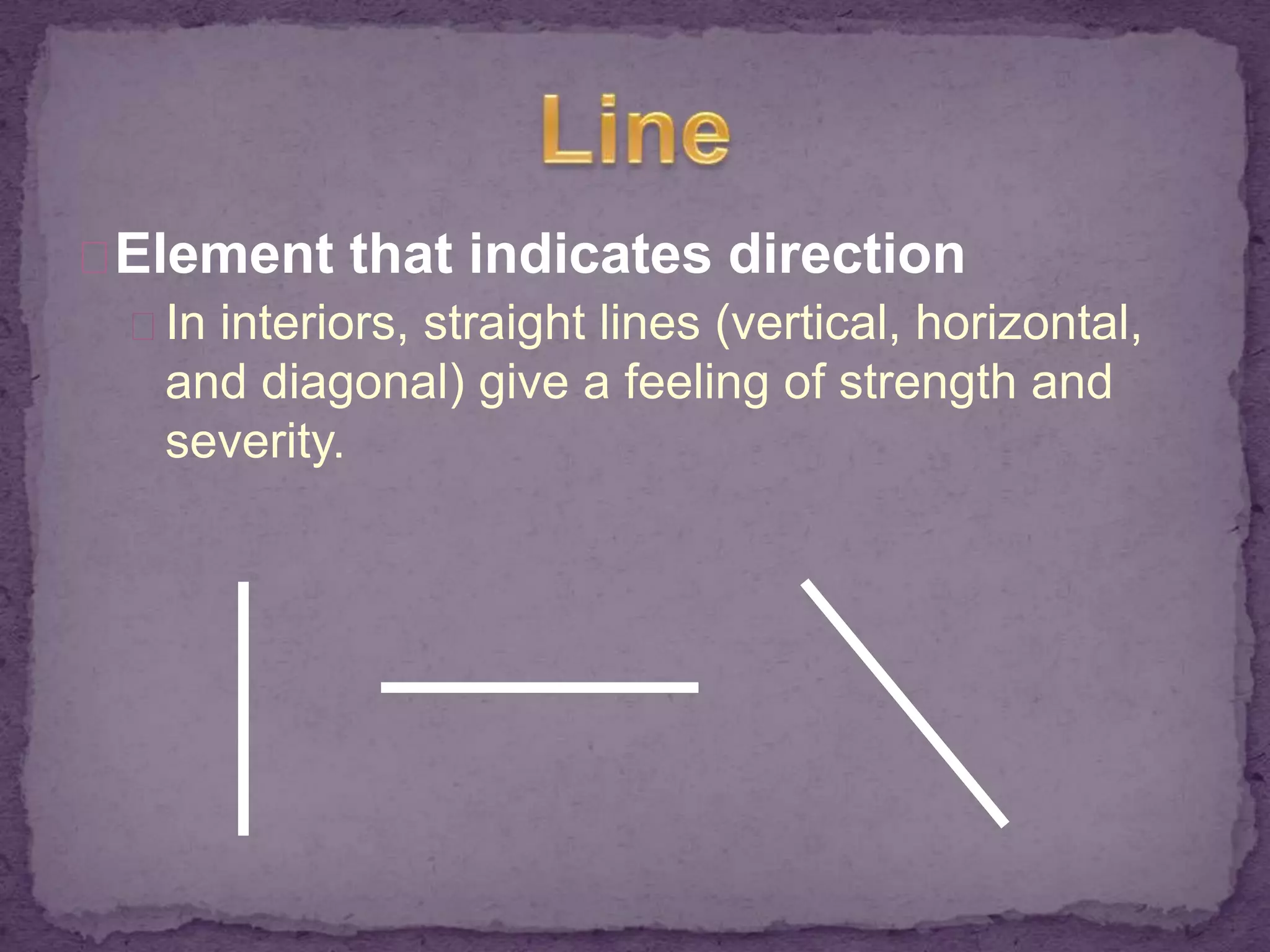
Element that indicates direction 
In interiors, straight lines (vertical, horizontal, 
and diagonal) give a feeling of strength and 
severity.
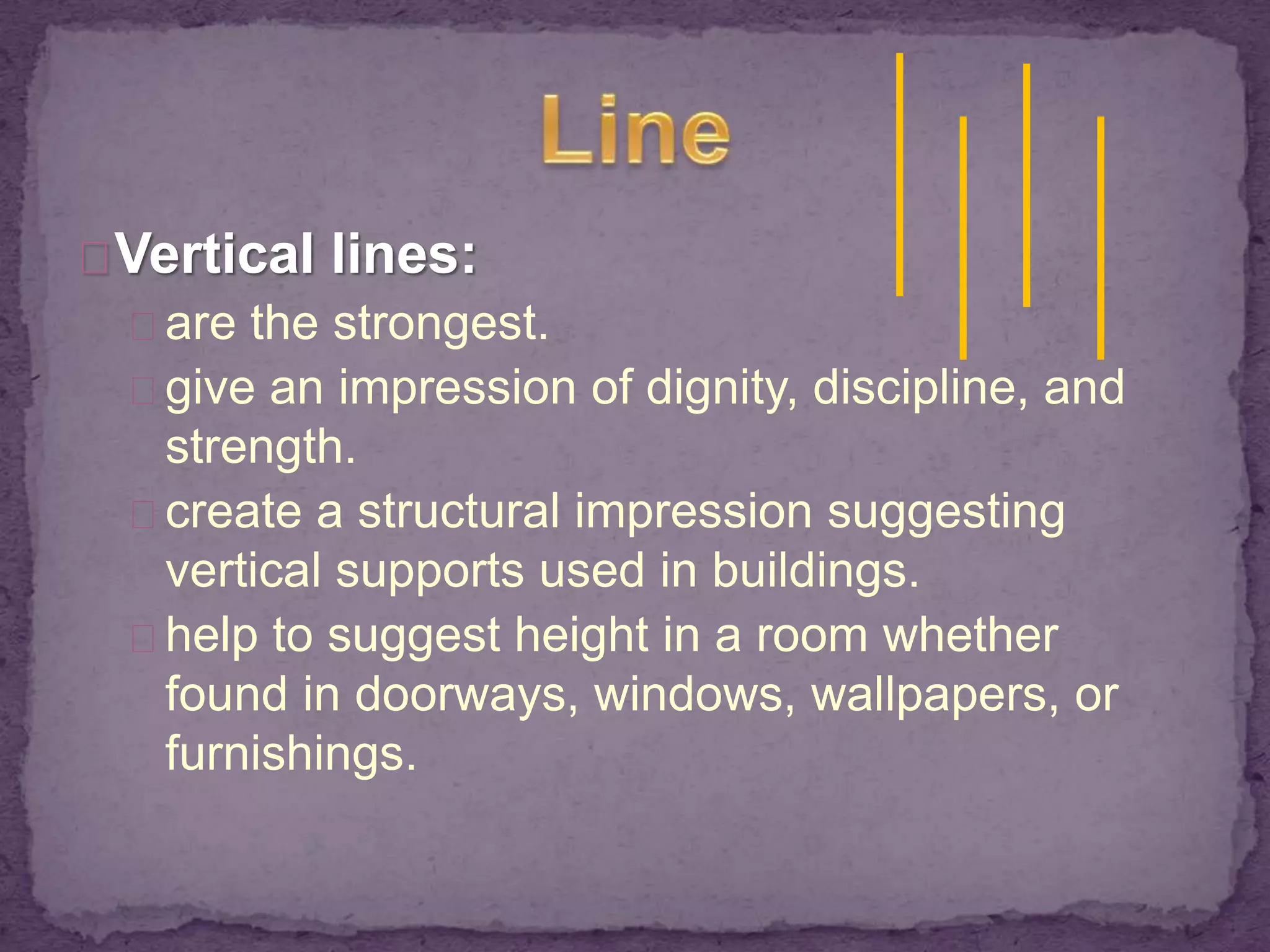
Vertical lines: 
are the strongest. 
give an impression of dignity, discipline, and 
strength. 
create a structural impression suggesting 
vertical supports used in buildings. 
help to suggest height in a room whether 
found in doorways, windows, wallpapers, or 
furnishings.
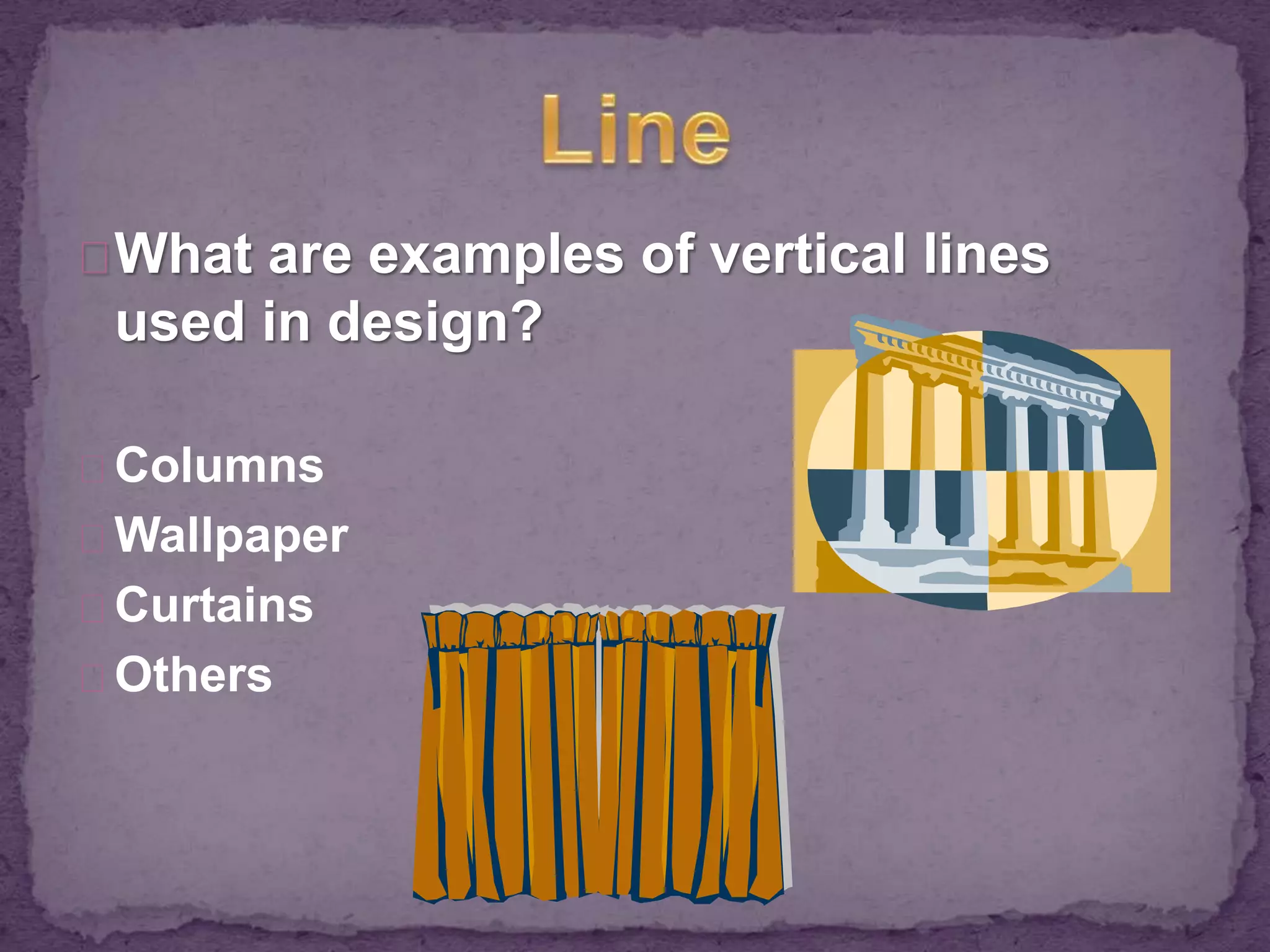
What are examples of vertical lines 
used in design? 
Columns 
Wallpaper 
Curtains 
Others
Horizontal lines: 
are not as strong as vertical lines. 
create a sense of rest. 
give a down-to-earth feeling. 
suggest serenity, repose, and relaxation.
Horizontal lines: 
may be used to relieve or decrease the effects 
of strong vertical lines. 
can make a room look too calm or too dull if 
there are too many.
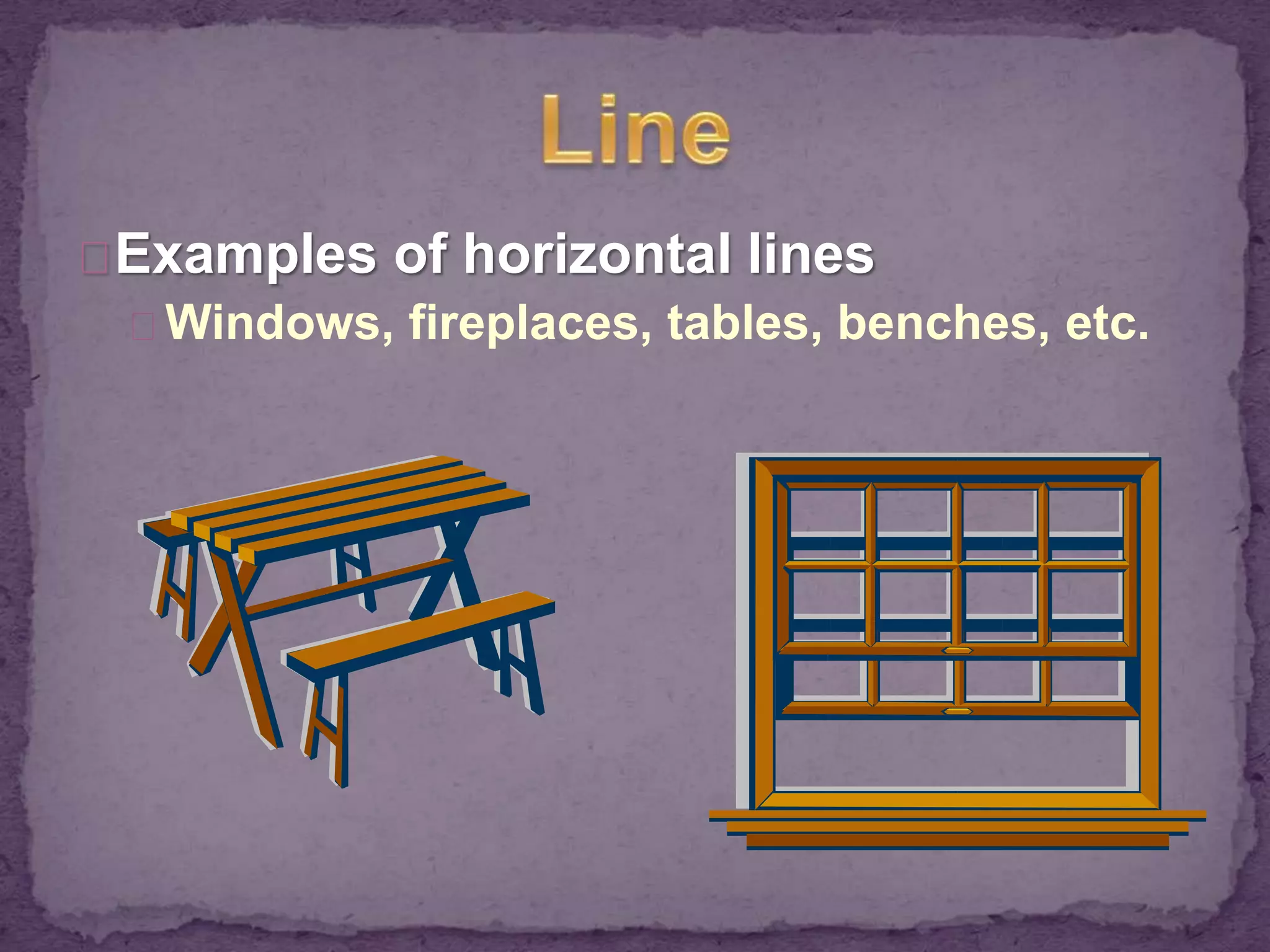
Examples of horizontal lines 
Windows, fireplaces, tables, benches, etc.
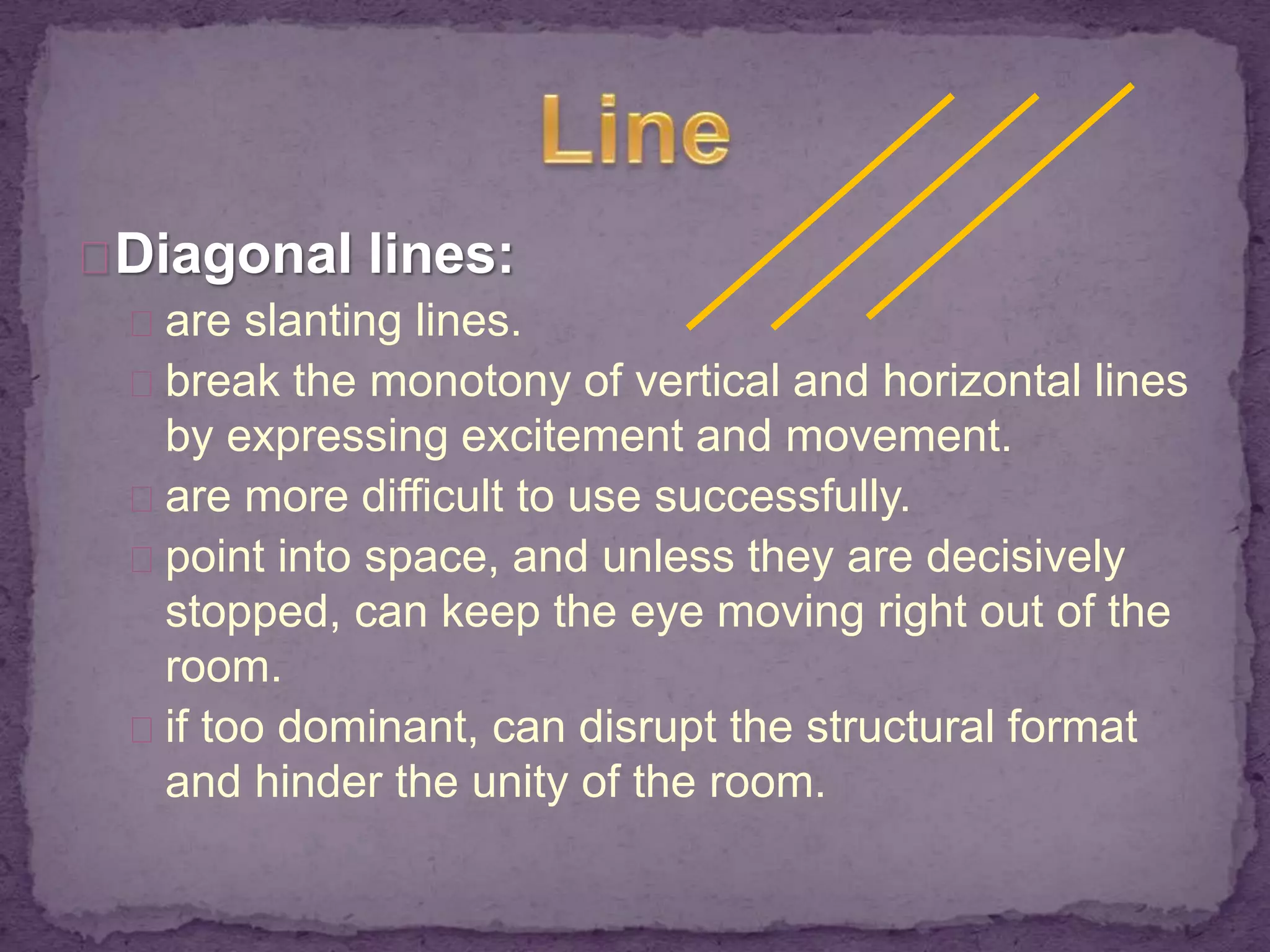
Diagonal lines: 
are slanting lines. 
break the monotony of vertical and horizontal lines 
by expressing excitement and movement. 
are more difficult to use successfully. 
point into space, and unless they are decisively 
stopped, can keep the eye moving right out of the 
room. 
if too dominant, can disrupt the structural format 
and hinder the unity of the room.
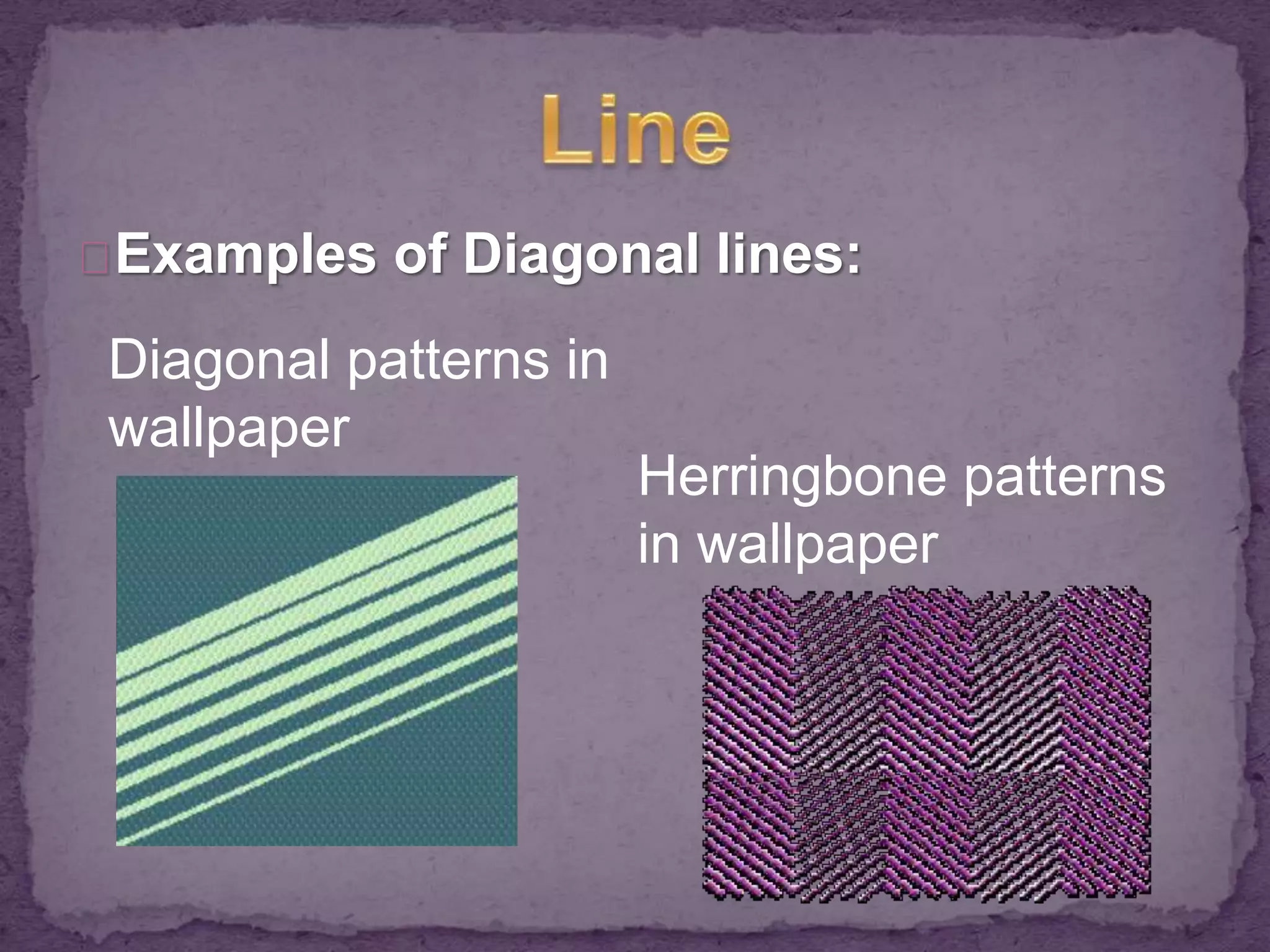
Examples of Diagonal lines: 
Diagonal patterns in 
wallpaper 
Herringbone patterns 
in wallpaper
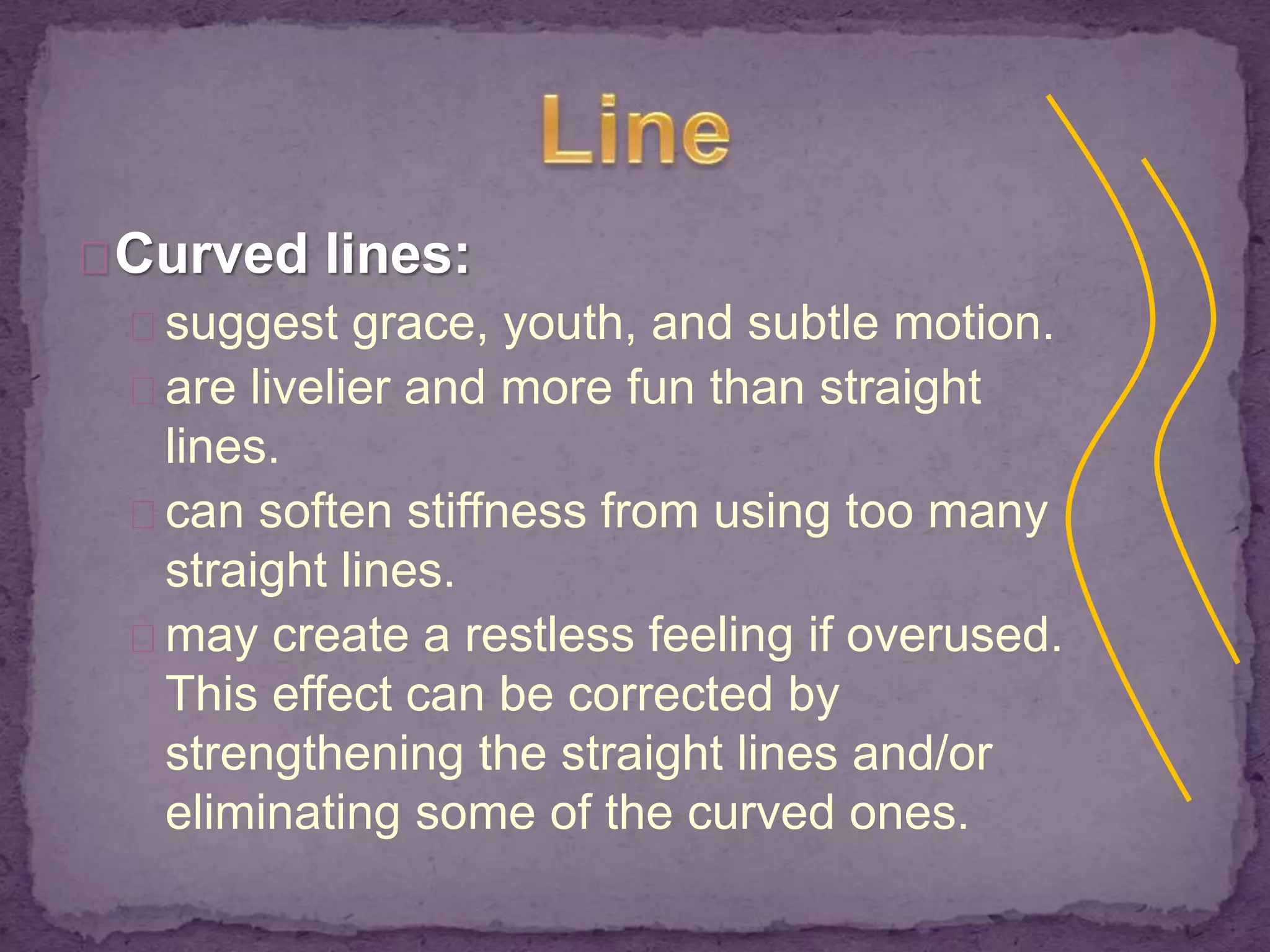
Curved lines: 
suggest grace, youth, and subtle motion. 
are livelier and more fun than straight 
lines. 
can soften stiffness from using too many 
straight lines. 
may create a restless feeling if overused. 
This effect can be corrected by 
strengthening the straight lines and/or 
eliminating some of the curved ones.
Effects of various lines 
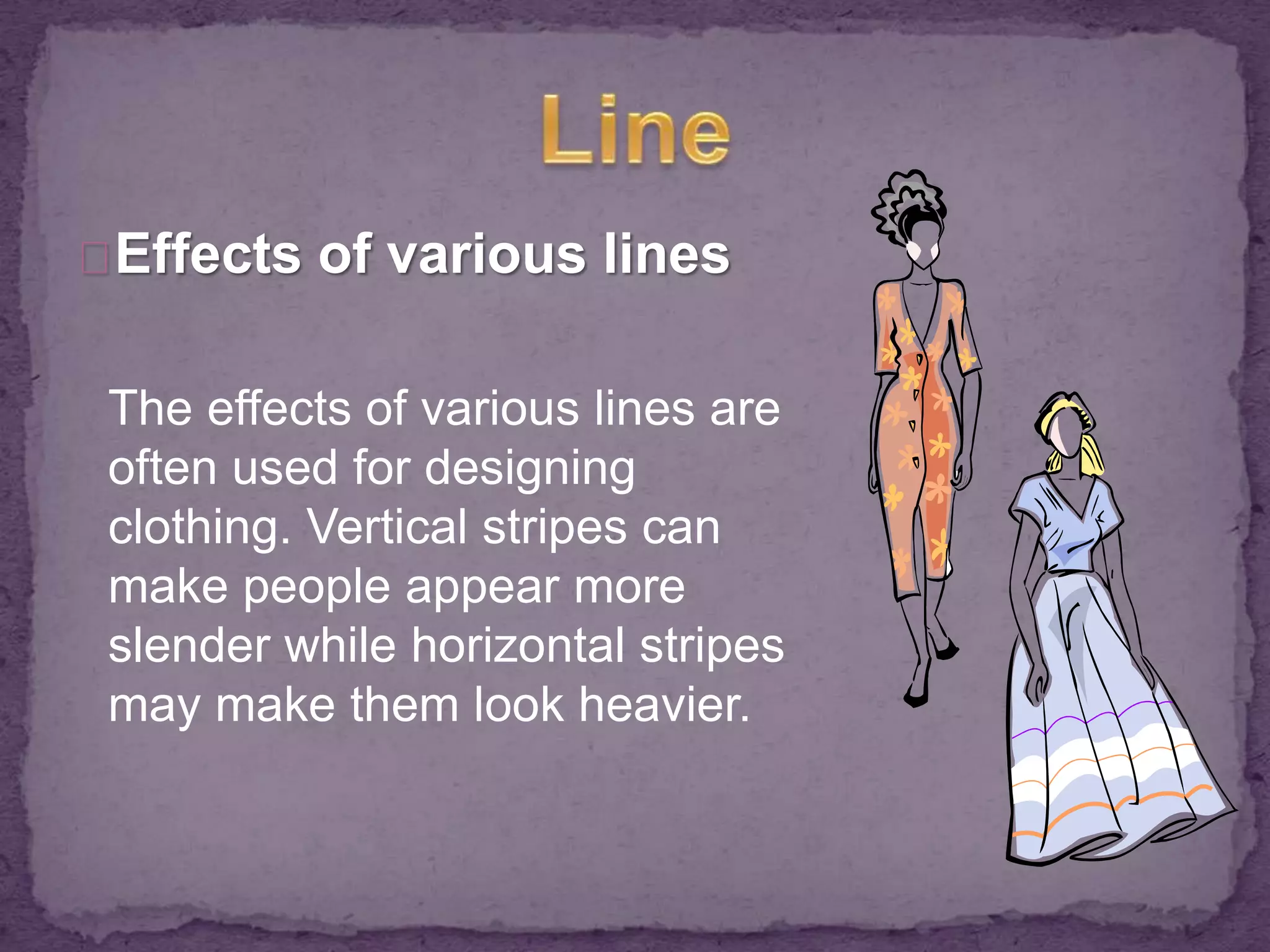
The effects of various lines are 
often used for designing 
clothing. Vertical stripes can 
make people appear more 
slender while horizontal stripes 
may make them look heavier.
Effects of various lines 
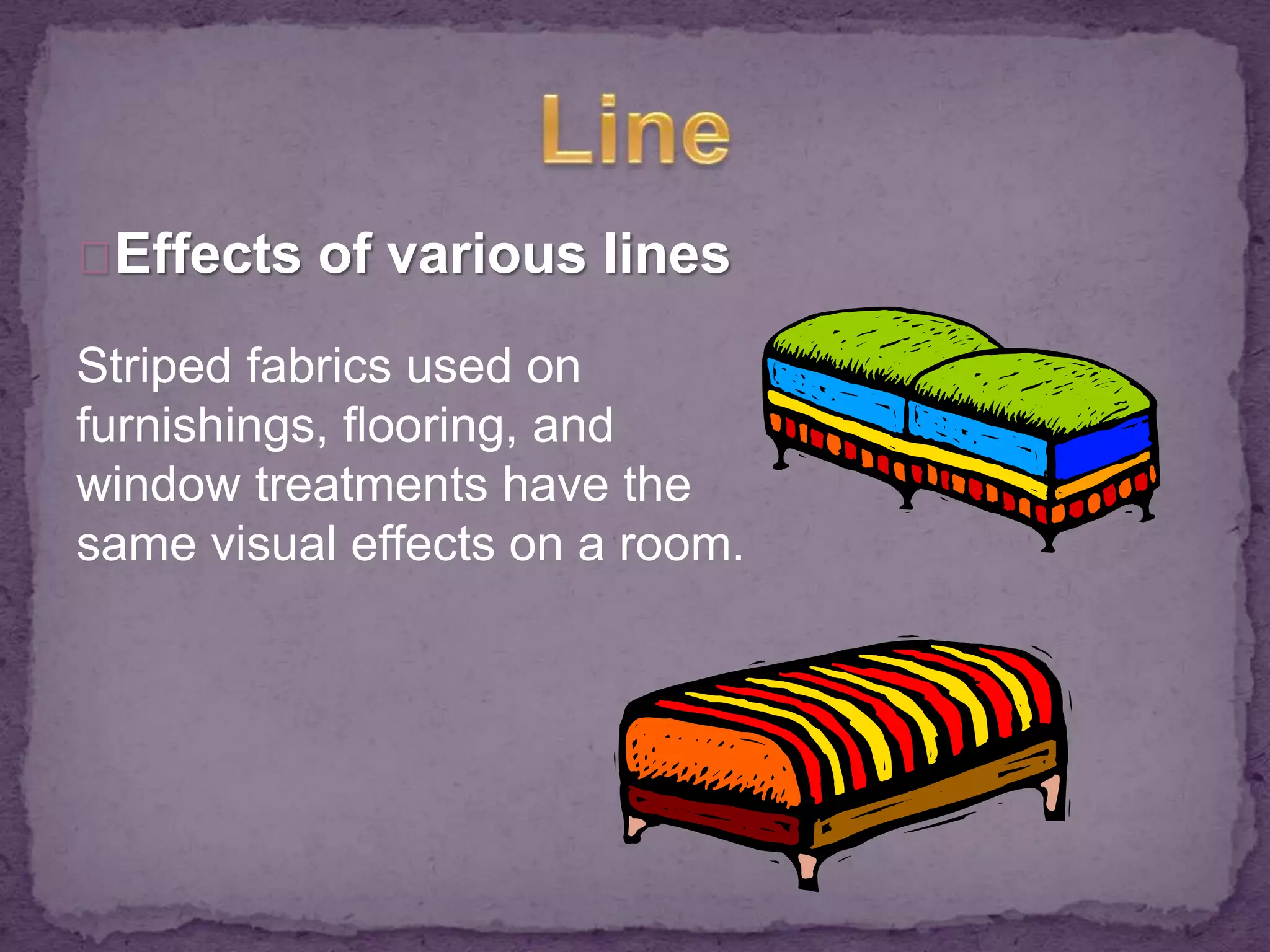
Striped fabrics used on 
furnishings, flooring, and 
window treatments have the 
same visual effects on a room.
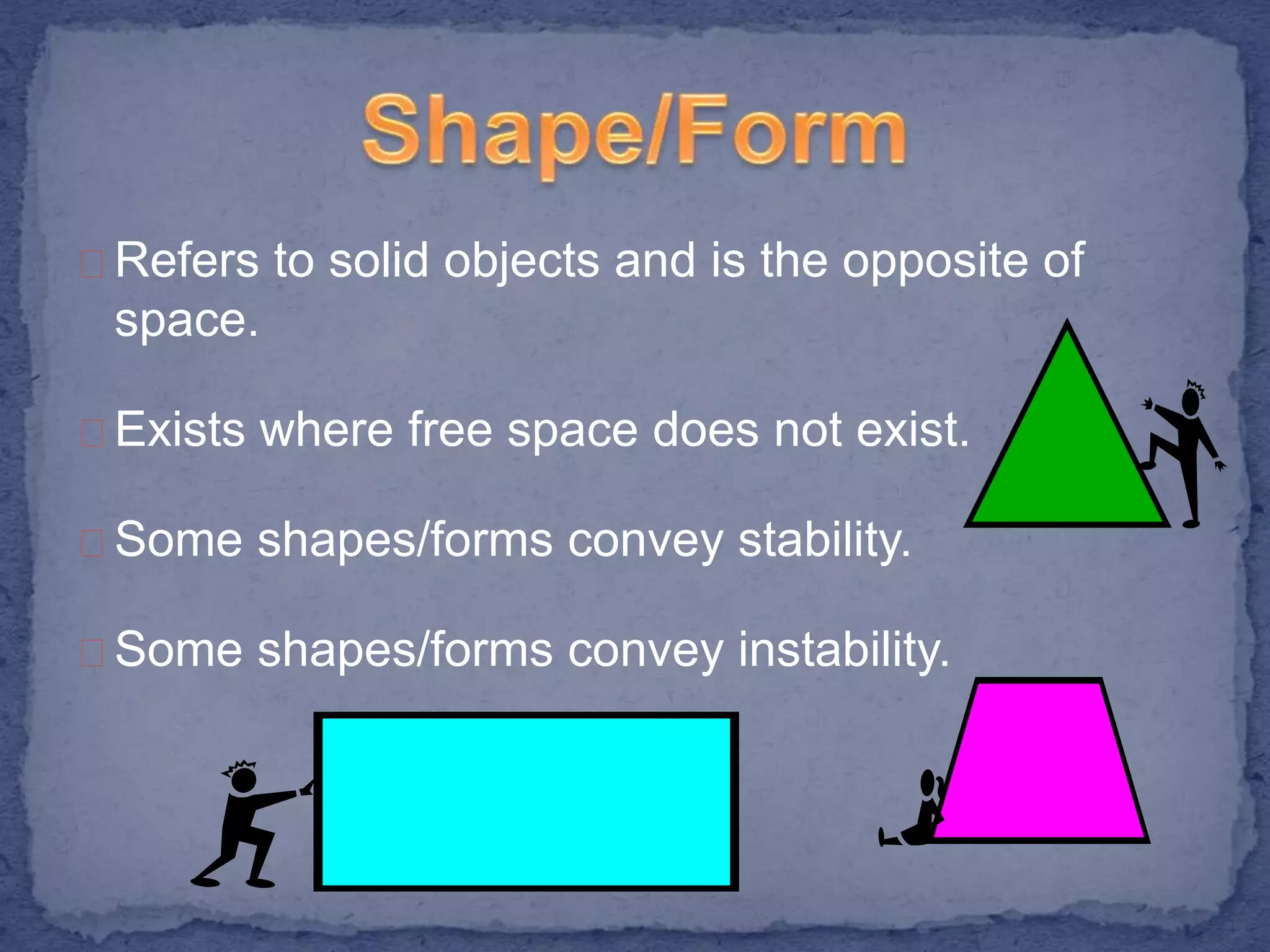
Refers to solid objects and is the opposite of 
space. 
Exists where free space does not exist. 
Some shapes/forms convey stability. 
Some shapes/forms convey instability.
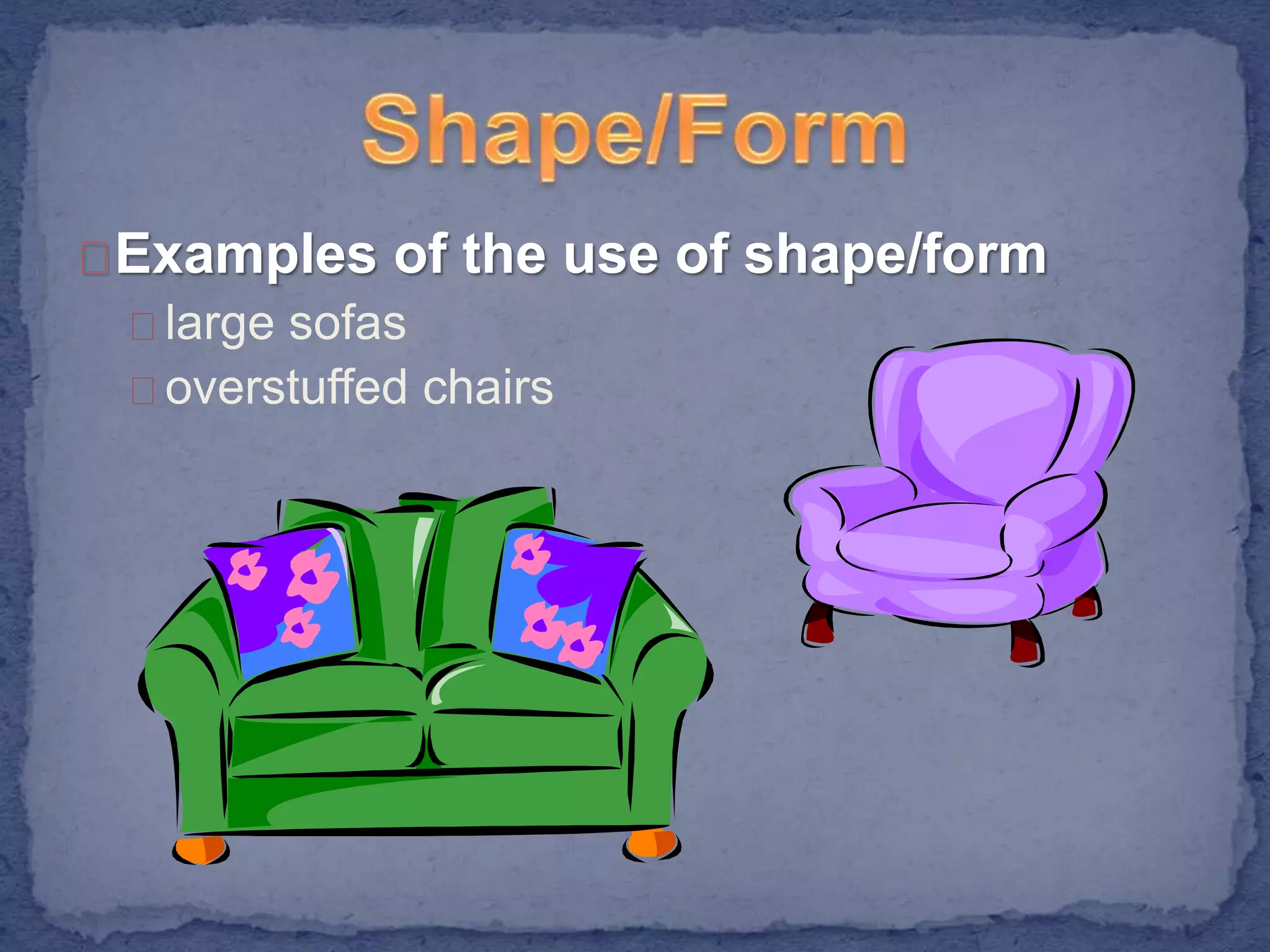
Examples of the use of shape/form 
large sofas 
overstuffed chairs
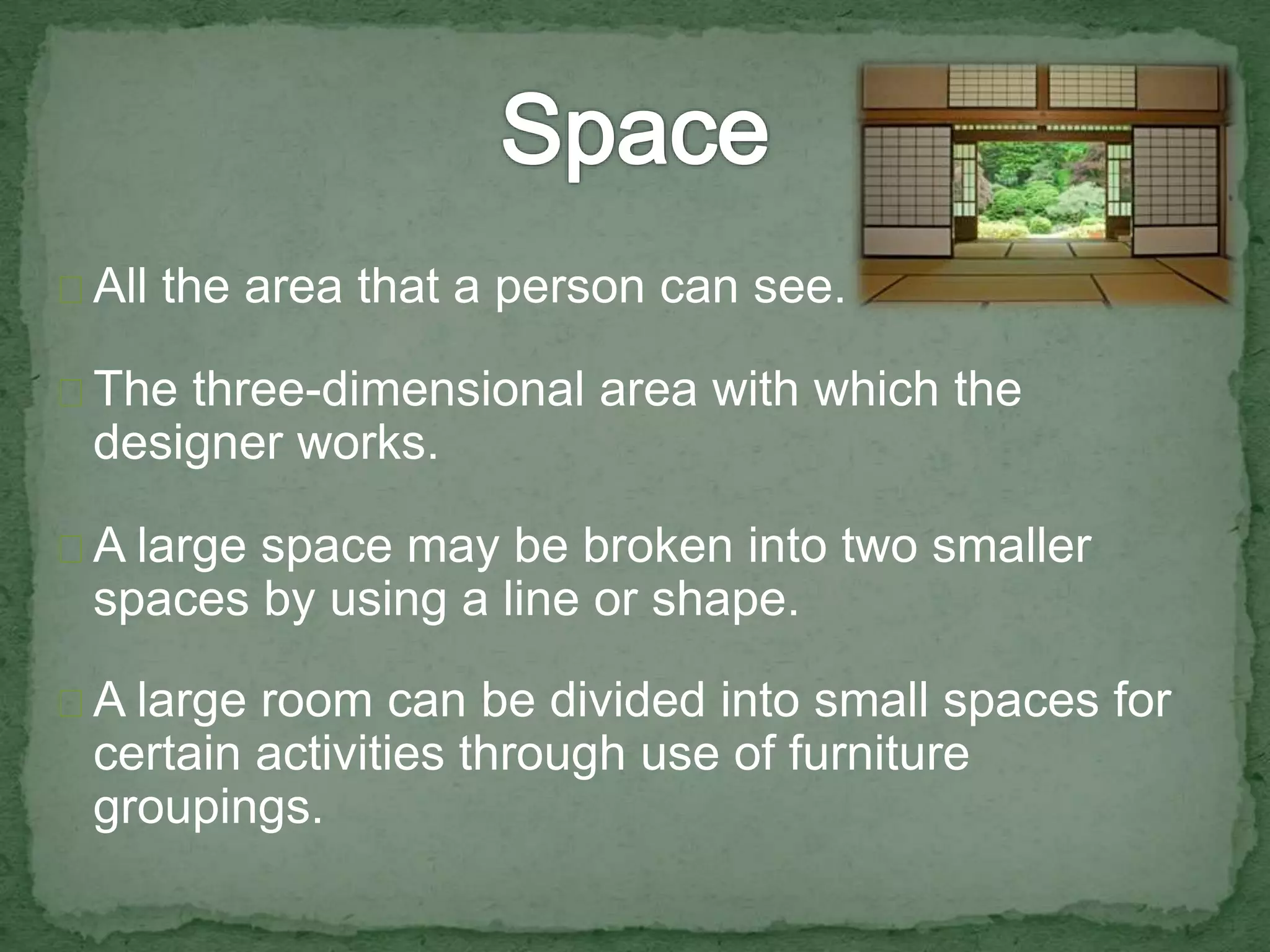
All the area that a person can see. 
The three-dimensional area with which the 
designer works. 
A large space may be broken into two smaller 
spaces by using a line or shape. 
A large room can be divided into small spaces for 
certain activities through use of furniture 
groupings.
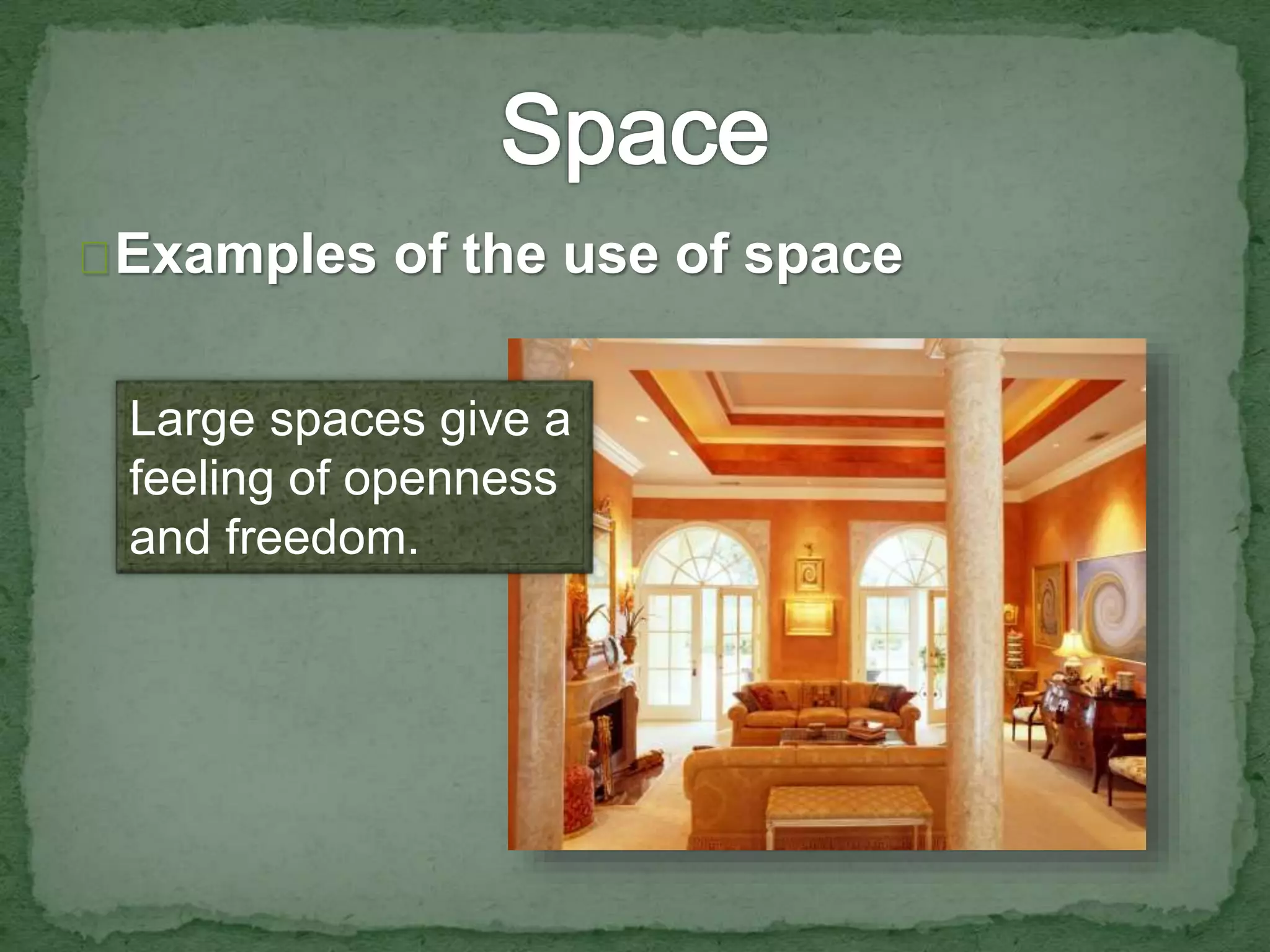
Examples of the use of space 
Large spaces give a 
feeling of openness 
and freedom.
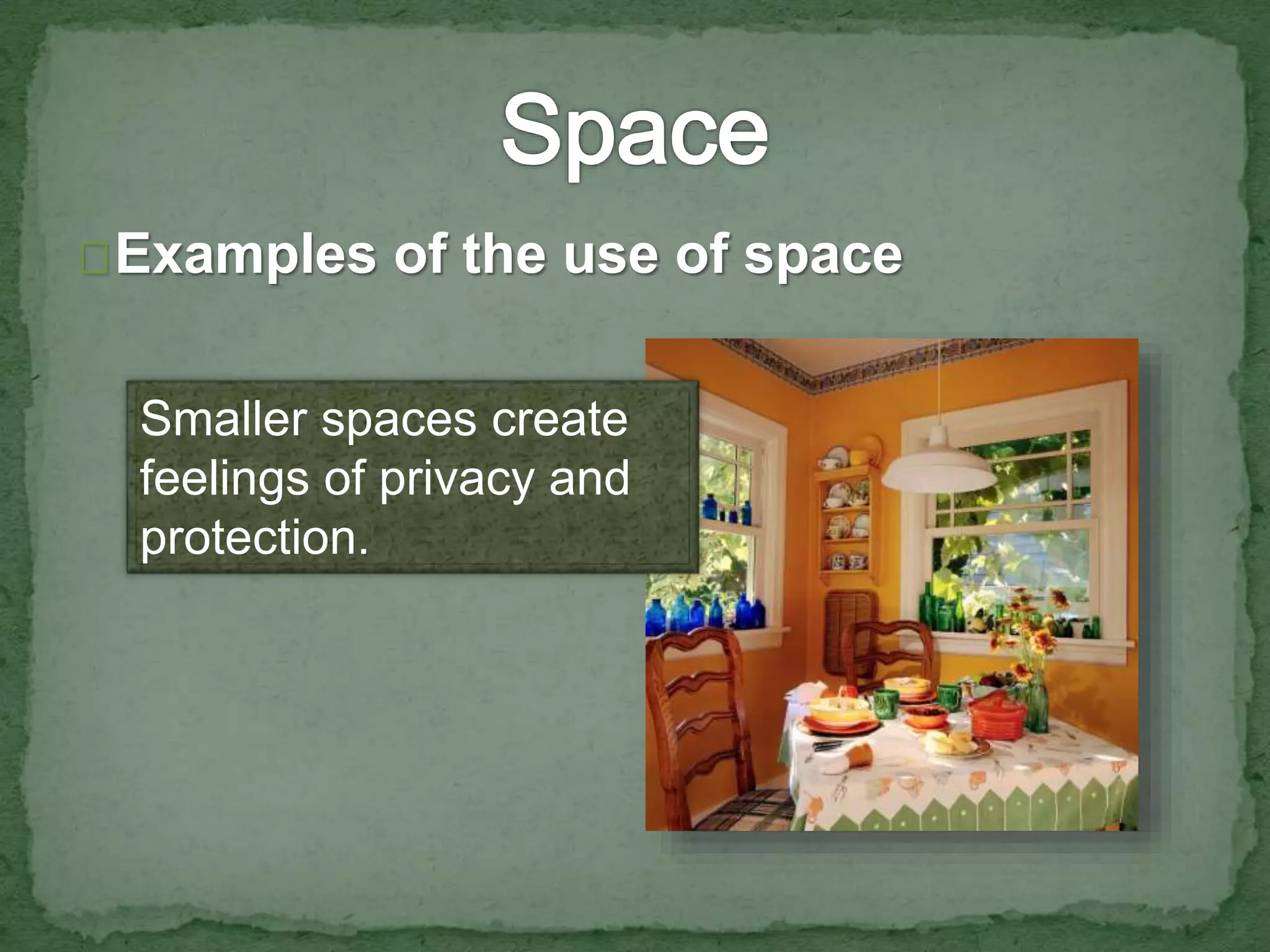
Examples of the use of space 
Smaller spaces create 
feelings of privacy and 
protection.
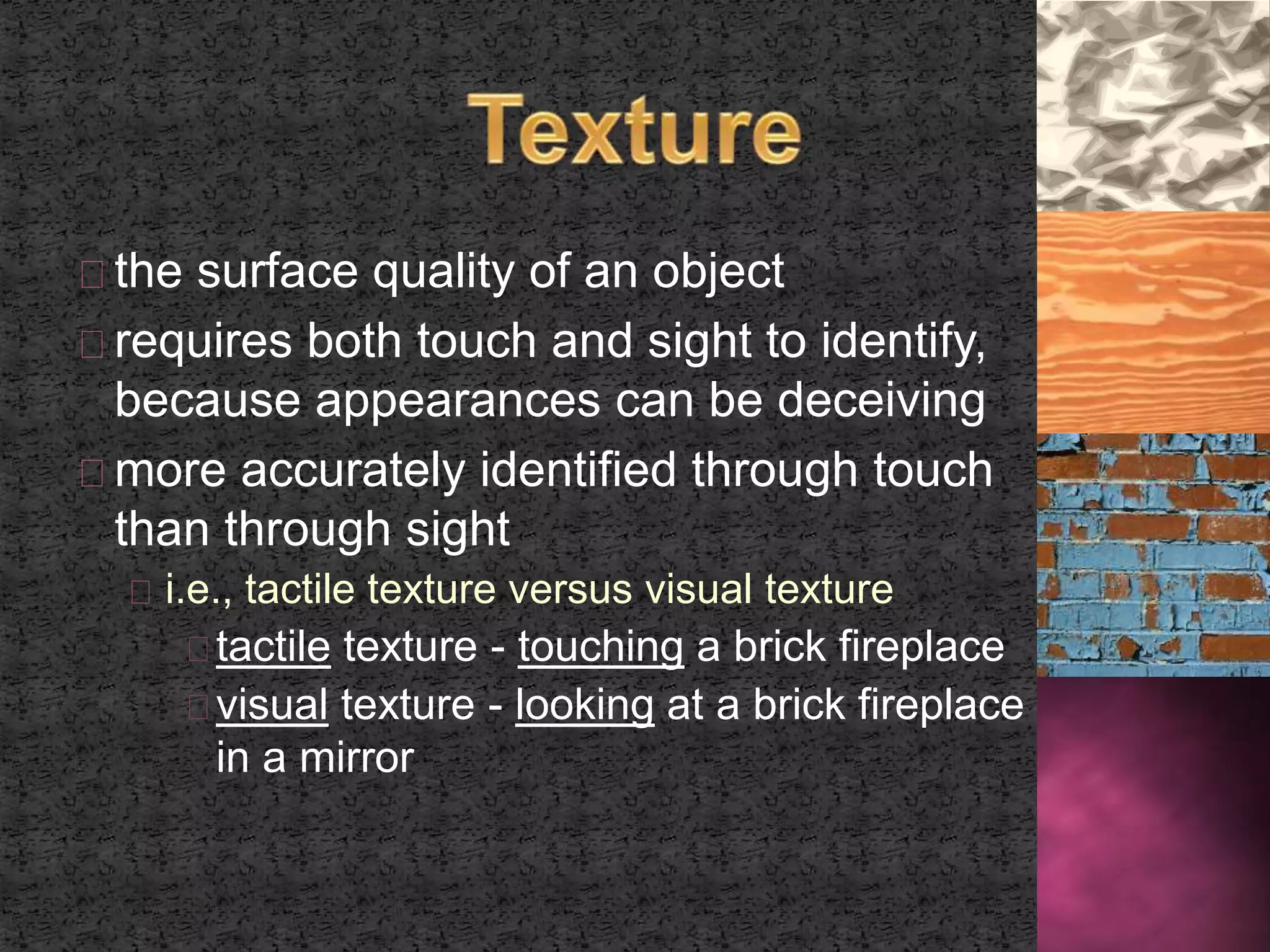
the surface quality of an object 
requires both touch and sight to identify, 
because appearances can be deceiving 
more accurately identified through touch 
than through sight 
i.e., tactile texture versus visual texture 
tactile texture - touching a brick fireplace 
visual texture - looking at a brick fireplace 
in a mirror
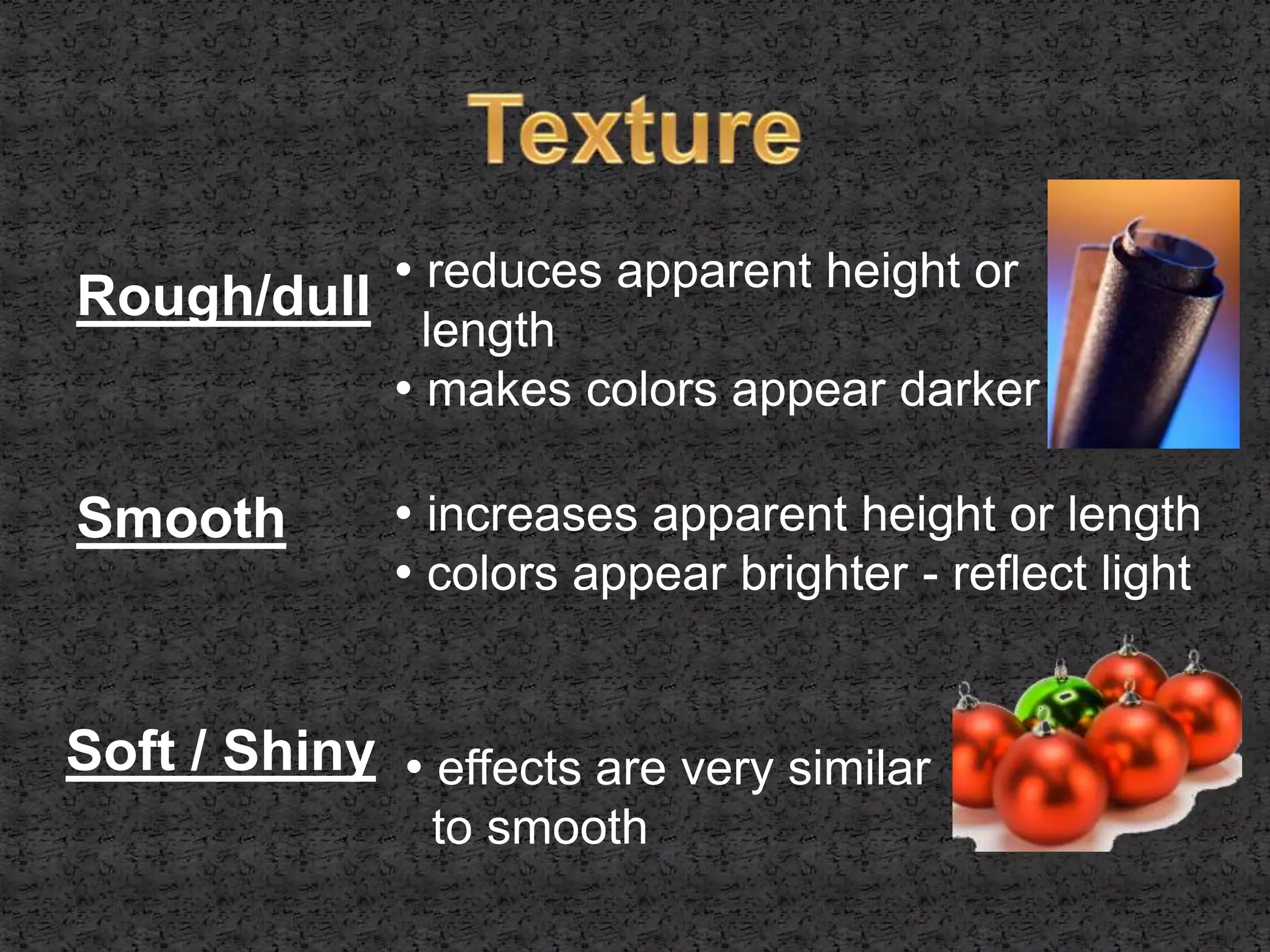
Rough/dull 
Smooth 
Soft / Shiny 
• reduces apparent height or 
length 
• makes colors appear darker 
• increases apparent height or length 
• colors appear brighter - reflect light 
• effects are very similar 
to smooth
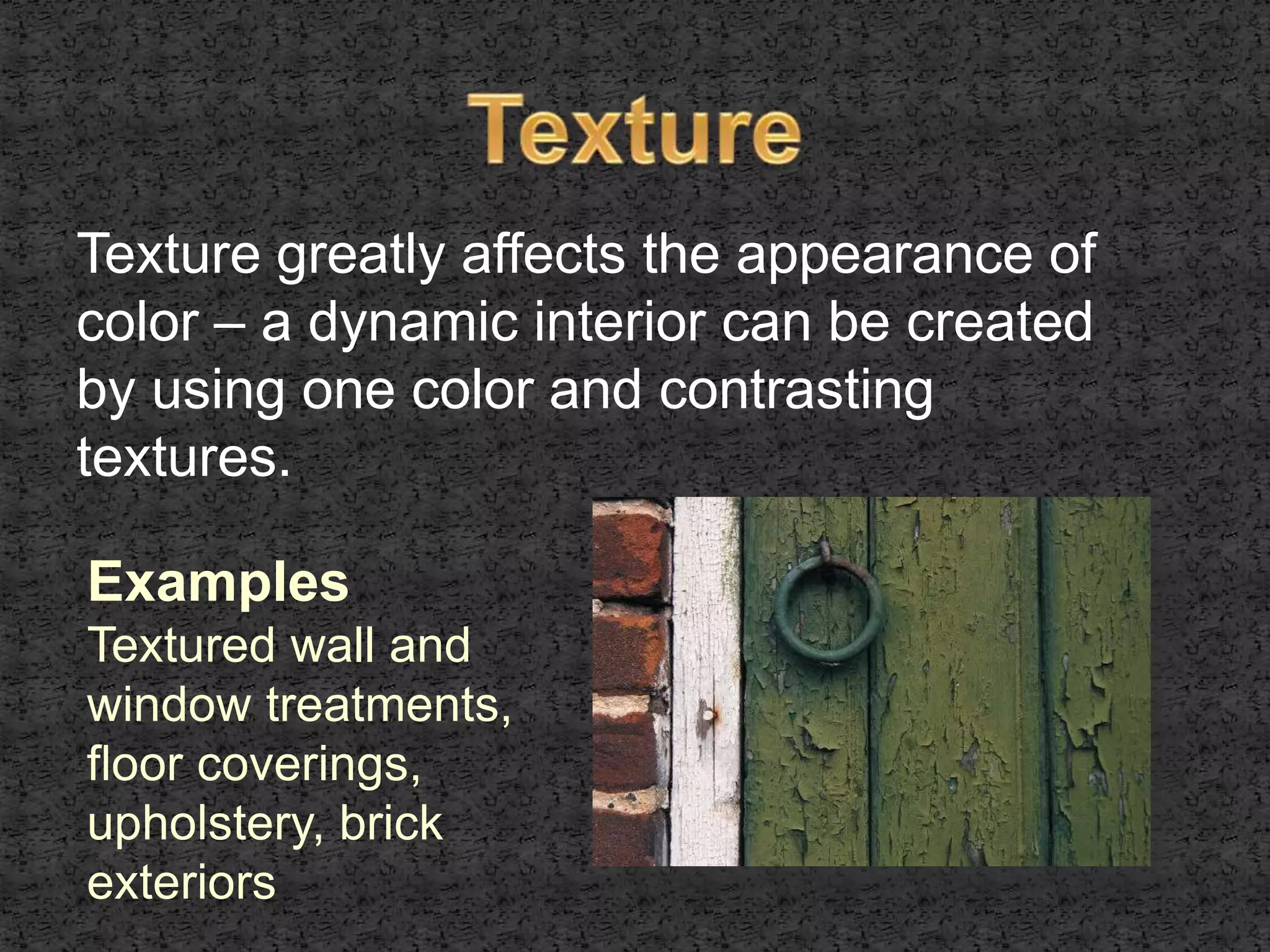
Texture greatly affects the appearance of 
color – a dynamic interior can be created 
by using one color and contrasting 
textures. 
Examples 
Textured wall and 
window treatments, 
floor coverings, 
upholstery, brick 
exteriors
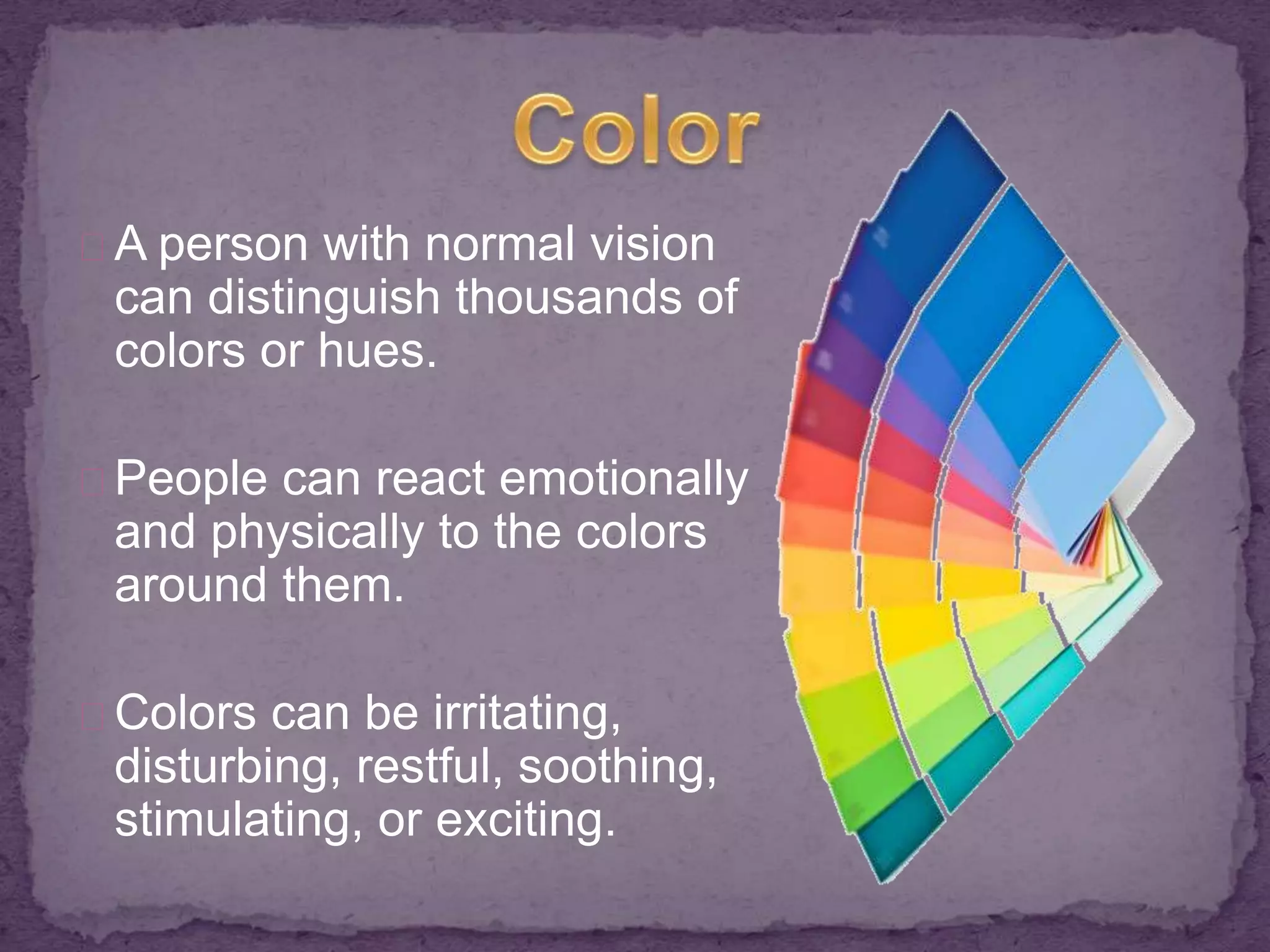
A person with normal vision 
can distinguish thousands of 
colors or hues. 
People can react emotionally 
and physically to the colors 
around them. 
Colors can be irritating, 
disturbing, restful, soothing, 
stimulating, or exciting.
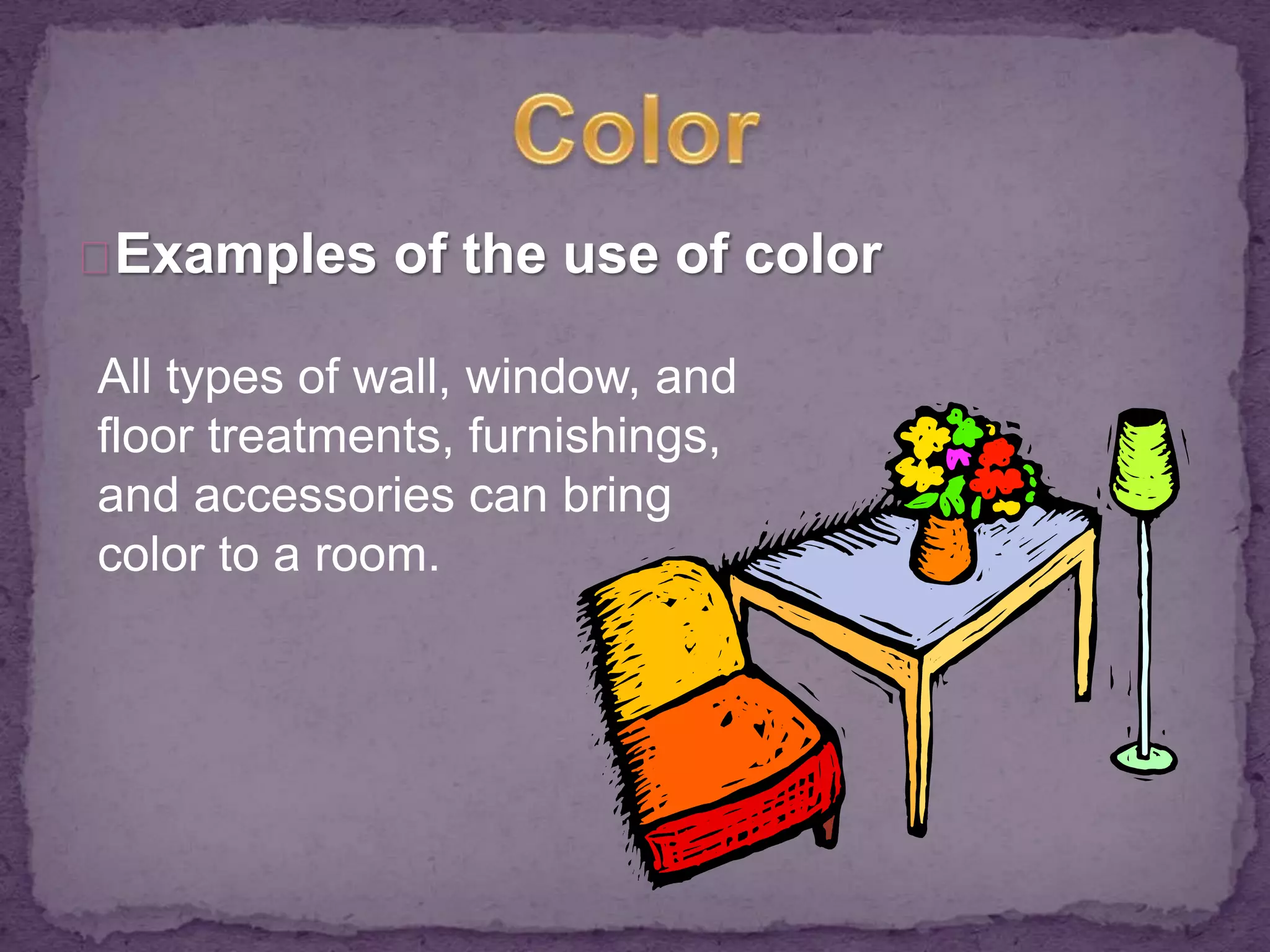
Examples of the use of color 
All types of wall, window, and 
floor treatments, furnishings, 
and accessories can bring 
color to a room.
kellimccabe@ccisd.net

The elementsofdesign

  • 1.
    Design appears inall surroundings. Individuals react to design each day. A person can develop the ability to recognize and apply each design.
  • 2.
    Line Shape/Form Space Texture Color
  • 3.
    Element that indicatesdirection In interiors, straight lines (vertical, horizontal, and diagonal) give a feeling of strength and severity.
  • 4.
    Vertical lines: arethe strongest. give an impression of dignity, discipline, and strength. create a structural impression suggesting vertical supports used in buildings. help to suggest height in a room whether found in doorways, windows, wallpapers, or furnishings.
  • 5.
    What are examplesof vertical lines used in design? Columns Wallpaper Curtains Others
  • 6.
    Horizontal lines: arenot as strong as vertical lines. create a sense of rest. give a down-to-earth feeling. suggest serenity, repose, and relaxation.
  • 7.
    Horizontal lines: maybe used to relieve or decrease the effects of strong vertical lines. can make a room look too calm or too dull if there are too many.
  • 8.
    Examples of horizontallines Windows, fireplaces, tables, benches, etc.
  • 9.
    Diagonal lines: areslanting lines. break the monotony of vertical and horizontal lines by expressing excitement and movement. are more difficult to use successfully. point into space, and unless they are decisively stopped, can keep the eye moving right out of the room. if too dominant, can disrupt the structural format and hinder the unity of the room.
  • 10.
    Examples of Diagonallines: Diagonal patterns in wallpaper Herringbone patterns in wallpaper
  • 11.
    Curved lines: suggestgrace, youth, and subtle motion. are livelier and more fun than straight lines. can soften stiffness from using too many straight lines. may create a restless feeling if overused. This effect can be corrected by strengthening the straight lines and/or eliminating some of the curved ones.
  • 12.
    Effects of variouslines The effects of various lines are often used for designing clothing. Vertical stripes can make people appear more slender while horizontal stripes may make them look heavier.
  • 13.
    Effects of variouslines Striped fabrics used on furnishings, flooring, and window treatments have the same visual effects on a room.
  • 14.
    Refers to solidobjects and is the opposite of space. Exists where free space does not exist. Some shapes/forms convey stability. Some shapes/forms convey instability.
  • 15.
    Examples of theuse of shape/form large sofas overstuffed chairs
  • 16.
    All the areathat a person can see. The three-dimensional area with which the designer works. A large space may be broken into two smaller spaces by using a line or shape. A large room can be divided into small spaces for certain activities through use of furniture groupings.
  • 17.
    Examples of theuse of space Large spaces give a feeling of openness and freedom.
  • 18.
    Examples of theuse of space Smaller spaces create feelings of privacy and protection.
  • 19.
    the surface qualityof an object requires both touch and sight to identify, because appearances can be deceiving more accurately identified through touch than through sight i.e., tactile texture versus visual texture tactile texture - touching a brick fireplace visual texture - looking at a brick fireplace in a mirror
  • 20.
    Rough/dull Smooth Soft/ Shiny • reduces apparent height or length • makes colors appear darker • increases apparent height or length • colors appear brighter - reflect light • effects are very similar to smooth
  • 21.
    Texture greatly affectsthe appearance of color – a dynamic interior can be created by using one color and contrasting textures. Examples Textured wall and window treatments, floor coverings, upholstery, brick exteriors
  • 22.
    A person withnormal vision can distinguish thousands of colors or hues. People can react emotionally and physically to the colors around them. Colors can be irritating, disturbing, restful, soothing, stimulating, or exciting.
  • 23.
    Examples of theuse of color All types of wall, window, and floor treatments, furnishings, and accessories can bring color to a room.
  • 24.