Definition
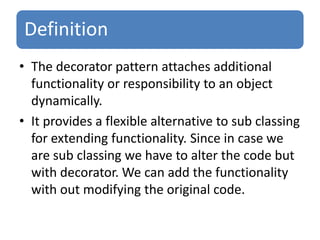
• The decorator pattern attaches additional
  functionality or responsibility to an object
  dynamically.
• It provides a flexible alternative to sub classing
  for extending functionality. Since in case we
  are sub classing we have to alter the code but
  with decorator. We can add the functionality
  with out modifying the original code.
Class Diagram
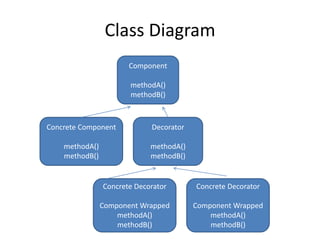
                       Component

                       methodA()
                       methodB()


Concrete Component           Decorator

    methodA()                methodA()
    methodB()                methodB()


                Concrete Decorator       Concrete Decorator

                Component Wrapped        Component Wrapped
                    methodA()                methodA()
                    methodB()                methodB()
Key Points

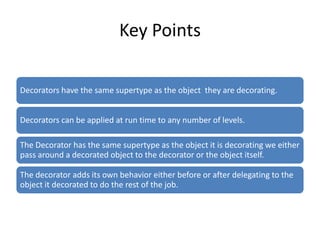
Decorators have the same supertype as the object they are decorating.


Decorators can be applied at run time to any number of levels.

The Decorator has the same supertype as the object it is decorating we either
pass around a decorated object to the decorator or the object itself.

The decorator adds its own behavior either before or after delegating to the
object it decorated to do the rest of the job.
Design Problem

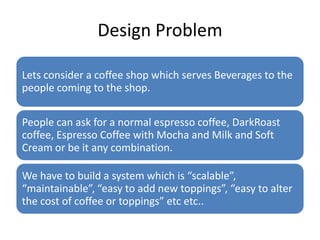
Lets consider a coffee shop which serves Beverages to the
people coming to the shop.

People can ask for a normal espresso coffee, DarkRoast
coffee, Espresso Coffee with Mocha and Milk and Soft
Cream or be it any combination.

We have to build a system which is “scalable”,
“maintainable”, “easy to add new toppings”, “easy to alter
the cost of coffee or toppings” etc etc..
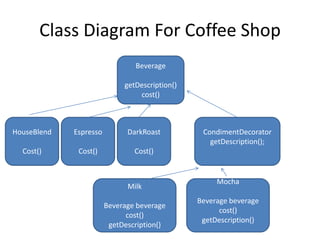
Class Diagram For Coffee Shop
                                Beverage

                             getDescription()
                                 cost()


HouseBlend   Espresso         DarkRoast          CondimentDecorator
                                                   getDescription();
  Cost()      Cost()            Cost()


                                                     Mocha
                              Milk
                                                Beverage beverage
                        Beverage beverage
                                                      cost()
                              cost()
                                                 getDescription()
                         getDescription()
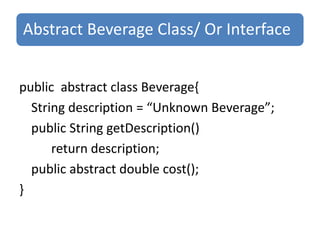
Abstract Beverage Class/ Or Interface


public abstract class Beverage{
  String description = “Unknown Beverage”;
  public String getDescription()
      return description;
  public abstract double cost();
}
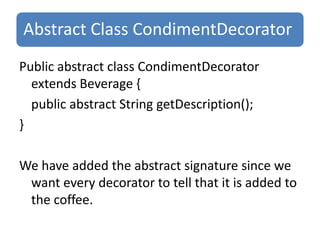
Abstract Class CondimentDecorator
Public abstract class CondimentDecorator
  extends Beverage {
  public abstract String getDescription();
}

We have added the abstract signature since we
 want every decorator to tell that it is added to
 the coffee.
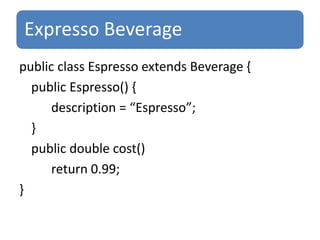
Expresso Beverage
public class Espresso extends Beverage {
  public Espresso() {
      description = “Espresso”;
  }
  public double cost()
      return 0.99;
}
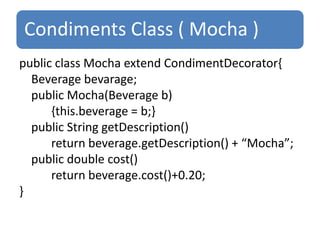
Condiments Class ( Mocha )
public class Mocha extend CondimentDecorator{
  Beverage bevarage;
  public Mocha(Beverage b)
      {this.beverage = b;}
  public String getDescription()
      return beverage.getDescription() + “Mocha”;
  public double cost()
      return beverage.cost()+0.20;
}
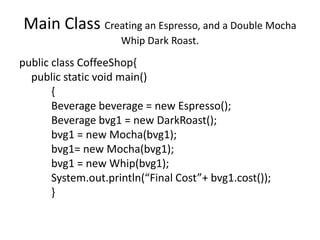
Main Class Creating an Espresso, and a Double Mocha
                     Whip Dark Roast.

public class CoffeeShop{
  public static void main()
       {
       Beverage beverage = new Espresso();
       Beverage bvg1 = new DarkRoast();
       bvg1 = new Mocha(bvg1);
       bvg1= new Mocha(bvg1);
       bvg1 = new Whip(bvg1);
       System.out.println(“Final Cost”+ bvg1.cost());
       }

The Decorator Pattern

  • 2.
    Definition • The decoratorpattern attaches additional functionality or responsibility to an object dynamically. • It provides a flexible alternative to sub classing for extending functionality. Since in case we are sub classing we have to alter the code but with decorator. We can add the functionality with out modifying the original code.
  • 3.
    Class Diagram Component methodA() methodB() Concrete Component Decorator methodA() methodA() methodB() methodB() Concrete Decorator Concrete Decorator Component Wrapped Component Wrapped methodA() methodA() methodB() methodB()
  • 4.
    Key Points Decorators havethe same supertype as the object they are decorating. Decorators can be applied at run time to any number of levels. The Decorator has the same supertype as the object it is decorating we either pass around a decorated object to the decorator or the object itself. The decorator adds its own behavior either before or after delegating to the object it decorated to do the rest of the job.
  • 5.
    Design Problem Lets considera coffee shop which serves Beverages to the people coming to the shop. People can ask for a normal espresso coffee, DarkRoast coffee, Espresso Coffee with Mocha and Milk and Soft Cream or be it any combination. We have to build a system which is “scalable”, “maintainable”, “easy to add new toppings”, “easy to alter the cost of coffee or toppings” etc etc..
  • 6.
    Class Diagram ForCoffee Shop Beverage getDescription() cost() HouseBlend Espresso DarkRoast CondimentDecorator getDescription(); Cost() Cost() Cost() Mocha Milk Beverage beverage Beverage beverage cost() cost() getDescription() getDescription()
  • 7.
    Abstract Beverage Class/Or Interface public abstract class Beverage{ String description = “Unknown Beverage”; public String getDescription() return description; public abstract double cost(); }
  • 8.
    Abstract Class CondimentDecorator Publicabstract class CondimentDecorator extends Beverage { public abstract String getDescription(); } We have added the abstract signature since we want every decorator to tell that it is added to the coffee.
  • 9.
    Expresso Beverage public classEspresso extends Beverage { public Espresso() { description = “Espresso”; } public double cost() return 0.99; }
  • 10.
    Condiments Class (Mocha ) public class Mocha extend CondimentDecorator{ Beverage bevarage; public Mocha(Beverage b) {this.beverage = b;} public String getDescription() return beverage.getDescription() + “Mocha”; public double cost() return beverage.cost()+0.20; }
  • 11.
    Main Class Creatingan Espresso, and a Double Mocha Whip Dark Roast. public class CoffeeShop{ public static void main() { Beverage beverage = new Espresso(); Beverage bvg1 = new DarkRoast(); bvg1 = new Mocha(bvg1); bvg1= new Mocha(bvg1); bvg1 = new Whip(bvg1); System.out.println(“Final Cost”+ bvg1.cost()); }