THE A-Z OF
CUSTOMER SERVICE
EXCELLENCE
Dr. Oyewole O. Sarumi
 A is for Acknowledging customers be that in
person, over the telephone, or by written
communication (email, letter etc...)
 B is for Best Value (obviously!).
 C is for Complaints, your most useful form of
feedback.
 D is for Dedicated staff working within a
culture of customer service excellence.
 E is for Empowerment, equipping your staff
with the means and freedom to deliver
excellent levels of customer service.
 F is for Flexibility. The rigid application of
policy in all cases without exception will
inhibit your ability to deliver customer service
excellence.
 G is for Going the extra mile. Now a cliché
but still worthy of inclusion - amaze your
customers by delivering that little bit more
than they expect.
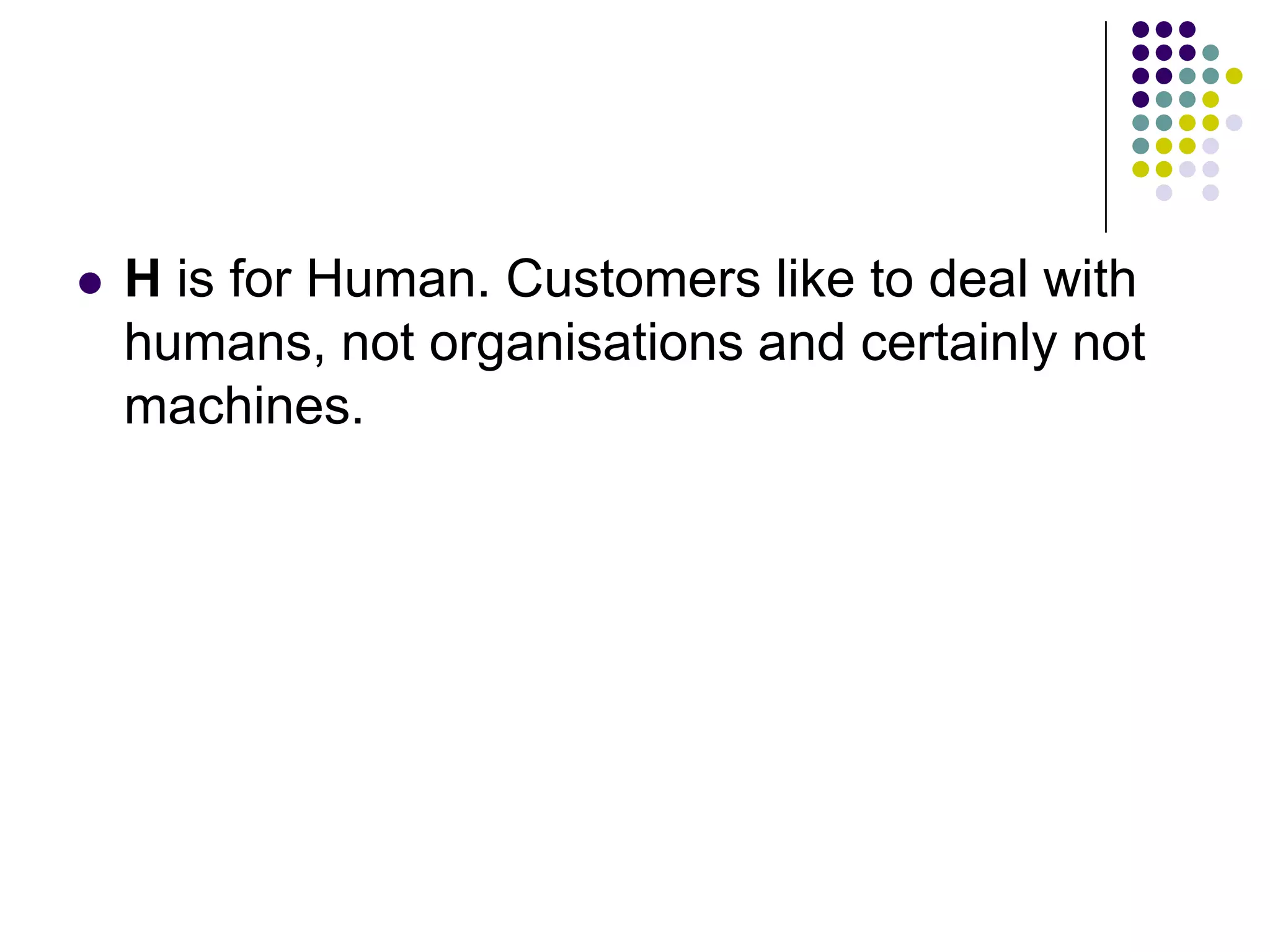
 H is for Human. Customers like to deal with
humans, not organisations and certainly not
machines.
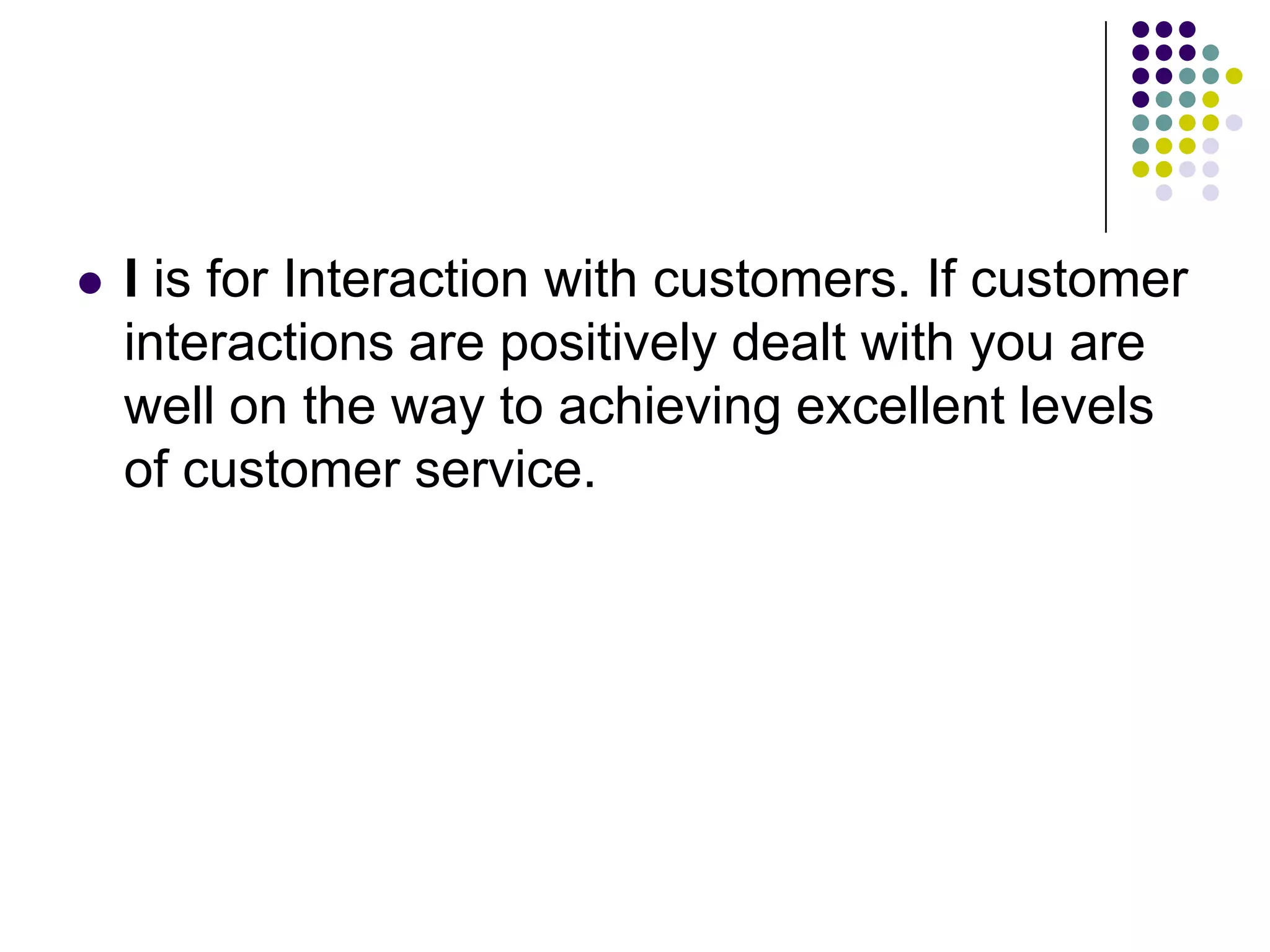
 I is for Interaction with customers. If customer
interactions are positively dealt with you are
well on the way to achieving excellent levels
of customer service.
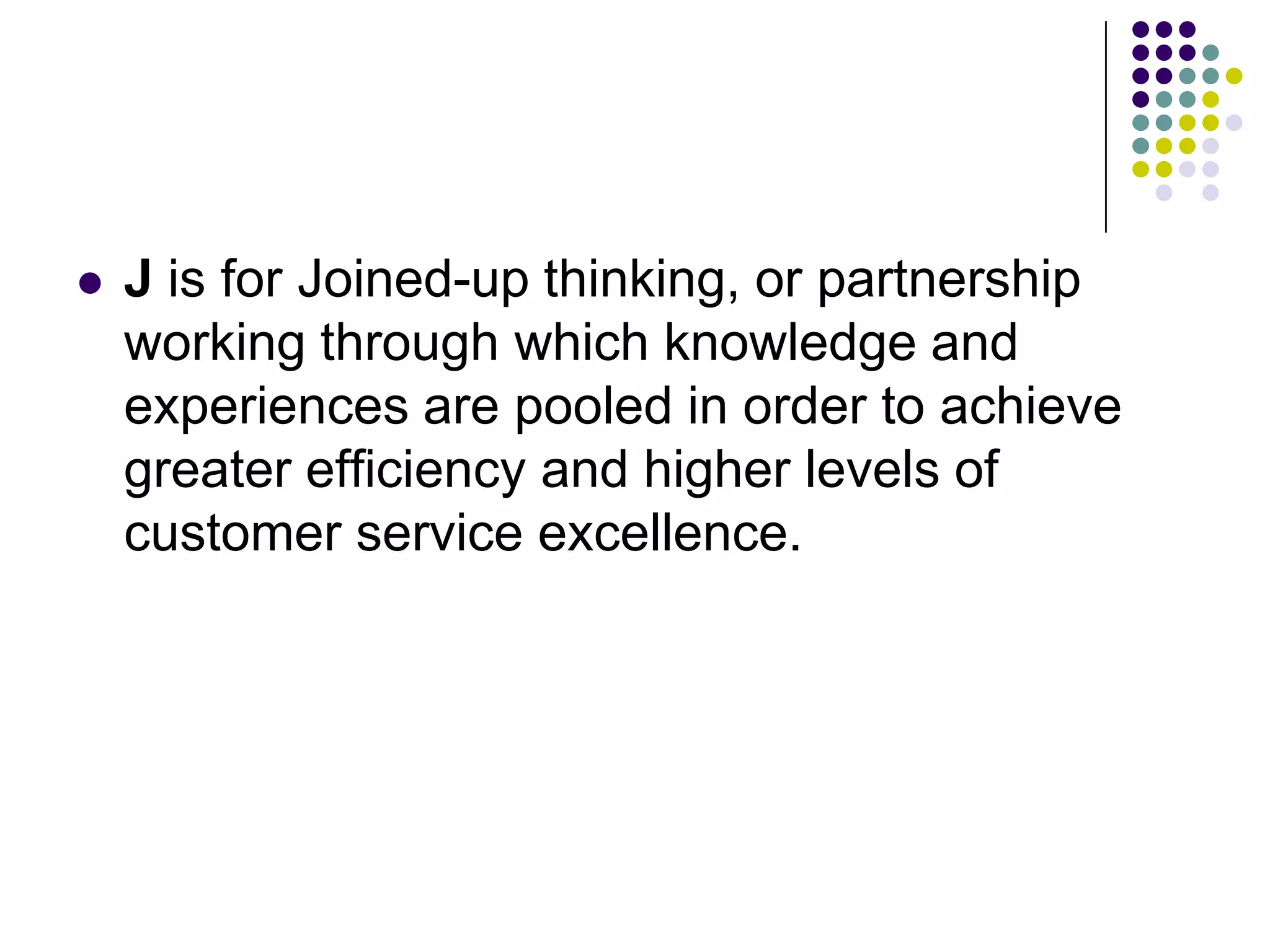
 J is for Joined-up thinking, or partnership
working through which knowledge and
experiences are pooled in order to achieve
greater efficiency and higher levels of
customer service excellence.
 K is for Knowledge. The more you know
about your customers the better you will be
able to serve them.
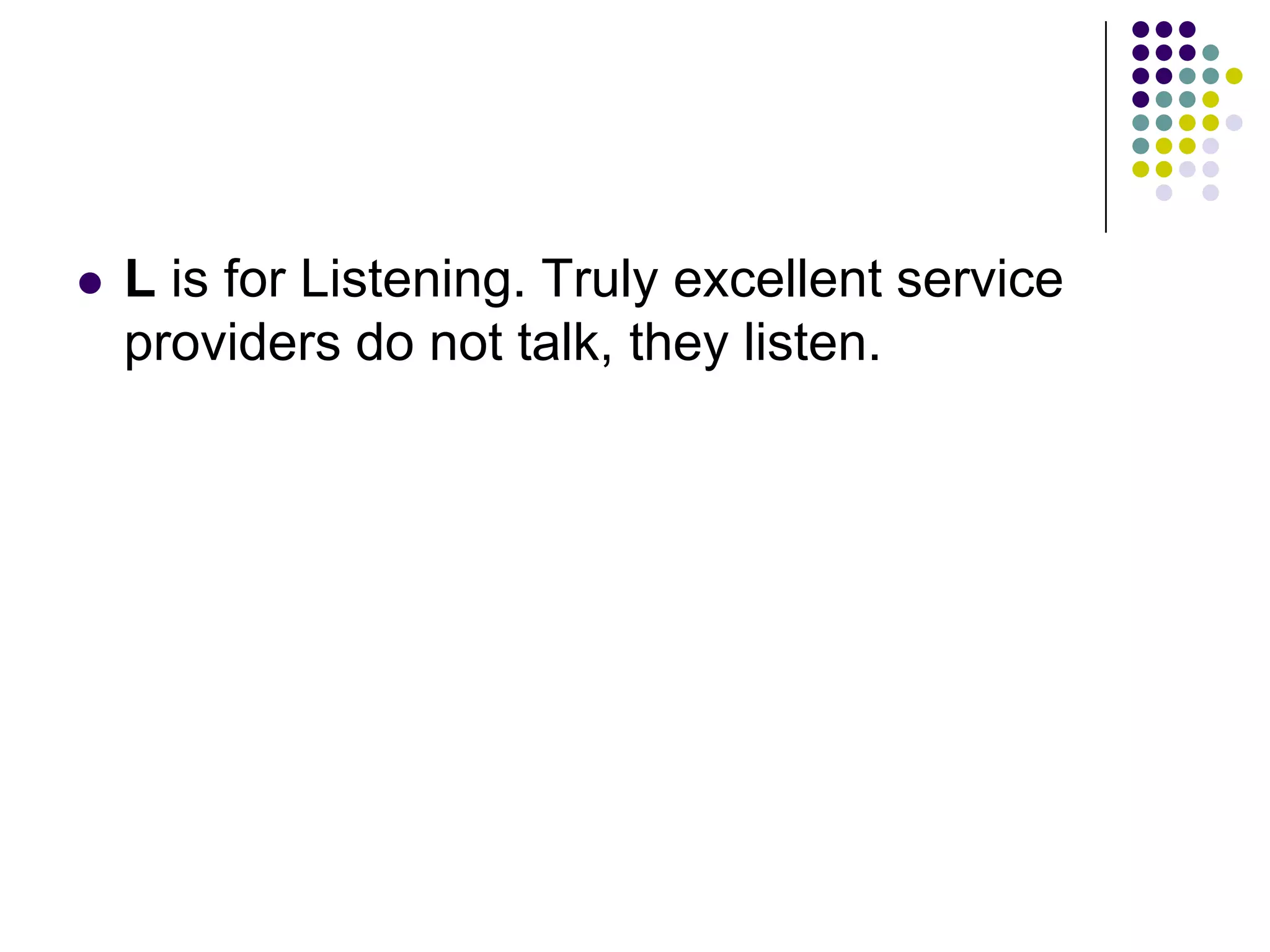
 L is for Listening. Truly excellent service
providers do not talk, they listen.
 M is for Managing expectations. Wherever
possible, underpromise and overdeliver.
 N is for Nurturing the culture of customer
service excellence within your organisation.
 O is for Ownership. Throughout the entire
organisation all employees should own and
feel responsible for the delivery of the
customer service excellence programme.
 P is for Processes, having effective
processes in place to facilitate excellent
customer service delivery.
 Q is for Quality service provision.
 R is for Recovery. When something goes
wrong take action immediately to keep
control of the situation and find a solution
which is acceptable to all.
 S is for Satisfaction. Test the effectiveness of
customer service strategies by measuring
customer satisfaction.
 T is for Trust, keep your organisation’s
promises.
 U is for Understanding the contributing
factors to customer service excellence.
 V is for Visibility. Customer service standards
and details of current performance in
achieving those standards should be made
available to all employees and customers.
 W is for Word of mouth. Impress your
customers and it will work to your advantage.
Upset your customers and it will damage your
reputation (one unhappy customer will tell
nine others (TARP).
 X is for eXceptional service. Surprise your
customers with the level of service you offer
them.
 Y is for Year in, Year out because your
customer service strategy should be
constantly revisited to ensure that standards
and processes remain relevant and current.
 Z is for being Zealous in your pursuit of
Customer Service Excellence

The a z of customer service excellence

  • 1.
    THE A-Z OF CUSTOMERSERVICE EXCELLENCE Dr. Oyewole O. Sarumi
  • 2.
     A isfor Acknowledging customers be that in person, over the telephone, or by written communication (email, letter etc...)
  • 3.
     B isfor Best Value (obviously!).
  • 4.
     C isfor Complaints, your most useful form of feedback.
  • 5.
     D isfor Dedicated staff working within a culture of customer service excellence.
  • 6.
     E isfor Empowerment, equipping your staff with the means and freedom to deliver excellent levels of customer service.
  • 7.
     F isfor Flexibility. The rigid application of policy in all cases without exception will inhibit your ability to deliver customer service excellence.
  • 8.
     G isfor Going the extra mile. Now a cliché but still worthy of inclusion - amaze your customers by delivering that little bit more than they expect.
  • 9.
     H isfor Human. Customers like to deal with humans, not organisations and certainly not machines.
  • 10.
     I isfor Interaction with customers. If customer interactions are positively dealt with you are well on the way to achieving excellent levels of customer service.
  • 11.
     J isfor Joined-up thinking, or partnership working through which knowledge and experiences are pooled in order to achieve greater efficiency and higher levels of customer service excellence.
  • 12.
     K isfor Knowledge. The more you know about your customers the better you will be able to serve them.
  • 13.
     L isfor Listening. Truly excellent service providers do not talk, they listen.
  • 14.
     M isfor Managing expectations. Wherever possible, underpromise and overdeliver.
  • 15.
     N isfor Nurturing the culture of customer service excellence within your organisation.
  • 16.
     O isfor Ownership. Throughout the entire organisation all employees should own and feel responsible for the delivery of the customer service excellence programme.
  • 17.
     P isfor Processes, having effective processes in place to facilitate excellent customer service delivery.
  • 18.
     Q isfor Quality service provision.
  • 19.
     R isfor Recovery. When something goes wrong take action immediately to keep control of the situation and find a solution which is acceptable to all.
  • 20.
     S isfor Satisfaction. Test the effectiveness of customer service strategies by measuring customer satisfaction.
  • 21.
     T isfor Trust, keep your organisation’s promises.
  • 22.
     U isfor Understanding the contributing factors to customer service excellence.
  • 23.
     V isfor Visibility. Customer service standards and details of current performance in achieving those standards should be made available to all employees and customers.
  • 24.
     W isfor Word of mouth. Impress your customers and it will work to your advantage. Upset your customers and it will damage your reputation (one unhappy customer will tell nine others (TARP).
  • 25.
     X isfor eXceptional service. Surprise your customers with the level of service you offer them.
  • 26.
     Y isfor Year in, Year out because your customer service strategy should be constantly revisited to ensure that standards and processes remain relevant and current.
  • 27.
     Z isfor being Zealous in your pursuit of Customer Service Excellence