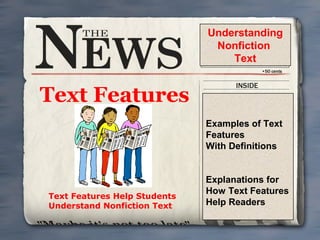
Understanding
Nonfiction
Text

Text Features
Examples of Text
Features
With Definitions

Text Features Help Students
Understand Nonfiction Text

Explanations for
How Text Features
Help Readers
What are text features?
• Authors include text features to help
the reader better understand what
they have read.
• Text features provide information
that may not be written in the text
itself.
• Text features can be found in
textbooks, magazine articles,
newspapers, reports, web pages, and
other forms of nonfiction text.
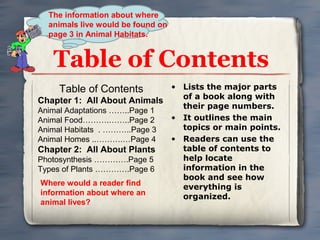
The information about where
animals live would be found on
page 3 in Animal Habitats.

Table of Contents
• Lists the major parts
of a book along with
Chapter 1: All About Animals
their page numbers.
Animal Adaptations ……..Page 1
• It outlines the main
Animal Food……….……..Page 2
topics or main points.
Animal Habitats . ………..Page 3
• Readers can use the
Animal Homes ..……….…Page 4
table of contents to
Chapter 2: All About Plants
help locate
Photosynthesis ………….Page 5
information in the
Types of Plants ………….Page 6
book and see how
Where would a reader find
everything is
information about where an
organized.
animal lives?

Table of Contents
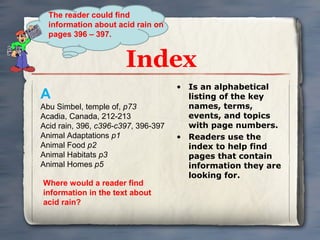
The reader could find
information about acid rain on
pages 396 – 397.

Index
A
Abu Simbel, temple of, p73
Acadia, Canada, 212-213
Acid rain, 396, c396-c397, 396-397
Animal Adaptations p1
Animal Food p2
Animal Habitats p3
Animal Homes p5
Where would a reader find
information in the text about
acid rain?

• Is an alphabetical
listing of the key
names, terms,
events, and topics
with page numbers.
• Readers use the
index to help find
pages that contain
information they are
looking for.
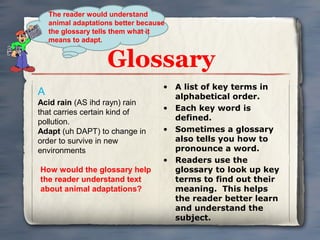
The reader would understand
animal adaptations better because
the glossary tells them what it
means to adapt.

Glossary
A
Acid rain (AS ihd rayn) rain
that carries certain kind of
pollution.
Adapt (uh DAPT) to change in
order to survive in new
environments
How would the glossary help
the reader understand text
about animal adaptations?

• A list of key terms in
alphabetical order.
• Each key word is
defined.
• Sometimes a glossary
also tells you how to
pronounce a word.
• Readers use the
glossary to look up key
terms to find out their
meaning. This helps
the reader better learn
and understand the
subject.
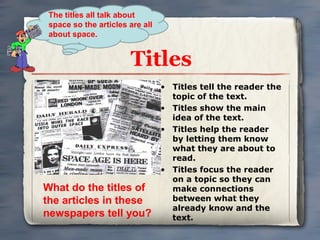
The titles all talk about
space so the articles are all
about space.

Titles

What do the titles of
the articles in these
newspapers tell you?

• Titles tell the reader the
topic of the text.
• Titles show the main
idea of the text.
• Titles help the reader
by letting them know
what they are about to
read.
• Titles focus the reader
on a topic so they can
make connections
between what they
already know and the
text.
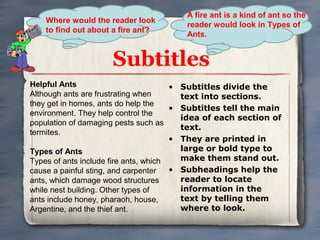
Where would the reader look
to find out about a fire ant?

A fire ant is a kind of ant so the
reader would look in Types of
Ants.

Subtitles
Helpful Ants
• Subtitles divide the
Although ants are frustrating when
text into sections.
they get in homes, ants do help the
• Subtitles tell the main
environment. They help control the
idea of each section of
population of damaging pests such as
text.
termites.
• They are printed in
large or bold type to
Types of Ants
make them stand out.
Types of ants include fire ants, which
• Subheadings help the
cause a painful sting, and carpenter
reader to locate
ants, which damage wood structures
information in the
while nest building. Other types of
text by telling them
ants include honey, pharaoh, house,
where to look.
Argentine, and the thief ant.
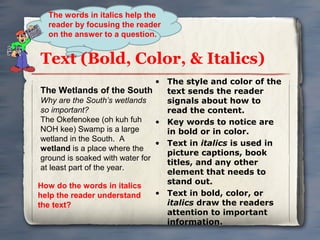
The words in italics help the
reader by focusing the reader
on the answer to a question.

Text (Bold, Color, & Italics)
• The style and color of the
The Wetlands of the South
text sends the reader
Why are the South’s wetlands
signals about how to
so important?
read the content.
The Okefenokee (oh kuh fuh
• Key words to notice are
NOH kee) Swamp is a large
in bold or in color.
wetland in the South. A
• Text in italics is used in
wetland is a place where the
picture captions, book
ground is soaked with water for
titles, and any other
at least part of the year.
element that needs to
stand out.
How do the words in italics
• Text in bold, color, or
help the reader understand
italics draw the readers
the text?
attention to important
information.
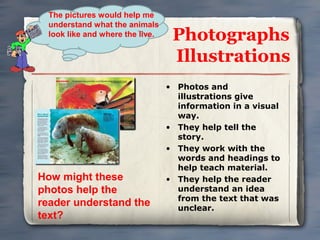
The pictures would help me
understand what the animals
look like and where the live.

How might these
photos help the
reader understand the
text?

Photographs
Illustrations
• Photos and
illustrations give
information in a visual
way.
• They help tell the
story.
• They work with the
words and headings to
help teach material.
• They help the reader
understand an idea
from the text that was
unclear.
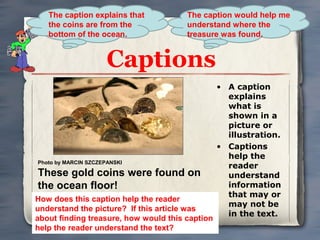
The caption explains that
the coins are from the
bottom of the ocean.

The caption would help me
understand where the
treasure was found.

Captions

Photo by MARCIN SZCZEPANSKI

These gold coins were found on
the ocean floor!
How does this caption help the reader
understand the picture? If this article was
about finding treasure, how would this caption
help the reader understand the text?

• A caption
explains
what is
shown in a
picture or
illustration.
• Captions
help the
reader
understand
information
that may or
may not be
in the text.
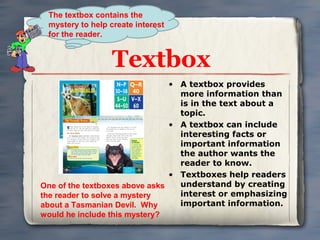
The textbox contains the
mystery to help create interest
for the reader.

Textbox
• A textbox provides
more information than
is in the text about a
topic.
• A textbox can include
interesting facts or
important information
the author wants the
reader to know.
• Textboxes help readers
understand by creating
One of the textboxes above asks
interest or emphasizing
the reader to solve a mystery
important information.
about a Tasmanian Devil. Why
would he include this mystery?
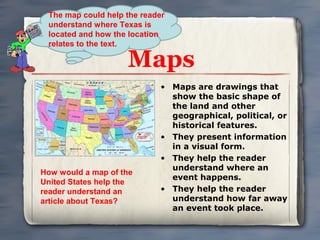
The map could help the reader
understand where Texas is
located and how the location
relates to the text.

Maps

How would a map of the
United States help the
reader understand an
article about Texas?

• Maps are drawings that
show the basic shape of
the land and other
geographical, political, or
historical features.
• They present information
in a visual form.
• They help the reader
understand where an
event happens.
• They help the reader
understand how far away
an event took place.
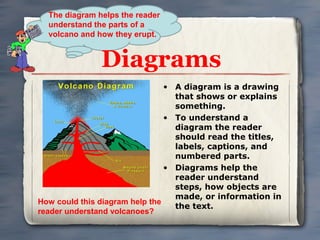
The diagram helps the reader
understand the parts of a
volcano and how they erupt.

Diagrams
• A diagram is a drawing
that shows or explains
something.
• To understand a
diagram the reader
should read the titles,
labels, captions, and
numbered parts.
• Diagrams help the
reader understand
steps, how objects are
made, or information in
How could this diagram help the
the text.
reader understand volcanoes?
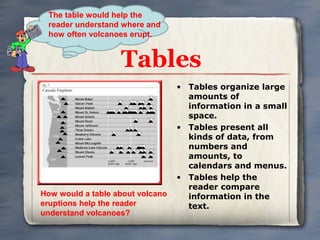
The table would help the
reader understand where and
how often volcanoes erupt.

Tables

How would a table about volcano
eruptions help the reader
understand volcanoes?

• Tables organize large
amounts of
information in a small
space.
• Tables present all
kinds of data, from
numbers and
amounts, to
calendars and menus.
• Tables help the
reader compare
information in the
text.
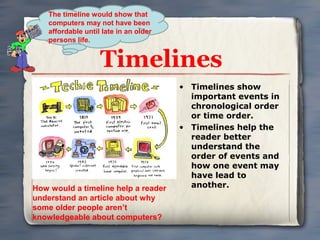
The timeline would show that
computers may not have been
affordable until late in an older
persons life.

Timelines

How would a timeline help a reader
understand an article about why
some older people aren’t
knowledgeable about computers?

• Timelines show
important events in
chronological order
or time order.
• Timelines help the
reader better
understand the
order of events and
how one event may
have lead to
another.
Find an article and
find an example of
each text feature.
Explain how each
example helps you to
understand what you
read.

Text features

  • 1.
    Understanding Nonfiction Text Text Features Examples ofText Features With Definitions Text Features Help Students Understand Nonfiction Text Explanations for How Text Features Help Readers
  • 2.
    What are textfeatures? • Authors include text features to help the reader better understand what they have read. • Text features provide information that may not be written in the text itself. • Text features can be found in textbooks, magazine articles, newspapers, reports, web pages, and other forms of nonfiction text.
  • 3.
    The information aboutwhere animals live would be found on page 3 in Animal Habitats. Table of Contents • Lists the major parts of a book along with Chapter 1: All About Animals their page numbers. Animal Adaptations ……..Page 1 • It outlines the main Animal Food……….……..Page 2 topics or main points. Animal Habitats . ………..Page 3 • Readers can use the Animal Homes ..……….…Page 4 table of contents to Chapter 2: All About Plants help locate Photosynthesis ………….Page 5 information in the Types of Plants ………….Page 6 book and see how Where would a reader find everything is information about where an organized. animal lives? Table of Contents
  • 4.
    The reader couldfind information about acid rain on pages 396 – 397. Index A Abu Simbel, temple of, p73 Acadia, Canada, 212-213 Acid rain, 396, c396-c397, 396-397 Animal Adaptations p1 Animal Food p2 Animal Habitats p3 Animal Homes p5 Where would a reader find information in the text about acid rain? • Is an alphabetical listing of the key names, terms, events, and topics with page numbers. • Readers use the index to help find pages that contain information they are looking for.
  • 5.
    The reader wouldunderstand animal adaptations better because the glossary tells them what it means to adapt. Glossary A Acid rain (AS ihd rayn) rain that carries certain kind of pollution. Adapt (uh DAPT) to change in order to survive in new environments How would the glossary help the reader understand text about animal adaptations? • A list of key terms in alphabetical order. • Each key word is defined. • Sometimes a glossary also tells you how to pronounce a word. • Readers use the glossary to look up key terms to find out their meaning. This helps the reader better learn and understand the subject.
  • 6.
    The titles alltalk about space so the articles are all about space. Titles What do the titles of the articles in these newspapers tell you? • Titles tell the reader the topic of the text. • Titles show the main idea of the text. • Titles help the reader by letting them know what they are about to read. • Titles focus the reader on a topic so they can make connections between what they already know and the text.
  • 7.
    Where would thereader look to find out about a fire ant? A fire ant is a kind of ant so the reader would look in Types of Ants. Subtitles Helpful Ants • Subtitles divide the Although ants are frustrating when text into sections. they get in homes, ants do help the • Subtitles tell the main environment. They help control the idea of each section of population of damaging pests such as text. termites. • They are printed in large or bold type to Types of Ants make them stand out. Types of ants include fire ants, which • Subheadings help the cause a painful sting, and carpenter reader to locate ants, which damage wood structures information in the while nest building. Other types of text by telling them ants include honey, pharaoh, house, where to look. Argentine, and the thief ant.
  • 8.
    The words initalics help the reader by focusing the reader on the answer to a question. Text (Bold, Color, & Italics) • The style and color of the The Wetlands of the South text sends the reader Why are the South’s wetlands signals about how to so important? read the content. The Okefenokee (oh kuh fuh • Key words to notice are NOH kee) Swamp is a large in bold or in color. wetland in the South. A • Text in italics is used in wetland is a place where the picture captions, book ground is soaked with water for titles, and any other at least part of the year. element that needs to stand out. How do the words in italics • Text in bold, color, or help the reader understand italics draw the readers the text? attention to important information.
  • 9.
    The pictures wouldhelp me understand what the animals look like and where the live. How might these photos help the reader understand the text? Photographs Illustrations • Photos and illustrations give information in a visual way. • They help tell the story. • They work with the words and headings to help teach material. • They help the reader understand an idea from the text that was unclear.
  • 10.
    The caption explainsthat the coins are from the bottom of the ocean. The caption would help me understand where the treasure was found. Captions Photo by MARCIN SZCZEPANSKI These gold coins were found on the ocean floor! How does this caption help the reader understand the picture? If this article was about finding treasure, how would this caption help the reader understand the text? • A caption explains what is shown in a picture or illustration. • Captions help the reader understand information that may or may not be in the text.
  • 11.
    The textbox containsthe mystery to help create interest for the reader. Textbox • A textbox provides more information than is in the text about a topic. • A textbox can include interesting facts or important information the author wants the reader to know. • Textboxes help readers understand by creating One of the textboxes above asks interest or emphasizing the reader to solve a mystery important information. about a Tasmanian Devil. Why would he include this mystery?
  • 12.
    The map couldhelp the reader understand where Texas is located and how the location relates to the text. Maps How would a map of the United States help the reader understand an article about Texas? • Maps are drawings that show the basic shape of the land and other geographical, political, or historical features. • They present information in a visual form. • They help the reader understand where an event happens. • They help the reader understand how far away an event took place.
  • 13.
    The diagram helpsthe reader understand the parts of a volcano and how they erupt. Diagrams • A diagram is a drawing that shows or explains something. • To understand a diagram the reader should read the titles, labels, captions, and numbered parts. • Diagrams help the reader understand steps, how objects are made, or information in How could this diagram help the the text. reader understand volcanoes?
  • 14.
    The table wouldhelp the reader understand where and how often volcanoes erupt. Tables How would a table about volcano eruptions help the reader understand volcanoes? • Tables organize large amounts of information in a small space. • Tables present all kinds of data, from numbers and amounts, to calendars and menus. • Tables help the reader compare information in the text.
  • 15.
    The timeline wouldshow that computers may not have been affordable until late in an older persons life. Timelines How would a timeline help a reader understand an article about why some older people aren’t knowledgeable about computers? • Timelines show important events in chronological order or time order. • Timelines help the reader better understand the order of events and how one event may have lead to another.
  • 16.
    Find an articleand find an example of each text feature. Explain how each example helps you to understand what you read.

Editor's Notes