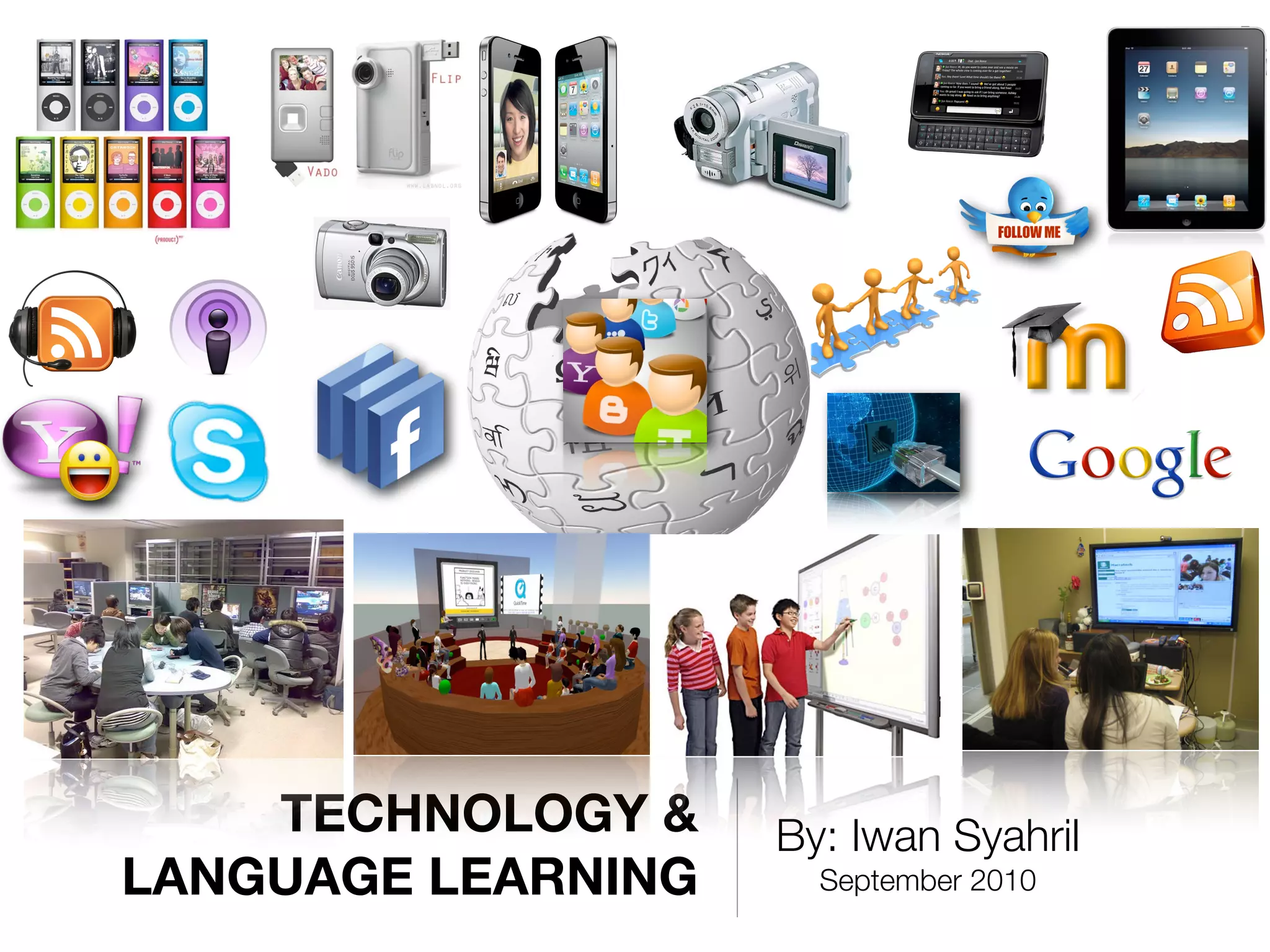
TECHNOLOGY &
LANGUAGE LEARNING
By: Iwan Syahril
September 2010
Status Updates
Think-Pair-Share
How has technology helped you
in the language learning?
“Technology is just a tool, but the key is
the people who use the technology.”
A	
  new	
  breed	
  of	
  students	
  
	
  Our	
  students	
  have	
  changed	
  radically.	
  Today’s	
  
students	
  are	
  no	
  longer	
  the	
  people	
  our	
  educa7onal	
  
system	
  was	
  designed	
  to	
  teach.	
  
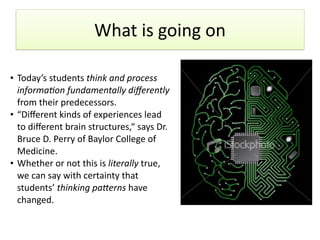
What	
  is	
  going	
  on
• Today’s	
  students	
  think	
  and	
  process	
  
informa1on	
  fundamentally	
  differently	
  
from	
  their	
  predecessors.	
  
• “Different	
  kinds	
  of	
  experiences	
  lead	
  
to	
  different	
  brain	
  structures,“	
  says	
  Dr.	
  
Bruce	
  D.	
  Perry	
  of	
  Baylor	
  College	
  of	
  
Medicine.	
  
• Whether	
  or	
  not	
  this	
  is	
  literally	
  true,	
  
we	
  can	
  say	
  with	
  certainty	
  that	
  
students’	
  thinking	
  pa7erns	
  have	
  
changed.
Digital	
  Na4ves	
  &	
  Digital	
  Immigrants
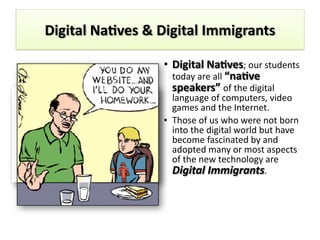
• Digital	
  Na4ves;	
  our	
  students	
  
today	
  are	
  all	
  “na4ve	
  
speakers”	
  of	
  the	
  digital	
  
language	
  of	
  computers,	
  video	
  
games	
  and	
  the	
  Internet.	
  
• Those	
  of	
  us	
  who	
  were	
  not	
  born	
  
into	
  the	
  digital	
  world	
  but	
  have	
  
become	
  fascinated	
  by	
  and	
  
adopted	
  many	
  or	
  most	
  aspects	
  
of	
  the	
  new	
  technology	
  are	
  
Digital	
  Immigrants.	
  
Digital	
  NaHves	
  …
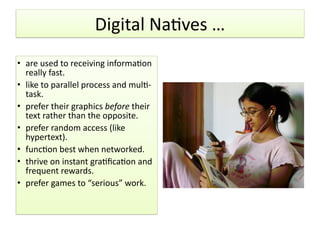
• are	
  used	
  to	
  receiving	
  informaHon	
  
really	
  fast.	
  
• like	
  to	
  parallel	
  process	
  and	
  mulH-­‐
task.	
  
• prefer	
  their	
  graphics	
  before	
  their	
  
text	
  rather	
  than	
  the	
  opposite.	
  
• prefer	
  random	
  access	
  (like	
  
hypertext).	
  
• funcHon	
  best	
  when	
  networked.	
  
• thrive	
  on	
  instant	
  graHficaHon	
  and	
  
frequent	
  rewards.	
  
• prefer	
  games	
  to	
  “serious”	
  work.
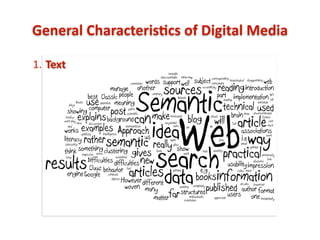
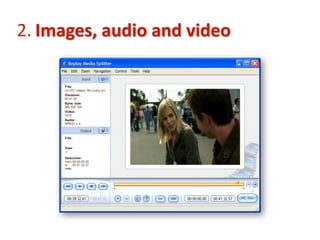
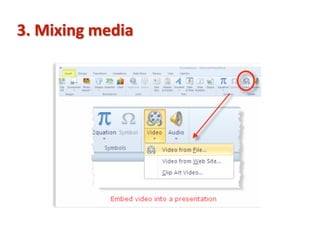
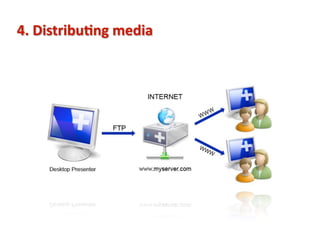
General	
  Characteris4cs	
  of	
  Digital	
  Media
1. Text	
  
2. Images,	
  audio	
  and	
  video	
  
3.	
  Mixing	
  media	
  
4.	
  Distribu4ng	
  media
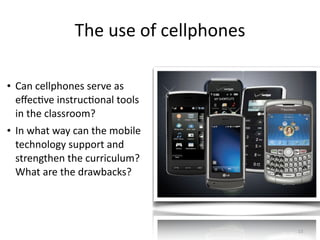
The	
  use	
  of	
  cellphones
• Can	
  cellphones	
  serve	
  as	
  
effecHve	
  instrucHonal	
  tools	
  
in	
  the	
  classroom?	
  
• In	
  what	
  way	
  can	
  the	
  mobile	
  
technology	
  support	
  and	
  
strengthen	
  the	
  curriculum?	
  
What	
  are	
  the	
  drawbacks?
13
So, how are cellphones used?
• Communication and social networking.

• Information seeking and sharing.

• Entertainment and leisure.

• Personal business and banking.

• Entrepreneurship, business development and marketing.

• Creativity and the arts.

• Education and learning. 

• (other categories?) ...
Some of the categories are:
In the past couple of years, what are the most
innovative ideas for cellphones you have come
across?
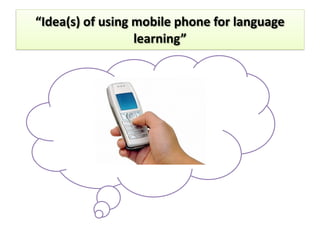
“Idea(s)	
  of	
  using	
  mobile	
  phone	
  for	
  language	
  
learning”

Technology in Language Learning

  • 1.
    TECHNOLOGY & LANGUAGE LEARNING By:Iwan Syahril September 2010
  • 2.
  • 3.
    Think-Pair-Share How has technologyhelped you in the language learning?
  • 4.
    “Technology is justa tool, but the key is the people who use the technology.”
  • 5.
    A  new  breed  of  students    Our  students  have  changed  radically.  Today’s   students  are  no  longer  the  people  our  educa7onal   system  was  designed  to  teach.  
  • 6.
    What  is  going  on • Today’s  students  think  and  process   informa1on  fundamentally  differently   from  their  predecessors.   • “Different  kinds  of  experiences  lead   to  different  brain  structures,“  says  Dr.   Bruce  D.  Perry  of  Baylor  College  of   Medicine.   • Whether  or  not  this  is  literally  true,   we  can  say  with  certainty  that   students’  thinking  pa7erns  have   changed.
  • 7.
    Digital  Na4ves  &  Digital  Immigrants • Digital  Na4ves;  our  students   today  are  all  “na4ve   speakers”  of  the  digital   language  of  computers,  video   games  and  the  Internet.   • Those  of  us  who  were  not  born   into  the  digital  world  but  have   become  fascinated  by  and   adopted  many  or  most  aspects   of  the  new  technology  are   Digital  Immigrants.  
  • 8.
    Digital  NaHves  … •are  used  to  receiving  informaHon   really  fast.   • like  to  parallel  process  and  mulH-­‐ task.   • prefer  their  graphics  before  their   text  rather  than  the  opposite.   • prefer  random  access  (like   hypertext).   • funcHon  best  when  networked.   • thrive  on  instant  graHficaHon  and   frequent  rewards.   • prefer  games  to  “serious”  work.
  • 9.
    General  Characteris4cs  of  Digital  Media 1. Text  
  • 10.
    2. Images,  audio  and  video  
  • 11.
  • 12.
  • 13.
    The  use  of  cellphones • Can  cellphones  serve  as   effecHve  instrucHonal  tools   in  the  classroom?   • In  what  way  can  the  mobile   technology  support  and   strengthen  the  curriculum?   What  are  the  drawbacks? 13
  • 14.
    So, how arecellphones used?
  • 15.
    • Communication andsocial networking. • Information seeking and sharing. • Entertainment and leisure. • Personal business and banking. • Entrepreneurship, business development and marketing. • Creativity and the arts. • Education and learning. • (other categories?) ... Some of the categories are:
  • 16.
    In the pastcouple of years, what are the most innovative ideas for cellphones you have come across?
  • 17.
    “Idea(s)  of  using  mobile  phone  for  language   learning”