ANTI-CANCER DRUGS
TARGETED THERAPY
PREPARED BY :
ABARNA LAKSHMI.R,
PHARM .D (INTERN),
C.L.BAID METHA COLLEGE OF PHARMACY,
CHENNAI-97
10 HALLMARKS OF CANCER
• Cellular processes of self-sufficiency in growth signals
• Insensitivity to growth-inhibitory signals
• Evading programmed cell death
• Limitless replication potential
• Sustained angiogenesis
• Invasion/metastasis
• Immune evasion
• A stress response phenotype, which is composed of metabolic (lactic acidosis), proteotoxic (heat-shock response),
mitotic (chromosome instability), oxidative (reactive oxygen species), and DNA damage stresses (double-strand
breaks)
• Stromal subversion
• An inflammatory serum cytokine response that helps tumors grow and proliferate once the initiation is
complete
MECHANISM OF DRUGS
TARGETED
DRUGS/THERAPY
WHAT IS IT?
• Targeted therapy is a cancer treatment that
uses drugs to target specific genes and
proteins that are involved in the growth and
survival of cancer cells.
• Targeted therapy can affect the tissue
environment that helps a cancer grow and
survive or it can target cells related to cancer
growth, like blood vessel cells.
• The FDA has approved targeted therapies for
more than 15 types of cancer, including those
of the breast, prostate, colon, and lung.
TYPES
•
TARGETEDTHERAPY
SMALL MOLECULES
their generic name
ends in "-ib."
(ORAL)
MONOCLONAL
ANTIBODIES
their generic
names end in "-mab.“
(PARENTERAL)
Entering cells and
inhibiting enzymatic
functions (usually
tyrosine kinase
reactions).
blocking cell surface
receptor function.
antigen–antibody
complex.
THERAPEUTIC USES
Breast cancer. About 20% to 25% of breast cancers have too much of a protein called
human epidermal growth factor receptor 2 (HER2). This protein makes tumor cells grow.
If the cancer is "HER2 positive", there are many targeted therapy options.
Chronic myeloid leukemia (CML). Almost all cases of chronic myeloid leukemia are
driven by the formation of a gene called BCR-ABL. This gene leads to the production of
an enzyme called the BCR-ABL protein. This protein causes normal myeloid cells to start
behaving like cancer cells. This was the very first mutation and cancer treated with
targeted therapy.
Colorectal cancer. Colorectal cancer often makes too much of a protein called
epidermal growth factor receptor (EGFR). Drugs that block EGFR may help stop or
slow cancer growth. These cancers have no mutation in the KRAS gene. Another option
is a drug that blocks vascular endothelial growth factor (VEGF). This protein helps
make new blood vessels.
Lung cancer. Drugs that block EGFR may also stop or slow lung cancer growth. This may be
more likely if the EGFR has certain mutations. There are also drugs for lung cancer with
mutations in the ALK and ROS genes.
Lymphoma. There is an overproduction of B cells, a type of white blood cell that fights
infections. Targeted drugs that block the enzyme that leads to this overproduction of B cells
have been very successful for the treatment of lymphomas and some B-cell leukemias.
Melanoma. About half of melanomas have a mutation in the BRAF gene. Researchers know
certain BRAF mutations make good drug targets. So there are many FDA-
approved BRAF inhibitors. But these drugs can be harmful if your tumor do not have
the BRAF mutation.
SIDE EFFECTS
• Targeted therapy can cause side effects.
• The side effects you may have depend on the type of targeted therapy you receive and
how your body reacts to the therapy.
• The most common side effects of targeted therapy include diarrhea and liver problems.
• Other side effects might include problems with blood clotting and wound healing, high
blood pressure, fatigue, mouth sores, nail changes, the loss of hair color, and skin
problems.
• Skin problems might include rash or dry skin.
• Very rarely, a hole might form through the wall of the esophagus, stomach, small
intestine, large bowel, rectum, or gallbladder.
SMALL MOLECULES
A broad spectrum of target kinases, t1/2 of 12-24 hours, and thus require daily oral
administration
 TYROSINE KINASE INHIBITORS: Imatinib, nilotinib
 EGF INHIBITORS: Gefinitib, Erlotinib
 ANGIOGENESIS INHIBITORS: Sunitinib
MONOCLONAL ANTIBODIES
Specific for a single receptor, have a long plasma t1/2, and require only
intermittent administration
• PROTEOSOME INHIBITOR: Bortezomib
• UNARMED MbS: Rituximab
• ANGIOGENESIS INHIBITOR: Bevacizumab.
PROTEIN KINASE – BRIEF INTRO
• Protein kinases are critical components of signal transduction pathways that regulate
cell growth and adaption to the extracellular environment.
• These signaling pathways influence gene transcription and/or DNA synthesis, as well
as cytoplasmic events.
• The human genome contains ~550 protein kinases and 130 phosphoprotein
phosphatases that regulate the phosphorylation states of key signaling molecules.
ALL OFTHE
ABOVE
THREONIN
E
SERINETYROSINE
TYROSINE KINASE
• Growth factors and other ligands bind to and activate the receptor tyrosine kinases under
physiological conditions.
• In a growing number of human malignancies, mutations that constitutively activate protein
tyrosine kinases are implicated in malignant transformation; thus, protein tyrosine kinases
are targets for cancer therapy.
• extracellular ligand-binding
domain
Receptor tyrosine
kinases
• enzymes that are confined to the
cytoplasm or nuclear cellular
compartment
Non receptor tyrosine
kinases
Simple MOA
EPIDERMAL GROWTH FACTOR
INHIBITORS
• The EGFR belongs to the ErbB family of
transmembrane receptor tyrosine kinases.
• EGFR, also known as ErbB1 or HER1, is essential for
the growth and differentiation of epithelial cells.
• Ligand binding to the extracellular domain of EGFR
family members causes receptor of the intracellular
domain, resulting indimerization and stimulates the
protein tyrosine kinase activity autophosphorylation
of several Tyr residues in the C-terminal domain.
• Recognition of the phosphotyrosines by other
proteins initiates protein-protein interactions that
result in stimulation of a variety of signaling pathways,
including MAPK, PI3K/Akt, and STAT pathways.
Two separate classes of drugs that target the EGFR pathway have become
important agents in the therapy of solid tumors.
• The EGFR tyrosine kinase inhibitors erlotinib and gefitinib bind to the kinase
domain and block the enzymatic function of EGFR.
• The monoclonal antibodies cetuximab and panitumumab bind specifically to
the extracellular domain of EGFR.
• They inhibit EGFR-dependent signaling through inhibition of ligand-dependent
activation and receptor dimerization, downregulation of EGFR expression, and
induction of antibody-dependent cell mediated cytotoxicity.
ANGIOGENESIS INHIBITORS
• Cancer cells secrete angiogenic factors that induce the formation of new blood vessels
and guarantee the flow of nutrients to the tumor cells.
• Angiogenic factors secreted by tumors include VEGF (vascular endothelial growth factor),
FGF (fibroblastgrowth factor), TGF-β (transforming growth factor β) and PDGF (platelet-
derived growth factor).
• Multiple tumor types overexpress these angiogenic factors.
• VEGF initiates endothelial cell proliferation when it binds to a member of the VEGF
receptor (VEGFR) family, a group of highly homologous receptors with intracellular
tyrosine kinase domains that includes VEGFR1 (FLT1), VEGFR2 (KDR), and VEGFR3 (FLT4).
• The binding of VEGF to its receptor activates the intracellular VEGFR tyrosine kinase
activity and initiates mitogenic and anti-apoptotic signaling pathways within the
endothelial cell. –RENAL CELL CARCINOMA + ADJ. LUNG,BREAST,COLORECTAL CANCERS.
• Examples: Sunitinib, Sorafenib, Bevacizumab.
Tyrosine kinase targets
PROTEOSOME INHIBITORS
• Proteasomes are packaged complexes of proteolytic enzymes which degrade several
intracellular signalling proteins that control cell cycle, apoptosis and survival response.
• The most important of these is nuclear factor-κB (NF-κB) mediated signalling.
• NF-κB is a transcription factor that normally resides in the cytoplasm bound to an
inhibitory protein IκB.
• Hypoxia, cytotoxic drugs, DNA breaks and other stressful stimuli activate proteasome
which cleaves and degrades IκB to release NF-κB which then translocates to the
nucleus and transcripts certain genes to produce molecules that oppose apoptosis and
promote cell proliferation.
• The prime indication of bortezomib is multiple myeloma, both for first line combined
therapy (along with cytotoxic drugs), as well as for relapsed disease. It also has
received approval for relapsed or refractory mantle cell lymphoma
MONOCLONAL ANTIBODIES
• Monoclonal antibodies (MAbs) are sourced from hybridomas created by fusing a
continuously proliferating cell line from mouse myeloma with antibody producing B
lymphocytes sensitized to produce antibody against a particular antigen.
• This hybridoma is then cloned so that the single species antibody is obtained in large
quantity. Separate hybridomas are created for each antibody.
• Chimerized MAbs are produced by substituting major portion with human IgG molecule
for the mouse antibody. These MAbs are part humanpart mouse.
• Totally human MAbs are called humanized MAbs.
• The nomenclature adopted for naming therapeutic monoclonal antibodies is to
terminate the name in -ximab for chimeric antibodies and -umab for fully humanized
antibodies
• Unmodified monoclonal antibodies may kill tumor cells by a variety of
mechanisms
• E.g., antibody-dependent cellular cytotoxicity (ADCC), complement-
dependent cytotoxicity (CDC), and
• direct induction of apoptosis by antigen binding but the clinically
relevant mechanisms for most antibodies are uncertain
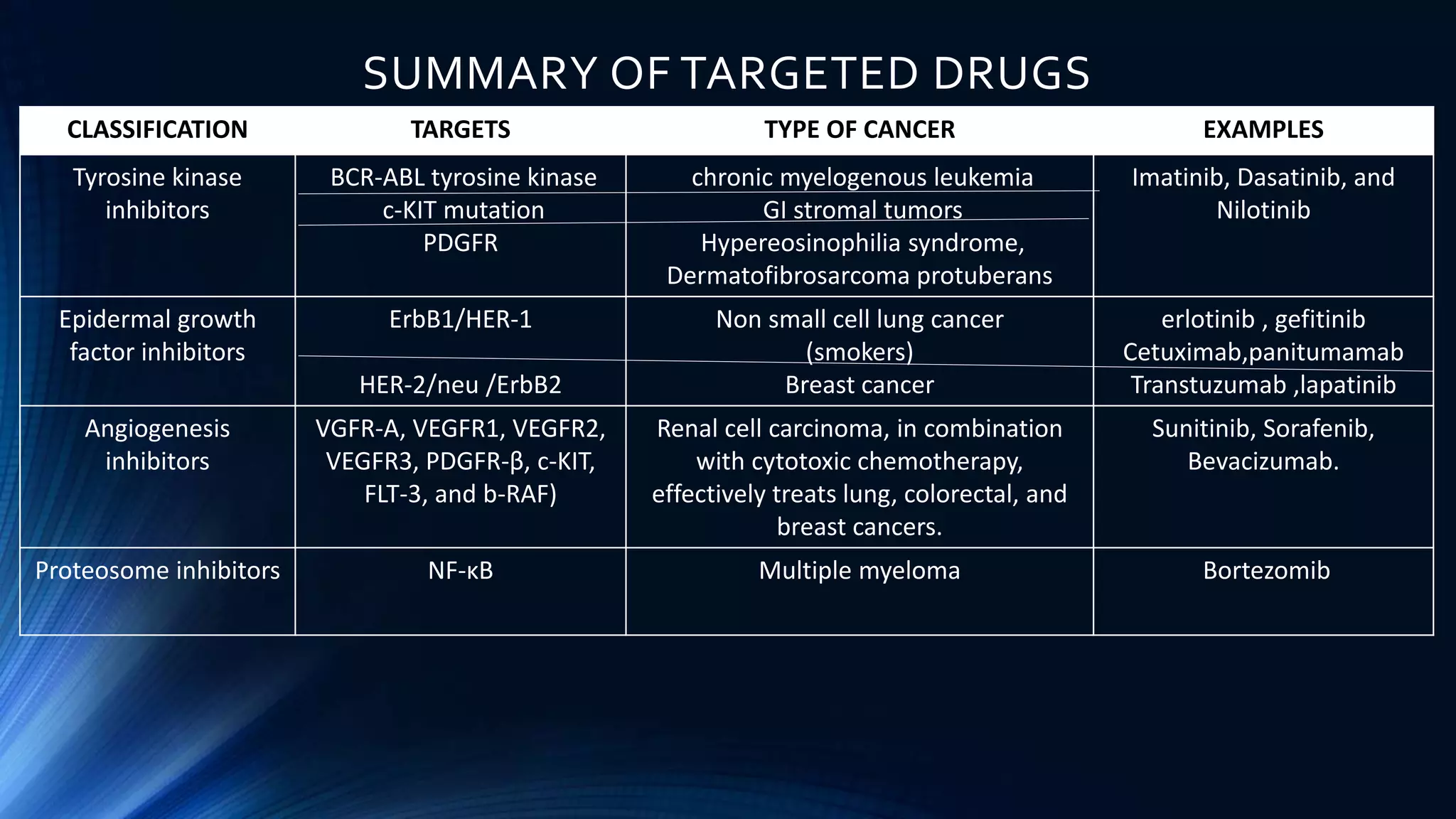
SUMMARY OF TARGETED DRUGS
CLASSIFICATION TARGETS TYPE OF CANCER EXAMPLES
Tyrosine kinase
inhibitors
BCR-ABL tyrosine kinase
c-KIT mutation
PDGFR
chronic myelogenous leukemia
GI stromal tumors
Hypereosinophilia syndrome,
Dermatofibrosarcoma protuberans
Imatinib, Dasatinib, and
Nilotinib
Epidermal growth
factor inhibitors
ErbB1/HER-1
HER-2/neu /ErbB2
Non small cell lung cancer
(smokers)
Breast cancer
erlotinib , gefitinib
Cetuximab,panitumamab
Transtuzumab ,lapatinib
Angiogenesis
inhibitors
VGFR-A, VEGFR1, VEGFR2,
VEGFR3, PDGFR-β, c-KIT,
FLT-3, and b-RAF)
Renal cell carcinoma, in combination
with cytotoxic chemotherapy,
effectively treats lung, colorectal, and
breast cancers.
Sunitinib, Sorafenib,
Bevacizumab.
Proteosome inhibitors NF-κB Multiple myeloma Bortezomib
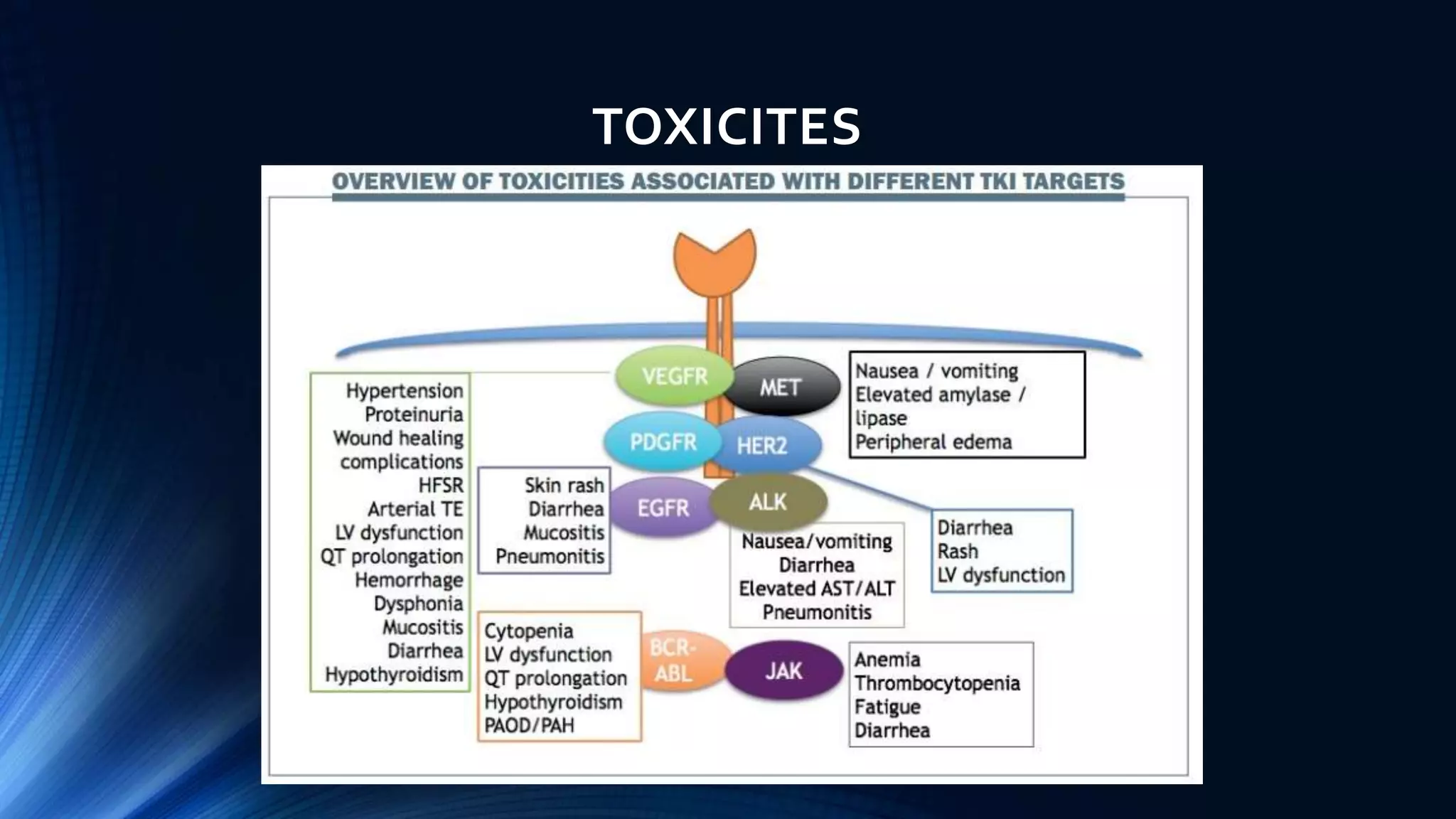
TOXICITES
REFERENCES
1. MEDSCAPE-https://www.medscape.com/answers/1372666-
167068/which-hallmarks-of-cancer-have-been-proposed-as-
targets-for-cancer-therapy
2. KDTRIPATHY-ESSENTIALS OF MEDICAL PHARMACOLOGY
3. LIPPINCOTT'S ILLUSTRATED REVIEWS –PHARMACOLOGY
4. GOODMAN GILMAN’S OHARMACOLOGY BASIS OF
THERAPEUTICS
THANKYOU

Targeted therapy anticancer drugs

  • 1.
    ANTI-CANCER DRUGS TARGETED THERAPY PREPAREDBY : ABARNA LAKSHMI.R, PHARM .D (INTERN), C.L.BAID METHA COLLEGE OF PHARMACY, CHENNAI-97
  • 2.
    10 HALLMARKS OFCANCER • Cellular processes of self-sufficiency in growth signals • Insensitivity to growth-inhibitory signals • Evading programmed cell death • Limitless replication potential • Sustained angiogenesis • Invasion/metastasis • Immune evasion • A stress response phenotype, which is composed of metabolic (lactic acidosis), proteotoxic (heat-shock response), mitotic (chromosome instability), oxidative (reactive oxygen species), and DNA damage stresses (double-strand breaks) • Stromal subversion • An inflammatory serum cytokine response that helps tumors grow and proliferate once the initiation is complete
  • 4.
  • 6.
  • 7.
    WHAT IS IT? •Targeted therapy is a cancer treatment that uses drugs to target specific genes and proteins that are involved in the growth and survival of cancer cells. • Targeted therapy can affect the tissue environment that helps a cancer grow and survive or it can target cells related to cancer growth, like blood vessel cells. • The FDA has approved targeted therapies for more than 15 types of cancer, including those of the breast, prostate, colon, and lung.
  • 8.
    TYPES • TARGETEDTHERAPY SMALL MOLECULES their genericname ends in "-ib." (ORAL) MONOCLONAL ANTIBODIES their generic names end in "-mab.“ (PARENTERAL) Entering cells and inhibiting enzymatic functions (usually tyrosine kinase reactions). blocking cell surface receptor function. antigen–antibody complex.
  • 9.
    THERAPEUTIC USES Breast cancer.About 20% to 25% of breast cancers have too much of a protein called human epidermal growth factor receptor 2 (HER2). This protein makes tumor cells grow. If the cancer is "HER2 positive", there are many targeted therapy options. Chronic myeloid leukemia (CML). Almost all cases of chronic myeloid leukemia are driven by the formation of a gene called BCR-ABL. This gene leads to the production of an enzyme called the BCR-ABL protein. This protein causes normal myeloid cells to start behaving like cancer cells. This was the very first mutation and cancer treated with targeted therapy. Colorectal cancer. Colorectal cancer often makes too much of a protein called epidermal growth factor receptor (EGFR). Drugs that block EGFR may help stop or slow cancer growth. These cancers have no mutation in the KRAS gene. Another option is a drug that blocks vascular endothelial growth factor (VEGF). This protein helps make new blood vessels.
  • 10.
    Lung cancer. Drugsthat block EGFR may also stop or slow lung cancer growth. This may be more likely if the EGFR has certain mutations. There are also drugs for lung cancer with mutations in the ALK and ROS genes. Lymphoma. There is an overproduction of B cells, a type of white blood cell that fights infections. Targeted drugs that block the enzyme that leads to this overproduction of B cells have been very successful for the treatment of lymphomas and some B-cell leukemias. Melanoma. About half of melanomas have a mutation in the BRAF gene. Researchers know certain BRAF mutations make good drug targets. So there are many FDA- approved BRAF inhibitors. But these drugs can be harmful if your tumor do not have the BRAF mutation.
  • 11.
    SIDE EFFECTS • Targetedtherapy can cause side effects. • The side effects you may have depend on the type of targeted therapy you receive and how your body reacts to the therapy. • The most common side effects of targeted therapy include diarrhea and liver problems. • Other side effects might include problems with blood clotting and wound healing, high blood pressure, fatigue, mouth sores, nail changes, the loss of hair color, and skin problems. • Skin problems might include rash or dry skin. • Very rarely, a hole might form through the wall of the esophagus, stomach, small intestine, large bowel, rectum, or gallbladder.
  • 12.
    SMALL MOLECULES A broadspectrum of target kinases, t1/2 of 12-24 hours, and thus require daily oral administration  TYROSINE KINASE INHIBITORS: Imatinib, nilotinib  EGF INHIBITORS: Gefinitib, Erlotinib  ANGIOGENESIS INHIBITORS: Sunitinib
  • 13.
    MONOCLONAL ANTIBODIES Specific fora single receptor, have a long plasma t1/2, and require only intermittent administration • PROTEOSOME INHIBITOR: Bortezomib • UNARMED MbS: Rituximab • ANGIOGENESIS INHIBITOR: Bevacizumab.
  • 14.
    PROTEIN KINASE –BRIEF INTRO • Protein kinases are critical components of signal transduction pathways that regulate cell growth and adaption to the extracellular environment. • These signaling pathways influence gene transcription and/or DNA synthesis, as well as cytoplasmic events. • The human genome contains ~550 protein kinases and 130 phosphoprotein phosphatases that regulate the phosphorylation states of key signaling molecules. ALL OFTHE ABOVE THREONIN E SERINETYROSINE
  • 16.
    TYROSINE KINASE • Growthfactors and other ligands bind to and activate the receptor tyrosine kinases under physiological conditions. • In a growing number of human malignancies, mutations that constitutively activate protein tyrosine kinases are implicated in malignant transformation; thus, protein tyrosine kinases are targets for cancer therapy. • extracellular ligand-binding domain Receptor tyrosine kinases • enzymes that are confined to the cytoplasm or nuclear cellular compartment Non receptor tyrosine kinases
  • 17.
  • 18.
    EPIDERMAL GROWTH FACTOR INHIBITORS •The EGFR belongs to the ErbB family of transmembrane receptor tyrosine kinases. • EGFR, also known as ErbB1 or HER1, is essential for the growth and differentiation of epithelial cells. • Ligand binding to the extracellular domain of EGFR family members causes receptor of the intracellular domain, resulting indimerization and stimulates the protein tyrosine kinase activity autophosphorylation of several Tyr residues in the C-terminal domain. • Recognition of the phosphotyrosines by other proteins initiates protein-protein interactions that result in stimulation of a variety of signaling pathways, including MAPK, PI3K/Akt, and STAT pathways.
  • 19.
    Two separate classesof drugs that target the EGFR pathway have become important agents in the therapy of solid tumors. • The EGFR tyrosine kinase inhibitors erlotinib and gefitinib bind to the kinase domain and block the enzymatic function of EGFR. • The monoclonal antibodies cetuximab and panitumumab bind specifically to the extracellular domain of EGFR. • They inhibit EGFR-dependent signaling through inhibition of ligand-dependent activation and receptor dimerization, downregulation of EGFR expression, and induction of antibody-dependent cell mediated cytotoxicity.
  • 20.
    ANGIOGENESIS INHIBITORS • Cancercells secrete angiogenic factors that induce the formation of new blood vessels and guarantee the flow of nutrients to the tumor cells. • Angiogenic factors secreted by tumors include VEGF (vascular endothelial growth factor), FGF (fibroblastgrowth factor), TGF-β (transforming growth factor β) and PDGF (platelet- derived growth factor). • Multiple tumor types overexpress these angiogenic factors. • VEGF initiates endothelial cell proliferation when it binds to a member of the VEGF receptor (VEGFR) family, a group of highly homologous receptors with intracellular tyrosine kinase domains that includes VEGFR1 (FLT1), VEGFR2 (KDR), and VEGFR3 (FLT4). • The binding of VEGF to its receptor activates the intracellular VEGFR tyrosine kinase activity and initiates mitogenic and anti-apoptotic signaling pathways within the endothelial cell. –RENAL CELL CARCINOMA + ADJ. LUNG,BREAST,COLORECTAL CANCERS. • Examples: Sunitinib, Sorafenib, Bevacizumab.
  • 22.
  • 23.
    PROTEOSOME INHIBITORS • Proteasomesare packaged complexes of proteolytic enzymes which degrade several intracellular signalling proteins that control cell cycle, apoptosis and survival response. • The most important of these is nuclear factor-κB (NF-κB) mediated signalling. • NF-κB is a transcription factor that normally resides in the cytoplasm bound to an inhibitory protein IκB. • Hypoxia, cytotoxic drugs, DNA breaks and other stressful stimuli activate proteasome which cleaves and degrades IκB to release NF-κB which then translocates to the nucleus and transcripts certain genes to produce molecules that oppose apoptosis and promote cell proliferation. • The prime indication of bortezomib is multiple myeloma, both for first line combined therapy (along with cytotoxic drugs), as well as for relapsed disease. It also has received approval for relapsed or refractory mantle cell lymphoma
  • 25.
    MONOCLONAL ANTIBODIES • Monoclonalantibodies (MAbs) are sourced from hybridomas created by fusing a continuously proliferating cell line from mouse myeloma with antibody producing B lymphocytes sensitized to produce antibody against a particular antigen. • This hybridoma is then cloned so that the single species antibody is obtained in large quantity. Separate hybridomas are created for each antibody. • Chimerized MAbs are produced by substituting major portion with human IgG molecule for the mouse antibody. These MAbs are part humanpart mouse. • Totally human MAbs are called humanized MAbs. • The nomenclature adopted for naming therapeutic monoclonal antibodies is to terminate the name in -ximab for chimeric antibodies and -umab for fully humanized antibodies
  • 26.
    • Unmodified monoclonalantibodies may kill tumor cells by a variety of mechanisms • E.g., antibody-dependent cellular cytotoxicity (ADCC), complement- dependent cytotoxicity (CDC), and • direct induction of apoptosis by antigen binding but the clinically relevant mechanisms for most antibodies are uncertain
  • 29.
    SUMMARY OF TARGETEDDRUGS CLASSIFICATION TARGETS TYPE OF CANCER EXAMPLES Tyrosine kinase inhibitors BCR-ABL tyrosine kinase c-KIT mutation PDGFR chronic myelogenous leukemia GI stromal tumors Hypereosinophilia syndrome, Dermatofibrosarcoma protuberans Imatinib, Dasatinib, and Nilotinib Epidermal growth factor inhibitors ErbB1/HER-1 HER-2/neu /ErbB2 Non small cell lung cancer (smokers) Breast cancer erlotinib , gefitinib Cetuximab,panitumamab Transtuzumab ,lapatinib Angiogenesis inhibitors VGFR-A, VEGFR1, VEGFR2, VEGFR3, PDGFR-β, c-KIT, FLT-3, and b-RAF) Renal cell carcinoma, in combination with cytotoxic chemotherapy, effectively treats lung, colorectal, and breast cancers. Sunitinib, Sorafenib, Bevacizumab. Proteosome inhibitors NF-κB Multiple myeloma Bortezomib
  • 30.
  • 31.
    REFERENCES 1. MEDSCAPE-https://www.medscape.com/answers/1372666- 167068/which-hallmarks-of-cancer-have-been-proposed-as- targets-for-cancer-therapy 2. KDTRIPATHY-ESSENTIALSOF MEDICAL PHARMACOLOGY 3. LIPPINCOTT'S ILLUSTRATED REVIEWS –PHARMACOLOGY 4. GOODMAN GILMAN’S OHARMACOLOGY BASIS OF THERAPEUTICS
  • 32.