SYLLOGISTIC FIGURES
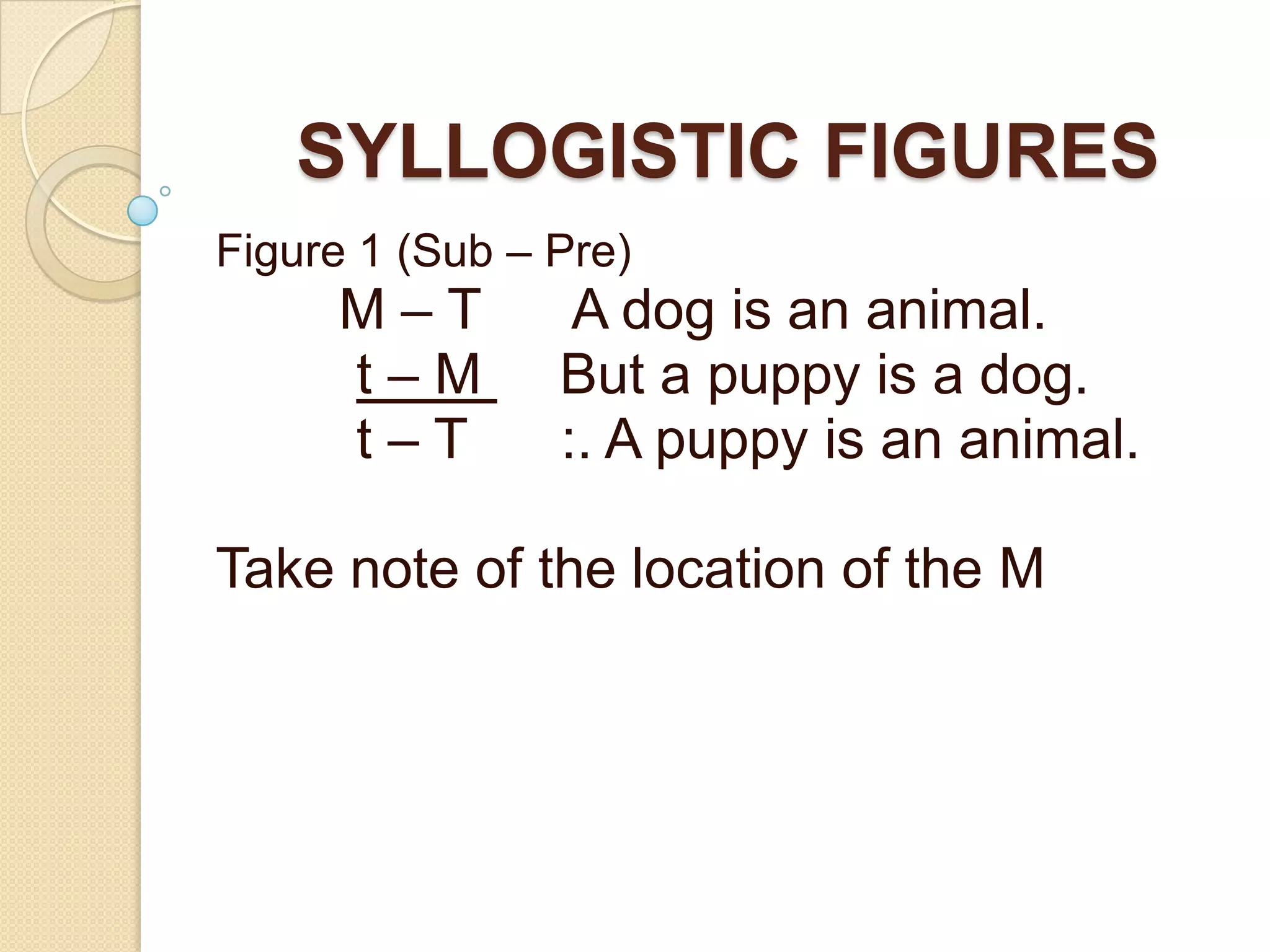
Figure 1 (Sub – Pre)
     M–T         A dog is an animal.
     t–M        But a puppy is a dog.
     t–T        :. A puppy is an animal.

Take note of the location of the M
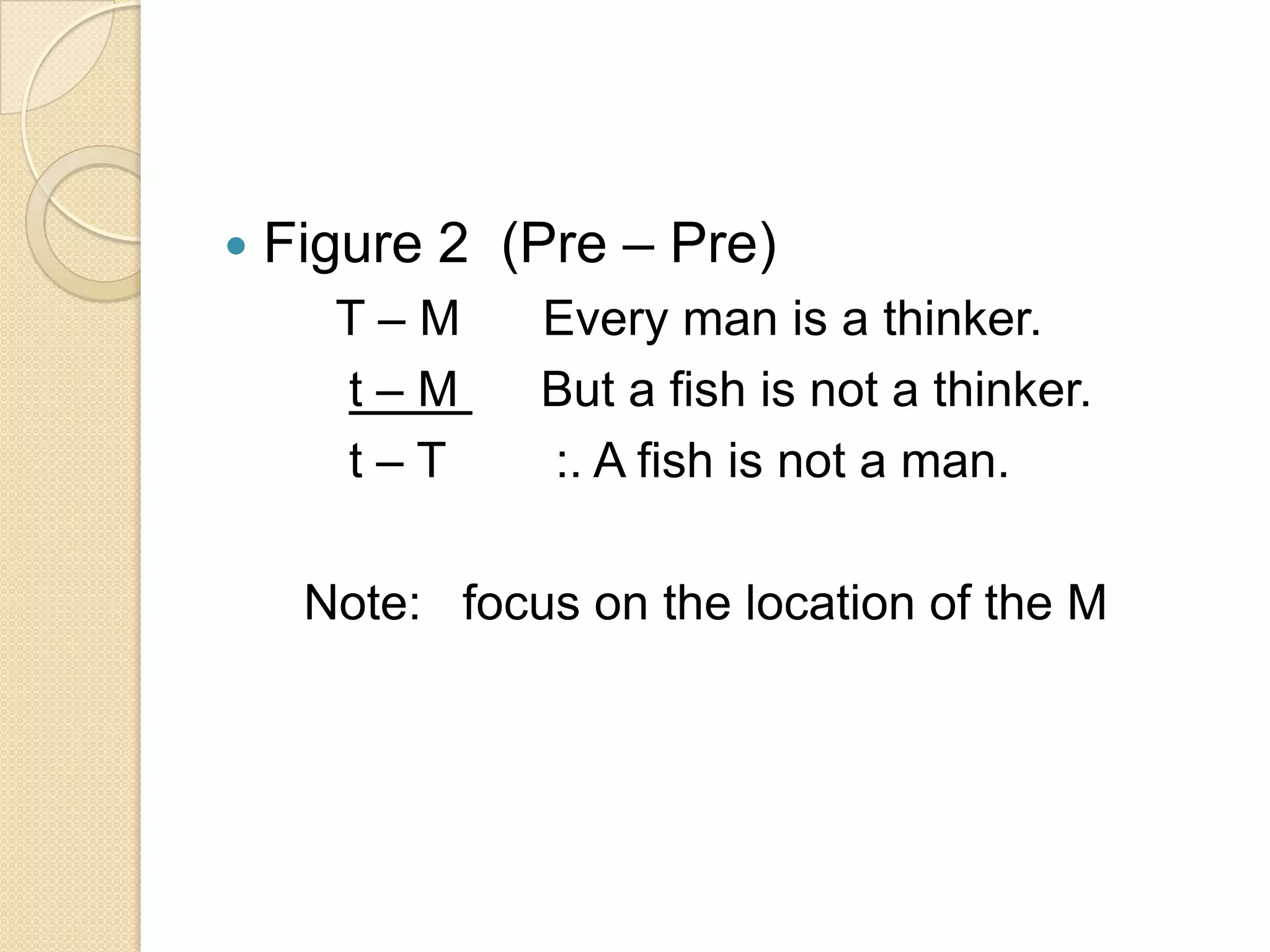
   Figure 2 (Pre – Pre)
      T–M      Every man is a thinker.
      t–M      But a fish is not a thinker.
      t–T      :. A fish is not a man.

     Note: focus on the location of the M
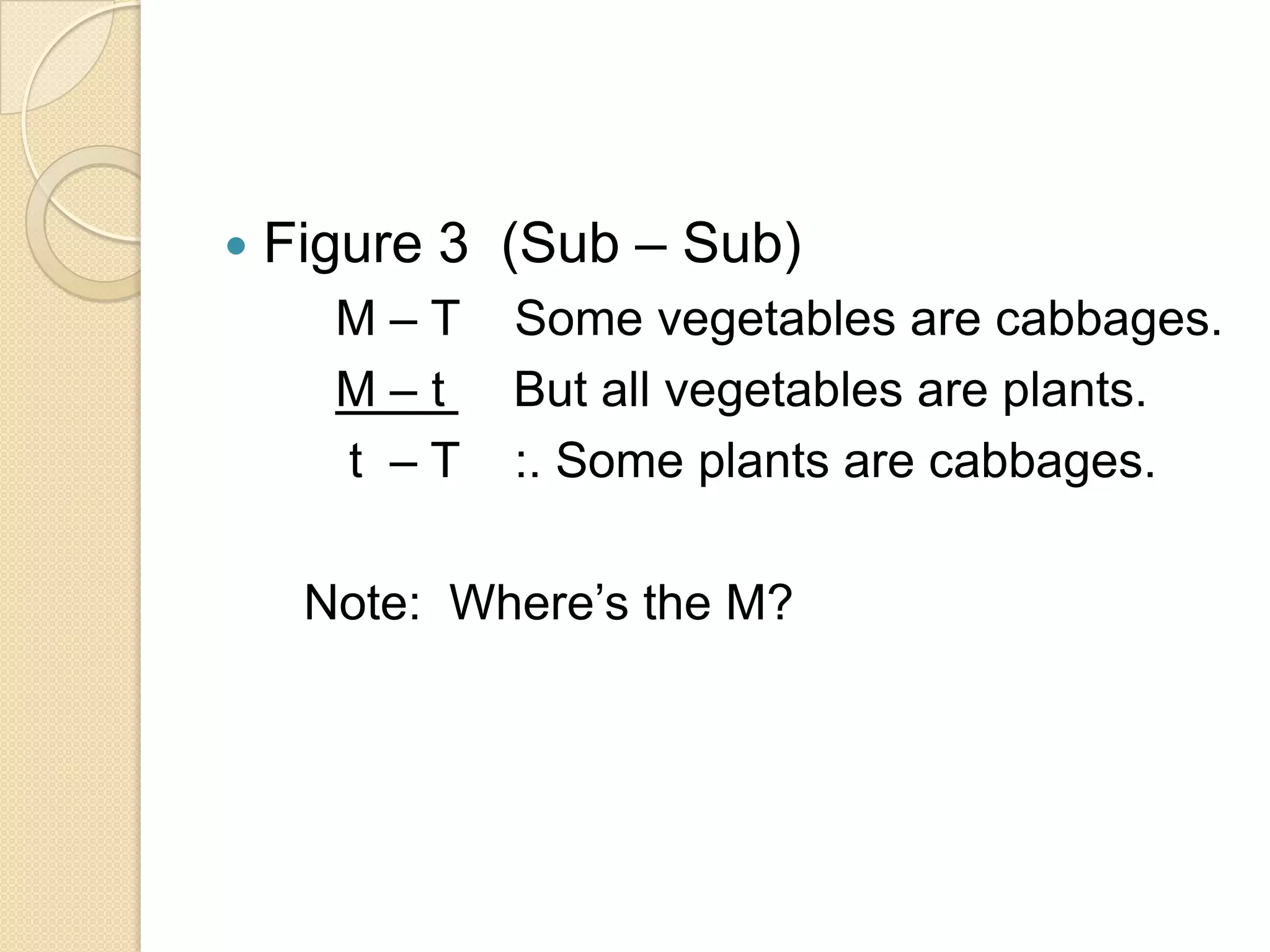
   Figure 3 (Sub – Sub)
      M–T    Some vegetables are cabbages.
      M–t    But all vegetables are plants.
      t –T   :. Some plants are cabbages.

     Note: Where’s the M?
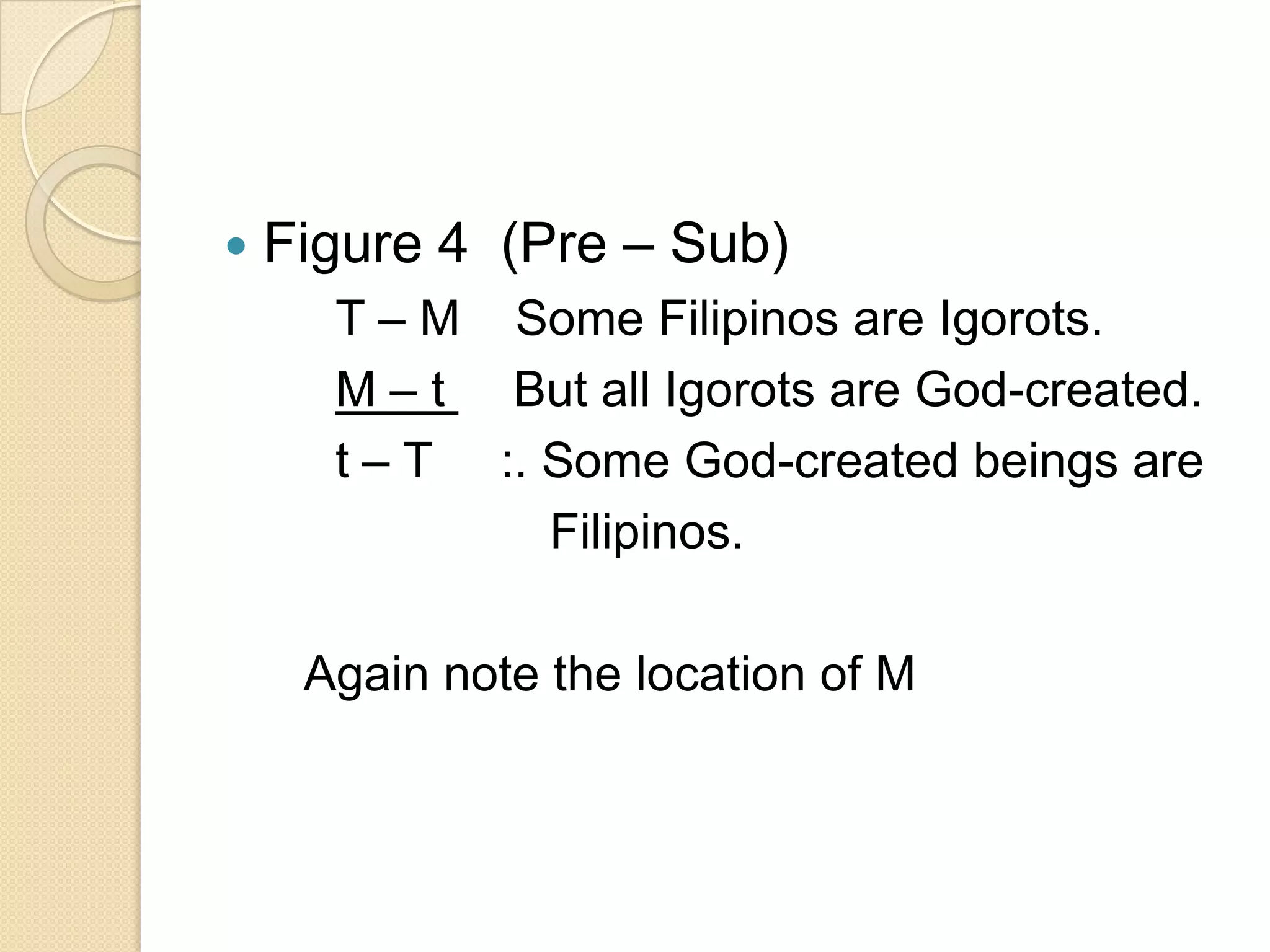
   Figure 4 (Pre – Sub)
      T – M Some Filipinos are Igorots.
      M – t But all Igorots are God-created.
      t – T :. Some God-created beings are
               Filipinos.

     Again note the location of M
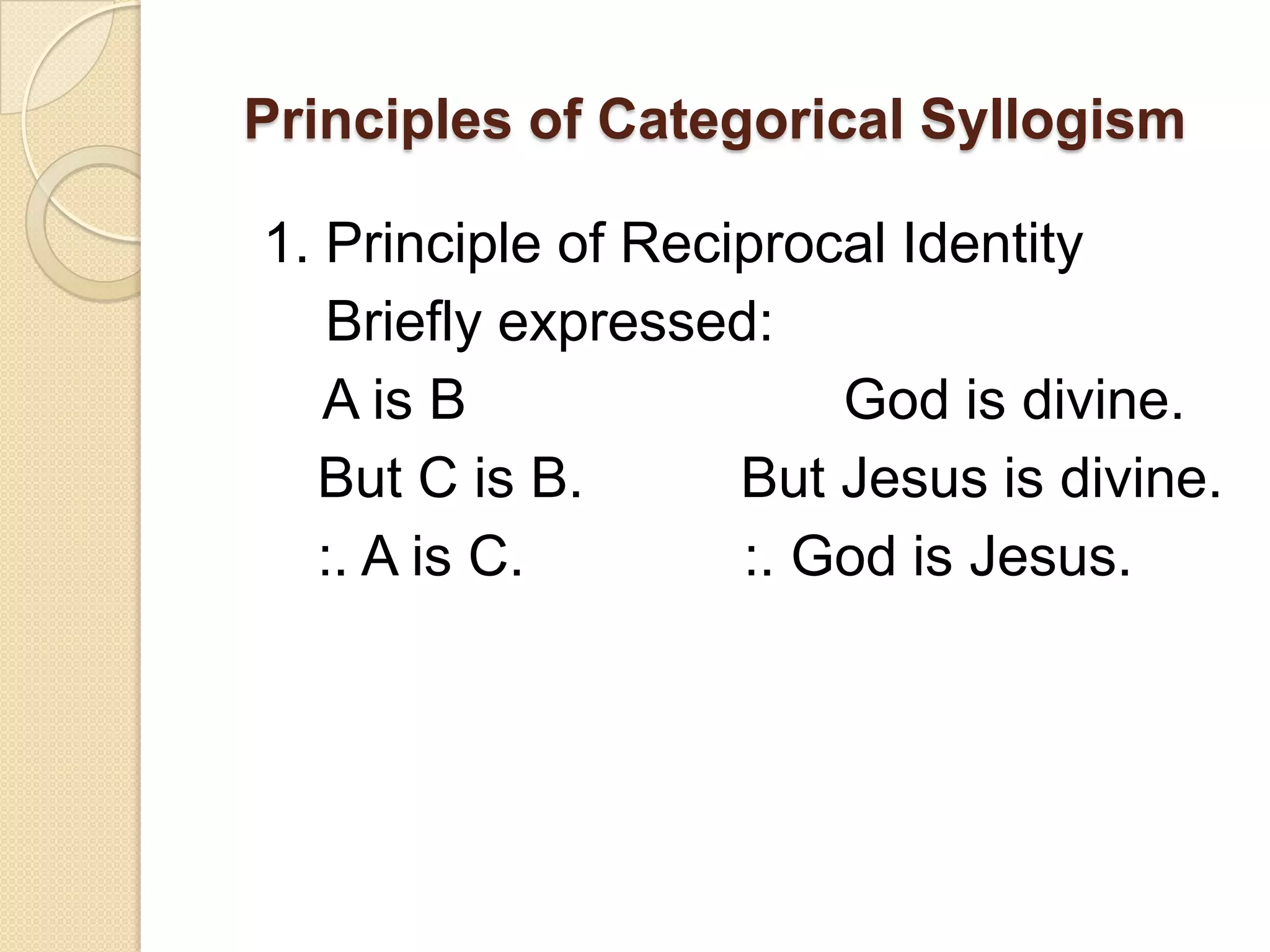
Principles of Categorical Syllogism

1. Principle of Reciprocal Identity
   Briefly expressed:
   A is B               God is divine.
  But C is B.       But Jesus is divine.
  :. A is C.        :. God is Jesus.
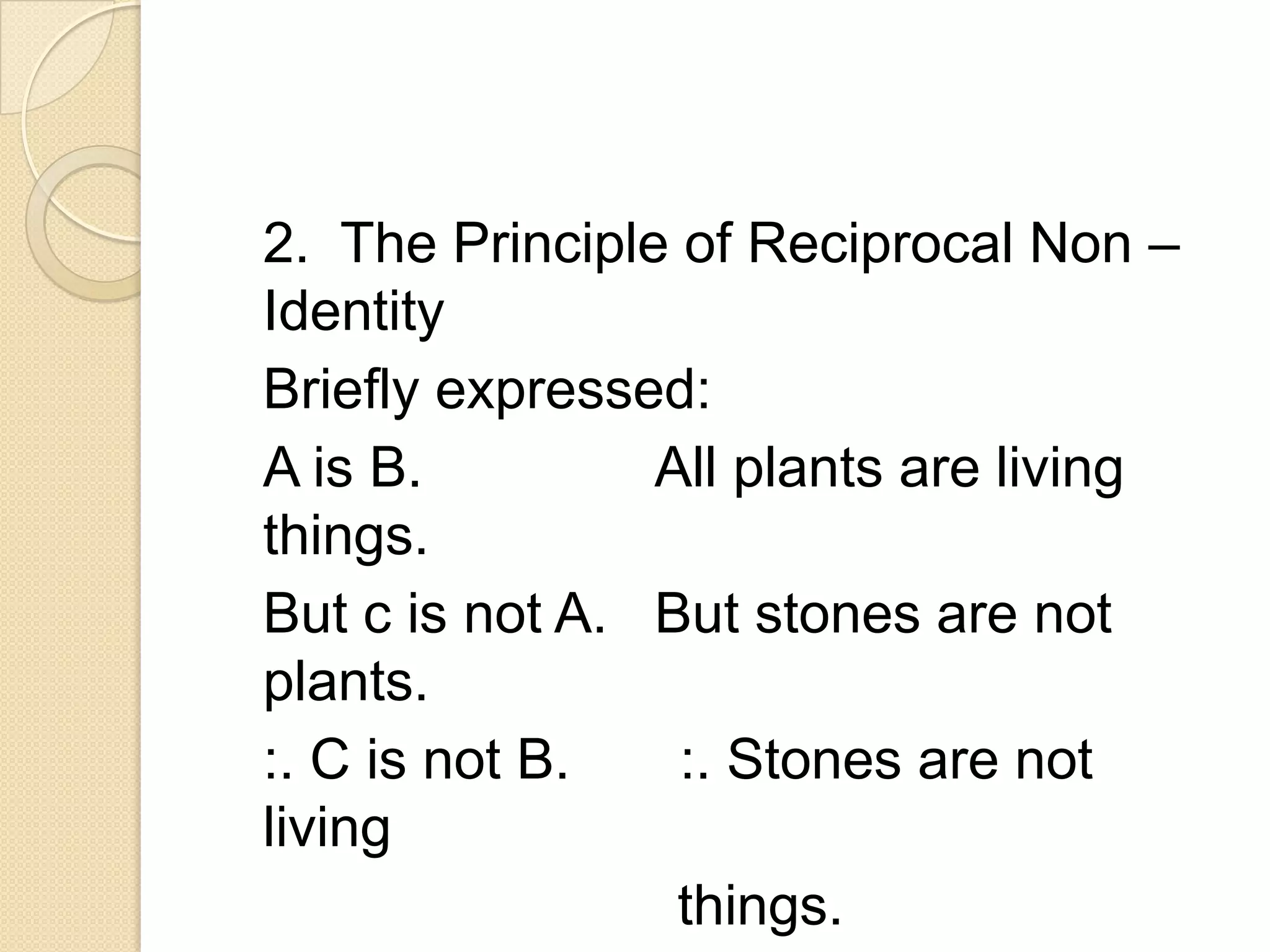
2. The Principle of Reciprocal Non –
Identity
Briefly expressed:
A is B.         All plants are living
things.
But c is not A. But stones are not
plants.
:. C is not B.   :. Stones are not
living
                 things.
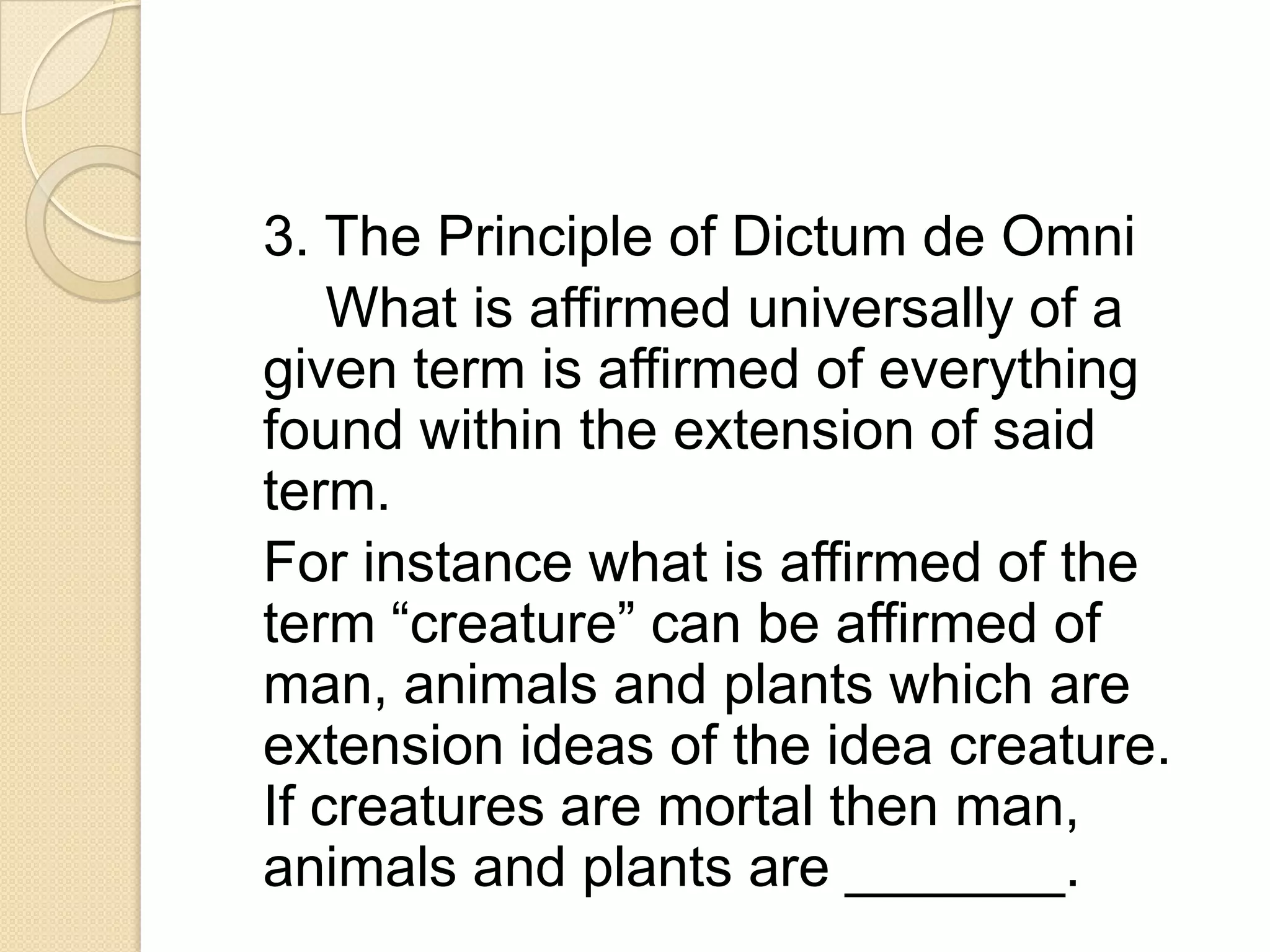
3. The Principle of Dictum de Omni
    What is affirmed universally of a
given term is affirmed of everything
found within the extension of said
term.
For instance what is affirmed of the
term “creature” can be affirmed of
man, animals and plants which are
extension ideas of the idea creature.
If creatures are mortal then man,
animals and plants are _______.
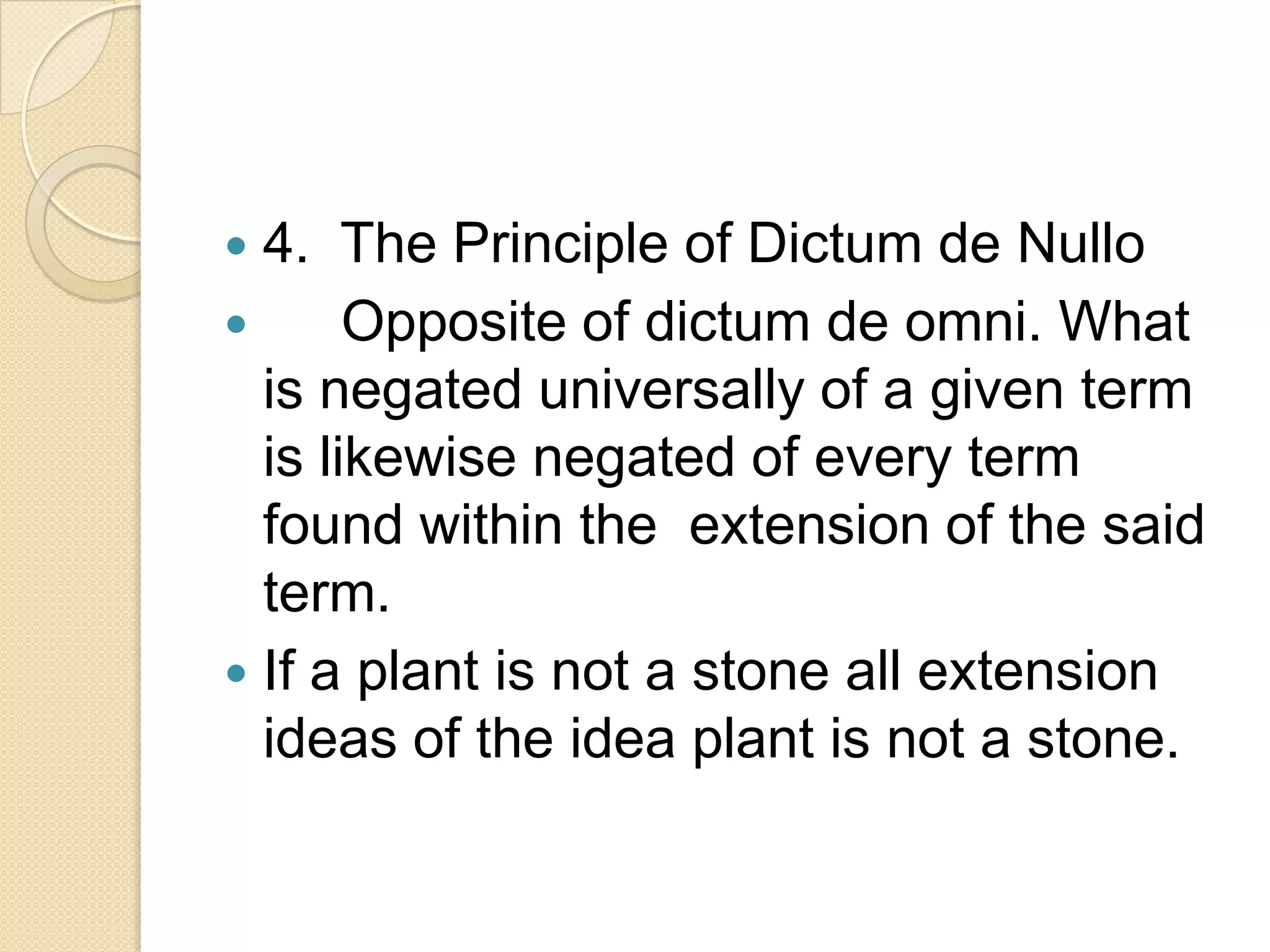
 4. The Principle of Dictum de Nullo
      Opposite of dictum de omni. What
  is negated universally of a given term
  is likewise negated of every term
  found within the extension of the said
  term.
 If a plant is not a stone all extension
  ideas of the idea plant is not a stone.
5. The Principle of Contradiction
  If a THING IS, it cannot be IS NOT
at the same time. If this is a table,
then it cannot be that this is not a table
at the same time.
Basic Rules of Categorical
Syllogism
 1. There must be only three (3)
 univocal terms.
 2. There can be no two (2) negative
 premises.
 3. On quality, if the 2 premises are
 affirmative the conclusion is
 affirmative.
 4. The conclusion is negative if one of
 the premises is negative.
 5. The conclusion must be particular if
 one of the premises is particular.
6. In terms of quantity, there must be
no 2 particular premises. One
premise must be at least universal.
VALIDITY and TRUTH IN SYLLOGISM

Two Conditions:
1. Correct in form
2. True in content.

◦ A syllogism may be correct in form but
  false in content. Or may be incorrect in
  form but true in content. To be a valid
  categorical syllogism the form must be
  correct and the content must be true.
Syllogistic figures

Syllogistic figures

  • 1.
    SYLLOGISTIC FIGURES Figure 1(Sub – Pre) M–T A dog is an animal. t–M But a puppy is a dog. t–T :. A puppy is an animal. Take note of the location of the M
  • 2.
    Figure 2 (Pre – Pre) T–M Every man is a thinker. t–M But a fish is not a thinker. t–T :. A fish is not a man. Note: focus on the location of the M
  • 3.
    Figure 3 (Sub – Sub) M–T Some vegetables are cabbages. M–t But all vegetables are plants. t –T :. Some plants are cabbages. Note: Where’s the M?
  • 4.
    Figure 4 (Pre – Sub) T – M Some Filipinos are Igorots. M – t But all Igorots are God-created. t – T :. Some God-created beings are Filipinos. Again note the location of M
  • 5.
    Principles of CategoricalSyllogism 1. Principle of Reciprocal Identity Briefly expressed: A is B God is divine. But C is B. But Jesus is divine. :. A is C. :. God is Jesus.
  • 6.
    2. The Principleof Reciprocal Non – Identity Briefly expressed: A is B. All plants are living things. But c is not A. But stones are not plants. :. C is not B. :. Stones are not living things.
  • 7.
    3. The Principleof Dictum de Omni What is affirmed universally of a given term is affirmed of everything found within the extension of said term. For instance what is affirmed of the term “creature” can be affirmed of man, animals and plants which are extension ideas of the idea creature. If creatures are mortal then man, animals and plants are _______.
  • 8.
     4. ThePrinciple of Dictum de Nullo  Opposite of dictum de omni. What is negated universally of a given term is likewise negated of every term found within the extension of the said term.  If a plant is not a stone all extension ideas of the idea plant is not a stone.
  • 9.
    5. The Principleof Contradiction If a THING IS, it cannot be IS NOT at the same time. If this is a table, then it cannot be that this is not a table at the same time.
  • 10.
    Basic Rules ofCategorical Syllogism 1. There must be only three (3) univocal terms. 2. There can be no two (2) negative premises. 3. On quality, if the 2 premises are affirmative the conclusion is affirmative. 4. The conclusion is negative if one of the premises is negative. 5. The conclusion must be particular if one of the premises is particular.
  • 11.
    6. In termsof quantity, there must be no 2 particular premises. One premise must be at least universal.
  • 12.
    VALIDITY and TRUTHIN SYLLOGISM Two Conditions: 1. Correct in form 2. True in content. ◦ A syllogism may be correct in form but false in content. Or may be incorrect in form but true in content. To be a valid categorical syllogism the form must be correct and the content must be true.