Surf Prevention
A lifetime overview of injuries and
how we can prevent them!
Guillaume Barucq, M.D.
- General Practitioner
- 38
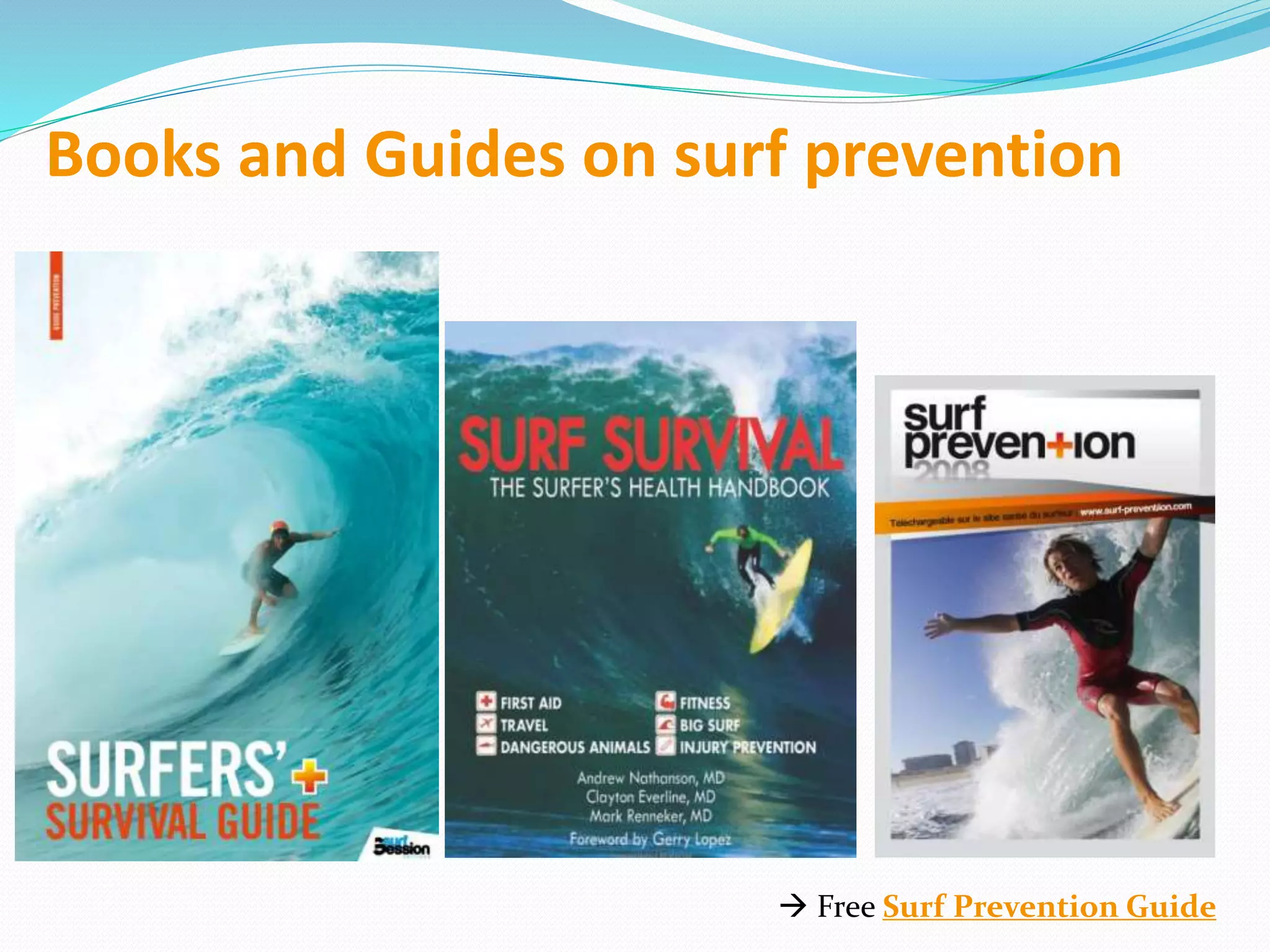
- Author of the Books Surfers’ Survival Guide and Surf Thérapie
- Editor of www.surf-prevention.com
- Contact :
Twitter @surfprevention @guillaumebarucq
www.facebook.com/surf.prevention // www.facebook.com/guillaume.barucq
Surfing, a Dangerous Sport ?
Surfing Injuries – Risk Factors
1. The Wave (Height, Power +++)
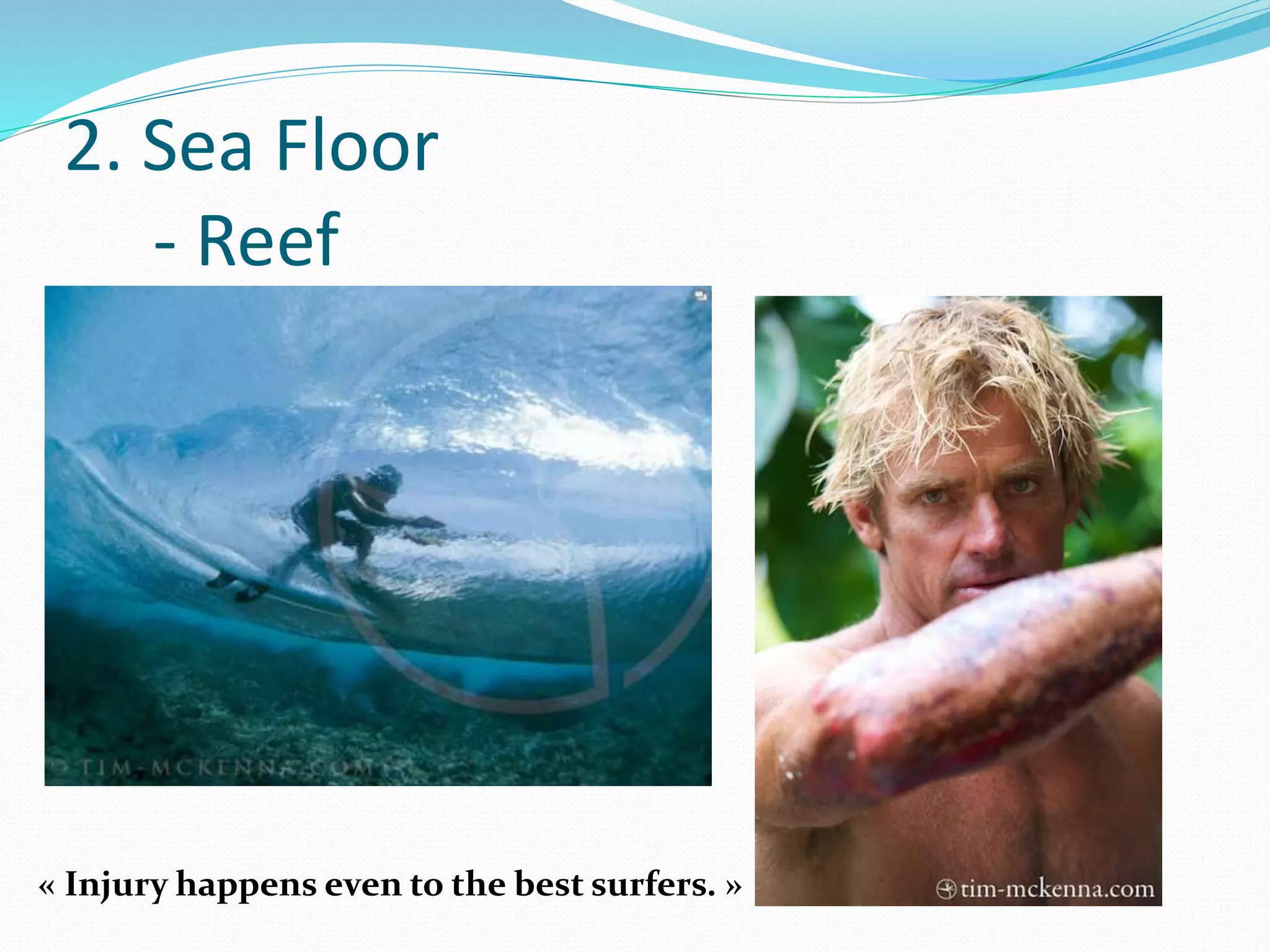
2. Sea Floor
- Reef
« Injury happens even to the best surfers. »
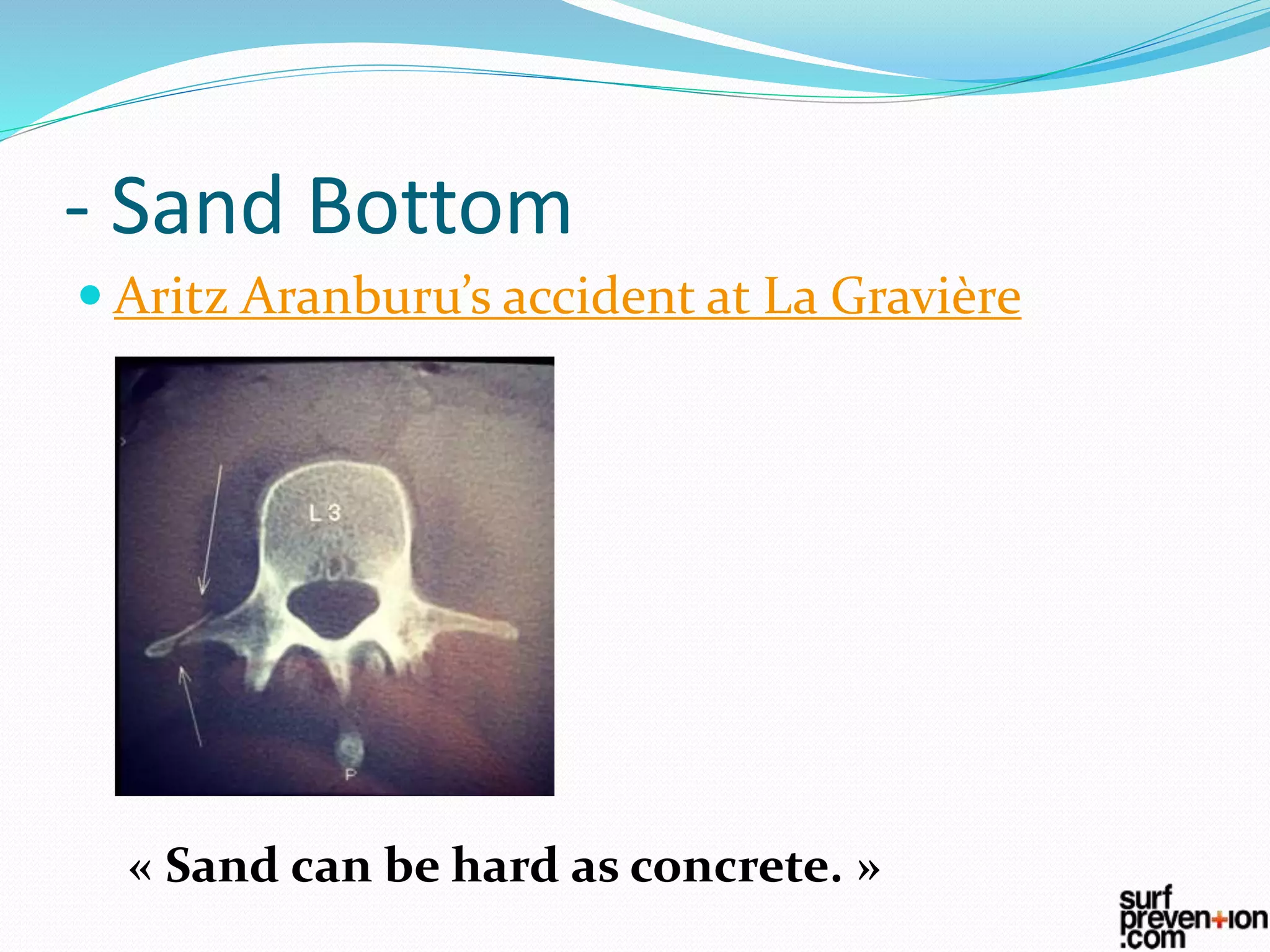
- Sand Bottom
 Aritz Aranburu’s accident at La Gravière
« Sand can be hard as concrete. »
3. Shore Break
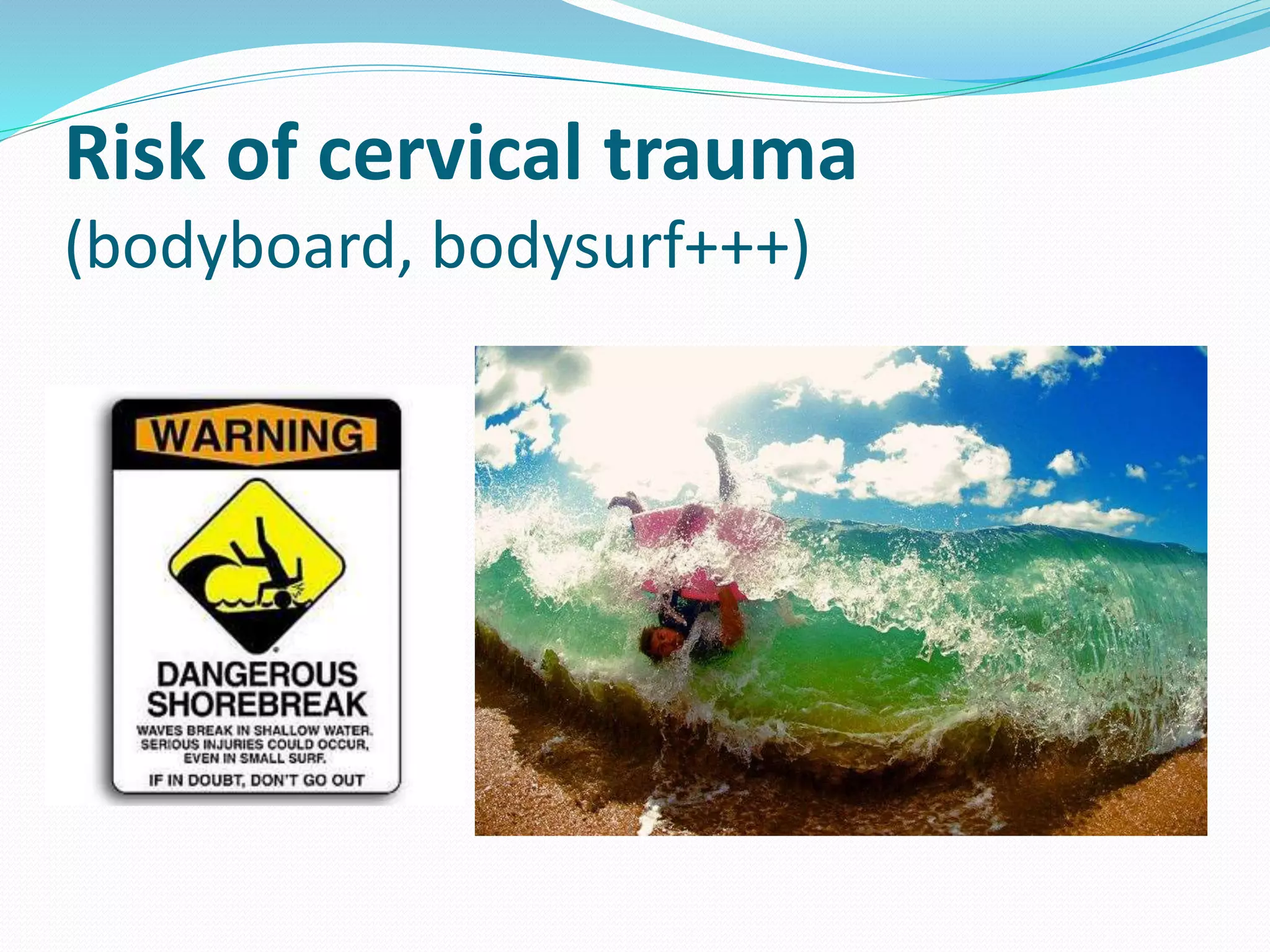
Risk of cervical trauma
(bodyboard, bodysurf+++)
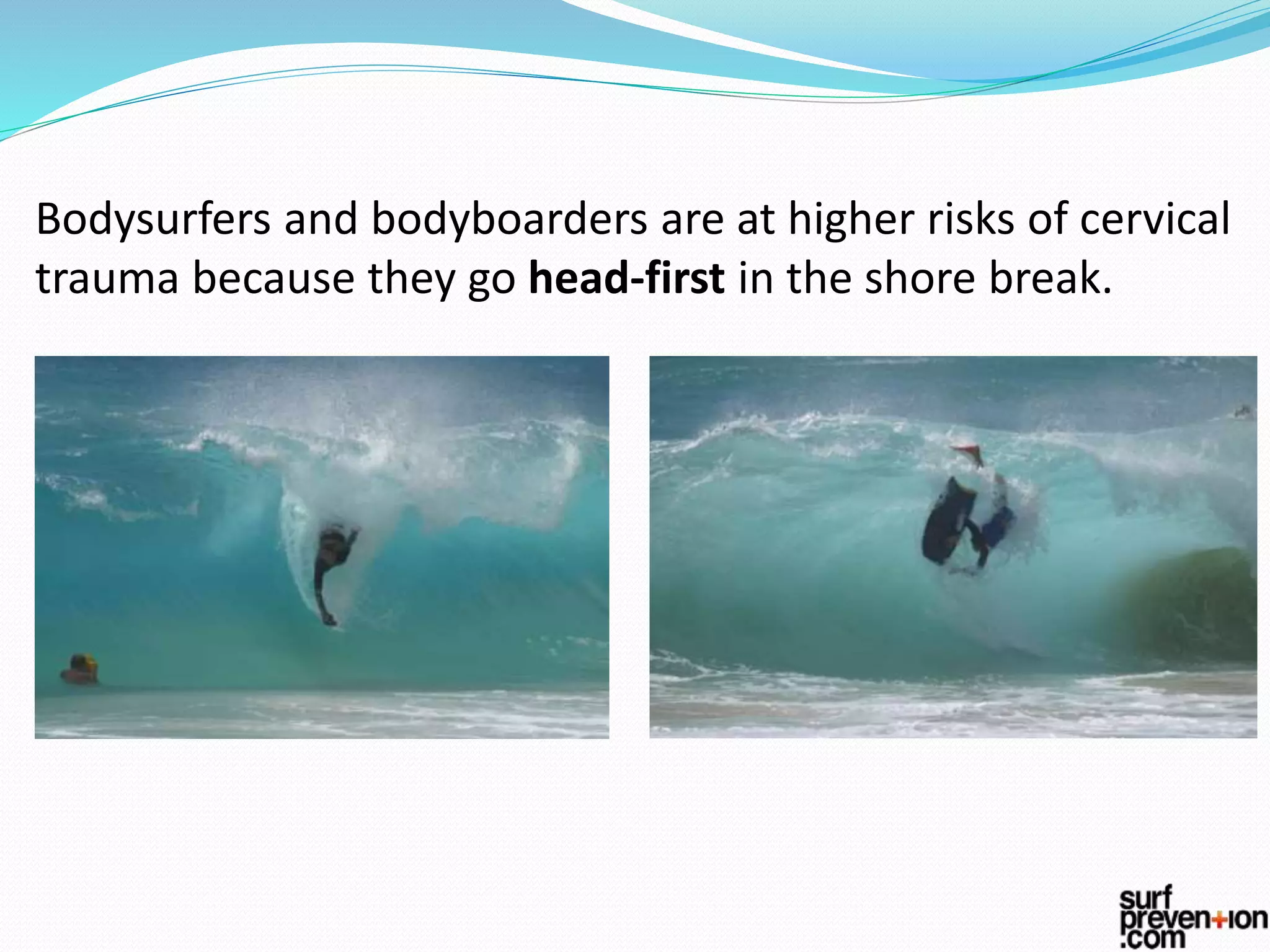
Bodysurfers and bodyboarders are at higher risks of cervical
trauma because they go head-first in the shore break.
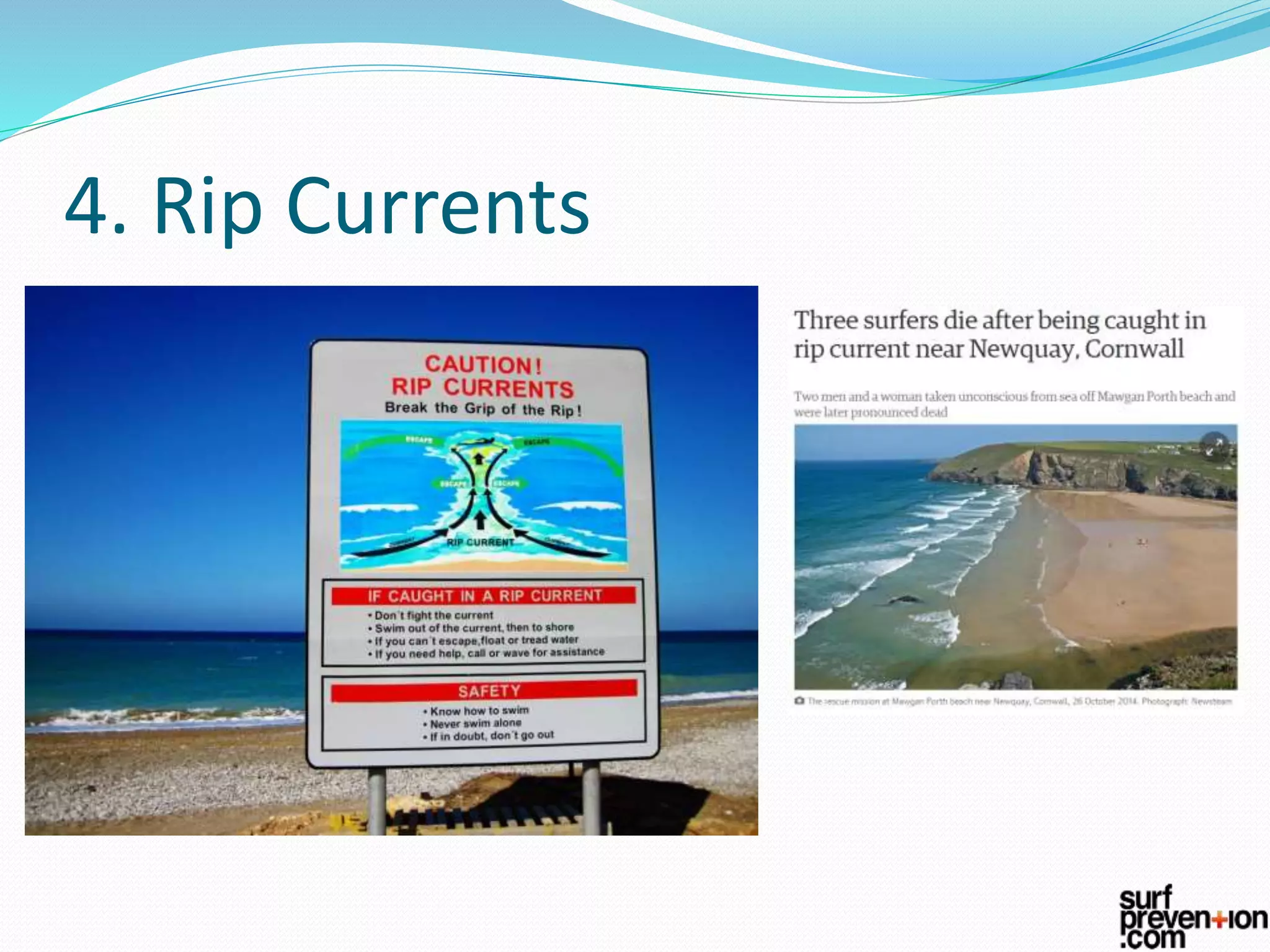
4. Rip Currents
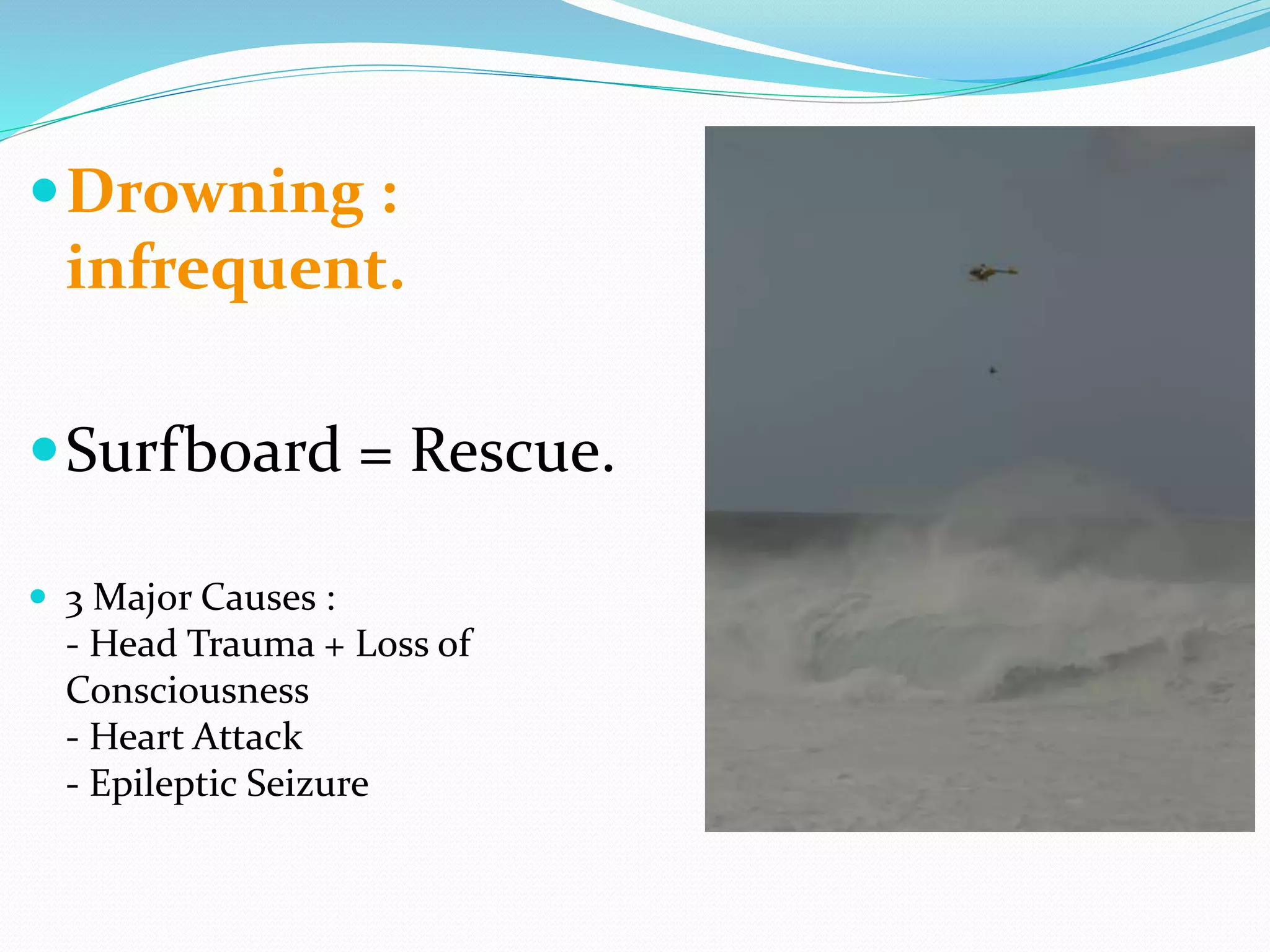
Drowning :
infrequent.
Surfboard = Rescue.
 3 Major Causes :
- Head Trauma + Loss of
Consciousness
- Heart Attack
- Epileptic Seizure
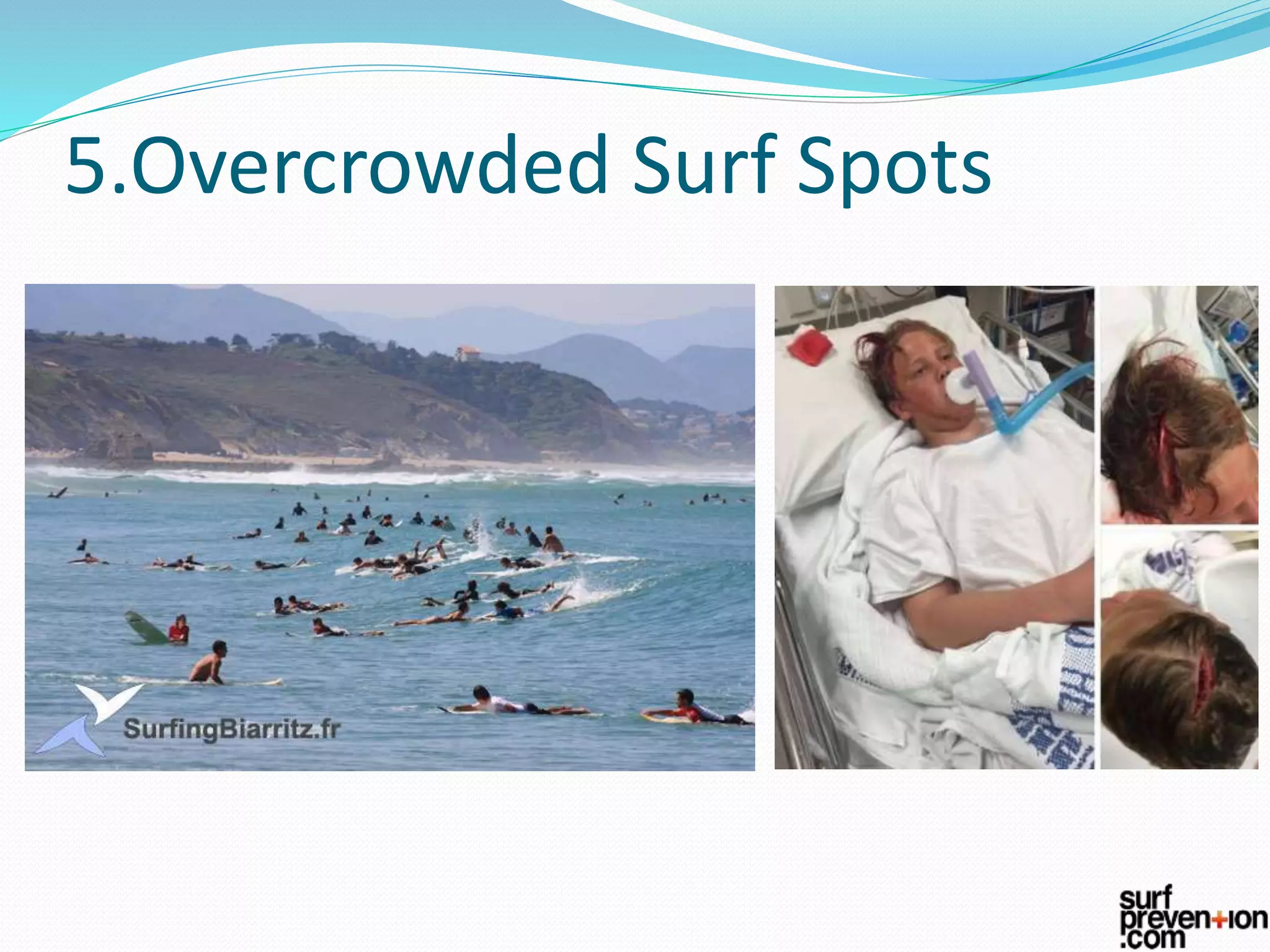
5.Overcrowded Surf Spots
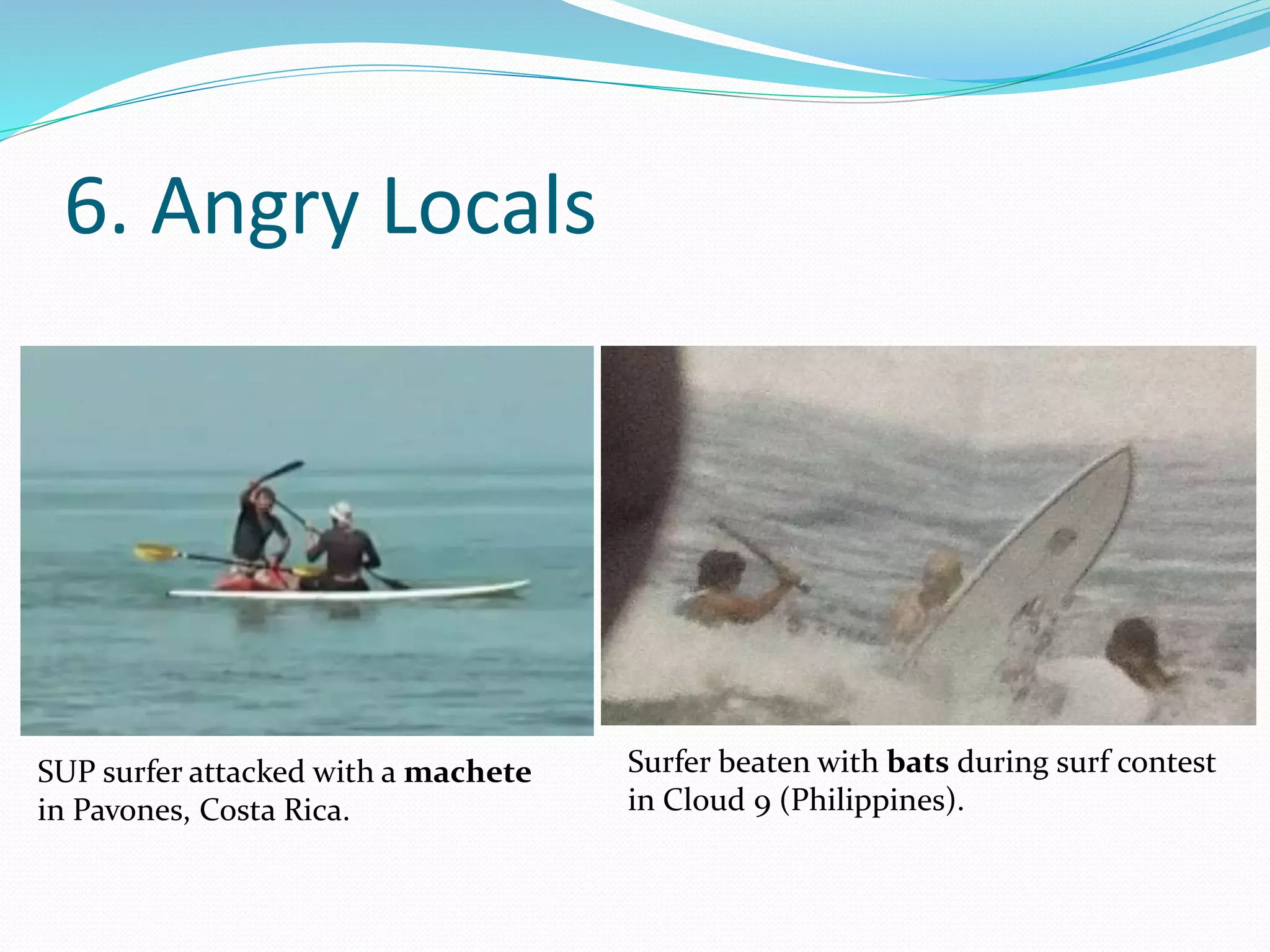
6. Angry Locals
SUP surfer attacked with a machete
in Pavones, Costa Rica.
Surfer beaten with bats during surf contest
in Cloud 9 (Philippines).
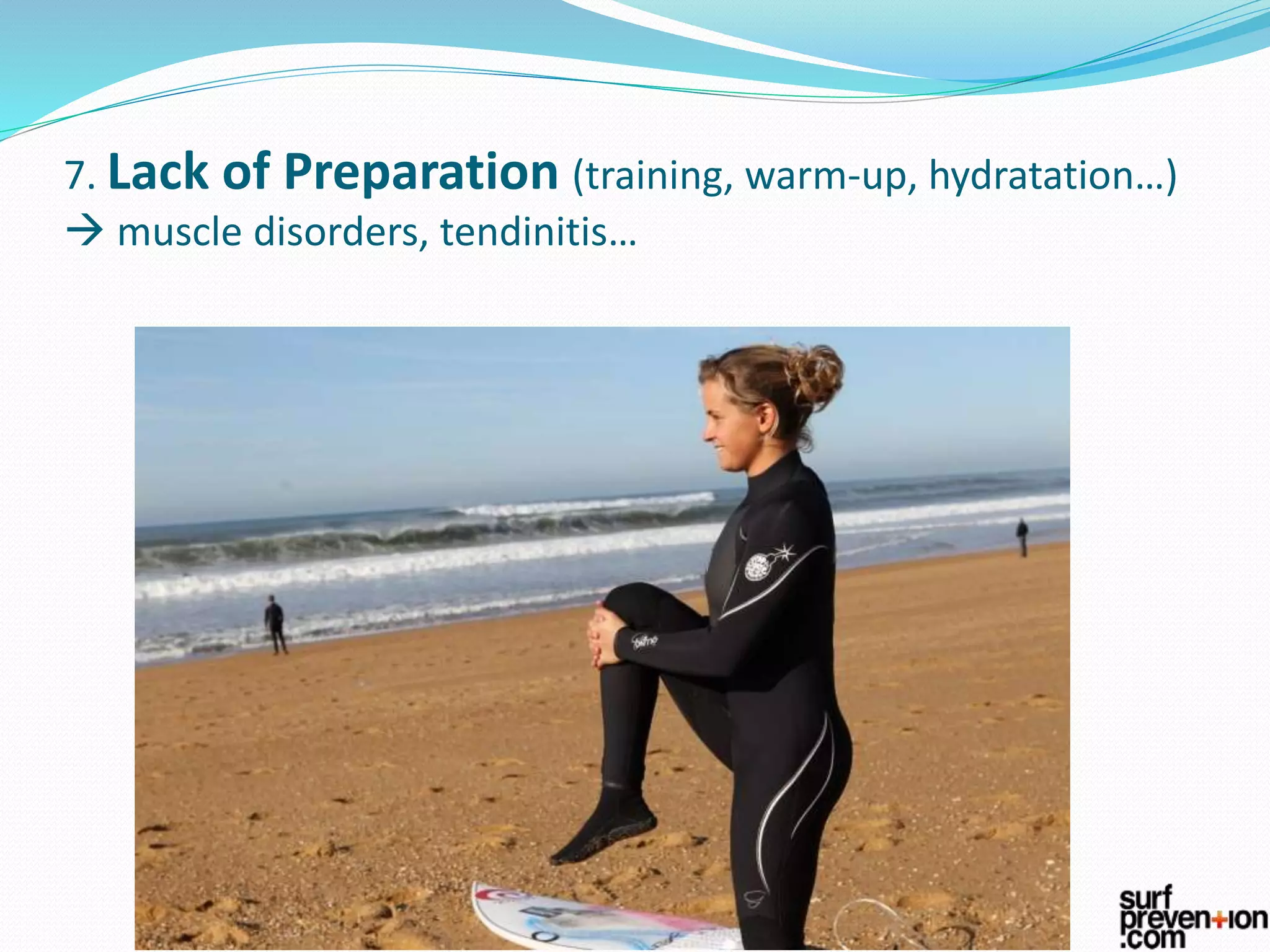
7. Lack of Preparation (training, warm-up, hydratation…)
 muscle disorders, tendinitis…
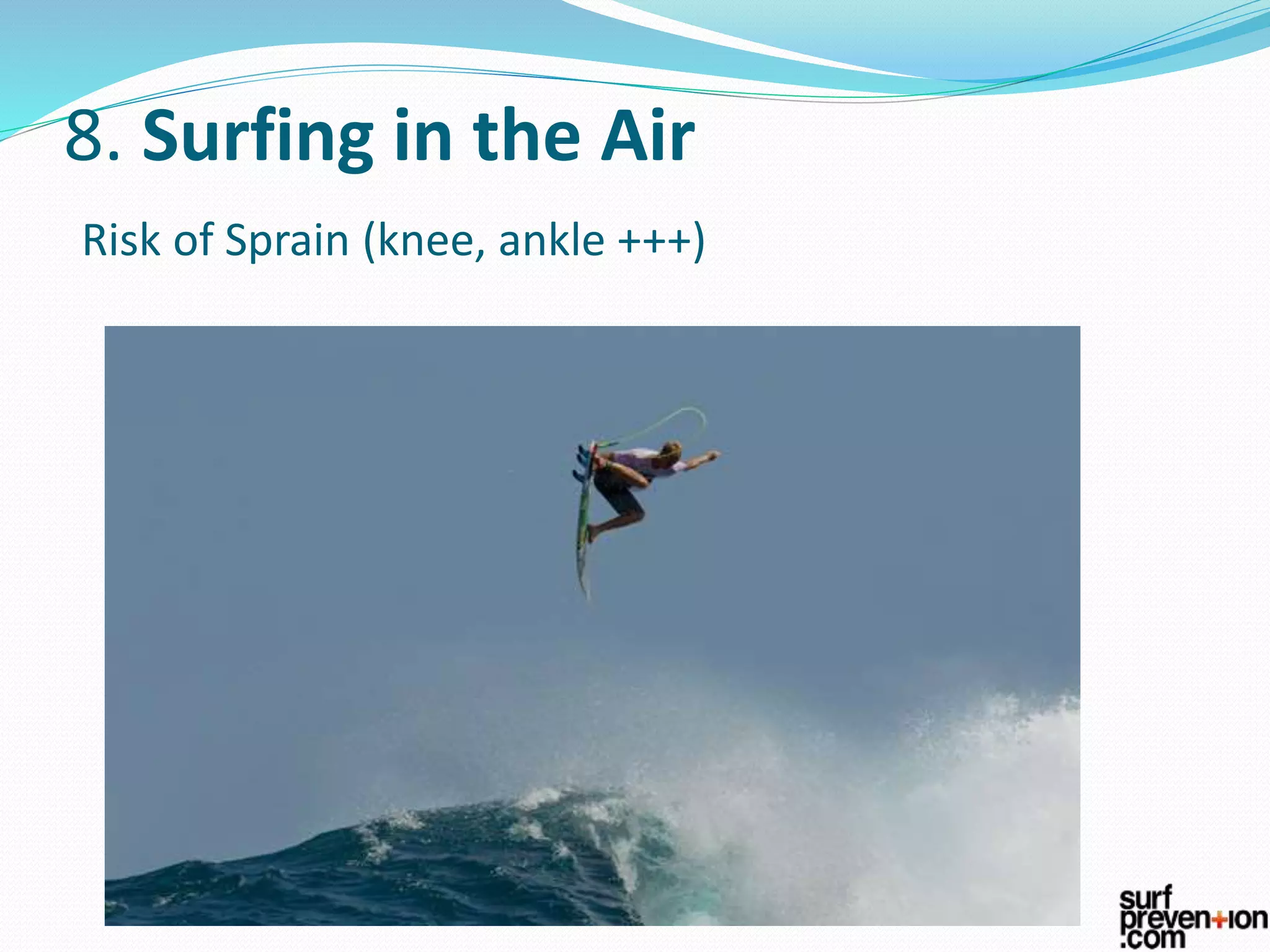
8. Surfing in the Air
Risk of Sprain (knee, ankle +++)
9. Storm
Go in immediately
in case of lightning!
10. Marine Animals
And also…
11. Surfboard = 1st Danger
Different Risk Levels in France
Bask Coast Tahiti
Reunion Island
(7 fatalities since 2011, 5 surfers
killed by sharks)
Data
 Analysis of patients admitted for surfing injuries at the
Basque Coast’s Emergency Departments during the
summer of 2006. 350 admissions from the 21st of June
to the 30th of September 2006.
(G. Barucq, T. Mokni, S. Marcé, J-M. Campagne, D. Le Jeune, Centre Hospitalier de la Côte Basque)
 Comparison with a new prospective study in 2014 in
the same area. 287 cases during the months of July and
August 2014.
(Hervé Dubois, T. Mokni , Urgences-SAMU-SMUR, Centre Hospitalier de la Côte Basque.)
Surfing Injuries on the Bask Coast -
Mechanism
Surferversus Sea Floor (13%)
 Surfer versus
sand in 9 out of
10 cases.
 Surfer versus reef
in 1 out of 10
cases.
Collisions (17%)
 Surfer vs surfer (66%)
 Surfer vs swimmer (27%)
 Surfer vs bodyboarder
(5%)
 Surfer vs floating object
(2%) : wood, marine litter…
Surfer Vs Own Surfboard (60%)
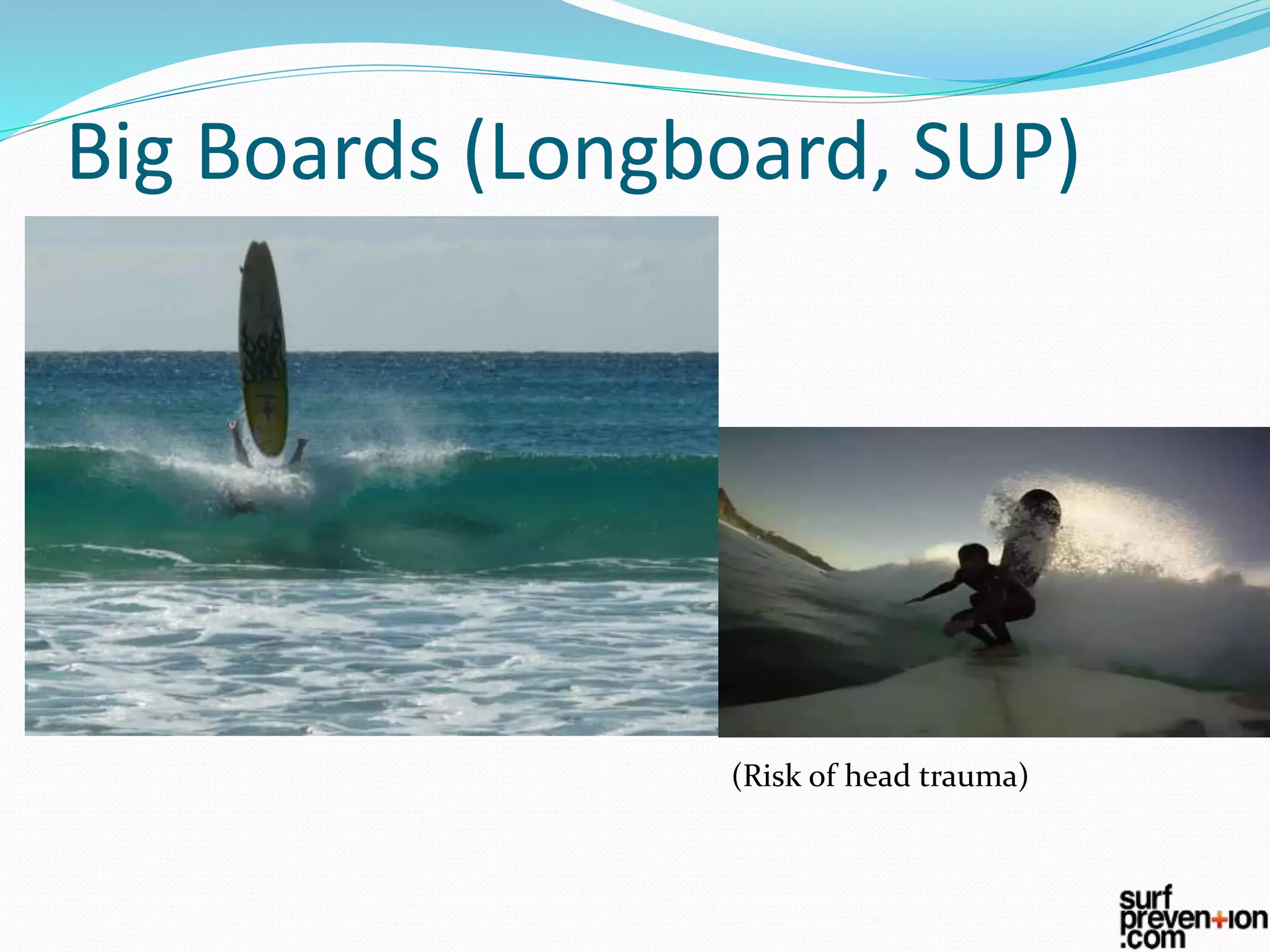
Big Boards (Longboard, SUP)
(Risk of head trauma)
Shortboards +++ [Nose]
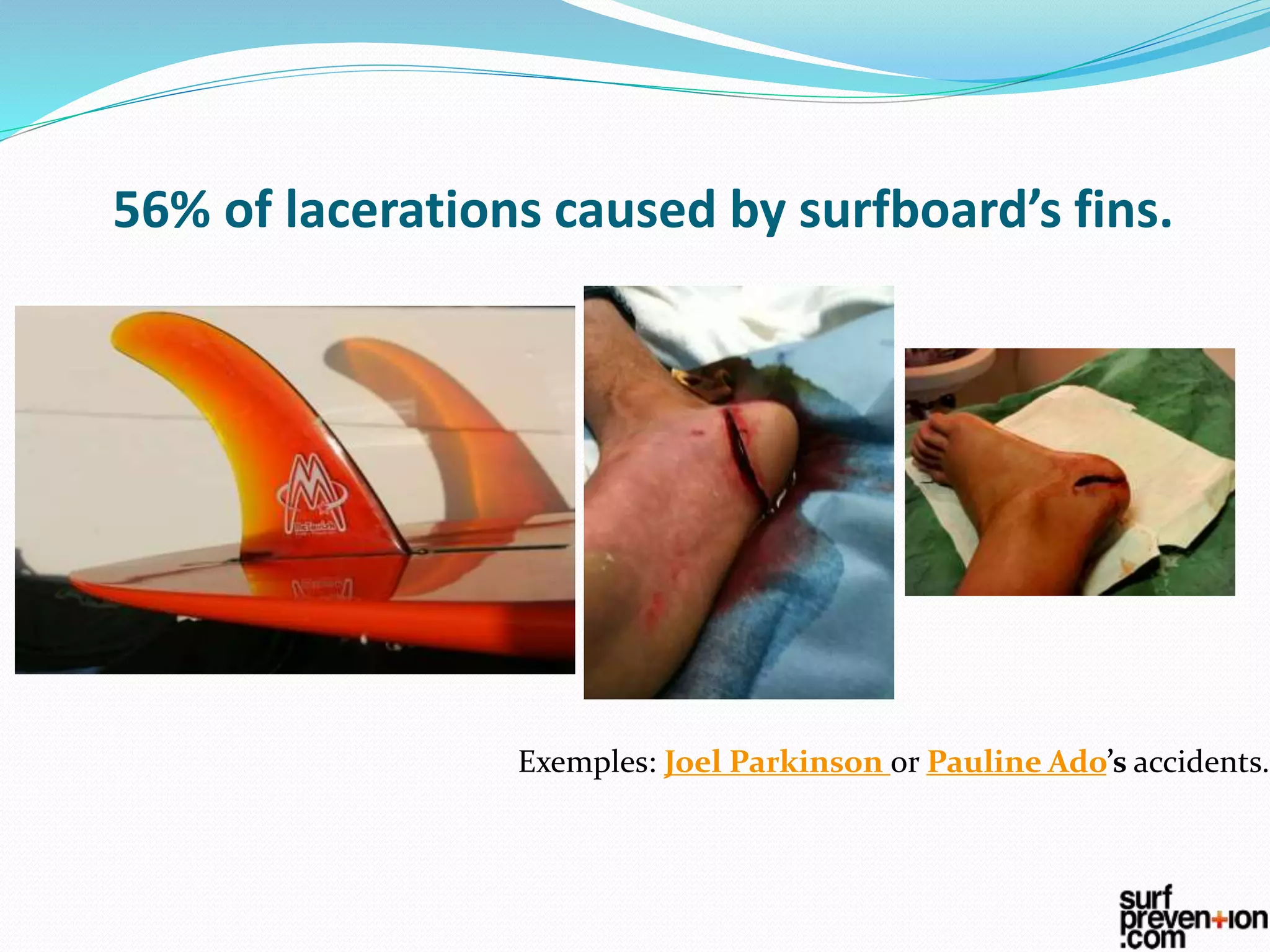
56% of lacerations caused by surfboard’s fins.
Exemples: Joel Parkinson or Pauline Ado’s accidents.
Leash  13 cases of finger trauma in summer
2006 (3,7% of accidents).
 8 fractures of the 3rd phalange of a
finger (4 open fractures and 1
amputation, 6 surgeries).
 In summer 2014 : 4,1 % of accidents.
 Severe leash accidents (50%).
 Less fractures (33% in 2014).
 ▶ Efficiency of the messages of
prevention / surf school advices.
Leash
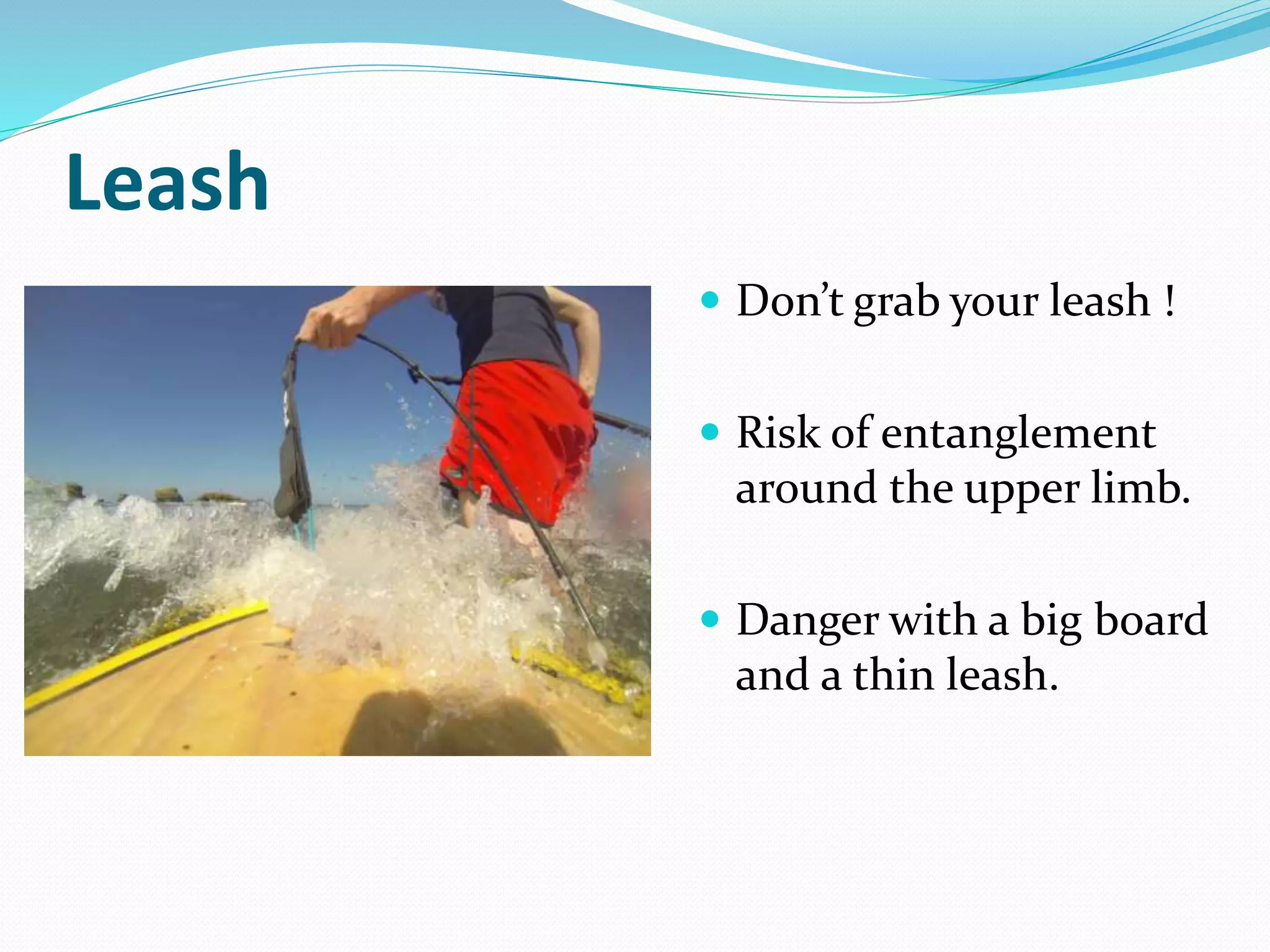
 Don’t grab your leash !
 Risk of entanglement
around the upper limb.
 Danger with a big board
and a thin leash.
Profile of the Injured Surfers
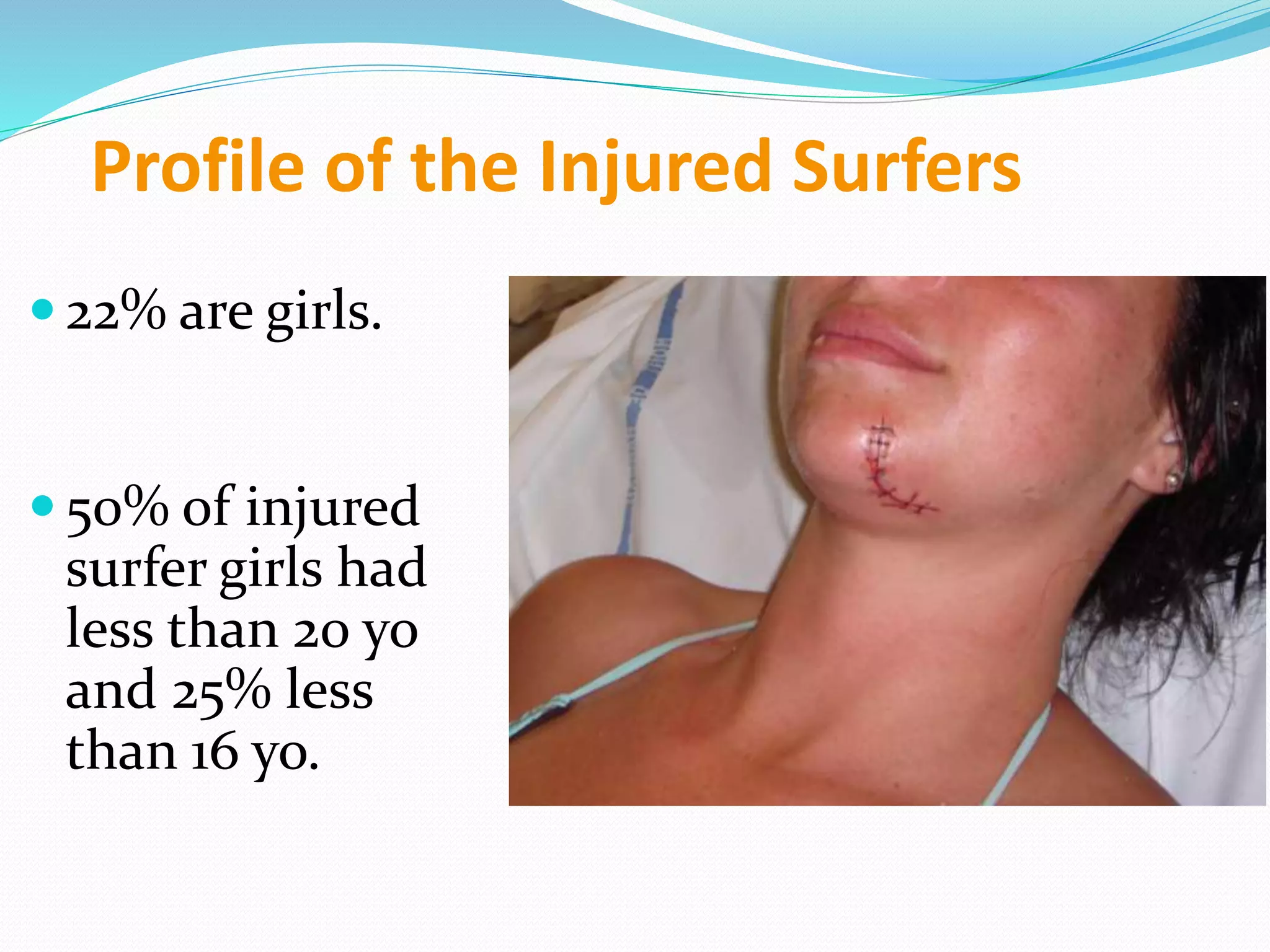
 22% are girls.
 50% of injured
surfer girls had
less than 20 yo
and 25% less
than 16 yo.
Age
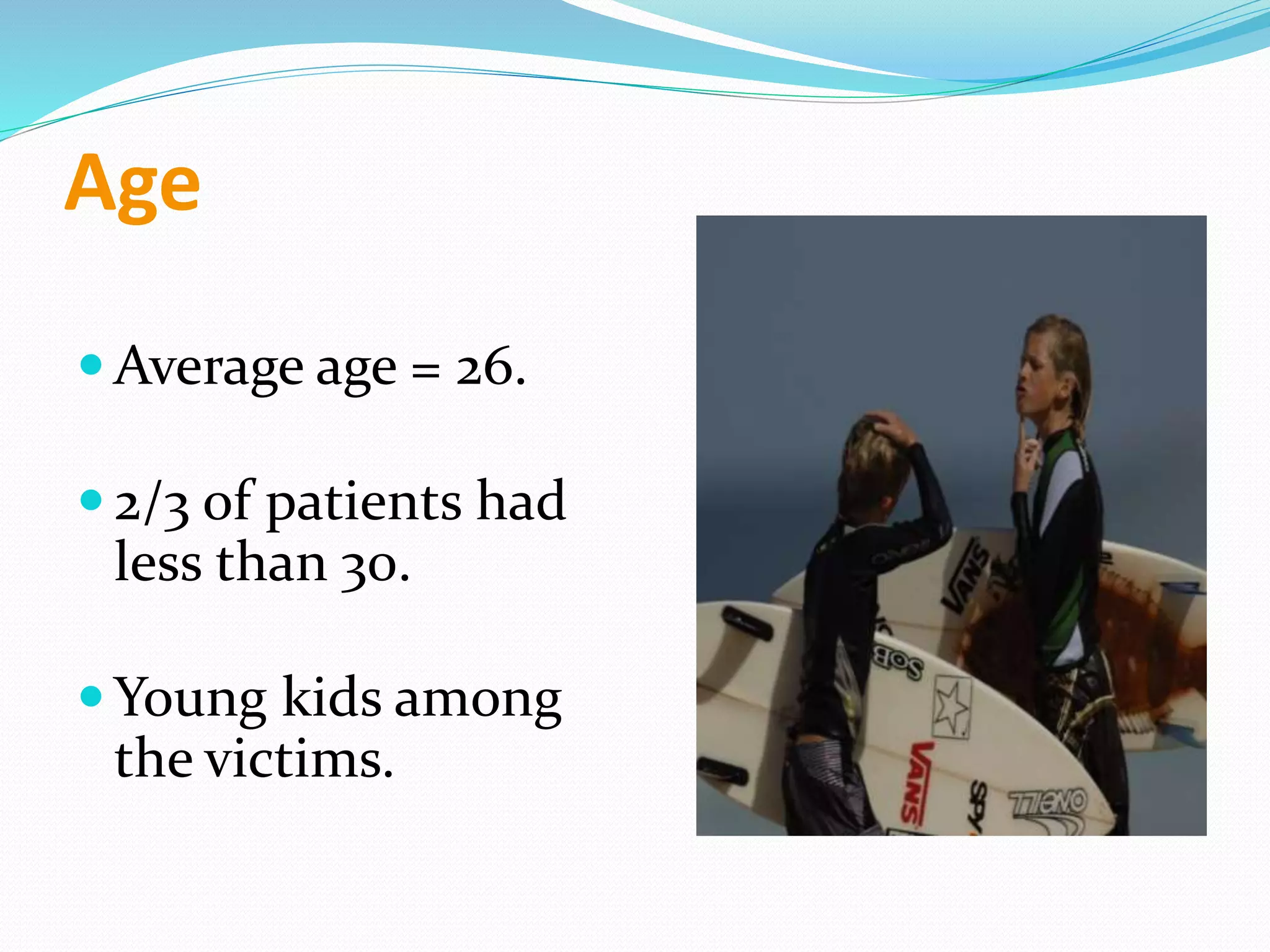
 Average age = 26.
 2/3 of patients had
less than 30.
 Young kids among
the victims.
Level of Experience
 Beginner : 35%. Half injured during a
surfing lesson.
 Intermediate : 34%
 Experienced : 31%
Surfing Injuries - Traumatology
Most Frequent Injuries
 Lacerations
(61%)
 9 out of 10 require
stitches.
 6 stitches on
average.
 7 out of 10 lacerations
concern the head of the
surfer.
 Facial cuts can leave scars.
 Scalp Lacerations can be
hemorrhagic.
Localisation
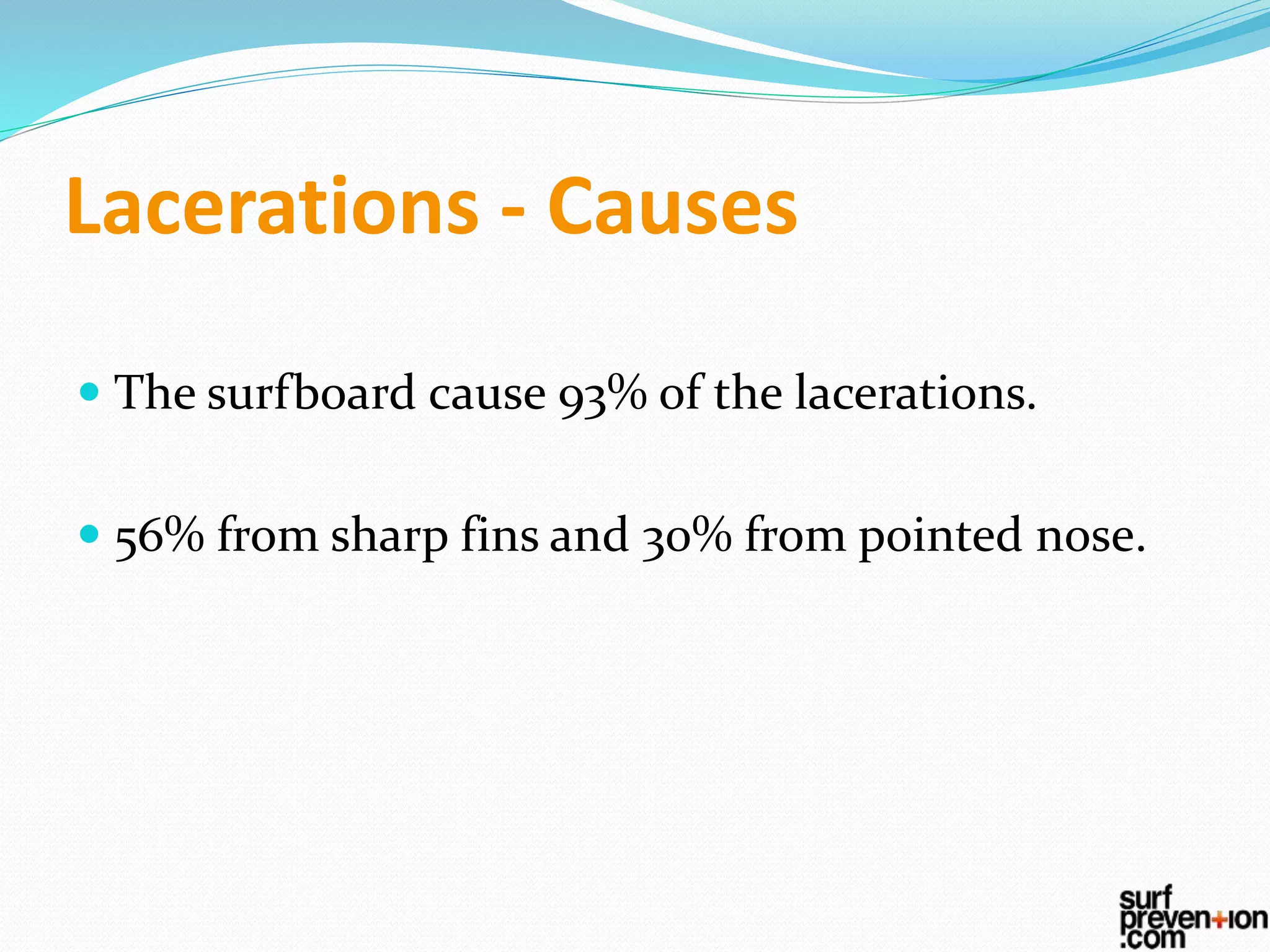
Lacerations - Causes
 The surfboard cause 93% of the lacerations.
 56% from sharp fins and 30% from pointed nose.
Most serious Injuries
 3 Ocular trauma
requiring surgery.
 In case of ocular
trauma, a consultation
with an
ophtalmologist is
mandatory (risk of
fiberglass inside the
wound).
Spinal Trauma
 14 cervical
traumas.
 3 severe
whiplashes with
vertebral
fracture.
 Circumstances :
diving at the end
of a wave in
shallow water or
shore break
accident.
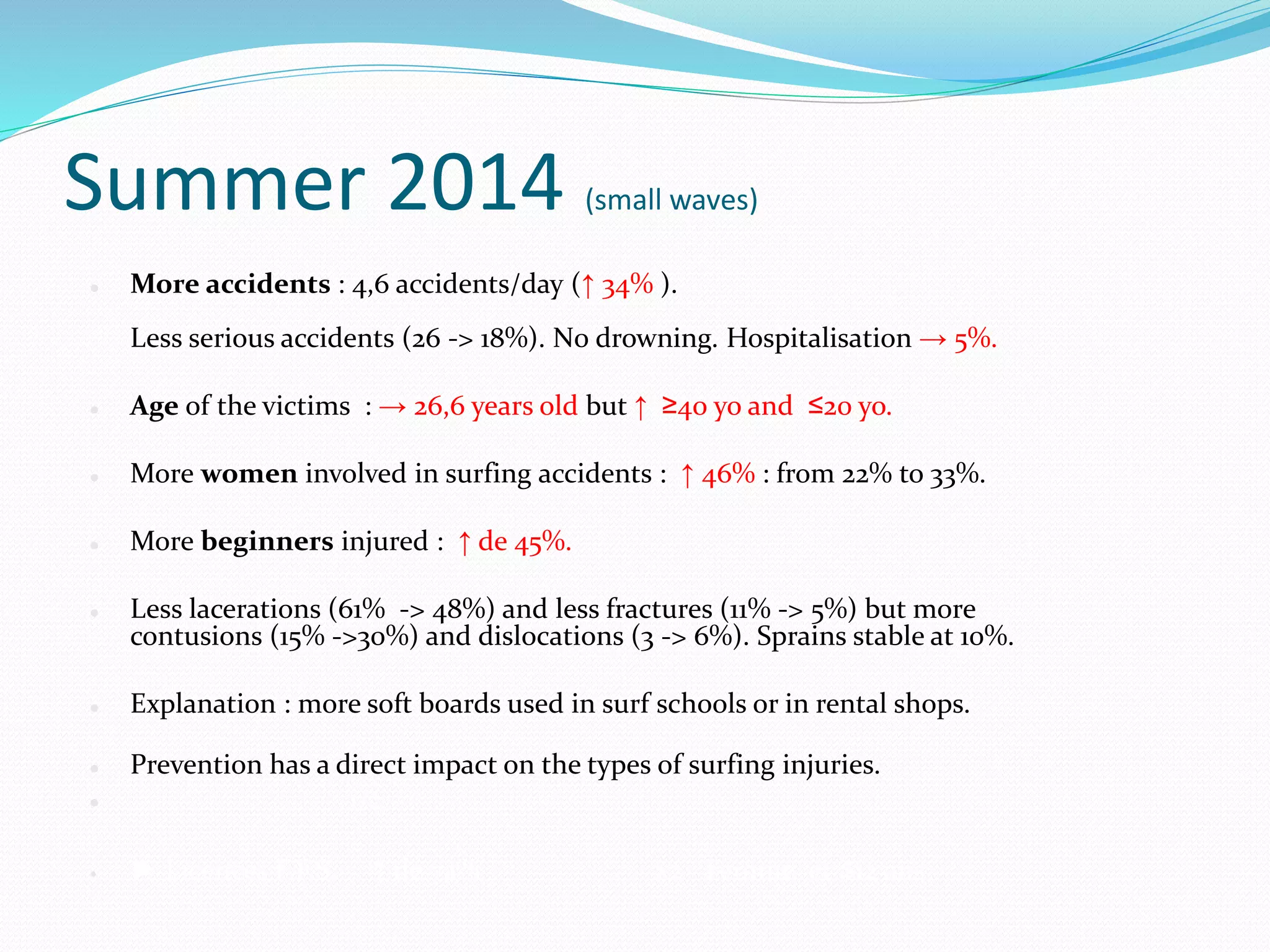
Summer 2014 (small waves)
 More accidents : 4,6 accidents/day (↑ 34% ).
Less serious accidents (26 -> 18%). N0 drowning. Hospitalisation → 5%.
 Age of the victims : → 26,6 years old but ↑ ≥40 yo and ≤20 yo.
 More women involved in surfing accidents : ↑ 46% : from 22% to 33%.
 More beginners injured : ↑ de 45%.
 Less lacerations (61% -> 48%) and less fractures (11% -> 5%) but more
contusions (15% ->30%) and dislocations (3 -> 6%). Sprains stable at 10%.
 Explanation : more soft boards used in surf schools or in rental shops.
 Prevention has a direct impact on the types of surfing injuries.
 : 1/2
 ► Licences F.F.S. : ↑ de 72% : x2 Femme et ≤12 ans
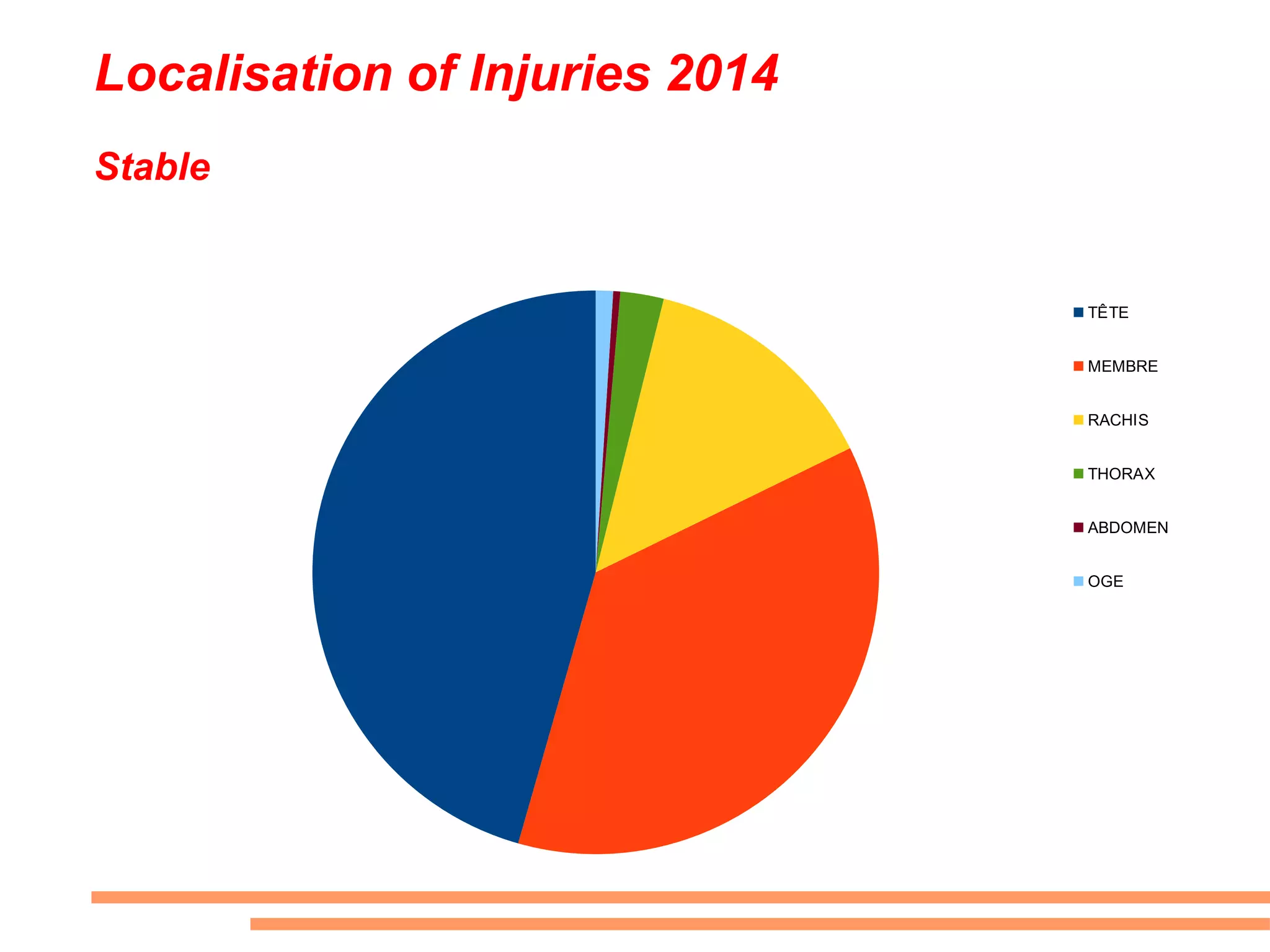
Localisation of Injuries 2014
Stable
TÊTE
MEMBRE
RACHIS
THORAX
ABDOMEN
OGE
Mechanism of injury in 2014
Stable
PROPRE PLANCHE
FOND
COLLISION
MOUVEMENT
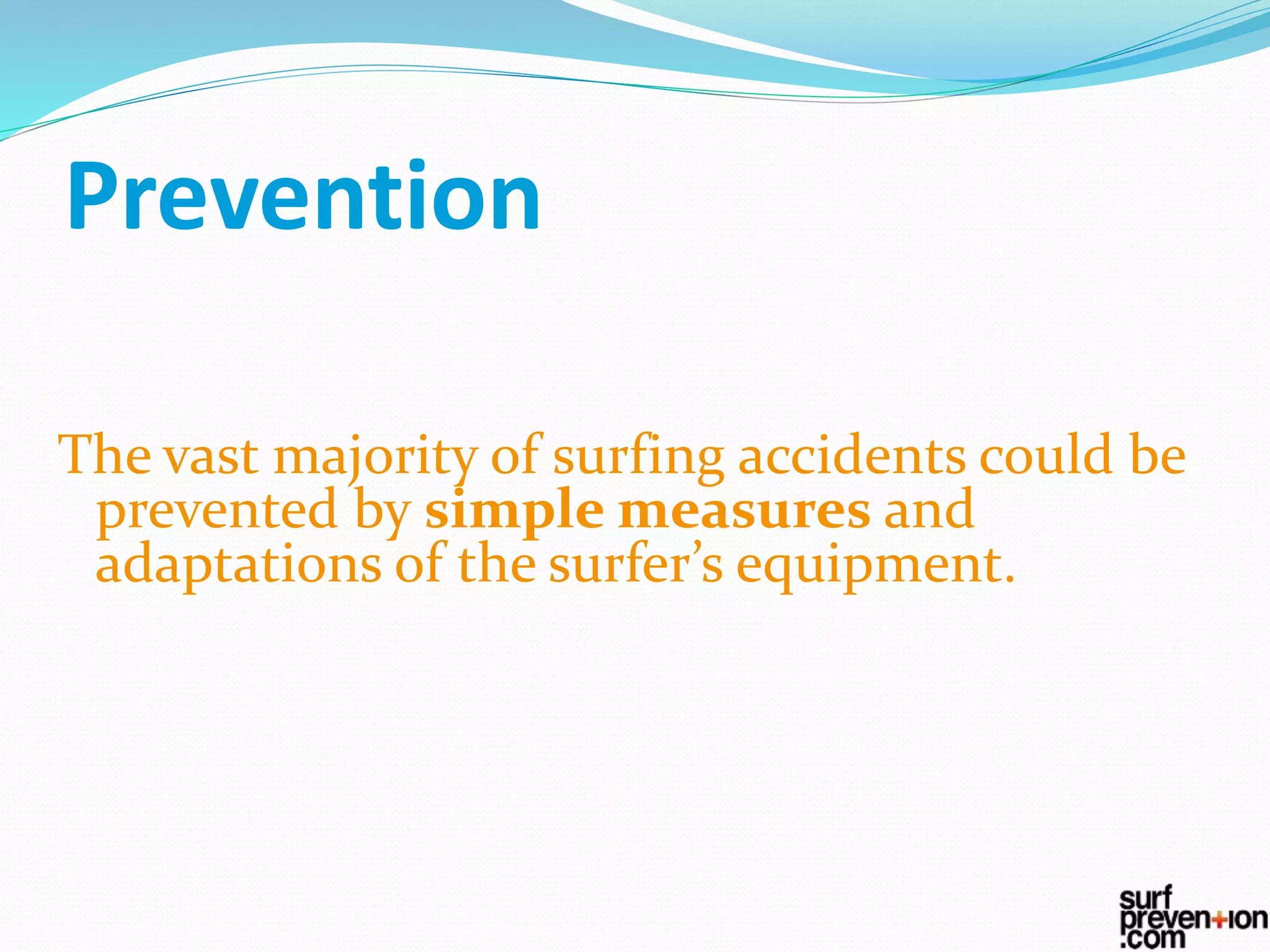
The vast majority of surfing accidents could be
prevented by simple measures and
adaptations of the surfer’s equipment.
Prevention
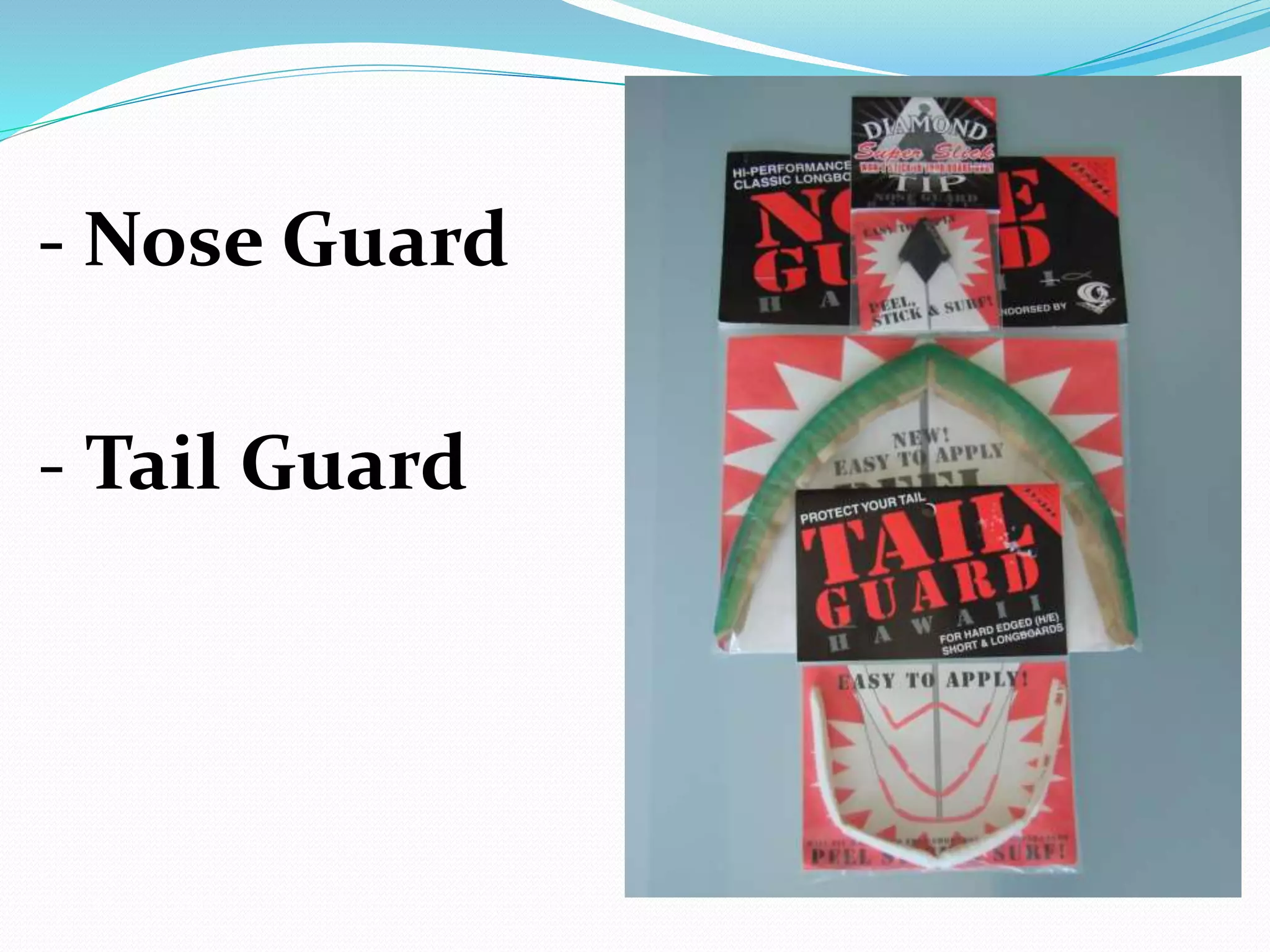
- Nose Guard
- Tail Guard
Soft Boards, Rounded Shape.
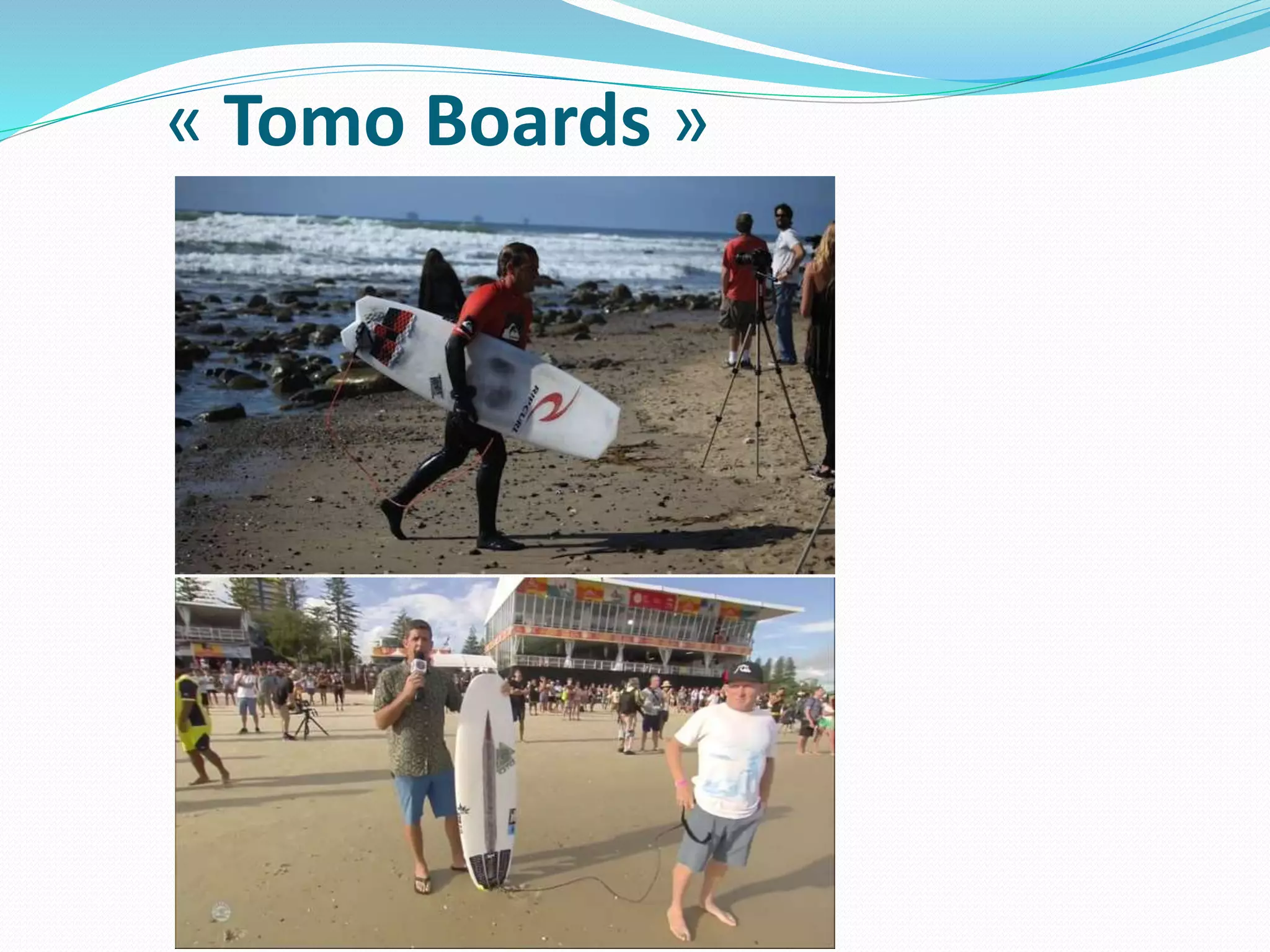
« Tomo Boards »
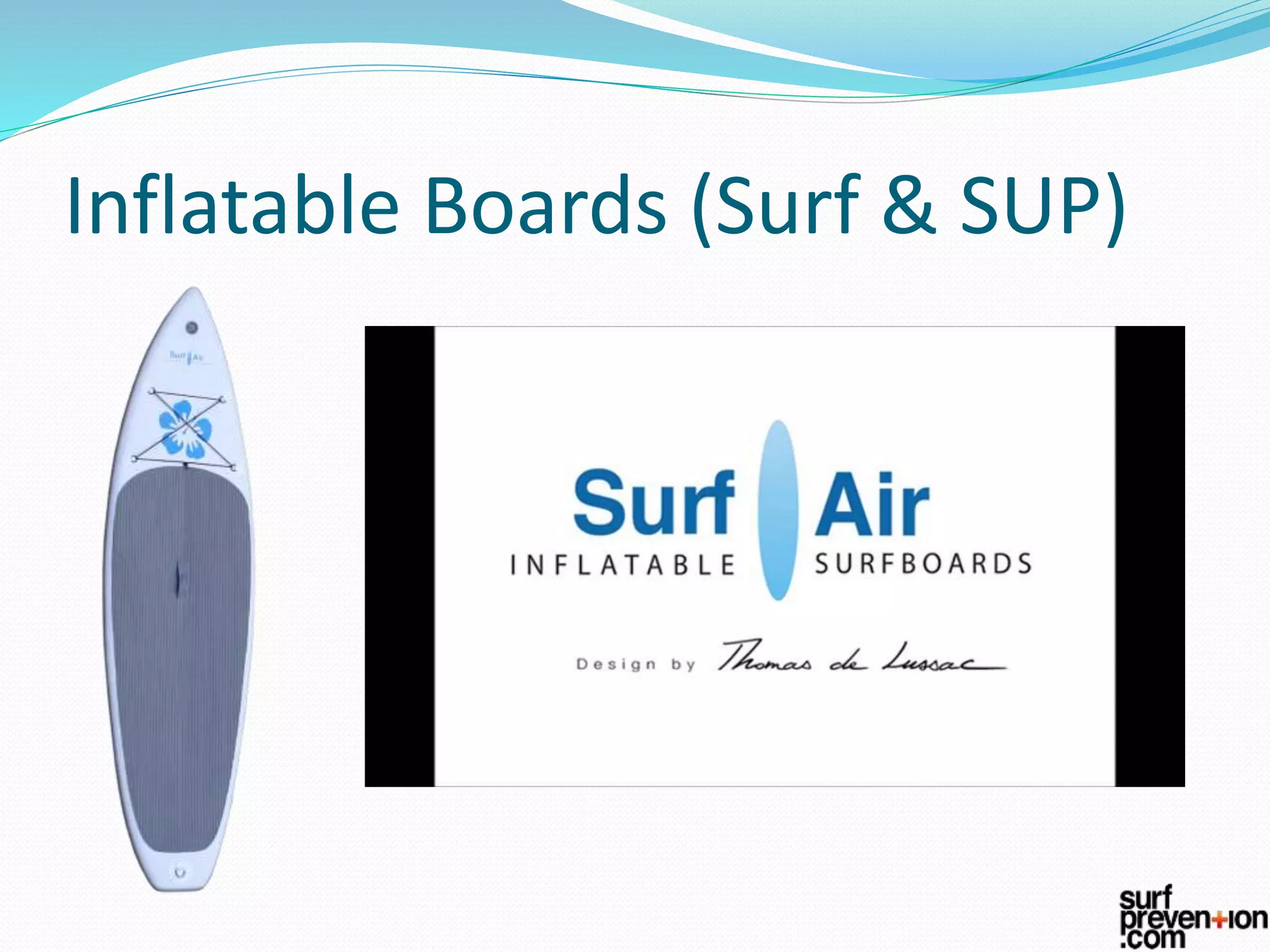
Inflatable Boards (Surf & SUP)
Soft Edged Fins
Finless Surfboards
Secured Leash
Removable Leash (XM Power Clip) to prevent drowning from a leash entangled in the reef.
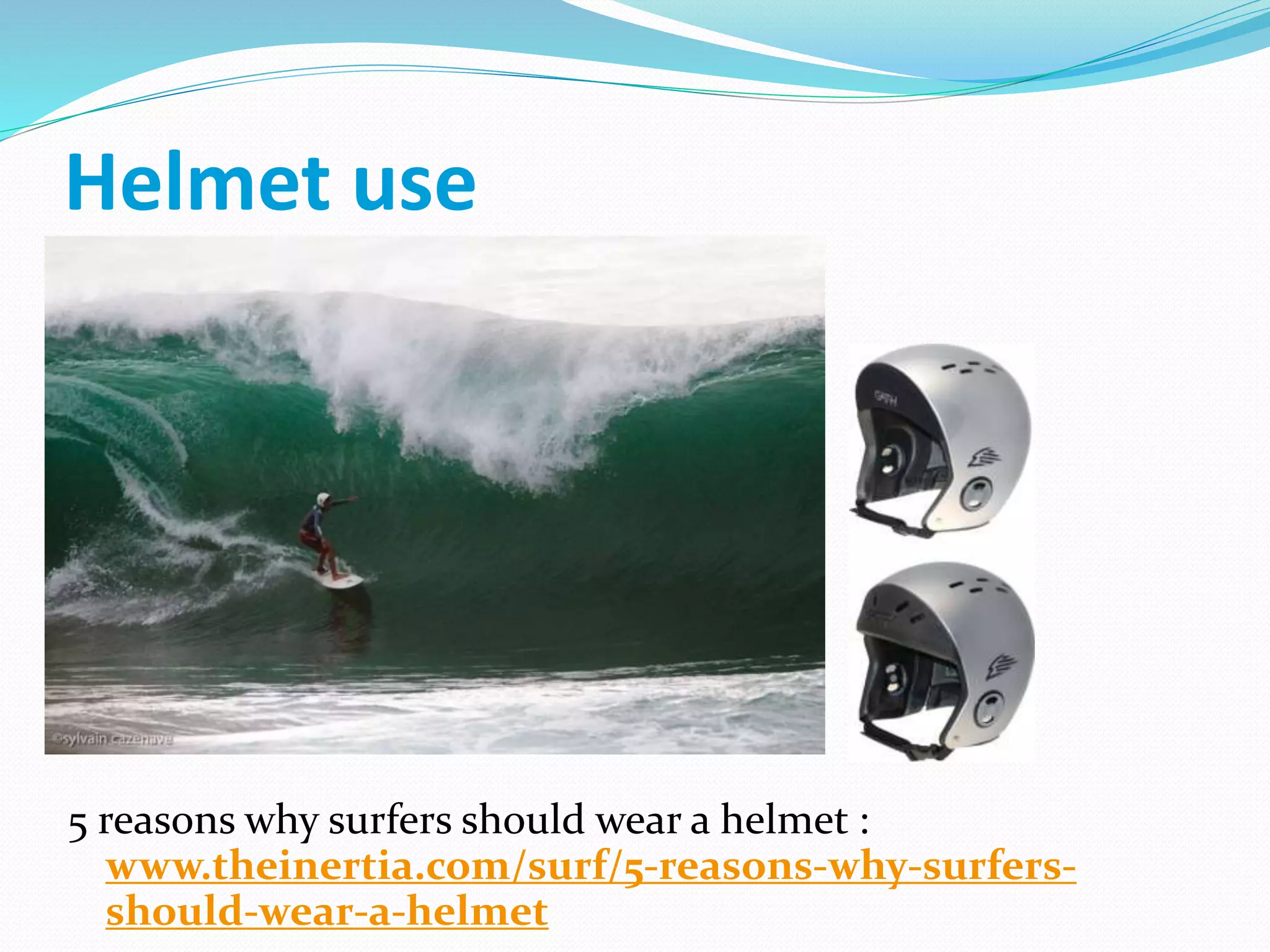
Helmet use
5 reasons why surfers should wear a helmet :
www.theinertia.com/surf/5-reasons-why-surfers-
should-wear-a-helmet
You can win a surf contest with a helmet !
Jeremy Flores, Teahupo’o
Champion 2015
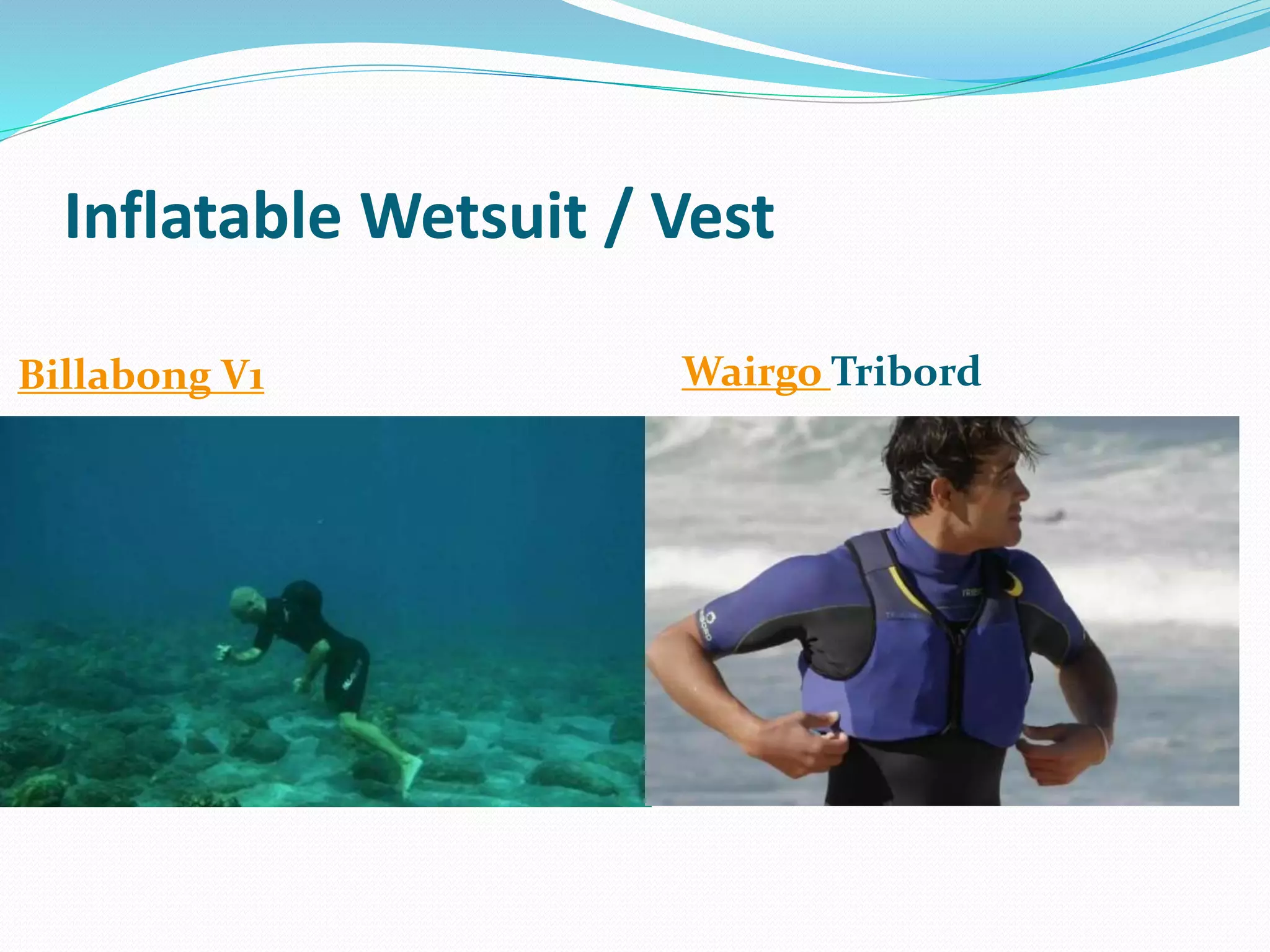
Inflatable Wetsuit / Vest
Wairgo TribordBillabong V1
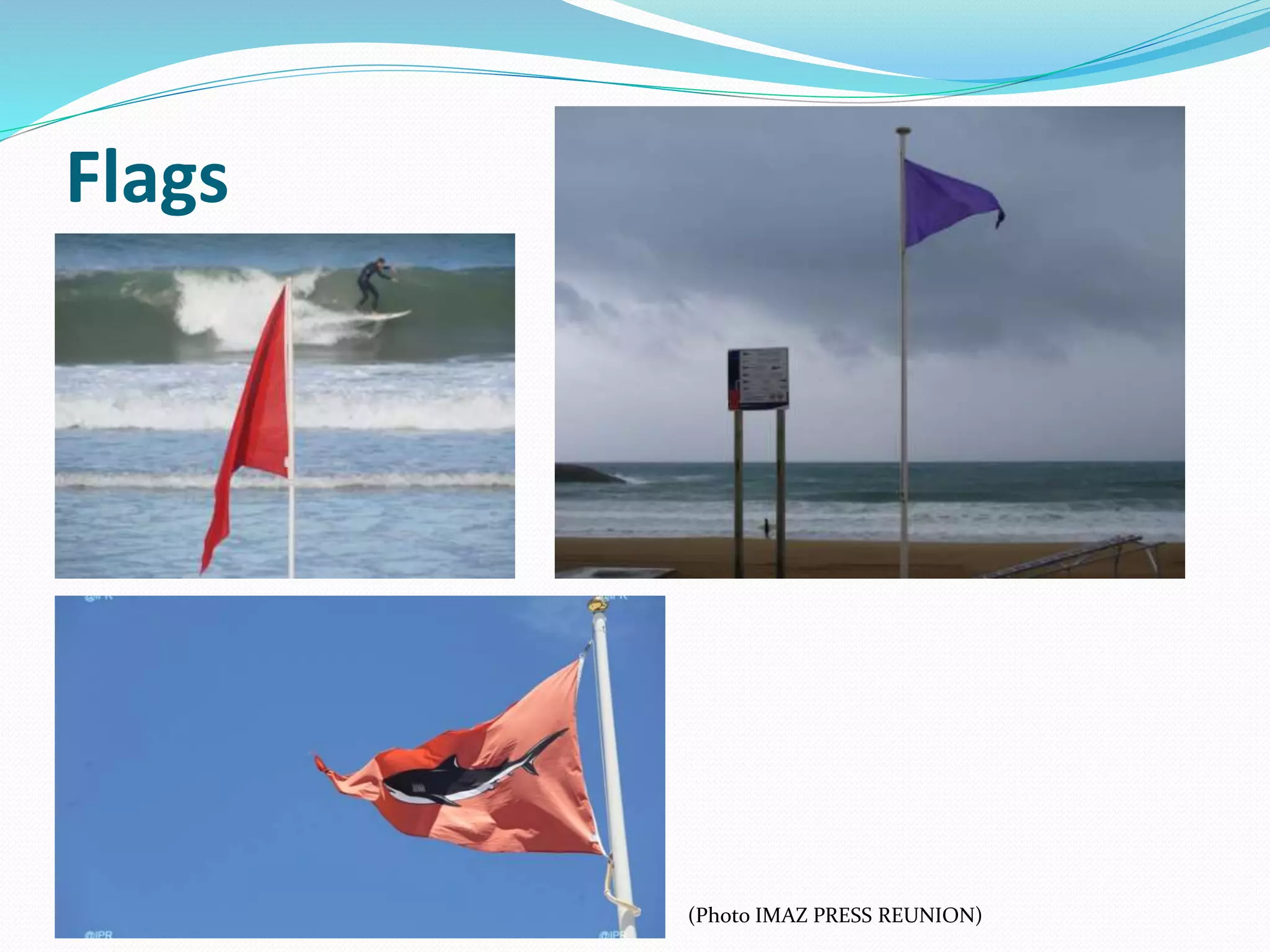
Flags
(Photo IMAZ PRESS REUNION)
Warning Signs
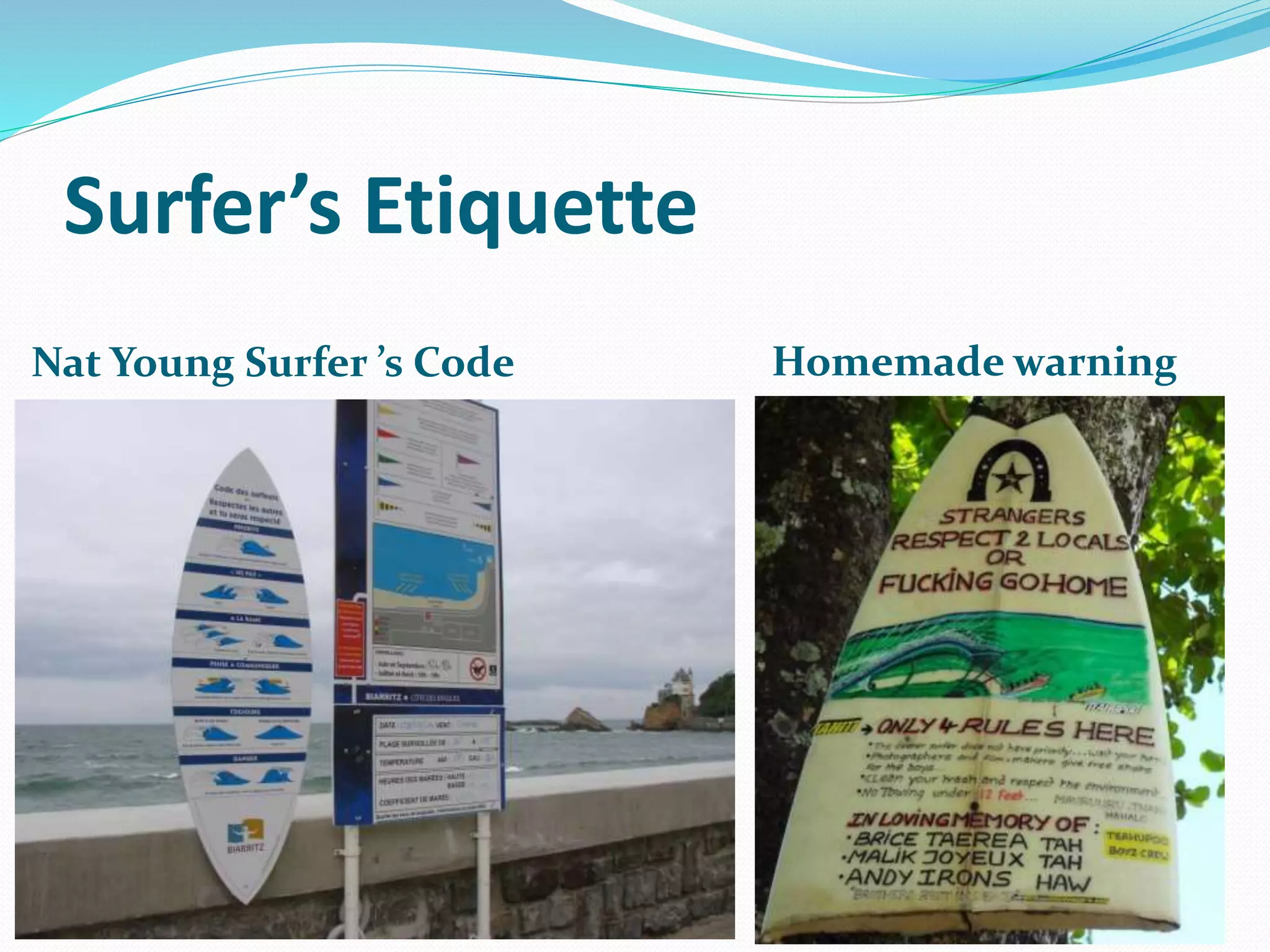
Surfer’s Etiquette
Nat Young Surfer ’s Code Homemade warning
Prevention from the French Surfing Federation
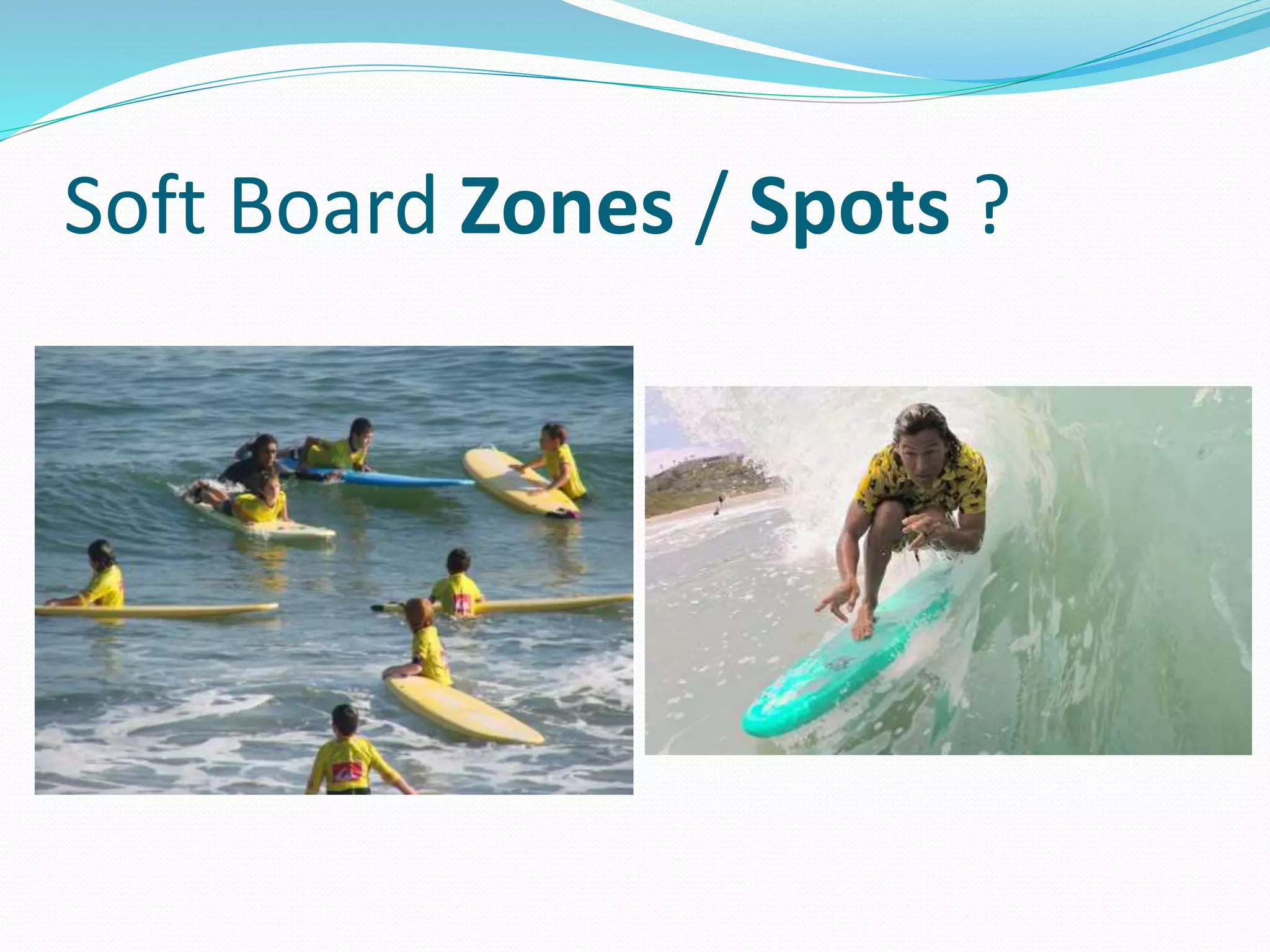
Soft Board Zones / Spots ?
Books and Guides on surf prevention
 Free Surf Prevention Guide
« Know before you Go. »
« If in Doubt, don’t paddle Out.»
« Your Surfboard is your First Enemy. »
« Protect your Head in all Circumstances. »
More info on :

Surfing Injuries and Prevention

  • 1.
    Surf Prevention A lifetimeoverview of injuries and how we can prevent them! Guillaume Barucq, M.D.
  • 2.
    Guillaume Barucq, M.D. -General Practitioner - 38 - Author of the Books Surfers’ Survival Guide and Surf Thérapie - Editor of www.surf-prevention.com - Contact : Twitter @surfprevention @guillaumebarucq www.facebook.com/surf.prevention // www.facebook.com/guillaume.barucq
  • 3.
  • 4.
  • 5.
    1. The Wave(Height, Power +++)
  • 6.
    2. Sea Floor -Reef « Injury happens even to the best surfers. »
  • 7.
    - Sand Bottom Aritz Aranburu’s accident at La Gravière « Sand can be hard as concrete. »
  • 8.
  • 9.
    Risk of cervicaltrauma (bodyboard, bodysurf+++)
  • 10.
    Bodysurfers and bodyboardersare at higher risks of cervical trauma because they go head-first in the shore break.
  • 11.
  • 12.
    Drowning : infrequent. Surfboard =Rescue.  3 Major Causes : - Head Trauma + Loss of Consciousness - Heart Attack - Epileptic Seizure
  • 13.
  • 14.
    6. Angry Locals SUPsurfer attacked with a machete in Pavones, Costa Rica. Surfer beaten with bats during surf contest in Cloud 9 (Philippines).
  • 15.
    7. Lack ofPreparation (training, warm-up, hydratation…)  muscle disorders, tendinitis…
  • 16.
    8. Surfing inthe Air Risk of Sprain (knee, ankle +++)
  • 17.
    9. Storm Go inimmediately in case of lightning!
  • 18.
  • 19.
  • 20.
    11. Surfboard =1st Danger
  • 21.
    Different Risk Levelsin France Bask Coast Tahiti Reunion Island (7 fatalities since 2011, 5 surfers killed by sharks)
  • 22.
    Data  Analysis ofpatients admitted for surfing injuries at the Basque Coast’s Emergency Departments during the summer of 2006. 350 admissions from the 21st of June to the 30th of September 2006. (G. Barucq, T. Mokni, S. Marcé, J-M. Campagne, D. Le Jeune, Centre Hospitalier de la Côte Basque)  Comparison with a new prospective study in 2014 in the same area. 287 cases during the months of July and August 2014. (Hervé Dubois, T. Mokni , Urgences-SAMU-SMUR, Centre Hospitalier de la Côte Basque.)
  • 23.
    Surfing Injuries onthe Bask Coast - Mechanism
  • 24.
    Surferversus Sea Floor(13%)  Surfer versus sand in 9 out of 10 cases.  Surfer versus reef in 1 out of 10 cases.
  • 25.
    Collisions (17%)  Surfervs surfer (66%)  Surfer vs swimmer (27%)  Surfer vs bodyboarder (5%)  Surfer vs floating object (2%) : wood, marine litter…
  • 26.
    Surfer Vs OwnSurfboard (60%)
  • 27.
    Big Boards (Longboard,SUP) (Risk of head trauma)
  • 28.
  • 29.
    56% of lacerationscaused by surfboard’s fins. Exemples: Joel Parkinson or Pauline Ado’s accidents.
  • 30.
    Leash  13cases of finger trauma in summer 2006 (3,7% of accidents).  8 fractures of the 3rd phalange of a finger (4 open fractures and 1 amputation, 6 surgeries).  In summer 2014 : 4,1 % of accidents.  Severe leash accidents (50%).  Less fractures (33% in 2014).  ▶ Efficiency of the messages of prevention / surf school advices.
  • 31.
    Leash  Don’t grabyour leash !  Risk of entanglement around the upper limb.  Danger with a big board and a thin leash.
  • 32.
    Profile of theInjured Surfers  22% are girls.  50% of injured surfer girls had less than 20 yo and 25% less than 16 yo.
  • 33.
    Age  Average age= 26.  2/3 of patients had less than 30.  Young kids among the victims.
  • 34.
    Level of Experience Beginner : 35%. Half injured during a surfing lesson.  Intermediate : 34%  Experienced : 31%
  • 35.
    Surfing Injuries -Traumatology
  • 36.
    Most Frequent Injuries Lacerations (61%)  9 out of 10 require stitches.  6 stitches on average.
  • 37.
     7 outof 10 lacerations concern the head of the surfer.  Facial cuts can leave scars.  Scalp Lacerations can be hemorrhagic. Localisation
  • 38.
    Lacerations - Causes The surfboard cause 93% of the lacerations.  56% from sharp fins and 30% from pointed nose.
  • 39.
    Most serious Injuries 3 Ocular trauma requiring surgery.  In case of ocular trauma, a consultation with an ophtalmologist is mandatory (risk of fiberglass inside the wound).
  • 40.
    Spinal Trauma  14cervical traumas.  3 severe whiplashes with vertebral fracture.  Circumstances : diving at the end of a wave in shallow water or shore break accident.
  • 41.
    Summer 2014 (smallwaves)  More accidents : 4,6 accidents/day (↑ 34% ). Less serious accidents (26 -> 18%). N0 drowning. Hospitalisation → 5%.  Age of the victims : → 26,6 years old but ↑ ≥40 yo and ≤20 yo.  More women involved in surfing accidents : ↑ 46% : from 22% to 33%.  More beginners injured : ↑ de 45%.  Less lacerations (61% -> 48%) and less fractures (11% -> 5%) but more contusions (15% ->30%) and dislocations (3 -> 6%). Sprains stable at 10%.  Explanation : more soft boards used in surf schools or in rental shops.  Prevention has a direct impact on the types of surfing injuries.  : 1/2  ► Licences F.F.S. : ↑ de 72% : x2 Femme et ≤12 ans
  • 42.
    Localisation of Injuries2014 Stable TÊTE MEMBRE RACHIS THORAX ABDOMEN OGE
  • 43.
    Mechanism of injuryin 2014 Stable PROPRE PLANCHE FOND COLLISION MOUVEMENT
  • 44.
    The vast majorityof surfing accidents could be prevented by simple measures and adaptations of the surfer’s equipment. Prevention
  • 45.
    - Nose Guard -Tail Guard
  • 46.
  • 47.
  • 48.
  • 49.
  • 50.
  • 51.
    Secured Leash Removable Leash(XM Power Clip) to prevent drowning from a leash entangled in the reef.
  • 52.
    Helmet use 5 reasonswhy surfers should wear a helmet : www.theinertia.com/surf/5-reasons-why-surfers- should-wear-a-helmet
  • 53.
    You can wina surf contest with a helmet ! Jeremy Flores, Teahupo’o Champion 2015
  • 54.
    Inflatable Wetsuit /Vest Wairgo TribordBillabong V1
  • 55.
  • 56.
  • 57.
    Surfer’s Etiquette Nat YoungSurfer ’s Code Homemade warning
  • 58.
    Prevention from theFrench Surfing Federation
  • 59.
  • 60.
    Books and Guideson surf prevention  Free Surf Prevention Guide
  • 61.
    « Know beforeyou Go. » « If in Doubt, don’t paddle Out.» « Your Surfboard is your First Enemy. » « Protect your Head in all Circumstances. »
  • 62.