Department :
Operation theater
technologist
PRESENTATION:
Anastasia $ techniques
Presented by:
Aiza Qasim 59514
PRESENTED TO:
Ma’am Khadija
Topics:
Definition
Uses
Importance
Procedure
Parts
Types
Suction machine:
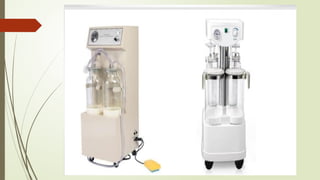
Definition of Suction Machine:
A suction machine is a
medical device used to remove unwanted substances
such as saliva, mucus, blood, or vomit from a patient’s
airway or surgical site by creating negative pressure. It
helps maintain a clear airway and clean surgical field
during anesthesia and surgery.
Uses of suction machine:
•Suctioning the oropharynx or trachea before, during, or after
intubation.
• Clearing blood or secretions from the surgical field.
• Managing aspiration during general anesthesia.
• Clearing secretions in postoperative care.
• Assisting in resuscitation efforts.
Importance of suction machine during
anaesthesia:
•Maintains Airway Patency: Prevents airway obstruction by clearing
secretions.
•Prevents Aspiration: Removes vomitus or fluids that could enter the lungs.
•Ensures Visibility: Keeps the surgical site free from blood and fluids.
•Emergency Support: Vital during airway emergencies like laryngospasm
or bleeding.
Procedure of suction machine during
anaesthesia:
1. Check Equipment:
Ensure the suction machine is functional and properly assembled.
Attach sterile suction tubing and catheter.
2. Turn On Machine:
Adjust the vacuum pressure as per patient needs (usually 80–120 mmHg for
adults).
3. Insert Suction Catheter:
Gently insert the catheter into the patient’s airway or surgical site.
4. Apply Suction:
Occlude the thumb port intermittently to apply suction (limit
to 10-15 seconds at a time).
5. Withdraw Catheter:
Remove the catheter while continuing suction.
6. Dispose and Clean:
Dispose of catheter if single-use, or sterilize if reusable.
Empty and clean the canister.
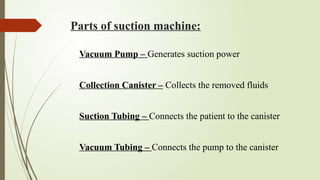
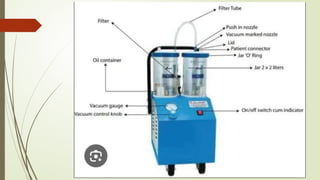
Parts of suction machine:
Vacuum Pump – Generates suction power
Collection Canister – Collects the removed fluids
Suction Tubing – Connects the patient to the canister
Vacuum Tubing – Connects the pump to the canister
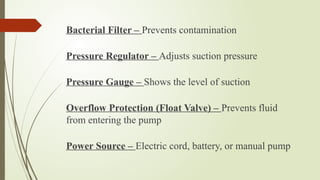
Bacterial Filter – Prevents contamination
Pressure Regulator – Adjusts suction pressure
Pressure Gauge – Shows the level of suction
Overflow Protection (Float Valve) – Prevents fluid
from entering the pump
Power Source – Electric cord, battery, or manual pump
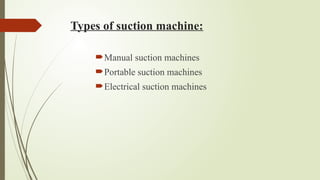
Types of suction machine:
Manual suction machines
Portable suction machines
Electrical suction machines
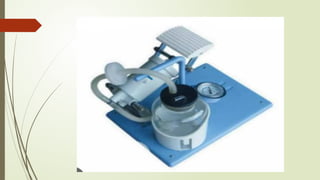
Manual suction machines:
These are non-electric, portable, and often used in
emergency situations or when electricity isn’t
available. Medzell says that manual suction
machines are frequently used in emergencies
because they don’t require electricity.
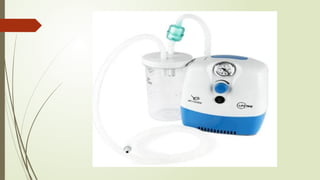
Portable suction machines:
These are battery-powered and designed for mobility,
allowing users to suction on the go. AboutKidsHealth
says that portable suction machines are best for suction
on the go.
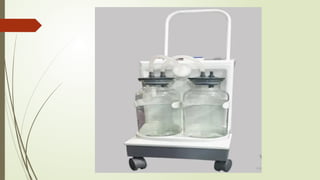
Electrical suction machines:
These plug into an electrical outlet and are commonly
found in hospitals and clinics.
suction machine presentation.pptxxxxxxxx

suction machine presentation.pptxxxxxxxx

  • 1.
  • 2.
    Presented by: Aiza Qasim59514 PRESENTED TO: Ma’am Khadija
  • 3.
  • 4.
    Suction machine: Definition ofSuction Machine: A suction machine is a medical device used to remove unwanted substances such as saliva, mucus, blood, or vomit from a patient’s airway or surgical site by creating negative pressure. It helps maintain a clear airway and clean surgical field during anesthesia and surgery.
  • 6.
    Uses of suctionmachine: •Suctioning the oropharynx or trachea before, during, or after intubation. • Clearing blood or secretions from the surgical field. • Managing aspiration during general anesthesia. • Clearing secretions in postoperative care. • Assisting in resuscitation efforts.
  • 7.
    Importance of suctionmachine during anaesthesia: •Maintains Airway Patency: Prevents airway obstruction by clearing secretions. •Prevents Aspiration: Removes vomitus or fluids that could enter the lungs. •Ensures Visibility: Keeps the surgical site free from blood and fluids. •Emergency Support: Vital during airway emergencies like laryngospasm or bleeding.
  • 8.
    Procedure of suctionmachine during anaesthesia: 1. Check Equipment: Ensure the suction machine is functional and properly assembled. Attach sterile suction tubing and catheter. 2. Turn On Machine: Adjust the vacuum pressure as per patient needs (usually 80–120 mmHg for adults). 3. Insert Suction Catheter: Gently insert the catheter into the patient’s airway or surgical site.
  • 9.
    4. Apply Suction: Occludethe thumb port intermittently to apply suction (limit to 10-15 seconds at a time). 5. Withdraw Catheter: Remove the catheter while continuing suction. 6. Dispose and Clean: Dispose of catheter if single-use, or sterilize if reusable. Empty and clean the canister.
  • 10.
    Parts of suctionmachine: Vacuum Pump – Generates suction power Collection Canister – Collects the removed fluids Suction Tubing – Connects the patient to the canister Vacuum Tubing – Connects the pump to the canister
  • 11.
    Bacterial Filter –Prevents contamination Pressure Regulator – Adjusts suction pressure Pressure Gauge – Shows the level of suction Overflow Protection (Float Valve) – Prevents fluid from entering the pump Power Source – Electric cord, battery, or manual pump
  • 13.
    Types of suctionmachine: Manual suction machines Portable suction machines Electrical suction machines
  • 14.
    Manual suction machines: Theseare non-electric, portable, and often used in emergency situations or when electricity isn’t available. Medzell says that manual suction machines are frequently used in emergencies because they don’t require electricity.
  • 16.
    Portable suction machines: Theseare battery-powered and designed for mobility, allowing users to suction on the go. AboutKidsHealth says that portable suction machines are best for suction on the go.
  • 18.
    Electrical suction machines: Theseplug into an electrical outlet and are commonly found in hospitals and clinics.