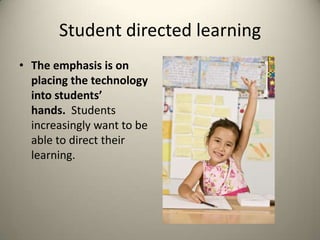
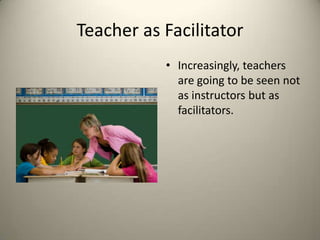
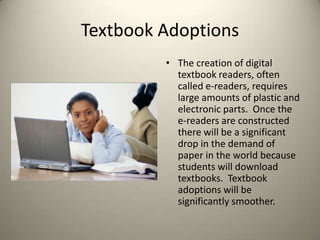
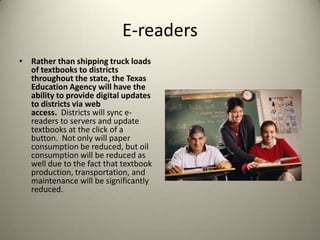
Student-centered technology places more control and resources in students' hands for directing their own learning, with teachers acting as facilitators to guide students in filtering online information. As technology becomes more integrated into professional development and classrooms, digital textbooks and e-readers will allow instant access to updated content while reducing paper and oil consumption compared to physical textbooks that require production and shipping. Educators should leverage students' engagement with social networking to develop creative learning environments online.