STRUCTURE OF THE PAGE
TABLE
PRESENTATION
BY
D.Madhuri
PAGE TABLE :
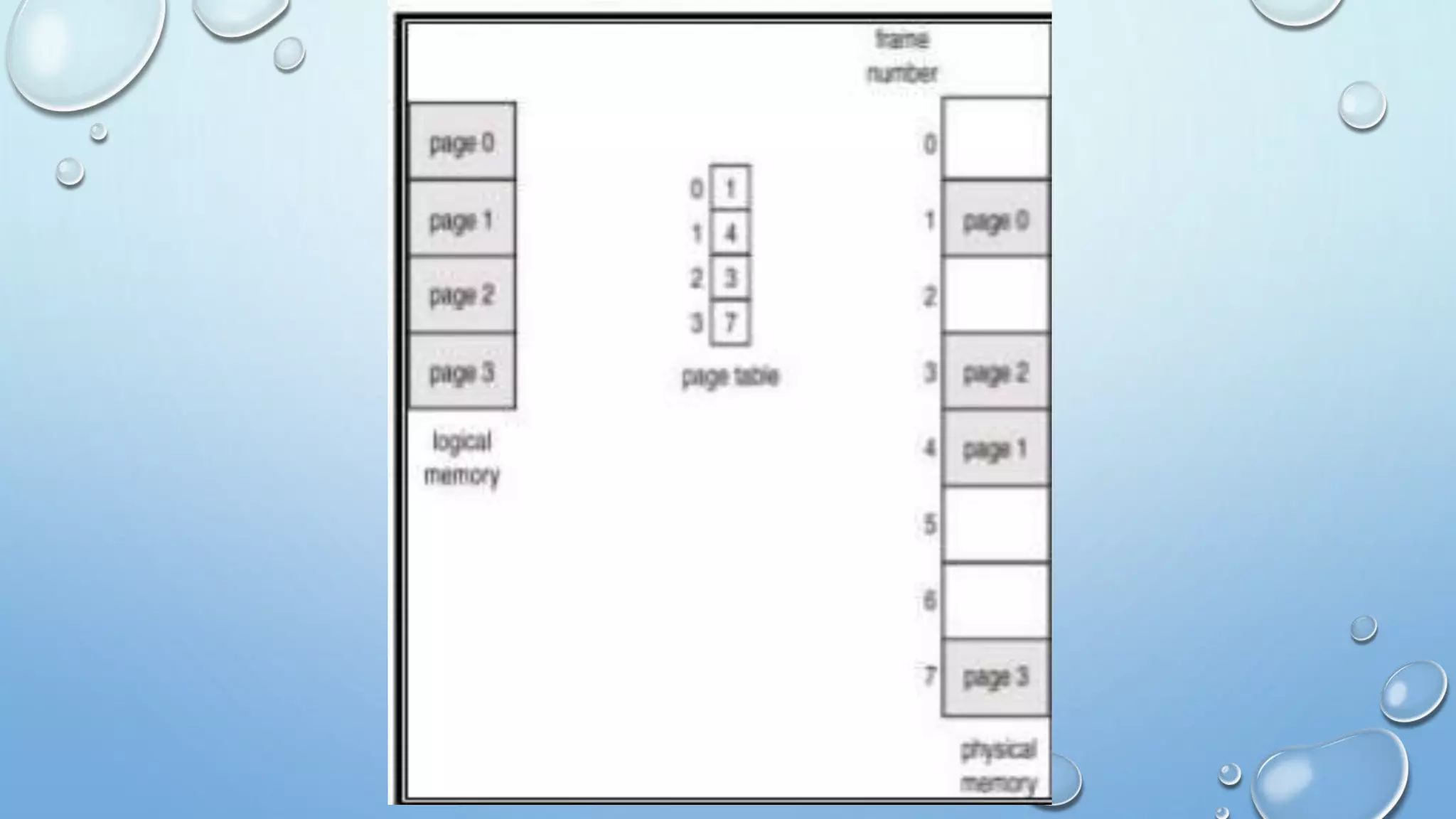
• A PAGE TABLE is the data structure used by a virtual
memory system in a computer operating system to store
the mapping between virtual addresses and physical
addresses.
Common Techniques used for structuring the
page table are :
• Hierarchical paging
• Hashed page tables
• Inverted page tables
HIERARCHICAL PAGING:
• It is also known as multilevel paging.
• The page table might be too big to fit in a contiguous space , so
we may have a hierarchy with several levels.
• So , we break up the logical address space into multiple page
tables.
• For this a simple techniques we can use are:
Two level page table
Three level page table
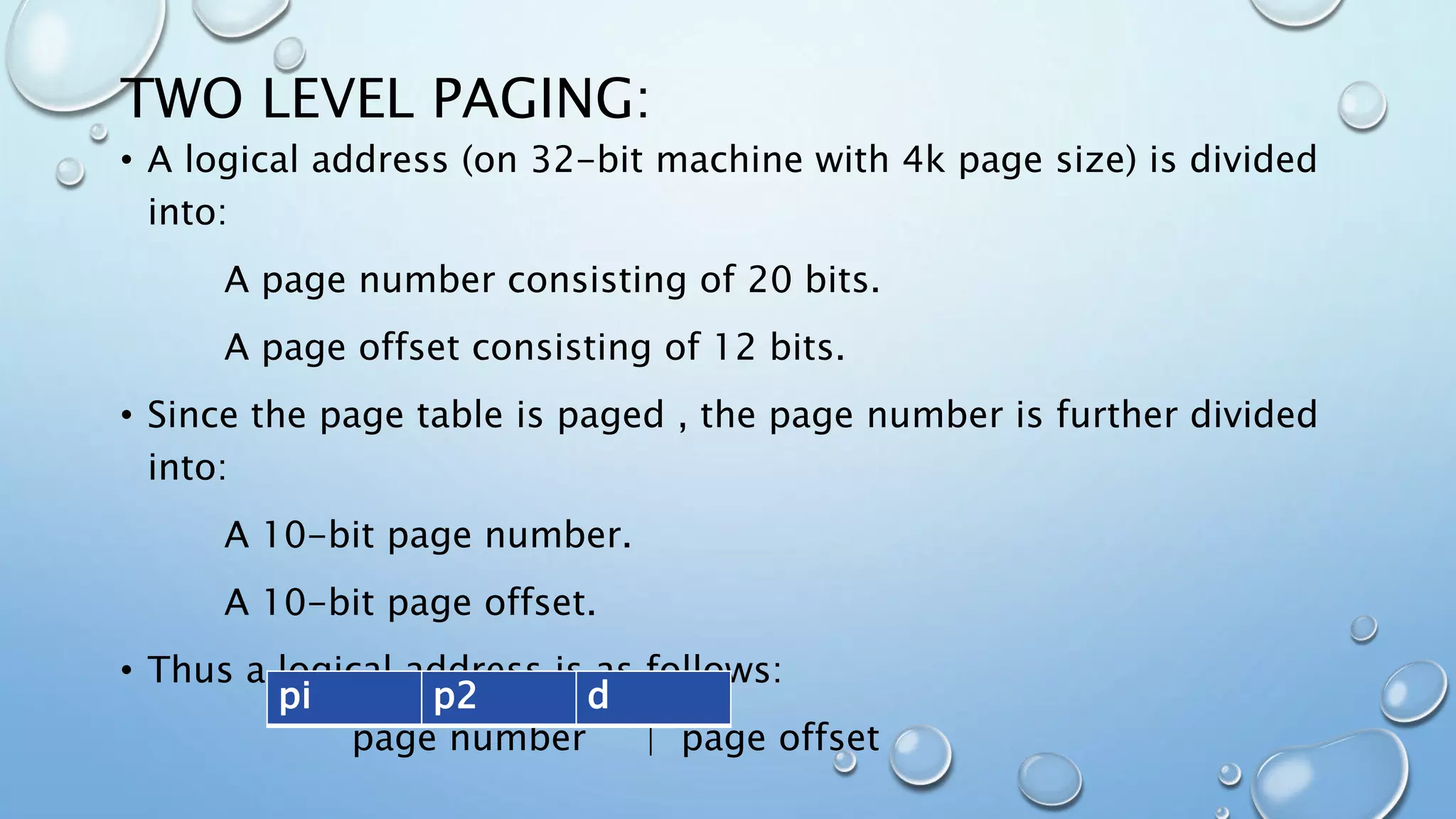
TWO LEVEL PAGING:
• A logical address (on 32-bit machine with 4k page size) is divided
into:
A page number consisting of 20 bits.
A page offset consisting of 12 bits.
• Since the page table is paged , the page number is further divided
into:
A 10-bit page number.
A 10-bit page offset.
• Thus a logical address is as follows:
page number | page offset
pi p2 d
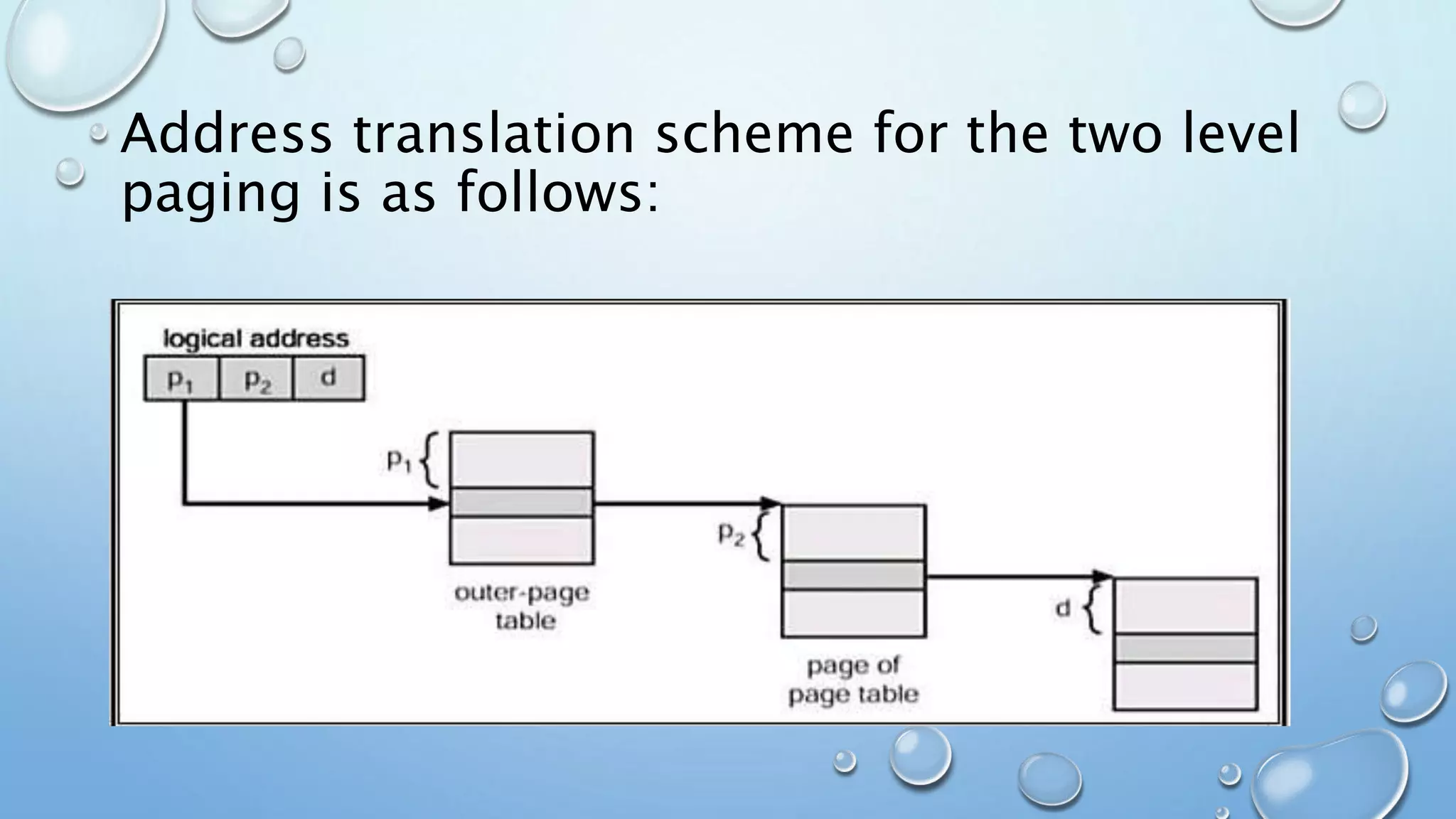
Address translation scheme for the two level
paging is as follows:
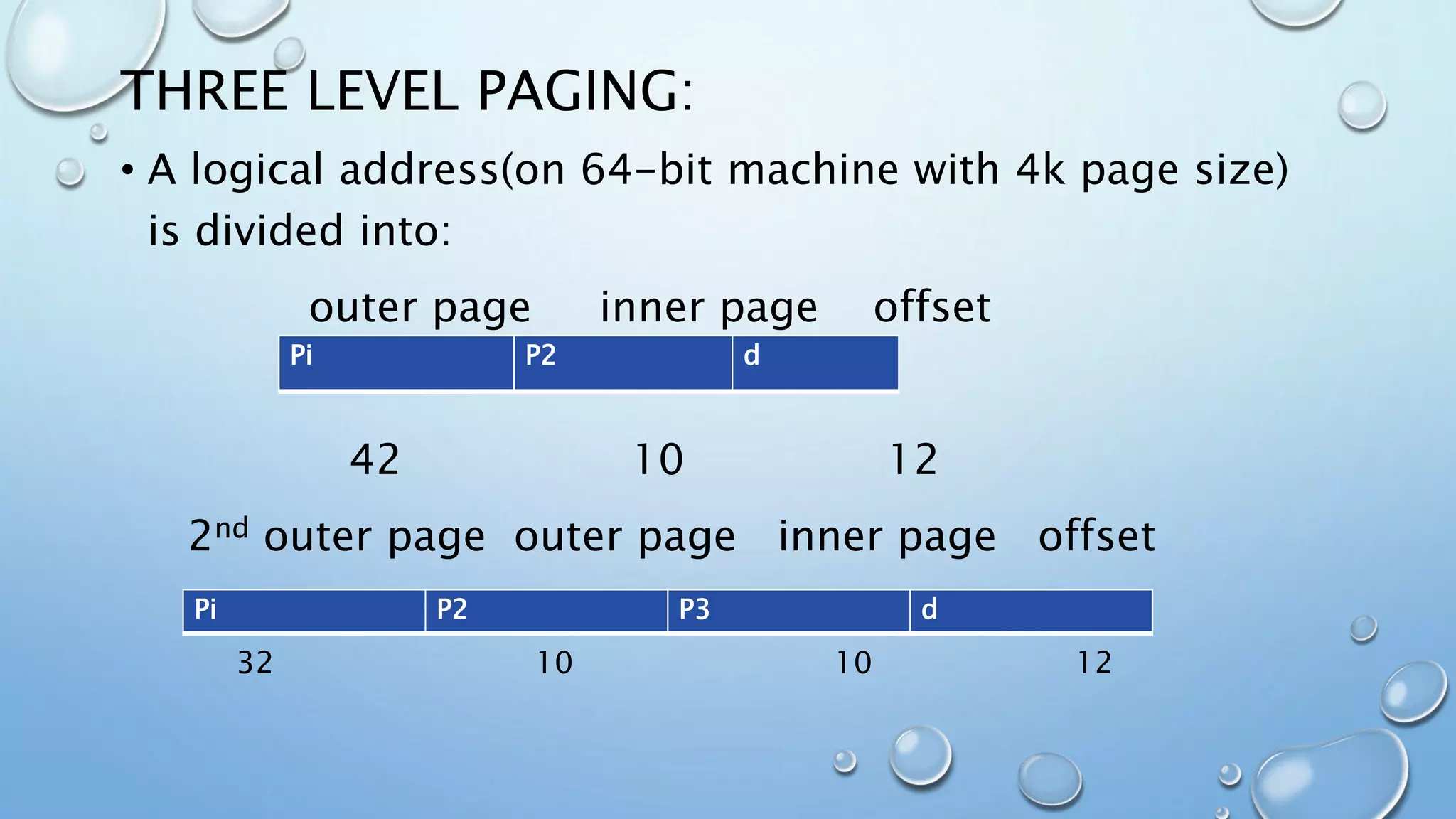
THREE LEVEL PAGING:
• A logical address(on 64-bit machine with 4k page size)
is divided into:
outer page inner page offset
42 10 12
2nd outer page outer page inner page offset
32 10 10 12
Pi P2 d
Pi P2 P3 d
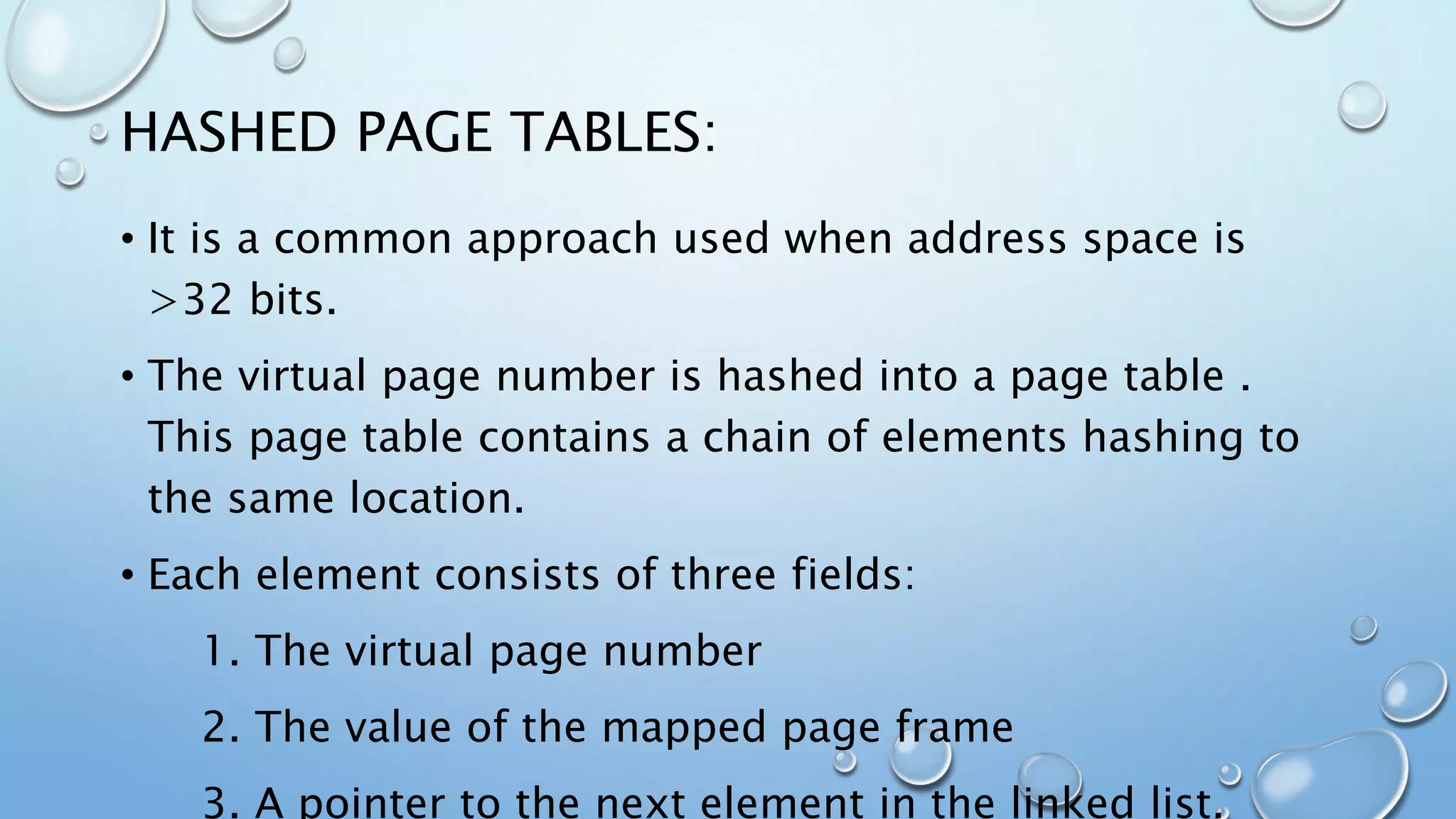
HASHED PAGE TABLES:
• It is a common approach used when address space is
>32 bits.
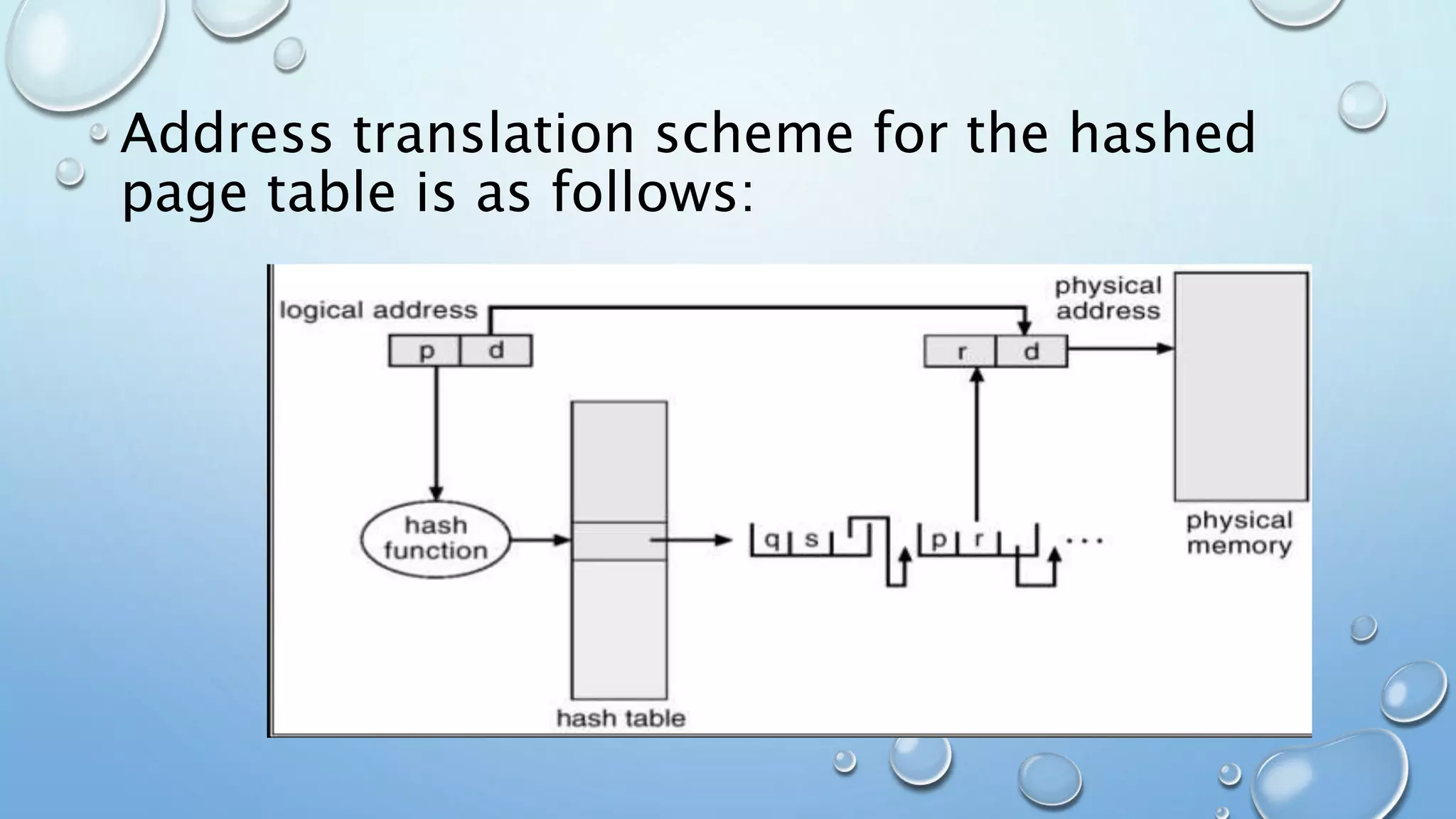
• The virtual page number is hashed into a page table .
This page table contains a chain of elements hashing to
the same location.
• Each element consists of three fields:
1. The virtual page number
2. The value of the mapped page frame
3. A pointer to the next element in the linked list.
Address translation scheme for the hashed
page table is as follows:
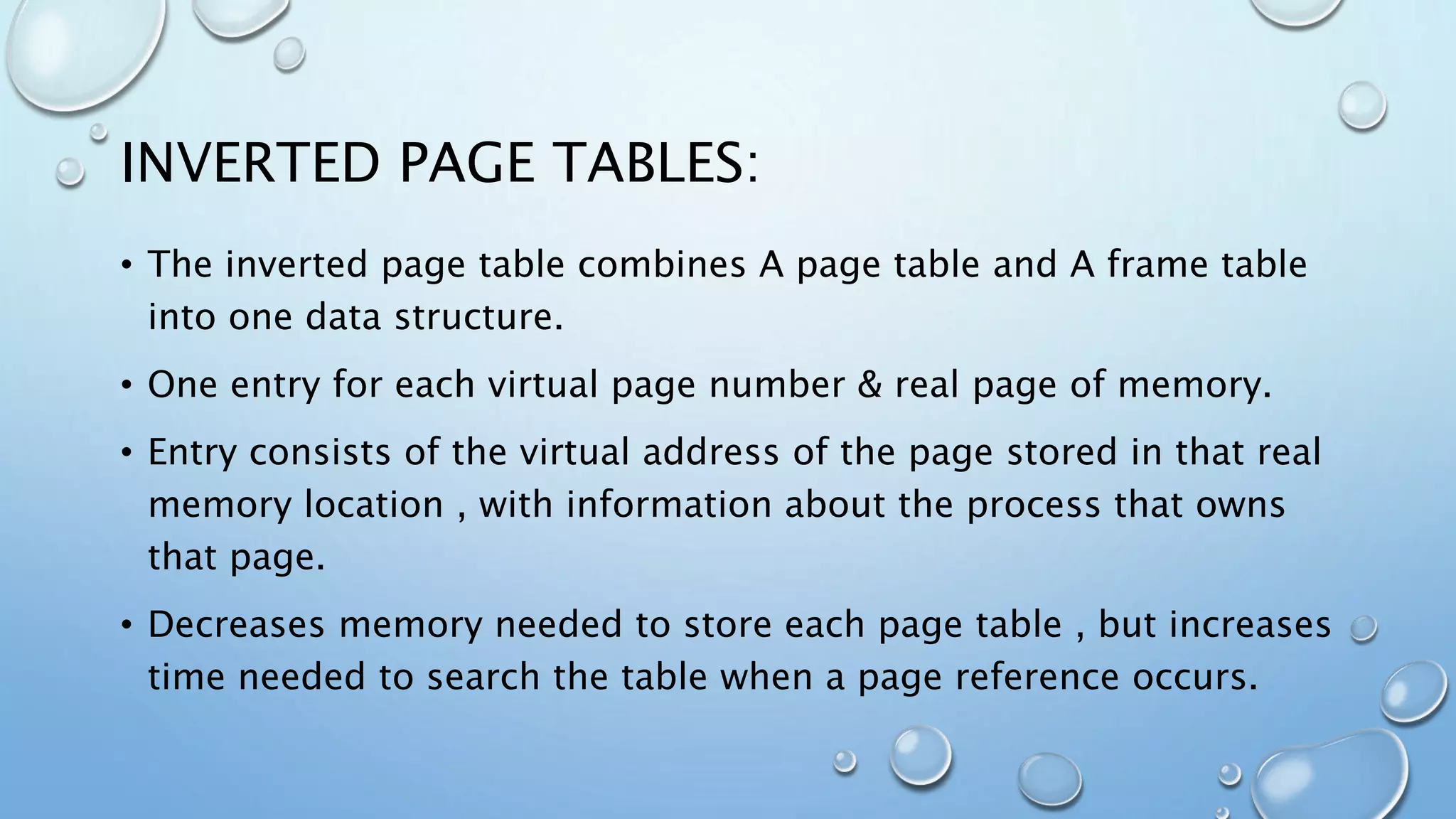
INVERTED PAGE TABLES:
• The inverted page table combines A page table and A frame table
into one data structure.
• One entry for each virtual page number & real page of memory.
• Entry consists of the virtual address of the page stored in that real
memory location , with information about the process that owns
that page.
• Decreases memory needed to store each page table , but increases
time needed to search the table when a page reference occurs.
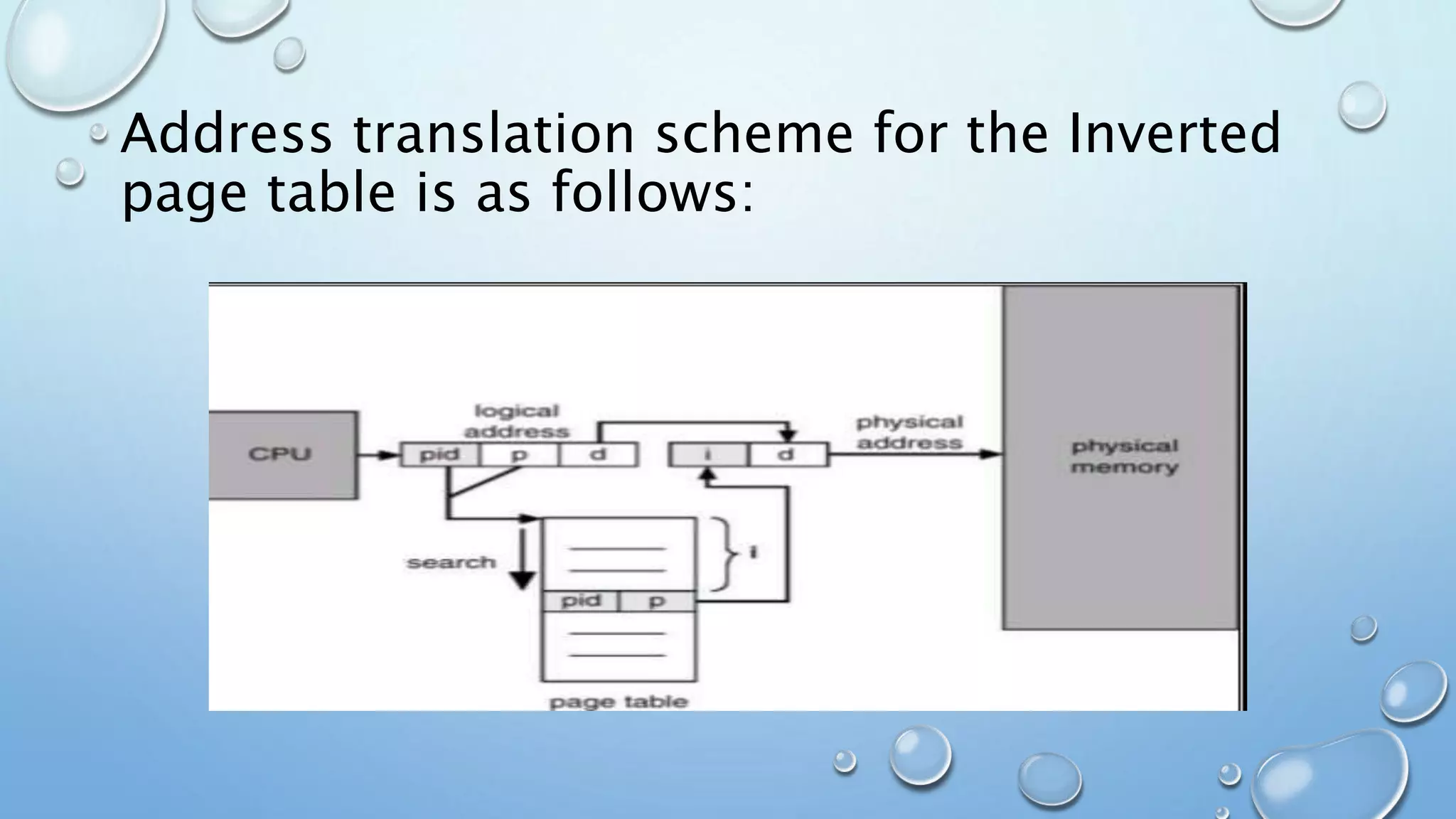
Address translation scheme for the Inverted
page table is as follows:
Structure of the page table

Structure of the page table

  • 1.
    STRUCTURE OF THEPAGE TABLE PRESENTATION BY D.Madhuri
  • 2.
    PAGE TABLE : •A PAGE TABLE is the data structure used by a virtual memory system in a computer operating system to store the mapping between virtual addresses and physical addresses.
  • 4.
    Common Techniques usedfor structuring the page table are : • Hierarchical paging • Hashed page tables • Inverted page tables
  • 5.
    HIERARCHICAL PAGING: • Itis also known as multilevel paging. • The page table might be too big to fit in a contiguous space , so we may have a hierarchy with several levels. • So , we break up the logical address space into multiple page tables. • For this a simple techniques we can use are: Two level page table Three level page table
  • 6.
    TWO LEVEL PAGING: •A logical address (on 32-bit machine with 4k page size) is divided into: A page number consisting of 20 bits. A page offset consisting of 12 bits. • Since the page table is paged , the page number is further divided into: A 10-bit page number. A 10-bit page offset. • Thus a logical address is as follows: page number | page offset pi p2 d
  • 7.
    Address translation schemefor the two level paging is as follows:
  • 8.
    THREE LEVEL PAGING: •A logical address(on 64-bit machine with 4k page size) is divided into: outer page inner page offset 42 10 12 2nd outer page outer page inner page offset 32 10 10 12 Pi P2 d Pi P2 P3 d
  • 9.
    HASHED PAGE TABLES: •It is a common approach used when address space is >32 bits. • The virtual page number is hashed into a page table . This page table contains a chain of elements hashing to the same location. • Each element consists of three fields: 1. The virtual page number 2. The value of the mapped page frame 3. A pointer to the next element in the linked list.
  • 10.
    Address translation schemefor the hashed page table is as follows:
  • 11.
    INVERTED PAGE TABLES: •The inverted page table combines A page table and A frame table into one data structure. • One entry for each virtual page number & real page of memory. • Entry consists of the virtual address of the page stored in that real memory location , with information about the process that owns that page. • Decreases memory needed to store each page table , but increases time needed to search the table when a page reference occurs.
  • 12.
    Address translation schemefor the Inverted page table is as follows: