Management Information Systems
STRUCTURE OF MIS
Prepared By:
Mohammed Jasir PV
Asst. Professor
NBS, Koratty
Contact: 9605 69 32 66
Presentation Overview
STRUCTURE OF MIS
o Basic structural concepts
o Formal and informal information systems
o Public and private information systems
2
1.
STRUCTURE OF MIS
3
“
‘MIS is a system that aids management in making,
carrying out and controlling decisions’.
- Jerome Kanter
4
Management Information System
A Management Information System is
• An integrated user-machine system
• For providing information
• To support the operations,
• Management,
• Analysis & decision-making functions in an organization
5
6
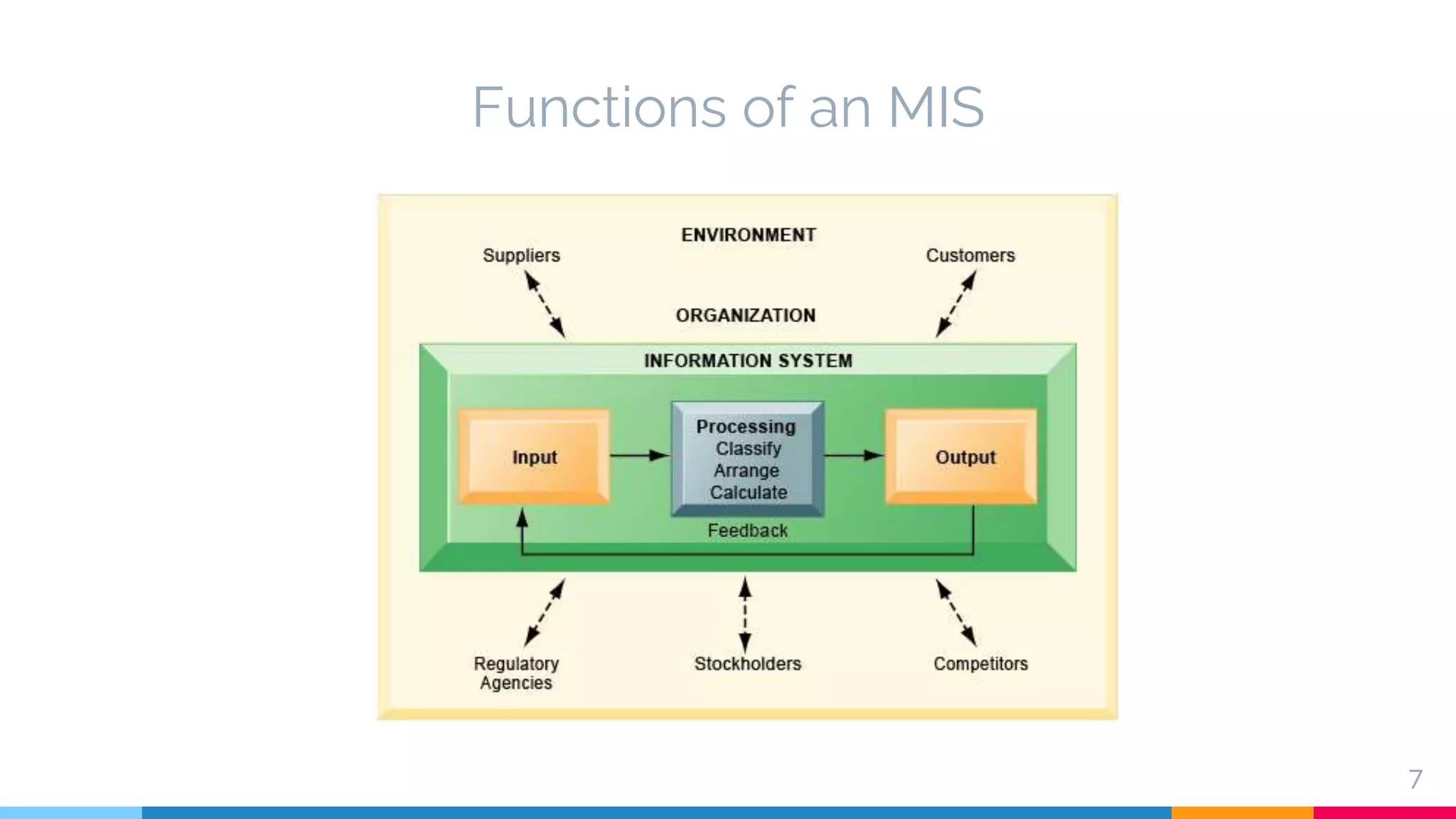
Functions of an MIS
7
Management Information System
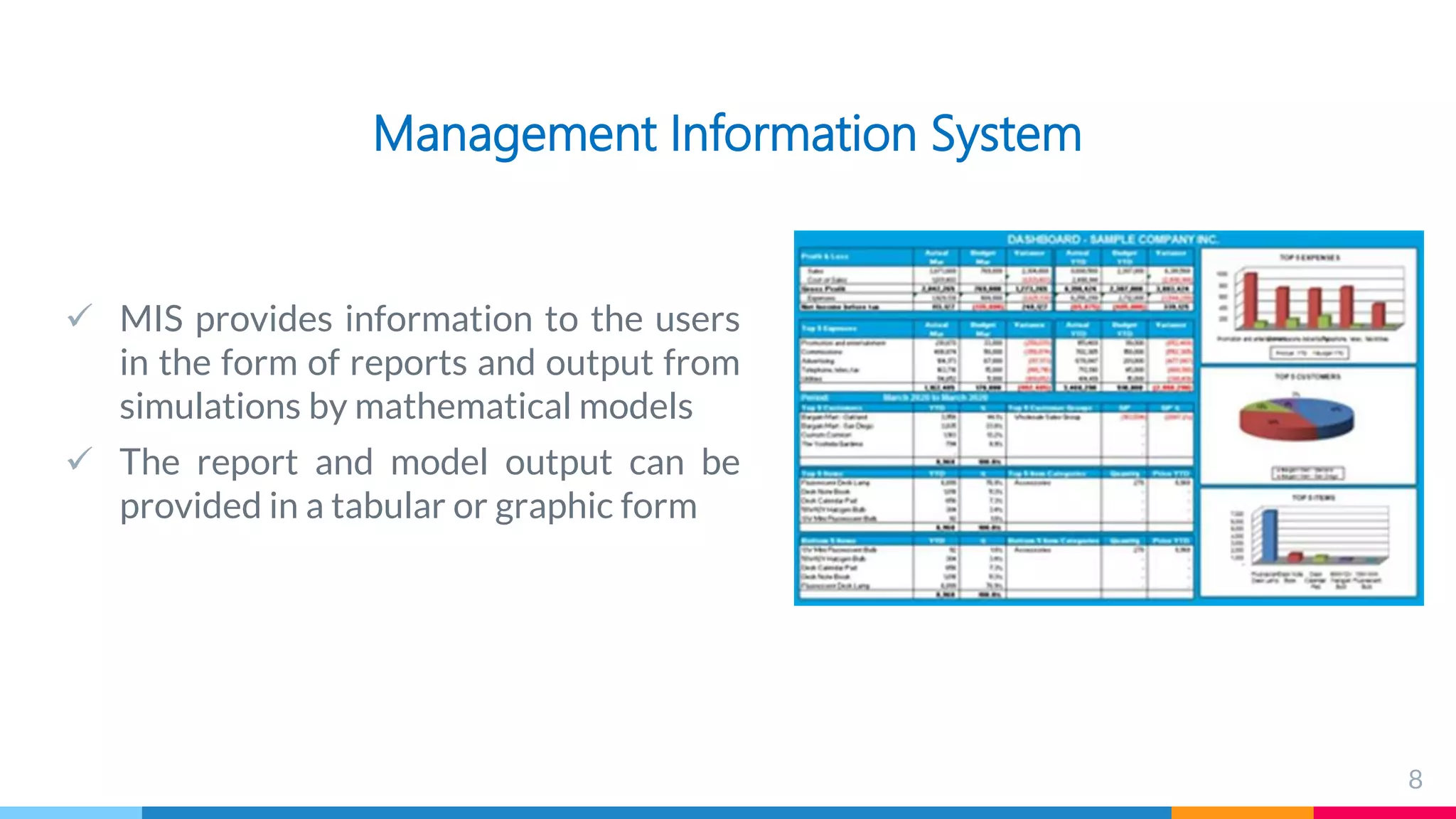
 MIS provides information to the users
in the form of reports and output from
simulations by mathematical models
 The report and model output can be
provided in a tabular or graphic form
8
Structure of MIS
Difficult concept to understand as there is no universally accepted framework
9
MIS
Basic Structural Concepts
o Formal and informal information systems
o Public and private information systems
10
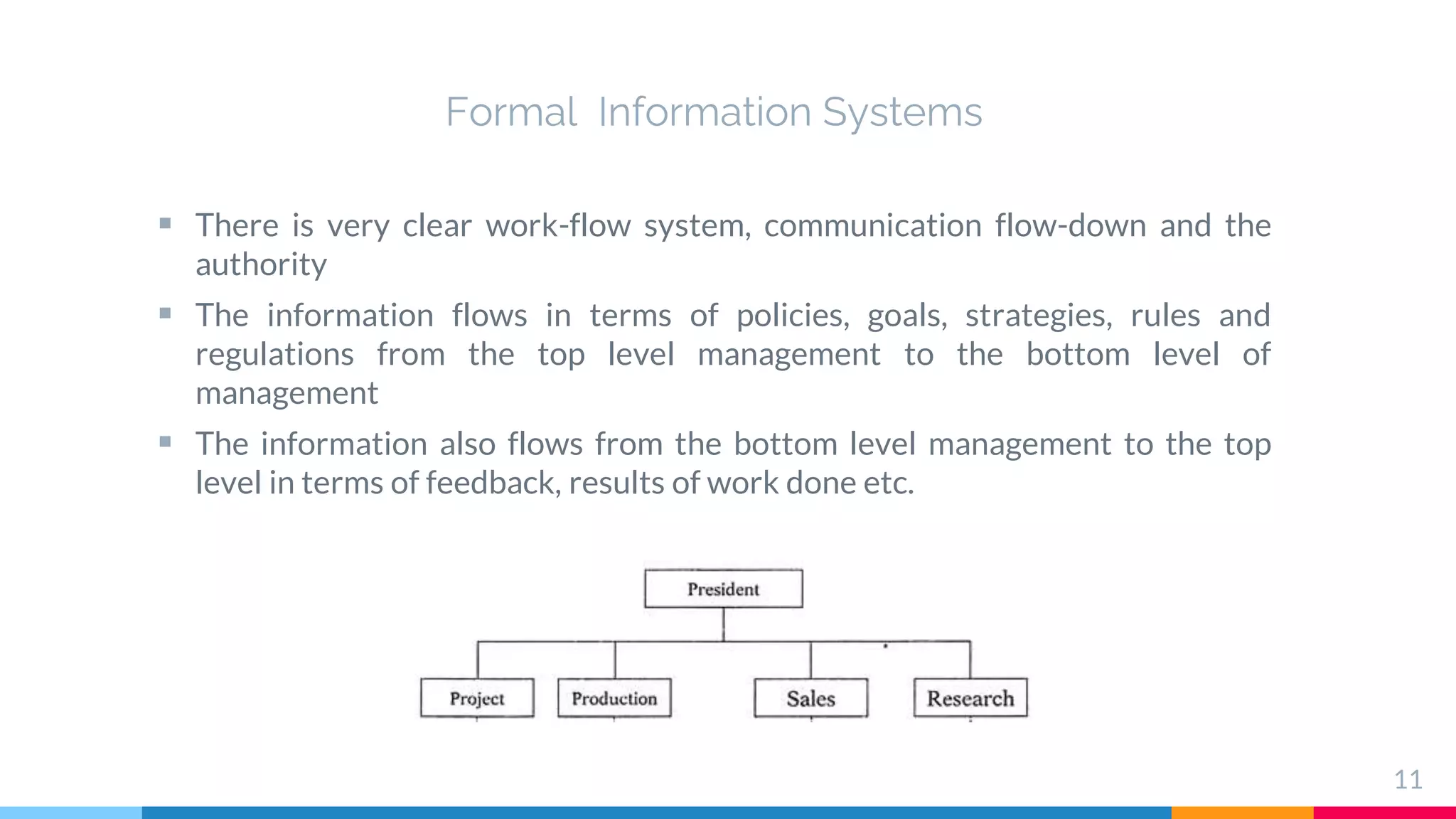
Formal Information Systems
 There is very clear work-flow system, communication flow-down and the
authority
 The information flows in terms of policies, goals, strategies, rules and
regulations from the top level management to the bottom level of
management
 The information also flows from the bottom level management to the top
level in terms of feedback, results of work done etc.
11
There are three categories of information related to the Formal Information Systems:
• Strategic Information - relates to long-range planning policies. This information
is achieved using the Decision Support System
• Managerial Information - helps the middle level management in policy
implementation and control. This information is achieved using the
Management Information System
• Operational Information - is the daily information needed to operate the
business. This information is achieved using the Data Processing System
12
Informal Information Systems
 Informal Systems is the systems created by ad hoc, informal work
groups to support information needs that cannot be met by formal
systems
 These are powerful systems that meet unique needs and thrive in
many organizations
 Informal systems do not follow any formal or pre established rules
for collecting, processing, storing, or disseminating data
13
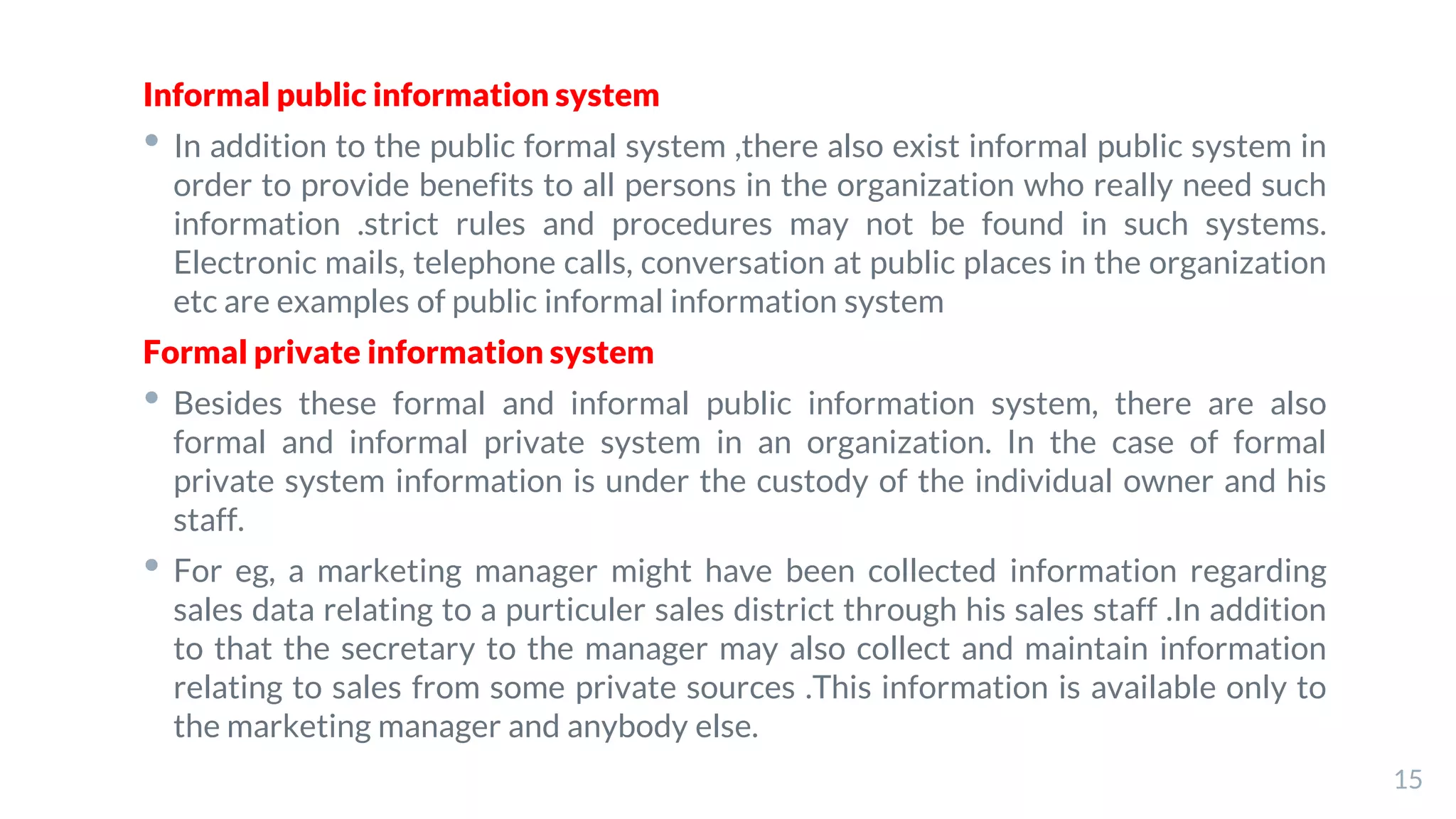
Depending on the accessibility of information
Some files are shared with all and some files are restricted with the
management only
Private information System (Some private information)
• Certain files not available to all in the organisation
• Shared only with limited and trusted persons
• Created and maintained by a manager
• For their own private use
Public information System:- Access to the information available to
everyone
• Utilized by all personnel
14
Private & Public Information Systems
Informal public information system
• In addition to the public formal system ,there also exist informal public system in
order to provide benefits to all persons in the organization who really need such
information .strict rules and procedures may not be found in such systems.
Electronic mails, telephone calls, conversation at public places in the organization
etc are examples of public informal information system
Formal private information system
• Besides these formal and informal public information system, there are also
formal and informal private system in an organization. In the case of formal
private system information is under the custody of the individual owner and his
staff.
• For eg, a marketing manager might have been collected information regarding
sales data relating to a purticuler sales district through his sales staff .In addition
to that the secretary to the manager may also collect and maintain information
relating to sales from some private sources .This information is available only to
the marketing manager and anybody else.
15
Private informal information system
• Many individuals may maintain their own private informal information system for
discharging their duties more effectively and efficiently. It is normally found that
certain executives in an organization may collect valuable information from
informal sources to make their decisions more accurate.
• They collect such type of information through their personal contacts with people.
Such information might be very important and useful for decision making in
certain occasions
16
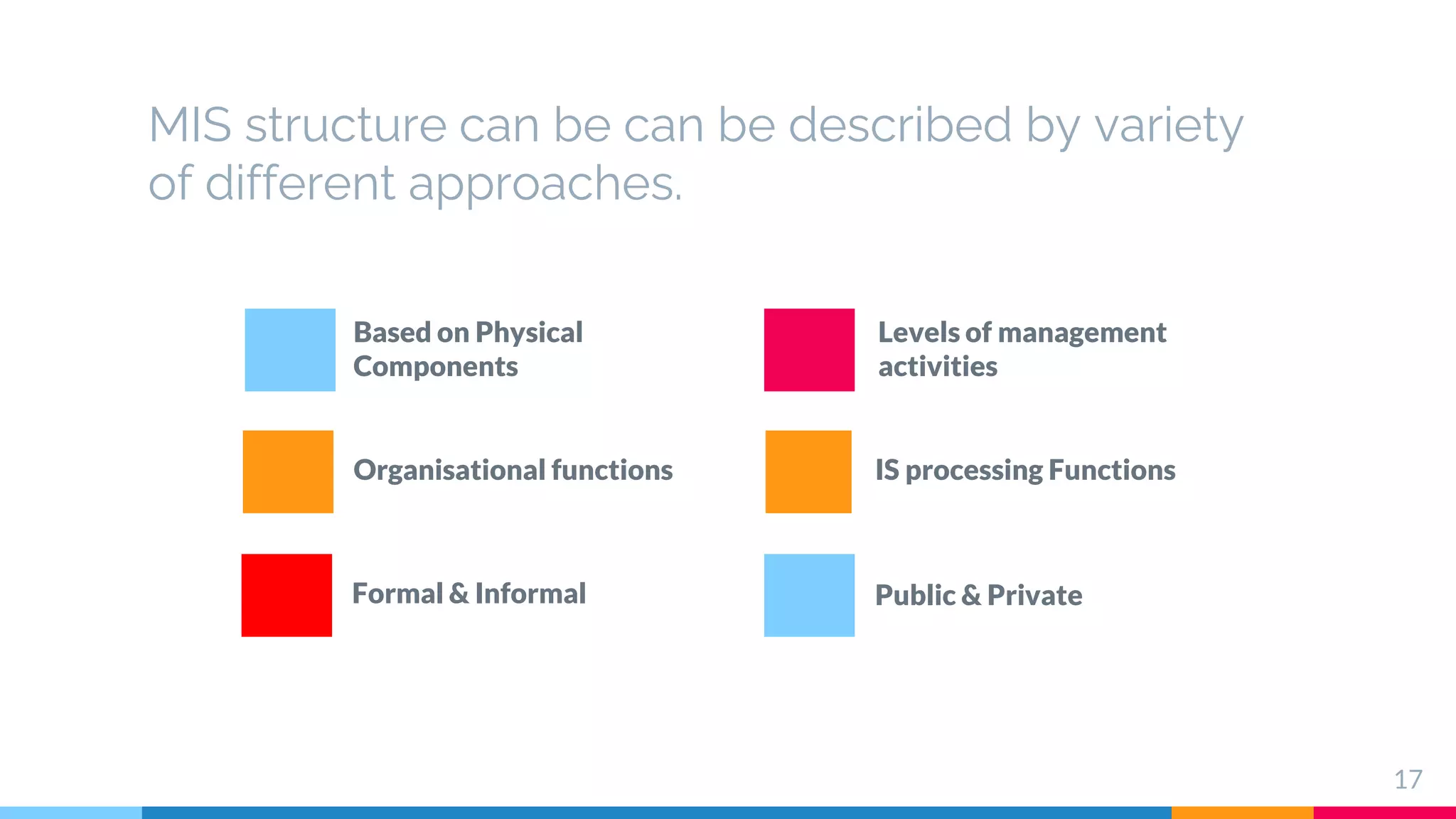
MIS structure can be can be described by variety
of different approaches.
Based on Physical
Components
IS processing Functions
Levels of management
activities
Organisational functions
17
Public & Private
Formal & Informal
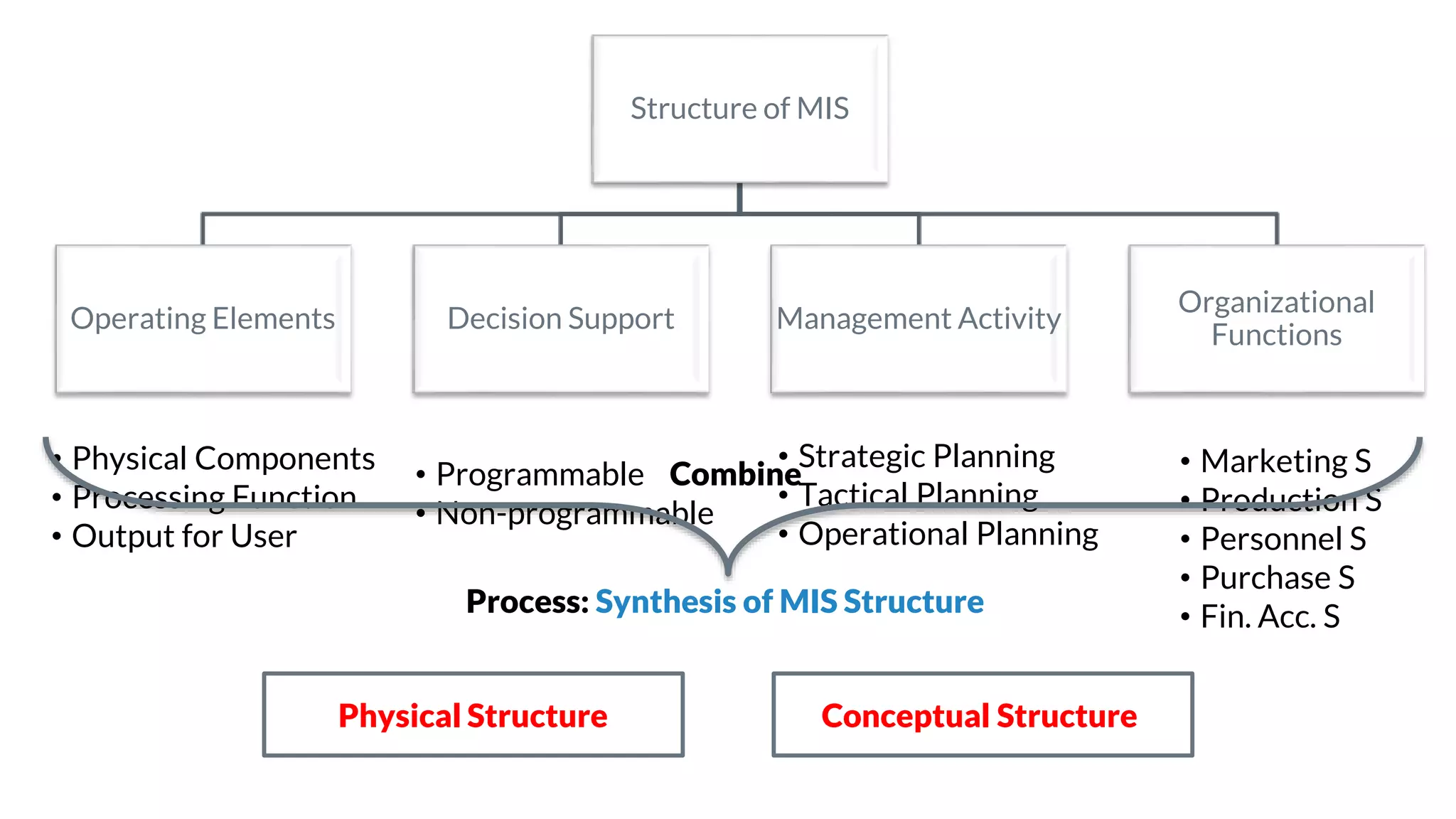
Structure of MIS
Operating Elements Decision Support Management Activity
Organizational
Functions
• Physical Components
• Processing Function
• Output for User
• Programmable
• Non-programmable
• Strategic Planning
• Tactical Planning
• Operational Planning
• Marketing S
• Production S
• Personnel S
• Purchase S
• Fin. Acc. S
Combine
Process: Synthesis of MIS Structure
Physical Structure Conceptual Structure
Synthesis of MIS
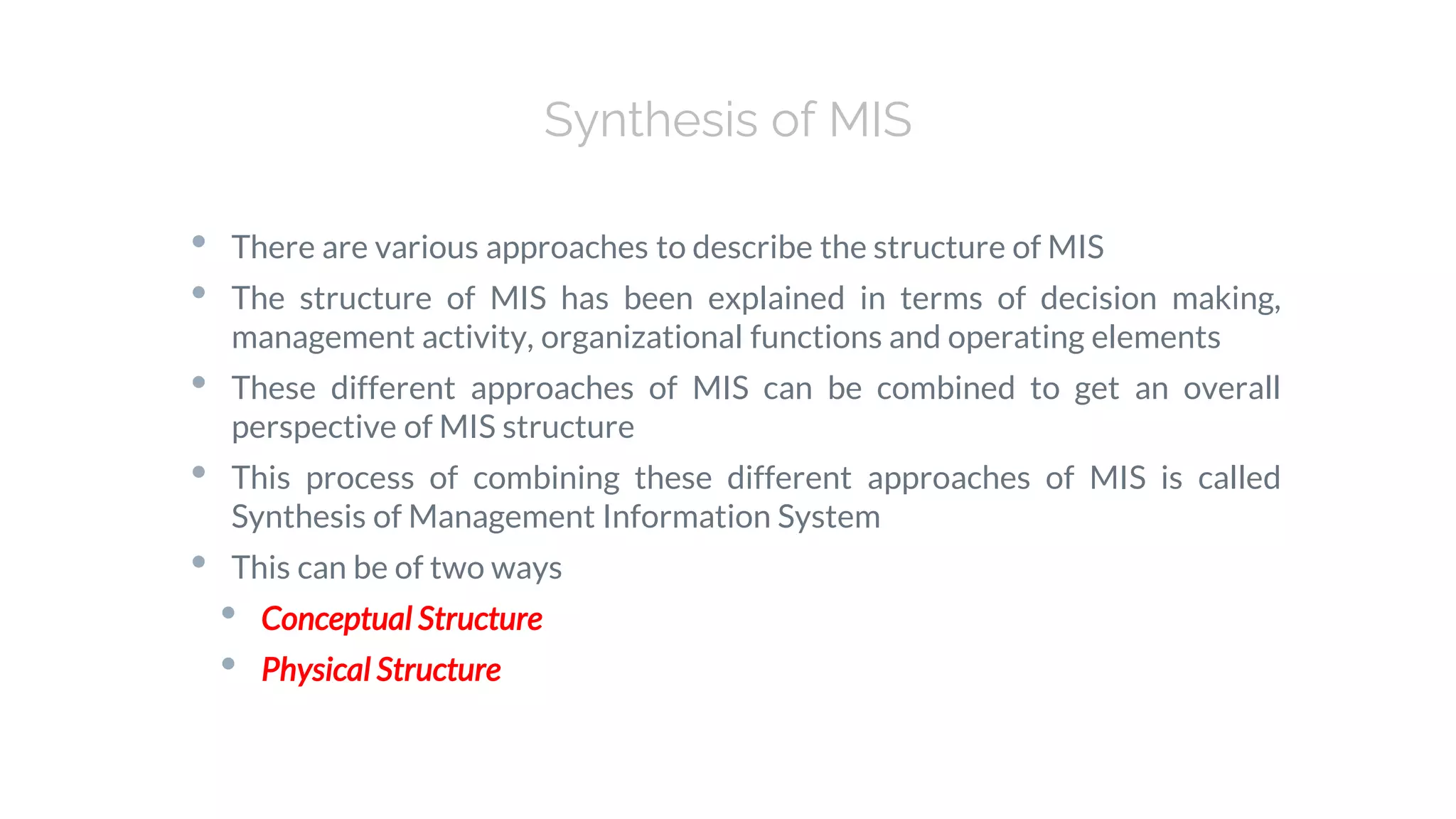
• There are various approaches to describe the structure of MIS
• The structure of MIS has been explained in terms of decision making,
management activity, organizational functions and operating elements
• These different approaches of MIS can be combined to get an overall
perspective of MIS structure
• This process of combining these different approaches of MIS is called
Synthesis of Management Information System
• This can be of two ways
• Conceptual Structure
• Physical Structure
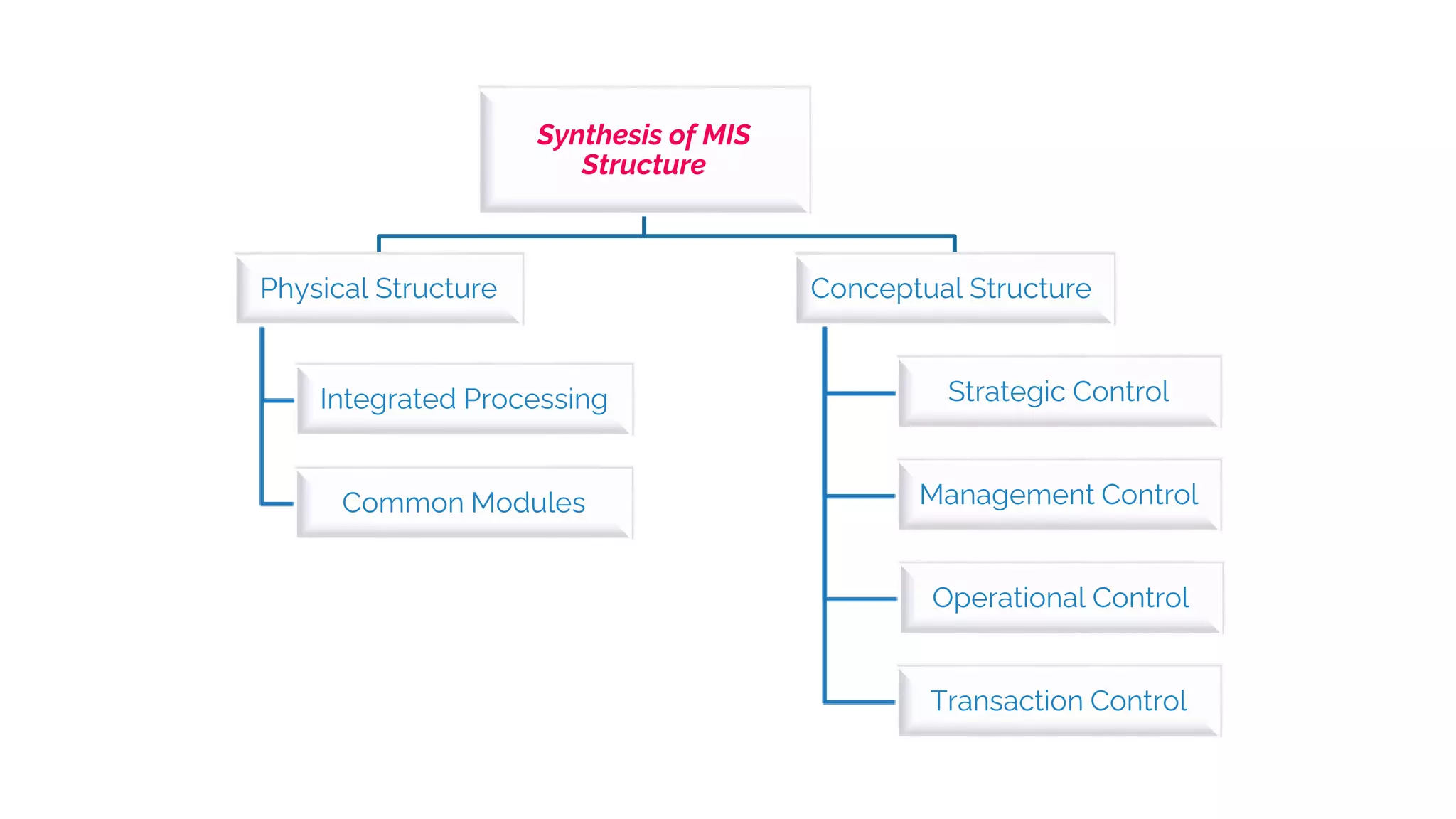
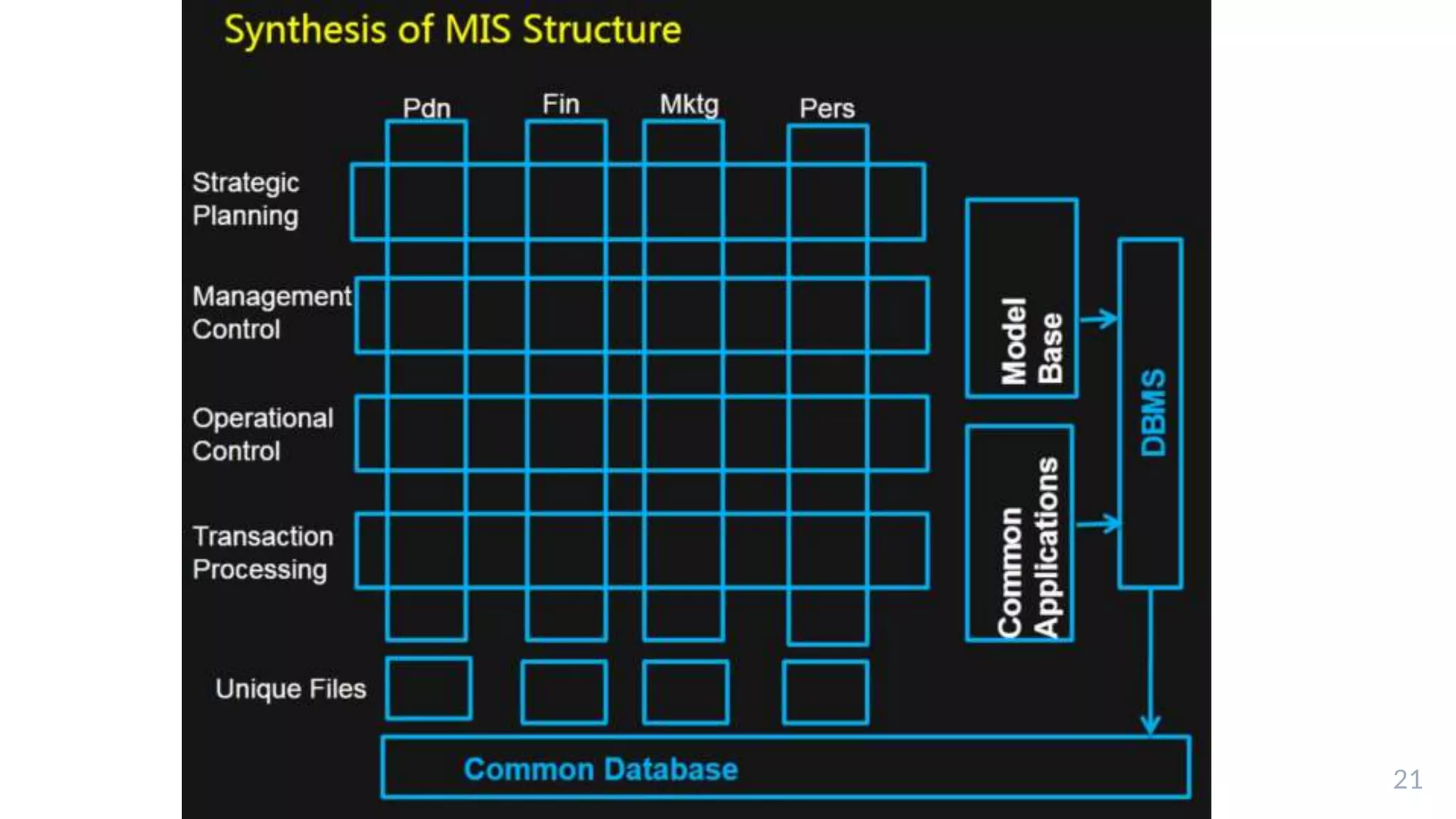
Synthesis of MIS
Structure
Physical Structure
Integrated Processing
Common Modules
Conceptual Structure
Strategic Control
Management Control
Operational Control
Transaction Control
21
Thanks!
Any questions?
22

Structure of MIS

  • 1.
    Management Information Systems STRUCTUREOF MIS Prepared By: Mohammed Jasir PV Asst. Professor NBS, Koratty Contact: 9605 69 32 66
  • 2.
    Presentation Overview STRUCTURE OFMIS o Basic structural concepts o Formal and informal information systems o Public and private information systems 2
  • 3.
  • 4.
    “ ‘MIS is asystem that aids management in making, carrying out and controlling decisions’. - Jerome Kanter 4
  • 5.
    Management Information System AManagement Information System is • An integrated user-machine system • For providing information • To support the operations, • Management, • Analysis & decision-making functions in an organization 5
  • 6.
  • 7.
  • 8.
    Management Information System MIS provides information to the users in the form of reports and output from simulations by mathematical models  The report and model output can be provided in a tabular or graphic form 8
  • 9.
    Structure of MIS Difficultconcept to understand as there is no universally accepted framework 9
  • 10.
    MIS Basic Structural Concepts oFormal and informal information systems o Public and private information systems 10
  • 11.
    Formal Information Systems There is very clear work-flow system, communication flow-down and the authority  The information flows in terms of policies, goals, strategies, rules and regulations from the top level management to the bottom level of management  The information also flows from the bottom level management to the top level in terms of feedback, results of work done etc. 11
  • 12.
    There are threecategories of information related to the Formal Information Systems: • Strategic Information - relates to long-range planning policies. This information is achieved using the Decision Support System • Managerial Information - helps the middle level management in policy implementation and control. This information is achieved using the Management Information System • Operational Information - is the daily information needed to operate the business. This information is achieved using the Data Processing System 12
  • 13.
    Informal Information Systems Informal Systems is the systems created by ad hoc, informal work groups to support information needs that cannot be met by formal systems  These are powerful systems that meet unique needs and thrive in many organizations  Informal systems do not follow any formal or pre established rules for collecting, processing, storing, or disseminating data 13
  • 14.
    Depending on theaccessibility of information Some files are shared with all and some files are restricted with the management only Private information System (Some private information) • Certain files not available to all in the organisation • Shared only with limited and trusted persons • Created and maintained by a manager • For their own private use Public information System:- Access to the information available to everyone • Utilized by all personnel 14 Private & Public Information Systems
  • 15.
    Informal public informationsystem • In addition to the public formal system ,there also exist informal public system in order to provide benefits to all persons in the organization who really need such information .strict rules and procedures may not be found in such systems. Electronic mails, telephone calls, conversation at public places in the organization etc are examples of public informal information system Formal private information system • Besides these formal and informal public information system, there are also formal and informal private system in an organization. In the case of formal private system information is under the custody of the individual owner and his staff. • For eg, a marketing manager might have been collected information regarding sales data relating to a purticuler sales district through his sales staff .In addition to that the secretary to the manager may also collect and maintain information relating to sales from some private sources .This information is available only to the marketing manager and anybody else. 15
  • 16.
    Private informal informationsystem • Many individuals may maintain their own private informal information system for discharging their duties more effectively and efficiently. It is normally found that certain executives in an organization may collect valuable information from informal sources to make their decisions more accurate. • They collect such type of information through their personal contacts with people. Such information might be very important and useful for decision making in certain occasions 16
  • 17.
    MIS structure canbe can be described by variety of different approaches. Based on Physical Components IS processing Functions Levels of management activities Organisational functions 17 Public & Private Formal & Informal
  • 18.
    Structure of MIS OperatingElements Decision Support Management Activity Organizational Functions • Physical Components • Processing Function • Output for User • Programmable • Non-programmable • Strategic Planning • Tactical Planning • Operational Planning • Marketing S • Production S • Personnel S • Purchase S • Fin. Acc. S Combine Process: Synthesis of MIS Structure Physical Structure Conceptual Structure
  • 19.
    Synthesis of MIS •There are various approaches to describe the structure of MIS • The structure of MIS has been explained in terms of decision making, management activity, organizational functions and operating elements • These different approaches of MIS can be combined to get an overall perspective of MIS structure • This process of combining these different approaches of MIS is called Synthesis of Management Information System • This can be of two ways • Conceptual Structure • Physical Structure
  • 20.
    Synthesis of MIS Structure PhysicalStructure Integrated Processing Common Modules Conceptual Structure Strategic Control Management Control Operational Control Transaction Control
  • 21.
  • 22.