STROKE
E.ELAVARASI
ASSISTANT PROFESSOR
SHRI SATHYASAI CON
Introduction
• Stroke, also known as a cerebrovascular accident (CVA),
is a life-threatening condition that occurs when the blood
supply to part of the brain is interrupted or reduced,
preventing brain tissue from getting oxygen and nutrients.
Within minutes, brain cells begin to die. Stroke is a
leading cause of death and long-term disability worldwide.
DEFINITION
• A stroke is a sudden neurological deficit resulting from a disruption in the
blood supply to a part of the brain. It can be either ischemic (due to blockage)
or hemorrhagic (due to bleeding).
• Ischemic Stroke: Caused by a blockage in an artery (e.g. thrombosis or
embolism).
• Hemorrhagic Stroke: Caused by a rupture in a blood vessel, leading to
bleeding in the brain.
• Transient Ischemic Attack (TIA): Often called a "mini-stroke," it's a temporary
blockage with no lasting damage but a warning sign for future strokes.
Causes & Risk Factors
• Ischemic Stroke:
• Thrombus
• Embolus
• Hemorrhagic Stroke:
• Hypertension
• Aneurysms
• Arteriovenous malformations (AVMs)
• Trauma
• Blood disorders (e.g., hemophilia)
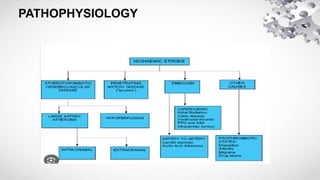
PATHOPHYSIOLOGY
SIGNS AND SYMPTOMS
• Sudden numbness or weakness (especially on one side)
• Confusion or trouble speaking
• Vision problems (in one or both eyes)
• Difficulty walking, dizziness, loss of balance
• Severe headache with no known cause
• Trouble understanding speech
CONT...
• FAST mnemonic:
• Face drooping
• Arm weakness
• Speech difficulty
• Time to call emergency services
Medical Management
• Ischemic Stroke:
• Thrombolytic therapy (e.g., tPA within 3–4.5 hours of onset)
• Antiplatelets (aspirin)
• Anticoagulants (for atrial fibrillation)
• Statins
• Blood pressure management
CONT...
• Hemorrhagic Stroke:
• Control of blood pressure
• Discontinue anticoagulants if possible
• Medications to reduce intracranial pressure (e.g., mannitol)
• Seizure prophylaxis
Surgical Management
• Ischemic:
• Mechanical thrombectomy (clot retrieval)
• Hemorrhagic:
• Surgical clipping or coiling of aneurysms
• Hematoma evacuation
• Decompressive craniectomy (to relieve pressure)
Nursing Management
• Assessment
• Monitor neurological status using the Glasgow Coma Scale
• Monitor vital signs, oxygen saturation
• Assess for dysphagia before oral intake
• Monitor for signs of increased intracranial pressure
Interventions
• Acute Phase:
• Maintain airway, breathing, circulation (ABCs)
• Administer medications as prescribed
• Prevent complications (e.g., aspiration, DVT, pressure ulcers)
• Positioning to prevent contractures and pressure sores
CONT...
• Post-acute/Rehabilitation Phase:
• Assist with mobility and physiotherapy
• Promote communication and cognitive recovery
• Educate patient and family
• Support emotional and psychological well-being
THANK YOU

STROKE PRESENTATION..Neurological system-AHN-II

  • 1.
  • 2.
    Introduction • Stroke, alsoknown as a cerebrovascular accident (CVA), is a life-threatening condition that occurs when the blood supply to part of the brain is interrupted or reduced, preventing brain tissue from getting oxygen and nutrients. Within minutes, brain cells begin to die. Stroke is a leading cause of death and long-term disability worldwide.
  • 3.
    DEFINITION • A strokeis a sudden neurological deficit resulting from a disruption in the blood supply to a part of the brain. It can be either ischemic (due to blockage) or hemorrhagic (due to bleeding). • Ischemic Stroke: Caused by a blockage in an artery (e.g. thrombosis or embolism). • Hemorrhagic Stroke: Caused by a rupture in a blood vessel, leading to bleeding in the brain. • Transient Ischemic Attack (TIA): Often called a "mini-stroke," it's a temporary blockage with no lasting damage but a warning sign for future strokes.
  • 4.
    Causes & RiskFactors • Ischemic Stroke: • Thrombus • Embolus • Hemorrhagic Stroke: • Hypertension • Aneurysms • Arteriovenous malformations (AVMs) • Trauma • Blood disorders (e.g., hemophilia)
  • 5.
  • 6.
    SIGNS AND SYMPTOMS •Sudden numbness or weakness (especially on one side) • Confusion or trouble speaking • Vision problems (in one or both eyes) • Difficulty walking, dizziness, loss of balance • Severe headache with no known cause • Trouble understanding speech
  • 7.
    CONT... • FAST mnemonic: •Face drooping • Arm weakness • Speech difficulty • Time to call emergency services
  • 8.
    Medical Management • IschemicStroke: • Thrombolytic therapy (e.g., tPA within 3–4.5 hours of onset) • Antiplatelets (aspirin) • Anticoagulants (for atrial fibrillation) • Statins • Blood pressure management
  • 9.
    CONT... • Hemorrhagic Stroke: •Control of blood pressure • Discontinue anticoagulants if possible • Medications to reduce intracranial pressure (e.g., mannitol) • Seizure prophylaxis
  • 10.
    Surgical Management • Ischemic: •Mechanical thrombectomy (clot retrieval) • Hemorrhagic: • Surgical clipping or coiling of aneurysms • Hematoma evacuation • Decompressive craniectomy (to relieve pressure)
  • 11.
    Nursing Management • Assessment •Monitor neurological status using the Glasgow Coma Scale • Monitor vital signs, oxygen saturation • Assess for dysphagia before oral intake • Monitor for signs of increased intracranial pressure
  • 12.
    Interventions • Acute Phase: •Maintain airway, breathing, circulation (ABCs) • Administer medications as prescribed • Prevent complications (e.g., aspiration, DVT, pressure ulcers) • Positioning to prevent contractures and pressure sores
  • 13.
    CONT... • Post-acute/Rehabilitation Phase: •Assist with mobility and physiotherapy • Promote communication and cognitive recovery • Educate patient and family • Support emotional and psychological well-being
  • 14.