Downloaded 405 times






This document outlines strategies discussed in Chapter 5 of the 8th edition of the textbook "Strategic Management Concepts & Cases" by Fred R. David. It discusses various types of strategies companies use, including intensive strategies like market penetration and product development, integrative strategies involving vertical and horizontal integration, diversification strategies, defensive strategies such as retrenchment and divestiture, and Porter's generic strategies of cost leadership, differentiation, and focus. Key terms related to strategic management concepts are also defined.
Introduction to the strategic management concepts presented in Chapter 5, focusing on strategies in action.
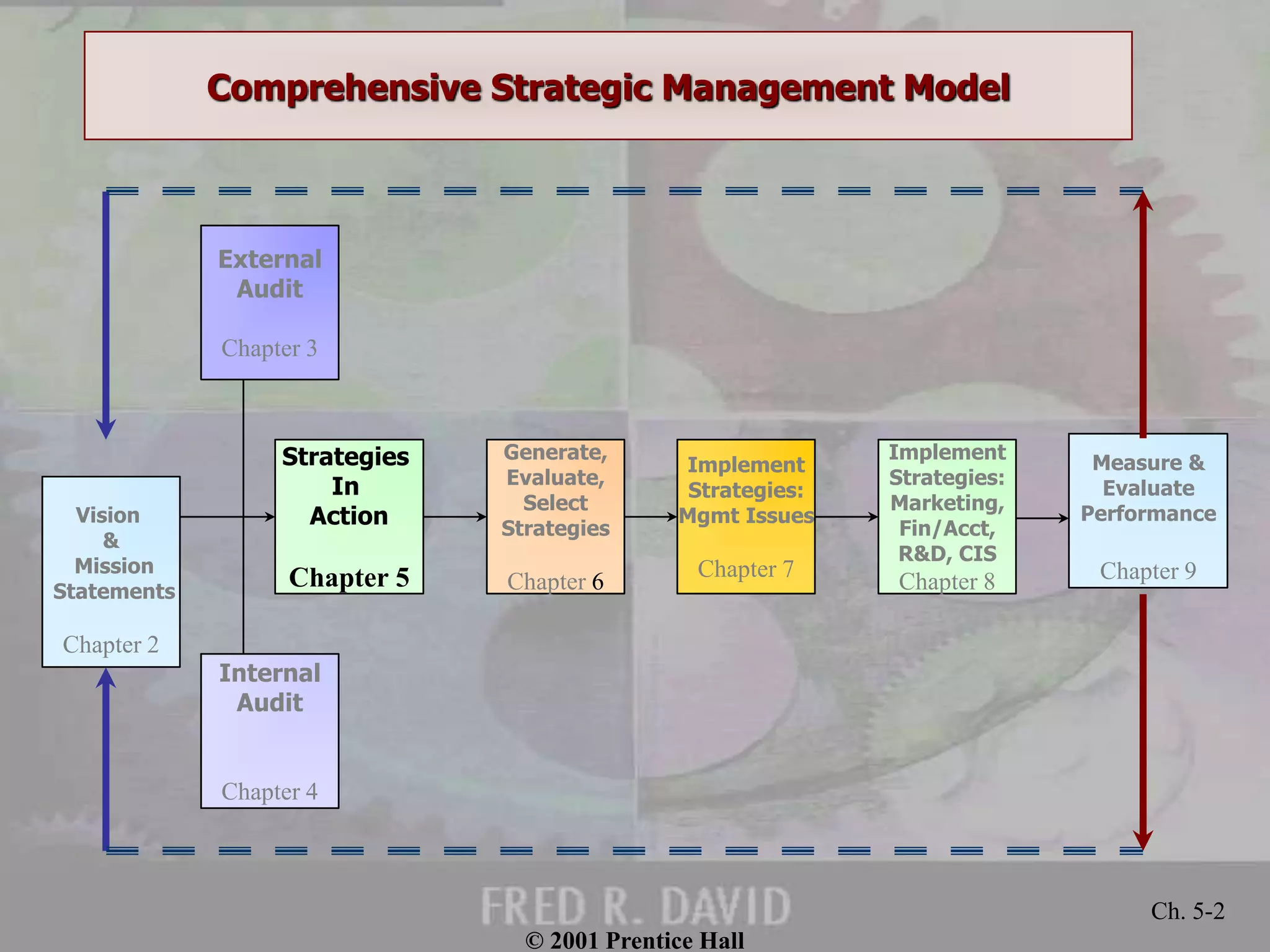
Overview of the comprehensive strategic management model including vision, audits, and strategies in action.
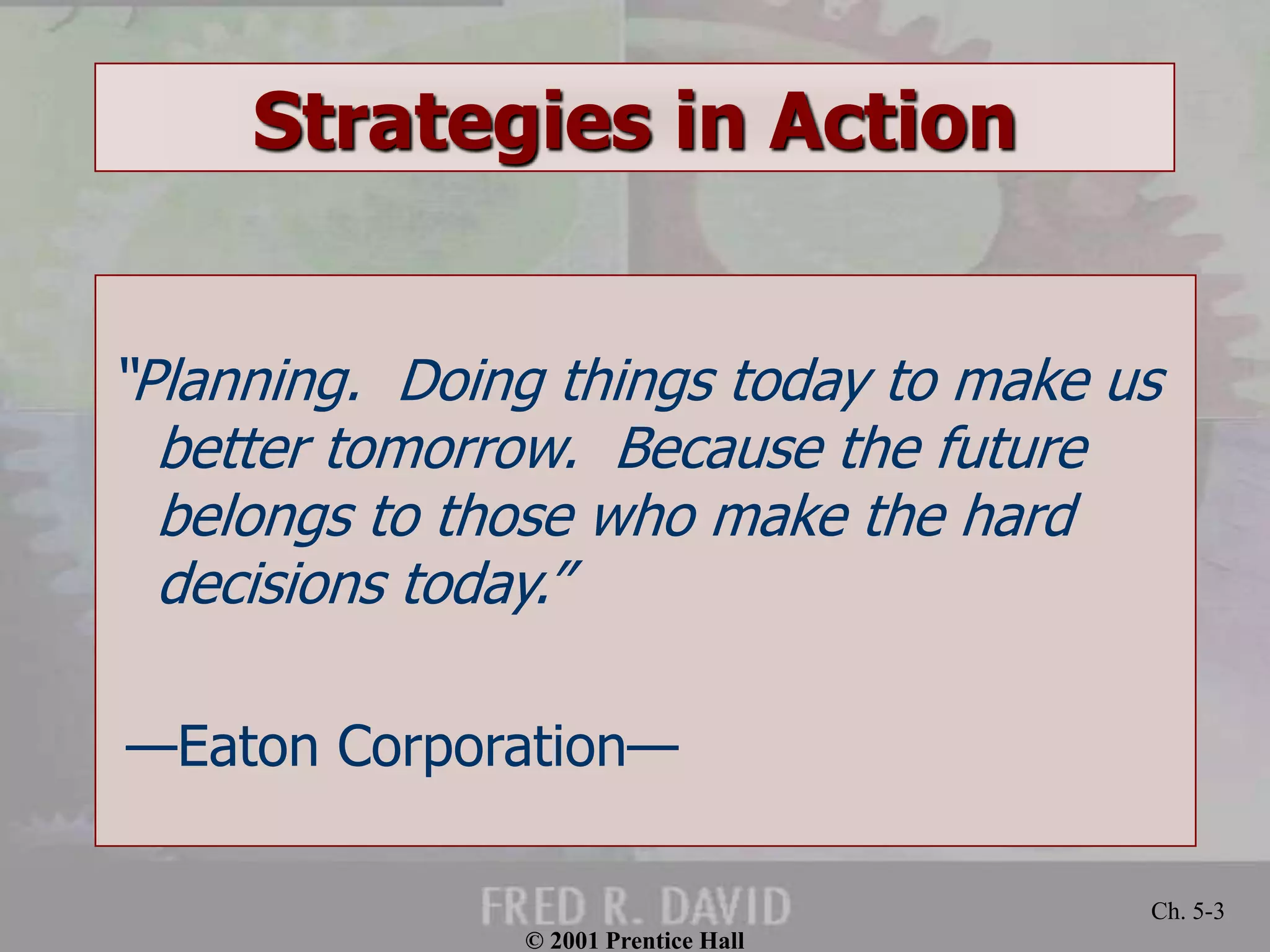
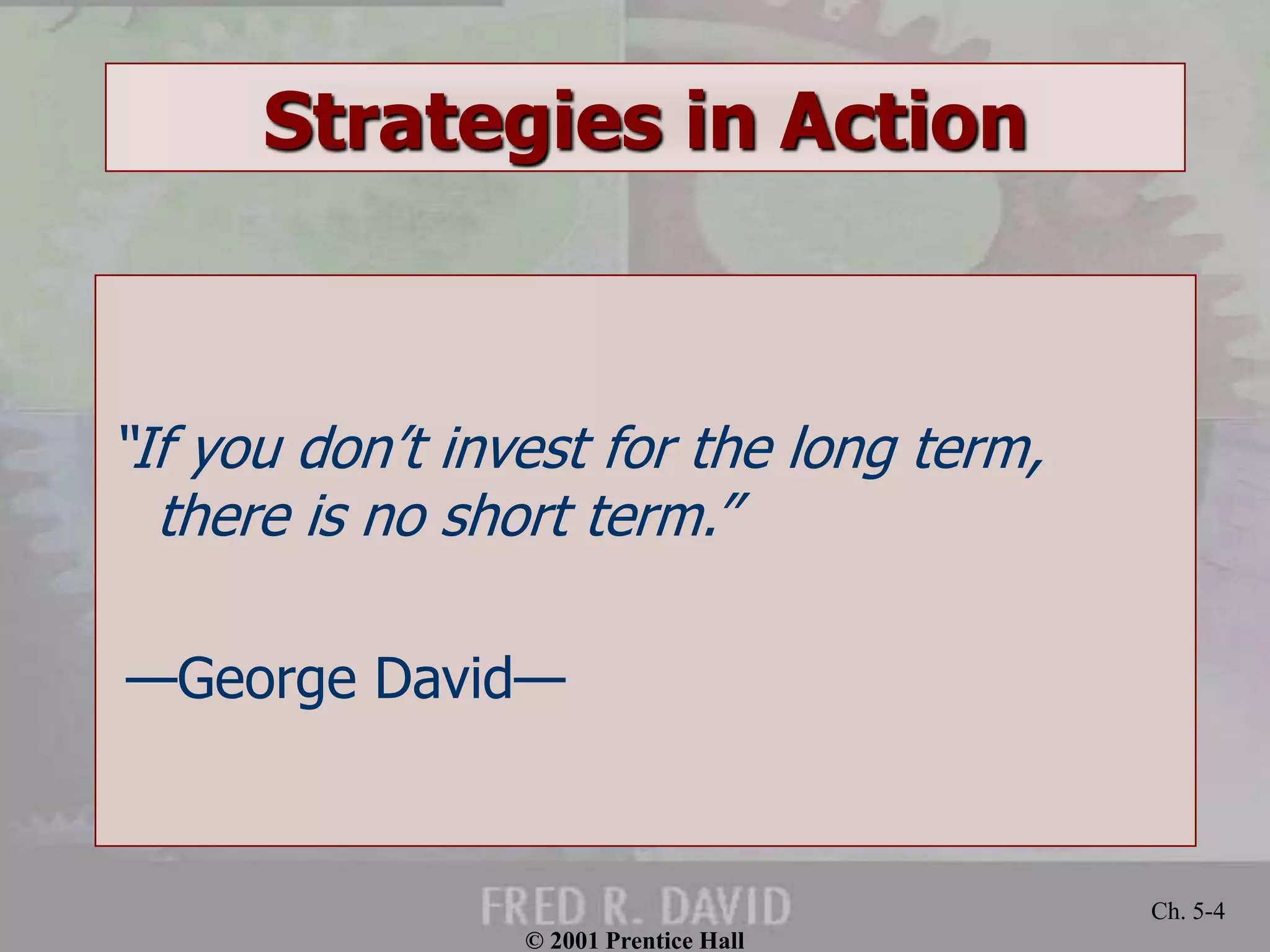
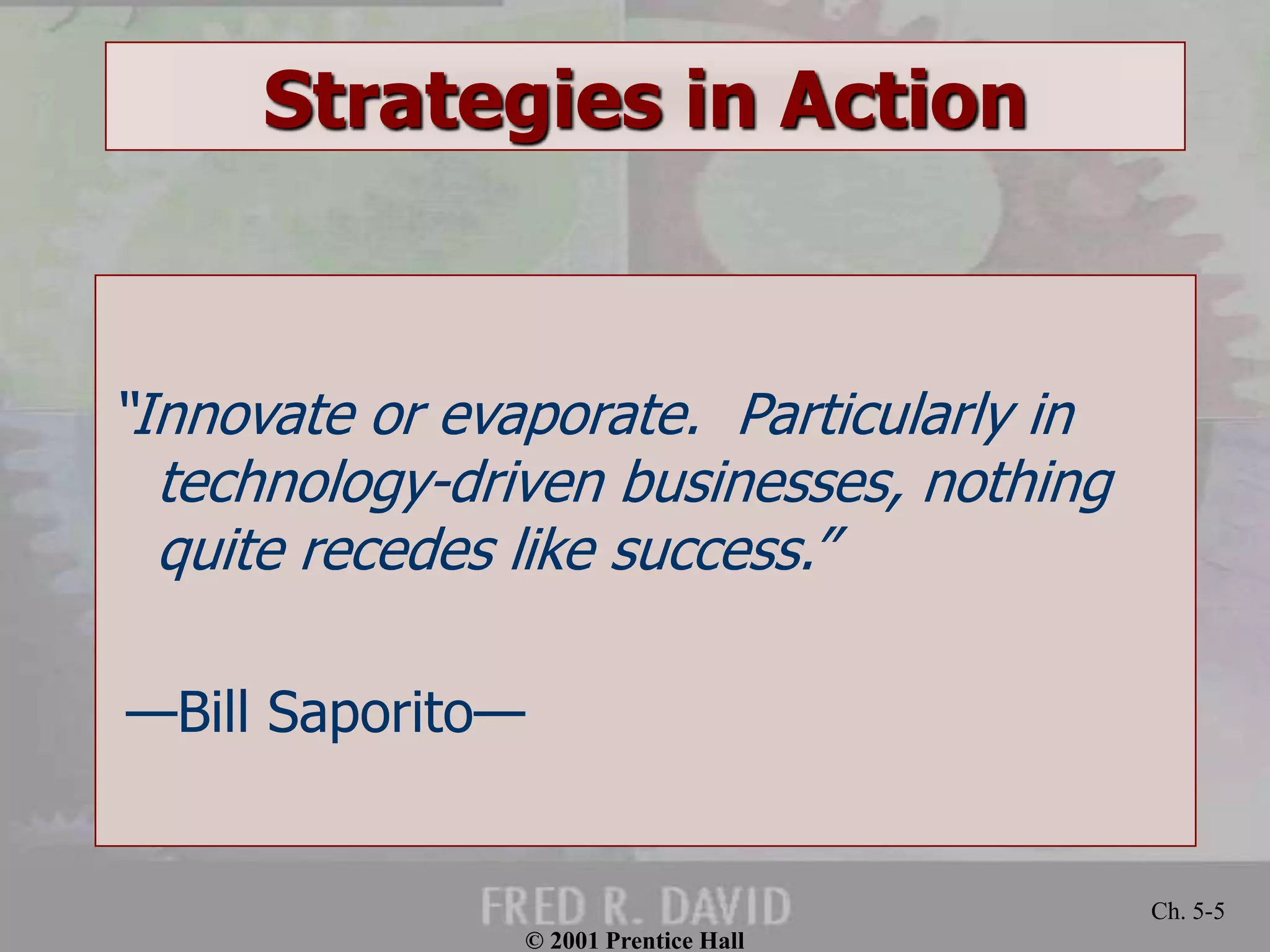
Highlighted strategic planning philosophies emphasizing long-term investment and innovation.
The significance of strategic planning for higher revenues and profits.
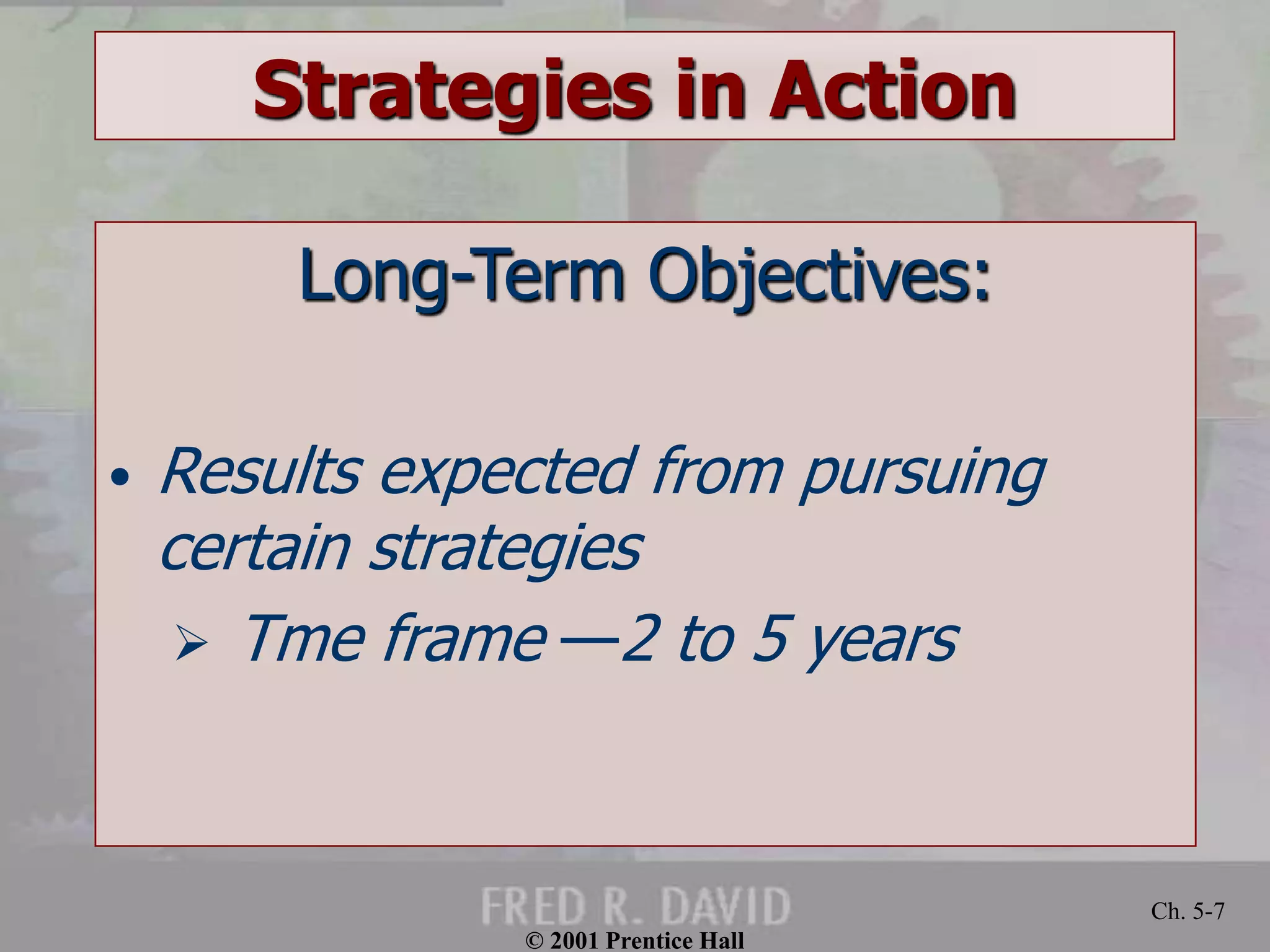
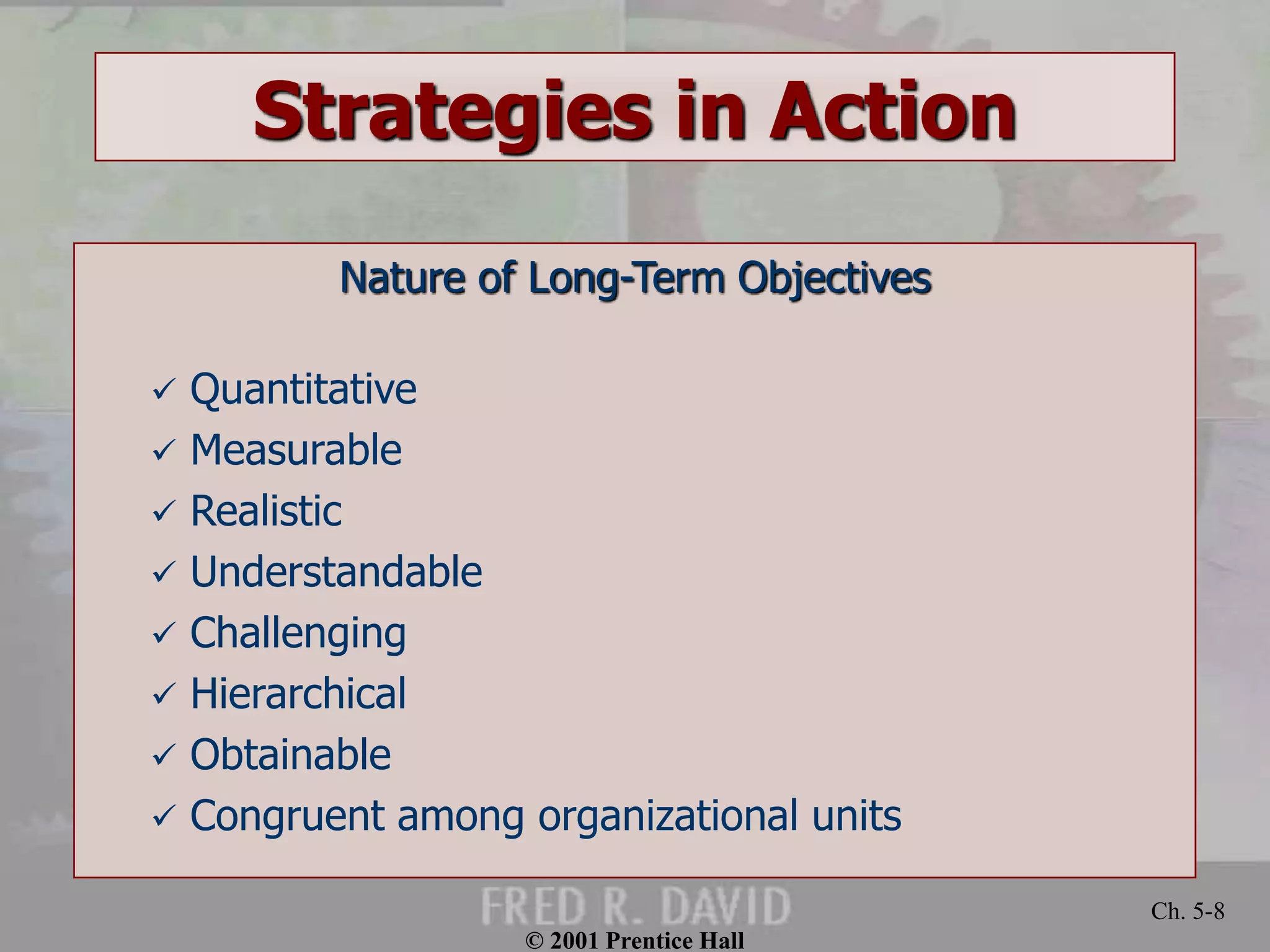
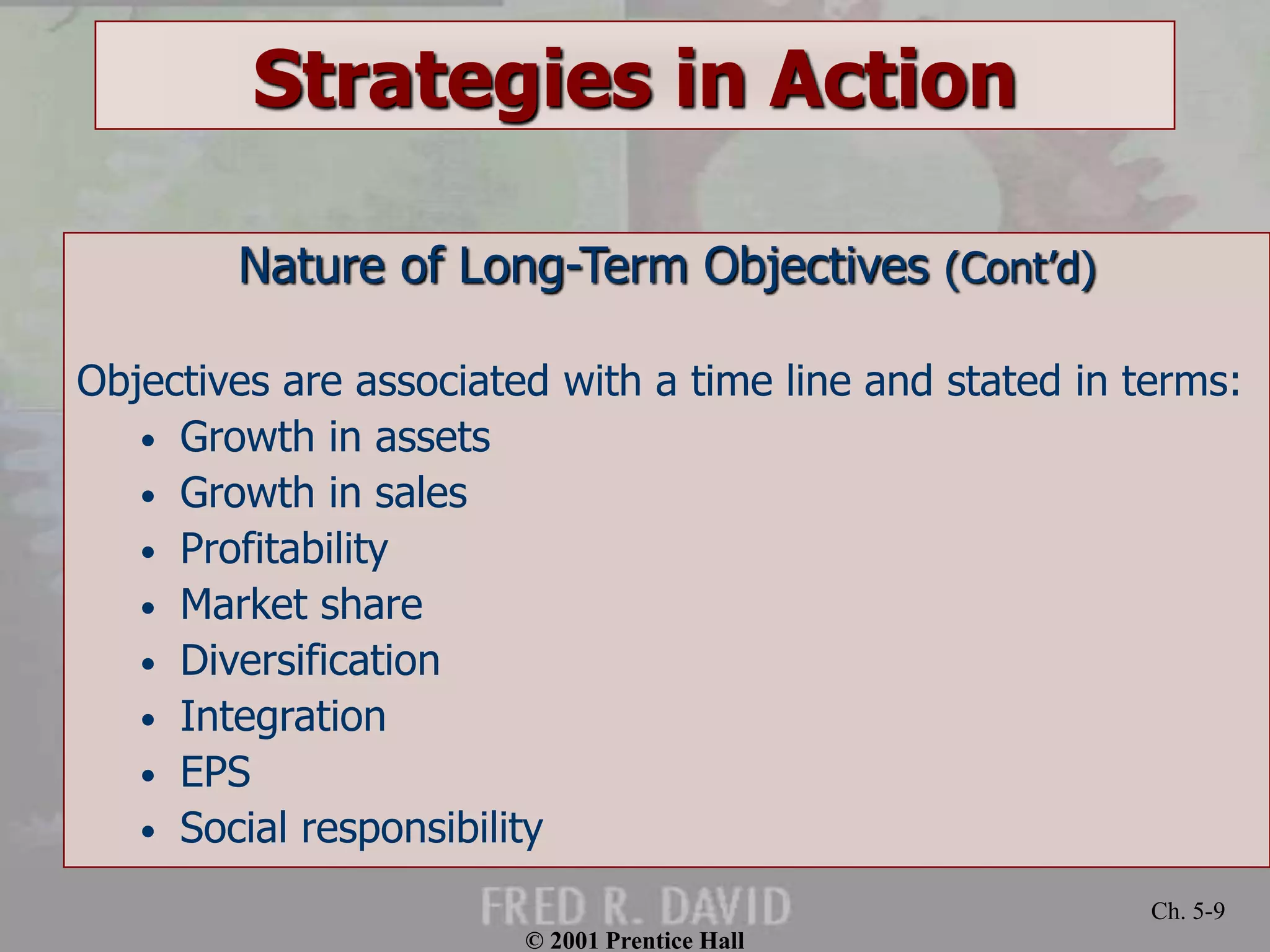
Explains the nature of long-term objectives including being measurable, realistic, and congruent.
Identifies pitfalls in strategic management such as managing by extrapolation and hope, emphasizing proactive strategies.
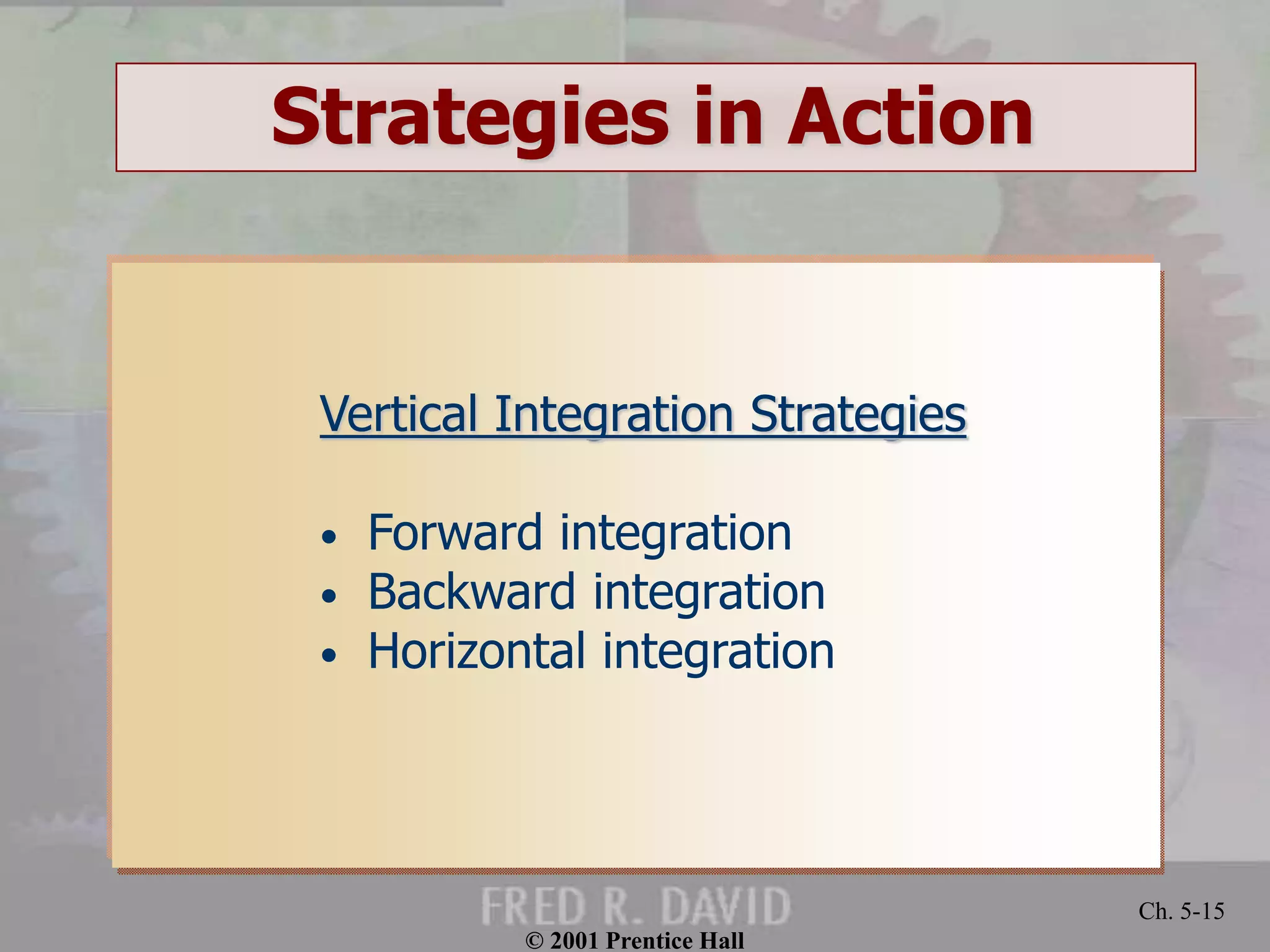
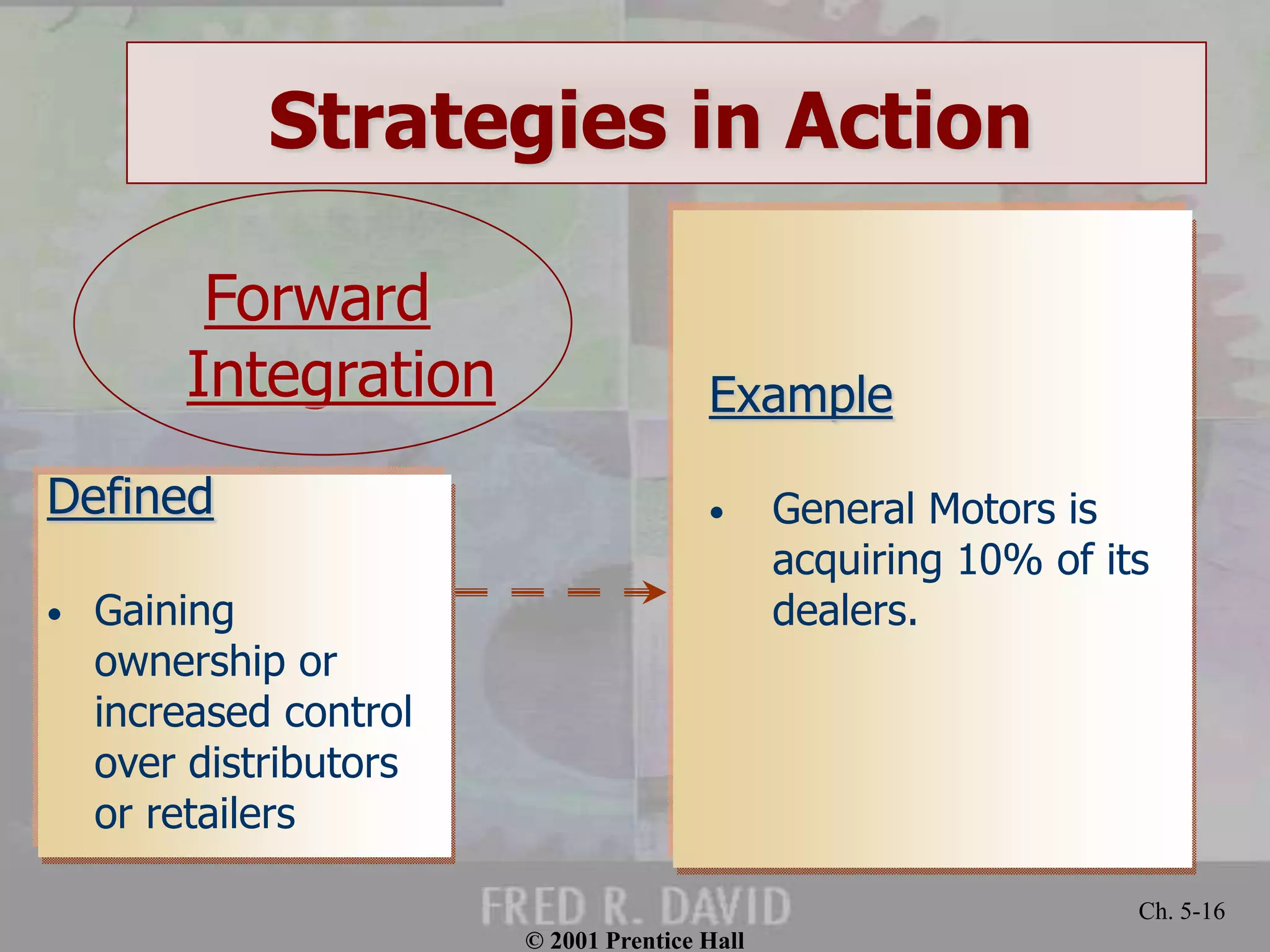
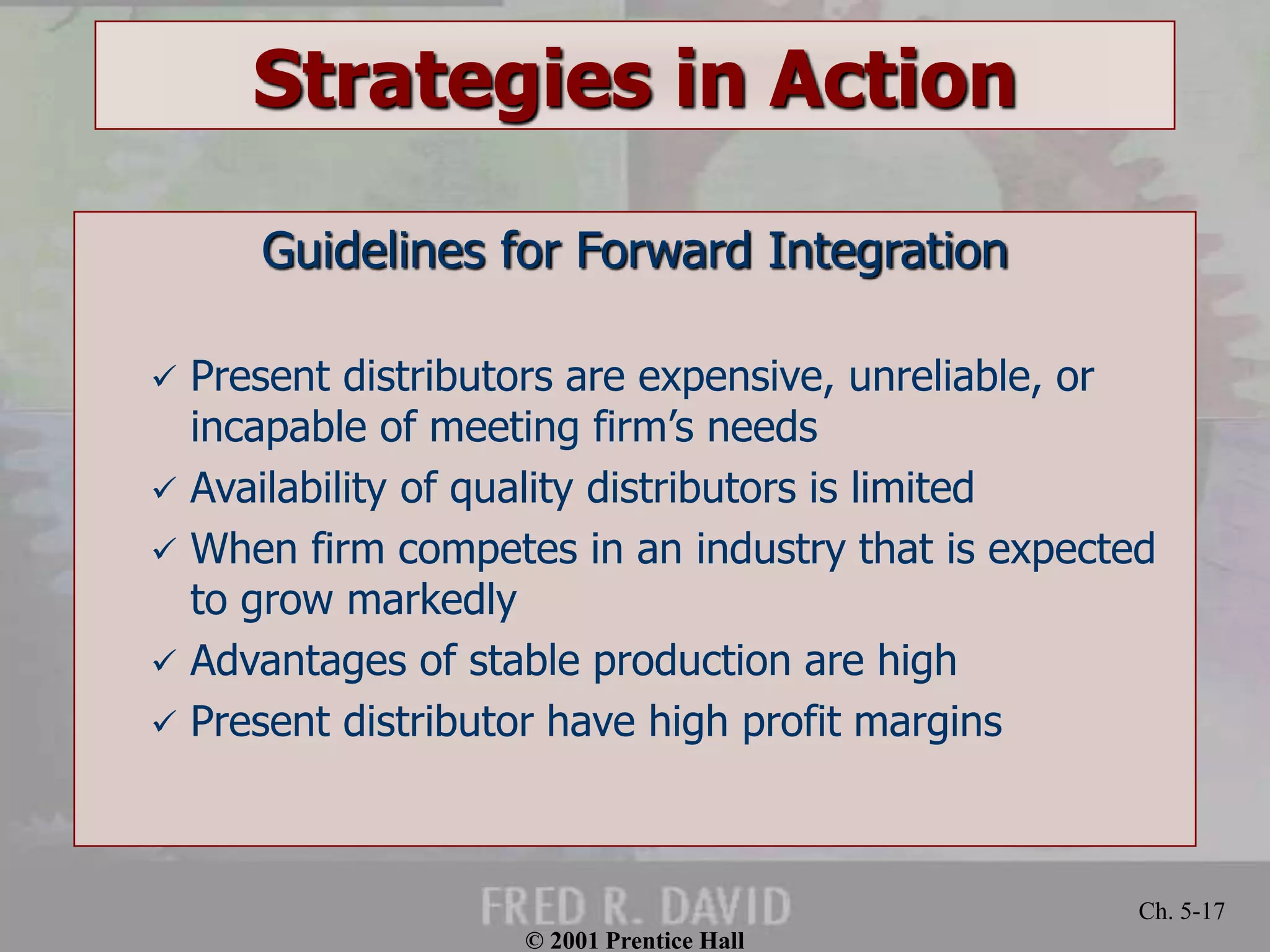
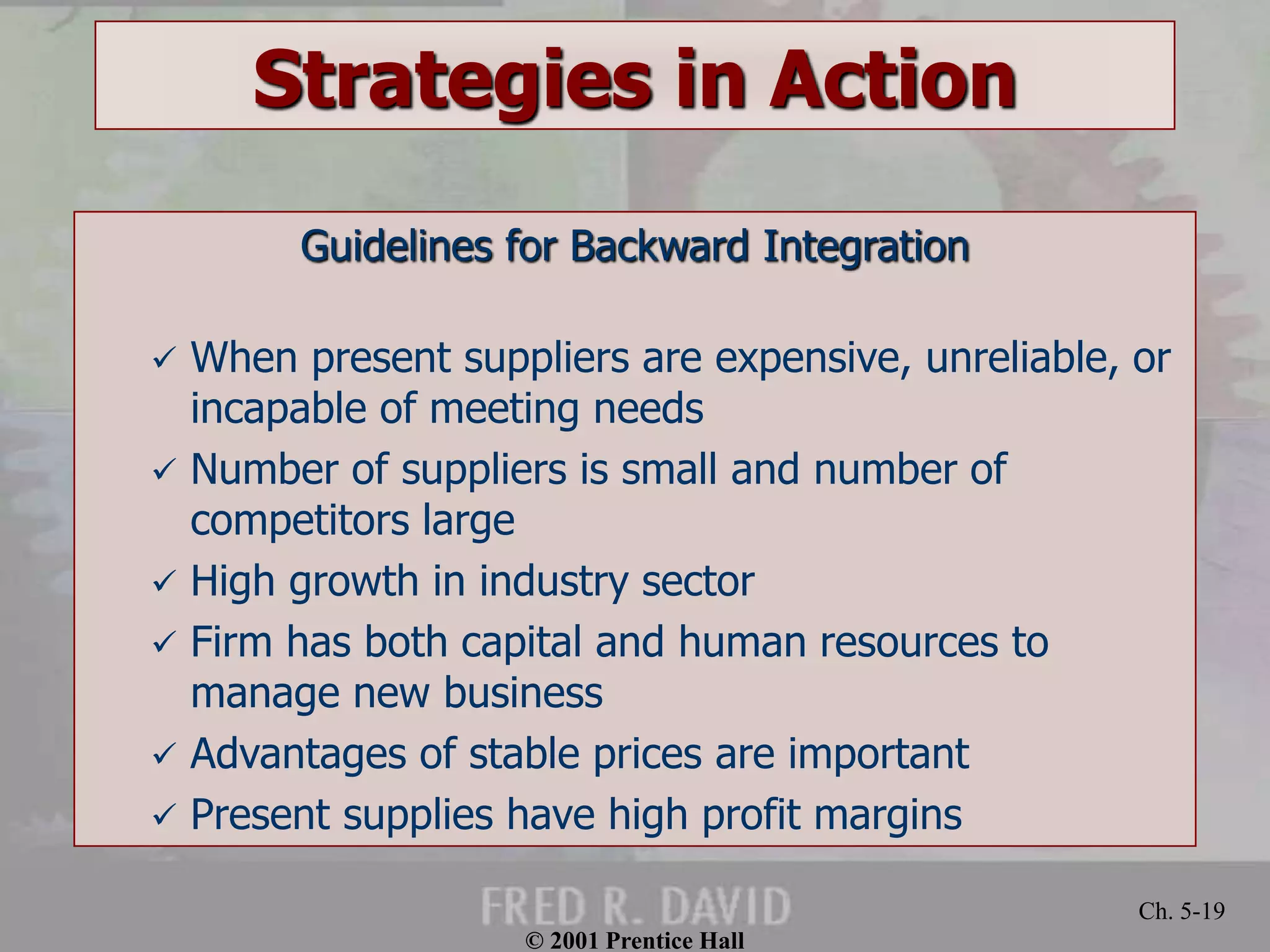
Discusses vertical integration strategies: forward, backward, and horizontal integration with examples.
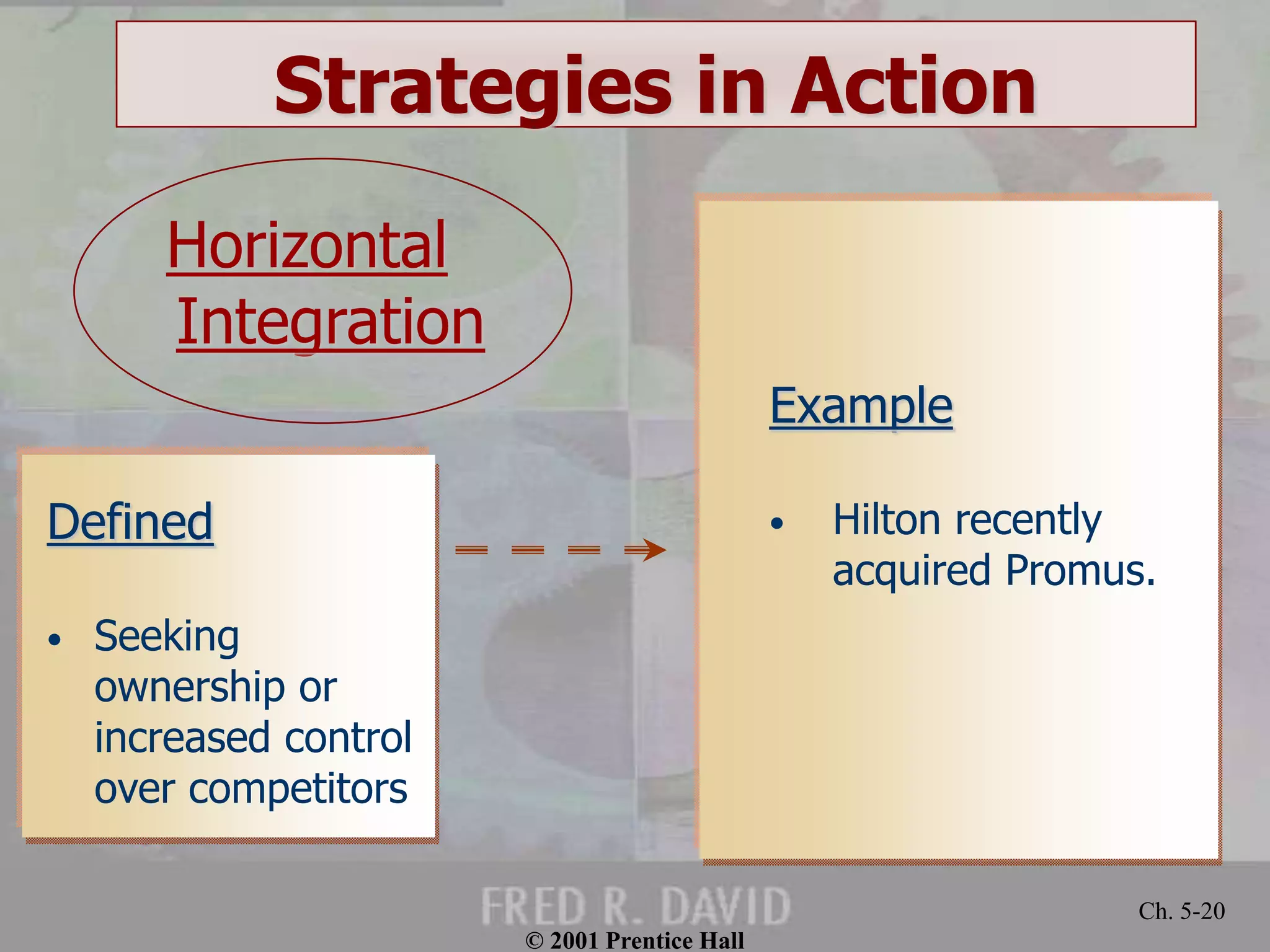
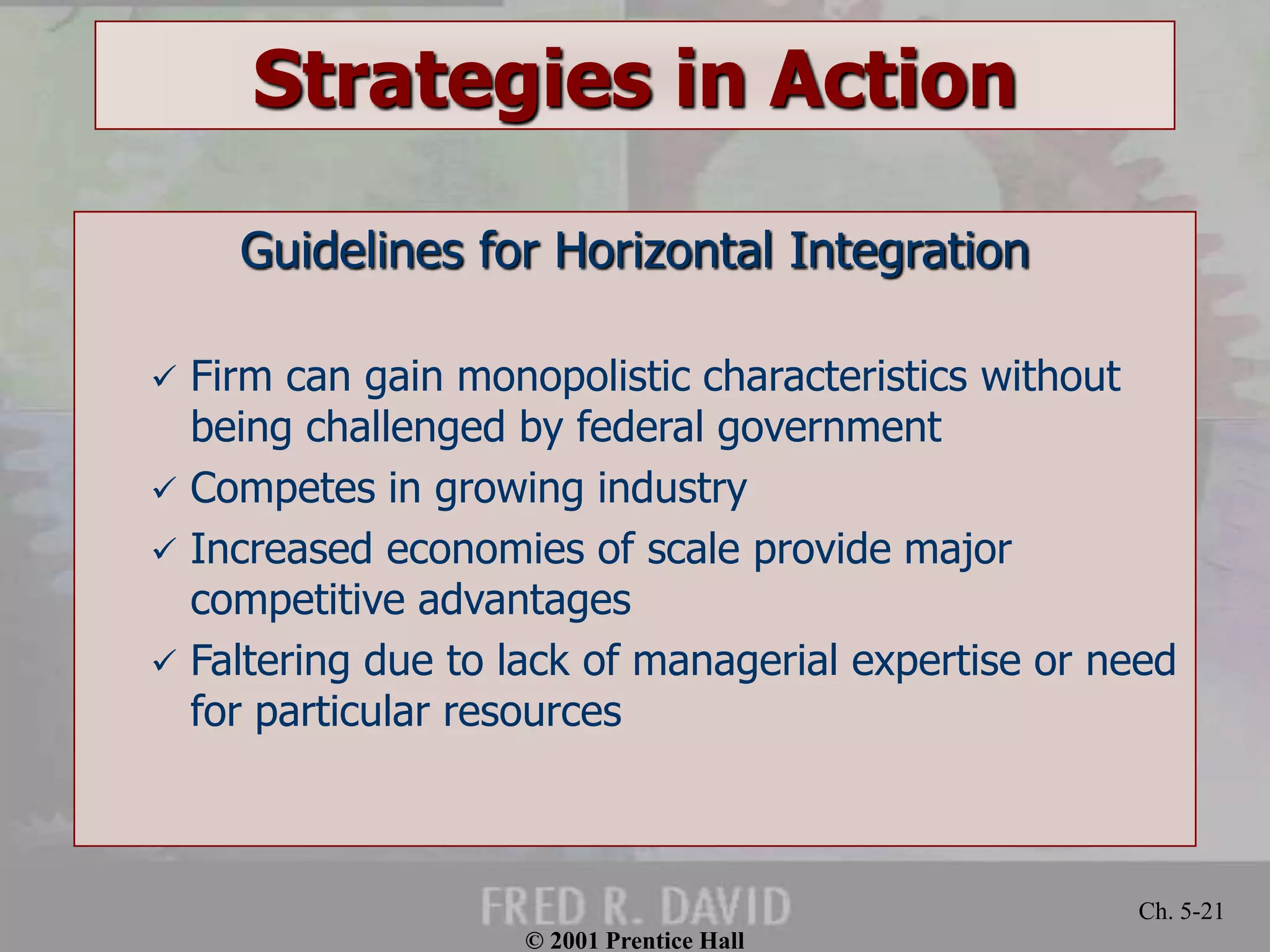
Explains horizontal integration, with guidelines for successful implementation.
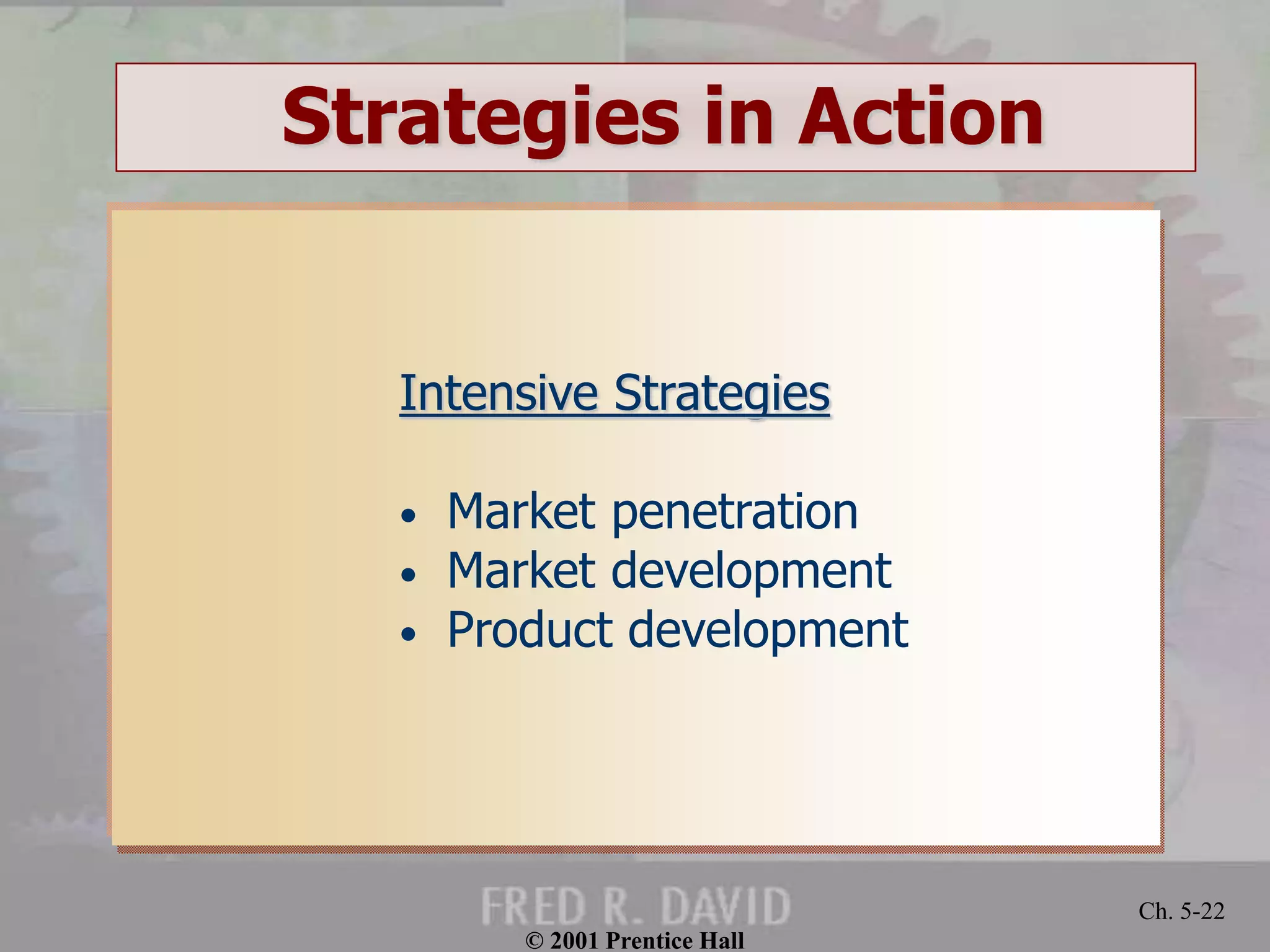
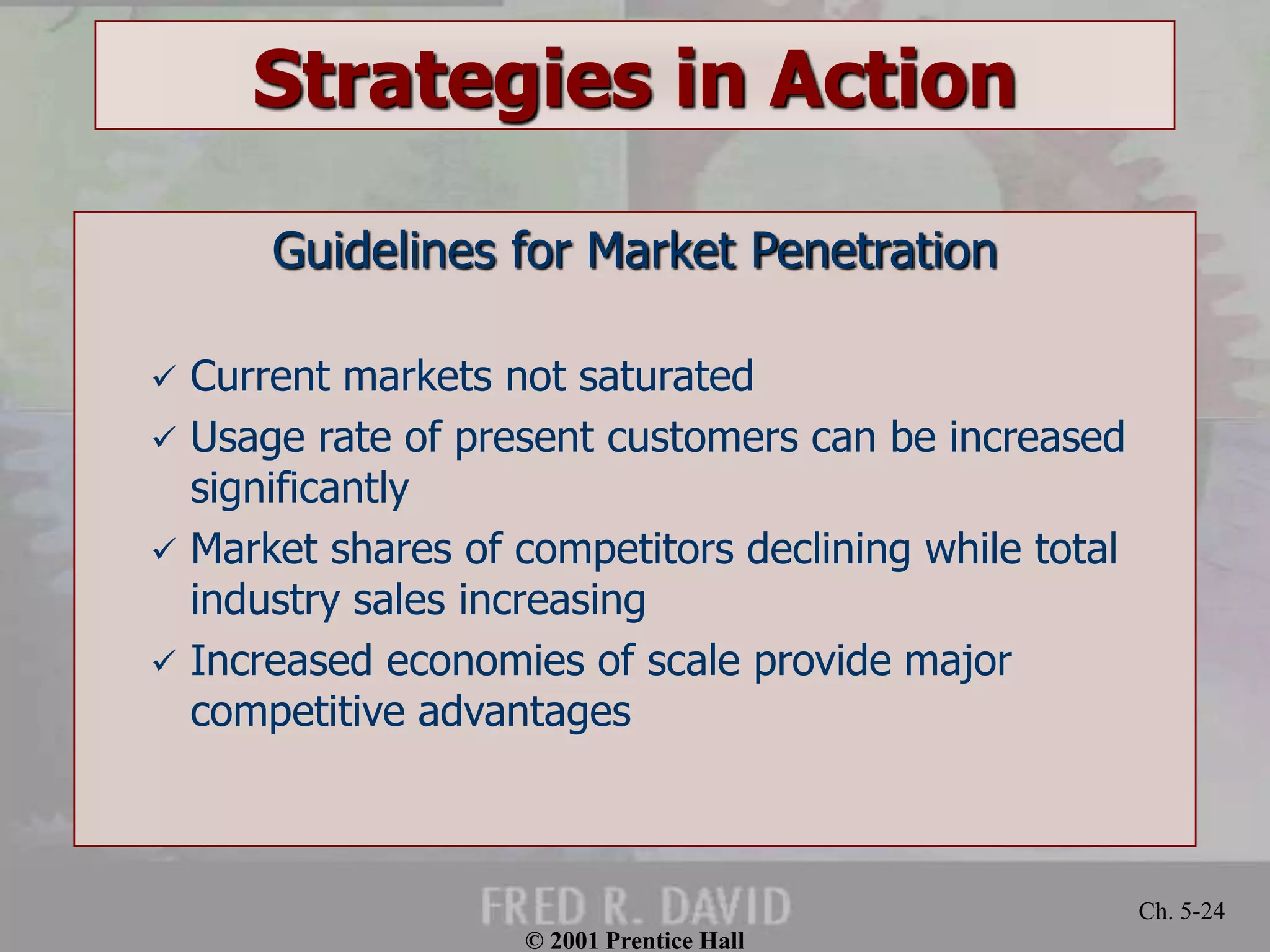
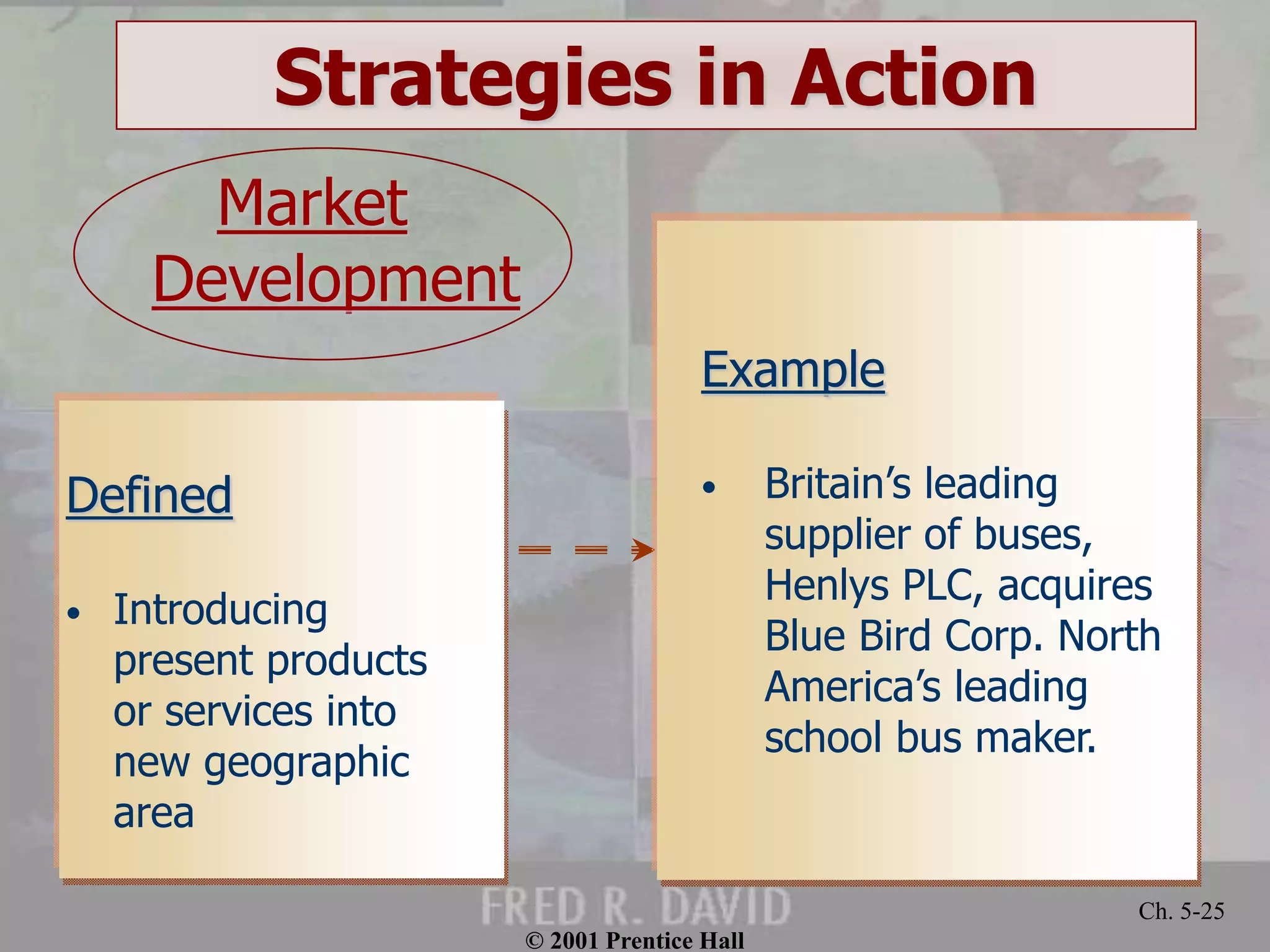
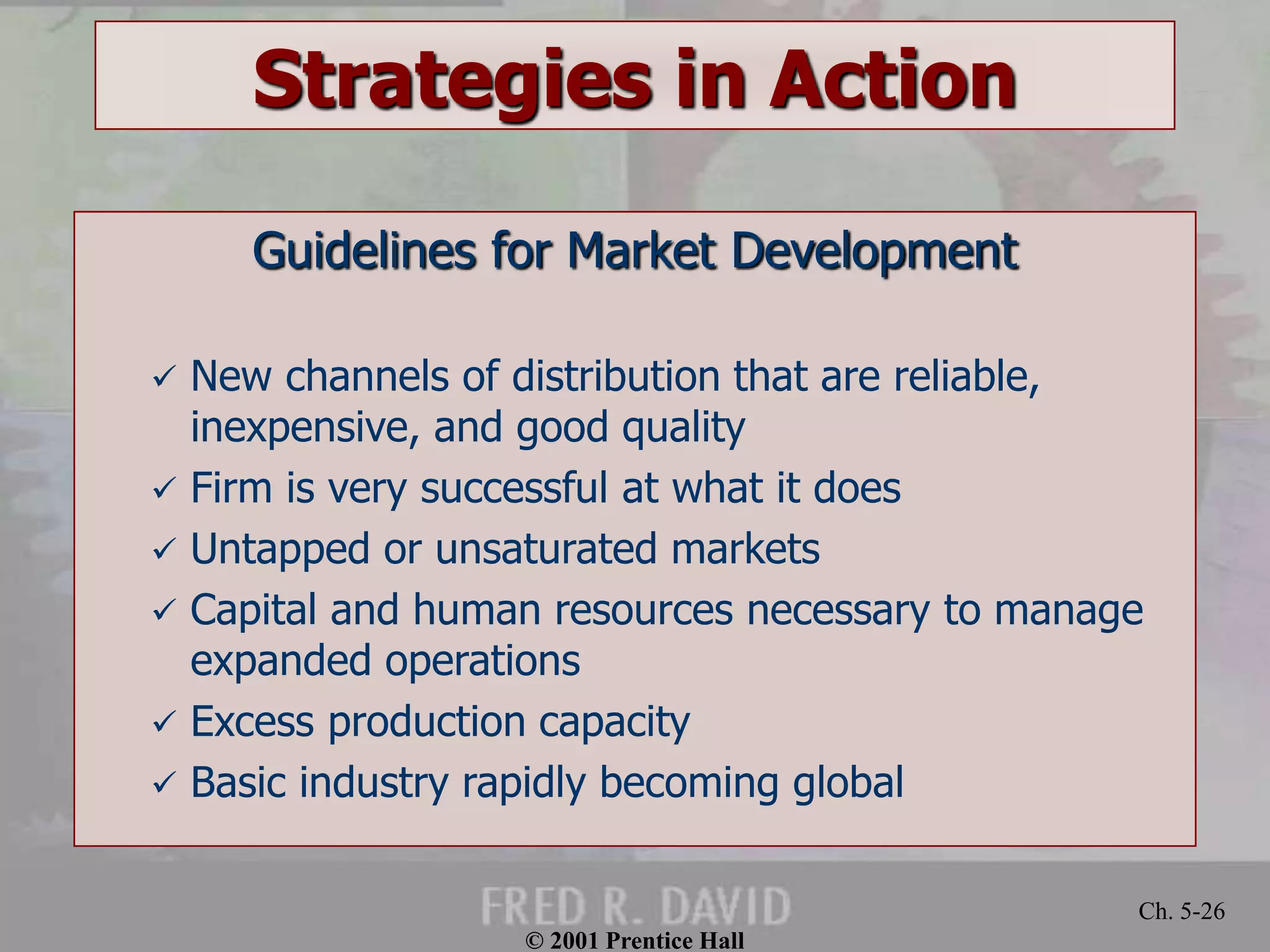
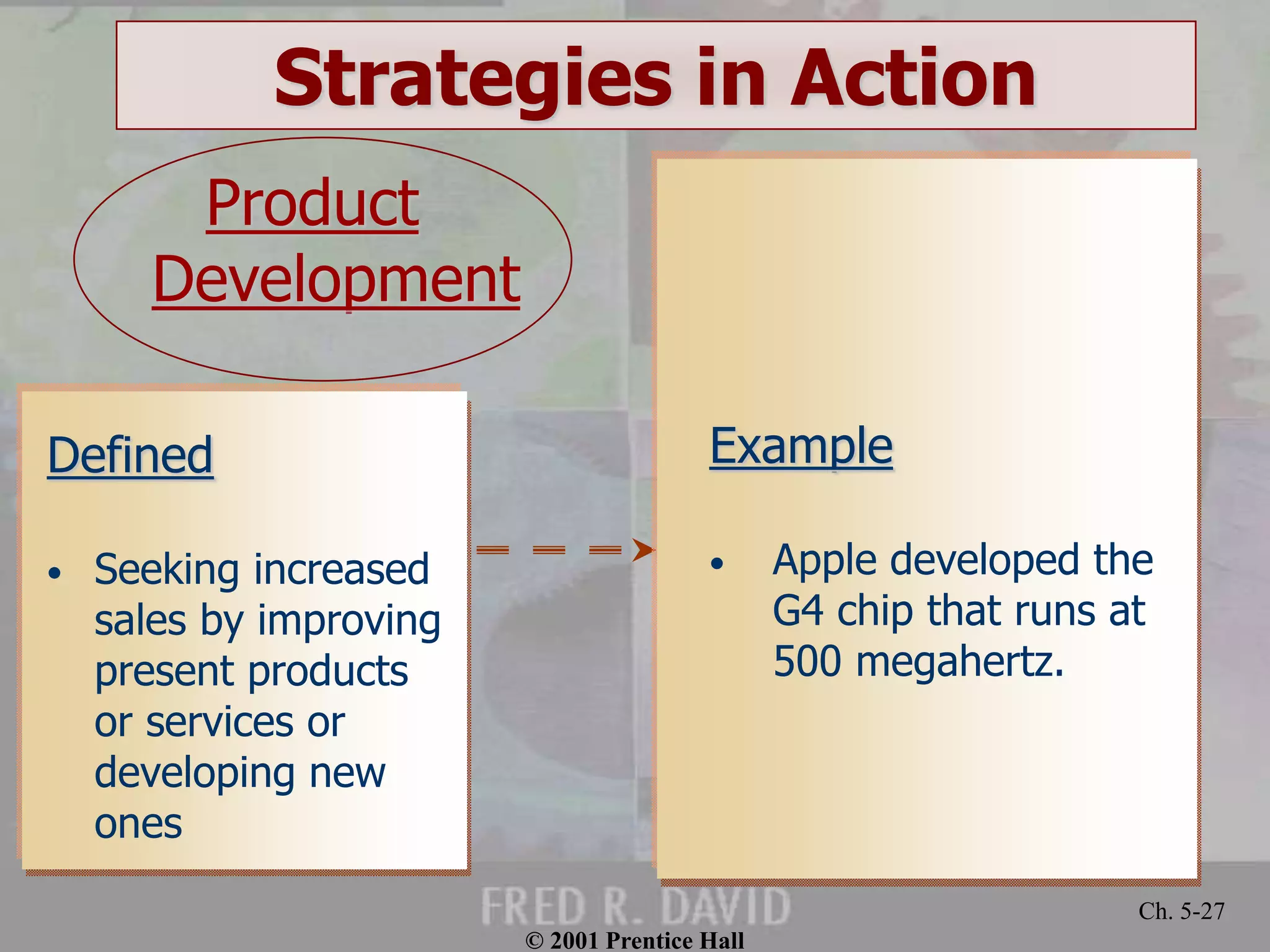
Introduction to intensive strategies focused on market penetration, development, and product development.
Details on seeking increased market share in current markets through enhanced marketing efforts.
Explains how businesses can introduce existing products to new geographic areas.
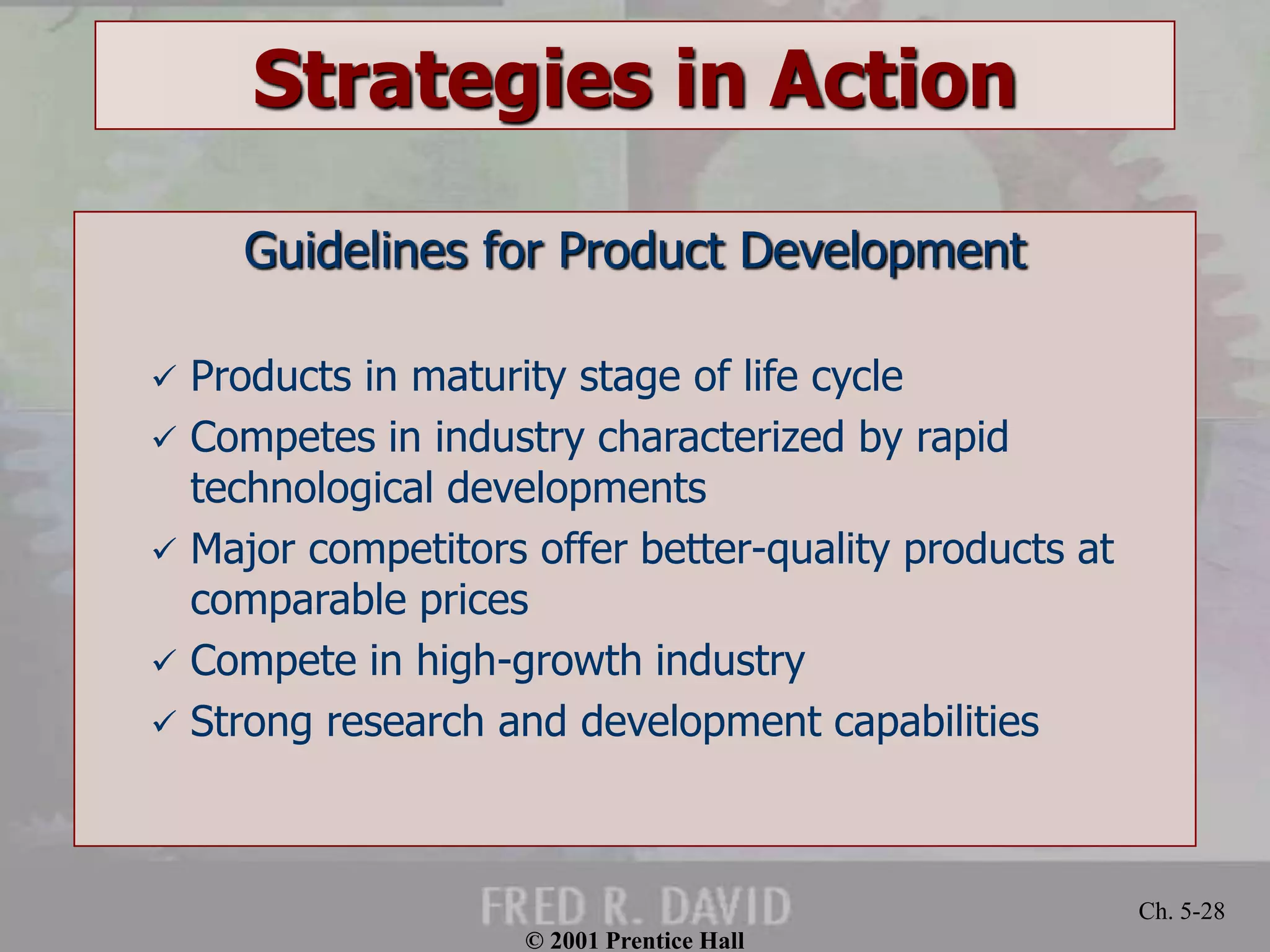
Discusses developing new or improved products to increase sales within an industry context.
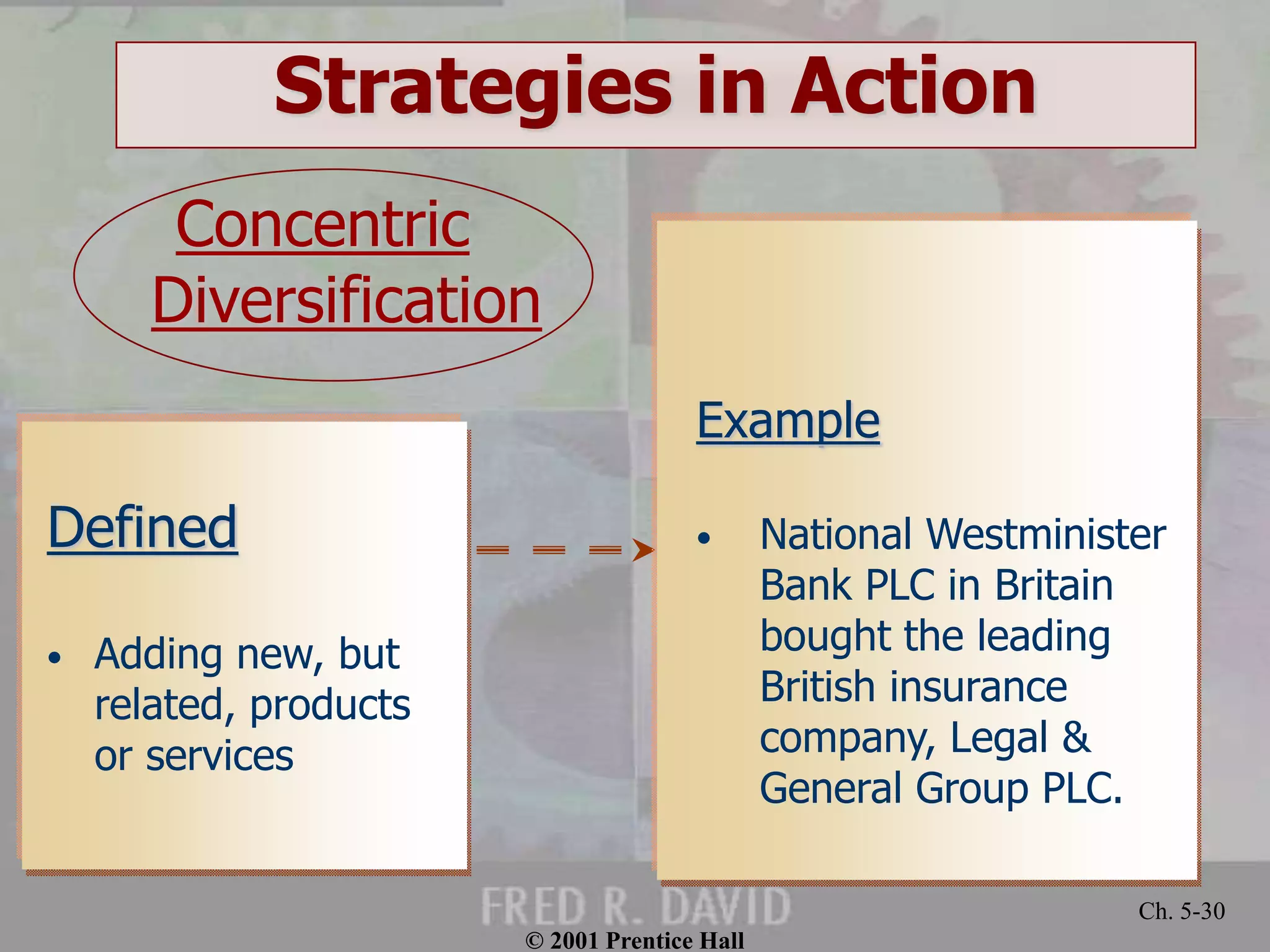
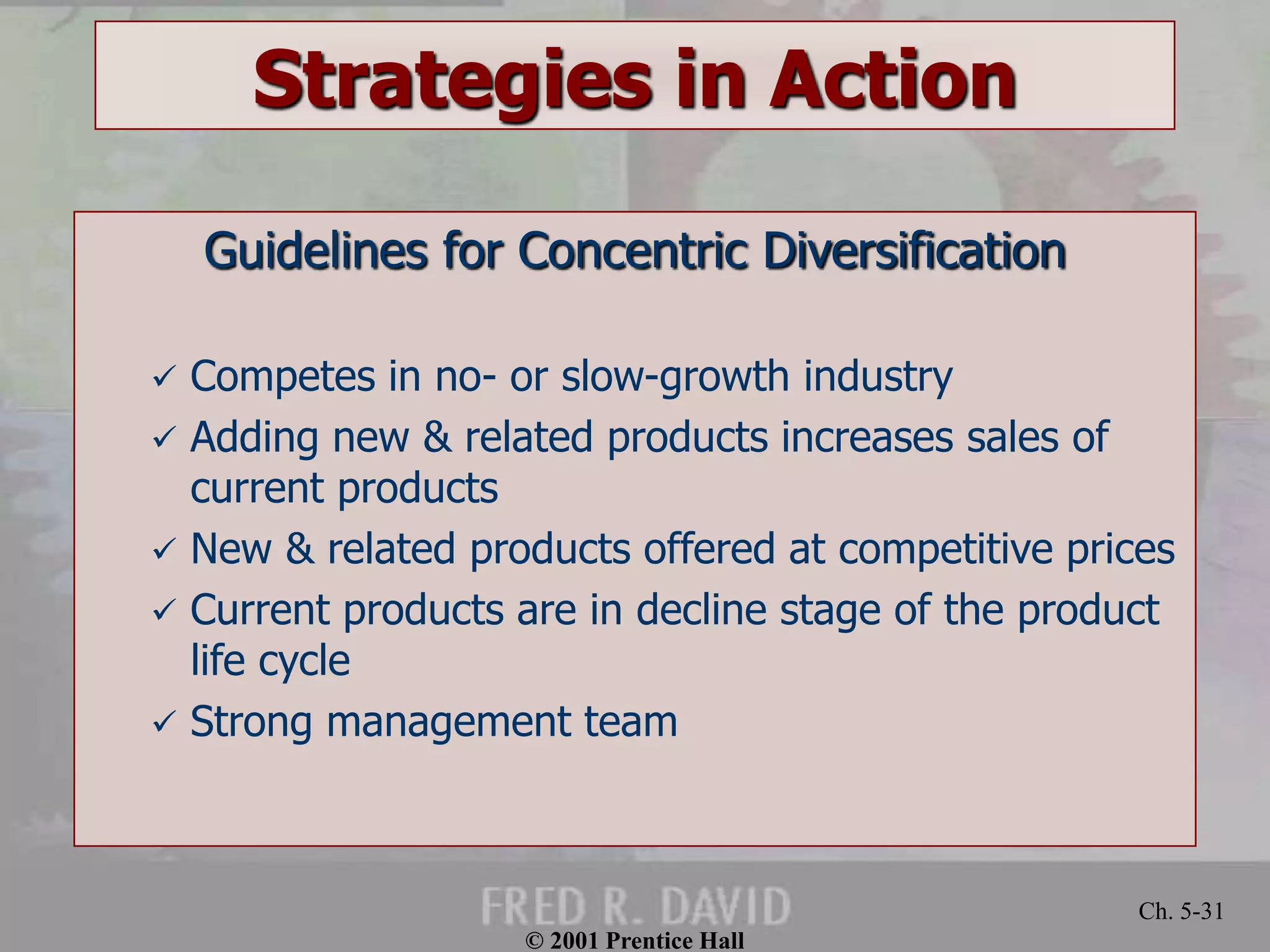
Introduces diversification strategies including concentric, conglomerate, and horizontal diversification.Details the strategic approach of adding related products or services.
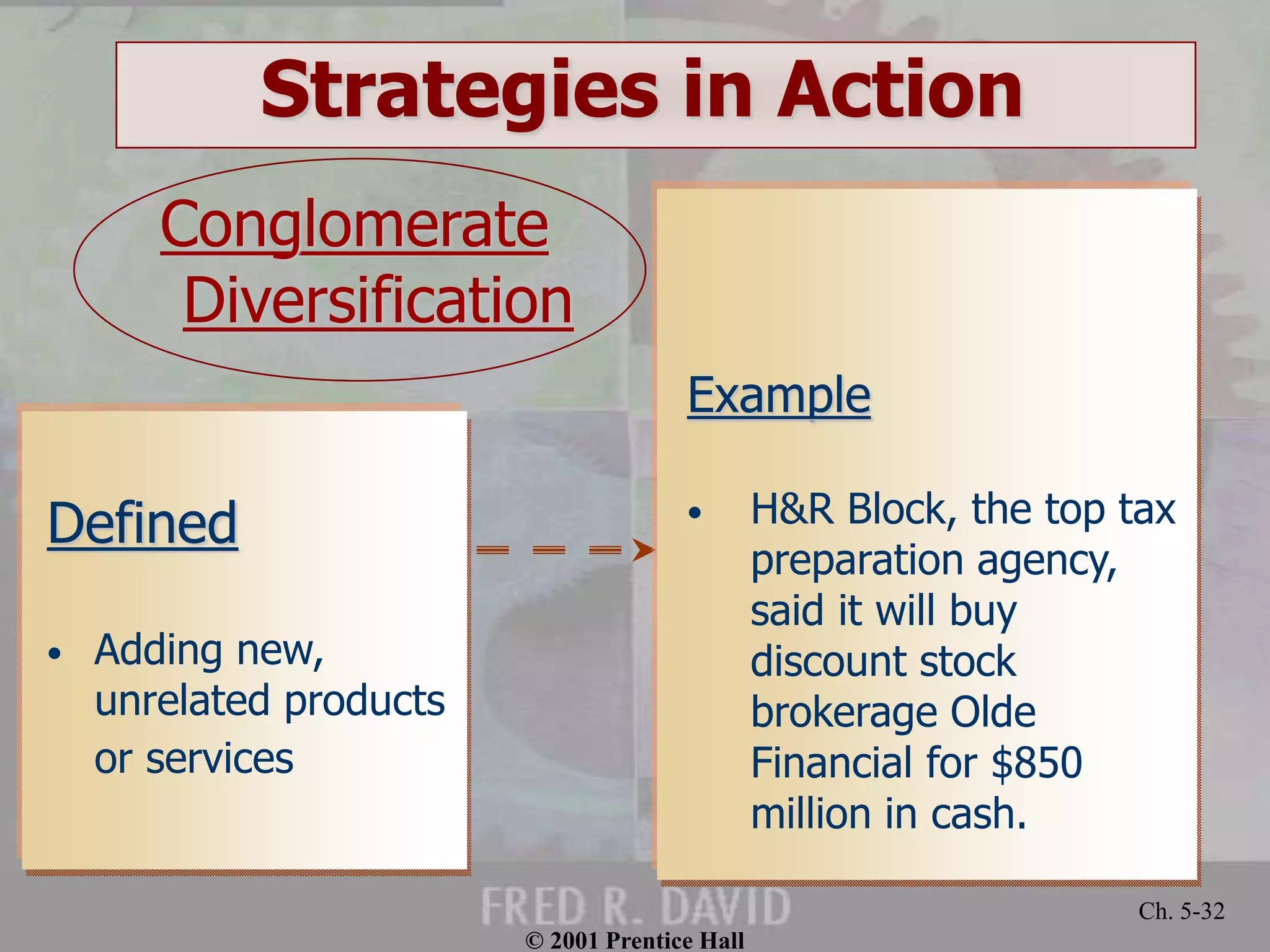
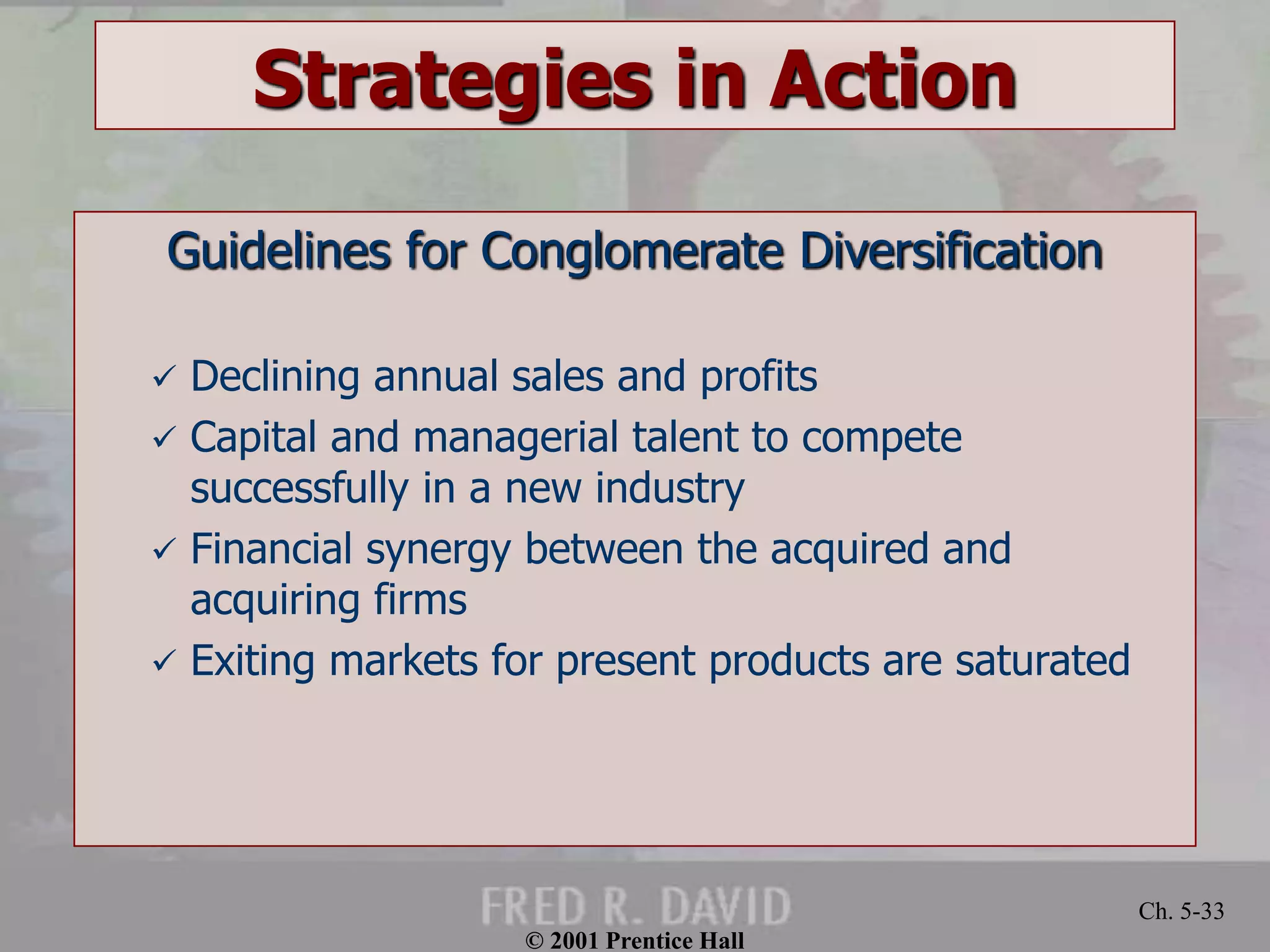
Describes introducing unrelated products/services to leverage existing customer bases.
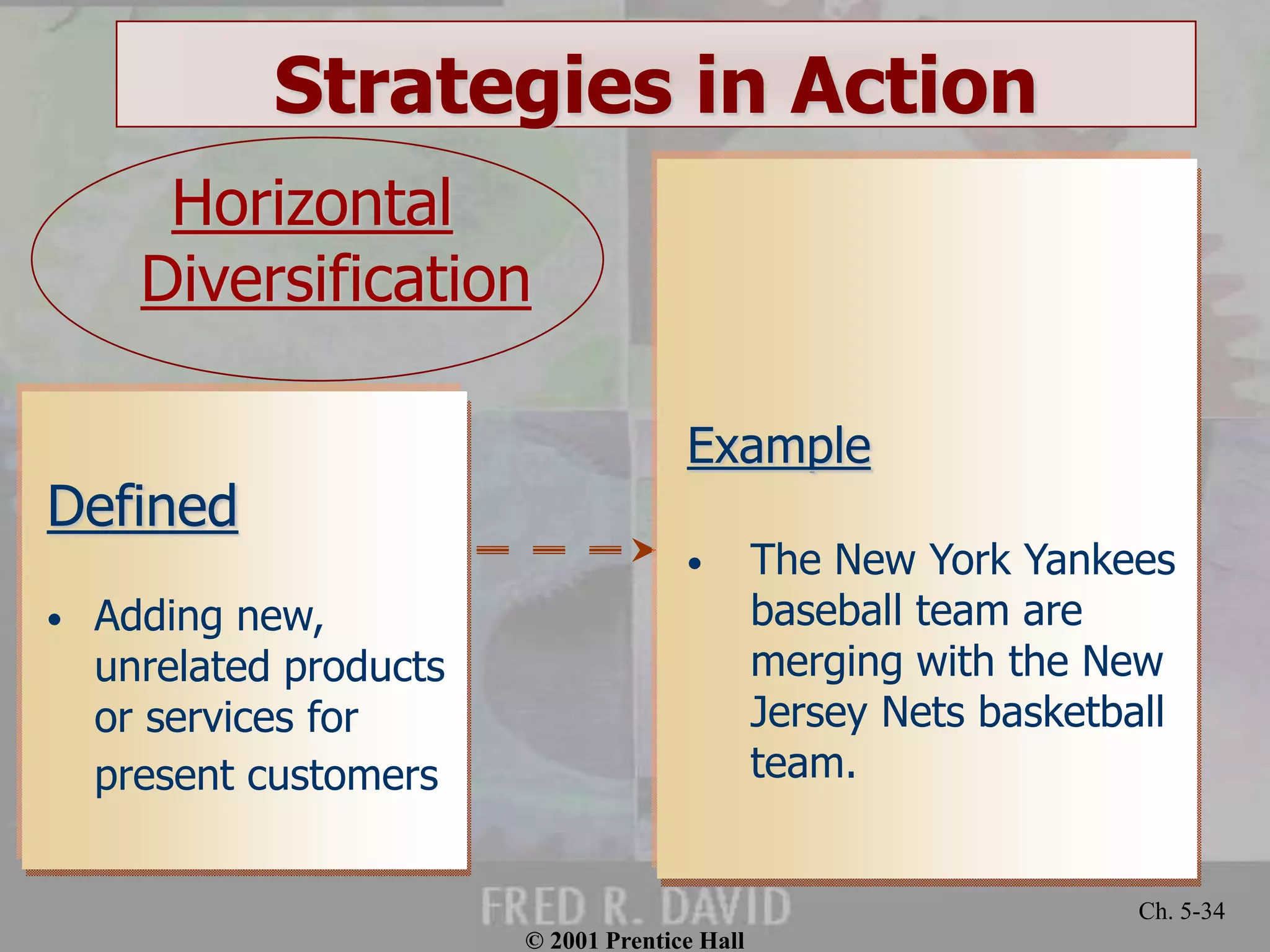
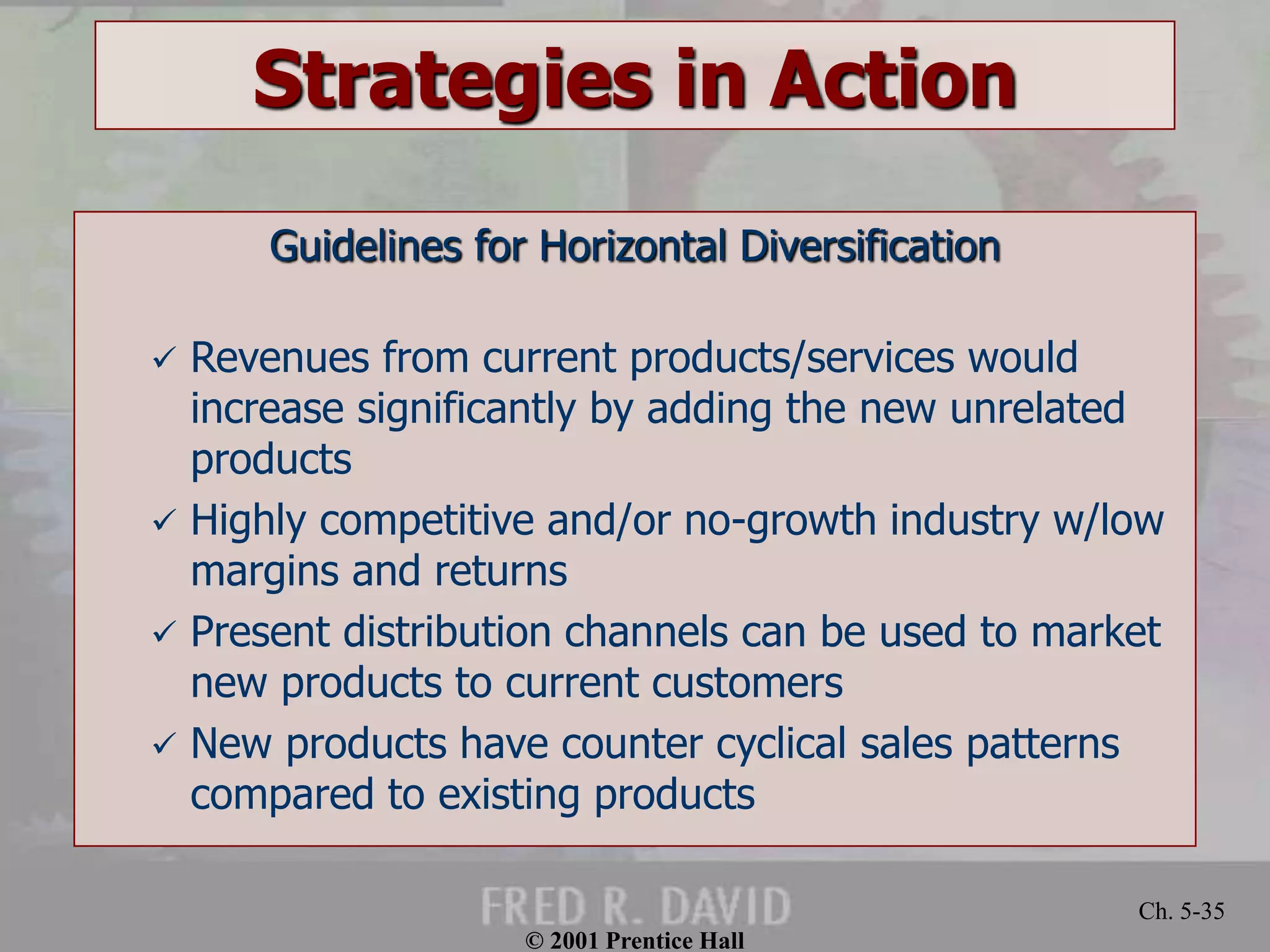
Discusses the strategy of adding unrelated products for existing customers to increase revenues.
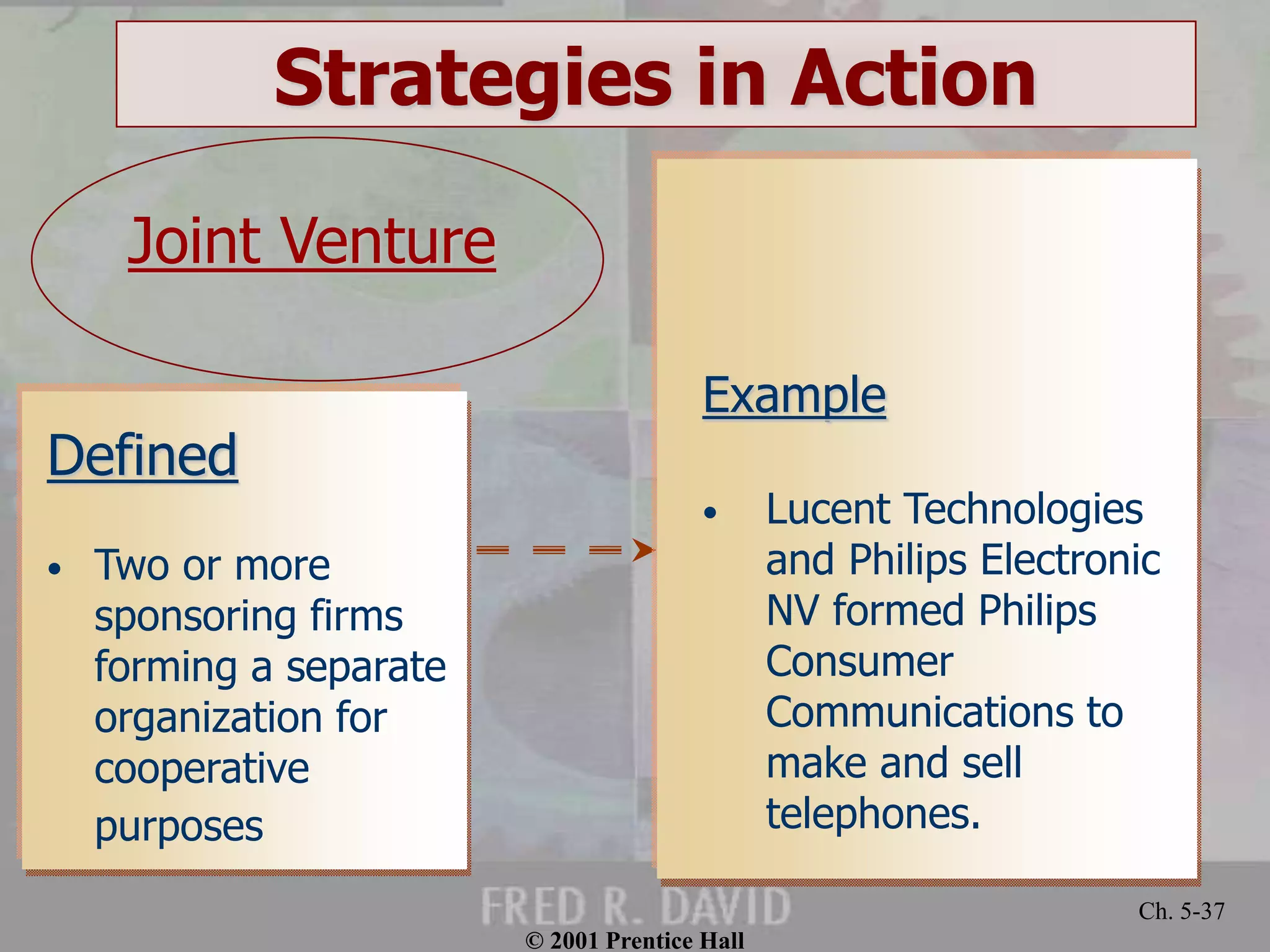
Introduces defensive strategies including joint ventures, retrenchment, divestiture, and liquidation.Details the strategic alliance between firms for cooperative purposes with guidelines.
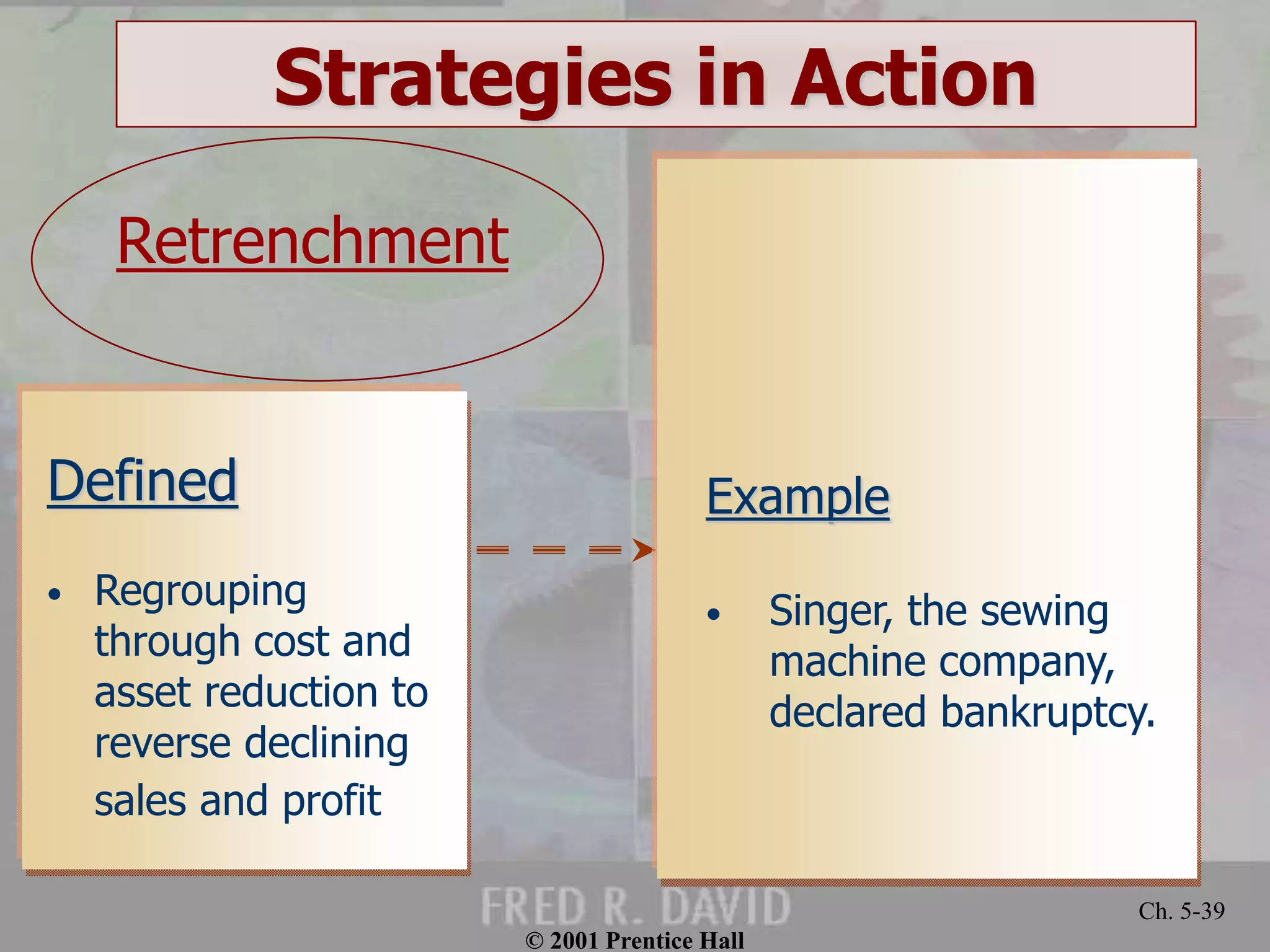
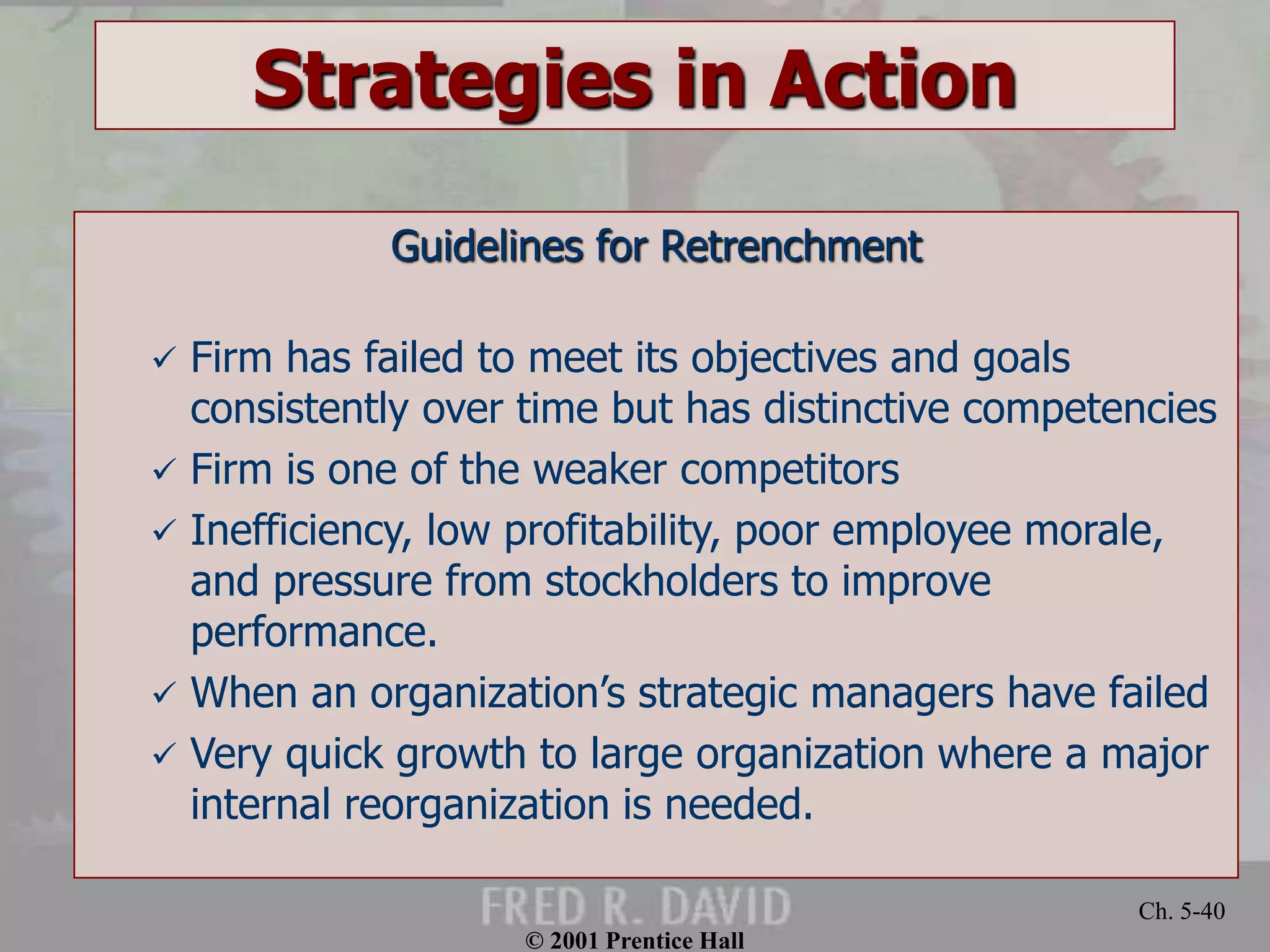
Explains the financial strategy of regrouping through cost reduction when facing declining profits.
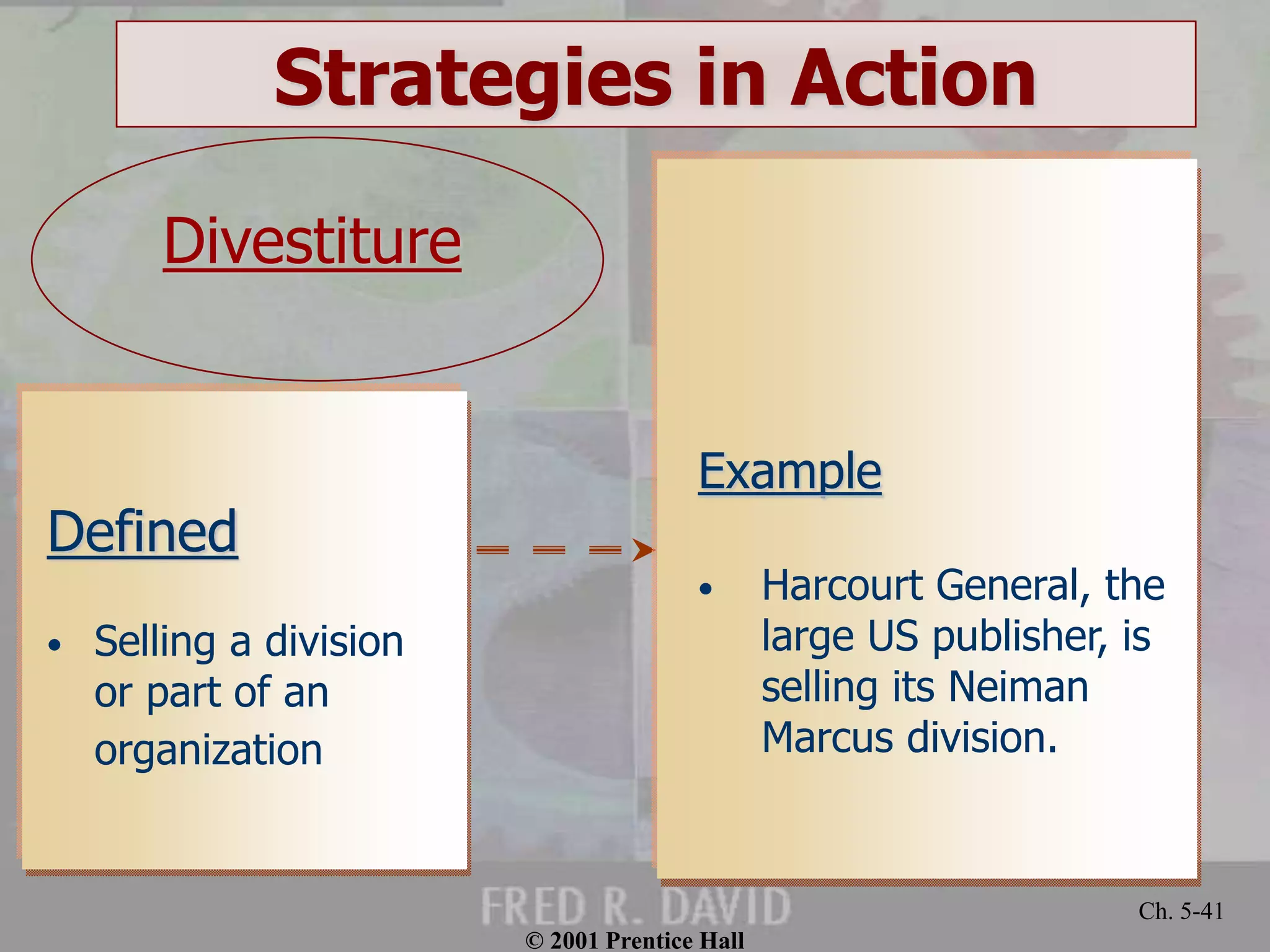
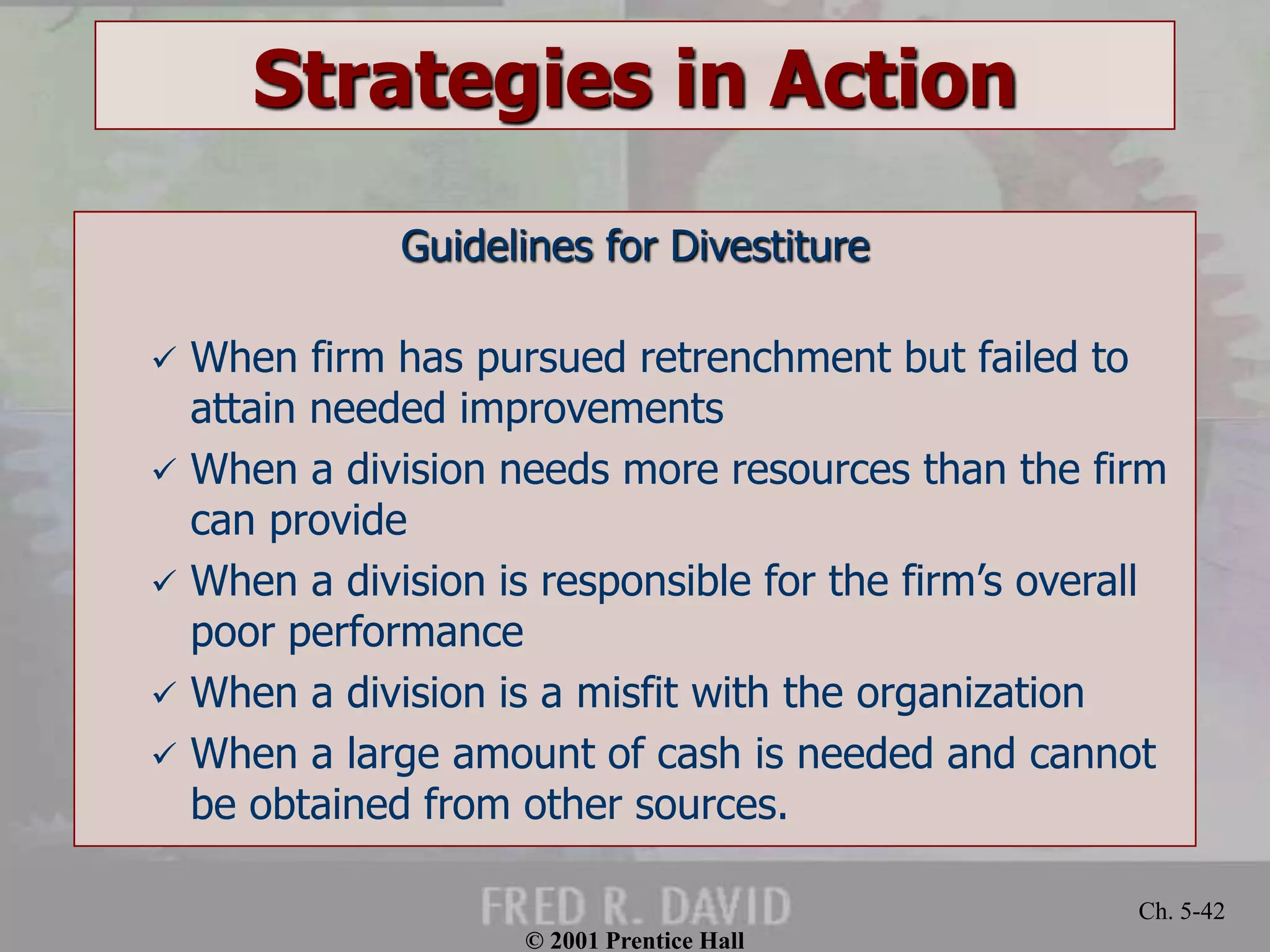
Examines the process of selling parts of an organization and reasons for divestiture.
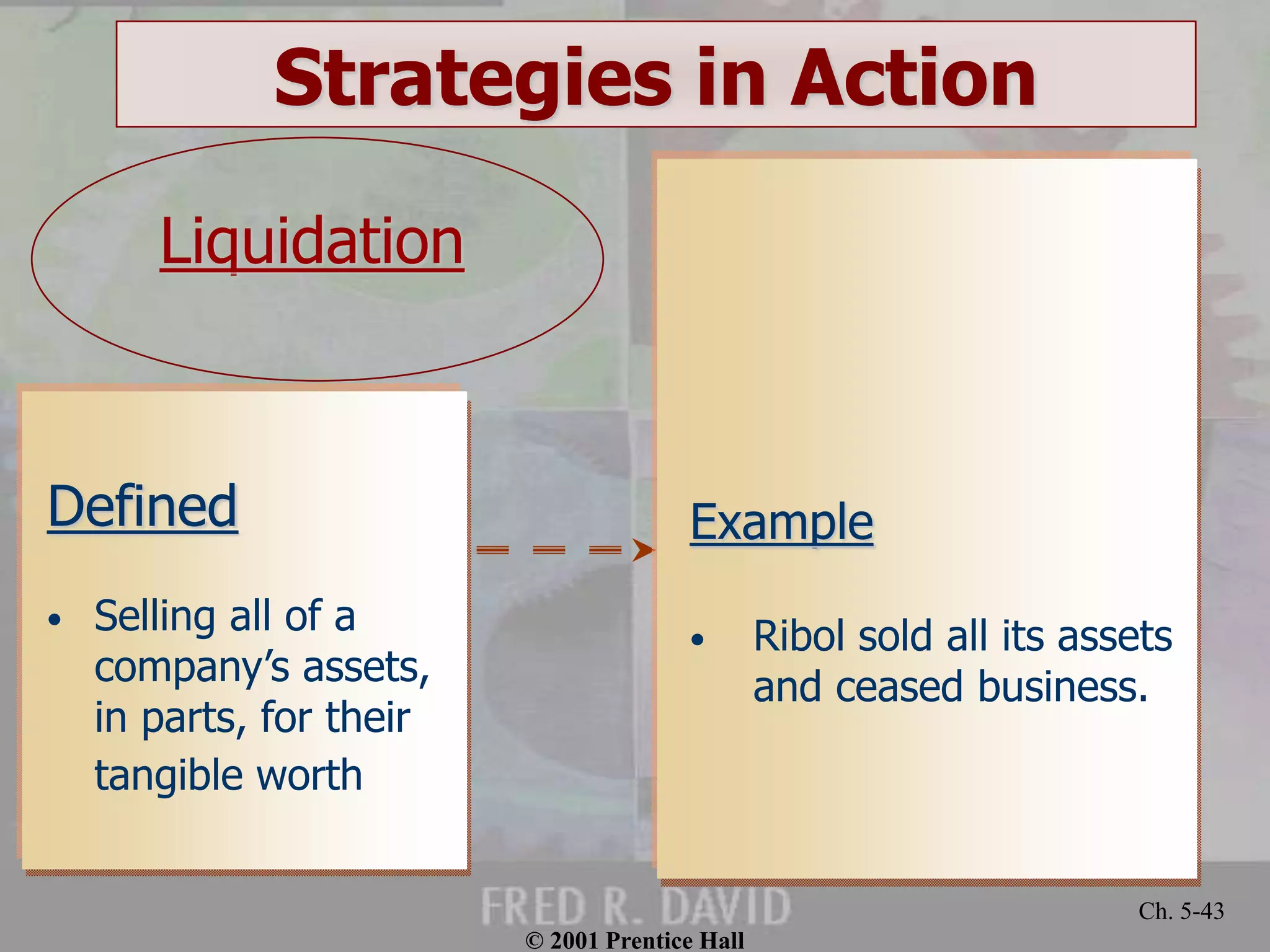
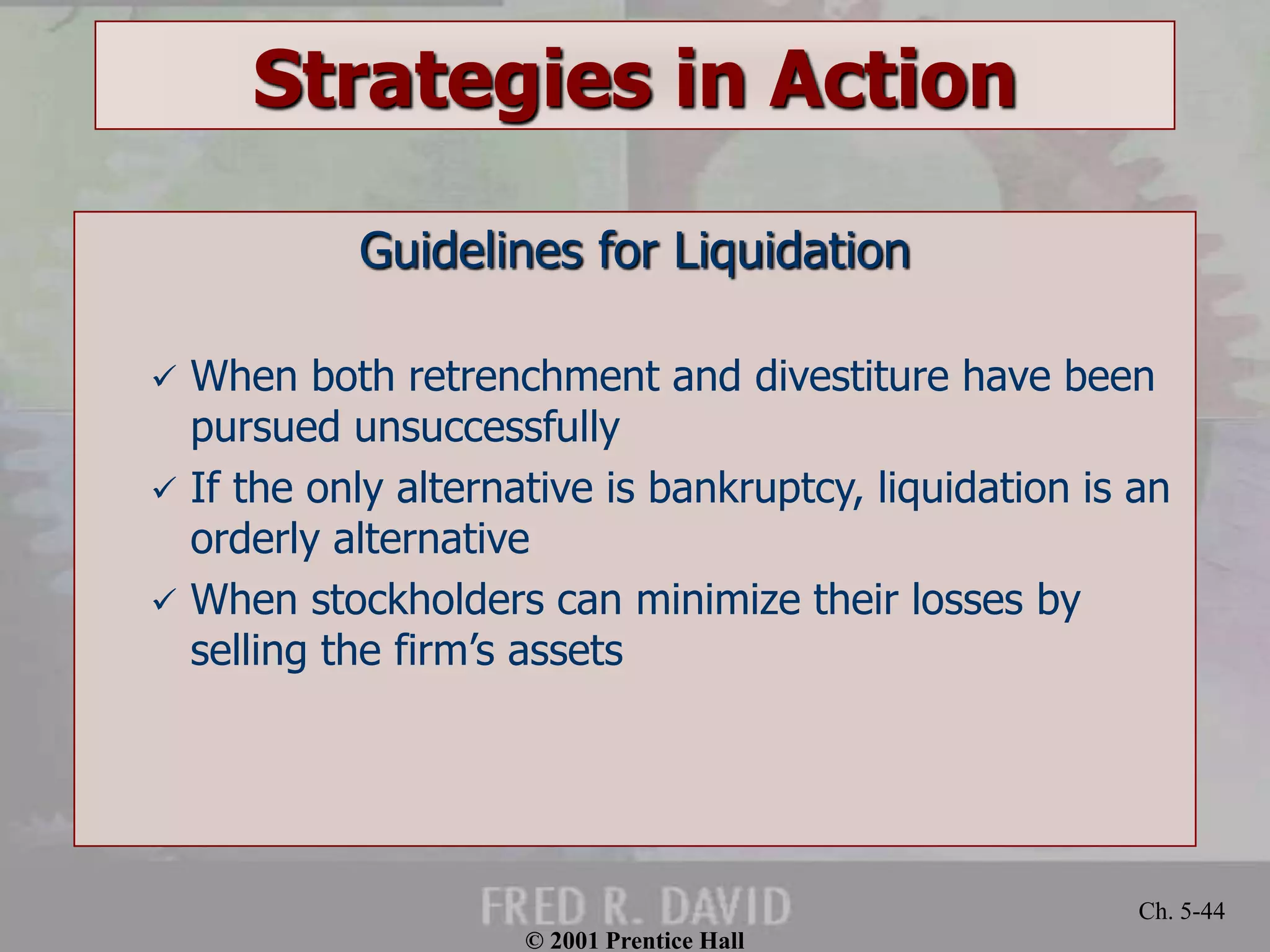
Describes the process of selling off assets when all other strategic options have failed.
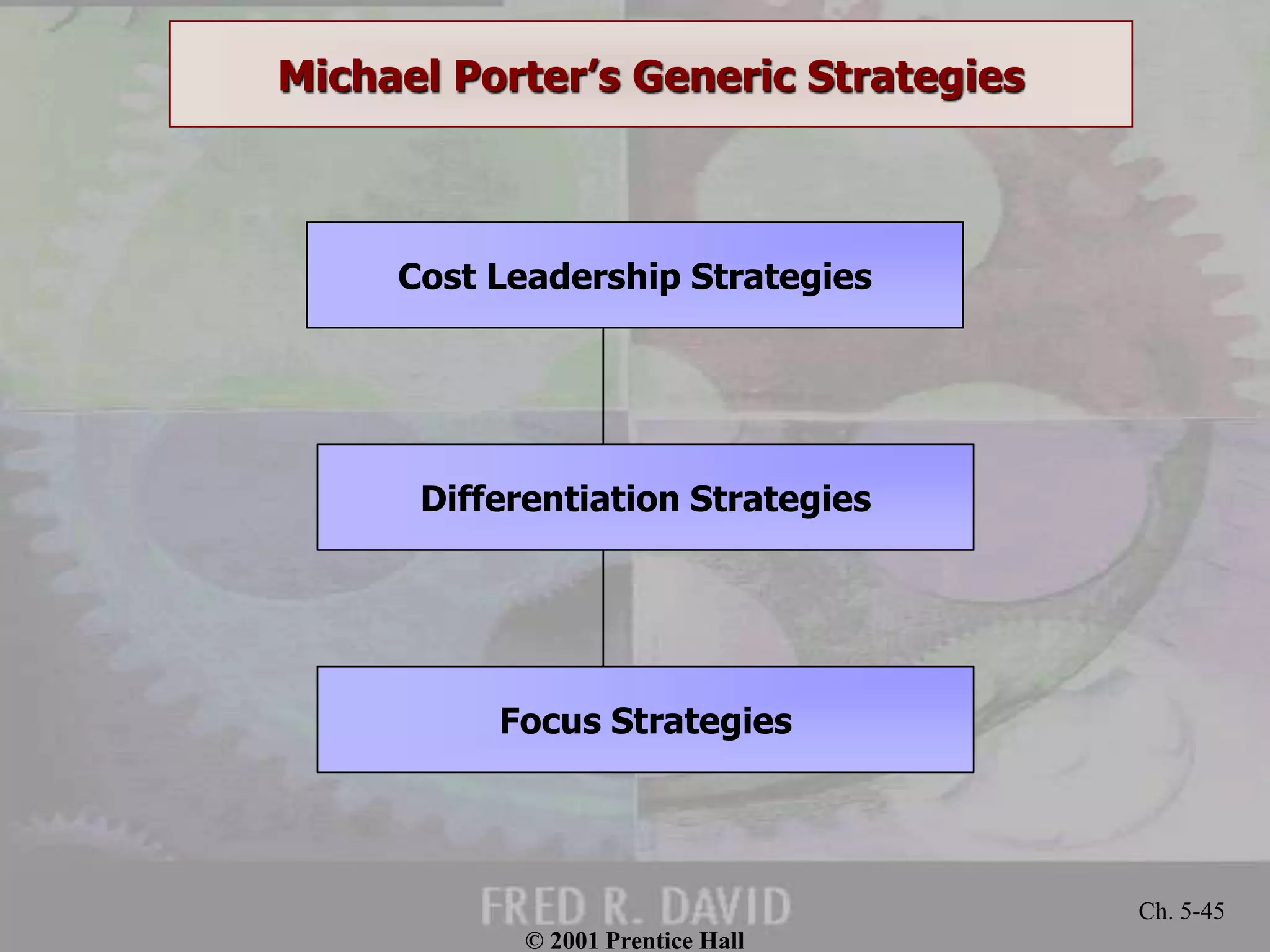
Introduction to Michael Porter’s generic strategies: cost leadership, differentiation, and focus.
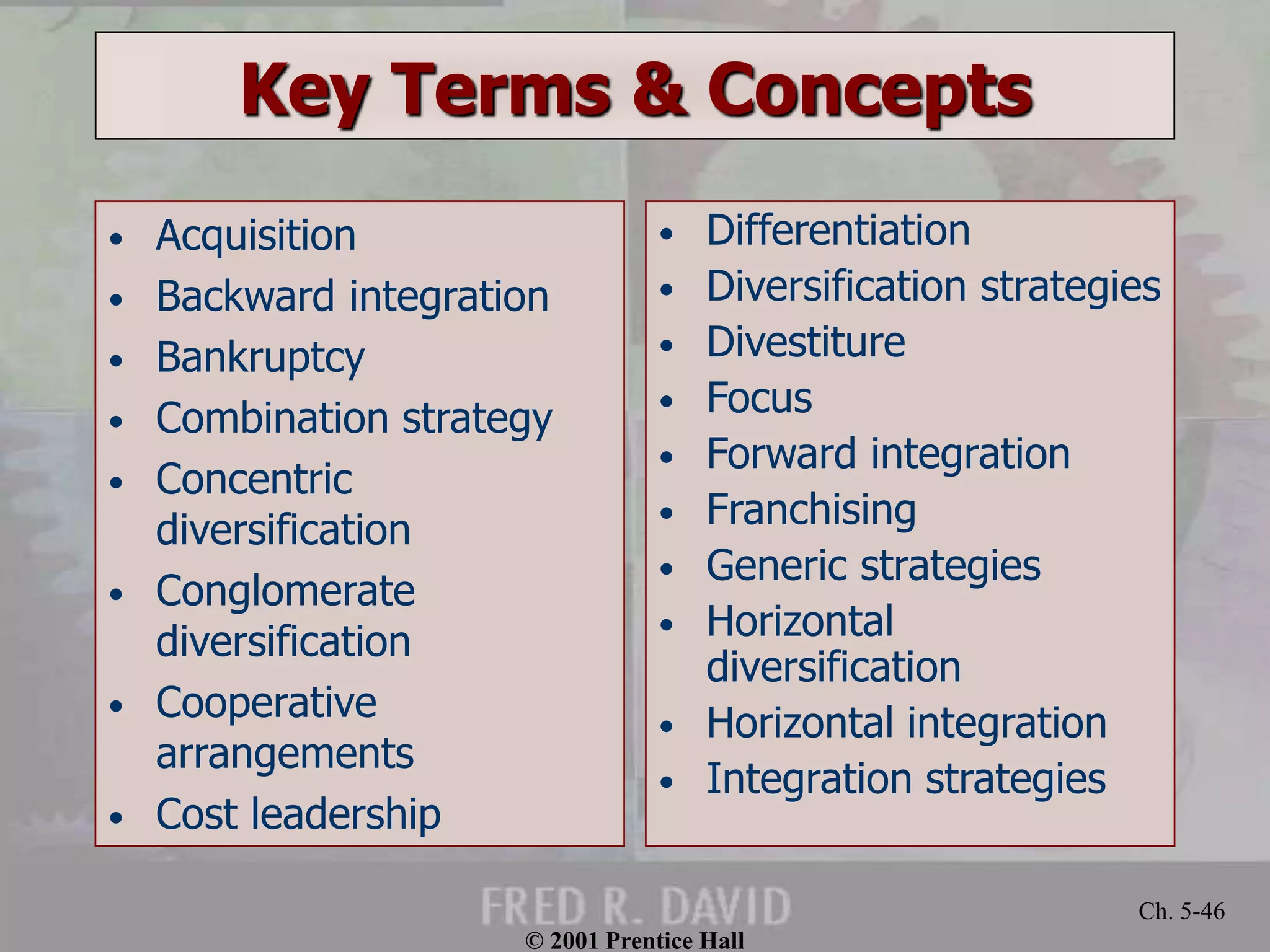
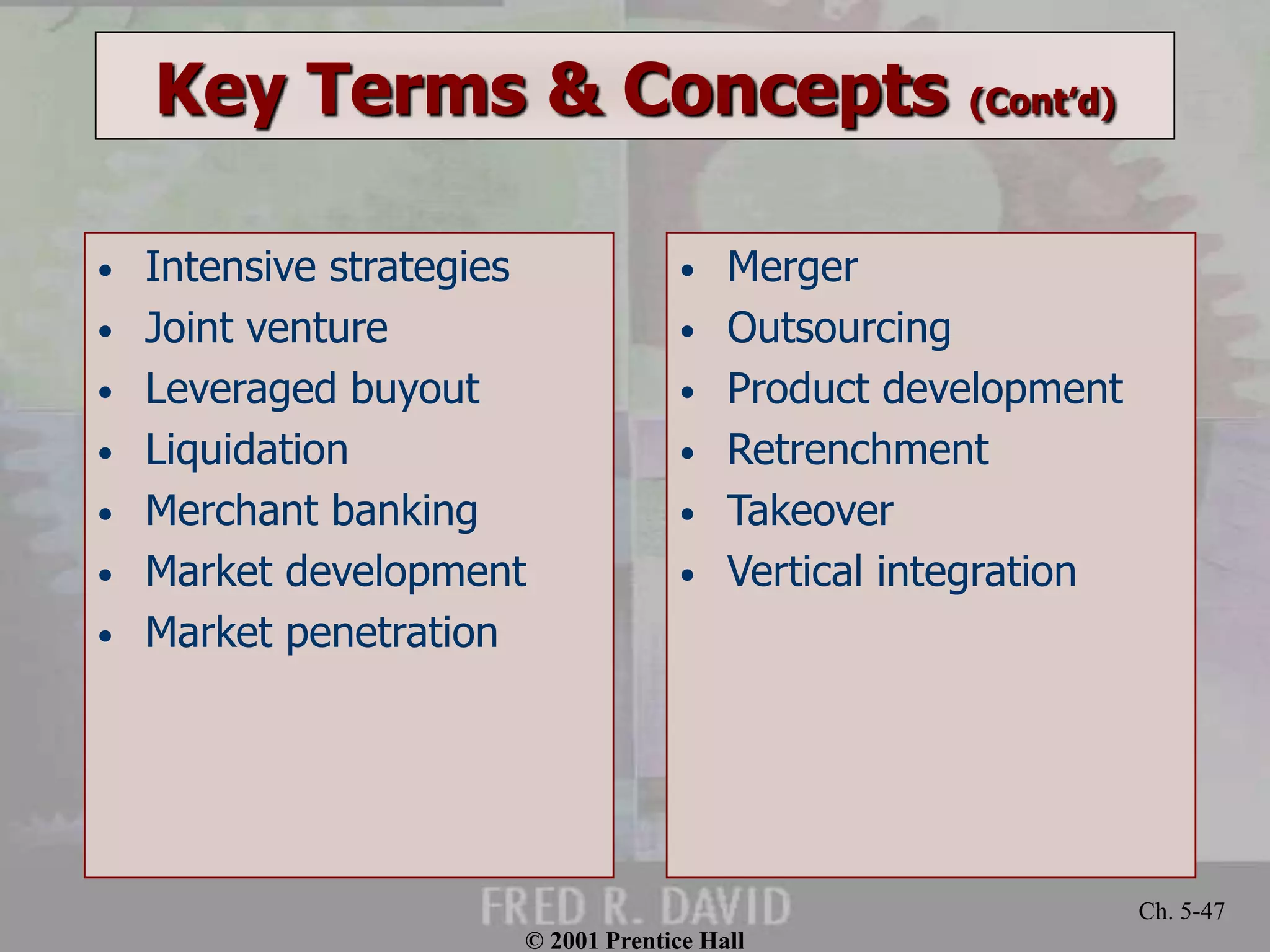
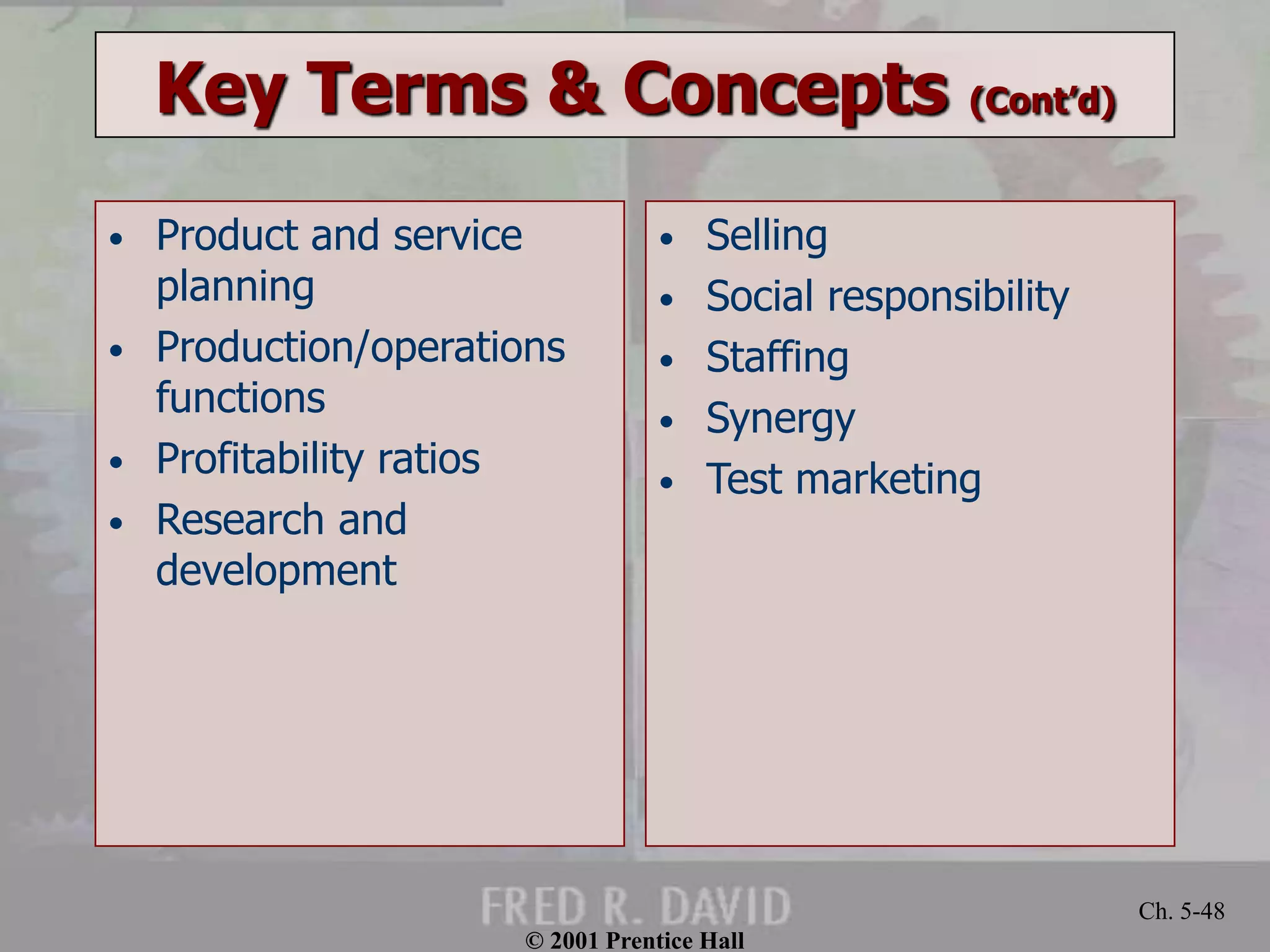
Lists key terms and concepts essential for understanding strategic management, from acquisitions to outsourcing.


