Short Story Elements What parts make up a story?
Story Terms Plot and Conflict Setting Characters Point of View Theme
Plot Definition: what happens and how it happens in a narrative. A narrative is any text that tells a story. Ex: short story, novel, drama, epic poem, etc…
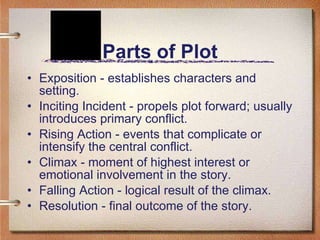
Parts of Plot Exposition - establishes characters and setting. Inciting Incident - propels plot forward; usually introduces primary conflict. Rising Action - events that complicate or intensify the central conflict. Climax - moment of highest interest or emotional involvement in the story. Falling Action - logical result of the climax. Resolution - final outcome of the story.
 
Conflict Definition: struggle between opposing forces. Plot must contain conflict(s). Conflicts can be internal or external: External conflict: conflict with an outside force (person, group, animal, nature, fate, or the supernatural). Internal conflict: conflict against oneself.
Plot Techniques Atmosphere - overall effect of the setting and descriptive details to create an emotional response in the reader. Suspense - excitement or tension. Foreshadowing - hints about what will happen later on in the story. Flashback - interrupts the normal sequence of events to tell about something that happened in the past. Surprise Ending - conclusion that the reader does not expect (use of irony). Symbol - something concrete that represents something abstract.
Setting Definition: time, place, and society within which the action occurs. Time: day, era, history, time of life, etc… Place: physical environment, weather, scenery,  buildings, rooms, furniture, etc… Society: companions, dialects, customs, occupation, way of life, morality, psychological conditions, etc...
Function of a Setting Creates mood and atmosphere. Makes action seem more real. Can be the source of conflict or struggle. Can symbolize an idea.
Character Types of Characters: Major characters Protagonist Antagonist Minor characters Stock character Foil character Round characters Flat characters Dynamic characters (undergo change) Static characters (stay the same)
Characterization Definition: how an author reveals what a character is like and how they change throughout the story. Two methods: Direct presentation - the author tells the reader about the character directly. Indirect presentation - the author reveals a character through a physical description, their thoughts and actions, as well as the thoughts and actions of other characters in the story.
Direct Characterization … and I don’t play the dozens or believe in standing around with somebody in my face doing a lot of talking. I much rather just knock you down and take my chances even if I’m a little girl with skinny arms and a squeak voice, which is how I got the name Squeaky. From “Raymond’s Run” by T. Bambara
Indirect Characterization The old man bowed to all of us in the room. Then he removed his hat and gloves, slowly and carefully. Chaplin once did that in a picture, in a bank - he was the janitor. From “Gentleman of Rio en Medio” by J. Sedillo
Types of Character There are two primary types of character: Flat character - only one or two distinguishing traits; not fully developed Round character - fully developed character; reader may feel they exist in life.
Analyzing Character Considering the following when completing a literary analysis of a character: Physical appearance Personality Background / personal history Motivation Relationships Conflict Do they change?
Point of View Definition: the perspective from which a story is told. Two main types: First Person - told from perspective of a character in the story. Third Person - told from a removed perspective. Third Person Omniscient = all-knowing perspective. Third Person Limited = access to inner thoughts of some characters, but not all.
Theme A central message, concern, or insight into life that is expressed through a literary work. Stated in one or two sentences about human beings or about life. Interpretation uncovers theme. All story elements should be interpreted in how they contribute to the development of theme. Example:  Sleeping Beauty  - true love conquers all.

Story elements power point

  • 1.
    Short Story ElementsWhat parts make up a story?
  • 2.
    Story Terms Plotand Conflict Setting Characters Point of View Theme
  • 3.
    Plot Definition: whathappens and how it happens in a narrative. A narrative is any text that tells a story. Ex: short story, novel, drama, epic poem, etc…
  • 4.
    Parts of PlotExposition - establishes characters and setting. Inciting Incident - propels plot forward; usually introduces primary conflict. Rising Action - events that complicate or intensify the central conflict. Climax - moment of highest interest or emotional involvement in the story. Falling Action - logical result of the climax. Resolution - final outcome of the story.
  • 5.
  • 6.
    Conflict Definition: strugglebetween opposing forces. Plot must contain conflict(s). Conflicts can be internal or external: External conflict: conflict with an outside force (person, group, animal, nature, fate, or the supernatural). Internal conflict: conflict against oneself.
  • 7.
    Plot Techniques Atmosphere- overall effect of the setting and descriptive details to create an emotional response in the reader. Suspense - excitement or tension. Foreshadowing - hints about what will happen later on in the story. Flashback - interrupts the normal sequence of events to tell about something that happened in the past. Surprise Ending - conclusion that the reader does not expect (use of irony). Symbol - something concrete that represents something abstract.
  • 8.
    Setting Definition: time,place, and society within which the action occurs. Time: day, era, history, time of life, etc… Place: physical environment, weather, scenery, buildings, rooms, furniture, etc… Society: companions, dialects, customs, occupation, way of life, morality, psychological conditions, etc...
  • 9.
    Function of aSetting Creates mood and atmosphere. Makes action seem more real. Can be the source of conflict or struggle. Can symbolize an idea.
  • 10.
    Character Types ofCharacters: Major characters Protagonist Antagonist Minor characters Stock character Foil character Round characters Flat characters Dynamic characters (undergo change) Static characters (stay the same)
  • 11.
    Characterization Definition: howan author reveals what a character is like and how they change throughout the story. Two methods: Direct presentation - the author tells the reader about the character directly. Indirect presentation - the author reveals a character through a physical description, their thoughts and actions, as well as the thoughts and actions of other characters in the story.
  • 12.
    Direct Characterization …and I don’t play the dozens or believe in standing around with somebody in my face doing a lot of talking. I much rather just knock you down and take my chances even if I’m a little girl with skinny arms and a squeak voice, which is how I got the name Squeaky. From “Raymond’s Run” by T. Bambara
  • 13.
    Indirect Characterization Theold man bowed to all of us in the room. Then he removed his hat and gloves, slowly and carefully. Chaplin once did that in a picture, in a bank - he was the janitor. From “Gentleman of Rio en Medio” by J. Sedillo
  • 14.
    Types of CharacterThere are two primary types of character: Flat character - only one or two distinguishing traits; not fully developed Round character - fully developed character; reader may feel they exist in life.
  • 15.
    Analyzing Character Consideringthe following when completing a literary analysis of a character: Physical appearance Personality Background / personal history Motivation Relationships Conflict Do they change?
  • 16.
    Point of ViewDefinition: the perspective from which a story is told. Two main types: First Person - told from perspective of a character in the story. Third Person - told from a removed perspective. Third Person Omniscient = all-knowing perspective. Third Person Limited = access to inner thoughts of some characters, but not all.
  • 17.
    Theme A centralmessage, concern, or insight into life that is expressed through a literary work. Stated in one or two sentences about human beings or about life. Interpretation uncovers theme. All story elements should be interpreted in how they contribute to the development of theme. Example: Sleeping Beauty - true love conquers all.