Downloaded 203 times
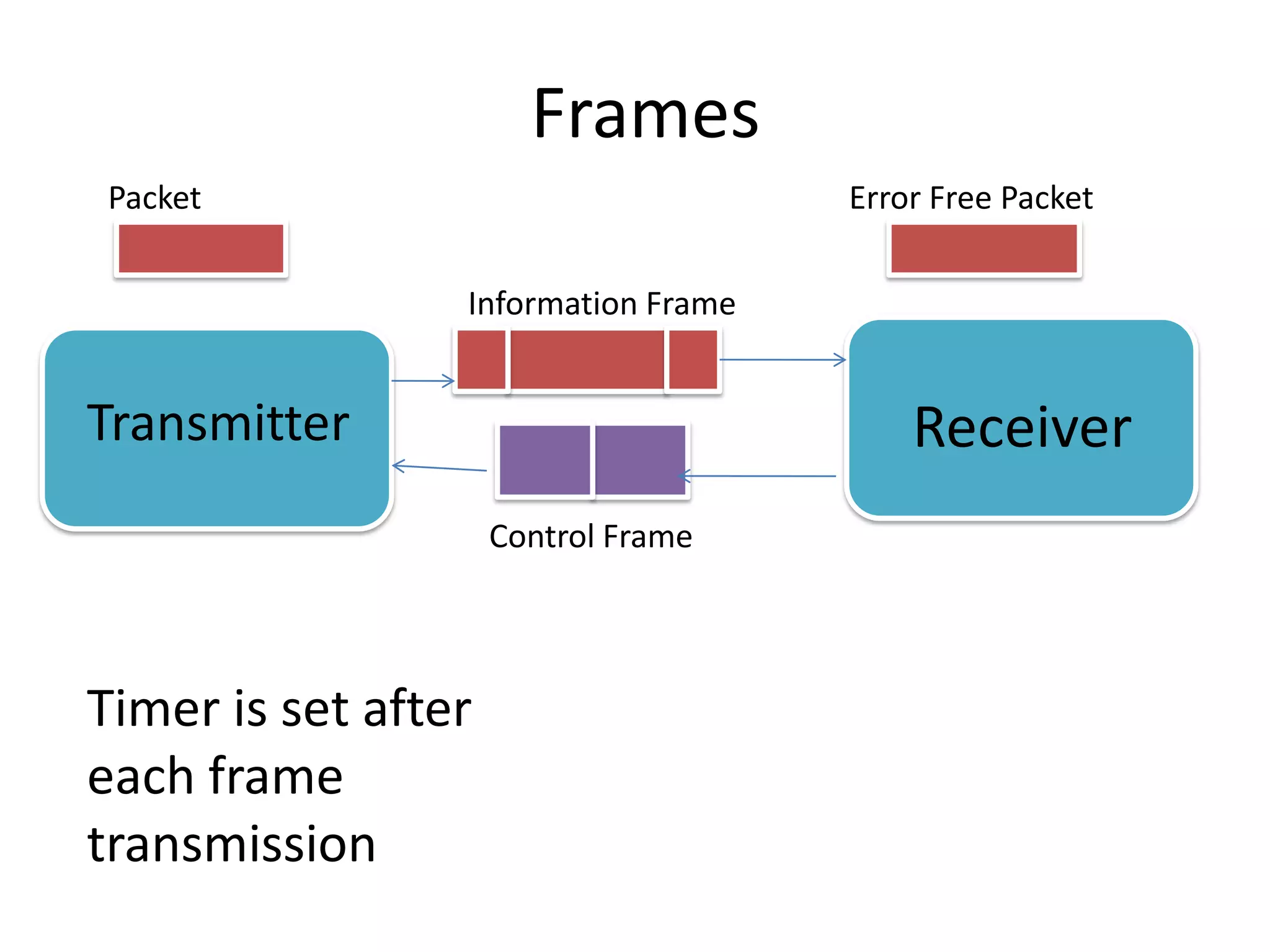



Stop and wait ARQ is an error-control method that uses acknowledgements and timeouts to achieve reliable data transmission over an unreliable service. It works as follows: The transmitter sends a single frame and waits for a corresponding acknowledgement frame from the receiver before sending the next frame. If the acknowledgement is not received within a set time, the frame is retransmitted. Sequence numbers are used to identify frames and acknowledgements. The main advantages are that it provides both error and flow control, and uses timers to handle lost or corrupted frames. The main disadvantages are low efficiency since only one frame can be sent at a time, and overhead from setting timers for each individual frame. It is commonly used in protocols like B
An introduction to the Stop and Wait Automatic Repeat reQuest (ARQ) mechanism.
List of team members involved in the presentation.
Distinction between noiseless and noisy communication channels.
An introduction to the Stop and Wait Automatic Repeat reQuest (ARQ) mechanism.
Automatic Repeat reQuest (ARQ) is a data transmission method utilizing acknowledgements.
An introduction to the Stop and Wait Automatic Repeat reQuest (ARQ) mechanism.
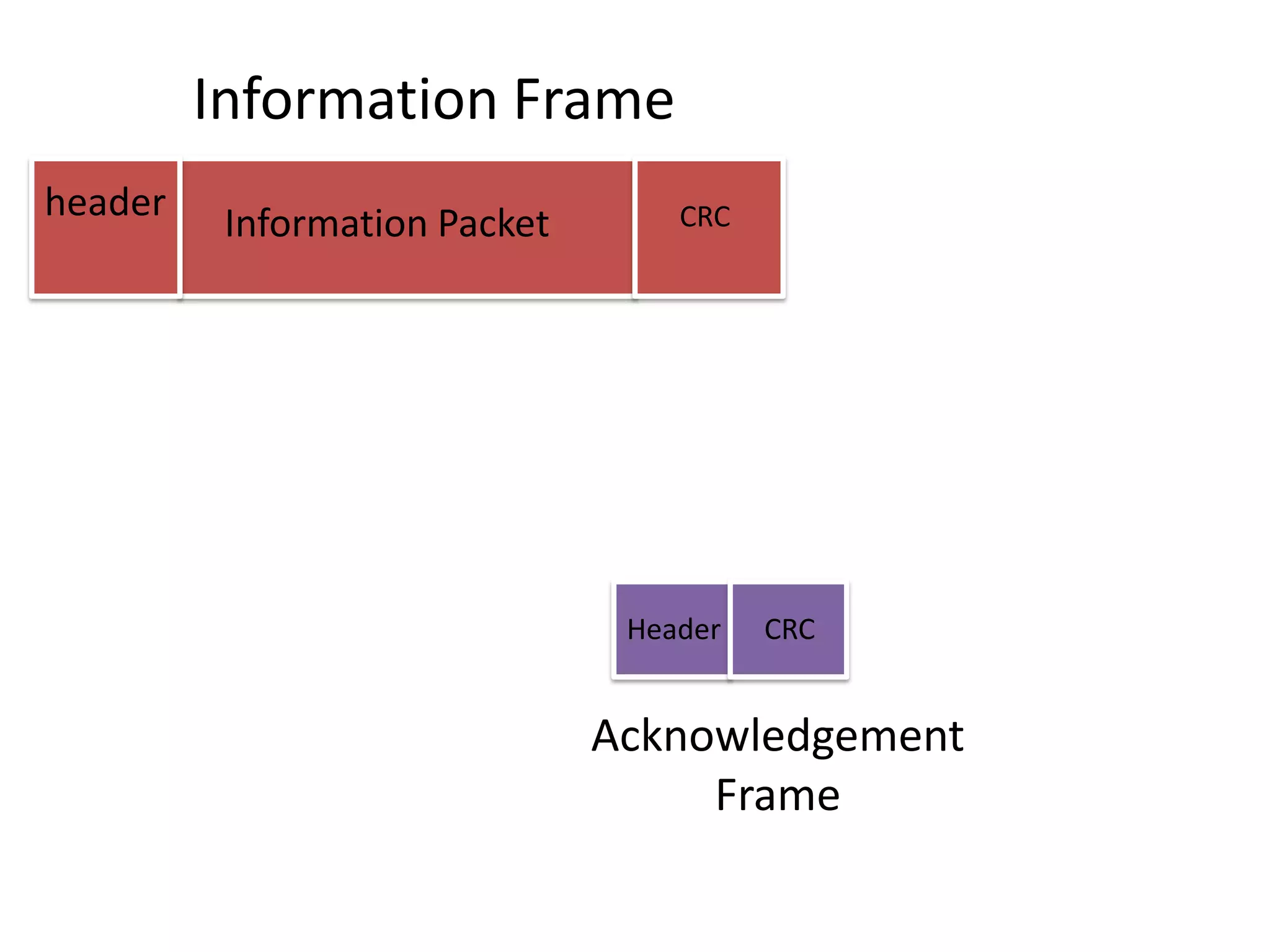
Details of different types of frames used in ARQ, including information and acknowledgment frames.
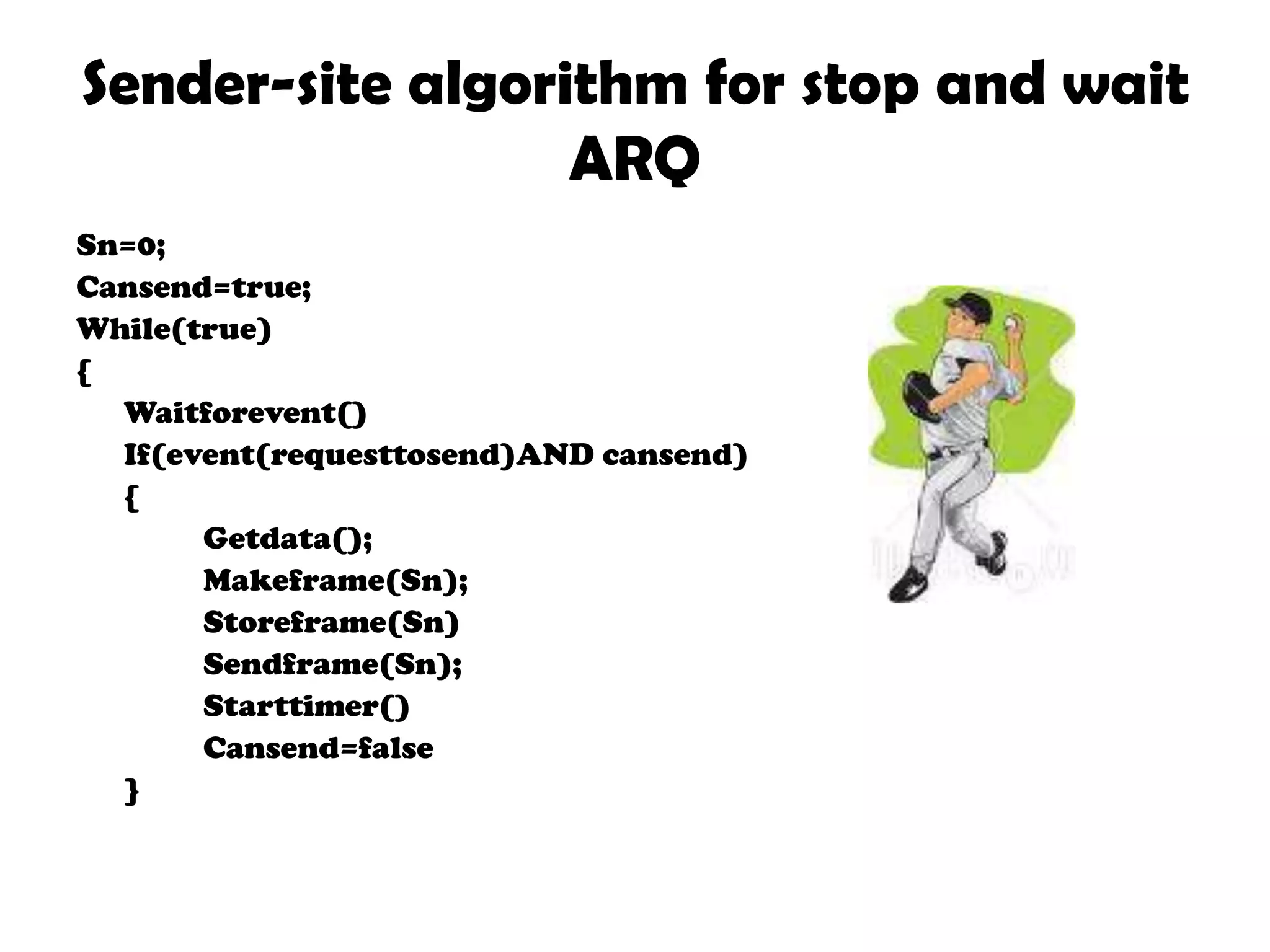
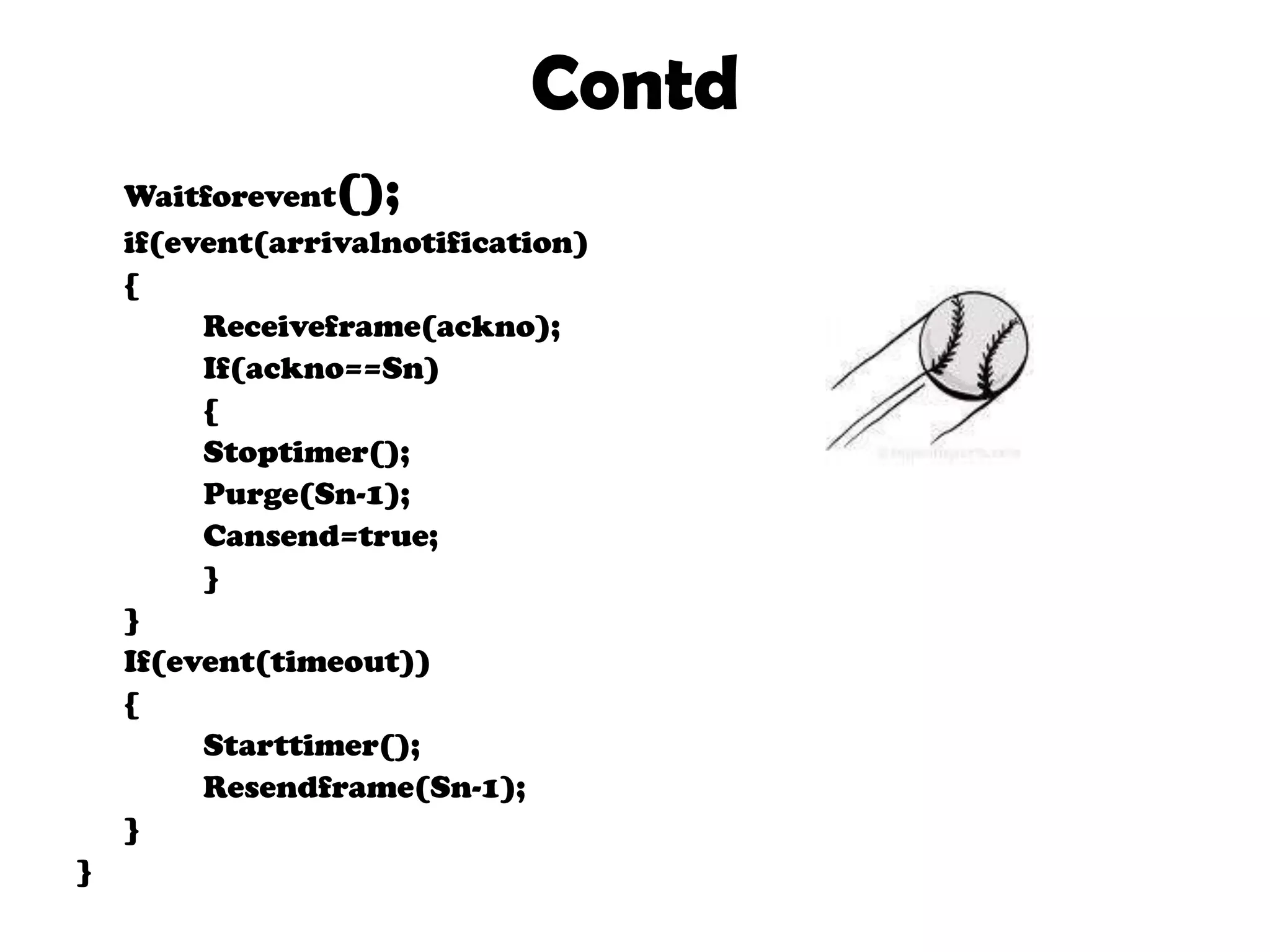
Algorithm steps for the sender in stop and wait ARQ, including frame transmission and acknowledgments.
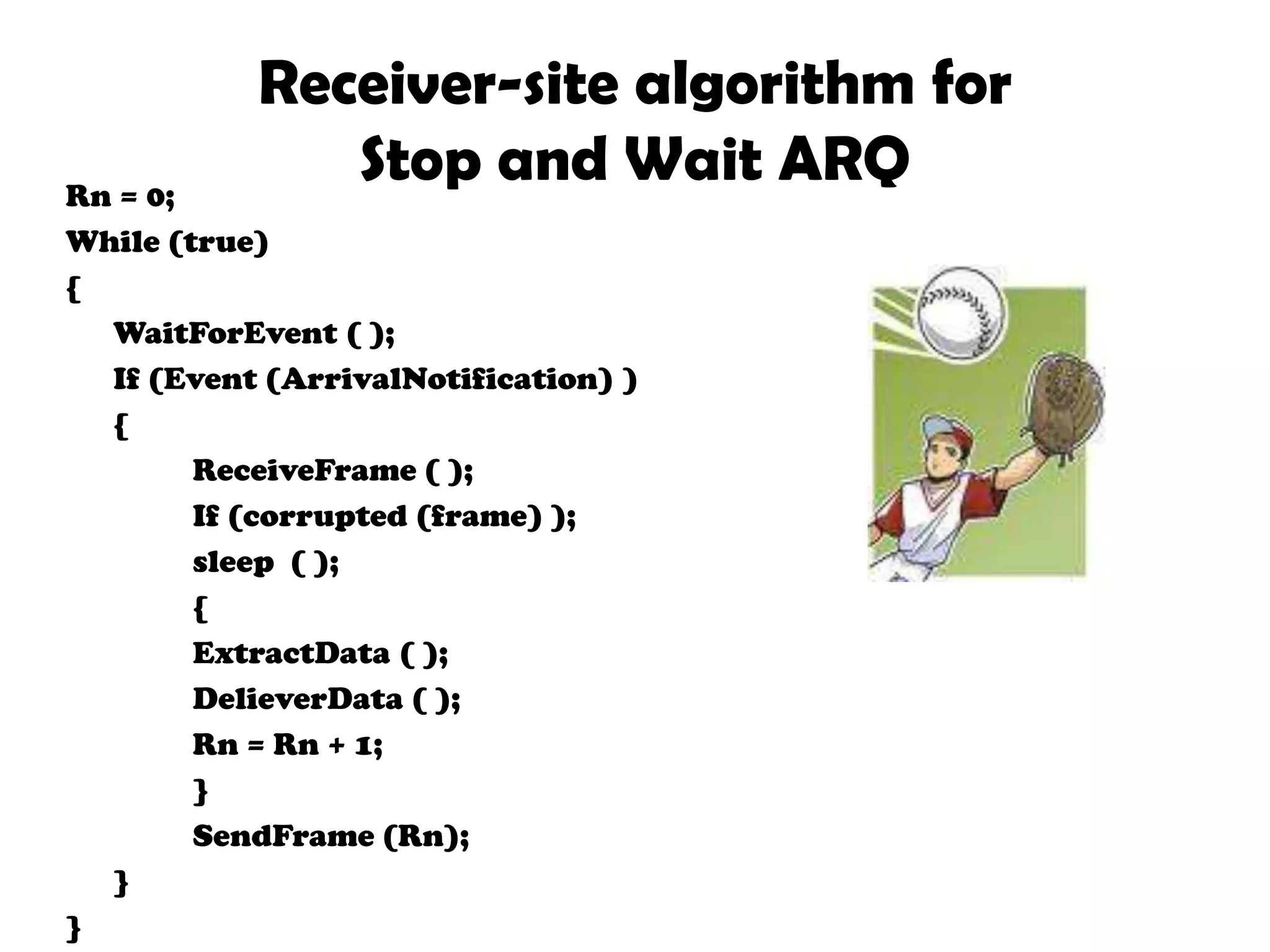
Algorithm for the receiver in stop and wait ARQ, addressing frame reception and error handling.
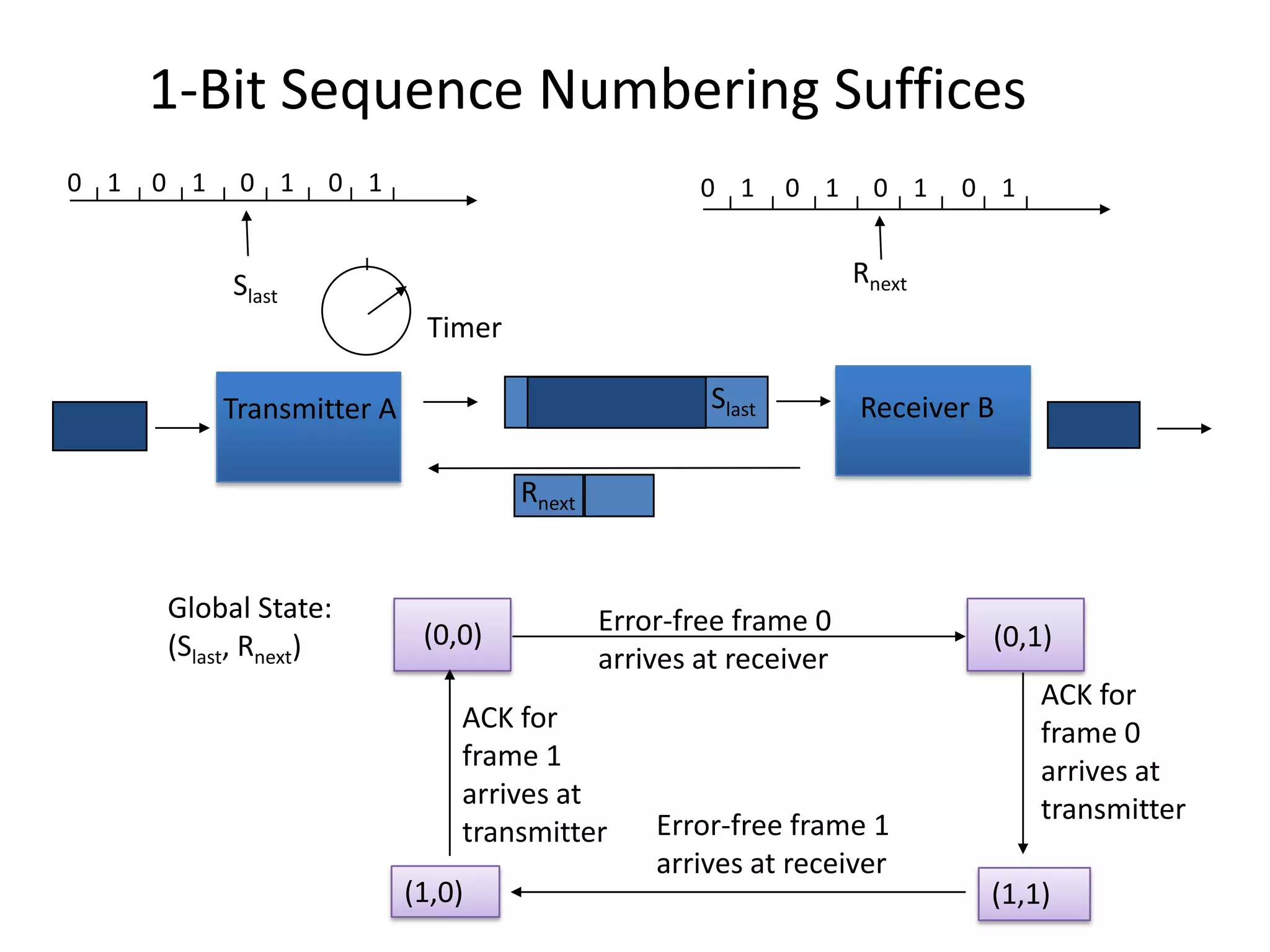
Illustration of sequence numbering system used in ARQ for tracking frames.
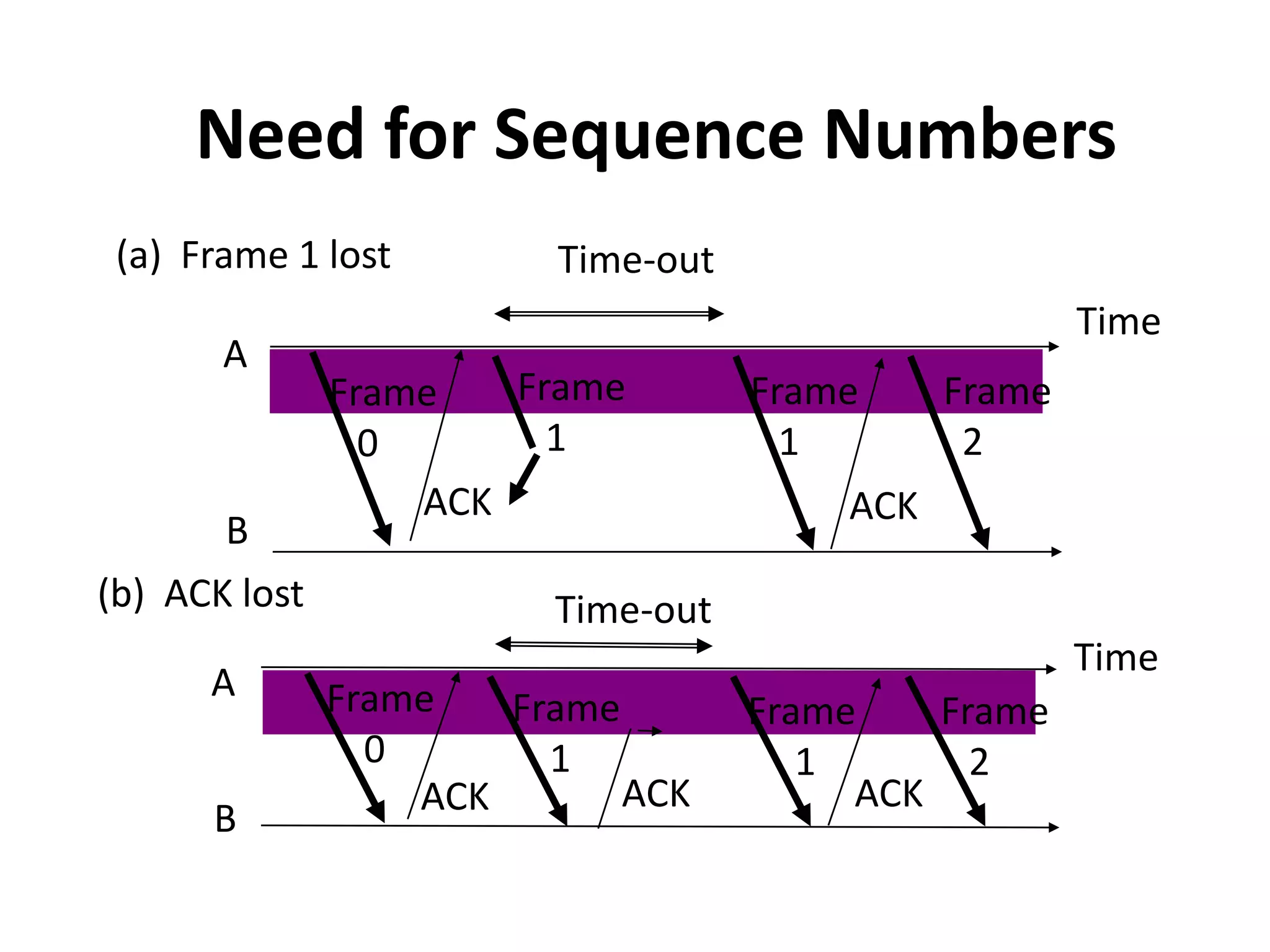
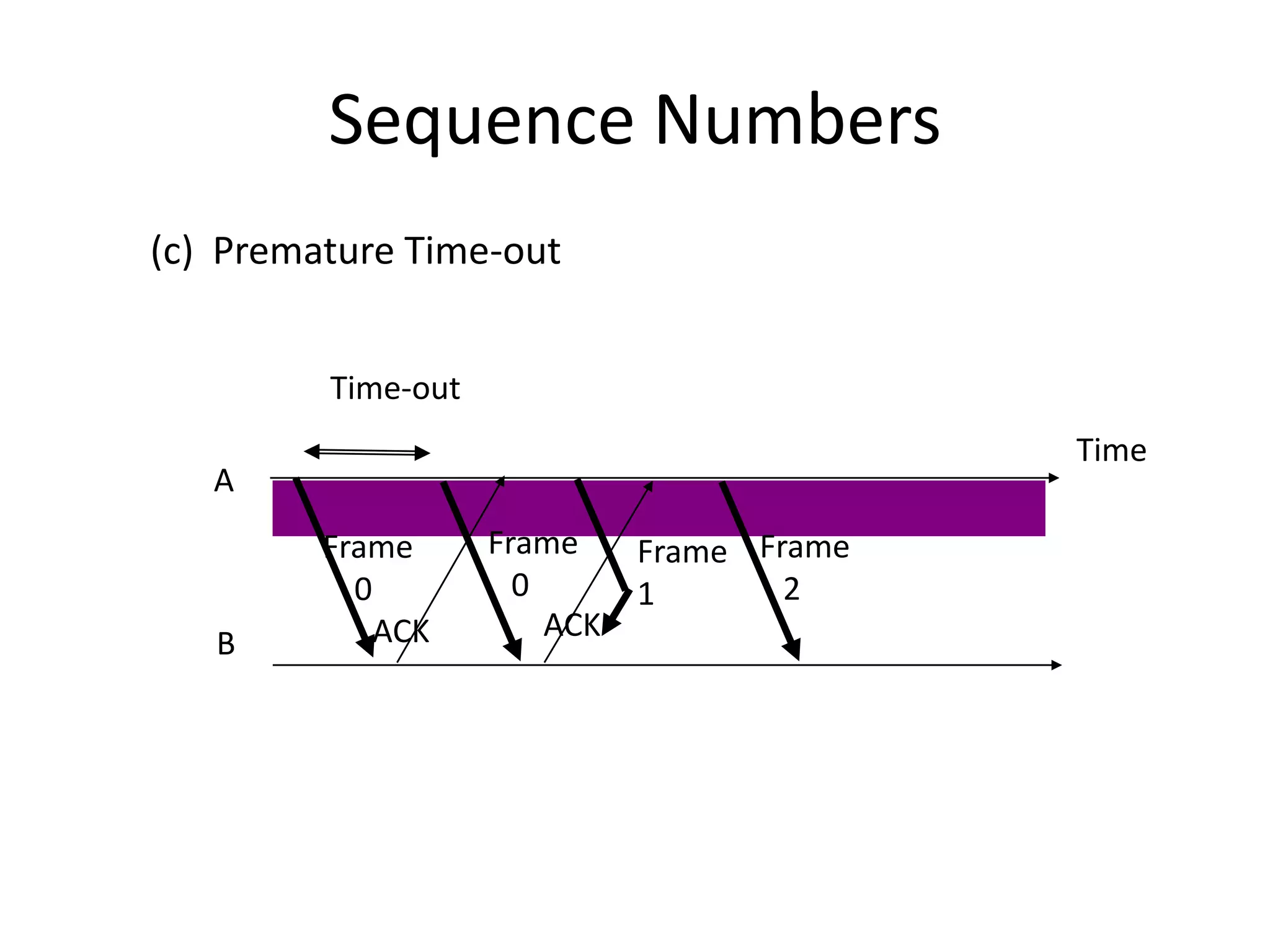
Situations illustrating the necessity of sequence numbers in managing frame acknowledgments.
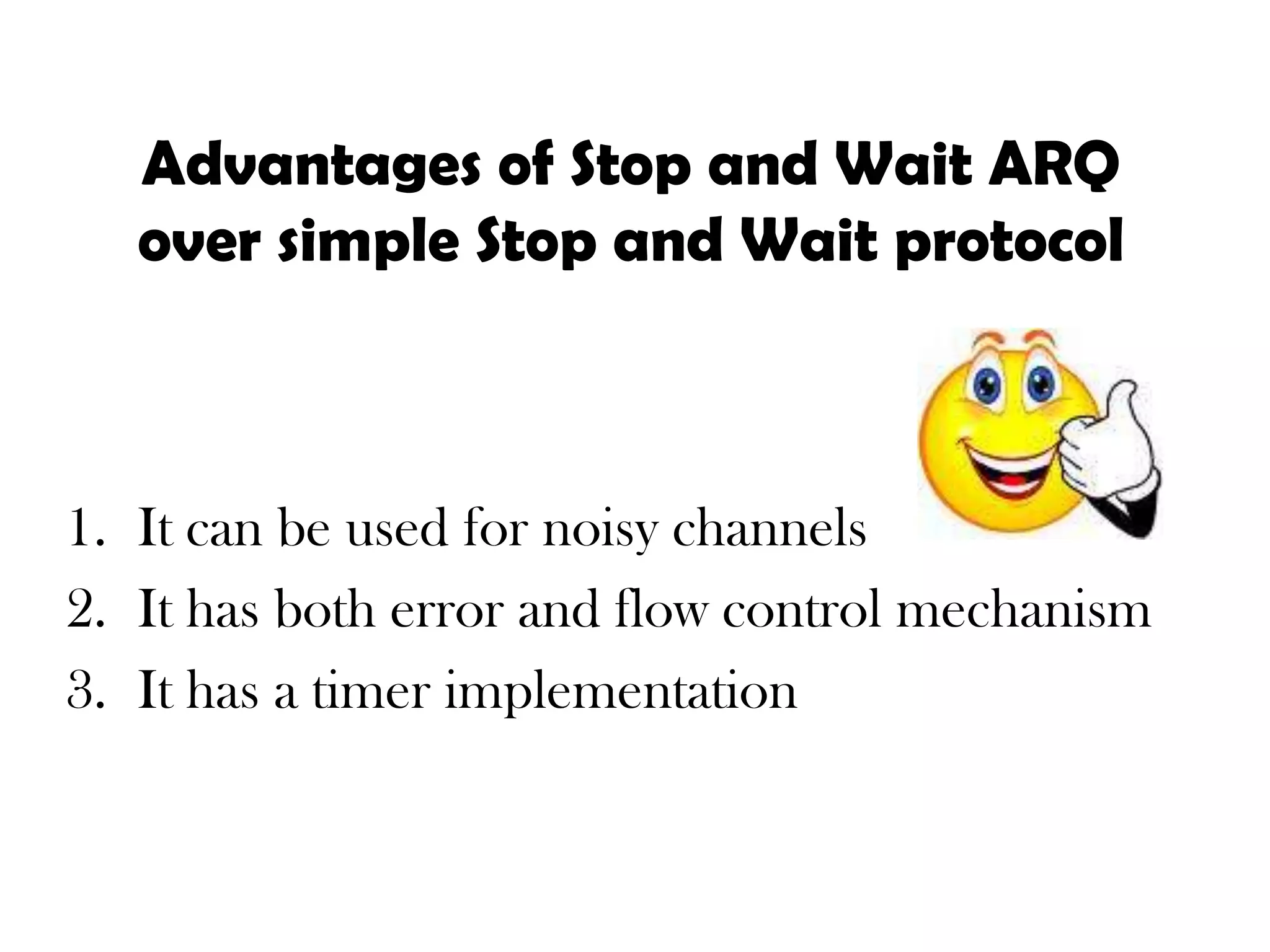
Advantages such as error control capabilities and applicability to noisy channels.
Disadvantages including low efficiency and limitations on frame transmission.
Practical applications of the Stop and Wait ARQ method in various protocols.
Final remarks and gratitude towards the audience.


