Dr H.D. Palekar  (M.S.) Associate Professor Dept of Surgery Medical College Bhavnagar Sterilization By
OUT LINE Definitions History Classification Commonly Used Disinfectants Sterilization-methods of choice O.T. Protocols Management of spills Message
Definitions:- Sterilization :-   The complete destruction or removal of all viable microorganisms which includes spores and viruses from….  instruments & equipments surfaces medium
Definitions:- A process used to reduce the number of viable microorganisms on a object or surface but may not necessarily inactivate some viruses and bacterial spores (rarely destroy all microorganisms or spores) should only be used on heat sensitive items of equipments (e.g. endoscope) disinfectants or germicide is a chemical agent . Properties:- bactericidal or bacteriostatic sporicidal viricides fungicides Disinfection:-
Asepsis :- A technique of preventing excess of organisms into the patient’s uninfected tissues. Antisepsis :- The term indicates the prevention of infection usually by inhibiting the growth of bacteria in wound or tissues. Antiseptic :- A chemical disinfectant (usually bacteriostatic) that can be safely applied to the skin or mucous membrane. (Living tissue). Definitions:-
Definitions:- Tyndallisation:-   A steaming of a solution at 100’ C for 30 min. every 24 hrs for three consecutive days to kill the spores. Egg content- L J media Serum Sugar containing media
Pasteurization :- Achieved by heating at 72’C for 20 to 30 sec. (or 63’ C for 30 min ) at below atmospheric pressure (not destroy spores and hepatitis virus) Cleaning (detergent effect) :- A process which physically remove contamination but does not necessarily destroy microorganisms. Definitions:-
HISTORY :-  Disease and death was ascribed by ancient humans to divine wrath and other supernatural forces.
VARO AND COLLUMELLA  :-   In 1st century BC postulated that disease was caused by invisible beings (animalia -minuta) inhaled or ingested. FRANCOSTORIUM OF VERONA   (1546)  :-  Contagium vivum as a possible cause of infectious disease. KIRCHER   (1659)  :-  Reported finding minute worms in a blood of plague victim. VONPLENCIZ   (1762)  :-  Each disease caused by separate agent. HISTORY :-
ANTONY VAN LEEUWENHOCK   (1683)  [MICROSCOPE] :-  Made accurate description at various types of bacteria and communated them to royal society of London. he called and acknowledged them as world of little animalcules. NEEDHAM  (IRISH PRIEST)  (1745-49)  :-  In 1745 published experiments purporting spontaneous generation (abiogenesis) of microorganisms in putrescible fluid. HISTORY :-
HISTORY :- SPALLANZANI   (1765-76)   Italian Abbot:-   Opposed the views. Pasteur provided conclusively that all forms of life even microbes arouse only from their like and not de novo.
DAVAINE & POLLENDER (1850) :-    Observed anthrax bacilli in blood of  animal dying by disease. HISTORY :- AUGUSTINO  BASSI   (1835)  :-   Muscardin disease of silk worm was  caused by a fungus.
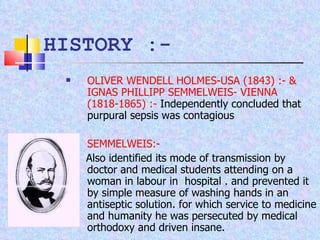
HISTORY :- OLIVER WENDELL HOLMES-USA (1843) :- & IGNAS PHILLIPP SEMMELWEIS- VIENNA (1818-1865) :-  Independently concluded that purpural sepsis was contagious  SEMMELWEIS:- Also identified its mode of transmission by doctor and medical students attending on a woman in labour in  hospital . and prevented it by simple measure of washing hands in an antiseptic solution. for which service to medicine and humanity he was persecuted by medical orthodoxy and driven insane.
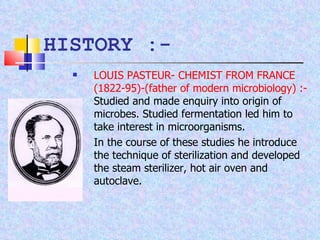
HISTORY :- LOUIS PASTEUR- CHEMIST FROM FRANCE (1822-95)-(father of modern microbiology) :-  Studied and made enquiry into origin of microbes. Studied fermentation led him to take interest in microorganisms. In the course of these studies he introduce the technique of sterilization and developed the steam sterilizer, hot air oven and autoclave.
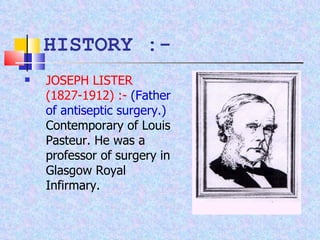
HISTORY :- JOSEPH LISTER (1827-1912) :-   (Father of antiseptic surgery.)  Contemporary of Louis Pasteur. He was a professor of surgery in Glasgow Royal Infirmary.
@  Immediate application of Pasteur’s work was the introduction of antiseptic technique in surgery by Lister effecting pronounced drop in mortality and morbidity due to surgical sepsis. @ Lister’s antiseptic surgery involving the use of carbolic acid was cumbersome and hazardous but was a milestone in evolution of surgical practice from the era of laudable pus to modern antiseptic surgery. @He utilized phenol as much as possible to abolish microorganisms from the walls of OT- instruments-dressing materials by impregnating in phenol.  HISTORY :-
HISTORY :- @ He established the guiding principle of antisepsis for good surgical practice upon which the present day specialist depend. For his this work he is known as  FATHER OF ANTISEPTIC SURGERY.
No doubt pasteur was aware of Lister’s work when he said- “ if I had a honour of being a surgeon, since I am convinced of a dangerous condition caused by the germs or microbes which are to be found every where especially in hospitals, not I would used only instruments in a perfect state of cleanliness but also having clean my hands with the greatest of the care - I would flame them rapidly……..” It is fortunate that it is not necessary in today's hospitals routine to flame the hands to prevent the contamination. HISTORY :-
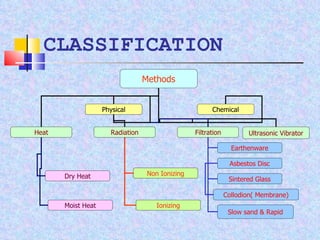
CLASSIFICATION Methods Physical Chemical Heat Radiation Filtration Ultrasonic Vibrator Dry Heat Moist Heat Non Ionizing Ionizing Earthenware Asbestos Disc Sintered Glass Collodion( Membrane) Slow sand & Rapid
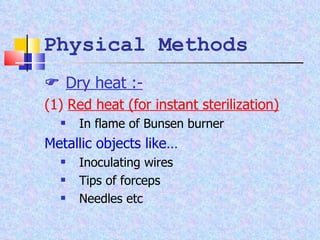
Physical Methods    Dry heat :- (1)  Red heat (for instant sterilization) In flame of Bunsen burner Metallic objects like… Inoculating wires Tips of forceps Needles etc
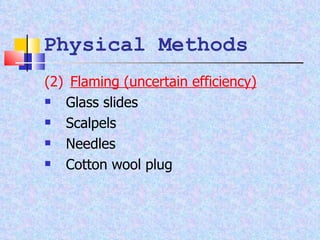
(2)   Flaming (uncertain efficiency) Glass slides Scalpels Needles Cotton wool plug Physical Methods
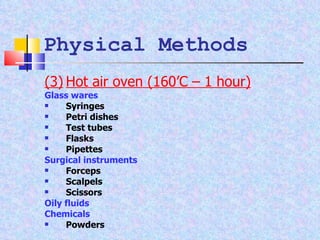
(3) Hot air oven (160’C – 1 hour) Glass wares Syringes Petri dishes Test tubes Flasks Pipettes Surgical instruments Forceps Scalpels Scissors Oily fluids Chemicals Powders Physical Methods
Articles should be dry  Should not be overheated Keep adequate space After disconnection allowed to cool for  1-2 hrs. Rubber goods, volatile substances should not put….. Physical Methods Precautions:-
(4) Incineration Destruction of infective materials  Solid dressings  Beddings  Sputum & stool  and carcasses  Physical Methods
   Moist Heat :- a)   At a temperature below 100’C   Serum or body fluids – 56’C – 1 hr Bacterial vaccines – 60 ‘C – 1 hr Pasteurization of milk -72’C – 30 sec b) At a temperature  100’C – 10 to 30 min –Boiling (inadequate sterilization) Syringes Injection needle Surgical instruments except scissors, knives & surface needles   Physical Methods
(c) Autoclave A sterilizer with steam under pressure The principle is based on the fact that with increasing the pressure, the boiling point of the water is increased. (temp is directly related to pressure) e.g. 134’C  (30 lb / in2)  3-5 min 121’C (15 lb / in2) 15 min 115’C  (10 lb /in2)  30 min 105.5’C  (5 lb /in2) 45-60 min Physical Methods At a Temperature Above 100’C
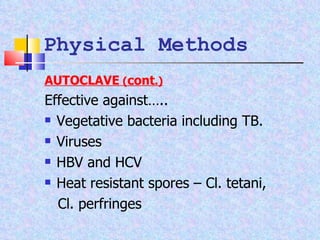
AUTOCLAVE  ( cont .) Effective against….. Vegetative bacteria including TB. Viruses  HBV and HCV  Heat resistant spores – Cl. tetani,  Cl. perfringes Physical Methods
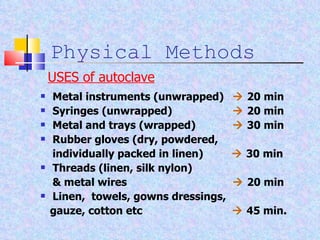
Metal instruments (unwrapped)    20 min Syringes (unwrapped)    20 min Metal and trays (wrapped)    30 min Rubber gloves (dry, powdered,  individually packed in linen)    30 min Threads (linen, silk nylon)  & metal wires    20 min Linen,  towels, gowns dressings,  gauze, cotton etc       45 min. Physical Methods USES of autoclave
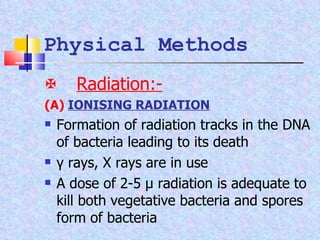
 Radiation:- (A)   IONISING RADIATION Formation of radiation tracks in the DNA of bacteria leading to its death γ rays, X rays are in use  A dose of 2-5 μ radiation is adequate to kill both vegetative bacteria and spores form of bacteria Physical Methods
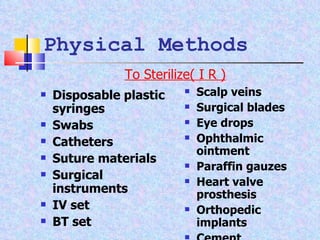
Disposable plastic syringes Swabs Catheters Suture materials Surgical instruments IV set BT set Scalp veins Surgical blades Eye drops Ophthalmic ointment Paraffin gauzes Heart valve prosthesis Orthopedic implants Cement Physical Methods To Sterilize( I R )
(B)   Non Ionizing Radiation  Infra red    Ultra Violet    Sunrays   Denaturation of bacterial protein  (Damage to DNA so inhibition of DNA replication) Physical Methods
Non I R Contd.    Infrared:-   Rapid Mass sterilization of  syringes    Ultraviolet:-   Disinfection of     Operation Rooms    Wards    Entry Ways Physical Methods
Chemical Methods (1)  Acids –   Inorganic – Boric Acid Organic - Benzoic Acid   Salicylic Acid (2)  Alkalies- Na & K  Hydroxides
Chemical Methods (3) Alcohols- Ethyl Alcohols  70% Isopropyl Alcohols 70 % Methyl Alcohols 70 % (4) Aldehyde- Formaldehyde 4% Gluteraldehyde 2%
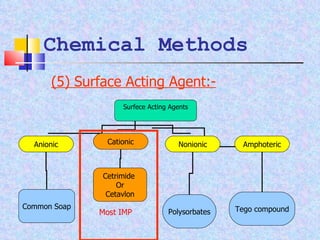
Chemical Methods (5) Surface Acting Agent:- Most IMP Surfece Acting Agents Anionic Cationic Nonionic Amphoteric Common Soap Cetrimide  Or Cetavlon Polysorbates Tego compound
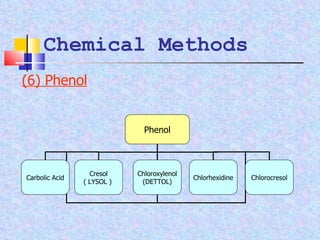
Chemical Methods (6) Phenol Phenol Carbolic Acid Cresol ( LYSOL )  Chloroxylenol (DETTOL) Chlorhexidine Chlorocresol
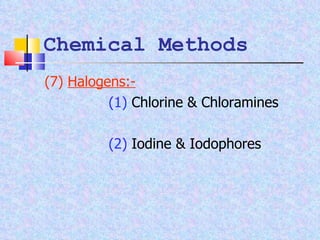
Chemical Methods (7)  Halogens:- (1)  Chlorine & Chloramines (2)  Iodine & Iodophores
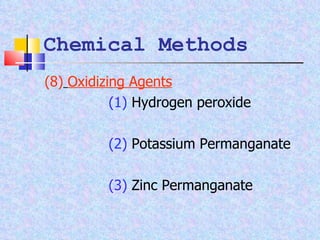
Chemical Methods (8)   Oxidizing Agents (1)  Hydrogen peroxide (2)  Potassium Permanganate (3)  Zinc Permanganate
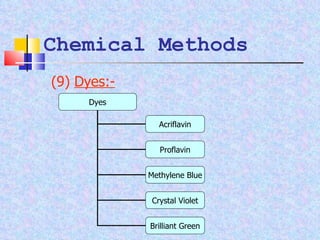
Chemical Methods (9)  Dyes:- Dyes Acriflavin Proflavin Methylene Blue Crystal Violet Brilliant Green
Chemical Methods (10)  Heavy Metals - Silver Nitrate - Mercurial Compounds (11)  Gases:- - Ethylene Oxide (ETO) - Formaldehyde - Beta Propriolactone
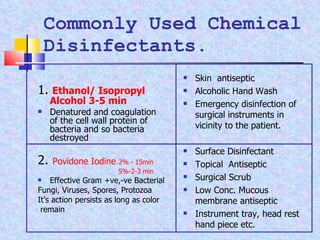
Commonly Used Chemical Disinfectants. 1.  Ethanol/ Isopropyl Alcohol 3-5 min Denatured and coagulation of the cell wall protein of bacteria and so bacteria destroyed 2.  Povidone Iodine  2% - 15min   5%-2-3 min Effective Gram +ve,-ve Bacterial Fungi, Viruses, Spores, Protozoa It’s action persists as long as color remain Skin  antiseptic Alcoholic Hand Wash Emergency disinfection of surgical instruments in vicinity to the patient. Surface Disinfectant Topical  Antiseptic Surgical Scrub Low Conc. Mucous membrane antiseptic Instrument tray, head rest hand piece etc.
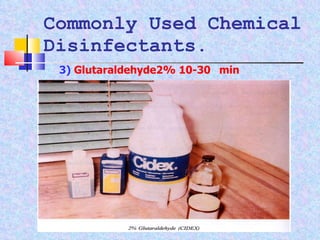
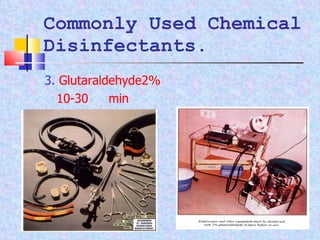
Commonly Used Chemical Disinfectants. 3)  Glutaraldehyde2% 10-30  min
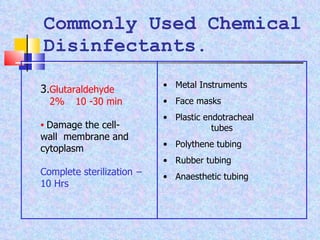
Commonly Used Chemical Disinfectants. 3 . Glutaraldehyde  2%   10 -30 min Damage the cell-  wall  membrane and  cytoplasm Complete sterilization  – 10 Hrs Metal Instruments Face masks Plastic endotracheal  tubes Polythene tubing Rubber tubing Anaesthetic tubing
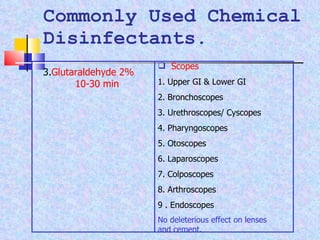
Commonly Used Chemical Disinfectants. 3. Glutaraldehyde 2%  10-30 min Scopes 1. Upper GI & Lower GI 2. Bronchoscopes  3. Urethroscopes/ Cyscopes 4. Pharyngoscopes 5. Otoscopes 6. Laparoscopes 7. Colposcopes 8. Arthroscopes 9 . Endoscopes No deleterious effect on lenses and cement .
Commonly Used Chemical Disinfectants. 3.  Glutaraldehyde2%  10-30  min
Commonly Used Chemical Disinfectants. 3.(A)  ..  Glutaraldehyde 2.4%  ( The new generation Cidex Activated GTA) Providing superior rate of biocidal action against all microbes including M-tuberculosis
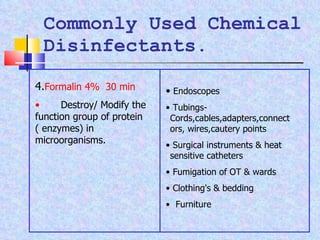
Commonly Used Chemical Disinfectants. 4. Formalin 4%  30 min Destroy/ Modify the function group of protein ( enzymes) in microorganisms. Endoscopes Tubings-  Cords,cables,adapters,connectors, wires,cautery points Surgical instruments & heat  sensitive catheters Fumigation of OT & wards  Clothing's & bedding  Furniture
Commonly Used Chemical Disinfectants. 5 .  H 2 O 2 30 min Destroy/ Modify the  function group of protein( enzymes)  in microorganisms. It is not antiseptic but  cleansing agent Destroy anaerobic organisms
Commonly Used Chemical Disinfectants. 6 .  Savlon Cetrimide Chlorhexidine Isopropyl Alcohol Reduces surface tension &  damage  cell wall membrane.  ( of microorganism) Detergent-Disinfectant- Antiseptic Cleansing & Disinfection of surgical Equipments. Storage of previously sterilized Instruments Disinfection & Prolong Storage of Thermometer & Cheatle Forceps
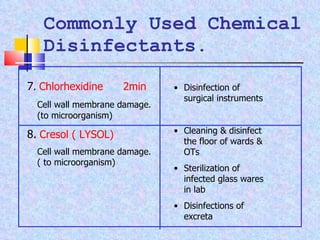
Commonly Used Chemical Disinfectants. 7 .  Chlorhexidine   2min Cell wall membrane damage. (to microorganism) 8.   Cresol ( LYSOL) Cell wall membrane damage. ( to microorganism) Disinfection of surgical instruments Cleaning & disinfect the floor of wards & OTs Sterilization of infected glass wares in lab Disinfections of excreta
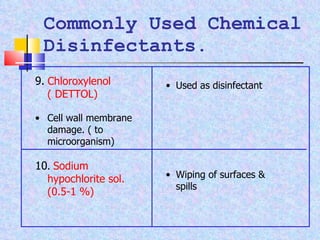
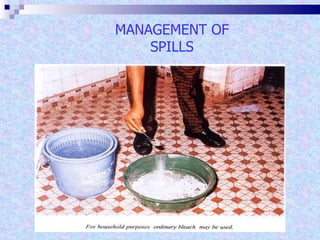
Commonly Used Chemical Disinfectants. 9.   Chloroxylenol  ( DETTOL) Cell wall membrane damage. ( to microorganism) 10 .  Sodium hypochlorite sol. (0.5-1 %) Used as disinfectant Wiping of surfaces &  spills
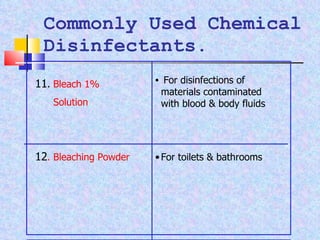
Commonly Used Chemical Disinfectants. 11 .  Bleach 1%  Solution 12 . Bleaching Powder For disinfections of materials contaminated with blood & body fluids For toilets & bathrooms
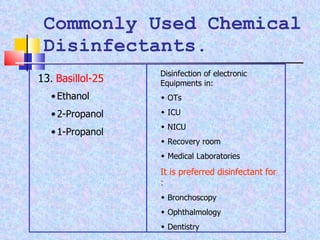
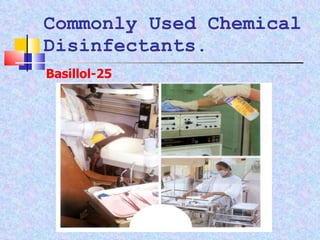
Commonly Used Chemical Disinfectants. 13 .  Basillol-25 Ethanol 2-Propanol 1-Propanol Disinfection of electronic Equipments in:    OTs    ICU    NICU    Recovery room    Medical Laboratories It is preferred disinfectant for :    Bronchoscopy    Ophthalmology    Dentistry
Commonly Used Chemical Disinfectants. Basillol-25
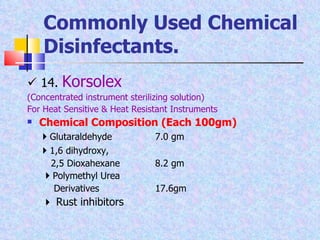
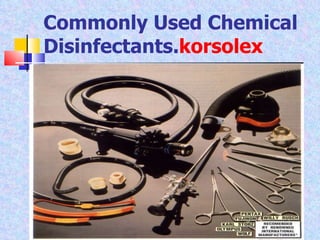
   14.  Korsolex (Concentrated instrument sterilizing solution) For Heat Sensitive & Heat Resistant Instruments Chemical Composition (Each 100gm)  Glutaraldehyde  7.0 gm  1,6 dihydroxy,   2,5 Dioxahexane 8.2 gm    Polymethyl Urea   Derivatives 17.6gm      Rust inhibitors Commonly Used Chemical Disinfectants.
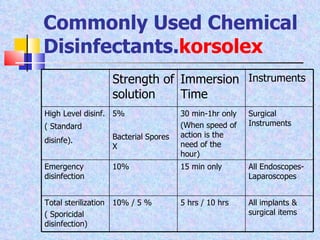
Commonly Used Chemical Disinfectants. korsolex Strength of solution Immersion Time Instruments High Level disinf. ( Standard disinfe).   5% Bacterial Spores X 30 min-1hr only (When speed of action is the need of the hour) Surgical Instruments Emergency disinfection 10% 15 min only All Endoscopes-Laparoscopes Total sterilization ( Sporicidal disinfection) 10% / 5 % 5 hrs / 10 hrs All implants & surgical items
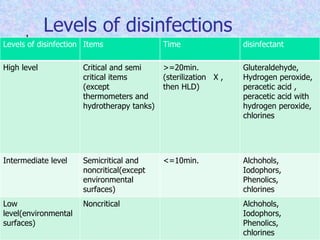
Levels of disinfection 1)High level A process that eliminates all microorganisms except large populations of bacterial endospores (some critical and semicritical items ) 2) Intermediate level inactivates vegetative bacteria including mycobacteria most viruses and fungi(some semicritical items)
Levels of disinfections 3) Low level Kills most vegetative bacteria and some viruses and fungi but not tubercle bacilli or bacterial spores(non critical items)
Levels of disinfections CRITICAL ITEMS Entovascular or sterile tissues or have blood flowing through them 1.Surgical instruments: implants , needles and catheters(vasculars and urinary) 2. Laparoscopes and arthroscopes 3. Endoscopy accessories(bx forceps, cytology brushes) 4. Some dental instruments ( scaler burs, forceps and scalpels)
Levels of disinfections SEMICRITICAL ITEMS contact with mucous membrane or  nonintact skin 1.G.I. endoscope  2. Laryngoscope 3. Broncoscope   4. E.T. tubes 5. respiratory therapy and anesthesia equipements
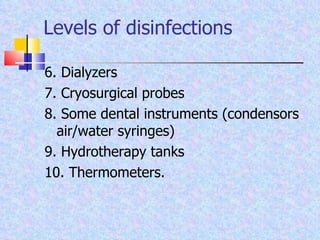
Levels of disinfections 6. Dialyzers 7. Cryosurgical probes 8. Some dental instruments (condensors air/water syringes) 9. Hydrotherapy tanks 10. Thermometers.
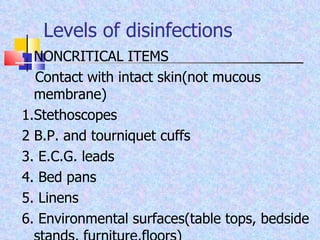
Levels of disinfections NONCRITICAL ITEMS Contact with intact skin(not mucous membrane) 1.Stethoscopes 2 B.P. and tourniquet cuffs 3. E.C.G. leads 4. Bed pans 5. Linens 6. Environmental surfaces(table tops, bedside stands, furniture,floors)
Levels of disinfections Levels of disinfection Items Time  disinfectant High level Critical and semi critical items (except thermometers and hydrotherapy tanks) >=20min. (sterilization  X , then HLD) Gluteraldehyde, Hydrogen peroxide, peracetic acid , peracetic acid with hydrogen peroxide, chlorines Intermediate level Semicritical and noncritical(except environmental surfaces) <=10min. Alchohols, Iodophors, Phenolics, chlorines Low level(environmental surfaces) Noncritical  Alchohols, Iodophors, Phenolics, chlorines
Commonly Used Chemical Disinfectants. korsolex
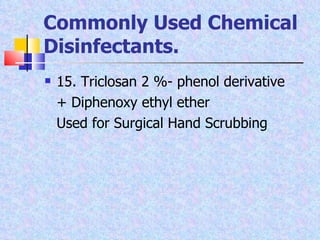
15. Triclosan 2 %- phenol derivative + Diphenoxy ethyl ether Used for Surgical Hand Scrubbing  Commonly Used Chemical Disinfectants.
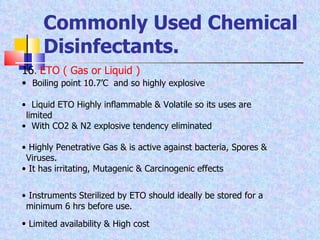
Commonly Used Chemical Disinfectants. 16 .  ETO ( Gas or Liquid )  Boiling point 10.7’C  and so highly explosive Liquid ETO Highly inflammable & Volatile so its uses are  limited With CO2 & N2 explosive tendency eliminated Highly Penetrative Gas & is active against bacteria, Spores &  Viruses. It has irritating, Mutagenic & Carcinogenic effects Instruments Sterilized by ETO should ideally be stored for a  minimum 6 hrs before use. Limited availability & High cost
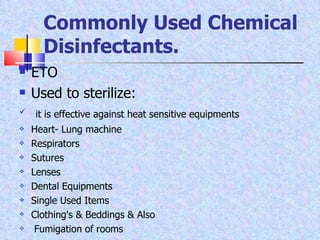
ETO Used to sterilize:  it is effective against heat sensitive equipments Heart- Lung machine Respirators Sutures Lenses Dental Equipments Single Used Items Clothing's & Beddings & Also  Fumigation of rooms Commonly Used Chemical Disinfectants.
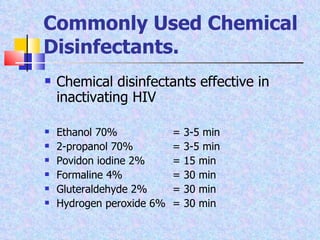
Commonly Used Chemical Disinfectants. Chemical disinfectants effective in inactivating HIV Ethanol 70% = 3-5 min 2-propanol 70%  = 3-5 min Povidon iodine 2% = 15 min Formaline 4% = 30 min Gluteraldehyde 2% = 30 min Hydrogen peroxide 6% = 30 min
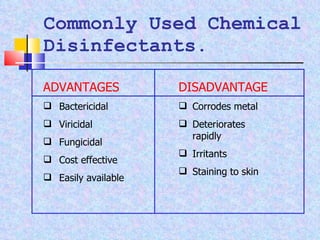
Commonly Used Chemical Disinfectants. ADVANTAGES Bactericidal Viricidal Fungicidal Cost effective Easily available DISADVANTAGE Corrodes metal Deteriorates rapidly Irritants Staining to skin
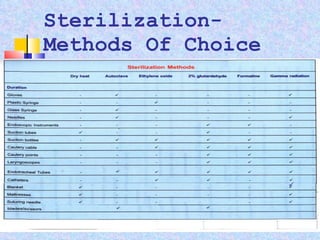
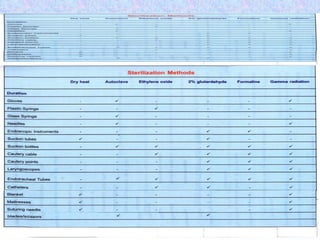
Sterilization- Methods Of Choice 
 
 
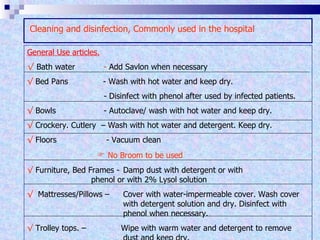
Cleaning and disinfection, Commonly used in the hospital General Use articles. √   Bath water   -  Add Savlon when necessary √   Bed Pans  - Wash with hot water and keep dry.   - Disinfect with phenol after used by infected patients. √   Bowls   - Autoclave/ wash with hot water and keep dry. √   Crockery. Cutlery  – Wash with hot water and detergent. Keep dry. √   Floors   - Vacuum clean      No Broom to be used √   Furniture, Bed Frames -   Damp dust with detergent or with    phenol or with 2% Lysol solution √   Mattresses/Pillows –  Cover with water-impermeable cover. Wash cover  with detergent solution and dry. Disinfect with  phenol when necessary. √   Trolley tops.  –  Wipe with warm water and detergent to remove  dust and keep dry.
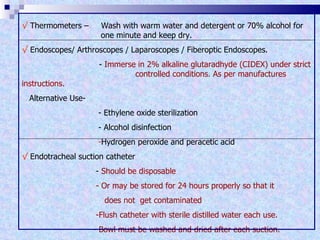
√   Thermometers  –  Wash with warm water and detergent or 70% alcohol for    one minute and keep dry. √   Endoscopes/ Arthroscopes / Laparoscopes / Fiberoptic Endoscopes.   -  Immerse in 2% alkaline glutaradhyde (CIDEX) under strict    controlled conditions. As per manufactures instructions. Alternative Use-   - Ethylene oxide sterilization   - Alcohol disinfection   - Hydrogen peroxide and peracetic acid √   Endotracheal suction catheter   -  Should be disposable   - Or may be stored for 24 hours properly so that it  does not  get contaminated   -Flush catheter with sterile distilled water each use.   - Bowl must be washed and dried after each suction.
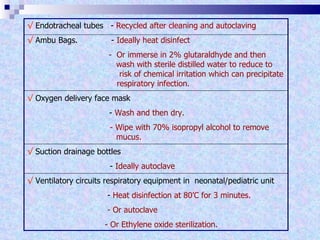
√   Endotracheal tubes   -  Recycled after cleaning and autoclaving √   Ambu Bags.   -  Ideally heat disinfect   -  Or immerse in 2% glutaraldhyde and then    wash with sterile distilled water to reduce to    risk of chemical irritation which can precipitate    respiratory infection. √   Oxygen delivery face mask   -  Wash and then dry. - Wipe with 70% isopropyl alcohol to remove    mucus. √   Suction drainage bottles -  Ideally autoclave √   Ventilatory circuits respiratory equipment in  neonatal/pediatric unit   -  Heat disinfection at 80’C for 3 minutes.  - Or autoclave - Or Ethylene oxide sterilization.
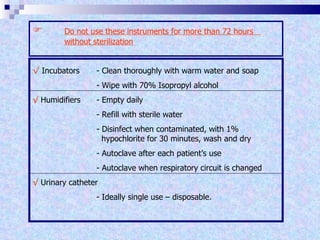
   Do not use these instruments for more than 72 hours  without sterilization √  Incubators  - Clean thoroughly with warm water and soap - Wipe with 70% Isopropyl alcohol √   Humidifiers - Empty daily - Refill with sterile water - Disinfect when contaminated, with 1%    hypochlorite for 30 minutes, wash and dry - Autoclave after each patient’s use - Autoclave when respiratory circuit is changed √   Urinary catheter - Ideally single use – disposable.
Operation Theater Protocol Preparation of patient  Preparation of surgeon Hand washing Gown Wearing Gloves OT sterilization & airflow patterns Management of spills/blood splashes
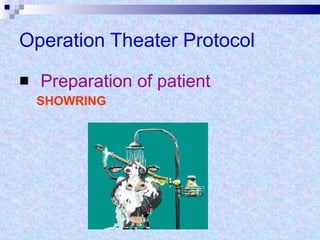
Operation Theater Protocol Preparation of patient SHOWRING
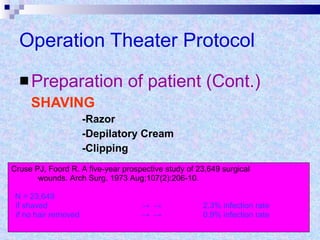
Operation Theater Protocol Preparation of patient (Cont.) SHAVING -Razor  -Depilatory Cream -Clipping Cruse PJ, Foord R. A five-year prospective study of 23,649 surgical wounds. Arch Surg. 1973 Aug;107(2):206-10. N = 23,649  if shaved    ->  ->   2.3% infection rate if no hair removed   ->  ->   0.9% infection rate
 
Operation Theater Protocol Preparation of patient (Cont.) -Preparation of patient’s skin -Drapes operative & periphery to operative area -Transport of the patient to theater in O.T.  dress
Operation Theatre Protocol Preparation   of Surgeon    SHOWRING    OT Dress -Conventional cotton theatre ware (Interstices > 80 micrometer) -Disposable non-woven fabrics (fabric 45) -Breathable membrane fabrics- Goretex
Operation Theatre Protocol Preparation of Surgeon (Cont.)    Cap    Masks -Paper masks -Cotton masks -Disposable masks – contain filter -Surgical Anti-fog masks – follow  facial contours
Operation Theatre Protocol Preparation of Surgeon (Cont.)    Eye Protection -Anti-fog goggles -Wrap around spectacles -Face shields    Foot Wear -Clean & comfortable -Anti-slip & Anti-static -Ankle length boots
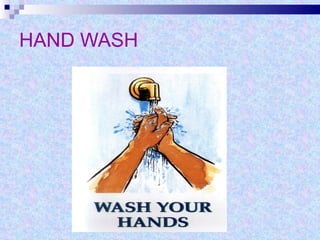
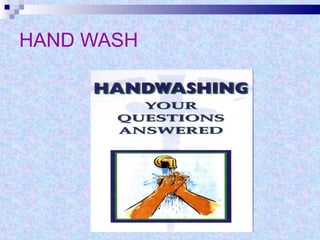
HAND WASH
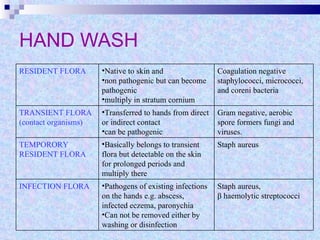
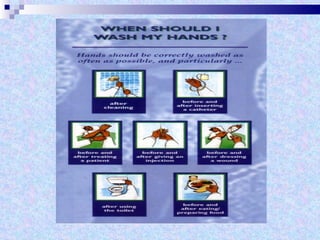
HAND WASH   RESIDENT FLORA Native to skin and  non pathogenic but can become pathogenic  multiply in stratum cornium Coagulation negative staphylococci, micrococci, and coreni bacteria TRANSIENT FLORA (contact organisms) Transferred to hands from direct or indirect contact  can be pathogenic Gram negative, aerobic spore formers fungi and viruses. TEMPORORY  RESIDENT FLORA   Basically belongs to transient flora but detectable on the skin for prolonged periods and multiply there Staph aureus INFECTION FLORA Pathogens of existing infections on the hands e.g. abscess, infected eczema, paronychia Can not be removed either by washing or disinfection Staph aureus,  β  haemolytic streptococci
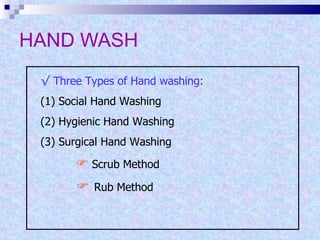
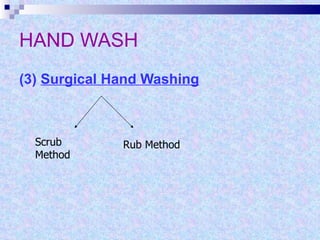
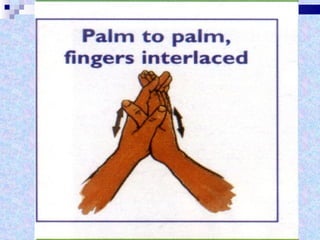
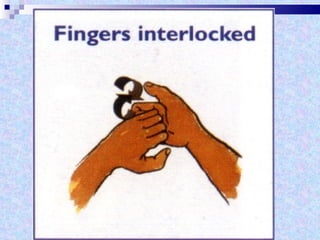
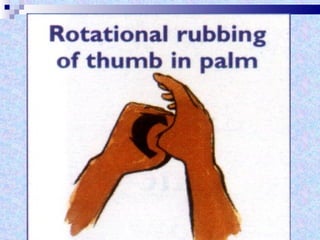
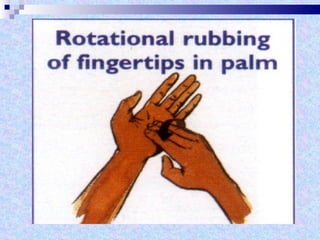
HAND WASH √  Three Types of Hand washing: (1) Social Hand Washing (2) Hygienic Hand Washing (3) Surgical Hand Washing      Scrub Method      Rub Method
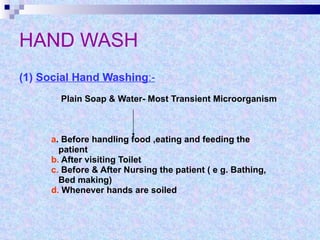
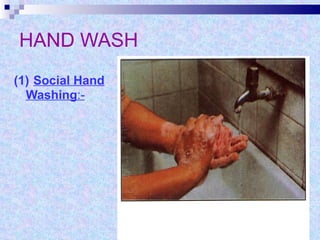
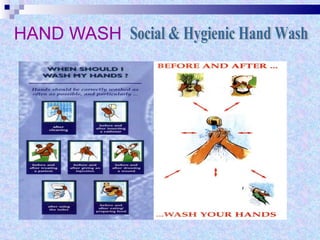
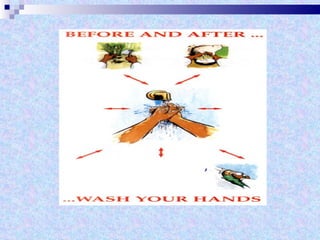
HAND WASH (1)  Social Hand Washing :-   Plain Soap & Water- Most Transient Microorganism a . Before handling food ,eating and feeding the  patient b.  After visiting Toilet c.  Before & After Nursing the patient ( e g. Bathing, Bed making)  d.  Whenever hands are soiled
HAND WASH (1)   Social Hand Washing :-
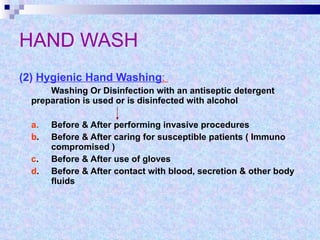
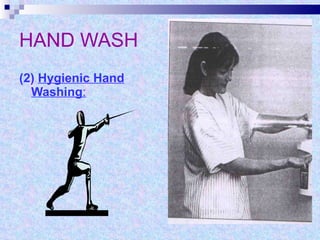
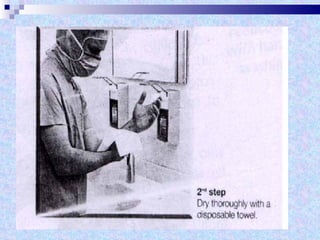
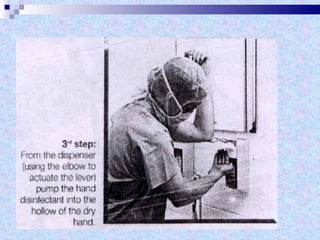
HAND WASH (2)  Hygienic Hand Washing :  Washing Or Disinfection with an antiseptic detergent preparation is used or is disinfected with alcohol  a.   Before & After performing invasive procedures  b .  Before & After caring for susceptible patients ( Immuno  compromised )  c .  Before & After use of gloves d .  Before & After contact with blood, secretion & other body  fluids
HAND WASH (2)  Hygienic Hand Washing :
HAND WASH Social & Hygienic Hand Wash
 
 
HAND WASH (3)  Surgical Hand Washing Rub Method Scrub Method
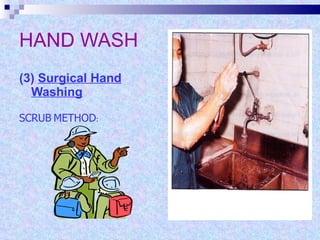
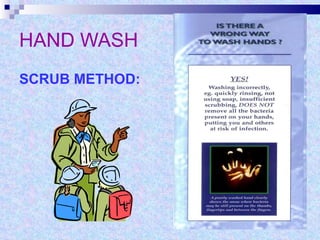
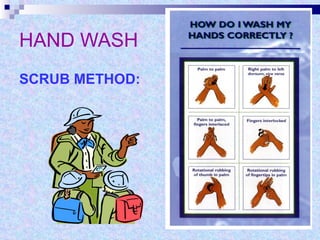
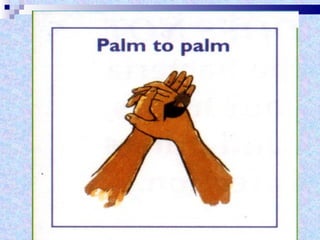
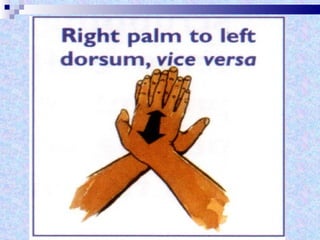
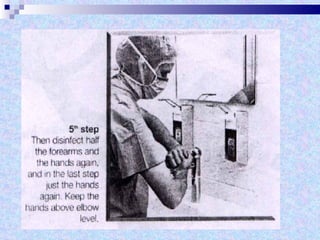
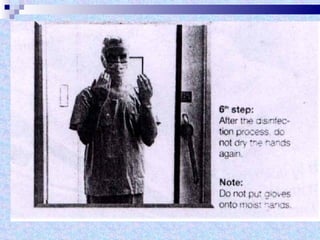
HAND WASH (3)  Surgical Hand Washing SCRUB   METHOD :
HAND WASH SCRUB METHOD:


HAND WASH (SCRUB METHOD) Use soap or mild liquid soap for washing Use only cold to lukewarm water for washing Do not wash for too long or too intensively Do not use brush
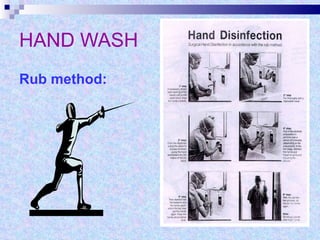
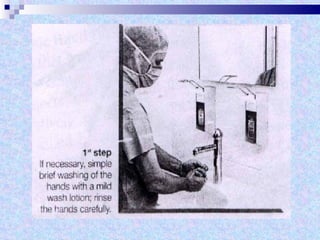
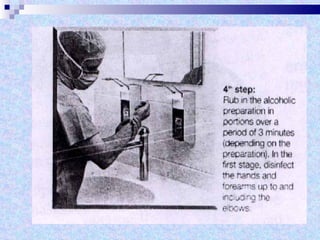
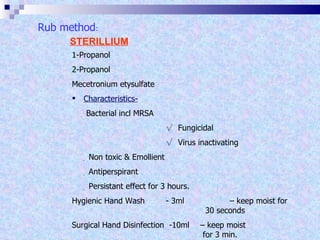
HAND WASH Rub method:


STERILLIUM 1-Propanol 2-Propanol Mecetronium etysulfate  Characteristics-    Bacterial incl MRSA √   Fungicidal √  Virus inactivating      Non toxic & Emollient      Antiperspirant      Persistant effect for 3 hours. Hygienic Hand Wash - 3ml  – keep moist for    30 seconds Surgical Hand Disinfection  -10ml  – keep moist    for 3 min. Rub method :
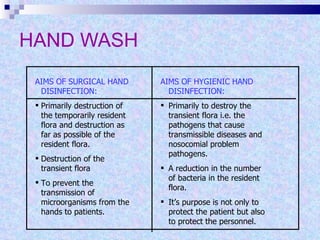
HAND WASH AIMS OF SURGICAL HAND DISINFECTION: Primarily destruction of the temporarily resident flora and destruction as far as possible of the resident flora. Destruction of the transient flora To prevent the transmission of microorganisms from the hands to patients. AIMS OF HYGIENIC HAND DISINFECTION: Primarily to destroy the transient flora i.e. the pathogens that cause transmissible diseases and nosocomial problem pathogens. A reduction in the number of bacteria in the resident flora. It’s purpose is not only to protect the patient but also to protect the personnel.
HAND WASH
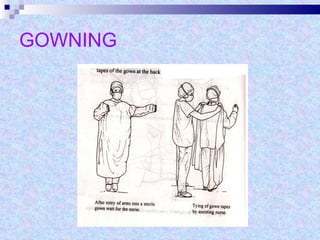
GOWNING
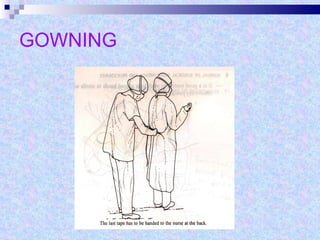
GOWNING
Operation Theatre Protocol Preparation of Surgeon GLOVES- (Latex) -To prevent transmission of blood borne viruses  (HBV,HIV) from pt. to surgeon & surgeon to pt. -To prevent transmission of micro-organisms from surgeon to pt. (20 to 30% gloves develops holes during surgery)
Operation Theatre Protocol Preparation of Surgeon (Cont.) GLOVES- (Latex) -Should be disposable  -Should be changed after 1 hour but max. can be used for 3 hours  -After degloving wash the hands  -Discard gloves if suspicious puncture
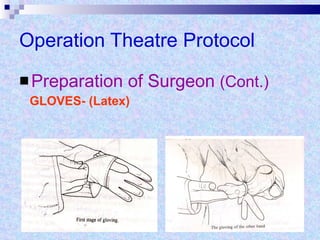
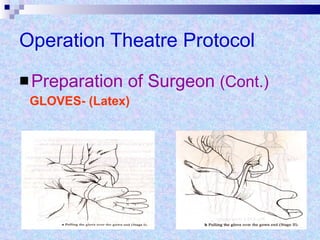
Operation Theatre Protocol Preparation of Surgeon  (Cont.) GLOVES- (Latex)
Operation Theatre Protocol OT   Discipline -OT team & OT staff -No excess activity (movements) -Designed occlusive clothings -Single dose prophylactic anti-biotic
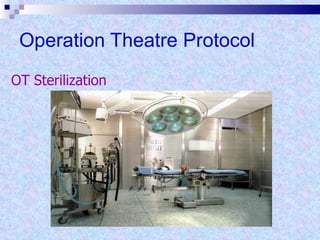
Operation Theatre Protocol OT Sterilization
Operation Theatre Protocol OT Sterilization (1)   280 ml Formalin+150 gm Potassium- permanganate   24hrs. (10’ X 10’ X 10’)
OT Sterilization   (2)  BACILLOCID SPECIAL 1,6 Dihydroxy 2-5 Dioxahexane ( Chemically bound Formaldehyde) Glutaraldehyde Benzalkonium Chloride Alkyl Urea Derivation  Sterilization with: 2%    Weekly 1%    Alternate days 0.5%   Daily  Broad Spectrum: √  Bactericidal   √  Fungicidal   √  Sporicidal   √  Tuberculocidal  Excellent Viricidal Activity: HBV ,HIV, Pollio.
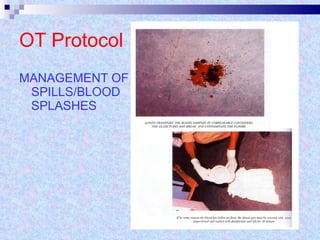
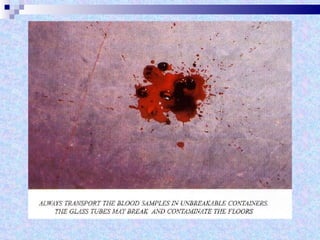
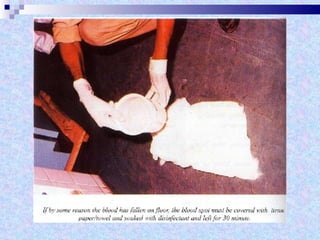
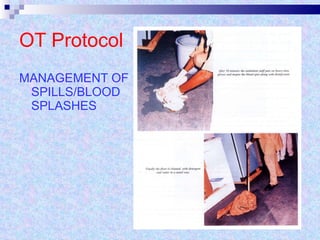
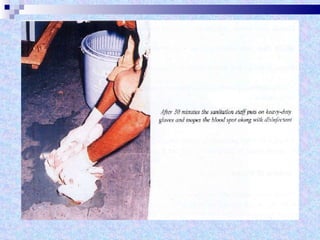
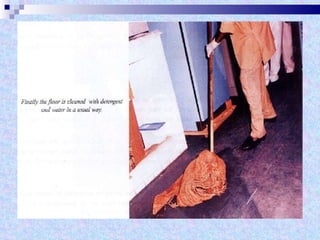
OT Protocol MANAGEMENT OF SPILLS/BLOOD SPLASHES
 
 
OT Protocol MANAGEMENT OF SPILLS/BLOOD SPLASHES
 
 
MANAGEMENT OF SPILLS


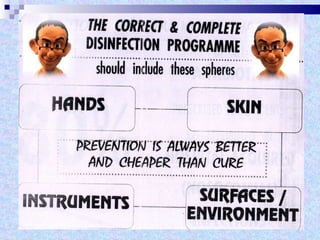
Quality Is Costly But Lack Of Quality Is even  More  Costly
Thank   You

Sterilization

  • 1.
    Dr H.D. Palekar (M.S.) Associate Professor Dept of Surgery Medical College Bhavnagar Sterilization By
  • 2.
    OUT LINE DefinitionsHistory Classification Commonly Used Disinfectants Sterilization-methods of choice O.T. Protocols Management of spills Message
  • 3.
    Definitions:- Sterilization :- The complete destruction or removal of all viable microorganisms which includes spores and viruses from…. instruments & equipments surfaces medium
  • 4.
    Definitions:- A processused to reduce the number of viable microorganisms on a object or surface but may not necessarily inactivate some viruses and bacterial spores (rarely destroy all microorganisms or spores) should only be used on heat sensitive items of equipments (e.g. endoscope) disinfectants or germicide is a chemical agent . Properties:- bactericidal or bacteriostatic sporicidal viricides fungicides Disinfection:-
  • 5.
    Asepsis :- Atechnique of preventing excess of organisms into the patient’s uninfected tissues. Antisepsis :- The term indicates the prevention of infection usually by inhibiting the growth of bacteria in wound or tissues. Antiseptic :- A chemical disinfectant (usually bacteriostatic) that can be safely applied to the skin or mucous membrane. (Living tissue). Definitions:-
  • 6.
    Definitions:- Tyndallisation:- A steaming of a solution at 100’ C for 30 min. every 24 hrs for three consecutive days to kill the spores. Egg content- L J media Serum Sugar containing media
  • 7.
    Pasteurization :- Achievedby heating at 72’C for 20 to 30 sec. (or 63’ C for 30 min ) at below atmospheric pressure (not destroy spores and hepatitis virus) Cleaning (detergent effect) :- A process which physically remove contamination but does not necessarily destroy microorganisms. Definitions:-
  • 8.
    HISTORY :- Disease and death was ascribed by ancient humans to divine wrath and other supernatural forces.
  • 9.
    VARO AND COLLUMELLA :- In 1st century BC postulated that disease was caused by invisible beings (animalia -minuta) inhaled or ingested. FRANCOSTORIUM OF VERONA (1546) :- Contagium vivum as a possible cause of infectious disease. KIRCHER (1659) :- Reported finding minute worms in a blood of plague victim. VONPLENCIZ (1762) :- Each disease caused by separate agent. HISTORY :-
  • 10.
    ANTONY VAN LEEUWENHOCK (1683) [MICROSCOPE] :- Made accurate description at various types of bacteria and communated them to royal society of London. he called and acknowledged them as world of little animalcules. NEEDHAM (IRISH PRIEST) (1745-49) :- In 1745 published experiments purporting spontaneous generation (abiogenesis) of microorganisms in putrescible fluid. HISTORY :-
  • 11.
    HISTORY :- SPALLANZANI (1765-76) Italian Abbot:- Opposed the views. Pasteur provided conclusively that all forms of life even microbes arouse only from their like and not de novo.
  • 12.
    DAVAINE & POLLENDER(1850) :-  Observed anthrax bacilli in blood of animal dying by disease. HISTORY :- AUGUSTINO BASSI (1835) :-  Muscardin disease of silk worm was caused by a fungus.
  • 13.
    HISTORY :- OLIVERWENDELL HOLMES-USA (1843) :- & IGNAS PHILLIPP SEMMELWEIS- VIENNA (1818-1865) :- Independently concluded that purpural sepsis was contagious SEMMELWEIS:- Also identified its mode of transmission by doctor and medical students attending on a woman in labour in hospital . and prevented it by simple measure of washing hands in an antiseptic solution. for which service to medicine and humanity he was persecuted by medical orthodoxy and driven insane.
  • 14.
    HISTORY :- LOUISPASTEUR- CHEMIST FROM FRANCE (1822-95)-(father of modern microbiology) :- Studied and made enquiry into origin of microbes. Studied fermentation led him to take interest in microorganisms. In the course of these studies he introduce the technique of sterilization and developed the steam sterilizer, hot air oven and autoclave.
  • 15.
    HISTORY :- JOSEPHLISTER (1827-1912) :- (Father of antiseptic surgery.) Contemporary of Louis Pasteur. He was a professor of surgery in Glasgow Royal Infirmary.
  • 16.
    @ Immediateapplication of Pasteur’s work was the introduction of antiseptic technique in surgery by Lister effecting pronounced drop in mortality and morbidity due to surgical sepsis. @ Lister’s antiseptic surgery involving the use of carbolic acid was cumbersome and hazardous but was a milestone in evolution of surgical practice from the era of laudable pus to modern antiseptic surgery. @He utilized phenol as much as possible to abolish microorganisms from the walls of OT- instruments-dressing materials by impregnating in phenol. HISTORY :-
  • 17.
    HISTORY :- @He established the guiding principle of antisepsis for good surgical practice upon which the present day specialist depend. For his this work he is known as FATHER OF ANTISEPTIC SURGERY.
  • 18.
    No doubt pasteurwas aware of Lister’s work when he said- “ if I had a honour of being a surgeon, since I am convinced of a dangerous condition caused by the germs or microbes which are to be found every where especially in hospitals, not I would used only instruments in a perfect state of cleanliness but also having clean my hands with the greatest of the care - I would flame them rapidly……..” It is fortunate that it is not necessary in today's hospitals routine to flame the hands to prevent the contamination. HISTORY :-
  • 19.
    CLASSIFICATION Methods PhysicalChemical Heat Radiation Filtration Ultrasonic Vibrator Dry Heat Moist Heat Non Ionizing Ionizing Earthenware Asbestos Disc Sintered Glass Collodion( Membrane) Slow sand & Rapid
  • 20.
    Physical Methods  Dry heat :- (1) Red heat (for instant sterilization) In flame of Bunsen burner Metallic objects like… Inoculating wires Tips of forceps Needles etc
  • 21.
    (2) Flaming (uncertain efficiency) Glass slides Scalpels Needles Cotton wool plug Physical Methods
  • 22.
    (3) Hot airoven (160’C – 1 hour) Glass wares Syringes Petri dishes Test tubes Flasks Pipettes Surgical instruments Forceps Scalpels Scissors Oily fluids Chemicals Powders Physical Methods
  • 23.
    Articles should bedry Should not be overheated Keep adequate space After disconnection allowed to cool for 1-2 hrs. Rubber goods, volatile substances should not put….. Physical Methods Precautions:-
  • 24.
    (4) Incineration Destructionof infective materials  Solid dressings  Beddings  Sputum & stool and carcasses Physical Methods
  • 25.
    Moist Heat :- a) At a temperature below 100’C Serum or body fluids – 56’C – 1 hr Bacterial vaccines – 60 ‘C – 1 hr Pasteurization of milk -72’C – 30 sec b) At a temperature 100’C – 10 to 30 min –Boiling (inadequate sterilization) Syringes Injection needle Surgical instruments except scissors, knives & surface needles Physical Methods
  • 26.
    (c) Autoclave Asterilizer with steam under pressure The principle is based on the fact that with increasing the pressure, the boiling point of the water is increased. (temp is directly related to pressure) e.g. 134’C (30 lb / in2) 3-5 min 121’C (15 lb / in2) 15 min 115’C (10 lb /in2) 30 min 105.5’C (5 lb /in2) 45-60 min Physical Methods At a Temperature Above 100’C
  • 27.
    AUTOCLAVE (cont .) Effective against….. Vegetative bacteria including TB. Viruses HBV and HCV Heat resistant spores – Cl. tetani, Cl. perfringes Physical Methods
  • 28.
    Metal instruments (unwrapped)  20 min Syringes (unwrapped)  20 min Metal and trays (wrapped)  30 min Rubber gloves (dry, powdered, individually packed in linen)  30 min Threads (linen, silk nylon) & metal wires  20 min Linen, towels, gowns dressings, gauze, cotton etc  45 min. Physical Methods USES of autoclave
  • 29.
     Radiation:- (A) IONISING RADIATION Formation of radiation tracks in the DNA of bacteria leading to its death γ rays, X rays are in use A dose of 2-5 μ radiation is adequate to kill both vegetative bacteria and spores form of bacteria Physical Methods
  • 30.
    Disposable plastic syringesSwabs Catheters Suture materials Surgical instruments IV set BT set Scalp veins Surgical blades Eye drops Ophthalmic ointment Paraffin gauzes Heart valve prosthesis Orthopedic implants Cement Physical Methods To Sterilize( I R )
  • 31.
    (B) Non Ionizing Radiation  Infra red  Ultra Violet  Sunrays Denaturation of bacterial protein (Damage to DNA so inhibition of DNA replication) Physical Methods
  • 32.
    Non I RContd.  Infrared:- Rapid Mass sterilization of syringes  Ultraviolet:- Disinfection of  Operation Rooms  Wards  Entry Ways Physical Methods
  • 33.
    Chemical Methods (1) Acids – Inorganic – Boric Acid Organic - Benzoic Acid Salicylic Acid (2) Alkalies- Na & K Hydroxides
  • 34.
    Chemical Methods (3)Alcohols- Ethyl Alcohols 70% Isopropyl Alcohols 70 % Methyl Alcohols 70 % (4) Aldehyde- Formaldehyde 4% Gluteraldehyde 2%
  • 35.
    Chemical Methods (5)Surface Acting Agent:- Most IMP Surfece Acting Agents Anionic Cationic Nonionic Amphoteric Common Soap Cetrimide Or Cetavlon Polysorbates Tego compound
  • 36.
    Chemical Methods (6)Phenol Phenol Carbolic Acid Cresol ( LYSOL ) Chloroxylenol (DETTOL) Chlorhexidine Chlorocresol
  • 37.
    Chemical Methods (7) Halogens:- (1) Chlorine & Chloramines (2) Iodine & Iodophores
  • 38.
    Chemical Methods (8) Oxidizing Agents (1) Hydrogen peroxide (2) Potassium Permanganate (3) Zinc Permanganate
  • 39.
    Chemical Methods (9) Dyes:- Dyes Acriflavin Proflavin Methylene Blue Crystal Violet Brilliant Green
  • 40.
    Chemical Methods (10) Heavy Metals - Silver Nitrate - Mercurial Compounds (11) Gases:- - Ethylene Oxide (ETO) - Formaldehyde - Beta Propriolactone
  • 41.
    Commonly Used ChemicalDisinfectants. 1. Ethanol/ Isopropyl Alcohol 3-5 min Denatured and coagulation of the cell wall protein of bacteria and so bacteria destroyed 2. Povidone Iodine 2% - 15min 5%-2-3 min Effective Gram +ve,-ve Bacterial Fungi, Viruses, Spores, Protozoa It’s action persists as long as color remain Skin antiseptic Alcoholic Hand Wash Emergency disinfection of surgical instruments in vicinity to the patient. Surface Disinfectant Topical Antiseptic Surgical Scrub Low Conc. Mucous membrane antiseptic Instrument tray, head rest hand piece etc.
  • 42.
    Commonly Used ChemicalDisinfectants. 3) Glutaraldehyde2% 10-30 min
  • 43.
    Commonly Used ChemicalDisinfectants. 3 . Glutaraldehyde 2% 10 -30 min Damage the cell- wall membrane and cytoplasm Complete sterilization – 10 Hrs Metal Instruments Face masks Plastic endotracheal tubes Polythene tubing Rubber tubing Anaesthetic tubing
  • 44.
    Commonly Used ChemicalDisinfectants. 3. Glutaraldehyde 2% 10-30 min Scopes 1. Upper GI & Lower GI 2. Bronchoscopes 3. Urethroscopes/ Cyscopes 4. Pharyngoscopes 5. Otoscopes 6. Laparoscopes 7. Colposcopes 8. Arthroscopes 9 . Endoscopes No deleterious effect on lenses and cement .
  • 45.
    Commonly Used ChemicalDisinfectants. 3. Glutaraldehyde2% 10-30 min
  • 46.
    Commonly Used ChemicalDisinfectants. 3.(A) .. Glutaraldehyde 2.4% ( The new generation Cidex Activated GTA) Providing superior rate of biocidal action against all microbes including M-tuberculosis
  • 47.
    Commonly Used ChemicalDisinfectants. 4. Formalin 4% 30 min Destroy/ Modify the function group of protein ( enzymes) in microorganisms. Endoscopes Tubings- Cords,cables,adapters,connectors, wires,cautery points Surgical instruments & heat sensitive catheters Fumigation of OT & wards Clothing's & bedding Furniture
  • 48.
    Commonly Used ChemicalDisinfectants. 5 . H 2 O 2 30 min Destroy/ Modify the function group of protein( enzymes) in microorganisms. It is not antiseptic but cleansing agent Destroy anaerobic organisms
  • 49.
    Commonly Used ChemicalDisinfectants. 6 . Savlon Cetrimide Chlorhexidine Isopropyl Alcohol Reduces surface tension & damage cell wall membrane. ( of microorganism) Detergent-Disinfectant- Antiseptic Cleansing & Disinfection of surgical Equipments. Storage of previously sterilized Instruments Disinfection & Prolong Storage of Thermometer & Cheatle Forceps
  • 50.
    Commonly Used ChemicalDisinfectants. 7 . Chlorhexidine 2min Cell wall membrane damage. (to microorganism) 8. Cresol ( LYSOL) Cell wall membrane damage. ( to microorganism) Disinfection of surgical instruments Cleaning & disinfect the floor of wards & OTs Sterilization of infected glass wares in lab Disinfections of excreta
  • 51.
    Commonly Used ChemicalDisinfectants. 9. Chloroxylenol ( DETTOL) Cell wall membrane damage. ( to microorganism) 10 . Sodium hypochlorite sol. (0.5-1 %) Used as disinfectant Wiping of surfaces & spills
  • 52.
    Commonly Used ChemicalDisinfectants. 11 . Bleach 1% Solution 12 . Bleaching Powder For disinfections of materials contaminated with blood & body fluids For toilets & bathrooms
  • 53.
    Commonly Used ChemicalDisinfectants. 13 . Basillol-25 Ethanol 2-Propanol 1-Propanol Disinfection of electronic Equipments in:  OTs  ICU  NICU  Recovery room  Medical Laboratories It is preferred disinfectant for :  Bronchoscopy  Ophthalmology  Dentistry
  • 54.
    Commonly Used ChemicalDisinfectants. Basillol-25
  • 55.
    14. Korsolex (Concentrated instrument sterilizing solution) For Heat Sensitive & Heat Resistant Instruments Chemical Composition (Each 100gm)  Glutaraldehyde 7.0 gm  1,6 dihydroxy, 2,5 Dioxahexane 8.2 gm  Polymethyl Urea Derivatives 17.6gm  Rust inhibitors Commonly Used Chemical Disinfectants.
  • 56.
    Commonly Used ChemicalDisinfectants. korsolex Strength of solution Immersion Time Instruments High Level disinf. ( Standard disinfe). 5% Bacterial Spores X 30 min-1hr only (When speed of action is the need of the hour) Surgical Instruments Emergency disinfection 10% 15 min only All Endoscopes-Laparoscopes Total sterilization ( Sporicidal disinfection) 10% / 5 % 5 hrs / 10 hrs All implants & surgical items
  • 57.
    Levels of disinfection1)High level A process that eliminates all microorganisms except large populations of bacterial endospores (some critical and semicritical items ) 2) Intermediate level inactivates vegetative bacteria including mycobacteria most viruses and fungi(some semicritical items)
  • 58.
    Levels of disinfections3) Low level Kills most vegetative bacteria and some viruses and fungi but not tubercle bacilli or bacterial spores(non critical items)
  • 59.
    Levels of disinfectionsCRITICAL ITEMS Entovascular or sterile tissues or have blood flowing through them 1.Surgical instruments: implants , needles and catheters(vasculars and urinary) 2. Laparoscopes and arthroscopes 3. Endoscopy accessories(bx forceps, cytology brushes) 4. Some dental instruments ( scaler burs, forceps and scalpels)
  • 60.
    Levels of disinfectionsSEMICRITICAL ITEMS contact with mucous membrane or nonintact skin 1.G.I. endoscope 2. Laryngoscope 3. Broncoscope 4. E.T. tubes 5. respiratory therapy and anesthesia equipements
  • 61.
    Levels of disinfections6. Dialyzers 7. Cryosurgical probes 8. Some dental instruments (condensors air/water syringes) 9. Hydrotherapy tanks 10. Thermometers.
  • 62.
    Levels of disinfectionsNONCRITICAL ITEMS Contact with intact skin(not mucous membrane) 1.Stethoscopes 2 B.P. and tourniquet cuffs 3. E.C.G. leads 4. Bed pans 5. Linens 6. Environmental surfaces(table tops, bedside stands, furniture,floors)
  • 63.
    Levels of disinfectionsLevels of disinfection Items Time disinfectant High level Critical and semi critical items (except thermometers and hydrotherapy tanks) >=20min. (sterilization X , then HLD) Gluteraldehyde, Hydrogen peroxide, peracetic acid , peracetic acid with hydrogen peroxide, chlorines Intermediate level Semicritical and noncritical(except environmental surfaces) <=10min. Alchohols, Iodophors, Phenolics, chlorines Low level(environmental surfaces) Noncritical Alchohols, Iodophors, Phenolics, chlorines
  • 64.
    Commonly Used ChemicalDisinfectants. korsolex
  • 65.
    15. Triclosan 2%- phenol derivative + Diphenoxy ethyl ether Used for Surgical Hand Scrubbing Commonly Used Chemical Disinfectants.
  • 66.
    Commonly Used ChemicalDisinfectants. 16 . ETO ( Gas or Liquid ) Boiling point 10.7’C and so highly explosive Liquid ETO Highly inflammable & Volatile so its uses are limited With CO2 & N2 explosive tendency eliminated Highly Penetrative Gas & is active against bacteria, Spores & Viruses. It has irritating, Mutagenic & Carcinogenic effects Instruments Sterilized by ETO should ideally be stored for a minimum 6 hrs before use. Limited availability & High cost
  • 67.
    ETO Used tosterilize: it is effective against heat sensitive equipments Heart- Lung machine Respirators Sutures Lenses Dental Equipments Single Used Items Clothing's & Beddings & Also Fumigation of rooms Commonly Used Chemical Disinfectants.
  • 68.
    Commonly Used ChemicalDisinfectants. Chemical disinfectants effective in inactivating HIV Ethanol 70% = 3-5 min 2-propanol 70% = 3-5 min Povidon iodine 2% = 15 min Formaline 4% = 30 min Gluteraldehyde 2% = 30 min Hydrogen peroxide 6% = 30 min
  • 69.
    Commonly Used ChemicalDisinfectants. ADVANTAGES Bactericidal Viricidal Fungicidal Cost effective Easily available DISADVANTAGE Corrodes metal Deteriorates rapidly Irritants Staining to skin
  • 70.
  • 71.
  • 72.
  • 73.
    Cleaning and disinfection,Commonly used in the hospital General Use articles. √ Bath water - Add Savlon when necessary √ Bed Pans - Wash with hot water and keep dry. - Disinfect with phenol after used by infected patients. √ Bowls - Autoclave/ wash with hot water and keep dry. √ Crockery. Cutlery – Wash with hot water and detergent. Keep dry. √ Floors - Vacuum clean  No Broom to be used √ Furniture, Bed Frames - Damp dust with detergent or with phenol or with 2% Lysol solution √ Mattresses/Pillows – Cover with water-impermeable cover. Wash cover with detergent solution and dry. Disinfect with phenol when necessary. √ Trolley tops. – Wipe with warm water and detergent to remove dust and keep dry.
  • 74.
    Thermometers – Wash with warm water and detergent or 70% alcohol for one minute and keep dry. √ Endoscopes/ Arthroscopes / Laparoscopes / Fiberoptic Endoscopes. - Immerse in 2% alkaline glutaradhyde (CIDEX) under strict controlled conditions. As per manufactures instructions. Alternative Use- - Ethylene oxide sterilization - Alcohol disinfection - Hydrogen peroxide and peracetic acid √ Endotracheal suction catheter - Should be disposable - Or may be stored for 24 hours properly so that it does not get contaminated -Flush catheter with sterile distilled water each use. - Bowl must be washed and dried after each suction.
  • 75.
    Endotracheal tubes - Recycled after cleaning and autoclaving √ Ambu Bags. - Ideally heat disinfect - Or immerse in 2% glutaraldhyde and then wash with sterile distilled water to reduce to risk of chemical irritation which can precipitate respiratory infection. √ Oxygen delivery face mask - Wash and then dry. - Wipe with 70% isopropyl alcohol to remove mucus. √ Suction drainage bottles - Ideally autoclave √ Ventilatory circuits respiratory equipment in neonatal/pediatric unit - Heat disinfection at 80’C for 3 minutes. - Or autoclave - Or Ethylene oxide sterilization.
  • 76.
    Do not use these instruments for more than 72 hours without sterilization √ Incubators - Clean thoroughly with warm water and soap - Wipe with 70% Isopropyl alcohol √ Humidifiers - Empty daily - Refill with sterile water - Disinfect when contaminated, with 1% hypochlorite for 30 minutes, wash and dry - Autoclave after each patient’s use - Autoclave when respiratory circuit is changed √ Urinary catheter - Ideally single use – disposable.
  • 77.
    Operation Theater ProtocolPreparation of patient Preparation of surgeon Hand washing Gown Wearing Gloves OT sterilization & airflow patterns Management of spills/blood splashes
  • 78.
    Operation Theater ProtocolPreparation of patient SHOWRING
  • 79.
    Operation Theater ProtocolPreparation of patient (Cont.) SHAVING -Razor -Depilatory Cream -Clipping Cruse PJ, Foord R. A five-year prospective study of 23,649 surgical wounds. Arch Surg. 1973 Aug;107(2):206-10. N = 23,649 if shaved -> -> 2.3% infection rate if no hair removed -> -> 0.9% infection rate
  • 80.
  • 81.
    Operation Theater ProtocolPreparation of patient (Cont.) -Preparation of patient’s skin -Drapes operative & periphery to operative area -Transport of the patient to theater in O.T. dress
  • 82.
    Operation Theatre ProtocolPreparation of Surgeon  SHOWRING  OT Dress -Conventional cotton theatre ware (Interstices > 80 micrometer) -Disposable non-woven fabrics (fabric 45) -Breathable membrane fabrics- Goretex
  • 83.
    Operation Theatre ProtocolPreparation of Surgeon (Cont.)  Cap  Masks -Paper masks -Cotton masks -Disposable masks – contain filter -Surgical Anti-fog masks – follow facial contours
  • 84.
    Operation Theatre ProtocolPreparation of Surgeon (Cont.)  Eye Protection -Anti-fog goggles -Wrap around spectacles -Face shields  Foot Wear -Clean & comfortable -Anti-slip & Anti-static -Ankle length boots
  • 85.
  • 86.
    HAND WASH RESIDENT FLORA Native to skin and non pathogenic but can become pathogenic multiply in stratum cornium Coagulation negative staphylococci, micrococci, and coreni bacteria TRANSIENT FLORA (contact organisms) Transferred to hands from direct or indirect contact can be pathogenic Gram negative, aerobic spore formers fungi and viruses. TEMPORORY RESIDENT FLORA Basically belongs to transient flora but detectable on the skin for prolonged periods and multiply there Staph aureus INFECTION FLORA Pathogens of existing infections on the hands e.g. abscess, infected eczema, paronychia Can not be removed either by washing or disinfection Staph aureus, β haemolytic streptococci
  • 87.
    HAND WASH √ Three Types of Hand washing: (1) Social Hand Washing (2) Hygienic Hand Washing (3) Surgical Hand Washing  Scrub Method  Rub Method
  • 88.
    HAND WASH (1) Social Hand Washing :- Plain Soap & Water- Most Transient Microorganism a . Before handling food ,eating and feeding the patient b. After visiting Toilet c. Before & After Nursing the patient ( e g. Bathing, Bed making) d. Whenever hands are soiled
  • 89.
    HAND WASH (1) Social Hand Washing :-
  • 90.
    HAND WASH (2) Hygienic Hand Washing : Washing Or Disinfection with an antiseptic detergent preparation is used or is disinfected with alcohol a. Before & After performing invasive procedures b . Before & After caring for susceptible patients ( Immuno compromised ) c . Before & After use of gloves d . Before & After contact with blood, secretion & other body fluids
  • 91.
    HAND WASH (2) Hygienic Hand Washing :
  • 92.
    HAND WASH Social& Hygienic Hand Wash
  • 93.
  • 94.
  • 95.
    HAND WASH (3) Surgical Hand Washing Rub Method Scrub Method
  • 96.
    HAND WASH (3) Surgical Hand Washing SCRUB METHOD :
  • 97.
  • 98.
  • 99.
  • 100.
  • 101.
  • 102.
  • 103.
  • 104.
  • 105.
    HAND WASH (SCRUBMETHOD) Use soap or mild liquid soap for washing Use only cold to lukewarm water for washing Do not wash for too long or too intensively Do not use brush
  • 106.
  • 107.
  • 108.
  • 109.
  • 110.
  • 111.
  • 112.
  • 113.
    STERILLIUM 1-Propanol 2-PropanolMecetronium etysulfate Characteristics-  Bacterial incl MRSA √ Fungicidal √ Virus inactivating  Non toxic & Emollient  Antiperspirant  Persistant effect for 3 hours. Hygienic Hand Wash - 3ml – keep moist for 30 seconds Surgical Hand Disinfection -10ml – keep moist for 3 min. Rub method :
  • 114.
    HAND WASH AIMSOF SURGICAL HAND DISINFECTION: Primarily destruction of the temporarily resident flora and destruction as far as possible of the resident flora. Destruction of the transient flora To prevent the transmission of microorganisms from the hands to patients. AIMS OF HYGIENIC HAND DISINFECTION: Primarily to destroy the transient flora i.e. the pathogens that cause transmissible diseases and nosocomial problem pathogens. A reduction in the number of bacteria in the resident flora. It’s purpose is not only to protect the patient but also to protect the personnel.
  • 115.
  • 116.
  • 117.
  • 118.
    Operation Theatre ProtocolPreparation of Surgeon GLOVES- (Latex) -To prevent transmission of blood borne viruses (HBV,HIV) from pt. to surgeon & surgeon to pt. -To prevent transmission of micro-organisms from surgeon to pt. (20 to 30% gloves develops holes during surgery)
  • 119.
    Operation Theatre ProtocolPreparation of Surgeon (Cont.) GLOVES- (Latex) -Should be disposable -Should be changed after 1 hour but max. can be used for 3 hours -After degloving wash the hands -Discard gloves if suspicious puncture
  • 120.
    Operation Theatre ProtocolPreparation of Surgeon (Cont.) GLOVES- (Latex)
  • 121.
    Operation Theatre ProtocolPreparation of Surgeon (Cont.) GLOVES- (Latex)
  • 122.
    Operation Theatre ProtocolOT Discipline -OT team & OT staff -No excess activity (movements) -Designed occlusive clothings -Single dose prophylactic anti-biotic
  • 123.
  • 124.
    Operation Theatre ProtocolOT Sterilization (1) 280 ml Formalin+150 gm Potassium- permanganate  24hrs. (10’ X 10’ X 10’)
  • 125.
    OT Sterilization (2) BACILLOCID SPECIAL 1,6 Dihydroxy 2-5 Dioxahexane ( Chemically bound Formaldehyde) Glutaraldehyde Benzalkonium Chloride Alkyl Urea Derivation  Sterilization with: 2%  Weekly 1%  Alternate days 0.5%  Daily  Broad Spectrum: √ Bactericidal √ Fungicidal √ Sporicidal √ Tuberculocidal  Excellent Viricidal Activity: HBV ,HIV, Pollio.
  • 126.
    OT Protocol MANAGEMENTOF SPILLS/BLOOD SPLASHES
  • 127.
  • 128.
  • 129.
    OT Protocol MANAGEMENTOF SPILLS/BLOOD SPLASHES
  • 130.
  • 131.
  • 132.
  • 133.
  • 134.
  • 135.
  • 136.
    Quality Is CostlyBut Lack Of Quality Is even More Costly
  • 137.
    Thank You