STEPS Pathways Methods
PART 7
Particular Illustrative Methods
Professor Andy Stirling
Co-director, STEPS Centre
www.steps-centre.org
www.sussex.ac.uk/spru
www.multicriteria-mapping.org
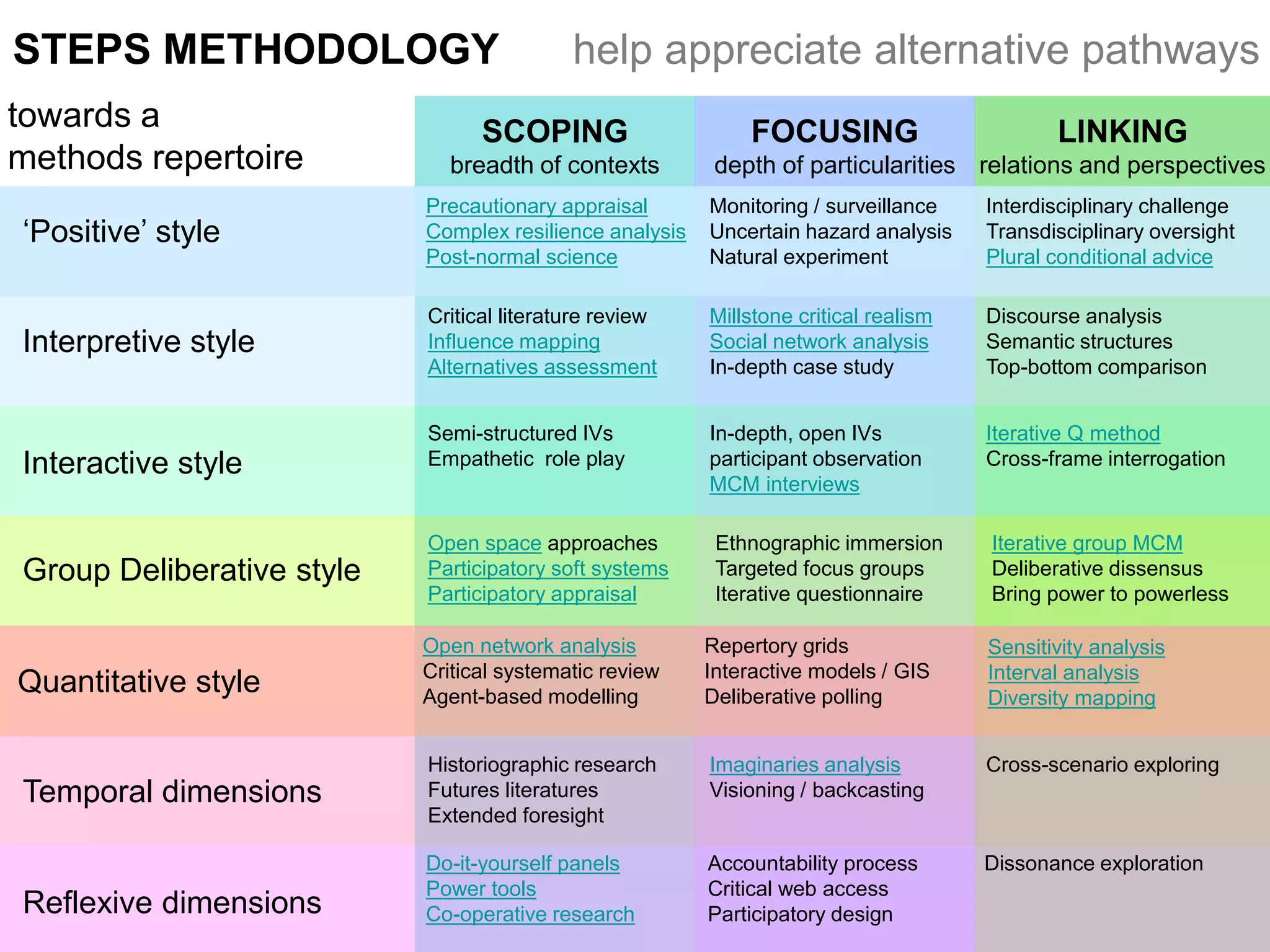
SCOPING
breadth of contexts
FOCUSING
depth of particularities
LINKING
relations and perspectives
STEPS METHODOLOGY
Interpretive style
Interactive style
Group Deliberative style
Temporal dimensions
Reflexive dimensions
‘Positive’ style
Quantitative style
Monitoring / surveillance
Uncertain hazard analysis
Natural experiment
Interdisciplinary challenge
Transdisciplinary oversight
Plural conditional advice
Precautionary appraisal
Complex resilience analysis
Post-normal science
Critical literature review
Influence mapping
Alternatives assessment
Millstone critical realism
Social network analysis
In-depth case study
Discourse analysis
Semantic structures
Top-bottom comparison
Semi-structured IVs
Empathetic role play
In-depth, open IVs
participant observation
MCM interviews
Iterative Q method
Cross-frame interrogation
Open space approaches
Participatory soft systems
Participatory appraisal
Ethnographic immersion
Targeted focus groups
Iterative questionnaire
Iterative group MCM
Deliberative dissensus
Bring power to powerless
Open network analysis
Critical systematic review
Agent-based modelling
Repertory grids
Interactive models / GIS
Deliberative polling
Sensitivity analysis
Interval analysis
Diversity mapping
Historiographic research
Futures literatures
Extended foresight
Imaginaries analysis
Visioning / backcasting
Cross-scenario exploring
Do-it-yourself panels
Power tools
Co-operative research
Accountability process
Critical web access
Participatory design
Dissonance exploration
towards a
methods repertoire
help appreciate alternative pathways

Steps methods #7 illustrative methods

  • 1.
    STEPS Pathways Methods PART7 Particular Illustrative Methods Professor Andy Stirling Co-director, STEPS Centre www.steps-centre.org www.sussex.ac.uk/spru www.multicriteria-mapping.org
  • 2.
    SCOPING breadth of contexts FOCUSING depthof particularities LINKING relations and perspectives STEPS METHODOLOGY Interpretive style Interactive style Group Deliberative style Temporal dimensions Reflexive dimensions ‘Positive’ style Quantitative style Monitoring / surveillance Uncertain hazard analysis Natural experiment Interdisciplinary challenge Transdisciplinary oversight Plural conditional advice Precautionary appraisal Complex resilience analysis Post-normal science Critical literature review Influence mapping Alternatives assessment Millstone critical realism Social network analysis In-depth case study Discourse analysis Semantic structures Top-bottom comparison Semi-structured IVs Empathetic role play In-depth, open IVs participant observation MCM interviews Iterative Q method Cross-frame interrogation Open space approaches Participatory soft systems Participatory appraisal Ethnographic immersion Targeted focus groups Iterative questionnaire Iterative group MCM Deliberative dissensus Bring power to powerless Open network analysis Critical systematic review Agent-based modelling Repertory grids Interactive models / GIS Deliberative polling Sensitivity analysis Interval analysis Diversity mapping Historiographic research Futures literatures Extended foresight Imaginaries analysis Visioning / backcasting Cross-scenario exploring Do-it-yourself panels Power tools Co-operative research Accountability process Critical web access Participatory design Dissonance exploration towards a methods repertoire help appreciate alternative pathways