
Steps in Curriculum
Development
Nirmala Roberts
India
4 Steps in Curriculum Development
- Ralph Tyler
1. Formation of educational objectives
2. Selection of learning experiences
3. Organization of leaning experiences
4. Evaluation of the curriculum
1. Formation of Educational
Objectives
Educational Objectives
Statements of those desired changes in
behaviour as a result of specific teaching
learning activities
Factors to be considered….
• Philosophical statement of the institute
• Health needs of society and resources available
• Needs of the students
• Entry criteria or level of students
• Preparation for positions on completion of program
• Future trends in the profession
• Preparation for international placements
Steps in formulation of educational objectives
• Identify the needs of society
• Study the suggestions of experts
• Formulate the philosophy
• State the objectives –
• Gathered from various sources
• Clearly in terms of content
• In terms of behavioural outcomes/ changes.
• Screen the objectives through educational philosophy & educational psychology
• Formulate a theory of learning
• Determine the methods of teaching, principles of teaching, methods of learning
etc.
2. Selection of Learning
Experiences
Learning Experiences
Deliberately planned experiences in selected
situations where students actively participate,
interact and which result in desirable changes of
behaviour in the students.
Characteristics of good learning experiences
• Allow student learning by doing
• Create motivation and interest among students.
• Be challenging to the students
• Satisfy the needs of the time
• Bring out multiple outcomes in students
• Help students to acquire needed knowledge, skill and attitude
• Help in gathering information
• Help in attaining the educational objectives
Criteria for Selection of Learning
Experiences…
• Significance and consistence - with philosophy of the institute
• Self sufficiency - Lead to attainment of objectives of program
• Validity and utility - Give opportunity to practice the implied
behaviour
• Learnability and feasibility - Adapted to needs of students; varied and
flexible
…Criteria for Selection of Learning Experiences
• Provide opportunity for the development of –
• Independent thinking and decision making
• Sound judgment, intellectual resourcefulness
• Self discipline and sound integrity of purpose
• Arranged to provide - Continuity, correlation and integration of theory
and be proactive
• Planned and evaluated co-operatively by teacher & students
• Appropriate emphasis according to relative importance of various
learning experiences and contents.
3. Organizing Learning
experiences
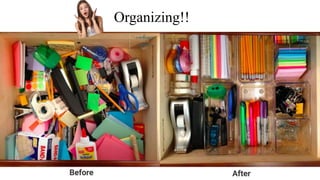
Organizing!!
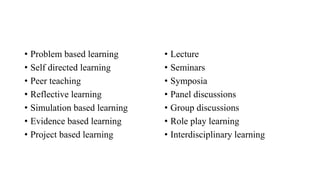
• Problem based learning
• Self directed learning
• Peer teaching
• Reflective learning
• Simulation based learning
• Evidence based learning
• Project based learning
• Lecture
• Seminars
• Symposia
• Panel discussions
• Group discussions
• Role play learning
• Interdisciplinary learning
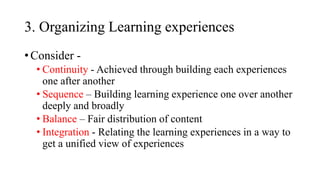
3. Organizing Learning experiences
• Consider -
• Continuity - Achieved through building each experiences
one after another
• Sequence – Building learning experience one over another
deeply and broadly
• Balance – Fair distribution of content
• Integration - Relating the learning experiences in a way to
get a unified view of experiences
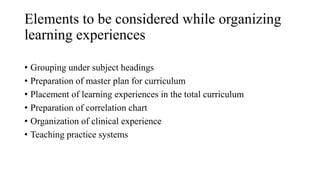
Elements to be considered while organizing
learning experiences
• Grouping under subject headings
• Preparation of master plan for curriculum
• Placement of learning experiences in the total curriculum
• Preparation of correlation chart
• Organization of clinical experience
• Teaching practice systems
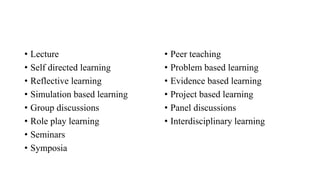
• Lecture
• Self directed learning
• Reflective learning
• Simulation based learning
• Group discussions
• Role play learning
• Seminars
• Symposia
• Peer teaching
• Problem based learning
• Evidence based learning
• Project based learning
• Panel discussions
• Interdisciplinary learning
4. Evaluation of the Curriculum
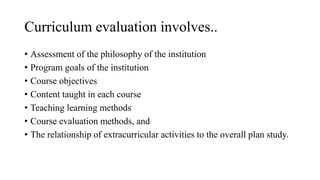
Curriculum evaluation involves..
• Assessment of the philosophy of the institution
• Program goals of the institution
• Course objectives
• Content taught in each course
• Teaching learning methods
• Course evaluation methods, and
• The relationship of extracurricular activities to the overall plan study.
5 M’s of Curriculum evaluation
• Men – Proper organization and implementation of curriculum by
faculty members and other personnel involved
• Money – Appropriate utilization of money for curriculum
development
• Materials - Evaluation of text books, literature etc., used for the
development and implementation of curriculum
• Methods – Application of appropriate methods of teaching learning
methods
• Minutes - Adequate time given for theory and practical in each course
Questions……
1. What are the steps in curriculum
development?
2. Meaning of educational objectives?
3. Meaning of learning experiences?
4. Meaning of educational objectives?
5. Meaning of educational objectives?
6. Factors to be considered when forming
educational objectives
7. Steps in formation of educational
objectives
1. Characteristics of good learning
experiences?
2. Criteria for selection of learning
experiences?
3. Rules for organizing learning
experiences?
4. Elements to be considered when
organizing learning experiences?
5. Effective and efficient organization of
leaning experiences
6. What is evaluation of curriculum ?
7. What is evaluated in curriculum
evaluation?

Steps in Curriculum Development NR

  • 1.
  • 2.
    4 Steps inCurriculum Development - Ralph Tyler 1. Formation of educational objectives 2. Selection of learning experiences 3. Organization of leaning experiences 4. Evaluation of the curriculum
  • 3.
    1. Formation ofEducational Objectives
  • 4.
    Educational Objectives Statements ofthose desired changes in behaviour as a result of specific teaching learning activities
  • 5.
    Factors to beconsidered…. • Philosophical statement of the institute • Health needs of society and resources available • Needs of the students • Entry criteria or level of students • Preparation for positions on completion of program • Future trends in the profession • Preparation for international placements
  • 6.
    Steps in formulationof educational objectives • Identify the needs of society • Study the suggestions of experts • Formulate the philosophy • State the objectives – • Gathered from various sources • Clearly in terms of content • In terms of behavioural outcomes/ changes. • Screen the objectives through educational philosophy & educational psychology • Formulate a theory of learning • Determine the methods of teaching, principles of teaching, methods of learning etc.
  • 7.
    2. Selection ofLearning Experiences
  • 8.
    Learning Experiences Deliberately plannedexperiences in selected situations where students actively participate, interact and which result in desirable changes of behaviour in the students.
  • 9.
    Characteristics of goodlearning experiences • Allow student learning by doing • Create motivation and interest among students. • Be challenging to the students • Satisfy the needs of the time • Bring out multiple outcomes in students • Help students to acquire needed knowledge, skill and attitude • Help in gathering information • Help in attaining the educational objectives
  • 10.
    Criteria for Selectionof Learning Experiences… • Significance and consistence - with philosophy of the institute • Self sufficiency - Lead to attainment of objectives of program • Validity and utility - Give opportunity to practice the implied behaviour • Learnability and feasibility - Adapted to needs of students; varied and flexible
  • 11.
    …Criteria for Selectionof Learning Experiences • Provide opportunity for the development of – • Independent thinking and decision making • Sound judgment, intellectual resourcefulness • Self discipline and sound integrity of purpose • Arranged to provide - Continuity, correlation and integration of theory and be proactive • Planned and evaluated co-operatively by teacher & students • Appropriate emphasis according to relative importance of various learning experiences and contents.
  • 12.
  • 13.
  • 14.
    • Problem basedlearning • Self directed learning • Peer teaching • Reflective learning • Simulation based learning • Evidence based learning • Project based learning • Lecture • Seminars • Symposia • Panel discussions • Group discussions • Role play learning • Interdisciplinary learning
  • 15.
    3. Organizing Learningexperiences • Consider - • Continuity - Achieved through building each experiences one after another • Sequence – Building learning experience one over another deeply and broadly • Balance – Fair distribution of content • Integration - Relating the learning experiences in a way to get a unified view of experiences
  • 16.
    Elements to beconsidered while organizing learning experiences • Grouping under subject headings • Preparation of master plan for curriculum • Placement of learning experiences in the total curriculum • Preparation of correlation chart • Organization of clinical experience • Teaching practice systems
  • 17.
    • Lecture • Selfdirected learning • Reflective learning • Simulation based learning • Group discussions • Role play learning • Seminars • Symposia • Peer teaching • Problem based learning • Evidence based learning • Project based learning • Panel discussions • Interdisciplinary learning
  • 18.
    4. Evaluation ofthe Curriculum
  • 19.
    Curriculum evaluation involves.. •Assessment of the philosophy of the institution • Program goals of the institution • Course objectives • Content taught in each course • Teaching learning methods • Course evaluation methods, and • The relationship of extracurricular activities to the overall plan study.
  • 20.
    5 M’s ofCurriculum evaluation • Men – Proper organization and implementation of curriculum by faculty members and other personnel involved • Money – Appropriate utilization of money for curriculum development • Materials - Evaluation of text books, literature etc., used for the development and implementation of curriculum • Methods – Application of appropriate methods of teaching learning methods • Minutes - Adequate time given for theory and practical in each course
  • 22.
    Questions…… 1. What arethe steps in curriculum development? 2. Meaning of educational objectives? 3. Meaning of learning experiences? 4. Meaning of educational objectives? 5. Meaning of educational objectives? 6. Factors to be considered when forming educational objectives 7. Steps in formation of educational objectives 1. Characteristics of good learning experiences? 2. Criteria for selection of learning experiences? 3. Rules for organizing learning experiences? 4. Elements to be considered when organizing learning experiences? 5. Effective and efficient organization of leaning experiences 6. What is evaluation of curriculum ? 7. What is evaluated in curriculum evaluation?