A FINAL YEAR PROJECT ON
“STATIC VAR COMPENSATOR”
Guided by: Presented By:
Er. Ashutosh Dubey Vinay Vishwakarma
Er. Diwakar Dubey Sandeep Kumar Ravi
Assistant Professor Ajay Kushwaha
Department of Electrical Engineering
A.K.S. University, Satna, M.P.
Flexible AC Transmission System (FACTS)
 A flexible alternating current transmission system (FACTS) is a system composed of
static equipment used for the AC transmission of electrical energy.
 It is meant to enhance controllability and increase power transfer capability of the
network.
 It is generally a power electronics-based system.
 Basically the FACT system is used to provide the controllability of high voltage side of
the network by incorporating power electronic devices to introduce inductive or
capacitive power in the network.
Static VAR Compensator (SVC)
 Under different system conditions, a fast operating SVC can endlessly provide the
reactive power which is necessary to control dynamic voltage oscillations and thereby
get better the power system distribution and the stability of transmission.
 Electrical loads both absorb and generate reactive power.
 Since the transmitted load varies significantly from hour to hour, the reactive power
balance in a grid varies slowly.
Types of SVC
 Series Compensator
 Static Synchronous Series Compensator (SSSC)
 Thyristor-Switched Series Capacitor (TSSC)
 Thyristor-Switched Series Reactor (TSSR)
 Thyristor-Controlled Series Capacitor (TCSC)
 Thyristor-Controlled Series Reactor (TCSR)
 Shunt Compensator
 Static synchronous compensator (STATCOM)
 Static VAR compensator (SVC), this SVC includes
 Thyristor switched reactor(TSR)
 Thyristor switched capacitor(TSC)
 Thyristor controlled reactor(TCR)
 Mechanically switched capacitor(MSC)
Mechanically Switched Capacitor
 The Mechanically Switched Capacitors (MSCs) are high and medium voltage
equipment’s installed to provide the necessary capacitive reactive compensation and
power factor correction.
 The utilization of MSCs has increased because they are relatively inexpensive in
comparison with other equipment’s and techniques, easy and quick to install, and can
be deployed virtually anywhere in the power transmission and distribution systems.
Advantages of MSCs
 Improvement of the performance, quality and efficiency of electrical systems.
 Minimization of the power losses.
 Help the connection of renewable energy sources into the network.
 Make systems more cost effective.
 To improve power factor of a line.
 To increase active power transfer capacity and transient stability margin
 To achieve effective voltage control
 To damp power oscillations
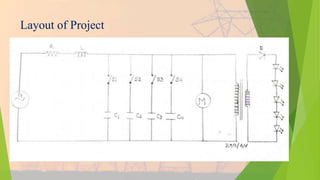
Layout of Project
Applications of the SVC Systems in Transmission
Systems
 To improve power factor of a line.
 To increase active power transfer capacity and transient stability margin
 To achieve effective voltage control
 To damp power oscillations
Any Query…???
Thank You !!!

Static var compensator

  • 1.
    A FINAL YEARPROJECT ON “STATIC VAR COMPENSATOR” Guided by: Presented By: Er. Ashutosh Dubey Vinay Vishwakarma Er. Diwakar Dubey Sandeep Kumar Ravi Assistant Professor Ajay Kushwaha Department of Electrical Engineering A.K.S. University, Satna, M.P.
  • 2.
    Flexible AC TransmissionSystem (FACTS)  A flexible alternating current transmission system (FACTS) is a system composed of static equipment used for the AC transmission of electrical energy.  It is meant to enhance controllability and increase power transfer capability of the network.  It is generally a power electronics-based system.  Basically the FACT system is used to provide the controllability of high voltage side of the network by incorporating power electronic devices to introduce inductive or capacitive power in the network.
  • 3.
    Static VAR Compensator(SVC)  Under different system conditions, a fast operating SVC can endlessly provide the reactive power which is necessary to control dynamic voltage oscillations and thereby get better the power system distribution and the stability of transmission.  Electrical loads both absorb and generate reactive power.  Since the transmitted load varies significantly from hour to hour, the reactive power balance in a grid varies slowly.
  • 4.
    Types of SVC Series Compensator  Static Synchronous Series Compensator (SSSC)  Thyristor-Switched Series Capacitor (TSSC)  Thyristor-Switched Series Reactor (TSSR)  Thyristor-Controlled Series Capacitor (TCSC)  Thyristor-Controlled Series Reactor (TCSR)  Shunt Compensator  Static synchronous compensator (STATCOM)  Static VAR compensator (SVC), this SVC includes  Thyristor switched reactor(TSR)  Thyristor switched capacitor(TSC)  Thyristor controlled reactor(TCR)  Mechanically switched capacitor(MSC)
  • 5.
    Mechanically Switched Capacitor The Mechanically Switched Capacitors (MSCs) are high and medium voltage equipment’s installed to provide the necessary capacitive reactive compensation and power factor correction.  The utilization of MSCs has increased because they are relatively inexpensive in comparison with other equipment’s and techniques, easy and quick to install, and can be deployed virtually anywhere in the power transmission and distribution systems.
  • 6.
    Advantages of MSCs Improvement of the performance, quality and efficiency of electrical systems.  Minimization of the power losses.  Help the connection of renewable energy sources into the network.  Make systems more cost effective.  To improve power factor of a line.  To increase active power transfer capacity and transient stability margin  To achieve effective voltage control  To damp power oscillations
  • 7.
  • 8.
    Applications of theSVC Systems in Transmission Systems  To improve power factor of a line.  To increase active power transfer capacity and transient stability margin  To achieve effective voltage control  To damp power oscillations
  • 9.