Starlink &
It's venturein India
Revolutionizing Global Internet
Connectivity
SpaceX’s satellite internet constellation, engineered to deliver high-speed, low-latency broadband
worldwide, with a focus on rural and remote regions.
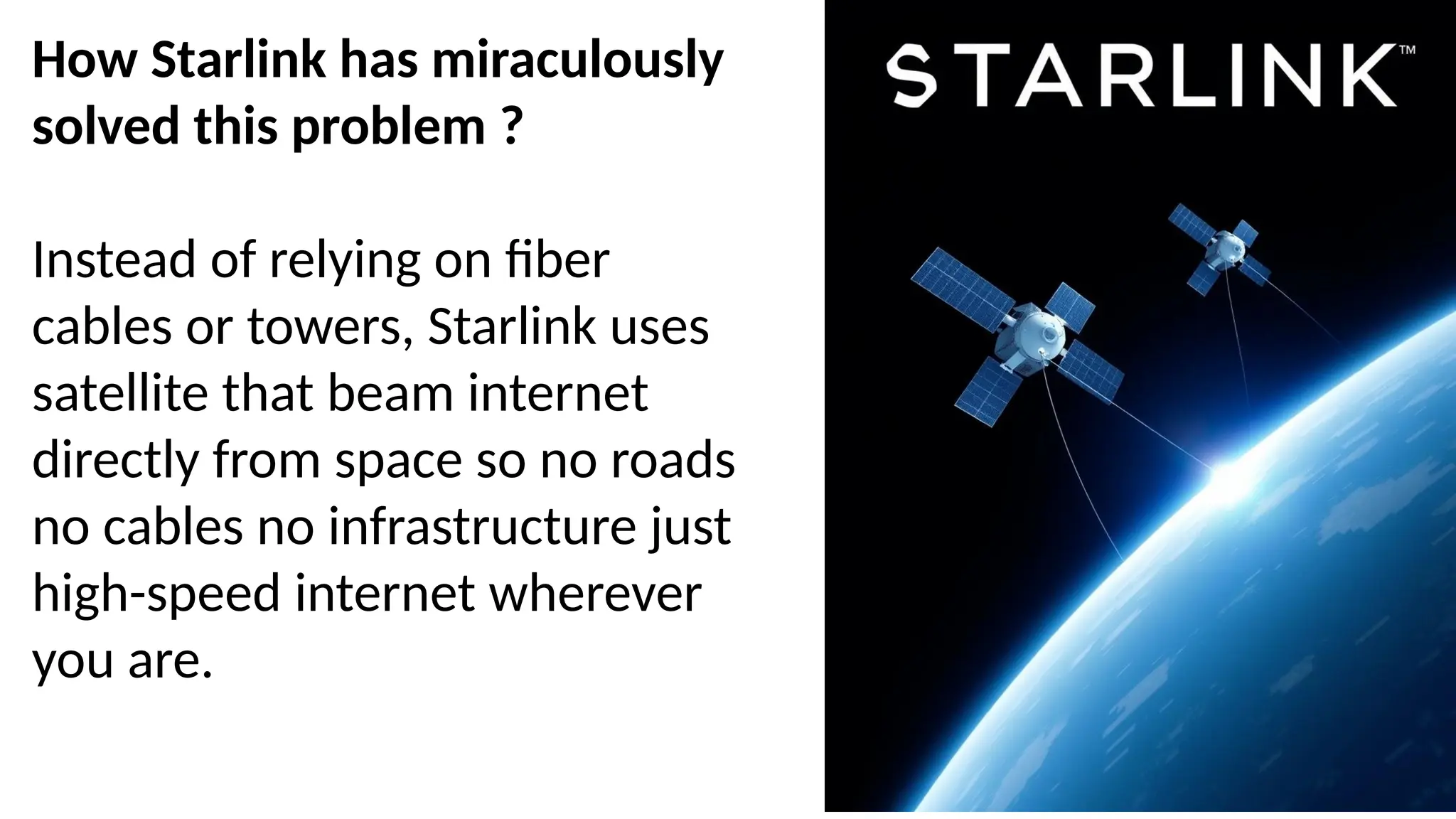
How Starlink hasmiraculously
solved this problem ?
Instead of relying on fiber
cables or towers, Starlink uses
satellite that beam internet
directly from space so no roads
no cables no infrastructure just
high-speed internet wherever
you are.
10.
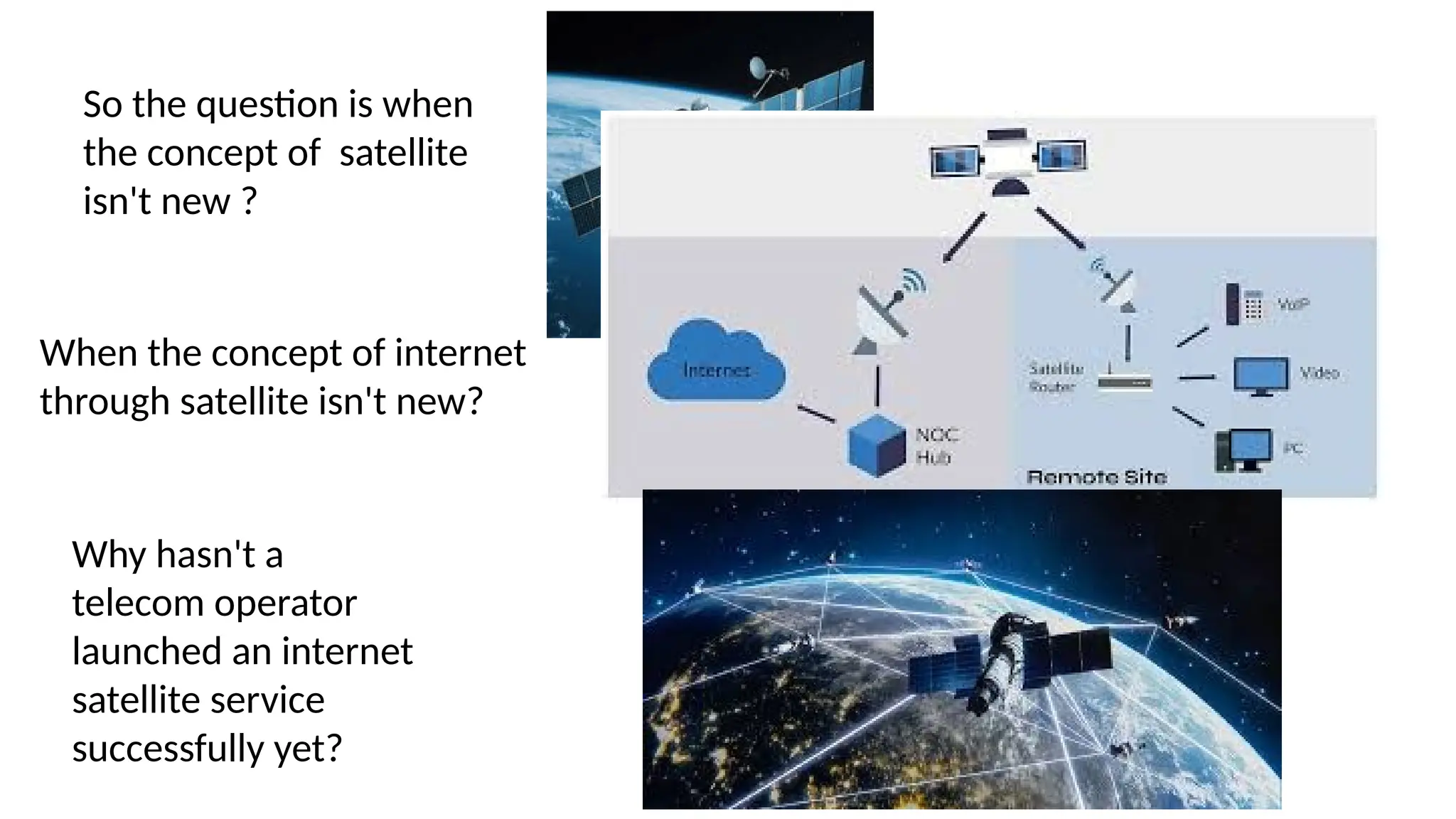
So the questionis when
the concept of satellite
isn't new ?
When the concept of internet
through satellite isn't new?
Why hasn't a
telecom operator
launched an internet
satellite service
successfully yet?
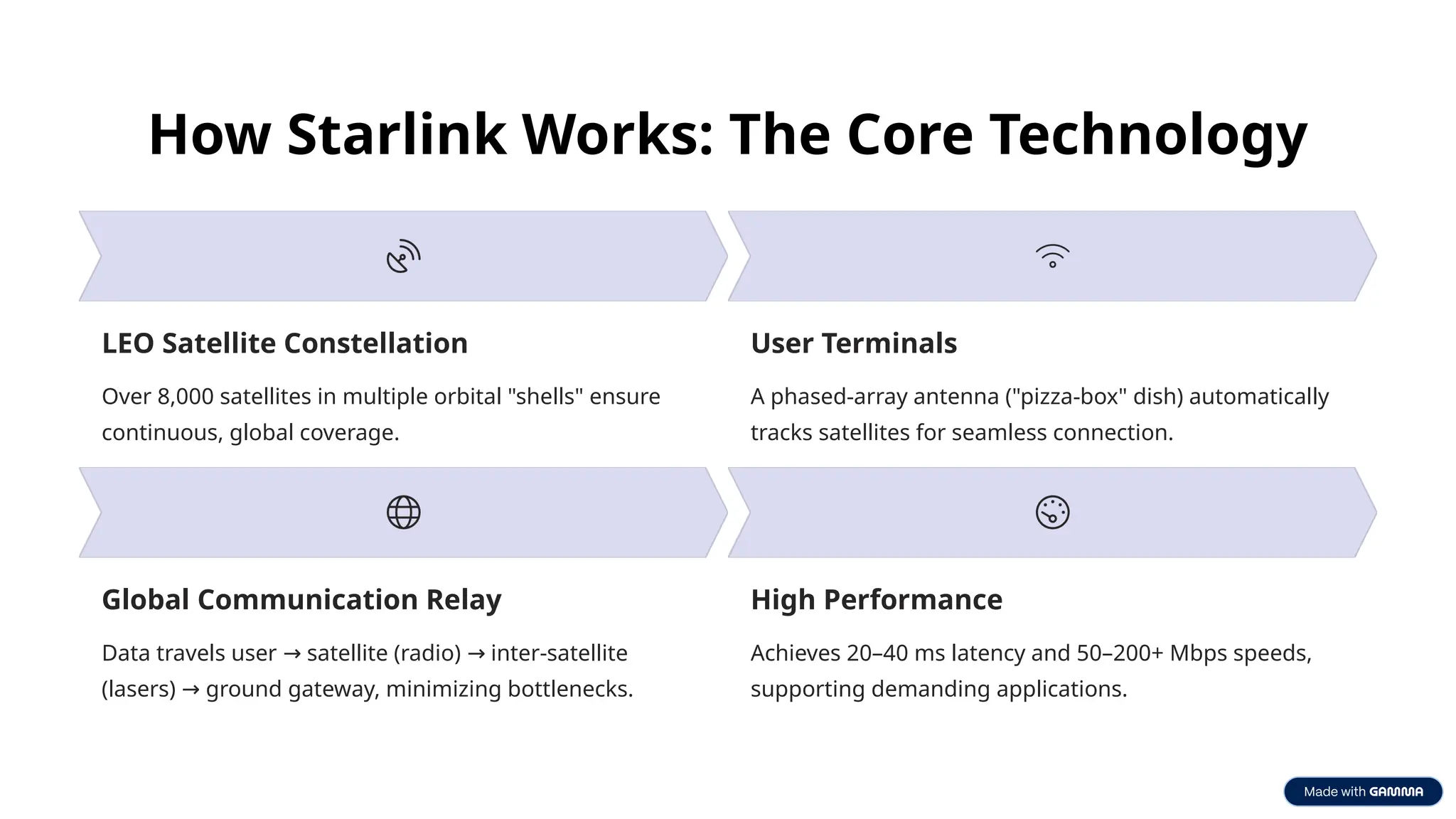
How Starlink Works:The Core Technology
LEO Satellite Constellation
Over 8,000 satellites in multiple orbital "shells" ensure
continuous, global coverage.
User Terminals
A phased-array antenna ("pizza-box" dish) automatically
tracks satellites for seamless connection.
Global Communication Relay
Data travels user satellite (radio) inter-satellite
→ →
(lasers) ground gateway, minimizing bottlenecks.
→
High Performance
Achieves 20–40 ms latency and 50–200+ Mbps speeds,
supporting demanding applications.
16.
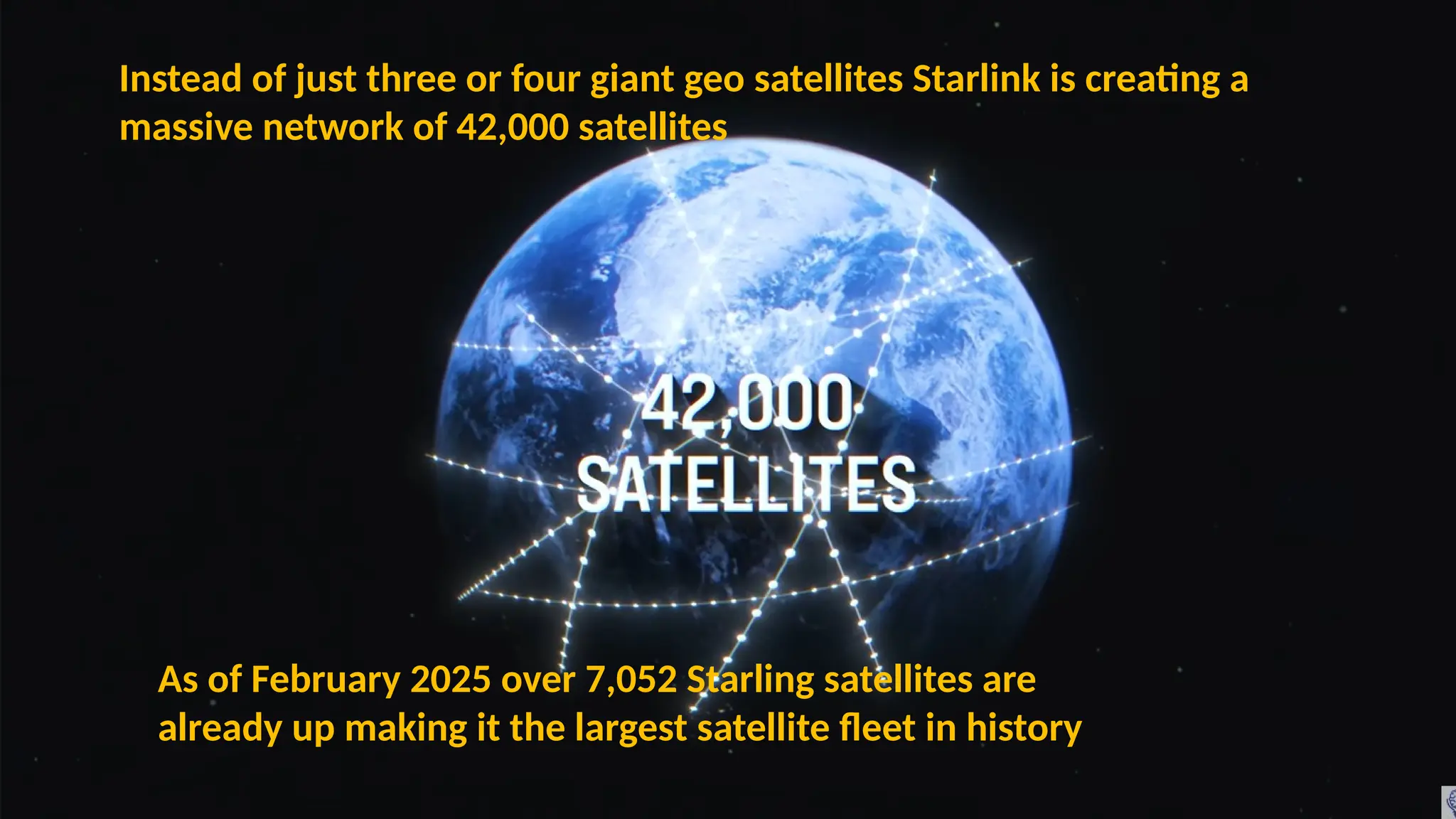
Instead of justthree or four giant geo satellites Starlink is creating a
massive network of 42,000 satellites
As of February 2025 over 7,052 Starling satellites are
already up making it the largest satellite fleet in history
17.
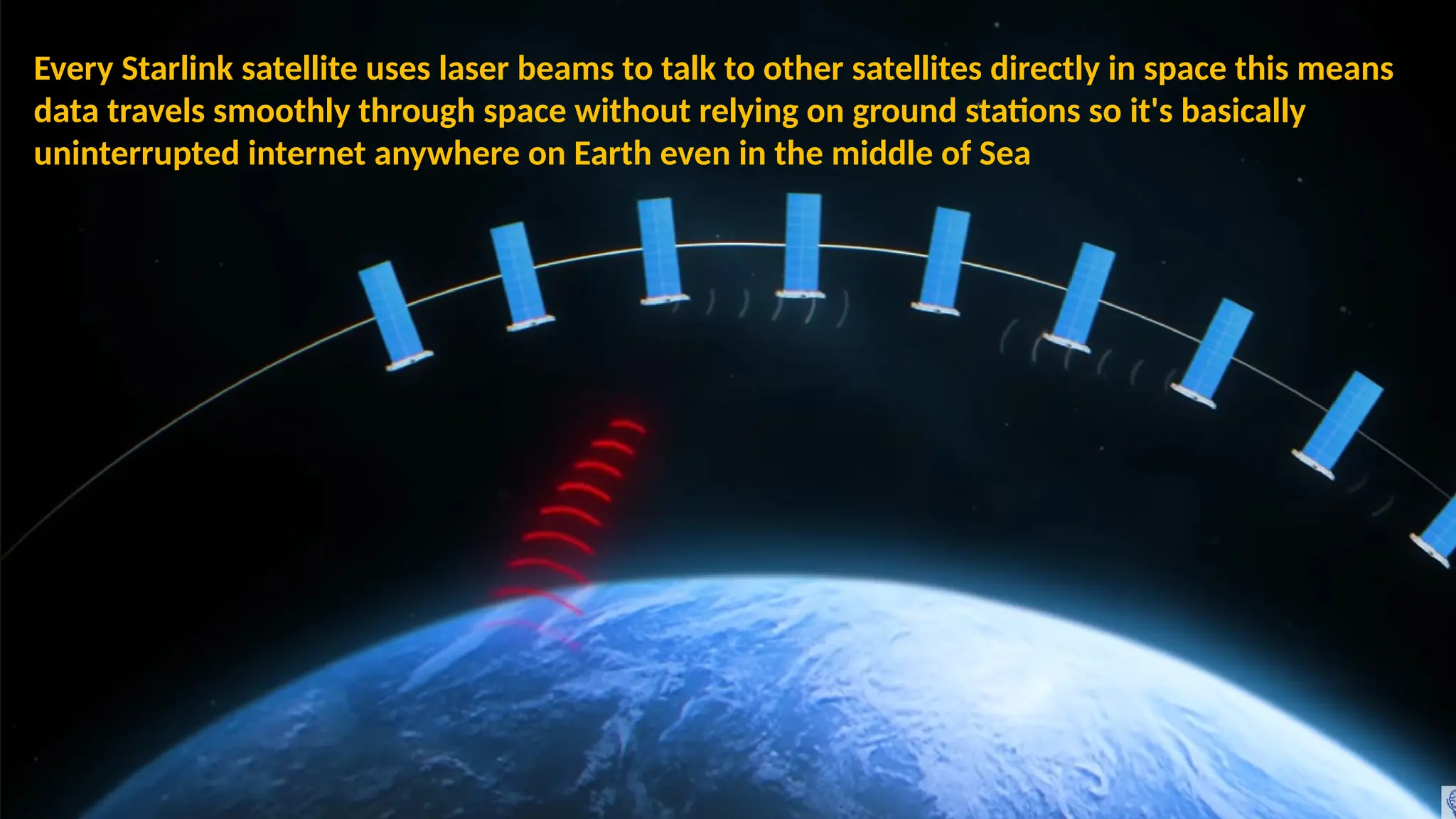
Every Starlink satelliteuses laser beams to talk to other satellites directly in space this means
data travels smoothly through space without relying on ground stations so it's basically
uninterrupted internet anywhere on Earth even in the middle of Sea
18.
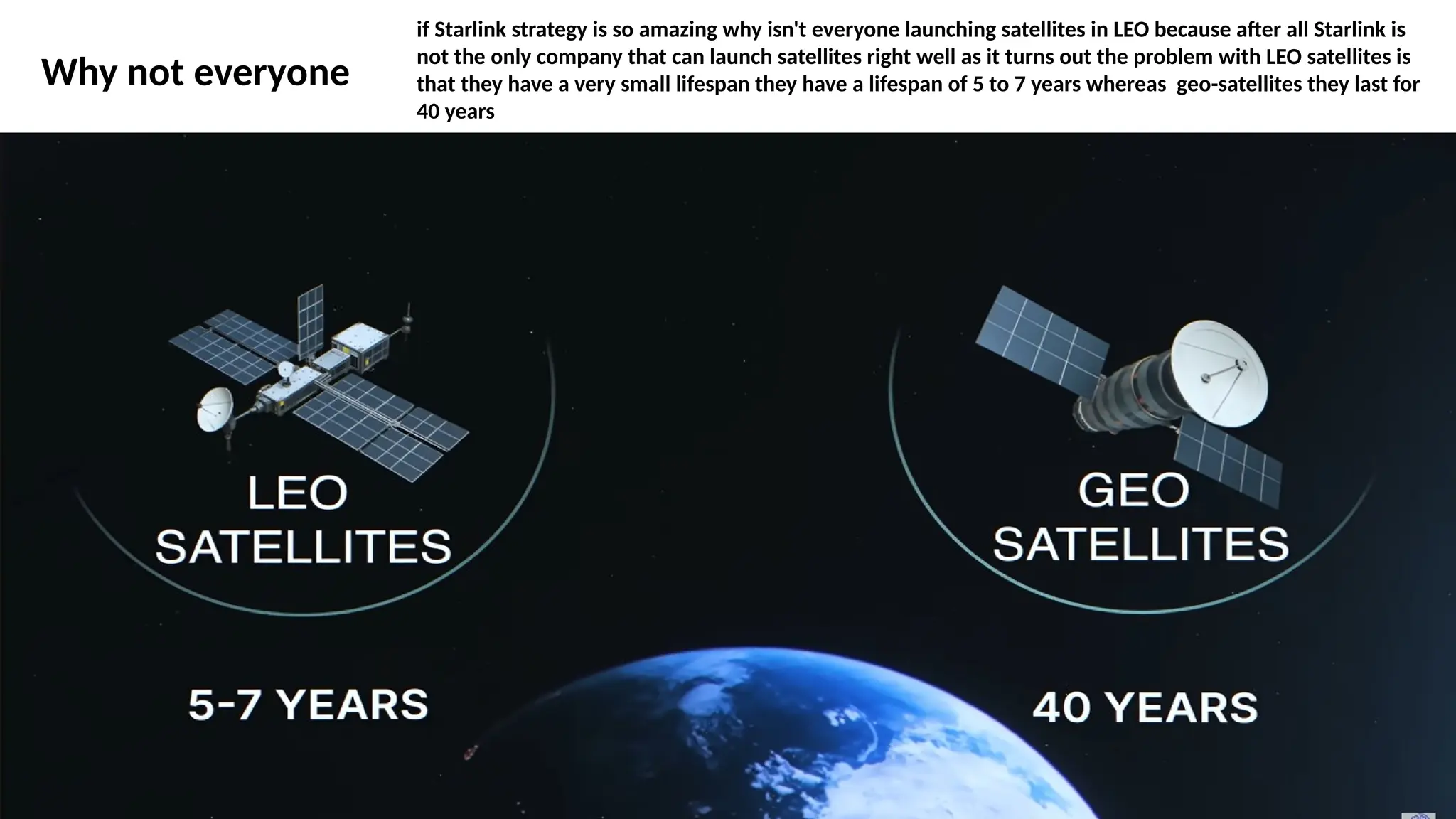
Why not everyone
ifStarlink strategy is so amazing why isn't everyone launching satellites in LEO because after all Starlink is
not the only company that can launch satellites right well as it turns out the problem with LEO satellites is
that they have a very small lifespan they have a lifespan of 5 to 7 years whereas geo-satellites they last for
40 years
22.
this means Starlingconstantly has to launch
new satellites just to replace the old ones plus since LEO satellites keep on
moving you need thousands of them just to cover the whole planet so do
you realize if launching a single satellite is expensive managing a giant
constellation of thousands of satellites is financially impossible for any
23.
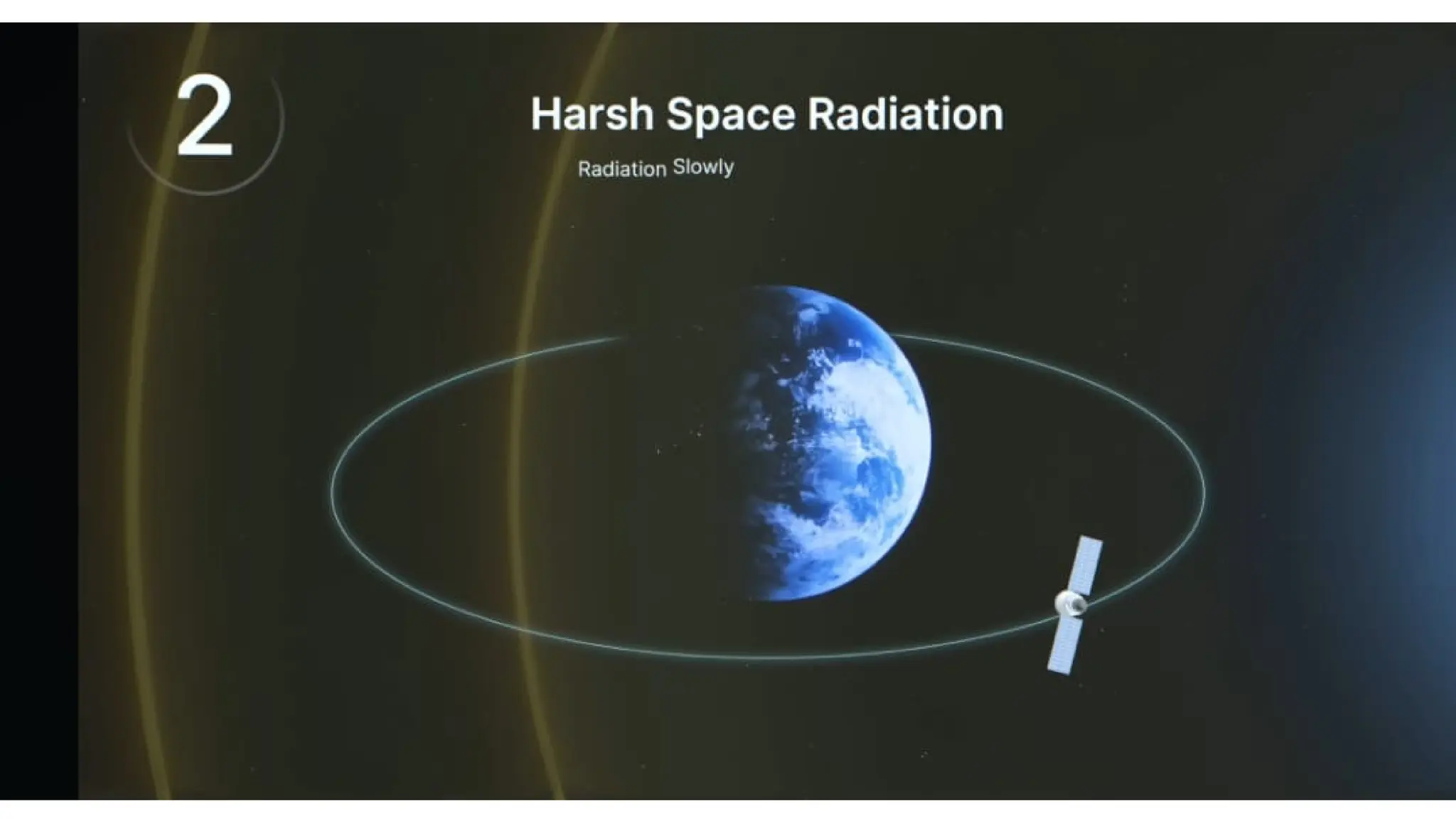
there is harshspace radiation whereby LEO satellites get blasted with
intense space radiation which gradually weakens their parts
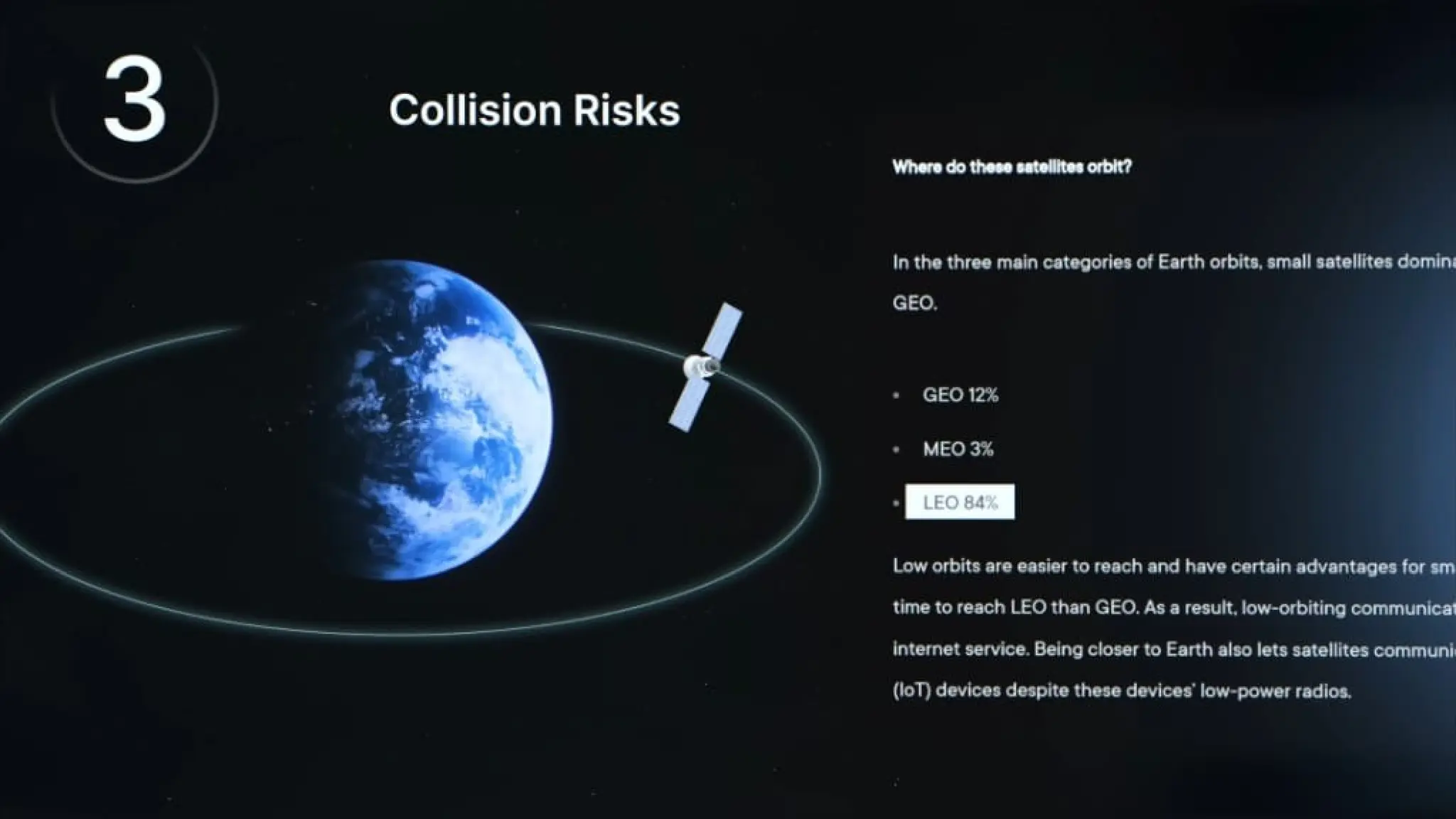
lastly there is collision risk and since
84% of all satellites orbiting the Earth are in LEO the risk of satellites crashing
into space junk or other satellites is super super high s
this means Starling constantly has to launch
new satellites just to replace the old ones plus since LEO satellites keep on
moving you need thousands of them just to cover the whole planet so do
you realize if launching a single satellite is expensive managing a giant
constellation of thousands of satellites is financially impossible for any
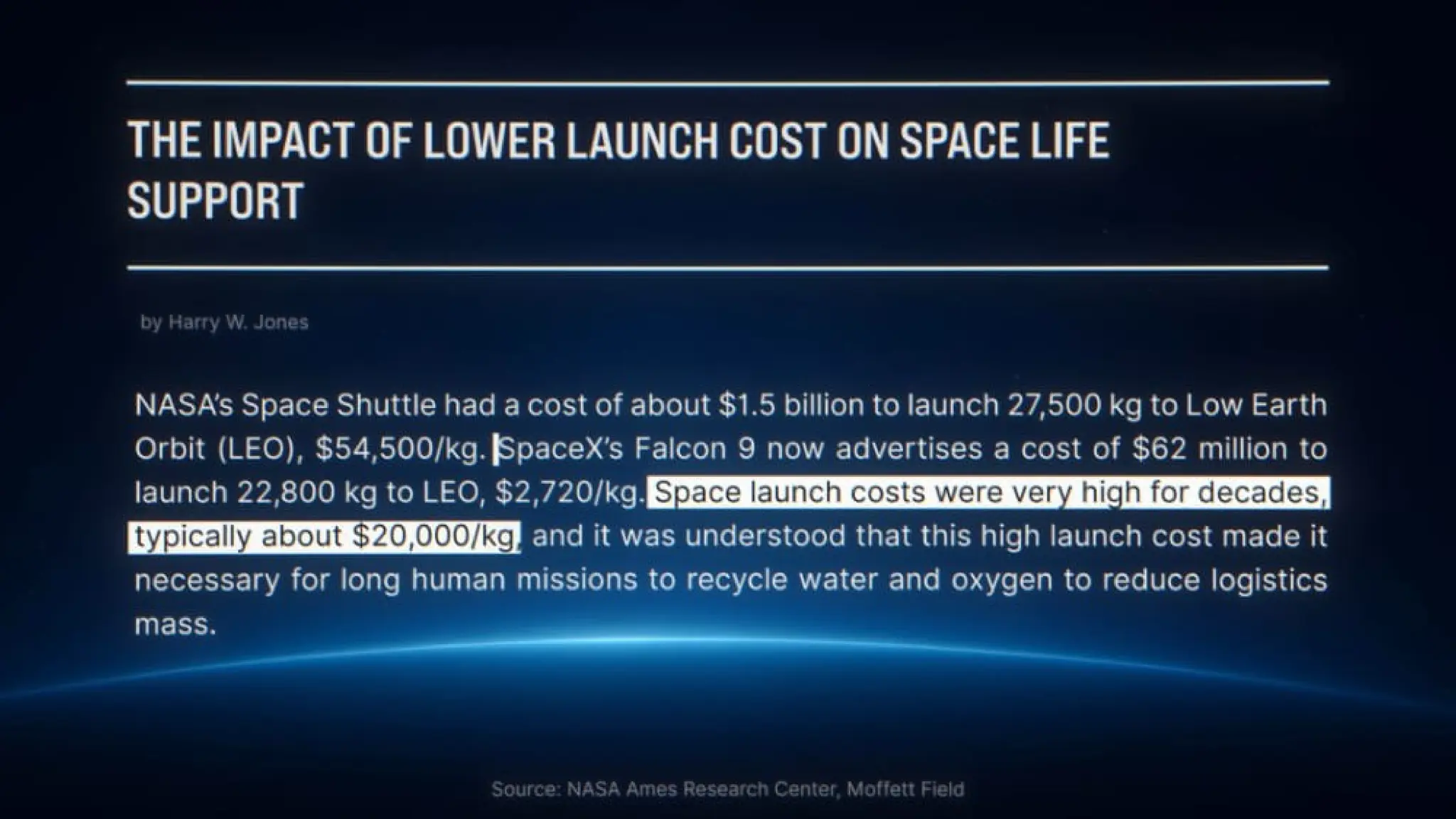
SpaceX has thesuperpower to launch satellites at a dirt cheap cost look at
this while traditional satellite companies spend $20,000 per kg SpaceX does
it for just $2,000 per kg so the question
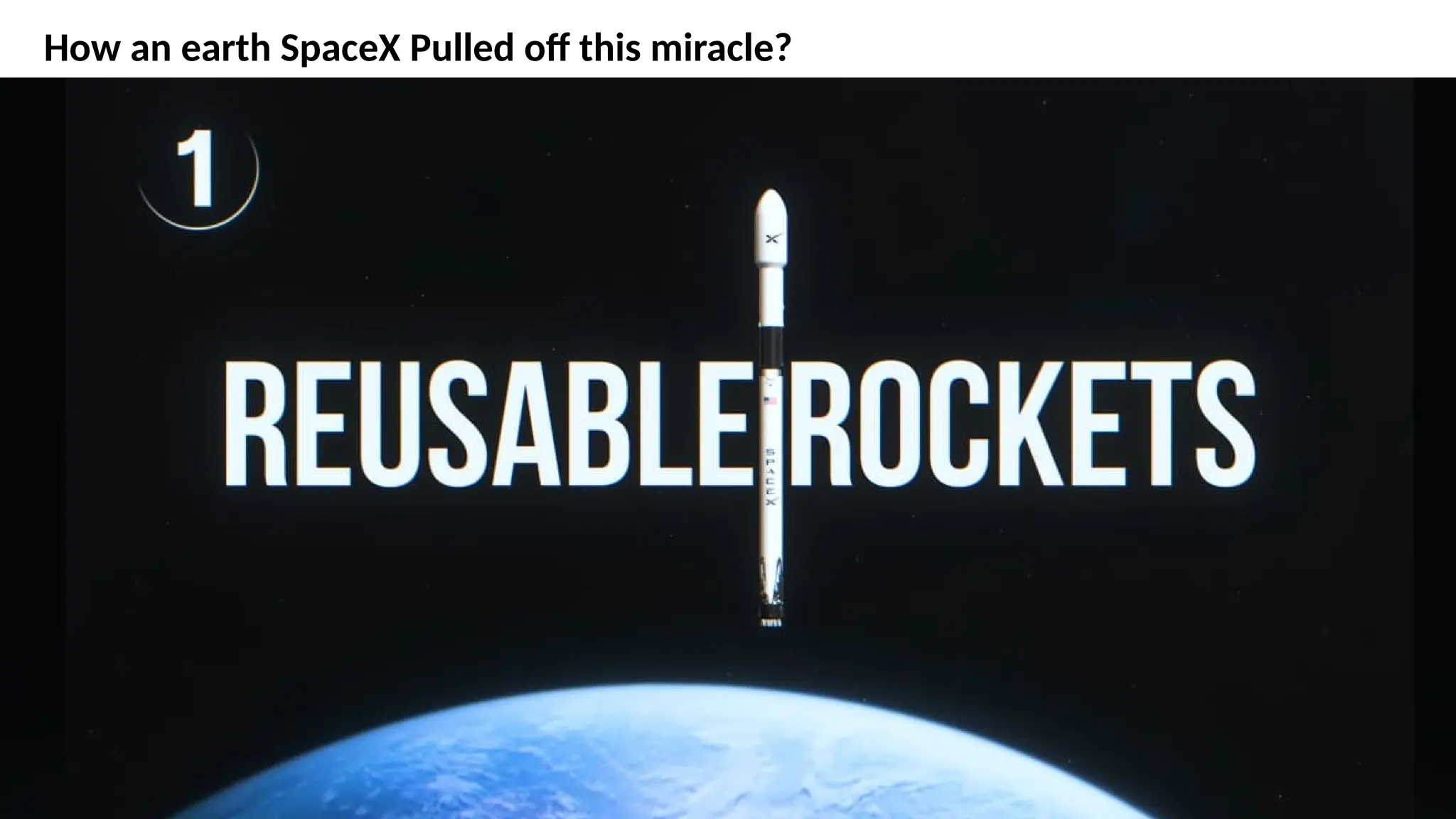
how on earth did SpaceX pull off this miracle
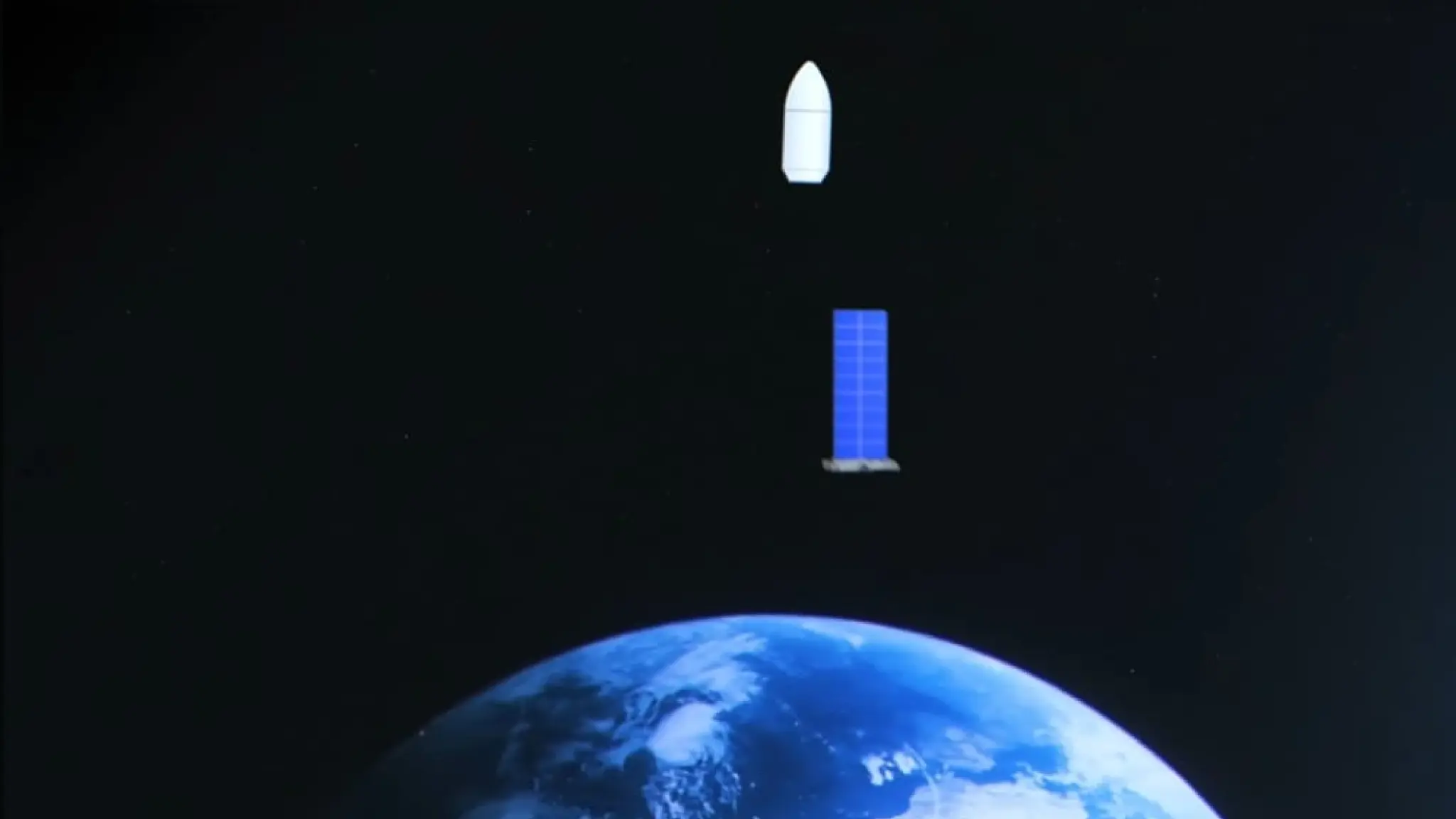
well firstly they use reusable rockets a liftoff of the Falcon 9 elon Musk's
SpaceX is known for its frequent launches which now dominate the space
industry but what many of these rockets are launching is just as important
for the company as the launches themselves
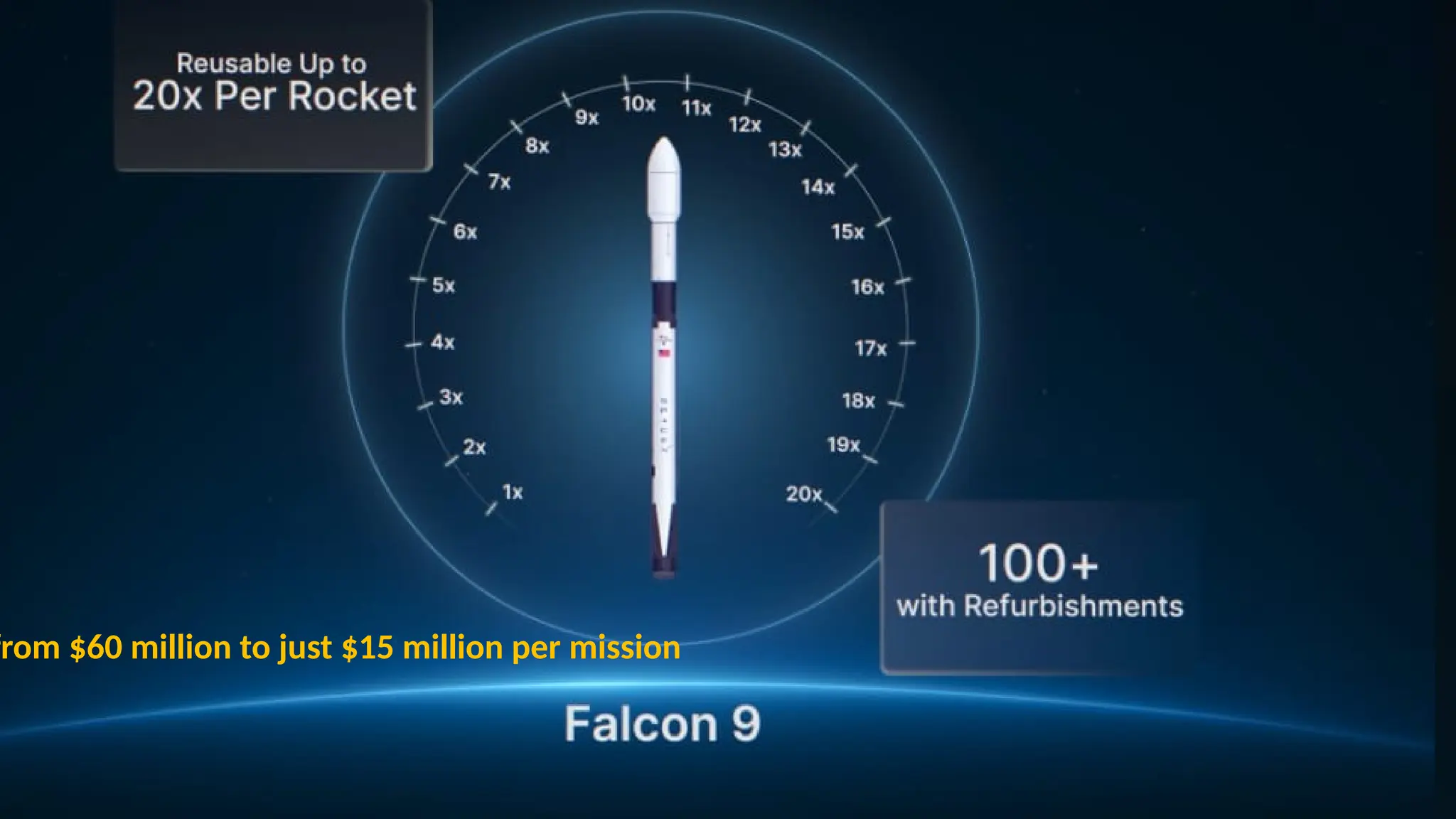
SpaceX changed the rocket launching game by developing reusable rockets
like Falcon 9 and Falcon Heavy these rockets are so extraordinary that they
can be used up to 20 times in a row and 100 times with refurbishment and
this cuts
their launch cost from $60 million to just $15 million per mission so this is
31.
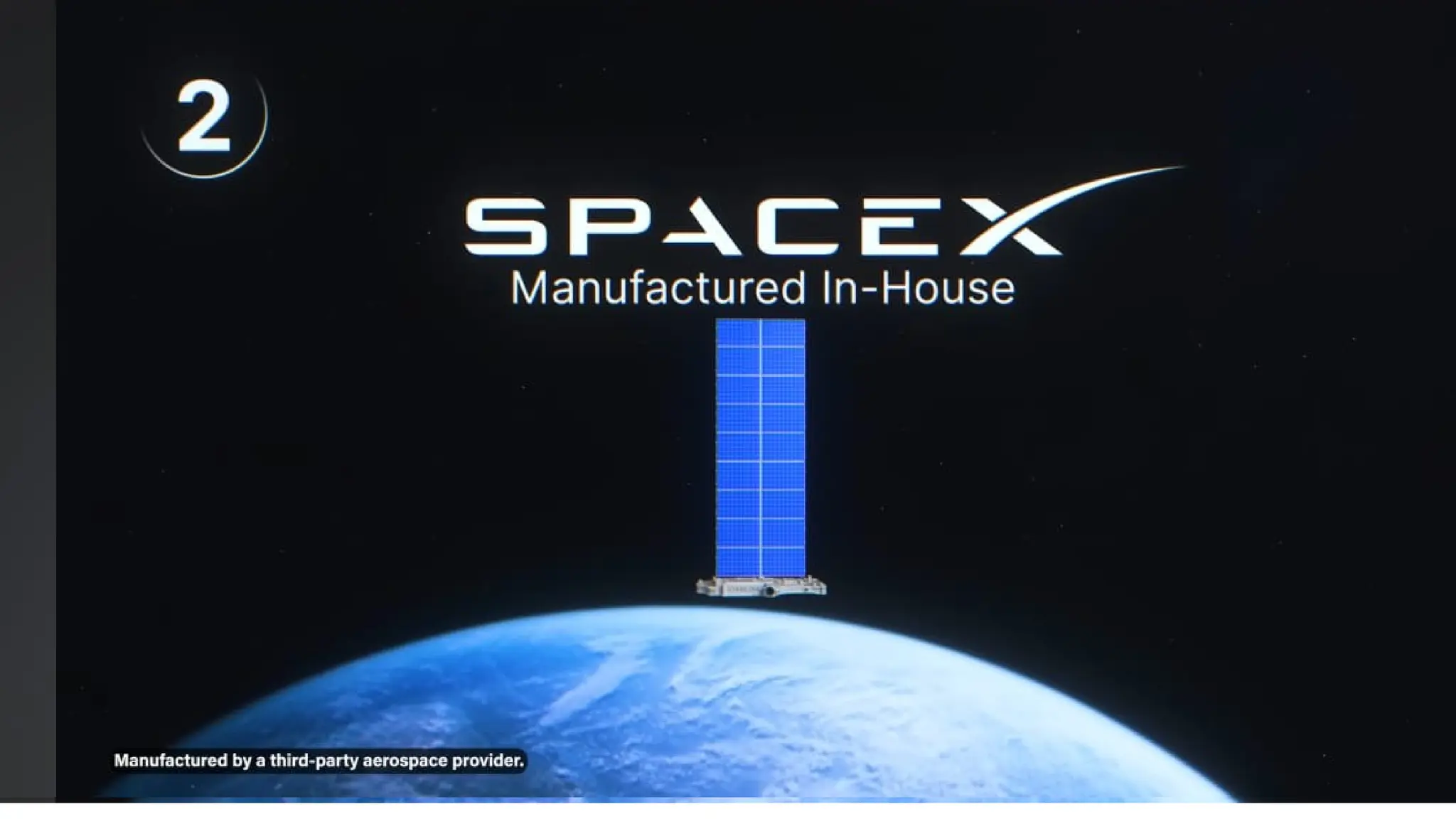
Starlink a massiveleap of innovation secondly unlike other
satellite companies that rely on third party manufacturers SpaceX
makes its own satellites in-house this cuts down on middleman
costs and streamlines production thirdly SpaceX has maximized
payload capacity per launch so while the Falcon 9 rocket can
deploy up to 60 Starling satellites in a single mission competitors
like Amazon Kyper can only accommodate 32 satellites per launch
this is the reason why nobody as of now has been able to beat
Starlink
32.
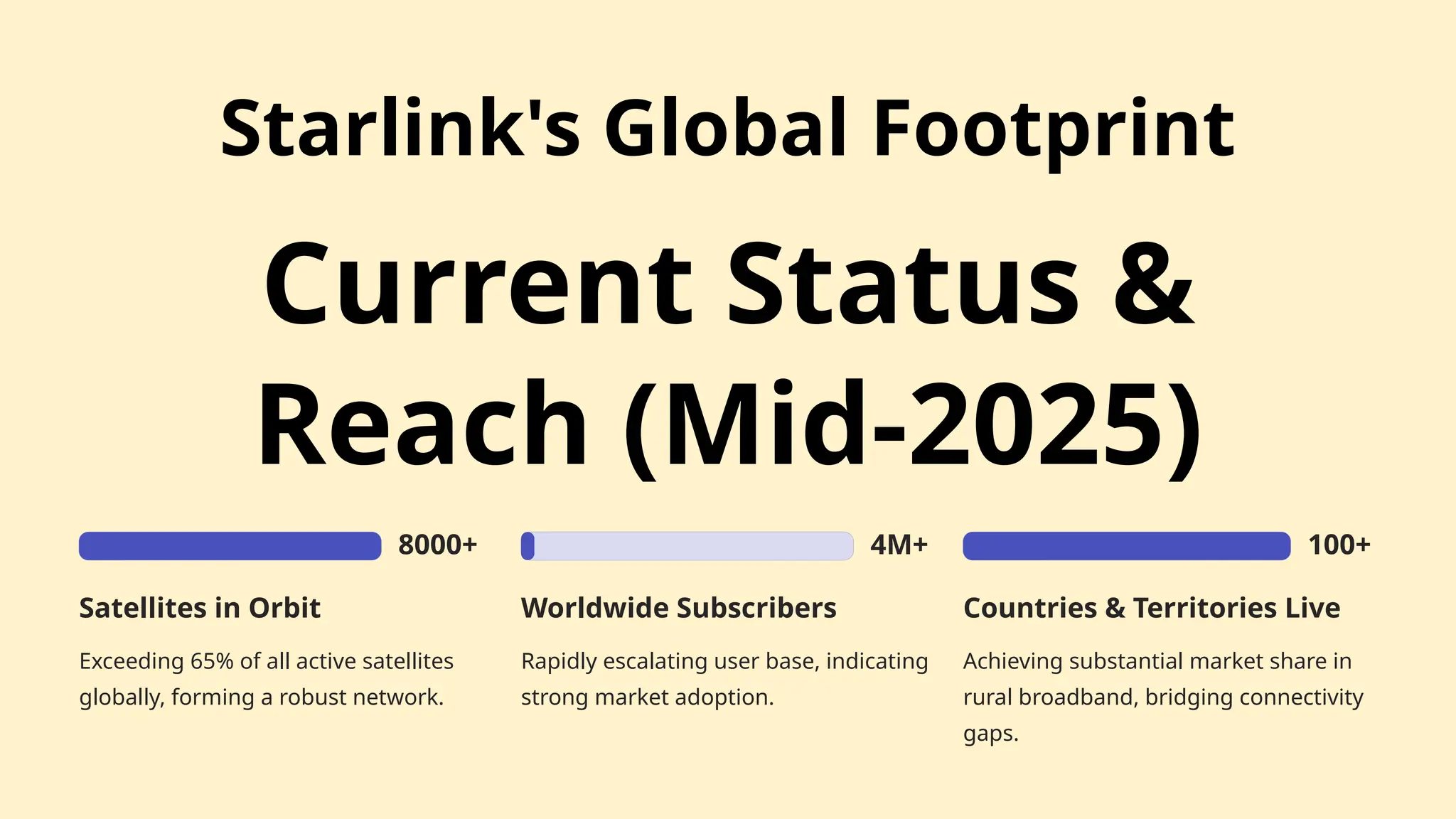
Starlink's Global Footprint
CurrentStatus &
Reach (Mid-2025)
8000+
Satellites in Orbit
Exceeding 65% of all active satellites
globally, forming a robust network.
4M+
Worldwide Subscribers
Rapidly escalating user base, indicating
strong market adoption.
100+
Countries & Territories Live
Achieving substantial market share in
rural broadband, bridging connectivity
gaps.
33.
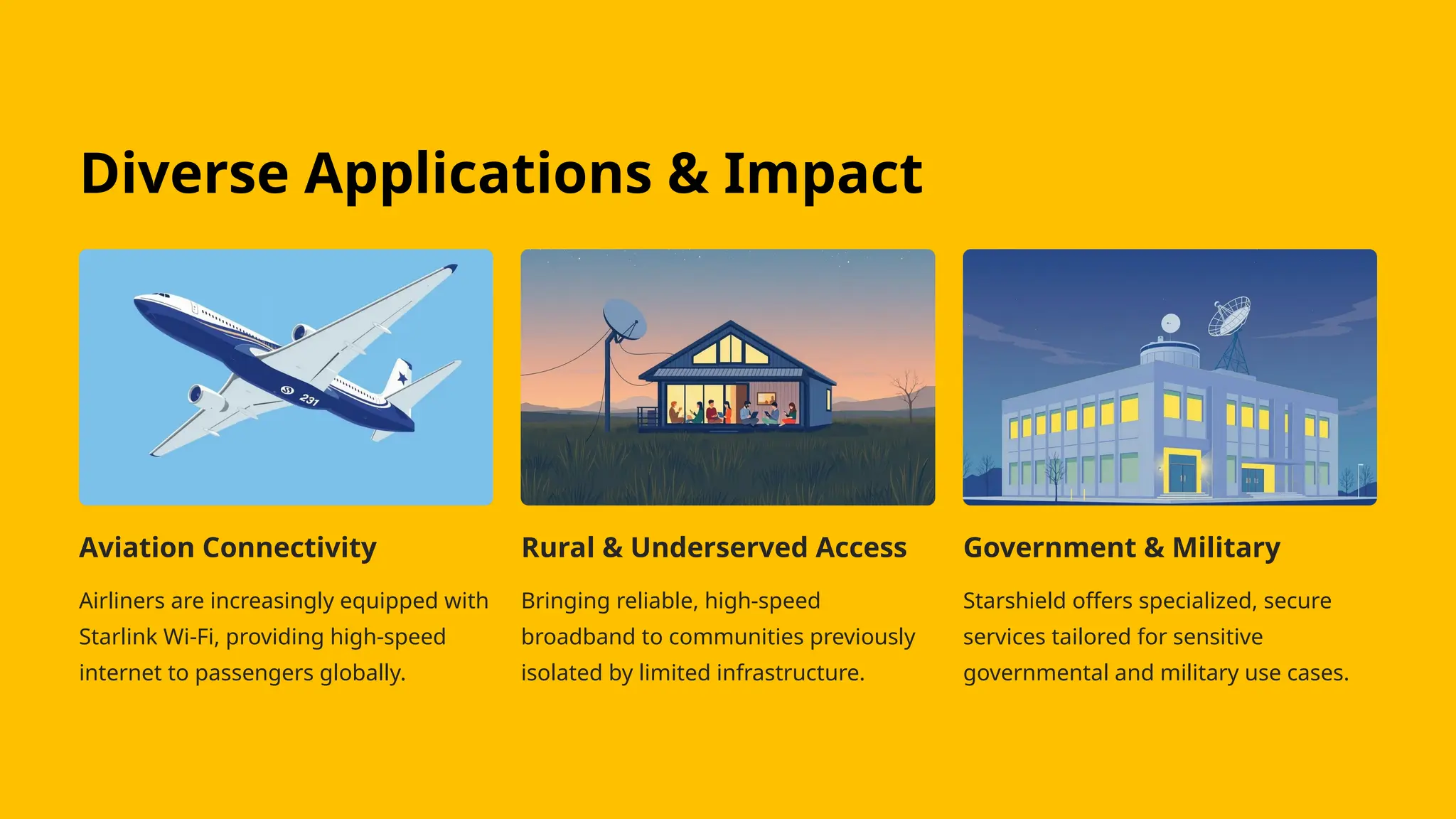
Diverse Applications &Impact
Aviation Connectivity
Airliners are increasingly equipped with
Starlink Wi-Fi, providing high-speed
internet to passengers globally.
Rural & Underserved Access
Bringing reliable, high-speed
broadband to communities previously
isolated by limited infrastructure.
Government & Military
Starshield offers specialized, secure
services tailored for sensitive
governmental and military use cases.
34.
Future Horizons: CompetitiveLandscape &
Expansion
Competitive Environment
Starlink operates in a dynamic market, with key
competitors like Amazon Kuiper and OneWeb rapidly
expanding their satellite internet services.
This competitive landscape fosters innovation and drives
continuous improvement across the industry.
Expansion & Innovation
• Satellite-to-Mobile: Expanding direct-to-cell services in
regions like the US and New Zealand.
• Regulatory & Safety: Ongoing efforts in global
regulatory compliance and space safety initiatives.
• New Services: Plans for IoT, data, and voice services
expansion starting in 2025+.
35.
Starlink's Impact
Shaping theFuture of Connectivity
Transforming Global Connectivity: Pioneering LEO
technology to deliver high-speed internet worldwide.
Overcoming Challenges: Successfully navigating
technical, regulatory, and financial hurdles at an
unprecedented scale.
Funding Mars Ambitions: A critical financial pillar
supporting SpaceX’s audacious goal of making life
multiplanetary.
Continuous Innovation: Rapid growth and ongoing
advancements continue to redefine internet access
globally.
36.
the challenges thatStarlink will face in India for years
• Starlink has been trying to enter India but progress has been slow and uncertain starlink has struggled to clear
India's regulatory hurdles
• In 2022 they applied for a license it's called the GMPCS global mobile personal communication by satellite starlink
is about to get that
37.
• Elon Musk'sStarlink could face a new tax hurdle in India reports suggest
that the government is in fact considering a spectrum usage charge
• one major challenge is India's strict data localization and security laws
which previously blocked Starlink's entry
• Starlink is awaiting final approval from India's National Space Promotion
and Authorization Center firstly Starling has been stuck with approval
delays where they still need to clear all the licenses
38.
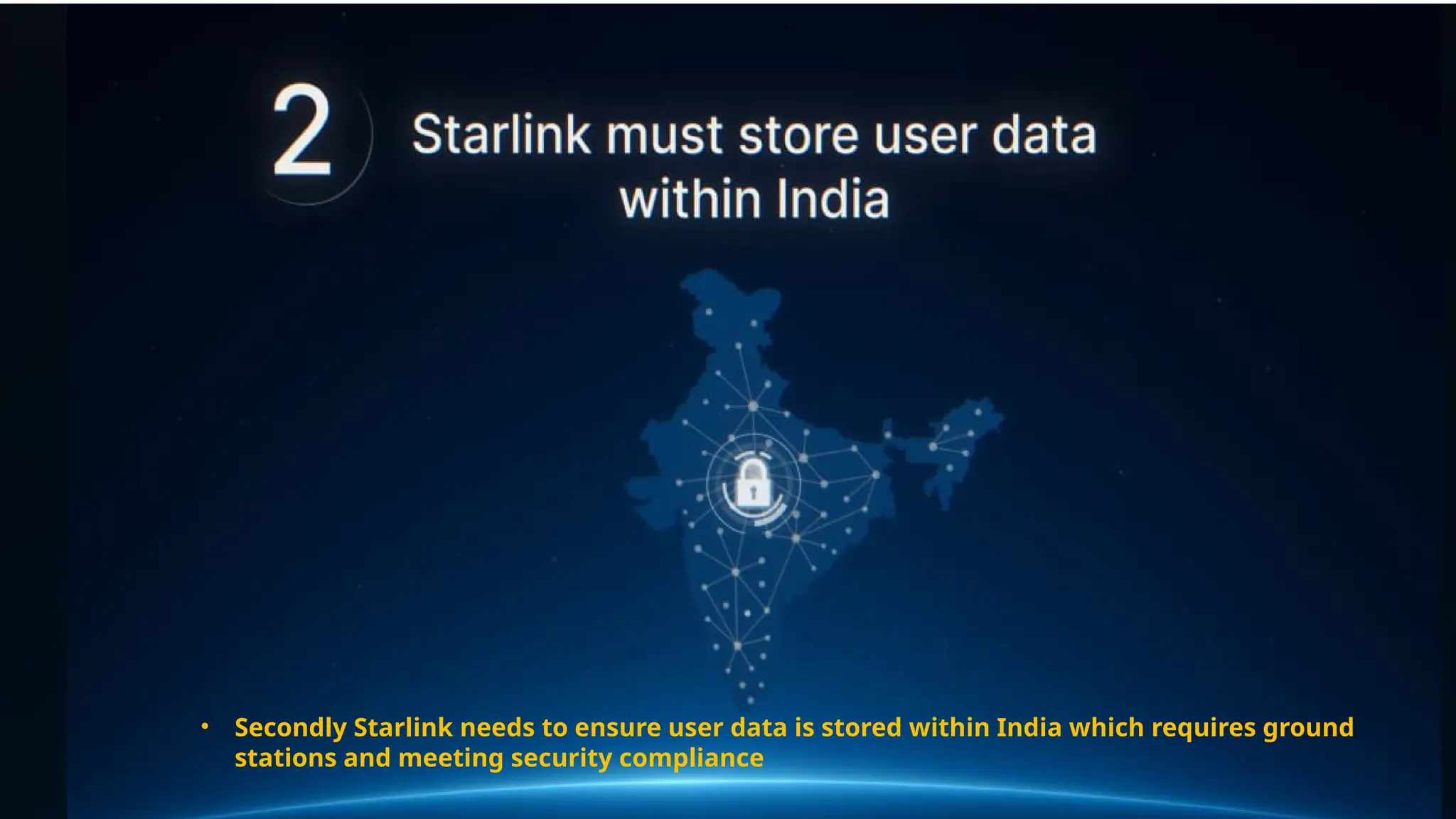
• Secondly Starlinkneeds to ensure user data is stored within India which requires ground
stations and meeting security compliance
39.
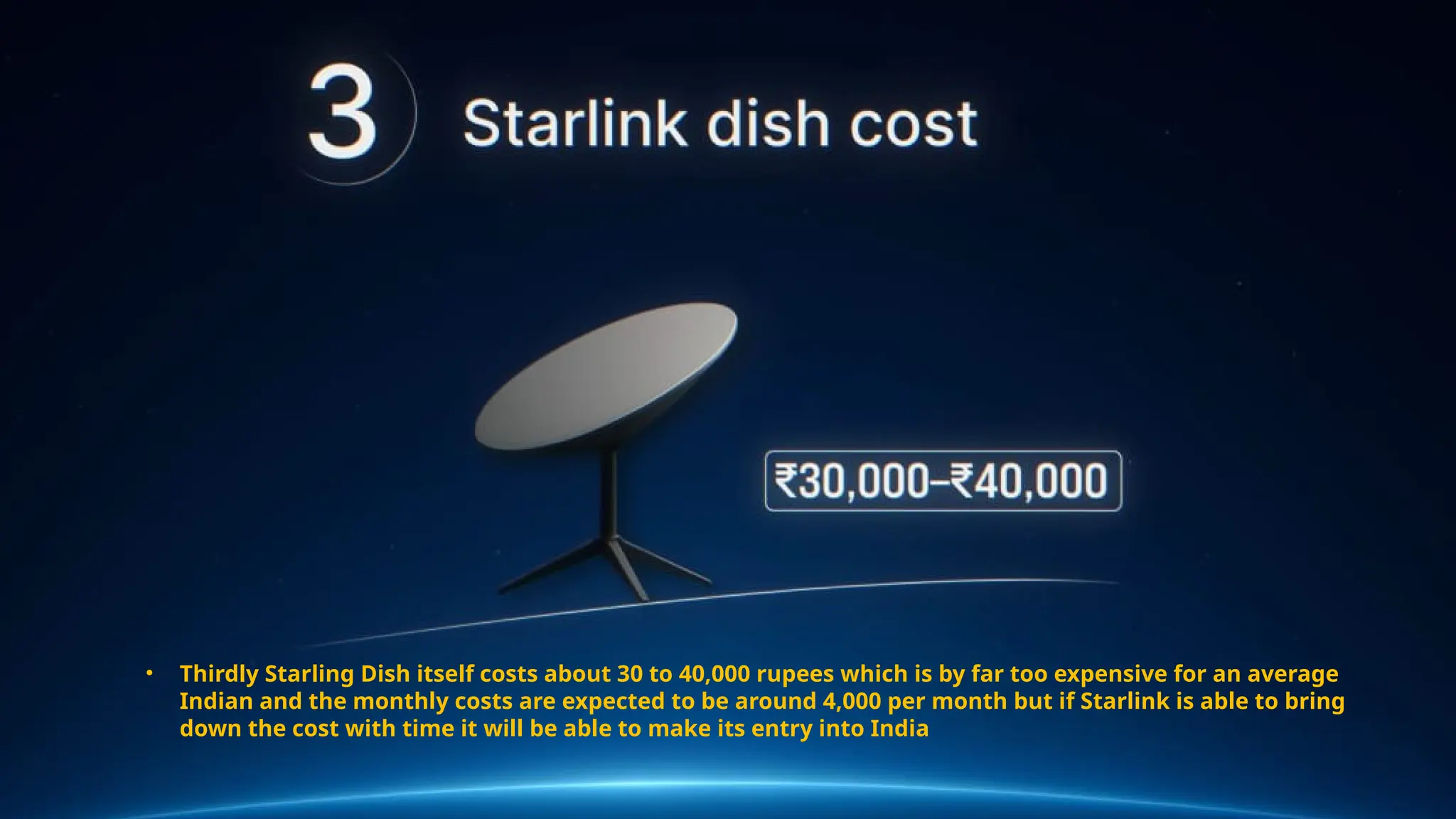
• Thirdly StarlingDish itself costs about 30 to 40,000 rupees which is by far too expensive for an average
Indian and the monthly costs are expected to be around 4,000 per month but if Starlink is able to bring
down the cost with time it will be able to make its entry into India
41.
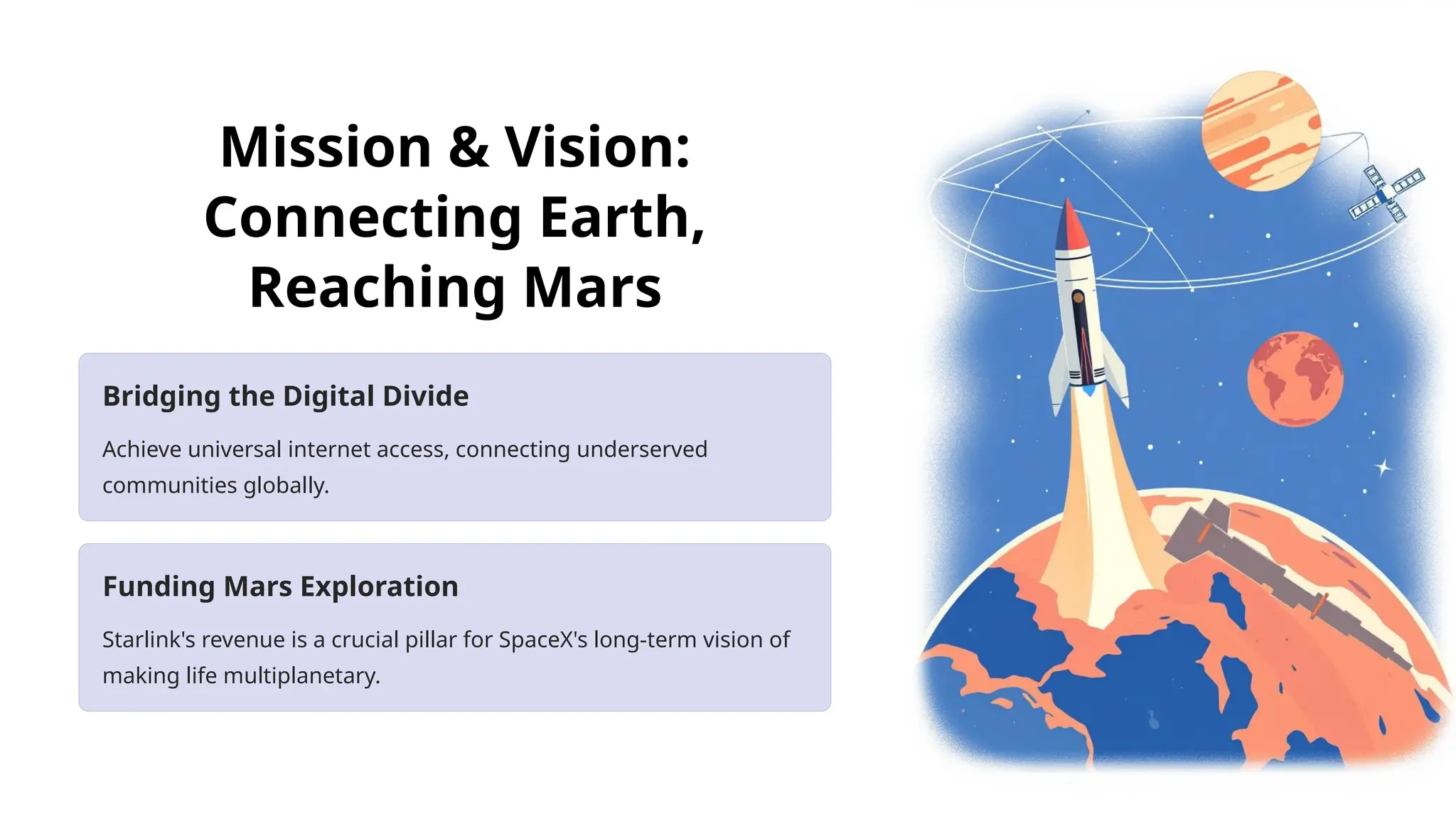
Mission & Vision:
ConnectingEarth,
Reaching Mars
Bridging the Digital Divide
Achieve universal internet access, connecting underserved
communities globally.
Funding Mars Exploration
Starlink's revenue is a crucial pillar for SpaceX's long-term vision of
making life multiplanetary.
42.
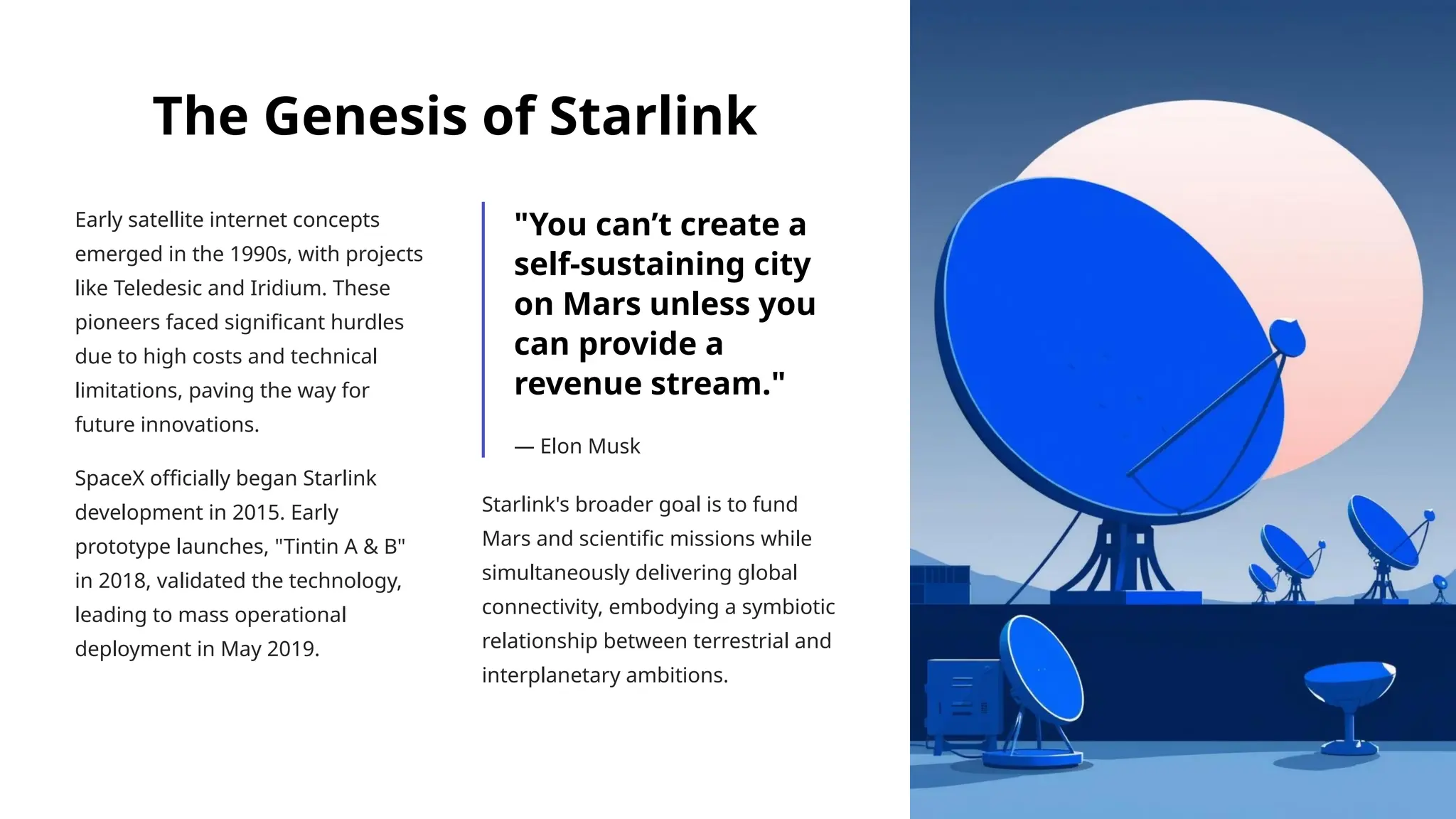
The Genesis ofStarlink
Early satellite internet concepts
emerged in the 1990s, with projects
like Teledesic and Iridium. These
pioneers faced significant hurdles
due to high costs and technical
limitations, paving the way for
future innovations.
SpaceX officially began Starlink
development in 2015. Early
prototype launches, "Tintin A & B"
in 2018, validated the technology,
leading to mass operational
deployment in May 2019.
"You can’t create a
self-sustaining city
on Mars unless you
can provide a
revenue stream."
— Elon Musk
Starlink's broader goal is to fund
Mars and scientific missions while
simultaneously delivering global
connectivity, embodying a symbiotic
relationship between terrestrial and
interplanetary ambitions.
43.
Overcoming Formidable Challenges
TechnicalHurdles
Miniaturizing satellites, drastically
lowering launch costs, and
mitigating orbital debris with
autonomous avoidance systems.
Regulatory Complexities
Securing radio spectrum,
navigating global regulatory
filings, and obtaining crucial FCC
approvals.
Logistical & Financial
Scale
Producing thousands of satellites
and user terminals, raising over
$10B for deployment, and securing
subsidies for unserved markets.
44.
Technological Leap:
Evolution &Solutions
Low Earth Orbit (LEO) Advantage: Satellites
orbit ~550 km, drastically reducing latency
compared to geostationary satellites (>35,000
km).
Falcon 9 Reusability: Dramatically slashed launch
costs, enabling rapid mass deployments essential
for constellation build-out.
Satellite Generations: From V1.0 (2019) with
Hall-effect thrusters to V1.5 with laser inter-
satellite links, and V2 Mini (2023+) offering
enhanced bandwidth.
Sustainability Focus: Albedo reduction coatings
minimize brightness for astronomy, and
autonomous deorbit protocols ensure 95%+
material burn-up at end-of-life.
45.
but here's whereI started looking into the challenges that Starling will face in India for years
Starlink has been trying to enter India but progress has been slow and uncertain starlink has
struggled to clear India's regulatory hurdles in 2022 they applied
for a license it's called the GMPCS global mobile personal communication by satellite starlink is
yet to get that elon Musk's Starling could face a new tax hurdle in India reports suggest that the
government is
in fact considering a spectrum usage charge one major challenge is India's strict data localization
and security laws which previously blocked Starling's
entry starlink is awaiting final approval from India's National Space Promotion and Authorization
Center firstly Starling has been stuck with approval delays where they still need to
clear all the licenses secondly Starling needs to ensure user data is stored within India which
requires ground stations and meeting security compliance
thirdly Starling Dish itself costs about 30 to 40,000 rupees which is by far too expensive for an
average Indian and the monthly costs are expected to be around
4,000 per month but if Starlink is able to bring down the cost with time it will be able to make its
entry into India
46.
mean for Starlinktwo things direct distribution across India through Jio and Airel's existing retail channels and number two faster ad
nd Airel already have established customer bases and infrastructure but the real question is how will India's growth story benefit fr
rtel Jio partnership well the first opportunity lies in digital education for rural India according to UNESCO every additional layer of s
creases a person's income by 10% but rural India's dropout rates are sky-high due to poor for connectivity now I strongly believe th
o build ETH products
or India 3 with profitability even in India
edtech companies have failed to scale profitably so India 3 looks like a distant dream to me but if the government can take this init
think it's quite feasible because it's
ot about business it's about nation building secondly the scope of rural teley medicine opens up you know 70% of India's populatio
reas but only 40% of them are actually being served by doctors and thirdly there is an opportunity in rural e-commerce ecosystem r
an double India's total online retail GDP contribution so building low data
ernacular mobile games could be a huge opportunity and as far as Airel and Jio are concerned Starlink will be Airel and Jio's first tou
nd when Jio or Airel sell Starling to rural India they will become the first
oint of contact for internet users secondly Jio and Airel both will get total ecosystem control so J and Airel will now be able to upsell
ortfolio of services from Jio Cinema to Jopay both companies will be able to monetize Starlink users by offering bundles to keep the
heir ecosystem but my skepticism over here is that in a village where people are relying on 2G data how are they going to offer thes
something that we'll only come to know in the future but here's where most people would ask if
s too expensive if it's too complicated why do we even need it in India well here's where you need to look at the larger picture you
arlink is not about giving internet access to rural India but what people can achieve with this internet access because here's the th
st a satellite service is the infrastructure for a new economic engine in 2023 the World Bank estimated that every 10% increase in in
enetration in developing countries can lead to a 1.2% increase in GDP growth now imagine what will happen when 600
million more Indians come online that's 600 million new consumers 600 million new learners and millions of new
ntrepreneurs so with internet access a remote village can start selling to urban India a weaver can list on Amazon
nd a student can actually learn English from rural India because when internet arrives in a village so does education
ealthcare employment and entrepreneurship and when you achieve connectivity you unlock efficiency
quity and exponential growth and India doesn't need 10 more unicorns in Mumbai it needs 10 million connected mines in
llages of Odisha Ladak and Chhattisgarh and
Starling can enable that then this isn't just about a tech
Editor's Notes
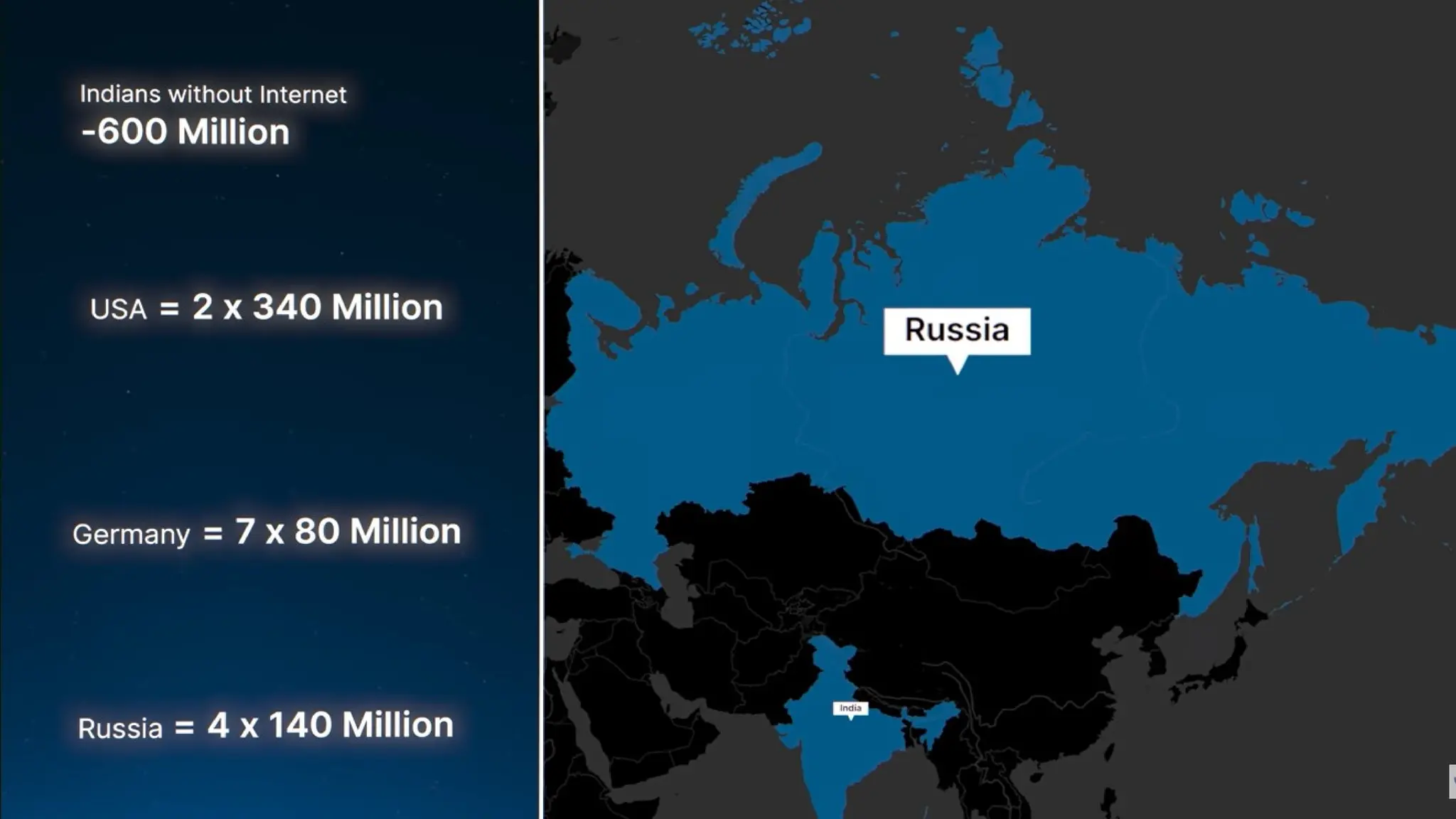
#3 so in cities like Mumbai Delhi and Bangalore you've got highspeed broadband 5G and seamless connectivity but the story changes the moment you step into rural India like I said there are still 600 million Indians without reliable internet can you imagine that that's almost twice the population of the US 7 times the population of Germany and four times the population of Russia
#4 Right now most of India's internet comes from fiber optic cables and mobile towers so fiber optic cables carry data from massive data centers servers and internet hubs directly to the mobile towers and once this data reaches the mobile towers it's converted from these light pulses into wireless radio waves which then reach your phone
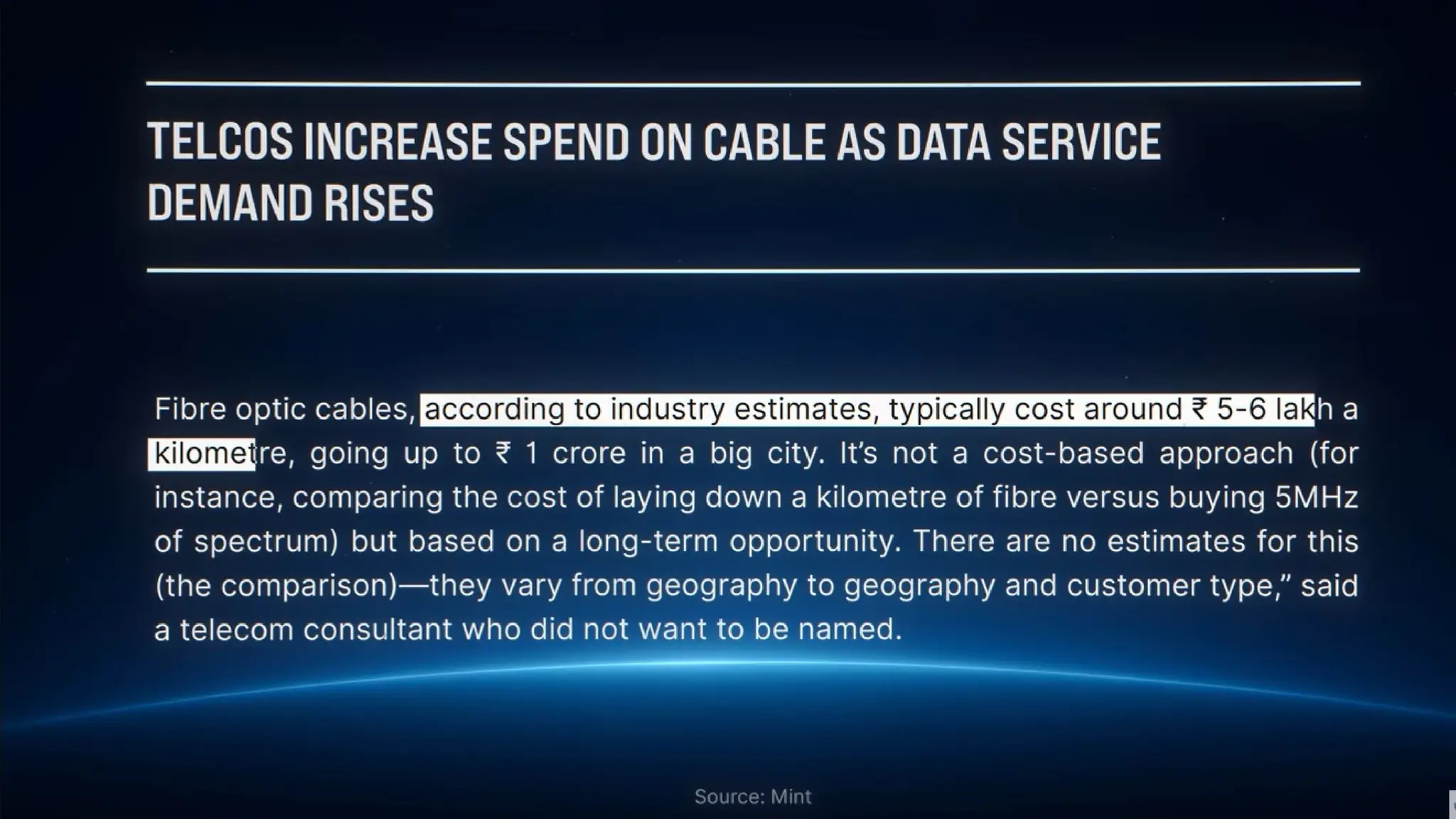
#5 Well that is because building internet infrastructure in remote regions is expensive complicated and more importantly it's not profitable look at this fiber cables cost 5 to seven lakh rupees per kilometer just to lay down and we need hundreds of thousands of kilometers to cover all villages in India
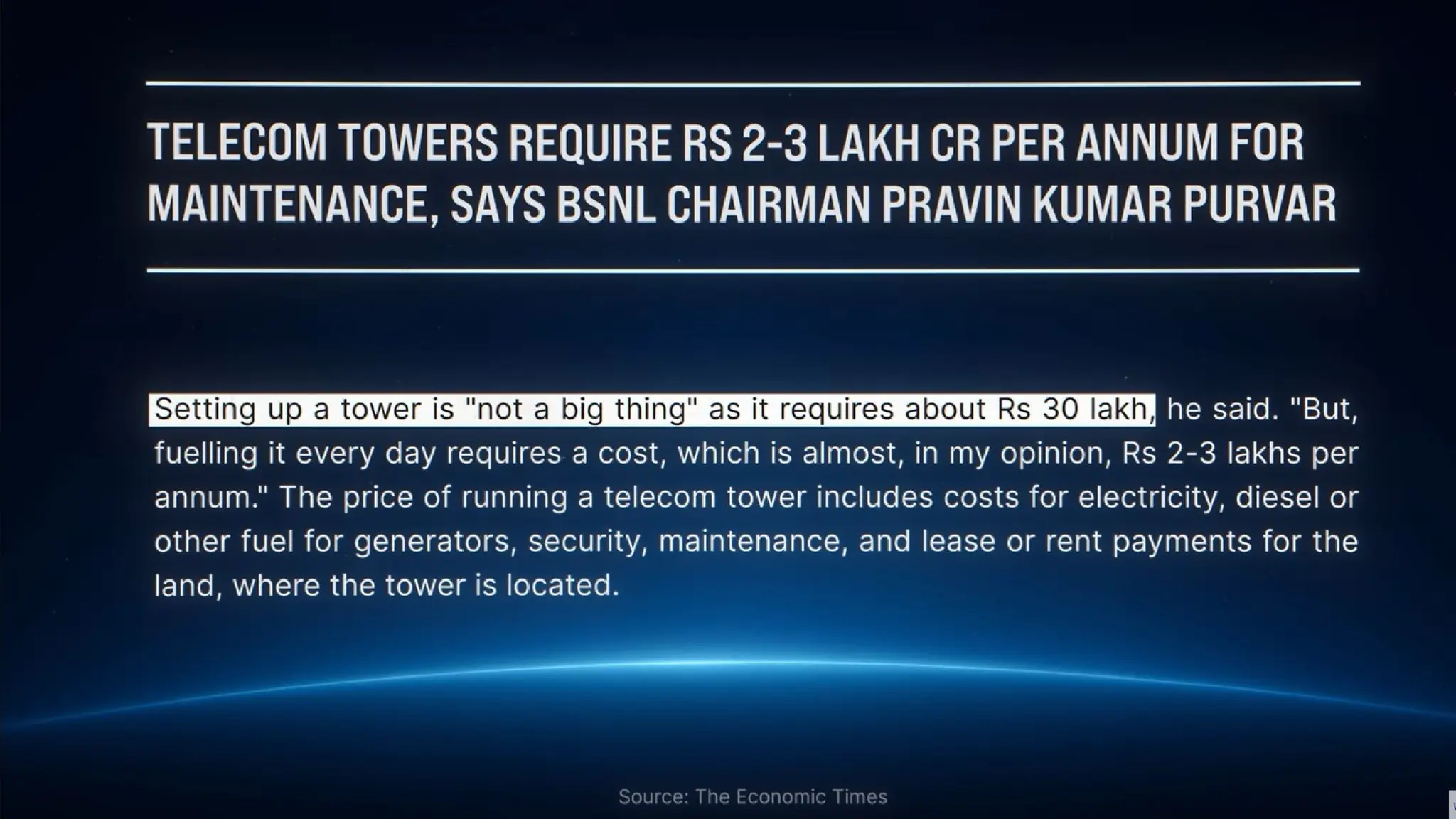
#6 Similarly 5G towers cost around 25 to 35 lakh rupees each and they require a steady power supply and constant maintenance so in places like Ladhak Arunachal Pradesh and Chhattisghar these challenges make internet access almost impossible which is why even today in India some villages still rely on 2G networks and many don't have internet at all
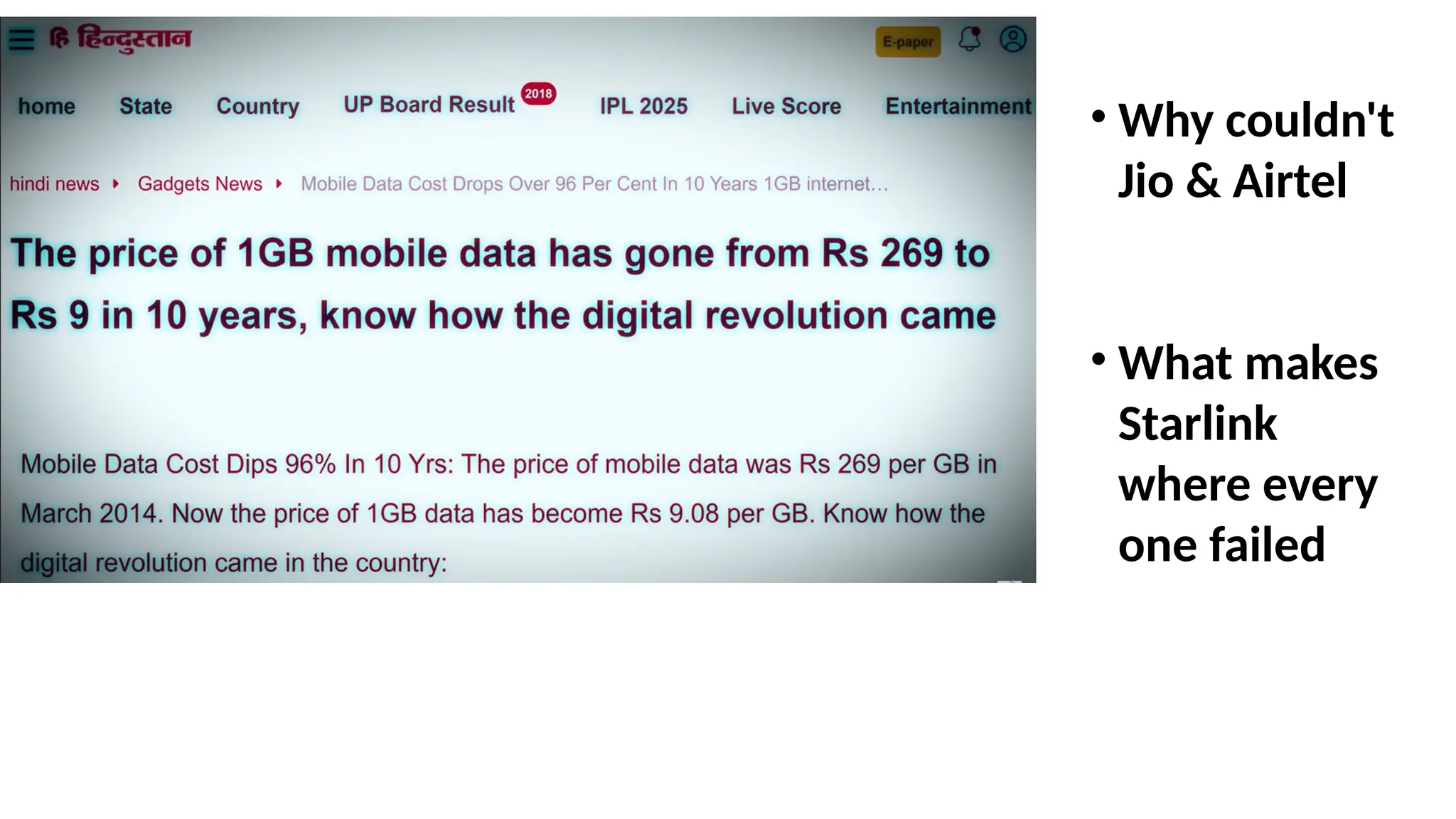
#8 So the question is why couldn't Jio and Airtel solve it
#9 But that is where Starlink is changing everything starlink is using a revolutionary satellite network that beams high-speed internet straight from space no roads no wires just pure connectivity so consumers get faster internet speeds and they can connect from anywhere all they need is a Starlink device it works even in the most remote locations in fact that's the biggest advantage of Starlink satellite internet have faster connection the kind of quality of voice and data with a user will get based on the satellite internet services obviously that is far much better than what we are currently getting here's how Starlink has miraculously solved this problem instead of relying on fiber cables or towers. Starlink uses satellite that beam internet directly from space so no roads no cables no infrastructure just high-speed internet wherever you are but
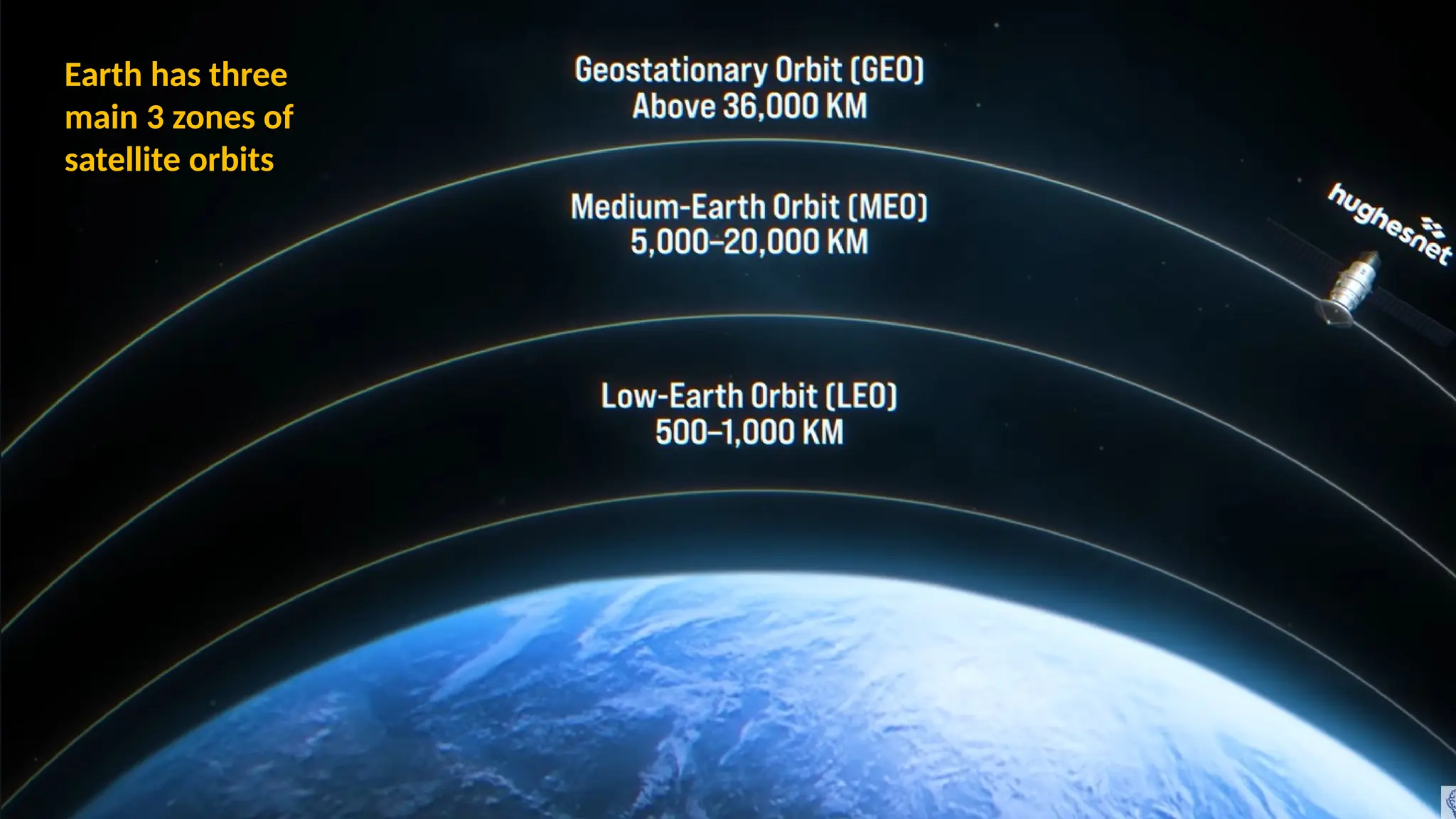
#11 Look at this the answer lies in this diagram you see the Earth has three main zones of satellite orbits these three zones are low Earth orbit which is 500 to 1,000 km above Earth medium earth orbit which is 5,000 to 20,000 km away and geostationary orbit which is way above at 36,000 km and above
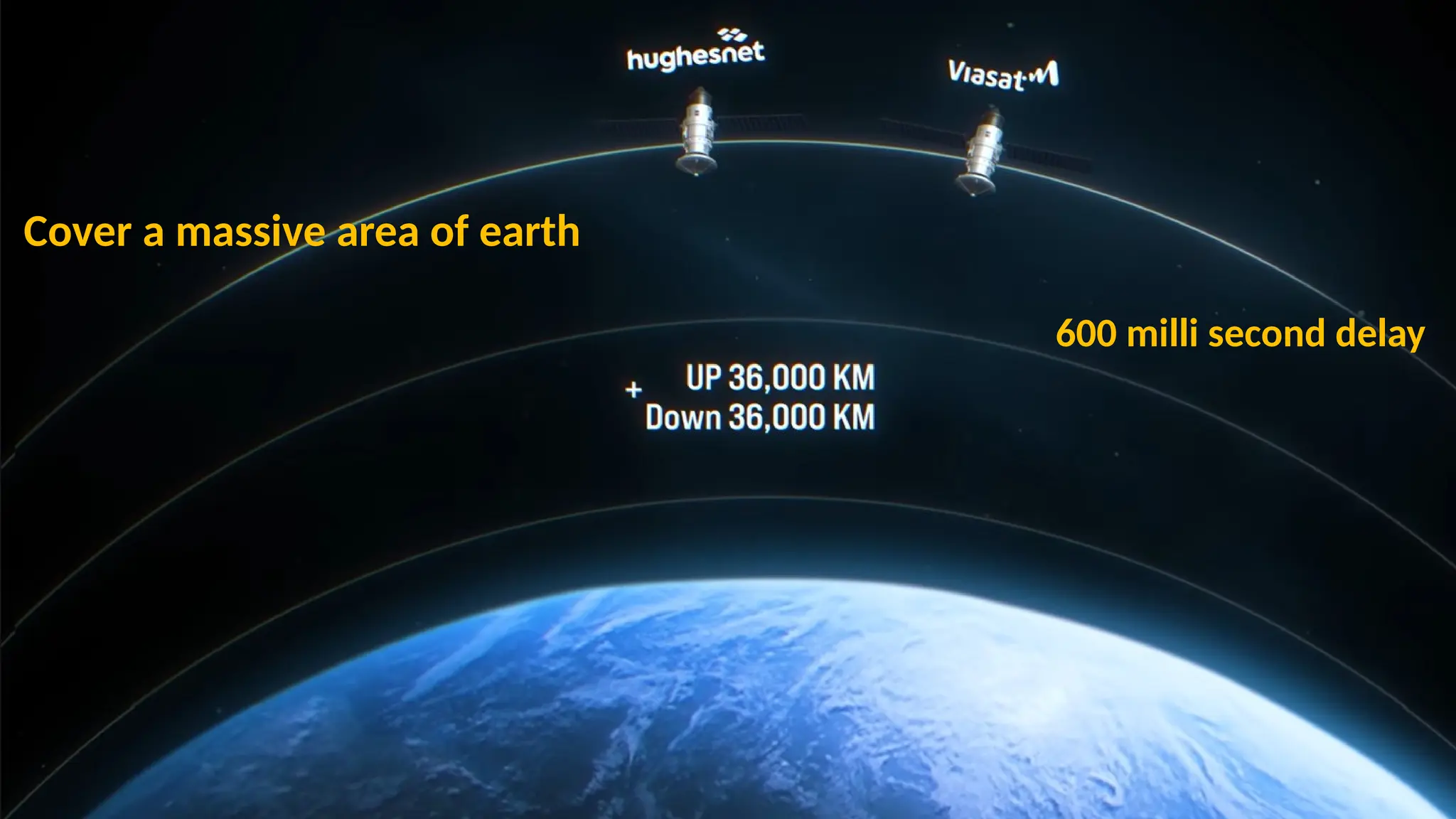
#12 Traditional satellite companies like Hughesnet and Via Sat used geo satellites because being so high up meant each satellite could cover a massive area of earth but the one big problem is the farther away the satellite is the longer it takes for your data to travel back and forth think about this geo satellites are 36,000 km away this means every single piece of data like your video call or game commands they have to travel 72,000 km
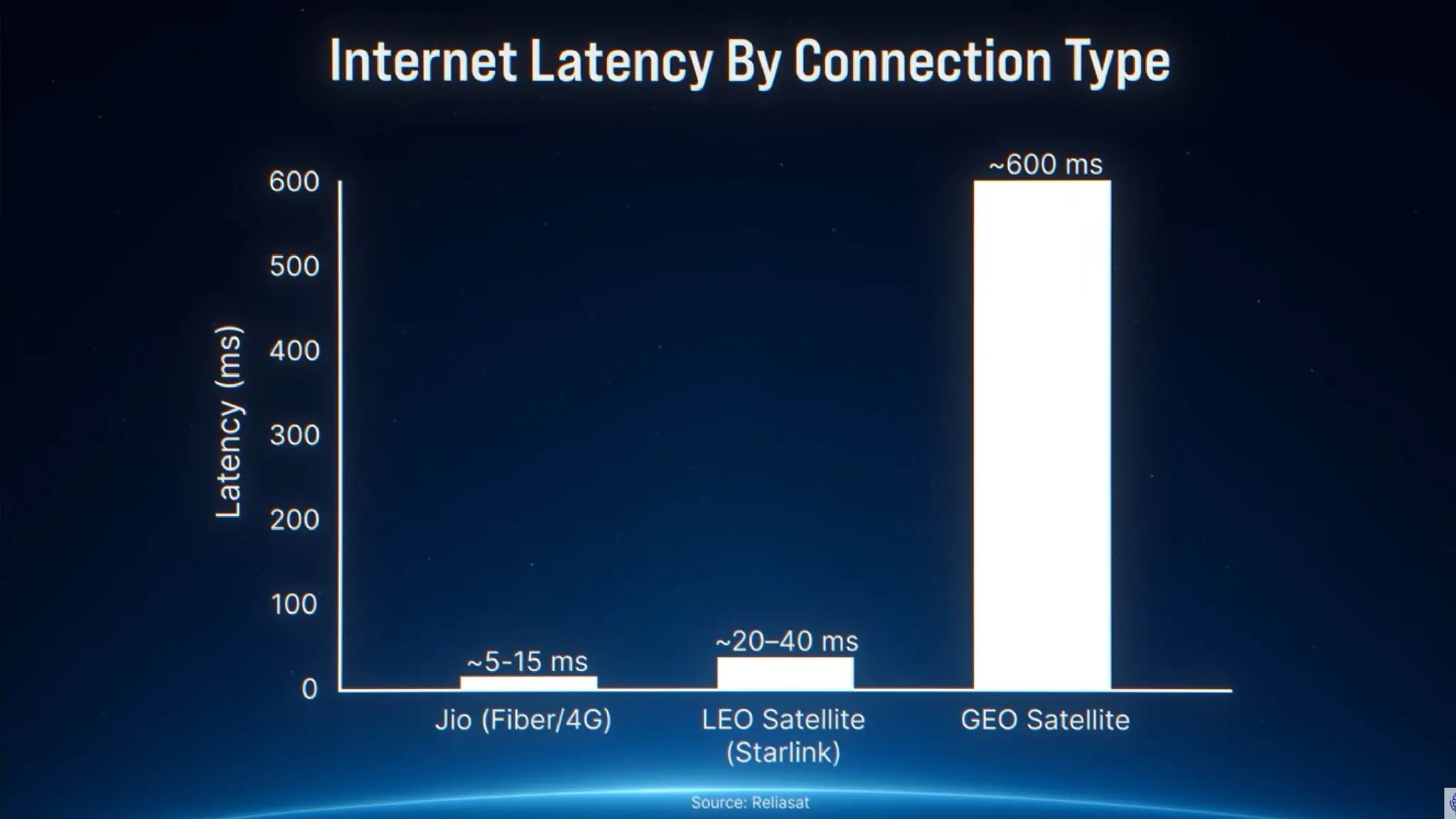
up and back which causes a super annoying delay of 600 milliseconds or 0.6 seconds and trust me guys 0.6 seconds is terrible for gaming and video calls only the gamers will be able to understand.
#13 So while the current Jio internet has a delay of 5 to 15 milliseconds LEO satellites have a delay of 20 to 40 milliseconds whereas geo satellites have a delay of 600 milliseconds.
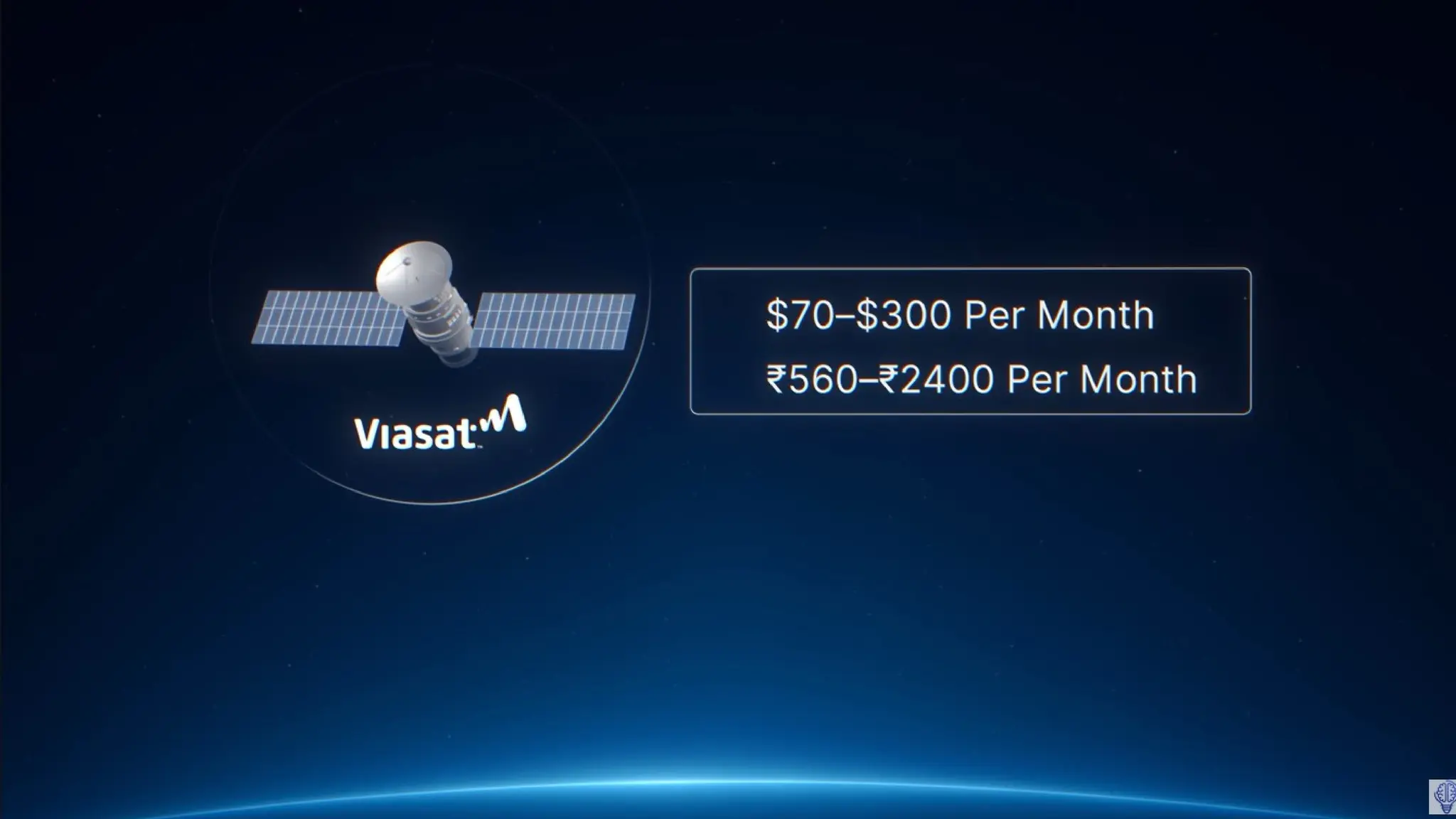
#14 On top of all of this traditional satellite internet from companies like Weiss still cost between $70 to $300 per month as inRs 560 rupees to Rs 2,400 rupees per month so obviously no one can afford that in villages
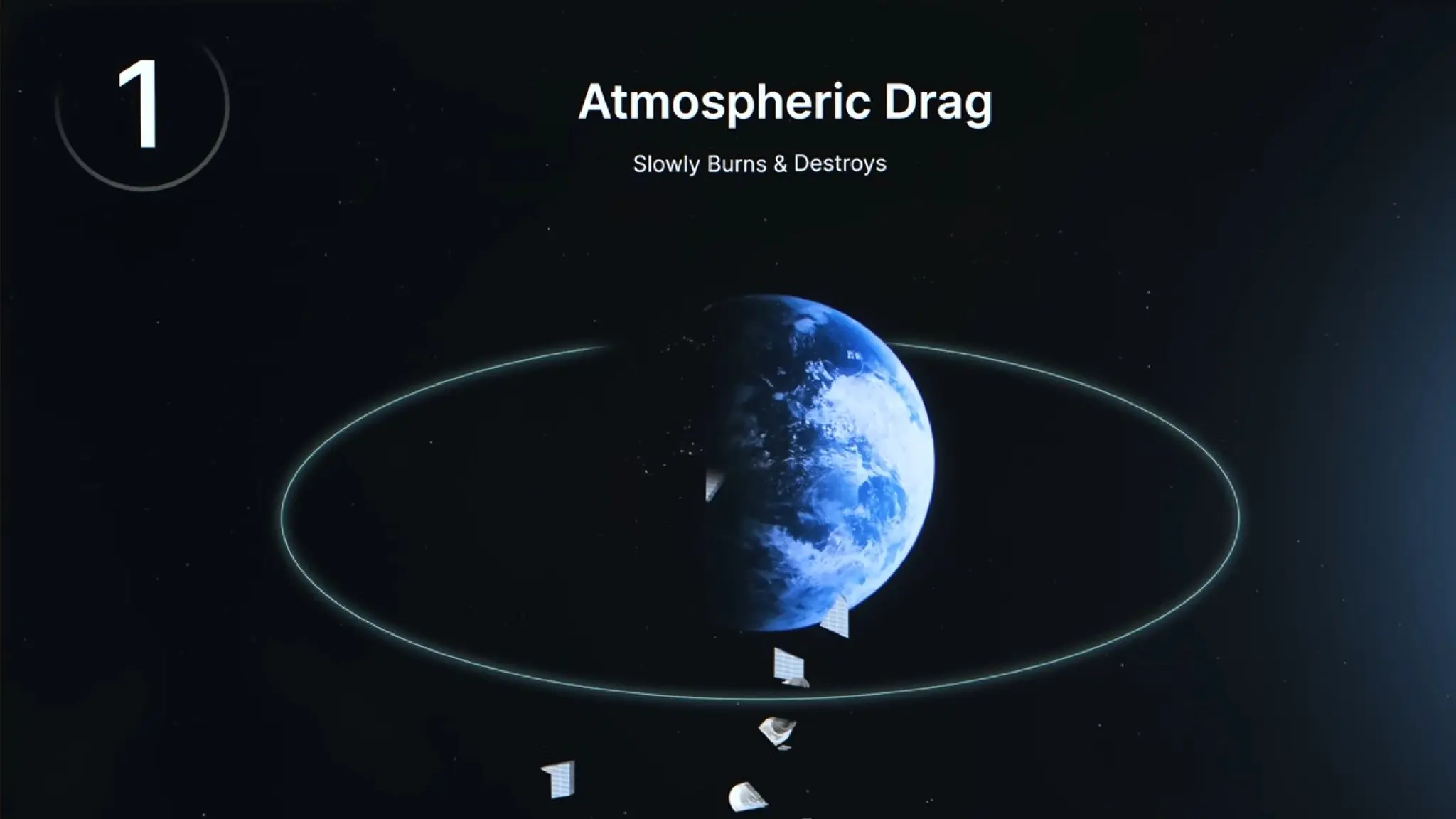
#19 this is because of three reasons firstly there is something called atmospheric drag so due to friction
earth's atmosphere burns the LEO satellites down which eventually destroys them
#20 There is harsh space radiation whereby LEO satellites get blasted with intense space radiation which gradually weakens their parts
#21 lastly there is collision risk and since 84% of all satellites orbiting the Earth are in LEO the risk of satellites crashing into space junk or other satellites is super super high s
#22 this means Starling constantly has to launch new satellites just to replace the old ones plus since LEO satellites keep on moving you need thousands of them just to cover the whole planet so do you realize if launching a single satellite is expensive managing a giant constellation of thousands of satellites is financially impossible for any
#24 SpaceX has the superpower to launch satellites at a dirt cheap cost look at this while traditional satellite companies spend $20,000 per kg SpaceX does it for just $2,000 per kg so the question
#25 SpaceX changed the rocket launching game by developing reusable rockets like Falcon 9 and Falcon Heavy
#26 SpaceX changed the rocket launching game by developing reusable rockets like Falcon 9 and Falcon Heavy
these rockets are so extraordinary that they can be used up to 20 times in a row and 100 times with refurbishment and this cuts their launch cost from $60 million to just $15 million per mission so this is
#28 Starlink a massive leap of innovation secondly unlike other satellite companies that rely on third party manufacturers SpaceX makes its own satellites in-house this cuts down on middleman costs and streamlines production
#29 thirdly SpaceX has maximized payload capacity per launch so while the Falcon 9 rocket can
deploy up to 60 Starling satellites in a single mission competitors like Amazon Kyper can only accommodate 32 satellites per launch this is the reason why nobody as of now has been able to beat Starlink
#30 Amazon Kyper can only accommodate 32 satellites per launch this is the reason why nobody as of now has been able to beat Starlink
this is the reason why nobody as of now has been able to beat Starlink
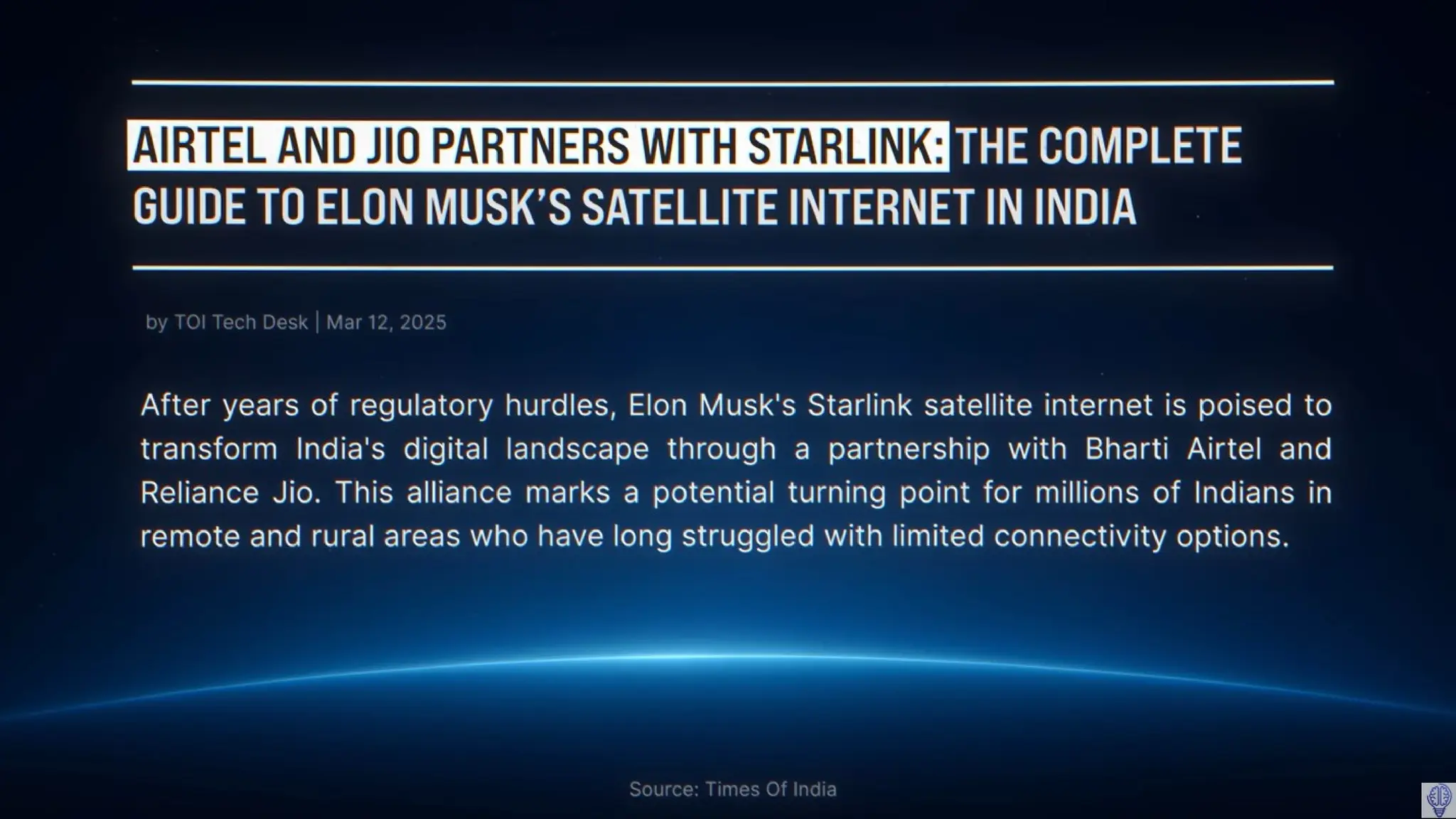
#37 elon Musk SpaceX and Starlink rather is wanting to do in India it's announced an agreement with
Airel to bring Starlingks high-speed internet services to customers in India staling you know provides an exciting
turning point for Indian businesses enterprises sectors ranging from agriculture healthcare education can greatly enhance operational efficiency you know improve services deliveries so this is a significant milestone I would say for the businesses and here's what he did
#45 elon Musk SpaceX and Starlink rather is wanting to do in India it's announced an agreement with
Airel to bring Starlingks high-speed internet services to customers in India staling you know provides an exciting
turning point for Indian businesses enterprises sectors ranging from agriculture healthcare education can greatly enhance operational efficiency you know improve services deliveries so this is a significant milestone I would say for the businesses and here's what he did
#46 elon Musk SpaceX and Starlink rather is wanting to do in India it's announced an agreement with
Airel to bring Starlingks high-speed internet services to customers in India staling you know provides an exciting
turning point for Indian businesses enterprises sectors ranging from agriculture healthcare education can greatly enhance operational efficiency you know improve services deliveries so this is a significant milestone I would say for the businesses and here's what he did









![[BROCHURE] Italy Tour Project | @SlideON](https://cdn.slidesharecdn.com/ss_thumbnails/brochure8-251215152319-2805af68-thumbnail.jpg?width=640&height=640&fit=bounds)


