
PRESENTED BY
Pooja H. Khanpara
M.PHARM (Pharmacognosy)
DEPARTMENT OF PHARMACOGNOSY
AKSHAR-PREET COLLEGE OF
PHARMACY,JAMNAGAR
HERBAL DRUGS/ HERBAL FORMULATION
• ARE – Finished labelled products that contain active
ingredients such as aerial or underground parts of plant or
other plant material or combinations thereof, whether in the
crude state or as plant preparations.
• ARE - crude plant material such as leaves, flowers, fruit, seed,
stems, wood, bark, roots, rhizomes or other plant parts, which may
be entire, fragmented or powdered.
HERBS
 Phytomedicines or Phytopharmaceuticals sold as Over The
Counter ( OTC ) products in modern dosage forms such as
Tablets, Capsules & Liquids for oral use.
Dietary Suppliments containing Herbal Products, also called
Neutraceuticals available in modern dosage forms.
Herbal Medicines consisting of either Crude, Semi Processed
or Processed Medicinal Plants.
HERBAL DRUGS
Guidelines for Quality Control
of Herbal formulation
• Quality control of crude drugs material, plant preparations
and finished products
• Stability assessment and shelf life
• Safety assessment; documentation of safety based on
experience or toxicological studies
• Assessment of efficacy by pharmacological informations
and biological activity evaluations
STANDARDISATION
• Standardization of drug means
“confirmation of its identity and
determination of its quality and purity and detection of
nature of adulterant by various parameters like
morphological, microscopical, physical, chemical and
biological observations.”
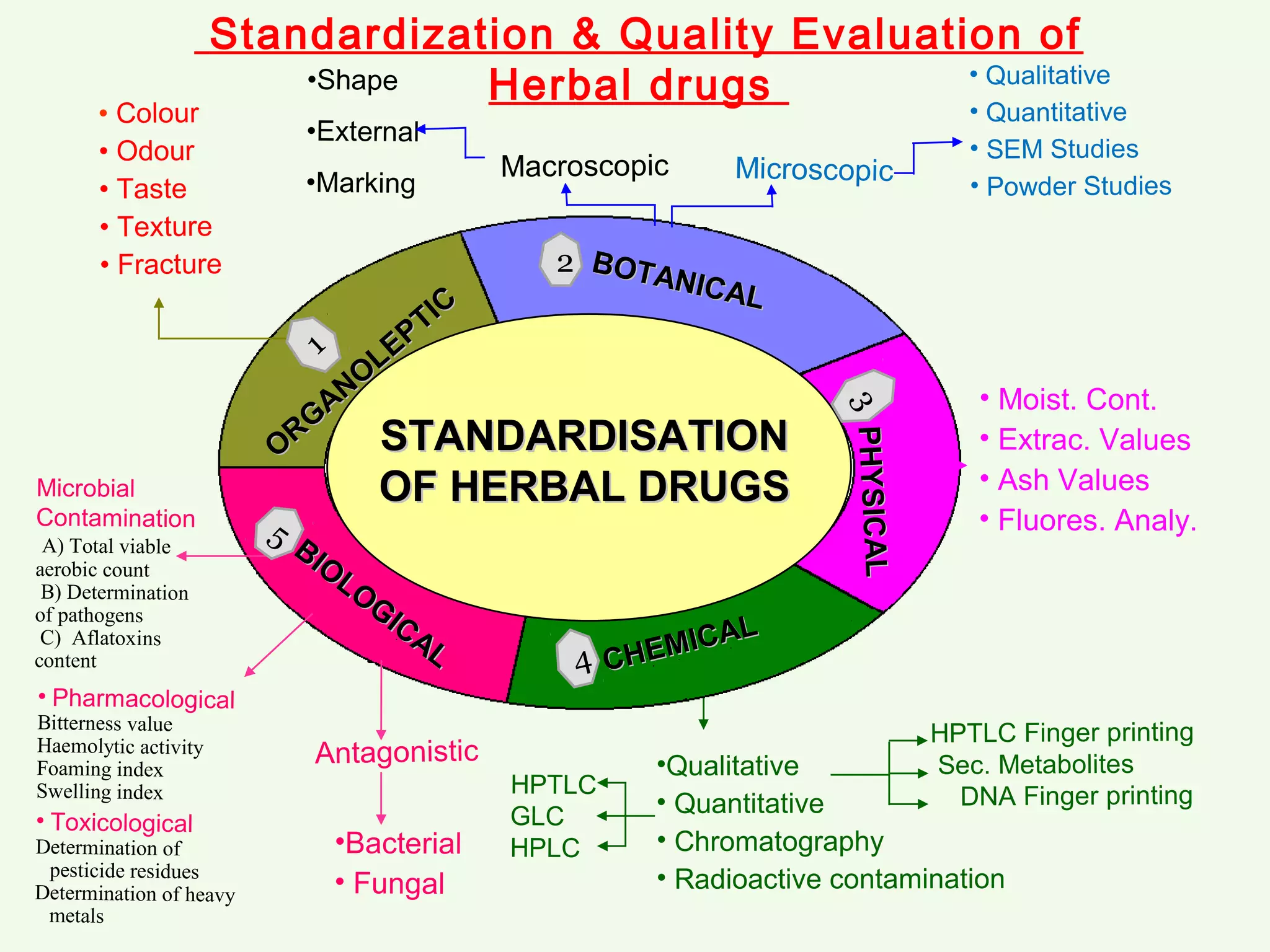
STANDARDISATIONSTANDARDISATION
OF HERBAL DRUGSOF HERBAL DRUGS
CHEMICAL
CHEMICAL
BIOLOGICAL
BIOLOGICAL
O
RG
ANO
LEPTIC
O
RG
ANO
LEPTIC
BOTANICAL
BOTANICAL
PHYSICALPHYSICAL
• Moist. Cont.
• Extrac. Values
• Ash Values
• Fluores. Analy.
Macroscopic Microscopic
• Qualitative
• Quantitative
• SEM Studies
• Powder Studies
•Shape
•External
•Marking
• Colour
• Odour
• Taste
• Texture
• Fracture
Antagonistic
Microbial
Contamination
A) Total viable
aerobic count
B) Determination
of pathogens
C) Aflatoxins
content
• Pharmacological
Bitterness value
Haemolytic activity
Foaming index
Swelling index
• Toxicological
Determination of
pesticide residues
Determination of heavy
metals
•Bacterial
• Fungal
•Qualitative
• Quantitative
• Chromatography
• Radioactive contamination
HPTLC
GLC
HPLC
HPTLC Finger printing
Sec. Metabolites
DNA Finger printing
Standardization & Quality Evaluation of
Herbal drugs
1
2
3
4
5
Macroscopic study
• Visual inspection provides the
simplest and quickest means by
which to establish identity,
purity and quality.
• Macroscopic identity of
medicinal plant materials is
based on shape, size, colour,
surface characteristics, texture,
fracture characteristics and
appearance of the cut surface.
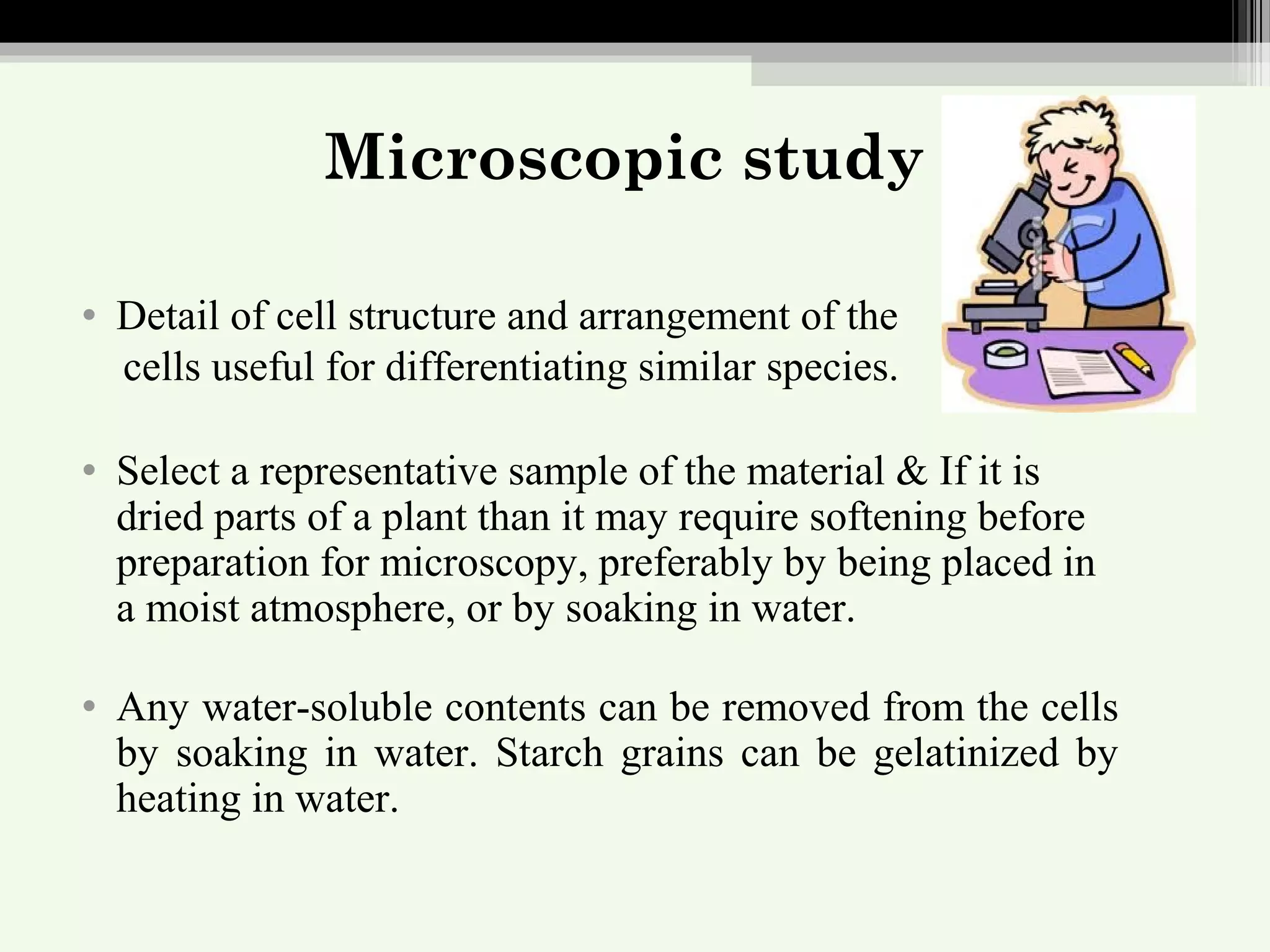
Microscopic study
• Detail of cell structure and arrangement of the
cells useful for differentiating similar species.
• Select a representative sample of the material & If it is
dried parts of a plant than it may require softening before
preparation for microscopy, preferably by being placed in
a moist atmosphere, or by soaking in water.
• Any water-soluble contents can be removed from the cells
by soaking in water. Starch grains can be gelatinized by
heating in water.
• Histochemical detection
• Starch grains
• Aleurone grains
• Fats, fatty oils, volatile oils and resins
• Calcium oxalate/carbonate crystals
• Lignified cell wall
• Cellulose cell wall
• Mucilage
• Tannin
• Measurement of specimen
• Stomatal number
• Stomatal index
• Palisade ratio
• Vein-islet number
• Vein termination number
• Lycopodium spore method
Foreign organic matter
• Parts of the medicinal plant material or
materials other than those named with the
limits specified for the plant material
concerned;
• Any organism, part or product of an
organism, other than that named in the
specification and description of the plant
material concerned;
• Mineral admixtures that is adhering to the
medicinal plant materials, such as soil, stones,
sand, and dust.
Foreign matter: NMT 2%w/w
Ash value
• It involves non-volatile inorganic components.
• High ash value is the indicative of contamination, substitution,
adulteration or carelessness in preparing the crude drugs.
Total ash
• Total ash is designed to measure the total amount of material
produced after complete incineration of the drug material at as
low temperature as possible (about 450°C) to remove all the
carbons.
• Total ash usually consists of carbonates, phosphates, silicates
and silica.
• IP and USP: 675±25°C
• BP : 600±25°C
• WHO: 500-600°C
Acid insoluble ash
• Ash insoluble in HCl is the residue obtained after
extracting the total ash with HCl. It gives idea about the
earthy matter
• IP method: 25mL 2M HCL solution
• USP method: 25mL 3N HCL solution
• BP method: 15mLwater and 10mL HCL
• WHO method: 25 ml of hydrochloric acid (~70g/l)
Water soluble ash
• Total ash content which is soluble in water. It’s good
indicator of presence of previous extraction of water soluble
salts in the drug or incorrect preparation or amount of inorg.
matter
• Carbonated ash: Ash is treated with ammonium carbonate.
• Nitrated ash: Ash is treated with dilute nitric acid.
Extractive value
• Amount of the active constituents present in crude drug
material when extracted with specific solvent.
• There are following
Methods for determin-
-nation of Extractive
value.
a) Cold method
b) Hot method
c)Soxhlet method
COLD EXTRACTION METHOD :
• Volatile ether soluble
extractive value:
Anhydrous ether-
continuous extraction for
20hours
• Nonvolatile ether soluble
extractive value:
Drugs having lipid content,
fixed oils eg.Colocynth
fruits : NMT 3% (Pulp-
medicinal value)
• Water soluble extractive
value
• Alcohol soluble extractive
value: Solvent strength: 20-
95% v/v
• Solvent Hexane soluble
extractive value: Continuous
extraction for 20 hours
eg.Phyllanthus amarus: NLT
3%
Insoluble matter:
• Presence of woody matter or vegetable debris or pieces of
bark materials.
• Eg. In catechu
Water insoluble matter: NMT 33%
Alcohol insoluble matter: NMT 30%
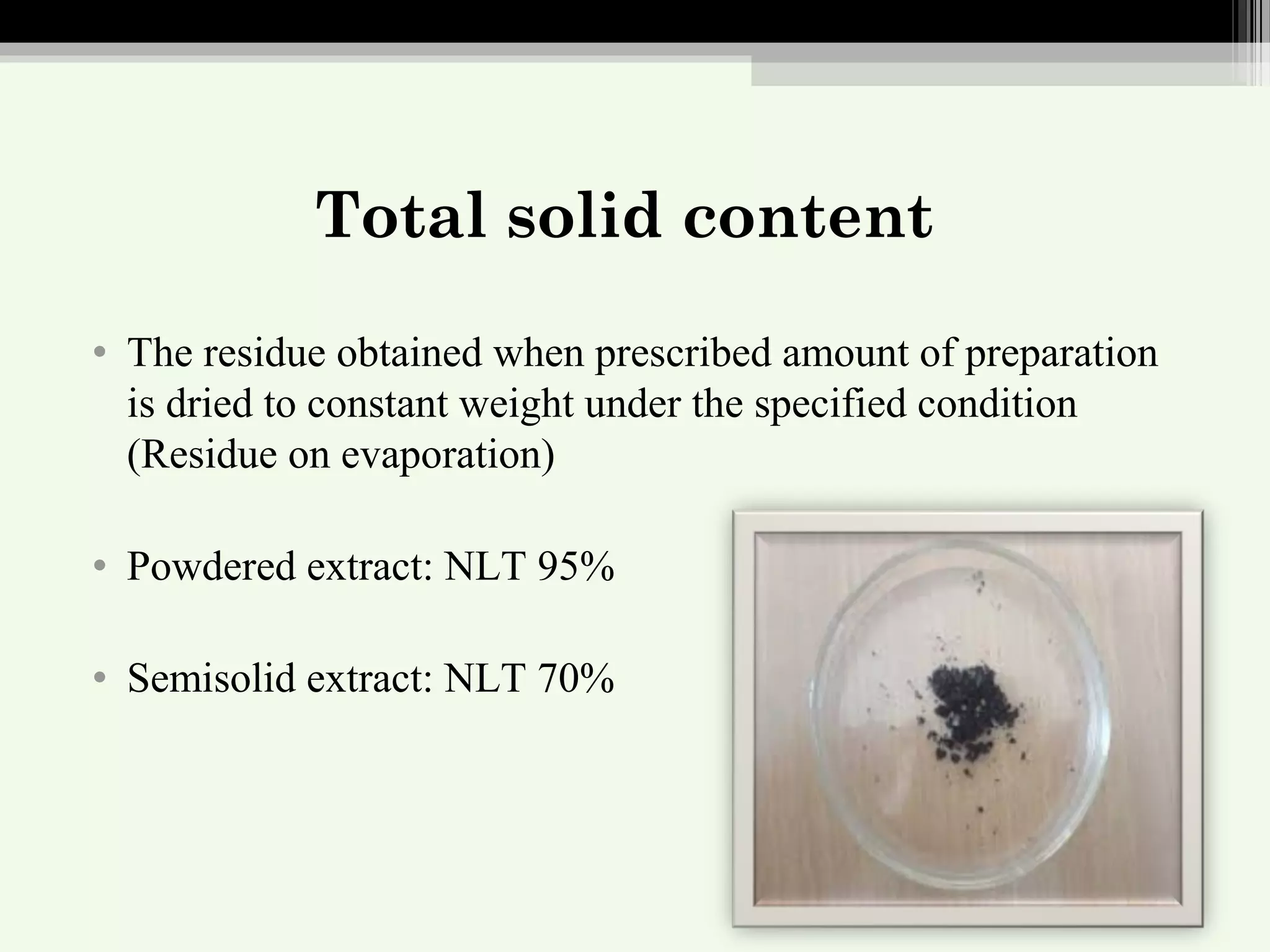
Total solid content
• The residue obtained when prescribed amount of preparation
is dried to constant weight under the specified condition
(Residue on evaporation)
• Powdered extract: NLT 95%
• Semisolid extract: NLT 70%
Water Content
• Loss on drying (Gravimetric determination)
• Volumetric Azeotropic distillation (toluene distillation)
method
• Titrimetric Karl fisher method
• Gas chromatographic method
Volatile oil content
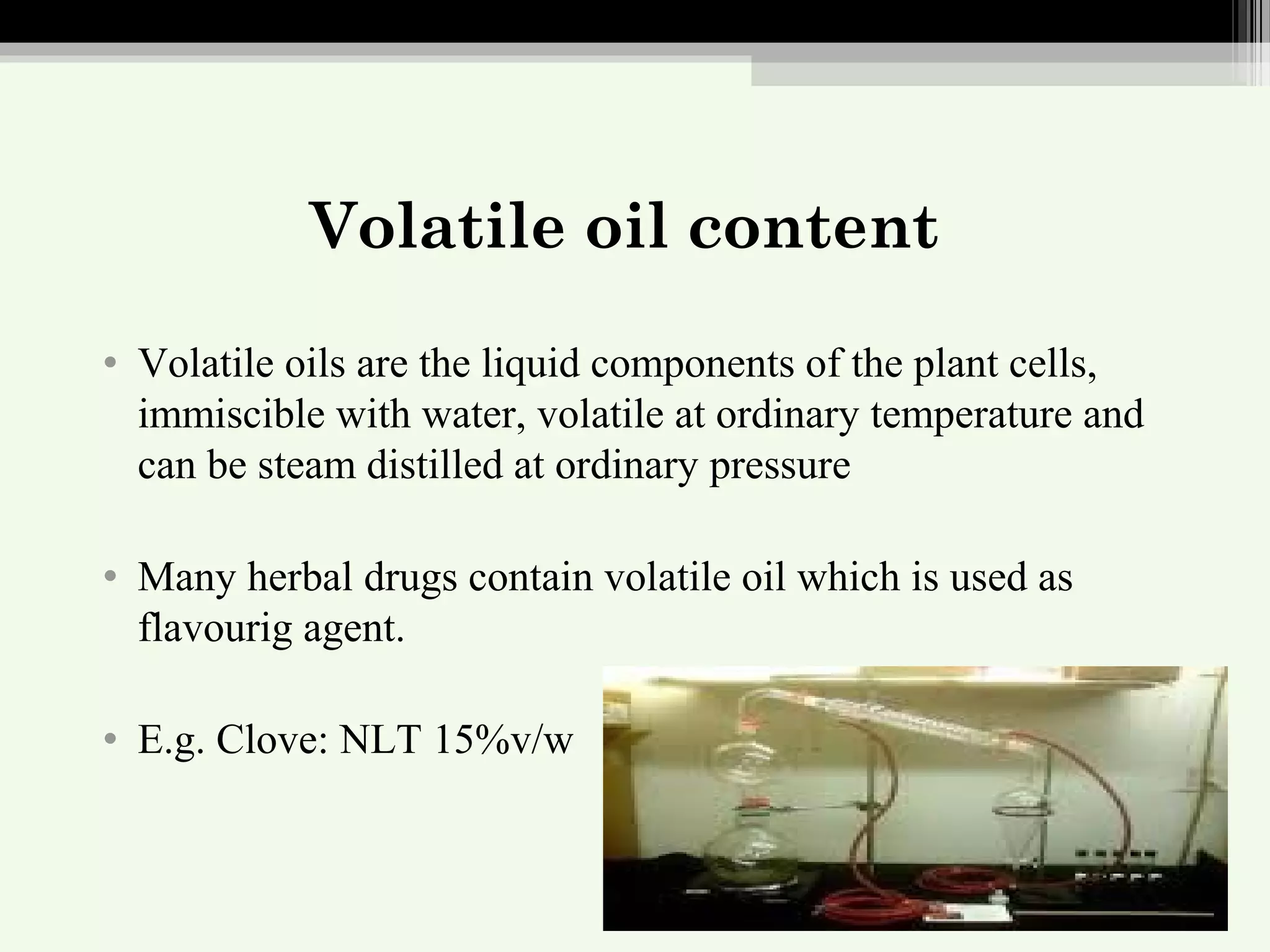
• Volatile oils are the liquid components of the plant cells,
immiscible with water, volatile at ordinary temperature and
can be steam distilled at ordinary pressure
• Many herbal drugs contain volatile oil which is used as
flavourig agent.
• E.g. Clove: NLT 15%v/w
Bitterness value
• Medicinal plant materials that have a strong bitter taste
("bitters") are employed therapeutically, mostly as appetizing
agents. Their bitterness stimulates secretions in the
gastrointestinal tract, especially of gastric juice.
• The bitter properties of plant material are determined by
comparing the threshold bitter concentration of an extract of
the materials with that of a dilute solution of quinine
hydrochloride.
• The bitterness value is expressed in units equivalent to the
bitterness of a solution containing 1g of quinine hydrochloride
R in 2000 ml.
• Bitterness value calculated in units per g using the
following formula:
Where,
a= the concentration of the stock test solution (ST) (mg/ml),
b = the volume of test solution ST (in ml) in the tube with the
threshold bitter concentration,
c = the volume of quinine hydrochloride R (in mg) in the tube
with the threshold bitter concentration.
Haemolytic activity
• Many medicinal plant materials, of the families
Caryophyllaceae, Araliaceae, Sapindaceae, Primulaceae,
and Dioscoreaceae contain saponins.
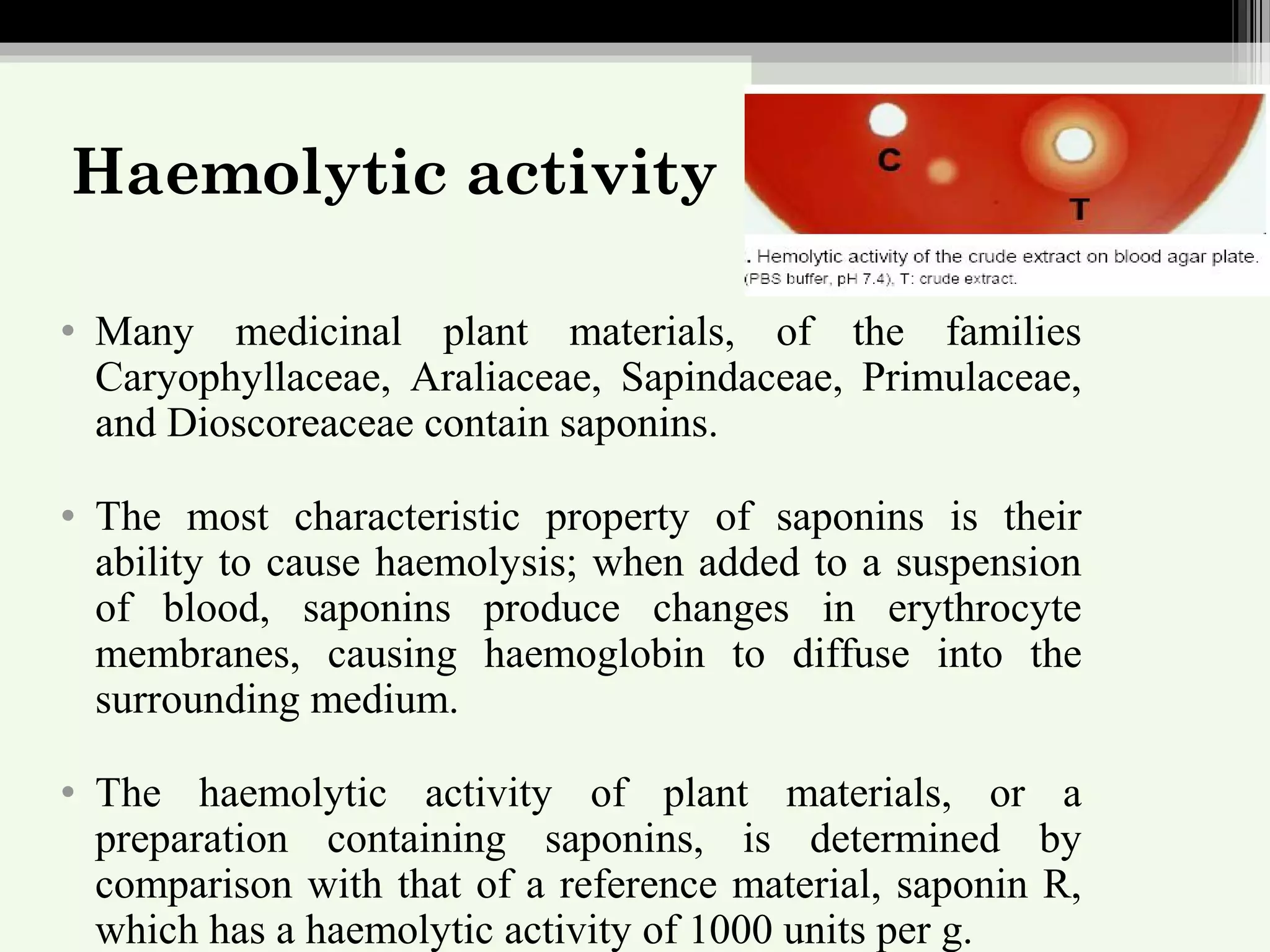
• The most characteristic property of saponins is their
ability to cause haemolysis; when added to a suspension
of blood, saponins produce changes in erythrocyte
membranes, causing haemoglobin to diffuse into the
surrounding medium.
• The haemolytic activity of plant materials, or a
preparation containing saponins, is determined by
comparison with that of a reference material, saponin R,
which has a haemolytic activity of 1000 units per g.
Serial dilution for the preliminary test
• Calculate the haemolytic activity of the medicinal plant
material using the following formula:
1000 ×a/b
Where,
1000 = the defined haemolytic activity of saponin R in relation to ox
blood,
a = quantity of saponin R that produces total haemolysis (g)
b = quantity of plant material that produces total haemolysis (g)
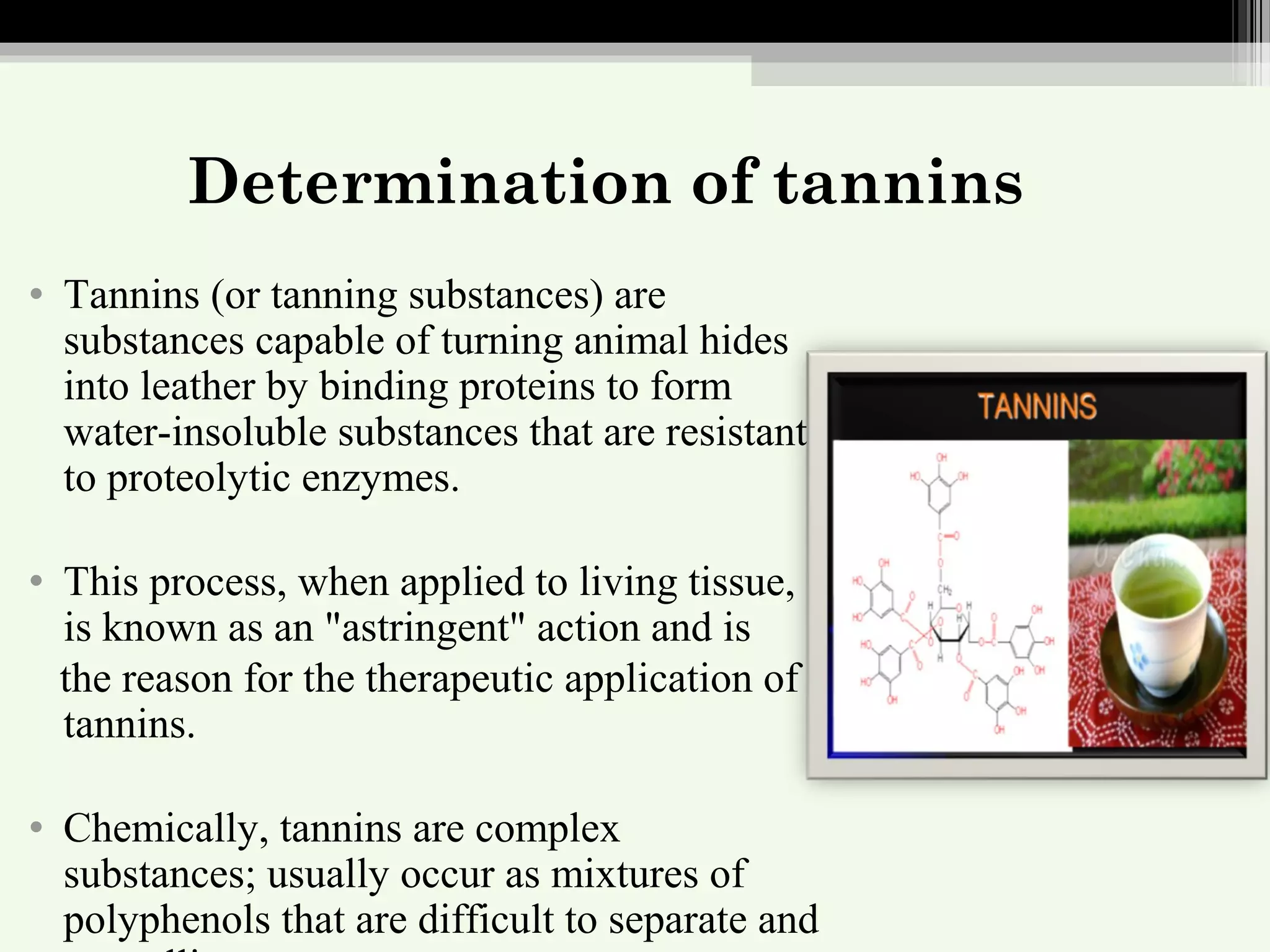
Determination of tannins
• Tannins (or tanning substances) are
substances capable of turning animal hides
into leather by binding proteins to form
water-insoluble substances that are resistant
to proteolytic enzymes.
• This process, when applied to living tissue,
is known as an "astringent" action and is
the reason for the therapeutic application of
tannins.
• Chemically, tannins are complex
substances; usually occur as mixtures of
polyphenols that are difficult to separate and
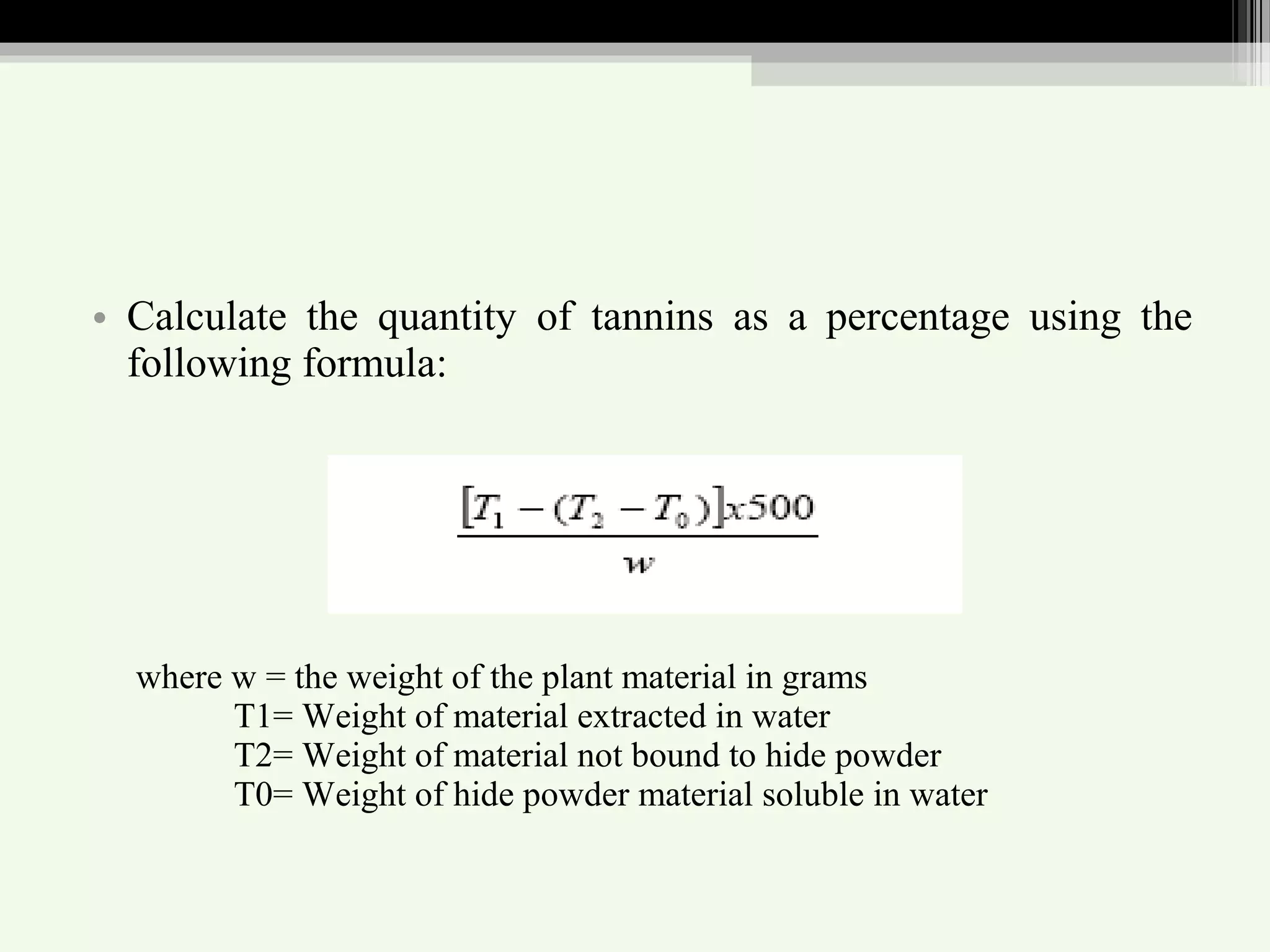
• Calculate the quantity of tannins as a percentage using the
following formula:
where w = the weight of the plant material in grams
T1= Weight of material extracted in water
T2= Weight of material not bound to hide powder
T0= Weight of hide powder material soluble in water
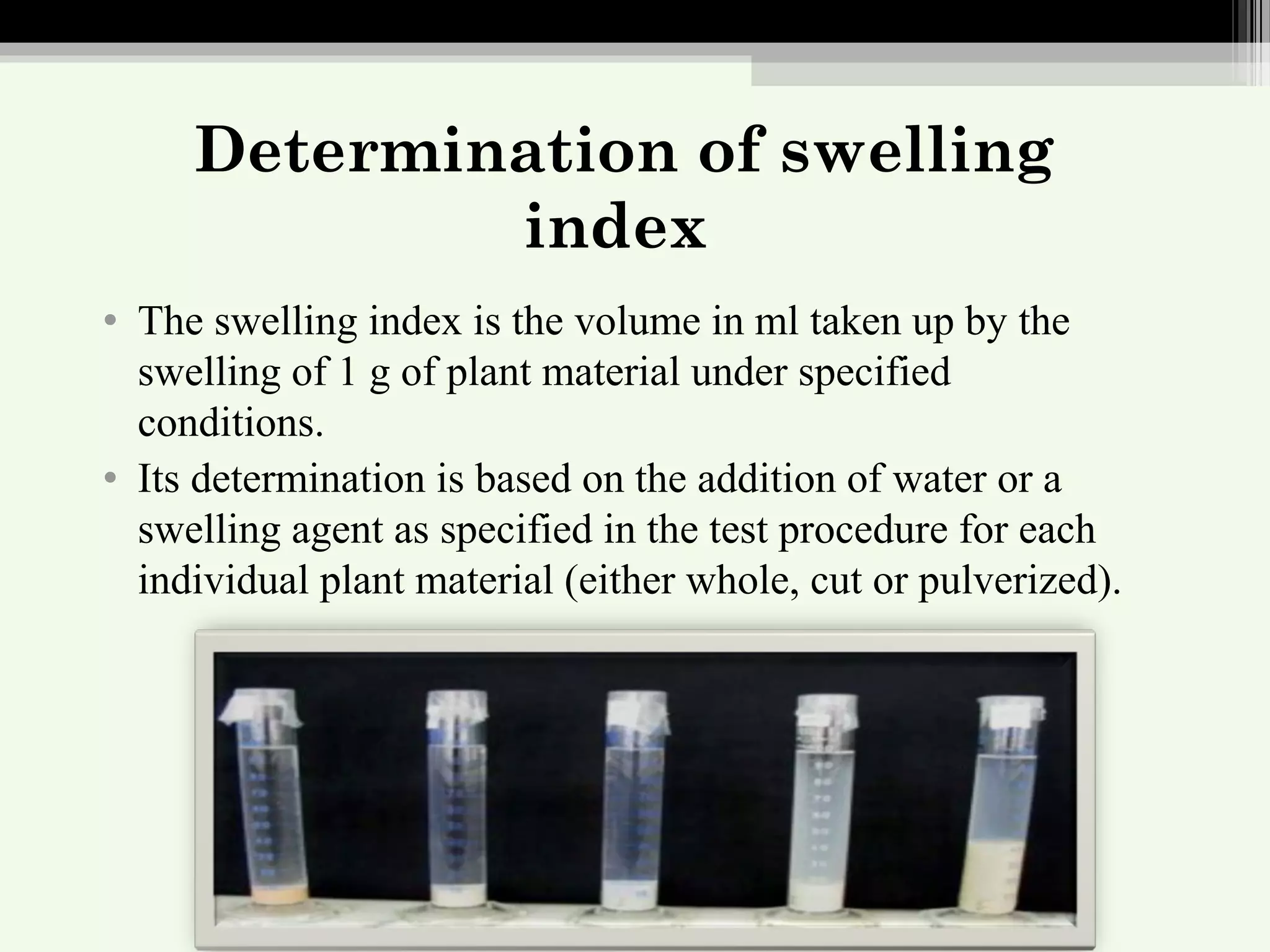
Determination of swelling
index
• The swelling index is the volume in ml taken up by the
swelling of 1 g of plant material under specified
conditions.
• Its determination is based on the addition of water or a
swelling agent as specified in the test procedure for each
individual plant material (either whole, cut or pulverized).
Determination of foaming
index
• Many medicinal plant materials contain saponins that can
cause a persistent foam when an aqueous decoction is shaken.
• The foaming ability of an aqueous decoction of plant materials
and their extracts is measured in terms of a foaming index.
Calculate the foaming index using the following formula:
where a = the volume in ml of the decoction used for
preparing the dilution in the tube where foaming to a
height of 1 cm is observed.
foaming index =
Determination of pesticide
residues
• Not more than 1%
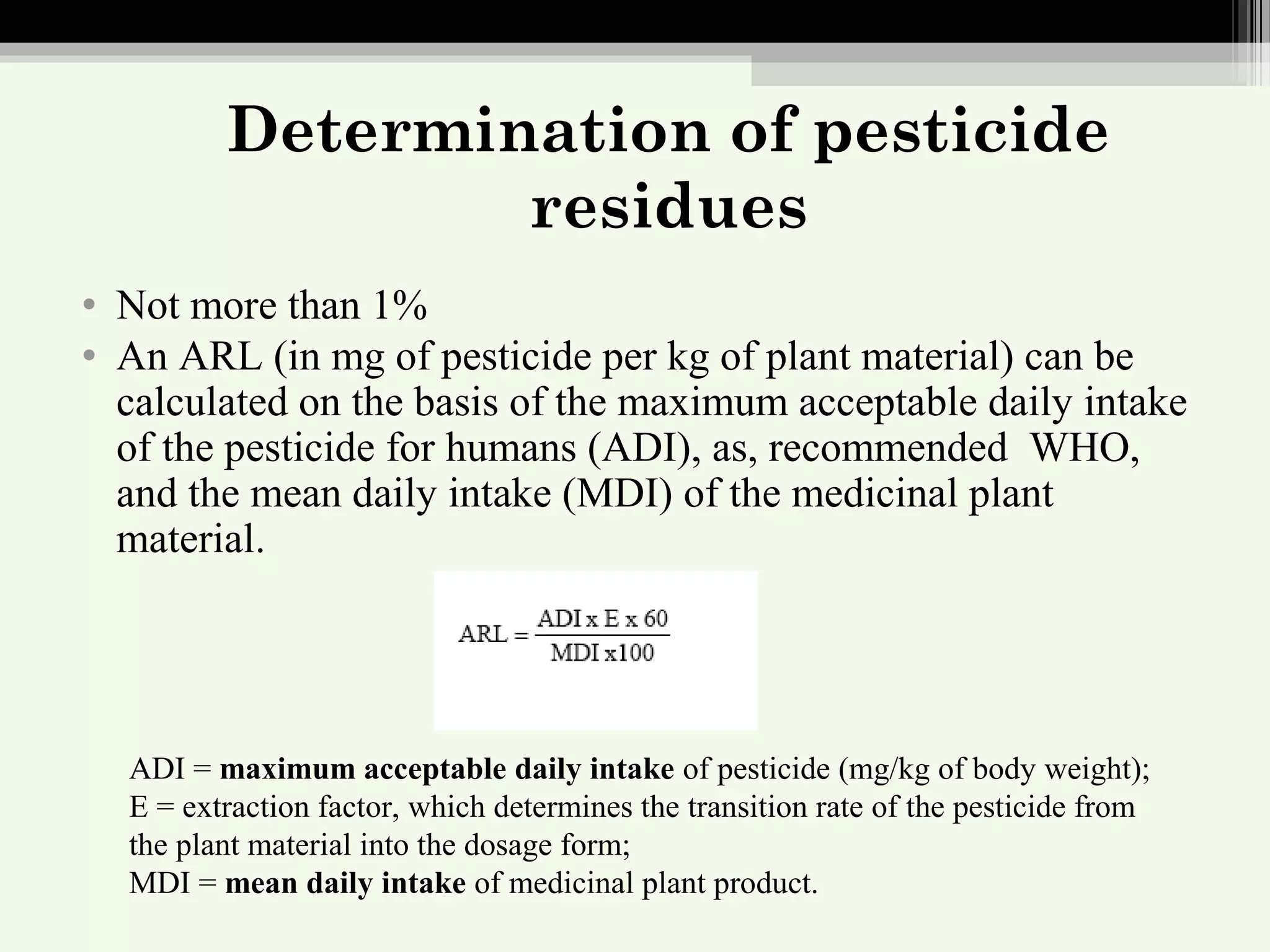
• An ARL (in mg of pesticide per kg of plant material) can be
calculated on the basis of the maximum acceptable daily intake
of the pesticide for humans (ADI), as, recommended WHO,
and the mean daily intake (MDI) of the medicinal plant
material.
ADI = maximum acceptable daily intake of pesticide (mg/kg of body weight);
E = extraction factor, which determines the transition rate of the pesticide from
the plant material into the dosage form;
MDI = mean daily intake of medicinal plant product.
Some example of Pesticides :
• Chlorinated hydrocarbons and related pesticides: BHC, DDT
• Chlorinated phenoxyalkanoic acid herbicides: 2,4-D; 2,4,5-T
• Organophosphorus pesticides: malathion, methyl parathion, parathion
• Carbamate insecticides: carbaryl (carbaril)
• Dithiocarbamate fungicides: ferbam, maneb, nabam, thiram, zineb
• Inorganic pesticides: calcium arsenate, lead arsenate
• Miscellaneous: ethylene dibromide, ethylene oxide, methyl bromide
• Pesticides of plant origin: tobacco leaf and nicotine; pyrethrum flower,
pyrethrum extract and pyrethroids; derris root and rotenoids.
Determination of arsenic and
heavy metals
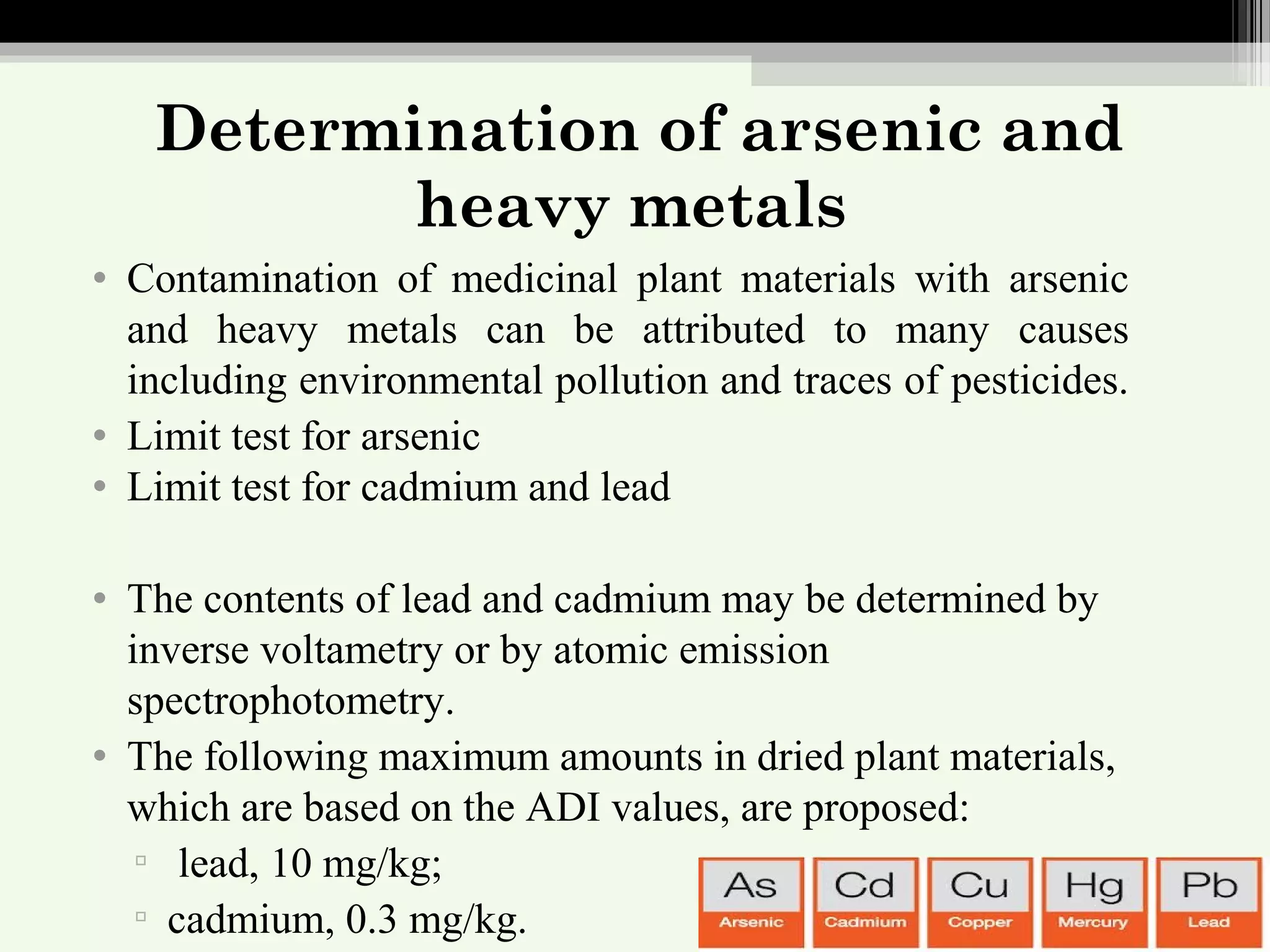
• Contamination of medicinal plant materials with arsenic
and heavy metals can be attributed to many causes
including environmental pollution and traces of pesticides.
• Limit test for arsenic
• Limit test for cadmium and lead
• The contents of lead and cadmium may be determined by
inverse voltametry or by atomic emission
spectrophotometry.
• The following maximum amounts in dried plant materials,
which are based on the ADI values, are proposed:
▫ lead, 10 mg/kg;
▫ cadmium, 0.3 mg/kg.
Determination
of microorganisms
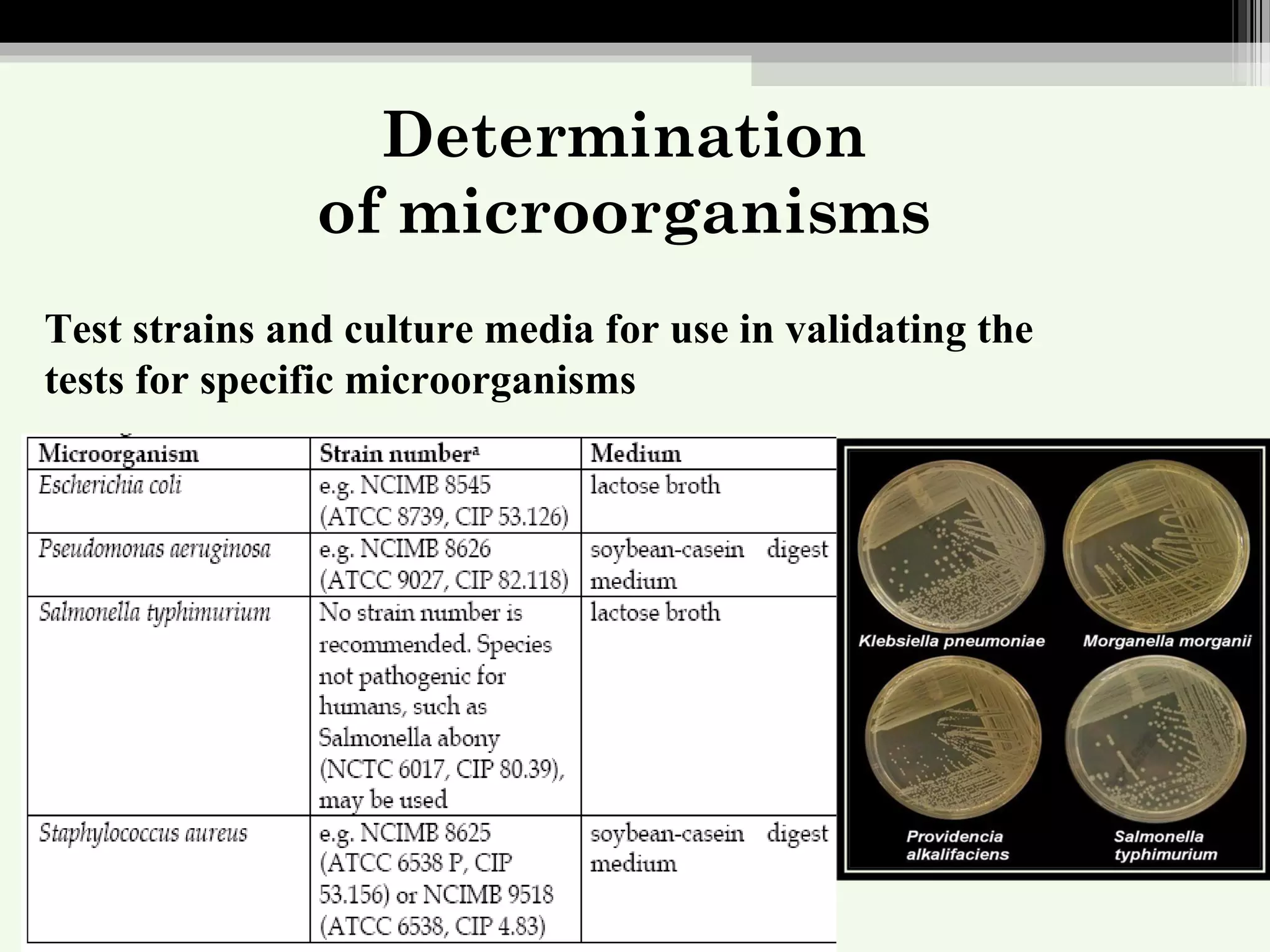
Test strains and culture media for use in validating the
tests for specific microorganisms
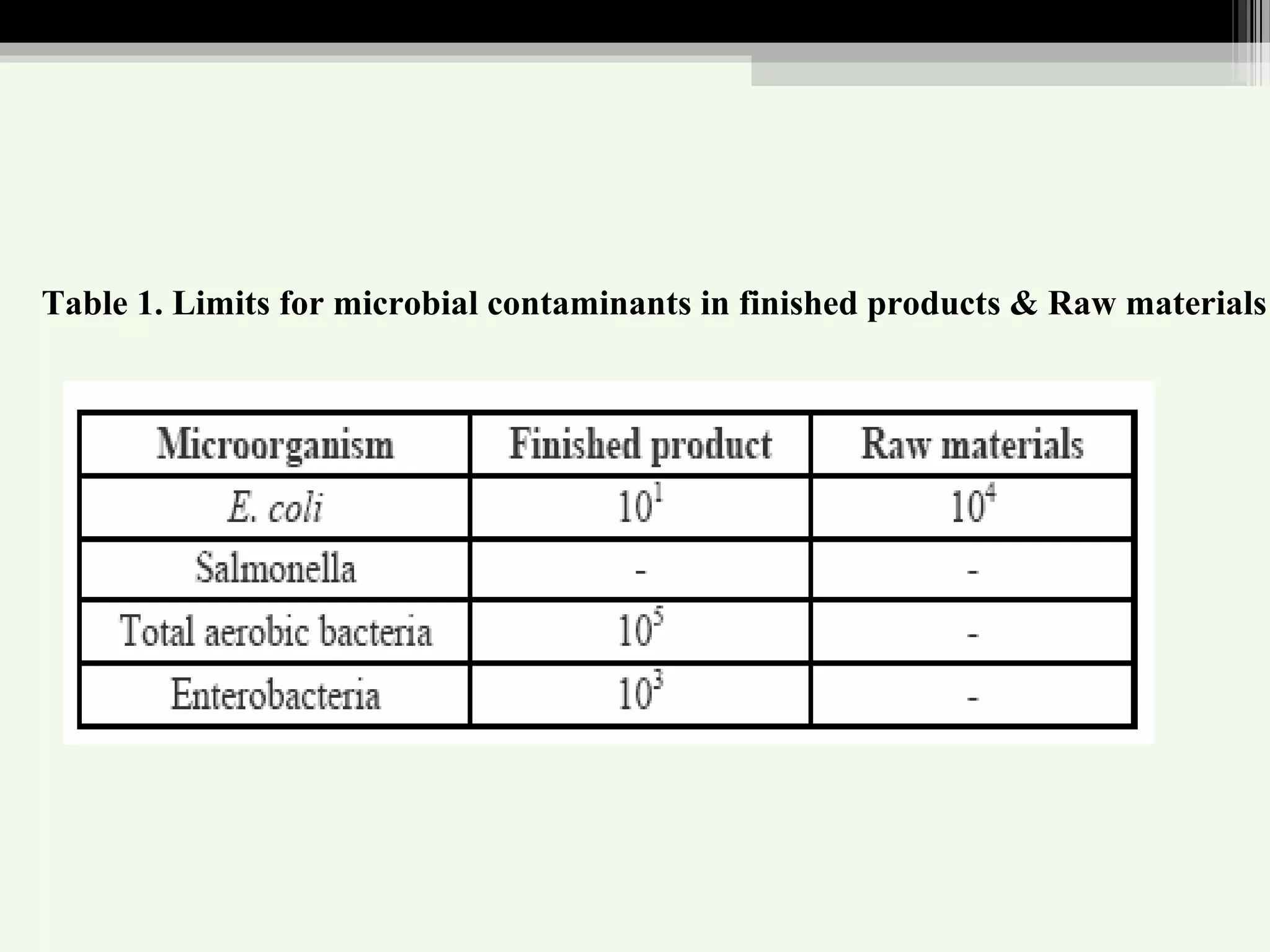
Table 1. Limits for microbial contaminants in finished products & Raw materials
Aflatoxins Content
• Aflatoxins are naturally occuring mycotoxins produced
mainly by Aspergillus flavus and Aspergillus parasiticus.
• The presence of aflatoxins can be determined by
chromatographic methods using standard aflatoxins B1,
B2, G1, G2 mixtures.
• IP method: NMT 2 µg/kg of aflatoxins B1& Total aflatoxins 4 µg/kg
• USP method: NMT 5ppb of aflatoxins B1& Total aflatoxins 20ppb
Radioactive contamination
• The range of radionuclides that may be released into the
environment as the result of a nuclear accident might include
long-lived and short-lived fission products, actinides, and
activation products.
• Microbial growth in herbals is usually avoided by irradiation.
This process may sterilize the plant material but the
radioactivity hazard should be taken into account.
• The nature and the intensity of radionuclides released may
differ markedly and depend on the source (reactor,
reprocessing plant, fuel fabrication plant, isotope production
unit, etc.).
• The radioactivity of the plant samples should be checked
accordingly to the guidelines of International Atomic
CHROMATOGRAPHY OF HERBAL DRUG
• Seperation, identification,
impurity detection and assay
of herbal drug in the
formulation or in the extract
are carried out by following
methods :-
a)TLC
b)HPTLC
c)HPLC/Densitometric
chromatography
d)GLC
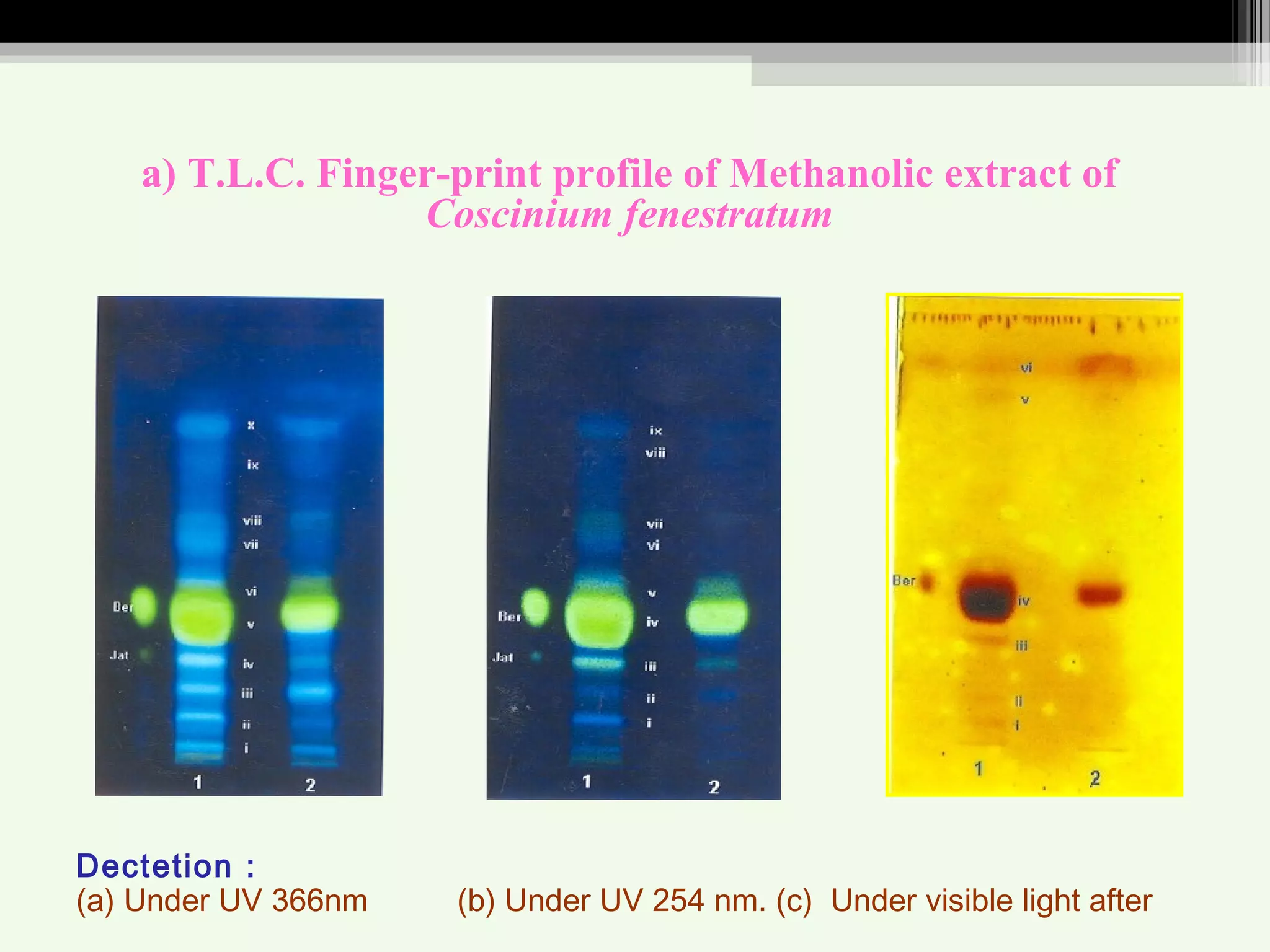
a) T.L.C. Finger-print profile of Methanolic extract of
Coscinium fenestratum
Dectetion :
(a) Under UV 366nm (b) Under UV 254 nm. (c) Under visible light after
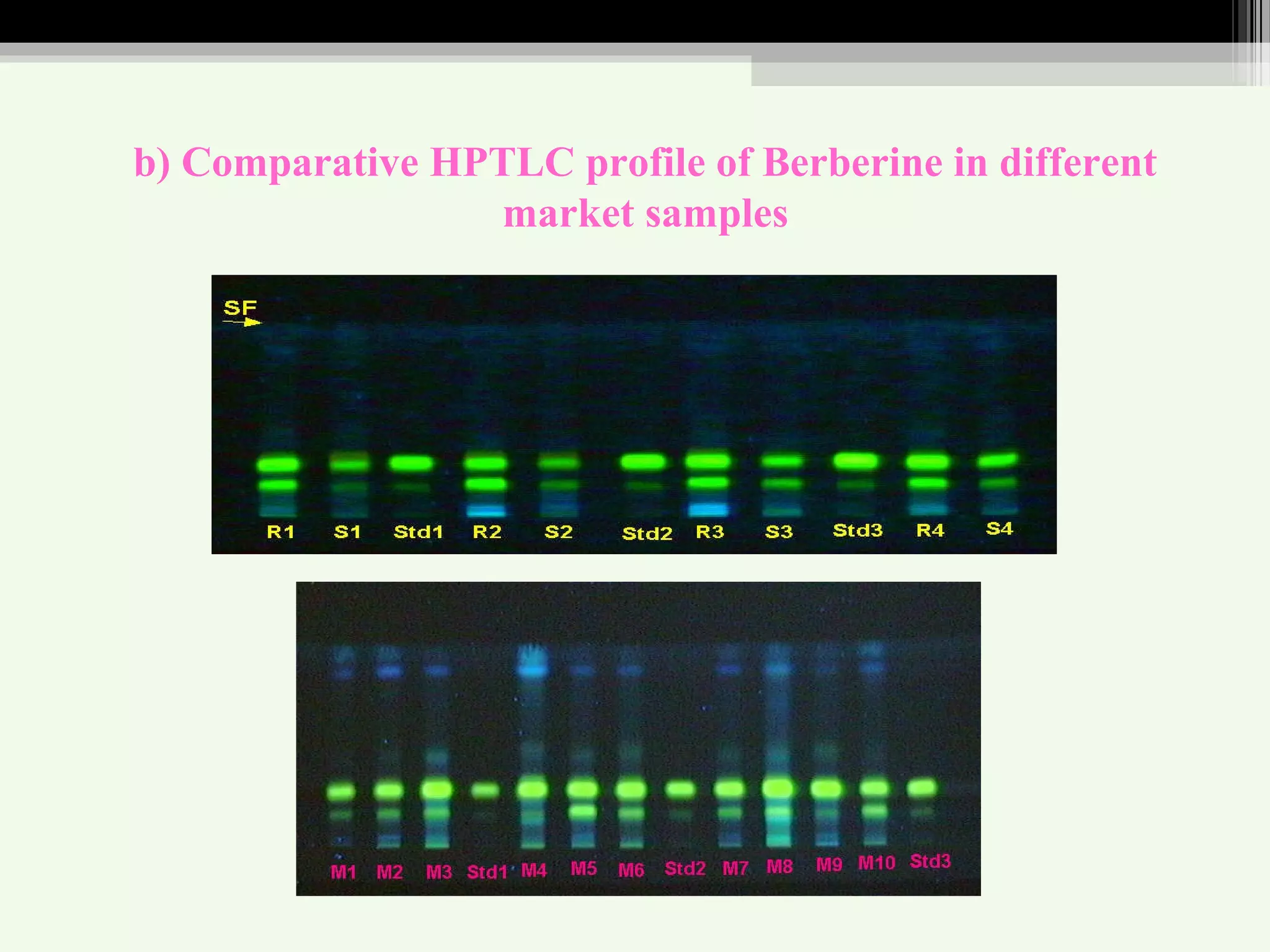
b) Comparative HPTLC profile of Berberine in different
market samples
c) Densitometric scan of different samples
of Berberis spp. at UV 266 nm
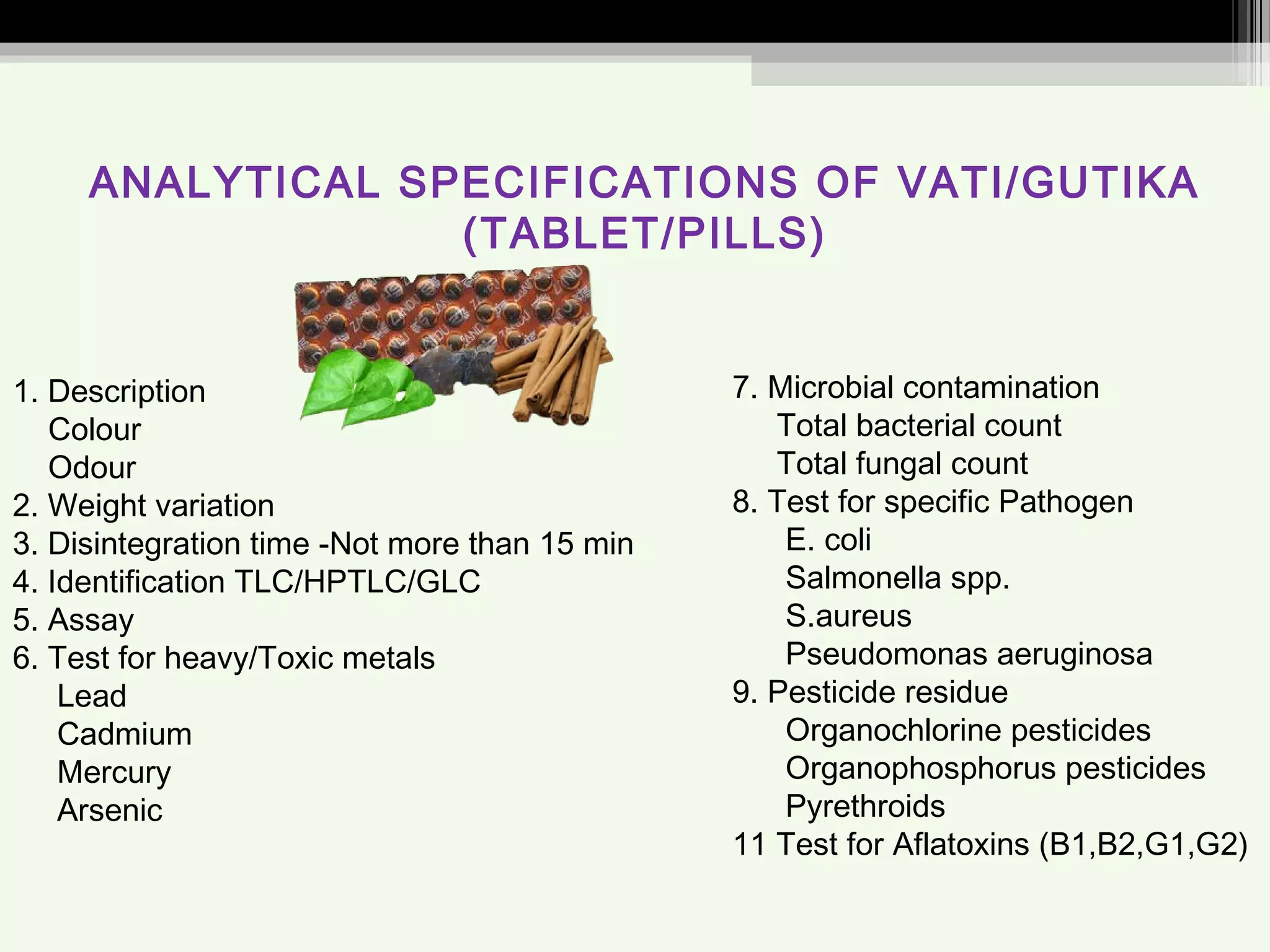
ANALYTICAL SPECIFICATIONS OF VATI/GUTIKA
(TABLET/PILLS)
1. Description
Colour
Odour
2. Weight variation
3. Disintegration time -Not more than 15 min
4. Identification TLC/HPTLC/GLC
5. Assay
6. Test for heavy/Toxic metals
Lead
Cadmium
Mercury
Arsenic
7. Microbial contamination
Total bacterial count
Total fungal count
8. Test for specific Pathogen
E. coli
Salmonella spp.
S.aureus
Pseudomonas aeruginosa
9. Pesticide residue
Organochlorine pesticides
Organophosphorus pesticides
Pyrethroids
11 Test for Aflatoxins (B1,B2,G1,G2)
ANALYTICAL SPECIFICATIONS OF
SYRUP (LIQUID ORAL)
1. Description, Colour
2. Odour
3. Total – ash
4. Acid – insoluble ash
5. Water-soluble extractive
6. Alcohol – soluble extractive
7. PH
8. Total sugar content
9. Viscosity
10. Identification TLC/HPTLC/HPLC
11. Test for heavy metals
Lead
Cadmium
Mercury
Arsenic
12. Microbial contamination
Total bacterial count
Total fungal count
13. Test for specific Pathogen
E. coli
Salmonella spp.
S.aureus
Pseudomonas aeruginosa
14. Pesticide residue
Organochlorine pesticides
Organophosphorus pesticides
Pyrethroids
ANALYTICAL SPECIFICATIONS OF ASAVA
AND ARISHTA
(FERMENTED LIQUIDS)
1. Specific gravity at 250 C.
2. Alcohol content
Test for methanol.
3. Total acidity.
4. Non reducing and reducing sugar.
 Other specifications same as oral
liquids.
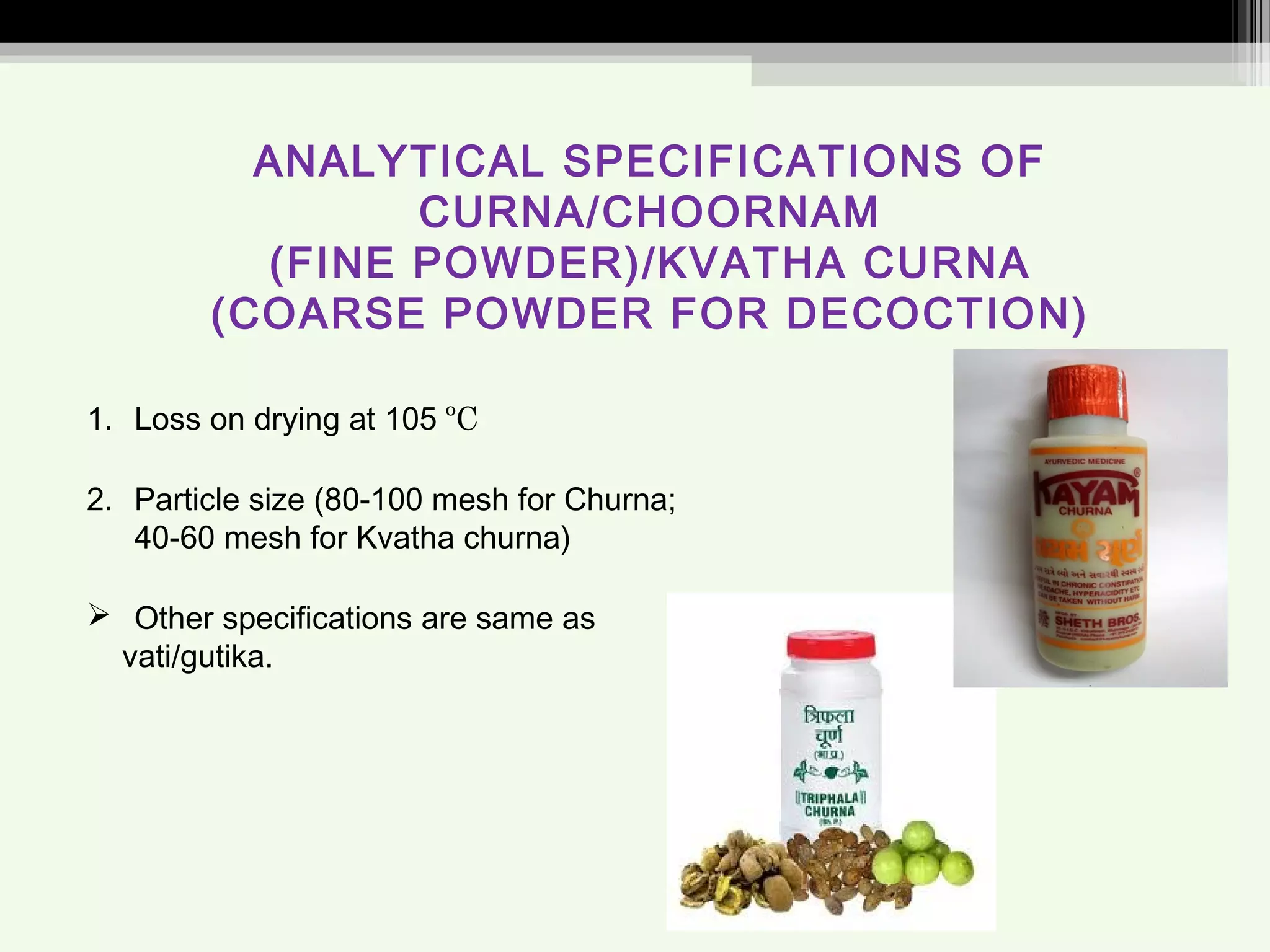
ANALYTICAL SPECIFICATIONS OF
CURNA/CHOORNAM
(FINE POWDER)/KVATHA CURNA
(COARSE POWDER FOR DECOCTION)
1. Loss on drying at 105 ºC
2. Particle size (80-100 mesh for Churna;
40-60 mesh for Kvatha churna)
 Other specifications are same as
vati/gutika.
Parameter & its specifications
1.Microbial contamination
Total Bacterial count - 1 x 1055
CFU/gm
Yeast & Mould - 1 x 10³
CFU/gm
E. coli - Absent
Salmonella - Absent
P. Aeruginosa - Absent
S. Aureus - Absent
2. Pesticide Residue – Less than 1 ppm
ACCEPTABLE LIMITS FOR
PRODUCTS
3. Heavy metals
Lead - 10 ppm
Mercury - 01 ppm
Arsenic - 03 ppm
Cadmium - 0.3 ppm
4. Aflatoxin
B1 - 0.5 ppm
G1 - 0.5 ppm
B2 - 0.1 ppm
G2 - 0.1 ppm
References
1. Kokate C.K., Gokhale, S.B. 2001. Practical Pharmacognosy. 2nd
ed. Nirali Prakashan,
Pune, p. 14-19.
2. Mukherjee P.K. 2010. Quality control of herbal drugs. 4th
ed. Business Horizones, New Delhi,
P. 184-219.
3. Ansari S.H. 2006. Essentials of Pharmacognosy. 1st
ed. Birla Publications, New Delhi, p. 581-
596.
4. http://www.ncbi.nlm.nih.gov/pubmed/18396809.
5. WHO guidelines ISBN 978 92 4 1547 16 1.
6. Anonymous, 2010. Indian Pharmacopoeia. Vol.-3, Government of India, Ministry of Health
and Family Welfare, New Delhi p. 2467-2472.
Standardisation of hd by pooja

Standardisation of hd by pooja

  • 1.
    PRESENTED BY Pooja H.Khanpara M.PHARM (Pharmacognosy) DEPARTMENT OF PHARMACOGNOSY AKSHAR-PREET COLLEGE OF PHARMACY,JAMNAGAR
  • 2.
    HERBAL DRUGS/ HERBALFORMULATION • ARE – Finished labelled products that contain active ingredients such as aerial or underground parts of plant or other plant material or combinations thereof, whether in the crude state or as plant preparations. • ARE - crude plant material such as leaves, flowers, fruit, seed, stems, wood, bark, roots, rhizomes or other plant parts, which may be entire, fragmented or powdered. HERBS
  • 3.
     Phytomedicines orPhytopharmaceuticals sold as Over The Counter ( OTC ) products in modern dosage forms such as Tablets, Capsules & Liquids for oral use. Dietary Suppliments containing Herbal Products, also called Neutraceuticals available in modern dosage forms. Herbal Medicines consisting of either Crude, Semi Processed or Processed Medicinal Plants. HERBAL DRUGS
  • 4.
    Guidelines for QualityControl of Herbal formulation • Quality control of crude drugs material, plant preparations and finished products • Stability assessment and shelf life • Safety assessment; documentation of safety based on experience or toxicological studies • Assessment of efficacy by pharmacological informations and biological activity evaluations
  • 5.
    STANDARDISATION • Standardization ofdrug means “confirmation of its identity and determination of its quality and purity and detection of nature of adulterant by various parameters like morphological, microscopical, physical, chemical and biological observations.”
  • 6.
    STANDARDISATIONSTANDARDISATION OF HERBAL DRUGSOFHERBAL DRUGS CHEMICAL CHEMICAL BIOLOGICAL BIOLOGICAL O RG ANO LEPTIC O RG ANO LEPTIC BOTANICAL BOTANICAL PHYSICALPHYSICAL • Moist. Cont. • Extrac. Values • Ash Values • Fluores. Analy. Macroscopic Microscopic • Qualitative • Quantitative • SEM Studies • Powder Studies •Shape •External •Marking • Colour • Odour • Taste • Texture • Fracture Antagonistic Microbial Contamination A) Total viable aerobic count B) Determination of pathogens C) Aflatoxins content • Pharmacological Bitterness value Haemolytic activity Foaming index Swelling index • Toxicological Determination of pesticide residues Determination of heavy metals •Bacterial • Fungal •Qualitative • Quantitative • Chromatography • Radioactive contamination HPTLC GLC HPLC HPTLC Finger printing Sec. Metabolites DNA Finger printing Standardization & Quality Evaluation of Herbal drugs 1 2 3 4 5
  • 7.
    Macroscopic study • Visualinspection provides the simplest and quickest means by which to establish identity, purity and quality. • Macroscopic identity of medicinal plant materials is based on shape, size, colour, surface characteristics, texture, fracture characteristics and appearance of the cut surface.
  • 8.
    Microscopic study • Detailof cell structure and arrangement of the cells useful for differentiating similar species. • Select a representative sample of the material & If it is dried parts of a plant than it may require softening before preparation for microscopy, preferably by being placed in a moist atmosphere, or by soaking in water. • Any water-soluble contents can be removed from the cells by soaking in water. Starch grains can be gelatinized by heating in water.
  • 9.
    • Histochemical detection •Starch grains • Aleurone grains • Fats, fatty oils, volatile oils and resins • Calcium oxalate/carbonate crystals • Lignified cell wall • Cellulose cell wall • Mucilage • Tannin
  • 10.
    • Measurement ofspecimen • Stomatal number • Stomatal index • Palisade ratio • Vein-islet number • Vein termination number • Lycopodium spore method
  • 11.
    Foreign organic matter •Parts of the medicinal plant material or materials other than those named with the limits specified for the plant material concerned; • Any organism, part or product of an organism, other than that named in the specification and description of the plant material concerned; • Mineral admixtures that is adhering to the medicinal plant materials, such as soil, stones, sand, and dust. Foreign matter: NMT 2%w/w
  • 12.
    Ash value • Itinvolves non-volatile inorganic components. • High ash value is the indicative of contamination, substitution, adulteration or carelessness in preparing the crude drugs.
  • 13.
    Total ash • Totalash is designed to measure the total amount of material produced after complete incineration of the drug material at as low temperature as possible (about 450°C) to remove all the carbons. • Total ash usually consists of carbonates, phosphates, silicates and silica. • IP and USP: 675±25°C • BP : 600±25°C • WHO: 500-600°C
  • 14.
    Acid insoluble ash •Ash insoluble in HCl is the residue obtained after extracting the total ash with HCl. It gives idea about the earthy matter • IP method: 25mL 2M HCL solution • USP method: 25mL 3N HCL solution • BP method: 15mLwater and 10mL HCL • WHO method: 25 ml of hydrochloric acid (~70g/l)
  • 15.
    Water soluble ash •Total ash content which is soluble in water. It’s good indicator of presence of previous extraction of water soluble salts in the drug or incorrect preparation or amount of inorg. matter • Carbonated ash: Ash is treated with ammonium carbonate. • Nitrated ash: Ash is treated with dilute nitric acid.
  • 16.
    Extractive value • Amountof the active constituents present in crude drug material when extracted with specific solvent. • There are following Methods for determin- -nation of Extractive value. a) Cold method b) Hot method c)Soxhlet method
  • 17.
  • 18.
    • Volatile ethersoluble extractive value: Anhydrous ether- continuous extraction for 20hours • Nonvolatile ether soluble extractive value: Drugs having lipid content, fixed oils eg.Colocynth fruits : NMT 3% (Pulp- medicinal value) • Water soluble extractive value • Alcohol soluble extractive value: Solvent strength: 20- 95% v/v • Solvent Hexane soluble extractive value: Continuous extraction for 20 hours eg.Phyllanthus amarus: NLT 3%
  • 19.
    Insoluble matter: • Presenceof woody matter or vegetable debris or pieces of bark materials. • Eg. In catechu Water insoluble matter: NMT 33% Alcohol insoluble matter: NMT 30%
  • 20.
    Total solid content •The residue obtained when prescribed amount of preparation is dried to constant weight under the specified condition (Residue on evaporation) • Powdered extract: NLT 95% • Semisolid extract: NLT 70%
  • 21.
    Water Content • Losson drying (Gravimetric determination) • Volumetric Azeotropic distillation (toluene distillation) method • Titrimetric Karl fisher method • Gas chromatographic method
  • 22.
    Volatile oil content •Volatile oils are the liquid components of the plant cells, immiscible with water, volatile at ordinary temperature and can be steam distilled at ordinary pressure • Many herbal drugs contain volatile oil which is used as flavourig agent. • E.g. Clove: NLT 15%v/w
  • 23.
    Bitterness value • Medicinalplant materials that have a strong bitter taste ("bitters") are employed therapeutically, mostly as appetizing agents. Their bitterness stimulates secretions in the gastrointestinal tract, especially of gastric juice. • The bitter properties of plant material are determined by comparing the threshold bitter concentration of an extract of the materials with that of a dilute solution of quinine hydrochloride. • The bitterness value is expressed in units equivalent to the bitterness of a solution containing 1g of quinine hydrochloride R in 2000 ml.
  • 24.
    • Bitterness valuecalculated in units per g using the following formula: Where, a= the concentration of the stock test solution (ST) (mg/ml), b = the volume of test solution ST (in ml) in the tube with the threshold bitter concentration, c = the volume of quinine hydrochloride R (in mg) in the tube with the threshold bitter concentration.
  • 25.
    Haemolytic activity • Manymedicinal plant materials, of the families Caryophyllaceae, Araliaceae, Sapindaceae, Primulaceae, and Dioscoreaceae contain saponins. • The most characteristic property of saponins is their ability to cause haemolysis; when added to a suspension of blood, saponins produce changes in erythrocyte membranes, causing haemoglobin to diffuse into the surrounding medium. • The haemolytic activity of plant materials, or a preparation containing saponins, is determined by comparison with that of a reference material, saponin R, which has a haemolytic activity of 1000 units per g.
  • 26.
    Serial dilution forthe preliminary test
  • 27.
    • Calculate thehaemolytic activity of the medicinal plant material using the following formula: 1000 ×a/b Where, 1000 = the defined haemolytic activity of saponin R in relation to ox blood, a = quantity of saponin R that produces total haemolysis (g) b = quantity of plant material that produces total haemolysis (g)
  • 28.
    Determination of tannins •Tannins (or tanning substances) are substances capable of turning animal hides into leather by binding proteins to form water-insoluble substances that are resistant to proteolytic enzymes. • This process, when applied to living tissue, is known as an "astringent" action and is the reason for the therapeutic application of tannins. • Chemically, tannins are complex substances; usually occur as mixtures of polyphenols that are difficult to separate and
  • 29.
    • Calculate thequantity of tannins as a percentage using the following formula: where w = the weight of the plant material in grams T1= Weight of material extracted in water T2= Weight of material not bound to hide powder T0= Weight of hide powder material soluble in water
  • 30.
    Determination of swelling index •The swelling index is the volume in ml taken up by the swelling of 1 g of plant material under specified conditions. • Its determination is based on the addition of water or a swelling agent as specified in the test procedure for each individual plant material (either whole, cut or pulverized).
  • 31.
    Determination of foaming index •Many medicinal plant materials contain saponins that can cause a persistent foam when an aqueous decoction is shaken. • The foaming ability of an aqueous decoction of plant materials and their extracts is measured in terms of a foaming index. Calculate the foaming index using the following formula: where a = the volume in ml of the decoction used for preparing the dilution in the tube where foaming to a height of 1 cm is observed. foaming index =
  • 32.
    Determination of pesticide residues •Not more than 1% • An ARL (in mg of pesticide per kg of plant material) can be calculated on the basis of the maximum acceptable daily intake of the pesticide for humans (ADI), as, recommended WHO, and the mean daily intake (MDI) of the medicinal plant material. ADI = maximum acceptable daily intake of pesticide (mg/kg of body weight); E = extraction factor, which determines the transition rate of the pesticide from the plant material into the dosage form; MDI = mean daily intake of medicinal plant product.
  • 33.
    Some example ofPesticides : • Chlorinated hydrocarbons and related pesticides: BHC, DDT • Chlorinated phenoxyalkanoic acid herbicides: 2,4-D; 2,4,5-T • Organophosphorus pesticides: malathion, methyl parathion, parathion • Carbamate insecticides: carbaryl (carbaril) • Dithiocarbamate fungicides: ferbam, maneb, nabam, thiram, zineb • Inorganic pesticides: calcium arsenate, lead arsenate • Miscellaneous: ethylene dibromide, ethylene oxide, methyl bromide • Pesticides of plant origin: tobacco leaf and nicotine; pyrethrum flower, pyrethrum extract and pyrethroids; derris root and rotenoids.
  • 34.
    Determination of arsenicand heavy metals • Contamination of medicinal plant materials with arsenic and heavy metals can be attributed to many causes including environmental pollution and traces of pesticides. • Limit test for arsenic • Limit test for cadmium and lead • The contents of lead and cadmium may be determined by inverse voltametry or by atomic emission spectrophotometry. • The following maximum amounts in dried plant materials, which are based on the ADI values, are proposed: ▫ lead, 10 mg/kg; ▫ cadmium, 0.3 mg/kg.
  • 35.
    Determination of microorganisms Test strainsand culture media for use in validating the tests for specific microorganisms
  • 36.
    Table 1. Limitsfor microbial contaminants in finished products & Raw materials
  • 37.
    Aflatoxins Content • Aflatoxinsare naturally occuring mycotoxins produced mainly by Aspergillus flavus and Aspergillus parasiticus. • The presence of aflatoxins can be determined by chromatographic methods using standard aflatoxins B1, B2, G1, G2 mixtures. • IP method: NMT 2 µg/kg of aflatoxins B1& Total aflatoxins 4 µg/kg • USP method: NMT 5ppb of aflatoxins B1& Total aflatoxins 20ppb
  • 38.
    Radioactive contamination • Therange of radionuclides that may be released into the environment as the result of a nuclear accident might include long-lived and short-lived fission products, actinides, and activation products. • Microbial growth in herbals is usually avoided by irradiation. This process may sterilize the plant material but the radioactivity hazard should be taken into account. • The nature and the intensity of radionuclides released may differ markedly and depend on the source (reactor, reprocessing plant, fuel fabrication plant, isotope production unit, etc.). • The radioactivity of the plant samples should be checked accordingly to the guidelines of International Atomic
  • 39.
    CHROMATOGRAPHY OF HERBALDRUG • Seperation, identification, impurity detection and assay of herbal drug in the formulation or in the extract are carried out by following methods :- a)TLC b)HPTLC c)HPLC/Densitometric chromatography d)GLC
  • 40.
    a) T.L.C. Finger-printprofile of Methanolic extract of Coscinium fenestratum Dectetion : (a) Under UV 366nm (b) Under UV 254 nm. (c) Under visible light after
  • 41.
    b) Comparative HPTLCprofile of Berberine in different market samples
  • 42.
    c) Densitometric scanof different samples of Berberis spp. at UV 266 nm
  • 43.
    ANALYTICAL SPECIFICATIONS OFVATI/GUTIKA (TABLET/PILLS) 1. Description Colour Odour 2. Weight variation 3. Disintegration time -Not more than 15 min 4. Identification TLC/HPTLC/GLC 5. Assay 6. Test for heavy/Toxic metals Lead Cadmium Mercury Arsenic 7. Microbial contamination Total bacterial count Total fungal count 8. Test for specific Pathogen E. coli Salmonella spp. S.aureus Pseudomonas aeruginosa 9. Pesticide residue Organochlorine pesticides Organophosphorus pesticides Pyrethroids 11 Test for Aflatoxins (B1,B2,G1,G2)
  • 44.
    ANALYTICAL SPECIFICATIONS OF SYRUP(LIQUID ORAL) 1. Description, Colour 2. Odour 3. Total – ash 4. Acid – insoluble ash 5. Water-soluble extractive 6. Alcohol – soluble extractive 7. PH 8. Total sugar content 9. Viscosity 10. Identification TLC/HPTLC/HPLC 11. Test for heavy metals Lead Cadmium Mercury Arsenic 12. Microbial contamination Total bacterial count Total fungal count 13. Test for specific Pathogen E. coli Salmonella spp. S.aureus Pseudomonas aeruginosa 14. Pesticide residue Organochlorine pesticides Organophosphorus pesticides Pyrethroids
  • 45.
    ANALYTICAL SPECIFICATIONS OFASAVA AND ARISHTA (FERMENTED LIQUIDS) 1. Specific gravity at 250 C. 2. Alcohol content Test for methanol. 3. Total acidity. 4. Non reducing and reducing sugar.  Other specifications same as oral liquids.
  • 46.
    ANALYTICAL SPECIFICATIONS OF CURNA/CHOORNAM (FINEPOWDER)/KVATHA CURNA (COARSE POWDER FOR DECOCTION) 1. Loss on drying at 105 ºC 2. Particle size (80-100 mesh for Churna; 40-60 mesh for Kvatha churna)  Other specifications are same as vati/gutika.
  • 47.
    Parameter & itsspecifications 1.Microbial contamination Total Bacterial count - 1 x 1055 CFU/gm Yeast & Mould - 1 x 10³ CFU/gm E. coli - Absent Salmonella - Absent P. Aeruginosa - Absent S. Aureus - Absent 2. Pesticide Residue – Less than 1 ppm ACCEPTABLE LIMITS FOR PRODUCTS 3. Heavy metals Lead - 10 ppm Mercury - 01 ppm Arsenic - 03 ppm Cadmium - 0.3 ppm 4. Aflatoxin B1 - 0.5 ppm G1 - 0.5 ppm B2 - 0.1 ppm G2 - 0.1 ppm
  • 48.
    References 1. Kokate C.K.,Gokhale, S.B. 2001. Practical Pharmacognosy. 2nd ed. Nirali Prakashan, Pune, p. 14-19. 2. Mukherjee P.K. 2010. Quality control of herbal drugs. 4th ed. Business Horizones, New Delhi, P. 184-219. 3. Ansari S.H. 2006. Essentials of Pharmacognosy. 1st ed. Birla Publications, New Delhi, p. 581- 596. 4. http://www.ncbi.nlm.nih.gov/pubmed/18396809. 5. WHO guidelines ISBN 978 92 4 1547 16 1. 6. Anonymous, 2010. Indian Pharmacopoeia. Vol.-3, Government of India, Ministry of Health and Family Welfare, New Delhi p. 2467-2472.