
Stabilization of operating point
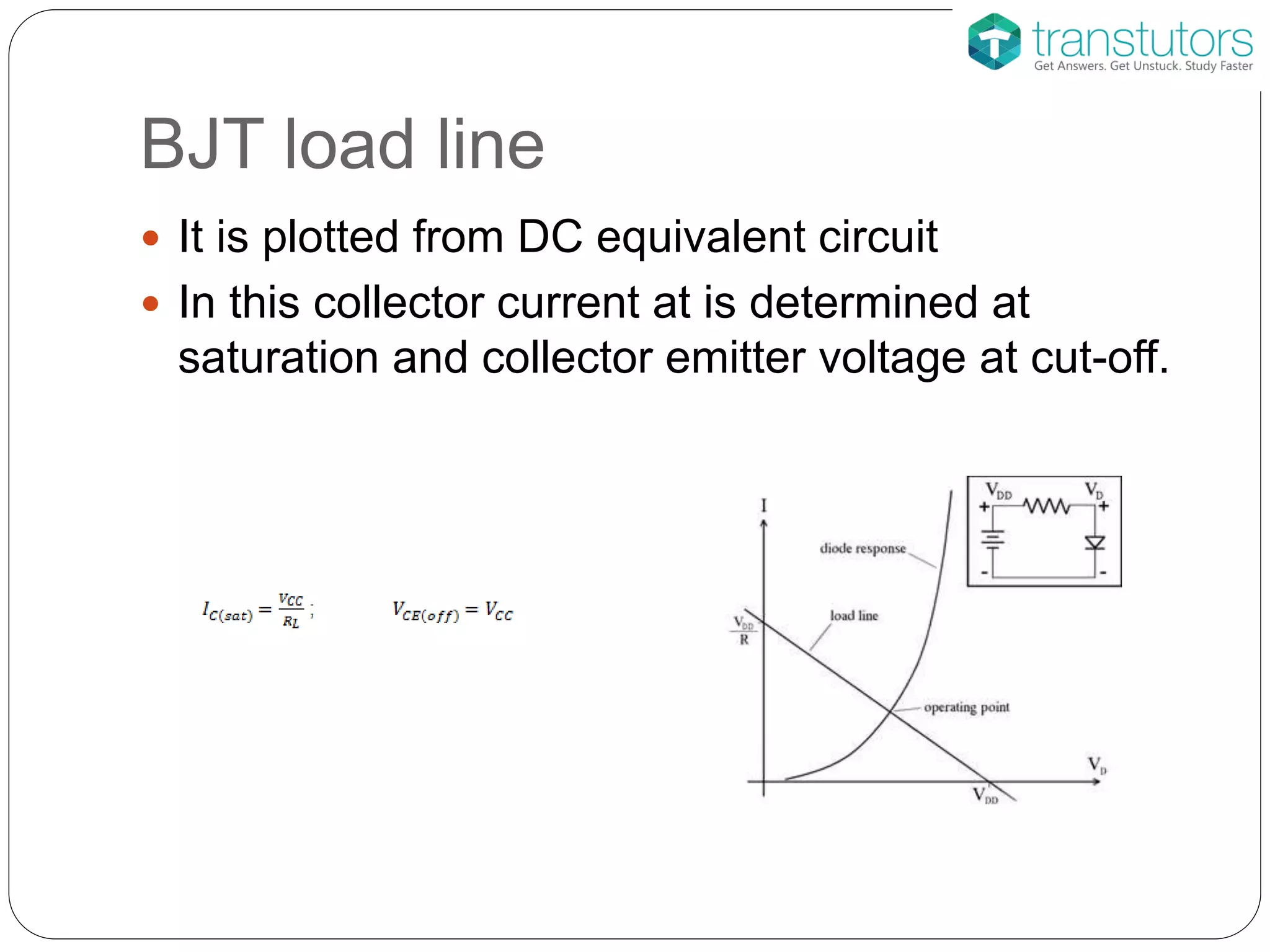
BJT load line
 It is plotted from DC equivalent circuit
 In this collector current at is determined at
saturation and collector emitter voltage at cut-off.
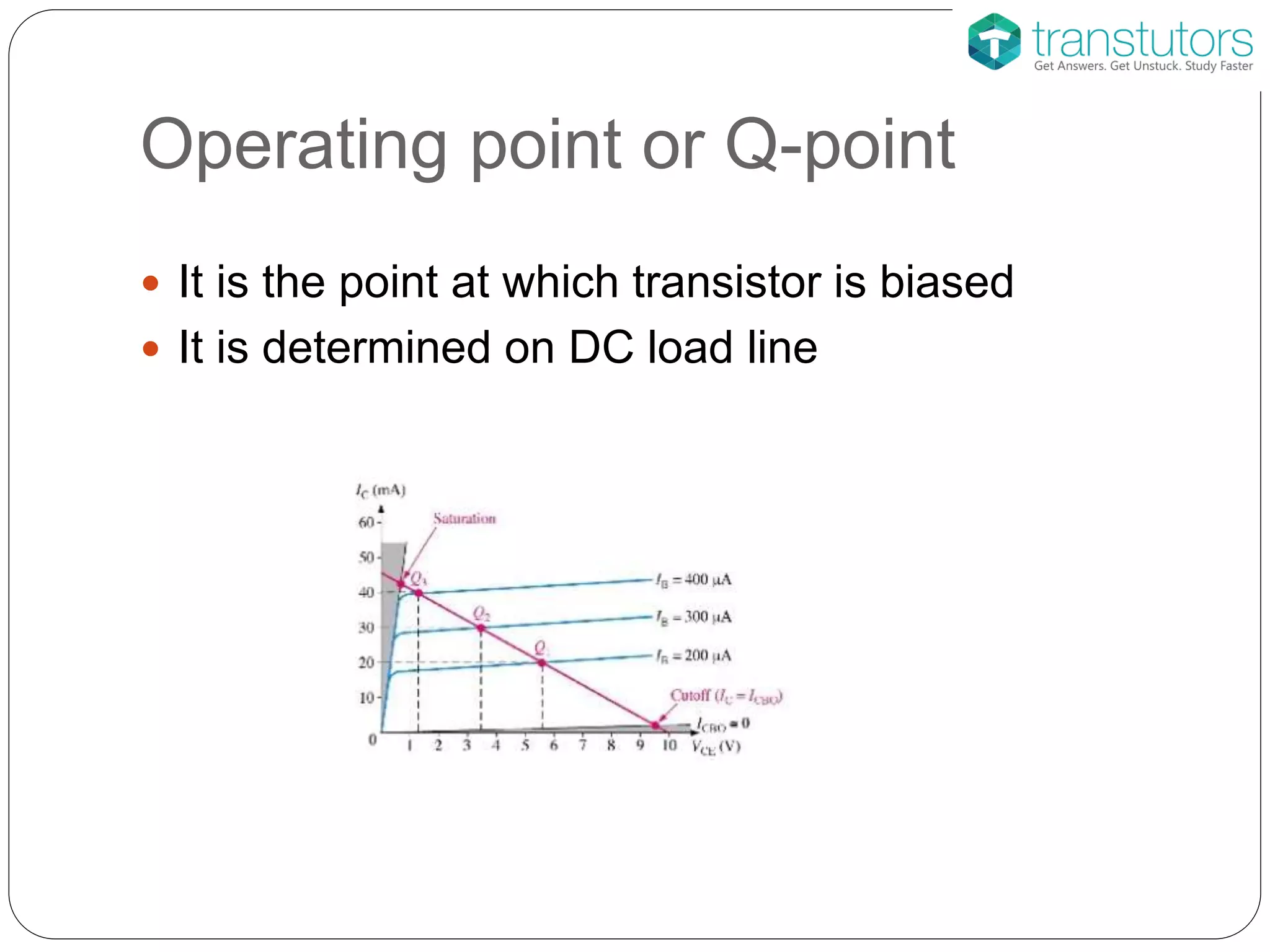
Operating point or Q-point
 It is the point at which transistor is biased
 It is determined on DC load line
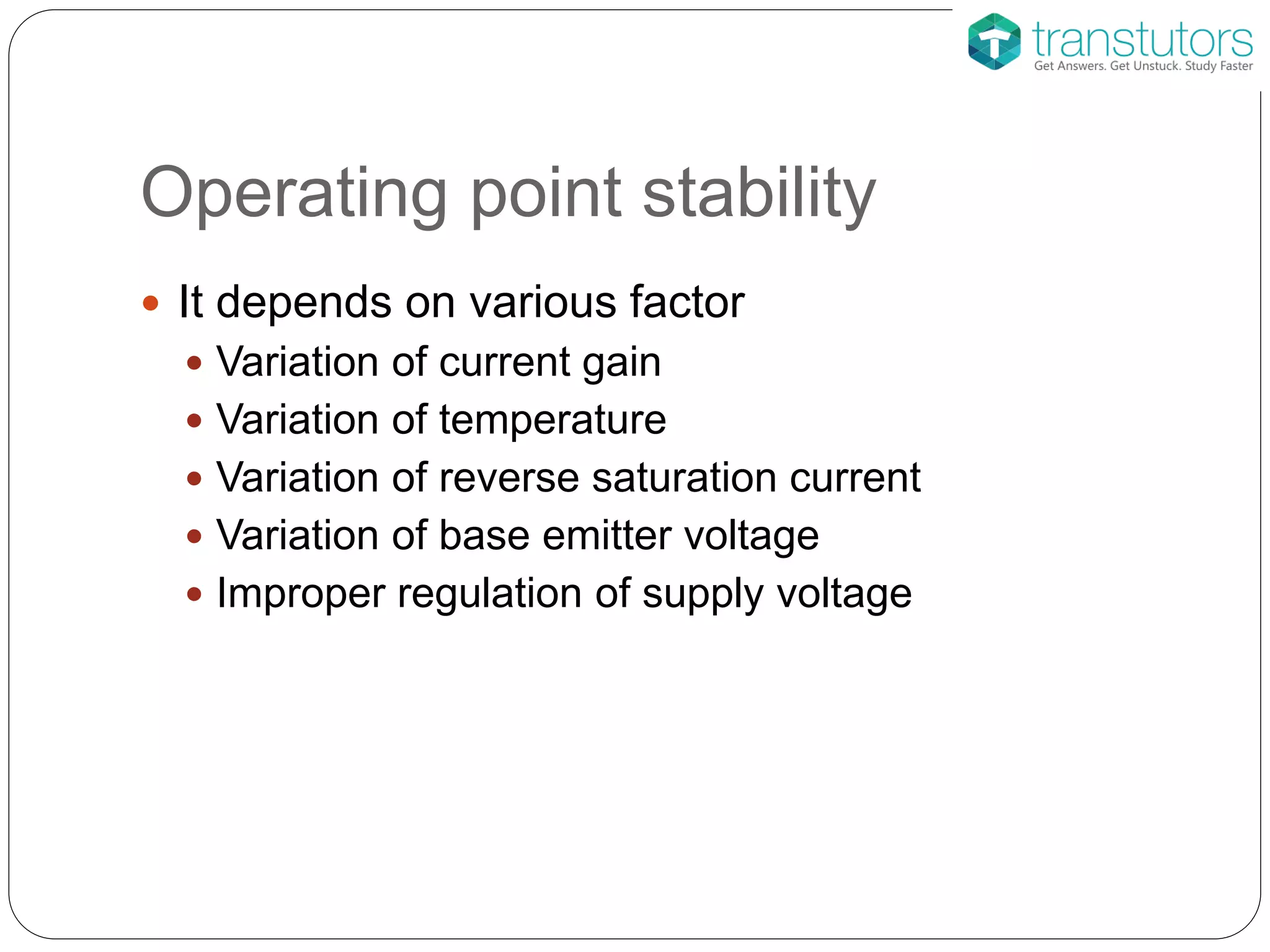
Operating point stability
 It depends on various factor
 Variation of current gain
 Variation of temperature
 Variation of reverse saturation current
 Variation of base emitter voltage
 Improper regulation of supply voltage
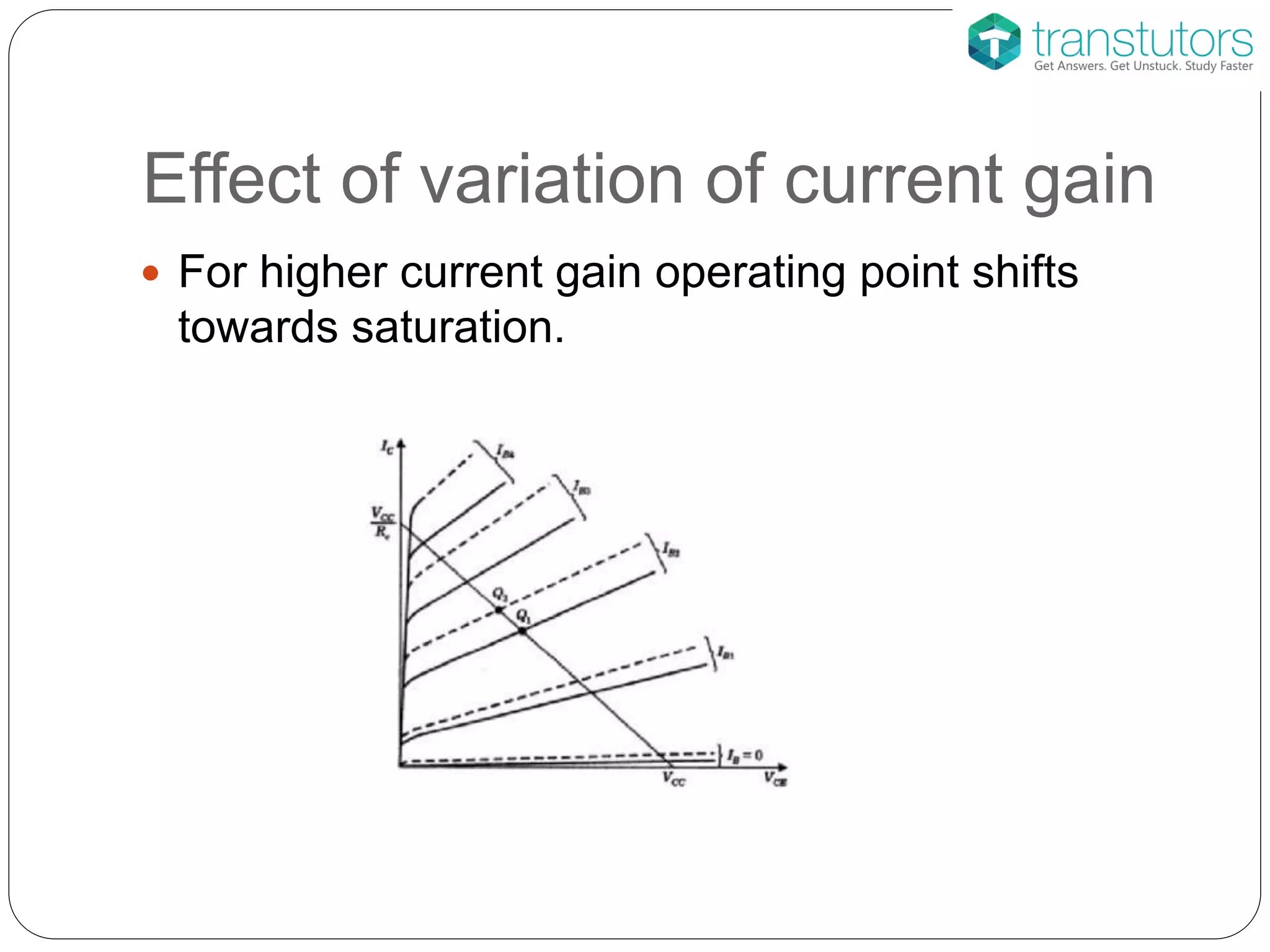
Effect of variation of current gain
 For higher current gain operating point shifts
towards saturation.
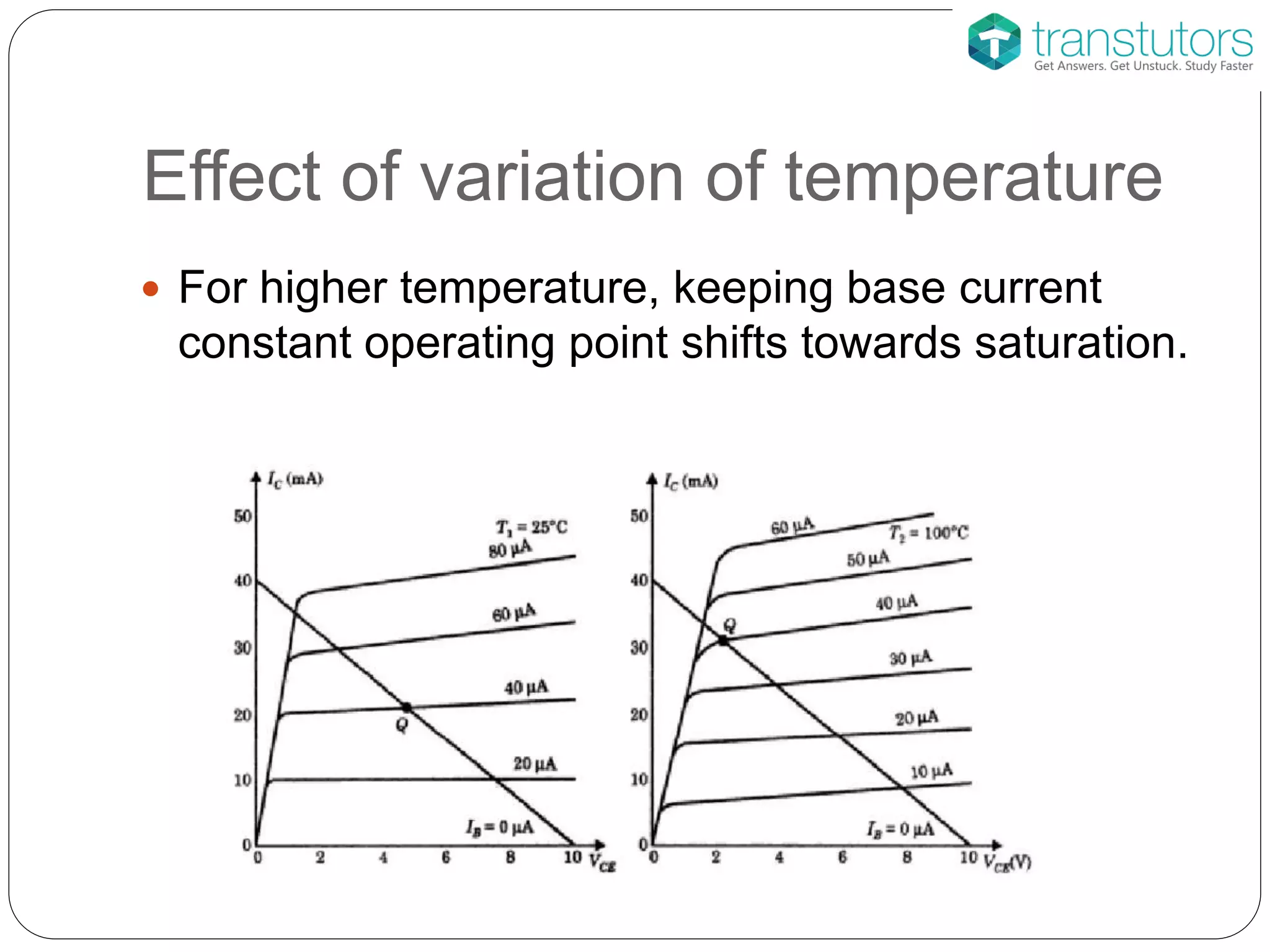
Effect of variation of temperature
 For higher temperature, keeping base current
constant operating point shifts towards saturation.
Types of bias circuit
 Fixed bias
 Collector base bias
 Fixed bias with emitter resistance
 Voltage divider bias
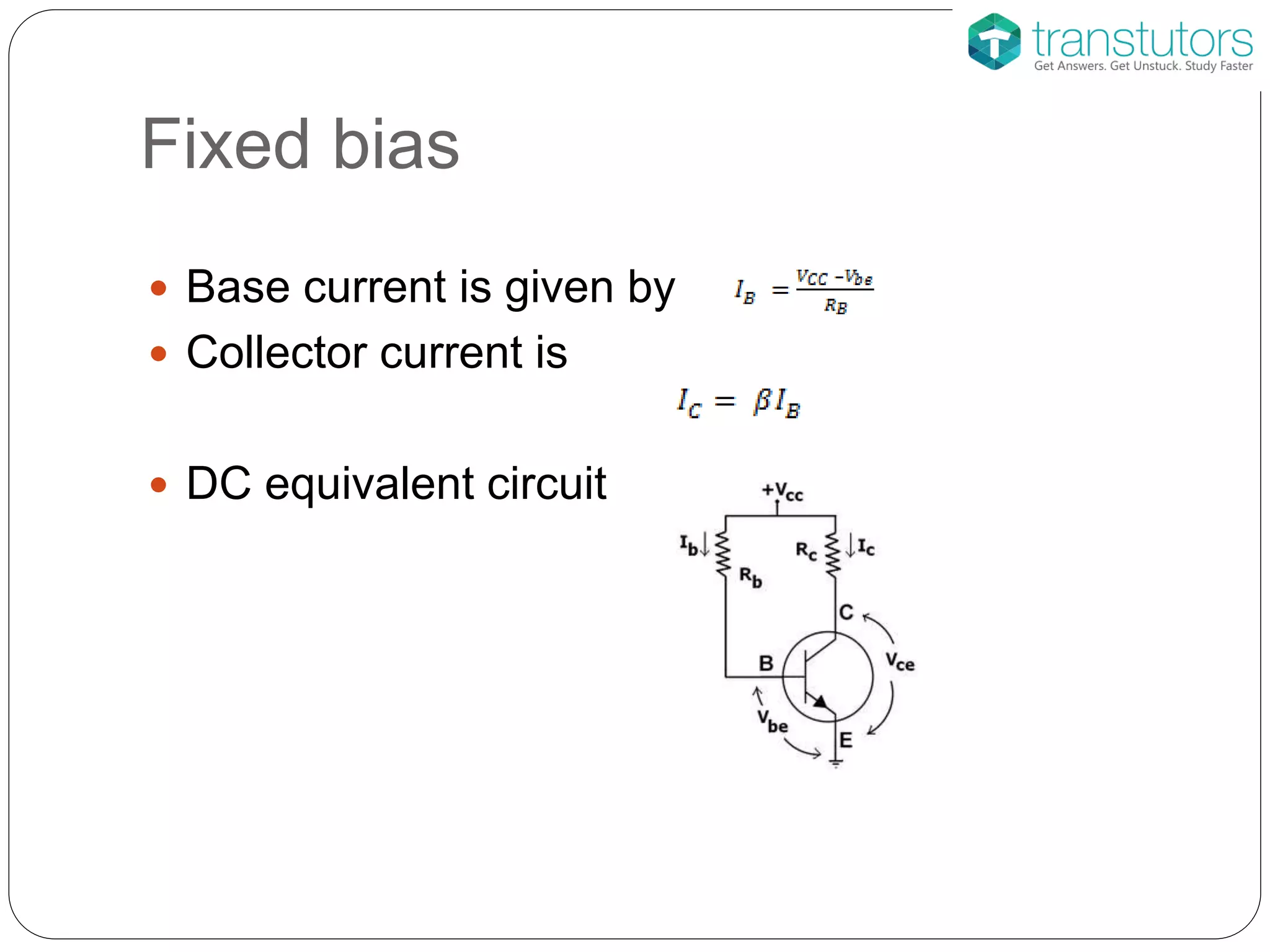
Fixed bias
 Base current is given by
 Collector current is
 DC equivalent circuit
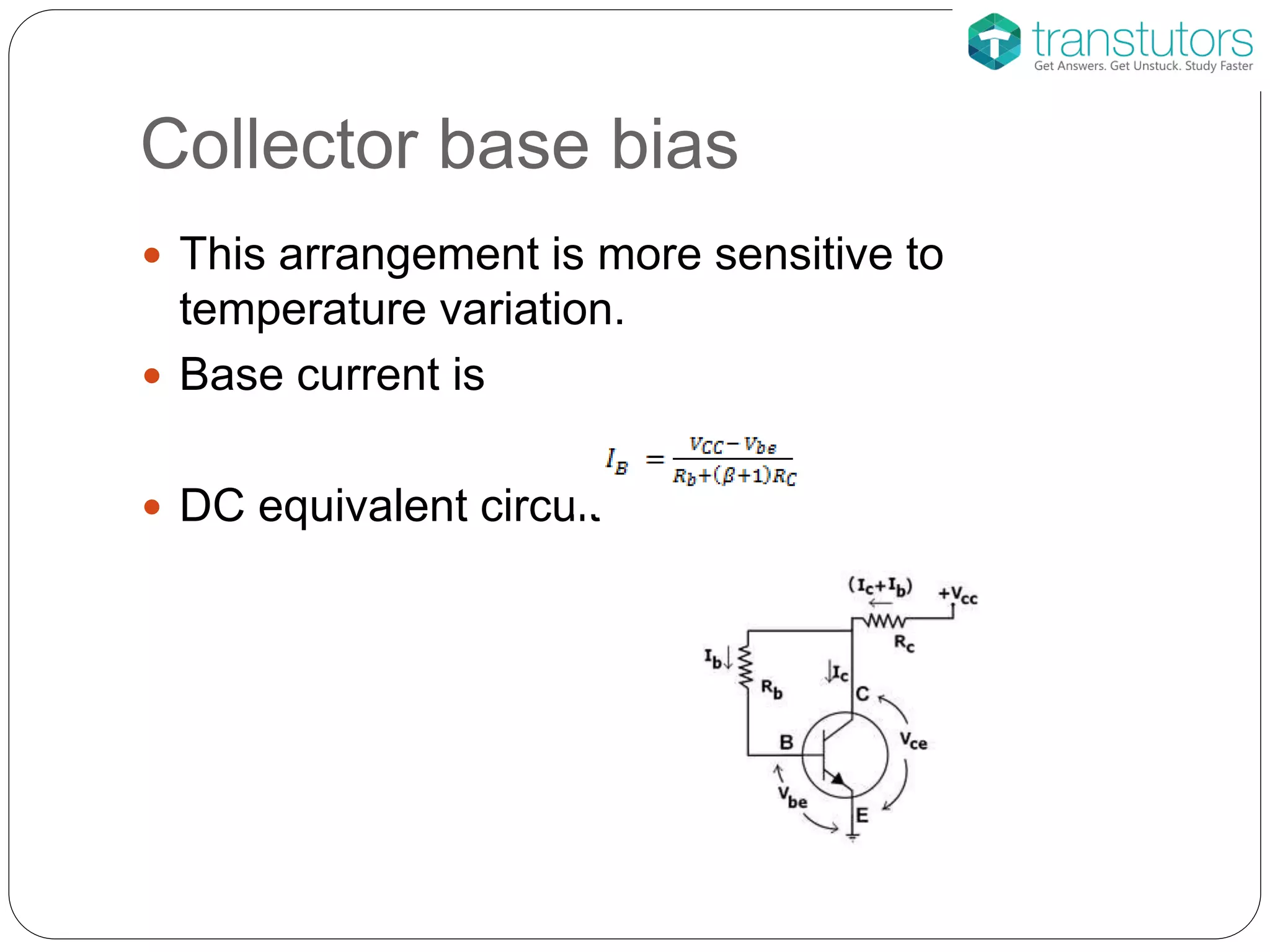
Collector base bias
 This arrangement is more sensitive to
temperature variation.
 Base current is
 DC equivalent circuit
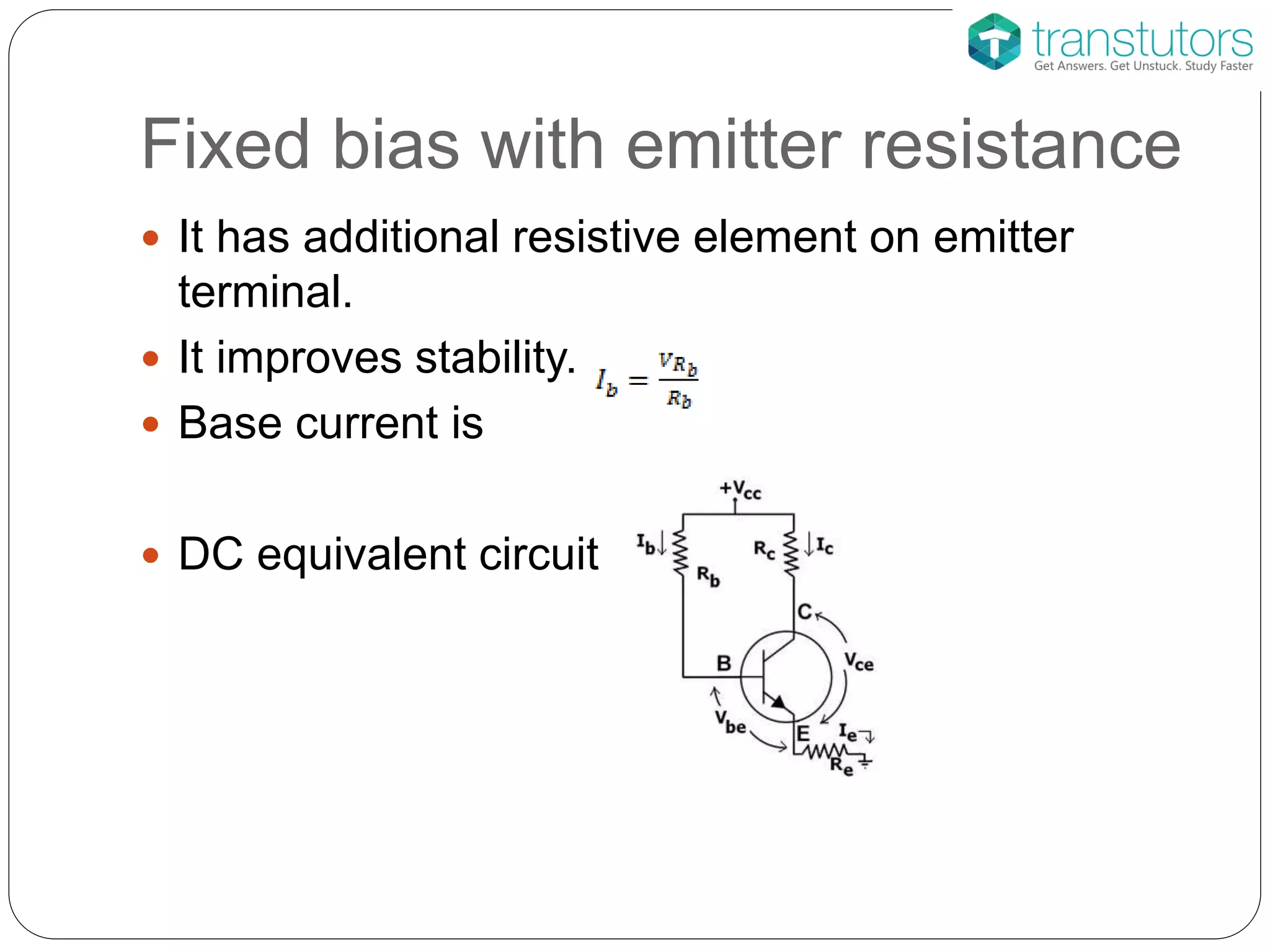
Fixed bias with emitter resistance
 It has additional resistive element on emitter
terminal.
 It improves stability.
 Base current is
 DC equivalent circuit
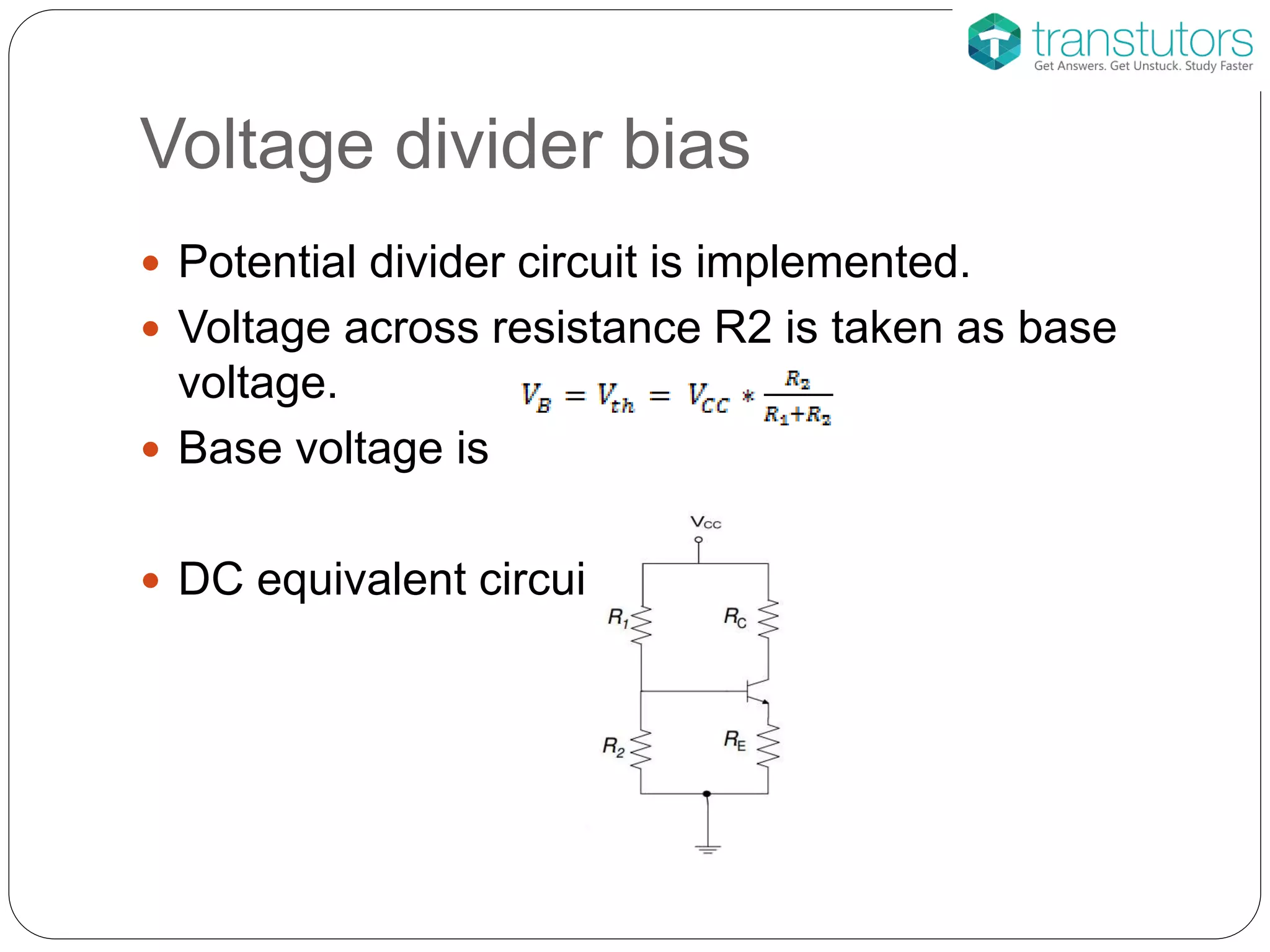
Voltage divider bias
 Potential divider circuit is implemented.
 Voltage across resistance R2 is taken as base
voltage.
 Base voltage is
 DC equivalent circuit is
Hey Friend,
This was just a summary on Stabilization Of Operating
Point. For more detailed information on this topic, please
type the link given below or copy it from the description of
this PPT and open it in a new browser window.
www.transtutors.com/homework-help/electrical-
engineering/transistors/stabilization-of-operating-
point.aspx

Stabilization Of Operating Point | Electrical Engineering

  • 1.
  • 2.
    BJT load line It is plotted from DC equivalent circuit  In this collector current at is determined at saturation and collector emitter voltage at cut-off.
  • 3.
    Operating point orQ-point  It is the point at which transistor is biased  It is determined on DC load line
  • 4.
    Operating point stability It depends on various factor  Variation of current gain  Variation of temperature  Variation of reverse saturation current  Variation of base emitter voltage  Improper regulation of supply voltage
  • 5.
    Effect of variationof current gain  For higher current gain operating point shifts towards saturation.
  • 6.
    Effect of variationof temperature  For higher temperature, keeping base current constant operating point shifts towards saturation.
  • 7.
    Types of biascircuit  Fixed bias  Collector base bias  Fixed bias with emitter resistance  Voltage divider bias
  • 8.
    Fixed bias  Basecurrent is given by  Collector current is  DC equivalent circuit
  • 9.
    Collector base bias This arrangement is more sensitive to temperature variation.  Base current is  DC equivalent circuit
  • 10.
    Fixed bias withemitter resistance  It has additional resistive element on emitter terminal.  It improves stability.  Base current is  DC equivalent circuit
  • 11.
    Voltage divider bias Potential divider circuit is implemented.  Voltage across resistance R2 is taken as base voltage.  Base voltage is  DC equivalent circuit is
  • 12.
    Hey Friend, This wasjust a summary on Stabilization Of Operating Point. For more detailed information on this topic, please type the link given below or copy it from the description of this PPT and open it in a new browser window. www.transtutors.com/homework-help/electrical- engineering/transistors/stabilization-of-operating- point.aspx

Editor's Notes