Chapter 10 Cell Division & Genetics  GEE Science Summer Remediation Mr. Nash Donnie Bickham Middle School Room 204
Cellular Reproduction Multicellular organisms are composed of two kinds of cells: Somatic Reproductive Within these cells matched pairs of chromosomes are called homologous chromosomes or homologues. Homologues are similar in size and carry the same kinds of genes, but are not identical. Pg. 182
Somatic Cells Contain two sets of chromosomes. Two sets of chromosomes is called: Diploid (2n) Make up almost all cells in an organism. Of the two sets of chromosomes, one set comes from the mother and one set from the father. Pg.182
Mitosis and the Cell Cycle Mitosis is the reproduction of somatic cells. Often called cell division. Results in two diploid (2n) cells. Pg.182
Mitosis Some unicellular organisms reproduce asexually by mitosis. Asexual reproduction by mitosis produces a clone of the parent. Clones are genetically identical. Pg.182
Cell Cycle The cell cycle is the sequence of stages through which a cell passes between one cell division and the next. Contains six cycles or phases. Pg.183
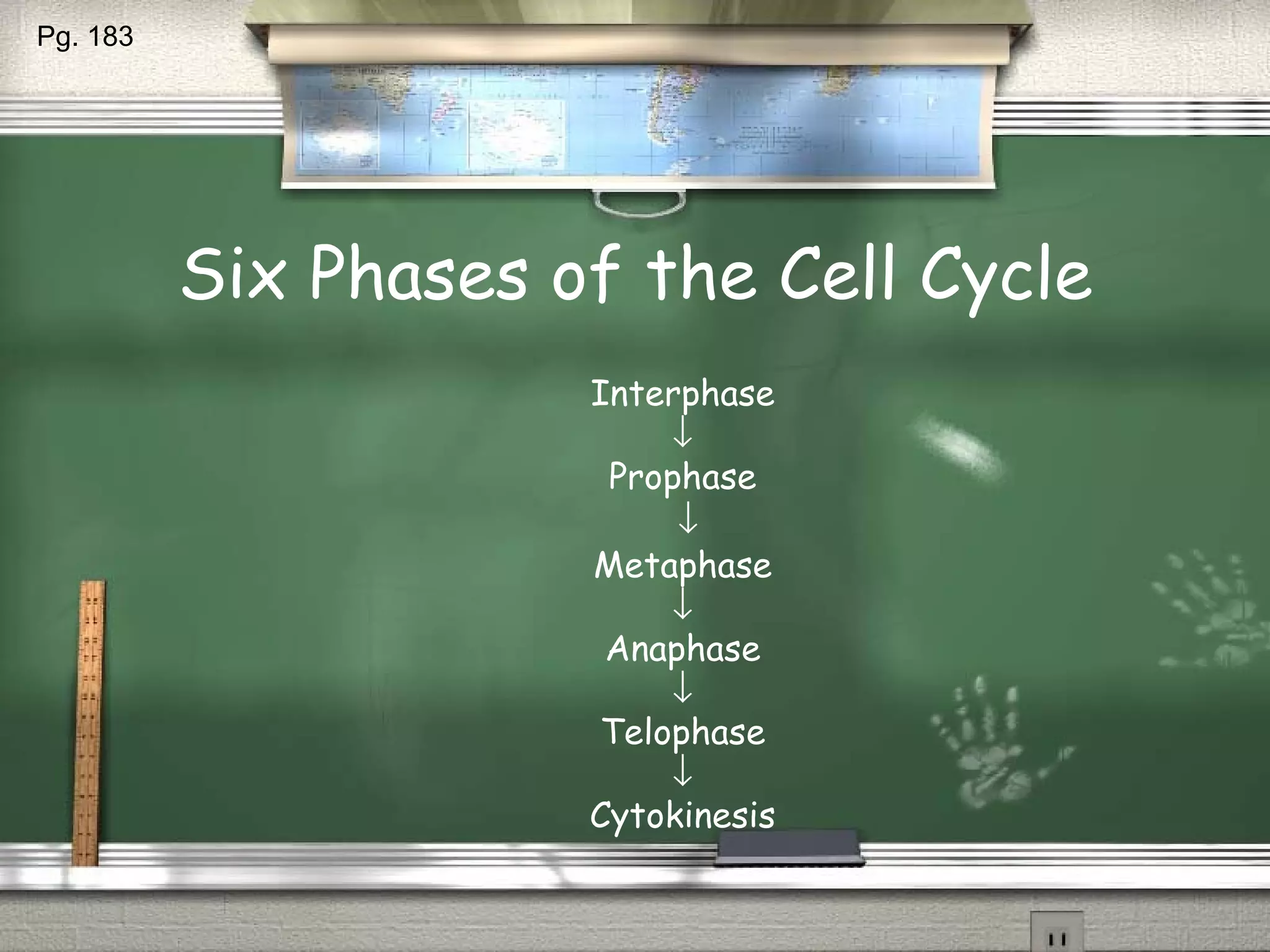
Six Phases of the Cell Cycle Interphase  Prophase  Metaphase  Anaphase  Telophase  Cytokinesis Pg. 183
Interphase Most of the cell’s lifetime. DNA at this phase is long strands and is called chromatin. During the later stage, chromatin is duplicated in preparation for cell division. Pg.183
Prophase Chromatin condenses and coils to from rod shaped chromosomes. Each arm of the chromosome is called a chromotid and are attached at the centromere. Pg183.
Metaphase The nuclear envelope breaks apart. Spindles are completely formed. Pg183.
Anaphase Chromotids come apart. Chromotids are pulled by the spindle to each end of the cell. Pg.183
Telophase Last stage of mitosis. Chromosomes uncoil forming chromatin again. The nuclear envelope reforms. Pg.183
Cytokinesis The division of the cytoplasm. A cell plate forms within the cell dividing it into the two daughter cells. The cell plate becomes  part of the new cell membranes. Pg.183
Meiosis and Sexual Reproduction Reproductive cells use Meiosis for cell division. Each cell will be haploid (n) or have only half the original chromosomes. Sex cells created by meiosis are called gametes. Pg.184
Meiosis Prior to meiosis gamete cells go through Interphase similar to somatic cells in mitosis. Meiosis occurs in two divisions: Meiosis I Meiosis II Pg.184
Meiosis I Prophase I Chromatin condenses into chromosomes. Homologues pair off. Same as in mitosis. Pg.184
Meiosis I Metaphase I Spindles form. Nuclear envelope disappears Same as in mitosis Pg. 184
Meiosis I Anaphase I Chromotids are pulled apart and pulled towards the spindles. Same as in mitosis Pg. 184
Meiosis I Telophase I Chromotids uncoil back into chromatin. Same as mitosis Pg.185
Meiosis I    Meiosis II After meiosis I, unlike mitosis, cytokinesis does not occur, but a stage called interkinesis. During interkinesis the chromatin is not duplicated like during interphase. Pg.185
Meiosis II Follows all of the stages of Meiosis I Prophase II Metaphase II Anaphase II Telophase II After completing Meiosis II, the gamete goes into Interphase to begin the process again. Pg.186
Genetic Expression DNA makes up the genes. Genes carry the traits that are inherited. Genotype: The gene make up for a particular trait. Phenotype: The visible expression of a genetic trait. Pg.187
Genetic Expression If an individual inherits two of the same alleles for a particular trait they are homozygous. This can be either dominant or recessive. If an individual inherits one dominant allele and one recessive allele, the individual is heterozygous. Pg.188

Ss Chapter 10

  • 1.
    Chapter 10 CellDivision & Genetics GEE Science Summer Remediation Mr. Nash Donnie Bickham Middle School Room 204
  • 2.
    Cellular Reproduction Multicellularorganisms are composed of two kinds of cells: Somatic Reproductive Within these cells matched pairs of chromosomes are called homologous chromosomes or homologues. Homologues are similar in size and carry the same kinds of genes, but are not identical. Pg. 182
  • 3.
    Somatic Cells Containtwo sets of chromosomes. Two sets of chromosomes is called: Diploid (2n) Make up almost all cells in an organism. Of the two sets of chromosomes, one set comes from the mother and one set from the father. Pg.182
  • 4.
    Mitosis and theCell Cycle Mitosis is the reproduction of somatic cells. Often called cell division. Results in two diploid (2n) cells. Pg.182
  • 5.
    Mitosis Some unicellularorganisms reproduce asexually by mitosis. Asexual reproduction by mitosis produces a clone of the parent. Clones are genetically identical. Pg.182
  • 6.
    Cell Cycle Thecell cycle is the sequence of stages through which a cell passes between one cell division and the next. Contains six cycles or phases. Pg.183
  • 7.
    Six Phases ofthe Cell Cycle Interphase  Prophase  Metaphase  Anaphase  Telophase  Cytokinesis Pg. 183
  • 8.
    Interphase Most ofthe cell’s lifetime. DNA at this phase is long strands and is called chromatin. During the later stage, chromatin is duplicated in preparation for cell division. Pg.183
  • 9.
    Prophase Chromatin condensesand coils to from rod shaped chromosomes. Each arm of the chromosome is called a chromotid and are attached at the centromere. Pg183.
  • 10.
    Metaphase The nuclearenvelope breaks apart. Spindles are completely formed. Pg183.
  • 11.
    Anaphase Chromotids comeapart. Chromotids are pulled by the spindle to each end of the cell. Pg.183
  • 12.
    Telophase Last stageof mitosis. Chromosomes uncoil forming chromatin again. The nuclear envelope reforms. Pg.183
  • 13.
    Cytokinesis The divisionof the cytoplasm. A cell plate forms within the cell dividing it into the two daughter cells. The cell plate becomes part of the new cell membranes. Pg.183
  • 14.
    Meiosis and SexualReproduction Reproductive cells use Meiosis for cell division. Each cell will be haploid (n) or have only half the original chromosomes. Sex cells created by meiosis are called gametes. Pg.184
  • 15.
    Meiosis Prior tomeiosis gamete cells go through Interphase similar to somatic cells in mitosis. Meiosis occurs in two divisions: Meiosis I Meiosis II Pg.184
  • 16.
    Meiosis I ProphaseI Chromatin condenses into chromosomes. Homologues pair off. Same as in mitosis. Pg.184
  • 17.
    Meiosis I MetaphaseI Spindles form. Nuclear envelope disappears Same as in mitosis Pg. 184
  • 18.
    Meiosis I AnaphaseI Chromotids are pulled apart and pulled towards the spindles. Same as in mitosis Pg. 184
  • 19.
    Meiosis I TelophaseI Chromotids uncoil back into chromatin. Same as mitosis Pg.185
  • 20.
    Meiosis I  Meiosis II After meiosis I, unlike mitosis, cytokinesis does not occur, but a stage called interkinesis. During interkinesis the chromatin is not duplicated like during interphase. Pg.185
  • 21.
    Meiosis II Followsall of the stages of Meiosis I Prophase II Metaphase II Anaphase II Telophase II After completing Meiosis II, the gamete goes into Interphase to begin the process again. Pg.186
  • 22.
    Genetic Expression DNAmakes up the genes. Genes carry the traits that are inherited. Genotype: The gene make up for a particular trait. Phenotype: The visible expression of a genetic trait. Pg.187
  • 23.
    Genetic Expression Ifan individual inherits two of the same alleles for a particular trait they are homozygous. This can be either dominant or recessive. If an individual inherits one dominant allele and one recessive allele, the individual is heterozygous. Pg.188