SEMINAR ON
‘SPECIES EXTINCTION’
Mar 17, 2016
Presented by
Mohammed Inzamamuddin
M.Sc. 2nd Semester Environmental Science
Session 2015-2017
Department of Environmental Science
University Teaching Department
Sarguja Vishwavidyalaya
COURSE TITLE: BASICS OF CONSERVATION BIOLOGY
COURSE CODE: ENV 203
COURSE TYPE: CCC
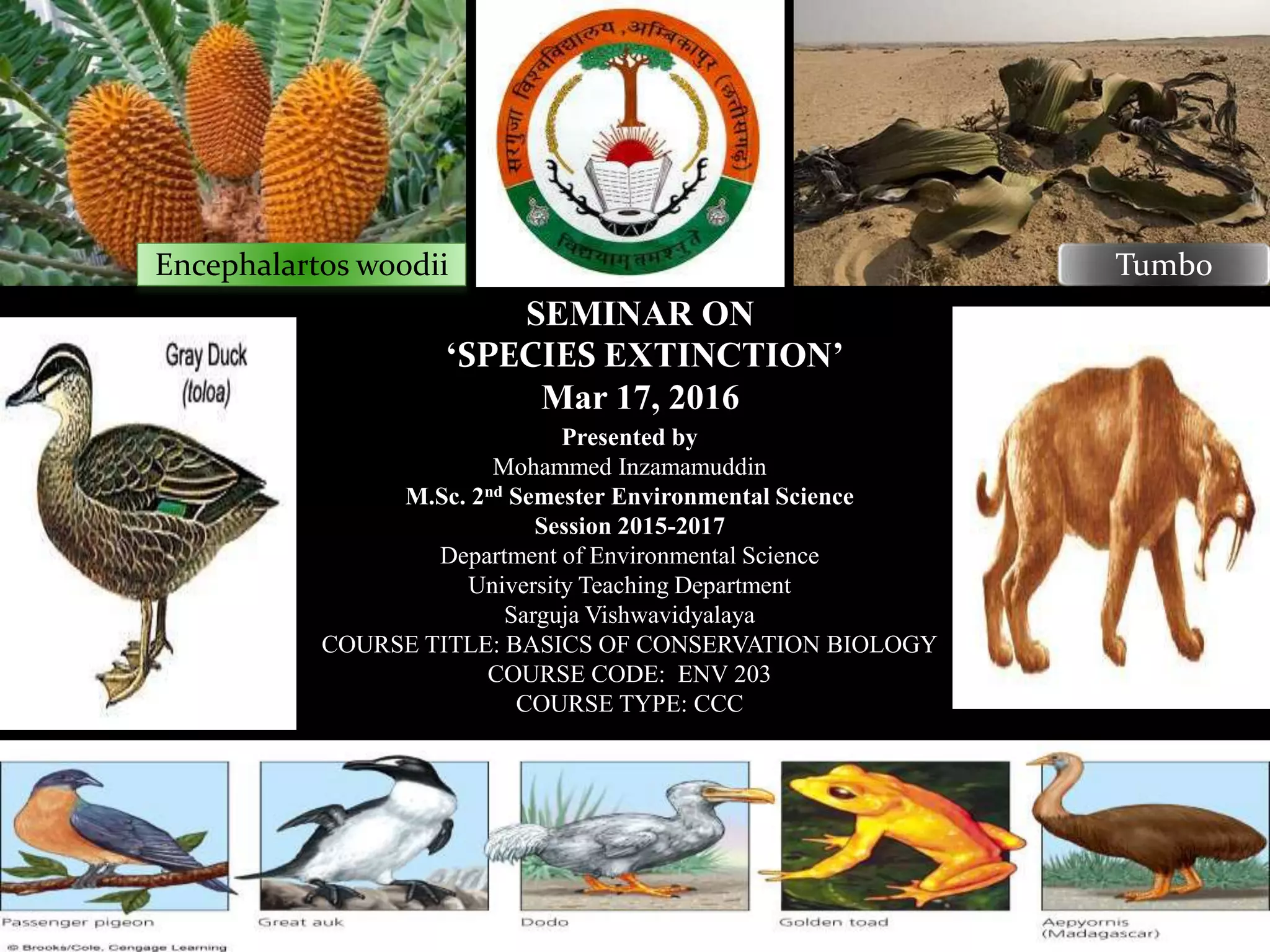
TumboEncephalartos woodii
CONTENTS
 How Many Species on Earth
 What is extinction?
 How many species are we losing?
 When do extinctions occur
 Causes of species extinction
 Natural Causes of species Extinction
 Human Causes of species Extinction
 Species Extinction Facts
 Easy Things You Can Do to Save Endangered
Species and stop species extinction
 References
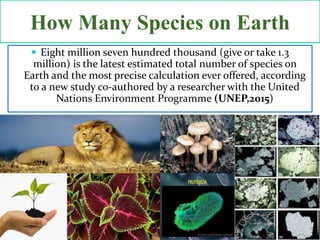
 Eight million seven hundred thousand (give or take 1.3
million) is the latest estimated total number of species on
Earth and the most precise calculation ever offered, according
to a new study co-authored by a researcher with the United
Nations Environment Programme (UNEP,2015)
How Many Species on Earth
What is species extinction?
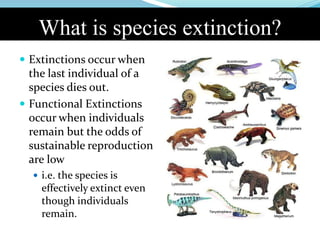
 Extinctions occur when
the last individual of a
species dies out.
 Functional Extinctions
occur when individuals
remain but the odds of
sustainable reproduction
are low
 i.e. the species is
effectively extinct even
though individuals
remain.
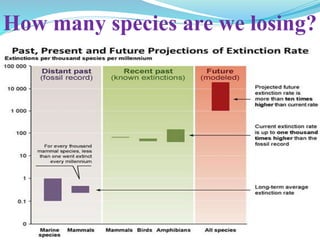
How many species are we losing?
When do extinctions occur?
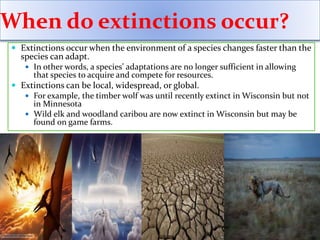
 Extinctions occur when the environment of a species changes faster than the
species can adapt.
 In other words, a species’ adaptations are no longer sufficient in allowing
that species to acquire and compete for resources.
 Extinctions can be local, widespread, or global.
 For example, the timber wolf was until recently extinct in Wisconsin but not
in Minnesota
 Wild elk and woodland caribou are now extinct in Wisconsin but may be
found on game farms.
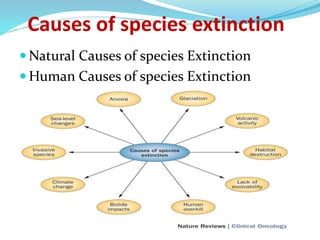
Causes of species extinction
 Natural Causes of species Extinction
 Human Causes of species Extinction
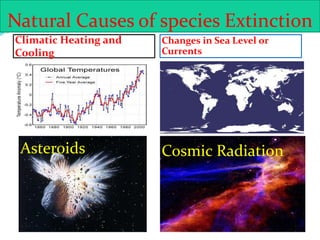
Natural Causes of species Extinction
Climatic Heating and
Cooling
Changes in Sea Level or
Currents
Asteroids Cosmic Radiation
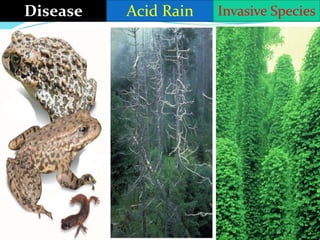
Disease Acid Rain Invasive Species
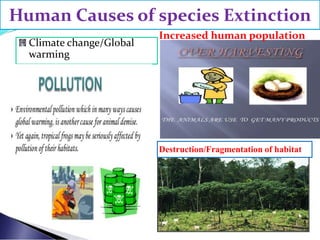
Human Causes of species Extinction
Climate change/Global
warming
Increased human population
Destruction/Fragmentation of habitat
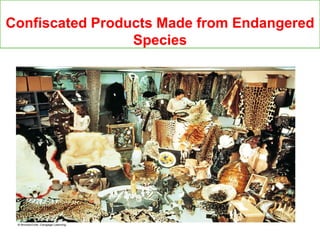
Confiscated Products Made from Endangered
Species
Species Extinction Facts
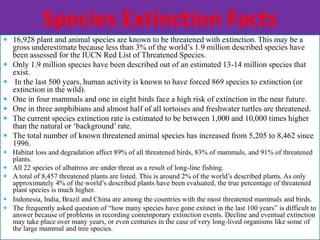
 16,928 plant and animal species are known to be threatened with extinction. This may be a
gross underestimate because less than 3% of the world’s 1.9 million described species have
been assessed for the IUCN Red List of Threatened Species.
 Only 1.9 million species have been described out of an estimated 13-14 million species that
exist.
 In the last 500 years, human activity is known to have forced 869 species to extinction (or
extinction in the wild).
 One in four mammals and one in eight birds face a high risk of extinction in the near future.
 One in three amphibians and almost half of all tortoises and freshwater turtles are threatened.
 The current species extinction rate is estimated to be between 1,000 and 10,000 times higher
than the natural or ‘background’ rate.
 The total number of known threatened animal species has increased from 5,205 to 8,462 since
1996.
 Habitat loss and degradation affect 89% of all threatened birds, 83% of mammals, and 91% of threatened
plants.
 All 22 species of albatross are under threat as a result of long-line fishing.
 A total of 8,457 threatened plants are listed. This is around 2% of the world’s described plants. As only
approximately 4% of the world’s described plants have been evaluated, the true percentage of threatened
plant species is much higher.
 Indonesia, India, Brazil and China are among the countries with the most threatened mammals and birds.
 The frequently asked question of “how many species have gone extinct in the last 100 years” is difficult to
answer because of problems in recording contemporary extinction events. Decline and eventual extinction
may take place over many years, or even centuries in the case of very long-lived organisms like some of
the large mammal and tree species.
Easy Things You Can Do to Save Endangered
Species and stop species extinction
 Slow down when driving
 Recycle and buy
sustainable products
 Never purchase products
made from threatened or
endangered species
 Harassing wildlife is cruel
and illegal
 Protect wildlife habitat
 Learn about endangered
species in your area
 Visit a national wildlife
refuge, park or other open
space
 Make your home wildlife
friendly
 Native plants provide food
and shelter for native wildlife
 Herbicides and pesticides
may keep yards looking nice
but they are in fact hazardous
pollutants that affect wildlife
at many levels
References
 http://www.unep.org/newscentre/default.aspx?DocumentID=2649&ArticleID=8838
#sthash.pJsaQCJb.dpuf
 http://www.endangered.org/10-easy-things-you-can-do-to-save-endangered-species/
 Bird Life International, Data Zone:http://www.birdlife. org/datazone
 Threatened amphibians: http://www.globalamphibians.org
 Saving species: http://savingspecies.org.
 http://www.unep.org/newscentre/
 http://www.arkoflife.net/why-species-go-extinct.html
 https://en.wikipedia.org/wiki/Holocene_extinction
 http://www.eoearth.org/topics/view/51cbfc78f702fc2ba8129e5d/
 http://www.eoearth.org/topics/view/51cbfc78f702fc2ba8129e91/
 http://wwf.panda.org/about_our_earth/biodiversity/biodiversity/
 https://www.nwf.org/What-We-Do/Protect-Wildlife/Endangered-Species.aspx
Thanks
Rise your questions

Specice extinction

  • 1.
    SEMINAR ON ‘SPECIES EXTINCTION’ Mar17, 2016 Presented by Mohammed Inzamamuddin M.Sc. 2nd Semester Environmental Science Session 2015-2017 Department of Environmental Science University Teaching Department Sarguja Vishwavidyalaya COURSE TITLE: BASICS OF CONSERVATION BIOLOGY COURSE CODE: ENV 203 COURSE TYPE: CCC TumboEncephalartos woodii
  • 2.
    CONTENTS  How ManySpecies on Earth  What is extinction?  How many species are we losing?  When do extinctions occur  Causes of species extinction  Natural Causes of species Extinction  Human Causes of species Extinction  Species Extinction Facts  Easy Things You Can Do to Save Endangered Species and stop species extinction  References
  • 3.
     Eight millionseven hundred thousand (give or take 1.3 million) is the latest estimated total number of species on Earth and the most precise calculation ever offered, according to a new study co-authored by a researcher with the United Nations Environment Programme (UNEP,2015) How Many Species on Earth
  • 4.
    What is speciesextinction?  Extinctions occur when the last individual of a species dies out.  Functional Extinctions occur when individuals remain but the odds of sustainable reproduction are low  i.e. the species is effectively extinct even though individuals remain.
  • 5.
    How many speciesare we losing?
  • 6.
    When do extinctionsoccur?  Extinctions occur when the environment of a species changes faster than the species can adapt.  In other words, a species’ adaptations are no longer sufficient in allowing that species to acquire and compete for resources.  Extinctions can be local, widespread, or global.  For example, the timber wolf was until recently extinct in Wisconsin but not in Minnesota  Wild elk and woodland caribou are now extinct in Wisconsin but may be found on game farms.
  • 7.
    Causes of speciesextinction  Natural Causes of species Extinction  Human Causes of species Extinction
  • 8.
    Natural Causes ofspecies Extinction Climatic Heating and Cooling Changes in Sea Level or Currents Asteroids Cosmic Radiation
  • 9.
    Disease Acid RainInvasive Species
  • 10.
    Human Causes ofspecies Extinction Climate change/Global warming Increased human population Destruction/Fragmentation of habitat
  • 11.
    Confiscated Products Madefrom Endangered Species
  • 12.
    Species Extinction Facts 16,928 plant and animal species are known to be threatened with extinction. This may be a gross underestimate because less than 3% of the world’s 1.9 million described species have been assessed for the IUCN Red List of Threatened Species.  Only 1.9 million species have been described out of an estimated 13-14 million species that exist.  In the last 500 years, human activity is known to have forced 869 species to extinction (or extinction in the wild).  One in four mammals and one in eight birds face a high risk of extinction in the near future.  One in three amphibians and almost half of all tortoises and freshwater turtles are threatened.  The current species extinction rate is estimated to be between 1,000 and 10,000 times higher than the natural or ‘background’ rate.  The total number of known threatened animal species has increased from 5,205 to 8,462 since 1996.  Habitat loss and degradation affect 89% of all threatened birds, 83% of mammals, and 91% of threatened plants.  All 22 species of albatross are under threat as a result of long-line fishing.  A total of 8,457 threatened plants are listed. This is around 2% of the world’s described plants. As only approximately 4% of the world’s described plants have been evaluated, the true percentage of threatened plant species is much higher.  Indonesia, India, Brazil and China are among the countries with the most threatened mammals and birds.  The frequently asked question of “how many species have gone extinct in the last 100 years” is difficult to answer because of problems in recording contemporary extinction events. Decline and eventual extinction may take place over many years, or even centuries in the case of very long-lived organisms like some of the large mammal and tree species.
  • 13.
    Easy Things YouCan Do to Save Endangered Species and stop species extinction  Slow down when driving  Recycle and buy sustainable products  Never purchase products made from threatened or endangered species  Harassing wildlife is cruel and illegal  Protect wildlife habitat  Learn about endangered species in your area  Visit a national wildlife refuge, park or other open space  Make your home wildlife friendly  Native plants provide food and shelter for native wildlife  Herbicides and pesticides may keep yards looking nice but they are in fact hazardous pollutants that affect wildlife at many levels
  • 15.
    References  http://www.unep.org/newscentre/default.aspx?DocumentID=2649&ArticleID=8838 #sthash.pJsaQCJb.dpuf  http://www.endangered.org/10-easy-things-you-can-do-to-save-endangered-species/ Bird Life International, Data Zone:http://www.birdlife. org/datazone  Threatened amphibians: http://www.globalamphibians.org  Saving species: http://savingspecies.org.  http://www.unep.org/newscentre/  http://www.arkoflife.net/why-species-go-extinct.html  https://en.wikipedia.org/wiki/Holocene_extinction  http://www.eoearth.org/topics/view/51cbfc78f702fc2ba8129e5d/  http://www.eoearth.org/topics/view/51cbfc78f702fc2ba8129e91/  http://wwf.panda.org/about_our_earth/biodiversity/biodiversity/  https://www.nwf.org/What-We-Do/Protect-Wildlife/Endangered-Species.aspx
  • 16.